Podcast
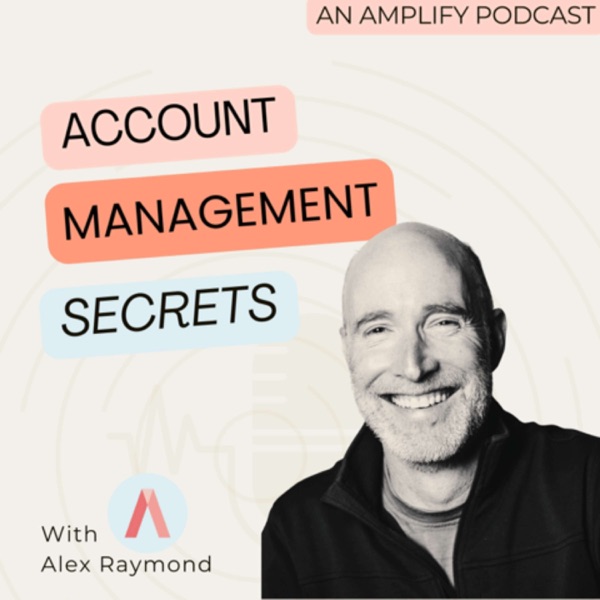
Account Management Secrets
Account Management Secrets is the podcast designed specifically for the unsung heroes of the business world—Account Managers. Every week, we share insights, strategies, and tools that will help you excel in your role and drive success within your organization. As someone responsible for over 70% of your company’s revenue, the stakes are high, but the resources and training available to you are often limited. This podcast is here to change that.
Hosted by Alex Raymond, a leader in the field who has worked with thousands of Account Managers to improve their results, Account Management Secrets equips you with the knowledge and practical strategies you need to master the art and science of account management. Whether it’s navigating complex client relationships, preparing for critical Quarterly Business Reviews, or unlocking growth opportunities with your existing customers, each episode provides actionable advice you can apply immediately.
Account Management Secrets is brought to you by AMplify, the elite community dedicated to helping Account Managers boost their careers, build their skills, and expand their networks. Join us at https://amplifyam.com and start your journey towards account management excellence.
- Episodes
- 101
- Releases
- Weekly
- Typical length
- 44 min
- On air since
- 2024
- Latest episode
- 5 days ago
Episodes
101 episodes, newest first
-
43 min
How to Build a Voice of Customer Program That Drives Retention and Growth | EP113
Episode 114
Show notes
Your customers are polite to your face. That politeness can hide the churn risk you need to hear about months before renewal. Too often, teams only ask questions when a renewal or upsell is on the line, and customers can tell. Learning how to build a voice of the customer program can help account managers identify churn risks earlier, understand what customers actually value, and find opportunities to improve.
Alex Raymond sits down with Joey Yagoda, CEO of Westing Ventures, on Account Management Secrets. Joey runs hundreds of customer feedback interviews every year for companies and private equity firms. He explains why account managers aren't always the best people to conduct feedback interviews, how to encourage customers to be candid about their experiences, and what most companies miss when collecting NPS scores.
Collecting customer feedback is only useful if something happens with it. Joey shares practical ways to use customer insights to inform decisions in account management, product, and leadership teams. He also shares two questions worth asking customers who have left, explains how to follow up on negative feedback without damaging the relationship, and discusses what private equity firms look for when assessing customer retention and churn risk.
Press play for practical advice on how to build a voice of the customer program, starting with a simple 10-call pilot and building a process that supports long-term customer retention and growth.
Episode Breakdown:
00:00 Joey Yagoda on Year-Round Customer Listening
05:26 How to Build a Voice of the Customer Program
07:47 Why Account Managers Shouldn’t Lead Feedback Calls
10:15 How to Invite Tough Feedback From Customers
11:21 The NPS Blind Spot and Interview Guides
18:44 Joey’s Go-To Churn Interview Questions
22:10 Turning Customer Feedback Into Company-Wide Action
28:09 What Private Equity Firms Listen For in Diligence
36:31 What Customers Wish Their Vendors Understood
40:19 Start Small With a 10-Call Pilot
Connect with Joey Yagoda:
Visit the Westing Ventures website
Connect with Alex Raymond:
Podcast production and show notes provided by http://hivecast.fm
-
38 min
Curiosity Is a Superpower: Questions to Ask Clients as an Account Manager to Grow Existing Accounts | EP112
Episode 113
Show notes
Most account managers open with the same question their customers have heard a hundred times. “What are your goals?” gets a polite, forgettable answer and rarely earns a second meeting. The best questions to ask clients as an account manager show you did your homework before you walked in the door.
Alex Raymond sits down with Jubal Sarvis, Relationship Development Manager at Granite Telecommunications, on this week’s Account Management Secrets. Jubal’s department was built after one of Granite’s biggest customers said they only heard from the company at renewal time. His job now is to show up between sales cycles, often in person, with a real reason for the visit.
Jubal explains how he lands a first meeting with customers who keep saying no, and why a box of donuts sometimes gets him through the door. He shares the difference between learning questions and leading questions, and how a curious chat about remote gas pumps in West Texas turned into a pilot nobody planned for. You’ll also hear why one account can need three separate quarterly business reviews, and how a single assumption nearly cost him a major deal.
If you want customers to treat you as a trusted partner, press play. You’ll walk away with sharper questions for your next customer meeting and a clearer path to grow existing accounts.
Episode Breakdown:
00:00 Why Great Account Managers Earn the Partner Role
01:59 What a Relationship Development Manager Actually Does
05:46 Getting In-Person Time With Reluctant Customers
08:03 Leading With a Specific Reason to Call
10:38 Curiosity, Gas Pumps, and Learning vs Leading Questions
13:59 Questions to Ask Clients as an Account Manager
16:21 Why “What Are Your Goals?” Falls Flat
19:13 Preparing With Quarterly Filings and AI Tools
23:46 The Meeting Between the Meetings
31:35 Why Assumptions Are Kryptonite in Complex Deals
Connect with Jubal Sarvis:
Connect with Jubal on LinkedIn
Connect with Alex Raymond:
Podcast production and show notes provided by http://hivecast.fm
-
40 min
What Churned Customers Say When You’re Not in the Room | EP111
Episode 112
Show notes
Your customer may have decided to leave six to 18 months before the renewal quote ever went out. By the time the 60-day playbook starts, some have already switched to a competitor. That gap explains why customers churn so often without warning.
Natasha Narayan, CEO and Co-Founder of IcebergIQ, has conducted more than 3,300 customer and buyer interviews for B2B companies, uncovering what drives churn, renewals, and buying decisions. Her career runs from Xerox sales training to the first Canadian hire at Gainsight. On Account Management Secrets, she tells Alex Raymond what customers say to a neutral third party that they rarely say to their account manager. In one study, 62% of the lost-deal reasons a client logged in its CRM didn't match what buyers told her team.
Natasha shares the one question that exposes renewal risk six months out and why 36% of former customers take the call simply to help the vendor. She explains why the sales-to-services handoff is where so many accounts start to slip, how do-it-yourself AI builds are pulling customers away, and how a pilot of nine interviews turned into three win-backs.
If you want a renewal strategy grounded in what customers actually think, listen now. Natasha shows how honest customer churn analysis reveals why customers churn, and what your team can do to reduce customer churn long before the cancellation email shows up.
Episode Breakdown:
00:00 What Customers Tell Third Parties After Churning
02:05 Natasha's Path From Xerox to IcebergIQ
06:10 Why Customers Churn Six to 18 Months Early
10:48 Health Check Interviews Before the Renewal Date
11:35 Inside the Buyer's Hero Interview Process
13:46 Win Backs and Why Churned Customers Talk
20:52 How Price Increases and Upsells Trigger Churn
24:59 Do Executive Relationships Really Prevent Churn
30:26 How Much CSM Skill Affects Retention
36:29 The Sales to Services Handoff Gap
Connect with Natasha Narayan:
Connect with Natasha on LinkedIn
Connect with Alex Raymond:
Podcast production and show notes provided by http://hivecast.fm
-
48 min
There’s a Difference Between Successful and Happy - Customer Success at SambaSafety | EP110
Episode 111
Show notes
AI is already drafting your emails and building your QBR decks in twenty minutes flat. So what happens to the CSM role once the busywork disappears? That question sits at the center of this episode of Account Management Secrets, where host Alex Raymond sits down with John Conley, Senior Vice President of Customer Success at SambaSafety, to talk about how AI in customer success is reshaping his team of 40.
John explains why he believes the customer success playbook is losing its grip. He built an AI coach instead, one that asks CSMs discovery questions rather than handing them a script pulled off the shelf. He also names what he calls the wasteland of could-ofs, the pile of extra duties that quietly lands on post-sales teams, and shares how his team spotted a correlation between higher gas prices and customer churn.
Alex and John dig into the relationship between net revenue retention and gross revenue retention, and why John believes both numbers need to be examined together to understand the health of a business. John breaks down what proactive customer success actually looks like once AI clears space on the calendar, right down to the Traeger grill bet that proved account planning works even without new products or bigger budgets.
They close on how the customer success job description is changing, from natural curiosity to AI exposure for CSMs, and why AI in customer success still leaves plenty of room for human judgment. Press play to hear John's case for why making a customer happy and making them successful are not the same thing.
Episode Breakdown:
00:00 Why AI Is Reshaping Customer Success Teams
02:31 Adapting to AI in Customer Success at SambaSafety
03:29 Automating Emails and QBR Prep With AI
08:06 The Wasteland of Could-Ofs and Role Creep
11:02 Net Revenue Retention Versus Gross Revenue Retention
14:15 What Gas Prices Reveal About Customer Churn
16:11 Why the Customer Success Playbook Is Dying
26:25 The Traeger Grill Bet That Showed the Value of Planning
34:45 Protecting Your Energy From Endless Requests
45:24 Customer Success Versus Customer Service Explained
Connect with John Conley:
Connect with Alex Raymond:
Podcast production and show notes provided by http://hivecast.fm
-
44 min
How to Get Hired and Promoted as an Account Manager | EP109
Episode 110
Show notes
Every account manager job posting pulls in a flood of applicants. So what makes a hiring manager stop scrolling? Knowing what hiring managers look for in account managers can change how you apply, interview, and grow once you land the role.
On Account Management Secrets, Alex Raymond talks with Grace Knapp, Senior Manager of the Account Management Team at AdRoll. Grace has spent more than 15 years in customer success and account management leadership. She shares the six traits she screens for and the account manager interview questions she relies on to see past a resume. One of her favorite behavioral interview questions for account managers is about the biggest renewal you ever lost. How you tell that story reveals more than your quota ever will.
Grace also opens up about the other side of the job. She walks through three people she promoted and what set each one apart, offering a practical look at how to get promoted as an account manager. Alex and Grace also get honest about the customer success manager renewal quota debate and why a churned customer matters less than a surprise one.
If you want to know how to get hired as an account manager, Grace's advice on standing out is worth hearing. She names one simple move almost no candidate makes. Listen now and hear what hiring managers look for in account managers before your next application goes out.
Episode Breakdown:
00:00 What Gets Account Managers Hired, Promoted, or Fired
03:18 What Hiring Managers Look For in Account Managers
05:40 Behavioral Interview Questions That Reveal Gumption
10:31 Attainment, Book Size, and Role-Level Hiring Filters
15:34 Quarterly Career Conversations and Clear Performance Expectations
20:39 When CSMs Get Handed a Renewal Quota
25:40 Three Promotion Stories and What Triggered Them
32:34 What Gets an Account Manager Managed Out
35:14 Why the Surprise Hurts More Than the Churn
37:23 How to Stand Out to Hiring Managers
Connect with Grace Knapp:
Connect with Grace on LinkedIn
Connect with Alex Raymond:
Podcast production and show notes provided by http://hivecast.fm
-
46 min
How to Lead a Customer Success Team and Earn CFO Trust | EP108
Episode 109
Show notes
How to lead a customer success team gets complicated when nobody agrees on what the team is responsible for. Sales has a clear job. Post-sale teams are often expected to handle whatever comes their way, yet customer success still takes the blame when a customer churns.
Host Alex Raymond talks with Beth Laplante, SVP of Customer Success at Adara, about what strong customer success leadership looks like inside a messy post-sale organization. Beth shares how she approaches her first 90 days as a leader, what she listens for before making changes, and why clarity around the team’s mandate matters more than many organizations realize.
Beth also gets into customer success segmentation and the problems that show up when every account gets treated the same. A question about why one of her strongest account managers was working two dramatically different accounts opens up a bigger conversation about where senior talent belongs and what customers at different levels actually need. Alex then lays out his theory on why weak customer success forecasting costs leaders the trust of the CEO and CFO. Beth also takes a position on customer success reporting structure, and her answer starts with one question about renewals. Alex adds his own view on the chief customer officer role.
Listen if you want to think more critically about how to lead a customer success team, bring more structure to post-sale, and build credibility with your CEO and CFO.
Episode Breakdown:
00:00 What Senior Leaders See in Messy Post-Sale Teams
02:02 Why Customer Success Teams Tolerate So Much Chaos
06:09 Defining Service Tiers and Customer Expectations
09:18 Getting the Company to Respect Your Mandate
11:45 Segmentation and RACI Lessons From Two Turnarounds
16:00 Should Customers Know Their Tier?
20:33 Non-Negotiables That Replace Chaos With Structure
22:47 The JV Versus Varsity Forecast Trust Theory
29:25 CS Reporting Line and the CCO Debate
32:27 Earning CFO Trust and Managing Up
39:10 How to Lead a Customer Success Team Through Change
Connect with Beth Laplante:
Connect with Alex Raymond:
Podcast production and show notes provided by http://hivecast.fm
-
49 min
Partner, Not a Cost Center: Account Management at Mastercard | EP107
Episode 108
Show notes
Most account managers wonder what it takes to move from managing a book of business to leading one. George Siter has made that climb, going from director to VP and then into two different SVP roles at Mastercard, and he has real answers for anyone mapping their own account management career path.
In this episode of Account Management Secrets, host Alex Raymond talks with George Siter, Senior Vice President, Regional Financial Institutions at Mastercard, about what he had to learn and unlearn at each step up. George explains why the jump from director to VP is often the hardest one, since you still need to know the details while learning to manage your team, communicate up, and make the case in 30 to 120 seconds.
George also breaks down how his team runs growth reviews instead of traditional QBRs, always asking the client to speak first. He shares how his team starts the annual account planning process right after Thanksgiving, and the mentor who once told him he had too many singles on his list and needed home runs instead.
For anyone building account management leadership skills or trying to figure out how to sell without feeling like a salesperson, the conversation about protecting your energy, along with George's advice to never wear your targets on your face, is worth hearing in full. Press play to hear what it takes to move from account management into senior leadership without losing sight of the client.
Episode Breakdown:
00:00 George Siter's Role Leading Regional Financial Institutions
07:49 Why Partners Don't Ask for Money First
09:22 Running Growth Reviews Instead of Traditional QBRs
11:37 Building the Annual Account Planning Process
15:41 Sizing Account Plans to Match Portfolio Value
17:14 Becoming a Generalist and Industry Thought Leader
20:58 Turning a Million Dollar Account Into Ten
23:34 Rubber Balls, Crystal Balls, and Protecting Your Energy
26:52 Mapping the Account Management Career Path to SVP
37:53 Standards, Accountability, and What Gets Someone Fired
42:56 Building Internal Relationships and Making the Business Case
Connect with George Siter:
Connect with Alex Raymond:
Podcast production and show notes provided by http://hivecast.fm
-
55 min
How to Build a Customer Relationship Map: Grow Revenue and Have Fun Doing It | EP106
Episode 107
Show notes
Most account managers know they're supposed to "know their customer." Few have an actual system for what that means or how to prove it.
Dan Horowitz, Head of US Sales & Account Management at Taboola, joins Alex Raymond to break down how to build a customer relationship map that protects revenue instead of just decorating a slide. Dan explains that strong account management starts with the fundamentals, including a red-yellow-green heat map of the relationships across an account, not just the one champion who takes your calls. He uses the example of "Susie," where an entire relationship depends on a single person who could leave the company tomorrow.
Dan also walks through creative account management strategies his teams have used to move relationships from transactional to strategic customer relationships, including a Yahoo Mail partnership with Walmart that lets users order groceries with one click, and a digital Super Bowl squares game built for Pizza Hut. Both started with an account manager who knew the customer well enough to spot an opportunity nobody else saw.
He also gets specific on how to know your customer in account management, right down to the language your customer's industry uses, and why hospitality in account management (borrowed straight from restaurateurs Danny Meyer and Will Guidara) might matter more than another QBR deck.
If you want a real framework for how to build a customer relationship map instead of another vague reminder to "know your customer," this episode gives you one. Press play and steal it for your next account plan.
Episode Breakdown:
00:00 Dan Horowitz's Mandate to Grow Revenue
02:30 The Art of Account Management Versus the Science
09:03 Inside Taboola's Account Management Structure and Focus
12:41 Small Steps Versus Big Leaps in Customer Growth
17:41 The Walmart and Yahoo Mail Grocery Partnership Story
19:05 How to Know Your Customer and Map Relationships
33:14 The Pizza Hut Super Bowl Squares Innovation
38:08 Hospitality and Moving From Transactional to Strategic
41:05 Risk Registers, Psychological Safety, and Celebrating Wins
49:35 Advice for Account Managers Ready to Leap
Connect with Dan Horowitz:
Connect with Alex Raymond:
Podcast production and show notes provided by http://hivecast.fm
-
55 min
Why Customer Satisfaction Doesn’t Predict Retention | EP105
Episode 106
Show notes
Your happiest customers might be the first ones to leave. That is the uncomfortable finding behind why customer satisfaction doesn't predict retention, and new data makes it even stronger. Some of the most demanding, hardest to please customers turn out to be the ones who never walk away.
Greg Daines, founder and CEO of ChurnRx, returns to Account Management Secrets for his second appearance with host Alex Raymond. Their first conversation ran back in episode five, and the pattern they found then has only gotten stronger since. Daines now calls the strongest version of it customer bonding, the point where a customer becomes nearly impossible to lose. His customer bonding and retention research explains exactly why.
Daines explains why does NPS predict retention is the wrong question to ask, and why your loudest, most demanding accounts are often your safest ones. He unpacks measurable results customer retention data showing how one tangible win can move a customer into a category that almost never churns. The talk turns to customer satisfaction vs retention through a story from inside a major enterprise account, one that forced Daines to rethink how account managers earn trust. Raymond and Daines also revisit quarterly business reviews and what separates a real account management retention strategy from one that just fills time on a calendar.
Press play to hear why customer satisfaction doesn't predict retention, and what actually keeps your best accounts from walking away.
Episode Breakdown:
00:00 Welcome Back Greg Daines to the Show
02:23 Does the No Correlation Finding Still Hold
08:34 NPS as a Misleading North Star Metric
09:21 Is Customer Loyalty Even a Real Thing
15:07 Exogenous Churn and the Noise Floor
16:31 Customer Bonding Is a Real Phenomenon
21:58 The Reverse Correlation Between Happiness and Bonding
26:34 The Intel Story and Pushing Back on Clients
34:08 Segmenting Your Portfolio by Real Risk
47:18 Rethinking QBRs Around Value Not Updates
Connect with Greg Daines:
Connect with Alex Raymond:
Podcast production and show notes provided by http://hivecast.fm
-
46 min
How to Prevent “Green-to-Gone” Accounts | EP104
Episode 105
Show notes
Most account teams don't lose customers overnight. They lose them slowly, through signals nobody caught in time. Knowing how to identify at-risk customers before they churn is the difference between a controlled loss and a surprise that blindsides the whole business.
On Account Management Secrets, host Alex Raymond talks with Daniel Santiago, Senior Vice President of Customer Success at OrthoFi, about the net revenue retention strategy that took his team from 85% to 108% net revenue retention. Daniel explains the watch list system he built to catch what he calls "green-to-gone" accounts before they slip away.
Daniel walks through how OrthoFi worked to reduce customer churn in the first six months of a relationship, and how his team aims to keep churn forecasts within a plus-or-minus-five-percent tolerance. He also breaks down how quarterly business review best practices changed at OrthoFi, shifting QBRs from tactical fixes to conversations built on real data. Along the way, he unpacks net revenue retention vs gross revenue retention and what that fifteen-point spread reveals about a customer base.
Listen to hear how Daniel built a culture where flagging risk early gets rewarded instead of punished, and what it takes to run a customer success team on outcomes instead of instinct.
Episode Breakdown:
00:00 Welcome and Daniel Santiago's Path to OrthoFi
06:45 Splitting Customer Success From the Sales Org
11:48 Fixing the First Six Months to Cut Early Churn
18:35 How to Identify At-Risk Customers Before They Churn
21:00 The “Green-to-Gone” Problem and Building Psychological Safety
24:52 Minimizing Forecast Variance for Accurate Renewals
29:01 Turning QBRs Into Real Business Conversations
36:17 What Private Equity Expects From Customer Success
40:00 Net Revenue Retention Targets and Staying Power at OrthoFi
Connect with Daniel Santiago:
Connect with Daniel on LinkedIn
Connect with Alex Raymond:
Podcast production and show notes provided by http://hivecast.fm
-
39 min
How Account Managers Keep Losing Executive Access (And How to Stop) | EP103
Episode 104
Show notes
Most account managers can quote the theory on building relationships with executives, but the real test starts after the deal closes. That's when the senior sponsor hands you off to someone three levels down. Jamal Reimer has lived that handoff from both sides. He spent 26 years in enterprise software sales, including a $53 million deal while at Oracle, and he learned exactly how to build executive relationships in account management once the introductions end.
On this episode of Account Management Secrets, host Alex Raymond talks with Jamal Reimer about strategic selling vs transactional selling, and how that distinction shapes an enterprise sales strategy for account managers who inherit a client relationship instead of starting one from scratch. He shares the nine-month renewal sales cycle that grew a $10 million run rate to $53 million, and the single meeting that changed how he read a room for the rest of his career.
Jamal also shares his two-part method for staying connected to a senior sponsor after the handoff, something he calls micro commitments. It is a practical way to think through how to get access to decision makers before the relationship goes cold, and he explains why so few companies run functioning executive sponsor programs.
If you want to know how to talk to executives in sales without sounding like every other vendor, this episode breaks down exactly how to build executive relationships in account management and keep them. Press play to hear Jamal's approach in his own words.
Episode Breakdown:
00:00 Why $50 Million Deals Aren't the Real Story
02:55 Jamal's First Ten Years Struggling With Transactional Selling
05:15 Getting Fired Twice and Finding Strategic Selling
08:00 The Meeting That Changed How Jamal Read a Room
11:00 How to Build Executive Relationships in Account Management
12:37 Leading With Knowledge Instead of Generic Questions
14:32 Turning a $10 Million Renewal Into $53 Million
16:27 New Logos vs Existing Accounts and Building a Brand
18:45 Crossing the Chasm From Sponsor to Operator
24:17 Why Micro Commitments Keep Relationships From Going Cold
25:15 Why So Few Companies Run Executive Sponsor Programs
27:41 Reading the Mountain: Bottom, Middle, and Executive Priorities
31:58 Pitching the Right Insight to the Wrong Level
34:22 Why Being a Little Wrong Opens the Conversation
38:02 The Lost Art of Whiteboarding With Customers
Connect with Jamal Reimer:
Connect with Jamal on LinkedIn
Connect with Alex Raymond:
Podcast production and show notes provided by http://hivecast.fm
-
48 min
GRR vs NRR: What Private Equity Firms Really Evaluate in Customer Success | EP102
Episode 103
Show notes
Private equity firms don't care about your health scores or QBRs. They care about one question: what makes this business worth more tomorrow than it is today.
Carlos Granda spent 30 years running post-sales at Google Cloud, Salesforce, SAP, and Oracle before he started advising the private equity firms buying up software companies. That vantage point gave him a name for a problem most executives never see coming: the GRR time bomb. A healthy net revenue retention number can hide real churn underneath it, and by the time anyone notices, the damage is already baked into the company's valuation.
Why do so many leaders celebrate 103% NRR without asking what they lost to get there? Carlos breaks down the math and makes the case that gross revenue retention, not NRR, is the number that actually tells the truth.
He also pushes back on a phrase every account manager has heard a hundred times: "it's too expensive." That's rarely the real reason a customer leaves, and Carlos explains what's usually hiding underneath it. His bigger argument is that post-sales professionals are underappreciated because most of them have never learned to translate their work into the language of enterprise value. What would change on your team if a support ticket and a churn risk were understood as the same conversation PE firms are already having about your company's worth?
Episode Breakdown:
00:00 Why Private Equity Cares About Enterprise Value, Not Health Scores
06:48 Connecting Account Management to Enterprise Value Creation
16:04 What Private Equity Firms Actually Evaluate in Post-Sales Teams
20:02 NRR vs GRR: The Metric That Tells the Truth
27:04 Building a GRR Get Well Plan
34:43 How to Pitch the Same Initiative to a CEO vs a PE Firm
44:11 The Future of Post-Sales: AI and the Disappearing Line Between Sales and Support
Connect with Carlos Granda:
Connect with Carlos on LinkedIn
Connect with Alex Raymond:
Podcast production and show notes provided by http://hivecast.fm
-
52 min
Account Manager vs Project Manager: Why Smashing the Roles Together Backfires | EP101
Episode 102
Show notes
Account manager vs project manager isn't just a title swap. Smash the two roles together, and you get the worst of both worlds, with no time to do either job well.
On Account Management Secrets, Alex Raymond talks with Stephan Schroeder, Vice President of Global Sales and Client Services for the Automotive and Mobility Practice at Escalent. Escalent works with almost all major global automotive manufacturers, from Ford and GM to Toyota and Honda, as well as global suppliers like Lear and Magna. It is account management inside a concentrated industry, where the traditional pool of potential clients is finite and every relationship needs to generate business for years, not just months.
Stephan lays out the account manager career path as a fork in the road. One track leans into client relationship management and sales, eventually taking responsibility for larger books of business. The other builds solutions, project delivery, and subject-matter expertise. He walks through the triangle every account manager has to manage at once: the client, the team, and the boss above them. Get that balance wrong, and the pressure quickly compounds.
Stephan also explains why account managers are often the first to recognize emerging client needs. He describes account management as the canary in the coal mine when it comes to identifying what customers may need next. He also shares a tiered system he used earlier in his career to move new account managers onto larger clients without setting them up to fail. Listen to the whole episode to hear why separating account management from project management can create clearer career paths, stronger client relationships, and better results
Episode Breakdown:
00:00 Meet Stephan Schroeder and Escalent's Automotive Practice
02:44 Working With Global Automakers and Major Suppliers
05:15 Revenue Goals, Retention, and Client Satisfaction Scores
11:41 Account Management Inside a Concentrated Industry
14:41 Growing the Business Through Innovation and New Markets
18:38 How Account Managers Surface New Product Ideas
25:51 Choosing a Sales Track or a Delivery Track
31:58 Account Manager vs Project Manager: Why the Roles Get Confused
41:16 The Client, Team, and Boss Triangle
47:49 Advice for Breaking Into Account Management
Connect with Stephan Schroeder:
Connect with Stephan on LinkedInConnect with Alex Raymond:
Podcast production and show notes provided by http://hivecast.fm
-
35 min
What 100 Conversations Taught Me About Post-Sale | EP100
Episode 101
Show notes
Most account managers can’t clearly explain what their job is, and that gap costs them money, energy, and career momentum. This episode of Account Management Secrets delivers the account management career advice Alex Raymond has collected across 100 episodes and two years of conversations with account managers and customer success leaders around the world.
Alex breaks down the five lessons that mattered most. He explains why post-sales work still lacks a shared definition and how that gap leaves teams recreating systems and processes that should already exist. He also tackles the account management vs. sales mindset head-on. By reframing selling as delivering value before revenue is earned, Alex offers a different perspective on how to grow in account management without losing the trust customers depend on.
Alex makes the case for net revenue as the single metric worth rallying an account management team around instead of chasing a dozen scattered KPIs. He shares why no one is coming to save your career and what that means for anyone serious about post-sales career growth. The episode also includes the story of one account manager who grew a single account from $50,000 to $10 million, proof that the growth department account management movement is real and already changing how the role gets measured.
Press play and walk away with account management career advice you can use this week, not someday.
Episode Breakdown:
00:00 Celebrating 100 Episodes and Two Years of Lessons
02:25 Guests Spanning Every Industry and Account Size
04:51 Why Post-Sales Still Has No Standard Definition
09:43 Reframing Selling as Value Before Revenue
19:29 Making Net Revenue Retention the North Star
24:15 No One Is Coming to Save Your Career
29:00 The Growth Department and Joanna's 200x Account
33:54 Closing Thoughts and Thanks to the Community
Connect with Alex Raymond:
Podcast production and show notes provided by http://hivecast.fm
-
40 min
The Customer Success Competencies That Made the Relationship-Only CSM Obsolete | EP99
Episode 100
Show notes
Keeping customers happy no longer protects your job. Buyers want measurable business outcomes, and the customer success competencies you leaned on in the last decade will not carry you forward.
Host Alex Raymond sits down with Bradley Lawrence, former Global Head of Customer Experience at Coursera, who has led customer teams for more than fifteen years. Bradley names the five customer success competencies every CSM needs now, from a revenue-aligned commercial mindset to executive influence. He also draws a hard line on AI in customer success and identifies the three parts of the job humans should never hand over.
Alex shares a stat you will remember. Bring the C-suite to your QBRs, and you create significantly more expansion opportunities. Leave the meeting to junior contacts, and churn risk climbs. Bradley turns this into QBR best practices and a coaching move for reaching decision-makers you have never met. He rolled out an AI layer built for a thirty percent productivity lift, then explained why the win goes to your team, not your headcount. You will also hear why the relationship-only CSM is running out of road, and which customer success manager skills matter more than pure rapport.
Bradley also examines customer success leadership, why humility beats seniority, and how leaders can replace the customer happiness myth with a focus on business outcomes. Press play to learn the five competencies your career needs as AI reshapes post-sales work.
Episode Breakdown:
00:00 Alex Raymond Opens Account Management Secrets
02:20 The Biggest Misconception About Customer Success
03:46 Building Customer Success Competencies Through Strategic Priorities
06:37 Why Most QBR Training Falls Short
08:05 The Relationship-Only CSM Is Becoming Obsolete
11:14 What It Really Means to Be Strategic
15:14 Coaching CSMs to Reach the C-Suite
17:53 The Data Behind C-Suite Engagement and Churn
20:09 Evaluating and Investing in AI Tools for Customer Success
22:38 What Humans Should Never Outsource to AI
25:55 Rolling Out Cora.ai and Measuring Productivity Gains
31:25 The Five Competencies Shaping Customer Success
34:56 Leading with Humility in Customer Experience
36:58 Replacing Customer Happiness with Business Outcomes
Connect with Bradley Lawrence:
Connect with Bradley on LinkedIn
Connect with Alex Raymond:
Podcast production and show notes provided by http://hivecast.fm
-
48 min
Private Equity Due Diligence and the 20% Nobody Sees Coming From Customer Churn After Acquisition | EP98
Episode 99
Show notes
Private equity due diligence rarely accounts for the customer base itself, even though it may be the asset most likely to drive an acquisition’s success.
On this episode of Account Management Secrets, host Alex Raymond sits down with James Lawson, a veteran of PE-backed software companies, to unpack why so many deals underperform after the ink dries. James has spent over two decades cleaning up the aftermath of buyouts where customer churn after acquisition quietly erodes the numbers everyone celebrated at close.
James explains how a single missing relationship, often the person who quietly held a whole account together, can trigger a wave of churn that private equity operating partners never see coming until the damage surfaces. He and Alex dig into why retention gets deprioritized in favor of fast new business wins, and how teams sacrifice post-acquisition customer retention for a quick logo count.
The conversation turns to what separates firms building a real portfolio company growth strategy from those chasing an 8x to 12x multiple with no plan for the people running the business. James shares the audit process he uses to find blind spots before churn quietly hits the growth number by 20% or more, and why private equity due diligence needs curiosity as much as spreadsheets.
If you work anywhere near the post-sale side of a PE-backed business, this conversation will change how you read a data room.
Episode Breakdown:
00:00 Meet James Lawson, Fractional Operating Partner to SaaS Firms
02:33 Why Acquired Companies Rarely Match Their Cover Story
06:13 Private Equity Due Diligence and the Hidden Cost of Acquisition
09:59 How Churn Quietly Hits the Number by 20 to 25 Percent
12:12 Setting Growth Goals Before You Buy a Company
13:19 What PE Firms Want From an 8 to 12X Exit
14:53 Why Some Portfolio Companies Struggle to Exit on Time
17:12 The Risk of Chasing Top Line Growth Over Retention
20:16 Building an Audit Process for Newly Acquired Companies
22:38 The Weight Loss Metaphor for Running a Company Audit
24:28 Org Design and Account Manager Workload
26:30 Running Risk and Opportunity Meetings Across Departments
29:06 Aligning ICP Between Sales and Post-Sales Teams
30:24 Should Customer Success Report to the CRO
34:01 Why Revenue Should Never Feel Icky to Post-Sale Teams
37:00 Making the Case for Investment as a CS Leader
40:25 Pitching a Capital Allocation Plan Like an Entrepreneur
43:23 What the Best PE Firms Understand About Growth
45:33 One Thing PE Operating Partners Should Do Differently
47:27 Final Advice: Stay Curious and Keep Asking Questions
Connect with James Lawson:
Connect with James on LinkedIn
Visit the River Consultancy Group website
Connect with Alex Raymond:
Podcast production and show notes provided by http://hivecast.fm
-
46 min
From High-Volume to High-Stakes: The Enterprise Customer Success Manager Career Path | EP97
Episode 98
Show notes
Running one global enterprise account is nothing like running 120 small ones, and the enterprise customer success manager career path proves it.
Josh Chapman is a Principal Customer Success Manager for Global Strategic Enterprise at Adobe, where he runs one of the company’s largest accounts. On this episode of Account Management Secrets, host Alex Raymond traces Josh's career from Ticketmaster to Salesforce to Adobe, and what the evolution of his portfolio reveals about the CSM career progression most people never plan for.
Josh's portfolio shrank with every move he made. He went from managing a large book of roughly 120 accounts to a smaller set of higher-value Salesforce accounts, then to four enterprise accounts, and now to one global strategic account at Adobe. Fewer accounts, higher revenue, and a completely different set of demands.What started as time prioritization and reactive firefighting evolved into executive relationship building, cross-functional orchestration in customer success, and owning ROI at the enterprise level. For Josh, running 120 accounts is small business franchise work. Running one is CEO work.
The conversation gets specific about managing large enterprise accounts across multiple business units with competing goals. Josh walks through building internal champions, rallying cross-functional teams, and showing up as the one person every stakeholder knows they can call. He also talks about why early career CSMs need to be the megaphone for their own work, and why the emerging AI Engagement Manager role is the next natural landing spot for strategic CSMs.
If you are building your strategic account management skills and trying to map out what comes next, this episode lays out the full career arc from reactive portfolio management to enterprise-level ownership.
Episode Breakdown:
00:00 The Enterprise Customer Success Manager Career Path Explained
02:23 Why the CSM Job Title Means Something Different at Every Level
06:25 From 120 Accounts to One: Josh Chapman's Career Progression
13:30 How to Scale a Large Portfolio Without Losing Client Value
18:33 The Portfolio Numbers Behind Each Career Move
20:31 Why CSMs Must Be the Megaphone for Their Own Work
26:00 Building Executive Relationships That Actually Stick
29:23 Driving Product Adoption and ROI at the Enterprise Level
33:27 Cross-Functional Orchestration as a Core CSM Skill
39:26 Where the Best Career Opportunities Are for CSMs Today
42:54 The AI Engagement Manager Role Every Strategic CSM Should Watch
Connect with Josh Chapman:
Connect with Alex Raymond:
Podcast production and show notes provided by http://hivecast.fm
-
41 min
Your QBR Is Probably Killing Your Client Relationship: How to Run a Better QBR | EP96
Episode 97
Show notes
Most QBRs are slow, forgettable, and quietly kill your client relationships.
That's the uncomfortable truth Jason Scott sat with after watching a major enterprise account stagnate for over 12 months. As a seasoned account manager with experience managing portfolios worth more than $100 million across healthcare, insurance, and technology, Jason realized the problem wasn't the account. It was the meeting.
On this episode of Account Management Secrets, host Alex Raymond and Jason Scott dig into how to run a better QBR by throwing out the old playbook entirely. Jason shares how ditching the slide deck, calling an executive listening session, and reframing the entire meeting as a growth roundtable helped him take one account from $3 million to $7 million in a single year.
The conversation gets into the real mechanics of quarterly business review strategy, including how to show up as a peer rather than a vendor, how to earn C-suite attendance and keep it, and what it actually means to lead a meeting instead of just reporting in one. Jason and Alex walk through the three things executives actually want from these conversations, and why most account managers never deliver any of them.
If you've been looking for practical account manager tips that go beyond surface-level advice, this episode is it. The shift from vendor to strategic partner doesn't happen by accident. It happens when you stop treating QBRs as status updates and start treating them as strategic account management tools built around client retention and growth.
Jason's story is proof that one meeting, run differently, can change everything.
Episode Breakdown:
00:00 Why Most QBRs Are Quietly Killing Client Relationships
02:15 Meet Jason Scott: Enterprise Account Manager and QBR Strategist
02:33 When a QBR Becomes a Status Meeting and Accounts Go Stagnant
04:08 How to Run a Better QBR by Starting with an Executive Listening Session
09:23 Building the Growth Roundtable to Replace Outdated QBR Formats
13:50 Shifting from Reporting to Leading in Client Meetings
16:00 What Happened When Jason Renamed and Restructured His QBRs
18:23 Why Executives Ghost QBRs and How to Get Decision Makers to Show Up
21:12 The Data on C-Suite Attendance and Account Growth Opportunities
22:21 The QBR with No Slides That Doubled Account Revenue
25:39 How to Lead a High-Stakes Meeting When You Have Nothing to Lose
28:00 From $3 Million to $7 Million in 12 Months
30:27 What a QBR Should Actually Accomplish for Both Sides
32:01 How to Co-Author a Joint Success and Innovation Roadmap
34:07 Keeping Clients Accountable Without Losing the Relationship
36:47 How Jason Brought His New QBR Framework Back to His Team
39:56 Jason Scott's Advice for Account Managers Ready to Make a Change
Connect with Jason Scott:
Connect with Jason on LinkedIn
Connect with Alex Raymond:
Podcast production and show notes provided by http://hivecast.fm
-
38 min
Account Management in Private Equity: How to Grow the Customer Base as an Asset and Win in the Boardroom | EP95
Episode 96
Show notes
Most account managers at PE-backed companies are playing by the wrong rules and don't even know it.
Alex Raymond and guest Alan Gonsenhauser, an 11-time CMO and private equity advisor who calls himself a "customer capitalist," reframe what account management in private equity means and why the way most post-sale leaders talk about their work is costing them credibility in the boardroom.
Alan breaks down how PE sponsors think about the customer base as an asset with a five- to seven-year window to grow its value before a sale or IPO. Retention isn't a customer success problem. It's a business issue that belongs at the C-suite level, on every board agenda, and in every strategic planning conversation.
They cover why gross revenue retention benchmarks and net revenue retention strategy are the real signals investors watch, what cross-functional alignment actually looks like in practice, and why the CFO is the most important relationship most post-sale leaders aren't building.
For anyone leading post-sale leadership B2B inside a PE-owned company, Alan offers a mindset shift that changes how you show up internally. Stop asking for budget. Start speaking the language of capital allocation for customer success and frame your work as an investment with a measurable return.
Account management in private equity isn't just about keeping clients happy. It's about proving that the asset is growing.
Episode Breakdown:
00:00 The Customer Base as the Most Valuable Asset in a PE-Backed Company
02:13 Meet Alan Gonsenhauser, the Customer Capitalist
03:18 Why Retention Drives Long-Term Financial Results
07:58 Gross Revenue Retention Benchmarks and What Best-In-Class NRR Looks Like
10:58 Cross-Functional Alignment and the ICP Governance Framework
13:41 Acquiring Bad-Fit Customers Is Acquiring Debt, Not Growth
19:29 How Private Equity Sponsors Think About the Five to Seven Year Value Creation Window
21:33 How Account Management in Private Equity Directly Impacts MOIC and EBITDA
26:06 Customer Centricity Inside PE-Owned Companies
28:20 Earned Growth, NPS 3.0, and Closing the Feedback Loop
30:26 Framing Post-Sale Work as Capital Allocation
32:50 Why the CFO Is the Most Important Relationship Post-Sale Leaders Are Ignoring
34:46 Who Really Owns Retention and Why It Belongs at the CEO Level
Connect with Alan Gonsenhauser:
Visit the Demand Revenue website
Subscribe to Alan's YouTube channel
Connect with Alex Raymond:
Podcast production and show notes provided by http://hivecast.fm
-
50 min
The Customer Success Credibility Problem Every Customer Success Leader Must Fix | EP94
Episode 95
Show notes
Customer success credibility is in trouble, and the profession earned much of the blame.
On Account Management Secrets, host Alex Raymond sits down with Jenny Anderson, VP of Customer Experience at Sovra, to unpack why so many CS teams struggle to prove their value in revenue terms. Jenny recently gave a talk on customer success credibility at the Customer Success Collective's Denver Summit, and this conversation expands her argument into practical guidance for every account professional.
The problem is plain. CS teams are held to a growth standard without the training or framing to meet it. CS leaders are turning over at rates close to CROs. Renewal conversations still open with satisfaction scores instead of revenue impact. Jenny and Alex walk through gross revenue retention, net revenue retention, and the profit story most teams never tell.
Jenny also explains why an account segmentation strategy matters beyond organizing a book of business. Smart segmentation builds the foundation for commercial thinking and positions the team as a revenue driver instead of a support function. She makes a strong case for financial fluency for CSMs as a required skill rather than a bonus, and she shares how a customer success leader earns trust with executives by speaking the language of the business.
Anyone who manages accounts or leads a CS team will leave this episode with a sharper view of where their credibility gap starts.
Episode Breakdown:
00:00 Meet Jenny Anderson, VP of Customer Experience at Sovra
02:20 Why Customer Success Credibility Is Eroding Right Now
03:46 GRR and NRR Are Now Part of the CS Job
05:27 Oversized Portfolios and the Training Gap
06:40 Account Segmentation as the Foundation for Scale
11:54 Rebuilding Your Proof of Existence With Every Stakeholder
17:43 CS Leaders Are Turning Over as Fast as CROs
20:33 Why Your Playbook Needs a Profit Tab
23:22 Using AI to Read Customer and Market Signals
27:07 Ballooning Portfolios and the Case for Moving Upmarket
28:29 Financial Fluency Every CSM Needs
34:29 The Profit Conversation Nobody in CS Is Having
39:32 Growth Lessons From a Two-Sided Marketplace
46:57 Career Advice for the Next Era of Customer Success
Connect with Jenny Anderson:
Connect with Jenny on LinkedIn
Connect with Alex Raymond:
Podcast production and show notes provided by http://hivecast.fm
Careers lists
More Careers shows picked out from the charts











More in Careers
Placed highest on Apple Podcasts' Careers chart right now