Podcast
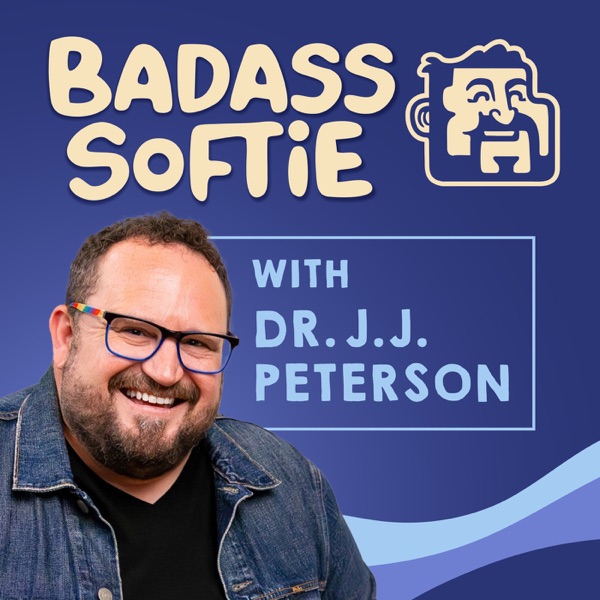
Badass Softie
A Badass Softie is unapologetically ambitious and leads with heart. Ambitious and kind. Fun and driven. Powerful and deeply human.
Badass Softie, hosted by Dr. J.J. Peterson, is a podcast that challenges the false choice leaders are too often given: be strong or be compassionate. The world doesn’t just need more leaders — it needs leaders bold enough to make an impact and compassionate enough to make it meaningful. Each episode pulls back the curtain on leaders, creators, and innovators who are rewriting the rules of what real leadership looks like. You’ll walk away with stories, insights, and practical takeaways that show you how to lead with both strength and softness — the very definition of being a Badass Softie.
Subscribe and step fully into the kind of leader the world is waiting for.
- Episodes
- 64
- Releases
- Weekly
- Typical length
- 35 min
- On air since
- 2025
- Latest episode
- 2 days ago
Episodes
64 episodes, newest first
-
46 min
Becoming a More Confident Speaker Starts Here | Aleya Harris
Episode 64
Show notes
What if becoming a more confident public speaker doesn't start with what you do on stage, but with how well you know yourself?
Award-winning speaker and Spark the Stage author Aleya Harris joins Dr. J.J. Peterson to explore why great public speaking begins with understanding who you are, recognizing the value of your expertise, and finding a speaking style that feels authentic to you.
Aleya shares her Get Real, Get Clear, Get Connected approach, along with her STEAM framework for structuring presentations that engage audiences and make your message memorable. They also explore how developing your skills as a speaker can open doors to unexpected business opportunities.
Whether you're preparing for your first presentation or looking to become a more effective speaker, Aleya offers a practical place to begin.
Connect with Aleya Harris
Website:https://www.aleyaharris.com/
Book: Spark the Stage
Follow Badass Softie
Instagram:https://www.instagram.com/badasssoftiepod/
Website:https://www.badasssoftie.com/
-
40 min
Getting What You Want Is Only the Beginning | Kelly Lyndgaard of Unshattered
Episode 63
Show notes
Getting what you want doesn't mean you'll automatically know what to do next. Sometimes achieving something meaningful is where the real learning begins.
Kelly Lyndgaard loved her successful corporate career. But when she discovered the challenges women faced after addiction recovery treatment, she saw a problem she wanted to help solve. She founded Unshattered, an organization that employs women in recovery to create premium handbags from reclaimed materials.
Building Unshattered required more than believing in its mission. Kelly had to challenge her assumptions about what people needed, understand what motivated customers to support the business, and recognize that even positive change can come with unexpected loss.
Dr. J.J. Peterson and Kelly explore the gap between knowing what you want to accomplish and figuring out how to make it happen. From building a sustainable organization to navigating personal transitions, their conversation is a reminder that meaningful change takes both humility and determination.
What This Explores
• Having a clear purpose doesn't mean you have all the answers.
• Understanding what people actually need may require questioning your assumptions.
• A meaningful mission still needs a business model that works.
• Moving toward something better can involve grieving what you're leaving behind.
• Lasting leadership requires the determination to keep going and the humility to keep learning.Connect With Kelly
Follow Badass Softie
Instagram:https://www.instagram.com/badasssoftiepod/
Website:https://www.badasssoftie.com/
-
31 min
Create the World You Wish Existed
Episode 62
Show notes
You have an idea you've been thinking about for years. Maybe people have even told you they want it. So why haven't you made it happen?
Creating something new means taking a risk. What if nobody shows up? What if it doesn't work? What if you're not the right person to do it? But what if the thing you're afraid to create could bring more happiness, connection, and meaning into your life—and someone else's?
After finally bringing two long-imagined events to life, Dr. J.J. Peterson reflects on what he learned from Arthur Brooks, former Disney innovation leader Duncan Wardle, and a six-year-old storyteller about creativity, courage, and what becomes possible when we invite other people into our imagination.
What This Explores
•
Why we hesitate to create things we care about, even when people want them
•
How creativity contributes to enjoyment, satisfaction, and meaning
•
Why you might be more creative than you give yourself credit for
•
How asking "What if?" can open possibilities you've stopped considering
•
What becomes possible when you create something others can participate in
Become the Obvious Choice
After a sold-out first event, Become the Obvious Choice returns December 4 in Nashville. Join J.J., Julie Firth, and Sonia Widham for a day of working through real business challenges alongside other entrepreneurs.
Learn more: https://become-the-obvious-choice.com/
Follow Badass Softie
Instagram: https://www.instagram.com/badasssoftiepod
Website: https://www.badasssoftie.com
-
33 min
What If Your Job Is to Create More Magic? | Will Guidara
Episode 61
Show notes
What if part of your job is to create more magic?
After attending Will Guidara's Welcome Conference in New York, Dr. J.J. Peterson found himself returning to a conversation that had already changed how he thinks about work, creativity, and the people around him. Listening again, he discovered new meaning in an idea that sounds simple but can be surprisingly difficult to practice: making ordinary moments extraordinary.
Will Guidara, bestselling author of Unreasonable Hospitality, helped turn Eleven Madison Park into the number one restaurant in the world by caring as much about how people felt as he did about the food they were served. But his philosophy goes far beyond restaurants. It's about noticing people, creating moments of connection, and being willing to invest more energy into an experience than anyone might reasonably expect.
J.J. and Will explore why the most meaningful things we do aren't always the most practical, why joy deserves a place in everyday life, and what becomes possible when we stop talking ourselves out of generous ideas.
What This Conversation Explores:
• Why making people feel seen can transform the experience of work
• How hospitality applies to every business, not just restaurants
• Why creating memorable moments sometimes requires unreasonable effort
• What we miss when every idea has to produce an immediate financial return
• Why joy and celebration shouldn't be reserved for special occasions
• How small acts of generosity can create more magic in everyday lifeDuring their conversation, J.J. shares an idea for a community event that he's not entirely sure he should pursue. Now, months later, he's bringing that idea to life—a fitting reminder of Will's encouragement to stop letting good ideas pass us by.
Because creating more magic doesn't necessarily require a grand gesture. Sometimes it simply means noticing an opportunity to make someone's day better and choosing to act on it.
Mentioned in This Episode
• Unreasonable Hospitality: https://www.unreasonablehospitality.com/products/unreasonable-hospitality-the-remarkable-power-of-giving-people-more-than-they-expect
• The Unreasonable Hospitality Field Guide: https://www.unreasonablehospitality.com/products/unreasonable-hospitality-the-field-guide
• Website: https://www.unreasonablehospitality.com
• Milk Bar: https://milkbarstore.comFollow Badass Softies
-
35 min
Some Answers Only Come After You Start | Jill Pickering
Episode 60
Show notes
You have an idea you keep coming back to. A book you want to write. A podcast you want to start. A business, creative project, or next chapter you can see yourself pursuing.
But starting means finding out what happens when the idea leaves your head. What if it isn’t as good as you thought? What if nobody wants it? What if you don’t know exactly what you’re doing yet?
Jill Pickering has spent more than 20 years making creative work as a musician, songwriter, producer, podcaster, and author, including touring with Kelly Clarkson. She’s also learned that you can’t answer every question about an idea before you begin.
Jill and Dr. J.J. Peterson explore what changes when you stop requiring certainty before taking the first step. They talk about starting small enough to learn from what happens, finding your voice by actually using it, recognizing real signs that an idea has potential, and recovering when something you put into the world doesn’t go the way you hoped.
Because sometimes the next step isn’t another plan. It’s making enough of the thing to discover what comes next.
What This Explores
• Starting before you know whether the idea will work
• Using small experiments to discover what comes next
• Finding your voice through making, not just planning
• Looking for real signs that your work is connecting
• Recovering when the response—or the work itself—falls short
• Defining success for yourself as the work evolvesConnect with Jill Pickering
• Instagram:@jipimusic
• Website:https://jipicreative.com/http://jipicreative.com
• Podcast: Take a Jill PillFollow Badass Softie
Instagram: https://www.instagram.com/badasssoftiepodhttps://www.instagram.com/badasssoftiepod/Website: https://www.badasssoftie.com
-
42 min
When Good Communication Isn’t Creating Connection
Episode 59
Show notes
We have more language for healthy communication, boundaries, and emotions than ever before. So why can our relationships still leave us feeling so disconnected?
Dr. Lee Long believes part of the problem may be where we put our attention. When a conversation becomes difficult, we often focus on finding the right words to get the other person to understand, respond differently, or change. We may genuinely believe we’re trying to communicate better, without realizing how much energy we’re putting into managing the outcome.
Dr. J.J. Peterson and Lee explore what changes when we bring some of that attention back to ourselves. They talk about the difference between influence and control, the stories we create when we assume we know what someone else is thinking, and why anxiety can make it difficult to recognize what we’re actually feeling.
Lee also shares a simple question that can interrupt those patterns: Where am I in this? Because understanding where you are doesn’t mean avoiding the difficult conversation. It can help you decide how you want to show up in it.
What This Explores
• Why trying harder to communicate doesn’t always create more connection
• When communication can quietly become an attempt to control the outcome
• The difference between influence and control
• How mind reading and old patterns contribute to conflict and disconnection
• What anxiety and other emotions may be trying to tell us
• How “Where am I in this?” can help us choose what to do nextConnect with Dr. Lee Long
Follow Dr. Lee Long on social media: @dr.leelong
Learn more about Lee, his book Wait! Where Am I in This?, his podcast, and his work at http://drleelong.com.
Follow Badass Softie
Instagram: https://www.instagram.com/badasssoftiepod/Website: https://www.badasssoftie.com/
-
35 min
Let AI Make Room for What Only You Can Do
Episode 58
Show notes
AI can write, research, organize, automate, and produce at a scale that would have been impossible for most people a few years ago.
But Dan Cumberland thinks the more interesting question is what all of that frees you up to do.
As AI takes on more of the execution, it can create room to go deeper—to spend more time on the ideas that are working, the problems worth solving, and the decisions that need your experience and judgment. It can also force a bigger question: If technology can perform more of the tasks you associate with your work, where do you bring the most value?
Dan and Dr. J.J. Peterson explore what to hand off to AI, how to identify the deeper value you bring beyond the tasks you perform, and why the time AI gives back doesn't have to be filled with more work. Because the real opportunity may be letting technology do more of what it can do so you have more room for what only you can do.
What This Explores
• How AI can create more room for higher-value work
• Where your experience, judgment, and perspective matter most
• How to identify the execution AI can take off your plate
• Why getting time back doesn’t automatically mean producing more
• How AI can help you go deeper on the work that’s already creating value
• Why human judgment and transparency matter as AI scales your workMentioned
• Pacemark AI Maturity Assessment: https://pacemark.ai
• AI Training Guide: https://aitrainingguide.com
• Dan Cumberland Labs: https://dancumberlandlabs.comFollow Badass Softie
Instagram:https://www.instagram.com/badasssoftiepod/Website:https://www.badasssoftie.com/ -
20 min
What Can You Do When You Can’t Fix It?
Episode 57
Show notes
What do you do when a problem is so big that anything you could possibly do feels insignificant?
On September 11, 2001, Dr. J.J. Peterson was thousands of miles from home, volunteering with a medical clinic in a rural village in the Dominican Republic. With almost no information and no way to change what was happening back home, someone in his group finally asked a simple question: “What can we do?”
Twenty-five years later, J.J. still comes back to that question when the suffering in the world feels too big to hold, much less fix. He reflects on the difference between control and agency, Viktor Frankl’s idea of tragic optimism, and how we find meaningful ways to respond when some things simply can’t be fixed.
What This Explores
• Why having no control doesn’t mean having no agency
• What Viktor Frankl meant by “tragic optimism”
• What research after 9/11 revealed about the search for meaning
• Why small acts of care still matter when the problem feels overwhelming
• A different question to ask when “why?” has no satisfying answerMentioned in This Episode
• Man’s Search for Meaning by Viktor Frankl: https://www.amazon.com/Mans-Search-Meaning-Viktor-Frankl/dp/0807014273
• Website: https://www.drjjpeterson.comFollow Badass Softie
-
27 min
When Changing the Plan Feels Like Failure
Episode 56
Show notes
You’re used to being the person who follows through. So when plans change, it can feel personal.
Dr. J.J. Peterson had just celebrated a year of Badass Softie without missing an episode. Then interviews moved, a new client required unexpected travel, his daughter left for college, and suddenly the plan he had been following no longer fit his life. Instead of simply adjusting, JJ found himself wondering if he was dropping the ball.
But changing the plan isn’t the same as giving up on what matters. JJ explores why ambitious people can be so quick to judge themselves when circumstances change, why being harder on yourself may not actually help you move forward, and how to distinguish between abandoning a commitment and finding a different way to honor it.
What This Explores
•
Why changing the plan can feel like a personal failure
•
The difference between changing your approach and giving up
•
What unfinished commitments can do to your attention
•
Why grace may be a better motivator than self-criticism
•
Three questions to help you decide what moving forward looks like now
Follow Badass Softie
Instagram: https://www.instagram.com/badasssoftiepod/
Website: https://www.badasssoftie.com/ -
31 min
Staying Grounded When Things Get Hard
Episode 55
Show notes
Something will eventually not go according to plan.
Maybe a project doesn’t turn out the way you hoped, a difficult conversation catches you off guard, or life takes you in a direction you didn’t expect. You can’t control all of it, but you can get better at what happens next.
Dr. J.J. Peterson talks with wellbeing educator, author, and Self-Care Sensei Jan Raeder about how knowing yourself can help you stay grounded when things get hard—and respond with more intention when they do.
Drawing from positive psychology, behavioral change research, and 30 years in martial arts, Jan offers a different way to think about self-care. It isn’t only about stepping away from difficult things. It’s also about understanding your reactions, recognizing the stories you carry, and building the resilience to move forward without pretending everything is okay.
What You’ll Take Away
• What happens when you start taking difficult conversations personally
• How old stories can shape the way you respond to what’s happening now
• Why challenging yourself can help you better understand what you’re capable of
• A simple practice for pausing and examining your reactions
• How to practice optimism without ignoring what went wrongGo Deeper With Jan
Jan explores her M.O.R.E. framework—Meaning, Optimism, Relationships, and Engagement—in Strive for M.O.R.E.: What Wellbeing Really Means and How You Can Achieve It. If you want to put these ideas into practice and better understand what supports your own wellbeing, Get a copy of Strive for M.O.R.E. here - https://selfcaresensei.com/purchase
You can also learn more about Jan and her work as the Self-Care Sensei - https://selfcaresensei.com
Follow Badass Softie
Instagram:https://www.instagram.com/badasssoftiepod/https://www.instagram.com/badasssoftiepod
Website: https://www.badasssoftie.com -
30 min
Courage Is Something You Practice
Episode 54
Show notes
A year ago, Dr. J.J. Peterson launched Badass Softie with a lot of questions. What if nobody listened? What if it went nowhere? And maybe the hardest one: Who am I to do this?
A year later, the fear wasn't the thing that disappeared. J.J. changed.
After a year of conversations about ambition, vulnerability, leadership, visibility, work, and what it means to stay human while doing big things, one idea keeps rising to the surface: courage isn't something you either have or you don't. It's something you practice.
Sometimes courage means moving forward. Sometimes it means changing the plan, asking for help, telling yourself the truth, letting yourself be seen, or having the conversation you'd rather avoid. And sometimes the people around you are what make the brave thing possible.
What This Explores
•
Why courage isn't the absence of fear — or something you have to wait to feel
•
How doing difficult things gives you new evidence about what you're capable of
•
Why changing direction, asking for help, and letting yourself be seen can all be acts of courage
•
How safety and support can make people more willing to take meaningful risks
•
Why the people you surround yourself with can change what becomes possible
From the Conversation to the Room
One of J.J.'s biggest realizations from the past year is that courage rarely happens alone. The people who challenge us, remind us who we are, offer a different perspective, and sit with us when we don't know what to do next can change the decisions we're able to make.
That's also what's behind Become the Obvious Choice (https://become-the-obvious-choice.com/), a one-day intensive J.J. is hosting with Julie Firth and Sonya Whittam on October 9 in Nashville.
This isn't a conference built around sitting back and collecting more information. It's a small, carefully curated room where experienced business owners and leaders can bring a real challenge, put their thinking in front of people who understand what it's like to build a business, challenge their assumptions, and leave with a clearer way forward.
Because sometimes the next brave thing isn't figuring it all out yourself.
Sometimes it's putting the decision in the right room.
Learn more and secure your place at Become the Obvious Choice.
Mentioned Episodes
• Allison Trowbridge: The Company Changed. The Mission Didn't.
• Heather Adams: Building Visibility Without Becoming Performative
• Ally Fallon: Trusting Yourself When the Outcome Isn't Guaranteed
• Matt Turner: Are You Being Kind—or Just Avoiding Conflict?
• J.J. Peterson: Confidence Isn't What Creates Courage
• Jen Hatmaker: The Price of Integrity
• Will Guidara: What We Lose When Everything Has To Be Productive
• Kris Jones:The Hardest Marketing Decision You'll Ever Make
• Raj Lulla: Stop Marketing Like Everyone Is a StrangerFollow Badass Softie
-
40 min
Are You Being Kind—or Just Avoiding Conflict?
Episode 53
Show notes
It’s easy to tell yourself you’re being kind when you decide not to say the hard thing. You don’t want to hurt someone, create tension, or turn a small problem into a bigger one. But what if avoiding the conversation isn’t actually kindness?
Matt Turner learned that putting people first sometimes means making people uncomfortable. After growing Clownfish Events into a multimillion-dollar company recognized as one of the UK’s best places to work, he built a culture where employees practiced giving honest feedback—even when that meant telling the person running the company what was difficult about working with him.
Matt and Dr. J.J. Peterson explore the difference between psychological safety and comfort, why accountability and kindness aren’t opposites, and what leaders teach their teams by the way they respond when someone challenges them.
And the responsibility doesn’t belong only to the boss. If something at work isn’t working for you, Matt challenges you to consider whether you’ve actually had the conversation that could change it—and shares how to approach that conversation with honesty, generosity, and specificity.
Because sometimes the kind thing isn’t keeping the peace. It’s creating enough trust to say what needs to be said.
Learn more about Matt and his work at matthewturner.com.
Catch up with Matt:
• Matt Turner’s YouTube channel: Work With Matt
• https://matthewturner.com
• Matt Turner on LinkedIn
• Clownfish EventsFollow Badass Softie
Instagram: https://www.instagram.com/badasssoftiepod
Website: https://www.badasssoftie.com
-
26 min
The 3 Marketing Emails Every Business Needs
Episode 52
Show notes
Ever spend more time deciding what to write than actually writing it?
If marketing feels harder than it should, the problem may not be your writing. You may simply be asking the wrong question.
Dr. J.J. Peterson remembers sitting down every week to write emails and wondering what to say. Everything changed when he stopped asking, "What should I write?" and started asking, "What does this email need to do?"
Dr. J.J. Peterson closes out this marketing series by sharing three email frameworks you can return to again and again. Each one has a different job, helping move a customer forward at a different stage of the relationship. When you understand the purpose of the email you're writing, creating consistent marketing becomes much simpler.
What You'll Take Away
• The one question that makes writing marketing emails much easier
• The three email frameworks every business can use repeatedly
• Why customers hesitate—even when they already have enough information
• How to use testimonials to reduce risk instead of simply collecting praise
• A simple structure for addressing objections before they stop a saleReady to Make Your Marketing Easier?
If writing emails, updating your website, or explaining what your business does always feels harder than it should, the problem may not be your writing—it may be a lack of clarity. Dr. J.J. Peterson helps organizations clarify their message so customers immediately understand what they do, why it matters, and what to do next.
Learn more at https://www.drjjpeterson.com/.
Resources
• Influence by Robert Cialdini
• Information Gap Theory by George LoewensteinFollow Badass Softie
Instagram: https://www.instagram.com/badasssoftiepod
Website: https://www.badasssoftie.com -
37 min
Stop Marketing Like Everyone Is a Stranger
Episode 51
Show notes
If your marketing feels exhausting, you're not imagining it.
Every week there's another platform to learn, another algorithm to understand, and another tactic promising to help you reach more people. But what if the problem isn't that you need more attention? What if it's that you're acting as though every customer relationship starts at zero?
Marketing strategist Raj Lulla believes we've been taught to chase strangers while overlooking the people who already know us, trust us, and want to see us succeed. In this conversation with Dr. J.J. Peterson, he challenges the assumption that growth comes from more followers and explains why generosity, referrals, and genuine relationships still outperform attention in the long run.
What You'll Take Away
• Why your best customers may already be closer than you think
• How relationships create more sustainable growth than chasing attention
• What happened when one agency traced where its best clients actually came from
• Why exceptional customer experiences are your strongest marketing strategy
• A simple question that can completely change how you think about growing your businessWhether you're building a business, leading a team, or simply feeling worn out by the pressure to constantly create more content, this conversation offers a different way to think about marketing—one that's built on trust instead of endless attention.
If it resonates with you, share it with someone who's working hard to grow their business but may be overlooking the relationships that can help them grow it.
Mentioned in this Episode
Lulla Consulting: https://www.lullaconsulting.com
Follow Badass Softies
Instagram: https://www.instagram.com/badasssoftiepod
Website: https://www.badasssoftie.com
-
42 min
The Best Marketing Isn't About You
Episode 50
Show notes
The best marketing isn't about getting people to notice you. It's about helping the right people recognize themselves in what you have to say.
Too often, business owners treat marketing like a performance—trying to sound more professional, more polished, or more like everyone else. But the more you edit yourself out of your message, the harder it becomes for the people you were meant to serve to connect with you.
In this episode, Dr. J.J. Peterson talks with StoryBrand guide and former Broadway actor Matt Wolfe about why your voice matters, how to stop performing, and why the most effective marketing starts by focusing less on yourself and more on the people you're trying to help.
What You'll Learn
• Why the best marketing isn't about you—it's about the people you're trying to serve.
• How trying to sound "professional" can actually weaken your message.
• Why your unique voice helps the right customers recognize they've found the right guide.
• The surprising connection between Broadway performance and authentic marketing.
• Matt's four-word mindset shift for walking into any room with confidence.
• A practical first step to clarifying what you want your business to be known for.Ready to put this into practice?
One of the best ways to clarify your marketing message is to write a simple one-liner that explains who you help, what problem you solve, and why it matters.
Download Dr. J.J. Peterson's free One-Liner Worksheet and start building the message your customers will actually connect with. https://www.drjjpeterson.com/one-liner
Mentioned in This Episode
• Brand3: https://www.brand3.net
• The CEO's Heart for Service Podcast: https://www.brand3.net/the-ceo-heart-for-service-podcast -
29 min
The Hardest Marketing Decision You'll Ever Make
Episode 49
Show notes
What if the biggest reason your marketing isn't working has nothing to do with your website, your social media, or your messaging?
What if it's the decision you've been avoiding?
After spending more than two decades helping global brands like Nike and Adidas tell clearer stories, Kris Jones made a surprising move—she narrowed her own business to focus on one specific audience. That decision didn't make her business smaller. It made her message unforgettable.
In this episode, Kris joins Dr. J.J. Peterson to explore why the hardest marketing decision isn't choosing another platform or creating more content. It's deciding what you want to be known for—and having the courage to let everything else become secondary.
Together they discuss why clarity attracts better clients, why repeating yourself is one of the most effective marketing strategies, and why the fear of excluding people often keeps businesses from ever becoming truly memorable.
If you've ever worried that choosing one message means closing doors, this conversation may completely change the way you think about marketing.
In This Episode
• Why becoming known starts with making one difficult decision
• Why narrowing your message doesn't have to mean limiting your business
• How to serve multiple audiences without confusing your brand
• The StoryBrand framework and why every great story begins with a customer who has an unsolved problem
• The two questions Kris uses to uncover what businesses should really be known for
• Why saying "no" often leads to attracting more of the right clients
• How repetition builds trust—and why you're probably changing your message too soonReady to Clarify Your Message?
If this episode challenged you to think differently about what you want to be known for, here are two free resources to help you take the next step.
From Dr. J.J. Peterson: Download the One-Liner Worksheet to clarify your message and create a simple, memorable way to communicate the value you bring.
👉 https://www.drjjpeterson.com/one-linerFrom Kris Jones: Download The Five StoryBrand Soundbites That Bring You More Clients to learn how to confidently talk about your business in a way that attracts the right people.
👉 https://www.reddoorstories.com/free-resources -
22 min
Why Customers Don't Remember Your Business
Episode 48
Show notes
Your company probably doesn't have a differentiation problem.
It has a memory problem.
Dr. J.J. Peterson kicks off a new marketing series by exploring one of the biggest misconceptions he encounters in strategy sessions. Most businesses believe they need to stand out from the competition. In reality, many simply haven't decided what they want customers to remember.
Using research from psychology, a famous farmers market experiment, and examples from some of the world's most recognizable brands, J.J. explains why saying more often makes your message weaker—and why clarity is one of the most generous things you can offer your customers.
What You'll Take Away
• Why most businesses have a clarity problem, not a differentiation problem
• How too many messages create confusion instead of confidence
• What a famous jam study reveals about customer decision-making
• Why memorable brands aren't always the ones with the most value
• A practical exercise to identify the three things you want customers to rememberWhether you're leading a company, building a personal brand, growing a business, or sharing an idea that matters, this conversation will help you communicate with greater clarity so the people you're meant to serve remember you.
If you're trying to figure out what your business should be known for, this is the work Dr. J.J. Peterson helps leaders and organizations do every day. Visit https://www.drjjpeterson.com/ to learn more about his messaging and marketing strategy workshops and how to build a brand customers actually remember.
Follow Badass Softie
-
18 min
The Leaders Who Take the Biggest Risks Aren't Fearless
Episode 47
Show notes
Some leaders seem willing to make impossible decisions. They change careers. Walk away from security. Speak uncomfortable truths. Bet on themselves when success is anything but certain.
What if courage isn't what makes those decisions possible?
Dr. J.J. Peterson explores a childhood moment that completely changed the way he understood risk, independence, and the people who quietly give us the confidence to become who we're meant to be. It's a story about fathers, belonging, and one surprising realization that shaped every bold decision that followed.
What This Explores
• Why courage may have less to do with fearlessness than you think
• The hidden foundation behind life's biggest risks
• A surprising definition of independence
• How leaders create the safety that helps others grow
• The lasting impact of knowing someone is truly on your sideIf this reflection resonated with you, share it with someone who has helped you become braver simply by believing in you. We think they're a Badass Softie.
Follow Badass Softie
-
36 min
Why We Perform Instead of Telling the Truth
Episode 46
Show notes
Most people don't set out to become performers.
But over time, it's easy to trade pieces of ourselves for approval, success, certainty, or the version of us we think other people want to see.
Dr. J.J. Peterson sits down with author and book coach Ally Fallon for a conversation about authenticity, ambition, and the courage it takes to tell yourself the truth. Together, they explore why so many people lose touch with their own voice while chasing external validation, how performance can quietly replace authenticity, and what it means to trust yourself when the rewards aren't immediate.
Ally shares lessons from a season that brought her family to the brink of bankruptcy, the unexpected insights that emerged from a 30-day Instagram experiment, and why some of the most important growth happens long before anyone else can see it.
For leaders who have ever wondered whether they're building a life that feels true—or simply becoming what the world rewards—this conversation offers a different way to think about success.
What This Explores
• Why finding your authentic voice takes courage
• The difference between your inner and outer horizon
• Why we perform for approval without realizing it
• Letting go of likes, views, and external validation
• What failure can teach us about purpose
• Why meaningful work doesn't always make immediate sense
• Listening when your body tells you something is out of alignment
• Leading with authenticity instead of performanceIf this conversation resonated with you, consider following Badass Softie and sharing it with someone who may need the reminder that success and authenticity don't have to be at odds.
Mentioned in This Episode
The Artist's Way: https://juliacameronlive.com/book/the-artists-way-a-spiritual-path-to-higher-creativity
Ally Fallon on Instagram: https://www.instagram.com/allyfallonFollow Badass Softie
-
31 min
What Happens When Everything Becomes Practical
Episode 45
Show notes
What if the moments that change someone's day are the ones we almost talk ourselves out of?
The compliment we never give.
The thank you we never send.
The invitation we never make.
The extra effort we decide isn't necessary.
In this conversation, Dr. J.J. Peterson sits down with bestselling author and hospitality expert Will Guidara, author of Unreasonable Hospitality, to explore a simple idea that has the power to change how we lead, work, and live:
Never let a gracious impulse pass.
From a brief conversation with a catering team that still talks about the experience years later to creating moments of surprise and wonder that people never forget, Will shares why hospitality has very little to do with restaurants and everything to do with making people feel seen.
Along the way, they discuss why affirmation matters more than we realize, why some of the most meaningful things we do will never show up on a spreadsheet, and why creating a little more magic in the world might be one of the most important responsibilities we have as leaders.
What This Episode Explores
• Why people never outgrow the need to feel seen
• What hospitality really means beyond customer service
• The competitive advantage of caring
• Why some ideas are worth more than their immediate return
• How to create moments people remember
• Why joy shouldn't be reserved for special occasions
• What happens when we stop letting gracious impulses passIf this episode makes you think of someone, don't just send them the link.
Tell them why.
Mentioned in This Episode
• Unreasonable Hospitality: https://www.unreasonablehospitality.com/products/unreasonable-hospitality-the-remarkable-power-of-giving-people-more-than-they-expect
• The Unreasonable Hospitality Field Guide: https://www.unreasonablehospitality.com/products/unreasonable-hospitality-the-field-guide
• Website: https://www.unreasonablehospitality.com
• Milk Bar: https://milkbarstore.comFollow Badass Softie
Management lists
More Management shows picked out from the charts









More in Management
Placed highest on Apple Podcasts' Management chart right now