Podcast
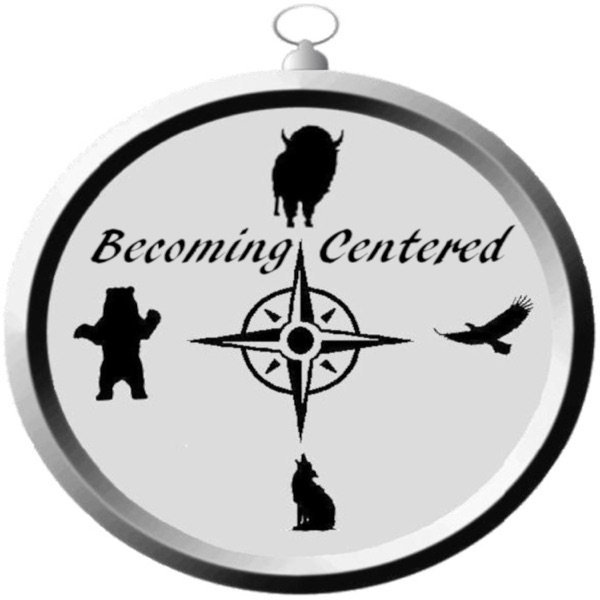
Becoming Centered
This podcast is a field guide for professionals seeking perspectives and techniques for helping others find their balanced path. It's also for people who want to learn the self-counseling pathways, navigation tools, and practices to live a centered life. Organized into several series, this podcast focuses on: (1) understanding the territory of personal psychology, (2) tools and techniques for counseling others in how to develop a centered and balanced life, and (3) tools and techniques for navigating your own emotional, cognitive, behavioral, and self-regulation challenges.
- On air since
- 2023
- Episodes
- 83
- Releases · typical length
- Every two weeks · 32 min
- Latest episode
- 5 days ago
Episodes
83 episodes, from the first
Season 1
-
22 min
1. The Role of Residential Counselor
Episode 1
Show notes
Welcome to the first episode of Becoming Centered. This episode begins the Residential Counselor Orientation series, designed for the new Residential Counselor. It introduces a way to understand your role, your relationship with clients and other counselors, and introduces some basic tools for becoming a skilled Residential Counselor.
Episode 1 focuses on a specific understanding of the role of a Residential Counselor. For related resources check out the Bear Clan, llc website at https://www.BearClanllc.com.
There's different types of residential treatment programs for serving school-age children. The length of treatment and the setting can greatly vary.
The extent to which residential treatment is a therapeutic and transformational experience will greatly depend on the quality of the relationships formed between residential staff and the clients.
Staying in a professional role can be challenging for a variety of reasons. However, that's the ideal for which to strive.
"Counseling" can be thought of as helping people improve their ability to become centered.
It's helpful to understand the brain and personal psychology in terms of four domains of functioning:
• Emotions
• Cognitions
• Behaviors
• Executive SkillsPossible areas on which to focus during your orientation period include:
• · Assist clients with becoming emotionally centered by presenting yourself in a calm and organized fashion. It's okay if that feels like you're just acting; give yourself time to grow into this complex role.
• · Assist clients with becoming cognitively centered by learning the daily schedule and helping clients be organized and prepared for the tasks associated with the different parts of the schedule.
• · Assist clients with becoming behaviorally centered by attending to their basic physical needs for hydration, food, rest, sleep, exercise, etc. Also take care to attend to your own basic needs so that you're able to function at a high level despite the difficult hours of your work day. Help clients learn to co-regulate their nervous system with yours by playing with them and having fun with them.
• · Assist clients with their developing executive skills by supporting their self-regulation of their own emotions, cognitions, and behaviors. Asking clients what comes next in the schedule and what preparation is needed, is a simple way to get them to think ahead and practice their executive skills. -
35 min
2. Professional Boundaries for Residential Counselors
Episode 2
Show notes
Professional boundaries includes:
1. the schedule of when you'll have contact with the kids,
2. limits on physical touch,
3. limits on personal disclosure, and
4. the general tone of the professional relationship.
1. Your contact with clients is during scheduled hours.
• Be polite but minimize any accidental contact with clients outside of work.
• Don't talk about your clients in public.2. Limits on physical touch.
• Providing Physical Assistance: If your clients require physical assistance with hygiene, always be business-like and clinical.
• Affectionate Touch: Kids thrive on affectionate touch but because of the treatment issues common in residential programs your organization likely has guidelines to avoid types of affectionate touch that are too intimate.
• Sexualized Touch: Sexualized behaviors toward clients is clearly a boundary violation. You may have to set limits on sexualized clients trying to relate to you in a sexualized or harassing fashion.
• Directive Touch: If your clients require physical assistance with hygiene, always be business-like and clinical. Only use directive touch in a manner consistent with your organization's trainings, policies, procedures, and practices.3. Limits on personal disclosure.
• Your relationships with the kids are based on the time you spend together, not on your personal history, your life outside of work, or the type of information you might exchange with peers in order to develop a relationship.
• Kids will test to see if you have professional personal disclosure boundaries, so have in mind some respectful ways to not answer questions about your life outside of work.
• Don't disclose personal issues that overlap with issues that the kids bring into treatment, such as drug use, unless your program directly trains and supports you in how to use that sort of disclosure in a therapeutic way.4. The general tone of the professional relationship.
• Dress like a professional. Speak like a professional. Carry yourself in a confident fashion.
• Don't promise to keep any secrets. You're part of a treatment team and may be professionally obligated to share any information you learn from a client.
• Allow yourself to develop genuine caring feelings for the kids, but maintain a level of clinical distance to create an important professional emotional boundary. -
30 min
3. Therapeutic Relationships
Episode 3
Show notes
Therapeutic relationships help your clients become centered in four domains of psychological functioning. This can be visualized using The Domain Compass:
· In the East, there's the domain of emotions, consisting of feeling and moods.
· In the South, there's the domain of cognitions, consisting of thoughts and beliefs.
· In the West, there's the domain of behaviors, consisting of both all external actions and the internal actions of the physical body.
· In the North, there's the domain of executive skills and self-regulation.
1. Three relationship qualities to strive for within the domain of emotions.
· Focus on increasing clients' awareness of their own emotions.
o The Check-In technique helps clients express their feelings and moods in words or in various kinds of rating scales.
· Help sooth emotions that become too powerful or chaotic.
o The Low and Slow approach helps to cool down an overheating nervous system.
o The Organized Activities approach helps to structure a chaotic nervous system.
· Build up clients' fragile and/or low self-esteem.
o Praise works through high frequency repetition to help kids see their own strengths and worth.
o Attention helps kids feel their own worth. Often times, older kids in residential treatment still need the intense level of attention that people appear to intuitively give to pre-schoolers.
2. Two relationship qualities that help kids within the domain of cognitions.
· Increase external structures to reduce cognitive chaos.
· Break sequences down into smaller chunks.
3. Three relationship qualities that help kids become behaviorally and physiologically centered.
· Attend to kids' basic physiological needs (water, food, sleep, exercise, rest).
· Become an active and skilled listener.
· Co-regulate with kids through joining them in play.
4. One key relationship quality that helps kids in the domain of executive skills.
· Help each kid make and keep friends.
-
25 min
4. Team Building
Episode 4
Show notes
High level team work is an absolutely essential aspect of being an effective Residential Counselor.
There's a classic way to think about the formation of effective teams. It breaks team development into 5 over-lapping phases: Forming, Storming, Norming, Performing, Adjourning.
(1) Forming refers to all the dynamics that happen between team-mates when you're relatively new to working with one another.
· The key to moving through the forming phase is constant communication among team members. Let your partners know where you are, what you're doing, and which kids, or zone, you're covering.
(2) In the Storming Phase, little conflicts among your team-mates have appeared.
· The key to moving through the storming phase is feedback. Make giving you feedback as easy as possible. Make it clear to your teammates that you want to know how to excel at being an effective teammate. At least at first, focus on getting feedback on how you're doing as a member of team, rather than your work directly with the kids.
(3) In the Norming Phase routine tasks, including transitioning through all the different parts of the daily schedule, are generally going smoothly.
· The key to supporting this normative level of teamwork is appreciation. Don't take for granted when parts of the shift go well. That only happened because of you and your team-mates. Be generous in expressing your appreciation for your fellow staff do.
T (4) The Performing Phase of team development. Now, it's not just the routine parts of the shift that are going well, but the team skillful adapts and overcomes various challenges.
· Find ways to recognize and celebrate when your team performs at a high level.
5 (5) The Adjourning Phase in residential treatment is most relevant in the context of how each shift is ended. That's when you're most likely able to speak with one another. That's when you can ask for feedback, express appreciation, and celebrate the team's successes. However, there's also a really important team function that should be prioritized – and that's debriefing; specifically what's known as "Critical Incident Stress Debriefing".
· Residential treatment work frequently exposes staff to extreme situations that can have trauma-like effects. Checking-in with fellow staff at the end of the shift and sometimes telling the story of what happened, in a calm fashion, can blunt the neurological effects on your brain of intense experiences with clients.
Residential work is highly stressful and the skilled Residential Counselors attend to their own self-care. You can't effectively take care of others if you're not also taking care of yourself.
-
19 min
5. The Domain Compass and Labeling
Episode 5
Show notes
This episode reviews The Domain Compass, which is a way to visualize four domains of psychological functioning.
In the East, there's the domain of emotions, consisting of feelings and moods.
In the South, there's the domain of cognitions, consisting of thoughts and beliefs.
In the West, there's the domain of behaviors. That's includes both external behaviors and all the internal workings of your physical body and nervous system.
In the North, there's the domain of executive skills. That's where self-control is found.
Another helpful way to visualize personal psychology is captured by The Aspect Compass.
The Artist expresses emotions to communicate to others and experiences the world, largely in terms of emotions.
The Scout is in charge of exploring the world, trying to make sense of it, and reporting its findings to the rest of your brain.
The Warrior includes the parts of your brain that control your muscles and entire physical body.
The Chief gets feedback from the other aspects of your personal psychology and provides regulation through executive skills.
Labeling is a key technique for giving each kid's inner Chief the feedback it needs to do its job of self-regulation of emotions, cognitions, and behaviors. It begins with increasing each kid's awareness of their own behaviors.
Labeling is simply stating, with no attached judgment or direction, what a kid is doing, that specific moment. Attentive adults instinctively do this with very young kids; however, even older youth in residential treatment tend to have developmentally delayed executive skills.
Labeling develops kid's inner Chief through repetition. Eventually, the clients will replace your voice with an internal voice (their inner Chief's) that helps them monitor their own behaviors. As that ability strengthens, their inner Chief will also become more skilled at monitoring, at maintaining awareness of, their own emotions and thoughts as well.
On these lists
Becoming Centered is one of the shows picked out on this list