Podcast
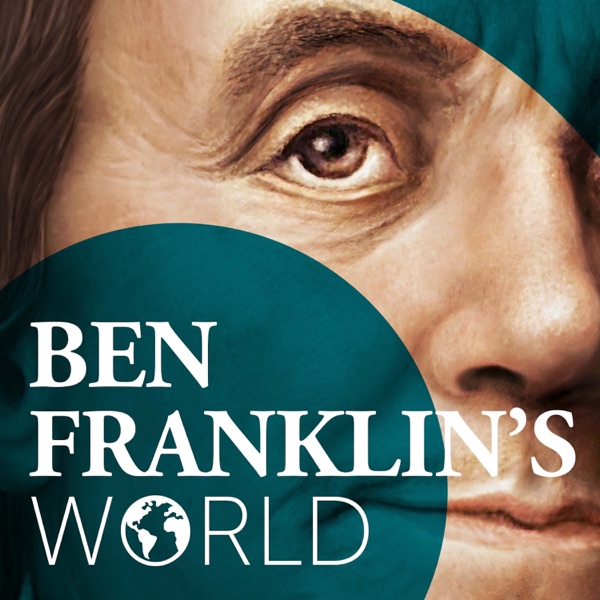
Ben Franklin's World
This is a multiple award-winning podcast about early American history. It’s a show for people who love history and who want to know more about the historical people and events that have impacted and shaped our present-day world.
Each episode features conversations with professional historians who help shed light on important people and events in early American history.
- History chart
- #140
- Episodes
- 525
- Releases
- Weekly
- Typical length
- 1 hr 13 min
- On air since
- 2014
- Latest episode
- 1 day ago
Episodes
525 episodes, newest first
-
1 hr 14 min
The Occupied City: New York and the American Revolution
Episode 455
Show notes
We talk about the 1776 New York Campaign as a series of Continental Army defeats, from Brooklyn in August to Fort Washington’s fall in November. But for New Yorkers, the campaign raised a harder question: How would they survive an occupation that lasted more than seven years?
What did the occupation look like when the Continental Army arrived in spring 1776? How did the British hold the city as they struggled to house, supply, and keep its people loyal? And what did New York City mean to the thousands of people who fled there to escape slavery?
Sarah Henry, Chief Curator Emerita at the Museum of the City of New York, and historian Blake McGready guide us through their exhibition, The Occupied City: New York and the American Revolution.
Museum of the City of New York Website| Exhibit
Show Notes:https://benfranklinsworld.com/403https://www.benfranklinsworld.com/455
EPISODE OUTLINE
00:00:00 Introduction
00:04:53 Meet Sarah Henry and Blake McGready
00:06:39 Why the British Wanted New York
00:13:57 New York's Revolutionary Politics
00:20:35 The Continental Army's Occupation of New York
00:26:47 The 1776 New York Campaign
00:31:37 Life in British-Occupied New York
00:42:06 Self-Emancipated People in Occupied New York
00:45:08 A Tour of the Occupied City Exhibition
00:56:30 Evacuation Day and Rebuilding New York
01:03:09 1776 in Context: New York's Revolutionary Legacy
01:07:46 Final Thoughts
RECOMMENDED NEXT EPISODES
🎧 Episode 113: Building the Empire State
🎧 Episode 189: The Little Ice Age
🎧 Episode 306: The Horse's Tail: Revolution & Memory in Early NYC
🎧 Episode 395: The Great New York Fire of 1776
🎧 Episode 437: Civilian Life in Revolutionary War Occupied Cities
🎧 Episode 454: Life Between Two armies: Westchester County and the American Revolution
SUPPORT OUR WORK
🎁 Make a Donation toBen Franklin’s World
REQUEST A TOPIC
📫 liz@benfranklinsworld.com
WHEN YOU'RE READY
👩💻 Join the BFW Listener Community
🌍 Join the History Explorers Club
TAKE THE QUIZ
🧭 Discover How You Explore History (under 2 minutes)
👉 https://www.benfranklinsworld.com/quiz
LISTEN 🎧
💚 Spotify
CONNECT
👩💻 Liz on LinkedIn
SAY THANKS
💜 Leave a review on Apple Podcasts
*Book links are affiliate links. Every purchase supports the podcast.
-
1 hr 12 min
454 Life Between Two Armies: Westchester County and the American Revolution
Episode 454
Show notes
On October 28, 1776, the two armies of the American Revolutionary War met in White Plains, a small town about 30 miles north of New York City. Westchester County remained a wedge between the British Army to the south and the Continental Army to the north.
For the remaining seven years of the war, both British and American patrols monitored the roads of the county, tracking enemy movement and occasionally skirmishing. Locals leaned one way or the other, sometimes changed sides, and often found themselves at odds with their neighbors.
Char Weigel, a historian with Revolutionary Westchester 250, investigates how the county became a "neutral ground” and offers us a window into how, for residents, the Revolution felt like a civil war.
Show notes: https://www.benfranklinsworld.com/454
EPISODE OUTLINE
00:00:00 Introduction
00:10:16 How Westchester Farmers Fed New York City
00:14:08 Dutch Influence in Westchester
00:22:30 The War Arrives in Westchester in 1776
00:30:50 What Local Families Saw during the Battle of White Plains
00:34:51 Life in the Neutral Ground between the Armies
00:38:24 Women, Native Americans, and Enslaved People in the Neutral Ground
00:51:22 The Benedict Arnold Plot and the Spy Caught in Westchester
00:58:23 Washington Irving and the American Revolution's Legacy
01:02:46 Lessons from a Divided County
01:08:49 Final Thoughts
RECOMMENDED NEXT EPISODES
🎧 Episode 055: John Jay: Forgotten Founder
🎧 Episode 065: Washington’s Spies: The Story of America’s First Spy Network
🎧 Episode 324: New Netherland and Slavery
🎧 Episode 332: Experiences of Revolution, Part 1: Occupied Philadelphia
🎧 Episode 333: Experiences of Revolution, Part 2: Disruptions in Yorktown
🎧 Episode 437: Civilian Life in Revolutionary War Occupied Cities
🎧 Episode 452: How Everyday Loyalists Experienced the American Revolution
SUPPORT OUR WORK
🎁 Make a Donation toBen Franklin’s World
REQUEST A TOPIC
📫 liz@benfranklinsworld.com
WHEN YOU'RE READY
👩💻 Join the BFW Listener Community
🌍 Join the History Explorers Club
TAKE THE QUIZ
🧭 Discover How You Explore History (under 2 minutes)
👉 https://www.benfranklinsworld.com/quiz
LISTEN 🎧
💚 Spotify
CONNECT
👩💻 Liz on LinkedIn
SAY THANKS
💜 Leave a review on Apple Podcasts
*Book links are affiliate links. Every purchase supports the podcast.
-
1 hr 14 min
453 Everyday LGBTQ+ Experiences in the American Revolution
Episode 453
Show notes
All year, we’ve explored the American Revolution from many vantage points, from its politics and battles to the experiences of women, enslaved and free people of color, Native Americans, and Loyalists.
In this episode, we’re going to take an LBGTQ+ lens to the Revolution.
Three historians, Rachel Hope Cleves, Jen Manion, and John McCurdy bring together different stories to explore how everyday LGBTQ+ people took part in the American Revolution and how its legacy shaped LGBTQ+ lives in the new United States.
Rachel’s Book | Jen’s Book | John’s Book
Show notes: https://www.benfranklinsworld.com/453
EPISODE OUTLINE
00:00:00 Introduction
00:05:02 Meet Our Guest Historians
00:06:51 LGBTQ+ Lives and Language in the Revolutionary Era
00:14:21 Finding a Same-Sex Marriage in the Archives
00:24:16 A British Army Chaplain Under Suspicion
00:28:33 Reading Through the Bias of Trial Transcripts
00:35:37 Fluid Identities and Historical Erasure
00:37:57 Military Service as a Path to Reinvention
00:47:40 War, Upheaval, and New Possibilities
00:54:24 LGBTQ+ People and the Culture of the New Nation
01:10:10 Final Thoughts
RECOMMENDED NEXT EPISODES
🎧 Episode 004: Sex and the Founding Fathers: The American Quest for a Relatable Past
🎧 Episode 013: Charity & Sylvia: A Same-Sex Marriage in Early America
🎧 Episode 278: Polygamy: An Early American History
🎧 Episode 359: Trans-ing Gender in Early America
🎧 Episode 414: Robert Newburgh’s Trials: Queerness & Reputation in Revolutionary America
SUPPORT OUR WORK
🎁 Make a Donation toBen Franklin’s World
REQUEST A TOPIC
📫 liz@benfranklinsworld.com
WHEN YOU'RE READY
👩💻 Join the BFW Listener Community
🌍 Join the History Explorers Club
TAKE THE QUIZ
🧭 Discover How You Explore History (under 2 minutes)
👉 https://www.benfranklinsworld.com/quiz
LISTEN 🎧
💚 Spotify
CONNECT
👩💻 Liz on LinkedIn
SAY THANKS
💜 Leave a review on Apple Podcasts
*Book links are affiliate links. Every purchase supports the podcast.
-
56 min
BFW Revisited: Religion and the American Revolution
Show notes
In late spring 1776, 150 armed revolutionary soldiers marched into the Anglican Trinity Church to warn the reverend to stop praying for King George III and his family. The reverend read the prayers anyway. Later that year, another Anglican reverend faced the same choice but made the opposite decision.
Throughout our recent conversations about Loyalism, we’ve heard that religion shaped the loyalty choices many early Americans made. In this revisited episode, Kate Carté helps us explore how the British Empire was a Protestant Empire and how the Revolution broke religious bonds, as well as political bonds.
Kate’s Book
RECOMMENDED NEXT EPISODES
🎧 Episode 214: Skepticism & American Faith
🎧 Episode 317: Jewish colonists in Early America
🎧 Episode 356: The Moravian Church in North America
🎧 Episode 392: Religion and Race in Early America
🎧 Episode 399: Denmark Vesey’s Bible
SUPPORT OUR WORK
🎁 Make a Donation to Ben Franklin’s World
REQUEST A TOPIC
📨 Topic Request Form
📫 liz@benfranklinsworld.com
WHEN YOU'RE READY
🗞️ BFW Gazette Newsletter
👩💻 Join the BFW Listener Community
🌍 Join the History Explorers Club
TAKE THE QUIZ
🧭 Discover How You Explore History (under 2 minutes)
👉 https://www.benfranklinsworld.com/quiz
LISTEN 🎧
🍎 Apple Podcasts
💚 Spotify
🎶 Amazon Music
🛜 Pandora
CONNECT
🦋 Liz on Bluesky
👩💻 Liz on LinkedIn
🛜 Liz’s Website
SAY THANKS
💜 Leave a review on Apple Podcasts
💚 Leave a rating on Spotify
*Book links are affiliate links. Every purchase supports the podcast.
-
1 hr 24 min
452 How Everyday Loyalists Experienced the Revolution
Episode 452
Show notes
We often ask why some Americans chose to remain loyal to the British and why they did not want to seek independence. But the question some Americans asked at the time of the Revolution focused more on navigating daily life: How could they protect their families, property, and honor when neighbors, committees, and crowds decided what side they were on?
Today we’re joined by three guests who will help us investigate the American Revolution through Loyalist eyes and explore how Loyalists experienced the American Revolution.
Timothy Compeau, an Associate Professor of History at Huron University College at Western University in London, Ontario; Bonnie Huskins who teaches history at St. Thomas University in Fredericton, New Brunswick; and Kacy Tillman, a professor of English and Writing at the University of Tampa.
Timothy's Book | Bonnie's Work | Kacy's Book
Show notes: https://www.benfranklinsworld.com/452
EPISODE OUTLINE
00:00:00 Introduction
00:06:07 The Origins and Definitions of the Term “Loyalist”
00:11:11 Common Misconceptions about Loyalists
00:22:52 How Communities Identified their Loyalist Neighbors
00:31:34 How Everyday Loyalists Experienced the Revolution
00:40:19 Women Loyalists and the Fear of Violence
00:50:40 Black Loyalists and the Search for Freedom
01:00:05 Post-War Animosities Between Loyalists and Revolutionaries
01:09:12 What We Still Get Wrong About the Revolution
RECOMMENDED NEXT EPISODES
🎧 Episode 085: American Loyalists in Canada
🎧 Episode 126: The Reintegration of American Loyalists
🎧 Episode 380: The Tory's Wife
🎧 Episode 421: Loyalism and Revolution in Georgia
🎧 Episode 441:The Escapes of David George
SUPPORT OUR WORK
🎁 Make a Donation toBen Franklin’s World
REQUEST A TOPIC
📫 liz@benfranklinsworld.com
WHEN YOU'RE READY
👩💻 Join the BFW Listener Community
🌍 Join the History Explorers Club
TAKE THE QUIZ
🧭 Discover How You Explore History (under 2 minutes)
👉 https://www.benfranklinsworld.com/quiz
LISTEN 🎧
💚 Spotify
CONNECT
👩💻 Liz on LinkedIn
SAY THANKS
💜 Leave a review on Apple Podcasts
*Book links are affiliate links. Every purchase supports the podcast.
-
49 min
BFW Revisited: The Reintegration of American Loyalists
Show notes
What would it take for you to forgive a neighbor who sided against you in a civil war? And what would you say to win back a community that you had fought against?
In our last episode, we explored loyalism across the Atlantic World and met Loyalists who, as serious political actors, had their own ideas about how the British Empire should operate. But the story of Loyalism didn’t end with the founding of the United States, nor with the end of the war.
In this revisited episode, Rebecca Brannon explores how South Carolina’s War for Independence was a true civil war, one that pitted neighbor against neighbor and, in some instances, fathers against sons.
RECOMMENDED NEXT EPISODES
🎧 Episode 126: Reintegration of Loyalists in South Carolina
🎧 Episode 294: 1774: The Long Year of Revolution
🎧 Episode 330: Loyalism in the British Atlantic World
🎧 Episode 380: The Tory’s Wife
🎧 Episode 421: Loyalism and Revolution in Georgia
SUPPORT OUR WORK
🎁 Make a Donation toBen Franklin’s World
REQUEST A TOPIC
📫 liz@benfranklinsworld.com
WHEN YOU'RE READY
👩💻 Join the BFW Listener Community
🌍 Join the History Explorers Club
TAKE THE QUIZ
🧭 Discover How You Explore History (under 2 minutes)
👉 https://www.benfranklinsworld.com/quiz
LISTEN 🎧
💚 Spotify
CONNECT
👩💻 Liz on LinkedIn
SAY THANKS
💜 Leave a review on Apple Podcasts
*Book links are affiliate links. Every purchase supports the podcast.
-
1 hr 7 min
BFW Revisited: Loyalism in the British Atlantic World
Show notes
In the late winter of 1775, colonists in a village outside of New York City hoisted the royal standard of King George III 75 feet into the air.
The standard raisers signed their names to a proclamation pledging to defend the king and his government. For them, defending the British crown did not mean surrender; it served as a clear statement of what it still meant to be British.
In Episode 451, we explored a court-martial trial that allowed us to see how early Americans thought about what it would mean to be an American after independence.
In this revisited episode, historian Brad Jones helps us take up the other half of that question: what did it mean to be British during the age of the American Revolution? And why did answers to this question take different forms around the Atlantic World?
Brad’s Book
SUPPORT OUR WORK
🎁 Make a Donation toBen Franklin’s World
REQUEST A TOPIC
📫 liz@benfranklinsworld.com
WHEN YOU'RE READY
👩💻 Join the BFW Listener Community
🌍 Join the History Explorers Club
TAKE THE QUIZ
🧭 Discover How You Explore History (under 2 minutes)
👉 https://www.benfranklinsworld.com/quiz
LISTEN 🎧
💚 Spotify
CONNECT
👩💻 Liz on LinkedIn
SAY THANKS
💜 Leave a review on Apple Podcasts
*Book links are affiliate links. Every purchase supports the podcast.
-
21 min
BFW Bonus: We Want More History
Show notes
American history is in the news a lot these days. We see and hear about fights over monuments, textbooks, and the stories we should include or exclude from our museums and historic markers.
What these stories overshadow is the great demand for more history in the United States. A coalition of historians and history organizations noticed this demand and decided to feed it by organizing a new initiative: A We Want More History weekend, which takes place September 25-27.
In this bonus episode, we’re joined by Beth English, the Executive Director of the Organization of American Historians, and Kate Masur, the John D. MacArthur Professor of History at Northwestern University. The guest historians share more about the origins of the national, coordinated weekend of history programs, how we can get involved, and where to find more information.
SUPPORT OUR WORK
🎁 Make a Donation toBen Franklin’s World
REQUEST A TOPIC
📫 liz@benfranklinsworld.com
WHEN YOU'RE READY
👩💻 Join the BFW Listener Community
🌍 Join the History Explorers Club
TAKE THE QUIZ
🧭 Discover How You Explore History (under 2 minutes)
👉 https://www.benfranklinsworld.com/quiz
LISTEN 🎧
💚 Spotify
CONNECT
👩💻 Liz on LinkedIn
SAY THANKS
💜 Leave a review on Apple Podcasts
*Book links are affiliate links. Every purchase supports the podcast.
-
1 hr 5 min
451 The Court-Martial That Put The American Revolution on Trial
Episode 451
Show notes
In December 1777, Continental Army Colonel David Henley climbed off his horse to discipline a drunk British prisoner of war who was screaming epithets about Americans and vowing to fight for his king. Henley struck the prisoner, one of 6,000 in his care, with his sword.
The wound was minor, but Major General John Burgoyne cited this incident when he accused Henley of plotting to murder British prisoners of war. Burgoyne demanded a formal court-martial.
Professor Timothy Breen joins us to examine Henley’s trial with details from his new book, The American Revolution on Trial. Timothy asks a question most grand narratives of the American Revolution skip past: What did it actually feel like, in real towns among real people, to stop being British? What did it mean to be American?
Timothy’s Book
Show notes: https://www.benfranklinsworld.com/451
EPISODE OUTLINE
00:00:00 Introduction
00:04:43 The 250th Anniversary and the Limits of Grand Narratives
00:09:31 How Timothy Found the Henley Court-Martial Transcript
00:13:26 Major General John Burgoyne and Aristocratic Privilege
00:23:00 Competing Ideas of Honor During the Revolution
00:29:53 Inside the Cambridge Prisoner of War Camps
00:36:23 The Two Incidents that Led to the Court-Martial
00:45:25 The Verdict and What Happened Next for Henley and Burgoyne
00:48:37 How Early Americans Judged the Revolution and the New Nation
00:53:41 What Happened to the British and German POWs in Cambridge
RECOMMENDED NEXT EPISODES
🎧 Episode 048: Dangerous Guests: Enemy Captives During the War for Independence
🎧 Episode 122: The Men Who Lost America
🎧 Episode 374: The American Revolutionary War in the West
🎧 Episode 414: Robert Newburgh’s Trials: Queerness & Reputation in Revolutionary America
🎧 Episode 434: The Frank Brothers: Freeborn Black Soldiers in the American Revolution
SUPPORT OUR WORK
🎁 Make a Donation toBen Franklin’s World
REQUEST A TOPIC
📫 liz@benfranklinsworld.com
WHEN YOU'RE READY
👩💻 Join the BFW Listener Community
🌍 Join the History Explorers Club
TAKE THE QUIZ
🧭 Discover How You Explore History (under 2 minutes)
👉 https://www.benfranklinsworld.com/quiz
LISTEN 🎧
💚 Spotify
CONNECT
👩💻 Liz on LinkedIn
SAY THANKS
💜 Leave a review on Apple Podcasts
*Book links are affiliate links. Every purchase supports the podcast.
-
52 min
BFW Revisited: The Ideological Origins of the American Revolution
Show notes
What caused the American Revolution?
Taxation without representation? Colonies that had outgrown their dependence on the British Empire? Or something harder to see: a quarrel about power itself and about what a government may rightly do to the people it governs?
In 1967, Bernard Bailyn published The Ideological Origins of the American Revolution, a book he built out of more than 400 pamphlets, and one historians have been arguing with ever since.
In this revisited conversation from Episode 152, Professor Bailyn explains why he never accepted a purely economic explanation for the Revolution, where the revolutionaries' ideas actually came from, and why colonists rationally concluded that the British government was concealing a conspiracy against their liberties.
Bernard Bailyn’s Wikipedia Page | Book|
Show Notes: https://www.benfranklinsworld.com/152
RECOMMENDED NEXT EPISODES
🎧 Episode 294: 1774: The Long Year of American Revolution
🎧 Episode 311: Religion and the American Revolution
🎧 Episode 307: History and the American Revolution
🎧 Episode 325: Everyday People of the American Revolution
🎧 Episode 407: Patrick Henry
🎧 Episode 434: The Frank Borthers: Freeborn Black Soldiers in the American Revolution
SUPPORT OUR WORK
🎁 Make a Donation toBen Franklin’s World
REQUEST A TOPIC
📫 liz@benfranklinsworld.com
WHEN YOU'RE READY
👩💻 Join the BFW Listener Community
🌍 Join the History Explorers Club
TAKE THE QUIZ
🧭 Discover How You Explore History (under 2 minutes)
👉 https://www.benfranklinsworld.com/quiz
LISTEN 🎧
💚 Spotify
CONNECT
👩💻 Liz on LinkedIn
SAY THANKS
💜 Leave a review on Apple Podcasts
*Book links are affiliate links. Every purchase supports the podcast.
-
1 hr 9 min
450 Whose Revolution? The Delaware and the War for Independence
Episode 450
Show notes
In December 1776, a Delaware Chief named White Eyes stood before the Second Continental Congress. He had not come to declare himself a revolutionary, nor had he come to pledge his loyalty to King George III. White Eyes came to test a promise.
What does the American Revolution look like to people for whom independence was never a question? For the Delaware, also known as the Lenape, the War for Independence raised older and harder questions:
Whose word could be trusted? What choices can we make about whether to fight, stay neutral, or flee that might let our community remain itself on the land we know?
Jeremy Johnson, Cultural Education Director for the Delaware Tribe of Indians, traces Lenape and Delaware history from long before European contact through the American Revolution. He also introduces us to the September 1778 Treaty of Fort Pitt, the first treaty the United States made with a Native Nation and which promised a 14th Native state.
Delaware Tribe of Indians’ Website
Show Notes:https://benfranklinsworld.com/403https://www.benfranklinsworld.com/450
EPISODE OUTLINE
00:00:00 Introduction
00:02:35 The Lenape Experience of the American Revolution
00:07:56 Lenape History and Indigenous Origin Stories
00:10:52 Diplomacy in Lenape Traditions
00:15:32 Evolution of Lenape Diplomacy Through European Contact
00:20:00 The Walking Purchase of 1737
00:24:55 Lenape Experiences of the Seven Years' War
00:32:13 Lenape Participation in Pontiac's Rebellion
00:37:17 The Delaware and the American Revolution
00:46:32 Negotiating the Treaty of Fort Pitt
00:50:16 The Hope for Delaware Sovereignty
00:52:53 The Delaware People & America's 250th
01:00:02 Time Warp
01:02:41 Resources
RECOMMENDED NEXT EPISODES
🎧 Episode 163: The American Revolution in North America
🎧Episode 264: The Treaty of Canandaigua
🎧 Episode 286: Elections in Early America: Native Sovereignty
🎧 Episode 323: American Expansion and the Political Economy of Plunder
🎧 Episode 397: Native Nations: A Millennium in North America
🎧 Episode 449: Stealing America: Indigenous Enslavement & the American Revolution
SUPPORT OUR WORK
🎁 Make a Donation toBen Franklin’s World
REQUEST A TOPIC
📫 liz@benfranklinsworld.com
WHEN YOU'RE READY
👩💻 Join the BFW Listener Community
🌍 Join the History Explorers Club
TAKE THE QUIZ
🧭 Discover How You Explore History (under 2 minutes)
👉 https://www.benfranklinsworld.com/quiz
LISTEN 🎧
💚 Spotify
CONNECT
👩💻 Liz on LinkedIn
SAY THANKS
💜 Leave a review on Apple Podcasts
*Book links are affiliate links. Every purchase supports the podcast.
-
1 hr 23 min
BFW Revisited: The Brafferton Indian School, Part 1
Show notes
In 1723, the College of William & Mary opened the Brafferton building, a permanent home for an Indian School the college had been chartered to run and struggled to fill for its first 30 years. The premise of the Brafferton: take Native boys and strategically teach them in ways that would make them more useful to the British Empire.
So what actually happened inside the Brafferton Indian School?
In this revisited episode, the first of a two-part series, our three guests investigate why the Brafferton School existed, how the English filled Brafferton with students even as Native families refused to send their children, and what the Indigenous students did with the knowledge the English taught them.
We’ll also explore how a school built on a colonial college campus during the reign of King George I connected to schools like the Carlisle School, which were still separating Indigenous children from their families in the 1950s.
Show Notes: http://www.benfranklinsworld.com/367
RECOMMENDED NEXT EPISODES:
🎧 Episode 158: The Revolutionaries' Army
🎧 Episode 290: The World of the Wampanoag, Pt. 1
🎧 Episode 291: The World of the Wampanoag, Pt. 2
🎧 Episode 353: Women and the Making of Catawba Identity
🎧 Episode 368: The Brafferton Indian School, Part 2: Legacies
🎧 Episode 449: Stealing America
SUPPORT OUR WORK
🎁 Make a Donation toBen Franklin’s World
REQUEST A TOPIC
📫 liz@benfranklinsworld.com
WHEN YOU'RE READY
LISTEN 🎧
💚 Spotify
CONNECT
👩💻 Liz on LinkedIn
SAY THANKS
💜 Leave a review on Apple Podcasts
*Book links are affiliate links. Every purchase supports the podcast.
-
1 hr 33 min
449 Stealing America: Indigenous Slavery and the American Revolution
Episode 449
Show notes
More than half a million Indigenous people were enslaved within the present-day borders of the United States.
Historian Linford Fisher spent fifteen years in archives across North America, the Caribbean, and Britain to investigate this forgotten history. What he found was not a second story running alongside African slavery. It was something different in kind. Europeans and early Americans enslaved people who lived on land they intended to possess. This practice made slavery a tool of dispossession.
The American Revolution is where this process accelerated. Lin and Lorén Spears, a Narragansett tribal citizen and the executive director of the Tomaquag Museum, trace how the Revolution opened space for captive raiding on the western frontier, how Native nations weighed which side to take during the war, and how their Stolen Relations digital project is recovering the names of the Natives early Americans enslaved.
Show Notes:https://benfranklinsworld.com/403https://www.benfranklinsworld.com/449
EPISODE OUTLINE
00:00:00 Introduction
00:01:23 The Declaration's Overlooked Grievance Against Indigenous People
00:02:29 The Other Revolutionary War
00:03:20 Investigating the Hidden History of Indigenous Enslavement
00:07:07 Uncovering the Scale of Indigenous Enslavement
00:13:43 Building Stolen Relations Through Archival and Tribal Collaboration
00:20:51 Decolonizing Archival Records
00:30:40 Connection Between Indigenous Enslavement & Land Dispossession
00:33:53 How Native Nations Navigated the American Revolution
00:37:16 From Colonial Experimentation to Revolutionary Expansion
00:41:15 How the American Revolution Expanded Indigenous Slavery
00:45:20 How Indigenous Nations Weighed Neutrality, Alliance, & Survival
00:52:51 The Declaration of Independence's Impact on Indigenous Communities
01:01:10 The Treaty of Paris, 1783 and the Continuation of Indigenous Dispossession
01:03:51 The Uncertain End of Indigenous Enslavement
01:11:59 Commemorating the American Revolution Through Indigenous History
01:24:36 Revolution to Freedom Through Indigenous Sovereignty
RECOMMENDED NEXT EPISODES
🎧 Episode 163: The American Revolution in North America
🎧 Episode 264: The Treaty of Canadaigua
🎧 Episode 323: American Expansion & the Political Economy of Plunder
🎧 Episode 367: The Brafferton Indian School, Part 1
🎧 Episode 368: The Brafferton Indian School, Part 2
🎧 Episode 406: Threads of Power
SUPPORT OUR WORK
🎁 Make a Donation toBen Franklin’s World
REQUEST A TOPIC
📫 liz@benfranklinsworld.com
WHEN YOU'RE READY
👩💻 Join the BFW Listener Community
🌍 Join the History Explorers Club
TAKE THE QUIZ
🧭 Discover How You Explore History (under 2 minutes)
👉 https://www.benfranklinsworld.com/quiz
LISTEN 🎧
💚 Spotify
CONNECT
👩💻 Liz on LinkedIn
SAY THANKS
💜 Leave a review on Apple Podcasts
*Book links are affiliate links. Every purchase supports the podcast.
-
1 hr 18 min
BFW Revisited: American Expansion & the Political Economy of Plunder
Episode 323
Show notes
The Declaration of Independence proclaimed that all men are endowed with the unalienable rights to life, liberty, and the pursuit of happiness.
But what did liberty and equality mean for the peoples the Declaration never named—the Ojibwe, Odawa, and Potawatomi nations who had governed the vast Great Lakes homeland they called Anishinaabewake for generations before a single European sailed its waters?
In this revisited conversation, historian Michael Witgen, Professor of History at Columbia University and a citizen of the Red Cliff Band of Lake Superior Ojibwe, takes us inside the Anishinaabe world and reveals how the new United States set about transforming it.
The answer, Witgen shows us, wasn't simple conquest. It was something more elaborate, more profitable, and in some ways more insidious: what he calls the political economy of plunder—a system engineered to strip Indigenous peoples of their homelands while funneling the wealth of that dispossession directly into the settler colonial economy.
Show Notes:https://benfranklinsworld.com/403https://www.benfranklinsworld.com/323
RECOMMENDED NEXT EPISODES
🎧 Episode 051: A History of Early Detroit
🎧 Episode 064: Native American Slavery in New France
🎧 Episode 163: The American Revolution in North America
🎧 Episode 223: A Native American History of the Ohio River Valley & Great Lakes Region
🎧 Episode 286: Native Sovereignty
🎧 Episode 310: History of the Blackfeet
SUPPORT OUR WORK
🎁 Make a Donation toBen Franklin’s World
REQUEST A TOPIC
📫 liz@benfranklinsworld.com
WHEN YOU'RE READY
👩💻 Join the BFW Listener Community
🌍 Join the History Explorers Club
TAKE THE QUIZ
🧭 Discover How You Explore History (under 2 minutes)
👉 https://www.benfranklinsworld.com/quiz
LISTEN 🎧
💚 Spotify
CONNECT
👩💻 Liz on LinkedIn
SAY THANKS
💜 Leave a review on Apple Podcasts
*Book links are affiliate links. Every purchase supports the podcast.
-
46 min
448 The Declaration of Independence as American Scripture
Episode 448
Show notes
The engrossed copy of the Declaration of Independence is on display at the National Archives building in Washington, DC. Millions of visitors flock to see it and the other Charters of Freedom. But how did it end up there and why do people approach it with religious reverence?
In this episode, we explore how the Declaration took on its symbolic role as the founding text of the United States.
Pauline's Book
Show Notes:https://benfranklinsworld.com/403https://benfranklinsworld.com/403
EPISODE OUTLINE
00:00:00 Introduction
00:06:30 Introducing Mary Beth Norton
00:07:17 American Scripture: Pauline Maier
00:10:00 Graduate School with Pauline Maier
00:13:36 The State of Historians' Thinking in the 1990s
00:15:23 Other Declarations of Independence
00:21:08 Thomas Jefferson's Drafting of the Declaration
00:23:44 Why Create a Parchment Copy of the Declaration?
00:28:24 How the Declaration Became American Scripture
00:30:32 The Impact of American Scripture
00:32:10 Situating the Declaration in the American Revolution
00:35:39 The Role of the Parchment Copy Today
00:40:12 Closing Thoughts on Pauline Maier
RECOMMENDED NEXT EPISODES
🎧 Episode 141: A Declaration in Draft
🎧 Episode 155: Pauline Maier's American Revolution
🎧 Episode 294: 1774: The Long Year of Revolution
🎧 Episode 325: Everyday People of the American Revolution
🎧 Episode 415: The Many Declarations of Independence
SUPPORT OUR WORK
🎁 Make a Donation toBen Franklin’s World
REQUEST A TOPIC
📫 liz@benfranklinsworld.com
WHEN YOU'RE READY
👩💻 Join the BFW Listener Community
🌍 Join the History Explorers Club
TAKE THE QUIZ
🧭 Discover How You Explore History (under 2 minutes)
👉 https://www.benfranklinsworld.com/quiz
LISTEN 🎧
💚 Spotify
CONNECT
👩💻 Liz on LinkedIn
SAY THANKS
💜 Leave a review on Apple Podcasts
*Book links are affiliate links. Every purchase supports the podcast.
-
54 min
BFW Revisited Threads of Power Bonus
Show notes
For the Haudenosaunee, the Six Nations People, the American Revolution brought not liberty, but land loss, displacement, and the dismantling of their world. The new United States seized land from Haudenosaunee nations regardless of which side they supported during the Revolution. And yet the Haudenosaunee survived, and Haudenosaunee women are central to this story.
In this revisited episode, Maeve Kane, Associate Professor of History at the University at Albany and author of Shirts Powdered Red, reveals how Haudenosaunee women used cloth, trade, and cultural creativity as tools of sovereignty and survival across three centuries of colonial pressure.
Maeve's Website | Book |
Show Notes:https://benfranklinsworld.com/403https://www.benfranklinsworld.com/406
RECOMMENDED NEXT EPISODES
🎧 Episode 021: Smuggling in Colonial America & Living History
🎧 Episode 163: The American Revolution in North America
🎧 Episode 223: A native American History of the Ohio River Valley & Great Lakes Region
🎧 Episode 264: The Treaty of Canandaigua
🎧 Episode 353: Women and the Making of Catawba Identity
SUPPORT OUR WORK
🎁 Make a Donation toBen Franklin’s World
REQUEST A TOPIC
📫 liz@benfranklinsworld.com
WHEN YOU'RE READY
👩💻 Join the BFW Listener Community
🌍 Join the History Explorers Club
TAKE THE QUIZ
🧭 Discover How You Explore History (under 2 minutes)
👉 https://www.benfranklinsworld.com/quiz
LISTEN 🎧
💚 Spotify
CONNECT
👩💻 Liz on LinkedIn
SAY THANKS
💜 Leave a review on Apple Podcasts
*Book links are affiliate links. Every purchase supports the podcast.
-
1 hr 1 min
447 The Other Committee Members: Robert R. Livingston, Roger Sherman, and the Declaration of Independence
Episode 447
Show notes
Five men served on the Continental Congress’s Declaration Committee. We know three of them well: Thomas Jefferson, John Adams, and Benjamin Franklin. But who were the other two?
In this episode, we explore the lives and contributions of Robert R. Livingston of New York and Roger Sherman of Connecticut.
Historians Geoff Benton and Michael Morand join us as we uncover the stories of the other Committee members.
Clermont State Historic Site: Website
Show Notes:https://benfranklinsworld.com/447
EPISODE OUTLINE
00:00:00 Introduction
00:04:46 The Lee Resolution and the Committee of Five
00:05:26 Robert R. Livingston's Early Life
00:06:56 Colonial New York Politics
00:11:02 Livingston's Appointment to the Second Continental Congress
00:15:20 Why Livingston Chosen for Declaration Committee
00:18:44 Livingston's feud with John Adams
00:19:18 Livingston Misses the Vote for Independence
00:20:50 Livingston Becomes Chancellor of New York State
00:24:06 Livingston's Role in Steam Navigation
00:26:15 Clermont State Historic Site
00:32:35 Roger Sherman's Early Life
00:36:47 Sherman's Family and Life in New Haven
00:37:43 Sherman's Involvement in the Imperial Crisis
00:40:38 Sherman's Role in the Second Continental Congress
00:42:28 Why Sherman Chosen For Declaration Committee
00:43:42 Sherman's Role in Drafting the Declaration
00:46:16 The Connecticut Compromise, 1787
00:50:28 What Made Sherman Effective in Legislatures
00:53:47 1776 in Context
00:58:10 Conclusion
RECOMMENDED NEXT EPISODES
🎧 Episode 141: A Declaration in Draft
🎧 Episode 193: Partisans: The Friendship and Rivalry of Adams & Jefferson
🎧 Episode 245: Celebrating the Fourth of July
🎧 Episode 277: Whose Fourth of July?
🎧 Episode 415: The Many Declarations of Independence
🎧 Episode 439: When the Declaration of Independence Was News
SUPPORT OUR WORK
🎁 Make a Donation toBen Franklin’s World
REQUEST A TOPIC
📫 liz@benfranklinsworld.com
WHEN YOU'RE READY
👩💻 Join the BFW Listener Community
🌍 Join the History Explorers Club
TAKE THE QUIZ
🧭 Discover How You Explore History (under 2 minutes)
👉 https://www.benfranklinsworld.com/quiz
LISTEN 🎧
💚 Spotify
CONNECT
👩💻 Liz on LinkedIn
SAY THANKS
💜 Leave a review on Apple Podcasts
*Book links are affiliate links. Every purchase supports the podcast.
-
1 hr 21 min
BFW Revisited: A Declaration in Draft, 2026 Bonus
Show notes
Every American knows Thomas Jefferson wrote the Declaration of Independence, but was he really its sole architect?
In this revisited episode, we sit down with three scholars to pull back the curtain on how the Declaration came to be written. Danielle Allen of Harvard University, Patrick Spero of the American Philosophical Society, and Peter Onuf of the University of Virginia reveal that the Declaration was never one man's work.
Together, they show how John Adams — not Jefferson — was the intellectual architect behind "life, liberty, and the pursuit of happiness." How Benjamin Franklin changed the Declaration with just four or five surgical edits. And what the Second Continental Congress cut from Jefferson's original draft, including his striking grievance blaming King George III for the international slave trade.
Originally recorded in 2017 as part of Ben Franklin's World's Doing History to the Revolution series, this episode pairs with Episode 446 and Episode 447 to mark the Declaration's 250th anniversary.
Show Notes:https://benfranklinsworld.com/141
RECOMMENDED NEXT EPISODES
🎧 Episode 018: Our Declaration
🎧 Episode 440: Jefferson's Cut Grievance
🎧 Episode 443: How Independence Happend, Pt 1: The Lee Resolution, 1776
🎧 Episode 444: How Independence Happened, Pt 2: The Model Treaty
🎧 Episode 445: How Independence Happened, Pt 3: Articles of Confederation
🎧 Episode 446: The Declaration of Independence at 250
SUPPORT OUR WORK
🎁 Make a Donation toBen Franklin’s World
REQUEST A TOPIC
📫 liz@benfranklinsworld.com
WHEN YOU'RE READY
👩💻 Join the BFW Listener Community
🌍 Join the History Explorers Club
TAKE THE QUIZ
🧭 Discover How You Explore History (under 2 minutes)
👉 https://www.benfranklinsworld.com/quiz
LISTEN 🎧
💚 Spotify
CONNECT
👩💻 Liz on LinkedIn
SAY THANKS
💜 Leave a review on Apple Podcasts
*Book links are affiliate links. Every purchase supports the podcast.
Learn more about your ad choices. Visit https://megaphone.fm/adchoices
-
44 min
446 The Declaration of Independence at 250
Show notes
250 years after its signing, the Declaration of Independence remains an unfinished document. Its famous assertion "that all men are created equal" and endowed with unalienable rights to life, liberty, and the pursuit of happiness stands not as a settled truth, but as a call every generation of Americans must answer on its own terms.
What did the founders mean by "all men are created equal?" Who did they believe was eligible to pursue life, liberty, and happiness? And how are the generations living in the United States today thinking through their own answers?
Four historians join us to explore these questions. Robert Parkinson and Steve Sarson draw on their new books to help us understand what it meant in 1776. Anthea Hartig and Virginia Scharff show us how two 250th anniversary museum exhibitions use objects to make the Declaration's living legacy tangible, and to remind us that its promises have always been claimed not just in words, but in action.
Rob's Book | Steve's Book | Smithsonian Exhibit | Autry Exhibit
Show Notes:https://benfranklinsworld.com/403EPISODE OUTLINE
00:00:00 Introduction
00:00:44 Celebrating the Declaration of Independence
00:03:50 The Declaration As An Ongoing Experiment
00:04:14 Anthea Hartig on the National Museum of American History
00:05:30 Virginia Scharff on the Autry Museum of the American West
00:07:58 Robert Parkinson on Understanding the Declaration
00:19:17 Steve Sarson on the Declaration's Philosophical Argument
00:21:10 The Original Meaning of the Declaration
00:34:47 Conclusion
00:41:16 The Massachusetts Historical Society's Declaration Exhibit
RECOMMENDED NEXT EPISODES
🎧 Episode 018: Our Declaration
🎧 Episode 141: A Declaration in Draft
🎧 Episode 394: The Pursuit of Happiness
🎧 Episode 415: The Many Declarations of Independence
🎧 Episode 439: When the Declaration of Independence Was News in 1776
🎧 Episode 440: Jefferson's Cut Grievance
SUPPORT OUR WORK
🎁 Make a Donation to Ben Franklin’s World
REQUEST A TOPIC
📨 Topic Request Form
📫 liz@benfranklinsworld.com
WHEN YOU'RE READY
🗞️ BFW Gazette Newsletter
👩💻 Join the BFW Listener Community
🌍 Join the History Explorers Club
TAKE THE QUIZ
🧭 Discover How You Explore History (under 2 minutes)
👉 https://www.benfranklinsworld.com/quiz
LISTEN 🎧
🍎 Apple Podcasts
💚 Spotify
🎶 Amazon Music
🛜 Pandora
CONNECT
🦋 Liz on Bluesky
👩💻 Liz on LinkedIn
🛜 Liz’s Website
SAY THANKS
💜 Leave a review on Apple Podcasts
💚 Leave a rating on Spotify
*Book links are affiliate links. Every purchase supports the podcast.Learn more about your ad choices. Visit https://megaphone.fm/adchoices
-
1 hr 23 min
445 How Independence Happened, Pt 3: The Articles of Confederation
Show notes
The man Congress chose to draft the United States’ first constitution refused to vote for independence.
John Dickinson wrote a bold plan, one with a strong central government, religious liberty protections that included women, and a question in the margins about whether Congress should abolish slavery. Congress stripped out nearly all of these ideas and provisions. What replaced it sparked a debate over federal vs. state power that has never gone away.
This is the third episode in our How Independence Happened series. In Part 1, we explored Richard Henry Lee's Virginia Resolution of June 7, 1776. In Part 2, we examined the Model Treaty and how the new United States made foreign alliances. In this third part, we're joined by historians Jane Calvert and Jonathan Gienapp so we can investigate the Articles of Confederation, the third element of independence.
Jane's Website | Book
Jonathan's Website | Book
Show Notes:https://benfranklinsworld.com/445EPISODE OUTLINE
00:00:00 Introduction
00:03:34 The Articles of Confederation
00:08:29 Why A Confederation Was Important
00:12:49 Why the Second Continental Congress Create A Formal Union
00:21:44 Drafting the Articles of Confederation
00:22:38 John Dickinson's Role in Drafting the Articles
00:45:50 The Founding Generation's Ideas About Government
01:05:40 Viewing the Articles of Confederation in Context
01:13:07 The Unwritten Constitution of the People
RECOMMENDED NEXT EPISODES
🎧 Episode 179: Governance During the Critical Period
🎧 Episode 258: John Dickinson, Life, Religion, & Politics
🎧 Episode 323: American Expansion and the Political Economy of Plunder
🎧 Episode 366: James Wilson & the U.S. Constitution
🎧 Episode 443: How Independence Happened, Pt 1: The Lee Resolution
🎧 Episode 444: How Independence Happened, Pt 2: The Model Treaty
SUPPORT OUR WORK
🎁 Make a Donation to Ben Franklin’s World
REQUEST A TOPIC
📨 Topic Request Form
📫 liz@benfranklinsworld.com
WHEN YOU'RE READY
🗞️ BFW Gazette Newsletter
👩💻 Join the BFW Listener Community
🌍 Join the History Explorers Club
TAKE THE QUIZ
🧭 Discover How You Explore History (under 2 minutes)
👉 https://www.benfranklinsworld.com/quiz
LISTEN 🎧
🍎 Apple Podcasts
💚 Spotify
🎶 Amazon Music
🛜 Pandora
CONNECT
🦋 Liz on Bluesky
👩💻 Liz on LinkedIn
🛜 Liz’s Website
SAY THANKS
💜 Leave a review on Apple Podcasts
💚 Leave a rating on Spotify
*Book links are affiliate links. Every purchase supports the podcast.Learn more about your ad choices. Visit https://megaphone.fm/adchoices
On these lists
Ben Franklin's World is one of the shows picked out on each of these

More in History
Placed highest on Apple Podcasts' History chart right now