Podcast
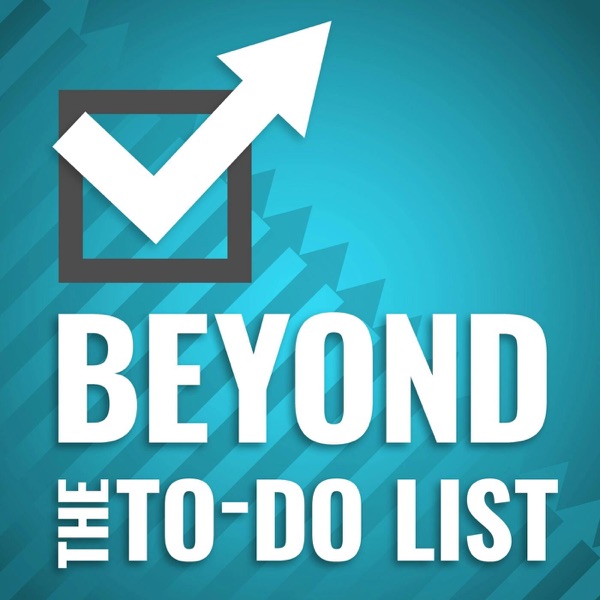
Beyond the To-Do List - Productivity for Work and Life
Beyond the To-Do List is a productivity podcast hosted by Erik Fisher. Each week, Erik sits down with experts, authors, and creatives to explore time management, habits, focus, deep work, work-life balance, mindset, and what it actually means to live and work well.
The show has featured guests like David Allen, James Clear, Cal Newport, Gretchen Rubin, Seth Godin, and Daniel Pink — covering everything from getting things done and morning routines to burnout, procrastination, creativity, digital minimalism, goal setting, and intentional living.
The premise is simple: productivity isn't the point. It's the means to a whole life.
- Careers chart
- #45
- Episodes
- 612
- Releases
- Twice a week
- Typical length
- 48 min
- On air since
- 2012
- Latest episode
- 1 day ago
Episodes
612 episodes, newest first
-
45 min
Mental Strength: Showing Up at Work When Life Falls Apart with Amy Morin
Episode 612
Show notes
Mental strength isn't toughness. Psychotherapist Amy Morin makes the case that it's what gets you through stress, burnout, and the hard seasons when you still have to show up for work.
Amy Morin is a psychotherapist and the bestselling author of 13 Things Mentally Strong People Don't Do, with more than a million books sold and a TEDx talk past 25 million views. About a year into her career she lost her mother, and three years later to the day she lost her husband, then went back to sitting across from her own clients. The tools that got her through became her new book, The Mental Strength Playbook: 50 Tools to Cope with Stress, Thrive Under Pressure, and Gain a Competitive Edge in the Workplace.
In this conversation, we cover:
• Strength vs. toughness: Why pushing through and shoving everything down backfires, and how mental strength works across what you think, feel, and do.
• Act as if, not fake it: The night before her first big stage, and why acting like your most confident self is different from pretending to be someone else.
• Naming your inner critic: Meet Fretting Phyllis, plus getting the noise out of your head and onto paper (and into the trash).
• Emotions at work: Why a bad mood makes for a bad negotiation, the "smell the pizza" breathing exercise, and scheduling time to worry so worry stops scheduling you.
• High performers vs. strategic contributors: The tension in a book that promises a competitive edge while talking you out of the grind, and how to reset boundaries that have quietly eroded.If you're carrying something heavy and still have to walk into Tuesday's meeting, this one's for you. Amy closes with one question to ask at the end of each day, which is as good a place to start as any. Find The Mental Strength Playbook wherever books are sold.
Connect with Amy:
• Website
• The Mental Strength Playbook
• Free reference guide to all 50 plays
• Mentally Stronger with Therapist Amy Morin
• Instagram
• LinkedInConnect with Erik:
• LinkedIn
• Threads
• Facebook
• BlueskyThis Podcast is Powered By:
• Brain.fm - 20% off your first month
• Descript
• Descript 101
• Castmagic
• Ecamm
• Podpage
• Rodecaster ProGrab Shortcasts from Beyond The To-Do List by Blinkist:
http://beyondthetodolist.com/blinkist
See Privacy Policy at https://art19.com/privacy and California Privacy Notice at https://art19.com/privacy#do-not-sell-my-info.
-
58 min
Deep Work: Why Your Focus Depends on Your Team with Shawn Vanderhoven
Episode 611
Show notes
Most deep work doesn't fail at your desk. It fails in the team around you, which is what leadership researcher Shawn Vanderhoven spent three years studying.
Shawn is a partner at The Wiseman Group, where he works alongside Liz Wiseman, author of Multipliers. With his wife and co-author, Anne Vanderhoven, he wrote Pause: How to Lead Brilliant Work in a Busy World, built on interviews with more than 400 people about the leaders who made focus possible for them, and the ones who made it impossible. Partway through the research, his own team told him which kind he was.
In this conversation, we cover:
• The table slam: the workshop moment that started the research, and why Shawn says personal productivity advice aims too low when one ping from a manager can undo the whole system.
• Permission vs. sponsorship: why "feel free to focus" crumbles under pressure, and what changes when a leader puts their own reputation behind protected time.
• Pausing up: a managing-up move anyone can make, asking your boss for advice on your priority list instead of quietly trying to do all fifteen things.
• Majors and minors: how to give important work you can't drop a smaller, fixed share of your time so it stops crowding out what matters most.
• Clearing your desk: how leaders lose good people first to distraction, then to departure, and what one act of full attention did for Shawn.If you've ever built a system that worked right up until the first message from your boss, this one's for you. You don't need a title to start: Shawn's first step is to write down everything you're carrying, put rough percentages beside it, and talk it through with one other person. Less of your attention goes to work you never chose, and more is left for the rest of your life. Find Pause and the free resources at https://www.pausebook.co/.
Connect with Shawn:
• Pause: How to Lead Brilliant Work in a Busy World
• LinkedIn
• The Wiseman GroupConnect with Erik:
• LinkedIn
• Threads
• Facebook
• BlueskyThis Podcast is Powered By:
• Brain.fm - 20% off your first month
• Descript
• Descript 101
• Castmagic
• Ecamm
• Podpage
• Rodecaster ProGrab Shortcasts from Beyond The To-Do List by Blinkist:
http://beyondthetodolist.com/blinkist
See Privacy Policy at https://art19.com/privacy and California Privacy Notice at https://art19.com/privacy#do-not-sell-my-info.
-
48 min
Optimism: Why It’s a Behavior, Not a Mood with Michelle Gielan
Episode 610
Show notes
Optimism isn't a mood you're born with, and it isn't a mindset you can summon on command. It's a set of habits you practice, especially on the hard days. That's the case Michelle Gielan makes in her new book, Resilient Optimism: The Science of Sustaining a Positive Mindset in Tough Times.
Michelle is a positive psychology researcher, a former CBS News anchor, and the bestselling author of Broadcasting Happiness. She holds a master's in applied positive psychology from the University of Pennsylvania and runs GoodThink, a research and training firm, with her husband, Shawn Achor. She left the anchor desk after years of reporting recession news to study the opposite problem: how people find a path forward when things are hard.
In this conversation, we cover:
• Three minutes of bad news: Her study with Arianna Huffington found that three minutes of negative news in the morning left people 27% more likely to call their whole day negative six to eight hours later. Pairing problems with solutions made people 20% better at creative problem-solving.
• The best-moments text: A one-to-two-minute nightly practice that swaps "was today good?" for "what was good today?" and trains you to notice what's working.
• Stress and meaning: Why stress usually points at something you care about, and how asking what's behind it changes what it does to you.
• Commitment triage: Sorting your commitments into a core impact list, a secondary list, and a not-to-do list. Plus what to do when you don't control your own schedule.
• Recharging smarter: Why resilience isn't about how much you can endure, and why ten-minute daily recharges matter as much as the vacation.This one's for anyone running a full life on a low battery. Michelle hopes none of this ever gets mistaken for a productivity hack. The point is protecting your energy so you can actually live the life you've built. Find the book and the resources that go with it at https://resilientoptimism.com/.
Connect with Michelle:
• Website
• Resilient Optimism
• GoodThink
• LinkedInConnect with Erik:
• LinkedIn
• Threads
• Facebook
• BlueskyThis Podcast is Powered By:
• Brain.fm - 20% off your first month
• Descript
• Descript 101
• Castmagic
• Ecamm
• Podpage
• Rodecaster ProGrab Shortcasts from Beyond The To-Do List by Blinkist:
http://beyondthetodolist.com/blinkist
See Privacy Policy at https://art19.com/privacy and California Privacy Notice at https://art19.com/privacy#do-not-sell-my-info.
-
1 hr
Focus, Sleep, and Stress: The 90-Minute Method Behind Better Work with Christian Poensgen
Episode 609
Show notes
Focus, sleep, and stress all run on the same 90-minute cycle — and Dr. Christian Poensgen argues that's where productivity that lasts actually begins. He's a scientist turned executive coach whose doctoral work was on the relationship between stress and performance, and co-author, with Eric Partaker, of Ultraproductive: The 90-Minute Method to Optimize Focus, Sleep, and Stress.
Christian's own wake-up call was the quiet kind. No ambulance, no emergency — just an 80-hour week, seven hours in bed, and the feeling every morning that a truck had hit him. He had the PhD in stress and performance and still walked into near-burnout. What he found on the way out is the spine of this conversation: three levers that carry most of the weight, and a body clock that was running underneath all of it the whole time.
In this conversation, we cover:
• Pseudo-productive busyness: Why long hours and a cleared inbox can leave the things that matter untouched — and why an inbox is really a to-do list other people built for you.
• Working the edges of the day: Deep focus is hardest between nine and five, so Christian makes the case for claiming 15 or 30 minutes before or after, and the 3-3-11 rule for finding your own best windows.
• The fight phase: Why the first five to ten minutes of focused work always feel lousy, for everyone, and why that resistance is a sign you're about to do something good rather than a sign to stop.
• Junk sleep: Seven hours in bed is a quantity. Deep and REM sleep are the nutrition — and Christian found he was getting under 30 minutes of deep sleep a night while doing everything "right."
• Stress as a signal, not an enemy: Nearly everything worth having arrives with some stress attached. The line that matters is duration — and the exhale is the fastest way back down.If you've been doing all the right things and still feel like you're running on empty, this one will make sense of why. Christian's practical takeaways are small enough to start today: a full exhale when stress hits, and ten minutes of bright light in the morning. The deeper framework is in the book.
Connect with Christian:
• https://ultraproductive.com/
• Christian's writing at IMDConnect with Erik:
• LinkedIn
• Threads
• FacebookThis Podcast is Powered By:
• Brain.fm - 20% off your first month
• Descript
• Descript 101
• Castmagic
• Ecamm
• Podpage
• Rodecaster ProGrab Shortcasts from Beyond The To-Do List by Blinkist:
http://beyondthetodolist.com/blinkist
See Privacy Policy at https://art19.com/privacy and California Privacy Notice at https://art19.com/privacy#do-not-sell-my-info.
-
48 min
Simplicity: Confront, Delete, Amplify — Getting 50% More Done with 50% Less with Roy Schwartz
Episode 608
Show notes
Simplicity and decision fatigue are the focus of this conversation with Roy Schwartz, co-founder and president of Axios.
Roy Schwartz co-founded Axios and Axios HQ after helping build Politico, where he first saw how much of modern work is just noise competing for attention. His dyslexia forced him to compress everything down to the core just to keep up — a coping strategy that became the foundation for Smart Brevity and, later, his new book Simplify: Do 50% More with 50% Less, co-written with his Axios co-founders.
In this conversation, we cover:
• Confront, Delete, Amplify: Roy's three-step framework for finding where your time actually goes, cutting what doesn't serve your real goals, and redirecting that time toward the few things you're genuinely good at.
• Why delete is harder than it sounds: the evolutionary pull to accumulate — meetings, reports, obligations — and why saying no requires deciding what you're protecting time for, not just what you're cutting.
• Decision fatigue and the handcuffs method: how removing small daily choices (clothing, groceries, consumables) frees up mental bandwidth for decisions that actually matter.
• AI as both the problem and the fix: why the same tool producing more content than ever can also become your most honest editor — if you give it the right instructions.
• The four levers of a whole life: relationships, fitness, diet, and sleep — and why Roy ranks relationships first, even in a book built by a productivity nerd.This episode is for anyone who feels like their calendar, inbox, or life in general has gotten away from them and suspects the answer isn't a better system — it's fewer things. Roy's framework gives you a place to start today: one decision, one meeting, one "no."
Connect with Roy:
• Simplify — the book
• Smart Brevity free resourcesConnect with Erik:
• LinkedIn
• Threads
• Facebook
• BlueskyThis Podcast is Powered By:
• Brain.fm - 20% off your first month
• Descript
• Descript 101
• Castmagic
• Ecamm
• Podpage
• Rodecaster ProGrab Shortcasts from Beyond The To-Do List by Blinkist: http://beyondthetodolist.com/blinkist
See Privacy Policy at https://art19.com/privacy and California Privacy Notice at https://art19.com/privacy#do-not-sell-my-info.
-
54 min
Marriage Communication: Rules and Tools That Actually Work with Jackie Kelley
Episode 607
Show notes
Marriage communication looks different when both partners are neurodivergent — so Jackie Kelley and her husband built their own rules from scratch.
Jackie Kelley is a neurodivergent storyteller, illustrator, wife, and mother based in Gilbert, Arizona. Through her social media content and viral "Marriage Rules" videos, she helps couples build communication rhythms that actually fit their lives. Her book is So You Married a Human: The Totally Doable, Unconventional Guide to a Thriving Partnership(Zondervan, 2026).
In this conversation, we cover:
• Self-regulation before communication: Why you can't talk through a fried nervous system — and what "getting yourself right" actually looks like before a hard conversation happens.
• The email rule: How writing instead of talking transformed the worst season of Jackie and her husband's marriage, and why the format matters as much as the content.
• Microwave vs. crockpot: What happens when two people process emotions at completely different speeds — and how to stop mistaking slow processing for passive aggression.
• Tell me more: The practical shift from "why are you being so difficult" to getting curious, and why it works especially when neither person is actually wrong.
• Marriage on autopilot: How couples quietly lose the fact that they like each other, and what scheduling intentional fun actually gives back.If the standard marriage advice has ever felt like it was written for someone else's brain — or someone else's relationship — this conversation is worth your time. Jackie makes a genuine case that building structure into a marriage isn't the opposite of romance. It's what makes room for it. Grab So You Married a Human wherever books are sold.
Connect with Jackie:
• https://soyoumarriedahuman.com/
• @stayathomejackie on InstagramConnect with Erik
• LinkedIn
• Threads
• Facebook
• BlueskyThis Podcast is Powered By
• Brain.fm - 20% off your first month
• Descript
• Descript 101
• Castmagic
• Ecamm
• Podpage
• Rodecaster ProGrab Shortcasts from Beyond The To-Do List by Blinkist: http://beyondthetodolist.com/blinkist
See Privacy Policy at https://art19.com/privacy and California Privacy Notice at https://art19.com/privacy#do-not-sell-my-info.
-
46 min
Work-Life Balance for Working Parents: What You Can Let Drop with Sarah Armstrong
Episode 606
Show notes
Work-life balance and boundaries are at the center of this conversation with Sarah Armstrong, author of The Art of the Juggling Act.
Sarah Armstrong is the head of Global Marketing Operations at Google and the author of The Art of the Juggling Act: A Bite-Sized Guide for Working Parents. With a career spanning McKinsey, Leo Burnett, and two decades at Coca-Cola, she writes and speaks about what it actually looks like to show up for both work and life — and how to decide which is which.
In this conversation, we cover:
• The 5-ball framework: Work, family, friends, health, and spirit — Sarah's framework for identifying which balls in your life are rubber (they bounce when dropped) and which are glass (they don't), and why that distinction is more useful than any calendar hack.
• Defining balance on your own terms: Why balance isn't a fixed state you achieve once and maintain, why imbalance is inevitable (not if, but when), and how deciding what balance means for you is the work before the tactics.
• Saying no without explaining yourself: The story of a colleague who turned down a request with no justification — and why the absence of an explanation wasn't rude, it was the skill.
• The Grace block and the Sunday list: Two low-friction practices that protect non-work time — a standing calendar block that signals you're off, and a Sunday habit for parking unfinished thoughts so your brain can actually stop carrying them.
• Outsourcing and the transference of hours: The cost-value equation for deciding what to offload, and why the real question isn't what something costs — it's what you'd do with the hours you get back.If you're a working parent who feels like you're failing at everything simultaneously, this conversation is worth your full attention. Sarah doesn't promise balance — she helps you figure out what yours actually looks like, and gives you the tools to protect it. Find her book, The Art of the Juggling Act, at the links below.
Connect with Sarah:
• https://saraharmstrong.com/
• The Art of the Juggling ActConnect with Erik:
• LinkedIn
• Threads
• Facebook
• BlueskyThis Podcast is Powered By:
• Brain.fm - 20% off your first month
• Descript
• Descript 101
• Castmagic
• Ecamm
• Podpage
• Rodecaster ProGrab Shortcasts from Beyond The To-Do List by Blinkist: http://beyondthetodolist.com/blinkist
See Privacy Policy at https://art19.com/privacy and California Privacy Notice at https://art19.com/privacy#do-not-sell-my-info.
-
56 min
Goal Setting: Why Your Values Decide What You Finish with Chris Bailey
Episode 605
Show notes
Goal setting, intentional living, and following through are at the center of this conversation with Chris Bailey, productivity author and co-host of the Intentional AI podcast.
Chris Bailey's work traces a decade-long arc — from The Productivity Project to Hyperfocus to How to Calm Your Mind. His new book, Intentional: How to Finish What You Start, pulls that thread together, arguing that following through has less to do with discipline than with knowing what you actually value. He returns to the show for the seventh time, going all the way back to 2014.
In this conversation, we cover:
• Values as the real engine of follow-through: why a scientifically validated values test (Schwartz's 12 values) predicts what you finish better than any goal hack.
• The CP-atone trap: how the idea of a goal — waking up at 5 a.m. — seduces us more than the daily reality of living it, and how to catch yourself doing it.
• Editing vs. dropping goals: treating a goal like a draft you revise, and why quitting can close the loop rather than mark a failure.
• Why SMART goals don't hold up: the research Chris expected to endorse and ended up taking apart.
• Islands of intention and the rule of three: small daily practices for stepping off autopilot and lining up your actions with what matters.If you've ever pushed through a goal you no longer wanted — or quit one and felt guilty about it — this conversation reframes both. You'll leave with a way to check your goals against what you actually value, plus a couple of small practices to make tomorrow more deliberate than today. Start with the book, Intentional: How to Finish What You Start, and Chris's free 12-values overview at chrisbailey.com.
Also on the show: Laura Vanderkam on time scarcity, and Chris's Intentional AI co-host David Sparks.
Connect with Chris:
• Chris Bailey — chrisbailey.com
• Intentional: How to Finish What You Start (swap in your retail/affiliate link)
• Intentional AI podcast, with David Sparks (confirm show URL)Connect with Erik:
• LinkedIn
• Threads
• Facebook
• BlueskyThis Podcast is Powered By:
• Brain.fm - 20% off your first month
• Descript
• Descript 101
• Castmagic
• Ecamm
• Podpage
• Rodecaster ProGrab Shortcasts from Beyond The To-Do List by Blinkist: http://beyondthetodolist.com/blinkist
See Privacy Policy at https://art19.com/privacy and California Privacy Notice at https://art19.com/privacy#do-not-sell-my-info.
-
56 min
Creativity and Play: A Fuller Life Beyond Productivity with Rachael Renae
Episode 604
Show notes
Creativity, play, and intentional living are at the center of this conversation with Rachael Renae, artist and author of Prioritize Play.
Rachael Renae is an artist, workshop facilitator, and self-described "creativity hype gal" based in Detroit. After more than a decade as an engineer and years running a handmade stationery business, she now helps people reconnect with their creativity through play — through workshops, one-on-one coaching, and a creative community called The Juice Box. Prioritize Play is her debut book, and she narrates the audiobook herself.
In this conversation, we cover:
• Play over productivity: Why Rachael reframes creativity as "play" — low-stakes, no expectations — and why that shift reaches the people who insist they're "not creative."
• The monetization trap: What running a handmade stationery business taught her about pouring all your creative energy into a side hustle, and why a passion doesn't have to become a job to be worth your time.
• Create more than you consume: How endless inspiration-gathering — Pinterest boards, research, getting ready to get ready — masquerades as creativity, and why imperfect action beats it every time.
• Structure that supports, not restricts: Using "scaffolding" instead of rigid schedules, loosening the rules so the habit actually sticks, and working with your brain — ADHD included — instead of against it.
• Self-trust and "salad bar energy": Building confidence in your own decisions by trying things and setting them aside — plus permission to be "mid interested" in something without having to master it.If you've hit every success marker and still feel depleted — or you've quietly decided you're "not creative" — this is an invitation to put play back on your plate. Rachael's challenge is small and immediate: make a seasonal play list, or take the free hour a canceled meeting hands you and spend it on something that fills you instead of the next chore. Grab Prioritize Play wherever you get your books — and if you liked her voice here, she reads the audiobook herself.
Connect with Rachael:
• Prioritize Play (book)
• https://rachaelrenae.com/
• Instagram: @rachaelrenae
• Chaotic Creatives podcastConnect with Erik:
• LinkedIn
• Threads
• Facebook
• BlueskyThis Podcast is Powered By:
• Brain.fm - 20% off your first month
• Descript
• Descript 101
• Castmagic
• Ecamm
• Podpage
• Rodecaster ProGrab Shortcasts from Beyond The To-Do List by Blinkist:
http://beyondthetodolist.com/blinkist
See Privacy Policy at https://art19.com/privacy and California Privacy Notice at https://art19.com/privacy#do-not-sell-my-info.
-
58 min
Self-Awareness: The Birkman Method and Working With How You're Wired with Lisa Marker-Robbins
Episode 603
Show notes
Self-awareness, mindset, and personal productivity are at the center of this conversation with Lisa Marker-Robbins, a Master Certified Birkman Method coach — one of the roughly 3% of consultants at that level.
Lisa has taken more than 4,000 people through the Birkman assessment over 30-plus years. She runs an executive coaching practice for adults and founded Flourish Coaching, where she helps 15–25-year-olds find career clarity before they spend years and tuition on the wrong path. She started out as a teacher, and the through-line — helping people understand how they're built — never left.
In this conversation, we cover:
• What Birkman measures that most assessments miss: Not just how you behave, but what you need from other people, and how you react when those needs go unmet.
• The four colors and nine components: Why your "usual," your "needs," and your "stress" scores tell three different stories about the same person.
• Working with your wiring instead of against it: Why, as Lisa puts it, you shouldn't "should" on yourself — and what to build instead.
• Introversion, assertiveness, and restlessness: Erik's own scores become the worked example, and what they explain about energy, recharging, and a renewed ADHD diagnosis.
• Career clarity as a productivity tool: How knowing your wiring narrows an overwhelming field of options down to a first step that actually fits.This one's for anyone tired of trying to fix themselves into someone they're not — and curious how they're actually wired, so they can work, lead, and live more like themselves. Self-awareness isn't the finish line here; it's the thing that makes the rest of your life work better. Find Lisa's work below.
Connect with Lisa:
• Executive Coaching — LisaMarkerRobbins.com
• Flourish Coaching — Career Clarity for 15–25-year-olds
• LinkedInConnect with Erik:
• LinkedIn
• Threads
• FacebookThis Podcast is Powered By:
• Brain.fm - 20% off your first month
• Descript
• Descript 101
• Castmagic
• Ecamm
• Podpage
• Rodecaster ProGrab Shortcasts from Beyond The To-Do List by Blinkist:
http://beyondthetodolist.com/blinkist
See Privacy Policy at https://art19.com/privacy and California Privacy Notice at https://art19.com/privacy#do-not-sell-my-info.
-
47 min
Mindset: Why Fixing Your Habits Won't Fix Your Self-Trust with Lester Clowes
Episode 602
Show notes
Self-trust and identity are at the center of this conversation with Lester Clowes, executive coach and author of Stop Lying to Yourself.
Lester Clowes spent a decade running a school system before building a coaching practice around the exact motivational content he used to be hooked on himself. His new book, Stop Lying to Yourself, examines the quiet lies capable, organized people tell themselves right up until nothing changes.
In this conversation, we cover:
• Promise debt: How years of small broken commitments to yourself compound into a negative balance — and why that balance, not your system, is usually the real problem.
• Act as if, not fake it till you make it: The difference between performing someone else's identity and architecting your own, and why one has an off-ramp and the other doesn't.
• Self-trust vs. self-reputation: Why the feeling and the record are two different things — and why feelings always snap back to match the record, no matter how good the pep talk was.
• The desert: The unglamorous middle phase between enthusiasm and momentum where most people quit, and why learning to act independent of your feelings is the whole game.
• Seasons, not sweeping change: How naming what season you're in — and giving it a boundary — restores the agency that an over-engineered system can't.If you've built the system and you're still, four years later, the same person — just better at being busy — this conversation is for you. It pairs well with Erik's solo episode on agency versus the illusion of control if you want the fuller framework behind why control was never really the goal.
Connect with Lester:
Connect with Erik:
• LinkedIn
• Threads
• Facebook
• BlueskyThis Podcast is Powered By:
• Brain.fm - 20% off your first month
• Descript
• Descript 101
• Castmagic
• Ecamm
• Podpage
• Rodecaster ProGrab Shortcasts from Beyond The To-Do List by Blinkist:
http://beyondthetodolist.com/blinkist
See Privacy Policy at https://art19.com/privacy and California Privacy Notice at https://art19.com/privacy#do-not-sell-my-info.
-
52 min
Burnout: Why Thought Load, Not Workload, Is Draining You with Liane Davey
Episode 601
Show notes
Burnout, energy management, and decision fatigue are at the center of this conversation with Liane Davey, organizational psychologist and the "teamwork doctor."
Liane Davey is a New York Times bestselling author and CEO advisor with 25+ years researching what makes teams work. Her latest book, Thoughtload: Manage the Madness and Free Your Team to Do Great Work, argues the number we've been tracking wrong all along isn't workload — it's the mental and emotional weight underneath it. She previously joined the show to talk conflict; this time she's back with the framework underneath the exhaustion itself.
In this conversation, we cover:
• The Thought Load Equation: cognitive demands plus emotional burden, divided by your energy reserves — and why managers can see your workload but not this.
• AI and the Hidden Cost: why offloading tasks to AI hasn't lightened the load — it's shifted the hard part to judgment and discernment, and added new anxieties of its own.
• Output vs. Outcomes: the trap of chasing productivity (did I produce?) instead of effectiveness (did I move the needle?) — and why AI makes this trap worse, not better.
• Three To-Do Lists, Not One: Liane's system for separating your quest, helping others, and side quests — and matching each to the right hours of your day.
• Emotions Aren't the Problem, the Story Is: the "dragon and treasure" framework for catching an emotional spiral before it becomes a 2 a.m. spiral, plus why rest alone doesn't cure burnout.This one's for anyone who's done everything the productivity playbook told them to do and still feels like they're drowning. Liane's central point lands right at this show's: winning back your thinking time and energy isn't the finish line — it's what lets you show up for the rest of your life. Get the book and take the free thought load assessment at https://thoughtload.com/.
Related episode: Ep 261 — Conflict: Productive Conflict and How to Make Disagreement Work for You — Liane's first appearance on the show, on fighting well at work.
Connect with Liane Davey:
• LinkedIn
• Website
• Thoughtload AssessmentThis Podcast is Powered By:
• Brain.fm - 20% off your first month
• Descript
• Descript 101
• Castmagic
• Ecamm
• Podpage
• Rodecaster ProSee Privacy Policy at https://art19.com/privacy and California Privacy Notice at https://art19.com/privacy#do-not-sell-my-info.
-
54 min
Creativity: How Rest, Wonder, and AI Redefine Productivity with Natalie Nixon
Episode 600
Show notes
Creativity, rest, and mindset are at the center of this conversation with Natalie Nixon, author of The Creativity Leap and Move, Think, Rest.
Natalie Nixon has spent two decades as a creativity strategist advising Fortune 500 companies on innovation strategy — work she calls being a "creative whisperer to the C-Suite." She's the founder of Figure 8 Thinking, and her two books make one connected argument: creativity means toggling between wonder and rigor, and rest isn't procrastination — it's fuel for better thinking.
In this conversation, we cover:
• Rest that looks like nothing: Why Natalie assumed her best thinking — staring out the window, taking a slow walk — was procrastination, and what finally convinced her it wasn't.
• Wonder and rigor, not "creative types": The real definition of creativity as a toggle everyone already uses, and why "I'm not a creative person" misses the point entirely.
• The 90-second daydream break: The neuroscience of the default mode network, and how a short, timed pause can unstick a problem that's had you stuck for hours.
• What her father taught her about rest: A weekly Saturday ritual that was equal parts self-care and discipline — and why the work still got done anyway.
• Flourishing over productive: Why the right question about AI isn't "how does this make us more productive," but "how does this help us flourish."If your calendar rewards constant output and treats stillness like a red flag, this one's for you.
Connect with Natalie:
Connect with Erik:
• LinkedIn
• Threads
• Facebook
• BlueskyThis Podcast is Powered By:
• Brain.fm - 20% off your first month
• Descript
• Descript 101
• Castmagic
• Ecamm
• Podpage
• Rodecaster ProGrab Shortcasts from Beyond The To-Do List by Blinkist:
http://beyondthetodolist.com/blinkist
See Privacy Policy at https://art19.com/privacy and California Privacy Notice at https://art19.com/privacy#do-not-sell-my-info.
-
47 min
Energy Management: What Johnny Carson Knew About Saying No with Mark Malkoff
Episode 599
Show notes
Energy management, decision making, and knowing when to walk away are at the center of this conversation with Mark Malkoff, author of Love Johnny Carson.
Mark Malkoff is a comedian, filmmaker, and interviewer who spent eight years and nearly 400 interviews building The Carson Podcast. That work became his first book, Love Johnny Carson, written with biographer David Ritz and a USA Today bestseller. He's back on the show fourteen years after his first appearance — back when he was the guy making viral creative stunt videos.
In this conversation, we cover:
• Guarding your energy: Why Carson stayed alone all day and showed up minutes before showtime — treating energy as the one thing worth protecting — and what that means for anyone who has to perform without burning out.
• Saying no to protect the work: He turned down film roles and refused to chase trends, because staying number one meant declining almost everything that wasn't the show.
• Making other people look good: Carson's rule was that the guest gets the laugh, and the same instinct drove how fiercely he protected and publicly thanked his staff.
• The cost nobody edits out: An honest look at the reviews he couldn't let go of, the drinking, and four marriages — and why Mark won't hold Carson up as a life to copy wholesale.
• Walking away, and the power of asking: Why Carson left at the top to go actually live, plus Mark's own craft — the long game, the homework, and the curiosity behind nearly 400 impossible interviews.If you make things — if you write, record, build, or perform — this one's for you. Carson is that rare figure who's both a model and a cautionary tale, and the line Mark keeps returning to is the one worth carrying out the door: follow the curiosity, and don't mistake the work for the point of the work. Grab Love Johnny Carson wherever you buy books, and start on The Carson Podcast for the interviews underneath it.
Connect with Mark:
• Website
• The Carson PodcastConnect with Erik:
• LinkedIn
• Threads
• Facebook
• BlueskyThis Podcast is Powered By:
• Brain.fm - 20% off your first month
• Descript
• Descript 101
• Castmagic
• Ecamm
• Podpage
• Rodecaster ProGrab Shortcasts from Beyond The To-Do List by Blinkist:
http://beyondthetodolist.com/blinkist
See Privacy Policy at https://art19.com/privacy and California Privacy Notice at https://art19.com/privacy#do-not-sell-my-info.
-
46 min
Time Management: Trading Time Scarcity for Abundance with Laura Vanderkam
Episode 598
Show notes
Time management and time abundance are at the center of this conversation with Laura Vanderkam, bestselling author and time-use researcher.
Laura Vanderkam has spent over a decade studying how people actually spend their time — tracking her own hours for 11 years and collecting data from thousands of others along the way. Her new book, Big Time: A Simple Path to Time Abundance, makes the case that time isn't the scarce resource we assume it is, and that shifting how you see it changes how you live it.
In this conversation, we cover:
• The lottery ticket reframe — why Laura argues we should treat the time we've been given as an unearned windfall to manage, not a resource we're constantly running out of.
• The "not actually more overworked" argument — what a century of time-use data really shows, and why the story you tell yourself about having no time matters more than the data itself.
• Complexity isn't the enemy, chaos is — Laura's circus metaphor for running a full, complicated life without it feeling like it's running you.
• Dream big, plan small — how reading War and Peace one short chapter a day (the same time it takes to brush your teeth) is the model for tackling anything that feels too big to start.
• Active patience — Laura opens up about a brutal year of chronic pain and the hardest lesson in the book: sometimes the answer isn't a better system, it's time itself doing its work.This one's for anyone who's ever ended a Tuesday feeling like the whole evening just disappeared. Grab Big Time: A Simple Path to Time Abundance wherever books are sold, and find more of Laura's work — including her podcast, Before Breakfast — at http://lauravanderkam.com.
Connect with Erik:
• LinkedIn
• Threads
• Facebook
• BlueskyThis Podcast is Powered By:
• Brain.fm - 20% off your first month
• Descript
• Descript 101
• Castmagic
• Ecamm
• Podpage
• Rodecaster ProGrab Shortcasts from Beyond The To-Do List by Blinkist:
http://beyondthetodolist.com/blinkist
See Privacy Policy at https://art19.com/privacy and California Privacy Notice at https://art19.com/privacy#do-not-sell-my-info.
-
47 min
Team Habits: How Small Actions Create Better Teams and Better Work with Charlie Gilkey
Episode 597
Show notes
I’m excited to revisit this conversation with Charlie Gilkey on his book, Team Habits: How Small Actions Lead to Extraordinary Results. Charlie is the founder of Productive Flourishing, a company that helps professional creatives, leaders, and changemakers take meaningful action on work that matters. He is an internationally recognized thought leader on productivity, planning, strategy, and leadership, and is also the author of Start Finishing: How to Go from Idea to Done and The Small Business Life Cycle. Charlie is also an Army veteran and near-PhD in philosophy.
In this conversation, we cover:
• The Power of Team Habits: Charlie explains why great teams aren’t built by simply adding talented people, but by developing intentional habits and systems that shape how people work together.
• Small Problems, Big Consequences: We discuss how seemingly minor issues inside a team can compound over time, affecting morale, communication, trust, and the overall health of the workplace.
• Improving Systems Instead of Blaming People: Charlie shares why leaders should focus on changing broken team dynamics and processes rather than trying to “fix” individual team members.
• Better Communication and Collaboration: We explore practical ways teams can improve meetings, expectations, feedback, and everyday interactions to create more productive and enjoyable work environments.
• Creating Humane High-Performing Teams: Charlie discusses how teams can balance excellence and accountability with empathy, understanding, and respect for the people doing the work.Charlie’s insights offer a practical roadmap for anyone looking to create healthier, more effective teams. Whether you lead a team, work within one, or are trying to improve how people collaborate around meaningful work, this conversation is packed with strategies for building better habits that lead to better outcomes. Learn more about Charlie and his work at ProductiveFlourishing.com, and check out Team Habits: How Small Actions Lead to Extraordinary Results wherever books are sold.
Connect with Charlie:
• Better Team Habits
• Productive FlourishingConnect with Erik:
• LinkedIn
• Threads
• Facebook
• BlueskyThis Podcast is Powered By:
Brain.fm - 20% off your first month
• Descript
• Descript 101
• Castmagic
• Ecamm
• Podpage
• Rodecaster Pro
• Make sure to grab Shortcasts from Beyond The To-Do List by Blinkist. A Shortcast is a 7-10 min version of a podcast where you get the core takeaways.See Privacy Policy at https://art19.com/privacy and California Privacy Notice at https://art19.com/privacy#do-not-sell-my-info.
-
37 min
Mentoring: What Most People Get Wrong and How to Do It Right with Claire Diaz-Ortiz
Episode 596
Show notes
I'm excited to revisit this conversation with Claire Diaz-Ortiz discussing her book, One Minute Mentoring, co-authored with legendary leadership expert Ken Blanchard. Claire is a keynote speaker, author, and former head of social innovation at Twitter who helps individuals and organizations build more intentional, meaningful connections — and this conversation is one of the most practical we've had on the show when it comes to how relationships actually help us grow.
In this conversation, we cover:
• Mentoring vs. Everything Else: Claire breaks down how mentoring differs from coaching, consulting, masterminds, and accountability groups — and why the holistic, mutual nature of a true mentoring partnership is what sets it apart.
• How to Find the Right Mentor: She walks through the practical first steps for identifying the type of mentoring relationship you need in this season of life, and why leading with essence over form is the key to getting it right.
• The MENTOR Formula: Claire shares the six-step framework from the book — Mission, Engagement, Networking, Trust, Opportunity, and Review — that gives any mentoring partnership a clear structure without making it feel clinical.
• The Mentoring Mission Statement: Why putting a simple, shared mission statement in place at the start of a mentoring relationship can save you both from the most common reason these partnerships quietly fall apart.
• Mentoring Moments and Low-Stakes Entry Points: For anyone not ready to commit to a full mentoring relationship, Claire offers a practical way to start small — and how those smaller moments can open the door to something much more meaningful.If you've ever wondered whether you're the type of person who should have a mentor — or whether you have what it takes to be one — this conversation will answer both questions and give you a clear next step. Learn more about Claire and her work at https://clairediazortiz.com, and find One Minute Mentoring wherever books are sold.
Connect with Erik:
• LinkedIn
• Threads
• Facebook
• BlueskyThis Podcast is Powered By:
Brain.fm - 20% off your first month
• Descript
• Descript 101
• Castmagic
• Ecamm
• Podpage
• Rodecaster Pro
• Make sure to grab Shortcasts from Beyond The To-Do List by Blinkist. A Shortcast is a 7-10 min version of a podcast where you get the core takeaways.See Privacy Policy at https://art19.com/privacy and California Privacy Notice at https://art19.com/privacy#do-not-sell-my-info.
-
26 min
Social Media Detox: How to Take a Break from Digital Overload and Get Your Focus Back
Episode 595
Show notes
What happens when you delete every app off your phone for 21 days? In this solo episode, Erik shares what he discovered during a Christmas break internet break — and what the research says about why so many of us feel like we can't put the phone down in the first place.
In this episode, Erik covers:
• How We Got Here Without Deciding To: The boiled frog drift into five-to-seven hours of daily screen time wasn't a choice anyone made — it happened gradually, and the data from researcher Gloria Mark at UC Irvine shows exactly what it's cost our attention spans.
• It's Not Just Social Media: Email, Slack, the news app — your brain doesn't distinguish between Instagram and Outlook. The real pattern is letting an outside ping decide what you think about next, and that pattern is everywhere.
• The Research That Should Actually Motivate You: Studies from the University of Bath and Beth Israel found measurable reductions in anxiety, depression, and insomnia after just one week off social media — improvements that typically take months of therapy to achieve.
• The Five-Level Detox Ladder: From turning off notifications and going grayscale all the way to Cal Newport's 30-day deep reset protocol, Erik walks through a tiered framework so you can pick the experiment that fits your life right now.
• The Healthy Cadence Framework: A reset alone isn't enough — Erik lays out how to build purposeful, sustainable habits around when and why you use each channel, so you don't just slide back to baseline.If you've ever felt less busy the moment you put your phone down — or wondered what your brain might feel like with a little less noise in it — this episode is the permission slip and the practical roadmap to find out.
Connect with Erik:
• LinkedIn
• Threads
• Facebook
• BlueskyThis Podcast is Powered By:
Brain.fm - 20% off your first month
• Descript
• Descript 101
• Castmagic
• Ecamm
• Podpage
• Rodecaster Pro
• Make sure to grab Shortcasts from Beyond The To-Do List by Blinkist. A Shortcast is a 7-10 min version of a podcast where you get the core takeaways.See Privacy Policy at https://art19.com/privacy and California Privacy Notice at https://art19.com/privacy#do-not-sell-my-info.
-
49 min
Retreat Rhythms: Monthly, Quarterly, and Annual Practices for Renewal with John Drury
Episode 594
Show notes
I’m excited to welcome back my good friend Dr. John Drury for part two of our conversation on the rule of life and how ancient practices can help us live and work with more intention. John is a New Testament scholar, professor, and thoughtful guide when it comes to integrating spiritual rhythms into ordinary life. In this continuation, we move from the big-picture ideas we introduced in part one into the practical how-to of building rhythms that create space for rest, reflection, and renewal before burnout forces the issue.
In this conversation, we cover:
• Monthly Desert Days: John explains the idea of a monthly “desert day” or “9 to 4 retreat,” a set-apart block of time for radical understimulation, reflection, rest, and reconnecting with what matters most.
• Why Understimulation Matters: We talk about why screens, noise, and constant input keep us from noticing our own lives—and how analog activities, silence, walking, journaling, and slower rhythms can help reset our attention.
• Expect Nothing, Expect Everything: John shares why retreat practices work best when we stop demanding breakthrough moments and instead learn to receive whatever emerges without forcing productivity out of rest.
• Quarterly and Annual Retreat Rhythms: We explore what longer rhythms can look like, from overnight quarterly retreats to annual time away, and how even a small amount of intentional distance can create clarity and renewal.
• Vacation, Visitation, and Vocation: John offers a helpful distinction between true vacation, trips to visit family, and work-related travel—showing why naming the difference can help us be more intentional with our energy and expectations.This conversation is full of practical wisdom for anyone who wants to move from admiring better rhythms to actually experimenting with them. What I appreciate most is that John doesn’t present this as a rigid formula, but as an invitation to start where you can, pay attention, and let the practice itself teach you what you need. If part one helped you rethink Sabbath and weekly rhythms, this episode helps you start building the next layer.
Connect with Erik:
• LinkedIn
• Threads
• Facebook
• BlueskyThis Podcast is Powered By:
• Descript
• Descript 101
• Castmagic
• Ecamm
• Podpage
• Rodecaster Pro
• Top Productivity Books List• Make sure to grab Shortcasts from Beyond The To-Do List by Blinkist. A Shortcast is a 7-10 min version of a podcast where you get the core takeaways.
See Privacy Policy at https://art19.com/privacy and California Privacy Notice at https://art19.com/privacy#do-not-sell-my-info.
-
44 min
Rule of Life: How Ancient Practices Can Transform Your Productivity and Rest with John Drury
Episode 593
Show notes
I'm excited to revisit this conversation I had with John Drury to the show to discuss how ancient spiritual practices can reshape the way we approach productivity, rhythm, and life itself. John is a professor at Indiana Wesleyan University's School of Theology and Ministry, holding an M.Div. and Ph.D. from Princeton Theological Seminary, and a close personal friend of mine for over 25 years.
In this conversation, we cover:
• Rethinking the Rule of Life: John introduces the concept of regula vitae — the rule of life — and explains why the question isn't whether you have one, but what's currently ruling yours.
• The Pandemic as a Mirror: We reflect on how COVID-19 disrupted our routines and created an unexpected opportunity for radical understimulation — and what we can learn from the people who actually took it.
• Life vs. Work-Life Balance: John challenges the very language of "work-life balance," arguing that life is your time — and work is just one part of it — never the other way around.
• Orienting Values and Stabilizing Practices: He walks through his hands-on framework for building a rule of life, including five orienting values and five stabilizing practices across daily, weekly, monthly, quarterly, and annual rhythms.
• The Sabbath as Productivity Practice: John shares how a 24-hour weekly Sabbath transformed his Fridays, redirected his procrastination, and deepened his connection with family — without a hint of legalism.If you've ever felt like your schedule is running you instead of the other way around, this conversation will give you the framework — and the permission — to start living with more intention. Learn more about John and his work at Indiana Wesleyan University, and stay tuned for part two of this conversation coming next week.
Connect with Erik:
• LinkedIn
• Threads
• Facebook
• BlueskyThis Podcast is Powered By:
• Descript
• Descript 101
• Castmagic
• Ecamm
• Podpage
• Rodecaster Pro
• Top Productivity Books List• Make sure to grab Shortcasts from Beyond The To-Do List by Blinkist. A Shortcast is a 7-10 min version of a podcast where you get the core takeaways.
See Privacy Policy at https://art19.com/privacy and California Privacy Notice at https://art19.com/privacy#do-not-sell-my-info.
On these lists
Beyond the To-Do List - Productivity for Work and Life is one of the shows picked out on this list

More in Careers
Placed highest on Apple Podcasts' Careers chart right now