Podcast
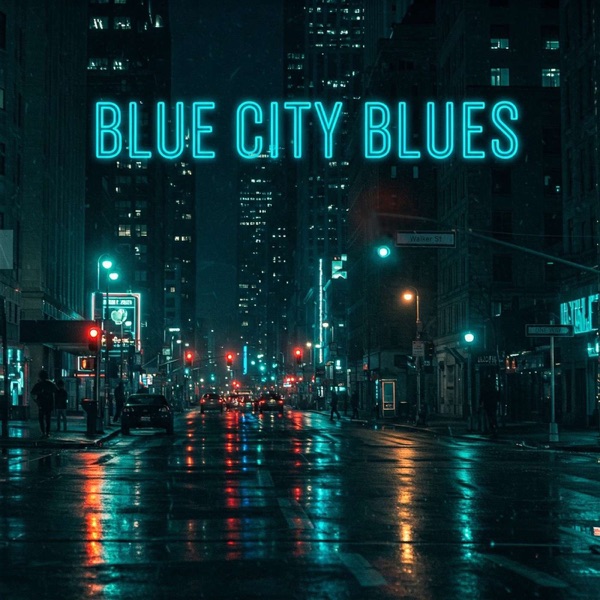
Blue City Blues
Blue City Blues is a podcast that's about what's broken, what's working and what comes next in America's blue cities. Hosts David Hyde and Sandeep Kaushik bring on a smart guest each episode to dig into urban politics, governance and culture. Clear-eyed conversation for people who care about blue cities and are skeptical of easy orthodoxies. Blue cities, we argue, represent an urban archipelago, which is shaping America's future. Subscribe to Blue City Blues now on Apple, Spotify, YouTube or wherever you get your podcasts.
- Episodes
- 72
- Releases
- Weekly
- Typical length
- 1 hr 1 min
- On air since
- 2024
- Latest episode
- 1 week ago
Episodes
72 episodes, newest first
-
1 hr 6 min
Peter Moskos: Progressives Are Wrong about the Crime-Fighting Benefits of Good Policing
Season 2, Episode 33
Show notes
Peter Moskos spent the better part of two years as a cop patrolling the mean streets of East Baltimore on the midnight to 8 am night shift, before he left policing to complete a Ph.D. in sociology at Harvard University. He now teaches at John Jay College of Criminal Justice in New York, where he directs the NYPD Executive Master’s Leadership Program, and where he writes extensively about the importance of good policing to maintaining order and keeping crime in check in American cities.
So we asked Peter, the author of four books, including most recently Back from the Brink (2025), an oral history of how the NYPD in the ‘90s was able to achieve an extraordinary reduction in crime in New York CIty, to join us on BCB to share his insights about what works – and what doesn’t – when it comes to policing cities and curbing crime. In our conversation, he challenges the left progressive embrace of abolitionist ideas and the belief that public safety efforts must focus on root causes, instead arguing forcefully that cities can substantially reduce crime through better policing without first solving poverty, inequality or addiction.
In our conversation, Moskos draws a distinction between policing that is actually targeted at generating real world public safety improvements and policing that merely generates process-measuring enforcement statistics. He describes to us how in the 1990s NYPD adopted “broken windows” crime-fighting ideas and innovative approaches that married systemic efforts to track criminal activity with holding commanders accountable for addressing it to great effect. But he is sharply critical of how over time those approaches degraded into a reliance on high volume stop-and-frisk interactions, where counting stops became an end in itself, which damaged the NYPD’s standing in minority communities without producing many additional gains in crime reduction.
Peter defends proactive policing efforts to maintain order in shared public spaces, though he tells us that the evidence for the claim that addressing minor disorder automatically prevents serious crime is weak. Rather, he contends that maintaining public order matters for its own sake, and that cities should enforce reasonable rules in parks, subways and streets because residents need usable public spaces. He also calls for policing that targets repeat offenders, and offers qualified support for some of the police reforms championed by progressives over the last decade: bail reform in New York was largely successful for low level offenders, he acknowledges, but was extended too far to repeat offenders, and he contends reasonable restrictions on dangerous police pursuits make sense, but overly restricting them allows criminals to evade consequence.
Still, he says, many progressives in blue cities have become reflexively anti-cop and foolishly enamored with radical chic abolitionist ideas. “I actually think opponents of policing are more afraid of good policing than bad policing,” Moskos explains, “because bad policing they can use as a weapon, and good policing shows that they’re fundamentally wrong about the causes of crime.”
OUTSIDE SOURCES:
Peter Moskos, "The Crisis of Police and Public Safety," The Liberal Patriot, Nov. 24, 2023.
Peter Moskos, "Homicide: Life in the Stats," Vital City, Feb. 28, 2024.
Peter Moskos, "Fix the Subway, Not Society," Vital City, Jan. 22, 2025.
Peter Moskos, Back from the Brink: Inside the NYPD and New York City's Extraordinary 1990s Crime Drop, Oxford University Press (2025).
Peter Moskos, In Defense of Flogging, Basic Books (2011).
-
1 hr 19 min
Emma Pettit on the Homelessness Wars, Then and Now
Season 2, Episode 32
Show notes
In recent decades, visible unsheltered homelessness, and the street disorder that comes with it, have become both the background noise of life in urban America and perhaps the most frustratingly persistent and seemingly intractable problem facing blue cities. But how did we get to this point?
For answers, journalist Emma Pettit joins us on BCB to talk about her fascinating, insightful, and sound-rich Reflector podcast documentary, Street Fight: How America Chose Homelessness, which offers a history of homelessness in America. (Reflector is the podcasting arm of Longview, a recently formed journalistic entity that focuses on providing explanatory history and context for hot-button public debates.) Over those episodes, Pettit dives deep into the question of how American cities arrived at today’s homelessness crisis – and whether the commitment of homelessness advocates in blue cities like New York and Los Angeles to protecting the autonomy of the homeless has sometimes undermined both care for vulnerable people and the public’s ability to freely access shared public spaces.
Our conversation begins with Emma describing the origins of the homelessness problem in America, as rootless men in the late 19th and early 20th centuries -- “tramps” and “hobos” – rode the rails and traveled the country in pursuit of seasonal jobs. As time passed, this cohort would eventually settle in skid row neighborhoods of American cities, circumscribed islands of poverty, vice and relative permissiveness where they could find beds in flophouses and other cheap lodging. We discuss how writers, musicians, and adventurers helped romanticize vagrants’ mobility as a form of freedom, creating an image of homelessness very different from its modern incarnation.
Emma then tells us how overlapping changes in the 1970s and 1980s, such as urban redevelopment and stricter housing standards, along with deinstitutionalization from psychiatric institutions and rising usage of hard drugs, remade the old, romanticized image of homelessness into something grimmer and more sinister. The population living outside became more diverse, and severe mental illness became more visible in public spaces. Pettit emphasizes to us the unintended consequences of well-intentioned reforms: eliminating degrading housing or abusive institutions did not produce better places for their former residents to live. Meanwhile, a new generation of homeless advocates began to emphasize the autonomy of homeless people in the face of urban authorities’ efforts to curtail their antisocial behaviors.
We dissect the emblematic tale of Joyce Brown, a mentally ill woman living on a Manhattan sidewalk whose involuntary hospitalization sparked a major civil liberties battle in 1987. Pettit explains that the national debate then over what to do with Brown, which pitted NYC Mayor Ed Koch and Brown's own family against the ACLU and other advocates for her freedom, set the stage for present-day battles over how much autonomy to give to those living in crisis on urban streets.
The discussion then turns to the rise of Housing First, predicated on offering permanent housing without requiring sobriety or treatment beforehand, alongside supportive services. These new ideas took root in the ’90s with bipartisan support and high hopes of ending chronic homelessness. Why those hopes went unfulfilled remains an ongoing topic of sharp disagreement, with conservative critics now questioning whether voluntary treatment sufficiently addresses severe addiction and mental illness, while supporters point to rising housing costs, inadequate funding, and programs that delivered “housing only” without the promised support.
We close by looking at blind spots across the political spectrum. The left tends to minimize personal behavior and neighborhood harms or use language that obscures profound suffering, Pettit argues, while the right overestimates what punishment and involuntary commitment can accomplish while underplaying housing costs and shortages of treatment capacity.
“People on the left, I think, tend to downplay the personal, mental illness or addiction or choice… On the right, I think that now there is this idea that only punishment and only involuntary commitment… that only bringing down the hammer will solve this problem,” Pettit says. But that binary obscures as much as it reveals: “I don’t even like saying both sides. I like saying all sides because… people’s thoughts about the stuff [are] always more complicated and more kaleidoscopic than we think that it is.”
OUTSIDE SOURCES:
Emma Pettit, "Street Fight Part I: Hobos, Bums, and the Homeless," Reflector, Sept. 9, 2026.
Emma Pettit, "Street Fight Part II: Cruel & Unusual," Reflector, Sept. 17, 2026.
Emma Pettit, "Street Fight Part III: Can We End It?," Reflector, Sept. 24, 2026.
-
1 hr 21 min
Benjamin Ryan on Cosmopolitan Elites’ Truth Problem
Season 2, Episode 31
Show notes
Benjamin Ryan is a prominent independent journalist who has written for major national publications like the New York Times, NBC News, The Atlantic, The Washington Post, and The Free Press, and who writes regularly on his Substack page, Hazard Ratio. After graduating from Columbia University in 2001, Ben established himself in New York City writing initially about the AIDS epidemic and about scientific research on HIV.
But in recent years, Ben’s growing frustration and skepticism with what he sees as cosmopolitan progressive institutions’ resistance to confronting ideologically inconvenient truths led him to reorient the direction of his reporting work. Covering the outbreak of the monkeypox virus in 2022, Ben questioned the Biden CDC’s unwillingness to forthrightly state that the disease outbreak was overwhelmingly concentrated among gay men engaging in anal sex (it's worth noting here that Ben is himself gay). He then turned his attention to pediatric gender medicine, where he began to uncover the low quality evidence supporting medical interventions like prescribing puberty blockers or cross-sex hormones to gender dysphoric children and teens. More recently, Ben’s reporting broke important new ground in the Jason Arday fiasco at Cambridge University.
So we asked Ben (who grew up in Seattle) to join us on BCB to talk about progressive elites’ relationship with the truth. It’s a given in blue America that the MAGA right in the era of Trump lives in an alternate – and often false – reality. But there is much less willingness among culturally cosmopolitan thought leaders, Ben tells us, to follow the evidence when it raises inconvenient facts or uncomfortable truths that contradict their ideological priors. Ben refers to this pattern as “elite misinformation”: powerful institutions and influential people accepting, protecting, or circulating claims because those claims support their progressive political and cultural commitments.
So we dig deep into the elite misinformation problem with Ben, which he sees as rooted in progressives’ laudable commitment to protecting marginalized people and communities. But that commitment, Ben contends, goes off the rails when it takes precedence over honest reporting or objectively assigning accountability. When blue city elites subvert the truth in name of protecting the marginalized, they ultimately harm the very people they are trying to protect.
This is what has happened in the arena of pediatric gender medicine, he argues. Practitioners and trans rights advocates - along with the cosmopolitan institutions that largely follow their lead - promote elective enthusiasm for favorable studies, provide shifting explanations when findings disappointed, and level personal attacks on reporters who question the evidence.
And it happened in the Arday case, where the left’s defenses of Arday often substituted accusations of racism for engagement with the evidence. And as our discussion winds down he points the finger at politicians like AOC who, in discussing the Cornell 7 case, have asserted conclusions before the contested evidence has been adequately resolved. Drawing on his own earlier campus reporting, he explains to us how he learned to balance sympathy for accusers with due process for the accused.
“If you lie to yourself, if you make that a habit as an intellectual being, and then you're going to transmit it to other people, they don't know that you're lying to yourself because they trust you because you're an intellectual beacon,” Ben tells us. “And that is very tragic.”
OUTSIDE SOURCES:
Benjamin Ryan, Hazard Ratio, Substack.
Benjamin Ryan, "You are being misled about monkeypox," Washington Post, July 18, 2022.
Benjamin Ryan, "Psychiatrists learned the wrong lesson from the gay rights movement," Washington Post, May 3, 2024.
Benjamin Ryan, "Star Cambridge Professor Jason Arday Lied for Years About Raising Millions for Charity: Simon & Schuster Scrubbed Financial Details From His New Memoir and Falsehoods From His Bio," Washington Free Beacon, Aug. 4, 2026.
Benjamin Ryan, "‘Frankly, He Has Been Killed’: Angry Scholars From UK’s Top Academics’ Union Blame Jason Arday’s Death on Racist Mob, as ‘Race Realist’ Who Ignited the Firestorm Is Suspended," Washington Free Beacon, Aug. 21, 2026.
-
1 hr 15 min
Two Cities, One Industry: Big Tech, Power and Politics in Seattle and San Francisco (live)
Season 2, Episode 30
Show notes
[This episode is a live taping of a panel discussion at the National Nordic Museum in Seattle on September 29, done in conjunction with the GeekWire podcast. Become a memberof the National Nordic Museum today!].
For this BCB episode David and Sandeep moderate an all-star panel about how the rise of Big Tech has transformed not only the economies, but also the politics and the cultures, of San Francisco and Seattle, the nation’s two largest blue city knowledge economy bastions. Joining us on stage are: University of Washington historian Margaret O’Mara, the author of The Code: Silicon Valley and the Remaking of America, veteran San Francisco journalist Jonathan Weber, author of City on the Edge: Technology, Politics and the Battle for the Soul of San Francisco, and John Cook, co-founder and publisher of GeekWire, the Seattle-based technology news site.
In our conversation, we dig deeply into why the wealth Big Tech has generated has not consistently produced better functioning cities, and explore the dimensions of the divide between tech companies that see themselves as engines of prosperity, and progressive city governments struggling with housing costs, displacement, public safety, and rising inequality. Amazon’s expansion into central Seattle becomes a central topic of discussion, exemplifying the collision between tech growth and urban life. From humble origins, the company's enormous hiring and office footprint transformed neighborhoods and brought thousands of highly paid newcomers into a housing market that could not readily accommodate them, heightening political tensions and spurring a backlash. This closely parallels what happened in San Francisco as the tech boom spurred gentrification, resentment and a rising cost of living.
The panel describes a breakdown between companies that believe their job creation and economic contributions should be enough, and city governments demanding ever more tax revenues from these companies while struggling to deliver basic services or to provide a safe and welcoming environment for their workers. Cook emphasizes weak civic leadership; O’Mara highlights housing constraints and insufficient public investment; Weber stresses the limits of municipal government in addressing broader social problems.
We close by looking at how AI promises another economic boom, particularly in San Francisco, but also threatens layoffs, further disruptions and even deeper inequality. Our panelist argue that both cities need more housing, more effective municipal governance, and closer cooperation with business and tech leaders – alongside safe, lively public spaces and cultural opportunities that make them attractive to people beyond the tech industry.
OUTSIDE SOURCES:
"Jeff Bezos: Nerd of the Amazon," 60 Minutes, CBS (1999).
Jonathan Weber, City on the Edge: Technology, Politics and the Fight for the Soul of San Francisco, Simon & Shuster (2026).
Margaret O'Mara, The Code: Silicon Valley and the Remaking of America, Penguin Press (2019).
-
49 min
Jack Despain Zhou on Nikole Hannah-Jones and Why Excellence in Education Is So Controversial
Season 2, Episode 29
Show notes
Nikole Hannah-Jones’ recent NYT Magazine essay – "In Fighting for Every Black Child, Did I Betray My Own?" – in which she offers her mea culpa for enrolling her daughter in poorly performing, mostly minority public schools in order to demonstrate her commitment to her systemic racial equity principles, has caused a huge stir online. The questions it raises – and to a significant degree, avoids answering – about how best to provide a high quality public education to children in a nation riven with racial and class divides, are at the heart of our latest episode.
Jack Despain Zhou, better known by his social media moniker Tracing Woodgrains, in February 2025 launched the Center for Educational Progress, a nonprofit think tank focused on advocating for excellence in public education. CEP’s Substack page not only published Sandeep’s recent piece about the decline of Seattle’s public schools, but also publishes a wide range of insightful thinking about how to refocus public education on excellence, which Jack defines as in tension with the pursuit of equity that has driven American education for the last half century.
We asked Jack to join us on BCB to talk in more detail about what excellence in public education actually entails, and why those concepts and approaches are so controversial. Jack contends, forcefully, that children enter schooling with different aptitudes and learn at different rates, and that any truly effective and excellent pedagogical effort needs to be built foundationally on that reality.
Over the conversation, we discuss why the push over the last decade plus in progressive jurisdictions to unravel advanced learning opportunities and “detrack” students has produced poor results for students across the learning spectrum. We then dig into Hannah-Jones’ essay: while Jack praises her candor in describing her daughter’s unhappy educational experience in low performing schools, he argues that her explanation puts too much emphasis on the impacts of structural segregation and too little on the schools’ instructional choices, like eliminating homework in middle school or adopting equity grading policies.
“You can teach people, and you should teach people, and it matters that education does, in fact, work to raise the absolute level of students,” Jack tells us. “That is what I think schools should focus on: not equalizing people, but how far can we push people?”
OUTSIDE SOURCES:
Tracing Woodgrains Substack page
Jack Despain Zhou, "Schools Should Pursue Excellence," Center for Educational Progress. Feb. 10, 2025.
-
52 min
Elizabeth Glazer on How Left Progressive Blue Cities Should Tackle Public Safety
Season 2, Episode 28
Show notes
If you are in Seattle join us for a live joint taping of the Blue City Blues & GeekWire Podcasts: Two Cities, One Industry: Big Tech, Power and Politics in Seattle and San Francisco, Sept 29, 2026
Elizabeth Glazer is a former law clerk for Ruth Bader Ginsburg and federal prosecutor who prosecuted violent gang activity, who then went on to serve first as Deputy Secretary for Public Safety for New York Governor Andrew Cuomo and later as Director of the Office of Criminal Justice under progressive New York City Mayor Bill DeBlasio. Now Glazer is the founder of Vital City, a respected and influential urban policy ideas shop housed at Columbia Law School in New York City. Launched in 2022, Vital City puts a particular emphasis on championing innovative public safety policies that get past the typical blue city divides between movement left and center left.
Some of Vital City’s public safety ideas have caught the attention of New York’s socialist superstar, Mayor Zohran Mamdani, so we asked Liz to join us on BCB to talk about how to do public safety right in big blue cities with fractious left vs. center left politics and fraught racial and class dynamics. At a time when democratic socialist insurgents are capturing mayor’s offices in cities like New York, Seattle and Washington, D.C., and are then faced with reconciling their progressive ideological commitments with the need to deliver safe and welcoming environments for their constituents, we wanted to explore with Glazer how best to fill effectively the ideological and policy no man’s land between old school, largely discredited “blunderbuss” policing and the willfully naïve anti-enforcement utopianism of many present day progressive activists.
In our conversation, Glazer argues that public safety in blue cities, properly construed, should be understood less as an ideological contest and more as a basic function of effective government. The author of a recent Atlantic piece, “A Cheap Fix for Urban Crime,” that provides a fascinating (no shit, really!) argument that dramatically enhanced lighting and making other landscape improvements in high crime neighborhoods can dramatically reduce violence and other criminal activity, Glazer argues that smart policy choices that marry environmental design, prevention strategies, and social services with carefully targeted law enforcement can deliver the promise of successful progressive governance.
As the discussion continues, we discuss with Glazer how her thinking about public safety has been informed by the original meaning of “broken windows policing,” but how that concept evolved over time into the mass police stops, sweeping gang prosecutions, and police targeting of entire neighborhoods, resulting in racially biased and overly intrusive policing. Liz expresses her optimism about the direction of public safety thinking in blue cities. Ideas once considered radical—civilian mental-health responders, violence interrupters, diversion programs, and summer employment as crime prevention—have entered the mainstream. The next challenge, she says, is integrating those innovations with policing instead of forcing cities to choose one side or the other.
Cities should combine restrained, targeted enforcement with violence prevention, mental-health response, youth employment, good lighting, maintained public spaces, and strong social infrastructure. “There is a way to create a safety strategy in which police are one civic service—but they’re just one—and there are many other civic services that can be woven together in order to provide a safe and vibrant city,” Glazer tells us.
OUTSIDE SOURCES:
Elizabeth Glazer, "A Cheap Fix for Urban Crime," The Atlantic, May 19, 2026.
George L. Kelling and James Q. Wilson, "Broken Windows: The police and neighborhood safety," The Atlantic, March 1982.
And you can learn more about the work of Vital City at https://www.vitalcitynyc.org.
If you are in Seattle join us for a live joint taping of the Blue City Blues & GeekWire Podcasts: Two Cities, One Industry: Big Tech, Power and Politics in Seattle and San Francisco, Sept 29, 2026
-
1 hr 2 min
Why Does Joe Trippi Say Democrats’ Divisions Won’t Stop Them from Sweeping the Midterms?
Season 2, Episode 27
Show notes
Democratic political consultant Joe Trippi came to national prominence in 2003, as the mastermind behind then-Vermont Governor Howard Dean’s internet-fueled insurgent bid for the 2004 Democratic presidential nomination. That groundbreaking campaign effort, which presciently harnessed grassroots and online Democratic base energy to challenge a seemingly out-of-touch party establishment that had coalesced early around John Massachusetts Senator Kerry, fell short – remember the “Dean Scream” implosion in Iowa? – but it nonetheless set the stage for a new paradigm in political campaigning.
Trippi then went on to further build his career boosting Democrats willing to challenge the inside-the-Beltway party power structure, working with candidates like Jerry Brown, who crushed former eBay CEO Meg Whitman in the 2010 California gubernatorial race, or former Alabama Senator Doug Jones, now running for governor in that ruby red state. So we asked Trippi, who also hosts his own entertaining and informative political podcast, That Trippi Show, to join us on BCB to dissect the current state of the Democratic Party, and assess the party’s prospects in the upcoming midterms.
Our conversation begins with Trippi explaining how the Dean campaign pioneered a direct relationship between candidates and supporters through blogs, online communities, meetups and small-dollar fundraising, which created a new campaigning infrastructure that made Barack Obama’s successful 2008 insurgent campaign possible: many early Obama supporters and digital organizers, Trippi says, came out of the Dean movement. But Trippi argues that Democratic leaders learned the narrowest possible lesson – how to harness grassroots enthusiasm to raise contributions online – while Republicans eventually grasped the deeper significance of bypassing traditional media and communicating directly with voters. Donald Trump, he says, is the candidate who best recreated the Dean campaign’s direct connection with supporters by turning Twitter into his personal political platform.
When then turn to the current divided state of the Democratic Party, with left-wing candidates like Abdul El-Sayed in Michigan or Graham Platner (before he dropped out) winning swing state primaries over more traditional Democrats. Trippi argues, contra the conventional wisdom, that these sorts of energized leftist candidates are actually more likely to unify the party and increase turnout from more infrequent and politically alienated voters than conventional centrists, and therefore have better electoral chances this November. In answer to our objections – don’t these candidates run the risk of turning off more culturally traditional black voters, or working class voters? – Trippi strongly argues that the midterm elections are about one thing: Trump’s chaotic, destructive, and corrupt governance, and that for increasingly angry voters faced with Trump’s insanities the divides within and amongst Democrats fade into irrelevance.
Based on polling, special-election results and his own focus groups, Trippi suggests Democrats are poised to win back the Senate and score unexpected victories well beyond the usual battlegrounds. He identifies races in Alaska, Texas, Ohio, Maine, Alabama, Florida, Georgia, Mississippi and Kansas as potentially now competitive. His work for Doug Jones in Alabama has convinced him that Trump’s position has deteriorated even in deeply Republican territory, and he compares the approaching election to the Republican landslide of 1980, when numerous Democratic senators thought to be safe were unexpectedly defeated. This time, he believes, Republicans could suffer the surprise losses.
“Forget about a ‘blue wave,’ this is a massive shock wave in response to Trump and what he’s done,” Trippi argues about the current psychology of the midterm electorate. ““There’s something that has become more toxic in the second [Trump] term than any concerns about what this Democrat or that Democrat might do.”
OUTSIDE SOURCES:
Sandeep's early profile piece on Howard Dean and his presidential campaign: "Tough Guy," The Stranger, May 15, 2003.
Joe Trippi, "That Trippi Show," weekly podcast.
If you are in Seattle join us for a live joint taping of the Blue City Blues & GeekWire Podcasts: Two Cities, One Industry: Big Tech, Power and Politics in Seattle and San Francisco, Sept 29, 2026
-
1 hr 2 min
Emily Dufton on the Maddening History of Our Broken System for Treating Opioid Addiction
Season 2, Episode 26
Show notes
Elected on a law-and-order platform, Richard Nixon launched the War on Drugs with a June 1971 press conference in which he declared drug abuse on the streets of American cities to be “public enemy number one.” Or so the conventional narrative goes. But drug historian Emily Dufton says that the true story is much more complicated, and interesting.
In fact, Dufton writes in her fascinating new book, Addiction Inc.: Medication-Assisted Treatment and America’s Forgotten War on Drugs, between 1971 and 1973 the Nixon administration presided over a massive expansion of publicly funded methadone clinics and other treatment services that began to deliver real results in addressing the country’s burgeoning heroin addiction crisis, before largely abandoning the effort in the face of political backlash and public misunderstanding. And that was just the first of many systemic failures in a maddening, decades-long history of missed opportunities and failed approaches to dealing with the opioid addiction problem that plagues blue cities, which Dufton lays out in her book.
So we invited Emily to join us to talk about the history of what has gone wrong with our efforts to treat opioid addiction. That initial, promising early ’70s effort to build an expansive treatment system of methadone clinics was fully defunded once Ronald Reagan took office in 1981. After that, she tells us, the clinic system was largely privatized, and efforts to effectively and comprehensively help people with addiction became secondary to the profit motives of drug manufacturers and clinic operators. This was, she says, the rise of what she terms Addiction Inc., and she points out that today only about one in five Americans with addiction receives medication-assisted treatment (via one of the three approved drugs: methadone, buprenorphine, or naltrexone), which is the gold standard for treating opioid addiction.
As the conversation continues, it turns personal, as Sandeep explains both his deep reluctance to treat his own spiraling addiction in the ’90s with methadone and how, once he overcame the stigma, “methadone saved my life.” And Dufton tells the story of Dana, a close high school friend whose debilitating opioid addiction led to his suicide shortly after his 30th birthday, a tragedy that inspired her to spend eight years researching and writing the book.
As the episode concludes, we come to the disheartening conclusion that the American debate on addiction is trapped between two poles: either punishment without treatment or, as is too often the case in blue cities, tolerance without intervention. Emily then points to the counterexample of Switzerland, which in the 1980s faced an addiction crisis similar to that in the U.S., but subsequently developed an effective, multipronged approach that combines law enforcement with robust treatment interventions to greatly reduce the suffering and social harm addiction creates.
“Other countries don’t have the same issues with medication-assisted treatment that the United States does, and of course their overdose deaths are significantly lower,” Dufton says. “We should be almost embarrassed in the United States about how poorly we treat this issue. But I think we’re just too angry at drug users and simply too ready to transform their forms of treatment into additional forms of punishment to actually change our way of thinking.”
OUTSIDE SOURCES:
Emily Dufton, Addiction Inc.: Medication-Assisted Treatment and America’s Forgotten War on Drugs, University of Chicago Press (2026).
-
1 hr 2 min
Chris Cillizza on the Media's - and the Democrats'? - Parasitic Relationship with Trump
Season 2, Episode 25
Show notes
For nearly two decades, Chris Cillizza was a star political commentator for legacy media. In 2005 Chris founded The Fix, the seminal, must read Washington Post political blog, before moving on to CNN in 2017, where he was based until 2022. Then, abruptly, he was laid off, and for a few dark months he thought his career in journalism was over. Instead, he started over in the brave new world of independent online journalism, moving his political coverage to his now hugely popular So What page on Substack and to its companion YouTube channel.
All of which is to say that Chris has had a front row seat to observe – and to directly experience – the 21st century upheavals of the media business. That’s why it caught our attention when Chris wrote a provocative piece in late July titled, “Donald Trump Was Right about the Media. And It Should Terrify Journalists,” where he argued that Trump was on target when he told the assembled media at the White House Correspondents Dinner that “you people have no idea how lucky you are. When I’m gone, you’re all going to be broke. Your business model is going to be finished.”
So we asked Chris to join us on BCB to explain his take on the plight of the legacy media, which he explains was on a sharp glide path towards collapse before Trump famously came down that escalator in 2015. “Donald Trump almost single-handedly saved legacy media from total and complete collapse,” Chris tells us. He juiced the attention economy, massively boosting public interest in his norm-breaking provocations, which in turn drove big circulation and ratings gains for legacy media outlets. But Chris also argues that the boost was temporary, a sugar high, and that the media’s increasing dependence on cataloging Trump's near daily outrages and shenanigans quickly turned parasitic, masking the industry’s ongoing structural problems.
We then turn to discussing Chris’ own searing experience of getting blindsided by his own firing from CNN, and the existential identity crisis it precipitated. But after some dark days, he says, he realized there was an opportunity to go his own way, and build his own brand online. The new world of media he joined was one built around the “disaggregation” of the old multi-faceted journalistic product offered by old media battleships like the Washington Post. Though he intriguingly predicts that the future of the online independent media may be in a process of “reaggregation.”
In the second half of the conversation we turn to politics, dissecting the rise of democratic socialism within the Democratic Party and how it has been upending primary races around the country, including Angie Nixon’s surprise win in the Florida Senate primary. We then discuss the implications of AOC’s “Woke 1 was crazy!” comment, the politically toxic legacy of Democrats’ flirtations with “defund the police” rhetoric, the prospects for Democrat Mary Peltola in the Alaska Senate race, and why Chris thinks, if the Senate is divided 50-50 after November, Lisa Murkowski might defect from the Republican Party to give Dems the majority.
And we close by connecting the two parts of our conversation, suggesting that both the legacy media and the Democrats have become too dependent on Donald Trump as the organizing principle for their respective business models. As we close the discussion, Cillizza offers some advice for Democrats: “Don't get blinded by Donald Trump, and that to me is, I think, what Democrats should focus on. They're not yet. We'll see if they do after the election.”
OUTSIDE SOURCES:
Chris Cillizza, “Donald trump Was right about the Media. And It Should Terrify Journalists,” So What, July 27, 2026.
Chris Cillizza, “Happy anniversary (of being laid off),” So What, Nov. 28, 2023.
-
1 hr
Michael Powell Pt. 2: "The Cities That Said Yes to Drugs"
Season 2, Episode 24
Show notes
Atlantic staff writer Michael Powell, our guest on the last BCB episode where we discussed NYC Mayor Zohran Mamdani and the rise of anti-Zionism on the left, rejoins us for a second conversation about his searing new piece, "The Cities That Said Yes to Drugs," which is now available online and will be published in the September issue of The Atlantic.
When David was reporting for Seattle's NPR affiliate, he interviewed a family living a couple of blocks from the open-air drug market in Little Saigon. Their daughter's school was on the other side of it. It wasn't just the degradation she walked past every morning, with people "shooting up in their neck to get a vein, and if they can't find a vein in their neck, you see them bent over, looking between their toes:" the family said she was getting followed, harassed and threatened, until they finally gave up and put her on a bus for a long commute across Lake Washington to a different school. These were progressive, compassionate people who wanted folks on that corner to get help. They called the city. Nothing ever changed.
That’s where we start this episode. Powell spent months working on his piece, which is built around on the ground reporting in Seattle, Vancouver, B.C. and Burlington, Vermont: three well-off, well-meaning, self-consciously progressive places where street addiction is rampant and, he argues, is enabled by a radicalized version of “harm reduction” policies that seek to normalize addiction. In Seattle, he spent time in Little Saigon, Pioneer Square and Dr. Jose Rizal Park, and what he found, he tells us, was "a sad and depressing thing to see in a city that has the resources and the ability to do something other than what it's doing."
We trace how we got here, from the early days of harm reduction, which originated as a pushback to the counterproductive excesses of the War on Drugs as well as a response to the early years of the AIDS epidemic, where the public health benefits of needle exchange programs were obvious. And which then led to Vancouver opening the first supervised injection site, which has now been replicated in dozens of other cities.
We then discuss the central question at the heart of Powell’s piece: is it the case that somewhere along the way a movement built to keep people alive until they could get help turned into a movement that says addiction is just a lifestyle we shouldn't judge?
Powell says that if you think about your own family members, the problem with that approach becomes obvious. "Whenever I hear 'meet an addict where he or she is,'" Powell says, "I think, actually, it's a pretty grim place where they're at, and we should by no means assume that's where they want to remain for the rest of their life."
And we also delve into the glaring social costs of rampant addiction, often ignored by harm reduction advocates. Powell describes standing in the little pocket park built for Little Saigon's families at four in the afternoon watching 25 addicts openly using drugs, no kids, no parents, while the only city presence he saw all day was a team handing out foil and pipes in red packets stamped with the image of Martin Luther King Jr.
We also discuss the pushback to Powell's view in Seattle and other blue cities: that none of this is a policy failure, it's only a funding failure, a stance with which Powell disagrees. Powell says the response to the piece has been strong and has come mostly from people who very much do not want the war on drugs back but think the current, libertarian approach is not working.
If you value Blue City Blues, help us keep it going and make the jump to video by contributing at Patreon.com/BlueCityBlues.
OUTSIDE SOURCES:
Michael Powell, "The Cities That Said Yes to Drugs," The Atlantic, July 30, 2026.
Blue City Blues, "Maia Szalavitz Makes the Case for Harm Reduction Policies in Blue Cities" — the other side of this argument, from a leading defender of harm reduction.
Blue City Blues, "Michael Powell on Mamdani, Anti-Zionism, and the New Socialism," July 31, 2026.
Blue City Blues, "Neil Gong on How Class Dynamics Shape Or Approach to the Mentally Ill on the Streets of Los Angeles," Jan. 5, 2026.
Neil Gong, Sons, Daughters, and Sidewalk Psychotics: Mental Illness and the Failure of American Psychiatry, University of Chicago Press (2024).
-
1 hr 7 min
Michael Powell on Mamdani, Anti-Zionism, and the New Socialism
Season 2, Episode 23
Show notes
In 2020, at the height of peak woke, then-New York Times sports columnist Michael Powell decided to make a career zag, abandoning sports to begin covering what he calls the “third rail beat” of the rising tide of progressive left illiberalism: controversies around race, identity, political correctness, and the increasingly censorious, authoritarian and oppressive cultural milieu of progressive institutions. It was a dangerous career move at a time when the New York Times was purging itself of perceived apostates like James Bennet and Bari Weiss. But Powell fearlessly dove headfirst into the verboten world of woke era authoritarian excesses because he believed mainstream journalists were avoiding these topics not because they were unimportant, but because they were controversial - and uncomfortable.
Now at The Atlantic, in March Michael authored a piece entitled “Where Mamdani Has Refused to Moderate,” in which he delves into the charismatic Democratic Socialists of America-affiliated New York City mayor's refusal to moderate on Israel, even as he's compromised on policing and other hot button left wing shibboleths. So we asked him to join us on BCB to unpack how the Israel-Palestine issue is increasingly animating - and defining - the blue city left.
But before we get into the meat of the issue, Powell recounts a 2020 dust-up when New York's DSA chapter disinvited Black Marxist scholar Adolph Reed Jr. over insufficient deference to identity politics, an early warning sign, in retrospect, of the fractures now playing out over Israel. Then we turn the conversation to Mamdani, and we explore the question of why anti-Zionism has risen, so fast and so sharply, to become the defining issue of the rising DSA left, and what this shift says about what it means to be a “socialist” in latter day blue cosmopolitan America.
We discuss how Mamdani's stance reflects a broader generational shift in which support for a two-state solution has given way to absolutist "river to the sea" politics, even as Zionism's own socialist roots in the early decades of the Israeli state get erased from memory. Drawing on his own campus reporting about the Gaza protests at Columbia University, Powell describes an environment where framing Israelis as "colonizers" forecloses any real dialogue. We then discuss whether "Zionists are the new TERFs" — in other words, the left's newest litmus-test heresy — and dig into the decline of AIPAC's political muscle and the rising anti-Israel currents on the populist right (Tucker Carlson, Nick Fuentes) that complicate any simple left-right narrative.
OUTSIDE SOURCES:
Michael Powell, "A Black Marxist Scholar Wanted to Talk about Race, It Ignited a Fury," New York Times, August 14. 2020.
Michael Powell, "Where Mamdani Has Refused to Moderate," The Atlantic, March 14, 2026.
Michael Powell, "What Mamdani Doesn't Know about Tenants," The Atlantic, Feb. 11, 2026.
-
57 min
Is the DSA a Threat to the Democratic Party (with Jake Altman)?
Season 2, Episode 22
Show notes
All of a sudden, the Democratic Socialists of America (DSA) seem to be a potent force within American politics, winning high profile mayoral and congressional races in blue cities across the country. In so doing they have grown from a fringe but scrappy activist group into a national political movement to be reckoned with, challenging the teetering establishment consensus within the Democratic Party.
But is the DSA a welcome reformist movement that brings new and more youthful energy and vitality and vision to a big tent Democratic Party still trying to find its way back to political relevance from the crushing defeats of 2024? Or is it the revolutionary vanguard of an extremist takeover of the Democratic Party that seeks to overthrow the party’s longstanding liberal beliefs and norms in favor of a radical Marxist-Leninist rigidly authoritarian vision that has no room to accommodate the party’s traditionally broad ideological diversity?
Our guest in this episode is former DSA member Jake Altman, who believes the latter. Altman, the author of Socialism Before Sanders: The 1930s Moment from Romance to Revisionism (2019), has turned into a sharp critic of the organization since leaving its ranks in 2022.
In our conversation, Altman traces his path into the DSA through his union organizing in the early 2010s. And then his growing disillusionment as DSA evolved away from a small collegial organization of mostly older believers in social democracy, who emphasized labor organizing, coalition building, and progressive reform. As an influx of hard left newcomers flooded the organization, they increasingly demanded ideological fealty to revolutionary and Leninist traditions and advocated luxury belief cultural positions like abolishing police and prisons that most working class voters opposed.
In so doing, Altman argues they have forgotten the lesson American socialists had learned almost a century ago in the New Deal era about the limits of human perfectability and the pragmatic value of working to regulate and temper, rather than abolish, capitalism. While Altman credits the 2016 Sanders presidential campaign for dramatically expanding the DSA and building its capacity for sophisticated electoral organizing, he says it also accelerated its internal factional conflicts. And those conflicts often resolved with the hardest line, most disciplined and centrally controlled factional caucuses exerting disproportionate influence over DSA conventions and elections.
Altman contends that now the DSA has become a threat to the Democratic Party and its electoral fortunes, as it threatens to consume its progressive wing. “"I watched the DSA go from being the left wing of the possible to becoming something much more ideological,” he says. "They want to have the big tent. They just want to be the dictator in the big tent."
If you value Blue City Blues, help us keep it going and make the jump to video by contributing at http://patreon.com/BlueCityBlues.
OUTSIDE SOURCES:
Jake Altman, “I Watched the DSA Go Crazy. The Democrats May Be Next,” City Journal, July 9. 2026.
Jake Altman, “Will Unions Stick with Democrats in Michigan?” City Journal, April 29, 2026.
Jake Altman, “Labor Unions vs. Working People,” Tablet, Dec. 2, 2024.
-
1 hr 8 min
Jonathan Weber on the Good, the Bad and the Ugly about How Tech Remade San Francisco
Season 2, Episode 21
Show notes
In 1990, at the dawn of the internet age, reporter Jonathan Weber was tapped as the LA Times’ first Silicon Valley correspondent. Taking up a perch in San Francisco, where he went on to become one of the city’s leading journalists, Jonathan over the next three plus decades had a front row seat to watch how tech innovation – closely followed by growing pyramids of tech money – transformed an economically down-at-the-heels but funky, counter-culturally adventurous, egalitarian and welcoming city into the affluent but sharply unequal global tech hub that San Francisco is today.
His colorful new book vividly telling the story of that transformation, City on the Edge: Technology, Politics, and the Fight for the Soul of San Francisco, has just been published. So we invited Jonathan onto BCB to recount both the gains and the losses for the city from its odd couple marriage with what, from humble and unlikely origins, rapidly became San Francisco’s Big Tech-driven economic engine.
Weber recounts how early internet culture was shaped less by the pursuit of wealth than by countercultural ideals of openness, experimentation, and community. As venture capital flooded into the city during the dot-com boom that began in the mid-'90s, those ideals gradually gave way to enormous wealth, rapid gentrification, and intensifying political conflict. Housing pressures led to rising rents, skyrocketing evictions, and displacement and resentment among longtime residents who did not share in the prosperity the rising tech economy created in the city. Beyond economics, many San Franciscans came to feel that their neighborhoods were being culturally transformed by newcomers with different values and lifestyles.
Our discussion goes on to explore how San Francisco's political leadership – mayors Willie Brown, Gavin Newsom, Ed Lee, and London Breed – struggled to manage the tech boom and its attendant growth, and failed to fully capitalize on the enormous wealth being created in the city. We also delve into how, more recently, progressives spectacularly mishandled issues like homelessness and public street disorder, and how relations between the tech industry and blue-city politics have become increasingly strained. With the city now benefiting from another boom driven by artificial intelligence, Weber praises current Mayor Daniel Lurie for reversing the city's pandemic doom-loop vibe, but laments that San Francisco has lost much of the artistic, experimental culture that once made the city so distinctive.
OUTSIDE SOURCES:
Jonathan Weber, City on the Edge: Technology, Politics, and the Fight for the Soul of San Francisco, Simon and Schuster (2026).
Survival Research Labs, "Illusions of Shameless Abundance" robot battle video (1989), YouTube.
-
1 hr 1 min
Jamie Paul on the Memory-Holing of the Excesses of Woke
Season 2, Episode 20
Show notes
Jamie Paul, a former managing editor of Queer Majority and a contributing editor at Bi.org, is the founding editor of the American Dreaming on Substack, where (among his other writings) he has set out to provide a comprehensive catalog of the authoritarian excesses of the woke era of progressive cultural ascendency. At 11 extensively researched and sharply written installments (so far), Paul’s “Memory-Hole Archive” seeks to preserve for posterity the almost hallucinatory lunacy of what came to be the cultural currency and conventional wisdom in cosmopolitan America in the years between 2014 and 2023.
Paul argues that now that the woke era is behind us, the progressive left is collectively working to deny or deflect its overreach rather than learn from it, and he seeks to force a reckoning on the left of what went so wrong in the period when it monopolized cultural power. “If the innumerable left-wing overreaches of the past decade are not remembered, acknowledged, and learned from, we risk going down that same road again and perpetuating this cycle in which the political culture violently swings between the far left and far right,” he writes.
We are hugely impressed by the scope and scale of Jamie's accounting, and by his insightful and unsparing commentary on the left’s errors, and we agree with his contention that coming to terms with the failings of woke is necessary for the Democratic Party and liberal institutions to regain public trust, so we invited him to join us on this episode of BCB. In our conversation, we discuss how progressive institutions became increasingly intolerant of dissent during the late 2010s, and how the resulting backlash helped strengthen the populist right. And we also discuss how the right, now in the ascendency, exhibits its own dangerously authoritarian tendencies, backed by the power of the state.
Over the course of the discussion with Jamie. we dig into trigger warnings, safetyism, the privileging of lived experience, cancel culture, speech policing, the fixation on trauma and the power of therapy culture, identity politics, and progressives’ turn towards racial essentialism.
“There was a period during the 2010s where a lot of people on the left thought that they didn't need to play by the old rules, which were you convince people, you change hearts and minds, you build the foundation, and then you build atop that,” Paul explains. “They thought they could build a third story where there was no first or second story, and it just came crashing down, because you know this isn't Looney Tunes, so now we're in this position where we have to win back trust.”
OUTSIDE SOURCES:
Jamie Paul, American Dreaming, Substack.
Jamie Paul, "How Trans Activism became So Radical," Persuasion, March 13, 2026.
-
1 hr 7 min
Maia Szalavitz Makes the Case for Harm Reduction Policies in Blue Cities
Season 2, Episode 19
Show notes
Maia Szalavitz, a prominent neuroscience journalist and progressive drug reform champion who has written for the New York Times, Washington Post, Huffington Post, Salon and other publications, is the author, among other books, of Undoing Drugs (2021), a stirring history of the harm reduction movement.
A former cocaine and heroin addict, Szalavitz is one of the country’s foremost journalistic critics of the war on Drugs era, and she remains a fierce proponent of non-punitive approaches to addressing addiction. We invited her on to this latest BCB episode to make her case that harm reduction remains the right way to handle the spread of fentanyl addiction, homelessness and open air drug markets in cities like Seattle, San Francisco and Philadelphia.
Szalavitz forcefully argues the War on Drugs never really ended, and that efforts to criminalize drug use have always been shaped more by politics, race, and social control than by science. She argues that American drug laws have historically targeted marginalized groups such as Black Americans, immigrants, and the poor, while legal substances like alcohol and tobacco remained socially accepted despite causing greater harm. She further contends that criminalization has failed by virtually every measurable standard, citing America's simultaneously high incarceration rates and overdose rates.
The earlier part of our discussion focuses on the emergence of the harm reduction movement during the HIV/AIDS crisis in the 1980s. Szalavitz recounts how activists in the Netherlands, Britain, and eventually New York pioneered needle exchange programs to prevent HIV transmission among injection drug users. She argues that these efforts demonstrated that treating drug users with dignity and providing clean syringes dramatically reduced disease transmission without increasing drug use.
Later in our conversation, we press Szalavitz on what we see as the limits of the harm reduction ethos in its present, expansive form, questioning policies common in blue cities like handing out foil and pipes to drug users, and suggesting that the current fentanyl crisis may require stronger interventions than previous waves of heroin use. We point to the enormous suffering created by today's open-air drug scenes and the social harm addiction creates in impacted communities, asking whether there is a place for greater "friction" or limited coercion in public policy.
Szalavitz rejects that premise, maintaining that evidence consistently shows voluntary treatment, housing-first policies, medication-assisted treatment (methadone and buprenorphine), supervised consumption sites, syringe exchanges, and social services outperform coercive approaches. She repeatedly emphasizes that there is little evidence that harm reduction increases drug use, while she contends that substantial evidence shows it keeps people alive long enough to eventually seek treatment.
OUTSIDE SOURCES:
Maia Szalavitz, Undoing Drugs: The Untold Story of Harm Reduction and the Future of Addiction, Balance (2021).
Maia Szalavitz, Unbroken Brain: A Revolutionary New Way of Understanding Addiction, St. Martin's Press (2016).
Bruce D. Perry and Maia Szalavitz, The Boy Who Was Raised as a Dog: And Other Stories form a Child Psychiatrist's Notebook, Basic Books (2007).
-
57 min
Mike Madrid on the Establishment vs. Populist Throwdown in the LA Mayor’s Race
Season 2, Episode 18
Show notes
What just happened in the Los Angeles mayoral primary, and why didn't former reality tv star and social media darling Spencer Pratt live up to the incessant, breathless hype (so sorry for your loss, X)? Now that it’s clear that incumbent Mayor Karen Bass is going to face off in the general election with democratic socialist (and alleged political backstabber?) Nithya Raman, how much trouble is Bass in? What are Raman's strengths and vulnerabilities, and what does she need to do to prevail in November? And will Latino swing voters decide the outcome of the Bass-Raman establishment vs. insurgent showdown?
Mike Madrid, one of California’s premier political strategists and the author of the definitive book on Latino voters, The Latino Century, joins us to help unpack the soap operatic twists and turns of the LA mayoral contest. If you’re unfamiliar, Mike is a high profile Never Trump Republican who has served as public affairs director for the League of California Cities, co-founded the Lincoln Project and currently is a fellow at the Unruh Institute of Politics at the University of Southern California. He’s one of the rare political consultants who has prominently advised both Ds and Rs, having consulted on Democrat Antonio Villaraigosa’s 2018 California gubernatorial bid.
Regarding LA’s particularly juicy mayor’s race, Mike cuts through the noise with us to dish out the hard truths: as a Trumpy Republican, Pratt’s vibe-centered, harshly doom-and-gloom campaign painting Los Angeles as a hellscape may have wowed rich West-side Angelinos wound up about street disorder - and made the hearts of right-leaning social media influencers go pitter patter - but it was never going to get traction with the city’s core of progressive voters. That said, Mike argues, both Pratt’s and Raman’s relative success is a sign that voter dissatisfaction in the city is high. And the general election contest between Bass and Raman will likely turn into a high octane slugfest, where middle class Latino voters will be the swing bloc who will determine the outcome.
“When you’re in a very strongly Democratic city, a one party town… the questions become less about ideology and more about competence,” Madrid says. “LA is broken. LA is a mess. I love Los Angeles, but it’s broken. LA does not work, and can we say that’s about ideology or not? I don’t think that it is, I think it’s just about competence.“
As we go deeper into the episode, we also get Mike's broader download on why and how both parties have missed the boat when it comes to winning over Latino voters, and why Xavier Becerra was able to come out of nowhere to win the California gubernatorial primary, where he will (very likely) face off against Republican Steve Hilton, which will mean he’s all but assured of being the state’s next governor.
OUTSIDE REFERENCES:
Mike Madrid, The Latino Century: How America’s Largest Minority Is Transforming Democracy, Simon & Schuster (2024).
Rogé Karma, “Why Democrats Got the Politics of Immigration So Wrong for So Long,” The Atlantic, Dec. 10. 2024.
-
1 hr 19 min
Sherman Alexie: An Ode to the White Urban Working Class
Season 2, Episode 17
Show notes
These days we associate the white working class with rural and small town red America, whereas big blue cities are perceived largely as the playgrounds of the educated and affluent. But it wasn’t all that long ago that the socioeconomics and demographics of blue cities were very different. As early Gen Xers, we vividly remember that during our youth the culture of urban America was indelibly associated with non-college educated white people, and their worldview was deeply ingrained within the broader cultural consciousness.
So for this episode we asked one of our favorite cultural commentators, Native American author and writer Sherman Alexie, to rejoin us on the pod to for a walk down memory lane as we remembered the lost world of the white urban working class. We were inspired to take up the topic by Sherman’s poem, “Ode to Tonya Harding,” in which he uses Harding as a symbol of the young white working class women he grew up around and interacted with in his youth, vibrant and talented women he laments were destined to be excluded from elite cultural spaces because of class divides, style differences and cultural codes.
We key off the poem to spark a wide-ranging conversation about class, race and the sharp cultural shifts within urban America since the days of our youth. Sherman reflects on growing up among poor white communities in rural Eastern Washington as a Native American, describing both solidarity and pervasive dysfunction across racial lines. He argues that poverty creates shared experiences across race, while criticizing modern Democratic Party politics for moving away from class-based concerns and decentering working-class interests.
We wax more than a bit nostalgic for 1970s–1990s working-class culture: restaurant and delivery jobs, service work, heavy-metal parking lots, bowling leagues, mall ice rinks, and the informal cross-racial friendships formed through shared labor, music, and youth culture. We don’t shy away from the racism that was prevalent in that era, but we nonetheless lament how deepening political divides, the rise of social media, and an increasingly insular elite culture have weakened those shared spaces and killed the social spontaneity and the capacity for joy that characterized youth culture when we were young.
“When I was delivering pizzas, it was a bunch of poor white kids. I was the only person of color, I was the only person with more melanin than average, and race wasn’t a part of it,” Alexie recalls. “Inside the place we were all working, we all smelled like pepperoni, we all hated the boss, we all had a crush on that one young woman who had no interest in any of us…”
OUTSIDE SOURCES:
Sherman Alexie, "Ode to Tonya Harding," April 10. 2026.
Sherman Alexie, "Knuckle Sandwich," May 19, 2026.
Sherman Alexie, "Billy Elliot," Jan. 24. 2024.
And if you haven't seen it, we highly recommend you watch the short (17 mins) documentary "Heavy Metal Parking Lot," a cult classic.
-
58 min
Nancy Rommelmann on How Portland Traumatized Itself
Season 2, Episode 16
Show notes
In recent decades, no major American city can match the sharp ups and downs of Portland, Oregon. From a poor but pretty backwater burg of white gearheads and provincials in the 1980s, Portland underwent an exceedingly unlikely – and quite radical – transformation to become one of the country’s most distinctive and culturally vibrant urban renaissance stories in the 2000s (the New York Times memorably declared Portland “cool and refreshingly unneurotic” in 2007).
But then, in the 2010s, the self-described “weird” and fun city, experiencing a rapid influx of young and educated newcomers drawn by post-Portlandia “where young people go to retire” hype, experienced what writer and journalist (and former Portland resident) Nancy Rommelmann has dubbed “Portlandization.” As the decade wore on, she wrote, Portland became increasingly enamored with ostentatious displays of performative virtue signaling and the militant policing of increasingly narrow and rigid progressive orthodoxies. Then that all exploded into the seemingly endless – and endlessly destructive – protests that roiled the city in 2020, which combined with a failed experiment in the decriminalization of hard drugs to bring the city to its knees, and from which Portland still has yet to fully recover.
So we asked Nancy Rommelmann, who has written extensively about Portland’s travails for Reason and Tablet and on her Make More Pie Substack page (she also co-hosts the popular Smoke ‘Em if You Got ‘Em podcast), to join us on BCB to unpack what went so wrong with Portland’s fairy tale rise and why, and where the city stands today (Rommelmann left Portland in 2019 but visits frequently and continues to write about the city).
In our conversation, we trace Portland’s evolution first into a creative, affordable, rising city and then into a symbol of blue-city political and governance struggles. We discuss Portland’s food and cultural boom in the 2000s, the growth of ideological conflict and “outrage culture,” debates around #MeToo and due process, the 2020 protests and attendant unrest, the impact of Oregon’s drug decriminalization experiment, and broader tensions within progressive urban politics.
While Nancy is largely critical of Portland’s recent trajectory, she also acknowledges the legitimate social grievances that have animated the city, and she sharply critiques right-wing and Trump administration efforts to distort and politically capitalize on Portland’s much more benign recent ICE protests, and she ends our conversation with cautious hope that Portland will fully recover.
“I get accused of being like a real naysayer about Portland, and I do have bad things to say about Portland, but I do wish good things for the city, because it's a beautiful city,” Nancy tells us. “The food is can be great, you can grow anything, and why would I not want it to fly again?”
Our editor is Quinn Waller.
OUTSIDE SOURCES:
Nancy Rommelmann, "Portlandization: It Can Happen to a Place Near You," Tablet Magazine, July 11, 2019.
Nancy Rommelmann, "The Dream of the '90s Died in Portland," Reason, March 22, 2021.
Nancy Rommelmann, "Drugs 1 - Oregon 0," Make More Pie, Feb. 29. 2024.
Nancy Rommelmann, "Trump's Troops Return to a City That Moved On: Dispatch from Portland," Reason, Oct. 6. 2025.
-
1 hr 4 min
The Death of the Gatekeeper: Adam Penenberg on Traditional Journalism's Identity Crisis
Season 2, Episode 15
Show notes
For decades, a handful of legacy media outlets decided what counted as news, how to frame it, and who got to report it. Now trust has collapsed, The New York Times is selling cooking apps to stay alive, and there is no consensus regarding what's real or what the truth is anymore.
So what comes next?
Adam Penenberg has spent his career inside the journalism industry and inside the classroom training the young journalists who'll inherit it. He's a professor at New York University’s journalism school, the author of Blood Highways (2003) and Viral Loop (2009), among other books. Adam has also been a contributor to Fast Company, Forbes, Wired, The Economist, and more. In the late '90s, Adam famously broke the Stephen Glass scandal, the journalistic fabrication story later made into the film Shattered Glass.
In this latest BCB epsiode, Adam joins us to talk about what he's seeing: the new generation of aspiring journalists navigating a world of news influencers, fractured media ecosystems, and the death of "objectivity.” We discuss how media consumption has shifted dramatically from traditional outlets to digital platforms, fragmenting audiences and feeding a sharp decline in public trust of the media. Journalism education, he says, is adapting to the new world order: students are entering journalism school from non-traditional backgrounds – some are already social media influencers while others aspire to be – and are seeking skills to succeed on diverse platforms, not just what it takes to break into and rise within traditional media outlets.
Our conversation dives into the hard structural trade-offs facing anyone still trying to report honestly and fairly in 2026, and what ethical, fact-based journalism looks like now. The future of media is uncertain, Adam says, but adaptability, ethical journalism and critical thinking remain essential.
And that is in increasingly short supply. There has been a breakdown in our educational systems more fundamentally, Penenberg argues, one that is spilling over to impact the aspiring new entrants into the profession. “We’ve been getting to the point where most of the people coming out of major schools… can’t write an essay. They can’t write an essay that is structured like an essay, where you have a thesis statement and then you back it up with facts," Penenberg tells us. "If you’re talking about a crisis in journalism it’s a crisis in the public as well as it is journalism, the business."
Our editor is Quinn Waller.
-
53 min
John Roderick on the Decline – and Comeback? – of Urban Cool
Season 2, Episode 14
Show notes
What's the fundamental difference between an authentically cool city and a contrived, gentrified one? What makes a great music and arts scene, and can deliberate government action actually make a city cool? That’s the topic we take up with our guest (and Gen X contemporary), the legendary indie rock frontman of The Long Winters and one time Seattle City Council candidate John Roderick, now the host of the popular (and omnivorous!) Omnibus podcast that he founded with Jeopardy host Ken Jennings.
In the episode, we nostalgia trip with John about the fading of the hipster scenes of our youth, starting with our cohort’s misconceived impulse to 'facilitate' an art scene, as if urban cool can be jumpstarted with a couple of free parking spots outside local music venues. Roderick calls bullshit: the scenes from the '80s and '90s that we wax nostalgic about weren't created. They gestated organically because kids were bored and had something to rebel against, space was dirt cheap, and the grittiness of the urban environment was real.
That more authentic youth culture, born in abandoned light manufacturing spaces in declining cities, has evaporated in this era of blue city affluence and progressive permissiveness, Roderick argues, adding that cosmopolitan adults’ indulgent embrace of 'pure justice' and 'absolute equality' has stripped teen life of its necessary friction. What's left, he contends, is a culture marked by 'disconnect and malaise and bitching.'
As our paean to the past continues, we get into how Gen X, perpetually the punching bag, never stood up for itself, allowing Millennials to define new cultural rules that were simultaneously affirming and uptight. But true urban cool may be poised for a comeback: Roderick has hope that Gen Z, rebelling against the cultural conformism that took root in the 2010s, are starting to tell older generations to "shut up and leave us alone." That desire for distance and defiance is what cool cities are built from, from the bottom up, even if, all three of us conclude, we are entirely unqualified to opine on what the hell the kids are planning to do next.
Our editor is Quinn Waller.
News Commentary lists
More News Commentary shows picked out from the charts







More in News Commentary
Placed highest on Apple Podcasts' News Commentary chart right now