Podcast
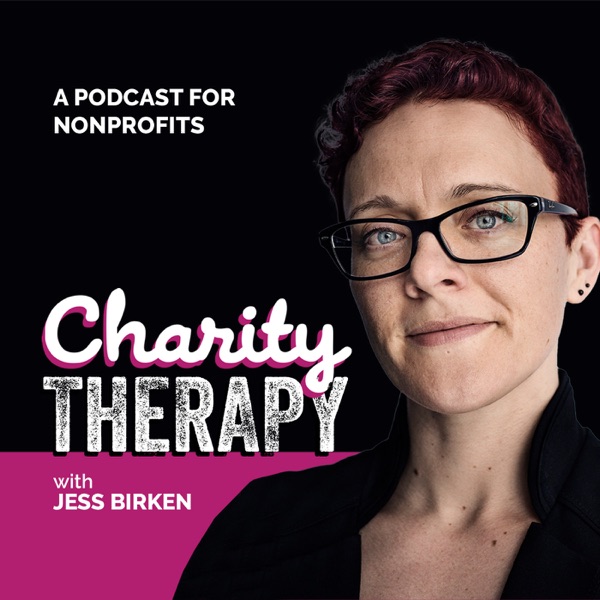
Charity Therapy
What if you could hang out with experienced nonprofit professionals and ask them your burning questions about the day-to-day life of nonprofits? What if you could take their wisdom and bring it back to your organization, for free? That's what we do on Charity Therapy. Hosted by Jess Birken - owner and lawyer at Birken Law Office. Every episode is an in-depth look at how to run a nonprofit, from fundraising to IRS woes to people problems and more! Our goal is to empower nonprofits to achieve your mission by doing things right.
- Episodes
- 177
- Releases
- Every two weeks
- Typical length
- 21 min
- On air since
- 2019
- Latest episode
- 5 days ago
Episodes
177 episodes, newest first
-
23 min
A Little Bit Martyry | What a Nonprofit Executive Committee Should Actually Do
Episode 176
Show notes
Your executive committee is doing all the work and making all the calls. The rest of the board just shows up and rubber stamps it. Sound familiar? This setup is more toxic than you think.
Meghan and I tackle two listener questions that hit the same governance problem from opposite sides. One from an overloaded exec committee doing everything themselves, and one from a frustrated new board member who feels completely shut out. Together they paint a perfect picture of why "the exec committee can just handle it" is a recipe for board drama, burnout, and disengagement.
Real Listener Questions:
• How much can an executive committee do on its own before we need to consult the rest of the board?
• What do I do when the executive committee makes their own decisions, and the rest of us on the board have no idea what's going on?Meghan and I dig into what an executive committee is actually supposed to do, why acting between meetings without the full board is a problem, and how to untangle the culture mess underneath it all.
What You'll Learn:
• What an executive committee should actually do (and what it shouldn't)
• Why "acting on behalf of the board between meetings" is bad practice
• How every board member's fiduciary duty gets undermined by a board within a board
• Why volunteers who step into staff or operating roles need clear, separate job descriptions
• How to set thresholds for what's a board decision vs a day to day operational one
• What to do as a disenfranchised board member (including remembering you can walk away)Bottom line: Your executive committee is not a board within a board. When a small group hoards all the decisions, you disenfranchise everyone else, burn yourselves out, and build a toxic culture that's hard to undo. Clear roles, clear policies, and a full board that actually gets to govern are what keep an organization healthy.
Resources from this Episode
• Previous Episode: https://birkenlaw.com/charity-therapy-podcast/ct175-revive-dissolved-nonprofit/
• Episode Transcript: https://birkenlaw.com/wp-content/uploads/2026/10/CT176_Transcript.pdfConnect with Us
• Jess Birken: https://www.linkedin.com/in/jessbirken/
• Meghan Heitkamp: https://www.linkedin.com/in/meghan-heitkamp-829254115/Listen & Engage
• Listen on Apple Podcasts | Spotify | YouTube | Amazon Music
• Rate & Review on Apple Podcasts: Click "Ratings and Reviews" then "Write a Review"
• Send us your nonprofit questions: https://birkenlaw.com/podcast/#podcast-storyStay Connected
• Sign up for the Birken Law Email list: https://birkenlaw.com/signup/
• Follow us on Facebook, Instagram, Twitter -
19 min
Oopsies, I Take It Back | Can You Revive a Dissolved Nonprofit?
Episode 175
Show notes
A nonprofit went quiet. Everyone got busy, the work stopped, and somewhere along the way it got "dissolved." Now you're ready to bring it back. Is that even possible?
Meghan and I tackle a layered listener question that delves into a really misunderstood issue in the nonprofit world. We also get into what really happens when a founder-led org goes dark, why so many nonprofits stall out in their first few years, and what it actually takes to bring one back from the dead.
Real Listener Question:
"I was an officer for a small nonprofit that the president unilaterally decided to dissolve about a year ago. The org had been on pause while the board was busy with life stuff, and the president just did the dissolution herself. I really want to get back to the work. How do I revive the corporation? And do we have a leg up on getting our 501(c)(3) status again since we've already done it once?"
Meghan and I dig into what "dissolved" actually means, how a nonprofit might secretly still be alive, and the people side of reviving a mission that someone else already laid to rest.
What You'll Learn:
• Why so many new nonprofits stall out in their first few years
• The difference between truly dissolving and just abandoning a nonprofit
• How to check if your org still exists with the state and the IRS
• Why you don't lose tax exemption for missing a single 990
• Why the IRS gives you no special leg up for having been approved before
• The messy interpersonal drama that can arise when you're dealing with passionate peopleBottom line: Startup energy doesn't last forever, and pausing or closing a nonprofit doesn't make you a failure. But before you reanimate a dissolved org, check what's actually still alive, and tread carefully with the people who were there the first time around.
Resources from this Episode
• Previous Episode: https://birkenlaw.com/charity-therapy-podcast/ct174-public-charity-private-foundation
• Episode Transcript: https://birkenlaw.com/wp-content/uploads/2026/10/CT175_Transcript.pdfConnect with Us
• Jess Birken: https://www.linkedin.com/in/jessbirken/
• Meghan Heitkamp: https://www.linkedin.com/in/meghan-heitkamp-829254115/Listen & Engage
• Listen on Apple Podcasts | Spotify | YouTube | Amazon Music
• Rate & Review on Apple Podcasts: Click "Ratings and Reviews" then "Write a Review"
• Send us your nonprofit questions: https://birkenlaw.com/podcast/#podcast-storyStay Connected
• Sign up for the Birken Law Email list: https://birkenlaw.com/signup/
• Follow us on Facebook, Instagram, Twitter -
21 min
Click, Click, You're Done | Public Charity vs. Private Foundation
Episode 174
Show notes
You got your 501(c)(3) letter, so you're all set... right? Not so fast. There's a second designation buried in that letter, and if it's not correct it could derail your grant applications, your tax filings, and your whole plan.
Meghan and I break down one of the most misunderstood distinctions in the nonprofit world: public charity versus private foundation. Both are 501(c)(3)s, but the difference between them changes how you file, what grants you qualify for, and how you're allowed to operate. We tackle two listener questions from founders who accidentally ended up in the wrong bucket without even knowing it.
Real Listener Question:
"One founder gives a lot of money to the nonprofit they started because it makes financial sense, and now their CPA is warning that this could turn the org into a private foundation. What does that mean? Another founder did all the paperwork themselves, got their 501(c)(3) letter, and then had a grant application rejected because they're "not a public charity." They're confused. Doesn't the letter say 501(c)(3)?"
Meghan and I dig into the public support test, why funding your own nonprofit can accidentally make you a private foundation, and how to check your real status before it comes back to bite you.
What You'll Learn:
• What the 501(c)(3) status actually is and why it has subcategories
• The difference between a public charity and a private foundation
• What the public support test is and why you need a third of your money from public sources
• How to look up your real status using the IRS exempt organization search
• Why private foundations file a 990-PF, not a regular 990Bottom line: It's not "public charity good, private foundation bad." It's about which one fits the work you're actually trying to do. Know your real status and don't let a DIY paperwork shortcut haunt you three years down the line.
Resources from this Episode
• Previous Episode: https://birkenlaw.com/charity-therapy-podcast/ct173-money-when-nonprofit-closes
• Episode Transcript: https://birkenlaw.com/wp-content/uploads/2026/09/CT174_Transcript.pdfConnect with Us
• Jess Birken: https://www.linkedin.com/in/jessbirken/
• Meghan Heitkamp: https://www.linkedin.com/in/meghan-heitkamp-829254115/Listen & Engage
• Listen on Apple Podcasts | Spotify | YouTube | Amazon Music
• Rate & Review on Apple Podcasts: Click "Ratings and Reviews" then "Write a Review"
• Send us your nonprofit questions: https://birkenlaw.com/podcast/#podcast-storyStay Connected
• Sign up for the Birken Law Email list: https://birkenlaw.com/signup/
• Follow us on Facebook, Instagram, Twitter -
15 min
Let It Go! | What Happens to the Money When a Nonprofit Closes?
Episode 173
Show notes
When a nonprofit closes its doors, it opens up a bunch of questions. What happens to the mission? Are there other organizations or groups doing this work? And a big one – what do we do with everything that's left over?
No individual gets to keep the money or assets leftover when a nonprofit dissolves. So what happens now, and how do you honor everything your organization stood for?
Meghan and I tackle a bittersweet listener question from an executive director who chose to close a nonprofit with dignity rather than run it into the ground. Now they're sitting on a substantial amount of leftover funds, ready to play Fairy Godmother.
Real Listener Question:
"Our nonprofit is dissolving, and I want to be a good steward of the leftover funds. I worked with an attorney to dissolve properly and now I'm ready to give away a substantial amount. How do I choose who to give the money to? Do I give a big gift to a few orgs or smaller amounts to many? What would you do?"
Meghan and I dig into what the law actually requires when a nonprofit dissolves, why this ED already knows the answer, and why the paralysis they're feeling has a lot more to do with grief than with grant strategy.
What You'll Learn:
• The legal requirements you need to follow in a nonprofit dissolution
• Why a bigger gift to fewer orgs makes a far greater impact
• What you actually need to check before giving
• Why over-vetting the successor organization is a common hurdle to dissolving nonprofits
• What makes that final gift ACTUALLY difficult (and it's not the reason you think)Bottom line: There is no perfect formula that will make the end of a nonprofit hurt less. Do your due diligence, give the best gift you can, and let yourself grieve.
Resources from this Episode
• Previous Episode: https://birkenlaw.com/charity-therapy-podcast/ct172-board-basics-by-a-teenager
• Episode Transcript: https://birkenlaw.com/wp-content/uploads/2026/09/CT_Ep173_Transcript.pdfConnect with Us
• Jess Birken: https://www.linkedin.com/in/jessbirken/
• Meghan Heitkamp: https://www.linkedin.com/in/meghan-heitkamp-829254115/Listen & Engage
• Listen on Apple Podcasts | Spotify | YouTube | Amazon Music
• Rate & Review on Apple Podcasts: Click "Ratings and Reviews" then "Write a Review"
• Send us your nonprofit questions: https://birkenlaw.com/podcast/#podcast-storyStay Connected
• Sign up for the Birken Law Email list: https://birkenlaw.com/signup/
• Follow us on Facebook, Instagram, Twitter -
21 min
Nonprofit PTSD | Nonprofit Board Basics, Explained by a Teenager
Episode 172
Show notes
What happens when you ask a 14 year-old to give advice to a bunch of board members who can't get along? Well, sometimes your local teenager might just give you the BEST take on the situation.
I'm joined by a very special guest this episode: my kid, Max. We start with a crash course on what a nonprofit board is, why board members are volunteers, and what the typical officer titles really mean. Then Max puts on his guest expert hat and helps me untangle a board drama that's threatening to sink an entire organization.
Real Listener Questions:
Becoming a volunteer at my nonprofit requires a majority board vote, and becoming a full board member requires a unanimous vote. Now our president is trying to impose veto power so he can overturn our votes if he disagrees. Other board members and I think he's trying to become a dictator instead of a leader. How do I make him understand he doesn't own the nonprofit and doesn't get to call all the shots?
Max and I dig into what's really going on here, why veto power isn't how healthy boards work, and why the answer to almost every board conflict comes back to one thing: communication.
What You'll Learn:
• What a nonprofit board is and why members are unpaid volunteers
• Why volunteer status comes with legal liability protection
• What the president, treasurer, and secretary actually do
• How to handle board recruitment through policy instead of power plays
• Why community and togetherness are what keep an all-volunteer org aliveBottom line: You can't hammer your will through a board with veto power and expect the organization to survive. Communication, being heard, and a real sense of community are what keep a nonprofit standing. And sometimes a teenager can see that more clearly than anyone.
Resources from this Episode
• Previous Episode: https://birkenlaw.com/charity-therapy-podcast/ct171-fundraising-myths-patrick-kirby
• Episode Transcript: https://birkenlaw.com/wp-content/uploads/2026/09/CT_Ep172_Transcript.pdfConnect with Us
• Jess Birken: https://www.linkedin.com/in/jessbirken/
Listen & Engage
• Listen on Apple Podcasts | Spotify | YouTube | Amazon Music
• Rate & Review on Apple Podcasts: Click "Ratings and Reviews" then "Write a Review"
• Send us your nonprofit questions: https://birkenlaw.com/podcast/#podcast-storyStay Connected
• Sign up for the Birken Law Email list: https://birkenlaw.com/signup/
• Follow us on Facebook, Instagram, Twitter -
25 min
You Don't Need Some Guy on a Yacht | Ditching the Fundraising Myths with Patrick Kirby
Episode 171
Show notes
Fundraising doesn't have to be intimidating, jargon-filled, or a total drag.
I'm joined by Patrick Kirby, the nonprofit and fundraising consultant behind Do Good Better Consulting and a self-described human exclamation mark. Patrick brings so much energy and joy to fundraising that it's genuinely contagious. We tackle three listener questions, bust some persistent fundraising myths, and Patrick goes on a rant that you will not want to miss.
Real Listener Questions:
What do you do when your software is getting in the way of your marketing? How do you keep the faith when what you're trying just isn't working?
Patrick and I dig into what actually drives donations, why software is never the silver bullet, and why losing a program that made you almost no money might be the best thing that ever happened to your fundraising.
What You'll Learn:
• Why "this is the way we've always done it" kills good ideas before they start
• How to be purposeful with your calls to action instead of always asking for money
• Why a CRM helps but won't magically fix your fundraising for you
• How to keep your motivation up when donor outreach feels like a grind
• Why a thank-you voicemail counts as a real, meaningful touchpoint
• How to make your fundraising about the donor and the community you serveBottom line: You're doing more impact than you think. Let the old ways go, focus on great stories and real relationships, and remember that you're part of the solution to problems the government can't fix on its own.
Resources from this Episode
• Check out Do Good Better Consulting: https://www.dogoodbetterconsulting.com
• Previous Episode: https://birkenlaw.com/charity-therapy-podcast/ct170-fire-your-board/
• Episode Transcript: https://birkenlaw.com/wp-content/uploads/2026/08/CT_Ep171_Transcript.pdfConnect with Us
• Jess Birken: https://www.linkedin.com/in/jessbirken/
• Patrick Kirby: https://www.linkedin.com/in/fundraisingdad/Listen & Engage
• Listen on Apple Podcasts | Spotify | YouTube | Amazon Music
• Rate & Review on Apple Podcasts: Click "Ratings and Reviews" then "Write a Review"
• Send us your nonprofit questions: https://birkenlaw.com/podcast/#podcast-storyStay Connected
• Sign up for the Birken Law Email list: https://birkenlaw.com/signup/
• Follow us on Facebook, Instagram, Twitter -
16 min
170: Shots Fired! | Can a Nonprofit Fire Its Own Board?
Episode 170
Show notes
What if you could just... skip the whole "having a board of directors" part of running a nonprofit? Turns out, you're not the only one who've thought about it!
We all know every nonprofit pro has quietly wondered at some point whether they really need a board at all. This week's listener question puts that quiet part out loud, and we dig into what's really going on when a board goes off the rails.
Real Listener Question:
"I work for a small business league and our whole board is useless. They do nothing to help us but keep finding random projects for us to do. The directors all say they're too busy for their normal board duties. My ED and I are wondering if there's a way to get all the board members to just sign away their roles so we don't have to have a board at all. Can we do that?"
Meghan and I break down what a board is actually supposed to do, why some people join boards for reasons that have nothing to do with the mission, and why "let's just get rid of them" is a fantasy (even though the underlying frustration is very real).
What You'll Learn:
• What the core job of every nonprofit board actually is
• Why some boards drift into micromanaging staff and how it happens
• Why "signing away" board roles isn't a legal option (sorry!)
• What to do when board members treat staff like their personal assistants
• Why board and staff relationships are hard for every nonprofit
• When it's time to bring in outside training for your boardBottom line: It's completely normal to be frustrated with your board. You're not alone. But the answer isn't getting rid of them. It's figuring out what your board is actually there to do and getting them back on track.
Resources from this Episode
• Previous Episode: https://birkenlaw.com/charity-therapy-podcast/ct169-nonprofit-retirement-christopher-tipper/
• Episode Transcript: https://birkenlaw.com/wp-content/uploads/2026/08/CT_Ep170_Transcript.pdfConnect with Us
• Jess Birken: https://www.linkedin.com/in/jessbirken/
• Meghan Heitkamp: https://www.linkedin.com/in/meghan-heitkamp-829254115/Listen & Engage
• Listen on Apple Podcasts | Spotify | YouTube | Amazon Music
• Rate & Review on Apple Podcasts: Click "Ratings and Reviews" then "Write a Review"
• Send us your nonprofit questions: https://birkenlaw.com/podcast/#podcast-storyStay Connected
• Sign up for the Birken Law Email list: https://birkenlaw.com/signup/
• Follow us on Facebook, Instagram, Twitter -
25 min
Different Flavors, Same Ice Cream | How Can a Nonprofit Organization Offer Retirement Benefits? with Christopher Tipper
Episode 169
Show notes
Your nonprofit is doing well, but you're worried you'll lose good employees if you don't offer retirement benefits. You've heard of a 401(k), but is that the right move?
I'm joined by Christopher Tipper of Hunter Benefits Consulting Group to break down retirement benefit options for small nonprofits. Christopher helps us wade through the alphabet soup of 403(b)s, 401(k)s, and simple IRAs.
Real Listener Question:
"I'm an Executive Director of a small org, and I've been advocating to my board that it's time to offer more benefits, including a 401(k). I realize it's a selfish ask since I'd benefit too, but I think it would help us recruit and retain good people. I started researching and I'm already in over my head. How do I even begin?"
Christopher and I walk through the retirement plan options that actually make sense for small nonprofits, why the 401(k) isn't always the best fit, and what the ED needs to know before pitching this to their board.
What You'll Learn:
• What retirement plan options nonprofits can consider and which ones actually make sense
• Why a simple IRA might be the easiest and cheapest option for small orgs
• What a 403(b) is and why only 501(c)(3) organizations can offer one
• Why the "highly compensated employee" definition is not what you think it is
• What compliance really costs and what to budget per eligible employee
• Why AI is genuinely dangerous for retirement plan adviceBottom line: If you're the ED asking whether it's a conflict of interest to advocate for retirement benefits, stop worrying. The board decides. Your job is to make the case, not to feel guilty about being included.
Resources from this Episode
• Learn about Christopher Tipper's firm at https://hunterbenefits.com/
• Watch Christopher's videos: https://www.youtube.com/@Hunter_Benefits
• Previous Episode: https://birkenlaw.com/charity-therapy-podcast/ct168-flat-org-structre-pablo-otaola
• Episode Transcript: https://birkenlaw.com/wp-content/uploads/2026/07/CT169_Transcript.pdfConnect with Us
• Jess Birken: https://www.linkedin.com/in/jessbirken/
• Christopher Tipper: https://www.linkedin.com/in/christophertipper/Listen & Engage
• Listen on Apple Podcasts | Spotify | YouTube | Amazon Music
• Rate & Review on Apple Podcasts: Click "Ratings and Reviews" then "Write a Review"
• Send us your nonprofit questions: https://birkenlaw.com/podcast/#podcast-storyStay Connected
• Sign up for the Birken Law Email list: https://birkenlaw.com/signup/
• Follow us on Facebook, Instagram, Twitter -
29 min
Oh, You Dreamers | Can a Flat Organizational Structure Work for a Nonprofit? with Dr. Pablo Otaola
Episode 168
Show notes
A nonprofit was built to run like a co-op. Everyone's equal. There's no HR. Is that your dream, or a nightmare that feel suspiciously like high school?
I'm joined by Dr. Pablo Otaola, CEO of Thriving Culture LLC, to tackle a listener question about this exact scenario. An executive director walked into an organization built on flat structure ideals, but instead of a utopia they found bullying, cliques, and power plays..
Real Listener Question:
"I'm an ED for a nonprofit with a flat structure. We supposed to run like a co-op, where everyone but the board and ED shares the same title. The goal was to create a fair and equitable environment, but in practice it's like high school. Bullying, power plays, cliques trying to control the group with zero accountability. How do I change the organization?"
Pablo and I break down the problems we've seen with flat organizational structures, what actually creates a thriving culture, and how a nonprofit leader can start changing the DNA of an org that's been stuck for years.
What You'll Learn:
• The building blocks of a healthy organizational culture
• Why flat structures look SO good on paper but may fall flat (pun intended!) in real life
• Why "no HR" is a legal red flag no matter how good your intentions are
• How a leader's personality can get embedded into org culture
• What it really takes to change a culture that's been encoded for years
• When to stop reading blogs and get outside help from someone who's done this beforeBottom line: You don't hire the surgeon not to cut you. If your culture is broken, it's okay to ask for help. Change is uncomfortable, but it's the only way forward!
Resources from this Episode
• Learn more about Pablo's work at Thriving Culture LLC: https://www.thrivingculturellc.com/
• Previous Episode: https://birkenlaw.com/charity-therapy-podcast/ct167-directors-officers-insurance-cody-wiswasser/
• Episode Transcript: https://birkenlaw.com/wp-content/uploads/2026/07/CT168_Transcript.pdfConnect with Us
• Jess Birken: https://www.linkedin.com/in/jessbirken/
• Dr. Pablo Otaola: https://www.linkedin.com/in/pablootaola/Listen & Engage
• Listen on Apple Podcasts | Spotify | YouTube | Amazon Music
• Rate & Review on Apple Podcasts: Click "Ratings and Reviews" then "Write a Review"
• Send us your nonprofit questions: https://birkenlaw.com/podcast/#podcast-storyStay Connected
• Sign up for the Birken Law Email list: https://birkenlaw.com/signup/
• Follow us on Facebook, Instagram, Twitter -
15 min
A Lawsuit Magnet | Do Nonprofits Really Need Directors and Officers Insurance? With Cody Wiswasser
Episode 167
Show notes
You're sitting on a nonprofit board. You haven't done anything wrong. Could someone really sue you personally over it? The unfortunate answer is YES, and the costs can pile up fast.
I'm joined by Cody Wiswasser, an insurance professional at Community Partners Insurance Group, to tackle a question from a small animal rescue trying to decide whether directors and officers insurance is actually worth the cost. The short answer is yes, but Cody walks me through why that is, and what most nonprofit boards don't realize about their exposure.
Real Listener Question:
"We recently learned about directors and officers insurance but I'm not sure if it's really necessary. I'm worried the cost will be prohibitive for her. I don't want some litigious person to come after me for something stupid, but we work in a small community where everyone knows everyone. Is this really worth it?"
Cody and I break down what D&O insurance actually covers, why most claims aren't what you'd expect, and why every nonprofit needs this coverage no matter how small.
What You'll Learn:
• The two insurance policies every nonprofit needs at a minimum
• Why most D&O claims come from interpersonal disputes
• What a "prominent person lawsuit" is and why it matters for wealthier board members
• Why even frivolous lawsuits can cost $10,000+ to make them go away
• The difference between A-side, B-side, and C-side D&O coverage
• Why talking to an insurance broker should happen when you start, not years laterBottom line: No one is going to wave their fairy dust over your nonprofit just because you're doing good work. Plan for risk like you mean it and protect your board before something goes wrong.
Resources from this Episode
• Learn more Community Partners Insurance Group at https://communitypartnersins.com
• Previous Episode: https://birkenlaw.com/charity-therapy-podcast/ct166-strategic-planning-perry-monastero/
• Episode Transcript: https://birkenlaw.com/wp-content/uploads/2026/05/CT167_Transcript.pdfConnect with Us
• Jess Birken: https://www.linkedin.com/in/jessbirken/
• Cody Wiswasser – reach out at: cody.wiswasser@cpiginsurance.comListen & Engage
• Listen on Apple Podcasts | Spotify | YouTube | Amazon Music
• Rate & Review on Apple Podcasts: Click "Ratings and Reviews" then "Write a Review"
• Send us your nonprofit questions: https://birkenlaw.com/podcast/#podcast-storyStay Connected
• Sign up for the Birken Law Email list: https://birkenlaw.com/signup/
• Follow us on Facebook, Instagram, Twitter -
23 min
This Could Have Been An Email | What Is Nonprofit Strategic Planning? with R. Perry Monastero
Episode 166
Show notes
Your nonprofit hosted its first ever strategic planning retreat… and it was a complete disaster. So, what do you do now??
I'm joined by R. Perry Monastero, owner of RPM Consulting Group, to dig into a listener question that had us both saying "oof" out loud. A brand new board member sat through a nightmare retreat full of college-style exercises and definition debates. They want to help the board get back on track, but they don't want to step on toes as the newest person in the room.
Real Listener Question:
"We had our first ever strategic planning retreat, and it was a NIGHTMARE. We came up with words like 'diversity' and 'integrity' and sat around debating definitions for the entire retreat. Afterwards, the ED and president drafted a new mission statement and emailed it to the board with a litany of questions. I want to help us get back on track. What do I do?"
Perry and I break down what strategic planning actually is, why this retreat probably wasn't really strategic planning at all, and how a new board member can navigate the situation gracefully.
What You'll Learn:
• What real nonprofit strategic planning looks like versus what a lot of orgs end up doing
• Why a retreat without a facilitator is often a setup for disengagement
• Why "this could have been an email" is the millennial response to bad governance
• How to ask great questions as a new board member without ruffling feathers
• Why you don't have to do a deep-dive strategic plan every single time
• When to bring in outside expertise and where to find reliable nonprofit resourcesBottom line: You wouldn't have your best friend clean your teeth instead of a dentist. So why would you skip professional support for one of the most important conversations your nonprofit will have?
Resources from this Episode
• R. Perry Monastero / RPM Consulting Group: https://rpmcg.com
• BoardSource: https://boardsource.org
• National Council of Nonprofits: https://www.councilofnonprofits.org
• Standards for Excellence Institute: https://standardsforexcellence.org
• Episode Transcript: https://birkenlaw.com/wp-content/uploads/2026/06/CT166_Transcript.pdfConnect with Us
• Jess Birken: https://www.linkedin.com/in/jessbirken/
• R. Perry Monastero: https://www.linkedin.com/in/perrymonastero/Listen & Engage
• Listen on Apple Podcasts | Spotify | YouTube | Amazon Music
• Rate & Review on Apple Podcasts: Click "Ratings and Reviews" then "Write a Review"
• Send us your nonprofit questions: https://birkenlaw.com/podcast/#podcast-storyStay Connected
• Sign up for the Birken Law Email list: https://birkenlaw.com/signup/
• Follow us on Facebook, Instagram, Twitter -
17 min
The Past Tense of Sync | How to Get a New IRS Determination Letter
Episode 165
Show notes
So you've submitted your IRS application and you're anxiously awaiting the letter in the mail with their response. But what if it just… never comes??
Meghan and I tackle a listener question from a new nonprofit that did everything right – they got their tax-exempt status (yay!) but still can't find the actual letter. What do you do?
Real Listener Question:
"My org got approved as a 501(c)(3) according to the IRS bulk list for my state. But I never actually received the determination letter and it's not on the website. Is this common? I know that many grants ask for the actual letter, so I'm not sure what to do."
Meghan and I break down what a determination letter is, why it might not have arrived yet, and what to do if you need a replacement (for any reason).
What You'll Learn:
• What a determination letter is and why it matters for your nonprofit
• Why your letter might not have arrived even though your status is real
• How to use the IRS Tax Exempt Organization Search and what it actually shows
• When to wait it out vs when to request a replacement letter
• How to request a replacement determination letter from the IRS for freeBottom line: The IRS moves SLOWLY sometimes. You can request a new determination letter anytime, but remember that every new request is another filing that will take time to complete. Take a deep breath and be ready to wait.
Resources from this Episode
• IRS Tax Exempt Organization Search tool: https://apps.irs.gov/app/eos/
• Request a replacement determination letter from the IRS: https://www.irs.gov/pub/irs-pdf/f4506b.pdf
• Learn about the leadership fiasco at the IRS: https://birkenlaw.com/charity-therapy-podcast/ct139
• Episode Transcript: https://birkenlaw.com/wp-content/uploads/2026/04/CT165_Transcript.pdfConnect with Us
• Jess Birken: https://www.linkedin.com/in/jessbirken/
• Meghan Heitkamp: https://www.linkedin.com/in/meghan-heitkamp-829254115/Listen & Engage
• Listen on Apple Podcasts | Spotify | YouTube | Amazon Music
• Rate & Review on Apple Podcasts: Click "Ratings and Reviews" then "Write a Review"
• Send us your nonprofit questions: https://birkenlaw.com/podcast/#podcast-storyStay Connected
• Sign up for the Birken Law Email list: https://birkenlaw.com/signup/
• Follow us on Facebook, Instagram, Twitter -
21 min
Ermahgerd! | How to Evaluate Executive Director Performance with Debbie Rabishaw
Episode 163
Show notes
So a nonprofit hires an Executive Director, skips all the onboarding, sets no goals, and now… wants to fire them. Yikes!
I'm joined by Debbie Rabishaw, founder of HR consulting firm Next Step Advisory, to tackle a listener question that has more layers than an onion. A small nonprofit is in the middle of transitioning from a working board to a governing board, their new ED is getting mixed reviews, and some board members have already gone rogue. Things are messy, and Debbie and I have thoughts.
Real Listener Question:
"We hired a new executive director a year ago but didn't set any goals for her. A new evaluation committee sent out an anonymous staff survey and got mixed results, including some poor feedback. Now some board members want to demote her and split her role. I'm thinking of proposing a performance improvement plan, but we haven't documented any issues. What's the best way forward?"
Debbie and I dig into what this board is actually dealing with, why the response feels disproportionate to the situation, and what good performance management actually looks like for a nonprofit's first employee.
What You'll Learn:
• What the relationship between the board and Executive Director SHOULD look like
• Why you can't put someone on a PIP if you never set expectations in the first place
• How to course correct when things didn't start off the right way
• Why the board needs to look at its own responsibility before pointing fingers
• What anonymous stakeholder surveys can and can't tell you about performance
• Why employment law applies to your nonprofit no matter how small you areBottom line: You can't hold someone accountable for expectations that were never set. Own your part, reset the compass, and give this hire a real chance to succeed.
Resources from this Episode
• Learn more about Debbie at http://www.nextstepadvisory.us
• Previous Episode: Can a Religious Nonprofit Apply for Status with the IRS 1023-EZ Short Form?: https://birkenlaw.com/charity-therapy-podcast/ct163-religious-nonprofit-1023/
• Episode Transcript: https://birkenlaw.com/wp-content/uploads/2026/04/CT164_Transcript.pdfConnect with Us
• Jess Birken: https://www.linkedin.com/in/jessbirken/
• Debbie Rabishaw: https://www.linkedin.com/in/debbierabishaw/Listen & Engage
• Listen on Apple Podcasts | Spotify | YouTube | Amazon Music
• Rate & Review on Apple Podcasts: Click "Ratings and Reviews" then "Write a Review"
• Send us your nonprofit questions: https://birkenlaw.com/podcast/#podcast-storyStay Connected
• Sign up for the Birken Law Email list: https://birkenlaw.com/signup/
• Follow us on Facebook, Instagram, Twitter -
15 min
A Runway of Snacks | Can a Religious Nonprofit Apply for Status with the IRS 1023-EZ Short Form?
Episode 163
Show notes
So you're a charity grounded in religious values. Does that make you a church in the eyes of the IRS?
Meghan and I dig into a listener question that had me doing a genuine double take. A religious nonprofit submitted the 1023-EZ short form and got rejected because the IRS decided they were a church. What gives?!
Real Listener Question:
"The IRS rejected our 1023-EZ because they think we are a church, which would require the full 1023 form. But we are not a church. We are a religious organization. How do I fix the application to get them to accept our 1023-EZ?"
Meghan and I break down the key difference between a church and a religious nonprofit, why the IRS treats them differently, and what this listener may have done wrong on their application. Plus you'll get a classic Jess Birken rant about why the IRS doesn't make any sense!
What You'll Learn:
• How the IRS defines a church versus a religious nonprofit organization
• How churches file (or don't file) for their tax-exempt status
• How religious charities are treated differently than churches, mosques, temples, etc.
• The most common mistakes people make on the 1023-EZ that trigger a rejection
• How one wrong checkbox or one poorly worded sentence can get your application flagged
• How to fix your application and get it into the right bucketBottom line: The IRS puts churches and religious nonprofits in different buckets. Knowing which one you are and how to say it on your application makes all the difference.
Resources from this Episode
• See the eligibility worksheet for Form 1023-EZ: https://www.irs.gov/pub/irs-pdf/i1023ez.pdf
• File using our Do-It-Yourself 1023-EZ Tool: https://birkenlaw.com/diy-1023-ez
• Watch the Righteous Gemstones: https://www.hbomax.com/shows/righteous-gemstones/c3bd0a34-c4ce-4ca5-bd6c-820df7340671
• Previous Episode: Are Nonprofit Startup Costs Tax-Deductible Donations for the Founder? https://birkenlaw.com/charity-therapy-podcast/ct162-nonprofit-startup-costs
• Episode Transcript: https://birkenlaw.com/wp-content/uploads/2026/03/CT163_Transcript.pdfConnect with Us
• Jess Birken: https://www.linkedin.com/in/jessbirken/
• Meghan Heitkamp: https://www.linkedin.com/in/meghan-heitkamp-829254115/Listen & Engage
• Listen on Apple Podcasts | Spotify | YouTube | Amazon Music
• Rate & Review on Apple Podcasts: Click "Ratings and Reviews" then "Write a Review"
• Send us your nonprofit questions: https://birkenlaw.com/podcast/#podcast-storyStay Connected
• Sign up for the Birken Law Email list: https://birkenlaw.com/signup/
• Follow us on Facebook, Instagram, Twitter -
16 min
No, Not the Tomatoes! | Are Nonprofit Startup Costs Tax-Deductible Donations for the Founder?
Episode 162
Show notes
You scraped together your own money to start a brand-new nonprofit. You're out the money, but can you at least take a tax deduction?
Meghan and I are back with a question from a new nonprofit founder who wants to know if the startup cash they put in before getting their 501c3 status counts as a tax-deductible donation. It's one of the most common questions we hear from new founders, and the answer involves a pretty handy IRS rule most people don't know about.
Real Listener Question:
"In June 2025, two friends and I created a housing placement nonprofit and each put our own money in to get it started. We earned our 501c3 status that September. Does that startup cash count as a tax-deductible donation even though it happened before our status was official?"
Meghan and I break down the IRS backdating rule, the chicken-and-egg problem of nonprofit startup costs, and what founders need to know before they file their taxes.
What You'll Learn:
• Why starting a nonprofit costs more than most founders expect
• The IRS backdating rule and how it protects early donors and founders
• What the 27-month window means for your tax-exempt status
• How founders can get reimbursed for the startup costs
• Why you can't take a deduction AND get reimbursed laterBottom line: Nonprofits are businesses, and businesses have startup costs. Know your options before you file, and don't double dip.
Resources from this Episode
• Watch the C.H.U.D. trailer: https://youtu.be/iNq2yPGhv1w?si=-BIOh_iP-WCv_L0B
• Previous Episode: Why Recording In-Kind Donations Matters For Your Nonprofit: https://birkenlaw.com/charity-therapy-podcast/ct161-recording-inkind-donations
• Episode Transcript: https://birkenlaw.com/wp-content/uploads/2026/03/CT162_Transcript.pdfConnect with Us
• Jess Birken: https://www.linkedin.com/in/jessbirken/
• Meghan Heitkamp: https://www.linkedin.com/in/meghan-heitkamp-829254115/Listen & Engage
• Listen on Apple Podcasts | Spotify | YouTube | Amazon Music
• Rate & Review on Apple Podcasts: Click "Ratings and Reviews" then "Write a Review"
• Send us your nonprofit questions: https://birkenlaw.com/podcast/#podcast-storyStay Connected
• Sign up for the Birken Law Email list: https://birkenlaw.com/signup/
• Follow us on Facebook, Instagram, Twitter -
16 min
A Rinky-Dink Outfit | Why Recording In-Kind Donations Matters For Your Nonprofit
Episode 161
Show notes
Your nonprofit is doing real work, but do your financials show it?
In this episode, Meghan and I tackle a listener question from a small nonprofit that's running into a big problem: their numbers don't match their story. The for-profit company supporting them pays for nearly everything, but none of that shows up on the books, and funders are raising eyebrows.
Real Listener Question:
"Our employees, office space, and equipment are all paid for by a for-profit company and donated to our nonprofit. Our financials make it look like we're barely doing anything. I've been tasked with finding major funders and the narrative just doesn't match the numbers. What do I do?"
If your nonprofit receives donated goods, services, space, or time, this episode is for you. Meghan and I break down what in-kind donations are, why recording them matters, and how getting this right can completely change how funders see you.
What You'll Learn:
• What counts as an in-kind donation and how to assign it a value
• How to record donated office space, employee time, and services on your books
• Why your financials need to tell the same story as your narrative
• How in-kind contributions can strengthen your grant proposals
• Why nonprofit bookkeeping is specialized and when to bring in the experts
• The one thing you should never do when valuing a donor's giftBottom line: Your numbers tell a story whether you want them to or not. Make sure yours reflects the real work your nonprofit is doing.
Resources from this Episode
• Learn about the value of volunteer time at Independent Sector: https://independentsector.org/research/value-of-volunteer-time/
• Quickbooks for Nonprofits Facebook Group from Megan Genest Tarnow: https://www.facebook.com/groups/QB4NPs
• Previous Episode: Can Business Interruption Insurance Help Nonprofits Who Closed During ICE Raids? With Cody Wiswasser: https://birkenlaw.com/charity-therapy-podcast/ct160-nonprofit-business-insurance
• Episode Transcript: https://birkenlaw.com/wp-content/uploads/2026/03/CT161_Transcript.pdfConnect with Us
• Jess Birken: https://www.linkedin.com/in/jessbirken/
• Meghan Heitkamp: https://www.linkedin.com/in/meghan-heitkamp-829254115/Listen & Engage
• Listen on Apple Podcasts | Spotify | YouTube | Amazon Music
• Rate & Review on Apple Podcasts: Click "Ratings and Reviews" then "Write a Review"
• Send us your nonprofit questions: https://birkenlaw.com/podcast/#podcast-storyStay Connected
• Sign up for the Birken Law Email list: https://birkenlaw.com/signup/
• Follow us on Facebook, Instagram, Twitter -
21 min
Indiana vs Minnesota Throwdown | Can Business Interruption Insurance Help Nonprofits Who Closed During ICE Raids? With Cody Wiswasser
Episode 160
Show notes
Your nonprofit closed its doors because of ICE enforcement or federal funding cuts. Is there an insurance policy that could actually help? Maybe, but the answer is a lot more complicated than you'd hope.
In this episode, I'm joined by Cody Wiswasser, an insurance professional at Community Partners Insurance Group, to dig into my questions. With so much uncertainty hitting nonprofits right now, I needed to know whether business interruption insurance is something my clients should actually be thinking about.
Here's the situation:
Can nonprofits get business interruption insurance? Are closures for ICE raids or funding cuts covered?
Cody breaks down how business interruption coverage works, what it actually takes to file a claim, and why the fine print in your policy matters.
What You'll Learn:
• What business interruption insurance is and whether your nonprofit qualifies
• The difference between standard and standalone coverage
• When a closure actually triggers a claim and when it doesn't
• How your nonprofit's specific mission affects your coverage options
• Why you need to understand your coverage BEFORE filing a claimBottom line: Insurance isn't a magic bullet, but it DOES matter for nonprofits. For nonprofits that qualify, business interruption coverage could be important for them.
Resources from this Episode
• Learn more Community Partners Insurance Group at https://communitypartnersins.com
• Contact Cody for your insurance needs at cody.wiswasser@cpiginsurance.com
• Which States Are In The Midwest? Get mad here: https://fivethirtyeight.com/features/what-states-are-in-the-midwest/
• Previous Episode: Can You Use Your Retirement Funds to "Invest" In A Nonprofit? With Jeff Beck: https://birkenlaw.com/charity-therapy-podcast/159-invest-retirement-funds
• Episode Transcript: https://birkenlaw.com/wp-content/uploads/2026/03/CT160_Transcript.pdfConnect with Us
• Jess Birken: https://www.linkedin.com/in/jessbirken/
• Cody Wiswasser – reach out at: cody.wiswasser@cpiginsurance.comListen & Engage
• Listen on Apple Podcasts | Spotify | YouTube | Amazon Music
• Rate & Review on Apple Podcasts: Click "Ratings and Reviews" then "Write a Review"
• Send us your nonprofit questions: https://birkenlaw.com/podcast/#podcast-storyStay Connected
• Sign up for the Birken Law Email list: https://birkenlaw.com/signup/
• Follow us on Facebook, Instagram, Twitter -
23 min
Reporter on the Street | Can You Use Retirement Funds to "Invest" In A Nonprofit? With Jeff Beck
Episode 159
Show notes
Do you know someone eyeing their retirement accounts to fund their nonprofit dreams? We need to talk!
In this episode, I'm joined by Jeff Beck, a wealth advisor at COE Financial Group, to tackle a listener question that had me equal parts fascinated and horrified.
Real Listener Question:
"My partner has a traditional IRA with about $100,000 in it. Can she invest that money in my 501(c)(3) without penalties? Do we need to set up a for-profit company for her IRA to invest in first? Are there IRS rules against her investing in something I founded and run?"
Jeff and I dig into the mechanics of IRAs, self-directed accounts, and what the IRS actually allows when it comes to retirement funds and charitable giving.
Spoiler alert: nonprofits DO NOT have shareholders so you can't "invest" in them and get a return! There are some serious red flags here, both on the legal side AND in this interpersonal relationship.
What You'll Learn:
• Why you can't really "invest" in a nonprofit
• How giving to a nonprofit can benefit an individual's tax position
• What a self-directed IRA is and what you get to do with it
• One legitimate way to donate your IRA funds to a nonprofit tax-free
• Why getting "returns" on your contribution can put a nonprofit's tax-exemption at risk
• How you can financially hurt yourself when you're starting a new organizationBottom line: Using your (or your significant other's) retirement fund to set up your new business is probably NOT a good idea. Protect yourself, protect your partner, and please, let that IRA grow.
Resources from this Episode
• Learn more about Jeff Beck at Coe Financial Group: https://www.coefinancial.com/
• Previous Episode: How Nonprofits Can Find and Hire a Good Lawyer https://birkenlaw.com/charity-therapy-podcast/158-hiring-lawyer/
• Episode Transcript: https://birkenlaw.com/wp-content/uploads/2026/03/CT159_Transcript.pdfConnect with Us
• Jess Birken: https://www.linkedin.com/in/jessbirken/
• Jeff Beck – reach out at Jeff@coefinancial.comListen & Engage
• Listen on Apple Podcasts | Spotify | YouTube | Amazon Music
• Rate & Review on Apple Podcasts: Click "Ratings and Reviews" then "Write a Review"
• Send us your nonprofit questions: https://birkenlaw.com/podcast/#podcast-storyStay Connected
• Sign up for the Birken Law Email list: https://birkenlaw.com/signup/
• Follow us on Facebook, Instagram, Twitter -
24 min
Is Your Ringer On? | How Nonprofits Can Find and Hire a Good Lawyer
Episode 158
Show notes
Finding a lawyer should not feel harder than solving the legal problem itself. And yet, here we are.
In this episode, Meghan and I talk about something that comes up constantly in my nonprofit law practice: how nonprofit leaders and boards actually find a good lawyer and how to tell whether someone is the right fit.
Real Listener Question:
"I am a board member tasked with finding my small nonprofit a lawyer. I am trying to collect five options for the board to review and have the board interview each lawyer. I've prepared an RFP to get information from as many firms as possible. Is there anything else I'm supposed to do to make sure we did a fair search?"
We dig into why hiring a lawyer is not the same as hiring other vendors and why an RFP is often the wrong tool for the job. We talk about common misconceptions nonprofits have about fairness, pricing, and process, and why trying to copy large institutions can backfire for smaller organizations. This conversation also pulls back the curtain on how lawyers actually work, what red flags to watch for, and how to avoid overcomplicating a decision that already feels overwhelming.
What You'll Learn:
• How nonprofits typically find lawyers
• Why RFPs usually do not work for legal services
• What legal expertise actually looks like
• How pricing structures should be discussed
• Warning signs early in the relationship
• Why "cheapest" is not always best
• How to trust your gut while doing due diligenceBottom line: Hiring a lawyer does not require a perfect process. It requires clarity, trust, and a focus on finding someone who understands your nonprofit and can actually help you.
Resources from this Episode
• Previous Episode: How Classy May Be Hurting Your Donor Relationships: https://birkenlaw.com/charity-therapy-podcast/ct157-classy-donor-acknowledgement/
• Episode Transcript: https://birkenlaw.com/wp-content/uploads/2026/03/CT158_Transcript.pdfConnect with Us
• Jess Birken: https://www.linkedin.com/in/jessbirken/
• Meghan Heitkamp: https://www.linkedin.com/in/meghan-heitkamp-829254115/Listen & Engage
• Listen on Apple Podcasts | Spotify | YouTube | Amazon Music
• Rate & Review on Apple Podcasts: Click "Ratings and Reviews" then "Write a Review"
• Send us your nonprofit questions: https://birkenlaw.com/podcast/#podcast-storyStay Connected
• Sign up for the Birken Law Email list: https://birkenlaw.com/signup/
• Follow us on Facebook, Instagram, Twitter -
21 min
Old Woman Shakes Fist at Sky | How Classy May Be Hurting Your Donor Relationships
Episode 157
Show notes
Nonprofit newsflash - your donation platform might be quietly annoying your biggest donors 😬
In this episode, Meghan and I dig into some nonprofit LinkedIn drama sparked by a post from the one and only Eve Borenstein. Here's the situation:
You gave a big donation, and you received an auto-generated donation receipt from the org's donation platform. The problem? The gift acknowledgement letter and receipt are WRONG.
We break down why donor acknowledgement letters matter so much, what the IRS actually requires in those receipts for gifts over $250, and how automated systems can unintentionally damage donor trust. We also talk about the growing trend of for profit software companies promising to "handle everything" for nonprofits while missing critical compliance details. If you rely on online donation platforms, this conversation will likely make you rethink what you are outsourcing and what still needs human attention.
What You'll Learn:
• What SHOULD be in your donor acknowledgement letters
• How bad receipts can create donor frustration
• Where donation platforms and tech solutions for nonprofits can fall short
• How automation can quietly hurt your donor retentionBottom line: Donor relationships are built on trust and gratitude. When your systems create friction instead of appreciation, even unintentionally, it can cost you future support and credibility.
Resources from this Episode
• Listen to our past episode with Eve Borenstein here: https://birkenlaw.com/charity-therapy-podcast/ct104/
• Read Eve Borenstein's LinkedIn post about Classy here: https://www.linkedin.com/posts/taxexemptlaw_so-annual-gripe-continues-last-week-activity-7412874086961541120-7bsN?rcm=ACoAAAEjProBQJRvgNexcp-oDkRTlIoUrU5fW7Q
• Listen to our last episode with Ephraim about GoFundMe here: https://birkenlaw.com/charity-therapy-podcast/ct150/
• Generate a good Gift Acknowledgement Letter here: https://birkenlaw.com/mg-document-app/gift-acknowledgment-letter/
• Previous Episode: Can Nonprofits Give Tax-Free Money to People?: https://birkenlaw.com/charity-therapy-podcast/156-nonprofit-give-money/
• Episode Transcript: https://birkenlaw.com/wp-content/uploads/2026/03/CT157_Transcript.pdfConnect with Us
• Jess Birken: https://www.linkedin.com/in/jessbirken/
• Meghan Heitkamp: https://www.linkedin.com/in/meghan-heitkamp-829254115/Listen & Engage
• Listen on Apple Podcasts | Spotify | YouTube | Amazon Music
• Rate & Review on Apple Podcasts: Click "Ratings and Reviews" then "Write a Review"
• Send us your nonprofit questions: https://birkenlaw.com/podcast/#podcast-storyStay Connected
• Sign up for the Birken Law Email list: https://birkenlaw.com/signup/
• Follow us on Facebook, Instagram, Twitter
On these lists
Charity Therapy is one of the shows picked out on each of these



More in Management
Placed highest on Apple Podcasts' Management chart right now