Podcast
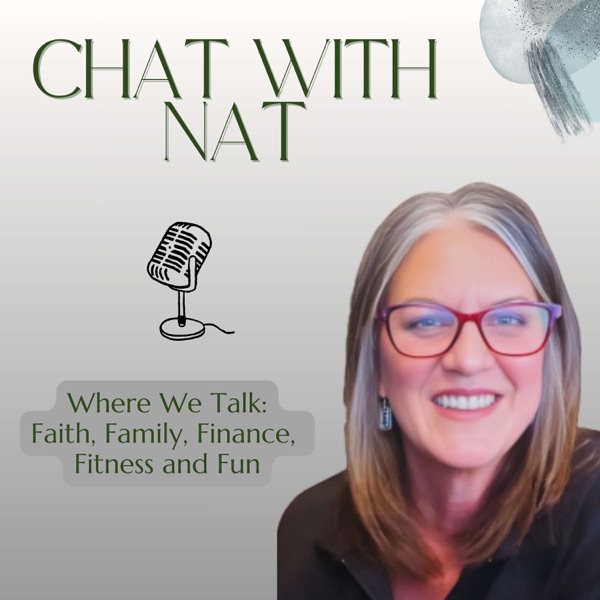
Chat with Nat: Caregiving, Money, Finances, and Support for Caregivers
Caring for aging parents or loved ones while managing your career, finances, and your own life can feel overwhelming, isolating, and financially stressful. balancing work, and feeling overwhelmed by financial decisions, Chat With Nat is your trusted resource.
Chat with Nat, a caregiving podcast focused on caregiver support, financial planning for caregivers, and navigating the real-life challenges of balancing care, money, and well-being.
Nat dives into the caregiving topics that matter most, caregiving strategies, emotional support, financial planning, budgeting tips, and real‑world solutions that help you care with confidence without sacrificing your own future.
From practical episodes on how to pay for care, plan ahead financially, avoid burnout, and navigate family caregiving challenges, to honest conversations with experts, caregivers, and advocates — this show gives you the clarity, community, and tools you need to protect your money, your time, and your wellbeing.
Whether you’re newly caring for a loved one or have been at it for years, Chat With Nat is here to help you care smarter, not harder.
Hosted by Natalie (Nat), this show brings honest conversations and practical guidance to help you manage caregiver stress, avoid burnout, and feel more confident in both your caregiving role and your financial decisions.
Each episode explores:
• Caregiver support and strategies for everyday challenges
• Financial planning, money management, and the cost of caregiving
• Caregiver burnout, mental health, and setting boundaries
• Balancing caregiving with work, family, and personal life
• Supporting aging parents and navigating complex family dynamics
Whether you’re a family caregiver, supporting an aging parent, or planning for the financial and emotional impact of care, you’ll find relatable stories, expert insights, and actionable advice you can actually use.
If you’re looking for guidance on caregiving and finances, without the fluff, this podcast will help you feel supported, prepared, and less alone.
- Episodes
- 135
- Releases
- Weekly
- Typical length
- 35 min
- On air since
- 2024
- Latest episode
- 1 week ago
Episodes
135 episodes, newest first
-
1 hr 10 min
When Life Insurance Doesn’t Pay: What Families Need to Know Before Filing a Claim
Episode 127
Show notes
Tell Natalie what you love about this episode, text here!
Imagine doing everything you thought you were supposed to do. You purchased life insurance, named beneficiaries, paid the premiums, and believed your family would be protected.
Then someone dies, the family files the claim, and instead of receiving the money they expected, the claim is delayed, disputed, or denied.
In this episode of Chat with Nat, Natalie Kime sits down with attorney Stephanie Prestridge, co-founder of Life Claim, to talk about what families need to understand before they ever have to file a life-insurance claim.
Stephanie spent nearly two decades working in estate planning before a case changed the direction of her practice. A client had done the planning, worked with the right professionals, and put life insurance in place, yet after his death the insurance company refused to pay. Stephanie initially had the reaction many families would have: that was not how life insurance was supposed to work.
That experience led her to begin looking much more closely at denied, delayed, and disputed claims and eventually to build a practice around helping beneficiaries navigate them.
Natalie and Stephanie talk about beneficiary designations and why a will or trust generally does not override the beneficiary listed on a life-insurance policy. They discuss what can happen when an old beneficiary is never updated, how employer-sponsored policies can operate differently from individually owned policies, and why families need to understand not only what coverage exists but where it came from and what rules apply to it.
Stephanie also explains the two-year contestability period, why insurance companies may request medical records after a death, and why accuracy on the original application matters. She shares why even an innocent misunderstanding on an application can create serious problems later.
The conversation becomes especially important when Stephanie explains what beneficiaries should and should not do after a claim is filed. A friendly phone call from an insurance representative may still be recorded and documented, so beneficiaries need to stay focused on the claim process rather than casually speculating about medical history or circumstances they do not know firsthand.
At the same time, families cannot ignore the process. Some policies have deadlines, and waiting too long can create another problem.
Finally, Stephanie addresses what someone should do if a denial letter arrives. Her advice is clear: get qualified help before submitting an appeal, particularly when an employer-sponsored policy or other complex claim is involved.
This episode is about making sure the plan you put in place today actually works for the people you love when they need it.
Stephanie Prestridge is an attorney and co-founder of Life Claim, a law practice focused on helping families with delayed, denied, and disputed life insurance and accidental death claims.
Before focusing her work on life-insurance disputes, Stephanie spent nearly two decades working in estate planning. That experience gave her a unique perspective on what can happen when families carefully prepare for a death, only to discover that a life-insurance benefit they expected may be delayed, challenged, or denied.
Stephanie’s work now focuses on helping beneficiaries understand complicated claim situations, beneficiary disputes, employer-sponsored policies, contestability investigations, and the appeals process.
She earned her law degree from Loyola University New Orleans College of Law and is based in Louisiana.
Connect With Stephanie
Website: LifeClaim.com
Phone: 888-615-3270
Email: stephanie.prestridge@lifeclaim.com
LinkedIn: Stephanie Prestridge
Instagram: @lifeclaimwins
Facebook: @lifeclaimwins
Wondering, "Can I afford that?" Get a clearer picture of your money with Natalie Kime's free Can I Afford That? Checklist. No complicated spreadsheets or financial jargon. Download your copy at https://www.chatwithnapodcast.com/
Thank you for listening to Chat With Nat: Caregiving, Money & Real Life Solutions. This podcast is your trusted guide for caregiving strategies, caregiver support, long-distance caregiving tips, financial planning for families, and managing caregiver burnout. Each week, we provide actionable advice, expert interviews, real caregiver stories, and practical tools to help you navigate caregiving challenges, protect your finances, and care with confidence.
Whether you’re caring for aging parents, managing adult children with special needs, or balancing caregiving with work, Chat With Nat is here to help you care smarter, avoid burnout, and feel supported every step of the way.
Subscribe on your favorite podcast platform and never miss an episode about caregiver tips, dementia care, financial guidance for caregivers, and emotional support for those caring for loved ones. Join our community and get access to caregiving resources, practical tools, and expert advice to make your caregiving journey easier.
Get my FREE Financial Check-up Guide
Connect with me on:
Facebook
Instagram
LinkedInThe content shared on this podcast is meant to ...
-
15 min
You Are Enough: Why Financial Independence Is Really About Choice
Episode 126
Show notes
Tell Natalie what you love about this episode, text here!
When you think about financial independence, what comes to mind? Having enough saved for retirement? Paying off debt? Reaching a certain number in your bank account?
Those things matter, but I want to talk about something that matters just as much and doesn't always get enough attention: having choices.
Because life doesn't always go according to plan. Sometimes a parent needs care, a relationship changes, your health takes an unexpected turn, or you realize that the life you've been working so hard to build isn't quite the life you want anymore.
In those moments, money becomes about a lot more than what you have in the bank. It can affect whether you have the flexibility to step away from work, get help when you need it, make a change, or simply give yourself some breathing room.
In this episode of Chat with Nat, I'm talking about what financial independence really means and why I believe it has so much to do with protecting your choices rather than proving your worth.
We'll look at how money connects to caregiving, identity, and the decisions we make for ourselves and the people we love. I'll also share a different way to think about your financial goals, especially if you've spent years measuring your progress against someone else's idea of success.
You don't have to reach a certain income or savings balance to be worthy of a good life. But you can begin making financial decisions today that give you more options tomorrow.
What You'll Learn
• Why financial independence is about more than retirement savings or reaching a particular dollar amount
• How having financial options can make a difference during caregiving and unexpected life changes
• Why your income, net worth, or financial circumstances don't determine your value
• How to think about money in terms of the choices and flexibility it gives you
• Why it's worth reconsidering financial goals that no longer fit the life you want
• How small, intentional decisions can help you build more financial breathing room over timeA Question to Take With You
Instead of asking yourself whether you've reached someone else's definition of financial success, try asking:
What choices do I want my money to give me?
That question may change the way you think about what you're working toward.
Wondering, "Can I afford that?" Get a clearer picture of your money with Natalie Kime's free Can I Afford That? Checklist. No complicated spreadsheets or financial jargon. Download your copy at https://www.chatwithnapodcast.com/
Thank you for listening to Chat With Nat: Caregiving, Money & Real Life Solutions. This podcast is your trusted guide for caregiving strategies, caregiver support, long-distance caregiving tips, financial planning for families, and managing caregiver burnout. Each week, we provide actionable advice, expert interviews, real caregiver stories, and practical tools to help you navigate caregiving challenges, protect your finances, and care with confidence.
Whether you’re caring for aging parents, managing adult children with special needs, or balancing caregiving with work, Chat With Nat is here to help you care smarter, avoid burnout, and feel supported every step of the way.
Subscribe on your favorite podcast platform and never miss an episode about caregiver tips, dementia care, financial guidance for caregivers, and emotional support for those caring for loved ones. Join our community and get access to caregiving resources, practical tools, and expert advice to make your caregiving journey easier.
Get my FREE Financial Check-up Guide
Connect with me on:
Facebook
Instagram
LinkedInThe content shared on this podcast is meant to ...
-
1 hr 7 min
When Your Lifeline Is a Nurse: What Caregivers Need When They Don’t Know What to Do
Episode 125
Show notes
Tell Natalie what you love about this episode, text here!
In this episode of Chat with Nat, Natalie is joined by her niece Aspen, a registered nurse who became one of Natalie’s most important lifelines during the final months of her mom’s caregiving journey.
Aspen experienced Nana’s decline from two perspectives at the same time. She was a nurse who understood the medical language, changing symptoms, medications, and the seriousness behind certain changes. She was also a granddaughter watching someone she loved slowly decline from 1,200 miles away.
Together, Natalie and Aspen talk about the difference between understanding illness professionally and experiencing it personally, what family members may not realize about the amount of work involved in 24-hour caregiving, how caregiver burnout looks from the outside, and why asking for help sooner can change the experience for everyone involved.
Aspen also shares practical insight about when caregivers should call their healthcare team, what information nurses may ask for, and why caregivers should never feel embarrassed about asking questions.
This conversation is also about grief, memory, and family. Aspen shares what it meant to introduce her new baby to Nana shortly before her death, why she ultimately chose not to fly in for Nana’s final hours, and what her grandmother taught her about cooking, service, and finding joy even during hard seasons.
What You Will Hear
• Why Natalie needed someone she trusted enough to ask the scary caregiving questions
• How Aspen became Natalie’s medical and emotional safe place
• What it was like for Aspen to watch Nana decline from 1,200 miles away
• The difference between seeing decline as a nurse and experiencing it as a granddaughter
• Why medical knowledge can sometimes make watching a loved one decline harder
• Aspen’s struggle to turn off the nurse role and simply be Nana’s granddaughter
• The emotional moment when Nana met Aspen’s baby, Theo
• The family memories Natalie and Aspen cherish from Black Friday shopping and holidays
• What Aspen saw happening to Natalie that Natalie could not see herself
• Why family members may underestimate how consuming caregiving becomes
• The comparison between 24-hour caregiving and caring for a newborn
• Why asking for help sooner is one of Natalie’s biggest lessons
• How respite, home health, hospice, hospital sitters, and other resources can help caregivers
• The hospital experience that left Natalie physically and emotionally depleted
• Why caregivers should ask hospitals about sitter programs or additional support
• Small medical tools that made caregiving easier for Natalie
• Why caregivers should ask, “Is there a way to make this easier?”
• Symptoms caregivers should not be afraid to call about
• What information a nurse may ask for when you call
• Why caregivers should never change medication dosing without medical guidance
• The value of knowing baseline vital signs when those tools are available
• How Aspen knew Nana was nearing the end of life
• The reality of anticipatory grief
• Why Aspen chose not to return for Nana’s final hours
• Natalie’s experience staying beside her mom during her final night
• What Nana taught Aspen about cooking, service, and caring for others
• Why laughter can still belong in grief and caregiving
• Natalie’s reminder that caregivers need caregivers tooThis episode reflects personal caregiving and nursing experiences and is intended for general education and support. Medical concerns and medication decisions should always be discussed with the appropriate healthcare professional.
Wondering, "Can I afford that?" Get a clearer picture of your money with Natalie Kime's free Can I Afford That? Checklist. No complicated spreadsheets or financial jargon. Download your copy at https://www.chatwithnapodcast.com/
Thank you for listening to Chat With Nat: Caregiving, Money & Real Life Solutions. This podcast is your trusted guide for caregiving strategies, caregiver support, long-distance caregiving tips, financial planning for families, and managing caregiver burnout. Each week, we provide actionable advice, expert interviews, real caregiver stories, and practical tools to help you navigate caregiving challenges, protect your finances, and care with confidence.
Whether you’re caring for aging parents, managing adult children with special needs, or balancing caregiving with work, Chat With Nat is here to help you care smarter, avoid burnout, and feel supported every step of the way.
Subscribe on your favorite podcast platform and never miss an episode about caregiver tips, dementia care, financial guidance for caregivers, and emotional support for those caring for loved ones. Join our community and get access to caregiving resources, practical tools, and expert advice to make your caregiving journey easier.
Get my FREE Financial Check-up Guide
Connect with me on:
Facebook
Instagram
LinkedInThe content shared on this podcast is meant to ...
-
21 min
Nobody Prepared Me for Caregiving, When Did I Become the Parent?
Episode 124
Show notes
Tell Natalie what you love about this episode, text here!
There can come a moment in adulthood when the person who spent their life taking care of you suddenly needs you to take care of them.
You are holding the medication, scheduling the appointments, making decisions about safety, considering whether they can remain at home, and trying to determine how much help they need.
Somewhere in the middle of all of that, you may find yourself wondering:
When did I become the parent?
In Episode 3 of Natalie Kime’s Nobody Prepared Me for Caregiving series, Natalie talks about the emotional role reversal that can happen when caring for an aging parent, particularly when dementia, cognitive decline, or increasing physical needs are involved.
After years of caring for her mom through vascular dementia, Natalie came to an important realization. She did not actually become her mom’s mom. Yvonne was still her mother, and Natalie was still her daughter.
The responsibilities changed, but the relationship did not disappear.
Natalie shares some of the early signs that her mom’s memory was changing, including moments the family initially laughed off because they did not yet understand what they were seeing. She talks about learning to meet her mom where she was instead of continually comparing her to who she used to be, and she shares the painful lesson she learned around food as her mom reached the final stages of dementia.
This episode also explores the decisions that break a caregiver’s heart, the guilt that can remain even when you know you did your best, and Natalie’s wish that she had brought hospice into the picture sooner.
Most importantly, Natalie encourages caregivers not to become so consumed by caring for their person that they forget to simply be with them.
Take the picture. Record their voice. Ask the questions. Hold their hand. Sit beside them without accomplishing anything.
There will always be another caregiving task.
There will not always be another Tuesday with your person.
What You Will Hear
• The moment many adult children realize the roles with their parents have changed
• Why Natalie realized she never truly became her mom’s parent
• This week’s Money Minute: getting financial and medical authority before you need it
• Important documents families should locate before a crisis
• Why having money does not help if nobody has the legal authority to manage it
• Early warning signs Natalie and her brother noticed before their mom’s vascular dementia diagnosis
• Why families sometimes explain away cognitive changes
• The Father’s Day phone call that made Natalie and her brother realize something significant had changed
• Why caregiving can become so task-focused that the relationship underneath gets lost
• What “meet them where they are” came to mean for Natalie
• Natalie’s emotional struggle around feeding her mom as dementia progressed
• What changed when she stopped focusing on how much her mom used to eat
• Why understanding the stage of a diagnosis can help caregivers adjust expectations
• The heartbreaking decisions caregivers may face around hospitals, home health, food, medical intervention, and hospice
• Why caregiver guilt can continue even after the person has died
• Natalie’s belief that she did the best she could with the information she had
• Why Natalie wishes she had called hospice earlier
• What changed when hospice allowed her to become more fully present as a daughter
• Why Natalie wishes she had documented more moments with her mom
• The value of recording voices, laughter, stories, conversations, and everyday moments
• Why the caregiving tasks will not be what you miss most
• How roles can change without erasing the relationship
• Natalie’s reflection on walking her mom through the end of her life
• Why caregivers should make time to simply be with the person they loveWondering, "Can I afford that?" Get a clearer picture of your money with Natalie Kime's free Can I Afford That? Checklist. No complicated spreadsheets or financial jargon. Download your copy at https://www.chatwithnapodcast.com/
Thank you for listening to Chat With Nat: Caregiving, Money & Real Life Solutions. This podcast is your trusted guide for caregiving strategies, caregiver support, long-distance caregiving tips, financial planning for families, and managing caregiver burnout. Each week, we provide actionable advice, expert interviews, real caregiver stories, and practical tools to help you navigate caregiving challenges, protect your finances, and care with confidence.
Whether you’re caring for aging parents, managing adult children with special needs, or balancing caregiving with work, Chat With Nat is here to help you care smarter, avoid burnout, and feel supported every step of the way.
Subscribe on your favorite podcast platform and never miss an episode about caregiver tips, dementia care, financial guidance for caregivers, and emotional support for those caring for loved ones. Join our community and get access to caregiving resources, practical tools, and expert advice to make your caregiving journey easier.
Get my FREE Financial Check-up Guide
Connect with me on:
Facebook
Instagram
LinkedInThe content shared on this podcast is meant to ...
-
35 min
How Are We Going to Pay for Care? The Financial Reality of Family Caregiving
Episode 123
Show notes
Tell Natalie what you love about this episode, text here!
There is a question millions of families eventually ask, and many ask it too late:
How are we going to pay for our loved one’s care?
Not groceries. Not prescriptions. Not one doctor’s appointment.
Actual ongoing care.
What happens when someone needs help bathing, dressing, eating, taking medications, or getting safely through the day? What happens if they cannot be left alone? What if a spouse or adult child has to reduce work hours, take unpaid leave, or stop working altogether?
In Episode 2 of Natalie Kime’s three-part Nobody Prepared Me for Caregiving series, Natalie takes a practical look at the financial side of caregiving and long-term care.
Drawing from her own experience caring for her mom through vascular dementia and continuing to support her dad, Natalie explains why the cost of care goes far beyond a nursing home or home-care bill. Families may also face lost income, reduced retirement savings, unpaid family labor, travel expenses, home modifications, medical equipment, supplies, and years of postponed financial goals.
Natalie walks listeners through the five financial numbers every family should know before a crisis: monthly income, monthly expenses, liquid savings, retirement and other assets, and the potential care gap.
She also explains why having money is not the same as being prepared, why Medicare should not be mistaken for a long-term care plan, and why the caregiver’s financial future needs to be part of the family care conversation too.
This episode is not about predicting every possible future expense. It is about understanding what exists now, identifying the gaps, and beginning the conversations while your family still has time and choices.
What You Will Hear
• Why families often underestimate the true cost of caregiving
• The difference between the direct care bill and the total financial impact of care
• Why unpaid caregiving is not cost-free
• The five financial numbers every family should know before a crisis
• How to create a one-page care cost snapshot
• Why liquid savings and total net worth are not the same thing
• How lost wages, reduced retirement contributions, unpaid leave, and missed opportunities affect caregivers
• Why “We have everything handled” is not enough of a financial plan
• Important questions about powers of attorney, healthcare proxies, insurance, and legal authority
• Why having assets is not the same as being prepared to use them
• What Natalie learned about Medicare while caring for her mom
• Why Medicare and custodial long-term care are not the same thing
• Resources families may need to investigate, including Medicaid, long-term care insurance, living benefits, veteran benefits, savings, and community programs
• Why caregivers need to consider their own retirement and future
• Natalie’s experience helping her parents preserve resources while providing care at home
• Why savings create options but do not create a complete care plan
• How home modifications can become a major caregiving expense
• Why it must be acceptable for an adult child to say no to becoming the caregiver
• Why love alone cannot fund a care plan
• How to hold a productive family money meeting
• Five questions that can uncover a family’s care gap
• Why families need to determine who will step in if money is not enough
• How to create a care folder
• Why families should research local care costs before they need care
• The importance of identifying legal decision-makers and backups
• Why the most expensive caregiving conversation may be the one your family keeps postponingWondering, "Can I afford that?" Get a clearer picture of your money with Natalie Kime's free Can I Afford That? Checklist. No complicated spreadsheets or financial jargon. Download your copy at https://www.chatwithnapodcast.com/
Thank you for listening to Chat With Nat: Caregiving, Money & Real Life Solutions. This podcast is your trusted guide for caregiving strategies, caregiver support, long-distance caregiving tips, financial planning for families, and managing caregiver burnout. Each week, we provide actionable advice, expert interviews, real caregiver stories, and practical tools to help you navigate caregiving challenges, protect your finances, and care with confidence.
Whether you’re caring for aging parents, managing adult children with special needs, or balancing caregiving with work, Chat With Nat is here to help you care smarter, avoid burnout, and feel supported every step of the way.
Subscribe on your favorite podcast platform and never miss an episode about caregiver tips, dementia care, financial guidance for caregivers, and emotional support for those caring for loved ones. Join our community and get access to caregiving resources, practical tools, and expert advice to make your caregiving journey easier.
Get my FREE Financial Check-up Guide
Connect with me on:
Facebook
Instagram
LinkedInThe content shared on this podcast is meant to ...
-
22 min
I Love Them, But I’m Exhausted: The Caregiver Burnout No One Talks About
Episode 122
Show notes
Tell Natalie what you love about this episode, text here!
You can love someone with your entire heart and still feel completely exhausted because you are caring for them.
You can be grateful they are here and still wish you had one day when nobody needed you. You can choose caregiving and still have moments when you think, “I can’t do this today.”
Then comes the guilt.
In this first episode of Natalie Kime’s three-part Nobody Prepared Me for Caregiving series, Natalie talks openly about the parts of caregiving people often struggle to admit out loud: burnout, resentment, exhaustion, guilt, losing yourself inside the caregiver role, and the difficulty of asking for help.
Natalie shares that she chose caregiving. She knew long before her parents needed her that she wanted to care for them, and she would make that choice again. But choosing something does not make it easy. Gratitude for the opportunity to care for someone and exhaustion from the responsibility can live in the same heart.
She also reflects on how caregiving slowly became part of her identity, how her own health suffered when she stopped prioritizing herself, and the realization that if she did not begin caring for herself, she would eventually lose the ability to care well for anyone else.
This episode also tackles the complicated question, “What can I do to help?” Natalie explains why that question can sometimes create more work for an overwhelmed caregiver and why specific offers, such as bringing a meal, sitting with a loved one for an hour, helping with groceries, or taking over a household task, can be far more useful.
Through her own experience with family, respite care, professional help, home health, friends, church community, and her son stepping into a support role, Natalie offers practical ways caregivers can begin taking pressure off themselves.
Her challenge is simple: do not solve the next five years tonight. Look at tomorrow and ask what someone else could do, what you are doing because you feel guilty saying no, and what would make this week 10% easier.
What You Will Hear
• Why loving someone deeply and feeling exhausted are not contradictions
• Why choosing caregiving does not mean you lose the right to admit it is hard
• The guilt caregivers experience when they think they should be able to handle everything
• Natalie’s personal experience caring for her mom through vascular dementia
• How Natalie’s caregiving journey continues with her dad
• This week’s Money Minute: calculating the hidden financial cost of caregiving
• Lost income, reduced work hours, lost retirement contributions, PTO, credit card use, and delayed financial goals
• Why there is a cost to care even when nobody sends you a bill
• How caregiving can slowly become your entire identity
• The warning sign hidden in answering “How are you?” by talking only about the person you care for
• How neglecting her own health affected Natalie
• Why small breaks and simple pleasures became important to her
• Why caregivers often struggle when someone asks, “What can I do to help?”
• How friends and family can offer more useful, specific support
• Why asking for help can actually be part of fulfilling your caregiving responsibility
• The role Natalie’s son played as a respite caregiver
• How siblings, extended family, friends, churches, home health, and professional caregivers can share the load
• Why help does not have to be local to be meaningful
• How hiring help for household tasks can relieve caregiver pressure
• Three questions Natalie wants every exhausted caregiver to ask
• Why boundaries matter when caregiving already consumes so much capacity
• How Natalie dramatically reduced travel and business commitments during the most intense season of her mom’s careWondering, "Can I afford that?" Get a clearer picture of your money with Natalie Kime's free Can I Afford That? Checklist. No complicated spreadsheets or financial jargon. Download your copy at https://www.chatwithnapodcast.com/
Thank you for listening to Chat With Nat: Caregiving, Money & Real Life Solutions. This podcast is your trusted guide for caregiving strategies, caregiver support, long-distance caregiving tips, financial planning for families, and managing caregiver burnout. Each week, we provide actionable advice, expert interviews, real caregiver stories, and practical tools to help you navigate caregiving challenges, protect your finances, and care with confidence.
Whether you’re caring for aging parents, managing adult children with special needs, or balancing caregiving with work, Chat With Nat is here to help you care smarter, avoid burnout, and feel supported every step of the way.
Subscribe on your favorite podcast platform and never miss an episode about caregiver tips, dementia care, financial guidance for caregivers, and emotional support for those caring for loved ones. Join our community and get access to caregiving resources, practical tools, and expert advice to make your caregiving journey easier.
Get my FREE Financial Check-up Guide
Connect with me on:
Facebook
Instagram
LinkedInThe content shared on this podcast is meant to ...
-
35 min
Comfort Care at the End of Life: The Fear, Guilt, and Questions Caregivers Carry
Episode 121
Show notes
Tell Natalie what you love about this episode, text here!
“What if I give her the medicine and she doesn’t wake back up?”
It is a terrifying thought that many caregivers may have when someone they love reaches the end of life.
In this deeply personal episode of Chat with Nat, Natalie Kime talks about the fear and guilt that can surround comfort medications during hospice care. She is not approaching this conversation as a doctor or hospice nurse. She is sharing it as a daughter who stood beside her mom’s bed, held the medication in her hands, and wrestled with many of the same questions other caregivers silently carry.
Natalie recorded this episode from Utah after the passing of her aunt, only a few months after losing her mom. Watching her cousin and her daughters navigate hospice and comfort medications brought Natalie back to her own experience and reinforced how important it is for caregivers to know that they do not have to carry the medical responsibility alone.
Natalie shares what it felt like when her mom’s comfort kit first arrived, why morphine carried so much emotional weight for her, and how the transition from trying to treat and strengthen someone to focusing on comfort can feel like crossing an emotional line.
She also talks about the enormous relief that came from having hospice nurses guide her through every step, including when to begin the medications, what changes to watch for, when to call, and how to ask questions whenever something felt uncertain.
This is not a clinical guide to end-of-life medication. Medication choices, dosages, timing, and symptoms should always be discussed with the hospice or medical team caring for the individual.
Instead, this episode is about the caregiver standing beside the bed wondering whether they are doing the right thing.
Natalie’s message is compassionate and clear: comfort care is still care, asking for help is part of caregiving, and choosing comfort is not the same as choosing death.
What You Will Hear
• Why comfort medications can create fear and guilt for caregivers
• The questions Natalie wrestled with while caring for her mom
• Why the arrival of a hospice comfort kit can feel emotionally significant
• How Natalie’s experience with her mom differed from what she recently observed with her aunt’s hospice care
• Why caregivers should ask their hospice team what each medication is for and when it should be given
• The emotional transition from treating and strengthening someone to focusing on comfort
• Why choosing comfort is not the same as choosing death
• Natalie’s personal fear around morphine and what changed once she saw how it helped her mom relax
• Why changes during active dying can be difficult for caregivers to separate from the effects of medication
• The importance of asking hospice whether what you are seeing is part of the dying process
• Why caregivers should never change medication doses on their own
• How the hospice team helped Natalie move from being the full-time caregiver back into being her mom’s daughter
• Why guilt can exist whether a caregiver gives medication or hesitates to give it
• What “comfort is care” came to mean for Natalie
• How love can shift from trying to keep someone here to making their remaining time peaceful
• Why Natalie encourages families to understand hospice before they need it
• How financial planning and care planning intersect before a crisis
• Why caregivers should call hospice whenever they feel unsure, afraid, or concernedWondering, "Can I afford that?" Get a clearer picture of your money with Natalie Kime's free Can I Afford That? Checklist. No complicated spreadsheets or financial jargon. Download your copy at https://www.chatwithnapodcast.com/
Thank you for listening to Chat With Nat: Caregiving, Money & Real Life Solutions. This podcast is your trusted guide for caregiving strategies, caregiver support, long-distance caregiving tips, financial planning for families, and managing caregiver burnout. Each week, we provide actionable advice, expert interviews, real caregiver stories, and practical tools to help you navigate caregiving challenges, protect your finances, and care with confidence.
Whether you’re caring for aging parents, managing adult children with special needs, or balancing caregiving with work, Chat With Nat is here to help you care smarter, avoid burnout, and feel supported every step of the way.
Subscribe on your favorite podcast platform and never miss an episode about caregiver tips, dementia care, financial guidance for caregivers, and emotional support for those caring for loved ones. Join our community and get access to caregiving resources, practical tools, and expert advice to make your caregiving journey easier.
Get my FREE Financial Check-up Guide
Connect with me on:
Facebook
Instagram
LinkedInThe content shared on this podcast is meant to ...
-
29 min
When Did I Become the Parent? Caring for Aging Parents With Dignity and Love
Episode 120
Show notes
Tell Natalie what you love about this episode, text here!
Do you remember the first time you realized the roles had changed?
Maybe it was the first time you reminded your dad to take his medication. Maybe it was when your mom called because she could not figure out a bill. Maybe it was when you had to take away the car keys, or when you sat in a doctor’s office answering questions for the person who used to answer all the questions for you.
There is not usually an announcement that says, “Congratulations, you’re the caregiver now.”
It just happens.
In this episode of Chat with Nat, Natalie Kime talks about one of the strangest transitions many adults face: the moment you begin parenting the people who parented you.
Caregiving rarely begins with moving a parent into your home. It often begins with small things, like grocery runs, doctor’s appointments, looking at bills, calling the insurance company, checking whether they have eaten, or calling more often because something does not feel right. At some point, you realize you are not just helping Mom or Dad anymore. You are helping manage their life.
Natalie shares how to recognize the early signs of role reversal, how to step in without stripping away dignity, and why the goal is not to take control, but to partner with aging parents so the transition is as safe, loving, and respectful as possible. She also shares this week’s money minute: creating a parent financial snapshot. This simple one-page overview can help families know where key documents, policies, accounts, and contacts are located before a crisis happens.
This episode is for adult children, caregivers, support caregivers, and families who know the caregiving conversation is coming, but are not sure where to begin.
What You Will Hear
• The moment adult children realize the parent-child role has shifted
• Why caregiving usually begins with small tasks, not a dramatic announcement
• How to support aging parents without immediately taking over
• Why preserving dignity and independence matters
• This week’s money minute: creating a parent financial snapshot
• What to include in a parent financial snapshot
• Why organization costs almost nothing, but disorganization during a crisis can cost a family tremendously
• Early warning signs in finances, physical ability, cognition, and emotions
• How unpaid bills, unusual purchases, or scams can signal the need for support
• Why adult children need to create space for parents to talk about red flags
• Physical signs that may mean parents need more help
• Cognitive signs such as repeated questions, missed appointments, confusion, or poor judgment
• Emotional signs such as isolation, fear, anger, or denial
• Why needing help does not mean losing the right to make decisions
• How to use language that reassures parents you are not taking over
• Why frustration and guilt are common in caregiving
• How Natalie is navigating caregiving differently with her dad after her mom’s passing
• The difference between doing things for parents and doing things with parents
• Why asking, “What can we still do together?” can preserve dignity
• Why families should not wait for a crisis to have hard conversations
• Questions to ask aging parents about care, housing, documents, insurance, and quality of life
• How to identify the gaps between what parents want and what adult children can provide
• Why planning can preserve independence
• Three steps to take this week to start building a family care planWondering, "Can I afford that?" Get a clearer picture of your money with Natalie Kime's free Can I Afford That? Checklist. No complicated spreadsheets or financial jargon. Download your copy at https://www.chatwithnapodcast.com/
Thank you for listening to Chat With Nat: Caregiving, Money & Real Life Solutions. This podcast is your trusted guide for caregiving strategies, caregiver support, long-distance caregiving tips, financial planning for families, and managing caregiver burnout. Each week, we provide actionable advice, expert interviews, real caregiver stories, and practical tools to help you navigate caregiving challenges, protect your finances, and care with confidence.
Whether you’re caring for aging parents, managing adult children with special needs, or balancing caregiving with work, Chat With Nat is here to help you care smarter, avoid burnout, and feel supported every step of the way.
Subscribe on your favorite podcast platform and never miss an episode about caregiver tips, dementia care, financial guidance for caregivers, and emotional support for those caring for loved ones. Join our community and get access to caregiving resources, practical tools, and expert advice to make your caregiving journey easier.
Get my FREE Financial Check-up Guide
Connect with me on:
Facebook
Instagram
LinkedInThe content shared on this podcast is meant to ...
-
1 hr 5 min
Through My Son’s Eyes: The Support Caregiver Story
Episode 119
Show notes
Tell Natalie what you love about this episode, text here!
We talk a lot about the primary caregiver.
The person managing appointments, medications, decisions, sleepless nights, and the emotional weight of watching someone they love decline.
But caregiving often has a supporting cast.
Sometimes it is a spouse, a sibling, a neighbor, a friend, or a child stepping in to help care for their grandparent.
In this deeply personal episode of Chat with Nat, Natalie Kime is joined by her son, Braxton Kime, to talk about caregiving through his eyes. During the last few months of Natalie’s mom’s life, Braxton became part of the caregiving team. He helped with physical care, range of motion exercises, moving his Nana when she could no longer move herself, giving Natalie and Papa moments to step away, and spending time with Nana when conversation was no longer easy.
This conversation explores what it means to be the support caregiver, the person who may not carry the full weight every day, but whose presence can make it possible for the primary caregiver to keep going.
Braxton shares memories of his Nana before dementia, what it was like to see her decline, the hospital night that helped him understand how much she had changed, the emotional weight he saw Natalie carrying, and the moments of laughter, love, and closure that stayed with him.
Together, Natalie and Braxton talk about dementia, family caregiving, anticipatory grief, support roles, caregiving guilt, resilience, financial preparation, and the importance of having hard conversations before crisis arrives.
This episode is a reminder that caregiving does not happen to just one person.
It happens to a family.
What You Will Hear
• Why caregiving often has a supporting cast
• Why Natalie wanted listeners to hear the caregiving story through Braxton’s eyes
• Braxton’s early memories of Nana, including head massages, late-night news, pillow forts, and hide-and-seek
• The three words Braxton used to describe Nana before dementia: strong, strict, and loving
• When Braxton first realized Nana was changing
• What it was like to see Natalie become a caregiver
• Why dementia added a mental and emotional layer Braxton was not prepared for
• The hospital night with sundowning and hallucinations that showed Braxton how far Nana had declined
• How Braxton stepped in as part of the respite and caregiving team
• Why support caregivers matter, even when they only step in for a few hours
• What Braxton saw happening to Natalie in survival mode
• The tension between choosing caregiving and still feeling the weight of what it costs
• Why caregiving is almost always two things at once
• What people misunderstand about primary caregivers
• The moments of humor and joy that helped the family keep going
• Why comfort can be more important than correction in dementia caregiving
• The beauty of making Nana smile when words were no longer easy
• How Braxton experienced anticipatory grief and closure
• The contrast between losing his father suddenly and walking with Nana through her final decline
• How Braxton became a rock for Natalie and Papa
• Why military training did not prepare him emotionally for caregiving
• The moment he realized Nana was getting close to the end
• What Braxton was grateful he got to say before Nana passed
• Why financial preparation matters for the next generation
• Braxton’s closing reminder to take care of your familyEpisode Summary
This episode gives listeners a rare and meaningful perspective on caregiving: the view from the support caregiver.
Natalie is joined by her son, Braxton, who helped care for his Nana during the final months of her life. He was not the primary caregiver, but he became one of the people quietly stepping in with extra hands, emotional steadiness, respite, physical help, and moments of connection.
Braxton begins by sharing memories of Nana before dementia: head massages, watching the 11 o’clock news, running around the house, and building pillow forts that Nana would come destroy just because she wanted to join the fun.
He describes Nana before dementia as strong, strict, and loving.
As the conversation continues, Braxton shares when he began realizing she was changing. After he moved out of the house, Nana would ask where he was going, where he lived, and who lived in the home. Those conversations became some of the first signs that dementia was changing her understanding of place, people, and memory.
Natalie and Braxton also discuss what it was like for him to come home from the military and see Nana and Papa living in Natalie’s home. At first, the biggest change he noticed was physical. Nana was less independent, needed help moving around, and eventually relied on a wheelchair.
But as he became more involved in her care, Braxton realized the mental side of dementia added an entirely different layer.
One of the hardest moments he describes was a hospital night when Natalie and Papa needed sleep, and Braxton stayed with Nana. As the sun went down, she began experiencing sundowning and hallucinations. She asked repeated questions, became scared, talked to people who were not there, and panicked when Braxton moved around the room. That night gave him a clearer understanding of how much she had changed.
Braxton also shares what he saw happening to Natalie during the last few months. He noticed her living in survival mode, focused constantly on Nana and Papa. He saw the stress, frustration, anger, love, responsibility, and the struggle between caring for someone deeply and feeling like parts of your own life have disappeared.
One of the most important themes in the episode is that caregiving is often two things at once.
It can be an honor and still be exhausting.
It can be chosen and still feel heavy.
It can be full of love and still include frustration.
It can bring closure and still break your heart.
The episode also includes moments of laughter, especially around Nana’s forgetfulness, her theatrical responses, and the time she threatened Papa with her “real husband,” not realizing the man sitting beside her was Papa. Natalie and Braxton talk about learning that, with dementia, comfort is sometimes more important than correction.
Braxton reflects on the moments that meant the most to him, especially being able to make Nana smile even when she could no longer speak much. He shares the powerful moment when he told her he loved her and she looked at him and said, “I love you,” some of the last words he heard from her.
The conversation also explores grief. Braxton had lost his father earlier that same year in a very different way, with little warning and without the same opportunity for closure. Walking through Nana’s decline was painful, but it gave him time to grieve, say what mattered, and become a support for Natalie and Papa from a place of understanding.
Toward the end, Natalie asks Braxton what she can do now so that caring for her someday does not become an impossible burden. Braxton says she is already doing the financial preparation, including life insurance and savings, that can help make care less financially overwhelming. This brings the episode back to one of Natalie’s ongoing messages: one of the greatest gifts we can give the next generation is making sure they do not have to destroy their own financial future to care for us.
This episode is tender, wise, funny, honest, and deeply human.
It is for primary caregivers, support caregivers, adult children, grandchildren, spouses, and every family trying to understand how to care for one another before crisis comes.
Pull Quotes
“Caregiving often has a supporting cast.”
“There are moments as a mother when you look at your child and realize they aren’t a
Wondering, "Can I afford that?" Get a clearer picture of your money with Natalie Kime's free Can I Afford That? Checklist. No complicated spreadsheets or financial jargon. Download your copy at https://www.chatwithnapodcast.com/
Thank you for listening to Chat With Nat: Caregiving, Money & Real Life Solutions. This podcast is your trusted guide for caregiving strategies, caregiver support, long-distance caregiving tips, financial planning for families, and managing caregiver burnout. Each week, we provide actionable advice, expert interviews, real caregiver stories, and practical tools to help you navigate caregiving challenges, protect your finances, and care with confidence.
Whether you’re caring for aging parents, managing adult children with special needs, or balancing caregiving with work, Chat With Nat is here to help you care smarter, avoid burnout, and feel supported every step of the way.
Subscribe on your favorite podcast platform and never miss an episode about caregiver tips, dementia care, financial guidance for caregivers, and emotional support for those caring for loved ones. Join our community and get access to caregiving resources, practical tools, and expert advice to make your caregiving journey easier.
Get my FREE Financial Check-up Guide
Connect with me on:
Facebook
Instagram
LinkedInThe content shared on this podcast is meant to ...
-
28 min
The Medicare Gap: What Medicare Doesn’t Cover and Why Long-Term Care Planning Matters
Episode 118
Show notes
Tell Natalie what you love about this episode, text here!
What if one of the biggest expenses you face in retirement is something Medicare was never designed to pay for?
In this episode of Chat with Nat, Natalie Kime breaks down one of the most important financial planning conversations families need to have before crisis hits: the Medicare gap.
Many people reach retirement believing that Medicare and retirement savings mean they are prepared. But when someone suddenly needs help bathing, dressing, using the restroom, moving safely around the house, or being supervised because of cognitive decline, families often learn a very expensive lesson:
Medicare and long-term care are not the same thing.
Natalie explains what Medicare generally does and does not cover, why custodial care is often the missing piece, and how the cost of long-term care can quickly impact retirement savings, family income, adult children, spouses, and caregivers.
She also shares why long-term care planning is not just an “old person” conversation. It is a retirement conversation, an asset protection conversation, a caregiver conversation, and a family conversation.
In this episode, Natalie also discusses long-term care insurance, life insurance with living benefits, policy riders, Medicaid versus Medicare, and why every family should stress test their retirement plan for future care needs.
The goal is not to scare families.
The goal is to protect choices, dignity, retirement savings, and the people you love.
What You Will Hear
• Why Medicare and long-term care are not the same thing
• What Medicare generally covers and does not cover
• What custodial care means and why it matters
• Why skilled nursing coverage is not the same as ordinary long-term care
• How care needs can shift financial responsibility onto the family
• Why unpaid family caregiving has a massive economic and emotional cost
• How adult children, spouses, and caregivers may pay with time, income, savings, career opportunities, and retirement security
• Why long-term care planning is about protecting your family, not just protecting money
• How traditional long-term care insurance may help cover care needs
• How life insurance with living benefits may provide access to funds while someone is still alive
• Why policy details, riders, eligibility requirements, waiting periods, and benefit reductions matter
• Why using living benefits can reduce the eventual death benefit
• How long-term care costs can drain retirement accounts
• Why a strong retirement plan must ask what happens if care is needed
• How to do a long-term care stress test on your retirement plan
• The difference between Medicare and Medicaid
• Why relying on Medicaid may limit choices depending on eligibility, state rules, and facility availability
• Why the best time to plan for care is while you still have choicesEpisode Summary
In this episode, Natalie tackles one of the most misunderstood pieces of retirement planning: the belief that Medicare will cover long-term care.
She explains that while Medicare is incredibly important, it was not designed to cover every expense associated with aging. Original Medicare may cover hospital care, physician services, medically necessary treatment, and certain skilled services, but it generally does not cover long-term custodial care when that is the only care someone needs.
That distinction matters.
Custodial care includes the day-to-day help many families eventually need: bathing, dressing, eating, toileting, getting in and out of bed, moving safely around the house, and supervision because of cognitive decline.
Natalie shares that when families do not have a financial plan for care, the family often becomes the plan. Adult children may cut work hours, spouses may drain savings, caregivers may stop contributing to their own retirement, and family relationships may become strained under the weight of responsibility.
She also shares part of her own caregiving experience. Her parents did not have long-term care insurance or living benefits, but because they were savers, stayed in their home for decades, and had assets that could be repositioned, Natalie was able to help create options for dignity, medical costs, retirement needs, and legacy planning.
The episode walks listeners through several planning strategies, including traditional long-term care insurance, life insurance with living benefits, long-term care riders, dedicated assets, and other financial planning approaches.
Natalie also clarifies that Medicare and Medicaid are not the same thing. Medicaid may help cover long-term care costs for people who meet eligibility requirements, but those requirements often include financial limits, and Medicaid bed availability can affect where care is available.
Her challenge to listeners is simple:
Pull out your retirement plan and life insurance policies and ask three questions:
• What happens if I need long-term care?
• Where will the money come from?
• Do any of my existing policies provide living benefits or long-term care benefits?Because the best time to create a plan for care is not when you are sitting in a hospital room trying to figure out what happens next.
It is while you still have choices.
Pull Quotes
“Medicare and long-term care or living benefits are not the same thing.”
“Where there isn’t a financial plan for care, the family often becomes the plan.”
“America already has a long-term care system. A huge part of it is called family.”
“Long-term care and living benefit planning isn’t only about protecting your money. It’s about protecting your family.”
“Planning can potentially help give you choices.”
“You cannot just ask the question, do I have life insurance? You have to ask, what does my policy actually do for me while I’m still alive?”
“A strong retirement plan also has to ask what happens to this plan if I need care.”
“Medicare is health insurance. It is not a comprehensive long-term care plan.”
“Pretending the gap doesn’t exist doesn’t make it disappear.”
“The best time to create a plan for care isn’t when you’re sitting in a hospital room trying to figure out what happens next. It’s while you still have choices.”
Wondering, "Can I afford that?" Get a clearer picture of your money with Natalie Kime's free Can I Afford That? Checklist. No complicated spreadsheets or financial jargon. Download your copy at https://www.chatwithnapodcast.com/
Thank you for listening to Chat With Nat: Caregiving, Money & Real Life Solutions. This podcast is your trusted guide for caregiving strategies, caregiver support, long-distance caregiving tips, financial planning for families, and managing caregiver burnout. Each week, we provide actionable advice, expert interviews, real caregiver stories, and practical tools to help you navigate caregiving challenges, protect your finances, and care with confidence.
Whether you’re caring for aging parents, managing adult children with special needs, or balancing caregiving with work, Chat With Nat is here to help you care smarter, avoid burnout, and feel supported every step of the way.
Subscribe on your favorite podcast platform and never miss an episode about caregiver tips, dementia care, financial guidance for caregivers, and emotional support for those caring for loved ones. Join our community and get access to caregiving resources, practical tools, and expert advice to make your caregiving journey easier.
Get my FREE Financial Check-up Guide
Connect with me on:
Facebook
Instagram
LinkedInThe content shared on this podcast is meant to ...
-
30 min
The Other Side of Caregiving: Grief, Identity, and Learning to Live Again
Episode 117
Show notes
Tell Natalie what you love about this episode, text here!
Everyone talks about being a caregiver.
They tell you how to organize medications, advocate at doctor’s appointments, survive sleepless nights, prepare for hospice, and maybe even how to say goodbye.
But almost nobody talks about what happens after.
In this deeply honest episode of Chat with Nat, Natalie Kime talks about the other side of caregiving, the place she has been walking since losing her mom on June 29. This episode is not about the caregiving itself. It is about the healing, adjustment, grief, identity shift, guilt, nervous system recovery, and quiet that can come after hands-on, full-time caregiving ends.
Natalie shares what it has felt like to move from four years of caring for her parents, and the last 10 months of intense caregiving for her mom, into a new season where the hospital bed is gone, the medications are no longer needed, the calendar is quieter, and the responsibilities have changed.
She talks about survival mode, brain fog, emotional numbness, guilt, laughter, identity loss, and the strange silence that follows when caregiving ends. She also shares how she gave herself permission to rest, stay offline, not record fresh podcast episodes until she felt ready, and return slowly to her purpose.
This episode is for anyone who has cared for someone they love and now finds themselves asking:
Now who am I?
What You Will Hear
• Why almost nobody talks about what happens after caregiving ends
• What Natalie has experienced since losing her mom on June 29
• Why survival mode does not have an off switch
• How the nervous system responds after months or years of caregiving
• Why caregivers may feel exhausted even after caregiving ends
• Brain fog, numbness, overwhelm, and emotional whiplash after loss
• The strange habit of still wanting to check on someone after they are gone
• Why Natalie gave herself permission to rest and stay offline
• The grief of losing both the person and the purpose
• Why caregiving can become an identity
• The silence that comes when daily caregiving responsibilities stop
• Guilt after caregiving, including guilt around resting, laughing, and moving forward
• Why nobody else gets to define your grief
• How Natalie compares this transition to becoming an empty nester
• Why grief is physical, not just emotional
• How chronic caregiving stress changes the body
• Why learning to live again is not betrayal
• How healing does not mean forgetting
• Natalie’s reflections on watching her dad grieve the love of his life
• The difference between loving someone and being able to care for them at home
• Why caregivers do not owe anyone an explanation
• Practical ways to move through life after caregiving
• How to carry love forward in a new wayEpisode Summary
This episode is about the quiet after caregiving.
Natalie opens by naming what many caregivers experience but few people discuss: the moment after caregiving ends, when the house feels different, the schedule disappears, the hospital bed is gone, and the person who built their days around someone else’s needs is left wondering who they are now.
She shares that after her mom passed, she caught herself turning as if she needed to check on her, order something for her, or prepare medications. For the first few weeks, she experienced numbness, brain fog, and a sense of not knowing what to do next.
Natalie explains that caregivers often live in survival mode for so long that their nervous systems do not know how to simply turn off. Even when the daily caregiving responsibilities stop, the body may still be wired for emergencies, listening for breathing, tracking needs, and waiting for the next thing to happen.
She also talks about grieving the person and the purpose. For Natalie, caregiving became part of her identity. It shaped her days, her work, her routines, her priorities, and her sense of purpose. When that role changed after her mom’s death, the silence felt loud.
This episode is also about guilt: guilt for resting, guilt for laughing, guilt for finding joy, guilt for getting frustrated, guilt for stepping away, guilt for not doing more. Natalie reminds listeners that guilt surrounds so much of caregiving, no matter what choices were made.
But she also reminds caregivers that love does not always mean keeping someone at home. Love means showing up. Every caregiver has different resources, capacity, wiring, time, and support. No one owes anyone else an explanation for how they cared for someone they loved.
Natalie encourages listeners to give themselves space, allow joy, accept help, keep traditions alive, talk about their person, journal, seek grief support when needed, and return to purpose slowly.
Her message is clear:
You are not grieving wrong.
You are not weak.
You are not broken.
You are healing from one of the most emotionally demanding roles a human being can have.
Pull Quotes
“Survival mode doesn’t have an off switch.”
“Few people understand unless they’ve walked this road that you are also grieving an identity.”
“As overwhelming and as heavy and as loud as the work of caregiving can be, the silence when it’s gone is so much louder.”
“Nobody else can define your grief for you.”
“You do not need to explain your grief to anybody.”
“Love does not mean you keep your person home. Love means you show up for them.”
“Learning to live again isn’t betrayal.”
“Healing does not equal forgetting. It just means carrying things differently.”
“Your healing on the other side of caregiving deserves the same compassion that you gave to the person you loved.”
“Caregivers don’t stop loving when caregiving ends. We simply learn a new way to carry that love forward.”
Wondering, "Can I afford that?" Get a clearer picture of your money with Natalie Kime's free Can I Afford That? Checklist. No complicated spreadsheets or financial jargon. Download your copy at https://www.chatwithnapodcast.com/
Thank you for listening to Chat With Nat: Caregiving, Money & Real Life Solutions. This podcast is your trusted guide for caregiving strategies, caregiver support, long-distance caregiving tips, financial planning for families, and managing caregiver burnout. Each week, we provide actionable advice, expert interviews, real caregiver stories, and practical tools to help you navigate caregiving challenges, protect your finances, and care with confidence.
Whether you’re caring for aging parents, managing adult children with special needs, or balancing caregiving with work, Chat With Nat is here to help you care smarter, avoid burnout, and feel supported every step of the way.
Subscribe on your favorite podcast platform and never miss an episode about caregiver tips, dementia care, financial guidance for caregivers, and emotional support for those caring for loved ones. Join our community and get access to caregiving resources, practical tools, and expert advice to make your caregiving journey easier.
Get my FREE Financial Check-up Guide
Connect with me on:
Facebook
Instagram
LinkedInThe content shared on this podcast is meant to ...
-
40 min
The Cost of Dying: Why Final Expense Planning Is a Gift to Your Family
Episode 116
Show notes
Tell Natalie what you love about this episode, text here!
Today on Chat with Nat, Natalie Kime is talking about something most families do not want to talk about: dying.
More specifically, what happens financially when someone passes away?
After walking through her mom’s funeral, burial, travel, cultural traditions, family meals, flowers, death certificates, and unexpected expenses, Natalie shares what she learned about the real cost of dying and why final expense planning matters so much.
This episode is not meant to be morbid or scary. It is meant to be practical, honest, and loving.
Natalie explains that families prepare financially for college, weddings, homes, retirement, cars, and houses, but many avoid preparing for the one expense every family will eventually face: final expenses.
Using national funeral cost estimates and her own family’s recent experience, Natalie walks listeners through what is often included in a funeral package, what is not included, what cremation may actually cost, and why the question should not only be, “What does a funeral cost?”
The better question is:
How much money will my family actually need when I die?
Natalie also shares why life insurance, final expense policies, dedicated savings, prepaid funeral arrangements, and a red folder can help families avoid scrambling for money, opening credit cards, borrowing from relatives, or starting a GoFundMe during one of the most painful moments of their lives.
The goal is not to leave your family a bill.
The goal is to leave them a plan.
What You Will Hear
• Why families avoid talking about death and final expenses
• Why preparation is one of the greatest gifts you can give the people you love
• What the National Funeral Directors Association estimates for funeral and cremation costs
• Why an $8,000 to $10,000 funeral estimate may not include the full picture
• What may be included in a traditional funeral package
• What often costs extra, including flowers, cemetery fees, travel, food, death certificates, and headstones
• Why Natalie’s family’s total cost for her mom’s funeral was around $30,000 before the headstone
• Why cremation can be less expensive, but not automatically inexpensive
• The difference between direct cremation, cremation with viewing, and cremation with a memorial service
• Why final expense planning should begin with what your family will actually need
• How grief makes financial decisions harder
• Why immediate access to money matters after a death
• The difference between having assets and having cash available
• Why Natalie personally carries a $50,000 final expense policy
• How a red folder can keep grieving loved ones from becoming detectives
• The five questions every family should answer before crisis hits
• Why preparation cannot remove grief, but can remove an added financial burdenWondering, "Can I afford that?" Get a clearer picture of your money with Natalie Kime's free Can I Afford That? Checklist. No complicated spreadsheets or financial jargon. Download your copy at https://www.chatwithnapodcast.com/
Thank you for listening to Chat With Nat: Caregiving, Money & Real Life Solutions. This podcast is your trusted guide for caregiving strategies, caregiver support, long-distance caregiving tips, financial planning for families, and managing caregiver burnout. Each week, we provide actionable advice, expert interviews, real caregiver stories, and practical tools to help you navigate caregiving challenges, protect your finances, and care with confidence.
Whether you’re caring for aging parents, managing adult children with special needs, or balancing caregiving with work, Chat With Nat is here to help you care smarter, avoid burnout, and feel supported every step of the way.
Subscribe on your favorite podcast platform and never miss an episode about caregiver tips, dementia care, financial guidance for caregivers, and emotional support for those caring for loved ones. Join our community and get access to caregiving resources, practical tools, and expert advice to make your caregiving journey easier.
Get my FREE Financial Check-up Guide
Connect with me on:
Facebook
Instagram
LinkedInThe content shared on this podcast is meant to ...
-
13 min
My Love Letter to Home Health and Hospice | The Care That Helped Us Walk Mom Home
Episode 115
Show notes
Tell Natalie what you love about this episode, text here!
After nearly four years of caring for her mom, caregiving had become more than something Natalie did. It had become part of who she was. There were doctor’s appointments, medications, hospital stays, sleepless nights, hard decisions, laughter, heartbreak, and thousands of ordinary moments most people never saw.
But then there were the people who walked into their home.
This episode is Natalie’s love letter to the nurses, aides, therapists, social workers, chaplains, volunteers, home health professionals, and hospice workers who helped carry her family through one of the hardest seasons of their lives.
Natalie shares how home health supported her before hospice, how those professionals taught her, encouraged her, celebrated victories, and reminded her she was doing better than she thought. She also talks about the moment her family decided it was time for hospice, the fear that came with that decision, and the peace that followed once the team stepped in.
Hospice did not take over Natalie’s role.
It helped her become a daughter again.
What You Will Hear
• Why hospice is not the same as giving up
• How home health supported Natalie before hospice began
• The nurses, therapists, aides, and social workers who entered their home with kindness
• Why caregivers need caregiving too
• How hospice helped reduce fear by explaining what was coming
• The words every caregiver needs to hear: “You’re doing everything right”
• How home health and hospice honored Natalie’s mom as a person, not a diagnosis
• How hospice supported Natalie’s dad as he said goodbye to the love of his life
• Why caregivers should not carry everything alone
• How hospice allowed Natalie to become more daughter and less caregiver
• Why accepting help can create more meaningful moments
• How home health and hospice teams carry families, not just patients
• Natalie’s encouragement for families considering home health, palliative care, or hospiceEpisode Summary
This episode is a thank-you note from a daughter, a caregiver, and a grieving family member.
Natalie reflects on how home health and hospice teams became part of her family’s story. They helped her mom receive comfort and dignity. They helped her dad process the grief of losing the love of his life. And they helped Natalie breathe, step back, and trust that her mom was in capable and loving hands.
For many caregivers, calling hospice can feel like failure.
Natalie wants listeners to know it is not.
Hospice can provide understanding where there was fear, compassion where there was exhaustion, and support where families have been carrying too much for too long.
This episode is for caregivers who are afraid to ask for help, families considering hospice or home health, and every professional who walks into homes during life’s hardest moments and brings calm, dignity, and love.
Quotes
“Grief isn’t the end of love. It’s love learning how to live in a different form.”
“Hospice didn’t take over my role. They made it possible for me to keep being her daughter.”
“Fear lives in the unknown. Hospice replaced that fear with understanding.”
“Sometimes we don’t need someone to solve our problems. We just need somebody to remind us that we’re carrying the problems well.”
“They didn’t just care for patients. They carried families.”
“Hospice gave me more moments.”
“Asking for help isn’t giving up. It’s making room.”
Wondering, "Can I afford that?" Get a clearer picture of your money with Natalie Kime's free Can I Afford That? Checklist. No complicated spreadsheets or financial jargon. Download your copy at https://www.chatwithnapodcast.com/
Thank you for listening to Chat With Nat: Caregiving, Money & Real Life Solutions. This podcast is your trusted guide for caregiving strategies, caregiver support, long-distance caregiving tips, financial planning for families, and managing caregiver burnout. Each week, we provide actionable advice, expert interviews, real caregiver stories, and practical tools to help you navigate caregiving challenges, protect your finances, and care with confidence.
Whether you’re caring for aging parents, managing adult children with special needs, or balancing caregiving with work, Chat With Nat is here to help you care smarter, avoid burnout, and feel supported every step of the way.
Subscribe on your favorite podcast platform and never miss an episode about caregiver tips, dementia care, financial guidance for caregivers, and emotional support for those caring for loved ones. Join our community and get access to caregiving resources, practical tools, and expert advice to make your caregiving journey easier.
Get my FREE Financial Check-up Guide
Connect with me on:
Facebook
Instagram
LinkedInThe content shared on this podcast is meant to ...
-
16 min
Until We Meet Again: Grief, Caregiving, Faith, and Honoring My Mom
Episode 114
Show notes
Tell Natalie what you love about this episode, text here!
Grief is not the end of love. It is love learning how to live in a different form.
In this deeply personal episode of Chat with Nat, Natalie Kime returns to share the episode she always knew would come, but never knew how she would find the words for. Four weeks after her mom went home, Natalie opens her heart and shares the talk she gave at her mom’s service.
This episode is not about saying goodbye. For Natalie, goodbye is not the right word. This episode is about saying, “until we meet again.”
Through stories of Sunday morning curlers, learning to French braid her mom’s long Polynesian hair, wooden spoon memories, teenage snowbank adventures, lipstick tucked into her mom’s hand, treasured family recipes, and her parents’ 58-year marriage, Natalie paints a loving picture of who her mom was and the legacy she leaves behind.
Natalie also reflects on the last four years of caregiving after her mom’s vascular dementia diagnosis. She shares how the red folder, hard family conversations, estate planning, trust documents, and honoring her parents’ wishes became part of the caregiving journey. She talks about moving her parents to Texas, caring for them in her home, and recognizing caregiving not as an obligation, but as a calling.
This episode is tender, faith-filled, honest, and full of love. It is for anyone who has walked a loved one through dementia, caregiving, hospice, grief, or the final sacred moments of life.
What You Will Hear
• Natalie’s first episode after her mom’s passing
• Why grief is love learning how to live differently
• The difference between goodbye and “until we meet again”
• The talk Natalie gave at her mom’s service
• Childhood memories of curlers, braids, wooden spoons, and family laughter
• How Natalie’s mom used food and cooking to show love
• The legacy of her mom’s recipes and “Yvonne versions”
• The love story of Natalie’s parents’ 58-year marriage
• Why Natalie tucked lipstick into her mom’s hand before the casket closed
• The importance of having hard conversations before crisis hits
• The red folder, estate planning, trust documents, and honoring a parent’s wishes
• What it means to be called into caregiving
• How Natalie’s brother cared for her while she cared for their parents
• The sacred beauty and exhaustion of dementia caregiving
• Why the last 10 days of her mom’s life became one of God’s greatest gifts
• How Natalie got to be a daughter again, not just a caregiver
• Faith, grief, and the hope that goodbye is not foreverEpisode Summary
This episode is a love letter.
It is a daughter honoring her mother.
It is a caregiver reflecting on the hardest and most beautiful calling of her life.
It is a testimony of faith, family, dementia caregiving, grief, and the sacred privilege of walking someone you love all the way home.
Natalie reminds listeners that caregiving is not for everyone, and that is okay. But for her, caring for her mom and dad became a calling long before she fully understood why. These last four years changed her forever, bringing tears, exhaustion, hospital rooms, holy moments, and a deeper understanding of love.
Through it all, Natalie says there was never a day she regretted stepping into that calling.
This episode is for anyone grieving a parent, caring for a loved one with dementia, navigating hospice, preparing for end-of-life conversations, or trying to understand how love continues after loss.
Wondering, "Can I afford that?" Get a clearer picture of your money with Natalie Kime's free Can I Afford That? Checklist. No complicated spreadsheets or financial jargon. Download your copy at https://www.chatwithnapodcast.com/
Thank you for listening to Chat With Nat: Caregiving, Money & Real Life Solutions. This podcast is your trusted guide for caregiving strategies, caregiver support, long-distance caregiving tips, financial planning for families, and managing caregiver burnout. Each week, we provide actionable advice, expert interviews, real caregiver stories, and practical tools to help you navigate caregiving challenges, protect your finances, and care with confidence.
Whether you’re caring for aging parents, managing adult children with special needs, or balancing caregiving with work, Chat With Nat is here to help you care smarter, avoid burnout, and feel supported every step of the way.
Subscribe on your favorite podcast platform and never miss an episode about caregiver tips, dementia care, financial guidance for caregivers, and emotional support for those caring for loved ones. Join our community and get access to caregiving resources, practical tools, and expert advice to make your caregiving journey easier.
Get my FREE Financial Check-up Guide
Connect with me on:
Facebook
Instagram
LinkedInThe content shared on this podcast is meant to ...
-
59 min
Rebuilding Confidence After a Hard Season: Imposter Syndrome, Self-Doubt, and Self-Trust
Show notes
Tell Natalie what you love about this episode, text here!
This week on Chat with Nat, we are re-releasing Episode 100 with Shelley Martinez, a life coach, licensed psychotherapist, and certified hypnotherapist. In this conversation, Natalie and Shelley explore imposter syndrome and the way it can quietly impact confidence, finances, decision-making, career growth, relationships, and the ability to fully own your accomplishments.
This re-release comes at a tender time as Natalie takes space to rest and be with her family following the passing of her beautiful mom. While this episode is not specifically about grief, it speaks to something many people experience after a hard season: the need to rebuild trust in themselves, stop questioning their worth, and remember that they do not have to hold everything together perfectly.
Shelley brings both clinical insight and compassionate coaching to the conversation, helping listeners understand what imposter syndrome is, why it often affects high-achieving women, and how self-doubt can become expensive when it keeps us from asking for raises, making decisions, investing, building wealth, or stepping into opportunities. The episode also looks at confirmation bias, confidence versus arrogance, soft skills, emotional intelligence, and practical ways to begin reframing the inner stories that keep us playing small.
What You Will Hear
• What imposter syndrome really means
• Why high-achieving women often struggle with self-doubt
• How imposter syndrome can affect confidence, finances, and decision-making
• Why self-doubt can delay raises, investing, career growth, and wealth-building
• The difference between confidence and arrogance
• How confirmation bias reinforces feelings of inadequacy
• Why accomplishments do not always silence imposter syndrome
• How anxiety, perfectionism, and self-doubt can work together
• Why soft skills and emotional intelligence matter
• Practical strategies for reframing negative beliefs
• How to track wins and recognize your own competence
• Why rebuilding self-trust can change the way you show up in every area of lifeIf you have ever walked into a room you worked hard to be in and still wondered if you belonged, this episode is for you.
If you have ever discounted your own success, talked yourself out of an opportunity, or felt like someone was eventually going to “find out” you were not as capable as they thought, this conversation will help you name what is happening and begin changing the story.
This episode is a reminder that confidence is not arrogance. Confidence is learning to recognize the truth of who you are, what you have earned, what you know, and what you are still allowed to grow into.
Today’s episode is brought to you by Casa De Confidence Productions, helping podcasters share conversations that matter with clarity, care, and confidence.
Guest Bio
Shelley Martinez is a life coach, licensed psychotherapist, and certified hypnotherapist with nearly 30 years of experience helping high-achieving women stop playing small and start showing up more confidently and unapologetically. In this episode, Shelley helps listeners understand imposter syndrome, why it can feel so persistent, and how to begin reframing the beliefs that keep them doubting their abilities.
Guest Resource
Shelley offers The Imposter Breakthrough, a three-step resource with practical tools to help listeners stop feeling like a fraud and begin believing in their own worth.
Wondering, "Can I afford that?" Get a clearer picture of your money with Natalie Kime's free Can I Afford That? Checklist. No complicated spreadsheets or financial jargon. Download your copy at https://www.chatwithnapodcast.com/
Thank you for listening to Chat With Nat: Caregiving, Money & Real Life Solutions. This podcast is your trusted guide for caregiving strategies, caregiver support, long-distance caregiving tips, financial planning for families, and managing caregiver burnout. Each week, we provide actionable advice, expert interviews, real caregiver stories, and practical tools to help you navigate caregiving challenges, protect your finances, and care with confidence.
Whether you’re caring for aging parents, managing adult children with special needs, or balancing caregiving with work, Chat With Nat is here to help you care smarter, avoid burnout, and feel supported every step of the way.
Subscribe on your favorite podcast platform and never miss an episode about caregiver tips, dementia care, financial guidance for caregivers, and emotional support for those caring for loved ones. Join our community and get access to caregiving resources, practical tools, and expert advice to make your caregiving journey easier.
Get my FREE Financial Check-up Guide
Connect with me on:
Facebook
Instagram
LinkedInThe content shared on this podcast is meant to ...
-
1 hr 1 min
Chronic Illness, Caregiving, and Long-Term Care Planning with AnnMarie Entner
Show notes
Tell Natalie what you love about this episode, text here!
This week on Chat with Nat, we are re-releasing a meaningful conversation from Natalie’s original show, Nickels and Dimes: Finding Financial Freedom.
This episode features Natalie’s conversation with AnnMarie Entner, a certified life coach who supports women living with rheumatoid arthritis and chronic pain. AnnMarie brings both professional insight and deeply personal experience to this conversation as someone living with rheumatoid arthritis, someone who cared for her mother through hospice, and someone who learned firsthand why self-advocacy, support, and long-term care planning matter.
At the time of the original recording, Natalie and AnnMarie talked openly about chronic illness, caregiving, family responsibility, financial preparedness, hospice care, long-term care planning, and the emotional weight of caring for someone you love while also caring for yourself.
This re-release is especially meaningful now as Natalie and her family grieve the recent loss of her mother. In many ways, this conversation reflects themes Natalie has continued to return to on Chat with Nat: caregiving is love in action, but love also needs support, boundaries, preparation, and a plan.
AnnMarie shares how her rheumatoid arthritis diagnosis changed her life, why women often “suck it up” instead of asking for help, and how caregiving for her mother taught her the importance of not leaving her own family unprepared. She also talks about the difference between caring for someone at home and helping a loved one find the right care facility, reminding listeners that caregiving can take many forms.
What You Will Hear
• AnnMarie’s rheumatoid arthritis diagnosis and how it changed her life
• Why chronic illness support and community matter
• The “suck it up” mindset many Gen X women carry
• How women with chronic pain can learn to advocate for themselves
• Why caregiving requires boundaries and self-prioritization
• What AnnMarie learned caring for her mother through hospice
• The emotional difference between caregiving as a daughter and arranging care for an in-law
• Why long-term care planning matters before a crisis
• How lack of preparation can create stress for adult children
• Why life insurance and living benefits are not only about death
• The financial impact of caregiving, chronic illness, COBRA, and medical costs
• Why preparation gives families more options
• How to talk with adult children about care, boundaries, and future wishes
• Why showing up matters, even when caregiving does not happen inside your home
• How AnnMarie is choosing to live fully with rheumatoid arthritisThis conversation is a beautiful reminder that caregiving is not one-size-fits-all. Sometimes caregiving means opening your home. Sometimes it means finding the safest facility. Sometimes it means managing paperwork, visiting often, asking better questions, or making sure your own children are not left with confusion later.
No matter what caregiving looks like, preparation creates more peace, more options, and more room to love well.
Today’s episode is brought to you by Casa De Confidence Productions, helping podcasters share conversations that matter with clarity, care, and confidence.
Guest Bio
AnnMarie Entner is a certified life coach who specializes in supporting women living with rheumatoid arthritis, chronic pain, and autoimmune conditions. Through her personal experience with rheumatoid arthritis and caregiving, AnnMarie helps women stop minimizing their pain, prioritize themselves, build resilience, and create a life that is not defined by their diagnosis.
She is also a wife, mother, grandmother, and advocate for women learning to live fully while navigating chronic illness.
Guest Links
Website: lifecoachingforchange.com
Instagram: @RA_warrior.advocate
Facebook: AnnMarie EntnerWondering, "Can I afford that?" Get a clearer picture of your money with Natalie Kime's free Can I Afford That? Checklist. No complicated spreadsheets or financial jargon. Download your copy at https://www.chatwithnapodcast.com/
Thank you for listening to Chat With Nat: Caregiving, Money & Real Life Solutions. This podcast is your trusted guide for caregiving strategies, caregiver support, long-distance caregiving tips, financial planning for families, and managing caregiver burnout. Each week, we provide actionable advice, expert interviews, real caregiver stories, and practical tools to help you navigate caregiving challenges, protect your finances, and care with confidence.
Whether you’re caring for aging parents, managing adult children with special needs, or balancing caregiving with work, Chat With Nat is here to help you care smarter, avoid burnout, and feel supported every step of the way.
Subscribe on your favorite podcast platform and never miss an episode about caregiver tips, dementia care, financial guidance for caregivers, and emotional support for those caring for loved ones. Join our community and get access to caregiving resources, practical tools, and expert advice to make your caregiving journey easier.
Get my FREE Financial Check-up Guide
Connect with me on:
Facebook
Instagram
LinkedInThe content shared on this podcast is meant to ...
-
24 min
Planning Ahead With Love: Estate Planning, Funeral Wishes, and Peace for Caregivers
Show notes
Tell Natalie what you love about this episode, text here!
Natalie is taking time away from the podcast following the passing of her beloved mom.
While she gives herself and her family space to grieve, we are sharing this special re-release that brings together two meaningful conversations Natalie recorded about caregiving, planning ahead, and protecting the people we love.
Thank you for holding Natalie and her family in your thoughts during this tender time.
Here is what you can expect in this episode:
What happens when a caregiver is suddenly asked to make medical, financial, or end-of-life decisions without clear instructions?
In this special re-release episode, Natalie brings together two deeply personal and practical conversations about planning ahead for the people we love.
From power of attorney and healthcare directives to funeral wishes, beneficiary updates, account access, and family conversations, this episode explores steps to protect your loved one and reduce chaos during an already emotional time.
Planning ahead is not giving up. It is love in action.
Whether you are caring for an aging parent, supporting a spouse, navigating a diagnosis, or simply trying to make sure your own family is prepared, this episode will help you understand what matters most before a crisis forces the conversation.
In this episode, Natalie shares:
• Why being a spouse, adult child, or caregiver does not automatically give you legal authority
• The estate-planning documents families should understand, including wills, trusts, durable power of attorney, healthcare proxies, and advance directives
• Why medical and financial decision-making conversations need to happen before a crisis
• What families should discuss when planning a loved one’s funeral or end-of-life wishes
• How updated beneficiaries, passwords, account information, and written instructions can protect your family
• Why pre-planning can reduce guilt, conflict, confusion, and financial stress
• How preparation can help caregivers focus on love, connection, and honoring the wishes of the person they care forNatalie’s reminder throughout this episode is simple and powerful: avoiding hard conversations does not prevent hard moments. It often makes them heavier later.
Take one small step after listening. Review your documents. Ask where important paperwork is kept. Talk with your family. Write down your wishes.
Because clarity is one of the greatest gifts we can leave the people we love.
Important Note:
This episode is for educational purposes and is not legal or financial advice. Estate-planning requirements, healthcare directives, and end-of-life documents vary by state. Please consult a qualified estate-planning attorney or financial professional for guidance specific to your situation.Connect with Natalie on Instagram: @nataliemcpheekime
If this episode helped you, please share it with a caregiver, family member, or friend who may need this conversation.
This episode combines two previously released episodes. If you want to listen to the original episodes, you can do so here.
• Listen to Episode 110: Estate Planning for Caregivers
• Listen to Episode 111: Pre-Planning a Parent’s FuneralWondering, "Can I afford that?" Get a clearer picture of your money with Natalie Kime's free Can I Afford That? Checklist. No complicated spreadsheets or financial jargon. Download your copy at https://www.chatwithnapodcast.com/
Thank you for listening to Chat With Nat: Caregiving, Money & Real Life Solutions. This podcast is your trusted guide for caregiving strategies, caregiver support, long-distance caregiving tips, financial planning for families, and managing caregiver burnout. Each week, we provide actionable advice, expert interviews, real caregiver stories, and practical tools to help you navigate caregiving challenges, protect your finances, and care with confidence.
Whether you’re caring for aging parents, managing adult children with special needs, or balancing caregiving with work, Chat With Nat is here to help you care smarter, avoid burnout, and feel supported every step of the way.
Subscribe on your favorite podcast platform and never miss an episode about caregiver tips, dementia care, financial guidance for caregivers, and emotional support for those caring for loved ones. Join our community and get access to caregiving resources, practical tools, and expert advice to make your caregiving journey easier.
Get my FREE Financial Check-up Guide
Connect with me on:
Facebook
Instagram
LinkedInThe content shared on this podcast is meant to ...
-
34 min
Anticipatory Grief and Caregiving: Loving Someone Through the Slow Goodbye
Show notes
Tell Natalie what you love about this episode, text here!
This week, we are re-releasing one of the most personal episodes of Chat with Nat.
Natalie originally recorded this conversation while caring for her mom through dementia progression and living through the complicated experience known as anticipatory grief: grieving someone while they are still here.
Since this episode first aired, Natalie and her family have said goodbye to her beautiful mom.
We are sharing this episode again in honor of her life, Natalie’s caregiving journey, and every family walking through the slow, sacred, heartbreaking reality of loving someone through illness, dementia, decline, or end-of-life care.
In this episode, Natalie speaks honestly about caregiver grief, guilt, identity shifts, financial stress, and the small losses that happen long before a final goodbye. She shares what it means to remain present, create meaningful moments, and care for someone deeply while also preparing for the realities ahead.
This is not simply an episode about grief.
It is about love in action.
It is about the sacredness of caregiving.
It is about allowing grief and gratitude to exist at the same time.
What You Will Hear
• What anticipatory grief is and why caregivers experience it
• How it feels to grieve someone while they are still here
• Why dementia and chronic illness create layers of “mini losses”
• Caregiver guilt, exhaustion, frustration, and the need for grace
• How to stay present during a loved one’s decline
• Why creating new moments and rituals matters
• The identity shift that happens when you become a caregiver
• How caregiving affects work, family, finances, and emotional health
• Why financial preparation helps caregivers remain present
• The importance of accessible funds, insurance information, and a caregiving cushion
• How to find meaning in difficult caregiving seasons
• Why tears, grief, and emotional honesty are not weakness
• How to love well while also preparing for what is aheadIf you are caring for a parent, spouse, grandparent, or loved one with dementia, chronic illness, disability, or end-of-life needs, this episode is for you.
You are not alone in the complicated emotions.
You are not failing because you are tired.
You are not wrong for grieving before the final goodbye.
And you are allowed to hold both love and heartbreak at the same time.
Please keep Natalie and her family in your prayers as they grieve the loss of her mom.
Today’s episode is brought to you by Casa De Confidence Productions, helping podcasters share conversations that matter with clarity, care, and confidence.
Resources
• Connect with Natalie on Instagram: @NatalieMcPheeKime
• Learn more about podcast production: casadeconfidence.website
• Listen to Episode 113: Caregiver Hacks, Systems, and Sanity Savers
• Listen to Episode 110: Estate Planning for Caregivers
• Listen to Episode 111: Pre-Planning a Parent’s FuneralWondering, "Can I afford that?" Get a clearer picture of your money with Natalie Kime's free Can I Afford That? Checklist. No complicated spreadsheets or financial jargon. Download your copy at https://www.chatwithnapodcast.com/
Thank you for listening to Chat With Nat: Caregiving, Money & Real Life Solutions. This podcast is your trusted guide for caregiving strategies, caregiver support, long-distance caregiving tips, financial planning for families, and managing caregiver burnout. Each week, we provide actionable advice, expert interviews, real caregiver stories, and practical tools to help you navigate caregiving challenges, protect your finances, and care with confidence.
Whether you’re caring for aging parents, managing adult children with special needs, or balancing caregiving with work, Chat With Nat is here to help you care smarter, avoid burnout, and feel supported every step of the way.
Subscribe on your favorite podcast platform and never miss an episode about caregiver tips, dementia care, financial guidance for caregivers, and emotional support for those caring for loved ones. Join our community and get access to caregiving resources, practical tools, and expert advice to make your caregiving journey easier.
Get my FREE Financial Check-up Guide
Connect with me on:
Facebook
Instagram
LinkedInThe content shared on this podcast is meant to ...
-
44 min
Caregiver Hacks for Dementia Care: Simple Systems That Save Time and Stress
Episode 113
Show notes
Tell Natalie what you love about this episode, text here!
Nobody trains you for caregiving. Most family caregivers learn through exhaustion, trial and error, online research, caregiver groups, and doing the best they can in the moment.
In this practical and deeply personal episode of Chat with Nat, Natalie Kime shares the caregiver hacks, routines, shortcuts, and sanity savers that have helped her care for her mom through dementia progression and hospice care at home.
This episode builds on last week’s conversation about Natalie’s caregiving setup. This week, she goes deeper into the systems that reduce decision fatigue, make home care more manageable, simplify medication and supply routines, support feeding and hydration, and help caregivers protect their own physical and emotional health.
From calendar reminders and grocery delivery to soft spoons, syringe feeding, paper plates, caregiver support, music during care routines, and learning to meet your loved one where they are, this episode is full of real-life advice for caregivers who need help making daily life a little easier.
What You Will Hear
• Why caregiving routines reduce mental load and decision fatigue
• How to create systems for medication, feeding, supplies, and appointments
• Why calendar reminders and weekly prep time can reduce caregiver overwhelm
• How to build a supply restock system so you do not run out of essentials
• Food and hydration tips for dementia caregiving
• How Natalie adapted feeding tools as her mom’s needs changed
• Why asking questions and learning from other caregivers matters
• Simple home caregiving hacks, including paper plates and grocery delivery
• Why caregivers need supportive shoes, hydration, snacks, and rest too
• How to ask friends and family for specific help
• Why music, humor, and normal conversation can shift care routines
• How to stop striving for perfection as a caregiver
• Why meeting your loved one where they are can change everythingCaregiving is not about doing everything perfectly. It is about creating enough support, structure, and simplicity to keep showing up with love.
Today’s episode is brought to you by Casa De Confidence Productions, helping podcasters confidently share conversations that matter.
Wondering, "Can I afford that?" Get a clearer picture of your money with Natalie Kime's free Can I Afford That? Checklist. No complicated spreadsheets or financial jargon. Download your copy at https://www.chatwithnapodcast.com/
Thank you for listening to Chat With Nat: Caregiving, Money & Real Life Solutions. This podcast is your trusted guide for caregiving strategies, caregiver support, long-distance caregiving tips, financial planning for families, and managing caregiver burnout. Each week, we provide actionable advice, expert interviews, real caregiver stories, and practical tools to help you navigate caregiving challenges, protect your finances, and care with confidence.
Whether you’re caring for aging parents, managing adult children with special needs, or balancing caregiving with work, Chat With Nat is here to help you care smarter, avoid burnout, and feel supported every step of the way.
Subscribe on your favorite podcast platform and never miss an episode about caregiver tips, dementia care, financial guidance for caregivers, and emotional support for those caring for loved ones. Join our community and get access to caregiving resources, practical tools, and expert advice to make your caregiving journey easier.
Get my FREE Financial Check-up Guide
Connect with me on:
Facebook
Instagram
LinkedInThe content shared on this podcast is meant to ...
-
51 min
Caregiving Setup for Dementia Care: Products, Systems, and Tools That Help at Home
Episode 112
Show notes
Tell Natalie what you love about this episode, text here!
People often see the emotional side of caregiving, but they do not always see the systems that help caregivers survive the day to day. The carts, wipes, medications, spreadsheets, adaptive equipment, feeding tools, hygiene supplies, alarms, labels, and routines all become part of a caregiver’s world.
In this practical and deeply personal episode of Chat with Nat, Natalie Kime pulls back the curtain on her home caregiving setup and shares the products, systems, and organization tools that help her care for her mom with dementia. She talks honestly about how caregiving changes your home, your routines, your emotions, your budget, and your sense of normal.
From adjustable beds and Hoyer lifts to bath wipes, syringe feeding, medication spreadsheets, drawer labels, restock systems, and caregiver routines, Natalie shares what has worked, what she would do differently, and why having a caregiving setup can reduce stress, save time, protect your body, and help you feel more prepared.
This episode is especially helpful for family caregivers, dementia caregivers, adult children caring for aging parents, and anyone trying to organize a home care space without making their house feel cold or clinical.
What You Will Hear
• How caregiving changes your home and daily routines
• Why caregiver organization matters for survival
• How Natalie set up her mom’s room for familiarity and comfort
• The emotional reality of turning your home into a caregiving space
• Dementia care products Natalie uses regularly
• Adjustable beds, bed rails, waterproof liners, and pressure sore prevention
• Standing frames, bedside commodes, Hoyer lifts, and mobility support
• Hygiene supplies, bed baths, shampoo basins, gloves, wipes, and barrier creams
• Medication management systems and spreadsheets
• Pill crushers, syringes, thickened liquids, and feeding tools
• How to create a restock system so you do not run out of supplies
• Why drawer labels, rolling tables, laundry routines, and trash systems matter
• How caregiver groups can help you avoid wasting money
• Why systems do not make you cold, they make caregiving more sustainableCaregiving is not just emotional labor. It is operational labor too. This episode gives caregivers practical ideas for creating systems that protect their time, body, money, and peace.
Today’s episode is brought to you by Casa De Confidence Productions, helping podcasters confidently share conversations that matter.
Wondering, "Can I afford that?" Get a clearer picture of your money with Natalie Kime's free Can I Afford That? Checklist. No complicated spreadsheets or financial jargon. Download your copy at https://www.chatwithnapodcast.com/
Thank you for listening to Chat With Nat: Caregiving, Money & Real Life Solutions. This podcast is your trusted guide for caregiving strategies, caregiver support, long-distance caregiving tips, financial planning for families, and managing caregiver burnout. Each week, we provide actionable advice, expert interviews, real caregiver stories, and practical tools to help you navigate caregiving challenges, protect your finances, and care with confidence.
Whether you’re caring for aging parents, managing adult children with special needs, or balancing caregiving with work, Chat With Nat is here to help you care smarter, avoid burnout, and feel supported every step of the way.
Subscribe on your favorite podcast platform and never miss an episode about caregiver tips, dementia care, financial guidance for caregivers, and emotional support for those caring for loved ones. Join our community and get access to caregiving resources, practical tools, and expert advice to make your caregiving journey easier.
Get my FREE Financial Check-up Guide
Connect with me on:
Facebook
Instagram
LinkedInThe content shared on this podcast is meant to ...
How To lists
More How To shows picked out from the charts












More in How To
Placed highest on Apple Podcasts' How To chart right now