Podcast
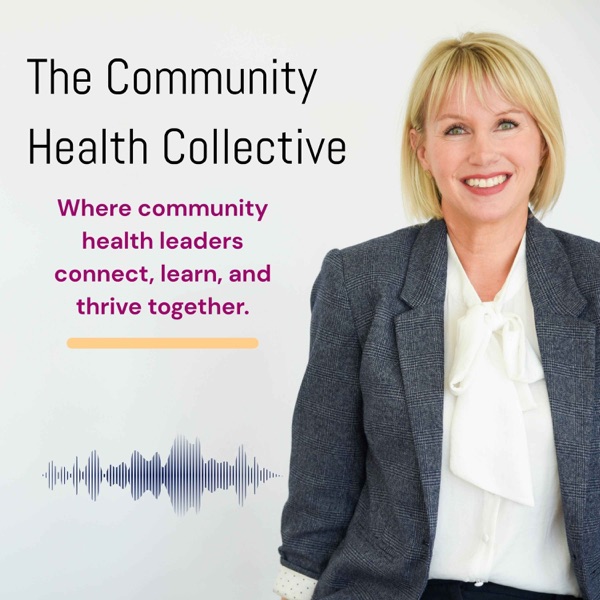
Community Health Collective
I'm Jill Steeley, and I spent years as an FQHC CEO feeling like I was the only one struggling with impossible choices—mission or margin, staff or budget, growth or sustainability. Until I realized: I wasn't alone. None of us are. That's why I created this podcast—to build the community that community health leaders deserve. Whether you're leading a health center, a rural clinic, a public health program, or any organization putting community care first, you'll find practical wisdom, honest conversations, and a whole lot of "finally, someone gets it" moments here. Each episode tackles the big stuff—financial strategy, workforce challenges, policy changes—and the personal stuff—boundaries, burnout, and what it really takes to sustain yourself while serving others.
- On air since
- 2025
- Episodes
- 55
- Releases · typical length
- Weekly · 24 min
- Latest episode
- 6 days ago
Chart history since Oct 26
| Now | Chart | Peak | Since Oct 26 |
|---|---|---|---|
| Off | Management Last on it Nov 23 at #183 | #169 |
Episodes
55 episodes, newest first
-
21 min
They Attacked Me in Public Over the New Name. Three Months Later, Nobody Could Remember the Old One.
Show notes
Community Health Collective
Host: Jill Steeley
You can't out-talk fear - you out-repeat it. When Jill rebranded Cooperative Health Center to PureView Health Center in Helena, Montana, founding board members stood up at a public meeting and asked how she could change the name of their health center. The name had to go: a community survey of about 700 people found only 23% had even heard of the health center, and most of those who had thought it was the county health department or a place they couldn't use if they had insurance. In this episode, Jill tells the story of what she did while the loudest people in the room were mad at her, and walks through her four-step Out-Repeat It framework - name the grief without arguing with it, set your number before you start, saturate instead of explaining, and make your people the message. She shares the rule that made the biggest difference (five logoed items for every staff member, and everyone wore one, every day, for a year), and how a 60% recognition goal turned into 73% in year one. And she lands on the flip: the pushback was never about the name, it was about the fear of change. This one's for CEOs and senior leaders who are leading a change their board or staff are pushing back on - a rebrand, a new EHR, a reorg - and are tired of trying to win the argument.
Highlights:
• The public meeting where founding board members challenged Jill over the new name
• Why the old name was working against the health center: 23% recognition, and confusion with the county health department
• Why you can't argue people out of being afraid
• Saturating the town: TV, radio, and everywhere you turned
• The staff rule: five logoed items each, one worn every day, for a year
• Setting a 60% recognition goal before spending a dollar - and hitting 73%
• The Out-Repeat It framework: Name the Grief, Set the Number, Saturate Don't Explain, Make Your People the Message
• Why this works for any change, not just a name - EHRs, scheduling models, reorgs
• The three-year model: saturate the name, tell people what you do, tell them you do it best
• Homework: three questions to ask about the change you're leading right nowQuotes from the episode:
"A name feels like family."
"Nobody has ever been argued out of being afraid."
"Your staff are your best marketing. Most health centers just never hand them the sign."
"The pushback was never about the name. It was about the fear of change. And you can't out-talk that. You out-repeat it."
Mentioned in this episode:
Get in touch with Jill: jill@jillsteeley.com or schedule a call with her here.
CEO Connect Bootcamp: www.fqhc-ceo.com
Episode #7: Why Your Health Center's Brand is Costing You Patients (And How to Fix It): www.jillsteeley.com/podcast
-
43 min
Parents Should Be Parents: Lou Brady on the Autism App Named for His Stepson
Show notes
Community Health Collective
Host: Jill Steeley
Who carries the forms when a child is diagnosed with autism? Usually the parent. In this episode, Jill talks with Lou Brady, CEO of Family Health Center of Worcester in Worcester, Massachusetts, about the idea at the center of his work: "the family is the system integrator." Lou's stepson, Alex, is the reason behind the project. Alex's mom, Lisa, spent 30 years in community health and still struggled to get him the coordinated care he needed. Lou explains how his team entered NACHC's 2026 Innovation Incubator with a full autism care model, cut it down to the single biggest pain point families face, and spent 10 months building Alex Connect. They call the app "a community health worker in your pocket." It won the Audience Pick at the NACHC Innovation Incubator showcase in Santa Barbara. The conversation then moves to the bigger idea: Lou says health centers will reach sustainability "not by seeing more patients" but "by serving more." He also wants to walk into a funder's office asking for a deal, not a grant. This episode is for health center leaders who know their community's unmet needs and have never had the space to build something about it.
Highlights:
• Why Family Health Center of Worcester was founded in 1972 as a family-care health center, and how it now serves 32,000 people in 90 languages
• How Lou's stepson Alex and his mom, Lisa, inspired Project ALEX
• What "the family is the system integrator" means, and why the families with no one whispering advice to them carry the most
• How the NACHC Innovation Incubator pushed the team from a 5-year plan to one focused prototype
• How Alex Connect works: one questionnaire in the family's language, photo uploads, plain-language AI help, and providers who download what they need
• Jill's Helena example: a shared referral system that moved referral follow-through from about 27% to nearly 80%
• Who pays? Lou's thinking on funders, health plans, and a possible spinout, with ConferMED as the precedent
• What the Incubator really gave the team: protected time to think and a peer group to think with
• Where to start with autism screening: train every primary care provider to screen
• The Mound Bayou story, and why building economic value is "in our DNA"Quotes from the episode:
"Parents should be parents. And we should take the burden of information sharing and advocacy and connecting the dots off of them." - Lou Brady
"I think the way through is not by seeing more patients, it's by serving more." - Lou Brady
"We're not asking for a grant, we're asking for a deal. Here's your return." - Lou Brady
"You need quiet enough so you can hear yourself think." - Lou Brady
Mentioned in this episode:
• Lou Brady, President & CEO, Family Health Center of Worcester - https://loubrady.com
• Project ALEX / Alex Connect prototype - https://projectalex.net
• NACHC Center for Innovation, 2026 Innovation Incubator (Audience Pick Award, Santa Barbara showcase, October 9, 2026)
• ConferMED, the eConsult company that grew out of Community Health Center, Inc. in Connecticut
• Dr. Jack Geiger and Dr. John Hatch, the Mound Bayou health center, and the North Bolivar County farm cooperativeFQHC CEO Connect Bootcamp. A 5-month program that helps you build a profitable, reputable health center easier and FASTER than figuring it out alone. Enrollment is now open: https://www.fqhc-ceo.com
Get in touch with Jill: jill@jillsteeley.com or schedule a call with her here.
-
27 min
I Thought You'd Pick the Culture Episodes. You Picked the Ones With a Deadline.
Show notes
Community Health Collective
Host: Jill Steeley
I thought you'd pick the culture episodes. You picked the ones with a deadline. For the one-year anniversary of the Community Health Collective, Jill pulled the five episodes listeners played most in year one, including everyone who listens on her website. She found a pattern she didn't expect: almost every one is about something you can see coming. A policy change with a date on it. Money leaking out of a place you haven't looked. A moment at the front desk nobody planned for. She counts down from five to one. Each episode gets a short clip, an update on what's changed since it aired, and one thing to do this week. The countdown covers the front desk as the real start of your revenue cycle, Howard Archer on why Medicaid coverage is "a constant moving target," and the HR1 schedule that's now about two months out. It also covers the $150,000 empty chair, and Steve Weinman on what your front desk does when enforcement walks in. Along the way, she retells the story of a patient her health center couldn't reach because of a bad phone number on file. She also shares a new data point from the Bootcamp: one health center lost 2.7% of its Medicaid coverage in the first month after October 1. This one's for health center CEOs and leaders who don't have time to be surprised.
Highlights:
• The surprise in the data: listeners skipped the culture episodes for the ones with a deadline
• #5 Stop Blaming Billing: why a two-second mistake at check-in can become a permanent loss
• The story of a patient lost to a bad phone number, and the question your front desk should ask instead
• #4 Howard Archer on Medicaid churn as "Groundhog Day," and why starting the application locks in the date
• #3 More Visits, Less Medicaid: the HR1 schedule, the January 1 collision with the 340B rebate pilot and UDS season, and a 2.7% drop in one month
• #2 Double Book on Purpose: the $150,000 empty chair and the 15-minute Monday schedule scrub
• #1 Navigating ICE Raids: the front desk procedure, "can't help you" versus "won't help you," and the Hurricane Wilma story
• One thing to do this week for each of the five
• Steve Weinman's closing reminder that health centers are resilientQuotes from the episode:
"Your revenue cycle does not start in the billing office." - Jill Steeley
"A two-second mistake at check-in can become a permanent loss for the health center." - Jill Steeley
"It's literally a constant moving target." - Howard Archer
"It's a big difference from we won't help you and we can't help you." - Steve Weinman
Mentioned in this episode: www.jillsteeley.com/podcast
• Episode #31 - Stop Blaming Billing: The Real Reason Revenue Is Slipping Away
• Episode #36 - HR1 Is About to Double Your Medicaid Churn - Here's the Plan, with Howard Archer
• Episode #35 - More Visits, Less Medicaid: The 3 Changes Coming for Your Patients
• Episode #37 - Double Book on Purpose: The $150K-Per-Provider Leak Hiding in Your Schedule
• Episode #2 - Navigating ICE Raids: How FQHCs Can Protect Patients and Staff, with Steve Weinman
• Episode #49 - the 340B rebate pilot
• Howard Archer, CEO of Fix Healthcare Technology, the company behind Retrocaid: Link to schedule a call
• Steve Weinman, FQHC Associates: sdweinman@fqhc.org
• Every episode of the Community Health Collective: https://www.jillsteeley.com/podcastFQHC CEO Connect Bootcamp. A 5-month program that helps you build a profitable, reputable health center easier and FASTER than figuring it out alone. Next cohort starts April 2027: https://www.fqhc-ceo.com
Get in touch with Jill: jill@jillsteeley.com or schedule a call with her here.
-
52 min
If We Serve the Poor, We Should Be Poor Too”: Why I Refused, and How We Got to Millions in the Reserves
Show notes
Community Health Collective
Host: Jill Steeley
No margin, no mission. In this replay of her guest interview on The Claim Game with Jeremy and Kathryn Zug of Practice Solutions (originally aired March 6, 2026), Jill tells the story behind the turnaround that shaped her whole career - how she backed into public health by accident, then walked into a county-run health center with nearly a $1 million deficit, no doctor recruited in five years, a closed dental clinic, and a county that believed "if we serve the poor, we should be poor too." She walks through the five moves she now teaches in the FQHC CEO Connect Bootcamp with Steve Weinman - increase and diversify revenue, reduce costs by plugging the leaks, market and brand your health center, create an exceptional patient experience, and keep the momentum going - and then gets into payer mix, why your health center's name might be scaring off insured patients, how she'd use AI if she were in the CEO seat today, and the KPI habit that turns your data into a rearview mirror. The surprise? She isn't doom and gloom about what's coming. Her take is that people are tired of transactional healthcare, and the health centers that get in front of their communities now will win. This one's for health center CEOs and senior leaders who are tired of living grant cycle to grant cycle.
Highlights:
• How Jill fell into public health - starting a county health department from scratch in Virginia City, Montana
• Day one at the health center: nearly a $1M deficit, no doctor recruited in five years, a closed dental clinic, and 42% of patients uninsured
• Why the county wanted the health center to stay poor - and the "run it like a business" mindset that changed everything
• The 12-month speaking crusade and the employer partnerships that brought in privately insured patients
• The five moves Jill and Steve Weinman teach in the Bootcamp
• The no-show math: 2,000 missed Medicaid visits at $200 each is $400,000 a year
• Brand recognition from 23% to over 90% after the rebrand
• Why health centers are in a great position to attract Medicare patients
• Is your health center's name keeping insured patients away?
• AI for coding, claims, scheduling, and phone calls - and why you should replace obsolete tasks, not people
• The KPI mistake: only looking at your data once a year
• What Jill sees coming in 2027, and why she isn't doom and gloomQuotes from the episode:
"You attract people with a payer and serve people with a payer in order to serve the people without a payer."
"They thought if we serve the poor, we should be poor too."
"People are looking for transformational healthcare and not transactional healthcare."
"If they don't know you exist, they're not coming."
Mentioned in this episode:
• The Claim Game podcast, hosted by Jeremy and Kathryn Zug of Practice Solutions: https://practicesol.com
• Steve Weinman, Jill's Bootcamp co-leader
• Jill's Community Health Collective Episode #20 with Athelas on AI agents for insurance calls: https://jillsteeley.com/podcast/community-health-collective/reduce-denials-revenue-growth-health-center
• Episode #19 - Rural Health Transformation Funding: https://jillsteeley.com/podcast/community-health-collective/rural-health-transformation-fundingFQHC CEO Connect Bootcamp. A 5-month program that helps you build a profitable, reputable health center easier and FASTER than figuring it out alone. Next cohort starts Spring 2027: https://www.fqhc-ceo.com
Get in touch with Jill: jill@jillsteeley.com or schedule a call with her here.
-
21 min
We Replaced the Microwave: Why Your Staff Forgive Bad News but Not Silence
Show notes
Community Health Collective Podcast
Host: Jill Steeley
Invisible work looks exactly like no work. In almost every employee focus group Jill runs during strategic planning, someone says it: "They ask us, they do the surveys every year, but we never see them do anything." When she takes that back to leadership, the answer is always the same - "But we did do things." And they did. They just never said so. In this episode, Jill unpacks the gap between what you did with your staff's feedback and what your staff think you did, puts real turnover math behind it, and walks through her Close the Loop Cadence - ask more than once a year, say it back before you've fixed anything, fix one small thing fast, and report out on a schedule. She shares how a weekly all-staff update, sent even on weeks with nothing new, helped her keep 99% of her staff when her health center separated from county government and employees lost their public employee retirement system. And she makes the case that a new break room microwave, announced out loud, can build more trust than a six-month initiative nobody ever hears about. Here's the thing: staff forgive bad news, but they don't forgive silence. This one's for CEOs, directors, and supervisors who keep reading "nothing ever changes here" and know that isn't true.
Highlights:
• The sentence Jill hears in almost every staff focus group - and what leadership always says back
• Why high performers are the best at invisible work, and why that backfires
• The math: $45,000 a year in hourly turnover, about $112,000 to replace one nurse, and hundreds of thousands for a provider
• The county separation story: losing the public employee retirement system and keeping 99% of staff
• What to put in a weekly update when there's nothing new (a quote, a book, even drinking more water)
• The Close the Loop Cadence: Ask, Say It Back, Fix One Small Thing Fast, Report Out
• The three parts of every update: what's done, what's in progress, and what's not happening and why
• Why the microwave beats the culture committee
• Line of sight in reverse: your staff can only see what you tell them
• 20-minute homework to start this weekQuotes from the episode:
"Your staff don't experience your work the same way that you do. They experience your communication about your work."
"Invisible work looks exactly like no work."
"Staff forgive bad news, but they don't forgive silence."
"A clear no builds more trust than your staff trying to figure out why it's not happening on their own."
Mentioned in this episode:
• Episode #42 - "You Didn't Lose Control. You Lost Line of Sight."
• Leadership Team Development with Jill: https://www.jillsteeley.com
• Jill's Healthcare Leadership Trainings and free resources: www.jillsteeley.com/leadership
• The Healthcare Leadership Style Quiz: www.jillsteeley.com/leadershipquizFQHC CEO Connect Bootcamp. A 5-month program that helps you build a profitable, reputable health center easier and FASTER than figuring it out alone. Next cohort starts April 2027: https://www.fqhc-ceo.com
Get in touch with Jill: jill@jillsteeley.com or schedule a call with her here.
Management lists
More Management shows picked out from the charts