Podcast
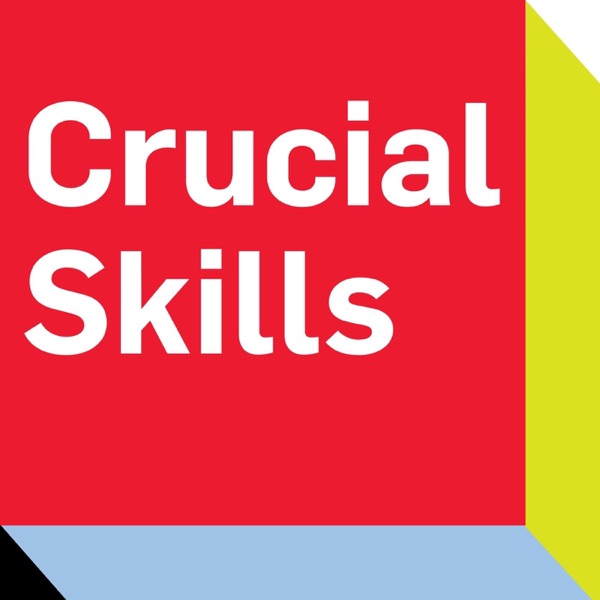
Crucial Skills | Management & Accountability
What if the biggest problems at work—and in life—aren’t about strategy, but about how we communicate and respond when it matters most?
The Crucial Skills Podcast, by Crucial Learning, is where behavioral science meets real-life application. Each episode explores the skills that have the greatest impact on results, from turning disagreement into dialogue and holding others accountable, to building better habits, strengthening relationships, and leading lasting change. Grounded in decades of research and proven in organizations around the world, these are the skills that help you get better results—at work and at home.
You’ll hear practical insights, relatable stories, and skills you can apply immediately. Whether you’re navigating a tough conversation, managing performance, improving your team dynamics, or trying to lead more effectively, this podcast gives you the tools to move forward with clarity and confidence.
Because when you learn the skills that matter most, you improve yourself, your team, and your organization.
- Management chart
- #63
- Episodes
- 33
- Releases
- Weekly
- Typical length
- 30 min
- On air since
- 2026
- Latest episode
- 18 hours ago
Episodes
33 episodes, newest first
-
35 min
How to Prepare for a Crucial Conversation: Get Your Story and Motive Right
Show notes
Most of us walk into a difficult conversation asking the wrong question. Instead of focusing on what to say, what if we started by examining what we think and what we want?
Joseph Grenny, author and cofounder of Crucial Learning, explains why preparing for a Crucial Conversation begins long before anyone speaks. Drawing on decades of research and personal experience, he explores two essential skills: mastering the stories we tell ourselves and getting clear about our motives. Through examples from his work and personal life, Joseph shows how victim, villain, and helpless stories can shape our emotions and influence our behavior.
He explains how to challenge those narratives, recognize when our motives shift toward winning or being right, and refocus on what we really want for ourselves, others, and our relationships. Joseph also explores how psychological safety makes honest dialogue possible and how the Content, Pattern, and Relationship (CPR) framework can help us identify the conversation we actually need to have. Before your next high-stakes conversation, learn why working on yourself first can change the way you communicate with others.
Chapters
[Start] What Should I Think and What Should I Want?: Joseph explains why preparing for a difficult conversation begins with examining our own stories and motives rather than finding the perfect words.
06:12 Master My Stories: Getting Your Head Right: How the stories we tell ourselves influence our emotions, including the victim, villain, and helpless narratives we often create under pressure.
19:57 Getting Your Motive Right: How to recognize when your motive shifts toward winning, being right, or punishing someone, and refocus on what you really want for yourself, the other person, and the relationship.
26:07 Creating Psychological Safety Through Shared Purpose: Joseph shares a consulting experience with a senior executive to illustrate how the right story and motive can make difficult dialogue possible.
31:22 Content, Pattern, and Relationship (CPR): How to identify whether a conversation should address an immediate issue, a recurring pattern, the way the conversation is unfolding, or a larger relationship concern.Links and Resources
• Crucial Learning
• Crucial Conversations ® for Mastering Dialogue
• Crucial Conversations ® for Accountability
• The Conversation Within: How to Prepare Your Head and Heart for Crucial ConversationsLearn more about Joseph Grenny here.
The Crucial Skills Podcast is brought to you by the authors and experts at Crucial Learning, home of Crucial Conversations for Mastering Dialogue and Crucial Conversations for Accountability training.
-
8 min
Blindsided in a Meeting? | How to Respond When You’re Caught Off Guard
Show notes
What do you do when a difficult conversation catches you completely off guard?
Emily Gregory responds to a reader who was unexpectedly pulled into a heated meeting with senior leaders and colleagues. Feeling cornered and overwhelmed, the reader agreed to a decision they didn't believe in. Although the others apologized afterward, the experience left them frustrated and unsure how to move forward.
Emily explores how to handle workplace confrontations, including when to accept an apology and when a pattern of behavior deserves a more direct conversation. She also explains why the most important question may not be how others behaved, but how we respond when we're under pressure. Drawing on Crucial Conversations principles, Emily shares a simple pause script you can prepare in advance to give yourself time to think before responding. It's a practical approach to navigating difficult conversations, staying true to your values, and communicating more effectively when the stakes are high.
Chapters
[Start] Caught Off Guard in a Crucial Conversation: Emily shares a reader's experience of being blindsided in a workplace meeting and feeling pressured into a decision they didn't support.
01:34 When to Accept an Apology: How to evaluate others' behavior, distinguish an isolated incident from a pattern, and decide how to move forward.
04:10 Responding Without Compromising Your Values: Why agreeing under pressure can leave us feeling worse and how to reflect on our own response.
05:21 Creating a Pause Script for Difficult Conversations: How to prepare a simple phrase that gives you time to think before responding to an unexpected confrontation.Links and Resources
• Crucial Learning
• Caught Off Guard, and Trying to Recover
• Crucial Conversations ® for Mastering Dialogue
• Crucial Conversations ® for AccountabilityLearn more about Emily Gregory here.
The Crucial Skills Podcast is brought to you by the authors and experts at Crucial Learning, home of Crucial Conversations for Mastering Dialogue and Crucial Conversations for Accountability training.
-
42 min
Psychological Safety vs. Comfort | How to Give Honest Feedback Without Fear
Show notes
Psychological safety has become a workplace buzzword. But when someone says, “I don't feel safe,” does that always mean there's a problem with psychological safety—or are we confusing safety with comfort?
Emily Gregory explores what psychological safety really means, how the concept has evolved, and why its growing popularity has sometimes distorted its purpose. She explains three ways the idea can lose its meaning: concept creep, weaponization, and confirmation bias. Drawing on three real workplace situations, Emily shares practical Crucial Conversations tools for navigating difficult feedback, responding when someone feels unsafe, and maintaining high standards without shutting down dialogue.
She also tackles an important question for leaders: Who is actually responsible for psychological safety? The answer offers a different way to think about building trust, creating safety, and making room for candid conversations at work.
Chapters
[Start] Why Psychological Safety Matters: Emily shares the advice that shaped her career and introduces three real workplace situations where psychological safety becomes complicated.
05:00 What Is Psychological Safety?: The research behind psychological safety, how the concept evolved, and why its meaning matters.
14:21 When Psychological Safety Gets Misused: How concept creep, weaponization, and confirmation bias can distort our understanding of safety.
22:01 Three Tools for Creating Safety: Practical Crucial Conversations skills for responding to defensiveness, navigating difficult feedback, and rebuilding dialogue.
39:35 Who Is Responsible for Psychological Safety?: What leaders can and cannot control, and why caring about how others feel is different from being responsible for their feelings.Links and Resources
• Crucial Learning
• Reclaiming Psychological Safety: How to Really Make It Safe for Candid Dialogue
• Crucial Conversations ® for Mastering DialogueLearn more about Emily Gregory here.
The Crucial Skills Podcast is brought to you by the authors and experts at Crucial Learning, home of Crucial Conversations for Mastering Dialogue and Crucial Conversations for Accountability training.
-
8 min
When Your Teenager Stops Listening | How to Rebuild Trust and Influence
Show notes
Few situations test our communication skills like a teenager who stops listening and starts pulling away.
Joseph Grenny responds to a concerned parent whose daughter has been breaking rules and shutting down attempts at conversation. The parent wants to guide her toward better choices while still being someone she feels safe talking to.
Joseph explains why influence starts with letting go of control and shares four ways parents can reopen dialogue: separating fear from principle, owning their part, getting curious about their teenager's behavior, and holding boundaries without turning them into weapons.While the advice is directed at parents, the principles apply to anyone navigating a difficult conversation. Joseph reminds us that lasting influence comes from creating safety, building trust, and choosing curiosity over control.
Chapters
[Start] When Your Teenager Stops Listening: Joseph Grenny responds to a concerned parent whose daughter is making risky choices and shutting down conversations.
01:39 Influence vs. Control: Why parents can't control their teenagers' choices and how letting go of control creates room for influence.
02:07 Separate Fear from Principle: How parental anxiety can lead to lecturing, interrogation, and reactions that make communication harder.
03:02 Own Your Part: Why acknowledging your own behavior can help rebuild trust and create safety for an honest conversation.
04:49 Get Curious About the Behavior: How to look beyond a teenager's decisions and ask questions that uncover what they really need.
05:41 Hold Boundaries Without Weapons: Why being a safe person doesn't mean being permissive and how to set consequences without anger or fear.Links and Resources
• Crucial Learning
• Dealing with Defiant Teenagers: How to Connect for Parental Influence
• Crucial Conversations for Mastering DialogueLearn more about Joseph Grenny here.
The Crucial Skills Podcast is brought to you by the authors and experts at Crucial Learning, home of Crucial Conversations for Mastering Dialogue and Crucial Conversations for Accountability training.
-
48 min
From Overwhelmed to Focused | How to Clear Your Mind and Get More Done
Show notes
What if having too much to do isn't actually the reason you feel overwhelmed?
Justin Hale, author and consultant at Crucial Learning, sits down with productivity expert and Getting Things Done author David Allen to explore how to stay focused and productive without burning out. They explain what happens when we use our brains to hold and manage unfinished commitments, and why getting those commitments out of your head can create more clarity, focus, and peace of mind
.Along the way, Justin and David guide you through two quick exercises: a two-minute mind sweep to capture what's competing for your attention and a simple process for turning vague to-dos into clear next actions. They also discuss where productivity tools and AI can help, and why they can't replace the decisions only you can make.The goal isn't to manage everything perfectly. It's to build consistent habits that help you clear your mind, reduce overwhelm, and spend more of your attention on what matters most.
Chapters
[Start] Staying Focused in a Chaotic World: Justin Hale and David Allen introduce why greater productivity and less stress start with changing how we use our brains.
02:26 Why Staying Focused Feels So Hard: An exercise recreates the distractions of a typical workday and reveals why more productivity tools haven't eliminated stress and burnout.
09:45 Your Brain Isn't a To-Do List: How to manage commitments while learning the limits the brain has with keeping information stored.
20:13 The Two-Minute Mind Sweep: A simple exercise for getting unfinished commitments out of your head and into a place where you can work with them.
39:16 The Next Actions: How to turn vague to-dos into specific next steps, and reflecting in a way that keeps your mind clear.Links and Resources
• Crucial Learning
• Your Brain Was Never Meant for This: How to Stay Focused and Productive in Constant Chaos
• Crucial Learning: Getting Things Done (course)Learn more about Justin Hale here.
Learn more about David Allen here.The Crucial Skills Podcast is brought to you by the authors and experts at Crucial Learning, home of Crucial Conversations for Mastering Dialogue and Crucial Conversations for Accountability training.
-
7 min
Debunking Psychological Safety: The Difference Between Discomfort and Danger
Show notes
Have you ever had a boss who talks about psychological safety but still makes you feel tense when you’re around them?
Justin Hale, co-author of Crucial Accountability and keynote speaker at Crucial Learning, explains what psychological safety really means, and what it doesn’t. Drawing on foundational research from Harvard Business School professor Amy Edmondson, Justin explores why psychological safety should not be confused with always feeling comfortable, affirmed, or free from tension.
He breaks down why people become defensive and how to distinguish between a genuine safety concern and the natural discomfort of an honest conversation. He also explains why discomfort isn’t always a warning sign of danger and how we can build a greater capacity for it. Whether you’re struggling through tense conversations or trying to build more trust on your team, this discussion offers a useful reframe for examining intent, communicating more clearly, and creating space for honest dialogue at work.
Chapters
[Start] When Safety Doesn’t Feel Comfortable: Justin introduces a reader’s concern about a boss who promotes psychological safety but still creates tension.
01:40 What Psychological Safety Really Means: How Amy Edmondson’s definition separates the freedom to speak up from the expectation of comfort.
02:53 Content, Intent, and Defensiveness: Why our interpretation of someone’s motives can shape how safe a conversation feels.
04:48 Building Capacity for Discomfort: Why tension can sometimes be part of honest dialogue and meaningful growth.
05:57 Two Questions to Ask Yourself: A closing reflection for leaders and team members navigating uncomfortable conversations.Links and Resources
• Crucial Learning
• Crucial Conversations: Tools for Talking When Stakes Are High
• Crucial Conversations ® for Mastering Dialogue
• Safety Schmafety. My Boss Says One Thing, and Does AnotherLearn more about Justin Hale here.
The Crucial Skills Podcast is brought to you by the authors and experts at Crucial Learning, home of Crucial Conversations for Mastering Dialogue and Crucial Conversations for Accountability training.
-
28 min
The Cost of Avoiding Difficult Conversations | Why Speaking Up at Work Matters
Show notes
Avoiding a Crucial Conversation can come with both a price and a cost. But what’s the difference between the two?
Scott Robley, VP of Learning Solutions at Crucial Learning, walks through research that shows forty-three percent of respondents estimate they waste two weeks or more ruminating about an unresolved problem at work. And an astounding one in three employees estimate their inability to speak up in a crucial moment has cost their organization at least $25,000.
Scott discusses the alarming cost of silence and shares skills people can learn to reclaim these penalties we incur from remaining silent in crucial moments. He teaches skills leaders and employees can learn to rethink the risks of speaking up and create a workplace culture where honest dialogue is expected. We all want to be comfortable, but avoiding Crucial Conversations can cost us far more in the long run.
Chapters
[Start] Cost vs. Price: Scott introduces two ways of thinking about the conversations we avoid.
04:13 The Costly Conversations Research: What changed when Crucial Learning revisited its research five years later.
07:45 Counting the Cost: A look at what conversation avoidance can mean for people and organizations.
15:19 The Price of Speaking Up: Scott shifts from the costs of avoidance to what it takes to make a change.
26:02 Starting the Conversation: Why addressing organizational challenges ultimately requires dialogue.Links and Resources
• Crucial Learning
• Crucial Conversations: Tools for Talking When Stakes Are High
• Crucial Conversations ® for Mastering Dialogue
• Costly Conversations: Why Employee Silence Breaks Your Bottom LineLearn more about Scott Robley here.
The Crucial Skills Podcast is brought to you by the authors and experts at Crucial Learning, home of Crucial Conversations for Mastering Dialogue and Crucial Conversations for Accountability training.
-
8 min
How to Confront a Workplace Bully | 8 Tips to Address Bad Behavior
Show notes
Why do we put up with bullies at work? And how do we stop letting it happen?
Brittney Maxfield, Sr. Director of Growth Marketing at Crucial Learning, breaks down a listener question about workplace bullying and why so many people choose to cope rather than confront. She explores the emotional and business costs of workplace bullying, why so many people choose to cope rather than confront, and how silence can allow unhealthy patterns to continue. Brittney unpacks research on how widespread workplace bullying is and explains why there can be a third option beyond simply putting up with the behavior or leaving: dialogue.
She then walks through an eight-step framework for addressing bullying behavior through candid, respectful dialogue. These eight steps offer a practical way to prepare for the conversation, focus on observable behavior, and work toward accountability without relying on accusations or inflammatory labels. This conversation is for anyone dealing with a difficult boss or coworker, or anyone who wants to handle workplace conflict more directly and constructively.
Chapters
[Start] Dealing With a Workplace Bully: Brittney responds to a listener facing a difficult situation with their manager.
01:11 A Third Option: What to consider before deciding whether and how to speak up.
02:01 The Cost of Workplace Bullying: What Crucial Learning's research reveals about bullying at work.
03:10 Why We Avoid Confrontation: Why staying silent can feel safer—and what that can mean over time.
03:37 Eight Steps for Speaking Up: A practical framework for approaching bullying behavior with greater clarity and accountability.Links and Resources
• Crucial Learning
• Why Do We Put Up with Bullies? From Avoidance to Accountability | Crucial Learning Blog
• Crucial Conversations ® for Accountability (course)Learn more about Brittney Maxfield here.
The Crucial Skills Podcast is brought to you by the authors and experts at Crucial Learning, home of Crucial Conversations for Mastering Dialogue and Crucial Conversations for Accountability training.
-
37 min
Why Motivation Isn’t Enough | The Six Sources That Drive Behavior Change
Show notes
People may not resist change as much as they resist being changed—or failing at it.
Scott Robley, speaker, coach, and master trainer at Crucial Learning, argues that people don't actually resist change. At least not the way we think. He claims that people resist being changed, and they resist failing at it. Scott walks through three main reasons why change efforts tend to stall, and explains why leaders often become “blind to their own blindness,” overlooking the habits, systems, and social pressures shaping behavior.
Scott introduces a framework for understanding the real reasons behind someone's behavior. He shows exactly what separates leaders whose change efforts stick from those whose efforts fizzle out. He shares a mix of research and personal experiences to highlight his argument and show how change is different than we tend to think. If you’re leading a team through changes in workflow, culture, or habits, this episode offers a practical framework for diagnosing resistance and increasing your influence.
Chapters
[Start] Why People Resist Change: Scott reframes the idea that people resist change, and shares research to back his claim that people resist being changed.
04:41 Wired to Conserve Energy: How our brain’s different systems of thinking can explain why change feels so difficult.
08:41 Overestimating Motivation, Underestimating Environment: How our environment can directly impact our ability and desire to change.
19:01 Underestimating Competing Influences: Understanding the social and interpersonal influences that can affect our ability to change.
25:16 The Six Source Model of Influence: How to diagnose behavior through motivation and ability, and combine multiple sources of influence to make change more likely to stick.Links and Resources
• Crucial Learning
• Crucial Influence: Leadership Skills to Create Lasting Behavior Change
• Crucial Influence | Crucial LearningLearn more about Scott Robley here.
The Crucial Skills Podcast is brought to you by the authors and experts at Crucial Learning, home of Crucial Conversations for Mastering Dialogue and Crucial Conversations for Accountability training.
-
9 min
Stop Venting, Start Talking | How to Handle Workplace Conflict Directly
Show notes
Have you ever had someone stop by your desk just to vent about work, leaving you to deal with all their baggage?
Justin Hale, co-author of Crucial Accountability, unpacks what he calls the "drive-by" conversation: a venting session that feels productive in the moment but leaves the real problem unsolved. The problem is that venting can reinforce one-sided stories, damage workplace relationships, and delay the conversation that actually needs to happen.
Justin breaks down why these moments can be tempting, but shows how they erode trust and team culture over time. To combat this, he introduces the "talk-through," which is a simple approach for helping people move from complaining to actually solving their problem. Justin even walks through exact questions to ask and a simple role-play technique for helping someone prepare for the conversation they’ve been avoiding. If you’ve been on the receiving end of a workplace drive-by, this conversation gives you the language and structure you need to turn venting into constructive conversation.
Chapters
[Start] Defining Drive-By Conversations: Justin introduces a listener question about staff venting and defines drive-by conversations.
01:37 Why Venting Makes Conflict Worse: How repeated complaints reinforce one-sided stories and delay the conversation that actually needs to happen.
03:10 The Talk-Through Method: A step-by-step approach for redirecting venting toward direct and effective dialogue.
05:01 Control vs. Circumstance: How to focus energy on what's within your control regarding workplace frustration.
07:57 From Drive-Bys to Talk-Throughs: How to discourage unproductive venting, encourage direct conversations, and build a healthier team culture.Links and Resources
• Crucial Learning
• Crucial Conversations ® for Accountability
• How to Turn Workplace Gossip into Constructive Conversation | Crucial Learning Blog
• Crucial Accountability: Proven Skills to Build Trust, Address Disappointment, and Get ResultsLearn more about Justin Hale here.
The Crucial Skills Podcast is brought to you by the authors and experts at Crucial Learning, home of Crucial Conversations for Mastering Dialogue and Crucial Conversations for Accountability training.
-
52 min
How to Say No: GTD Skills for Managing Work and Life
Show notes
Most of us are carrying a lot more tasks than we realize. And it's slowly ruining our focus.
Justin Hale, co-author of Crucial Accountability, is joined by David Allen, author of Getting Things Done and founder of the David Allen Company, to discuss the overcommitment problem we face today. Justin and David discuss why so many of us tend to take on more than we can handle, and what it takes to say no without feeling bad about it. They draw on research from 1,300 professionals to share how overloaded an average person’s to-do list is and how the idea of “being helpful” to others is actually impairing our ability to focus on the things that matter most.
David introduces his GTD (Getting Things Done) approach, which centers around clearing your head and organizing your commitments. Together, Justin and David walk through a mind sweep exercise to help show the number of things your brain can actually carry at one time. With this concept, they give some tips on how to respectfully say no when your plate is too full to take on any more.
Chapters
[Start] Welcome & Introductions: Justin and David introduce themselves and share the past work experience they have with each other.
07:51 The Overcommitment Research: David shares research on how many tasks people are juggling, and the top five reasons people say yes instead of no.
13:04 Presence as a Productivity Skill: A look at the links between managing one’s attention, being distracted, and performing well under pressure.
18:16 How to Say No: Two tips to help you say no in the appropriate circumstances, and a mind dump exercise to help with distractions.
32:00 Audience Q&A: How to connect with David and Justin, and some of their answers to real listener questions.Links and Resources
• Crucial Learning
• Getting Things Done Course
• Getting Things Done: The Art of Stress-Free Productivity by David AllenConnect with David Allen:
• Twitter/X
• Getting Things Done® - David Allen's GTD® Methodology
• Getting Things Done: The Art of Stress-Free Productivity | Book by David AllenConnect with Justin Hale:
Learn more about Justin Hale here.
Learn more about David Allen here.The Crucial Skills Podcast is brought to you by the authors and experts at Crucial Learning, home of Crucial Conversations for Mastering Dialogue and Crucial Conversations for Accountability training.
-
7 min
How to Negotiate Salary After a Job Offer | Advice from Joseph Grenny
Show notes
You got the job offer! But the salary doesn't match the role, the cost of living in your city, or your expectations. What do you say?
Joseph Grenny, a co-author of Crucial Conversations, reviews a real listener letter from someone caught in exactly this situation. He talks about the frustration and disappointment that come with this type of interaction, and exactly what you should do to figure it out.
Joseph breaks down why the instinct to vent your frustration at HR usually backfires. Instead, he walks through a three-part framework for reopening the conversation with the hiring manager, who actually has influence over this situation. Joseph’s insights offer a clear path for advocating for yourself without sounding like a complainer or ruining the relationship before you've even started the job.
Chapters
[Start] The Listener Letter: Joseph reads a listener's letter about a disappointing salary offer for a new job and a tense conversation with HR.
01:30 Self-Inflicted Frustration: Why unspoken salary expectations can't be honored, and why it matters to be upfront about the number you have in mind.
02:24 Understanding HR's Role: How HR's tone often reflects their job function rather than personal animosity in certain situations.
03:10 Talking to the Hiring Manager: Why the hiring manager is the person with real control in your success when it comes to a job offer.
03:42 Three Steps to Reopen the Conversation: A breakdown of how to come back to the salary conversation in a professional way.Links and Resources
• Switching Jobs: How to Communicate with Hiring Managers and HR | Crucial Learning Blog
• Crucial Learning
• Crucial Conversations: Tools for Talking When Stakes Are High | Third Edition - Book
• Crucial Conversations ® for Accountability (course)
• Crucial Conversations ® for Mastering Dialogue (course)Learn more about Joseph Grenny here.
The Crucial Skills Podcast is brought to you by the authors and experts at Crucial Learning, home of Crucial Conversations for Mastering Dialogue and Crucial Conversations for Accountability training.
-
45 min
Victim or Villain? How to Stop Your Thoughts from Sabotaging Your Crucial Conversations
Show notes
Imagine your manager sends a message that says, "We need to talk." What story does your brain instantly write?
Scott Robley dives into what may be one of the most personally transformational principles in Crucial Conversations: Master My Stories. Scott shares that most Crucial Conversations go sideways because of the stories we tell ourselves before we even speak with someone else. Drawing on research from Lisa Feldman Barrett, Daniel Kahneman, and Jonathan Haidt, Scott explains why the stories we tell ourselves are actually about protecting our identity.
He breaks down the three "clever stories" nearly everyone defaults to under stress and shows how each one can strip away our accountability, empathy, and agency. He closes with a framework to help rewrite those stories in real time. Scott’s insights show how our choice to leave our story open-ended can make way for true understanding and real change.
Chapters
[Start] Stories We Create: Scott shares why our brains tend to finish stories about someone before we have a chance to talk to them.
05:12 Big Idea #1: The neuroscience behind why our brain makes quick interpretations.
09:11 Big Idea #2: Research behind the brain’s need to be fast rather than accurate in crucial moments.
16:44 Big Idea #3: How our brain uses meaning and speed to assign meaning to other people’s behavior.
22:21 Big Idea #4: The reason behind why our brain creates meaning and assumptions about others.
27:49 Big Idea #5: How our emotions tie into the stories our brain tells ourselves about our surroundings.
31:56 Three Clever Stories: Victim, villain, and helpless stories that explain our brain and our behavior in certain situations.Links and Resources
• Crucial Learning
• Crucial Conversations: Tools for Talking When Stakes Are High | Third Edition - Book
• Crucial Conversations ® for Accountability (course)
• Crucial Conversations ® for Mastering Dialogue (course)Learn more about Scott Robley here.
The Crucial Skills Podcast is brought to you by the authors and experts at Crucial Learning, home of Crucial Conversations for Mastering Dialogue and Crucial Conversations for Accountability training.
-
10 min
What to Do When Your Boss Is a Bully
Show notes
What do you do when your boss is a bully?
Emily Gregory, a co-author of Crucial Conversations and a Crucial Learning speaker and consultant, responds to a reader who has this very problem. Emily takes this scenario and uses it to highlight the reality of this situation in many workplaces, and what you can do to navigate workplace bullying.
She breaks down the difference between observation and judgment: what is actually happening with this person vs what our perception of them is. Emily lays out two concrete paths forward and shows how to prepare for that conversation with good intent and fact-based language instead of accusation. Her advice shows that you can do more than just "leave" or " deal with it." Remember, facing a hard situation is the only thing that makes change possible.
Chapters
[Start] The Letter: A reader describes a manager whose outbursts and accusatory emails have become normalized, with real health effects on the team.
01:32 Stories vs. Facts: How to unpack our judgment of someone by analyzing the language we use to describe them.
03:33 Two Ways Forward: Looking at two approaches forward when it comes to dealing with a workplace bully.
04:52 Preparing for the Conversation: Three principles to help you prepare for the difficult, but crucial, conversation with a bully.
07:32 A Sample Conversation: An example of a rehearsed conversation showing how to bring up this issue with honesty and specificity.Links and Resources
• Crucial Learning
• Crucial Accountability: Proven Skills to Build Trust, Address Disappointment, and Get Results
• Crucial Conversations ® for Accountability (course)
• Crucial Learning | What to Do When Your Boss Is a BullyLearn more about Emily Gregory here.
The Crucial Skills Podcast is brought to you by the authors and experts at Crucial Learning, home of Crucial Conversations for Mastering Dialogue and Crucial Conversations for Accountability training.
-
48 min
Healthy Boundaries, Stronger Relationships | How to Speak Up Without Burning Bridges
Show notes
We've all experienced people crossing our boundaries, both in our professional and personal lives. How do we set and maintain those boundaries without settling?
Joseph Grenny, coauthor of Crucial Conversations, makes the case that boundaries aren't just a nicety. They're actually one of the most overlooked drivers of engagement, trust, and performance in an organization. Joseph argues that the lag time between when something bothers us and when we address it is directly tied to how much we disengage and check out at work.
Joseph walks through a framework to help illustrate the best way to set and maintain boundaries. He offers the powerful reframe that boundaries are "the calisthenics of self-worth." Whether you're dealing with a micromanaging manager or a friend who never reads the room, Joseph’s insights provide the necessary language and frameworks for speaking up without turning these situations into a bigger problem.
Chapters
[Start] What Counts as a Boundary Problem: Joseph Grenny shows what a boundary violation actually looks like, as well as how to distinguish personal boundaries from organizational problems.
09:41 The Upward Boundaries: How to approach boundaries and difficult conversations with someone in a senior management position.
15:34 Having the Crucial Conversation: The four-step pattern to having a hard conversation the right way before setting any boundary.
22:51 Boundaries and Power Differentials: How to own your power, do an honest threat assessment, and build a conversation plan with people above you.
41:30 When They Ignore the Boundary: Joseph shares a personal story about a boundary that was crossed, and what changed when he finally spoke up.
46:26 Listener Q&A: Joseph answers listener questions that address boundary violations and concerns.Links and Resources
• Crucial Learning
• Crucial Accountability: Proven Skills to Build Trust, Address Disappointment, and Get Results
• Crucial Conversations ® for Accountability (course)Learn more about Joseph Grenny here.
The Crucial Skills Podcast is brought to you by the authors and experts at Crucial Learning, home of Crucial Conversations for Mastering Dialogue and Crucial Conversations for Accountability training.
-
32 min
Leadership Confessions: Accountability Skills to Set New Leaders Up for Success
Show notes
Brittney Maxfield sits down with Justin Hale, co-author of the newly released third edition of Crucial Accountability, to discuss why so many new managers struggle in their leadership roles. Justin explains why more than a third of managers feel they were promoted for the wrong reasons, and dives into three skills new leaders need in order to succeed.
Justin walks through the tools at the heart of Crucial Accountability that show how to break down a conversation and communicate in a positive way. These skills are critical for new managers as they tackle what is called the “performance gap” with their employees. Justin shares his own personal stories that highlight why these conversations with leaders matter and how they impact everyone involved. In the end, he provides a framework for balancing empathy and accountability so that even the hardest of conversations can become moments of growth.
Chapters
[Start] The Accidental Manager Problem: Justin Hale introduces the third edition of Crucial Accountability, and dives into research on why new managers are promoted for the wrong reasons.
05:53 Changing the Math on Silence: Diving into how to understand the avoidance problem and introducing three skills to build up new managers for their roles.
14:13 Leading with Good Intent: How to engage in the right conversation once you have identified and prepared the necessary patterns.
27:20 Empathy and Accountability: A takeaway for new managers to help them face accountability and difficult conversations in the future.Links and Resources
• Crucial Learning
• Crucial Accountability: Proven Skills to Build Trust, Address Disappointment, and Get Results
• Crucial Conversations ® for Accountability (course)
• Leadership Confessions: Accountability Skills to Set New Leaders Up for Success | eBookLearn more about Brittney Maxfield here.
Learn more about Justin Hale here.The Crucial Skills Podcast is brought to you by the authors and experts at Crucial Learning, home of Crucial Conversations for Mastering Dialogue and Crucial Conversations for Accountability training.
-
34 min
Turn Conflict into Connection | The Relationship Skills Every Team Needs
Show notes
Relationships are the currency of high-performing teams, families, and communities. But, today, we're struggling more than ever to build and sustain them.
Authors Justin Hale and Emily Gregory dig into why so many of our everyday interactions tend to create friction. They talk about what the research reveals about the motives driving how we connect, collide, and recover with the people we work and live with.
Drawing on decades of research, Justin and Emily introduce the concept of "relationship intelligence" and how it influences our interactions with those around us. They unpack the Strength Deployment Inventory ® (SDI ®) and offer a practical framework for turning friction into insight.
Chapters
[Start] The State of Our Relationships: Justin and Emily present data on loneliness, estrangement, and disconnection at work and home.
12:45 Defining Relationship Intelligence: A look at the origins of the SDI and a core framework for understanding relationship intelligence.
16:45 Motivational Value Systems: The three core motives that drive people’s motivations and how they shape behavior.
22:13 How We Respond to Conflict: Why conflict narrows our focus and looks different for everyone.
31:29 Overdoing Our Strengths: How people can overdo their strengths and impact relationships in the process.Links and Resources
• Crucial Learning
• Strength Deployment Inventory Free TrialLearn more about Emily Gregory here.
Learn more about Justin Hale here.The Crucial Skills Podcast is brought to you by the authors and experts at Crucial Learning, home of Crucial Conversations for Mastering Dialogue and Crucial Conversations for Accountability training.
-
8 min
How to Deal with a Passive-Aggressive Boss
Show notes
When a manager communicates vaguely and then gets upset when their expectations aren’t met, the workplace can quickly become a source of frustration.
Crucial Conversations co-author Emily Gregory responds to a letter from a team dealing with exactly this problem. This situation has left the employees feeling criticized, confused, and stuck. Emily unpacks why situations like this feel so demoralizing and what is actually driving the frustration beneath the surface.
Rather than validating the impulse to write off a difficult manager, Emily offers a new perspective: get curious before drawing conclusions. She walks through how villainizing someone makes productive conversation nearly impossible, and she provides an approach for naming the gap without assigning blame.
Chapters
[Start] The Employee Letter: Emily introduces a letter from a frustrated team of employees dealing with a passive-aggressive boss.
01:22 Validating the Frustration: Learn how to accept your own feelings while addressing the gap between expectations and reality between a boss and an employee.
02:53 Moving Forward with Conversation: Some steps you can take to make your way toward having a conversation with your boss.
04:35 Getting to the Root of the Problem: Some tips for addressing unclear expectations in a conversation to get to the real problem beneath the behavior.
05:39 Closing the Gap: A recap of how to approach this kind of conversation, as well as some advice on how to close the expectation gap.Links and Resources
• Crucial Learning
• Clarifying Expectations with a Passive-Aggressive Boss - Crucial Learning
• Crucial Conversations: Tools for Talking When Stakes Are High
• Crucial Conversations for Mastering Dialogue - Crucial Learning CourseLearn more about Emily Gregory here.
The Crucial Skills Podcast is brought to you by the authors and experts at Crucial Learning, home of Crucial Conversations for Mastering Dialogue and Crucial Conversations for Accountability training.
-
50 min
Why AI Implementations Fail | The Behavioral Fix Most Leaders Miss
Show notes
What happens when organizations invest heavily in AI tools only to watch them underperform, or fail, altogether?
Joseph Grenny is joined by JaeLynn Williams, a leader with firsthand experience implementing AI across healthcare, aviation, and technology companies. They dive into a question that is haunting many executives: why aren’t AI initiatives delivering the results they promised? The answer lies not in the technology, but in the human systems around it.
JaeLynn shares case study examples that offer practical insights on where AI implementations break down and how leaders can diagnose and fix them before it's too late. Joseph and JaeLynn walk through a practical framework to help find those patterns of failure and how to prevent them from happening. Whether you're leading an AI initiative or trying to make sense of why your tools aren't sticking, this framework is one you can use immediately.
Chapters
[Start] Introducing JaeLynn: JaeLynn Williams is introduced and shares a story about an AI implementation that backfired while she was CEO at Air Methods.
03:43 The Behavioral Agility Argument: A look at the real barrier to AI success, including four Crucial Conversations that will set high-performing teams apart from others.
15:23 Four Patterns of AI Failure: JaeLynn walks through real-world examples that illustrate four recurring failure modes, and how to prevent them.
25:27 The Diagnostic Framework: A four-question diagnostic tool that anyone can use in 60 seconds to identify where an AI initiative is breaking down.
34:34 Questions from Listeners: Questions are brought in regarding AI and company implementation and how to bridge the gap.Links and Resources
• Crucial Learning
• Why AI Implementations Fail - eBook
• AI That Delivers: Aligning Technology with Human BehaviorLearn more about Joseph Grenny here.
The Crucial Skills Podcast is brought to you by the authors and experts at Crucial Learning, home of Crucial Conversations for Mastering Dialogue and Crucial Conversations for Accountability training.
-
8 min
A Manager's Guide to Delivering Tough Performance Feedback
Show notes
What do you do with an employee who believes they're excelling, but the data tells a different story?
Justin Hale, coauthor of Crucial Accountability, tackles this problem head-on, showing how to initiate these uncomfortable conversations. While it is hard, putting them off rarely makes the gap close on its own. And mishandling them can damage trust and stall progress for good.
Justin breaks down five steps to prepare for and navigate a conversation when a manager and an employee view performance very differently. His insights offer a roadmap for turning a tense moment into a productive one, for both the employee and the leader.
Chapters
[Start] The Performance Gap: Justin Hale introduces the gap between an employee’s perception and their work performance, and dives into how to close the gap.
01:23 Step 1: The first step in framing a conversation to make sure expectations are set and met for both parties.
02:31 Step 2: How to have the right conversation with someone once you have identified the root of the problem.
03:20 Step 3: The importance of checking your assumptions about a person before having a difficult conversation with them.
04:28 Step 4: Laying out the facts vs opinions in a conversation to make sure everyone involved is on the same page.
05:32 Step 5: Preparing yourself for multiple outcomes once you dive into a hard conversation with someone.Links and Resources
• Crucial Learning
• When An Employee Thinks They're Awesome, But You Don't | Crucial Learning
• Crucial Accountability - Book
• Crucial Conversations for AccountabilityLearn more about Justin Hale here.
The Crucial Skills Podcast is brought to you by the authors and experts at Crucial Learning, home of Crucial Conversations for Mastering Dialogue and Crucial Conversations for Accountability training.
On these lists
Crucial Skills | Management & Accountability is one of the shows picked out on this list


More in Management
Placed highest on Apple Podcasts' Management chart right now