Podcast
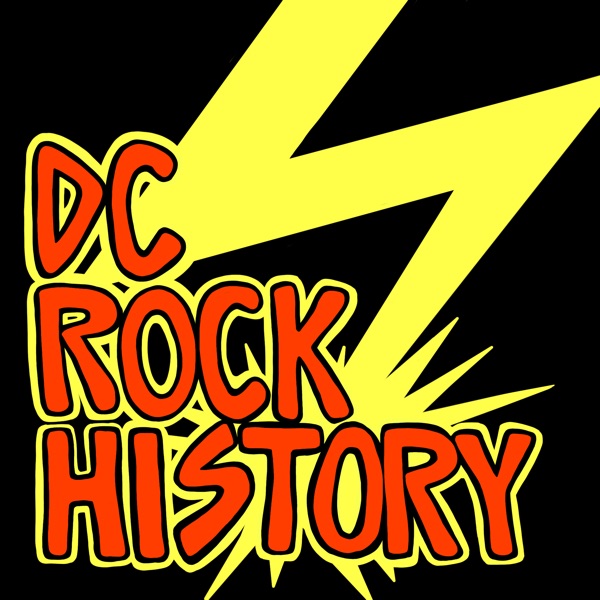
DC Rock History
Join hosts Philip Basnight and Alex Vidales as they explore Washington, D.C.’s rich rock history. Each episode uncovers iconic albums and overlooked gems, featuring stories behind the music, the artists, and the evolving local scene. Whether you’re a longtime fan or new to the city’s musical legacy, this podcast shines a light on the sounds that shaped rock in the nation’s capital. email: dcrockpod@gmail.com
- Music History chart
- #50
- Episodes
- 42
- Releases
- Weekly
- Typical length
- 1 hr 2 min
- On air since
- 2024
- Latest episode
- 1 day ago
Episodes
42 episodes, newest first
-
1 hr 9 min
Q and Not U - "No Kill No Beep Beep" with Sahan Jayasuriya
Episode 42
Show notes
In this episode, we take a deep dive into No Kill No Beep Beep, the 2000 debut from Washington, DC band Q and Not U and one of the most distinctive records to come out of the 2000s DC scene. The band formed in the summer of 1998, with Chris Richards and Harris Klahr on guitars and vocals, Matt Borlik on bass, and John Davis on drums. All four had come up as fans of the Dischord catalog rather than peers of it, and they arrived at a moment when the DC scene was in transition, with Fugazi between records and many of the label’s defining bands already gone. Setting danceable, rhythm-forward drumming against two dissonant guitars with no clear lead or rhythm role, Q and Not U carved out a sound that sat comfortably in the Dischord lineage while pushing it somewhere new, roughly two years ahead of the dance-punk wave that would break nationally.
Recorded in 2000 at Inner Ear Studios in Arlington, Virginia, and produced and engineered by Ian MacKaye and Don Zientara, No Kill No Beep Beep arrived on October 24, 2000 as Dischord 123. It is the only album to feature the band’s original four-piece lineup, with Borlik departing in 2001.
In this episode, we’re joined by Sahan Jayasuriya, author of Don’t Say Please: The Oral History of die Kreuzen and a Milwaukee-based music writer and musician who came up in the late-’90s punk and hardcore underground. Drawing on his own interview with Chris Richards, Sahan helps unpack the influences, the community, and the intention behind the record. Great conversation, this episode is not to be missed.
Go Further:
Q and Not U on Dischord
Don’t Say Please: The Oral History of die KreuzenFollow Us:
Social media: @dcrockpod
Email: dcrockpod@gmail.comHosts:
Philip Basnight - Broke Royals
Alex Vidales - Pilot Waves
Podcast Artwork by Rebecca Basnight -
1 hr 5 min
Slant 6 - "Soda Pop*Rip Off" with Sara Marcus
Episode 41
Show notes
In this episode, we take a deep dive into Soda Pop*Rip Off, the 1994 debut from Washington, DC trio Slant 6 and one of the sharpest records to come out of the early ’90s Dischord scene. The band formed in 1992 from the ashes of Autoclave, the group in which Christina Billotte had played bass alongside Mary Timony. Billotte moved to guitar and vocals for the new project, joined by Myra Power on bass and vocals and Marge Marshall on drums. They came together in the orbit of the Embassy, the Mount Pleasant group house shared with members of Nation of Ulysses, and took their name from the Chrysler Slant Six engine. Grouped with early riot grrrl through proximity and association, Slant 6 followed their own danceable, angular, retro-leaning direction.
Recorded in October 1993 at Inner Ear Studios in Arlington, Virginia with engineer Don Zientara and produced by Ian MacKaye and the band, Soda Pop*Rip Off arrived in February 1994 as Dischord 91:
In this episode, we’re joined by Sara Marcus, author of Girls to the Front: The True Story of the Riot Grrrl Revolution and a professor at Notre Dame, who came up in the DC-area scene herself as a zine-making teenager. Great conversation, this episode is not to be missed.
Go Further:
Slant 6 on Dischord
Sara MarcusFollow Us:
Social media: @dcrockpod
Email: dcrockpod@gmail.comHosts:
Philip Basnight - Broke Royals
Alex Vidales - Pilot Waves
Podcast Artwork by Rebecca Basnight -
58 min
The Obsessed - "The Obsessed" with Metal Chris
Episode 40
Show notes
In this episode, we take a deep dive into The Obsessed, the 1990 self-titled debut from the Potomac, Maryland doom band led by Scott “Wino” Weinrich and a foundational document of heavy music in Washington, DC. The band formed in 1976 as Warhorse, became The Obsessed by the end of the decade, and built a cult reputation through live shows and tape trading while playing a heavy, Black Sabbath-derived style in a scene dominated by punk and hardcore. Recorded in 1985 at Ambient Studios in College Park for Metal Blade with Wino on vocals and guitar, Mark Laue on bass, and Ed Gulli on drums, the tapes were shelved and left unreleased while Wino relocated to California to front Saint Vitus.
Germany’s Hellhound Records revived the material at the end of the decade, mixing it in Berlin and releasing it in 1990 on the condition that Wino reform the band, which he did with a new rhythm section of bassist Scott Reeder, later of Kyuss, and drummer Greg Rogers. Known to fans as the Purple Album.
For this episode, we’re joined by DC Metal Chris, who has run dcheavymetal.com since 2009, documenting the DC-area metal scene as a fan, photographer, and audio engineer. We discuss the band’s roots in a punk-dominated city, how The Obsessed sounds from the vantage point of more than thirty years, and why Wino’s uncompromising, old-school approach made him one of the defining figures in doom.
Go Further:
The Obsessed
DC Heavy MetalFollow Us:
Social media: @dcrockpod
Email: dcrockpod@gmail.comHosts:
Philip Basnight - Broke Royals
Alex Vidales - Pilot Waves
Podcast Artwork by Rebecca Basnight -
1 hr 2 min
Smart Went Crazy - "Con Art" with Devin Ocampo
Episode 39
Show notes
In this episode, we take a deep dive into Con Art, Smart Went Crazy's 1997 swan song and one of the most ambitious records to ever come out of the Dischord catalog. The band formed in DC in 1993 as a high school trio of Chad Clark, Abram Goodrich, and cellist Hilary Soldati, eventually signing to Dischord and releasing Now We're Even in 1995 before spending two years building toward something bigger. Recorded at Inner Ear Studios in Arlington with overdubs tracked at their own practice spaces using a hybrid analog and ADAT setup, Con Art incorporated cello, farfisa, samplers, and song structures that resisted easy categorization then and still do now. At 73 minutes across 19 tracks, it nearly overwhelmed its own label and a band that broke apart less than a year after its release, scattering its members across some of the most interesting groups in DC's post-hardcore lineage: Faraquet, Medications, Beauty Pill, and The Caribbean.
For this episode, we're joined by Devin Ocampo, drummer on Con Art and the guitarist, vocalist, and primary songwriter behind Faraquet, Medications, and The Effects. Together, we discuss what it was like to be inside a band burning that bright, how Con Art sounds from the vantage point of nearly thirty years, and why a record this restless has lasted this long.
Go Further:
Smart Went Crazy - Bandcamp || Dischord RecordsFollow Us:
Social media: @dcrockpod
Email: dcrockpod@gmail.comHosts:
Philip Basnight - Broke Royals
Alex Vidales - Pilot WavesPodcast Artwork by Rebecca Basnight
-
57 min
Tuscadero - "The Pink Album" with Tuscadero
Episode 38
Show notes
In this episode, we take a deep dive into The Pink Album, Tuscadero's 1994 debut and one of the defining records of the DC indie pop scene. Formed 1993 in the Mount Pleasant neighborhood, Tuscadero built their sound around girl group influences, 1970s pop culture, and the everyday perspective of primary songwriters Melissa Farris and Margaret McCartney. The album was released on Teen-Beat Records before Elektra signed the band and released a re-recorded version in 1996.
For this episode, all four members of Tuscadero join us: Melissa Farris, Margaret McCartney, Phil Satlof, and Jack Hornady. Together we discuss the band's formation, their early shows, the Teen-Beat years, the jump to Elektra, and what it has been like to revisit these songs across several reunions. We also listen back to "Heat Lightning," "Leather Idol," and "Nancy Drew Books" and hear the stories behind them directly from the people who wrote and recorded them.
Go Further:
Tuscadero – Bandcamp || Wikipedia
The Pink Album – Discogs
Follow Us:
Social media: @dcrockpod
Email: dcrockpod@gmail.com
Hosts:
Philip Basnight – Broke Royals
Alex Vidales – Pilot Waves
Podcast Artwork by Rebecca Basnight
-
1 hr 5 min
The Dismemberment Plan - "Emergency & I" with Chris DeVille
Episode 37
Show notes
In this episode, we take a deep dive into Emergency & I, the Dismemberment Plan's 1999 landmark and the album that cemented the band as one of the most distinctive acts to emerge from the DC indie scene. Recorded at Inner Ear Studios in Arlington, Virginia and Water Music in Hoboken, New Jersey, and produced by J. Robbins of Jawbox and Chad Clark of Beauty Pill, the record pushed well outside the boundaries of the post-hardcore tradition the band had grown up in, incorporating synths, funk rhythms, and unconventional song structures into something that resisted easy categorization then and still does now.
The Dismemberment Plan formed in DC in 1993, building their early reputation through the same DIY venues and independent infrastructure that shaped bands like Fugazi and Jawbox. After a brief and unsuccessful stint at Interscope Records, they returned to DeSoto Records, the DC independent founded by members of Jawbox, to release Emergency & I. That path back to independence turned out to produce one of the era's most enduring records, one that critics and fans have continued to reassess and celebrate in the decades since.
For this episode, we're joined by Chris DeVille, Managing Editor of Stereogum and author of Such Great Heights, a cultural history of the indie rock explosion. Together, we discuss why Emergency & I sounds like nothing else from its moment, how it bridged the DC hardcore tradition and the indie mainstream that followed, and why it has only grown in stature with time.
Go Further:
Chris DeVille – Stereogum || Such Great Heights
Emergency & I – Wikipedia
Follow Us:
Social media: @dcrockpod
Email: dcrockpod@gmail.com
Hosts:
Philip Basnight – Broke Royals
Alex Vidales – Pilot Waves
Podcast Artwork by Rebecca Basnight
-
58 min
The Pietasters - "Willis" with Stephen Jackson
Episode 36
Show notes
In this episode, we take a deep dive into Willis, the Pietasters' 1997 record and the album that brought the DC-bred ska band to their widest audience. Formed at Virginia Tech by a group of suburban Washington kids, the Pietasters spent the early '90s grinding through DMV dive bars and building a following on Moon Ska Records before a backstage conversation with Tim Armstrong of Rancid led to a deal with Hellcat, his new Epitaph subsidiary. Willis was the result: recorded in Los Angeles with Brett Gurewitz, guitarist for Bad Religion and founder of Epitaph Records, the album pushed the band's sound in a harder, more rock-forward direction than anything they'd released before.
The Pietasters had always drawn from a wide pool including ska, soul, punk, and R&B, reflecting the same mixed-bill show culture that defined the DC scene they came up in. Willis captured that range while giving it a sharper edge, and "Out All Night" became one of the few ska songs to receive genuine mainstream radio play during the genre's late-90s commercial peak. Songs from the album landed in Hollywood films and on video game soundtracks, and the band toured relentlessly behind it, sharing stages with many legends including James Brown.
For this episode, we're joined by Steve Jackson, lead vocalist and co-founder of the Pietasters. We discuss the band's DC roots, the making of Willis, and thirty-plus years of keeping the party going.
Go Further:
The Pietasters – Wikipedia || WebsiteFollow Us:
Social media: @dcrockpodEmail:
dcrockpod@gmail.comHosts:
Philip Basnight – Broke Royals
Alex Vidales – Pilot Waves
Podcast Artwork by Rebecca Basnight
-
54 min
Foo Fighters - "The Colour and the Shape" with Mike Jones
Episode 35
Show notes
In this episode, we take a deep dive into The Colour and the Shape, the Foo Fighters' 1997 sophomore record and the album widely credited with establishing Dave Grohl as a frontman in his own right. Recorded across studios in DC, Washington, and California, the album marked the band's first full collaborative effort as a group, a sharp contrast to their largely solo debut. Produced by Gil Norton, known for his work with the Pixies, The Colour and the Shape balanced melodic precision with raw emotional urgency, drawing heavily from Grohl's personal life while reaching toward something genuinely expansive.
Grohl grew up in Springfield, Virginia, and came up through the DC hardcore scene with Dain Bramage and Scream before joining Nirvana. That regional history runs through the record in ways both literal and atmospheric. The sessions were turbulent by any measure: drummer William Goldsmith's departure mid-recording, Grohl quietly replacing his drum tracks, and a bruising production process that pushed the band to their limits. What emerged from that friction was one of the defining American rock albums of its era, anchored by three singles that became fixtures of rock radio for years.
For this episode, we're joined by Mike Jones of DC101, a station that has been playing Foo Fighters since this record was new. Together, we discuss the making of the album, its Virginia roots, and why The Colour and the Shape continues to hold up as the moment Foo Fighters became Foo Fighters.
Go Further:
Mike Jones – Mike Jones - DC101
The Colour and the Shape – Wikipedia || Allmusic
Follow Us:
Social media: @dcrockpod
Email: dcrockpod@gmail.com
Hosts:
Philip Basnight – Broke Royals
Alex Vidales – Pilot Waves
Podcast Artwork by Rebecca Basnight
-
1 hr 2 min
Shudder to Think sets the record straight!
Episode 34
Show notes
In this episode of the DC Rock History Podcast, we sit down with Shudder to Think, one of the most singular and adventurous bands to emerge from the Washington, D.C. underground, for a wide-ranging conversation that covers their entire arc, from basement rehearsals to major labels and film soundtracks. Formed in the mid-80s by Stuart Hill (guitar), Craig Wedren (vocals), and drummer Mike Russell, and later joined by Nathan Larson (guitar) and Adam Wade (drums), Shudder to Think built something genuinely strange and genuinely beautiful out of the DC hardcore scene: music that was angular and dissonant, literate and surreal, and utterly unlike anything else on Dischord or anywhere else.
In the conversation, we trace the band's origins through Sunday matinees at the 9:30 Club, the record stores of Georgetown, and a rehearsal space in a Little Tavern warehouse. We also talk soundtracks, new music currently in the works, and much more!
📖 Go Further:
• Dischord Records – Shudder to Think
• Dance of Days: Two Decades of Punk in the Nation's Capital – Akashic Books🔗 Follow Us:
Instagram & Tiktok: @dcrockpod
Email: dcrockpod@gmail.comHost: Philip Basnight (Broke Royals)
Guests: Craig Wedren, Nathan Larson, Adam Wade, Stuart Hill – Shudder to Think
🎨 Podcast artwork by Rebecca Basnight
-
1 hr 1 min
Fugazi - "In On The Kill Taker" with Chris Ryan
Episode 33
Show notes
In this episode, we revisit Fugazi and take a deep dive into In On The Kill Taker, the band’s explosive 1993 follow-up to Steady Diet of Nothing and Repeater. Released on Dischord Records, In On The Kill Taker captures Fugazi at a moment of creative tension and expansion, pushing their sound toward greater complexity, aggression, and emotional intensity. The album reflects a band refining its identity while challenging both punk orthodoxy and the expectations placed on them as one of the most visible groups to emerge from DC's post-hardcore scene.
By the early 1990s, Fugazi had already become a defining force in independent music, known as much for their ethics and live performances as their records. With In On The Kill Taker, Ian MacKaye, Guy Picciotto, Joe Lally, and Brendan Canty embraced sharper contrasts, darker lyrical themes, and more intricate arrangements. Songs like “Smallpox Champion,” “Rend It,” and “Cassavetes” reveal a band willing to be confrontational, vulnerable, and musically restless, mirroring the broader cultural unease of the era while remaining firmly rooted in the DC DIY tradition.
For this Season 3 finale, we’re joined by Chris Ryan, journalist, author, and host of The Watch. Together, we discuss why In On The Kill Taker stands as one of Fugazi’s most exciting and enduring records, how it fits into the band’s larger arc, and why it continues to resonate decades later. While we’ve already explored Fugazi’s origins earlier in the series, this conversation serves as a bonus chapter, focusing on a pivotal album that crystallized the band’s uncompromising vision and lasting influence.
Go Further:
Chris Ryan – The Ringer
Dischord Records – Fugazi
Pitchfork Sunday Review - In On The Kill Taker
Wikipedia – In On The Kill Taker
Follow Us:
Social media: @dcrockpod
Email: dcrockpod@gmail.com
Hosts:
Philip Basnight – Broke Royals
Alex Vidales – Pilot Waves
Podcast Artwork by Rebecca Basnight
-
1 hr
Shudder To Think - "Pony Express Record" with Nabil Ayers
Episode 32
Show notes
In this episode, we explore the history and impact of Shudder to Think and their groundbreaking 1994 album Pony Express Record, a release that pushed the boundaries of what DC post-hardcore could become in the era of alternative music. Formed in 1986, Shudder to Think developed a distinctive sound across early Sammich and Dischord releases before leaning fully into the angular, theatrical, and experimental approach that defined Pony Express Record. Released on Epic Records, the album stood apart from its major-label contemporaries and became one of the most inventive records to emerge from the DC underground.
Shudder to Think came out of the same community that produced Fugazi and Jawbox, yet their music challenged the expectations of the scene from the start. The band’s lineup, featuring Craig Wedren, Chris Matthews, Stuart Hill, and Mike Russell, shifted in 1992 when Nathan Larson and Adam Wade joined, setting the stage for a new phase of songwriting and national touring. Their move from Dischord to a major label was rare for a DC band and created a unique moment where the intensity of post-hardcore intersected with the wider alternative rock boom of the 1990s.
In this conversation, we are joined by Nabil Ayers, label executive, author of My Life in the Sunshine, drummer, and host of the Identified podcast. We talk about the evolution of Shudder to Think, the creative leap represented by Pony Express Record, the challenges and opportunities of the early 90s music industry, and the album’s lasting influence. Nabil also shares valuable insights from his work in music, writing, and independent publishing, offering a wide-angle view of how this record fits within both DC history and the broader landscape of alternative rock.
Go Further:
Bandcamp – Shudder to Think
Wikipedia – Shudder to Think
Nabil Ayers – Website
Follow Us:
Social media: @dcrockpod
Email: dcrockpod@gmail.com
Hosts:
Philip Basnight – Broke Royals
Alex Vidales – Pilot Waves
Podcast Artwork by Rebecca Basnight
-
1 hr 11 min
Soulside - "Less Deep Inside Keeps" with Johnny Temple
Episode 31
Show notes
In this episode, we explore the history and impact of Soulside, the influential late-80s DC post-hardcore band whose music bridged the energy of the original hardcore scene with the more groove-driven, politically minded sound that would define the next decade. Formed in 1986, Soulside crafted a bold and evolving style heard on records like Trigger and Hot Bodi-Gram, and became one of the most internationally recognized bands of the DC underground through extensive U.S. and European touring.
Emerging from the same community that produced Rites of Spring, Scream, and Fire Party, Soulside brought together Bobby Sullivan, Scott McCloud, Johnny Temple, and Alexis Fleisig at an explosive moment in the scene’s evolution. Following Soulside’s breakup, McCloud, Temple, and Fleisig teamed up with Eli Janney and Brendan Canty to form Girls Against Boys, a project that evolved into one of the defining post-hardcore bands of the 1990s.
In this conversation, we’re joined by Johnny Temple, bassist of both Soulside and Girls Against Boys, and the publisher behind Brooklyn-based Akashic Books. We talk about the late-80s DC punk landscape, Soulside’s musical progression, the band’s European tours, and the transition into GVSB’s dual-bass, groove-heavy sound. Johnny also shares insights into the creative and cultural shifts happening in the scene at the time, and how the same DIY principles that shaped DC punk informed his later work in independent publishing.
Go Further:
Bandcamp - Soulside
Wikipedia – Soulside
Akashic Books – Website
Follow Us:
Social media: @dcrockpod
Email: dcrockpod@gmail.com
Hosts:
Philip Basnight – Broke Royals
Alex Vidales – Pilot Waves
Podcast Artwork by Rebecca Basnight
-
1 hr 15 min
Velocity Girl - "Copacetic" with Jeffrey Everett
Episode 30
Show notes
In this episode, we explore Copacetic, the 1993 full-length debut from Velocity Girl, a band that helped expand the definition of what Washington, DC-area indie rock could sound like in the early ’90s. Released on Sub Pop at a time when the national spotlight was widening around alternative music, Copacetic blended restless guitar textures, melodic clarity, and a confident sense of atmosphere into one of the era’s most enduring records.
Formed at the turn of the decade, Velocity Girl grew out of the College Park and Silver Spring music communities, releasing early singles on Slumberland Records and steadily gaining visibility through college radio, touring, and compilation appearances. By the time they entered the studio for Copacetic, the band’s lineup — Sarah Shannon, Archie Moore, Brian Nelson, Kelly Riles, and Jim Spellman — had developed a clear artistic identity rooted in texture, harmony, and a uniquely East Coast take on shoegaze-influenced guitar music.
In this conversation, we’re joined by Jeffery Everett, the award-winning designer behind Rockets Are Red. We talk about the visual culture surrounding early-’90s indie rock, the importance of design and identity in an era shaped by DIY aesthetics, and how bands like Velocity Girl balanced local roots with growing national attention. Jeffery offers insights into the intersection of music and graphic design, how posters and album art shaped the perception of scenes like D.C.’s, and why Copacetic remains a defining example of the moment when independent music and broader industry forces briefly overlapped.
Go Further:
Sub Pop – Copacetic
Wikipedia – Velocity Girl (Copacetic)
AllMusic – Velocity Girl Biography
Rockets Are Red - Website
Follow Us:
Social media: @dcrockpod
Email: dcrockpod@gmail.com
Hosts:
Philip Basnight – Broke Royals
Alex Vidales – Pilot Waves
Podcast Artwork by Rebecca Basnight
-
1 hr 9 min
Unrest - "Perfect Teeth" with Mark Robinson
Episode 29
Show notes
In this episode, we explore Perfect Teeth, the 1993 swan song from Unrest, a band that redefined what DC and Northern Virginia indie rock could be. Released on the legendary UK label 4AD, the album blended minimalist pop, rhythmic precision, and clean-toned experimentation into a concise, stylish statement that still resonates three decades later.
Formed in 1983 by Mark Robinson, Philip Krauth, and Tim Moran, Unrest began as a suburban basement band in Arlington, Virginia. Over the next ten years, they evolved into one of the most distinctive voices in American indie music. Alongside their own recordings, Robinson founded Teen-Beat Records, a label that combined DIY punk values with graphic design, eccentric curation, and a numbered catalog system that became iconic in its own right.
In this conversation, we’re joined by Mark Robinson, Unrest’s guitarist, co-vocalist, and Teen-Beat founder. We talk about the band’s formation in the early ’80s, the lo-fi cassette years, the arrival of bassist Bridget Cross, the band’s art-pop sensibility, and the bold recording decisions that led to Perfect Teeth including a 7-inch box set and a faux Simon Le Bon production credit. We also discuss how Unrest carved a lane completely their own within the broader DC scene.
Go Further:
•
•
•
•
Pitchfork –Perfect Teeth30th Anniversary Review
•
Teen-Beat Archive – Perfect Teeth
Follow Us:
•
Social Media: @dcrockpod
•
Email: dcrockpod@gmail.com
Hosts:
• Philip Basnight – Broke Royals
• Alex Vidales – Pilot WavesPodcast Artwork by Rebecca Basnight
-
1 hr 7 min
Nation of Ulysees - "13-Point Program to Destroy America" with John Davis
Episode 28
Show notes
In this episode, we explore 13-Point Program to Destroy America, the 1991 debut album from Nation of Ulysses that turned DC’s post-hardcore scene on its head. Released by Dischord Records and recorded at Inner Ear Studios with Ian MacKaye and Don Zientara, the album fused punk, free jazz, and radical politics into a chaotic and satirical critique of American conformity.
Formed in 1988 by Ian Svenonius, James Canty, Steve Kroner, Steve Gamboa, and Tim Green, Nation of Ulysses presented themselves not just as a band, but as a “political party” advocating for youth liberation and creative revolution. With their sharp suits, manifesto-style lyrics, and explosive performances, they pushed the boundaries of what DC punk could sound and look like.
In this conversation, we’re joined by John R. Davis, musician, curator, and author of Keep Your Ear to the Ground: A History of Punk Fanzines in Washington, D.C. (Georgetown University Press). We discuss how Nation of Ulysses reflected and redefined the DC underground at the dawn of the 1990s bridging music, politics, and performance in a way that continues to influence artists today.
Go Further:
•
Dischord Records – 13-Point Program to Destroy America
•
Georgetown University Press – "Keep Your Ear To The Ground"
•
•
Dance of Days by Mark Andersen and Mark Jenkins – Akashic Books
Follow Us:
Social Media: @dcrockpod
Email: dcrockpod@gmail.com
Hosts:
Philip Basnight – Broke Royals
Alex Vidales – Pilot Waves
Podcast Artwork by Rebecca Basnight
-
1 hr 6 min
Fugazi - "13 Songs" with Jim Saah
Episode 27
Show notes
In this episode, we explore 13 Songs, the seminal compilation that introduced Fugazi’s raw urgency and experimental edge to a wider audience. Originally released in 1989 by Dischord Records, 13 Songs combines the band’s first two EPs Fugazi (1988) and Margin Walker (1989) and stands as a defining document of the post–Revolution Summer era in Washington, D.C.
Formed by Ian MacKaye, Joe Lally, Brendan Canty, and later joined by Guy Picciotto, Fugazi built on the intensity of their hardcore roots while incorporating dub, minimalism, and socio-political critique into their sound. Recorded at Inner Ear Studios in Virginia and Southern Studios in London, the two EPs captured a band coming into their power, forging a sound that was at once confrontational and disciplined, spacious and relentless.
In this conversation, we’re joined by Jim Saah, the D.C.-based photographer and filmmaker whose iconic live shots helped define DC hardcore's visual legacy. We talk about the band’s early shows, the scene that gave rise to their sound, and how 13 Songs became a blueprint for the future of independent music.
Go Further:
•
•
•
•
Dance of Days by Mark Andersen and Mark Jenkins – Akashic Books
Follow Us:
Social Media: @dcrockpod
Email: dcrockpod@gmail.com
Hosts:
Philip Basnight – Broke Royals
Alex Vidales – Pilot Waves
Podcast Artwork by Rebecca Basnight
-
1 hr 2 min
Fire Party - "s/t" with Fire Party
Episode 26
Show notes
In this episode, we explore Fire Party, the self-titled debut from one of the most groundbreaking bands to emerge from Washington, D.C.’s post–Revolution Summer punk scene. Formed in 1986 by Amy Pickering (vocals), Natalie Avery (guitar), Kate Samworth (bass), and Nicky Thomas (drums), Fire Party brought a new perspective to D.C. punk — politically charged, emotionally direct, and unapologetically their own.
Recorded at Inner Ear Studios with Don Zientara engineering and Ian MacKaye producing, the album captures the raw energy of late ’80s Dischord Records while pushing its sound into more melodic and introspective territory. The band’s 1988 European tour with Scream marked one of the first international tours for a Dischord act and solidified Fire Party’s reputation as both trailblazers and torchbearers of a more inclusive punk movement.
In this conversation, all four founding members reflect on the scene that shaped them, their first shows at D.C. Space, and how their music helped open the door for future generations of feminist and alternative punk artists.
Go Further:
Dance of Days by Mark Andersen and Mark Jenkins – Akashic Books
Follow Us:
Social Media: @dcrockpod
Email: dcrockpod@gmail.com
Hosts:
Philip Basnight – Broke Royals
Alex Vidales – Pilot Waves
Podcast Artwork by Rebecca Basnight
-
48 min
Embrace - "Embrace" with Mark Jenkins
Episode 25
Show notes
In this episode, we dive into Embrace, the posthumously released self-titled album from one of the most pivotal bands of Washington, D.C.’s Revolution Summer movement. Though only active from 1985 to 1986, Embrace brought together vocalist Ian MacKaye (Minor Threat) with three former members of the Faith, guitarist Michael Hampton, bassist Chris Bald, and drummer Ivor Hanson, to create a record that helped redefine punk’s emotional and musical boundaries.
Our guest is Mark Jenkins, longtime D.C. writer and co-author of Dance of Days. Together, we explore how Embrace captured a moment of transition in the D.C. hardcore scene, why the album was released a year after the band broke up, and how it reflects the shift toward personal introspection, community-minded values, and experimentation during the mid-1980s.
We also look at Embrace’s role within the broader context of Revolution Summer, the media’s early attempts to label this new sound as “emocore,” and how the album connects the dots between Minor Threat’s raw energy and Fugazi’s expansive post-hardcore vision.
Go Further:
Wikipedia – Embrace (American band)
Dance of Days by Mark Andersen and Mark Jenkins – Akashic Books
Follow Us:
Social Media: @dcrockpod
Email: dcrockpod@gmail.com
Hosts:
Philip Basnight – Broke Royals
Alex Vidales – Pilot Waves
Podcast Artwork by Rebecca Basnight
-
1 hr 7 min
Dag Nasty - "Can I Say" with Broke Royals
Episode 24
Show notes
In this episode, we dive into Can I Say, the 1986 debut album from Dag Nasty - a record that helped define melodic hardcore and mark a turning point in Washington, D.C.’s punk history. Formed in 1985 by guitarist Brian Baker after the breakup of Minor Threat, Dag Nasty united veterans of the D.C. scene including Colin Sears, Roger Marbury, and vocalist Dave Smalley. Together, they bridged the aggression of hardcore with melody and introspection, creating a sound that would influence punk and emo for decades to come.
Our guests are Broke Royals, aka Philip's own band! Together, we explore how Can I Say balanced speed and precision with emotional depth, how it was recorded at Inner Ear Studios with Ian MacKaye producing and Don Zientara engineering, and why this album continues to resonate nearly forty years later.
We also look at Dag Nasty’s role within the second wave of Dischord Records bands, their connection to the evolving D.C. scene of the mid-1980s, and how Can I Say laid the groundwork for future generations of melodic punk and post-hardcore.
Go Further:
•
Dischord Records – Can I Say
•
AllMusic – Dag Nasty
• "Dance of Days" by Mark Andersen and Mark Jenkins - Akashic Books
Follow Us:
Social Media: @dcrockpod
Email: dcrockpod@gmail.com
Follow Us:
Philip Basnight – Broke Royals
Alex Vidales – Pilot Waves
Podcast Artwork by Rebecca Basnight
-
1 hr 14 min
Rites of Spring - "Rites of Spring" with Mark Andersen
Episode 23
Show notes
In this episode, we explore Rites of Spring, the 1985 self-titled release that intertwined with Revolution Summer and reshaped the direction of punk in Washington, D.C. and beyond. Rites of Spring formed in 1984 with Guy Picciotto (vocals, guitar), Eddie Janney (guitar), Mike Fellows (bass), and Brendan Canty (drums). The band built on the foundation of hardcore but infused their songs with personal and emotional intensity, creating a record that is often cited as a cornerstone of post-hardcore and what would later be labeled “emo.”
Our guest is Mark Andersen, co-founder of Positive Force DC and co-author of Dance of Days: Two Decades of Punk in the Nation’s Capital. Mark shares his first-hand experiences of seeing Rites of Spring live, the atmosphere of the D.C. punk community in 1985, and the ways in which the band’s performances helped spark a new sense of purpose in the scene. Together, we discuss how Rites of Spring’s music reflected a moment of transition, carrying forward the urgency of hardcore while opening space for vulnerability and connection.
We also examine the album’s recording at Inner Ear Studios with Don Zientara and Ian MacKaye, the relationship of the band to contemporaries like Embrace and Beefeater, and the enduring influence of Rites of Spring as a defining work in D.C.’s underground history.
Go Further:
•
Dischord Records – Rites of Spring
•
Follow Us:
Social Media: @dcrockpod
Email: dcrockpod@gmail.com
Philip Basnight – Broke Royals
Alex Vidales – Pilot Waves
Mark Andersen – Dance of Days, Positive Force DC
Podcast Artwork by Rebecca Basnight
On these lists
DC Rock History is one of the shows picked out on this list
More in Music History
Placed highest on Apple Podcasts' Music History chart right now