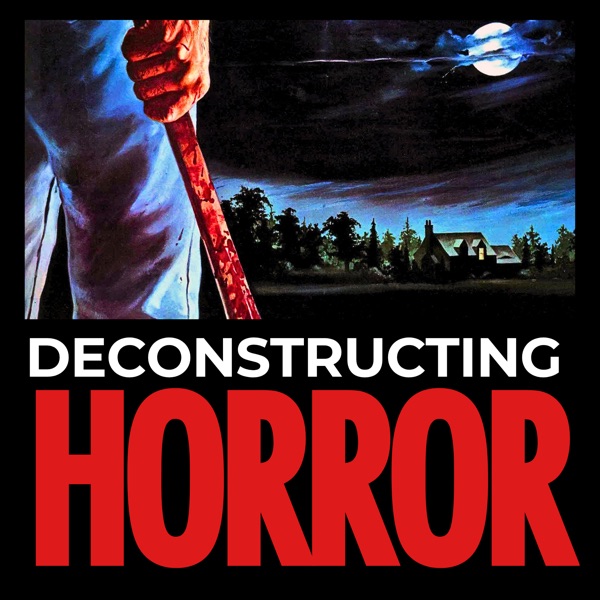
Podcast
Deconstructing Horror
Welcome to Deconstructing Horror with Ryan Does (formerly Everyday Dread), a space for philosophical horror analysis and thematic deep dives. We don't just analyze the hidden theology, social commentary, and existential themes of cinema's most terrifying films for the sake of theory—we deconstruct these stories so we can use what we learn from them to navigate our own daily lives.
Each episode takes horror cinema apart piece by piece by bringing professor friends, engaging academics, and scholarly horror fans into the conversation. Whether we are unearthing the profound theological subtext of The Exorcist, confronting the religious mind games in Heretic, dissecting the existential dread of John Carpenter's The Thing, or unpacking the raw social commentary of The Texas Chain Saw Massacre, Ryan and his guest explore how horror storytelling is used to wrestle with faith, morality, and the human condition.
Subscribe for conversations dedicated to a deeper understanding of horror!
- Episodes
- 48
- Releases
- Twice a week
- Typical length
- 34 min
- On air since
- 2026
- Latest episode
- 1 day ago
Episodes
48 episodes, newest first
-
45 min
Rings of Power: Predicting Sauron’s Next Horrific Phase In Season 3
Show notes
Sauron isn't just a fantasy villain—he is Tolkien’s ultimate horror monster, and his most terrifying era is about to begin. 👁️🎬
With The Rings of Power Season 3 just around the corner, Ryan and Tolkien scholar Nick Polk (Tolkien Pop) tear open the dark lore of Middle-earth to analyze Sauron through a horror lens before the new season premieres. We trace his terrifying evolution from an angelic Maia to Morgoth’s master lieutenant, exploring his brutal history as a shapeshifting vampire and the "Lord of Werewolves."
We break down why Sauron’s true power isn't physical destruction, but the psychological terror of total domination, manipulation, and isolated despair. We also analyze how the series has adapted his emotionally abusive deceit so far (specifically the chilling Annatar-Celebrimbor dynamic), and we build the hype for Season 3 by predicting the heightened creature horror, the rise of the Nazgûl, and Sauron’s overt, iron-fisted rule in Mordor.
What are you most excited to see Sauron do in Season 3? Do you think he's scarier as a shapeshifting deceiver or as the looming Dark Lord? Let us know in the comments! 👇
If you love deep-dive horror analysis, make sure to LIKE, SUBSCRIBE, and hit that NOTIFICATION BELL so you never miss an episode! 🔔
#Sauron #Tolkien #LordOfTheRings #RingsOfPower #HorrorAnalysis
-
24 min
Trick 'r Treat (2007): The Ultimate Love Letter to Halloween
Show notes
Trick ‘r Treat (2007) has officially cemented itself as the ultimate Halloween cult classic. 🎃
In this episode, Ryan is joined by friend and horror superfan Josh Link to break down why Michael Dougherty’s anthology masterpiece is a mandatory annual watch, the horror icon status of Sam, and why its dark, mischievous humor perfectly captures the spirit of October 31st.
We dive deep into the film's delayed 2009 physical release after a legendary festival run, dissect our favorite interconnected storylines (from the chilling school bus prank to the wild werewolf reveal), and talk about how the movie turns unwritten holiday customs into life-or-death rules. Plus, stick around for a hidden Easter egg to look out for on your next rewatch!
Which Halloween night story was your favorite? Drop your favorite story in the comments below! 👇
If you love horror breakdowns, movie deep-dives, and spooky things, make sure to LIKE, SUBSCRIBE, and hit that NOTIFICATION BELL so you never miss an episode! 🔔
#TrickrTreat #HalloweenMovies #HorrorPodcast #HorrorAnalysis #AnthologyHorror
-
29 min
Before Clayface, I Ranked Batman Villains From "Laughable" To Pure Nightmares
Show notes
Let's talk Batman bad guys! With the highly anticipated Clayface movie on the horizon, it’s the perfect time to look at how Gotham's most twisted faces stack up when it comes to pure terror.
In this video, Ryan Does breaks down and ranks Batman villains based on how horrifying they truly are. From grotesque body horror to psychological menace, we are ranking Batman's Rogues Gallery from "laughable" all the way to absolute "nightmarish" fuel.
Where does our favorite shapeshifting monster land before he hits the big screen? Find out in this casual fan's ultimate Batman villain tier list!
💬 Which Batman villain scares you the most? Are you hyped for the Clayface film? Let me know your personal tier list in the comments!
-
18 min
Top 10 Scariest Pokemon in Gen 1 | Celebrating Pokemon's 30th Anniversary
Show notes
Are you ready to see the original 151 in a whole new, terrifying light? 🎃
On this fun bonus chat we celebrate the historic 30th anniversary of Pokémon! The original Pokémon games debuted on February 27, 1996, with the launch of Pokémon Red and Green for the Nintendo Game Boy in Japan.
In this video, Ryan and his son Logan look back at where it all began to count down the top ten scariest Pokémon from Generation 1. From disturbing Pokédex backstories to eerie design elements, they break down how the franchise has mastered the art of the creepy over the last three decades.
Whether you are a lifelong Pokémon trainer who remembers 1996 or a fan of spooky creature design, this retrospective reveals just how terrifying the Kanto region can truly be!
-
34 min
Sleepy Hollow (1999): Did Tim Burton Make the Perfect Halloween Movie? | Deconstructing Horror
Show notes
Get ready to lose your head over Tim Burton’s 1999 gothic masterpiece! 🎃 In this episode, we sit down with artist and filmmaker Sarey Martin-Concepcion to dissect Sleepy Hollow, exploring how Burton blends folklore, rationalism, and stunning visual world-building to create the ultimate Halloween movie.
From Johnny Depp’s quirky portrayal of Ichabod Crane to Christopher Walken's terrifying Headless Horseman, we dive deep into the cinematography, the departure from Washington Irving's original text, and why this film's atmosphere still holds up today.
👇 Drop a comment below: What is your favorite Tim Burton film? Are you team science or team superstition?
🕒 CHAPTERS
00:00 - Introduction to Sleepy Hollow and Guest Sarey
02:23 - Tim Burton's Style and World-Building
09:10 - Plot Overview and Themes of Myth and Legend
11:37 - Burton's Approach to Filmmaking and Aesthetic Influences
15:13 - The Mythical and Ambiguous Nature of the Story
18:30 - Science, Superstition, and the Blending of Myth and Reality
24:46 - Ichabod Crane's Character Development and Transformation
29:23 - Lessons on Myth, Legend, and Perspective
32:23 - Final Thoughts and Christopher Walken as the Headless Horseman -
1 hr 23 min
The Substance (2024): Destroyed by Beauty Standards | Deconstructing Horror
Show notes
Can we talk about that ending?! 😱 In this episode, our panel dives deep into the visceral, grotesque, and jaw-dropping world of Coralie Fargeat's The Substance.
We break down how this modern body horror masterpiece acts as a brutal societal critique on beauty standards, aging, and the extreme lengths women are pushed to by societal expectations. From Demi Moore and Margaret Qualley’s powerhouse performances to the film's metaphors for self-hatred, motherhood, and power dynamics, we are dissecting every bloody detail.
✨ What did you think of the visual metaphors in the film? Which scene left you the most shocked? Let us know in the comments below!
If you love deep-dive film analysis, horror movies, and breakdowns of cinema's most impactful thrillers, make sure to LIKE, COMMENT, and SUBSCRIBE for more weekly panels! 🔔
-
20 min
Friday the 13th (1980): Crystal Lake, Pamela Voorhees, and Retributive Justice
Show notes
Before you return to Camp Crystal Lake this fall for Peacock's highly anticipated prequel series, let's dig into where the nightmare truly began. With Linda Cardellini set to step into the iconic shoes of Pamela Voorhees on October 15, there is no better time to dissect the psychological descent of horror's most fiercely protective mother.
In this discussion, Ryan and Josh Patterson (ReThinking Faith) dive into a deep philosophical discussion of the original horror film Friday the 13th, exploring the psychological and moral themes that have kept this franchise alive for decades. We look back at the roots of the franchise to analyze how themes of trauma, grief, and retributive justice shape the legendary lore of Jason Voorhees and Pamela Voorhees before the blood starts flowing in the new Crystal Lake Peacock series.
Join us as we break down the cultural analysis of horror, the role of institutional failure, and how a mother's unprocessed grief sparked one of cinema's most enduring personal crusades.
-
1 hr 5 min
Carrie (1976): 50th Anniversary Lessons on Rage, Shame, and Blood! | Deconstructing Horror
Show notes
Why does Stephen King’s Carrie still terrify and resonate with us over 50 years later? It turns out the true horror isn't just the telekinesis—it’s how accurately the story mirrors the modern female experience, societal shame, and teenage bullying we still see today.
In this educational panel interview, our experts dive deep into the enduring legacy of this horror masterpiece. We unpack the hidden meanings behind the blood and fire, exploring everything from the power of female rage and the restrictions of purity culture to the shocking parallels between 1970s high school alienation and the modern social media impact on mental health.
Whether you love classic horror movies, study gender dynamics, or want a deeper understanding of female empowerment in pop culture, this expert breakdown reveals why Carrie White's story matters now more than ever.
🔔 Subscribe for more deep dives into your favorite horror classics, hit the like button to support the channel, and drop your thoughts on Carrie’s legacy in the comments!
#Carrie #StephenKing #HorrorMovies #FemaleEmpowerment
⏱️ CHAPTERS:
00:00 Introduction to Carrie and Its Cultural Significance
01:49 Panel Introduction and Personal First Impressions
04:02 Rewatching Carrie: 50 Years Later
09:11 Synopsis and Main Themes of Carrie
11:00 Carrie as a Reflection of Society and Female Experience
14:50 The Role of Women in the Story and Society
19:57 The Power of Female Rage and Empowerment
25:03 Societal Shame and Repression of Women's Bodies
30:10 Parenting, Purity Culture, and Female Development
34:51 The Influence of Patriarchy and Society on Women
40:08 The Supportive Role of Female Relationships
44:52 The Legacy of Carrie and Its Relevance Today
54:47 Upcoming Series and Final Thoughts -
39 min
The Fly (1986): What Grotesque Body Horror Reveals About Us | Deconstructing Horror
Show notes
Get ready to dive deep into the grotesque beauty of David Cronenberg’s 1986 masterpiece, The Fly. In this episode of Deconstructing Horror, host Ryan Does sits down with filmmaker and artist Sarey Martin Concepción to dissect how this iconic 80s body horror film serves as the ultimate metaphor for a personal apocalypse.
From the tragic transformation of Seth Brundle (Jeff Goldblum) to the emotional devastation of Veronica (Geena Davis), we explore how Cronenberg intertwines beauty with the grotesque to reveal our deepest fears about mortality, identity, and the betrayal of the flesh.
🪰 In this episode, we discuss:
• First Encounters: How we were first introduced to the visceral world of The Fly.
• The Director's Lens: What stands out about David Cronenberg's distinct filmmaking style and cinematic approach.
• The Personal Apocalypse: How both Seth and Veronica embody absolute, localized devastation.
• Obsession with the Flesh: Why Brundle’s focus on physical evolution reveals the dark tension between pleasure, pain, and human transformation.
• The Power of Body Horror: Why physical decay is the most effective way to visually represent a psychological breakdown.Whether you're a die-hard Cronenberg fan or a filmmaker interested in the mechanics of cinematic terror, this deep dive offers a unique, artistic perspective on one of horror's most emotional tragedies.
Timestamps:
0:00 - Introduction to The Fly (1986)
2:15 - Sari’s Background & Filmmaker Perspective
5:40 - Cronenberg’s Approach: Blending Beauty and the Grotesque
10:15 - Seth & Veronica: Mapping the Personal Apocalypse
16:45 - The Obsession with the Flesh, Pleasure, and Pain
22:30 - Why Body Horror Hits So Close to Home
29:00 - Final Takeaways & Wrap Up🔔 Subscribe to Deconstructing Horror for more deep dives into the psychology, filmmaking, and themes behind your favorite scary movies.
Sarey's Bio:
Sarey is a filmmaker and storyteller rooted in Los Angeles and Portland, Oregon. Before turning to her own work, she spent years as a producer of horror films and a talent manager for metal bands, including a decade on the production and management team for Rob Zombie, collaborating with partners like Blumhouse, Anchor Bay, and Dimension. She then went to seminary to study theology, and began cultivating a slate of artistic and entrepreneurial projects alongside it.
Her debut short, "Father Mary," played festivals in 2022, earning a Best Director nomination at the Oregon Short Film Festival and, in 2024, the Best Oregon Filmmaker award at the McMinnville Film Festival. She has since been named a finalist for both Disney's Launchpad program and Sundance's Episodic Lab. Her most recent short, the eerie sci-fi drama "The Winemaker," won Best Short Film at the Lois Weber Film Festival and is currently on the festival circuit.
Drawing on auteurs like Cronenberg, Lynch, and Jarmusch, Sarey is committed to elevating femme voices in genre filmmaking — stories that use horror and the uncanny to get at something stranger and more human. She's also an advocate for artists' mental health and for a healthier culture within the entertainment industry.
-
30 min
The Birds (1963): Hitchcock’s Vision of a Biblical Apocalypse | Deconstructing Horror
Show notes
What happens when nature finally strikes back against humanity? 🦅⛈️
In this episode, we step into the eerie world of Alfred Hitchcock’s classic thriller The Birds to uncover its surprising apocalyptic and environmental themes. Joined by guest Derrick Weston, the panel breaks down how a 1963 horror film perfectly mirrors our modern ecological crisis, climate anxiety, and the terrifying ways humanity reacts when we lose control of the world around us.
🔔 Subscribe for more deep dives into cinema, culture, and social theology: [Insert Channel Link]
Moving far beyond standard cinema trivia, this discussion uses an apocalyptic lens to deconstruct The Birds. Derrick Weston shares profound insights into how Hitchcock uses unexplained avian attacks to expose deep-seated human denial, scapegoating, and societal breakdown during a disaster.
From the biblical and prophetic symbolism woven throughout the film to the famous, chaotic diner scene, this episode explores what the movie teaches us about community responsibility, real-world climate change, and our absolute obligation to protect the vulnerable when systems fail.
🔍 Key Topics Discussed:
• The Apocalyptic Lens: Why the lack of an explanation in The Birds makes its environmental warning so visceral.
• Human Arrogance & Denial: How society rushes to false certainties and collective blame when nature fights back.
• Prophetic & Biblical Symbolism: Unpacking the deeper spiritual warnings embedded in Hitchcock’s storytelling.
• Disaster Response & Vulnerability: Moving away from survivalism and moving toward community care in moments of crisis.⏱️ Timestamps
00:00 - Introduction to The Birds and its themes
02:00 - First impressions and Hitchcock's style
03:53 - The film's apocalyptic and environmental lens
06:04 - The significance of unexplained phenomena
07:56 - Nature's colonization and re-colonization
09:59 - Human response and scapegoating
12:01 - The danger of certainty and human arrogance
14:10 - The diner scene and societal reactions
15:54 - The biblical and prophetic symbolism
18:00 - Vulnerability and community responsibility
20:00 - Lessons from the film for real-world crises
21:57 - Caring for the vulnerable in apocalyptic moments
24:04 - The importance of listening to nature
25:54 - Final reflections and next steps -
14 min
Undertone (2025): The Terror of Loneliness in a Digital World | Deconstructing Horror
Show notes
Are digital communities actually saving us from isolation, or are they masking our loneliness? 🎙️🏚️
In this reflective solo episode, Ryan steps up to the microphone to unpack the profound spiritual and psychological themes of A24’s audio horror masterpiece, Undertone. Moving past the skin-crawling sound design, Ryan explores how the film serves as a haunting mirror for the modern podcasting landscape—examining the delicate balance between digital connection, parasocial isolation, and genuine community.
Get more information about Theology Beer Camp: https://theologybeer.camp/
🔔 Subscribe for more deep reflections on media, culture, and theology: https://www.youtube.com/@DeconstructingHorror
Podcasting is fundamentally about connection, not just content. Inspired by Undertone’s claustrophobic portrait of a podcaster unravelling amidst grief and caregiving, Ryan dives into how easily creators and listeners alike can mistake digital noise for real-world intimacy.
This episode serves as an intentional theological and psychological meditation on the importance of physical presence, especially ahead of the upcoming Theology Beer Camp. Discover why bridging the distance with in-person bonds matters more than ever, and how we can actively foster relationships that pull us out of isolation.
🔍 Key Themes Explored:
• The Paranormal Podcast Mirror: How Undertone uses audio horror to capture the terrifying loneliness of digital-only spaces.
• Grief & Storytelling: Analyzing the heavy maternal themes and emotional weight hidden beneath the movie's tension.
• The Parasocial Trap: Navigating the psychological effects of isolation in a hyper-connected, yet physically distant world.
• Theology Beer Camp: Why shared physical spaces are vital for converting online communities into deep, life-giving relationships.⏱️ Timestamps
00:00 - Introduction and personal context
02:11 - Summary of the movie's plot and themes
04:55 - The loneliness of creators and seeking connection
07:18 - The significance of in-person community at Theology Beer Camp
08:32 - The horror of possession and the dangers of isolation
09:08 - The importance of community and physical presence
10:19 - Media as a bridge for connection and shared spaces
11:04 - The risks of loneliness and the need for real relationships
12:16 - Encouragement to foster genuine connections
13:09 - Final thoughts and upcoming events -
41 min
Heretic (2024): The Big Lie of Religious Certainty (Part 2) | Deconstructing Horror
Show notes
Why is our obsession with religious certainty actually keeping us from the truth? 🎬👇
In Part 2 of this deep dive, Ryan, Tripp, and Josh return to A24's psychological thriller Heretic to tear down the walls of rigid dogma and forced belief. Moving further into their theological critique, the panel explores how the film exposes the illusion of faith and control, introducing mind-bending concepts like theopoetics and analyzing how the "death of God" forces us to confront our deepest spiritual fears.
Get more information about Theology Beer Camp: https://theologybeer.camp/
🔔 Missed Part 1? Subscribe and catch up on the full philosophy of religion breakdown: https://www.youtube.com/@DeconstructingHorror
What happens when religion becomes a tool for "God-splaining" instead of a genuine pursuit of truth? In this conclusion, the guys contrast the absolute certainty demanded by religious fundamentalism against the radical authenticity of true faith—which requires risk, vulnerability, and an embrace of the unknown. From breaking down Sister Barnes' authentic faith journey to deconstructing how manipulators exploit our fear of uncertainty, this episode is a masterclass in the philosophy of religion and modern theology.
🔍 Key Concepts & Frameworks Discussed:
• The Critique of "God-splaining": Why chasing absolute religious certainty is the ultimate distraction from actually knowing the truth.
• Binary Thinking & Fundamentalism: Overcoming the strict lines built by dogmatic systems and strict atheism.
• The Death of God Framework: How the deconstruction of divine control opens the door to genuine spirituality.
• Theopoetics & Prayer: Re-imagining the act of prayer as a vulnerable, risky encounter with the divine.⏱️ Timestamps
00:00 - Introduction to Heretic and the discussion themes
04:13 - Film overview and main plot points
08:03 - Binary thinking and fundamentalism
10:12 - God splaining and the critique of certainty
11:11 - Character identification and faith journey
13:12 - The act of prayer as a moment of faith
14:18 - Sister Barnes and the authenticity of faith
15:16 - Faith as risk and authenticity
16:40 - Control, fear, and the illusion of certainty
18:02 - The terror of the manipulator and the vulnerable
19:00 - The manipulation of belief and control
21:28 - The straw construct of religious certainty
22:52 - Belief, truth, and the risk of encounter
24:20 - The death of God and deconstruction of certainty
25:47 - Faith in the face of the unknown
28:55 - The logic of belief and the spectrum of faith
32:24 - The encounter with divine and experiential knowledge
35:21 - Faith, doubt, and the promise of the unknown -
39 min
Ranking the Top 10 Horrors in The Lord of the Rings | Deconstructing Horror
Show notes
What is the single most terrifying creature hidden in Middle-earth? 🌋👁️
In this episode, Ryan and Nick explore the darkest corners of J.R.R. Tolkien’s universe to uncover the top ten horrors in Lord of the Rings. Moving past the epic fantasy battles, the guys deliver a deep horror analysis of Middle-earth's most terrifying entities, monsters, and creatures. From tragic corruption to ancient cosmic dread, discover what makes these legendary nightmares so uniquely frightening—and where they ultimately land on our definitive countdown.
Get more Nick Polk on Tolkien Pop: https://tolkienpop.substack.com/
🔔 Subscribe for more deep dives into fantasy lore and horror breakdowns: https://www.youtube.com/@DeconstructingHorror
From the tragic, cannibalistic body horror of Gollum to the skin-crawling, insatiable threat of Shelob, Ryan and Nick unpack the deeper lore behind Tolkien's monsters. Discover why Wargs are actually demon-possessed husks rather than standard wolves, how the Mouth of Sauron weaponizes psychological torment, and why the Watcher in the Water represents pure cosmic horror.
Whether it's the ancient demonic power of Durin’s Bane (the Balrog) or the relentless spectral dread of the Nazgûl, this episode uncovers the darkest shadows of Middle-earth. Who takes the absolute top spot as the ultimate nightmare of the franchise? Tune in to find out!
-
30 min
Heretic (2024): Inside the Reddit Atheist Hell House! (Part 1) | Deconstructing Horror
Show notes
What does Heretic really say about religion, and why is our deepest fear actually the loss of control? 🎬👇
In this video, Ryan, Tripp, and Josh dive deep into A24's psychological thriller Heretic to unpack its gripping exploration of faith, doubt, and religious certainty. Moving far beyond a standard movie review, the panel delivers a profound theological critique and philosophy of religion discussion, analyzing how the film dismantles modern notions of belief and exposes the dark side of faith and control.
Get more information about Theology Beer Camp: https://theologybeer.camp/
🔔 Subscribe for more deep dives into film, philosophy, and faith: https://www.youtube.com/@DeconstructingHorror
From the subtle character juxtaposition of Sister Barnes and Sister Paxton to the terrifyingly calculated environmental manipulation by Hugh Grant’s character, this episode examines how religion can be weaponized as a system of control. We trace the film's heavy symbolism—including a modern reinterpretation of Dante’s Inferno—and dissect how the death of God deconstructs our need for certainty, ultimately reframing true faith as an embrace of honesty, risk, and doubt.
🔍 Key Topics Discussed:
• The Binary of Belief: How Heretic challenges the rigid lines between fundamentalism and atheism.
• Systems of Control: Why the fear of uncertainty drives the need for religious dominance.
• Dante’s Inferno in Pop Culture: Breaking down the movie's moral imagination and the brilliant final scene butterfly metaphor.
• Theopoetics & Divine Actualization: How modern religious narratives reshape a person's individual spiritual journey.⏱️ Timestamps
00:00 - Introduction to Heretic and its Themes
02:07 - Meet the Panel: Ryan, Tripp, and Josh
03:48 - Summary of the Film's Plot and Main Characters
05:12 - What Does Heretic Say About Religion?
07:01 - Symbolism of Dante's Inferno and Moral Imagination
08:45 - The Binary of Belief and Unbelief in the Movie
11:03 - Character Juxtaposition: Sister Barnes and Sister Paxton
14:03 - Faith as Honesty and Risk: The Embrace of Doubt
15:53 - The Fear of Uncertainty and Control
18:02 - What Hugh Grant's Character is Afraid Of
21:01 - The Manipulation of Environment and Environment Control
23:50 - Religion as a System of Death and Control
26:53 - Theological and Philosophical Insights on Belief -
26 min
Resident Evil (2002): Capitalism, AI & Foucault | Deconstructing Horror
Show notes
As horror fans gear up for filmmaker Zach Cregger’s (Weapons) highly anticipated Resident Evil (2026) reboot from Sony Pictures—promising a terrifying return to Raccoon City and true survival horror gameplay roots—we look back to where the cinematic franchise began.
The 2002 Resident Evil film laid down profound cultural markers. In this educational interview, guest Josh Patterson joins us to break down how the original film serves as a timeless critique of modern society, tech addiction, and capitalistic greed.
We dive deep into the symbolism of the Red Queen AI, corporate surveillance capitalism, and the philosophical concepts of Michel Foucault and Byung-Chul Han regarding auto-exploitation. Whether you are counting down the days to Zach Cregger's new movie release or analyzing artificial technology themes, this episode uncovers the unexpected spirituality, process theology, and deep message of defiance hidden beneath the surface of the Umbrella Corporation's horrors.
Get info for THEOLOGY BEER CAMP online: https://theologybeer.camp/
📌 Key Topics Discussed
• Capitalism & Consumerism: Analyzing the Umbrella Corporation as a modern critique of corporate exploitation and societal "zombification."
• The Red Queen AI: How the film's iconic artificial intelligence symbolizes the coercive power of modern algorithms eroding human agency.
• Process Theology & Mysticism: Spiritual insights into divine action versus systemic domination.
• Philosophical Frameworks: Applying Foucault and Byung-Chul Han to understand internalized auto-exploitation and digital surveillance.
• Alice as a Symbol of Defiance: Finding a theological perspective on hope, grassroots resistance, and active courage within oppressive systems.💡 Key Takeaways
• Algorithm Zombification: Modern consumerism functions like a viral outbreak, trapping society in mindless cycles that require intentional slowing down and spiritual silence.
• Coercion vs. Persuasion: Systemic tech power rules through authority and force, whereas true power is found in non-coercive love, invitation, and mutual persuasion.
• Active Hope: Resisting corporate or algorithmic control requires creative defiance, critical thinking, and a flat refusal to accept false, unearned authority.⏱️ Episode Chapters
• 00:00 Introduction to Resident Evil, Zach Cregger Reboot Hype, and Core Themes
• 01:53 The Psychology of Survival Horror: Why We Love Zombie Games
• 04:13 The 2002 Film: Box Office Stats, Impact, and Legacy
• 05:07 Zombification as Consumerism: How Algorithms Manipulate Us
• 06:05 The Umbrella Corporation: Corporate Idols and God-like Power
• 07:02 A Deep Critique of Capitalism and Human Exploitation
• 07:59 Tech Tyranny: Red Queen AI and Systemic Coercion
• 08:57 The Surveillance Society: Internalized Self-Coercion and Hustle Culture
• 09:56 The Red Queen as a Child: Exposing Marginalized Voices in Tech
• 10:53 Alice’s Defiance: Embracing Active Hope Against Hope
• 11:51 Grassroots Power: The Influence of Non-Coercive Invitation
• 13:12 Theology of Liberation: Divine Love vs. Systems of Domination
• 14:10 Final Reflections: How to Unplug and Embody Change -
34 min
Him (2025): Is Football Our TRUE Religion? | Deconstructing Horror
Show notes
The NFL and NCAA college football seasons are finally ready to kickoff! This Labor Day weekend, as millions of fans gear up for gridiron action, we are diving deep into the terrifying reality of sports obsession.
In this episode, Ryan and Derrick Weston (Creation Justice Mission) take a deep dive into the intersection of sports, particularly football, and religion, as depicted in the 2025 psychological horror film 'Him.' They explore the cult-like fervor of sports fandom, the corporate exploitation of athletes, and the dangerous hero worship of sports figures.
The discussion also touches on the impact of sports on personal identity, offering a much-needed healthy perspective on sports fandom just as the season starts.
Check out Derrick's work: https://www.creationjustice.org/about.html
KEY TAKEAWAYS
* The Cult of the Gridiron: Sports fandom can easily morph into a cult-like obsession, leading to the dangerous deification of athletes and the corporate commodification of their bodies.
* Exploitation in Plain Sight: The film 'Him' highlights the structural exploitation of athletes, particularly Black athletes, and exposes our dangerous cultural obsession with validation and hero worship.
* Protecting Your Identity: Maintaining a healthy perspective on sports fandom is crucial as the new season kicks off, because blind obsession directly impacts personal identity and mental well-being.
CHAPTERS
* 00:00 The Cult of Sports Fandom: Kickoff Weekend Obsession
* 07:44 The Horror of Fandom and Athlete Exploitation
* 12:11 The Hero Worship of Modern Football Stars
* 27:26 How Sports Fandom Impacts Personal Identity
* 35:27 Maintaining a Healthy Perspective This Football Season
-
32 min
MIDSOMMAR (2019) | The Horror of Grief & Florence Pugh w/ Dr. Annie DeRolf
Show notes
How does Ari Aster’s Midsommar capture the agonizing reality of complex grief, traumatic loss, and psychological trauma better than almost any other horror movie?
In this episode, Ryan and professor/occupational therapist Dr. Annie DeRolf sit down for a deep dive movie discussion and horror film analysis of this modern A24 folk horror masterpiece.
They explore how Midsommar uses the bright, inescapable Swedish sun as a metaphor for the raw, exposed nerves of a devastating family tragedy, sudden loss, and emotional breakdown. Focusing heavily on the intersection of mental health and horror, the conversation breaks down Florence Pugh’s stunning performance as Dani Ardor, analyzing how her severe anxiety, panic attacks, and hyperventilation depict the visceral, physical embodiment of trauma.
Moving beyond standard film commentary, this educational breakdown examines how the narrative handles the search for belonging after trauma, the manipulative nature of cult structures, and the psychological impact of isolation.
Annie brings her expertise in occupational therapy to evaluate the profound role of cultural practices and Hårga pagan rituals in identity reconstruction, showing how communal catharsis helps process unaddressed grief.
From the unsettling psychological descent into madness to the ambiguous Midsommar ending, this review explores how the ultimate horror isn't the cult's violence, but the terrifying lengths a broken person will go to finally feel seen, held, and understood in their suffering.
TIMESTAMPS
00:00 Introduction to Midsommar and its themes
01:59 Annie's background and personal connection to the film
04:10 Florence Pugh's portrayal of anxiety and panic
06:55 The cosmic horror elements and descent into madness
09:29 Grief, trauma, and embodiment in the film
12:04 Annie's personal experience with traumatic loss
14:55 The search for belonging after trauma
18:04 The role of rituals in identity reconstruction
21:59 The ambiguity of the film's ending and grief
24:01 Reflections on the film's message about grief and healing -
18 min
Brews, Brains & Chainsaws | A Theology Beer Camp Horror Special
Show notes
Are you ready for the ultimate horror movie analysis breakdown that unpacks theology, philosophy, and cultural symbolism in cinema?
In this special "Best Of" compilation episode, host Ryan Does shares standout segments from four past conversations featuring upcoming guests for October's Theology Beer Camp.
Together with Leah Robinson, Kutter Callaway, Kristy Whaley, and Derrick Weston, we look past the surface scares of four iconic films to explore how horror functions as a profound tool for cultural deconstruction, memory, and reconciliation.
This academic, theological, and philosophical breakdown explores why it is so easy to forget our history—and how horror forces us to come to grips with it.
🍻 Learn more about Theology Beer Camp & get tickets: https://theologybeer.camp/
• The Four Films: Deep-dive thematic segments covering:
• Poltergeist (1982) with Rev. Dr. Leah Robinson
• https://youtu.be/7dF5jbBmYsM
• The Texas Chainsaw Massacre (1974) with Dr. Kutter Callaway
• https://youtu.be/p-pL2n2gWIA
• The Bride of Frankenstein (1935) with Dr. Kristy Whaley
• https://youtu.be/tX89r1mMT68
• Godzilla (1954) with Derrick Weston
-
35 min
INSIDIOUS (2010) | Haunting Truths About Fathers, Family and the Further
Show notes
Are you ready for Insidious: Out of the Further (2026)? In this horror movie analysis, we dive deep into the themes of family dynamic, masculinity, and what it means to be "haunted" in James Wan’s original Insidious (2010).
This episode's special guest is Dr. Kutter Callaway, who shares insights on how the terrifying entities of the Further reflect our real-world emotional baggage—and why facing those inner demons is a truly heroic act.
Whether you are revisiting the classic film or hyping up the Insidious: Out of the Further ahead of its release, this film theory discussion is for you. If you love deep-dive movie reviews and superhero/horror film analysis, make sure to hit that subscribe button, leave a comment with your thoughts on Insidious, and turn on notifications!
📌 Key Topics Covered:
• Family dynamics and trauma in horror films
• James Wan's signature filmmaking style and themes
• Masculinity and the struggle for emotional expression
• How intergenerational trauma manifests in horror cinema
• The ultimate significance of facing your emotional baggageOrder Kutter's upcoming book "Be Afraid" now!
https://www.kuttercallaway.com/allbooks
For all things Kutter Callaway:
-
28 min
THE EXORCIST (1973) | Father Karras, Faith Deconstruction & Ontological Shock
Show notes
Is William Friedkin’s The Exorcist (1973) actually a horror movie about demonic possession, or is it a psychological breakdown of a religious faith crisis?
In this conversation, Ryan Does and guest Annie DeRolf dive deep into the religious themes, theological questions, and psychological layers of the horror masterpiece, The Exorcist (1973).
While famously known as a terrifying tale of demonic possession, this film analysis explores the movie as a profound reflection on faith crises, spiritual deconstruction, and human resilience.
Together, they break down how the narrative challenges our understanding of suffering, the nature of evil, and what happens when individuals face ontological shock—a complete disruption of how they perceive reality.
From analyzing the mechanics of Catholic dogma to exploring the messy intersection of doubt, mental health, and divine presence, this educational discussion looks past the shock value to find a story ultimately defined by grace, love, and the triumph of the human spirit.
Whether you are interested in horror film theory, eco-theology, or the philosophy of religion, this breakdown offers a fresh academic lens on a cinematic classic.
TIMESTAMPS
00:00 Introduction to the episode and guests
02:02 Personal history with The Exorcist and initial impressions
04:06 The film's box office success and cultural impact
06:54 Summary of the plot and religious mechanics of The Exorcist
10:03 Religion as a source of meaning and crisis of faith
12:03 The concept of ontological shock and faith deconstruction
14:56 The role of human suffering and love in the story
17:49 Balancing dogma and lived experience in faith
21:02 The messiness of faith, doubt, and human agency
24:01 Where does grace and love appear in the chaos
25:52 Reflections on human agency and the film's message
26:56 Closing thoughts and next steps
Film Reviews lists
More Film Reviews shows picked out from the charts






More in Film Reviews
Placed highest on Apple Podcasts' Film Reviews chart right now