Podcast
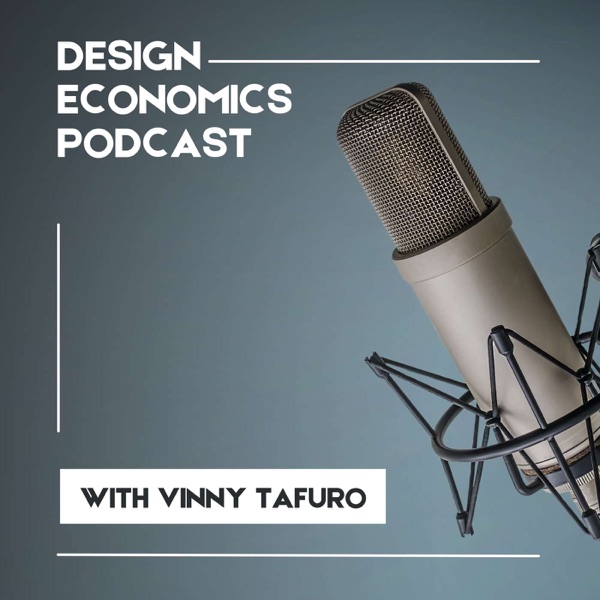
Design Economics Podcast with Vinny Tafuro
Join us to discover how design thinking can revolutionize economics for the 21st century. Learn about the Institute for Economic Evolution's three tenets of design economics and meet the pioneering thinkers who are shaping this approach. From challenging economic orthodoxy to creating human-centered solutions, explore how design economics is evolving economics to better serve humanity and the environment.
- Social Sciences chart
- #126
- Episodes
- 24
- Releases
- Monthly
- Typical length
- 58 min
- On air since
- 2024
- Latest episode
- 2 weeks ago
Episodes
24 episodes, newest first
-
56 min
Cahal Moran: Clandestine Origins; Economics' Prize and Its Borrowed Authority
Episode 24
Show notes
For nearly 60 years, October headlines have announced the "Nobel Prize in Economics." Alfred Nobel never created one. Sweden's central bank simply invented it in 1968, borrowing the Nobel name and the authority that came with it. Just six years later, winner Friedrich Hayek warned the prize would confer "an authority which in economics no man ought to possess," then accepted it anyway. Days after this year's award, host Vinny Tafuro sat down with Cahal Moran, economist and host of Unlearning Economics. Unlike the Nobel Prizes in physics or chemistry, Cahal argues, this prize rewards no discovery, yet gives its winners real and undemocratic influence over policy. Their conversation explores the prize's dodgy origins, who it elevates, who it almost entirely leaves out, and why it perhaps shouldn't exist at all.
Guest Links
• Unlearning Economics on YouTube
• Why We're Getting Poorer: Economics for an Unfair World, Cahal Moran (2025)
• Why You Should Ignore the Economics Nobel Prize, Cahal Moran, IAIReferenced in this episode
• Rethinking Economics
• 2026 Sveriges Riksbank Prize announcement, Robert Hall and Michael Woodford
• Swiftynomics, How Women MasterMind and Redefine Our Economy, Misty L Heggeness
• Who Cooked Adam Smith's Dinner?, Katrine MarçalReferenced Design Economics Podcast Episodes
• Episode 19: Misty Heggeness on Swiftynomics
• Episode 20: Erin Hotchkiss on Fragments & Frameworks
• Team Human: Enshittification – And How We Stop It (w/Cory Doctorow)A note on black holes: The famous first photo of a black hole, mentioned in the episode, came in 2019 and did not win a Nobel. A year later, the 2020 Nobel Prize in Physics went to Roger Penrose, Reinhard Genzel, and Andrea Ghez for proving black holes are real, including a supermassive one at the center of our galaxy.
Click here to view the episode transcript.
★ Support this podcast ★ -
1 hr 5 min
Veronica Pesantes: Artist-Built Economies; Pooling, Sharing, Collecting Together
Episode 23
Show notes
Veronica Pesantes's contribution to a Prazzle feature on women in the art world named something Vinny had been circling for years: the decades of artistic work deferred by talented people who took a traditional career instead. Veronica is an art writer, curator, and cultural strategist who has spent nearly forty years in art, from museum education at the Guggenheim to bylines in ARTnews. She's the founder of Miami Art Hang, an education program that places Miami's artists and galleries in front of the city's growing international population, turning interest into patronage and collecting. Veronica argues that recognition in the art world arrives either straight out of an MFA program or when retirement allows the work, with almost nothing in between. Over three centuries, economics has operated with an underlying myth, observed by Adam Smith, that selling a beautiful talent amounted to "a sort of public prostitution," and that assumption still shapes who can afford to make art. Their conversation explores what that costs, and how artists and collectors are pooling money, sharing studios, and building the patronage the market never provided.
Guest Links
• Veronica Pesantes on LinkedIn
• Art Hang, her Substack
• Miami Art Hang on Instagram
• Outlaw Paper: Sandy Rodriguez's Resistance Map of Gulf of Mexico, US Latinx Art Forum
• Sandy Rodriguez at the Ringling, Veronica's ARTnews piece
• The Art World, According to Women, PrazzleReferenced in this episode
• Commissioner; Supporting artists, collecting art. Together.
• Fiber Artists Miami Association (FAMA)
• Collective 62; Art Studios is an independent art space devoted to creation outside of the traditional circuits of art.
• Art Thinking, book by Amy WhitakerReferenced Design Economics Podcast Episodes
• Episode 19: Misty Heggeness on Swiftynomics
• Episode 7: Thaddeus Squire on fiscal sponsorshipClick here to view the episode transcript.
★ Support this podcast ★ -
1 hr 15 min
Caroline Shenaz Hossein: Credit & Community; The Banker Ladies' Way
Episode 22
Show notes
When Vinny discovered Caroline Shenaz Hossein's The Banker Ladies in audiobook format, he had found something rare: rigorous scholarship on Black cooperative economics that's accessible beyond the academy. Caroline is a Canada Research Chair in Africana Development & Feminist Political Economy and Full Professor of Global Development & Political Economy at the University of Toronto, founder of the Diverse Solidarity Economies Collective, and a Member of the Royal Society of Canada. For over fifteen years, she's researched ROSCAs, rotating savings and credit associations, informal banking systems used by over 200 million people globally. In the Caribbean and around the world, this type of mutual aid is celebrated. Yet in North America and Europe, these systems are criminalized, and their operators stigmatized. Their conversation explores what determines who's allowed to organize money, why established financial technologies are treated as innovations when commercial banks copy them, what citational justice means across sectors, and how making these systems visible transforms who we recognize as economic experts.
Guest Links
• Africana Economics / DISE Collective
• DISE Socials: LinkedIn, Instagram, BlueskyReferenced in this episode
• The Banker Ladies film (Films for Action)
• The Banker Ladies book (University of Toronto Press)
• ROSCA Network Canada
• Community Economies Research Network
• Collective Courage, book by Jessica Gordon NembhardClick here to view the episode transcript.
★ Support this podcast ★ -
1 hr 6 min
Jody Levison-Johnson: Five & Rising; The Economy's Unfunded Engine
Episode 21
Show notes
When Vinny came across Jody Levison-Johnson's Forbes piece arguing that the social sector deserves to be treated as an economic engine, he reached out. That conversation became this episode. Jody is President and CEO of Social Current, a national network of more than 1,800 human service organizations, and the founder of Five & Rising, a movement to revalue, reframe, and rebuild how the social sector is funded and supported. Together they trace how a sector representing 5.3% of U.S. GDP has been systematically funded like a workaround, what it would take to change that, and why getting there matters for every community.
Guest Links
• Five & Rising
• Social Current
• Jody on LinkedIn
• Social Current on InstagramReferenced in this episode
• UnCharitable Film
• Dan Pallotta TED Talk
• Independent SectorClick here to view the episode transcript.
★ Support this podcast ★ -
1 hr 1 min
Erin Hotchkiss: Fragments & Frameworks; Translating Silos Into Systems
Episode 20
Show notes
Join host Vinny Tafuro and IEE board member Erin Hotchkiss for a special origin story episode celebrating ten years since the publication of Unlocking the Labor Cage. This episode traces how curious questions unearthed economic blindspots, leading to three tenets that unite fragmented movements. From care privilege and solidarity economics to B Corps and Employee Ownership Trusts, great ideas need common language. Through a conversation spanning the future of work, three transformative conferences in 2017-2018, and the founding of the Institute for Economic Evolution, Vinny and Erin explore why culture, not policy, determines whether a new economic paradigm takes hold.
Creator & Guest Links
• Institute for Economic Evolution
• Design Economics Coalition
• Vinny Tafuro [LinkedIn]
• Erin Hotchkiss, IEE Board Member [LinkedIn]Books
• Unlocking the Labor Cage: Capitalism in the Twenty-First Century, Vinny Tafuro (2016)
Referenced in This Episode
• Employee Ownership Trusts (EOTs)
• Conscious Capitalism
• B Corp Certification
• Institute for New Economic Thinking, Edinburgh (2017)
• Foundation for Economic Education, Atlanta (2018)Related DEP Episodes
• EP 0.1 Introducing Design Economics with Paula Seymour
Click here to view the episode transcript.
★ Support this podcast ★ -
1 hr 13 min
Misty Heggeness: Swiftynomics; Taylor Swift & the Women Economics Ignored
Episode 19
Show notes
Join host Vinny Tafuro for a conversation with Misty Heggeness, associate professor at the University of Kansas, former principal economist at the U.S. Census Bureau, and author of Swiftynomics: How Women Mastermind and Redefine Our Economy. Misty reveals how the economics profession has long ignored the contributions of women in the labor market, in households, and in the data itself. Through the lens of Taylor Swift's career and songwriting, Misty makes the case that pop culture isn't a detour from serious economics; it's an on-ramp. The conversation also explores care privilege, the CARE Board dashboard, and what it means to push feminist economics into the mainstream rather than accept a seat at the side table.
Guest Links
• Swiftynomics
• Substack
• The Care Board
• Misty Heggeness at University of Kansas
• Misty on LinkedInBook
• Swiftynomics: How Women Mastermind and Redefine Our Economy, Misty L. Heggeness
Referenced in this episode
• Claudia Goldin, Henry Lee Professor of Economics at Harvard University
• Nancy Folbre, Director of Program on Gender and Care Work, PERI; Professor Emerita of Economics, UMass Amherst
• Shelly Lundberg, Leonard Broom Professor of Demography, Distinguished Professor of Economics, UC Santa Barbara
• Frances Perkins, U.S. Secretary of Labor 1933-1945
• The 19th* newsroom
• Female Founders Fund
• The Economics of Taylor Swift (ECON 164/364), University of Kansas -
1 hr 11 min
Holly McCann: Growing Local; Blue Ridge Blueprint for a Local Food Economy
Episode 18
Show notes
Join host Vinny Tafuro for a conversation with Holly McCann, co-founder and Core Steward of Blue Ridge Foodshed Commons, a public benefit company catalyzing a self-sustaining local food economy in Western North Carolina. Holly traces her path from Silicon Valley corporate attorney to regenerative systems designer, and explains why food is where you have to start when rebuilding an economy rooted in life rather than extraction. From the paradox of a region with 5,000 family farms that sources only 4% of its food locally, to a Perpetual Purpose Trust in development to protect the mission for generations, this episode explores what it looks like to design a regional food economy from the ground up.
Guest Links
• Blue Ridge Foodshed Commons
• Holly McCann on LinkedInRelated DEP Episode
• EP 12 John Feldman: Documenting Revolution, Scientific Paradigm Shifts
Books Mentioned
• Regenerative Economics: Revolutionary Thinking for a World in Crisis — John Fullerton (2025)
• Bioregional Financing Facilities: Reimagining Finance to Regenerate Our Planet — Samantha Power & Leon Seefeld, The BioFi Project (2024) — also available free at https://biofi.earth
• The Local Food Revolution: How Humanity Will Feed Itself in Uncertain Times — Michael Brownlee (2016)Organizations & Resources Mentioned
• The BioFi Project
• Capital Institute (John Fullerton)
• Foodshed Cultivator venture studio — launching June 17, 2026 -
58 min
Masami Sato: Woven In; Embedding Impact by Design
Episode 17
Show notes
Join host Vinny Tafuro for a conversation with Masami Sato, founder and CEO of B1G1, a Singapore-based social enterprise and certified B Corp that has generated over 395 million giving impacts across more than 50 countries. Masami traces her path from a shy, introverted young woman who left Japan at 20 with little money and no English, to food entrepreneur, to living alongside farmers in rural communities, and explains how each of those experiences led to a single transformative insight: that lasting change isn't built through grand gestures or deferred philanthropy, but through small, intentional actions woven into the everyday fabric of business. From the original "buy one, give one" spark to the fully evolved B1G1 movement, this episode explores what it looks like to design giving into a business from the ground up, and why that changes everything.
Links Referenced
-
59 min
Miren Oca: Exit While They Slept; Employee Ownership & the Perpetual Trust
Episode 16
Show notes
Join host Vinny Tafuro for a conversation with Miren Oca, founder and CEO of Ocaquatics Swim School, who built a Miami swim instruction institution over 32 years before transferring 100% of it to her employees through a perpetual Employee Ownership Trust on the company's thirtieth anniversary. Miren walks through why she walked away from private equity, how the EOT compares to ESOPs and worker cooperatives, what the transaction actually looks like, and how the trust's structure protects the company's mission and keeps wealth in the community it serves. This episode also explores the Own It culture Miren built over three decades, the role of financial literacy in preparing employees for co-ownership, and how Ripples of Impact extends the company's purpose beyond the pool.
Links Referenced
• Miren Oca
• Ocaquatics Swim School
• Ripples of Impact
• Purpose Trust Ownership Network (PTON)
• One Percent for the Planet
• Florida for Good
• B1G1Books Referenced
• Delivering Happiness (Tony Hsieh)
• The Man Who Broke Capitalism (David Gelles) -
1 hr 4 min
Helena Norberg-Hodge: Local Futures; Happiness as a Cure
Episode 15
Show notes
Join host Vinny Tafuro for a conversation with Helena Norberg-Hodge, founder of Local Futures and pioneer of the new economy movement. Helena traces the economic forces that transformed Ladakh, a self-sufficient Himalayan culture untouched by the global economy until the 1970s, and what that experience revealed about the relationship between economic design and human happiness. From the destruction of local economies by deliberate policy to the structural case for localization, this episode explores what GDP cannot measure and what it will take to build the public understanding that real change requires.
• Local Futures Website
• The Economics of Happiness (Film)
• Right Livelihood Award
• Via Campesina -
1 hr 5 min
Tom Llewellyn: Borrow Don't Buy; Tools, Trust & The Commons
Episode 14
Show notes
Join host Vinny Tafuro for a conversation with Tom Llewellyn, Executive Director of Shareable, exploring what a genuine sharing economy actually looks like. Tom traces the roots of community sharing infrastructure from the first tool libraries of the 1970s through 2,000+ Libraries of Things operating worldwide today, and examines mutual aid as a proven economic model — not charity. With the new Library of Things Toolkit launching March 19 at the Repair & Share Summit, this episode is both a conversation about economic paradigm change and a practical on-ramp for anyone ready to start building the commons in their own community.
Tom's Work & Shareable:
• https://www.shareable.net
• Library of Things Toolkit — new edition live March 19
• Sharing Cities: Activating the Urban Commons — free download
• The Response podcast & documentary
• Mutual Aid 101
• Navigating Conflict in Movement Spaces
• Emergency Battery Network Toolkit
• Top 50 How-To Guides
• Rural Power Coalition
• Cities@TuftsEvents:
• Repair & Share Summit — March 19-20
Referenced:
• Join or Die documentary — Netflix
• Asheville Tool Library -
55 min
Pam Shockley-Zalabak: The Trust Deficit: Economics' Costly Blind Spot
Episode 13
Show notes
Join host Vinny Tafuro for a compelling conversation with Dr. Pamela Shockley-Zalabak, former Chancellor of the University of Colorado Colorado Springs and leading researcher on organizational trust. Their discussion explores the 50-year decline in social trust, reveals how the 2016 election exposed a crisis in social capital, and examines why orthodox economics has ignored trust despite its role as the market's true "invisible hand." Dr. Shockley-Zalabak shares insights from her decades of research across 400+ organizations and 20 countries, introducing her five-driver trust model and discussing her forthcoming book on navigating our current trust crisis.
-
56 min
John Feldman: Documenting Revolution, Scientific Paradigm Shifts
Episode 12
Show notes
Join host Vinny Tafuro and guest John Feldman, filmmaker and founder of Hummingbird Films, for a conversation about how ecological documentaries challenge scientific orthodoxy. Over his forty-year career, John's work has evolved from defending traditional evolutionary theory to documenting how cooperation and symbiosis drive evolution and ecological health. Their conversation explores how this intellectual humility contrasts with the scientific overconfidence that plagues economics, and how interdisciplinary filmmaking can disrupt entrenched paradigms in both science and economics.
-
47 min
Tonya Donati: Growing Slow is Sexy: Kombucha, B Corps & Patient Capital
Episode 4
Show notes
Join host Vinny Tafuro and guest Tonya Donati, Founder and CEO of Mother Kombucha, for a conversation about building a certified B Corp through bootstrapped, regional growth. Tonya's journey from occupational therapist to beverage entrepreneur reflects a shift in business fundamentals—rejecting the venture capital model in favor of profitability, community anchoring, and stakeholder capitalism. Their conversation explores how B Corps formalize the paradigm shift from shareholder primacy to values-driven business, and how slow, sustainable growth is making traditional business fundamentals sexy again.
-
46 min
Walter Balser: Decentralization & Paradigm Shifts in K-12 Education
Episode 3
Show notes
Join host Vinny Tafuro for an engaging conversation with guest Dr. Walter Balser, Clinical Assistant Professor of Educational Leadership and Policy at the University of Florida. Dr. Balser teaches graduate courses on organizational leadership, technology leadership, and qualitative research methods, and his research examines the changing education ecosystem from the standpoint of decentralization, blended capital, and technological disruption. Their conversation explores the decentralization and paradigm shifts occurring in K-12 education and how AI will not replace teachers but instead may help scale the creative ability of education systems to meet students where they are.
-
1 hr 1 min
Stan Deetz: Systems Design to Slow Down Capitalism
Episode 2
Show notes
Join host Vinny Tafuro for a conversation with Dr. Stan Deetz, exploring why corporations—not governments—make most decisions affecting our lives. Stan reveals how externalized costs and the relentless pursuit of speed are destroying economic systems, from quarterly reporting cycles to high-frequency trading. They discuss practical solutions, including enforcing antitrust legislation, using transaction taxes to make short-termism expensive, and designing collaborative processes that enable diverse stakeholders to make creative decisions together where it matters most—in corporate boardrooms and community spaces.
2025, Communication Theory at the Crossroads - Stan's newest book developing the theory of relational constructionism and co-generative democracy, providing frameworks for designing interaction processes that enable diverse groups to make creative, mutually beneficial decisions together.
-
49 min
Melanie Sue Hicks: Invisible Snake Bites, The Economics of Broken Workplaces
Episode 1
Show notes
Join host Vinny Tafuro and guest Dr. Melanie Sue Hicks, a workforce and employee experience expert with more than two decades of experience in organizational development and culture, for a conversation about workplace dysfunction and its broader economic impact. Today's conversation focuses on the hidden costs of employee disengagement, drawing from Dr. Hicks' research on psychological contracts and generational workplace dynamics. Dr. Hicks introduces the concept of "invisible snake bites" - the accumulated damage from unmet workplace expectations that costs the global economy $9 trillion annually.
Click here to view the episode transcript.
★ Support this podcast ★ -
58 min
Thaddeus Squire: Fiscal Sponsorship as Management Commons
Episode 6
Show notes
Join host Vinny Tafuro and guest Thaddeus Squire, Chief Commons Steward at Social Impact Commons, for a conversation about fiscal sponsorship in the social sector. Thaddeus has more than 25 years of experience in the nonprofit management field, and today’s conversation focuses on the evolution of fiscal sponsorship. Thaddeus and his organization have coined the term “management commons” to better illustrate the nuance and breadth of what fiscal sponsorship can do beyond the transactional.
Guest Bio
Thaddeus Squire, Chief Commons Steward at Social Impact Commons, has more than 25 years of experience in the nonprofit management field, focusing on arts and cultural heritage. A serial nonprofit entrepreneur, he founded Peregrine Arts in 2004, a multi-arts producer, followed by Hidden City Philadelphia, among other curatorial projects.
Links Mentioned
• National Network of Fiscal Sponsors
• The Undersector
• Elinor Ostrom
• David Bollier
• Free Fair and Alive, David Bollier -
58 min
Riane Eisler: Nurturing Our Humanity and Partnership Economics
Episode 5
Show notes
Join host Vinny Tafuro and guest Dr. Riane Eisler, renowned systems scientist and author, as they explore her groundbreaking work on partnership systems and their impact on economic structures. Drawing from her 2019 book "Nurturing Our Humanity," co-authored with Douglas Fry, Eisler discusses how the biocultural partnership-domination lens reveals patterns that conventional economic frameworks miss, offering practical paths toward more equitable, sustainable economic systems.
-
48 min
Eric Eisenberg: Paradigm Change and Orthodoxy in Academia
Episode 4
Show notes
Join host Vinny Tafuro for an engaging conversation with guest Dr. Eric Eisenberg, Senior Vice President for University-Community Partnerships at USF. Through the lens of design economics, they explore paradigm shifts in academia, the unique role of communication as an interdisciplinary bridge, and the challenges of creating innovative university-community connections. Dr. Eisenberg shares insights from his 30-year academic journey on how universities can evolve to become true metropolitan partners in addressing complex societal challenges.
On these lists
Design Economics Podcast with Vinny Tafuro is one of the shows picked out on this list
More in Social Sciences
Placed highest on Apple Podcasts' Social Sciences chart right now