Podcast
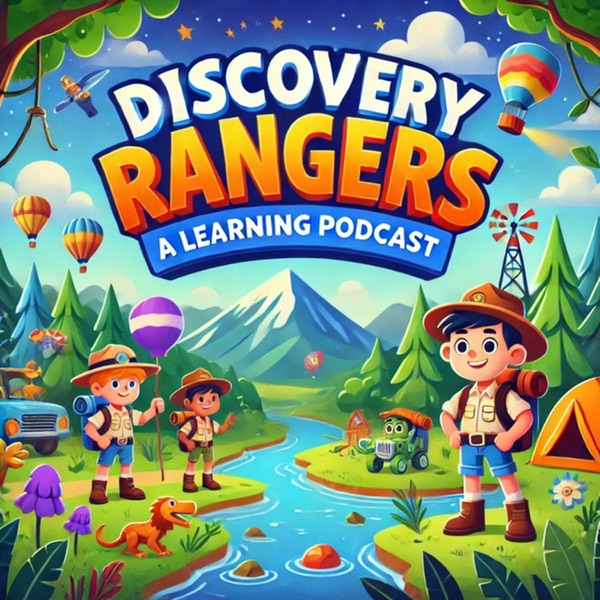
Discovery Rangers
Discovery Rangers explores science, animals, history, and big ideas for curious families. Educational, kid-safe STEM podcasts for ages 4-12 — perfect for homeschool, road trips, and rainy-day learning.
- Episodes
- 241
- Releases
- Daily
- Typical length
- 19 min
- On air since
- 2024
- Latest episode
- 17 hours ago
Episodes
241 episodes, newest first
-
10 min
The Crazy True Story of How Nike Was Born | Educational Podcast for Families
Season 1, Episode 241
Show notes
Discover the crazy true story of how Nike was born! An inspiring educational history and STEM episode for kids, homeschooling, and family road trips.
What happens when you mix running, boundless curiosity, and a kitchen waffle iron? You get one of the greatest invention stories in history! Long before the famous swoosh was on billions of sneakers, Nike was just a wobbling shoe company that refused to sit down, started by a college runner and his visionary coach selling imported shoes straight out of a car trunk.
From pouring rubber into breakfast appliances to create lightweight grip to designing a world-famous logo for just thirty-five dollars, discover how bold ideas and relentless grit turned a scrappy startup into a global sports phenomenon.
What we cover in this episode:
• 0:00 - Selling sneakers out of a car trunk
• 0:30 - The ruined breakfast waffle iron experiment
• 2:35 - Why the famous swoosh almost didn't happen
• 4:35 - The secret math behind rubber shoe grips
• 6:50 - How to keep going when your company wobbles
• 7:25 - The big family invention showdownPerfect for: STEM learning, history units, homeschooling, bedtime listening, and family road trips for kids ages 4–12. Hit Follow! Never miss an adventure with Discovery Rangers on Spotify, and please leave a 5-star rating and review to support the show!
Read the full story: https://www.parentingwithpurpose.help/discovery-rangers
Discovery Rangers: https://www.parentingwithpurpose.help/discovery-rangers · The Library: https://www.parentingwithpurpose.help/blog
Watch on YouTube: https://www.youtube.com/@DiscoveryRangersPodcast · Listen on Spotify: https://open.spotify.com/show/7I9Qy8D1FaTkR7qFLwtPm3
-
18 min
Why Do Zombie Fungi Take Over Bugs? | Zombie Ants & Rainforest Spores
Season 1, Episode 240
Show notes
Why do zombie fungi take over bugs? Discover how Cordyceps turns ants into real-life zombies in this fun STEM educational podcast for homeschool families.
Deep beneath the misty canopy of the tropical rainforest, tiny carpenter ants patrol the forest floor on their daily routine. But lurking invisibly on the leaves is a microscopic mastermind: Ophiocordyceps, nature's real-life zombie fungus. When an unsuspecting ant brushes against a fungal spore, the fungus silently takes the driver's seat, guiding the ant upward onto a high leaf where it locks its jaws in place before sprouting a spore-launching stalk right out of its head.
While it sounds like a spooky sci-fi mystery, this secret puppet master is actually an essential guardian of biodiversity. By targeting insect populations that grow too large, the zombie fungus keeps the rainforest balanced, proving that even the strangest creatures have a vital superpower.
Ask in the car afterwards:
• How does the zombie fungus control an ant's movements without ever invading its brain?
• Why is having zombie fungi actually helpful for keeping the rainforest healthy and balanced?What we cover in this episode:
• 0:00 - The mysterious ant that forgot how to march
• 8:38 - Meet the microscopic puppet master
• 9:45 - How fungus pulls the muscle strings
• 10:00 - The leaf clamp of doom
• 11:18 - Why rainforests actually need zombie bugs
• 12:18 - The Great Car Debate: creepy villain or eco-hero?Perfect for: Curious kids ages 4–12, family road trips, elementary science classes, and homeschool STEM lessons.
Hit Follow! Make sure to follow Discovery Rangers on Spotify and leave a 5-star rating so you never miss another wild nature investigation!
Read the full story: https://www.parentingwithpurpose.help/discovery-rangers
Discovery Rangers: https://www.parentingwithpurpose.help/discovery-rangers · The Library: https://www.parentingwithpurpose.help/blog
Watch on YouTube: https://www.youtube.com/@DiscoveryRangersPodcast · Listen on Spotify: https://open.spotify.com/show/7I9Qy8D1FaTkR7qFLwtPm3
-
21 min
Why Does Reading Make You Sleepy? | Eye Strain, Vision & Brain Science
Season 1, Episode 239
Show notes
Why does reading make you sleepy? Discover the hidden eye muscle workout and brain science behind reading fatigue in this fun STEM homeschool lesson.
Reading looks quiet and relaxing, but inside your head, your tiny eye muscles are running an Olympic sprint! To keep words sharp, the focusing muscles inside both eyes must stay constantly flexed while turning inward together in a team move called convergence. At the exact same time, your eyes perform hundreds of lightning-fast hops across the page called saccades, snapping pictures of every word for your brain to decode.
When your eye muscles grow exhausted and your brain hits peak cognitive workload, your nervous system pulls the emergency brake. Your brain sends out a sneaky signal that it is time to shut down and dream, dropping heavy shutters over your eyes to protect you from mental overload.
Ask in the car afterwards:
• What is happening to your eye muscles when both of your eyes turn inward to focus on a page?
• Why can someone have perfect 20/20 vision and still get tired eyes when reading a book?What we cover in this episode:
• 0:00 - The invisible weights on your eyelids
• 2:36 - Why reading is an Olympic eye workout
• 7:54 - The secret jumping dance across the page
• 10:45 - The 20/20 vision trick that fools eye doctors
• 15:40 - Why glowing screens steal your blinks
• 19:41 - The 20-20-20 superpower rest trickPerfect for: Curious kids ages 4–12, family road trips, elementary science units, and STEM homeschooling.
Hit Follow! If you love unraveling everyday body mysteries, follow Discovery Rangers on Spotify and leave a 5-star rating to help more young explorers discover the show!
Read the full story: https://www.parentingwithpurpose.help/discovery-rangers
Discovery Rangers: https://www.parentingwithpurpose.help/discovery-rangers · The Library: https://www.parentingwithpurpose.help/blog
Watch on YouTube: https://www.youtube.com/@DiscoveryRangersPodcast · Listen on Spotify: https://open.spotify.com/show/7I9Qy8D1FaTkR7qFLwtPm3
-
19 min
Why Do Boogers Form? | Mucus, Germs & Nose Biology
Season 1, Episode 238
Show notes
How do animals survive freezing? Learn how wood frogs, icefish, and snow flies use natural antifreeze to survive winter in this homeschool STEM lesson.
Deep beneath frozen forest leaves, a tiny wood frog turns completely solid. Its heart stops beating, its breathing halts, and up to seventy percent of its body water turns into solid ice. Yet inside its cells, secret ice chemists are hard at work releasing a sugary syrup made of glucose that keeps vital organs safe from sharp ice crystals.
From Antarctic icefish swimming with see-through blood to wingless snow flies bustling across winter drifts, animals have evolved extraordinary natural antifreeze tricks. When spring sunshine warms the ground, the frozen frog simply defrosts from the inside out and hops away into the woods.
Ask in the car afterwards:
• How does a wood frog use sugar syrup to keep its cells safe while the rest of its body turns to ice?
• If you had to survive a freezing winter, would you choose the frog's freeze-and-sleep trick or the snow fly's self-heating superpower?What we cover in this episode:
• 0:00 - The frog that turns into a living popsicle
• 3:12 - Why sharp ice crystals are dangerous to cells
• 6:25 - The secret sugar syrup protecting frozen organs
• 9:38 - The Antarctic fish with see-through blood
• 12:51 - Snow flies that make their own winter heat
• 16:04 - Defrosting from the inside out for springtimePerfect for: Curious kids ages 4–12, homeschool STEM units, elementary biology lessons, and family road trips. Hit Follow! Follow Discovery Rangers on Spotify and leave a five-star rating to help other families explore the wonders of nature!
Read the full story: https://www.parentingwithpurpose.help/discovery-rangers
Discovery Rangers: https://www.parentingwithpurpose.help/discovery-rangers · The Library: https://www.parentingwithpurpose.help/blog
Watch on YouTube: https://www.youtube.com/@DiscoveryRangersPodcast · Listen on Spotify: https://open.spotify.com/show/7I9Qy8D1FaTkR7qFLwtPm3
-
12 min
Why Do Scabs Form? | Body Science for Kids
Season 1, Episode 237
Show notes
Why do scabs form on a scraped knee? Discover how your body builds a microscopic shield against germs in this homeschool STEM body science episode.
When you take a spill and scrape your knee, an emergency alarm sounds inside your body. Instantly, a microscopic repair crew springs into action to protect the open breach. Millions of tiny blood cells called platelets race to the scene, sticking together like magnetic building blocks to plug the leak, while protein threads called fibrin weave an invisible safety net across the cut. Together, they create a tough, drying shield known as a scab.
Beneath this crusty brown fortress, the real magic happens. Hungry white blood cells patrol the area like tiny vacuum cleaners, sweeping up dirt and zapping rogue germs while fresh new skin cells quietly rebuild the surface. Once the construction project underneath is completely finished, the old scab simply falls away, revealing brand-new skin ready for your next adventure!
What we cover in this episode:
• 0:00 - The high-speed race on a scraped knee
• 2:22 - Platelets and the sticky glue brigade
• 3:51 - Weaving a fibrin safety net
• 5:33 - Undercover vacuum cleaners at work
• 7:48 - The surprising truth about keeping cuts moist
• 9:17 - Why you should never pick the shieldPerfect for: Curious kids ages 4–12, homeschool STEM lessons, elementary science classes, and family road trips.
Hit Follow! Follow Discovery Rangers on Spotify and leave a rating to help more young explorers discover the secret science inside their own bodies!
Read the full story: https://www.parentingwithpurpose.help/discovery-rangers
Discovery Rangers: https://www.parentingwithpurpose.help/discovery-rangers · The Library: https://www.parentingwithpurpose.help/blog
Watch on YouTube: https://www.youtube.com/@DiscoveryRangersPodcast · Listen on Spotify: https://open.spotify.com/show/7I9Qy8D1FaTkR7qFLwtPm3
-
24 min
Oil vs Water: Why Won't They Mix? | Density, Molecules & Emulsions
Season 1, Episode 236
Show notes
Why won't oil and water mix even when you shake them? Discover molecules, density, and kitchen chemistry in this fun STEM science adventure.
Step onto the microscopic dance floor where water molecules are throwing the ultimate party! Because water molecules are polar—acting like tiny, charged magnets—they stick together in an unbreakable, tight group hug. Meanwhile, oil molecules are non-polar and have totally different shapes, meaning they cannot grab a hand in the circle. Add in the fact that oil is less dense, and oil is forced to float right on top as an uninvited guest.
Even when you shake a jar with all your might, you only create a fleeting mashup before the liquids separate again. But there is a secret peacekeeper in your kitchen pantry: emulsifiers like egg yolks and mustard. These molecular diplomats have one hand that loves water and one that loves oil, locking them together in creamy harmony!
Ask in the car afterwards:
• What everyday kitchen ingredients can act like a bridge to force oil and water to mix together?
• Why do water molecules cling tightly to each other while leaving oil molecules out of their circle?What we cover in this episode:
• 0:00 - The microscopic party where oil gets left out
• 4:43 - Why water molecules act like tiny magnets
• 8:19 - The real reason oil floats right to the top
• 11:09 - What actually happens when you shake the bottle
• 13:44 - Meet the kitchen bridge that forces them together
• 17:52 - From mayonnaise to ocean spills: chemistry in actionPerfect for: Curious kids ages 4–12, homeschool STEM lessons, science fair prep, road trips, and kitchen science experiments. Hit Follow! Follow Discovery Rangers on Spotify and leave a 5-star rating to explore more microscopic mysteries every week!
Read the full story: https://www.parentingwithpurpose.help/discovery-rangers
Discovery Rangers: https://www.parentingwithpurpose.help/discovery-rangers · The Library: https://www.parentingwithpurpose.help/blog
Watch on YouTube: https://www.youtube.com/@DiscoveryRangersPodcast · Listen on Spotify: https://open.spotify.com/show/7I9Qy8D1FaTkR7qFLwtPm3
-
18 min
Spider vs Scorpion: Whose Trap Wins? | Animal Science for Kids
Season 1, Episode 235
Show notes
How do animals survive freezing in winter? Discover how wood frogs and icefish use natural antifreeze in their blood in this homeschool STEM episode.
Deep under the snow-covered forest leaves, nature's most extraordinary ice chemists are brewing their own survival potions. While freezing water normally forms sharp ice crystals that can destroy living cells, the amazing wood frog turns its liver into a sweet syrup factory, flooding its cells with glucose antifreeze so it can turn 70 percent into solid ice without being harmed.
From transparent-blooded Antarctic icefish swimming in sub-zero oceans to fuzzy snow flies bustling across icy drifts, creatures throughout the frozen wild have mastered the science of staying alive when the world turns into a giant freezer.
Ask in the car afterwards:
• How does the wood frog use sugar from its liver to keep its cells safe during freezing winters?
• Why does the Antarctic icefish have clear blood instead of red blood cells like humans?What we cover in this episode:
• 0:00 - The frozen popsicle frog mystery
• 5:34 - Sharp ice crystals vs sweet cell syrup
• 7:50 - The secret life of see-through icefish
• 10:23 - When a stopped heart is not the end
• 12:16 - Snow flies and old ice cream science
• 14:21 - The great winter superpower showdownPerfect for: Curious kids ages 4–12, family road trips, elementary science classes, and homeschool STEM units exploring winter biology and animal adaptations.
Hit Follow! Subscribe to Discovery Rangers on Spotify and leave a rating to join our next wild nature investigation!
Read the full story: https://www.parentingwithpurpose.help/discovery-rangers
Discovery Rangers: https://www.parentingwithpurpose.help/discovery-rangers · The Library: https://www.parentingwithpurpose.help/blog
Watch on YouTube: https://www.youtube.com/@DiscoveryRangersPodcast · Listen on Spotify: https://open.spotify.com/show/7I9Qy8D1FaTkR7qFLwtPm3
-
21 min
The Kid Who Changed the World With a Garage | Educational Podcast for Families
Season 1, Episode 234
Show notes
How did a kid who changed the world with a garage turn scrap parts into Apple and Amazon? Explore kid inventors and garage startups in this homeschool STEM episode.
Before giant glass towers and global headquarters existed, some of the world's most revolutionary ideas were born inside dusty family garages. From Steve Jobs tinkering with spare parts at his dad's workbench to Walt Disney sketching early cartoons in a one-car garage, small spaces became launchpads for making tools that feel like they already lived in your pocket. You didn't need millions of dollars or fancy gear to begin—just curiosity, scrap materials, and the freedom to experiment.
From six-year-olds securing patents for shoe-box toy trucks to college students launching search engines next to parked sedans, history proves that massive breakthroughs start small. With a creative prototype, a helpful mentor, and plenty of grit, any ordinary workbench can change the world.
What we cover in this episode:
• 0:00 - The secret superpower of a car parking space
• 7:36 - A corner workbench and a father's junkyard lessons
• 11:23 - The truth about what actually happened in the Apple garage
• 16:21 - From popsicles to toy trucks: kid inventors with giant ideas
• 18:27 - Crayons, dollhouses, and building trillion-dollar dreams
• 20:05 - Fancy office towers or family workbench grit?Perfect for: Curious kids, future entrepreneurs, homeschool STEM units, family road trips, and young builders ages 4–12. Hit Follow! Follow Discovery Rangers on Spotify and leave a rating to help other inventive families discover our adventures!
Read the full story: https://www.parentingwithpurpose.help/discovery-rangers
Discovery Rangers: https://www.parentingwithpurpose.help/discovery-rangers · The Library: https://www.parentingwithpurpose.help/blog
Watch on YouTube: https://www.youtube.com/@DiscoveryRangersPodcast · Listen on Spotify: https://open.spotify.com/show/7I9Qy8D1FaTkR7qFLwtPm3
-
18 min
Why Does Clock Change Wreck Sleep? | Daylight Saving Time & Body Clocks
Season 1, Episode 233
Show notes
Why does clock change wreck sleep? Discover how daylight saving time disrupts circadian rhythm and body clocks in this fun STEM science episode for homeschool and family learning.
Deep inside your brain, an invisible team of master timekeepers runs on a precise 24-hour loop called your circadian rhythm. This inner crew takes all its cues from natural sunlight, keeping your body's train running smoothly on its own schedule. But when daylight saving time ends in November and the wall clocks jump backward, your internal clock train and the outside world suddenly run on completely different tracks!
Your morning crew thinks it is time to leap out of bed at sunrise even if the clock on the wall insists it is an hour earlier. Because growing kids rely on consistent sleep routines, jumping through time can leave your brain's crew feeling completely scrambled. Luckily, by letting in bright morning light and nudging your schedule in small 15-minute increments, you can help your internal timekeepers sync right back up without getting overtired.
Ask in the car afterwards:
• Why does waking up to bright sunlight help reset your internal body clock faster?
• What happens inside your body if you try to stay up a whole extra hour all at once instead of shifting slowly?What we cover in this episode:
• 0:00 - The 5:30 AM mystery wake-up call
• 2:48 - Meet your brain's hidden timekeeper crew
• 5:11 - Two trains running on different tracks
• 8:21 - Why staying up late completely backfires
• 11:58 - Using morning sunlight as a secret reset button
• 15:50 - The great daylight saving time debatePerfect for: Curious kids ages 4–12, morning car rides, road trips, elementary science units, and homeschool STEM listening.
Hit Follow! Follow Discovery Rangers on Spotify and leave a five-star rating to explore more mind-boggling science mysteries every week!
Read the full story: https://www.parentingwithpurpose.help/discovery-rangers
Discovery Rangers: https://www.parentingwithpurpose.help/discovery-rangers · The Library: https://www.parentingwithpurpose.help/blog
Watch on YouTube: https://www.youtube.com/@DiscoveryRangersPodcast · Listen on Spotify: https://open.spotify.com/show/7I9Qy8D1FaTkR7qFLwtPm3
-
20 min
Sleep vs Cramming: Which Helps Memory? | Science Podcast for Kids
Season 1, Episode 232
Show notes
Sleep vs cramming: which helps memory more? Discover brain science, memory storage, and study habits in this fun homeschool STEM episode for kids.
Imagine cramming dozens of spelling words into your head right before bed. Your brain feels like a desk piled high with messy papers. But the moment you fall asleep, a team of secret brain workers clocks in to run the ultimate overnight sorting room! During deep sleep, your brain uses a process called consolidation to sweep those messy papers off your mental desk and tuck them neatly into permanent filing cabinets.
If you stay up late cramming, that sorting room never opens, and half your test answers get lost in the clutter. Scientists found that students who spread out their studying over several days remember up to 40% more information than those who pull all-nighters. Your brain needs time, sleep cycles, and daily rest to lock in your smartest memories!
What we cover in this episode:
• 1:50 - The midnight paper storm inside your head
• 3:05 - How your brain builds an overnight filing cabinet
• 5:31 - The 60-student word memory showdown
• 10:16 - Why one good night before test day is a trap
• 12:21 - Power naps and the 90-minute memory cycle
• 17:08 - The great study schedule debate for car ridesPerfect for: Curious kids, family road trips, classroom science listening, homeschooling, and STEM lessons for ages 4–12. Hit Follow! Follow Discovery Rangers on Spotify and leave a five-star rating to join our next brain science adventure!
Read the full story: https://www.parentingwithpurpose.help/discovery-rangers
Discovery Rangers: https://www.parentingwithpurpose.help/discovery-rangers · The Library: https://www.parentingwithpurpose.help/blog
Watch on YouTube: https://www.youtube.com/@DiscoveryRangersPodcast · Listen on Spotify: https://open.spotify.com/show/7I9Qy8D1FaTkR7qFLwtPm3
-
23 min
Why Does Losing an Hour Make Us Tired? | Daylight Saving & Body Clocks
Season 1, Episode 231
Show notes
Why does losing an hour make us tired? Explore body clocks, daylight saving time, and circadian rhythms in this fun homeschool STEM science podcast.
Deep inside your brain sits a microscopic control center of 50,000 tiny nerve cells called the suprachiasmatic nucleus. This master clock runs your body temperature, hunger cues, and energy levels on an internal rhythm of about 24.2 hours. Every single morning, bright sunlight acts as a natural reset button, nudging your internal gears back into alignment with the 24-hour day.
When the clocks on the wall jump forward for daylight saving time, your brain's master clock does not jump with them. A hidden tug-of-war breaks out between your alarm clock and your body's melatonin sleep signals, leaving you feeling groggy while your cells spend up to a week adjusting to the sudden shift.
Ask in the car afterwards:
• Why does getting bright sunlight in your eyes first thing in the morning help your body clock adjust when the time changes?
• Why is it harder for our brains to jump forward and lose an hour than it is to fall back and gain an extra hour?What we cover in this episode:
• 0:00 - The cave experiment with no clocks
• 2:08 - Meeting the 50,000-cell master timekeeper
• 5:43 - Why your natural day is 12 minutes too long
• 6:35 - The unfair truth about jumping forward vs falling back
• 7:15 - How morning sunlight resets your brain
• 21:00 - The ultimate body clock debatePerfect for: Curious kids ages 4–12, homeschool STEM science lessons, morning routines, and family road trips. Learn how human biology, sleep cycles, and brain chemistry keep time every day. Hit Follow! Follow Discovery Rangers on Spotify and leave a rating to help more young explorers discover the hidden wonders of science!
Read the full story: https://www.parentingwithpurpose.help/discovery-rangers
Discovery Rangers: https://www.parentingwithpurpose.help/discovery-rangers · The Library: https://www.parentingwithpurpose.help/blog
Watch on YouTube: https://www.youtube.com/@DiscoveryRangersPodcast · Listen on Spotify: https://open.spotify.com/show/7I9Qy8D1FaTkR7qFLwtPm3
-
8 min
Earwax: Gross or Genius? | Earwax, Hearing & Human Body
Season 1, Episode 230
Show notes
How do animals survive freezing in winter? Discover how wood frogs and icefish use natural antifreeze in this fun educational homeschool STEM science story.
Deep beneath winter leaf piles and inside polar ocean waves, secret ice chemists are brewing their own survival potions. While freezing temperatures would normally turn living cells into shredded ice, animals like the incredible wood frog and Antarctic icefish produce natural antifreeze. Wood frogs pump sweet glucose through their organs, allowing up to 70 percent of their body water to freeze into solid ice while keeping their delicate inner cells safe.
When spring arrives, these miraculous frogs thaw out from the inside out, kickstarting their frozen hearts and hopping away as if waking from a simple nap. From see-through icefish swimming in polar waters to winter snow flies dancing on snowdrifts, nature has unlocked amazing recipes to conquer the deepest freeze.
Ask in the car afterwards:
• How does the wood frog use sugary glucose like natural antifreeze to protect its cells?
• If you had to survive a freezing winter, would you rather freeze solid like a frog or make your own heat like a snow fly?What we cover in this episode:
• 0:00 - The mystery of the frog popsicle
• 1:07 - Why sharp ice crystals are dangerous to cells
• 2:35 - The sugary secret inside frog blood
• 4:07 - Antarctic fish with crystal-clear blood
• 5:37 - The bug that dances across freezing snow
• 6:21 - Waking up from the inside outPerfect for: Young science enthusiasts, homeschool STEM nature studies, classroom listening, and family road trips for ages 4–12. Hit Follow! Follow Discovery Rangers on Spotify and leave a five-star rating and review to join our next outdoor adventure!
Read the full story: https://www.parentingwithpurpose.help/discovery-rangers
Discovery Rangers: https://www.parentingwithpurpose.help/discovery-rangers · The Library: https://www.parentingwithpurpose.help/blog
Watch on YouTube: https://www.youtube.com/@DiscoveryRangersPodcast · Listen on Spotify: https://open.spotify.com/show/7I9Qy8D1FaTkR7qFLwtPm3
-
22 min
Why Does Vinegar Erase Stains? | Acids, Bases & Kitchen Chemistry
Season 1, Episode 229
Show notes
How do animals survive freezing solid in winter? Discover natural antifreeze chemistry in this educational STEM science podcast for homeschool kids.
Deep beneath the frozen forest leaves, a tiny wood frog turns as hard as a popsicle. Its heartbeat completely stops, its breathing pauses, and ice forms through its tissues—yet when spring warms the forest, it thaws from the inside out and hops away! Meet nature's ice chemists, remarkable creatures that brew their own sugary antifreeze to keep sharp ice crystals from tearing their cells apart.
From Antarctic icefish swimming with see-through blood to snow flies buzzing across frozen drifts, discover the secret world of freeze tolerance and how wild animals pull off the ultimate winter survival trick.
What we cover in this episode:
• 0:00 - The popsicle frog that wakes from the dead
• 5:31 - Why sharp ice crystals are cellular danger
• 7:56 - Nature's sweet recipe for blood antifreeze
• 10:05 - The see-through fish swimming through ice
• 13:02 - Bug tricks for defeating old ice cream spikes
• 19:19 - The big winter superpower showdownPerfect for: Curious kids ages 4–12, family road trips, elementary science lessons, and homeschool STEM units exploring winter animal adaptations.
Hit Follow! Follow Discovery Rangers on Spotify and leave a rating to join every wild science adventure!
Read the full story: https://www.parentingwithpurpose.help/discovery-rangers
Discovery Rangers: https://www.parentingwithpurpose.help/discovery-rangers · The Library: https://www.parentingwithpurpose.help/blog
Watch on YouTube: https://www.youtube.com/@DiscoveryRangersPodcast · Listen on Spotify: https://open.spotify.com/show/7I9Qy8D1FaTkR7qFLwtPm3
-
21 min
How Do Animals Survive Freezing? | Animal Science for Kids
Season 1, Episode 228
Show notes
How do animals survive freezing cold winters? Discover how wood frogs and icefish use natural antifreeze in this educational homeschool STEM audio.
Deep beneath the winter snow, a hidden world of master ice chemists is performing one of nature's greatest survival tricks. While sharp ice crystals would normally damage living cells, creatures like the Alaskan wood frog pack their bodies with natural antifreeze syrup made of glucose. Up to seventy percent of the frog's body water turns completely solid, stopping its breath, brain activity, and heartbeat for months until spring warms it back to life from the inside out.
Down in the subzero Antarctic oceans, clear-blooded icefish manufacture specialized antifreeze proteins around the clock to keep jagged ice crystals from growing. From heat-generating snow flies crawling across the powder to caterpillars weathering arctic blizzards, these incredible creatures prove that freezing weather is just another puzzle waiting to be solved.
Ask in the car afterwards:
• How does the wood frog use sugar from its liver to survive being frozen like an ice pop?
• Why does the Antarctic icefish have clear blood instead of red blood like ours?What we cover in this episode:
• 0:00 - The mystery of the frozen frog popsicle
• 1:55 - Why sharp ice crystals are dangerous to cells
• 4:51 - The sugary secret inside frog blood
• 9:02 - Clear-blooded fish in sub-zero oceans
• 16:00 - The bug that makes its own winter heater
• 17:52 - Waking up from the inside outPerfect for: Curious kids ages 4–12, family road trips, classroom listening, and homeschool STEM science lessons.
Hit Follow! Follow Discovery Rangers on Spotify and leave a five-star rating to explore more incredible science mysteries with us every week!
Read the full story: https://www.parentingwithpurpose.help/discovery-rangers
Discovery Rangers: https://www.parentingwithpurpose.help/discovery-rangers · The Library: https://www.parentingwithpurpose.help/blog
Watch on YouTube: https://www.youtube.com/@DiscoveryRangersPodcast · Listen on Spotify: https://open.spotify.com/show/7I9Qy8D1FaTkR7qFLwtPm3
-
16 min
Baking Soda vs Vinegar: Fizz Fight? | Kitchen Science for Kids
Season 1, Episode 227
Show notes
How do animals survive freezing in winter? Discover how wood frogs and icefish use natural antifreeze in their blood in this homeschool STEM episode.
Deep beneath the frozen leaves of the winter forest lives a secret guild of ice chemists. While ice crystals usually act like microscopic daggers that tear apart living cells, creatures like the wood frog and the clear-blooded Antarctic icefish have invented their own biological shields. By flooding their vital organs with sugary syrups and specialized proteins, they stop dangerous ice crystals from growing too large.
Imagine turning seventy percent of your body water into solid ice, hitting pause on your heartbeat and brain, and waiting out the blizzard until spring gives the signal to thaw from the inside out. From wingless snow flies marching across glaciers to frogs defrosting in the sunshine, nature's winter survivors prove that freezing solid is not the end of the story—it is just an extraordinary pause button.
What we cover in this episode:
• 0:00 - The popsicle frog mystery
• 3:10 - Why sharp ice crystals wreck cells
• 6:20 - Cooking up sweet natural antifreeze
• 8:30 - Heart stopped: the inside-out spring thaw
• 12:00 - Clear blood and snow-walking insects
• 13:45 - The ultimate winter superpower showdownPerfect for: Curious kids ages 4–12, elementary STEM lessons, homeschool science units, and family road trips.
Hit Follow! Follow Discovery Rangers on Spotify and leave a five-star rating to join every outdoor science investigation!
Read the full story: https://www.parentingwithpurpose.help/discovery-rangers
Discovery Rangers: https://www.parentingwithpurpose.help/discovery-rangers · The Library: https://www.parentingwithpurpose.help/blog
Watch on YouTube: https://www.youtube.com/@DiscoveryRangersPodcast · Listen on Spotify: https://open.spotify.com/show/7I9Qy8D1FaTkR7qFLwtPm3
-
22 min
Oil or Water: Who Wins the Kitchen War? | Kitchen Chemistry & Emulsions
Season 1, Episode 226
Show notes
How do animals survive freezing in winter? Discover natural antifreeze in frozen wood frogs and icefish in this educational homeschool STEM audio guide.
Deep beneath snowy forest floors and inside icy polar oceans, master ice chemists have unlocked a secret winter survival code. While ordinary ice crystals act like tiny jagged knives capable of tearing living cells apart, the wood frog survives by flooding its own organs with a super-sugary syrup made of glucose. Up to seventy percent of the frog's water turns rock-solid, its heartbeat completely stops, and its eyes turn milky white—yet the sugary potion shields its inner cells from freezing solid.
Down in the frigid Antarctic, see-through icefish patrol the waters with blood packed full of custom antifreeze proteins, preventing sharp crystals from growing. Tiny wingless snow flies even march directly across icy drifts by generating internal heat and stopping crystal recrystallization. When spring warmth finally returns, these frozen wonders defrost from the inside out, hop back to life, and prove that being frozen solid is just nature's ultimate winter nap.
Ask in the car afterwards:
• How does the wood frog use sugary glucose to stop its cells from being damaged by ice?
• Why does the Antarctic icefish need special antifreeze proteins even though its entire body does not freeze solid like a frog's?What we cover in this episode:
• 0:00 - The mystery of the frozen frog popsicle
• 3:32 - Why sharp ice crystals are cellular danger
• 6:58 - The sugary secret inside a wood frog's liver
• 10:42 - The see-through fish swimming through polar slush
• 14:35 - Freezer-burned ice cream and tiny snow insects
• 18:45 - Defrosting from the inside out for springtimePerfect for: Curious kids ages 4–12, homeschool STEM units on cold-climate adaptations, classroom science breaks, and family road trips.
Hit Follow! Never miss a wild adventure with Discovery Rangers on Spotify—tap follow and leave a rating to support our educational show!
Read the full story: https://www.parentingwithpurpose.help/discovery-rangers
Discovery Rangers: https://www.parentingwithpurpose.help/discovery-rangers · The Library: https://www.parentingwithpurpose.help/blog
Watch on YouTube: https://www.youtube.com/@DiscoveryRangersPodcast · Listen on Spotify: https://open.spotify.com/show/7I9Qy8D1FaTkR7qFLwtPm3
-
23 min
Octopus or Crow: Who's Smarter? | Animal Intelligence & Tool Use
Season 1, Episode 225
Show notes
Is an octopus or a crow smarter? Explore animal intelligence, multi-brained sea creatures, and tool-making birds in this fun homeschool STEM episode.
Step inside nature's ultimate brain showdown! In one corner, we have the boneless escape artist of the deep ocean—an octopus equipped with nine separate thinking centers, three hearts, and arms that can taste, explore, and unscrew jars entirely on their own. In the other corner perches the crow, a feathered mastermind with a walnut-sized brain capable of engineering multi-step tools, planning for tomorrow, and holding grudges against human faces.
While humans often judge smarts by big skulls, nature took two completely different paths to brilliance. From sneaky midnight aquarium break-ins to crows using street traffic as nutcrackers, discover how these two animal geniuses crack the toughest puzzles on Earth.
Ask in the car afterwards:
• How can an octopus's arms taste food and solve puzzles even when its main brain is doing something else?
• Why is a crow able to solve tough multi-step puzzles even though its brain is only the size of a walnut?What we cover in this episode:
• 0:00 - The midnight aquarium snack heist
• 3:37 - Nine brains, three hearts, and zero bones
• 10:17 - Feathered engineers bending tools to solve puzzles
• 13:39 - Why walnut-sized bird brains fool everyone
• 15:53 - Solo ocean survival versus crow community memory
• 20:05 - Crowning nature's ultimate problem solverPerfect for: Curious kids ages 4–12, homeschool STEM science units, elementary classroom listening, and family road trips.
Hit Follow! Tap follow on Discovery Rangers on Spotify and leave a 5-star rating to explore more mind-blowing science mysteries with us every week!
Read the full story: https://www.parentingwithpurpose.help/discovery-rangers
Discovery Rangers: https://www.parentingwithpurpose.help/discovery-rangers · The Library: https://www.parentingwithpurpose.help/blog
Watch on YouTube: https://www.youtube.com/@DiscoveryRangersPodcast · Listen on Spotify: https://open.spotify.com/show/7I9Qy8D1FaTkR7qFLwtPm3
-
15 min
Why Do Plants Eat Bugs? | Carnivorous Plants Science for Kids
Season 1, Episode 224
Show notes
Why do plants eat bugs? Explore how carnivorous plants like Venus flytraps catch insects in this fun, educational STEM science podcast for homeschool kids.
Deep in soggy, acidic bogs where the soil is missing key nutrients, ordinary greenery wouldn't survive—so certain plants became master trap-makers. Instead of getting all their nutrition from the ground, carnivorous plants set ingenious botanical traps to lure, catch, and digest unsuspecting insects.
From the lightning-fast snap of the Venus flytrap's leafy jaws and the shimmering glue droplets of the sundew to the slippery slide inside a pitcher plant, these botanical hunters have evolved some of the cleverest survival tricks on Earth.
What we cover in this episode:
• 0:00 - The mysterious bog where soil runs out of vitamins
• 4:07 - The lightning-quick jaw that counts to two
• 6:19 - Sundews and their super-sticky glitter trap
• 7:47 - The slippery slide into pitcher plant soup
• 9:42 - Can a carnivorous plant accidentally digest a human finger?
• 11:04 - How to care for a bug-eating plant at homePerfect for: Homeschool STEM lessons, curious kids ages 4–12, elementary science classrooms, and family road trips.
Hit Follow! Add Discovery Rangers to your library on Spotify and leave a 5-star rating to help more young explorers discover the wonders of nature!
Read the full story: https://www.parentingwithpurpose.help/discovery-rangers
Discovery Rangers: https://www.parentingwithpurpose.help/discovery-rangers · The Library: https://www.parentingwithpurpose.help/blog
Watch on YouTube: https://www.youtube.com/@DiscoveryRangersPodcast · Listen on Spotify: https://open.spotify.com/show/7I9Qy8D1FaTkR7qFLwtPm3
-
19 min
Why Does Your Stomach Growl? | Body Science for Kids
Season 1, Episode 223
Show notes
Why does your stomach growl when you are not hungry? Learn the digestive system science behind tummy rumbles in this fun homeschool STEM kids episode.
Deep inside your belly lies a winding, muscular obstacle course that stretches nearly as long as a school bus is wide. Day and night, this digestive superhighway squeezes and ripples like a tube of toothpaste, nudging food, liquid, and bubbles along hidden corridors. Even when you are completely full or fast asleep, these hardworking muscles keep pulsing to a rhythmic squeezing beat called peristalsis.
So why does a loud roar erupt in the middle of a silent room? When your stomach empties out, it turns into an echo chamber! Without solid food to soak up the sloshing fluids and bubbling gas, your gut launches an energetic housekeeping sweep that scientists call borborygmus. That rumbling alarm is rarely an emergency—it is just your body's personal cleaning crew polishing the hallways.
What we cover in this episode:
• 0:00 - The library bear trapped in your shirt
• 2:44 - The toothpaste squeeze inside your gut
• 4:33 - Washing machines and belly echo chambers
• 6:21 - The secret housekeeping janitor shift
• 8:30 - Meet ghrelin, the hunger megaphone
• 15:56 - The magic silence button debatePerfect for: Curious kids, family road trips, science classrooms, homeschool STEM units, and car ride listening for ages 4–12.
Hit Follow! Never miss a mystery with Discovery Rangers on Spotify, and be sure to leave a 5-star rating to help other families discover our kid-safe science adventures!
Read the full story: https://www.parentingwithpurpose.help/discovery-rangers
Discovery Rangers: https://www.parentingwithpurpose.help/discovery-rangers · The Library: https://www.parentingwithpurpose.help/blog
Watch on YouTube: https://www.youtube.com/@DiscoveryRangersPodcast · Listen on Spotify: https://open.spotify.com/show/7I9Qy8D1FaTkR7qFLwtPm3
-
13 min
Why Does the Moon Turn Orange? | Night Sky Science for Kids
Season 1, Episode 222
Show notes
Why does the moon turn orange in the night sky? Discover the real science behind light waves, Earth's atmosphere, and autumn moons in this fun homeschool STEM lesson.
Every autumn, deep inside the whispering woods, a secret council of great horned owls, red foxes, and Luna moths gathers to watch the horizon. When the Hunter's Moon rises low, big, and pumpkin-orange, it acts as nature's giant glowing alarm clock signaling that hunting season has arrived. But the moon hasn't changed color at all—Earth's atmosphere acts like a giant pair of sunset sunglasses, scattering away short blue light waves and letting only long, fiery orange waves reach the forest floor.
What we cover in this episode:
• 0:00 - The secret nighttime forest alarm clock
• 1:10 - Why the rising moon looks like a pumpkin
• 3:18 - Earth's atmosphere and the sunglasses trick
• 3:55 - The science of scattering blue and red light
• 7:12 - How foxes and owls hunt by the autumn glow
• 10:30 - Tricks to spot your own orange moon tonightPerfect for: curious kids ages 4–12, homeschool STEM science lessons, evening family skywatching, and bedtime road trips. Hit Follow! Keep exploring with Discovery Rangers—follow on Spotify and leave a 5-star rating to help other young scientists find our audio adventures!
Read the full story: https://www.parentingwithpurpose.help/discovery-rangers
Discovery Rangers: https://www.parentingwithpurpose.help/discovery-rangers · The Library: https://www.parentingwithpurpose.help/blog
Watch on YouTube: https://www.youtube.com/@DiscoveryRangersPodcast · Listen on Spotify: https://open.spotify.com/show/7I9Qy8D1FaTkR7qFLwtPm3
Education for Kids lists
More Education for Kids shows picked out from the charts









More in Education for Kids
Placed highest on Apple Podcasts' Education for Kids chart right now