Podcast
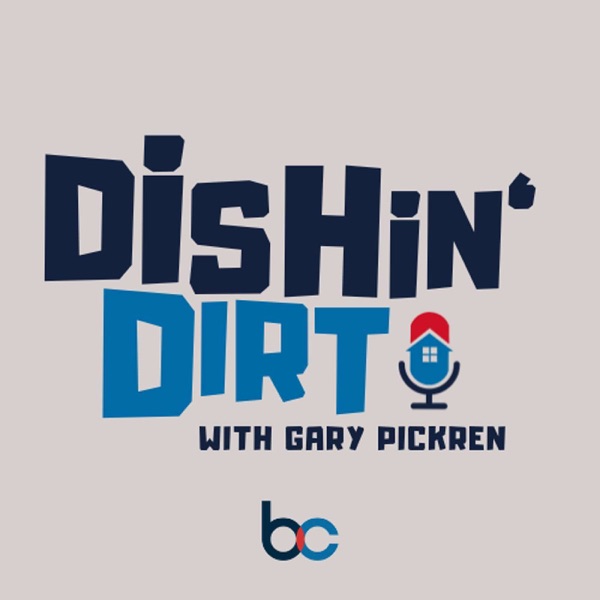
Dishin' Dirt with Gary Pickren
In the Award-Winning Dishin' Dirt with Gary Pickren, South Carolina Real Estate Commissioner/Attorney/Broker/Instructor- Gary Pickren discusses important, timely and relevant topics for South Carolina real estate agents. He covers topics such as the NAR Settlement, Clear Cooperation, agent compensation, "wholesaling", seller disclosure, video marketing, repair addendum, RESPA and much more. All topics are either related to real estate or agency law, marketing or real estate agent best practices.
Gary often interviews top real estate minds such as Leo Pareja (CEO-eXp), James Dwiggins (CEO-NextHome), Gary Gold, Krista Mashore, Jess Lenouvel, Jeff Lobb, Chelsea Peitz, Carl Medford and many more. Gary always tries to bring a touch of humor to each podcast. This is a podcast for every real estate agent in South Carolina regardless how long you have been in the business.
Winner of the American Land Title Association 2024 Webbie. Named #1 Best Podcast in South Carolina for Real Estate by FeedSpot and PlayerFM and #7 Best Podcast for REALTORS by MillionPodcast.com.
Disclaimer: Our site does not create an attorney-client relationship and it is not intended for detailed legal advice. We are licensed in South Carolina. Any result we achieve on a client’s behalf does not necessarily mean similar results for other clients. ***DISCLAIMER*** Gary serves on the South Carolina Real Estate Commission as a Commissioner. The opinions expressed herein are his opinions and are not necessarily the opinions of the SC Real Estate Commission. This podcast is not to be considered legal advice. Please consult an attorney in your jurisdiction for applicable legal advice germane to your issue. Copyright © Blair | Cato | Pickren | Casterline LLC – All Rights Reserved
- Episodes
- 307
- Releases
- Weekly
- Typical length
- 30 min
- On air since
- 2020
- Latest episode
- 6 days ago
Episodes
307 episodes, newest first
-
33 min
Compass vs. 9 MLSs: Real Estate Giants Unite Against Private Listings
Season 6, Episode 302
Show notes
Compass vs. the MLS: The Real Estate War Just Exploded!
The battle over who controls America's real estate listings just got a whole lot bigger — and what happens next could change the way homes are bought and sold in South Carolina and across the country.
Six major Multiple Listing Services (MLSs) have filed a federal lawsuit against Compass, and at least nine MLS organizations are now pushing back against Compass CEO Robert Reffkin's efforts to challenge MLS rules and expand private listing networks.
But that's not all.
Keller Williams, AGNT (parent company of eXp Realty and NextHome), HomeServices of America, and Real REMAX Group have announced a major new collaboration called Open Real Estate, supporting broader access to real estate listings.
Is this the beginning of an all-out war over who controls the housing market?
In this episode of Dishin' Dirt, South Carolina real estate attorney Gary Pickren breaks down the lawsuits, the competing business models, and the potentially enormous consequences for real estate agents, brokers, buyers, and sellers.
In this episode, we discuss:
• Why six MLSs joined forces to sue Compass.
• Why at least nine MLS organizations are challenging Compass's approach.
• What Robert Reffkin and Compass want to change about MLS rules.
• Why Keller Williams, eXp's parent company, HomeServices, and RE/MAX-related leadership are collaborating around open listing distribution.
• Whether private listing networks actually benefit sellers or primarily benefit large brokerages.
• How private listings could affect competition, home prices, and fair housing.
• Why South Carolina's Limited Market Exposure Guidance matters.
• Whether one national brokerage should be able to challenge the rules of an entire local MLS.
• What this battle could mean for independent real estate brokerages and fiduciary duties.PLUS: Four major national real estate developments in just ten days!
President Trump has signed a new housing affordability executive order, Senators Elizabeth Warren and Cory Booker have called for FTC scrutiny of three controversial real estate practices, MLS organizations are fighting Compass in federal court, and major national brokerages are joining forces around open listing distribution.
This episode kicks off a special Dishin' Dirt series leading up to Thanksgiving, examining the national developments that could reshape real estate in South Carolina.
THE BIG QUESTION: Should brokerages be allowed to publicly market homes while keeping them off the MLS? Is that seller choice, or does it threaten competition and consumer access to housing?
Tell us what you think in the comments!
Subscribe to Dishin' Dirt for straight talk about real estate law, industry news, commission practices, fiduciary duties, and the issues affecting real estate professionals.
Don't forget to like us and share us!
Gary* Gary serves on the South Carolina Real Estate Commission as a Commissioner. The opinions expressed herein are his opinions and are not necessarily the opinions of the SC Real Estate Commission. This podcast is not to be considered legal advice. Please consult an attorney in your area.
-
34 min
Gary Responds to His First Hate Mail
Season 6, Episode 301
Show notes
Gary Responds to His FIRST Hate Mail! | Real Estate Agents, Brokerages & the TRUTH
After 300 episodes of Dishin’ Dirt and five years of calling out questionable practices in the real estate industry, Gary Pickren has finally achieved something remarkable… HIS FIRST HATE MAIL! 😂
Well, technically, it was a Facebook post. But who's counting?
A South Carolina real estate agent recently accused Gary of throwing her brokerage under the bus and criticizing agents instead of helping them. There's just one problem: Gary never mentioned her brokerage.
So what happens when an attorney who has spent 31 years educating and defending real estate professionals gets accused of hurting the very industry he's trying to protect?
You get one of the funniest, most sarcastic, and most brutally honest episodes of Dishin’ Dirt yet!
In this episode, Gary responds to his first public critic and tackles some uncomfortable truths about the real estate industry:
🔥 Robert Reffkin, Compass & Anywhere: Why criticizing corporate leadership isn't the same as attacking individual agents or Brokerages.
🔥 The $1.78 Billion Commission Verdict: What happens when agents blindly trust the industry's claim that "we've always done it this way."
🔥 Brokerage Loyalty vs. Fiduciary Duty: Who comes first—your client or the company whose logo is on your business card?
🔥 Private Listings & Steering: Why questionable brokerage practices are attracting attention from federal lawmakers.
🔥 The Senate Is Watching: Why Senators Elizabeth Warren and Cory Booker are raising concerns about private listings and affiliated mortgage relationships.
🔥 When Your Broker Is Wrong: Why following company policy doesn't automatically protect your real estate license.
🔥 What Good Attorneys Actually Do: Is your closing attorney supposed to tell you what you want to hear—or what you NEED to hear?
And Gary addresses the statement that inspired this entire episode: Real estate attorneys should be "focusing on what's important."
Gary couldn't agree more.
What's important isn't keeping your brokerage happy. It's protecting your clients, your reputation, your livelihood, and your REAL ESTATE LICENSE.
This episode isn't about attacking agents or brokerages. It's about why the real estate industry desperately needs more people willing to tell uncomfortable truths—even when those truths make somebody angry.
And if you think Gary is talking about YOUR brokerage… well, you might want to ask yourself why. 😂
THE BOTTOM LINE: Your brokerage may sign your commission check, but your real estate license has YOUR name on it.
👇 JOIN THE CONVERSATION!
Have you ever disagreed with your broker's policies? Do you think industry leaders should be publicly criticized when their decisions put agents at risk? Is speaking uncomfortable truths helping the industry—or hurting it?
Drop your thoughts in the comments. Gary welcomes disagreement. Just make sure you actually listen to the episode first!
👍 LIKE this video if you believe agents deserve the truth.
🔔 SUBSCRIBE to Dishin’ Dirt for real estate law, industry news, and the conversations other people are afraid to have.
📤 SHARE this episode with an agent who needs to hear it!
ABOUT GARY PICKREN
Gary Pickren is a South Carolina real estate attorney, member of the South Carolina Real Estate Commission, ARELLO Certified Instructor, and host of Dishin’ Dirt. With more than 31 years of experience, Gary delivers real estate education, legal insights, and industry commentary without the corporate Kool-Aid.
Don't forget to like us and share us!
Gary* Gary serves on the South Carolina Real Estate Commission as a Commissioner. The opinions expressed herein are his opinions and are not necessarily the opinions of the SC Real Estate Commission. This podcast is not to be considered legal advice. Please consult an attorney in your area.
-
34 min
Compass vs. MLS: Robert Reffkin's Legal War Could Change Real Estate Forever
Season 6, Episode 300
Show notes
Compass CEO Robert Reffkin is taking on the MLS system—and California Regional MLS (CRMLS) just fought back with a federal lawsuit. But this battle could change how real estate is bought and sold across America.
Is this really about seller choice, or is Compass trying to force the entire real estate industry to operate under its preferred rules?
In this explosive episode of Dishin' Dirt, South Carolina real estate attorney Gary Pickren breaks down the escalating battle between Compass and California Regional MLS, including Reffkin's threats of antitrust lawsuits, his controversial appearance before MLS executives, and CRMLS's decision to take the fight to federal court.
But the bigger question is what happens if Compass wins.
Could one national brokerage force local MLS organizations across the country to change their cooperation rules—even when the other participating brokers disagree?
And could the consequences eventually reach South Carolina?
In this episode, we cover:
• Why Compass threatened California Regional MLS with antitrust litigation
• What happened when Robert Reffkin confronted MLS executives at a national conference
• Why CRMLS filed a federal lawsuit against Compass
• The controversy surrounding Compass private listings, office exclusives, and coming-soon marketing
• Why Compass wants greater control over how MLS data is distributed
• The potential contradiction between Compass's demands for listing freedom and its efforts to restrict certain uses of MLS data
• How a Compass victory could affect MLS organizations nationwide
• Why independent brokerages and smaller real estate companies should pay attention
• The potential consequences for buyers, sellers, competition, and listing transparency
• What South Carolina real estate agents need to understand about fiduciary duties and limited market exposureTHE BIG QUESTION:
If Robert Reffkin wants Compass to operate differently, that's his business. But should one brokerage be able to force every other broker's MLS to operate the way Compass wants?
This isn't just a California lawsuit. It's a battle over who controls real estate listings, who establishes the rules of cooperation, and whether the future of real estate will be an open cooperative marketplace or a collection of brokerage-controlled listing networks.
The outcome could affect every real estate professional in America.
What do YOU think?
Should Compass be allowed to publicly market listings outside the MLS while continuing to benefit from the listings other brokers contribute?
Or should MLS organizations be allowed to enforce reciprocal cooperation rules?
Tell me in the comments. I want to hear from agents, brokers, MLS executives, and consumers.
👍 LIKE this video if you believe real estate professionals need to understand this issue.
💬 COMMENT with your opinion on the Compass vs. MLS battle.
🔔 SUBSCRIBE for real estate legal analysis, industry controversies, South Carolina real estate law, and the issues shaping the future of real estate.
Gary's Series Before You Can Sign can be found here.
https://www.youtube.com/@SCPropertyEstateThis episode provides legal commentary and analysis. Allegations in pending litigation are disputed and have not been established by a final court ruling.
#Compass #RobertReffkin #CRMLS #RealEstateNews #RealEstateLaw #MLS #PrivateListings #DishinDirt #SouthCarolinaRealEstate
Don't forget to like us and share us!
Gary* Gary serves on the South Carolina Real Estate Commission as a Commissioner. The opinions expressed herein are his opinions and are not necessarily the opinions of the SC Real Estate Commission. This podcast is not to be considered legal advice. Please consult an attorney in your area.
-
28 min
Dumb $#!% Real Estate Agents Say — Part 2
Season 6, Episode 299
Show notes
Real estate agents say a lot of things with confidence. The problem is, confidence does not make something true.
In this episode of Dishin’ Dirt, Gary Pickren breaks down 10 of the dumbest, most dangerous, and most commonly repeated things real estate agents say—and explains why they can create legal problems, contract disputes, ethics issues, and bad outcomes for clients.
We cover:
• “It’s Coming Soon, so some buyers can see it but others can’t.”
• “You have to guarantee buyer-agent compensation.”
• “Our standard commission is…”
• “We terminated during due diligence, we just didn’t send the termination fee.”
• “Don’t send me the inspection report because I don’t want to know.”
• Why the argument for private exclusives gets harder to defend when most eventually end up on the MLS anyway.
• “I don’t know if the earnest money was ever deposited.”
• “The appraisal came in low, so the seller has to lower the price.”
• “The seller has to fix it because it’s not up to code.”
• And the classic: “Don’t worry about what the contract says. We do it this way all the time.”The common theme is simple: real estate professionals have to stop repeating bad information just because they heard another agent say it.
Read the contract. Know the law. Understand your agency duties. Explain the options. And when you do not know the answer, say, “I don’t know. Let me find out.”
That answer is a lot safer than confidently giving your client the wrong one.
If you are a real estate agent, broker, lender, closing attorney, buyer, or seller, this episode will help you understand the mistakes that can derail a transaction—and how to avoid them.
Subscribe to Dishin’ Dirt for more real estate law, contracts, risk management, industry news, and practical advice for real estate professionals.
Don't forget to like us and share us!
Gary* Gary serves on the South Carolina Real Estate Commission as a Commissioner. The opinions expressed herein are his opinions and are not necessarily the opinions of the SC Real Estate Commission. This podcast is not to be considered legal advice. Please consult an attorney in your area.
-
30 min
Fiduciary Duty: The Rule Real Estate Loves to Talk About—and Hates to Follow
Season 6, Episode 298
Show notes
Real estate agents talk constantly about fiduciary duty—loyalty, disclosure, reasonable care and putting the client's interests first.
But does the real estate industry actually practice what it teaches?
In this episode of Dishin' Dirt, Gary Pickren takes a hard look at the conflicts between fiduciary duty and the way real estate professionals actually make money.
The Sitzer/Burnett case was an antitrust case, but the compensation system it challenged raises a much bigger question: Was guaranteeing buyer-agent compensation really in the seller's best interest—or was it simply good for the industry?
And after Sitzer, have we really changed?
Gary examines:
• Broker-to-broker compensation and why South Carolina REALTORS changed its forms
• Whether compensation should be negotiated as part of the offer
• Private and office-exclusive listings
• The South Carolina Real Estate Commission's limited-market-exposure guidance
• Research comparing private listings with broadly marketed properties
• Why brokerages want to control listings and consumer data
• Dual agency and the financial incentive to capture both sides
• Steering, affiliated services and other everyday conflicts of interest
• Why getting a client's signature isn't necessarily informed consent
• Why "it's legal" isn't the same as "it's in my client's best interest"
• What the next generation of real estate litigation could look likeThroughout the episode, Gary proposes one simple test every real estate professional should use:
WHO BENEFITS?
And an even harder question:
If your compensation disappeared from the decision, would you give your client the exact same advice?
Because fiduciary duty isn't really tested when doing the right thing also makes you money.
It's tested when putting your client first costs you something.
If the real estate industry wants consumers to view agents as trusted advisors, this is a conversation we need to have.
🎙️ Dishin' Dirt with Gary Pickren
Subscribe for straight talk about South Carolina real estate law, agency, contracts, compensation, lawsuits, industry changes and the issues affecting real estate professionals and consumers.
Don't forget to like us and share us!
Gary* Gary serves on the South Carolina Real Estate Commission as a Commissioner. The opinions expressed herein are his opinions and are not necessarily the opinions of the SC Real Estate Commission. This podcast is not to be considered legal advice. Please consult an attorney in your area.
-
26 min
Your Fiduciary Duty Does NOT Mean You Work for Free
Season 5, Episode 297
Show notes
Your fiduciary duty does NOT mean you work for free.
Real estate agents hear it constantly: Your client's interests come first. That's absolutely true—but somewhere along the way, some agents began interpreting fiduciary duty to mean they must give up their commission, contribute money to save a deal, or surrender the contractual rights they negotiated with their client.
That's not what fiduciary duty means.
In this episode of Dishin' Dirt, real estate attorney Gary Pickren breaks down the other side of an agent's fiduciary obligations: your right to protect yourself and get paid for the work you perform.
We discuss:
• Why fiduciary duty is not "financial martyrdom"
• Why your commission is NOT the transaction's emergency fund
• Whether agents are obligated to cut their commission to save a deal
• Buyer agency agreements and compensation shortfalls
• The difference between protecting your commission and putting your interests ahead of your client
• When compensation concerns can become a fiduciary problem
• What happens when a seller changes their mind after you've done the work
• Why your agency agreement is a two-way contract
• How South Carolina agents can protect their compensation without violating their duties to their clientsThe bottom line is simple:
Your compensation can never come before your fiduciary duty—but your fiduciary duty does not mean you work for free.
If you're a real estate agent, broker, BIC, or anyone dealing with today's changing commission and buyer-agency environment, this is an episode you need to hear.
👍 Like the video if you find it helpful.
💬 Comment below: Have you ever been asked to give up part of your commission to save a deal?
🔔 Subscribe to Dishin' Dirt for more real estate law, contracts, agency, risk management, and industry news affecting real estate professionals.BEFORE YOU SIGN AND OTHER VIDEOS
South Carolina Property & Estate - YouTube
Don't forget to like us and share us!
Gary* Gary serves on the South Carolina Real Estate Commission as a Commissioner. The opinions expressed herein are his opinions and are not necessarily the opinions of the SC Real Estate Commission. This podcast is not to be considered legal advice. Please consult an attorney in your area.
-
32 min
AI Is About to Change How Buyers Find Homes — And Real Estate Agents
Season 5, Episode 296
Show notes
The future of real estate search may not belong to Zillow, Realtor.com, Compass, or any brokerage portal.
It may belong to AI.
Buyers are increasingly moving toward a world where they can simply tell ChatGPT, Google AI, Gemini, or another AI assistant exactly what they want:
“Find me the five best homes for my family, my budget, my commute, and my lifestyle.”
And then comes the question every real estate agent should be thinking about:
“Who is the best agent to help me buy one of these homes?”
In this episode of Dishin’ Dirt, Gary Pickren explores why the real estate industry may be spending millions of dollars fighting over portals while artificial intelligence is quietly changing the entire way consumers search for homes, compare properties, research neighborhoods, and ultimately choose a real estate agent.
Google itself is moving from traditional search results toward AI-generated answers. Zillow is already embracing conversational AI. The consumer journey is changing fast.
So what does that mean for Realtors?
It means the future may not be about getting more website clicks.
It may be about making sure AI understands who you are, what market you serve, and why you are an expert.
In this episode:
• Why AI could become the new front door to real estate search
• Why traditional real estate portals may lose influence
• How Google AI is changing the way consumers search
• Why Zillow is already preparing for the AI era
• How AI may narrow hundreds of listings down to the best few
• Why agents will still be essential to the real estate transaction
• How AI could determine which agents get recommended to consumers
• Why Answer Engine Optimization, or AEO, matters
• Why generic real estate content will not be enough
• How hyperlocal expertise can help agents stand out
• Why YouTube, reviews, websites, articles, and original content matter more than ever
• What agents should be doing now to position themselves for AI searchThe biggest marketing question for Realtors may soon change from:
“Where do I rank on Google?”
to:
“When AI is asked who the expert is, does it say my name?”
The agents who win the next era of real estate may not be the ones who spend the most money buying leads.
They may be the ones who become the most trusted answer.
Stop trying to own the search. Become the answer.
CLICK FOR THE BEFORE YOU SIGN SERIES
Don't Sign a Buyer's Real Estate Agent Agreement Until You Watch This | South Carolina
Subscribe to Dishin’ Dirt for more discussions on real estate law, technology, artificial intelligence, brokerage trends, marketing, and the issues shaping the future of the real estate industry.
#RealEstate #ArtificialIntelligence #AI #Realtor #RealEstateAgent #ChatGPT #Zillow #GoogleAI #RealEstateMarketing #RealEstateTechnology #AEO #FutureOfRealEstate
Don't forget to like us and share us!
Gary* Gary serves on the South Carolina Real Estate Commission as a Commissioner. The opinions expressed herein are his opinions and are not necessarily the opinions of the SC Real Estate Commission. This podcast is not to be considered legal advice. Please consult an attorney in your area.
-
28 min
Who Private Listings Are Really For - Seller or Brokerage? SC Private Listing Rules Part 3.
Season 5, Episode 296
Show notes
Private Listings: The Hidden Complaint Trap Real Estate Agents Miss
Private listings can create the complaint that comes back months later and hits the hardest—when a seller sees a nearby house sell for far more and starts asking why their home was never fully exposed to the market.
If you work in South Carolina real estate, this episode breaks down why that scenario is such a legal and licensing danger, and what the Commission’s guidance actually means for your file, your disclosures, and your license.
Gary Pickren digs into the real risk behind limited-market-exposure listings: not whether the sale closes, but whether the seller truly understood the trade-offs. A higher neighboring sale does not automatically prove harm, but it can spark a grievance, a deposition, or a lawsuit if the documentation is thin and the explanation sounds more like company policy than seller-specific judgment.
What You’ll Learn
Why a private listing can seem fine at closing and still become a major complaint later
• How the South Carolina Real Estate Commission views private listings, fiduciary duty, and conflicts of interest
• Why a private listing can seem fine at closing and still become a major complaint later
• The difference between a seller-driven decision and a brokerage-driven business strategy
• What should be included in your file so it tells the story when memory fails
• Why a seller’s signature is not enough without a real conversation about risks, exposure, and alternatives
• How agents and brokers can better document the seller’s objectives and informed decision
• Why patterns across an office may matter more than any single transaction
• How plaintiff’s attorneys may use private-listing guidance in a future complaint or lawsuitChapter Timeline
• 00:00 — Private Listings: The Risk of Seller Complaints
• 02:13 — Welcome and Firm Updates
• 03:21 — Introducing the Before You Sign Video Series
• 04:24 — Why Documentation Matters
• 06:28 — Conflicts of Interest and Civil Liability
• 08:41 — When Private Listings Become a Brokerage Strategy
• 15:01 — Five Practical Steps for Real Estate Agents
• 18:48 — Five Responsibilities for Brokers-in-Charge
• 22:33 — What the Commission Guidance Does—and Doesn’t—Say
• 23:40 — The Core Principle: Put the Seller First
• 27:34 — Final Takeaway and ClosingGary also explains practical steps for agents and brokers in charge, including how to identify the seller’s true objective, how to use the commission form as a conversation guide rather than a signature page, and why the license on the line is yours—not your broker’s or your company’s.
Don't forget to like us and share us!
Gary* Gary serves on the South Carolina Real Estate Commission as a Commissioner. The opinions expressed herein are his opinions and are not necessarily the opinions of the SC Real Estate Commission. This podcast is not to be considered legal advice. Please consult an attorney in your area.
-
32 min
How Limited Exposure Can Lower Price, Terms, and Buyer Competition. SC New Private Listing Rules- Part 2
Season 5, Episode 295
Show notes
Private listings might sound exclusive, but South Carolina’s Real Estate Commission is spelling out exactly what sellers may be giving up - fewer buyers, fewer offers, weaker terms, and a longer path to closing.
I will break down the new commission-approved disclosure form line by line and explains why it could change how brokers talk about limited market exposure forever. I will also walk through the 11 seller acknowledgments in the “Residential Disclosure and Acknowledgement of Limited Market Exposure Listing,” highlighting the ones that should make every agent, broker-in-charge, and seller stop and think. I will unpack the economics behind exposure, why competition drives value, and how “exclusive” can quickly become a liability when the goal is to get the best result for the seller. You'll discover:
- why limiting exposure can suppress buyer demand before a property ever reaches the public market
-how fewer offers can mean not just lower price, but worse contingencies, timing, and financing terms
-why “days on market” can be misstated when a listing sits privately before going public
-the representation conflict that arises when a brokerage keeps more business inside its own ecosystem
-how private inventory can distort comparable sales and affect future valuations
-why fair housing concerns may be the biggest legal issue of all when access is controlled through private networks
I will also explain why the broker-in-charge’s signature matters, what a real compliance process should look like, and why blanket “private first” strategies are exactly what the Commission seems to be warning against. If your brokerage uses pocket listings, limited exposure marketing, or internal-only inventory, this episode is essential listening before the next disclosure lands on your desk.
Chapters
• 00:00 — Limited Exposure Listings: What They Are
• 02:22 — Welcome & Blair Cato Updates
• 03:28 — Seller Request vs. Agent Recommendation
• 04:00 — The New Limited Market Exposure Disclosure
• 05:10 — Why Exposure Drives Competition
• 07:25 — Fewer Offers, Lower Leverage
• 09:02 — Price, Terms & Lost Opportunities
• 10:04 — The Risk of Delayed Public Marketing
• 12:16 — Representation Conflicts
• 13:20 — How Private Sales Affect Comparable Values
• 15:00 — Fair Housing & Equal Access
• 20:24 — Seller Privacy Doesn’t Override Fair Housing
• 21:28 — What Brokers-in-Charge Need to Review
• 25:13 — Documenting the Seller’s Decision
• 25:47 — Why Blanket Private-Listing Policies Are Risky
• 27:29 — Incentives, Claims & Agent Training
• 29:44 — Supervision and the Broker’s Responsibility
• 31:28 — Next Week: The Public-Market ComparisonDon't forget to like us and share us!
Gary* Gary serves on the South Carolina Real Estate Commission as a Commissioner. The opinions expressed herein are his opinions and are not necessarily the opinions of the SC Real Estate Commission. This podcast is not to be considered legal advice. Please consult an attorney in your area.
-
30 min
South Carolina’s New Private Listing Rules: What Every Real Estate Agent Needs to Know
Season 5, Episode 294
Show notes
The South Carolina Real Estate Commission has issued important new guidance on private listings, office exclusives, off-MLS listings, and other forms of limited market exposure—and every South Carolina real estate agent and Broker-in-Charge needs to understand what it means.
In this episode of Dishin’ Dirt, Gary Pickren breaks down the Commission’s new Seller-Directed Limited Residential Market Exposure Guidance and explains why this is about much more than simply whether a seller can choose to keep a property off the MLS.
Private listings are still legal in South Carolina. But the Commission has made an important distinction: when a real estate licensee recommends limited market exposure, the licensee should be prepared to demonstrate why that recommendation was in the seller’s best interests—not primarily the interests of the agent or brokerage.
In Part 1, we discuss:
• What the SC Real Estate Commission actually said—and what it did not say
• Why broad public marketing remains the Commission’s general starting point
• The difference between a seller requesting a private listing and an agent recommending one
• Why simply getting the seller to sign a disclosure may not be enough
• The fiduciary-duty issues agents need to understand
• The potential conflict when limited exposure increases the opportunity to keep both sides of a transaction within the same brokerage
• Why agents should be able to explain exactly how limited exposure benefits the individual seller
• The Commission’s warning about using limited-market listings as part of a brokerage business strategy
• Why the new Commission-approved form specifically asks whose idea the private listing wasThe key question coming out of this new guidance may be surprisingly simple:
Who is the private listing really benefiting—the seller, the agent, or the brokerage?
If an individual seller wants privacy and understands the tradeoffs, that is one thing. But if a brokerage or agent introduces a private-listing strategy, the analysis may be very different.
This episode is especially important for South Carolina REALTORS®, real estate agents, Brokers-in-Charge, brokerage owners, team leaders, and anyone involved with private or off-MLS listings.
📌 This is Part 1 of our discussion. In Part 2, we’ll dig into the Commission’s new disclosure form, fair housing concerns, the BIC’s role, brokerage private-listing strategies, and what could happen when a seller later questions whether limited exposure cost them money.
Don't forget to like us and share us!
Gary* Gary serves on the South Carolina Real Estate Commission as a Commissioner. The opinions expressed herein are his opinions and are not necessarily the opinions of the SC Real Estate Commission. This podcast is not to be considered legal advice. Please consult an attorney in your area.
-
29 min
New Condo Lending Rules: Why Your Buyer Can Qualify But the Condo Doesn’t
Season 5, Episode 293
Show notes
🚨 New Condo Lending Rules: What REALTORS®, Buyers & Sellers Need to Know
Big changes to Fannie Mae and Freddie Mac condo lending rules are here—and they could determine whether a buyer can get financing on a condominium even when the buyer is otherwise perfectly qualified.
In this episode of Dishin’ Dirt, I break down the new 2026–2027 condo financing requirements and explain why REALTORS®, condo owners, buyers, sellers, and HOA boards need to start paying much closer attention to the financial and physical condition of the condominium association.
A buyer may have excellent credit, strong income, and a conventional loan preapproval—and still have a financing problem because the condo project itself doesn't qualify.
We discuss:
🏢 Why lenders are underwriting the entire condo project, not just the buyer
💰 The new 15% HOA replacement-reserve requirement coming January 4, 2027
📊 How the increase from 10% to 15% could affect HOA budgets and dues
📋 Why reserve studies are becoming increasingly important
⚠️ How deferred maintenance and critical repairs can affect condo financing
💵 What a special assessment really means for a buyer's loan
🏗️ Why structural and engineering reports can become important underwriting documents
🏦 The retirement of Fannie Mae's Limited Review and Freddie Mac's Streamlined Review
🏠 Why certain small 2–10 unit condo projects may receive more favorable review treatment
🛡️ How an HOA's master insurance policy can create financing problems
✅ What listing agents should investigate before putting a condo on the market
✅ What buyer's agents should ask the lender before their client spends thousands of dollars on the transaction
We also bust some of the biggest myths surrounding the new rules, including:
❌ “Every HOA has to have 15% cash in the bank.”
❌ “My buyer is preapproved, so the condo financing is fine.”
❌ “Someone got a conventional loan here six months ago, so we're good.”
❌ “A special assessment automatically kills the loan.”
❌ “The HOA has a reserve study, so there can't be a problem.”
The biggest takeaway?
There are now two questions every REALTOR® should be asking in a condo transaction:
Does the buyer qualify?
And does the condo qualify?
An 800 credit score can't fix an underfunded HOA, unresolved critical repairs, or an association that doesn't satisfy applicable conventional lending requirements.
If you sell condos, represent condo buyers, serve on an HOA board, or own a condominium in South Carolina, this is an episode you need to hear.
Subscribe for more discussions about South Carolina real estate law, contracts, closings, lending, and the issues affecting REALTORS®, buyers, and sellers.
#CondoLending #CondoFinancing #FannieMae #FreddieMac #HOA #HOAReserves #CondoRules #RealEstate #Realtor #SouthCarolinaRealEstate #Mortgage #ConventionalLoan #CondoAssociation #RealEstateAgent #DishinDirt
Don't forget to like us and share us!
Gary* Gary serves on the South Carolina Real Estate Commission as a Commissioner. The opinions expressed herein are his opinions and are not necessarily the opinions of the SC Real Estate Commission. This podcast is not to be considered legal advice. Please consult an attorney in your area.
-
31 min
The New Rules for Stopping AI Real Estate Fraud
Season 5, Episode 292
Show notes
AI is making real estate faster, smarter, and easier to scale - but it's also making fraud cheaper, faster, and more convincing. The agents and brokerages that win next may not be the ones using the most AI, but the ones consumers trust with their money.
Gary Pickren lays out the new reality real estate professionals are walking into, where fabricated emails, cloned voices, manipulated documents, and AI-generated video can all be used to fool buyers, sellers, and even seasoned teams. The upside is real. So is the risk.
You'll hear how AI is already improving marketing, communication, research, contract review, scheduling, and transaction management, while simultaneously raising the stakes around identity, verification, and client protection. The conversation centers on a critical shift: technology can accelerate your business, but trust is what will separate the companies people choose.
You’ll discover why deception is becoming more accessible than ever, what that means for real estate operations, and how forward-thinking firms can build systems that protect clients before a problem happens. Gary also explains why confidence alone is no longer enough - modern consumers want proof that you have safeguards in place.
If you work in real estate, lead a brokerage, or care about how AI is reshaping high-trust industries, this is essential listening. It’s a wake-up call about the future of the business and a reminder that in an AI world, trust is becoming the ultimate competitive advantage.
You'll learn about:
• The difference between fraud detection and fraud-resistant design
• Why "recognition is not authentication"
• The Transaction Trust Ceremony
• Transaction verification passphrases
• The Two-Channel Rule
• Why financial instructions should never change by email alone
• Protecting employees from AI-powered social engineering
• Protecting your digital identity
• Creating a Zero-Trust Closing
• The S.T.O.P. fraud-prevention framework
• Five changes REALTORS® can make immediately
• Risk-tiering transactions for attorneys, lenders and title companiesAnd remember the simplest rule from this episode:
MONEY MOVES = TWO CHANNELS.
If money is moving or financial instructions suddenly change, stop and independently verify before acting.
If this episode could protect one agent, buyer, seller, lender or closing professional from fraud, share it with someone in the industry.
#RealEstate #ArtificialIntelligence #AIFraud #RealEstateFraud #WireFraud #Cybersecurity #Realtor #RealEstateAgent #ClosingAttorney #MortgageFraud #Deepfake #RealEstateTechnology #DishinDirt
Don't forget to like us and share us!
Gary* Gary serves on the South Carolina Real Estate Commission as a Commissioner. The opinions expressed herein are his opinions and are not necessarily the opinions of the SC Real Estate Commission. This podcast is not to be considered legal advice. Please consult an attorney in your area.
-
29 min
The Next Generation of Real Estate Fraud: The 10 AI Scams Every Realtor Needs to Know
Season 5, Episode 291
Show notes
Is AI about to create the biggest wave of real estate fraud we've ever seen?
Most real estate professionals are still worried about wire fraud. But that's yesterday's scam.
In this episode of Dishin' Dirt, I explore how artificial intelligence is changing the criminal playbook—and why every REALTOR®, broker, lender, closing attorney, title company, appraiser, home inspector, and homebuyer needs to rethink how they verify information.
From deepfake phone calls and cloned voices to fake sellers, AI-generated documents, QR code wire scams, synthetic identities, and the frightening possibility of AI Transaction Hijacking, this episode examines where the industry is headed and what professionals can do now to protect themselves and their clients.
Topics include:
• AI seller impersonation and vacant land fraud
• QR code wire fraud and business email compromise
• Deepfake calls from "closing attorneys" and lenders
• Social media account hijacking
• Fake proof-of-funds letters
• Recovery scams targeting previous victims
• Remote online notarization fraud
• Rental listing scams
• AI-generated appraisal and inspection fraud
• Builder incentive fraud and fiduciary risks
• Synthetic identity mortgage fraud
• AI Transaction Hijacking—the next generation of real estate crimeChapters
00:00 Introduction to AI-driven real estate fraud threats
02:02 How AI enhances traditional real estate scams
03:49 Impersonation of sellers and fake IDs
07:14 QR code wire fraud and its dangers
09:58 Voice cloning and social media hijacking
14:05 Manipulation of appraisal and inspection reports
19:12 Synthetic identities and mortgage fraud
24:53 AI transaction hijacking and future risksWhether you're a real estate agent, attorney, lender, appraiser, inspector, or consumer, this episode will change the way you think about trust in a real estate transaction.
👍 If you found this episode helpful, please Like, Subscribe, and Share it with your brokerage, office, and colleagues. The more informed our industry becomes, the harder it is for criminals to succeed.
#RealEstate #ArtificialIntelligence #AI #CyberSecurity #WireFraud #RealEstateFraud #Realtor #TitleInsurance #ClosingAttorney #Mortgage #HomeBuying #HomeSelling #PropTech #RealEstateTechnology #DishinDirt
Don't forget to like us and share us!
Gary* Gary serves on the South Carolina Real Estate Commission as a Commissioner. The opinions expressed herein are his opinions and are not necessarily the opinions of the SC Real Estate Commission. This podcast is not to be considered legal advice. Please consult an attorney in your area.
-
30 min
Congress vs. Compass: Is Reffkin's Private Listing Strategy About to Change Real Estate Forever?
Season 5, Episode 290
Show notes
The battle over private listings, office exclusives, MLS access, and who controls real estate inventory has officially reached Washington.
In this episode I examine why Congress has launched an inquiry into Compass CEO Robert Reffkin and MRED, and why this investigation could reshape the future of residential real estate.
For more than a year, I have argued that the biggest issue facing the real estate industry isn't commissions, buyer agency, or artificial intelligence—it's who controls the inventory. Now the House Judiciary Committee is asking many of the same questions.
This episode explains what the July 22 congressional letters actually say, why Congress is interested in Compass' private listing strategy, and what it could mean for REALTORS®, brokers, MLSs, Zillow, Homes.com, Rocket, Redfin, buyers, sellers, title companies, lenders, and consumers.
You'll also learn why this debate extends far beyond Compass and private listings. This is really about data ownership, vertical integration, competition, consumer choice, fair housing, antitrust law, and the future of the real estate marketplace.
• Why Congress is investigating Compass and MRED
• Robert Reffkin's three-phase marketing strategy
• Why inventory—not commissions—is the industry's most valuable asset
• The battle between Compass, Zillow, MLSs and portals
• How private listings affect competition
• Fair Housing concerns
• Antitrust implications
• Why data is becoming more valuable than commissions
• Vertical integration and why everyone wants to own the consumer relationship
• What this means for REALTORS®, brokers and consumers
• Four possible outcomes from the Congressional inquiryCHAPTERS
00:00 I Told You So
01:35 Congress Enters the Real Estate Fight
03:56 Why This Matters
04:44 How We Got Here
06:15 Compass' Private Listing Strategy
08:40 Zillow, MLSs & Consumer Groups Push Back
10:10 What Jim Jordan's Letter Really Says
13:20 Why Congress is Looking at Competition
15:35 Steering, Incentives & Vertical Integration
18:00 Is This Really About Data?
22:40 What It Means for South Carolina
26:40 Four Possible Outcomes
29:30 The Future of Real Estate
32:55 Final Thoughts
34:30 ClosingWhether you agree with Compass or not, this investigation has the potential to influence how homes are marketed for years to come.
If you're a REALTOR®, broker, attorney, lender, title professional, appraiser, or anyone involved in residential real estate, this is an episode you cannot afford to miss.
What do YOU think?
Should sellers have the unrestricted right to market homes privately?
Or should every consumer have equal access to every available home?Leave your opinion below.
👍 If you enjoyed this episode:
✔ Subscribe to Dishin' Dirt
✔ Like this video
✔ Share it with another real estate professional
✔ Turn on notifications so you never miss an episodeDon't forget to like us and share us!
Gary* Gary serves on the South Carolina Real Estate Commission as a Commissioner. The opinions expressed herein are his opinions and are not necessarily the opinions of the SC Real Estate Commission. This podcast is not to be considered legal advice. Please consult an attorney in your area.
-
32 min
NAR's New Office Exclusive Guidance: Every REALTOR® Needs to Read This
Season 5, Episode 289
Show notes
Should every home be listed on the MLS? Or are office exclusive listings actually in the seller's best interest?
The battle over private listings, office exclusives, and Clear Cooperation has become the biggest controversy in residential real estate. Compass, Zillow, Redfin, Homes.com, and the National Association of REALTORS® are all at the center of a debate that could fundamentally change how homes are bought and sold in America.
In this episode of Dishin' Dirt, I take a deep dive into NAR's newly released Office Exclusive & Pre-Marketing Guidance and explain what every REALTOR®, broker, and seller needs to know.
This isn't another opinion piece. It's a practical walkthrough of what NAR's guidance actually says—and what it means for your fiduciary duties to your clients.
I will explain:
• Why NAR issued this guidance now
• The difference between Office Exclusives, Coming Soon, and Pre-Marketing
• When an office exclusive may truly be in a seller's best interest
• The broker's fiduciary duties under Article 1 of the REALTOR® Code of Ethics
• Required seller disclosures and informed consent
• One-to-one broker communications and Clear Cooperation compliance
• Why NAR devoted an entire section to defending the MLS
• The real question every listing broker should ask before recommending an office exclusive
• How South Carolina's recent guidance aligns with NAR's national position
• Why transparency—not technology—is the real issue shaping the future of real estateWhether you're a REALTOR®, broker, attorney, MLS executive, appraiser, or simply interested in the future of residential real estate, this episode will help you understand one of the most important industry issues of 2026.
Do office exclusives protect sellers—or do they reduce transparency and competition? Listen and decide for yourself.
👍 If you enjoyed this episode, please Like, Subscribe, and Share it with another real estate professional. Your support helps us continue bringing practical legal and industry insights every week.
Don't forget to like us and share us!
Gary* Gary serves on the South Carolina Real Estate Commission as a Commissioner. The opinions expressed herein are his opinions and are not necessarily the opinions of the SC Real Estate Commission. This podcast is not to be considered legal advice. Please consult an attorney in your area.
-
29 min
Have We Confused a Housing Shortage with a Homeownership Crisis?
Season 5, Episode 288
Show notes
🏘️ Is Congress Solving the Housing Crisis… or the Wrong Problem?
Everyone agrees America has a housing problem.
But what if we've been asking the wrong question?
Congress has passed one of the most significant housing bills in decades with the goal of making housing more affordable. Supporters say we need to build more homes, increase housing density, and reform local zoning laws to address the nation's housing shortage.
But does that solution fit South Carolina?
In this episode of Dishin' Dirt, I will take a non-political, fact-based look at what the new housing legislation actually does—and asks whether the real issue is a lack of housing or a growing homeownership affordability crisis.
You'll learn:
✅ What's actually in the new federal housing bill
✅ Why zoning has traditionally been a local government issue
✅ How Washington may influence future development through federal incentives
✅ The pros and cons of higher-density housing
✅ Whether roads, schools, water, and sewer systems can support continued growth
✅ Who really pays for new development
✅ Why builders across South Carolina are cutting prices, buying down mortgage rates, and offering huge incentives
✅ Does South Carolina really have a housing shortage?
✅ Is the housing crisis primarily a Northeast and West Coast problem?
✅ Why affordability—not inventory—may be the biggest challenge facing today's homebuyers
✅ The difference between a housing shortage and a homeownership shortageThe question that changes everything:
👉 Have we confused a housing shortage with a homeownership shortage?
Watch the episode and decide for yourself.
👇 Join the conversation in the comments:
• Does South Carolina actually have a housing shortage?
• Should local governments—or Washington—have more influence over zoning and development?
• Is affordability a bigger problem than inventory?If you enjoy educational real estate content that goes beyond the headlines, be sure to LIKE, SUBSCRIBE, and SHARE this episode.
Don't forget to like us and share us!
Gary* Gary serves on the South Carolina Real Estate Commission as a Commissioner. The opinions expressed herein are his opinions and are not necessarily the opinions of the SC Real Estate Commission. This podcast is not to be considered legal advice. Please consult an attorney in your area.
-
29 min
The Housing Bill Nobody Is Talking About
Season 5, Episode 277
Show notes
What if we've been asking the wrong question about America's housing crisis?
Congress has passed one of the most significant housing bills in decades, with the stated goal of making housing more affordable by encouraging more construction, higher-density development, and changes to local zoning policies. But is building more homes really the solution?
In this episode of Dishin' Dirt, I take a non-political, fact-based look at what the legislation actually does, how it could influence local communities, and why every homeowner, REALTOR®, builder, and buyer should understand the issues.
Topics include:
• What is actually in the new federal housing bill
• Why zoning has traditionally been controlled by local governments
• How federal incentives could influence future development
• The debate over higher-density housing and neighborhood character
• Infrastructure, traffic, schools, and who pays for growth
• Does South Carolina really have a housing shortage?
• Are housing shortages different in the South than in the Northeast and West Coast?
• Why builders across South Carolina are offering incentives, rate buydowns, and price reductions
• The difference between a housing shortage and a homeownership affordability crisis
• The one question every policymaker, REALTOR®, and homeowner should be askingWhether you support the legislation or have concerns about its long-term impact, this episode is designed to educate—not advocate. I will explore both sides of the debate while challenging listeners to think critically about the future of housing, property rights, local control, and the American Dream of homeownership.
What do you think?
Does South Carolina actually have a housing shortage?
Should zoning decisions remain local, or should the federal government play a larger role in encouraging housing development?
And most importantly...
Have we confused a housing shortage with a homeownership crisis?
Share your thoughts in the comments—we'd love to hear from you.
👍 If you enjoyed this episode, please Like, Subscribe, and Share it with another real estate professional or homeowner interested in the future of housing.
🎙️ Dishin' Dirt with Gary Pickren brings you practical insights into real estate law, housing policy, industry trends, and the issues shaping the future of real estate in South Carolina and across the country.
Don't forget to like us and share us!
Gary* Gary serves on the South Carolina Real Estate Commission as a Commissioner. The opinions expressed herein are his opinions and are not necessarily the opinions of the SC Real Estate Commission. This podcast is not to be considered legal advice. Please consult an attorney in your area.
-
27 min
The Next Real Estate Lawsuit: Are Administrative Fees the Industry's Next Target?
Season 5, Episode 276
Show notes
Are real estate administrative fees the next major lawsuit facing the industry?
A new lawsuit against Compass in Florida is raising serious questions about transaction fees, administrative fees, brokerage fees, and transparency. Could this be the next legal battleground after the NAR settlement and Sitzer/Burnett?
In this episode of Dishin' Dirt, I take a deep dive into one of the most overlooked charges in residential real estate—the administrative fee. Is it truly reimbursement for administrative costs, or is it simply additional brokerage compensation? More importantly, how might courts, regulators, juries, and consumers view these fees in today's environment of increased transparency?
You'll learn:
• Why the new Compass lawsuit could impact the entire real estate industry
• The legal theories plaintiffs are using to challenge administrative fees
• The difference between commissions, transaction fees, and administrative fees
• How fiduciary duty and transparency affect brokerage pricing
• Whether separate fees could create advertising or disclosure issues
• What South Carolina law says about honesty and misrepresentation in real estate
• Questions every broker should ask before charging an administrative fee
• Practical risk management strategies to help reduce future litigationWhether you're a REALTOR®, broker, attorney, team leader, or real estate professional, this episode will challenge you to think differently about how fees are disclosed, explained, and perceived by consumers.
The goal of this episode is not to criticize any brokerage or suggest that administrative fees are unlawful. Instead, it's to explore the important legal, ethical, and business questions every brokerage should be asking in an industry where transparency has never mattered more.
If you enjoy educational real estate content that goes beyond the headlines, be sure to subscribe, like, and share this episode with your office. New episodes of Dishin' Dirt explore the biggest legal, business, and technology issues shaping the future of real estate.
Chapters
00:00 Understanding Administrative Fees in Real Estate
02:11 The Legal Landscape of Transaction Fees
05:02 The Importance of Transparency in Real Estate
11:02 Consumer Expectations and Fee Structures
18:48 The Role of Fiduciary Duty in Fee Disclosure
26:02 Looking Ahead: The Future of Administrative FeesDon't forget to like us and share us!
Gary* Gary serves on the South Carolina Real Estate Commission as a Commissioner. The opinions expressed herein are his opinions and are not necessarily the opinions of the SC Real Estate Commission. This podcast is not to be considered legal advice. Please consult an attorney in your area.
-
27 min
Google Doesn't Need Zillow Anymore. How AI Is About to Change Real Estate Forever
Season 5, Episode 275
Show notes
Is Google about to change real estate forever?
For years, Zillow, Realtor.com, Homes.com, and brokerage websites have dominated the home search experience. But what happens when Google stops being a search engine and starts becoming an AI-powered real estate advisor?
In this episode, we explore one of the biggest "what if" scenarios in real estate: What if Google bought Zillow? More importantly, does Google even need Zillow anymore?
We dive into Google's AI platform NotebookLM, how artificial intelligence is transforming online search, and why many experts believe the future of the internet is moving from "search results" to direct answers. If buyers can simply ask AI where to live, what house to buy, which neighborhood fits their lifestyle, and which agent to hire, what happens to Zillow, Realtor.com, brokerages, and traditional lead generation?
In this episode we discuss:
• What Google NotebookLM is and why it matters
• How AI is changing the future of search
• Why Google may be entering the real estate business
• Whether Google could realistically acquire Zillow
• How a Google-Zillow combination would impact agents and brokerages
• What happens to Realtor.com, Homes.com, and other portals
• The future of lead generation and online marketing
• Whether federal regulators would block a Google-Zillow merger on antitrust grounds
• Why the biggest threat may not be AI replacing agents—but AI replacing portalsWhether you're a real estate agent, broker, lender, investor, or simply curious about the future of technology and housing, this conversation will help you understand where the industry may be headed next.
What do you think? Will Google eventually become the dominant platform in real estate? Let us know in the comments.
Don't forget to like us and share us!
Gary* Gary serves on the South Carolina Real Estate Commission as a Commissioner. The opinions expressed herein are his opinions and are not necessarily the opinions of the SC Real Estate Commission. This podcast is not to be considered legal advice. Please consult an attorney in your area.
-
26 min
The Biggest Appraisal Change in 15 Years: What Every Realtor Needs to Know About UAD 3.6
Season 5, Episode 274
Show notes
Most Realtors have never heard of UAD 3.6—but it may be the biggest change to residential appraisal reporting in the last 15 years.
In this episode of Dishin' Dirt, Gary Pickren breaks down what UAD 3.6 is, why Fannie Mae and Freddie Mac are completely redesigning the appraisal reporting process, and what it means for Realtors, buyers, sellers, lenders, and appraisers.
More importantly, Gary explains what agents need to do right now to better prepare listings, communicate value, and stay ahead of a rapidly changing real estate industry.
You'll learn:
✅ What UAD 3.6 actually is
✅ Why appraisal forms are being replaced
✅ How appraisal reporting is moving from forms to data
✅ Whether UAD 3.6 will affect home values
✅ How AI and technology are changing the appraisal industry
✅ The biggest mistakes Realtors will make regarding UAD 3.6
✅ How to create better appraisal packages
✅ Why documenting upgrades and property features matters more than ever
✅ How South Carolina Realtors can use these changes to better serve their clients
Chapters
00:00 Introduction to UAD 3.6 and its industry significance
01:51 Historical context: Appraisal reporting since 2008
03:45 The shift from forms to data in real estate
05:36 How AI and technology are transforming appraisals
07:25 What changes with UAD 3.6: Standardized data collection
09:21 Implications for appraisers and real estate agents
11:38 Will UAD 3.6 affect home values?
13:30 Common myths about UAD 3.6 and industry misconceptions
15:22 Practical steps for real estate agents to adapt
17:16 How to read and interpret appraisal reports
19:30 Preparing clients and documentation for appraisal success
21:25 Predictions for the future of appraisal technology
23:16 Key takeaways and industry outlookWhether you're a Realtor, broker, lender, appraiser, closing attorney, investor, or simply interested in the future of real estate, this episode will help you understand one of the most significant industry changes currently underway.
🔔 Subscribe for more real estate law, brokerage, and industry updates.
📍 Hosted by Gary Pickren
📍 Blair Cato
📍 Dishin' Dirt Podcast
Don't forget to like us and share us!
Gary* Gary serves on the South Carolina Real Estate Commission as a Commissioner. The opinions expressed herein are his opinions and are not necessarily the opinions of the SC Real Estate Commission. This podcast is not to be considered legal advice. Please consult an attorney in your area.
How To lists
More How To shows picked out from the charts









More in How To
Placed highest on Apple Podcasts' How To chart right now