Podcast
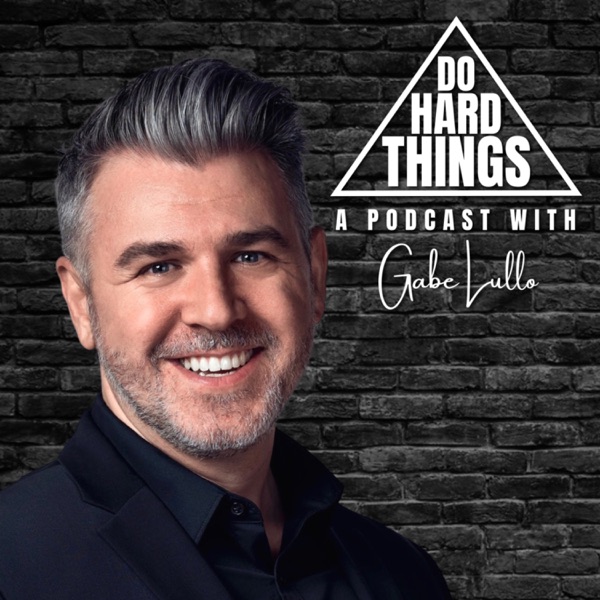
Do Hard Things Podcast
Meet Gabe Lullo.
Gabe Lullo is the CEO of Alleyoop, a sales development agency working with industry giants such as ZoomInfo, Salesloft, and Adobe.
He has trained over 8,000 salespeople across diverse businesses and, during his tenure in Alleyoop, he has personally hired and managed more than 1,500 SDRs.
With over two decades of experience in sales, marketing, and executive recruitment, his strategies have significantly driven Alleyoop’s growth.
- Episodes
- 125
- Releases
- Twice a week
- Typical length
- 38 min
- On air since
- 2024
- Latest episode
- 1 day ago
Episodes
125 episodes, newest first
-
32 min
Do Hard Things A Podcast With Gabe Lullo Ft. Neema Mahdavian
Season 11, Episode 4
Show notes
"The quicker I can get something out, even if it's not perfect, at least I know whether they want it or not." - Neema Mahdavian
Neema grew up in a family of doctors, where the only options were doctor or lawyer.
He picked neither. He started as a bank teller at 17, so young the bank had to make an exception to hire him.
By his mid-twenties he was a wealth manager at a private bank making over $200K and getting ready for law school.
Then he walked away from all of it to work out of his partner's garage. The real estate analysis tool they built there became his first exit.
Since then he's built and sold three marketing agencies, launched Poseidon Ventures, and bought a bank.
Now he's pulling all of his companies together to launch what he calls an AI business bank.
It hasn't been a straight line.
He went through three failures in a row, a divorce, and a stretch close to bankruptcy.
What got him out was discipline: he cut his expenses, controlled his urges, and dropped the "gotta have" mentality.
"I survived divorce, I've survived failed businesses, I've survived being on the verge of bankruptcy. Looking back now, I've survived everything."
-
39 min
Do Hard Things A Podcast With Gabe Lullo Ft. Laura Patterson
Season 11, Episode 3
Show notes
"AI can help us do more, but it can't tell you what matters. And that's the part where the human being is still really critical." - Laura Patterson
At nine years old, Laura went door to door in her neighborhood selling chocolate.
She figured out fast that a pitch wasn't working. Some neighbors wanted chocolate. Some just wanted to support a kid raising money for school. Some wanted a gift for their family.
Most of them weren't buying the product at all.
That was her first lesson: people don't buy products, they buy value.
She spent almost 15 years at Motorola and learned the second lesson there.
You can't just measure activity. You have to measure what matters to the people at the top, and that means how you're creating customer and business value.
She founded VisionEdge Marketing in 1999. Her mission is to get rid of what she calls "random acts": activity with no strategic intent behind it.
A CEO she knows was honored to be asked to sponsor his Chamber of Commerce's big annual event, and couldn't understand why his team wasn't excited.
She asked him one question: how will this help you hit any of the outcomes you need this year? He didn't have an answer.
Her test for any new idea is simple.
Will it help you win the customers you want, keep the ones you have, or add value for them?
If not, reconsider. Random acts don't just cost money.
They use up leadership capacity, employee energy, and customer trust.
"Customer centricity is not a marketing thing. It is a leadership discipline."
-
32 min
Do Hard Things A Podcast With Gabe Lullo Ft. Melinda Yormick
Season 10, Episode 11
Show notes
"If there's something I can do and should do, then I have a responsibility to do it. That is what I signed up for when I became a nurse." - Melinda Yormick
Melinda became an OR nurse after watching her grandfather go through a heart surgery, a second surgery to remove a retained sponge, and a stroke that left him bedridden for a decade.
She spent 14 years in the OR across seven health systems, then moved into leadership as a surgical service manager.
Then a patient died after an elective procedure. The surgery went fine. When the airway tube came out, the patient's airway collapsed, and the team couldn't find the emergency airway cart.
The code team couldn't find the patient either. In a two-million-square-foot building, nobody knew where anything was.
That night she went home and searched for something that could prevent it from happening again.
Nothing on the market met healthcare's needs. She didn't quit the next morning.
She spent months talking to frontline nurses and C-suite leaders, and once the case held up, she jumped.
She built Clara, a spatial intelligence platform that shows hospital teams where people and equipment are in real time.
Her hardest moment came long before any of this.
At 19, she lost her dad suddenly and laid on her kitchen floor in Orchard Park, New York, thinking this wasn't supposed to happen.
Getting up from that floor is the hardest thing she's ever done.
"If it's not hard, it's easy. And if it's easy, it's boring."
-
39 min
Do Hard Things A Podcast With Gabe Lullo Ft. Brenda Viola
Season 11, Episode 2
Show notes
"Nobody gets a pass from pain. We would never choose the things that happened to us, but we can choose what it produces in us." - Brenda Viola, Founder of Vici Communications
Brenda lost her dad at 10. Not long after, a teacher named Mrs. Dodge told her, "Brenda, you're a great writer."
When she didn't believe in anything else, she believed that.
She became the first in her family to go to college, even though her mom's first reaction was, "But Brenda, you could be a cocktail waitress."
She beat out 10,000 people to become one of QVC's first hosts, and was laid off a few months later.
She kept going, through news, marketing, and eventually a role as Chief Happiness Officer.
In 2021 the losses stacked up. Her mom was ill, her partner died suddenly, and then her dog of 17 years died.
She'd always said "someday" she'd speak full-time.
So she sold her house with everything in it, moved to San Diego, and bet on herself.
Then a car crossed the median and hit her head on. The scan afterward found a lump on her thyroid. What scared her most wasn't the biopsy. It was having to go alone.
She called the one person she knew, a woman she'd met at the farmers market because they were both wearing Eagles gear.
Before Brenda could finish asking, she said, "What time? I'll be there."
Brenda was 60 when she learned that lesson: letting people in is not a weakness.
Her company is coming up on four years old. Vici means "I conquered."
"The beauty of life is letting people in and not robbing them of the privilege to show up for you."
-
38 min
Do Hard Things A Podcast With Gabe Lullo Ft. Preston L. Cochrane and Maurice Moe Egan
Season 11, Episode 1
Show notes
"People don't change because you give them housing. People change because they're given community, accountability, purpose, work, and people around them who actually believe in them." - Moe EganPreston and Moe Egan came to The Other Side Village from opposite ends of the problem.Moe grew up in East Oakland, surrounded by addiction and crime, and became a lifelong addict and criminal himself. He went through six or seven recovery programs and graduated from every one. Each time he relapsed. Then came his seventh arrest, and the officer who cuffed him was his old football coach. The coach told him about Delancey Street, and facing San Quentin, he wrote a letter begging for help.Preston has spent 30 years in nonprofit work and never lived any of that. He's upfront about it. His problem is with the systems around the work, which measure beds filled and boxes checked instead of whether people reach long-term independence.Together they lead The Other Side Village, a permanent community built on peer accountability, where residents run social enterprises like a donut shop. Preston brings the strategy and Moe brings the lived experience, and neither is enough alone.Recently Moe took a group of people who spent decades on the street to New York. For some it was their first flight. On the way home they asked him how to get a passport."People don't fundamentally change when they feel temporary... When people know they have a permanent place in the community, they start thinking about next year instead of next week." - Preston L. Cochrane
-
35 min
Do Hard Things A Podcast With Gabe Lullo Ft. Ellie Gordon
Season 10, Episode 12
Show notes
"None of us engage perfectly with technology when we're overwhelmed or stressed. You shouldn't build a system that requires perfect engagement in order to be useful."
- Ellie Gordon
Ellie spent 17 years building technology that improves people's lives. What pulled her into addiction and recovery was personal.
She has lost loved ones, helped friends through severe struggles, and worked through her own challenges.
Her hometown of Pittsburgh was hit hard by the opioid crisis, and she says that when you watch that happen to your community, you can't not help.
She kept coming back to a gap. Someone can have a great counselor, but they might spend an hour with a provider and the rest of the week alone with stress, cravings, and triggers.
A craving doesn't wait for the next appointment.
So her team built a platform that uses wearables to read heart rate, sleep, and movement. It can predict cravings up to four hours ahead.
When it spots rising risk, it sends a coping tool, a reminder of what motivates the person, or a way to reach their support network.
The team also designed it to work passively, because people in crisis don't open apps. In a VA usability study, every participant found it helpful alongside their treatment.
About half of her users are 60 or older, which she didn't expect.
Her view is that the system is great at responding to crises and weak at anticipating them. She's not trying to replace human care. She wants to make it more continuous, timely, and informed.
"Courage isn't certainty. Building and leading this company is the hardest thing I've done, because there are people depending on you and you have to make decisions in imperfect circumstances."
-
34 min
Do Hard Things A Podcast With Gabe Lullo Ft. Melinda Yormick
Season 10, Episode 11
Show notes
"If there's something I can do and should do, then I have a responsibility to do it. That is what I signed up for when I became a nurse." - Melinda Yormick
Melinda became an OR nurse after watching her grandfather go through a heart surgery, a second surgery to remove a retained sponge, and a stroke that left him bedridden for a decade.
She spent 14 years in the OR across seven health systems, then moved into leadership as a surgical service manager.
Then a patient died after an elective procedure. The surgery went fine. When the airway tube came out, the patient's airway collapsed, and the team couldn't find the emergency airway cart.
The code team couldn't find the patient either. In a two-million-square-foot building, nobody knew where anything was.
That night she went home and searched for something that could prevent it from happening again.
Nothing on the market met healthcare's needs. She didn't quit the next morning.
She spent months talking to frontline nurses and C-suite leaders, and once the case held up, she jumped.
She built Clara, a spatial intelligence platform that shows hospital teams where people and equipment are in real time.
Her hardest moment came long before any of this.
At 19, she lost her dad suddenly and laid on her kitchen floor in Orchard Park, New York, thinking this wasn't supposed to happen.
Getting up from that floor is the hardest thing she's ever done.
"If it's not hard, it's easy. And if it's easy, it's boring."
-
49 min
Do Hard Things A Podcast With Gabe Lullo Ft. Mary Crafts
Season 10, Episode 10
Show notes
"It didn't matter what I had accomplished before, what I had achieved, what awards I had. None of that mattered. It only mattered what I brought that day." - Mary Crafts
Mary started Culinary Crafts in 1984 by pulling a little red wagon around the neighborhood with her two boys, selling cookies and bread door to door.
She built it into Utah's largest off-premise catering company, named best in the state 28 times.
She catered for Oprah, Elton John, and two US presidents, and earned a gold medal for catering at the 2002 Olympics.
At 50, she found a photo of herself at 284 pounds and wept in a parking lot because she didn't recognize the person in it.
She had spent decades chasing success to prove she was worthy of love.
So she got a spiral notebook, wrote "fear" on one side and "action" on the other, and tracked the fear behind every habit.
She lost 140 pounds, no surgery, no pills, just by healing what was underneath.
Then she retired at 65 and climbed Kilimanjaro.
Every fear she thought she'd beaten showed up on that mountain.
At one point she told the mountain she was a big deal back home. Its answer was "I don't care."
Now she works with 33 nonprofits and asks women one question: "What would you do if you weren't afraid?"
"Whatever you see in me already exists in you. Or you wouldn't see it in me."
-
38 min
Do Hard Things A Podcast With Gabe Lullo Ft. Alex Seiler
Season 10, Episode 9
Show notes
"Don't make an assumption, ask the question. Ask your senior people two things: what's slowing you down, and what would make you consider leaving. That pattern is your real priority list." - Alex Seiler
Alex's HR career started with a job creating employee ID numbers by hand at Citigroup.
Nobody dreams of being the employee ID guy, but he paid attention to what he was good at and let that pull him forward.
He still respects the people who do the unglamorous work the whole company depends on.
From there he worked across Citi, WeWork, and Control Risks, and he's blunt about what that taught him: every size of company has its own flavor of chaos.
Bring startup speed to a battleship and you blow past every stakeholder.
Bring the battleship process to a five-person startup and you bore everyone into quitting.
The skill that transfers is judgment about pace, and diagnosing the environment before you prescribe anything.
His rule for earning a seat at the table: lead with the business question, not the HR program.
He doesn't pitch leadership development to a CEO as a way to lift engagement scores.
He opens with the two VPs the company lost last year and what it cost to backfill them.
As CPO, he brought recruiting in-house, saved $500K, and put $360K of it into better benefits.
His hot take: companies buy engagement software to fix a management problem.
The survey says people are unhappy with their manager, and the action plan is to run the survey again next quarter.
The data was never missing. The willingness to have an uncomfortable conversation was.
"CEOs don't fund feelings. They fund downside protection and upside acceleration."
-
44 min
Do Hard Things A Podcast With Gabe Lullo Ft. Cris D'Annunzio
Season 10, Episode 8
Show notes
"I wasn't making myself an NFL player. I was making myself behave like an NFL player before anybody believed that I could do it." - Cris D'Annunzio
Cris spent three years buried on Princeton's depth chart, bitter and barely playing, to the point of calling Joe Paterno to ask about transferring to Penn State.
He stayed only because he'd never quit anything in his life.
Once the hope of football working out left the room, his ego left with it, and he started writing everything down, tracking every input, with no expectation it would lead anywhere.
It led to an honorable mention All-Ivy League season and a shot in the NFL.
Then Wall Street, managing over $500 million in client assets.
Then thirty years as a working actor (American Gangster, Seinfeld, Animal Kingdom) in an industry that rejects you more than nine times out of ten.
Then high-ticket sales, where he still closes every week.
His conclusion after all four arena's: talent was never the gap.
The gap is whether you keep the process intact when nobody's watching and everything in you wants to negotiate it away.
It's the premise behind Metal and Method: you don't know what you actually do every day, you know what you think you do, and your mind lies to you most in moments of duress.
"At some point you will actually break. You can't do it yourself. This is why validation is so important."
-
46 min
Do Hard Things A Podcast With Gabe Lullo Ft. Dave Slagle
Season 10, Episode 7
Show notes
"Be authentic and tell the truth. In the end, people buy from people they know, like, and trust. Trust is the one thing our industry doesn't have a lot of." - Dave Slagle, Founder of ICON
Dave grew up in Berkeley in the '70s, around parents who treated nutrition and supplements as normal, and spent his teenage years as a competitive powerlifter.
He landed his first supplement industry job almost by accident, hired at one of the earliest Whole Foods Markets in the early '90s because of his grocery background, not his health science degree.
Thirty years later, he's worked every link of the supplement supply chain, retail counter, raw materials, contract manufacturing, clinical trials, and now runs a nonprofit built to defend one ingredient… creatine.
His reason is blunt.
The industry is full of marketing puffery around creatine gummies, bars, and drinks with no public data proving the creatine survives heat, moisture, or shelf life, layered on top of decades-old myths that creatine is a steroid or causes weight gain.
So he partnered with an independent testing lab to certify batch-level purity, because he wasn't willing to accept purity claims he considered mathematically impossible without proof.
He calls himself an "ageless athlete," borrowing the term from a philosophy he says most people get backwards: health span and strength span matter more than lifespan, and America is good at keeping sick people alive but bad at keeping healthy people healthy.
"If you want a recurring customer base and a good reputation in this industry, be authentic. Tell the truth. You may not close every deal, but you'll build one that lasts."
-
26 min
Do Hard Things A Podcast With Gabe Lullo Ft. Brian Martynowicz
Season 10, Episode 6
Show notes
"Companies are built by people, a lot of people, who care. Name me the five key employees responsible for Amazon. You can't. That's actually kind of problematic." - Brian Martynowicz
Brian spent nearly two decades in enterprise technology, working as the family IT guy turned pre-sales engineer, watching a familiar pattern.
Technical people who thought little of everyone else, and everyone else who thought technology was out of reach.
He didn't see a skills gap. He saw a communication problem, and he became the guy who could bridge it.
He went full-time on his personal content AI company in January, but not entirely by choice.
He'd just helped a cybersecurity company raise nearly $20 million, then got fired for "performance reasons."
With a side project already in motion, he gave himself six months to make it real or go back to the workforce.
That project became Latitude, built around what he calls GTM engineering, the discipline of keeping a product's story intact as it passes through more and more hands without turning into a game of telephone.
His own results: engagement up 1,100% this year, not from better writing, but from consistency.
He's blunt about the tradeoff for that consistency: transparency, posting his MRR and his failures to thousands of strangers, which he admits is uncomfortable but has been "undeniable" for the business.
"People don't buy software for features. They buy it because it solves a problem for them, and they stay because of why it exists."
-
46 min
Do Hard Things A Podcast With Gabe Lullo Ft. Julian Treasure
Season 10, Episode 5
Show notes
"Everybody's listening is unique. Almost nobody understands that. Everybody goes around thinking, well, everybody listens like I do. No, they don't." - Julian Treasure, Sound and Communication ExpertJulian's relationship with sound started at six years old, and through years of playing in bands he developed multi-track listening, paying close attention to everything around him at once. He spent years running a magazine company working with brands like Lexus and Microsoft, noticing the whole time that none of them ever thought about how they sounded. When he sold the company in 2002, he built an audio branding agency around that exact question.Years later, giving one of his five TED Talks, the real insight hit him: companies don't think about sound because they're full of people who don't listen. Research now puts the global cost of workplace disengagement from not listening at $8.8 trillion a year.He draws a hard line between hearing and listening. Hearing is passive. Listening takes four things: consciousness, commitment, compassion, and curiosity, and most people skip all four."The highest performing salespeople listen twice as much as they speak. The lowest performing salespeople speak twice as much as they listen."Julian also just launched his first app, Master Conscious Communication. Our audience gets 20% off the first payment!
-
26 min
Do Hard Things A Podcast With Gabe Lullo Ft. Ryan Frey
Season 10, Episode 4
Show notes
"Everything we do as entrepreneurs is risk. But you can take educated guesses and educate yourself on how to do it." - Ryan Frey
Ryan started his career in the Peace Corps, building rural water systems in Bolivia, barely speaking the language and with no money to do it.
In two and a half years, he finished one project.
What he actually learned wasn't construction, it was how to find funding, design something from nothing, and grind projects out no matter how long they take.
He brought that grinder mentality into 25 years of real estate development in Missoula, Montana: infill housing, multifamily, industrial, large-scale residential, whatever deals came his way in a market of 120,000 people.
He recently entitled a 300-unit build-to-rent project and sold it rather than building it out himself, a decision he credits less to strategy and more to staying unattached to any single project and taking the right offer when it came.
Now he's focused on solving Montana's housing affordability gap with factory-built homes, 20-30% cheaper than stick-built construction, targeting the growing space between renters and first-time buyers priced out by the state's post-COVID, post-"Yellowstone effect" boom.
He's walked away from deals that looked perfect on paper over a single detail, like insufficient parking, that would have broken the project regardless of the numbers.
"Most of us, it's easy to create the vision and then just not take action. My advice: get in there and grind it out. You'll get it done."
-
26 min
Do Hard Things A Podcast With Gabe Lullo Ft. Brooke Leone Shipman
Season 10, Episode 3
Show notes
"The day I finally stopped pretending was the day I realized I wasn't performing anymore. I was just surviving. And that wasn't something I was willing to keep calling success." - Brooke Leone Shipman, Founder of CEO Woman
Brooke was the first in her family to graduate college, raised without much structure but with a lot of drive.
As a sophomore in high school, after being screamed at on the drive to school, she looked in the mirror and decided she got to choose who she was, not her environment.
That decision carried her from straight A's to a scholarship to a climb from executive assistant to chief of staff at one of the largest fintech companies in the world.
For eight years, she was trusted with everything behind the scenes and invisible in front of it.
"So lonely, and also incredibly formative," she calls it.
Underneath the climb, she was performing a persona at work that clashed with who she actually was, telling herself she was fine for longer than she'd like to admit, because stopping meant admitting something wasn't working.
A close friend saw something in her before she saw it herself, and kept following up: what are your next steps, what do you need.
That's what cracked open a door she couldn't close.
She left her senior role with no outside capital and built CEO Woman, a personal growth platform for ambitious women, deliberately positioned as a luxury brand, not for the price point, but for the standard of women in the room.
"Redefining success never means asking less of yourself. It means getting honest about which standards are actually yours, and which ones were handed to you by someone else's agenda."
-
47 min
Do Hard Things A Podcast With Gabe Lullo Ft. Kyle Lucey
Season 10, Episode 2
Show notes
“Failure was never really an option, nor was it accepted.” - Kyle Lucey
When Kyle entered financial advising in 2012, the odds were not exactly in his favor.
Roughly 89% of new advisors wash out within the first few years.
From day one, the expectation was simple: work.
Half-days, five days a week. Six to eight hours on weekends. Keep going until you built a successful practice.
And despite joining his father’s business, Kyle didn’t get an easier path.
He got a higher standard.
His father told him it would take six to eight years to develop the technical proficiency needed to truly master the business. Kyle initially took that personally.
Eventually, he realized his father was right.
That same philosophy now shapes how Kyle works with his own clients.
He doesn’t start the first meeting by talking about investments.
He starts by getting to know the person.
Are they a good fit? Can he serve them well? Can they build a relationship based on trust?
He even refuses referral business from the CPAs and attorneys he sends his clients to, a decision that once left a CPA firm asking:
“What’s the catch?”
There wasn’t one.
For Kyle, the business is ultimately about service, relationships, discipline, and doing what’s right for the client, even when there’s a short-term cost.
And his advice to anyone thinking about their financial future?
“Don’t wait.”
You don’t need millions saved to start planning. You don’t need to have everything figured out.
You just need to start making the right decisions early.
-
40 min
Do Hard Things A Podcast With Gabe Lullo Ft. David Robinson
Season 10, Episode 1
Show notes
"Every business owner takes all this advice from bigger companies to grow, but when it comes to technology, they suddenly think they know better and try to do it themselves." - David Robinson, Founder of Stratos
David’s career started as a lighting technician for concerts featuring Katy Perry, Tiesto, Jay-Z and others.
Then unexpected fatherhood pushed him into "a real job."
A family connection brought him into healthcare technology, where he helped build one of the first electronic medical record systems for reproductive endocrinology.
The catch?
He’d never done anything like it before.
So he figured it out through weeks of sleepless nights.
Then came a chance conversation at a pool bar in Palm Springs.
David approached WebMD’s former CFO and somehow knew enough about his struggling company to get his attention.
That conversation led to a job offer in New York, and eventually to working alongside the Big Four consulting firms.
That experience became the blueprint for Stratos:
Take the technology, expertise, and infrastructure that Fortune 500 companies spend millions on, and make it accessible to the mid-market businesses that are often overlooked.
David has a pretty blunt take on those businesses.
They'll follow proven advice from bigger companies when it comes to banking, sales, hiring, and structure.
Then they get to technology and think:
“This is the one area I can figure out myself.”
So they hand it to a nephew.
So they hand it to a nephew, a freelancer, someone "good with computers." A few years later, they're paying for that decision.
David’s filter for business is simple:
“If we’re not helping you make money or save money, it’s probably not a good thing to be involved in.”
His view on AI is just as pragmatic.
Vibe coding isn’t going away.
But it can’t vibe-code compliance.
Deploying an AI-built tool without a technical partner behind it is rolling the dice, and for most regulated companies, that’s a bet they can’t afford to make.
-
33 min
Do Hard Things A Podcast With Gabe Lullo Ft. Anne Freedman
Season 9, Episode 12
Show notes
"Whenever you're doing a speech or a presentation, you've got to say the lines out loud as you're doing it. If you wait till you're all done, you're going to have twice as much work." - Anne Freedman
Anne started as a journalist before becoming a speaking coach, and assumed a speech was a speech, until an early client bombed a presentation she'd written for him.
It read perfectly on the page. Out loud, from him, it was a disaster.
That's when she realized writing for the eyes and writing for the mouth aren't the same skill at all.
She founded Speak Out in 1990 and has spent thirty-five years since working with people who are wildly accomplished by every measure and still terrified to stand up and talk.
She doesn't treat that fear as a character flaw, she treats it as a skill gap: structuring the content, controlling your body and voice while delivering it, and being ready for the law of averages, because the mic will cut out or the coffee will spill eventually.
Her practice method cuts against instinct: rehearse a speech out of order, closing first, then opening, then the middle.
Only in the last few run-throughs do you go start to finish, timed.
And she's blunt about what separates people who break through from those who avoid the podium their whole career: they actually rehearse instead of trusting decades of expertise to carry them through unprepared.
"Keeping all this knowledge to yourself instead of sharing it is being selfish."
-
32 min
Do Hard Things A Podcast With Gabe Lullo Ft. Jeremy Levine
Season 8, Episode 11
Show notes
"Stop talking about AI. Start talking about value. This is our product, this is the value we drive, and if you want to understand how we do it, we'll show you.” - Jeremy Levine
Jeremy's career didn't start in sales, it started in art school, which teaches you everything except how to make money as an artist.
He waited tables, moved to Israel, and worked call centers just to survive before finally breaking into tech.
At 41, he applied to every SDR, AE, and CSM role he could find and got exactly one callback: WalkMe.
Even that turned into a rejection email, "looking for somebody a little more junior."
He wrote back one line, signed off "forever young at heart" with a winky emoji.
Ten minutes later, he had a contract.
That decision kicked off five years at WalkMe during hypergrowth and an IPO, where he built outbound motions that landed logos like United Airlines, Walmart, and Home Depot.
He was eventually named one of Sales Hacker’s Top 50 sales professionals in the world.
Now, as CRO at an AI marketing technology company, he's blunt about the noise in his own category: every SaaS company has bolted AI onto its pitch, and almost none of them sound different because of it.
His answer isn't to out-hype the market, it's to stop competing on the buzzword and talk about what the product actually does.
He's candid that most AI messaging is aimed at investors, not customers, and confusing the two is exactly how companies end up sounding like everyone else.
"Nobody's cutting through by out-AI-ing the next guy. You cut through by going back to the product and the value."
-
38 min
Do Hard Things A Podcast With Gabe Lullo Ft. Josh Gratsch
Season 8, Episode 10
Show notes
"You cannot lead someone beyond the parts of yourself you refuse to look at." - Josh Gratsch
Josh joined Ascend Innovations in 2016 as a data scientist, no leadership training, no formal path.
When the company's original business model failed within its first two years, he stepped into strategy and operations simply because he was willing to take initiative.
Six years later, he was CEO, promoted by leaders who saw a capability in him he hadn't yet connected to himself.
Then reality hit.
He'd spent his whole 20s chasing the title, achieved it, and felt nothing.
Within the first six months, a spinout company he chaired collapsed and a business development process he'd trusted without accountability measures turned into a cash flow crisis that cost three leadership team members their jobs.
"I told myself the most effective leaders are optimistic. What I quickly understood was I didn't balance the equation. Hope is not a strategy."
The real shift came from turning the lens inward, tracing his default reactions, defensiveness, control dressed up as ownership, back to where they actually came from.
He noticed the gap first at home, wondering why he could stay curious with his team but lose patience with his own kids.
That work reshaped how he leads now.
Setting direction but actively inviting his team to tell him when he's wrong, because a team that can't have honest conflict can't truly commit to anything together.
Business lists
More Business shows picked out from the charts






More in Business
Placed highest on Apple Podcasts' Business chart right now