Podcast
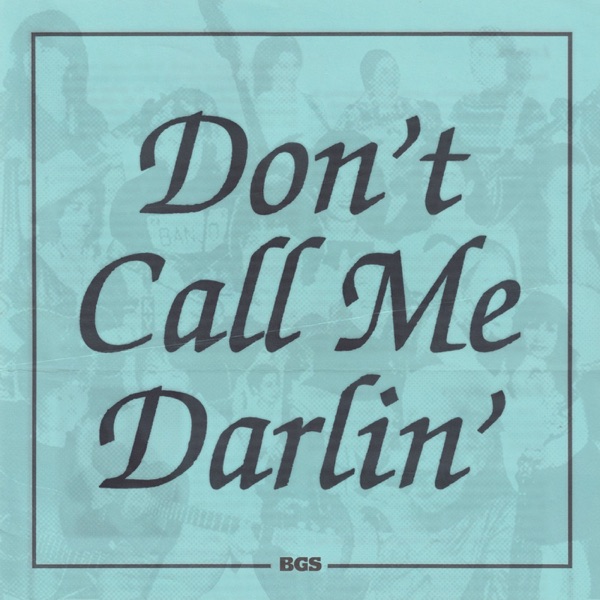
Don't Call Me Darlin'
Before social media, the women of bluegrass had a bright blue newsletter that showed up in the mailbox and said what no one would say out loud. In Don't Call Me Darlin', host Carolyn Kendrick and co-creator Tristan Scroggins hit the road to find the women Murphy Henry profiled decades ago, in a story about genre, identity, feminism, and the communities we built before the internet.
What can our foremothers teach us about how to challenge the system? And when should we challenge our own expectations? In conversations with legends such as Alice Gerrard, Kristin Scott Benson, Laurie Lewis, Missy Raines, Alison Brown, Rhonda Vincent, Sierra Hull, Bronwyn Keith-Hynes, and many more, our hosts learn how tradition can bring community together and how it can break it apart. On this road trip, Bluegrass music becomes an unlikely catalyst for exploring the paradoxical world of bluegrass, an American art form with American problems, strengths, and growing pains. Don't Call Me Darlin' is distributed by The Bluegrass Situation Podcast Network.
- Arts chart
- #114
- Episodes
- 6
- Releases
- Weekly
- Typical length
- 34 min
- On air since
- 2025
- Latest episode
- 1 day ago
Episodes
6 episodes, newest first
-
34 min
Murphy
Season 1, Episode 2
Show notes
Murphy Hicks Henry used to describe herself as a banjo player. These days, she calls herself “a writer first, maybe banjo player second, fiddle player third, mother, grandmother, and feminist.” In this episode, we get to know Murphy and learn why she created the Women in Bluegrass newsletter. We hear how show co-creators Tristan Scroggins and Carolyn Kendrick first discovered these stories, and we begin to explore the systemic issues that led to the newsletter’s creation and, eventually, its quiet slide into obscurity.
In 1994, Murphy and her young daughter Casey were in the audience for a performance introduced as “the future of bluegrass.” When the curtain parted, there were five young men on stage. After a lifetime of fighting to be taken seriously as a bluegrass musician, Murphy was, in her words, “apoplectic” at the implication that the future of bluegrass didn’t include women. For Murphy, the possibility that the omission was unintentional only reinforced a familiar pattern: women simply being forgotten.
When she raised her concerns, she was told that the producers “couldn’t find” any young women to participate. Women had always been part of bluegrass music, but they had often been forgotten or simply ignored. So Murphy took matters into her own hands and began building a database of women who played bluegrass professionally, one that would make that excuse much harder to use. “I said to myself, I will start a database of women in bluegrass so this can never happen again.”
She wanted people to know what had happened and to help crowdsource more names for the database, so she put together and mailed out the very first Women in Bluegrass Newsletter in September 1994. The newsletter was published quarterly for nearly ten years, until 2003, when Murphy ended it to focus on writing her first book, Pretty Good for a Girl: Women in Bluegrass.
While interviews from the newsletters laid the foundation for the book, the newsletters themselves faded into obscurity as the world moved online. That is, until fifteen years later, when Tristan was given a complete collection. Immediately struck by their rarity and historical significance, he set out to create a digital archive, but he also wanted to bring the stories to life. When he brought the newsletters to our host, Carolyn Kendrick, she found them strikingly relatable to her own current struggles, but she was surprised and then curious why she had never heard of so many of these women.
In this episode, you heard the voice of Murphy Henry as well as a brief snippet of her daughter Casey Henry. More information about Murphy, including how to purchase her book Pretty Good for a Girl: Women in Bluegrass, can be found at https://www.murphymethod.com/
Read the Women in Bluegrass digital archive, created by Tristan Scroggins: http://womeninbluegrassarchive.org/
To help support the archive, consider making a tax-deductible donation at: https://fundraising.fracturedatlas.org/the-women-in-bluegrass-archive-project
For more information on our hosts and their other ongoing projects, please visit:
Carolyn Kendrick: https://www.carolynkendrick.com/
Tristan Scroggins: https://www.tristanscroggins.com/
Follow Don’t Call Me Darlin’ on social media: https://linktr.ee/dontcallmedarlin
Interested in sponsoring us? Contact BGS: https://bit.ly/sponsorBGSpods
Underwriting Inquiries: info@womeninbluegrassarchive.org
-
49 min
Bonus: Behind the Scenes Q+A Bonus
Show notes
Welcome to our first bonus episode: a behind the scenes Q+A with Don’t Call Me Darlin’ creators Carolyn Kendrick and Tristan Scroggins.
We’re making this first round of bonus episodes available for everyone to listen to for free. But if you enjoy this conversation and want to hear more full-length interviews in the future, while also supporting the making of this show, please consider subscribing through Patreon or Apple Podcasts.
Don’t Call Me Darlin’ is based on the Women in Bluegrass newsletter that was published quarterly from 1994–2003 by Murphy Hicks Henry. More information about Murphy, including how to purchase her book Pretty Good for a Girl: Women in Bluegrass, can be found at https://www.murphymethod.com/
Sources and citations for today’s episode.
Read the Women in Bluegrass digital archive, created by Tristan Scroggins: http://womeninbluegrassarchive.org/
To help support the archive, consider making a tax-deductible donation at: https://fundraising.fracturedatlas.org/the-women-in-bluegrass-archive-project
For more information on our hosts and their other ongoing projects, please visit:
Carolyn Kendrick: https://www.carolynkendrick.com/
Tristan Scroggins: https://www.tristanscroggins.com/
Follow Don’t Call Me Darlin’ on social media: https://linktr.ee/dontcallmedarlin
Interested in sponsoring us? Contact BGS: https://bit.ly/sponsorBGSpods
Underwriting Inquiries: info@womeninbluegrassarchive.org
-
35 min
Bonus Episode: Rhonda Vincent Bonus
Show notes
Welcome to the Don’t Call Me Darlin’ bonus corner. We’re making this first round of bonus episodes available for everyone to listen to for free. But if you enjoy this conversation and want to hear more full-length interviews in the future, while also supporting the making of this show, please consider subscribing through Patreon or Apple Podcasts.
In this episode, Tristan Scroggins interviews the queen of bluegrass: Rhonda Vincent.
For more information about Rhonda Vincent’s life and music: https://rhondavincent.com/
Don’t Call Me Darlin’ is based on the Women in Bluegrass newsletter that was published quarterly from 1994–2003 by Murphy Hicks Henry. More information about Murphy, including how to purchase her book Pretty Good for a Girl: Women in Bluegrass, can be found at https://www.murphymethod.com/
Sources and citations for today’s episode.
Read the Women in Bluegrass digital archive, created by Tristan Scroggins: http://womeninbluegrassarchive.org/
To help support the archive, consider making a tax-deductible donation at: https://fundraising.fracturedatlas.org/the-women-in-bluegrass-archive-project
For more information on our hosts and their other ongoing projects, please visit:
Carolyn Kendrick: https://www.carolynkendrick.com/
Tristan Scroggins: https://www.tristanscroggins.com/
Follow Don’t Call Me Darlin’ on social media: https://linktr.ee/dontcallmedarlin
Interested in sponsoring us? Contact BGS: https://bit.ly/sponsorBGSpods
Underwriting Inquiries: info@womeninbluegrassarchive.org
-
39 min
Lost Girl
Season 1, Episode 1
Show notes
As a full-time musician living in Los Angeles, Carolyn Kendrick has a complicated relationship with bluegrass music. Despite years of experience and a deep connection to friendships formed in the community, Carolyn often thinks of herself as an outsider in the broader, male-dominated, and generally conservative genre. As life becomes more and more digitally saturated, the nostalgia-rich trappings and communal values of the bluegrass community speak to Carolyn as she finds herself yearning for a more grounded, unplugged time. She loves the music but is confused by how it fits into her sense of self.
She suddenly discovers that this internal friction is more common than expected when co-creator Tristan Scroggins shows her a collection of rare, feminist newsletters circulated in the 90s by women who played bluegrass. These bright blue, hand stapled, self published newsletters contain nearly a decade of interviews, correspondence, and fellowship between women as they attempt to navigate and influence the genre.
As Carolyn explores these stories, it becomes clear that not only have women faced similar challenges since the music’s beginnings, but that previously gendered opportunities have gotten noticeably better in recent history. So why do the names and stories seem so unfamiliar? These questions lead down a rabbit hole as Carolyn and Tristan get in the car and drive to Virginia to interview Murphy Hicks Henry, the creator of the newsletter. Along the way they visit with friends, go to museums and festivals, interview friends, and re-interview the women from the newsletter to see what they think about the progress that has been made. All while recording to make this podcast.
Despite being a show about a newsletter about bluegrass, the show itself isn’t “about” bluegrass. It’s about community and what it means to be an insider. It’s about how tradition can bring us together but what happens to who gets left out. It’s about what we can learn from our elders and why we shouldn’t wait to ask them. It’s about women and their lives and what we can learn from them.
In this episode, you heard the voices of legends of Bluegrass in the following order: Kathy Kallick, Missy Raines, Laurie Lewis, Maddie Witler, Murphy Henry, Dede Wyland , Lucy Singleton, Rhonda Vincent, Lisa Kay Howard, Sierra Hull, Kristin Scott Benson, Joselyn Skye, and Alison Brown.
Don’t Call Me Darlin’ is based on the Women in Bluegrass newsletter that was published quarterly from 1994–2003 by Murphy Hicks Henry. More information about Murphy, including how to purchase her book Pretty Good for a Girl: Women in Bluegrass, can be found at https://www.murphymethod.com/
Sources and citations for today’s episode.
Read the Women in Bluegrass digital archive, created by Tristan Scroggins: http://womeninbluegrassarchive.org/
To help support the archive, consider making a tax-deductible donation at: https://fundraising.fracturedatlas.org/the-women-in-bluegrass-archive-project
For more information on our hosts and their other ongoing projects, please visit:
Carolyn Kendrick: https://www.carolynkendrick.com/
Tristan Scroggins: https://www.tristanscroggins.com/
Follow Don’t Call Me Darlin’ on social media: https://linktr.ee/dontcallmedarlin
Interested in sponsoring us? Contact BGS: https://bit.ly/sponsorBGSpods
Underwriting Inquiries: info@womeninbluegrassarchive.org
-
5 min
Coming Oct 19th: Don't Call Me Darlin'
Season 1
Show notes
Coming October 19th: Don't Call Me Darlin'
Before social media, the women of bluegrass had a bright blue newsletter that showed up in the mailbox and said what no one would say out loud. In Don't Call Me Darlin', host Carolyn Kendrick and co-creator Tristan Scroggins hit the road to find the women Murphy Henry profiled decades ago, in a story about genre, identity, feminism, and the communities we built before the internet.
What can our foremothers teach us about how to challenge the system? And when should we challenge our own expectations? In conversations with legends such as Alice Gerrard, Kristin Scott Benson, Laurie Lewis, Missy Raines, Alison Brown, Rhonda Vincent, Sierra Hull, Bronwyn Keith-Hynes, and many more, our hosts learn how tradition can bring community together and how it can break it apart. Join Carolyn and Tristan on their road trip as they explore the paradoxical world of bluegrass: an American art form with American problems, strengths, and growing pains.
Episode one will be available everywhere you listen to podcasts October 19th, 2026.
Don’t Call Me Darlin’ is based on the Women in Bluegrass newsletter that was published quarterly from 1994–2003 by Murphy Hicks Henry. More information about Murphy, including how to purchase her book Pretty Good for a Girl: Women in Bluegrass, can be found at https://www.murphymethod.com/
Read the Women in Bluegrass digital archive, created by Tristan Scroggins: http://womeninbluegrassarchive.org/
To help support the archive, consider making a tax-deductible donation at: https://fundraising.fracturedatlas.org/the-women-in-bluegrass-archive-project
For more information on our hosts and their other ongoing projects, please visit:
Carolyn Kendrick: https://www.carolynkendrick.com/
Tristan Scroggins: https://www.tristanscroggins.com/
Follow Don’t Call Me Darlin’ on social media: https://linktr.ee/dontcallmedarlin
Interested in sponsoring us? Contact BGS: https://bit.ly/sponsorBGSpods
Underwriting Inquiries: info@womeninbluegrassarchive.org
-
5 min
Don't Call Me Darlin': Coming 2026 Trailer
Season 1, Episode 1
Show notes
Hey! Tristan Scroggins + Carolyn Kendrick here. We have a new show coming soon and we want you to know about it! It’s called Don’t Call Me Darlin’, an eight part narrative journalism podcast about music, feminism, and community. Episode One will be launching in the spring but you can listen to the trailer now, as well as subscribe wherever you listen to podcasts.
Do you remember Life Before the Internet? I barely remember. Twenty-first century life is so digitally saturated that it's very easy to yearn for a more unplugged time. Which is probably why I went deep down this rabbit hole when my friend Tristan Scroggins showed me something amazingly unplugged: a stack of physical underground feminist music newsletters from the 1990s. These newsletters were made without computers, without AI, without social media. And they were made for women, by women: women who played bluegrass.
You might be surprised to hear feminism and bluegrass in the same breath, considering the genre's reputation as a more rural, conservative folk music from the American South. When people typically stereotype underground feminists throughout history, they tend to think of movements like Riot Girl or mid-century housewives passing around copies of the feminine mystique. But there might be more of a connection between these worlds than meets the eye.
In 1994, a Virginia banjo player named Murphy Hicks Henry was fed up. Up until recently, it was almost impossible to get a job in an existing bluegrass band as a woman unless you were married to or related to a band member, or started an all-girl band of your own. So, Murphy created this physical newsletter to change that and called it Women in Bluegrass. These newsletters were distributed for almost a decade and to thousands of readers, and the interviews and articles reflected the very real struggles of playing in a male dominated music. When Tristan and I started reading through this catalog, we couldn't help but wonder: what did these women think now? Do they still agree with their younger selves? And what do younger generations of women playing this music now think of its influence? So we decided to go ask.
For as hard as it is to remember life before the internet, it's even harder to understand experiences of earlier generations. The more distanced we are from our elders' experiences, the easier it is to unfairly romanticize the past without learning its lessons. So join us for our eight-part road trip as we explore the paradoxical world of bluegrass, an American art form with American problems, strengths, and growing pains. And no matter if you live and breathe bluegrass or can't stand the sight of a banjo, this story has something for you. Thanks for being here. Please subscribe wherever you listen to podcasts. Episode one will be here before you know it. See you soon.
Our project website: https://www.womeninbluegrass.org/
Visit the newsletter archive: https://womeninbluegrass.omeka.net/exhibits/show/wibgarchpreview/issue_1_preview
Make a tax-deductible donation to fund this project: https://www.womeninbluegrass.org/sponsorship
Arts lists
More Arts shows picked out from the charts



More in Arts
Placed highest on Apple Podcasts' Arts chart right now