Podcast
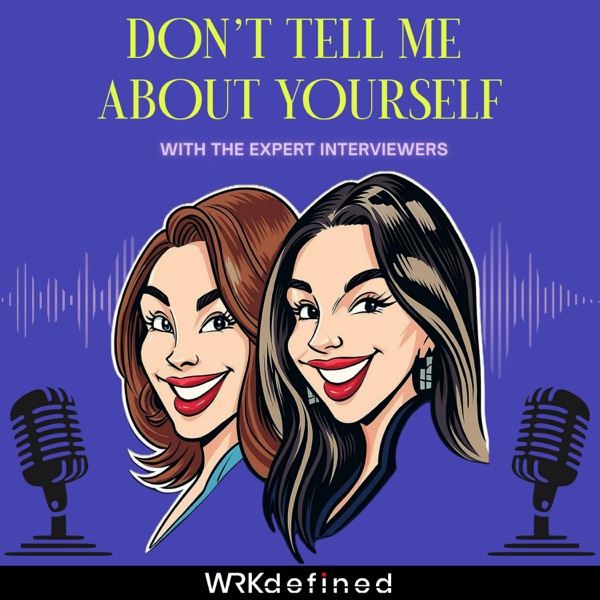
Don’t Tell Me About Yourself
“Don’t Tell Me About Yourself” is where old-school hiring meets a modern reality check. Hosted by Expert Interviewers Co-Founders Lorna Erickson and Victoria Gates, this show blends their combined 40 years of real-world experience with the unfiltered commentary that made 340K+ people laugh, cringe, and rethink how interviews actually work. Each week, they tackle the biggest news in hiring, from chaotic interview moments to ghost jobs and questions that should have been retired decades ago. Whether you hire, apply, or just love a good interview trainwreck, this show is for anyone who’s ever sat on either side of the interview table. Real stories. Real data. Real talk about how to make interviews actually work for everyone. Because great hiring isn’t luck—it's a skill.
- Episodes
- 36
- Releases
- Weekly
- Typical length
- 25 min
- On air since
- 2026
- Latest episode
- 6 days ago
Episodes
36 episodes, newest first
-
36 min
Are These the Worst Job Interviews on the Internet?
Show notes
Episode Description:
An iced coffee gets you judged. A CEO makes you wait an hour. A hiring manager plants trash on the floor to test your character. And somehow, these are real job interview stories.
In this episode of Don't Tell Me About Yourself, Expert Interviewers co-founders Victoria Gates and Lorna Erickson break down some of the worst viral job interview stories on the internet and debate what these situations actually reveal about candidates and the people interviewing them. From controversial dress codes and secret hiring tests to interviewers yelling at candidates, asking inappropriate questions, and rejecting people over unwritten rules, they explore where professionalism ends and personal bias begins. You'll hear why seemingly harmless preferences can turn into unfair hiring decisions, how bad interviewer behavior damages the candidate experience, and why social media is changing accountability in hiring. Because sometimes the biggest red flag in an interview isn't the candidate. It's the person asking the questions.
KEY TAKEAWAYS
•
Bringing iced coffee to an interview shouldn't determine whether someone gets hired. Personal preferences and unwritten expectations aren't reliable measures of job performance.
•
Professionalism is subjective. What one interviewer considers inappropriate, another might see as completely acceptable.
•
Candidates shouldn't be penalized for dress code expectations that were never communicated, especially when interviewers aren't held to the same standards.
•
Secret hiring tests, like the coffee cup test or deliberately leaving trash on the floor, often reveal more about an interviewer's judgment than a candidate's qualifications.
•
A candidate's willingness to clean up a coffee cup or pick up garbage doesn't necessarily predict their initiative, character, or ability to perform a job.
•
Evaluating whether you'd enjoy spending time with a candidate can introduce personal chemistry and bias into hiring decisions, even when collaboration is an important part of the role.
•
Interviewers who yell at candidates, criticize their own employees, or show up excessively late without apologizing are giving candidates a preview of the company's culture.
•
Candidates and interviewers should be held to similar standards of professionalism, preparation, and respect.
•
Questions about pregnancy, age, retirement, or a candidate's ChatGPT history can cross important personal and professional boundaries.
•
Candidates are increasingly willing to end interviews when employers reveal unreasonable expectations or behaviors that don't align with their values.
•
Social media has given candidates a platform to expose bad interview experiences, creating more transparency and accountability in the hiring process.
•
Hiring managers can unintentionally adopt ineffective interviewing practices after seeing viral stories or advice online without understanding whether those methods actually predict performance.
•
The goal of an interview isn't to catch candidates doing something wrong. It's to determine whether they can do the job, want to do the job, and whether the company is somewhere they'd want to work.
TIMESTAMPS
00:00 – When the interviewer is the biggest red flag
01:27 – The viral iced coffee interview debate
04:42 – Should candidates be rejected for what they wear?
08:55 – Secret hiring tests and the coffee cup test
12:04 – The crumpled paper test and judging candidate character
14:31 – United Airlines and the four-day trip test
19:09 – When interviewers yell at candidates about professionalism
22:22 – Hiring managers who trash their own employees
24:17 – When the CEO shows up an hour late
26:34 – Inappropriate interview questions and ChatGPT history
27:58 – Why candidates are calling out bad interviews online
28:57 – When candidates decide to end the interview
30:47 – Has social media made interviewing better or worse?
31:58 – Which interview red flags would make us walk away?
33:20 – The interviewing practices we'd ban forever
34:34 – Why interviewers need to meet candidates' standards, too
KEYWORDS
worst job interviews, interview red flags, bad interview experiences, interviewer red flags, viral interview stories, hiring manager mistakes, interview professionalism, iced coffee interview, coffee cup test, secret interview tests, inappropriate interview questions, interview bias, candidate experience, hiring manager training, interview etiquette, interview dress code, job interview horror stories, candidate rejection, structured interviews, hiring decisions, social media and hiring
-
28 min
Does Every Candidate Deserve Interview Feedback?
Show notes
Episode Description:
Everyone says candidates deserve feedback. But what happens when the hiring manager can't actually explain why someone was rejected?
In this episode of Don't Tell Me About Yourself, Expert Interviewers co-founders Victoria Gates and Lorna Erickson debate whether every job candidate deserves interview feedback, why companies are so hesitant to provide it, and what candidates should realistically expect after being rejected. From ghosting and generic rejection emails to legal concerns, gut-feeling hiring decisions, and poorly documented interviews, they explore the difference between communication, transparency, feedback, and coaching. You'll learn how much feedback candidates should receive at different stages of the hiring process, why internal candidates need additional consideration, and how recruiters and hiring managers can give more useful, evidence-based feedback. Because if you can't explain why you rejected someone, the bigger problem might be how you made the hiring decision in the first place.
KEY TAKEAWAYS
•
Not every candidate needs personalized interview feedback, but candidates deserve clear communication about where they stand in the hiring process.
•
Candidates often want closure more than coaching. A timely update or rejection can prevent unnecessary confusion, frustration, and speculation.
•
Companies hesitate to give interview feedback because of time constraints, legal concerns, uncomfortable conversations, poor documentation, and unclear hiring decisions.
•
Poor feedback doesn't necessarily mean poor candidate performance. It may indicate that interviewers lack the evidence needed to explain their decisions.
•
Communication, transparency, feedback, and coaching are different levels of candidate engagement. Communication is the baseline, while personalized feedback and coaching require more time and investment.
•
The further a candidate progresses through the hiring process, the more specific and individualized their feedback should become.
•
Applicants and candidates completing initial recruiter screens should receive timely updates and clear decisions, even when personalized feedback isn't practical.
•
Final-round candidates deserve meaningful, job-related feedback that explains how their experience and interview responses aligned with the role's requirements.
•
Internal candidates may need additional feedback and development guidance because rejection can affect their ongoing working relationships and future career opportunities.
•
Generic rejection explanations like "we went in another direction," "you weren't a fit," or "we needed someone more senior" provide little useful information without specific context.
•
Effective interview feedback should connect directly to predefined job criteria, observable evidence, and the skills or experience required for the position.
•
Hiring managers must be able to explain why they selected or rejected a candidate. If the decision was based primarily on gut feeling or personal chemistry, meaningful feedback becomes difficult.
•
Feedback is valuable, but communication is non-negotiable. Silence should never be a company's rejection strategy.
TIMESTAMPS
00:00 – Does every candidate deserve interview feedback?
01:41 – Why candidates want feedback after rejection
02:54 – Why candidates are left without answers
03:50 – Interview feedback versus basic communication
05:16 – Why companies hesitate to give feedback
07:53 – How poor documentation prevents useful feedback
09:17 – When hiring managers can't explain their decisions
10:38 – Communication, transparency, feedback, and coaching
13:15 – The bare minimum every candidate deserves
15:37 – How much feedback should candidates receive?
16:37 – Giving honest feedback during recruiter screens
18:17 – What candidates deserve after an interview
19:24 – Why finalists need personalized feedback
20:24 – Should internal candidates receive more coaching?
22:41 – What to say instead of generic rejection phrases
25:22 – Why good feedback starts before the interview
26:34 – Feedback is valuable, communication is non-negotiable
KEYWORDS
candidate feedback, interview feedback, interview rejection, why companies don't give feedback, how to give interview feedback, candidate experience, candidate ghosting, rejection email, hiring manager feedback, recruiter communication, candidate rejection, internal candidate feedback, structured interviews, evidence-based hiring, hiring decisions, interview scorecards, hiring manager training
-
28 min
How Many Interviews Is Too Many?
Show notes
Episode Description:
Five rounds. Nine interviewers. Six weeks. And the final hiring decision still comes down to a “good feeling.” Sound familiar?
How many interview rounds does it actually take to make a good hire? In this episode of Don't Tell Me About Yourself, Expert Interviewers co-founders Victoria Gates and Lorna Erickson break down why hiring processes become unnecessarily long, whether more interviews actually improve hiring decisions, and how recruiters and hiring managers can design a more efficient interview process. From recruiter screens and panel interviews to executive approvals and hiring debriefs, they explore how to eliminate redundant interviews without sacrificing hiring quality, candidate experience, or confidence in the final decision.
KEY TAKEAWAYS
1. Why interview processes get longer: Fear of making the wrong hiring decision, groupthink, unnecessary approvals, and poorly defined evaluation criteria can all contribute to interview bloat.
2. More interviews don't automatically mean better hires: Google's research on its own hiring process found diminishing returns after four interviews, demonstrating why adding rounds doesn't necessarily improve decision-making.
3. Every interview round needs a purpose: Recruiter screens, hiring manager interviews, panel interviews, and executive conversations should each evaluate something specific rather than repeat the same questions.
4. Panel interviews can improve efficiency: When structured properly, panels bring different perspectives together, reduce repetitive questions, and allow interviewers to evaluate the same evidence.
5. The right number of interviews depends on the role: Hourly, entry-level, individual contributor, management, and executive positions require different levels of evaluation.
6. Internal candidates still deserve a structured process: Familiarity, previous performance, and internal reputation shouldn't replace consistent, evidence-based evaluation.
7. Uncertainty isn't a reason to add another round: Before scheduling an additional interview, identify exactly what information is missing and how the next conversation will uncover it.
8. Structured interviews need structured decisions: Interview scorecards and independent evaluations help prevent hiring debriefs from becoming exercises in groupthink.
9. Hiring teams need clear responsibilities: Each interviewer should understand what they're evaluating, what evidence to collect, and how that information contributes to the final decision.
10. The goal isn't fewer interviews at any cost: It's fewer pointless interviews and a hiring process that respects everyone's time while producing better-informed decisions.
TIMESTAMPS
00:00 – Five rounds, nine interviewers, and one gut feeling 01:25 – Why interview processes become unnecessarily long 04:03 – What should each interview round actually evaluate? 07:38 – Are panel interviews helpful or just intimidating? 11:13 – Does adding more interviews improve hiring decisions? 13:31 – How many interviews are needed for different roles? 19:35 – Should internal candidates follow the same process? 21:28 – How to design a more efficient interview process 23:20 – Why structured debriefs and scorecards matter 25:20 – How to eliminate unnecessary interview rounds
KEYWORDS
interview process, interview rounds, hiring process efficiency, structured interviews, hiring decisions, candidate experience, panel interviews, interview scorecards, hiring managers, recruitment best practices
-
38 min
Did Anyone Actually Teach You How to Interview? with Danielle Farage
Show notes
Episode Description: We train managers on leadership, performance, and compliance, but when it comes to interviewing, many are handed a resume and expected to figure it out. In this episode, we’re joined by future of work expert Danielle Farage to talk about why interviewing is still treated like an assumed skill, what happens when new managers are not given the tools to hire well, and how poor interviews affect hiring decisions, candidate experience, employer brand, and manager confidence. We also share what every new hiring manager should know before interviewing their first candidate and officially launch the New Hiring Manager Playbook, a practical guide built to help managers prepare, interview, and make better hiring decisions without needing years of experience first.
Get the New Hiring Manager Playbook for $29.99:https://expert-interviewers.mykajabi.com/new-hiring-manager-playbook
Created by Expert Interviewers in collaboration with Danielle Farage and delivered through Adobe PDF Spaces, the Playbook includes practical guidance, checklists, scripts, and interactive support designed for first-time interviewers and hiring managers who were never formally taught how to interview.
Key Takeaways:
•
Becoming a manager does not automatically make someone a skilled interviewer.
•
Interviewing is often treated as an assumed skill instead of something managers need to learn and practice.
•
Many interviewers inherit their approach from previous managers, outdated question lists, or their own experiences as candidates instead of receiving formal training.
•
A poor interview process can lead to bad hiring decisions, cause companies to lose strong candidates, damage employer brand, and hurt a new manager’s confidence.
•
Candidates are evaluating the company and hiring manager during the interview just as much as the company is evaluating them.
•
Hiring managers should prepare before every interview by understanding the role, reviewing the candidate’s background, knowing what they are responsible for assessing, and preparing useful questions.
•
Interviews should be treated as a two-way conversation rather than an interrogation or test of whether a candidate knows the unwritten rules.
•
The interviewer owns the meeting and is responsible for asking good questions, following up, and collecting enough evidence to make a hiring decision.
•
A candidate who interviews well is not automatically the candidate who will perform best in the job.
•
New hiring managers need practical support they can use before, during, and after an interview.
•
The New Hiring Manager Playbook was created to give first-time and undertrained interviewers the most important tools they need to get started.
•
Your first few interviews should not have to be your training. Interviewing is a skill, and skills can be learned.
Timestamps
00:00 Why managers are expected to interview without training
04:15 What happens when a new manager makes a bad hire
06:12 Why interviewing is treated like an assumed skill
09:28 What’s at stake when managers interview poorly
13:40 Signs an interviewer needs more support
18:20 Why “I’ll just wing it” is a problem
21:38 What every new hiring manager should know
22:36 Why interviewing should be a two-way conversation
26:34 The interviewer’s responsibility in the conversation
28:22 Why we created the New Hiring Manager Playbook
33:10 What’s inside the Playbook + Adobe PDF Spaces
34:17 The New Hiring Manager Playbook launch
Keywords
hiring manager training, new manager training, interview training, how to interview candidates, interview skills, hiring manager interview questions, candidate experience, interview preparation, structured interviews, New Hiring Manager Playbook
-
23 min
Is Your Interview Panel Just a Group Vibe Check?
Show notes
Episode Description:
Interview panels are supposed to bring more perspectives, reduce bias, and lead to better hiring decisions. But adding more interviewers does not automatically create more structure. In this episode, we break down why panel interviews often turn into repeated questions, conflicting standards, loud opinions, and groupthink. You’ll learn how to prepare interviewers before a panel, assign clear areas of evaluation, improve the candidate experience, score candidates independently, and run a debrief that focuses on evidence instead of who liked the candidate most.Key Takeaways:
•
Adding more interviewers does not automatically make an interview process more structured or objective.
•
A successful panel should not be five people interviewing the same candidate. It should be five people collecting different pieces of evidence.
•
Interviewers should know exactly which skills or competencies they own before the candidate enters the room.
•
Repeating the same questions wastes interview time and prevents the team from evaluating other important job-related criteria.
•
Candidates notice when interviewers are unprepared, distracted, contradicting each other, or unclear about their role in the process.
•
A panel interview can become a candidate’s first preview of how meetings, communication, and decision-making work inside the company.
•
Interviewers should score candidates independently before discussing them with the rest of the panel.
•
The first or loudest opinion in a debrief can influence everyone else, especially when interviewers have different levels of seniority.
•
Disagreement between interviewers can be useful when the team goes back to the evidence instead of averaging scores or trying to reach immediate consensus.
•
Having a structured interview process is not the same as having a structured hiring decision process.
•
Calibration means interviewers are using the same definitions and standards to evaluate evidence, not that everyone has to give the candidate the same score.
•
Good panel interviews define success before the interview, focus on job-related evidence during it, and use independent scoring followed by an evidence-based debrief afterward.
Timestamps
01:21 Why interview panels make companies feel safer
03:20 Why more interviewers do not mean more structure
05:09 Why a successful panel starts before the interview
05:59 The problem with repeated interview questions
07:21 How candidates know a panel is unprepared
09:27 When the debrief becomes a group vibe check
10:21 What hiring managers told us about debriefs
11:29 Why interviewers should score candidates independently
12:41 How seniority and loud opinions influence decisions
15:09 Why disagreement can improve a hiring debrief
16:48 Structured interviews versus structured hiring decisions
18:22 What a good panel looks like before, during, and after
21:28 Are panel interviews actually bad?Keywords
panel interview
interview panel
panel interview questions
how to conduct a panel interview
panel interview best practices
interview debrief
hiring debrief
interview scorecard
structured interviews
groupthink in hiring
hiring manager interview training
interview bias
candidate evaluation
interview calibration -
29 min
Did You Really Ever Have A Shot At That Promotion?
Show notes
Internal interviews can be harder to evaluate fairly than external interviews because managers already know the candidate, their reputation, their past mistakes, and their current performance. In this episode, we explain how to interview internal candidates fairly, how to avoid predetermined promotion decisions, why strong performance in a current role does not automatically predict success in the next one, and how to give useful feedback when an employee does not get promoted. You will also learn how structured interviews, clear job criteria, and neutral interviewers can improve internal hiring decisions.
Key Takeaways:
• If the hiring decision is already made and no interview could change the outcome, do not put employees through a performative interview process.
• Having a frontrunner for an internal role is different from having a predetermined winner.
• Internal candidates can have both advantages and disadvantages because managers already know their strengths, weaknesses, reputation, and past performance.
• Being successful in a current role is not evidence that someone will automatically succeed in the next role.
• Internal promotions should be based on the requirements of the new job, not tenure, likability, loyalty, or whose turn it seems to be.
• Familiarity and personal chemistry can easily replace job-related evidence when managers evaluate internal candidates.
• Internal candidates need specific feedback when they are not selected so they understand what skills, competencies, or experience they need to develop.
• Feedback like “you are not ready yet” or “someone else was stronger” is too vague to help an employee improve.
• Internal and external candidates should still be evaluated against the same job-related standards and structured interview criteria.
• A neutral interviewer can help hiring teams separate familiarity, internal history, and bias from evidence about whether someone can do the job.Timestamps
01:22 Was the internal job actually open?
02:27 Frontrunner versus predetermined promotion
03:04 When an internal interview is already decided
06:09 Why internal interviews become awkward
07:22 Why high performance does not guarantee promotion success
09:11 Internal candidate advantages and disadvantages
11:29 How gut feeling affects internal hiring
16:45 Why internal candidate feedback matters
19:41 How to give useful promotion feedback
24:49 How to reduce bias in internal interviews
Keywords
internal interview
internal candidate interview
internal promotion
promotion interview
how to interview internal candidates
internal hiring process
internal candidate feedback
structured interviews
promotion decisions
hiring manager interview training -
28 min
Can You Believe These Interview Questions Still Exist?
Show notes
Some interview questions refuse to die. We break down why hiring managers still ask questions like “Tell me about yourself,” “What’s your greatest weakness?” and “Where do you see yourself in five years?” even when they often provide very little useful evidence about whether someone can do the job. You’ll learn what these questions are actually measuring, what to ask instead, why structured interviewing leads to better decisions, and why the best interviewers focus less on finding the perfect question and more on asking better follow-ups.
Key Takeaways
Many outdated interview questions survive because they are familiar and easy to ask, not because they are effective.
“Tell me about yourself” is often too broad to produce consistent, job-related information.
Questions about weaknesses commonly produce rehearsed answers instead of useful evidence.
Understanding what candidates liked and disliked about past roles can reveal more than asking where they see themselves in five years.
“Sell me this pen” and other hypotheticals are weaker than asking about real past experience.
Animal questions, brain teasers, and other non-qualifying questions add little value to hiring decisions.
Structured interviews help hiring teams evaluate candidates more consistently.
The best interviewers are not the ones with the most creative questions. They know when to follow up.
When candidates speak generally, ask them to walk you through a specific situation.
A good interview is about collecting evidence you can actually use to make a hiring decision.
Timestamps
01:04 The interview questions that won’t die 02:21 Why outdated interview questions survive 03:55 What to ask instead of “Tell me about yourself” 06:50 Why the weakness question misses 10:04 The problem with five-year questions 12:25 Why “Sell me this pen” fails 15:31 Retiring animal and brain-teaser questions 18:35 Why structured interviews work better 19:27 The interviewing skill that matters most 20:59 How to ask better follow-up questions
Keywords
interview questions to avoid best interview questions how to interview candidates structured interviews behavioral interview questions hiring manager interview training better interview questions interview follow-up questions
-
33 min
Do Recruiters & Hiring Managers Need Couples Therapy?
Show notes
Season 2 is back, and we’re starting with one of the relationships that can make or break the entire hiring process: recruiters and hiring managers. We break down why the two sides so often end up frustrated with each other, where the partnership starts to fall apart, and how that disconnect impacts candidates. You’ll learn how to define success together, set clearer expectations, improve communication, clarify ownership, and turn hiring from a handoff into an actual partnership.
Key Takeaways
Recruiters and hiring managers often want the same outcome but blame each other when the process breaks down.
Many hiring problems start in the initial intake meeting when expectations are vague or assumed.
Recruiters and hiring managers need to define what success looks like before candidates enter the process.
Changing requirements or scorecards mid-process makes hiring slower and less consistent.
Candidate motivation matters just as much as whether someone can technically do the job.
Candidates feel internal misalignment through delays, repeated questions, and poor communication.
Clear boundaries and proactive communication build stronger hiring partnerships.
Recruiters bring market knowledge, candidate pipelines, and candidate communication expertise.
Hiring managers own interview quality, decision quality, and meaningful feedback.
Hiring works best when recruiters and hiring managers treat success as shared responsibility.
Timestamps
00:52 Why recruiters and hiring managers clash 01:44 The biggest recruiter frustrations 04:33 What hiring managers complain about 07:03 How candidates feel the disconnect 08:40 Where hiring partnerships break down 11:00 Why candidate motivators matter 15:26 Coaching hiring managers in real time 17:48 Trust, boundaries, and communication 22:35 What recruiters and managers each own 28:10 How to run a better kickoff meeting
Keywords
recruiter hiring manager relationship recruiter hiring manager partnership hiring process alignment hiring manager responsibilities recruiter responsibilities recruiting intake meeting candidate experience hiring process communication interview process alignment recruiting collaboration
-
9 min
You’re Losing Candidates and Customers with Daniel Birkholm
Show notes
In this live episode, you’ll learn why most companies are overlooking the biggest risk in their hiring process: candidate experience. Daniel Birkholm shares how focusing only on hired candidates ignores the majority of people interacting with your brand and why that can hurt both hiring outcomes and business performance. This is a practical look at how to measure candidate experience, improve hiring quality, and build a more sustainable recruiting strategy.
Key Takeaways:
•
Most companies reject 95% of candidates and ignore their experience
•
Poor candidate experience can damage your brand and revenue
•
Happy candidates are more likely to become customers
•
Negative experiences spread faster than positive ones
•
Candidate experience impacts quality of hire
•
Feedback loops are critical to improving hiring
•
Many teams focus too much on efficiency over experience
•
Data-driven hiring leads to better outcomes
•
Candidates can still have a good experience even if rejected
•
Measuring experience helps create more sustainable hiring
Keywords: candidate experience, hiring metrics, candidate NPS, recruitment feedback, employer brand impact, hiring strategy data, talent acquisition metrics, candidate journey, recruitment analytics, hiring experience improvement
Follow Daniel at https://www.linkedin.com/in/danielbirkholm/
Sponsored by @shakerrecruitmentmarketing
-
10 min
It’s Not Losing People, It’s Enhancing Them with Rosie Parra
Show notes
In this live episode, you’ll learn how AI is already reshaping HR and why companies need to act now to keep up. Rosie Parra shares how her team is approaching AI with a focus on education, guardrails, and protecting the human side of work. This is a practical look at what leaders should be thinking about as AI adoption accelerates and expectations shift.
Key Takeaways:
•
AI is already here, not something coming in the future
•
Companies that delay AI adoption risk falling behind
•
AI should enhance employees, not replace them
•
Education is critical to help teams use AI effectively
•
Guardrails are necessary to protect sensitive data
•
AI adoption requires both internal and external learning
•
HR teams must balance speed with responsibility
•
Employee experience and retention still matter most
•
Engagement and tenure remain key HR priorities
•
Leaders need to proactively prepare for AI regulations
Keywords: AI in HR, AI adoption workplace, HR technology strategy, AI and employee experience, HR leadership AI, AI data privacy HR, workforce engagement metrics, HR innovation strategy, future of work AI, HR digital transformation
Follow Rosie at https://www.linkedin.com/in/rosie-parra-295aa831/
Sponsored by @shakerrecruitmentmarketing
Learn more www.shaker.com
-
9 min
AI Won’t Fix What You Can’t See with Tom McCarty
Show notes
In this live episode, you’ll learn why AI won’t fix your organization if you don’t understand it first. Tom McCarty shares how most companies struggle with fragmented, outdated data and why visibility into your organization is the foundation for better decisions. This is a practical look at how to prepare for AI, avoid costly mistakes, and refocus HR on higher-impact work.
Key Takeaways:
•
You need a clear view of your organization before using AI
•
Most companies rely on outdated, static data snapshots
•
Workforce planning requires real-time, accurate data
•
AI should remove administrative work, not replace people
•
Skills-based thinking is critical for the future of work
•
Not every part of a role can or should be automated
•
Missing small parts of a role can create major issues
•
HR should focus more on strategy, not spreadsheets
•
AI can help HR return to people-focused work
•
HR must lead change management in AI transformation
Keywords: workforce planning, HR data visibility, AI in HR, organizational design, HR analytics strategy, skills based workforce, HR transformation AI, people analytics, future of work HR, HR decision making
Follow Tom athttps://www.linkedin.com/in/tommccarty/https://www.linkedin.com/in/tom-mccarty-9709426/
Sponsored by @shakerrecruitmentmarketing
-
11 min
Video Isn’t Optional Anymore with Omar Khateeb
Show notes
In this live episode, you’ll learn why video is one of the most overlooked tools in recruiting and how it directly impacts hiring results. Omar Khatib shares how companies are using employee-generated video content to increase applications, improve conversion, and reduce reliance on expensive recruiting channels. This is a practical look at why video works, what most teams misunderstand, and how to start using it effectively.
Key Takeaways:
• Video content increases clicks, applications, and conversions
• Most HR teams aren’t trained to think like marketers
• Video helps candidates “experience” the job before applying
• Organic social video can drive massive free traffic
• Employee-generated content builds stronger employer brands
• Adoption grows over time as employees see others participate
• Video can reduce reliance on staffing agencies
• Authentic content matters more than polished content
• Candidates choose jobs based on brand perception
• Companies that ignore video risk falling behindKeywords:
video recruiting, employer branding video, candidate experience video, recruiting conversion rates, hiring with video content, social media recruiting, TikTok recruiting strategy, LinkedIn video hiring, employee generated content, recruitment marketing strategyFollow Omar at https://www.linkedin.com/in/omar5ateeb/
Sponsored by @shakerrecruitmentmarketing
-
8 min
AI Isn’t Terminator, It’s Avatar with Peter Lynch
Show notes
In this live episode, you’ll learn how to use AI in your organization without losing your culture or replacing your people. Peter Lynch shares why AI should be viewed as a tool to enhance employees, not eliminate them, and how a human-first approach is driving real adoption across his organization. This is a practical look at how to scale AI responsibly while protecting what makes your company work.
Key Takeaways:
• AI should enhance employees, not replace them
• A human-first approach drives stronger AI adoption
• The “last mile” of human interaction should not be automated
• AI works best when paired with company culture
• Usage rates are a key signal of successful adoption
• Skills-based hiring expands your talent pool significantly
• Hiring for skills is more effective than hiring for titles
• AI should automate tasks, not eliminate roles
• Leaders should rethink work as “reimagination,” not reinvention
• Expanding employee impact is better than reducing headcountKeywords:
AI in HR, human first AI strategy, AI employee productivity, skills based hiring, AI adoption workplace, HR and technology integration, AI workforce strategy, talent acquisition skills hiring, future of work AI, HR leadership AIFollow Peter at https://www.linkedin.com/in/realpeterlynch/
Sponsored by @shakerrecruitmentmarketing
-
12 min
AI Won't Fix a Broken Process with Stef Nikitas
Show notes
In this live episode, you’ll learn how to use AI in recruiting without making your process worse. Stef Nikitas shares how her team improved hiring speed, reduced interview no-shows, and kept human decision-making at the center while using AI tools. This is a practical look at what actually works, what to avoid, and how to think about AI in hiring the right way.
Key Takeaways:
• Fix your hiring process before adding AI
• AI can reduce interview no-shows through better scheduling
• Candidates should control interview timing, not just managers
• AI should support decisions, not make them
• Legal and data privacy matter more than ever with AI
• Candidate experience directly impacts your brand and revenueKeywords: AI in recruiting, high volume hiring, reduce interview no shows, candidate experience, hiring process improvement, recruitment automation, talent acquisition strategy, hiring metrics time to fill, AI compliance hiring, candidate scheduling tools
Follow Stef at https://www.linkedin.com/in/snikitas/
Sponsored by @shakerrecruitmentmarketing
-
10 min
It’s Not Adoption, It’s Reinvention with Zachary Parris
Show notes
In this live episode, you’ll learn why AI isn’t just another tool for HR, it’s forcing a complete shift in how teams think and operate. Zach Parris shares why HR needs to move from program-based work to product-based thinking, how non-technical teams can build with AI, and why usage is now the most important metric. This is a practical look at how AI is changing HR from the inside out and what leaders need to do to keep up.
Key Takeaways:
• AI requires a shift from programs to products
• HR teams need to think like product builders
• Usage is the strongest signal of value
• Non-technical teams can now build with AI
• “Vibe coding” makes building more accessible
• AI is an equalizer across organizations
• Leaders must use AI themselves to understand it
• Creativity and experimentation are now critical
• AI is changing how HR delivers impact
• First-principles thinking is essential right nowKeywords:
AI in HR, HR product mindset, AI in talent management, vibe coding HR, HR innovation strategy, AI adoption HR teams, HR technology transformation, talent leadership AI, HR metrics usage, future of HRFollow Zach at https://www.linkedin.com/in/zacharyparris/
Sponsored by @shakerrecruitmentmarketing
-
29 min
How Many Interviews is Too Many?
Show notes
In our last episode of Season 1, we break down one of the most common assumptions in hiring: that more interviews lead to better decisions. We explore how interview processes slowly expand over time, often without intention, and why that actually creates confusion, delays, and weaker hiring outcomes.
We dig into what’s really driving long interview processes, from lack of clarity and alignment to low confidence in decision-making, and how adding more people and opinions often creates noise instead of better data. Through real examples and research, we highlight where interview processes start to lose value and how they impact both hiring teams and candidates.
Finally, we share what to do instead, including how to structure a more effective interview process, define clear roles, and focus on better evaluation rather than more evaluation, as we wrap up the season and look ahead to what’s next. While this episode marks the end of Season 1 we will be releasing live episodes over the next few weeks, and Season 2 will return this fall.
Key Takeaways
• More interviews do not equal better hiring decisions
• Lack of clarity and alignment causes interview processes to grow
• After four interviews, returns diminish significantly
• Too many interviewers create noise, not better data
• Long processes often signal low confidence in decision-making
• Candidates lose interest during slow, drawn-out hiring cycles
• Repeating the same questions adds no value
• Strong processes rely on clear roles and defined criteria
• Decision ownership prevents endless interview rounds
• Better interviews matter more than more interviewsTimestamps
00:00 Why interview processes keep growing 00:40 When interviewing stops helping decisions 01:13 Real example of excessive interviews 03:19 The real problem is decision-making 05:08 Why more data creates more noise 07:49 Diminishing returns after four interviews 10:27 Hidden costs of over-interviewing 12:15 Candidate experience and drop-off 15:28 Signs your interview process is broken 23:51 Why better interviews matter moreKeywords
how many interviews is too many, interview process best practices, hiring process improvement, why hiring takes so long, reduce interview stages, candidate experience, structured interviews, recruiting efficiency, decision making hiring, interview process optimizationFollow Us @expertinterviewers
TikTok: https://www.tiktok.com/@expertinterviewers
Instagram: https://www.instagram.com/expertinterviewers/
LinkedIn: https://www.linkedin.com/in/lornaerickson/ -
24 min
What Does ‘Not a Culture Fit’ Even Mean?
Show notes
In this episode, we break down one of the most overused and least defined phrases in hiring: “not a culture fit.” We explore why it sounds thoughtful and professional, but often masks vague, subjective decision-making that isn’t tied to job performance.
We dig into what hiring teams actually mean when they say “culture fit” (hint: it’s usually just a feeling), and how this creates space for bias, inconsistency, and missed opportunities. We also share a real story that highlights how relying on “fit” can lead to overlooking top performers who don’t match the existing mold.
Finally, we talk about what companies should be focusing on instead from defining culture through behaviors and motivators, to using evidence-based interviewing and how to shift from “culture fit” to a more intentional, measurable approach to hiring.
Key Takeaways
•
Culture fit is often a vague feeling, not a measurable criterion
•
If you cannot define it, you are not evaluating it
•
Culture fit decisions are commonly driven by similarity bias
•
Hiring for fit can exclude high-performing and diverse candidates
•
Candidates can easily fake culture fit in interviews
•
Culture fit is not job-related or defensible in decision-making
•
Many hiring mistakes come from prioritizing likability over performance
•
Strong interviews focus on skills, motivation, and evidence
•
Defining culture through behaviors creates better hiring outcomes
•
Asking for evidence improves hiring decisions and consistency
Timestamps
00:00 Why culture fit is misleading
01:30 What culture fit really means
03:00 The role of bias in hiring decisions
05:00 Real example of a missed high performer
07:00 Why culture fit is not job-related
09:00 How candidates game culture fit
11:00 The cost of hiring for similarity
13:00 Personality hires and performance risk
15:00 What to evaluate instead of culture fit
18:00 How to ask for better interview evidenceKeywords: culture fit hiring, hiring bias, interview mistakes, structured interviews, candidate evaluation, hiring decisions, recruiting strategy, behavioral interviewing, talent acquisition, interview process improvement
Follow Us @expertinterviewers
TikTok:https://www.tiktok.com/@expertinterviewers
-
25 min
Are Reference Checks the Security Blanket of Interviewing?
Show notes
In this episode, we break down one of the most common — and least questioned — steps in the hiring process: reference checks. We explore why so many companies still rely on them, despite the lack of evidence that they actually predict job performance.
We talk about how reference checks often act as a “security blanket” for hiring teams, why they rarely change hiring decisions, and what they’re actually measuring (hint: it’s not skill or performance). We also dig into how this step can create unfair disadvantages for candidates and what it signals about your interview process if you feel like you need them.
Finally, we cover when references might make sense — and what hiring teams should be focusing on instead if they want to make confident, data-backed hiring decisions.
Key Takeaways:
Reference checks have low predictive value for job performance (around 13%).
Most reference checks don’t change hiring decisions — offers are made anyway.
References often act as a “security blanket” rather than a meaningful evaluation tool.
They primarily measure a candidate’s network, not their ability to do the job.
Candidates are unlikely to provide references who would speak negatively.
Reference checks can disadvantage candidates with poor past managers or experiences.
Lack of a reference can unfairly hurt a candidate’s chances.
If you rely on references to make a decision, your interview process likely has gaps.
Structured interviews and clear evaluation criteria are far stronger predictors of performance.
References may be useful after hiring to understand how to best support a new employee.Timestamps:
00:00 Why reference checks may be a sign your process is broken
01:30 Do reference checks actually add value?
02:15 The data behind reference checks (and why it’s weak)
03:15 References as a “security blanket” in hiring
03:40 What reference checks are really measuring
04:20 Why references are unreliable and subjective
05:30 Are references transferable to a new role or environment?
06:10 The disadvantage for candidates without strong advocates
07:20 Why references don’t measure ability
08:00 How reference checks impact candidate experience
09:00 The bias built into reference checks
09:35 When lack of a reference becomes a problem
10:20 Why reference checks can feel unfair
11:00 Fear and tradition as drivers of reference checks
12:00 Do reference checks ever change hiring decisions?
12:45 When references might make sense (fraud, verification)
14:00 The real issue: lack of intention in hiring processes
15:15 Why companies don’t question this step
16:00 What actually predicts performance
17:20 Structured interviews vs. reference checks
18:00 The “culture fit” argument (and why it falls apart)
19:00 “That one time it worked” — luck vs. reliability
19:40 When references can actually add value (post-offer)
21:00 A better way to use references to support employees
22:00 What to focus on instead of references
22:45 Are reference checks dead?reference checks, hiring process mistakes, structured interviewing, hiring bias, interview best practices, candidate experience, recruiting strategies, hiring managers, interview process improvement, talent acquisition
Follow us:
TikTok: https://www.tiktok.com/@expertinterviewers
Instagram: https://www.instagram.com/expertinterviewers/
LinkedIn: https://www.linkedin.com/in/lornaerickson/ -
25 min
The Green Flag Interviewer Playbook
Show notes
In this episode, we break down what actually makes someone a great interviewer and why it matters more than most companies realize. We talk about the difference between “gut feeling” interviewing and structured interviewing, why preparation is the foundation of good hiring decisions, and how green flag interviewers create better candidate experiences and stronger hiring outcomes. This episode walks through the behaviors, questions, and preparation that separate strong interviewers from the ones who accidentally sabotage their hiring process.
Key Takeaways
•
Great interviewers prepare before the interview begins.
•
Defining success in a role helps teams evaluate candidates objectively.
•
Interviewers should identify both ability and motivation for the role.
•
Interviews should be a two-way evaluation between candidate and employer.
•
Green flag interviewers only ask job-related questions.
•
Hypothetical and leading questions reduce interview accuracy.
•
Behavioral questions reveal real past actions instead of guesses.
•
Gathering information and evaluating candidates should be separate steps.
•
Clear communication and timelines improve candidate experience.
•
Structured interviews reduce bias and improve hiring decisions.
Timestamps
00:00 Why great interviewers matter in hiring
01:20 What makes a green flag interviewer
03:00 The impact of candidate experience on hiring
05:10 Preparing before the interview starts
07:30 Defining success and candidate motivators
09:10 Why interviews must be a two-way evaluation
10:50 Avoiding illegal and non-job-related questions
12:20 Behavioral questions and better follow-ups
14:40 Examples of shockingly good interviews
18:00 Fixing common interview questionsKeywords
green flag interviewer, how to interview candidates, interview training for managers, structured interviewing, behavioral interview questions, hiring best practices, candidate experience, hiring manager training, interview preparation, recruitment interviewing techniques
Follow us @expertinterviewers
TikTok: https://www.tiktok.com/@expertinterviewers
Instagram: https://www.instagram.com/expertinterviewers/
LinkedIn: https://www.linkedin.com/in/lornaerickson/ -
26 min
What is Breaking Candidate Experience?
Show notes
In this episode, we break down why candidates today apply to dozens of jobs at once and why their behavior often looks chaotic to employers. We examine the reality of modern job searching, including long interview timelines, ghosting, unpredictable hiring processes, and the massive amount of unpaid work candidates do just to apply. When you look at the environment candidates are operating in, their behavior starts to make sense. Applying broadly is often risk management, not lack of commitment. We also explore how hiring teams unintentionally create defensive candidate behavior and what simple changes companies can make to rebuild trust in the hiring process.
Key Takeaways
•
Candidates apply to many jobs because hiring processes are unpredictable.
•
Lack of communication from companies trains candidates to hedge their bets.
•
Job searching requires significant unpaid work including resumes, research, and interviews.
•
Ghosting is one of the fastest ways to break candidate trust.
•
When companies stay silent, candidates fill the gap with negative assumptions.
•
Defensive candidate behavior often mirrors poor hiring practices.
•
Transparency about timelines and process builds candidate trust.
•
Clear communication reduces ghosting, over-applying, and offer hedging.
•
Recruiters are often blamed for delays caused by internal hiring teams.
•
Trust in hiring improves candidate engagement and acceptance rates.
Timestamps
00:00 Why candidates apply to dozens of jobs
01:08 Data on candidate communication gaps
02:08 Why application volume keeps increasing
03:22 The hidden work behind job applications
05:34 Emotional and psychological toll of job searching
07:22 How ghosting damages candidate trust
09:06 How negative hiring experiences spread publicly
10:07 Why candidates sometimes ghost employers
11:38 Why candidates are being told to lie
15:58 Simple ways companies can rebuild candidate trustFollow us @expertinterviewers
TikTok: https://www.tiktok.com/@expertinterviewers
Instagram: https://www.instagram.com/expertinterviewers/
LinkedIn: https://www.linkedin.com/in/lornaerickson/
Keywords
candidate experience, hiring process problems, why candidates apply to many jobs, candidate ghosting, hiring communication, job search frustration, hiring transparency, interview process delays, candidate trust, recruitment best practices
Careers lists
More Careers shows picked out from the charts








More in Careers
Placed highest on Apple Podcasts' Careers chart right now