Podcast
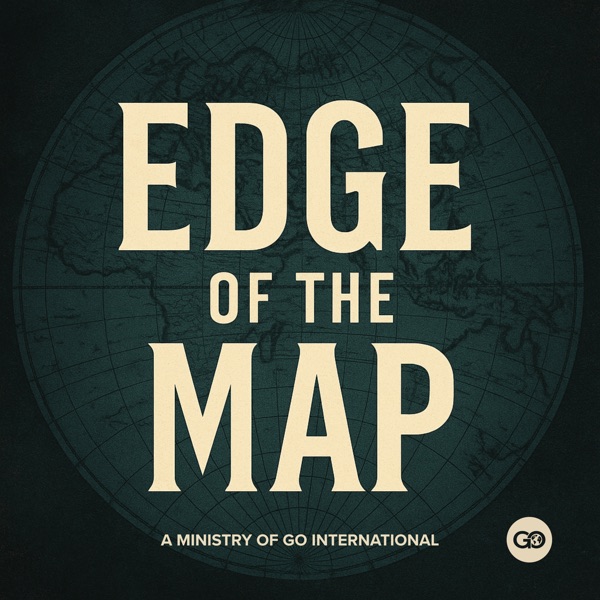
Edge of the Map
The frontier of mission is shifting. The old maps don’t match the reality of where the gospel is advancing today. Cultures are changing, new voices are rising, and the church is being planted in places long considered unreachable. Yet the Commission hasn’t changed.
The Edge of the Map podcast is about pressing into those uncharted spaces - pushing the boundaries, redrawing the frontier lines, and asking what it means to do whatever it takes to carry the good news further. This is the Edge of the Map podcast, a ministry of GO International.
- Episodes
- 23
- Releases
- Every two weeks
- Typical length
- 27 min
- On air since
- 2025
- Latest episode
- 1 day ago
Episodes
23 episodes, newest first
-
19 min
Prescriptions with Purpose (feat. Matt Harney)
Season 3, Episode 15
Show notes
What if your everyday work in healthcare could become a platform for sharing the gospel?
For pharmacist Matt Harney, the connection between healthcare and missions became clear during a 2018 medical mission trip to Peru. Serving on the pharmacy team, he realized that his professional training, experience, and daily interactions with patients could become an opportunity to demonstrate Christ's love and participate in Kingdom work.
In this episode, Matt challenges healthcare professionals to look beyond the daily demands of insurance claims, paperwork, and patient loads to recognize the people behind every prescription and appointment. While not every interaction allows for an explicit gospel conversation, simple acts of compassion, making eye contact, welcoming patients, listening, and giving people the time they need can reflect the heart of Jesus. He emphasizes that serving others well begins with resetting priorities and making room for opportunities the Holy Spirit provides.
Matt also explains why medical missions are not limited to doctors, nurses, pharmacists, or dentists. Non-medical volunteers play an important role by welcoming patients, offering encouragement, praying with people, and helping create an environment where individuals feel seen and cared for. Through hospitality and a servant-hearted attitude, anyone can contribute to the work of a medical mission team.
He shares a powerful story from a medical clinic in Boka Kiyotari, where an initially hesitant community eventually welcomed the team. What began as a difficult conversation with local leadership opened the door to serving three additional communities. When the team returned six months later, they experienced a much warmer reception, and a local church had begun partnering with community leaders to share the gospel.
Ultimately, Matt reminds listeners that living on mission doesn't require a passport, a medical degree, or an invitation to travel overseas. It begins with prayer, a willing heart, and a commitment to making God known wherever He has placed us. Whether behind a pharmacy counter, in a hospital room, or serving in a remote medical clinic, everyday acts of compassion can create meaningful opportunities for the gospel.
Key Takeaways
• Healthcare can become a mission field when professionals recognize that their everyday interactions with patients are opportunities to demonstrate Christ's love.
• Kingdom work doesn't always require an explicit gospel conversation. Making eye contact, welcoming patients, listening, and showing compassion are meaningful ways to reflect Jesus.
• Healthcare professionals can shift their perspective by prioritizing knowing God, caring for people, and remaining open to opportunities the Holy Spirit provides.
• A servant-hearted attitude is more important than having a medical background. Anyone willing to love and welcome others can contribute to a medical mission team.
• Effective missions begin with prayer, listening to God, and developing a willing heart rather than waiting for a special calling or opportunity to travel.
• You don't need a passport to live on mission. God can use your profession, relationships, and everyday circumstances to make Him known right where you are.Chapter Markers
00:00 — Finding Mission Opportunities in Everyday Healthcare
00:35 — Welcome to Season Three: Can You Do That in Missions?
01:04 — Can Healthcare Become a Mission Field?
02:04 — When Pharmacy Work Became Kingdom Work
07:06 — Creating Opportunities for Gospel Conversations
08:29 — Who Can Serve on a Medical Mission Team?
10:38 — The Impact of Serving Alongside Medical Professionals
12:49 — Start Living on Mission Right Where You Are
13:14 — Prayer, Listening, and a Willing Heart
14:48 — A Story from the Medical Mission Field
15:14 — Overcoming Barriers in Boka Kiyotari
16:28 — Returning to a Community Transformed by Relationships
18:01 — Learn More About Medical Missions with Go International
Want to learn how GO International is planting the Church where it isn’t — and what that could look like for you?
Visit GO International to give, go, or grow the movement.
-
24 min
Boardrooms, Bottom Lines, and Eternal Impact (business)
Season 3, Episode 14
Show notes
What if your business could become a platform for God’s Kingdom?
For this Christian entrepreneur in Iraq, business began as a way to reclaim his time, care for his family, and rebuild his relationship with the Lord. After leaving a demanding career, he started providing compliance services to nonprofit organizations. What began as freelance work soon became an opportunity to support ministries, serve humanitarian organizations, create jobs, and develop leaders.
His story challenges the idea that business and missions belong in separate worlds. Through consulting, leadership training, and plans for employment-focused businesses, he has discovered how profit can serve a greater purpose. But business as mission requires more than good intentions. It takes genuine profitability, operational excellence, and a healthy workplace culture.
At the heart of his work is a commitment to equipping others. Through experiential learning, coaching, and intentional delegation, he helps leaders grow in practical skills, servant leadership, and confidence.
His vision extends beyond business to the future of the church in Iraq. Despite seeing friends and family leave amid ongoing challenges, he remains committed to strengthening local churches and pursuing unity among Christian leaders.
The result is a compelling picture of business as mission: a way to serve communities, empower people, and advance God's Kingdom through faithful work in everyday life.
Key Takeaways
• Missions can happen through ordinary work, hobbies, businesses, and relationships rather than only through traditional mission trips.
• Long-term discipleship often begins with someone ahead of us who is willing to invest in our lives.
• Jason’s decision to start Tin Soldiers was shaped by a willingness to step into uncertainty rather than wait until everything made sense.
• A workplace can become a place of gospel community when people are welcomed, known, discipled, and given space to encounter Jesus.
• The Bible study at Tin Soldiers grew organically from a small gathering into a larger community and eventually into satellite men's groups.
• Jason repeatedly emphasizes the importance of pointing people toward the local church rather than allowing a ministry gathering to become a substitute for the Church.
• Loving people where you already are may be the simplest and most faithful place to begin living out the Great Commission.Chapter Markers
00:00 — Welcome to Season Three: Can You Do That in Missions?
01:36 — What Is Tin Soldiers Race Cars?
05:15 — From Motocross to Ministry
08:43 — The Men Who Discipled Jason
10:39 — When the Plan Fell Apart
12:54 — The Dream of the Cliff and the Water
16:15 — Taking the Jump
19:46 — Why Race Cars Became a Mission Field
21:09 — Jesus the Carpenter and the Workplace
22:59 — A Bible Study in the Race Shop
24:47 — From Small Group to a Growing Community
28:20 — Bound for Glory and Satellite Groups
30:39 — What Happens When Men Encounter Jesus?
34:49 — Start Where You Are
36:16 — A Long Obedience in the Same Direction
Want to learn how GO International is planting the Church where it isn’t — and what that could look like for you?
Visit GO International to give, go, or grow the movement.
-
38 min
Quarter-Miles and High-Octane Calling (feat. Jason Terrell)
Season 3, Episode 13
Show notes
For Jason Terrell, missions didn’t begin with leaving home. It grew out of motorcycles, race tracks, friendships, welding, and eventually a race-car business. What began as Tin Soldiers Race Cars became an unexpected place where men could encounter Jesus and one another in a setting where many of them never expected the Church to show up.
Jason’s story is also a story of discipleship. From a teenage mentor who pulled him forward, to watching older business leaders live out their faith, Jason learned that following Jesus is rarely something we figure out alone. Someone ahead of us sharpens us, and eventually we turn around and pull someone else along.
The result is not a polished ministry model. It is a community. A Bible study that started with a handful of men eventually grew into a gathering of dozens and sometimes more than a hundred, with satellite groups forming in other race-car shops. The central conviction remains simple: love God, love people, and learn to see the people God has already placed in front of you.
Key Takeaways
• Missions can happen through ordinary work, hobbies, businesses, and relationships rather than only through traditional mission trips.
• Long-term discipleship often begins with someone ahead of us who is willing to invest in our lives.
• Jason’s decision to start Tin Soldiers was shaped by a willingness to step into uncertainty rather than wait until everything made sense.
• A workplace can become a place of gospel community when people are welcomed, known, discipled, and given space to encounter Jesus.
• The Bible study at Tin Soldiers grew organically from a small gathering into a larger community and eventually into satellite men's groups.
• Jason repeatedly emphasizes the importance of pointing people toward the local church rather than allowing a ministry gathering to become a substitute for the Church.
• Loving people where you already are may be the simplest and most faithful place to begin living out the Great Commission.Chapter Markers
00:00 — Welcome to Season Three: Can You Do That in Missions?
01:36 — What Is Tin Soldiers Race Cars?
05:15 — From Motocross to Ministry
08:43 — The Men Who Discipled Jason
10:39 — When the Plan Fell Apart
12:54 — The Dream of the Cliff and the Water
16:15 — Taking the Jump
19:46 — Why Race Cars Became a Mission Field
21:09 — Jesus the Carpenter and the Workplace
22:59 — A Bible Study in the Race Shop
24:47 — From Small Group to a Growing Community
28:20 — Bound for Glory and Satellite Groups
30:39 — What Happens When Men Encounter Jesus?
34:49 — Start Where You Are
36:16 — A Long Obedience in the Same Direction
Want to learn how GO International is planting the Church where it isn’t — and what that could look like for you?
Visit gointernational.org to give, go, or grow the movement.
-
41 min
The Next Frontier (feat. Jeff Henderson)
Season 2, Episode 12
Show notes
For many Christians, the word frontier brings to mind remote villages, dangerous borders, or places where few have heard the name of Jesus.
But what if the frontier has changed?
In this thoughtful conversation, we sit down with Jeff Henderson to explore how globalization, migration, urbanization, and the growth of the global Church are reshaping the way we think about missions.
Together we reflect on God's heart for every people group and why the Western Church must increasingly move from leading the work to equipping and partnering with local believers.
Rather than offering simple answers, this episode invites listeners to adopt a posture of humility, faithfulness, and expectancy as God's mission continues to unfold in ways few could have imagined.
Key Takeaways
• God's mission has always been for every tribe, language, and nation.
• The frontier is no longer defined only by geography but also by access and gospel witness.
• Local believers are often best positioned to reach neighboring unreached peoples.
• The future of missions requires humility, partnership, and shared leadership.
• The global Church is increasingly carrying the Great Commission together.
• Frontier ministry often begins by listening before leading.
• Faithfulness means fixing our eyes on Jesus and refusing to give up.Chapter Markers
00:00 Jeff Henderson's journey into missions
08:15 How the frontier has changed
15:20 Why God cares about the frontier
22:10 Migration, cities, and the nations
30:40 The rise of the global Church
39:30 Rethinking Western missions
47:15 Partnership, humility, and local leadership
55:10 The next frontier: methodology
1:03:30 Running the race with endurance
Want to learn how GO International is planting the Church where it isn't - and what that could look like for you?
VisitGO International to give, go, or grow the movement.
-
24 min
No B-Teams in the Kingdom
Season 2, Episode 11
Show notes
When today's guest and her husband moved to Central Asia just days before September 11, they had no idea what the next twenty years would hold.
Living in a post-war environment with limited resources, they learned that effective mission work begins not with programs but with presence.
Throughout the conversation, she reflects on the realities of serving in a Muslim context - from navigating government scrutiny to protecting local believers while trusting the Holy Spirit to build His Church.
She offers a refreshing perspective on what it means to love people well without reducing them to stereotypes or political headlines.
The episode concludes with an encouraging reminder that God is orchestrating His mission across the globe.
From believers emerging in unexpected places to new laborers rising from every continent, the gospel continues to advance through ordinary people who simply take the next step of obedience.
Key Takeaways
• Presence often matters more than programs in cross-cultural ministry.
• Effective missions begin with seeing every person as an image bearer of God.
• The Holy Spirit - not Western missionaries - builds the Church.
• Government opposition cannot stop God's mission.
• The global Church is increasingly leading the advance of the gospel.
• Every believer has a place in God's mission.
• Faithfulness begins by taking the next step of obedience.Chapter Markers
00:00 Welcome and today's guest's journey into Central Asia
05:30 Living in a post-war environment
11:30 Navigating government opposition
18:00 Protecting local believers
24:00 Misconceptions about ministry in Muslim communities
31:00 Seeing people as image bearers
37:00 Why the global Church is growing
44:00 Stories of God's unexpected strategy
50:00 Encouragement for future missionaries
Want to learn how GO International is planting the Church where it isn't - and what that could look like for you?
Visit GO International to give, go, or grow the movement.
-
36 min
Signs, Wonders, and Hard Places
Season 2, Episode 10
Show notes
Growing up in a traditional Hindu family, today's guest never imagined his life would become a testimony to the power of Christ.
After a terminal diagnosis left him abandoned outside his family's home, an unexpected encounter with Jesus changed everything.
His miraculous healing became the beginning of a costly journey of faith.
Rejected by his community, separated from his family, and eventually called into ministry, he learned firsthand what it means to follow Jesus regardless of the cost.
Today, God is using that same faithfulness to strengthen churches, care for vulnerable children, equip pastors, and proclaim the gospel throughout India.
This episode offers both an inspiring testimony and a compelling reminder that the Church continues to grow even under pressure.
Key Takeaways
• Jesus continues to reveal Himself in remarkable ways around the world.
• Following Christ often requires costly obedience.
• Persecution has not stopped the growth of the Church in India.
• Christian education can transform the future of entire communities.
• Caring for vulnerable children demonstrates the love of Christ in practical ways.
• Local pastors and church planters remain at the center of gospel ministry.
• Faithful partnership strengthens long-term Kingdom work.Chapter Markers
00:00 Welcome and introduction
02:00 Growing up in a Hindu priest's family
05:00 A miraculous healing and encounter with Jesus
12:00 Rejection, persecution, and leaving home
18:00 A call into ministry
24:00 Church planting in India
31:00 Caring for vulnerable children through Christian education
39:00 The resilience of the Indian Church
46:00 Partnership, prayer, and the future of ministry
Want to learn how GO International is planting the Church where it isn't - and what that could look like for you?
VisitGO International to give, go, or grow the movement.
-
27 min
Beyond the Clinic
Season 2, Episode 9
Show notes
A medical degree can open doors around the world, but it cannot accomplish the Great Commission on its own.
In this conversation, an experienced physician reflects on the journey that led him from family practice in the United States to decades of serving alongside local churches and medical professionals across the globe.
The discussion explores how healthcare becomes a bridge for relationships, discipleship, and gospel witness.
Through stories of healing, discernment, and collaboration, the episode demonstrates that lasting transformation happens when ministry empowers local leaders rather than replacing them.
The conversation concludes with practical encouragement for students and professionals who sense God calling them into global missions.
Whatever your vocation, the invitation remains the same: faithfully follow Jesus where you are today while remaining open to wherever He may lead tomorrow.
Key Takeaways
• God often uses ordinary careers for extraordinary Kingdom purposes.
• Medical missions are most effective when they strengthen local churches and leaders.
• Discernment is just as important as diagnosis.
• Lasting community transformation requires multiplication, not dependency.
• Every believer is called to make disciples, regardless of profession.
• Faithfulness begins at home before it extends across the world.
• Practical skills can become powerful tools for gospel ministry.Chapter Markers
00:00 A doctor's unexpected journey into missions
05:30 A worship service that changed everything
10:20 Seeing patients as whole people
16:00 Diagnosis, discernment, and the work of the Holy Spirit
21:00 Why local leaders matter most
27:00 Community health and sustainable ministry
33:00 Training church planters through practical healthcare
39:00 Advice for future medical missionaries
44:00 Every vocation belongs in God's mission
Want to learn how GO International is planting the Church where it isn't - and what that could look like for you?
VisitGO International to give, go, or grow the movement.
-
34 min
The Church in a War Zone (feat. Stephanie Quick)
Season 2, Episode 8
Show notes
The modern Church often talks about faithfulness in theory. Stephanie Quick lives it in practice.
Speaking from northern Israel near the borders of Lebanon and Syria, she shares how a series of unexpected acts of obedience led her to a region she never planned to call home.
The conversation explores life during conflict, what it means to minister in a place shaped by uncertainty, and how proximity to war changes one's perspective on worship, calling, and dependence on God.
Stephanie reflects on the grace that accompanies obedience and the surprising peace that can come when God places someone exactly where He intends them to be.
The discussion then turns toward the deeper challenges facing the Church.
From polarization surrounding Israel and the Middle East to the temptations of tribalism within Christian communities, Stephanie argues that the cross remains the great equalizer.
In an age dominated by outrage, platforms, and competing narratives, believers are called to keep a tender heart, stay rooted in Scripture, and bear faithful witness to Jesus.
Key Takeaways
• Obedience often leads where comfort never would.
• Living near conflict exposes what we truly trust.
• The cross dismantles tribalism and calls believers to love even those they consider enemies.
• Ministry is strongest when it functions more like a table than a platform.
• Scripture must remain the Church's primary source of formation in a distracted age.
• The Church must resist offense and cultivate spiritual resilience.
• Faithfulness requires both conviction and humility.Chapter Markers
00:00 Introduction and Stephanie's journey to Israel
03:00 Living near the borders of Lebanon and Syria
05:15 Worship, discipleship, and faith during conflict
11:45 The story behind Emmaus Table
14:30 Theology, Israel, and ministry in the Middle East
19:45 Why the cross confronts tribalism
24:30 Loving enemies in polarized times
27:00 A message to the Western Church
31:15 Keeping a tender heart in the last days
Want to learn how GO International is planting the Church where it isn’t - and what that could look like for you?
VisitGO International to give, go, or grow the movement.
To explore more of Stephanie's teaching, films, podcasts, and biblical resources, visitThe Emmaus Table.
-
35 min
The Village No One Visits (feat. Larry Montgomery)
Season 2, Episode 7
Show notes
There are still places in the world where the gospel has little presence. Villages without roads. Communities hidden deep beyond rivers and jungle trails. Places most people will never see.
In this episode, we talk with Larry Montgomery about what it actually looks like to go there. Together we unpack the logistics, partnerships, risks, and spiritual realities behind ministry in hard-to-reach places.
But this conversation goes deeper than stories of travel and hardship. It becomes a reflection on calling, obedience, and the way God changes people when they step beyond comfort for the sake of the gospel.
Key Takeaways
• Why “all the easy places are taken” continues to shape frontier mission work
• How local pastors, translators, drivers, cooks, and ministry partners make remote outreach possible
• A powerful story of a father carrying his daughter for hours through the jungle seeking help
• Why many people go for the adventure but return because they encounter the need for the gospel
• The importance of preparation, partnership, and wisdom when entering difficult places
• How mission experiences often reshape a person’s worldview and calling
• Why no one is meant to sit out the work of the Great CommissionChapter Markers
00:00 — Welcome to Season Two and the reality of unreached places
03:20 — Entering Nueva San Martin for the first time
07:10 — Why GO continues pursuing hard-to-reach communities
11:15 — A miraculous story from deep in the Peruvian jungle
17:40 — The role of local partners and Peruvian believers
24:30 — Why strategy and partnership matter in frontier mission
29:10 — Adventure versus calling: what keeps people returning
33:00 — Risk, preparation, and trusting God in difficult places
39:25 — How mission work changed Larry’s life forever
45:00 — Encouragement for listeners sensing God’s invitationWant to learn how GO International is planting the Church where it isn’t - and what that could look like for you?
Visit http://gointernational.org to give, go, or grow the movement. -
26 min
From Revival to Mission (feat. Zach Meerkreebs)
Season 1, Episode 6
Show notes
Revival has never been the finish line.
Throughout history, moments of spiritual awakening have always pushed the Church outward - toward evangelism, justice, and the nations.
Yet today many believers feel uncertain about mission. Some are reacting to broken models from the past. Others simply feel unsure how evangelism fits in a skeptical culture.
In this episode, Ron Halp sits down with Zach Meerkreebs to reflect on what they are seeing around the world right now.
From growing prayer movements in Europe to a renewed hunger among younger believers to share their faith, this conversation explores a simple but critical truth: encounter with God must eventually lead to mission.
Revival is not meant to stop in the prayer room.
Key Takeaways
• Revival and mission have always moved together throughout church history.
• Many younger believers are rediscovering a passion for evangelism and global mission.
• Encounter with God is meant to propel the Church outward toward the lost.
• Every Christian lives with a dual identity: both the object of God’s mission and an agent of God’s mission.
• The global Church is increasingly leading global mission - from Brazil to Mongolia to South Korea.
• Unity among churches and mission organizations multiplies the reach of the Gospel.
• Short-term mission experiences often shape lifelong discipleship and calling.Chapter Markers
00:00 - The Current Moment in Global Missions
Why enthusiasm for missions declined in recent years and why that may be changing.04:30 - Signs of Spiritual Hunger Around the World
Encouraging stories from Europe, Australia, and beyond.10:30 - Revival and Mission: Two Sides of the Same Coin
Why historic awakenings always produced evangelism and social transformation.18:30 - The Missed Opportunity of Revival Without Commissioning
Lessons from recent spiritual movements and the need to mobilize believers.24:30 - Object and Agent of God’s Mission
Understanding the dual identity of every follower of Jesus.30:00 - The Nations Going to the Nations
How the global Church is increasingly leading global mission.34:30 - Encouragement for Young People Sensing a Call
Why action often clarifies calling.40:00 - Why Mission Experiences Matter
How stepping into unfamiliar places shapes lifelong discipleship.46:00 - A Word to Parents and Grandparents
The role of releasing the next generation into God’s mission.Want to learn how GO International is planting the Church where it isn’t - and what that could look like for you?
Visit http://gointernational.org to give, go, or grow the movement.
-
26 min
From Revival to Mission (feat. Zach Meerkreebs)
Season 1, Episode 6
Show notes
Revival has never been the finish line.
Throughout history, moments of spiritual awakening have always pushed the Church outward - toward evangelism, justice, and the nations.
Yet today many believers feel uncertain about mission. Some are reacting to broken models from the past. Others simply feel unsure how evangelism fits in a skeptical culture.
In this episode, Ron Halp sits down with Zach Meerkreebs to reflect on what they are seeing around the world right now.
From growing prayer movements in Europe to a renewed hunger among younger believers to share their faith, this conversation explores a simple but critical truth: encounter with God must eventually lead to mission.
Revival is not meant to stop in the prayer room.
Key Takeaways
• Revival and mission have always moved together throughout church history.
• Many younger believers are rediscovering a passion for evangelism and global mission.
• Encounter with God is meant to propel the Church outward toward the lost.
• Every Christian lives with a dual identity: both the object of God’s mission and an agent of God’s mission.
• The global Church is increasingly leading global mission - from Brazil to Mongolia to South Korea.
• Unity among churches and mission organizations multiplies the reach of the Gospel.
• Short-term mission experiences often shape lifelong discipleship and calling.Chapter Markers
00:00 - The Current Moment in Global Missions
Why enthusiasm for missions declined in recent years and why that may be changing.04:30 - Signs of Spiritual Hunger Around the World
Encouraging stories from Europe, Australia, and beyond.10:30 - Revival and Mission: Two Sides of the Same Coin
Why historic awakenings always produced evangelism and social transformation.18:30 - The Missed Opportunity of Revival Without Commissioning
Lessons from recent spiritual movements and the need to mobilize believers.24:30 - Object and Agent of God’s Mission
Understanding the dual identity of every follower of Jesus.30:00 - The Nations Going to the Nations
How the global Church is increasingly leading global mission.34:30 - Encouragement for Young People Sensing a Call
Why action often clarifies calling.40:00 - Why Mission Experiences Matter
How stepping into unfamiliar places shapes lifelong discipleship.46:00 - A Word to Parents and Grandparents
The role of releasing the next generation into God’s mission.
Want to learn how GO International is planting the Church where it isn’t - and what that could look like for you?
Visit http://gointernational.org to give, go, or grow the movement.
-
27 min
Funding What God is Doing (feat. Phillip Petrie)
Season 1, Episode 5
Show notes
For generations, the funding of missions has followed familiar patterns: churches send missionaries, donors give financially, and organizations coordinate the work.
But what if the future of missions requires something more diverse?
In this episode, Curtis Elliott sits down with Lexington business leader Philip Petrie to explore how the marketplace can become a meaningful part of global mission.
Drawing from years of entrepreneurship and international engagement, Philip shares how business leaders can think about stewardship, generosity, and the responsibility that comes with resources.
Their conversation challenges assumptions about return on investment, control, and the role of business in the Great Commission.
The result is a thoughtful exploration of what it means to fund and participate in the mission of God with open hands.
Key Takeaways
• Marketplace leadership can be a genuine calling - not separate from mission but integrated with it.
• Kingdom generosity grows when leaders see resources as something entrusted to them, not owned by them.
• Relationships often reveal where God is inviting believers to give or participate.
• Sustainable mission models increasingly prioritize empowering local leaders.
• Marketplace-based mission approaches can create deeper cultural engagement.
• Early generosity forms habits that shape long-term stewardship.
• The future of missions may include smaller, more contextualized expressions of impact.Chapter Markers
00:00 — The Question of Funding the Future of Missions
Curtis introduces the episode and the importance of kingdom investment.01:16 — Business Calling and Christian Identity
Philip reflects on how entrepreneurship and faith have become integrated in his life.03:22 — Marketplace Community in Lexington
The influence of relationships among Christian business leaders.04:58 — A Hard Business Decision That Changed Everything
Closing company markets to rebuild culture and align the business with kingdom values.06:54 — How Kingdom Culture Connects to Global Missions
Why relationships often reveal where God is calling believers to participate.10:30 — The Problem with Measuring Kingdom ROI
Why obedience matters more than calculating spiritual returns.13:27 — Stewardship vs Ownership
The danger of controlling resources instead of holding them open-handedly.16:21 — Prayer, Discernment, and Giving Decisions
How Philip and his wife approach generosity together.18:08 — Advice for Young Entrepreneurs
Why generosity should begin early, even when resources are limited.20:26 — The Future of Missions
Marketplace engagement, local leadership, and new models of mission impact.Want to learn how GO International is planting the Church where it isn’t - and what that could look like for you?
Visit http://gointernational.org to give, go, or grow the movement.
-
32 min
Listening to the Global Church (feat. Jay Moon)
Season 1, Episode 4
Show notes
Christianity is no longer centered in the West.
The fastest growth is happening in post-colonial contexts across Africa, Asia, and Latin America - places where believers are asking different questions of Scripture and developing theology from within their own realities.
In this conversation, Jay Moon reflects on his years among the Bulsa people of Ghana and the moment he realized that a guilt-based presentation of the gospel did not address their deepest fears. That shift reshaped his theology of evangelism.
But the conversation doesn’t stop overseas. Jay argues that the emerging worldview in the West is no longer guilt, fear, or shame - but indifference. And if the Church fails to listen carefully, we will continue offering answers to questions no one is asking.
Key Takeaways
• Christianity is growing fastest in post-colonial contexts where Western influence is weakest.
• All theology is contextual theology - the question is who gets to ask the questions.
• The gospel addresses guilt, but also fear and shame.
• Many cultures operate from a fear-power or shame-honor worldview rather than guilt-justice.
• The emerging worldview in the West is indifference - a longing for belonging and purpose.
• Evangelism begins by listening to the conversation God is already having with people.
• Churches and mission agencies must cultivate missional imagination to avoid the “curse of knowledge.”Chapter Markers
00:00 – Christianity shifting to the Global South
05:30 – Post-colonial theology and local autonomy
12:40 – Secularization and the loss of spiritual imagination
18:15 – A story of spiritual warfare and worldview assumptions
24:20 – Ghana and the Bulsa people: When guilt didn’t resonate
33:10 – Fear, shame, and the power of Christ
41:45 – The rise of indifference in the West
49:30 – Belonging, purpose, and Zacchaeus
56:00 – Missional imagination and kingdom innovation
1:05:00 – The curse of knowledge and Blockbuster vs. NetflixWant to learn how GO International is planting the Church where it isn’t - and what that could look like for you?
Visit http://gointernational.org to give, go, or grow the movement. -
27 min
Discipleship on the Frontier (feat. Thane Ury)
Season 1, Episode 3
Show notes
For decades, Mongolia was shaped by isolation, communism, and spiritual suppression. Today, the doors are open, and a young generation is responding to the gospel with hunger and joy.
In this conversation, Ron Howe and Dr. Thane Urie reflect on why Mongolia matters now. They share firsthand stories of young pastors, first-generation believers, and churches being planted one relationship at a time.
Growth is steady, but the need for discipleship is urgent.
This episode challenges Western assumptions about success in missions. It reminds us that the Church is not built through events or personalities, but through long obedience, patient teaching, and walking with local leaders who will carry the work forward.
Key Takeaways
• Missions is not starting something new, but catching up with what God has been doing for centuries
• Mongolia’s Church is young, both in age and spiritual formation
• Discipleship, not speed, determines long-term fruit
• Freedom of religion brings opportunity and new challenges
• Local leaders need presence more than programs
• One faithful convert at a time can reshape a nationChapter Markers
• 00:00 – Why Mongolia, Why Now
• 08:30 – Catching Up With What God Has Been Doing
• 18:45 – Life After Communism
• 30:10 – The Urgency of Discipleship
• 42:00 – Walking With Local Leaders
• 54:30 – What Faithful Growth Really Looks LikeWant to learn how GO International is planting the Church where it isn’t - and what that could look like for you?
Visit http://gointernational.org to give, go, or grow the movement. -
26 min
Equipping Women for Multiplication (feat. Michelle Gash)
Season 1, Episode 2
Show notes
Women across cultures carry physical, emotional, and spiritual weight that often goes unseen. These burdens shape families and communities, yet are rarely named in discipleship models.
When they remain hidden, growth stalls and leaders remain isolated.
In this episode, we explore how equipping women with truth helps break silence, restore confidence, and activate disciple-makers within their existing networks.
Rather than importing programs, the focus is on facilitation, trust, and walking with women as they recognize their God-given worth.
The conversation highlights how discipleship multiplies when women are given tools that are transferable, relational, and rooted in Scripture.
What emerges is not hype, but steady growth shaped by obedience and long-term presence.
Key Takeaways
• Women often carry unseen shame, silence, and responsibility across cultures
• Discipleship stalls when burdens remain unnamed
• Confidence grows when lies are replaced with God’s truth
• Women are naturally positioned to multiply disciples relationally
• Facilitation works better than expert-driven models
• Equipping leads to activation, not dependency
• Multiplication happens when women lead within their existing networksChapter Markers (Approximate)
• 00:00 – Why Equip Her exists
• 04:30 – The unseen weight women carry
• 09:45 – Silence, shame, and discipleship gaps
• 16:00 – Truth, lies, and activation
• 24:30 – Holistic discipleship and women’s health
• 33:00 – Training that multiplies
• 41:15 – What success really looks likeWant to learn how GO International is planting the Church where it isn’t - and what that could look like for you?
Visit http://gointernational.org to give, go, or grow the movement. -
30 min
Why Missions is More Than a Trip (feat. Clint Bokelman)
Season 1, Episode 1
Show notes
This conversation starts with a simple question: what has short-term missions gotten right?
The answer isn’t a strategy. It’s discipleship. Not discipleship as a program, but discipleship as formation through obedience, exposure, and surrender.
Clint Bokelman shares how his earliest mission experience challenged what he thought was possible and forced him to confront how “manageable” he had made God.
The point isn’t the story itself. The point is what happens when our theology has no room for the book of Acts.
The episode also names the risk: good intentions can still do real harm. Partnerships with local leaders require character, trust, and careful stewardship, especially when money, resources, and “success” can distort a leader’s life and ministry.
Key Takeaways
• Short-term missions can be a powerful discipleship tool when it forms people in obedience, not performance.
• Trying to “choreograph” the trip can become a subtle way of asking God to submit to our script.
• A healthier posture is to ask where God is already moving and join Him, instead of asking Him to bless our plans.
• Field partnerships should be built on proven character and ongoing fruit, not on what outsiders want to accomplish.
• “Blessing” can backfire when it creates dependency, unrealistic expectations, or temptation that harms local leaders.
• Gen Z may be more open than we think, but the bridge from worship moments to mission lives is discipleship.
• The goal is not going somewhere. The goal is making disciples who make disciples.Chapter Markers
• 00:00–02:25 Welcome to Edge of the Map and why this episode matters
• 02:26–05:35 What short-term missions can get right: missions as discipleship
• 05:36–09:10 A story that challenged “safe” theology and exposed a packaged view of God
• 09:11–13:55 What didn’t work: scripting outcomes and trying to control the trip
• 13:56–15:40 When “disaster” becomes invitation: letting God lead in the field
• 15:41–20:45 Partnering with local leaders: vetting, posture, and stewardship
• 20:46–22:35 The hidden harm: blessing that creates dependence or compromise
• 22:36–27:45 Gen Z and mobilization: why the bridge is discipleship, not hype
• 27:46–end Closing encouragement and the long view of missionWant to learn how GO International is planting the Church where it isn’t - and what that could look like for you?
Visit http://gointernational.org to give, go, or grow the movement. -
9 min
Pilot: What is the Edge of the Map? Trailer
Show notes
The frontier of mission is shifting.
Cultures are changing, global voices are rising, and the gospel is being planted in places long considered unreachable.
Yet the Commission hasn’t changed.
Edge of the Map is the podcast from GO InterNational that explores what it looks like to press into uncharted spaces, redraw the frontier, and do whatever it takes to carry the good news further.
-
27 min
Funding What God Is Doing (feat. Phillip Petrie)
Season 1, Episode 5
Show notes
For generations, the funding of missions has followed familiar patterns: churches send missionaries, donors give financially, and organizations coordinate the work.
But what if the future of missions requires something more diverse?
In this episode, Curtis Elliott sits down with Lexington business leader Philip Petrie to explore how the marketplace can become a meaningful part of global mission.
Drawing from years of entrepreneurship and international engagement, Philip shares how business leaders can think about stewardship, generosity, and the responsibility that comes with resources.
Their conversation challenges assumptions about return on investment, control, and the role of business in the Great Commission.
The result is a thoughtful exploration of what it means to fund and participate in the mission of God with open hands.
Key Takeaways
• Marketplace leadership can be a genuine calling - not separate from mission but integrated with it.
• Kingdom generosity grows when leaders see resources as something entrusted to them, not owned by them.
• Relationships often reveal where God is inviting believers to give or participate.
• Sustainable mission models increasingly prioritize empowering local leaders.
• Marketplace-based mission approaches can create deeper cultural engagement.
• Early generosity forms habits that shape long-term stewardship.
• The future of missions may include smaller, more contextualized expressions of impact.Chapter Markers
00:00 — The Question of Funding the Future of Missions
Curtis introduces the episode and the importance of kingdom investment.01:16 — Business Calling and Christian Identity
Philip reflects on how entrepreneurship and faith have become integrated in his life.03:22 — Marketplace Community in Lexington
The influence of relationships among Christian business leaders.04:58 — A Hard Business Decision That Changed Everything
Closing company markets to rebuild culture and align the business with kingdom values.06:54 — How Kingdom Culture Connects to Global Missions
Why relationships often reveal where God is calling believers to participate.10:30 — The Problem with Measuring Kingdom ROI
Why obedience matters more than calculating spiritual returns.13:27 — Stewardship vs Ownership
The danger of controlling resources instead of holding them open-handedly.16:21 — Prayer, Discernment, and Giving Decisions
How Philip and his wife approach generosity together.18:08 — Advice for Young Entrepreneurs
Why generosity should begin early, even when resources are limited.20:26 — The Future of Missions
Marketplace engagement, local leadership, and new models of mission impact.Want to learn how GO International is planting the Church where it isn’t - and what that could look like for you?
Visit http://gointernational.org to give, go, or grow the movement.
-
33 min
Listening to the Global Church (feat. Jay Moon)
Season 1, Episode 4
Show notes
Christianity is no longer centered in the West.
The fastest growth is happening in post-colonial contexts across Africa, Asia, and Latin America - places where believers are asking different questions of Scripture and developing theology from within their own realities.
In this conversation, Jay Moon reflects on his years among the Bulsa people of Ghana and the moment he realized that a guilt-based presentation of the gospel did not address their deepest fears. That shift reshaped his theology of evangelism.
But the conversation doesn’t stop overseas. Jay argues that the emerging worldview in the West is no longer guilt, fear, or shame - but indifference. And if the Church fails to listen carefully, we will continue offering answers to questions no one is asking.
Key Takeaways
• Christianity is growing fastest in post-colonial contexts where Western influence is weakest.
• All theology is contextual theology - the question is who gets to ask the questions.
• The gospel addresses guilt, but also fear and shame.
• Many cultures operate from a fear-power or shame-honor worldview rather than guilt-justice.
• The emerging worldview in the West is indifference - a longing for belonging and purpose.
• Evangelism begins by listening to the conversation God is already having with people.
• Churches and mission agencies must cultivate missional imagination to avoid the “curse of knowledge.”Chapter Markers
00:00 – Christianity shifting to the Global South
05:30 – Post-colonial theology and local autonomy
12:40 – Secularization and the loss of spiritual imagination
18:15 – A story of spiritual warfare and worldview assumptions
24:20 – Ghana and the Bulsa people: When guilt didn’t resonate
33:10 – Fear, shame, and the power of Christ
41:45 – The rise of indifference in the West
49:30 – Belonging, purpose, and Zacchaeus
56:00 – Missional imagination and kingdom innovation
1:05:00 – The curse of knowledge and Blockbuster vs. NetflixWant to learn how GO International is planting the Church where it isn’t - and what that could look like for you?
Visit http://gointernational.org to give, go, or grow the movement. -
28 min
Discipleship on the Frontier (feat. Thane Ury)
Season 1, Episode 3
Show notes
For decades, Mongolia was shaped by isolation, communism, and spiritual suppression. Today, the doors are open, and a young generation is responding to the gospel with hunger and joy.
In this conversation, Ron Houp and Dr. Thane Ury reflect on why Mongolia matters now. They share firsthand stories of young pastors, first-generation believers, and churches being planted one relationship at a time.
Growth is steady, but the need for discipleship is urgent.
This episode challenges Western assumptions about success in missions. It reminds us that the Church is not built through events or personalities, but through long obedience, patient teaching, and walking with local leaders who will carry the work forward.
Key Takeaways
• Missions is not starting something new, but catching up with what God has been doing for centuries
• Mongolia’s Church is young, both in age and spiritual formation
• Discipleship, not speed, determines long-term fruit
• Freedom of religion brings opportunity and new challenges
• Local leaders need presence more than programs
• One faithful convert at a time can reshape a nationChapter Markers
• 00:00 – Why Mongolia, Why Now
• 08:30 – Catching Up With What God Has Been Doing
• 18:45 – Life After Communism
• 30:10 – The Urgency of Discipleship
• 42:00 – Walking With Local Leaders
• 54:30 – What Faithful Growth Really Looks LikeWant to learn how GO International is planting the Church where it isn’t - and what that could look like for you?
Visit http://gointernational.org to give, go, or grow the movement.
Christianity lists
More Christianity shows picked out from the charts


More in Christianity
Placed highest on Apple Podcasts' Christianity chart right now