Podcast
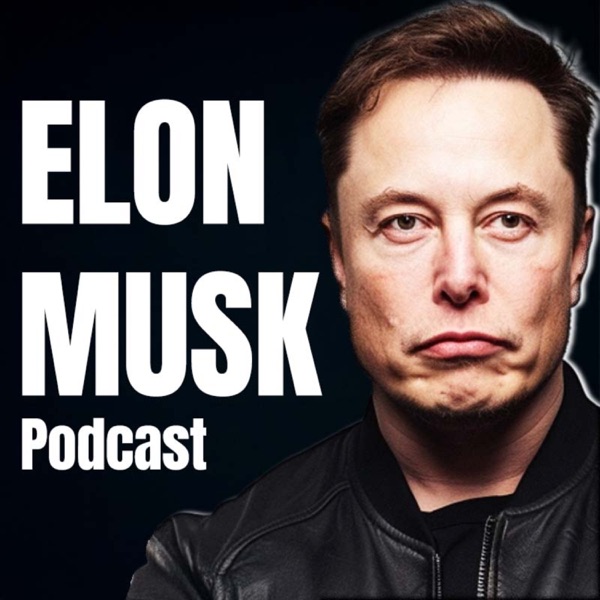
Elon Musk Podcast
The Elon Musk Podcast takes an in-depth look into the world of the visionary entrepreneur. From SpaceX's mission to colonize Mars, to the revolutionary underground transportation network of the Boring Company, to the cutting-edge technology of Neuralink, and the game-changing innovations of Tesla, we cover it all. Stay up to date with the latest news, events and highlights from the companies led by Elon Musk.
- Technology chart
- #109
- Episodes
- 1,594
- Releases
- Daily
- Typical length
- 21 min
- On air since
- 2019
- Latest episode
- 9 hours ago
Episodes
1,594 episodes, newest first
-
17 min
Disney Cuts Thousands To Fund Cruise Ships
Show notes
The Walt Disney Company is preparing for a massive wave of job cuts, directing division managers to achieve up to 20% in annual cost reductions. This strategy primarily targets film studios, theme parks, and television networks as the organization attempts to shift funding toward technology and cruise operations. Industry experts attribute these cutbacks to broader media trends, including shifting consumer habits, declining traditional television revenue, and the rise of streaming and artificial intelligence. While corporate leaders frame these measures as essential for agility and efficiency, former employees and commentators criticize the constant cycle of restructuring. Critics argue that these repeated workforce reductions often fail to address deeper organizational complexities and bloated operational workflows within the company.
-
22 min
Apple Skips the AI Infrastructure War
Show notes
Apple reported a record-breaking fiscal year with $114.5 billion in fourth-quarter revenue, marking a strong debut for the company under new chief executive John Ternus. Surging sales of the iPhone and Mac products drove this financial beat, though declines in iPads and wearables highlighted a mixed overall hardware performance. Despite these impressive figures, investors grew cautious due to slowing growth in China, rising memory component costs, and the absence of massive AI infrastructure spending seen at competing technology giants. Furthermore, analysts noted that the earnings beat leaned heavily on temporary tariff refunds, leaving the company's holiday-season outlook dependent on navigating persistent supply constraints and unproven artificial intelligence updates.
-
18 min
Inside Anthropic's Shocking IPO Filing
Show notes
Artificial intelligence titan Anthropic has released updated financial documents ahead of a massive upcoming initial public offering that could value the company between $1.4 trillion and $2.0 trillion. The newly revealed S-1 filing highlights staggering revenue growth, with quarterly earnings surging twelve-fold year-over-year to nearly $17 billion. Despite this rapid financial expansion, the tech enterprise continues to record substantial net and operating losses driven by rising expenses. Furthermore, public investors are carefully examining hundreds of billions of dollars in infrastructure and computing commitments tied to future AI development. Analysts note that while the public debut promises unprecedented employee payouts and massive capital generation, it also brings intense scrutiny regarding long-term financial stability and market risks.
-
23 min
Why Burger King's President Answers Customer Texts
Show notes
Burger King is experiencing a major business rebound in the United States, driven by an impressive 8.4% increase in third-quarter same-store sales. According to comments from parent company executives and industry analysts, this financial success stems from a dedicated multi-year strategy focused on listening closely to consumer feedback, elevating menu quality, and upgrading restaurant dining rooms. Leaders like Tom Curtis have prioritized direct customer engagement and operational execution, helping the brand reclaim its position as the No. 2 burger chain nationwide. While Burger King continues to flourish through these disciplined improvements and popular menu updates, its corporate sibling Popeyes is struggling with declining traffic and ongoing leadership changes. Ultimately, experts emphasize that sustainable growth in the fast-food industry relies heavily on consistent foundational improvements rather than just short-term marketing campaigns.
-
28 min
Instagram Launches 90 Minute Horizontal Videos
Show notes
Instagram has launched a beta test for Features, a new horizontal-video platform that allows creators in the United States to publish content up to ninety minutes long. By linking these extended videos directly from short-form Reels, the company aims to capitalize on how users already transition between quick clips and deeper entertainment. Despite this strategic alignment with modern viewing habits, industry experts remain skeptical about the initiative's long-term viability. Critics point out that Instagram's previous long-form attempt, IGTV, ultimately failed to gain traction and was eventually discontinued. Furthermore, content creators have expressed significant concern regarding the current lack of monetization, noting that the platform lacks a reliable, built-in advertising revenue-sharing model comparable to YouTube.
-
12 min
How One Laptop Drained Binance
Show notes
the largest cryptocurrency heist in history, in which hackers stole approximately $6.3 billion from Binance across ten blockchains in roughly twenty minutes. Investigators, including the FBI and TRM Labs, have attributed the cyberattack to North Korea's TraderTraitor hacking unit, which reportedly exploited a compromised DevOps engineer's laptop to bypass approval procedures. In response to the breach, various digital asset issuers quickly froze nearly $2.7 billion of the stolen funds to hinder the attackers. Meanwhile, Binance co-CEO Richard Teng announced that the company has successfully replenished 90% of the lost assets and pledged to cover the remaining 10% so that users suffer no financial harm. Industry commentators have used the incident to highlight vulnerabilities in internal controls, pointing out that while cryptographic security held firm, the trust boundaries surrounding privileged human access ultimately failed.
-
57 min
The AI Business Model Test: Alphabet, Anthropic, DoorDash, and Apple
Show notes
Can the companies building the AI economy turn enormous investment into lasting profits? Frontier Labs connects four conversations about the business models behind the headlines: Alphabet’s infrastructure spending and search advertising challenges, Anthropic’s compute commitments and financing risks, DoorDash’s proposed $17 billion acquisition of Instacart, and Apple’s touchscreen MacBooks, local AI, and document automation.Support the channel for free with our Amazon affiliate link – https://link.amazon/B0gcdGTP4
Chapters:00:00 Alphabet: Paying for the AI buildout08:32 Anthropic: Growth, compute, and financing risk26:18 DoorDash and Instacart: The fight for the customer41:47 Apple: Touchscreens, local AI, and open workflows
-
30 min
The Hidden Debt Behind Anthropic's Growth
Show notes
Anthropic’s recent IPO prospectus reveals explosive revenue growth paired with massive financial obligations, sparking intense industry debate. The documents highlight hundreds of billions of dollars in future compute and infrastructure commitments owed to major technology providers who simultaneously act as investors and commercial partners. While optimists point to improving operational efficiency and surging gross margins, skeptics warn of severe liquidity risks driven by cancellable customer usage models and long-term capital expenditure pressures. Consequently, financial experts are questioning whether these soaring valuations reflect genuine economic demand or an unsustainable cycle of circular corporate financing within the artificial intelligence sector.
-
24 min
Why DoorDash Spent 17 Billion On Instacart
Show notes
DoorDash has officially agreed to acquire Instacart for approximately $17 billion in a cash and stock transaction scheduled to finalize between late 2027 and early 2028. This major corporate combination aims to unite DoorDash’s dominant restaurant delivery network with Instacart’s specialized grocery marketplace and established retailer relationships. Market analysts note that the merger offers DoorDash a strategic advantage to better rival retail giants like Walmart and Amazon in the rapid delivery space. Additionally, experts highlight that the deal addresses the pressing need to secure higher-value grocery baskets and capture greater customer order frequency amid rapid technological shifts. However, the proposed agreement faces potential scrutiny and regulatory hurdles regarding antitrust concerns that previously disrupted acquisition discussions between the two companies in 2021.
-
21 min
Alphabet turns cash negative on AI
Show notes
Alphabet experienced a 10% stock drop in after-hours trading following a third-quarter earnings report that missed Wall Street expectations for both overall revenue and core advertising sales. Despite total revenue climbing 25% to $127.6 billion and Google Cloud revenue doubling to $30.7 billion due to massive artificial intelligence demand, investors grew increasingly anxious over mounting financial pressures. The company reported a negative free cash flow of $9.1 billion, driven by unprecedented infrastructure investments and a significant investment loss largely tied to SpaceX shares. While products like the Gemini app reached one billion users, executives acknowledged that newer AI features currently monetize at lower rates and consume heavy capital. Ultimately, financial analysts and market participants are questioning whether Alphabet's immense artificial intelligence spending will generate sufficient profitability to justify its surging capital expenditures and preserve its core profit margins.
-
33 min
Touchscreen MacBooks and 2nm M6 Chips
Show notes
Ahead of its highly anticipated product showcase, Apple has rolled out several updated devices featuring powerful new processors capable of handling local artificial intelligence tasks. The recent hardware refreshes include an entry-level 14-inch MacBook Pro and a vibrant 24-inch iMac, both powered by advanced M6 chips. Additionally, the company introduced a water-resistant iPad mini equipped with an enlarged OLED screen and an A20 Pro processor. Software updates are also underway, bringing an open, JSON-based file format and Python integration to Keynote, alongside artificial intelligence assistants for core productivity apps like Pages and Numbers. Industry observers speculate that these early releases are merely a prelude to the main event, where Apple is widely expected to debut its very first touch-screen laptop.
-
55 min
Local AI, Billion-Dollar Costs, and the Trust Problem
Show notes
Local AI, Billion-Dollar Costs, and the Trust Problem
-
24 min
The AI Neocloud Debt Crisis
Show notes
Elon Musk recently warned that neoclouds, which are specialized companies that rent out artificial intelligence computing power, face severe financial distress and widespread industry consolidation. He noted that debt markets have largely stopped funding firms whose earnings rely solely on artificial intelligence infrastructure, leaving companies without independent revenue streams vulnerable to failure. While enterprises like his own SpaceX secure massive loans by leveraging diversified operations such as rocket launches and satellite services, smaller cloud providers struggle under heavy debt burdens. Furthermore, industry observers highlight that building physical data centers is plagued by lengthy delays and local opposition, creating a dangerous gap between rapid hardware purchases and operational infrastructure. Consequently, experts suggest that plummeting technology costs and towering capital expenditures could threaten traditional investment models, proving that artificial intelligence demand alone does not guarantee financial returns.
-
25 min
AI Spending Boom and Housing Freeze
Show notes
Major financial discussions and market trends, primarily highlighting a intense debate over whether artificial intelligence is in a bubble. Industry leaders express sharp disagreements, with figures like Citadel CEO Ken Griffin warning of a speculative market while others, such as Blackstone President Jon Gray, point to surging, parabolic demand for compute infrastructure. Commentators also draw comparisons to historical market events like the dot-com era and Black Monday, analyzing how current valuations and productivity metrics differ from past crashes. Furthermore, the sources examine concurrent struggles in the U.S. housing market, where climbing mortgage rates have driven pending home sales and housing starts to historic lows. Ultimately, financial experts emphasize the importance of selectivity and careful evaluation as businesses navigate these transformative yet volatile economic conditions.
-
21 min
Meta AI Spending Terrifies Wall Street
Show notes
The stock market experienced a sharp downturn, led by a significant tech rout that pushed the Nasdaq to its worst performance since June. Major technology companies like Meta and Tesla saw their share prices drop despite positive earnings reports, primarily driven by investor anxieties surrounding the massive financial costs and infrastructure spending required for artificial intelligence. This widespread selling in the tech sector triggered a notable sector rotation, with investors shifting capital toward defensive areas like consumer staples while semiconductor stocks suffered steep declines. In response to the growing economic uncertainty, the bond market rallied strongly as investors sought safety, pushing Treasury yields lower and restoring the traditional inverse relationship between bonds and stocks. Ultimately, market participants are reassessing the economic realities and long-term profitability of the ongoing AI investment cycle rather than doubting the technology itself.
-
20 min
SpaceX Targets 80,000 Cell Towers
Show notes
SpaceX is actively negotiating to utilize over 80,000 cellular sites across the United States in its strategic push to become the nation's fourth major wireless carrier. This ambitious initiative combines its established Starlink satellite network and recent spectrum acquisitions with vital terrestrial infrastructure to expand mobile connectivity. While traditional telecom giants like AT&T, Verizon, and T-Mobile face potential stock pressure and pricing disruptions, infrastructure landlords such as Crown Castle and American Tower have seen their shares surge. Industry analysts debate whether this move signals a direct challenge to incumbent carriers or the emergence of a hybrid network model that seamlessly blends space-based and ground-based technologies. Ultimately, experts emphasize that while securing tower access marks a crucial milestone, significant operational hurdles regarding capital allocation, equipment, and network density still remain before the vision is fully realized.
-
12 min
How Canva Beat Google At AI Images
Show notes
Canva has officially unveiled Canva Craft, its very first proprietary image generation model designed to strengthen its internal creative ecosystem and decrease dependence on third-party AI technology. Built with a unique two-stage architecture, the system first translates user prompts into structured layout plans before rendering high-resolution graphics across a variety of aspect ratios and fifty-five different languages. Trained heavily on Canva's extensive library of design templates and refined through testing by professional designers, the software emphasizes iterative control and precision. Following its launch, the model achieved remarkable success by debuting at fourth place globally on the DesignArena leaderboard. This impressive performance positions the Canva Research lab directly behind OpenAI, making it the second most advanced AI lab in the world for image generation and outperforming competing models from major tech companies.
-
16 min
SpaceX and Tesla Merge for Orbital AI
Show notes
potential merger between SpaceX and Tesla is being evaluated by independent corporate committees, which would establish a historic $3.5 trillion enterprise spanning multiple high-tech industries. While supporters view this combination as a necessary strategic alignment to overcome artificial intelligence infrastructure limitations and advance large-scale manufacturing goals like Mars colonization, critics raise significant concerns regarding corporate governance and conflict of interest. Because Elon Musk maintains substantial financial stakes and voting control across both entities, he has officially recused himself from the direct negotiations. Ultimately, the success of this monumental transaction hinges on navigating complex regulatory hurdles, satisfying shareholder valuation requirements, and proving that the integration generates tangible financial synergies rather than mere corporate restructuring.
-
21 min
Tesla Freezes AI Spending Before SpaceX Merger
Show notes
Tesla recently reported third-quarter earnings that surpassed Wall Street projections for both revenue and adjusted earnings per share, driven partly by a rebound in vehicle deliveries and growth in energy storage. Despite this positive financial beat and a surprising free cash flow surge of $1.5 billion, the company's core automotive sales actually declined and operating profits fell significantly. This unexpected cash retention was largely the result of capital expenditures coming in billions of dollars below analyst forecasts while the firm navigates heavy investments in artificial intelligence and robotics like the Optimus humanoid. Compounding these developments, CEO Elon Musk announced that special committees have been formed at both Tesla and SpaceX to evaluate a potential merger between the two entities. While this historic corporate combination presents compelling financial logic, it still faces substantial hurdles and requires majority shareholder approval.
-
16 min
Eric Schmidt Twenty Billion Dollar Anthropic Return
Show notes
Former Google CEO Eric Schmidt is projected to receive a massive financial windfall ranging from $15 billion to $20 billion following the upcoming initial public offering of Anthropic. Through personal connections, Schmidt provided millions of dollars in early funding to the artificial intelligence startup during its 2021 Series A round when the firm was valued under $500 million. By securing a one percent stake in the company before it launched commercial products, his early investment has grown exponentially alongside Anthropic's staggering valuation growth. Market projections now estimate the enterprise value of the startup to reach between $1.5 trillion and $2 trillion ahead of its upcoming public market debut. This extraordinary return highlights how holding an early ownership percentage in emerging technology can sometimes yield even greater financial rewards than leading a major tech conglomerate.
On these lists
Elon Musk Podcast is one of the shows picked out on each of these

More in Technology
Placed highest on Apple Podcasts' Technology chart right now