Podcast
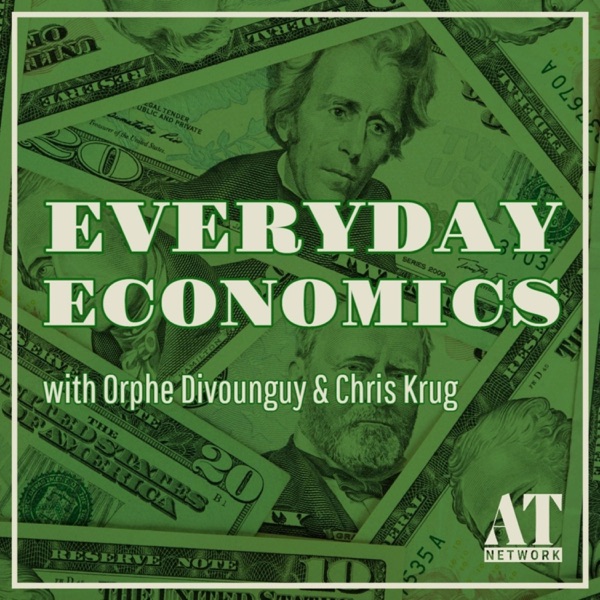
Everyday Economics
Economist Dr. Orphe Divounguy and Chris Krug join forces to unravel the complexities of global markets, inflation, and everything else you need to know to navigate the economic world around you.
- Episodes
- 573
- Releases
- Twice a week
- Typical length
- 10 min
- On air since
- 2022
- Latest episode
- 1 week ago
Episodes
573 episodes, newest first
-
14 min
Why Luxury Buyers Are Lining Up in Chicago and Jacksonville, but Not Seattle
Episode 576
Show notes
The housing market is shut to almost everybody, but at the very top, buyers are still lining up and there aren’t enough homes to sell them.
On this episode of Everyday Economics from The Center Square, publisher Chris Krug and PhD economist Dr. Orphe Divounguy dig into his latest column on the luxury buyer pool. With mortgage rates around 7.4% and homebuilder confidence at 32 (down from 68 in 2019), most of the market is strained. But using Redfin data on the top 5% of homes in each market, Dr. Divounguy finds the luxury segment is highly competitive, driven by AI-fueled stock gains and fast-rising incomes at the top.
They look at why luxury inventory is so scarce in Midwest markets like Kansas City, St. Louis, and Chicago; why Jacksonville is tight while Miami and Fort Lauderdale have plenty of supply; and why Seattle is moving the other way, with its luxury buyer pool down 14% and listings up 9% amid tech layoffs, a proposed $100,000 fee on certain new H-1B petitions, and the state’s new tax on income over $1 million. Plus, why policy risk matters for housing demand and investment, and how San Francisco is riding the AI boom.
Hosted by Simplecast, an AdsWizz company. See https://pcm.adswizz.com for information about our collection and use of personal data for advertising.
-
11 min
Stuck in Your 3% Mortgage? Here’s What Moving Really Costs in 2026
Episode 575
Show notes
Is this finally a buyer’s market? Not yet, but it’s getting closer. With mortgage rates above 7%, buyers are pulling back, and homeowners locked into 3% rates from 2021 have little reason to sell.
On this episode of Everyday Economics from The Center Square, publisher Chris Krug and PhD economist Dr. Orphe Divounguy break down the mortgage rate lock-in effect and what it means for buyers, sellers, and renters. They run the real numbers: on a $400,000, 30-year loan, moving from 3% to 7.4% pushes principal and interest from about $1,700 to about $2,800 a month, roughly $1,100 more.
Plus: should a renter with a down payment saved buy now at 7% and refinance later, or keep waiting? Dr. Divounguy explains why the answer depends on where you live and how long you’ll stay, why buying can make sense in Midwest markets like Cleveland, Columbus, and Kansas City, why renting often wins in New York, Los Angeles, Seattle, and San Diego, and why your stock market returns belong in the buy-vs-rent math too.
Hosted by Simplecast, an AdsWizz company. See https://pcm.adswizz.com for information about our collection and use of personal data for advertising.
-
10 min
Should You Buy a Car Now or Wait? Fed Rate Hike Explained
Episode 574
Show notes
The Fed raised rates again, but not everyone feels it the same way. Savers and investors may be coming out ahead, while renters, borrowers, and lower-income households are getting squeezed.
On this episode of Everyday Economics from The Center Square, publisher Chris Krug and PhD economist Dr. Orphe Divounguy break down who actually wins and loses when interest rates go up. They look at the Fed’s unanimous quarter-point hike, a weak September jobs report (just 29,000 jobs, with July revised to a loss), new JPMorgan Chase Institute data showing Americans selling stock gains to keep up with prices, and the University of Michigan’s October consumer sentiment survey.
Plus, a real-world look at two households on the same street, whether now is the time to buy a car with dealer lots full and 0% financing deals popping up, and why higher rates and inflation are not a windfall for state and local governments, or the taxpayers who fund them.
Hosted by Simplecast, an AdsWizz company. See https://pcm.adswizz.com for information about our collection and use of personal data for advertising.
-
10 min
Why High Interest Rates Are Putting Commercial Real Estate Under Pressure
Episode 573
Show notes
Higher interest rates are creating a growing challenge for commercial real estate as loans mature and property values fall. On this episode of Everyday Economics, Chris Krug and Dr. Orphe Divounguy break down what happens when an office or apartment building owner has to refinance at today's higher rates.
They discuss:
• Why higher rates can mean higher debt service and lower property values
• What happens when commercial real estate loans mature
• Why businesses are holding onto workers despite slower hiring
• How AI and productivity are changing business decisions
• What falling commercial property values could mean for city tax revenue
• How lenders and borrowers may be affected as loans are refinancedEveryday Economics is part of The States, The Center Square's daily news magazine.
Hosted by Simplecast, an AdsWizz company. See https://pcm.adswizz.com for information about our collection and use of personal data for advertising.
-
11 min
Americans Are Still Spending— But They’re Trading Down
Episode 572
Show notes
Americans are still spending — but they’re changing where and how they spend.
Consumer spending is up 4.5% from a year ago, but households are increasingly trading down to cheaper stores, lower-priced goods and more affordable housing. PhD economist Orphe Divounguy explains why that matters for the economy and for the Federal Reserve.
More than half of new homes sold in August were priced below $400,000, compared with about 46% a year earlier. With mortgage rates rising above 7%, Divounguy expects builders to continue offering incentives, cutting prices and shifting toward smaller, less expensive homes.
The bigger question is whether businesses can continue raising prices. With consumers becoming more price-sensitive and the labor market remaining weak, businesses are struggling to pass higher costs from tariffs and energy onto shoppers.
Chris Krug and Orphe also break down what to watch in Wednesday’s Personal Consumption Expenditures inflation report and why core PCE could remain around 3.3% year over year.
Everyday Economics is hosted by Chris Krug and PhD economist Orphe Divounguy and is brought to you by The Center Square Newswire Service.
Hosted by Simplecast, an AdsWizz company. See https://pcm.adswizz.com for information about our collection and use of personal data for advertising.
-
12 min
Mortgage Rates Hit 7.2%— But Luxury Home Prices Are Still Surging
Episode 571
Show notes
Mortgage rates are around 7.2% — and the housing market is increasingly splitting into two very different experiences.
PhD economist Orphe Divounguy explains why higher rates are keeping many buyers on the sidelines while luxury housing continues to perform well. Builders are responding with major incentives, including an estimated $44,000 per home in rate buy-downs and closing-cost assistance to get buyers across the finish line.
At the same time, inventory is rising in parts of the country, giving buyers who can afford to transact more bargaining power. But for many households, higher borrowing costs and a weaker labor market are making homeownership increasingly difficult.
Chris Krug and Orphe also examine what this divide could mean for state tax revenues, particularly as governments rely on income taxes, sales taxes and capital gains.
Everyday Economics is hosted by Chris Krug and PhD economist Orphe Divounguy and is brought to you by The Center Square Newswire Service.
Hosted by Simplecast, an AdsWizz company. See https://pcm.adswizz.com for information about our collection and use of personal data for advertising.
-
11 min
The Fed Just Raised Rates — And America’s “Two-Speed Economy” Is Getting Worse
Episode 570
Show notes
The Federal Reserve just raised interest rates for the first time since 2023, bringing the target range to 3.75%–4%. But what does the rate hike actually mean for Americans?
Chris Krug and PhD economist Orphe Divounguy examine the Fed’s decision and the growing divide between savers and borrowers. Higher-income households with homes and investments may benefit from higher rates, while younger households, renters and borrowers face higher costs for credit cards, auto loans and mortgages.
Divounguy describes it as a “two-speed economy,” with interest-rate-sensitive parts of the economy struggling to keep up while the highest-income households continue to do relatively well.
The rate hike could also affect state and local governments. Higher borrowing costs can make infrastructure and public projects more expensive, potentially putting additional pressure on government budgets and taxpayers.
The discussion also looks ahead to new home sales, builder incentives, inflation expectations and whether rising energy prices are spreading into the broader economy.
Everyday Economics is hosted by Chris Krug and PhD economist Orphe Divounguy and is brought to you by The Center Square Newswire Service.
Hosted by Simplecast, an AdsWizz company. See https://pcm.adswizz.com for information about our collection and use of personal data for advertising.
-
12 min
The Fed May Raise Rates— But Can the Economy Take It?
Episode 569
Show notes
The Federal Reserve faces a major decision this week: raise interest rates or hold them steady as energy prices push inflation higher.
Markets are pricing in a strong chance of a quarter-point rate hike, but PhD economist Orphe Divounguy argues the Fed should hold. His concern: the current inflation increase is being driven largely by a supply shock in energy, while the underlying economy is showing signs of weakness.
Core inflation is around 2.4%, wage growth is easing, hiring remains near a decade low and recent economic growth has been heavily concentrated in AI investment. Divounguy argues that raising interest rates can cool demand — but it cannot produce more oil or directly fix an energy supply shock.
Chris Krug and Orphe Divounguy also examine the growing divide inside the Federal Reserve, inflation expectations, the labor market and whether Chairman Kevin Warsh's hawkish comments at Jackson Hole have created a credibility problem heading into Wednesday's decision.
The key question: Is another rate hike necessary to fight inflation, or could it risk over-tightening an already fragile economy?
Everyday Economics is hosted by Chris Krug and PhD economist Orphe Divounguy and is brought to you by The Center Square.
Hosted by Simplecast, an AdsWizz company. See https://pcm.adswizz.com for information about our collection and use of personal data for advertising.
-
10 min
Trump Promised Lower Prices — What Can a President Actually Control?
Episode 568
Show notes
President Trump made promises to lower prices on everything from gas and groceries to electricity, mortgages, prescription drugs and childcare. But how much control does a president actually have over the prices Americans pay?
Chris Krug and PhD economist Orphe Divounguy break down eight major price categories and examine what drives them — from energy costs and supply shocks to interest rates and federal policy.
Gas, beef, groceries, electricity and childcare have all become more expensive, while 30-year mortgage rates and prescription drug prices have moved in the opposite direction. The discussion also looks at the role of tariffs, the Middle East conflict, Federal Reserve policy and Medicare drug-price negotiations.
So which prices can a president meaningfully influence, and which are largely determined by forces outside the White House?
Everyday Economics is hosted by Chris Krug and PhD economist Orphe Divounguy and is brought to you by The Center Square Newswire Service.
Hosted by Simplecast, an AdsWizz company. See https://pcm.adswizz.com for information about our collection and use of personal data for advertising.
-
10 min
America Is Spending Billions on AI... Where’s the Productivity Payoff?
Episode 567
Show notes
America is pouring money into artificial intelligence — but the productivity gains have yet to fully show up in the economy.
Employers added 162,000 jobs in August and unemployment held at 4.1%, but PhD economist Orphe Divounguy says the latest labor market data look more like a stabilization than a true rebound. Hiring remains weak, real wages are falling, long-term unemployment is rising, and the labor force is nearly a million workers smaller.
At the same time, businesses are making massive investments in AI infrastructure. Equipment and intellectual property investment accounted for a significant share of recent economic growth, while construction spending has shifted heavily toward data centers.
So where is the payoff?
Chris Krug and Orphe Divounguy examine whether AI is actually increasing productivity, why businesses are still figuring out how to use the technology, and what could happen to workers as AI changes the skills employers need. They also compare today's transition to previous technological shifts, including the adoption of electricity.
Everyday Economics is hosted by Chris Krug and PhD economist Orphe Divounguy and is brought to you by The Center Square.
Hosted by Simplecast, an AdsWizz company. See https://pcm.adswizz.com for information about our collection and use of personal data for advertising.
-
11 min
The AI Boom Has a $40 Trillion Problem
Episode 566
Show notes
The U.S. economy is making a massive bet on artificial intelligence, pouring capital into data centers, chips and power infrastructure — much of it financed with debt. But the productivity payoff investors are expecting has yet to show up in the broader economic data.
Economist Orphe Divounguy explains why AI productivity growth is becoming less of an upside surprise and more of a requirement for the economy to justify the enormous investment. With roughly $40 trillion in government debt and real interest rates remaining elevated, the stakes of the AI boom are much bigger than the technology sector alone.
If AI fails to deliver stronger productivity and real income growth, the consequences could spread across the economy through higher borrowing costs, weaker growth, and potentially tougher choices on taxes or government spending.In this episode of Everyday Economics, Chris Krug and Dr. O break down who is ultimately carrying the risk of the AI investment boom — and why the economy may need the payoff sooner rather than later.
Everyday Economics is brought to you by The Center Square Newswire Service.Hosted by Simplecast, an AdsWizz company. See https://pcm.adswizz.com for information about our collection and use of personal data for advertising.
-
9 min
Home Builders Are Cutting Prices — But Buyers Still Can’t Afford Homes
Episode 565
Show notes
Home builders are cutting prices and offering incentives, but buyers are still struggling to get into the housing market. New home sales fell to a 607,000 annual pace in July, while housing inventory jumped to 9.6 months of supply — the highest level since January. Builders are responding with rate buy-downs, closing-cost assistance and price cuts averaging about 6%.
PhD economist Orphe Divounguy explains why the housing market is increasingly split into winners and losers, with luxury homes holding up while the middle of the market — roughly $500,000 to $800,000 — remains stuck. Mortgage rates around 6.7% are making it difficult for buyers to enter the market, while builders in the South and Sun Belt face growing inventories after years of heavy construction. Meanwhile, markets in the Midwest and Northeast continue to face a shortage of housing.
Everyday Economics is hosted by Chris Krug and PhD economist Orphe Divounguy and is brought to you by The Center Square.
Hosted by Simplecast, an AdsWizz company. See https://pcm.adswizz.com for information about our collection and use of personal data for advertising.
-
12 min
The Fed Says the Economy Is Strong but the Data Tell a Different Story.
Episode 564
Show notes
The economy may look strong on the surface, but a closer look at the numbers reveals a much narrower and weaker expansion. In his first Jackson Hole speech, Fed Chair Kevin Warsh pointed to a 4.1% unemployment rate, strong business investment and rising corporate profits as signs of a resilient economy. But much of that growth is being driven by the massive AI buildout, while housing, construction and other parts of the economy continue to struggle.
PhD economist Orphe Divounguy explains why the U.S. economy is increasingly operating at two speeds, why roughly 80% of second-quarter GDP growth came from equipment and intellectual property spending tied to the AI boom, and why the labor market may be weaker than the headline unemployment rate suggests. With hiring near its lowest level since the aftermath of the Great Recession and the labor force shrinking, the Fed faces a difficult decision over whether to raise interest rates or wait for more data.
Everyday Economics is hosted by Chris Krug and PhD economist Orphe Divounguy and is brought to you by The Center Square.
Hosted by Simplecast, an AdsWizz company. See https://pcm.adswizz.com for information about our collection and use of personal data for advertising.
-
11 min
Waiting to Buy a Home Could Cost You Hundreds More Each Month
Episode 563
Show notes
Mortgage rates could remain elevated as the bond market does the Federal Reserve’s work for it, keeping borrowing costs higher for consumers and businesses. Economist Orphe Divounguy explains what rising Treasury yields mean for mortgage rates, credit cards and the housing market. Homebuyers waiting for lower rates may be paying a price for holding off. Divounguy notes that someone who bought a typical U.S. home when mortgage rates were around 6% in February would have saved roughly $146 a month compared with those who waited. In this episode, we break down why the Fed may leave rates unchanged, how inflation is influencing the bond market, and why trying to time mortgage rates could be a costly strategy. Everyday Economics is brought to you by The Center Square Newswire Service.
Hosted by Simplecast, an AdsWizz company. See https://pcm.adswizz.com for information about our collection and use of personal data for advertising.
-
8 min
Inflation Is Squeezing American Households and Savings Are Taking the Hit
Episode 562
Show notes
American households are feeling the squeeze as inflation continues to push up the cost of everyday life. New personal consumption expenditures data shows income is finally growing faster than spending, but consumers are still spending more than their inflation-adjusted incomes and drawing down savings to keep up.
In this episode of Everyday Economics, Chris Krug and PhD economist Orphée break down what the latest economic data means for American families — from healthcare and groceries to housing, interest rates and big-ticket purchases.
They also examine how government spending, energy costs, tariffs and higher interest rates are affecting consumers, why housing demand is weakening, and what could happen to the economy heading into the fall and next year.
In this episode:
• Inflation and the rising cost of living
• Americans drawing down savings
• Household income vs. spending
• Housing demand and mortgage-sensitive spending
• Government spending and interest rates
• Energy and transportation costs
• Tariffs and their potential economic impact
• AI investment and economic growth
• What consumers can do in a slowing economySubscribe to The Center Square for more reporting and analysis on the economy, government spending and the issues affecting American taxpayers.
#Inflation #Economy #Economics #CostOfLiving #Housing #GovernmentSpending #EverydayEconomics
Hosted by Simplecast, an AdsWizz company. See https://pcm.adswizz.com for information about our collection and use of personal data for advertising.
-
8 min
Only AI and Healthcare Are Creating Jobs Right Now
Episode 561
Show notes
Job growth has slowed to roughly 34,000 jobs added per month — less than a fifth of the typical expansion-era pace of about 186,000 per month. Ph.D. economist Orphe Divounguy joins talks with Greg Bishop for Everyday Economics to break down what's driving the slowdown and what to watch for this week, including FOMC meeting minutes due Wednesday. Divounguy notes business investment growth is concentrated in AI-related sectors and data center construction, with hiring outside AI, healthcare, and parts of the Pacific Northwest largely stalled. The hiring rate is at its lowest level since around 2012, and low quit rates suggest workers currently employed are reluctant to switch jobs given limited opportunities elsewhere. Retail sales are up roughly 5% year-over-year, but Divounguy attributes most of that increase to price growth rather than higher real consumer spending, with inflation currently outpacing wage growth. On housing, Divounguy expects building permits to remain at depressed levels due to elevated mortgage rates, though housing starts could tick up as builders work through previously authorized but un-started units. Read more and follow Everyday Economics at thecentersquare.com.
Hosted by Simplecast, an AdsWizz company. See https://pcm.adswizz.com for information about our collection and use of personal data for advertising.
-
9 min
Government Spending Is Costing You: The 3 Ways Washington’s Debt Comes Home
Episode 560
Show notes
Government borrowing is never free — and taxpayers ultimately pay the bill. The Center Square publisher Chris Krug and PhD economist Orphe Divounguy break down the three ways government debt can hit American households: higher taxes, higher interest rates and higher inflation. The discussion examines why massive government borrowing can put upward pressure on Treasury yields, mortgage rates, car loans and business borrowing — while rising interest costs consume an increasingly large share of federal spending. Federal spending reached roughly $5.52 trillion, compared with $4.15 trillion in revenue, while interest costs have become one of the largest components of the federal budget. What does America's debt mean for your household, mortgage, business and purchasing power? And can economic growth actually help the country grow its way out of the debt problem? Watch the full discussion to understand how government borrowing can ultimately affect the taxpayer. #GovernmentDebt #Inflation #Taxes #InterestRates #Taxpayers #Economy #FederalDebt #MortgageRates #Finance #economics Support this podcast: https://secure.anedot.com/franklin-news-foundation/ce052532-b1e4-41c4-945c-d7ce2f52c38a?source_code=xxxxxx
Hosted by Simplecast, an AdsWizz company. See https://pcm.adswizz.com for information about our collection and use of personal data for advertising.
-
9 min
The Job Market Is Stuck: Why 23,000 Jobs Were Lost in July
Episode 559
Show notes
The U.S. job market isn't collapsing — it's stuck. July payrolls fell by 23,000, while unemployment held at 4.1%. But deeper revisions to May and June erased more than 100,000 previously reported jobs, raising bigger questions about the strength of the labor market.
On this episode of Everyday Economics, Chris Krug and PhD economist Orphée Divounguy break down what the latest jobs numbers really mean for workers, businesses and the U.S. economy.
They discuss:
• Why the July jobs report may be less alarming than the headline suggests
• How revisions erased more than 100,000 jobs from previous months
• Why hiring and layoffs are both unusually low
• What "stall speed" means for the labor market
• Why low labor-force participation is keeping unemployment at 4.1%
• The risks of weak job-to-job movement and slower wage growth
• Whether AI and data-center investment can drive a productivity boom
• Why future productivity gains could create new jobs — and new labor shortagesEveryday Economics is brought to you by The Center Square, helping you understand the economic forces shaping your everyday life.
#Economy #JobsReport #LaborMarket #Jobs #Inflation #FederalReserve #AI #Economics
Support this podcast: https://secure.anedot.com/franklin-news-foundation/ce052532-b1e4-41c4-945c-d7ce2f52c38a?source_code=xxxxxx
Hosted by Simplecast, an AdsWizz company. See https://pcm.adswizz.com for information about our collection and use of personal data for advertising.
-
49 min
Illinois Lawmaker Faces House Investigation After Federal Fraud Charges | The States
Episode 558
Show notes
Illinois Democratic State Rep. Carol Ammons is facing a bipartisan Illinois House investigation after being federally charged with wire fraud and making false statements, with the special committee examining whether there are grounds for discipline or removal while Ammons maintains her innocence.
Ammons and her husband, Aaron Adam Ammons, have pleaded not guilty to the federal charges, with a trial scheduled for September. Prosecutors allege the case involves nonprofit contracts and questions surrounding campaign contributions, while the House committee emphasized that it is not determining guilt or innocence.
Also, in this episode:
The committee voted to contact the U.S. Attorney's Office for the Central District of Illinois before proceeding further, seeking guidance on whether the state investigation could interfere with the ongoing federal case.
The investigation draws comparisons to the Illinois House's previous special committee examining former Speaker Michael Madigan, who was later convicted on federal corruption charges and sentenced to 7½ years in prison.
The States also examines energy prices and the conflict in Iran, a newly uncovered effort by state attorneys general to coordinate litigation against the Trump administration, and the growing debate over data center expansion and taxpayer costs.
Plus, America's Talking:
California: https://www.thecentersquare.com/california/article_28a745de-6c13-4df1-88df-c0c150193eb7.html
Wisconsin: https://www.thecentersquare.com/wisconsin/article_9cede801-b522-4172-9d2e-b8d50301bfad.html
Georgia: https://www.thecentersquare.com/georgia/article_1db1ef45-8b75-4144-928a-7d670680111a.html
Arizona: https://www.thecentersquare.com/arizona/article_b2a0c25a-f6ef-465c-ad4c-de89ea70d2f3.html
The States delivers taxpayer-focused reporting from around America, powered by The Center Square.
Hosted by Simplecast, an AdsWizz company. See https://pcm.adswizz.com for information about our collection and use of personal data for advertising.
-
46 min
Fed Holds Rates: Why Homes Keep Getting Less Affordable
Episode 557
Show notes
The Federal Reserve kept interest rates unchanged—but that doesn't mean borrowing is getting any easier. In this episode of Everyday Economics, Greg Bishop sits down with PhD economist Orphe Divounguy to explain why mortgage rates remain elevated, what it means for first-time homebuyers, businesses looking to expand, and taxpayers navigating an increasingly expensive economy. Topics include: Why mortgage rates remain near 7% The end of the era of cheap money Housing affordability and first-time buyers Why wealthy buyers are still purchasing homes The impact of high borrowing costs on businesses Inflation, jobs, and the Federal Reserve's difficult balancing act What taxpayers should expect if interest rates stay elevated If you're wondering how Federal Reserve policy affects your finances, this breakdown explains the real-world economic consequences. Subscribe for more reporting on economics, government spending, taxes, inflation, and how public policy impacts taxpayers.
Support this podcast: https://secure.anedot.com/franklin-news-foundation/ce052532-b1e4-41c4-945c-d7ce2f52c38a?source_code=xxxxxx
#FederalReserve #InterestRates #MortgageRates #HousingMarket #Inflation #Economy #Taxpayer #EverydayEconomics #Finance #FederalReserveNews
Hosted by Simplecast, an AdsWizz company. See https://pcm.adswizz.com for information about our collection and use of personal data for advertising.
On these lists
Everyday Economics is one of the shows picked out on this list



More in News Commentary
Placed highest on Apple Podcasts' News Commentary chart right now