Podcast
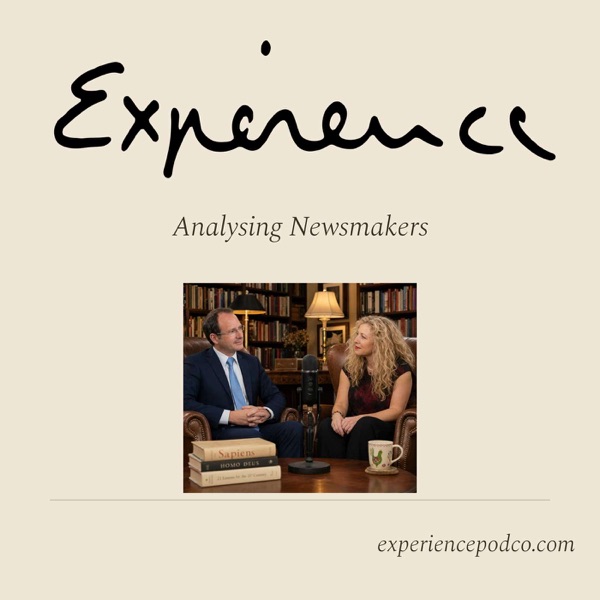
Experience: Analysing Newsmakers
Each week, psychologist Peter Kinderman and communications expert Hilary Jeffs pick a news story and work out what's actually going on underneath it.
- On air since
- 2026
- Episodes
- 19
- Releases · typical length
- Weekly · 49 min
- Latest episode
- 5 days ago
Episodes
19 episodes, newest first
-
1 hr 2 min
The Lure of a Secret | The generation effect, Jensen Huang and antidepressants
Show notes
The Concept of the Week is the generation effect: we remember what we work out for ourselves better than what we simply read or hear. It is why writing down the answer to your maths homework beats a laptop that says "Correct", and the Psych Hack follows from it: before you look something up, have a guess first.
Jensen Huang has resigned as Nvidia's chief executive after admitting he had been unfaithful, and Nvidia's shares fell sharply. Hilary asks what makes a secret so delicious. Peter's answer is that very few people keep a secret to themselves: secrets are social currency, and part of the pleasure is that someone else knows. He explains Robin Dunbar's idea that language took over from grooming as the way we keep our social networks together, which is why gossip round the campfire matters so much, and why being the last to know feels so bad.
The Metropolitan Police is investigating allegations against David Walliams, which he denies, and comedian Lucy Beaumont has spoken about raising concerns. Hilary and Peter talk about why celebrity power and a fragmented TV industry make safeguarding so hard: a big name can be worth tens of millions to a programme, there is no single place where allegations are recorded, and production companies can fold and start again. Peter explains why he will not screen reality TV contestants for "resilience", why he thinks the Culture Secretary Lisa Nandy is right to consider making industry standards compulsory, and why, from his own research in care homes, enforcement changes culture faster than training does.
A new review in The Lancet Psychiatry compares antidepressants for long-term use. Peter, who sat on the NICE committee for the depression guideline, is sceptical of the idea that depression is caused by a chemical imbalance and explains what SSRIs do in the brain, why he thinks stopping them can feel like a relapse when it is the effect of the drug, and why coming off should always be slow and done with medical advice. Then what else helps: exercise, talking therapies and, one day perhaps, psychedelic-assisted therapy.
A note before you listen. This episode discusses allegations of sexual misconduct in the media, sexual harassment at work, depression and antidepressant medication, and includes some strong language. Please do not stop or change any medication without talking to your doctor first.
Mentioned in this episode
• The generation effect, Slamecka and Graf (1978): Journal of Experimental Psychology: Human Learning and Memory
• Robin Dunbar's Grooming, Gossip and the Evolution of Language (1996): Wikipedia
• The psychology of secrets, including how often secrets are passed on: The Psychologist
• Three antidepressants may be best for long-term treatment, on the November 2026 Lancet Psychiatry review: Medical News Today
• The serotonin theory of depression, an umbrella review by Moncrieff and colleagues (2022): Molecular Psychiatry
• Tapering antidepressants, Horowitz and Taylor (2019): The Lancet Psychiatry
• Depression in adults, the NICE guideline: NICE NG222
• Antidepressants and depression, the Royal College of Psychiatrists position statement (2019): RCPsychComing soon in your Experience feed: Conversations with Experience, longer conversations with guests about what wellbeing means to them. Know someone we should talk to? Email hello@experiencepodco.com.
Help us make a better show: five quick questions at experiencepodco.com/survey.html. Interested in sponsoring Experience? Email hello@experiencepodco.com.
-
50 min
You See What You Expect | Perceptual set, the midterms and cosmetic surgery abroad
Show notes
The Concept of the Week is perceptual set: we see what we expect to see rather than what is actually there. Peter explains it with the duck and rabbit picture and how it feeds confirmation bias, and the Psych Hack is the way out, self-distancing, or asking what advice you would give somebody else.
First, Hilary cannot understand why the 1980s do not feel like forty years ago. Peter explains one theory of why time seems to speed up as we age: we measure any stretch of time against the life we have already lived, so five minutes is a big slice of a five year old's life and a small slice of his.
The US midterms went the Democrats' way, with a first Democratic senator from Kansas in 94 years and the first from Texas since 1988, and the result was bigger than the polls predicted. Peter argues the polls did their job, and explains the "shy Tory" effect in British polling. They talk about habit and heuristic reasoning, why people stop voting on autopilot when things go badly wrong, and the hope that a twelve year old who can spot AI slop gives him.
Russell Brand has been convicted of rape and sexual assault, and Hilary asks what this means for the people around him who have done nothing wrong. Peter, who has met many people whose parents were convicted of abuse, says it is a mistake to assume the family must feel shame: many feel anger instead, and the only way to know is to ask. They also discuss how a parent might decide about prison visits, and why friends and a good school can be a buffer for children in the spotlight.
More people are travelling abroad for cosmetic surgery. Peter separates the evidence from his own view: reconstructive surgery after disfigurement helps people a great deal, while the psychological outcomes of cosmetic procedures such as facelifts and breast augmentation are mixed, and any boost tends to be short lived. Then why the mirror lies to us, from foreshortening in a full length mirror to the makeup mirror that puts your nose an inch and a half closer than your eyes.
A note before you listen. This episode discusses sexual offences and their effect on the offender's family, including a mention of childhood sexual abuse, and includes some strong language.
Mentioned in this episode
• Perceptual set, from Bruner and Minturn (1955): Journal of General Psychology
• Solomon's paradox: people reason more wisely about other people's problems than their own, Grossmann and Kross (2014): Psychological Science
• Self-distancing, Ayduk and Kross (2010): Journal of Personality and Social Psychology
• The anchoring heuristic, Tversky and Kahneman (1974): Science
• Daniel Kahneman's 2002 prize in economic sciences: The Nobel Prize
• The shy Tory factor: Wikipedia
• Perceptual control theory: Wikipedia
• Psychosocial outcomes of cosmetic surgery, a review by Honigman, Phillips and Castle (2004): Plastic and Reconstructive SurgeryHelp us make a better show: five quick questions at experiencepodco.com/survey.html. Interested in sponsoring Experience? Email hello@experiencepodco.com.
-
47 min
Look, There's a Squirrel | Attentional capture, Trump's cheating and why we stare at fire
Show notes
The Concept of the Week is attentional capture: why some things grab our attention whether we like it or not. Peter explains why a crying baby is so hard to ignore, why sirens change pitch, and why a squirrel can derail a conversation. Before that, Hilary has watched the final of The Celebrity Traitors and Peter has not, so there are no spoilers.
On the day of the US midterms, Hilary asks why Donald Trump cheats, from the golf course to the claim that elections are stolen from him. Peter thinks we will never know his motives, but that what he wants is to be seen holding the shiny thing. They talk about why cheating at one thing predicts cheating at others, why Hilary's list of two letter Scrabble words is or is not cheating, and why nobody would go hunting with someone who takes all the buffalo.
With Bonfire Night this week, Hilary reports from the fireworks arguments on Nextdoor, and Peter makes the case for the bonfire over the display. Fire is attentional capture at its purest: why we can stare at flames for hours, why a flame in space burns as a slow sphere, how far back people were using fire, and the satisfaction of lighting one with a single match. Then a detour into why people try to win others round to their point of view.
After Halloween, the psychology of dressing up: why Peter, who is socially anxious, avoids fancy dress, what actors told him about playing a character, and why taking on a different role for a night, from Saturnalia to cosplay, is so much fun.
The Psych Hack: practise moving your attention on purpose, to the warmth of a cup of tea or the line you are reading, so that the things built to grab it have less of a hold. And both hosts are still finishing Luke Kennard's Black Bag before the Booker Prize is announced on 9 November.
A note before you listen. This episode includes a brief mention of suicide, in a description of medical training, references to drug use and some strong language.
Mentioned in this episode
• Attentional capture, from Yantis and Jonides (1984): Journal of Experimental Psychology
• Spherical flames in microgravity: NASA
• The Clacton Spear, found in Essex in 1911: Wikipedia
• The earliest evidence of people making fire, at Barnham in Suffolk: Natural History Museum
• Rick Reilly's Commander in Cheat: How Golf Explains Trump (2019): Axios
• The Lord of Misrule: Wikipedia
• Luke Kennard's Black Bag on the Booker Prize 2026 shortlist: University of BirminghamHelp us make a better show: five quick questions at experiencepodco.com/survey.html. Interested in sponsoring Experience? Email hello@experiencepodco.com.
-
1 hr
Who Runs Towards Danger? | Social comparison, Bryan Johnson and a £1.5m Pokémon attic
Show notes
The Concept of the Week is social comparison theory: the idea, from Leon Festinger, that we judge much of what matters to us against other people. Peter explains the games in which people would rather take £10 while their opponent gets £5 than take £10 while their opponent gets £20, and suggests the real question is where we get our goals from. It also gives the show a new name for its tip segment: the Psych Hack. Before that, Hilary and Peter compare notes on the clock change, William Willett's angry pamphlet The Waste of Daylight, and the spelling reformers who wanted "wot" and "hoo".
The first headline: the father who shot dead the 16 year old gunman at Silver Rail Elementary School in Bend, Oregon, where three children and a teacher were killed, has spoken about the moment he called his mum. Hilary asks what makes someone run towards danger. Peter's answer is that we are social animals, and cooperation is built into us. They talk about survivor's guilt, about Jacinda Ardern's refusal to name the Christchurch killer, and about notoriety as a motive. Peter's view is that disaffection, revenge and a wish for notoriety exist in every society, and the variable that decides how many people die is easy access to guns. Hilary brings in the history of the NRA and research from Columbia University on the reasons behind mass shootings, and asks what can be done to help boys and young men.
The second headline is Bryan Johnson, the tech multimillionaire who is trying to live forever, and The Telegraph's line that he isn't entirely sure why. Hilary asks whether he is adding years to his life but not meaning. Peter talks about memento mori, whether he would want to be a vampire, why the brain is the part of the body least likely to keep up, and why he'd rather bet on a pension than on Bryan Johnson's secret of eternal life. Hilary recalls the myth of Tithonus, granted eternal life without eternal youth.
The third headline is cash in the attic: a retired decorator's Pokémon cards, bought for his son and left in the loft for about fifteen years, sold for £1.56 million. Peter thinks collecting for profit is a lottery, and tells a story that doesn't show him in a good light about a painting in a friend's flat. Hilary takes in Logan Paul's Pikachu Illustrator, sold to AJ Scaramucci in February, and asks whether buying something for its future value gives the same reward as collecting for love. Peter remembers holding a copy of the Malleus Maleficarum in the library at Liverpool, and describes his box of small things worth nothing to anyone else.
The Psych Hack: before you do something, ask whether you would do it just for you. Try doing something nice and telling nobody. No photo, no post.
To finish, a look ahead to this week's Budget: Hilary on India's rural work guarantee, Peter on universal basic income and social care.
A note before you listen. This episode discusses a school shooting in which three children and a teacher were killed, gun violence, survivor's guilt, depression and abuse.
Mentioned in this episode
• Social comparison theory, from Leon Festinger (1954): Wikipedia
• The Columbia Mass Murder Database and mental illness: Columbia Psychiatry
• Bryan Johnson's Telegraph interview, reported: ThePrint
• The Surrey attic Pokémon collection: Malay Mail
• Logan Paul's Pikachu Illustrator sale: ABC7
• Confessions, anonymously: Fesshole
• Universal basic income: WikipediaHelp us make a better show: five quick questions at experiencepodco.com/survey.html. Interested in sponsoring Experience? Email hello@experiencepodco.com.
-
42 min
Would You Still Buy It? | Conspicuous consumption, Burnham's headphone crackdown and prepping
Show notes
The Concept of the Week is conspicuous consumption: buying things to show other people you have the means to buy them. It is an economics idea that has bled into psychology, and Peter confesses to owning quite a nice watch, which he is now too nervous to wear. Hilary opens the show in a Claudia Winkleman wig after last week's talk about The Traitors. Peter rates it a semi Winkleman.
The first headline: the government's crackdown on people playing music and videos out loud on buses and trains, launched by Andy Burnham as Prime Minister. Hilary's own bugbear is the loud phone call. Peter's view is that the story is really about councils being given powers over their own networks, and that he is in favour, because the common thread is people imposing themselves on other people's space. It is, he says, why Europeans find American tourists so irritating. Hilary adds the serious side of noise: road noise is linked to heart disease, diabetes and depression. Peter explains from his own brain imaging research why closing your eyes, or putting on noise cancelling headphones, really does bring stress down.
The second headline is personalised number plates, after a Bentley that once carried Andrew Mountbatten-Windsor's DOY plate was sold this month. Sales have more than doubled in a decade, to about 1.2 million in 2024. Peter is a no, on balance. He admires the business idea of selling something that costs nothing, and understands the wish to make a mass produced object your own. Both of them would quite like to sit on the DVLA committee that decides which plates are too rude.
The third headline is prepping. Last week the head of MI5 set out the threats facing Britain, and hackers turned supermarket fridges into ovens across France. Hilary has the window tape, the water purifying tablets and the wind up radio, and is keeping her CDs for the world after Wi-Fi. Peter is a prepper intellectually and not practically: he keeps the everyday basics in order, but what he wants is to read the warning signs early, because history is full of people who waited too long.
The Triple T: if you are about to buy something that falls into conspicuous consumption, ask yourself whether you would still buy it if nobody, for the rest of human history, ever knew you owned it.
A note before you listen. This episode discusses the Nazi persecution of Jewish people, historical massacres and pogroms, and the threat of war and nuclear attack.
Mentioned in this episode
• The DVLA's banned 76 number plates: Auto Express
• The government's emergency preparedness campaign: Prepare
• Practical guides for everyday emergencies: UK Preppers
• Music without headphones on buses and trains: ITV News
• The French supermarket fridge attack: Al Jazeera
• Conspicuous consumption, from Thorstein Veblen's The Theory of the Leisure Class (1899): WikipediaHelp us make a better show: five quick questions at experiencepodco.com/survey.html. Interested in sponsoring Experience? Email hello@experiencepodco.com.
News Commentary lists
More News Commentary shows picked out from the charts