Podcast
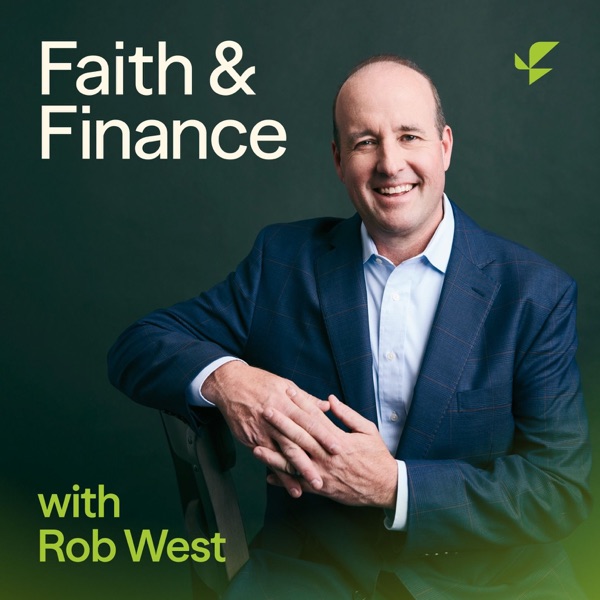
Faith & Finance
Faith & Finance is a daily radio ministry of FaithFi, hosted by Rob West, CEO of Kingdom Advisors. At FaithFi, we help you integrate your faith and financial decisions for the glory of God. Our vision is that every Christian would see God as their ultimate treasure. Join Rob and expert guests as they give biblical wisdom for your financial journey and provide practical answers to your pressing financial questions. From budgeting and debt management to investing and stewardship, Faith & Finance equips listeners with insights to handle money wisely and live generously for God's Kingdom. Listen now or ask your question live by calling 800-525-7000 each weekday from 10-11 a.m. ET on American Family Radio and 4-5 p.m. ET on Moody Radio. You can learn more at FaithFi.com.
- Investing chart
- #144
- Episodes
- 612
- Releases
- Daily
- Typical length
- 25 min
- On air since
- 2024
- Latest episode
- 21 hours ago
Episodes
612 episodes, newest first
-
25 min
Navigating the Storms of Life with Howard Dayton
Episode 1059
Show notes
Jesus never promised us a life without trouble. In John 16:33, He tells His disciples, “In the world you will have tribulation. But take heart; I have overcome the world.”
Those words remind us that difficulty is an unavoidable part of life, but we never have to face it alone. Whether we're navigating financial uncertainty, a family crisis, or an unexpected loss, God's presence and faithfulness remain constant.
Howard Dayton, author, teacher, and founder of Compass Financial Ministry, has spent decades helping Christians apply biblical wisdom to their finances. In his book Your Money Counts, he explores an important question: How should we respond when the storms of life threaten to overwhelm us?
For Howard, that question is deeply personal.
When Life Takes an Unexpected Turn
Years ago, Howard and his wife, Bev, were in the process of adopting their second child, a newborn boy named Andrew.
When Andrew was just a few months old, they began noticing problems with his eyesight. A visit to an ophthalmologist revealed that he was blind. Further examinations uncovered something far more devastating: Andrew had been born with only a brainstem.
Andrew lived for seven years, requiring extraordinary care throughout his short life. Howard and Bev loved him deeply, but the physical and emotional demands were exhausting.
That experience taught their family something about the unpredictable nature of life's difficulties. Some crises develop gradually, giving us time to prepare. Others arrive without warning. Some resolve quickly, while others become long and painful journeys. Some result from our decisions, while others are entirely beyond our control.
And many bring significant financial consequences.
Job loss, medical emergencies, family deaths, and unexpected expenses can place enormous pressure on our resources and relationships. When those pressures accumulate, even the strongest families can feel overwhelmed.
Howard emphasizes that one of the most important things couples can do during these seasons is communicate. Rather than allowing stress to create distance, he encourages husbands and wives to set aside time each day to talk honestly about what they're experiencing.
The goal isn't to solve every problem immediately. It's to listen, understand, and ask a simple question: How can I best support you right now?
Remembering Who God Is
When difficulties arise, our first instinct is often to focus on everything that's going wrong. But Howard believes the most important question isn't simply how we'll overcome the crisis. It's whether we remember who God is in the middle of it.
Scripture reminds us that God is loving, faithful, and intimately involved in our lives. His character doesn't change when our circumstances do.
That's a truth we can easily forget when hardship continues longer than expected.
Howard points to the prophet Jeremiah, who knew what it meant to experience suffering and despair. In Lamentations 3, Jeremiah describes his affliction and the bitterness weighing on his soul.
Yet in the middle of his grief, he remembers God's steadfast love and declares that His mercies are new every morning (Lamentations 3:21–23). Notice that Jeremiah's circumstances haven't necessarily changed. His hope comes from remembering the character of the One who remains faithful even in suffering.
The same is true for us. When financial pressures mount, or an unexpected crisis changes our plans, we may not immediately understand what God is doing. But we can trust that His love hasn't diminished and that His presence hasn't disappeared.
Our circumstances may be uncertain, but God's faithfulness is not.
How God Can Work Through Adversity
One of the most difficult questions we face during a crisis is why God allows suffering.
Scripture doesn't provide a specific explanation for every hardship. But it does assure us that suffering doesn't place us beyond God's care or His ability to work in our lives.
James 1:2–4 reminds believers that trials can produce steadfastness, helping us grow toward spiritual maturity. Howard has experienced that truth through profound personal loss.
Years after caring for Andrew, he walked alongside Bev through a five-year battle with breast cancer that eventually spread to her bones. Following her death, Howard reflected on how those painful years had changed him. He recognized that his relationship with Christ had deepened and that he had grown in his love for others.
That doesn't make the suffering itself good or erase the grief of losing someone we love. Rather, it demonstrates that God can continue working in us even through circumstances we would never have chosen.
Romans 8:28 reminds us that God works for the good of those who love Him. This isn't a promise that every situation will resolve according to our expectations. It's an assurance that hardship cannot ultimately frustrate God's purposes for His people.
The same principle applies to financial difficulties. A financial crisis may reveal habits that need to change, priorities that need reconsidering, or areas where we need greater wisdom. At other times, financial hardship comes through circumstances entirely outside our control.
We shouldn't assume that every difficulty is God's discipline or that someone experiencing financial hardship has been unfaithful. But whatever the cause, we can seek God's wisdom and trust that He remains present with us.
Responding to Financial Difficulties with Faith and Wisdom
So what should we do when we're facing a financial crisis?
Howard encourages Christians to begin with two foundational principles: Trust God and apply the wisdom of His Word.
Trusting God doesn't mean ignoring our circumstances or pretending everything is fine. It means remembering that our security ultimately rests in Him rather than in our ability to control every outcome. And applying biblical wisdom requires more than simply knowing what Scripture says about money. We must put those principles into practice.
That may involve reassessing our spending, seeking wise counsel, communicating honestly with our families, or making difficult adjustments to our financial plans. It also means resisting the temptation to let fear dictate every decision.
During uncertain times, our natural instinct is often to hold tightly to whatever resources we have. Yet Scripture provides a remarkable example of believers who responded differently.
In Acts 11:27–30, the prophet Agabus foretold a severe famine throughout the Roman world. The early Christians knew that difficult circumstances were approaching. They could have responded by thinking only about their own security. Instead, they looked for ways to help others.
Acts 11:29 tells us that the disciples determined, “every one according to his ability,” to send relief to fellow believers living in Judea. Their generosity was neither reckless nor compulsory. Each person contributed according to what they could provide.
That's an important distinction. Biblical generosity doesn't require us to neglect our families or ignore our financial responsibilities. But it does invite us to consider the needs of others, even when our own circumstances are uncertain.
The early Christians understood that their resources were entrusted to them by God. And because they trusted their Provider, they were free to look beyond themselves.
Finding Hope Beyond Our Circumstances
The storms of life rarely arrive when we're ready for them. They interrupt our plans, challenge our assumptions, and sometimes leave us wondering how we'll move forward. But Scripture reminds us that our hope isn't dependent on a trouble-free life.
Jesus didn't tell His disciples they would never experience tribulation. He told them to take heart because He had overcome the world. That's the foundation of our confidence.
We may not be able to prevent every financial setback, avoid every painful circumstance, or understand everything God allows. But we can seek His wisdom, lean on His promises, and take the next faithful step. And as Howard Dayton's story reminds us, even in seasons of profound difficulty, God's love remains steadfast.
The peace Jesus promises isn't found in the absence of life's storms, but in the presence of the Savior who has overcome them.
To learn more about Howard Dayton's work and biblical financial stewardship, visit http://compassfinancialministry.org.
On Today’s Program, Rob Answers Listener Questions:
• I’m 68, still working, and plan to retire at 70. My wife and I are paying about $1,400 a month in Medicare IRMAA surcharges. What tax or investment strategies could help lower those costs, especially after I retire?
• I’ve tried to give faithfully over the years, even when money was tight. Looking back, I’ve seen God provide in unexpected ways, including through an income stream I never anticipated.Resources Mentioned:
• Become a FaithFi Partner
• Compass Financial Ministry
• Your Money Counts: The Biblical Guide to Earning, Spending, Saving, Investing, Giving, and Getting Out of Debt by Howard Dayton
• Faithful Steward: FaithFi’s Quarterly Magazine
• FaithFi Field Guide: How Do I Prepare the Next Steward?
• FaithFi Field Guide: How Much Money is Enough?
• Our Ultimate Treasure: A 21-Day Journey to Faithful Stewardship by Rob West
• Wisdom Over Wealth: 12 Lessons from Ecclesiastes on Money
• Look At The Sparrows: A 21-Day Devotional on Financial Fear and Anxiety
• Rich Toward God: A Study on the Parable of the Rich Fool
• Find a Certified Kingdom Advisor® (CKA)
• FaithFi AppRemember, you can call in to ask your questions every weekday at (800) 525-7000. Faith & Finance is also available on Moody Radio Network and American Family Radio. You can also visit http://faithfi.com to connect with our online community and partner with us as we help more people live as faithful stewards of God’s resources.
Hosted by Simplecast, an AdsWizz company. See https://pcm.adswizz.com for information about our collection and use of personal data for advertising.
-
25 min
Using Your Investments to Fuel Generosity with Brian Mumbert
Episode 1058
Show notes
Your investments can do more than grow your portfolio. They can also create meaningful opportunities to bless others and support the work of God's Kingdom.
As the end of the year approaches, many Christians begin thinking about charitable giving. But generosity doesn't have to come exclusively from a checking or savings account. Your investment portfolio may offer additional ways to give, sometimes with valuable tax advantages.
Brian Mumbert, President and CEO of Timothy Plan, a pioneer in the world of faith-based investing, joined the show today to discuss how Christians can incorporate generosity into their investment strategies.
Generosity Begins With Stewardship
Before considering the financial benefits of charitable giving, it's important to remember why we give in the first place.
Scripture teaches that everything we possess ultimately belongs to God. Our responsibility is to manage His resources faithfully, recognizing that what He's entrusted to us can be used to serve others.
1 Peter 4:10 reminds us, "As each has received a gift, use it to serve one another, as good stewards of God's varied grace."
That perspective transforms how we approach investing. Rather than viewing investments solely as a means of accumulating wealth, we can recognize them as another opportunity to practice faithful stewardship.
For Timothy Plan, this conviction has shaped the company's mission since its founding in 1994. Beyond helping investors align their portfolios with biblical values, the firm has supported ministries ranging from pregnancy resource centers to Christian media and initiatives that equip entrepreneurs.
Mumbert recalled a favorite saying of Timothy Plan founder Art Ally, who often quoted Christian businessman R. G. LeTourneau:
"I shovel out the money, and God shovels it back, but God has a bigger shovel."
While generosity doesn't guarantee financial prosperity, LeTourneau's words reflect a life shaped by the conviction that what God provides is meant to be used for purposes greater than ourselves.
Two Ways to Give From Your Investments
For Christians interested in incorporating generosity into their investment strategy, Mumbert highlighted two practical approaches worth considering.
1. Donate Appreciated Investments Directly
If you own stocks, mutual funds, or exchange-traded funds (ETFs) that have increased in value, you may be able to donate those assets directly to a qualified charitable organization.
This approach can offer an advantage over selling the investments and donating the proceeds. When you sell an appreciated investment, you may owe capital gains taxes on the profit. However, donating the investment directly to an eligible charity can generally allow you to avoid recognizing those capital gains.
Depending on how long you've held the investment and your individual tax situation, you may also qualify for a charitable deduction.
The result? More of your investment's value may go directly toward supporting the ministry or cause you care about.
2. Make a Qualified Charitable Distribution From Your IRA
For individuals age 70½ or older, a qualified charitable distribution (QCD) offers another opportunity to give.
A QCD allows you to transfer funds directly from an eligible IRA to a qualifying charitable organization. When the requirements are met, the distribution is excluded from taxable income. Additionally, if you're required to take minimum distributions (RMDs) from your IRA, a QCD can count toward satisfying that obligation.
This can be particularly helpful for retirees who want to support charitable causes while managing the tax implications of their retirement income.
Of course, both approaches involve specific eligibility requirements and tax considerations. Working with a qualified financial or tax professional can help you determine whether either strategy makes sense for your circumstances.
Don't Wait Until December to Plan Your Giving
One of Mumbert's most practical recommendations is to begin planning charitable gifts well before the end of the year.
Unlike writing a check, transferring investments can require additional paperwork and coordination between your financial institution and the receiving organization. Before initiating a gift, consider these important steps:
• Identify the organizations you want to support. Begin with prayerful consideration of the ministries and causes that reflect your convictions.
• Confirm that the charity can receive your gift. Not every organization is equipped to accept securities or other noncash contributions.
• Consult a trusted financial advisor. A Certified Kingdom Advisor (CKA) can help you consider both the financial and biblical dimensions of your giving decisions.
• Allow sufficient processing time. Starting early can help ensure your contribution is completed before the year-end deadline.While tax advantages can make charitable giving more efficient, Mumbert emphasized that they shouldn't become our primary motivation. The goal isn't simply to reduce our taxes. It's to use what God has entrusted to us to bless others.
Investing With Biblical Convictions
Generosity is also connected to a broader question: How can Christians honor God through the investments they choose to own?
Timothy Plan has sought to answer that question through biblically responsible investing, which considers both financial objectives and the activities investors support through their portfolios. In 2026, Timothy Plan expanded its investment offerings with three new ETFs:
• TPFC — Free Cash Flow ETF: Focuses on companies demonstrating strong free cash flow and financial characteristics.
• TPFG — Free Cash Flow Growth ETF: Emphasizes companies with strong free cash flow and growth characteristics.
• TPFI — Fixed Income ETF: An actively managed fund focused primarily on fixed-income securities.Each incorporates Timothy Plan's biblically responsible investment screening methodology, offering investors additional ways to align their investment decisions with their Christian convictions.
The Greater Purpose of Our Investments
Investing wisely is an important part of faithful stewardship. We save and invest to provide for our families, prepare for future needs, and manage God's resources responsibly. But growing our wealth is never meant to become an end in itself.
Our investments can also become instruments of generosity, allowing us to participate in the work God is doing through churches, ministries, and charitable organizations. And sometimes, the very resources we've been setting aside for tomorrow can become an opportunity to bless someone today.
Our investments may grow in value over time, but their greatest significance is found in how we use them to love God and serve others.
To learn more about biblically responsible investing and Timothy Plan's investment offerings, visithttps://timothyplan.com.
On Today’s Program, Rob Answers Listener Questions:
• How is the new tax treatment for overtime handled—through my employer’s withholding or when I file my tax return?
• Would it be appropriate to designate part of my giving to support my pastor, who serves full-time but receives no salary from the church?
• My in-laws want to transfer their home to us before they die. What tax consequences should we consider, especially if we later sell it?
• My brother and I own an S corporation and are nearing retirement. Can we take distributions instead of wages? And if I claim Social Security before full retirement age and my benefits are reduced because I keep working, are those benefits permanently lost?Resources Mentioned:
• Become a FaithFi Partner
• Timothy Plan
• Faithful Steward: FaithFi’s Quarterly Magazine
• FaithFi Field Guide: How Do I Prepare the Next Steward?
• FaithFi Field Guide: How Much Money is Enough?
• Our Ultimate Treasure: A 21-Day Journey to Faithful Stewardship by Rob West
• Wisdom Over Wealth: 12 Lessons from Ecclesiastes on Money
• Look At The Sparrows: A 21-Day Devotional on Financial Fear and Anxiety
• Rich Toward God: A Study on the Parable of the Rich Fool
• Find a Certified Kingdom Advisor® (CKA)
• FaithFi AppRemember, you can call in to ask your questions every weekday at (800) 525-7000. Faith & Finance is also available on Moody Radio Network and American Family Radio. You can also visit http://faithfi.com to connect with our online community and partner with us as we help more people live as faithful stewards of God’s resources.
Hosted by Simplecast, an AdsWizz company. See https://pcm.adswizz.com for information about our collection and use of personal data for advertising.
-
25 min
How Do I Prepare the Next Steward? with David Wills
Episode 1057
Show notes
Someday, someone else will steward the resources God has entrusted to you. But will they be prepared for that responsibility?
Many families devote considerable time and attention to estate planning. They establish wills, create trusts, and develop strategies to transfer assets efficiently. Those are important steps, but they address only part of the challenge.
Preparing the next steward involves more than preparing an inheritance. It involves preparing the person who will receive it.
David Wills, President Emeritus of the National Christian Foundation (NCF) and a contributor to FaithFi's newest Field Guide, How Do I Prepare the Next Steward?, joined the show today to discuss how families can pass down not only financial resources but also the wisdom, character, and biblical values needed to steward them faithfully.
Start With Why, Not How
When families begin discussing wealth transfers, they often turn immediately to financial tools and tax strategies. While those considerations matter, Wills believes a more important starting point exists. He encourages families to approach the process by asking three questions:
• Why? Why has God entrusted these resources to us in the first place?
• What? What do we hope to accomplish through the accumulation, investment, use, and eventual transfer of those resources?
• How? What financial tools and strategies will help us accomplish those objectives?Too often, families begin with the third question without adequately considering the first two. The goal isn't simply to transfer assets efficiently. It's to ensure those resources continue to be managed wisely and faithfully.
Ecclesiastes 7:11–12 reminds us of the value of wisdom alongside an inheritance. Financial resources can create opportunities, but wisdom helps us use them well.
That leads to a guiding principle from FaithFi's new Field Guide: Prepare heirs for assets, not just assets for heirs.
And preparation shouldn't be limited to children or grandchildren. For married couples, the surviving spouse may be the first person to assume responsibilities previously managed by the other. Both spouses should understand their finances and feel equipped to make important decisions.
How Do You Know When Someone Is Ready?
Jesus' parable of the talents in Matthew 25 offers a helpful picture of stewardship. In the parable, a master entrusts different amounts to his servants according to their abilities. Each servant is then accountable for how he manages what he has received.
While the parable ultimately speaks to faithfulness to God, it also invites us to consider how people handle the responsibilities already entrusted to them.
Wills encourages families to observe the everyday decisions of those who may eventually receive an inheritance.
How do they manage smaller responsibilities? How do they respond to mistakes or unexpected challenges? Do they seek wise counsel? Are they growing in generosity and financial maturity?
Rather than making assumptions based on age or family relationships, these questions help us understand someone's readiness for greater responsibility. And perhaps most importantly, we should model the kind of stewardship we hope to see in the next generation.
If we want our children to be generous, they need opportunities to observe generosity in our lives. If we want them to make wise financial decisions, we should invite them to understand how and why we make ours.
Preparing the Next Steward Is a Gradual Process
Fortunately, preparing someone for stewardship doesn't have to happen all at once.
Wills suggests a simple progression that resembles discipleship: observe, participate, decide, and lead.
At first, children might simply observe their parents making financial decisions. As they mature, they can participate in those decisions, eventually making smaller choices independently before assuming greater responsibility.
Consider three familiar areas of financial stewardship: giving, saving, and spending.
Instead of treating these as private activities, families can practice them together. Parents might invite their children to help select a charitable organization, establish savings goals, or evaluate a purchase.
Wills has put this principle into practice in his own family by establishing charitable giving funds for his children. When they use those funds for generosity and contribute additional money, he and his wife offer matching contributions within established limits.
The arrangement provides practical experience while encouraging generosity.
It also gives parents a chance to see how their children make decisions, what matters to them, and how their understanding of stewardship develops.
Of course, not every lesson will come from success. Wills emphasizes the importance of sharing our financial mistakes and what we've learned from them. Those experiences can become some of the most valuable lessons we pass along.
Does Fair Always Mean Equal?
One of the most difficult questions in estate planning is whether every heir should receive an equal share.
Wills believes the answer requires careful consideration because fairness and equality aren't always the same thing. Rather than starting with how much can be distributed, families might ask what each person needs and which assets best suit their circumstances, abilities, and responsibilities.
For example, imagine a family business in which only one child is actively involved. Dividing ownership equally among several siblings who have no interest in the business could create significant challenges for its future management.
Similarly, a child who loves agriculture might find farmland especially meaningful, while another family member might treasure a collection of books or artwork.
Recognizing those differences can be appropriate, but Wills offers an important caution: Unequal distributions require thoughtful communication.
Without explanation, even well-intentioned decisions can leave family members feeling confused, hurt, or overlooked. That's why conversations about inheritance should begin long before an estate is settled. Families need opportunities to discuss their values, intentions, and the reasoning behind significant decisions.
And while different circumstances may justify different distributions, unequal treatment isn't automatically the wisest approach. The goal should be to exercise discernment while preserving relationships and honoring each person's dignity.
After all, an inheritance should bless the next generation, not create unnecessary division.
Stewardship Extends Beyond Family and Finances
Preparing the next steward also means recognizing that the resources we manage extend far beyond money.
We steward our relationships, knowledge, experience, skills, and opportunities to serve others. These forms of capital may be even more valuable than the financial assets we leave behind. And the people we influence don't have to be our children or grandchildren.
Wills shares a remarkable example involving Pete and Deb Ochs, who operate a manufacturing facility inside a prison near Wichita, Kansas. Wanting to help incarcerated men experience the joy of generosity, they identified several charitable organizations and invited the men to choose where they wanted to give.
The invitation came with an added encouragement: Pete and Deb would match their donations.
Although the men had limited financial resources, their response was extraordinary. The experience gave them a chance to make meaningful decisions, practice generosity, and help meet others' needs.
It's a powerful reminder that preparing the next steward isn't exclusively about transferring an inheritance. It's also about helping people recognize what they've already been entrusted with and encouraging them to use it faithfully.
Start With One Conversation
For someone who has spent years preparing an estate but relatively little time preparing the people who will receive it, the process can feel overwhelming.
Wills encourages a simpler approach: Start with one person and one conversation. Consider who might eventually receive the resources you manage. Then begin discussing what faithful stewardship looks like.
What have you learned about earning, saving, spending, and giving? What financial mistakes have shaped your thinking? What biblical convictions guide your decisions? And what responsibilities could you begin sharing today?
These conversations don't require a large estate or a sophisticated financial plan. They simply require intentionality.
Wills also encourages families to seek guidance from trusted financial advisors who understand that wealth transfer involves more than financial calculations. An experienced advisor can help families think through the practical, relational, and personal dimensions of preparing the next generation.
Ultimately, the greatest inheritance we leave may not be what we give someone, but what we've helped them become.
Financial assets may change hands in a single day. Wisdom, character, generosity, and faithfulness are cultivated over a lifetime. And that's why preparing the next steward is a responsibility worth embracing today.
A Resource to Help You Prepare
FaithFi's newest Field Guide, How Do I Prepare the Next Steward?, helps individuals and families look beyond the financial aspects of wealth transfer and consider the character, spiritual, and relational dimensions of preparing those who come after them.
Whether you're thinking about your spouse, children, grandchildren, or others who may one day steward the resources God has entrusted to you, this guide offers a practical framework for beginning those important conversations.
Get your copy today or place a bulk order athttps://www.faithfi.com/shop.
On Today’s Program, Rob Answers Listener Questions:
• My 10-year term life policy is expiring, and I’m retired with other assets. Should I convert to a smaller policy or let the coverage end?
• I have about $17,000 in credit card debt and live on Social Security. What’s the safest way to manage or consolidate the debt without resorting to debt settlement?Resources Mentioned:
• Become a FaithFi Partner
• National Christian Foundation (NCF)
• Christian Credit Counselors
• Faithful Steward: FaithFi’s Quarterly Magazine
• FaithFi Field Guide: How Do I Prepare the Next Steward?
• FaithFi Field Guide: How Much Money is Enough?
• Our Ultimate Treasure: A 21-Day Journey to Faithful Stewardship by Rob West
• Wisdom Over Wealth: 12 Lessons from Ecclesiastes on Money
• Look At The Sparrows: A 21-Day Devotional on Financial Fear and Anxiety
• Rich Toward God: A Study on the Parable of the Rich Fool
• Find a Certified Kingdom Advisor® (CKA)
• FaithFi AppRemember, you can call in to ask your questions every weekday at (800) 525-7000. Faith & Finance is also available on Moody Radio Network and American Family Radio. You can also visit http://faithfi.com to connect with our online community and partner with us as we help more people live as faithful stewards of God’s resources.
Hosted by Simplecast, an AdsWizz company. See https://pcm.adswizz.com for information about our collection and use of personal data for advertising.
-
25 min
Faith-Based Investing: Separating Fact from Fiction with Mark Regier
Episode 1056
Show notes
You may know how your retirement investments are performing, but do you know what they're actually supporting?
For many Christians, stewardship shapes how we earn, spend, save, and give. Yet when it comes to investing, we may not think much about the companies and industries represented in our portfolios.
Faith-based investing offers an opportunity to align those decisions more closely with our Christian convictions. But what does that look like in practice? Does investing according to your values mean sacrificing financial returns? And can individual investors really make a difference?
Mark Regier, Vice President of Stewardship Investing at Praxis Investment Management, joined the show today to explore these questions. With more than 25 years of experience in faith-based investing, Regier offers a thoughtful perspective on how Christians can approach their portfolios with greater intentionality.
Recognizing God's Ownership of Our Investments
Faithful investing begins with a foundational biblical truth: Everything belongs to God.
Psalm 24:1 declares, "The earth is the LORD's and the fullness thereof, the world and those who dwell therein."
This principle reminds us that we're not ultimately owners of our resources but stewards entrusted with managing what belongs to God.
"When we think about it that way, our investments are just the same as every part of our life, where we ask the Lord to have ownership and control over what we do," Regier explains.
One important consideration is that investing in a company often means becoming a partial owner of that business. Whether through individual stocks or investment funds, our financial resources are connected to businesses whose decisions affect employees, customers, communities, and the wider world.
That ownership also brings an opportunity to stay informed and engaged. Just as Christians seek to honor God through their spending and generosity, they can also consider how their investments reflect their values.
Faith-Based Investing Is About More Than Avoidance
When people hear the term faith-based investing, they often think of avoiding companies or industries whose practices conflict with their Christian convictions.
This approach, commonly called screening, is an important starting point. Investors may choose to exclude certain businesses based on their products, services, or practices. But Regier emphasizes that faith-based investing can go much further.
At Praxis Investment Management, the goal isn't simply to avoid certain investments but also to identify opportunities to contribute positively to the world. These opportunities can include:
• Shareholder engagement: Using the responsibilities and opportunities of ownership to encourage companies toward more responsible business practices.
• Community investing: Directing capital toward initiatives that support underserved communities and expand economic opportunities.
• Impact bonds: Investing in bonds that help finance projects with positive social or environmental outcomes.Praxis incorporates these and other strategies into its ImpactX approach, which identifies seven ways investors can pursue positive impact through their portfolios. The broader principle is that stewardship involves more than asking what we should avoid. It also invites us to consider what our resources can help accomplish.
Does Faith-Based Investing Mean Sacrificing Returns?
One of the most common concerns about faith-based investing is whether aligning a portfolio with personal convictions comes at the expense of financial performance.
According to Regier, that trade-off isn't necessarily required. He points to research suggesting that values-aligned investing does not inherently lead to lower returns. However, the results depend significantly on how a portfolio is constructed and managed.
For example, Praxis uses a process called portfolio optimization to apply its investment screens while keeping performance closely aligned with appropriate market benchmarks.
The objective is to balance investors' financial goals with their desire to invest according to their convictions.
This distinction matters, especially for individuals and families who rely on their investments to fund retirement, meet future needs, or support charitable giving.
Of course, no investment strategy can guarantee returns, and faith-based portfolios can still lose value or underperform broader markets. Investors must carefully evaluate diversification, expenses, risk, and their long-term financial objectives.
Faith-based investing doesn't eliminate the need for sound financial planning. Rather, it adds another important consideration to the investment process: whether our financial decisions reflect what we believe.
Taking the First Step Toward Faithful Investing
For Christians exploring faith-based investing, the process doesn't have to start with a complete portfolio overhaul. Regier recommends starting with a conversation.
A knowledgeable financial advisor can help you examine your existing investments, clarify your priorities, and identify opportunities to align your portfolio more closely with your convictions.
A Certified Kingdom Advisor (CKA®) can be especially helpful in this process. These professionals are trained to apply biblical financial principles and help clients make decisions consistent with their faith.
It's also important to recognize that faith-based investing is personal. Christians may differ in how they evaluate certain companies or investment strategies. Thoughtful stewardship involves prayer, discernment, and an understanding of your particular financial circumstances.
Ultimately, the goal isn't simply to build a portfolio that carries a faith-based label. It's to approach investing with the same intentionality and biblical wisdom we seek to apply to every other area of our financial lives.
After all, if everything belongs to God, then our investments are another opportunity to steward His resources faithfully.
To connect with a Certified Kingdom Advisor, visithttp://findacka.com. To learn more about Praxis Investment Management and its approach to faith-based investing, visithttps://www.praxisinvests.com.
On Today’s Program, Rob Answers Listener Questions:
• My husband is retiring from federal service. What should we ask his employer about life and health insurance, accrued leave, and other benefits? And how should we think about Medicare and Social Security, including retroactive benefits?
• My husband and I are retired, and our advisor recommends rebalancing our retirement accounts. What are the benefits and drawbacks?
• My wife, daughter, and I are considering sharing a larger rental home with our newly married son and daughter-in-law. What should we think through before entering a multigenerational living arrangement?Resources Mentioned:
• Become a FaithFi Partner
• Praxis Investment Management
• Faithful Steward: FaithFi’s Quarterly Magazine
• FaithFi Field Guide: How Do I Prepare the Next Steward?
• FaithFi Field Guide: How Much Money is Enough?
• Our Ultimate Treasure: A 21-Day Journey to Faithful Stewardship by Rob West
• Wisdom Over Wealth: 12 Lessons from Ecclesiastes on Money
• Look At The Sparrows: A 21-Day Devotional on Financial Fear and Anxiety
• Rich Toward God: A Study on the Parable of the Rich Fool
• Find a Certified Kingdom Advisor® (CKA)
• FaithFi AppRemember, you can call in to ask your questions every weekday at (800) 525-7000. Faith & Finance is also available on Moody Radio Network and American Family Radio. You can also visit http://faithfi.com to connect with our online community and partner with us as we help more people live as faithful stewards of God’s resources.
Hosted by Simplecast, an AdsWizz company. See https://pcm.adswizz.com for information about our collection and use of personal data for advertising.
-
25 min
What If Your Next Steward Is a Ministry? with Sharon Epps
Episode 1055
Show notes
When you think about leaving an inheritance, you probably picture children or grandchildren. But what if your next steward isn't a person at all?
For many Christians, leaving a gift to a church, ministry, or nonprofit organization can be a meaningful way to extend their generosity beyond their lifetime. But deciding where, when, and how to give deserves the same thoughtful preparation we would give to an individual heir.
Sharon Epps, President of Kingdom Advisors and a contributor to FaithFi's new field guide, How Do I Prepare the Next Steward?, joined us today to discuss how believers can make these decisions wisely.
Her central encouragement is simple: Choosing a ministry as your next steward is about more than deciding who receives your money. It's about considering what those resources might accomplish after you're gone.
Begin With Purpose, Not an Amount
Before deciding how much to leave a ministry, consider what you hope your gift will accomplish.
What needs are particularly meaningful to you? What kinds of ministry have shaped your life or strengthened your faith? How would you like the resources God has entrusted to you to continue serving others?
Sharon encourages believers to begin with these questions rather than immediately settling on a dollar amount.
Once you've identified your priorities, look for organizations whose missions align with them. Consider whom they serve, how they carry out their work, and whether their approach reflects the purposes behind your generosity.
For example, someone whose family has been blessed through adoption may feel a particular desire to support foster care and adoption ministries. Someone who has benefited from Christian financial discipleship might want to help make those resources available to future generations.
Your own experiences, including seasons of difficulty, may help you recognize opportunities to serve others in meaningful ways.
Look Beyond the Mission Statement
Finding an organization whose mission resonates with you is important, but it's only the beginning.
Just as you would consider an individual heir's character and readiness to manage an inheritance, it's wise to evaluate how a ministry currently handles the resources entrusted to it. Sharon recommends asking several important questions:
• Does the organization demonstrate integrity and accountability in its leadership?
• Is it transparent about its finances?
• Does it have a healthy governance structure and an engaged board?
• How does it measure and communicate the impact of its work?
• What happens when its current leadership changes?These questions aren't intended to create suspicion. They're part of understanding the ministry well enough to support its work confidently.
Whenever possible, build relationships with its leadership, observe its work firsthand, and learn how it makes decisions.
Approach these conversations with a servant's heart. Rather than simply evaluating whether a ministry deserves your gift, seek to understand how you can help advance the work it's already doing.
Consider Whether the Ministry Is Prepared for Your Gift
A ministry can do wonderful work without being equipped to manage a substantial financial gift. This is especially true for smaller or local organizations with limited staff and administrative resources.
A contribution that dramatically increases a ministry's annual budget may sound like an extraordinary blessing. But if the organization lacks the systems, personnel, or infrastructure to manage that growth, the gift could unintentionally create new challenges.
A significant contribution could also affect existing fundraising efforts or create ongoing responsibilities the ministry isn't prepared to sustain. That's why Sharon emphasizes that the wisest gift isn't always the largest gift you can make.
Consider what the ministry can realistically accomplish with additional resources. Would a larger contribution accelerate its mission, or would a smaller, more gradual commitment better serve its long-term health?
Generosity should strengthen a ministry's ability to fulfill its mission, not burden it with expectations it cannot reasonably meet.
Start Small and Build a Relationship
If you're considering leaving a substantial gift to a ministry, one practical step is to begin supporting it during your lifetime. Sharon suggests making a smaller contribution as an opportunity to learn more about the organization.
Observe how the ministry communicates with supporters. Does it follow through on its commitments? Does it provide meaningful updates about its work? Are its leaders accessible and willing to answer thoughtful questions?
Over time, these experiences can help you decide whether the ministry is a good fit for a deeper commitment. You may even discover that a particular program or initiative aligns especially well with your priorities.
Building a relationship also creates opportunities for honest conversations about the organization's future needs. Instead of assuming what would be most helpful, you can learn directly from the people doing the work.
Should You Restrict Your Gift?
Another important consideration is whether to designate your gift for a particular purpose or let the ministry decide how best to use it.
A restricted gift directs resources toward a specific program, project, or purpose. This can be helpful when there's a particular aspect of the ministry's work you feel strongly about supporting.
An unrestricted gift, however, gives the organization greater flexibility to meet changing needs and pursue opportunities as they arise.
Sharon points out that unrestricted gifts can be particularly valuable when you've developed confidence in an organization's leadership and mission.
Programs may change over time, especially when you won't receive a gift for years or decades. Giving a trusted ministry flexibility can help ensure that your generosity continues to serve its broader mission even as circumstances evolve.
Neither approach is universally better. The important thing is to communicate with the ministry and understand how your gift can be most useful.
Should You Give Now or Through Your Estate?
When Christians consider leaving a legacy gift, they often assume it must happen after their death. But that isn't necessarily the case.
Longtime financial teacher Ron Blue has frequently encouraged believers to “do their givin’ while they're livin’ so they’re knowin’ where it’s goin’”.
There's wisdom in that approach. Giving during your lifetime lets you see how your resources are used, build deeper relationships with the organizations you support, and participate personally in their work. It also creates opportunities to make adjustments as you learn more about a ministry's needs.
Of course, there's no single right time for every gift.
Some individuals need to preserve resources for retirement, healthcare, family responsibilities, or other anticipated expenses. In those circumstances, a gift through an estate plan may be the wiser option.
Sharon suggests asking one particularly helpful question: Is there a reason this gift should wait?
Sometimes the answer is yes. But rather than assuming all legacy giving must happen after death, it's worth prayerfully considering whether some of those resources could be put to work today.
Make Sure Your Estate Plan Reflects Your Intentions
If you decide to include a ministry in your estate plan, thoughtful planning is essential.
Work with a qualified estate planning attorney and a financial advisor who understands your values and objectives.
Make sure your estate documents and beneficiary designations reflect your intentions. Consider any relevant tax implications and how the charitable gift fits within your broader financial plan.
It's also wise to communicate with the ministry itself, especially when considering a substantial contribution. A healthy organization should welcome the opportunity to understand your priorities and discuss how your gift might support its future work.
Remember, estate planning isn't a one-time event. Your financial circumstances may change. The ministries you support may evolve. Leadership, organizational priorities, and family needs may look different years from now.
Reviewing your plan periodically helps ensure that your intentions remain aligned with your circumstances.
Make Generosity a Shared Decision
For married couples, deciding which ministries to support can introduce another important consideration: What happens when spouses have different passions?
Sharon shares that she and her husband, Joel, support some causes they're equally passionate about, while each also has particular ministries that resonate more deeply with them individually.
That's perfectly healthy. Unity in marriage doesn't require identical interests or equal enthusiasm for every charitable cause.
Instead, couples can prayerfully discuss what they want to support together while also making room for the causes that are particularly meaningful to each spouse. The goal isn't necessarily to arrive at the same passions. It's to reach shared decisions about how to steward their resources faithfully.
Preparing the Next Steward
Ultimately, leaving a gift to a ministry is about more than distributing assets. It's about preparing another steward to carry forward work that matters to you.
That requires prayer, discernment, thoughtful evaluation, and relationships built on trust.
It also invites us to think differently about inheritance. The resources God has entrusted to us can keep serving others long after we're gone, whether through family members, ministries, or both.
The question isn't simply: Who should receive what I've accumulated? It's also: How can these resources continue to reflect my love for God and my neighbor?
And when we approach that question with wisdom and intentionality, our generosity can become part of a legacy that extends well beyond our lifetime.
A Resource to Help You Prepare
FaithFi's newest field guide, How Do I Prepare the Next Steward?, is designed to help you think through these important decisions. It goes beyond the financial aspects of inheritance to explore the character, spiritual, and relational dimensions of preparing those who will receive what you leave behind.
Whether you're considering family members, ministries, or both, this resource can help you approach the process with greater clarity and purpose.
You can order your copy athttps://www.faithfi.com/shop. Bulk discounts are also available for churches, small groups, and others who want to work through these conversations together.
On Today’s Program, Rob Answers Listener Questions:
• I have just over $100,000 in a money market, and my advisor recommends a MYGA paying more than 6%. Would that be a good option? If it’s held in my Roth, are the gains taxable, and what should I know about surrender charges and the insurer’s financial rating?
• I co-own farmland as tenants in common with two friends, and one may have IRS issues. Could his tax problems affect my ownership interest or the other co-owner?Resources Mentioned:
• Become a FaithFi Partner
• Splitting Heirs: Giving Money & Things to Your Children Without Ruining Their Lives by Ron Blue with Jeremy White
• Kingdom Advisors
• Faithful Steward: FaithFi’s Quarterly Magazine
• FaithFi Field Guide: How Do I Prepare the Next Steward?
• FaithFi Field Guide: How Much Money is Enough?
• Our Ultimate Treasure: A 21-Day Journey to Faithful Stewardship by Rob West
• Wisdom Over Wealth: 12 Lessons from Ecclesiastes on Money
• Look At The Sparrows: A 21-Day Devotional on Financial Fear and Anxiety
• Rich Toward God: A Study on the Parable of the Rich Fool
• Find a Certified Kingdom Advisor® (CKA)
• FaithFi AppRemember, you can call in to ask your questions every weekday at (800) 525-7000. Faith & Finance is also available on Moody Radio Network and American Family Radio. You can also visit http://faithfi.com to connect with our online community and partner with us as we help more people live as faithful stewards of God’s resources.
Hosted by Simplecast, an AdsWizz company. See https://pcm.adswizz.com for information about our collection and use of personal data for advertising.
-
25 min
Finances When You're a Widow with Rachel Faulkner Brown
Episode 1054
Show notes
Losing a spouse changes almost everything. Beyond the emotional weight of grief, there are practical responsibilities that can suddenly feel overwhelming. Bills still need to be paid, accounts need attention, and financial decisions that once seemed routine may now feel impossible.
For widows, navigating those responsibilities can be especially difficult when grief affects their ability to think clearly, make decisions, and plan for the future.
Rachel Faulkner Brown understands this firsthand. Widowed twice by the age of 31, she has experienced profound loss, financial mistakes, and unexpected challenges. Today, as the Founder and Executive Director ofNever Alone Widows, she helps women find hope, healing, and community after losing a spouse.
Rachel joined the show today to share what those experiences taught her about stewardship, financial vulnerability, and learning to trust God when life feels out of control.
When Grief Changes Your Financial Priorities
"The day after Blair died, I threw away the Dave Ramsey envelopes."
That striking statement from Rachel's article in Faithful Steward magazine captures how dramatically grief can reshape a person's relationship with money.
Before losing her husband, Rachel had been committed to careful budgeting. At 21, she attended a Dave Ramsey conference, embraced its financial principles, and worked with her husband to manage their resources responsibly. But after his death, something changed.
"I knew that feeding my children was much more important than getting the envelopes right," she explained.
For Rachel, abandoning the envelope system wasn't necessarily about rejecting financial discipline. It was about recognizing that her circumstances had changed and the system she once relied on no longer served her immediate needs.
Grief can force us to reconsider our priorities. And sometimes, wise stewardship means adjusting our financial practices to reflect the realities of a new season.
Give Yourself Permission to Slow Down
One of the most important lessons Rachel learned was the value of patience when making major financial decisions after a loss.
She remembers meeting with a financial planner in Atlanta shortly after becoming a widow. Although she felt pressure to make investment decisions, something didn't seem right.
She ultimately chose not to move forward. The year was 2008, just before the financial crisis devastated investment portfolios across the country. Looking back, Rachel is grateful she resisted the pressure to act before she was ready.
Her experience highlights an important principle: Not every financial decision needs to be made immediately.
Grief can affect memory, concentration, and emotional well-being. Decisions that would ordinarily be straightforward may become much more difficult.
Some responsibilities, however, cannot wait. Household bills, insurance matters, and essential account management may require immediate attention. But major investments, significant purchases, and other long-term commitments can often wait until things are clearer.
Patience can be a form of wisdom, especially when circumstances make us vulnerable to pressure or manipulation.
You Weren't Meant to Navigate Financial Loss Alone
When Blair died unexpectedly, Rachel discovered just how much of their financial life he had managed. She didn't have account passwords or ready access to important financial information. Even gathering the necessary documents felt overwhelming.
Fortunately, two close friends stepped in. They contacted financial institutions, organized investment information, and assembled a notebook containing the details Rachel needed to begin managing her finances.
Their assistance made an enormous difference. Rachel encourages widows to be vulnerable with trusted people who genuinely care about their well-being.
"Get someone to help you that is a trusted friend," she said, "not necessarily someone who needs anything from you, someone who wants something for you."
She also recommends building a support circle that extends beyond financial advice.
That might include a financial professional to help navigate investments and estate matters, a counselor to process grief, trusted friends to provide accountability, and people who can offer practical support with parenting and household responsibilities.
As Rachel explained, there are many areas of life where we readily seek professional assistance. Why should managing grief, caring for our families, and preparing for the future be any different?
The biblical picture of community reminds us that we were never intended to carry life's burdens entirely on our own.
When Financial Mistakes Become Opportunities for Growth
Rachel's financial journey hasn't been without painful mistakes.
After losing her first husband, Todd, she turned to shopping as a way of coping with grief. What initially offered temporary relief eventually led to secretive spending and overdrafted accounts.
She also discovered an unexpected financial responsibility when preparing to sell a home she owned outright.
Although she had paid off the mortgage, she hadn't realized she still needed to pay property taxes. The unpaid taxes had placed the property at risk, and she learned about the problem while preparing to sell.
These experiences revealed how emotional pain and financial decisions can become intertwined.
Looking back, Rachel recognizes that she often tried to manage her struggles privately rather than allowing others to help. But her greatest lesson wasn't simply about avoiding mistakes. It was about understanding what those mistakes revealed.
Financial struggles sometimes expose areas where we need greater knowledge, healthier habits, or support from people we trust.
Rather than letting shame keep those struggles hidden, Rachel encourages people to see them as opportunities to heal and grow in wisdom.
A Painful Lesson About Financial Trust
Even after significant loss, Rachel faced another financial setback. Years after remarrying, she and her husband decided to invest outside their usual diversified, conventional approach.
A trusted family friend, active in their church community and even leading Bible studies in their home, brought the opportunity to them.
Unfortunately, the investment turned out to be part of a multimillion-dollar Ponzi scheme. The financial loss was devastating.
Rachel had viewed those investments as a source of security for her children's future. Losing that money forced her to examine how deeply she had associated financial resources with safety and stability.
She also recognized the importance of listening carefully to wise counsel.
Although she and her husband had sought advice before investing, some people had expressed reservations. Looking back, Rachel wishes she had given those concerns more weight.
Her experience offers an important reminder: Personal trust should never replace financial due diligence.
Even when an opportunity comes through someone we know and respect, it's wise to investigate the investment, understand the risks, seek independent counsel, and resist pressure to act quickly.
Christian character and sincere intentions matter, but they don't eliminate the need for accountability and careful evaluation.
Remembering Who Ultimately Owns It All
Perhaps the deepest lesson Rachel learned through her financial experiences was that stewardship begins with recognizing God's ownership.
Before losing her investment, she understood that she and her husband were responsible for stewarding what God had entrusted to them. But the loss revealed how easily that responsibility could become a sense of possession and control.
She had seen the money as their safety net, their children's future, and their security.
Losing it forced her to confront a difficult question: Where was she ultimately placing her trust?
Scripture reminds us that everything we possess belongs to God. Psalm 24:1 declares, "The earth is the LORD's and the fullness thereof, the world and those who dwell therein."
That truth doesn't make financial loss painless or remove our responsibility to manage money wisely. But it changes the foundation of our security. We are stewards, not owners. Our resources are temporary, but God's faithfulness is not.
This perspective also shapes the way we understand financial setbacks. A loss doesn't necessarily mean we've failed as stewards, just as financial prosperity doesn't necessarily demonstrate God's approval.
Wise stewardship means faithfully managing what we've been given while acknowledging that our ultimate security rests in the Lord rather than our financial circumstances.
Seeking First What Matters Most
In Matthew 6, Jesus acknowledges our everyday concerns about food, clothing, and provision. Rather than dismissing those needs, He reminds His followers that their heavenly Father knows what they need.
Then Jesus says: "But seek first the kingdom of God and his righteousness, and all these things will be added to you." - Matthew 6:33
For Rachel, that passage has transformed the way she thinks about her resources. Her financial decisions are no longer simply about accumulating enough to feel secure. They're about honoring God with everything He's entrusted to her.
As she explained, the goal is to glorify Him through the way we use our money, time, talents, and treasure.
That doesn't mean financial challenges will disappear, or that faithful stewardship will always produce favorable financial outcomes. It means we can approach those challenges with a deeper confidence in the One who provides for us.
Grief may change our circumstances, our responsibilities, and even our ability to manage everyday decisions. But it doesn't change God's character.
Whether we're navigating the loss of a spouse, recovering from financial mistakes, or learning to release our grip on what we possess, the invitation remains the same: Seek Him first, trust Him with what we cannot control, and faithfully steward what He's placed in our hands today.
Finding Hope and Support After Loss
If you or someone you love is navigating widowhood, Rachel Faulkner Brown and her team at Never Alone Widows provide encouragement, practical resources, and a community of women who understand the journey. Learn more athttps://neveralonewidows.com.
You can also explore Rachel's story in the special Women Stewarding Wealth edition of Faithful Steward magazine, available athttps://www.faithfi.com/shop.
On Today’s Program, Rob Answers Listener Questions:
• My husband and I are retired and living on Social Security. We want to add about $35,000 to our home and have $16,000 in emergency savings plus a $100,000 reverse-mortgage line of credit. What’s the best way to fund the project?
• My wife and I are 68 and 69 and recently gained custody of our 10-year-old granddaughter. How should we set up a trust or other plan to provide for her future?Resources Mentioned:
• Become a FaithFi Partner
• Widow's Might: 365 Days of Strength for Grief and Loss – Find Comfort, Hope, and Healing by Rachel Faulkner Brown
• Emotionally Healthy Spirituality: It's Impossible to Be Spiritually Mature, While Remaining Emotionally Immature by Peter Scazzero
• Never Alone Widows
• Finances When You're Widowed by Rachel Faulkner Brown (Article in Faithful Steward, Issue 7)
• Faithful Steward: FaithFi’s Quarterly Magazine
• FaithFi Field Guide: How Do I Prepare the Next Steward?
• FaithFi Field Guide: How Much Money is Enough?
• Our Ultimate Treasure: A 21-Day Journey to Faithful Stewardship by Rob West
• Wisdom Over Wealth: 12 Lessons from Ecclesiastes on Money
• Look At The Sparrows: A 21-Day Devotional on Financial Fear and Anxiety
• Rich Toward God: A Study on the Parable of the Rich Fool
• Find a Certified Kingdom Advisor® (CKA)
• FaithFi AppRemember, you can call in to ask your questions every weekday at (800) 525-7000. Faith & Finance is also available on Moody Radio Network and American Family Radio. You can also visit http://faithfi.com to connect with our online community and partner with us as we help more people live as faithful stewards of God’s resources.
Hosted by Simplecast, an AdsWizz company. See https://pcm.adswizz.com for information about our collection and use of personal data for advertising.
-
25 min
Why God Has So Much to Say About Money with Randy Alcorn
Episode 1053
Show notes
Money can be a wonderful servant or a terrible master. It touches nearly every part of our lives, influencing our decisions, shaping our priorities, and often revealing what matters most to us.
But have you ever wondered why the Bible has so much to say about it?
According to bestselling author Randy Alcorn, Founder and Director of Eternal Perspective Ministries, the answer has less to do with money itself and more to do with what money reveals about our hearts.
On today’s show, Randy joined us to share insights from his forthcoming 31-day devotional with FaithFi, exploring why God's wisdom about money ultimately invites greater freedom, contentment, and joy.
Money Is Always About More Than Money
Scripture addresses money and possessions with remarkable frequency. From the wisdom of Proverbs to the teachings of Jesus, financial stewardship appears throughout the biblical narrative.
Why does God devote so much attention to something we might consider merely practical?
Because money is never just about money. "What we do with our money is an indication of where our heart is," Randy explains.
Jesus makes this connection in Matthew 6:21: "For where your treasure is, there your heart will be also."
Our financial decisions reveal what we value, what we trust, and where we seek security. They can expose our fears and misplaced priorities, but they can also express worship, compassion, and love for our neighbors.
The danger comes when we separate our financial lives from our spiritual lives.
We may think of prayer, worship, and Bible study as spiritual activities, while treating budgets, careers, and purchases as entirely different matters. Yet Scripture makes no such distinction.
We live one life before the Lord, and every part of it belongs to Him.
That means managing money isn't simply an exercise in financial responsibility. It's an opportunity to grow in discipleship, learning to trust God and use His provision for purposes that reflect His character.
God's Correction Is an Invitation to Freedom
Some of Scripture's teachings about money can make us uncomfortable.
Jesus warns against greed, challenges misplaced trust in wealth, and calls His followers to a life of generosity. These teachings sometimes confront attitudes we'd rather leave unexamined. But Randy encourages us to see that discomfort differently.
Drawing from Proverbs 27:6, which says, "Faithful are the wounds of a friend," he reminds us that loving correction is often necessary for genuine growth.
Just as a trusted friend may lovingly confront something harmful in our lives, God's Word exposes what threatens our relationship with Him.
"The Holy Spirit loves to expose our idols, and it's not to humiliate us. It's to liberate us from those idols," Randy says.
That distinction matters. God's instructions about money aren't designed to burden us with guilt or deprive us of enjoyment. They're intended to free us from trusting in something that cannot ultimately satisfy.
When money becomes our source of identity, security, or significance, it demands more than it can ever deliver. But when money takes its rightful place as a gift from God, it becomes a powerful instrument for worship, generosity, and compassion.
Why More Never Seems to Be Enough
One of the most persistent promises of our culture is that greater prosperity will bring greater happiness.
We imagine how much better life will be when we purchase a new home, receive a salary increase, take a dream vacation, or finally reach a particular financial milestone. And while those experiences can bring genuine enjoyment, their ability to satisfy us is limited.
Randy observes that, as we grow older, we often discover this truth through experience. The things we once anticipated with tremendous excitement eventually become ordinary, and the satisfaction we expected begins to fade.
That doesn't mean those things were wrong to pursue or enjoy.
Scripture affirms that God's provision is good and that we can receive His gifts with gratitude. The problem arises when we expect temporary blessings to satisfy eternal longings.
As Randy puts it, "God made us for something far greater than living from purchase to purchase."
This is part of what makes generosity so remarkable. In Acts 20:35, Jesus reminds us, "It is more blessed to give than to receive."
Rather than organizing our lives around accumulating more possessions, generosity invites us to participate in something beyond ourselves. It directs our attention toward others and reminds us that what God has entrusted to us can accomplish far more than simply increasing our personal comfort.
We don't have to reject enjoying God's gifts. We simply need to remember that the gifts themselves were never intended to replace the Giver.
Where Your Treasure Is, Your Heart Will Follow
Jesus' words in Matthew 6:21 reveal another important principle: Our hearts are connected to what we treasure.
We often assume our spending and giving simply reflect what we already care about. And certainly, our priorities influence our financial decisions. But Randy points out that the relationship can also work in the other direction.
Consider what happens when you invest in a company. Suddenly, you pay closer attention to its performance, leadership, and future. You have a personal interest in what happens because you've committed some of your resources to it.
Something similar can happen with generosity. When we support a ministry that provides clean water, shares the gospel, or translates Scripture into another language, we often become more attentive to the people and needs involved.
Our giving connects us to work we might otherwise have overlooked.
Of course, generosity isn't a formula for manufacturing spiritual maturity. A transformed heart is ultimately the work of God's grace. But intentional giving can become one way we express and cultivate the priorities He's developing within us.
It encourages us to look beyond our immediate circumstances and recognize the opportunities God has given us to love and serve others.
Our Greatest Treasure Is God Himself
So how do we keep money and possessions from occupying a place in our lives they were never intended to hold?
For Randy, the answer begins with a deeper understanding of God's character.
He recalls how books such as A. W. Tozer's The Knowledge of the Holy and J. I. Packer's Knowing God helped shape his understanding of the Lord. In her final days, Randy's late wife, Nancy, also returned to books that reminded her of God's goodness, faithfulness, and promises.
Their example points to a profound truth: The more clearly we understand who God is, the more freely we can hold everything else.
When we're anchored in His goodness and generosity, we no longer need to look to money for the security, identity, and satisfaction that only He can provide. We become more openhearted and, as a result, more openhanded. This is the beautiful invitation at the center of biblical stewardship.
God isn't calling us to despise money or reject the good things He provides. He's teaching us to enjoy those gifts without confusing them with the source of our joy.
As Randy reminds us, "The greatest treasure isn't what God gives us, but God Himself."
And when God becomes our greatest treasure, money can finally become what it was always meant to be: a useful tool, a good gift, and an opportunity to reflect His generosity to the world.
That's why the Bible has so much to say about money. Not because God needs our resources, but because He loves us and wants our hearts to rest in something infinitely greater.
On Today’s Program, Rob Answers Listener Questions:
• My wife and I are in our mid-20s, recently had a baby, and are currently living on one income. We want to become debt-free so we can give more generously. What should we prioritize, and what’s the best strategy for paying down our debt?
Resources Mentioned:
• Become a FaithFi Partner
• Eternal Perspective Ministries (EPM)
• The Treasure Principle: Unlocking the Secret of Joyful Giving by Randy Alcorn
• Money, Possessions, and Eternity by Randy Alcorn
• Money and Marriage God’s Way by Howard Dayton
• Faithful Steward: FaithFi’s Quarterly Magazine
• FaithFi Field Guide: How Do I Prepare the Next Steward?
• FaithFi Field Guide: How Much Money is Enough?
• Our Ultimate Treasure: A 21-Day Journey to Faithful Stewardship by Rob West
• Wisdom Over Wealth: 12 Lessons from Ecclesiastes on Money
• Look At The Sparrows: A 21-Day Devotional on Financial Fear and Anxiety
• Rich Toward God: A Study on the Parable of the Rich Fool
• Find a Certified Kingdom Advisor® (CKA)
• FaithFi AppRemember, you can call in to ask your questions every weekday at (800) 525-7000. Faith & Finance is also available on Moody Radio Network and American Family Radio. You can also visit http://faithfi.com to connect with our online community and partner with us as we help more people live as faithful stewards of God’s resources.
Hosted by Simplecast, an AdsWizz company. See https://pcm.adswizz.com for information about our collection and use of personal data for advertising.
-
25 min
Intentional Giving
Episode 1052
Show notes
Every day, we make decisions about money, but not every decision is made with intention. When it comes to generosity, many of us wrestle with the same questions: Where should we give? How much should we give? And does our giving really make a difference?
With so many worthy causes competing for our attention, generosity can easily become reactive rather than intentional. Yet Scripture invites us to see giving as something much greater than another financial habit. Intentional generosity is an act of discipleship that connects our resources to God's work in the world.
Generosity Is Part of God's Purpose for Our Lives
The needs around us are endless. Local churches, global missions, ministries serving the poor, and organizations strengthening families all offer meaningful opportunities to give. Faced with so many possibilities, we may feel overwhelmed or simply respond to whichever need appears most urgent. But Scripture gives us a larger perspective.
Ephesians 2:10 reminds us, "For we are his workmanship, created in Christ Jesus for good works, which God prepared beforehand, that we should walk in them."
Our lives are meant to reflect God's grace through good works, and generosity is one way we can do that. The resources entrusted to us aren't simply for our own comfort or financial security. We can also use them to meet needs, serve others, and support the spread of the gospel.
This changes how we think about giving. Rather than viewing generosity as an occasional financial obligation, we begin to see it as a meaningful expression of our faith.
The apostle Paul reinforces this perspective in 1 Timothy 6:18–19, encouraging believers to be rich in good works, generous, and ready to share. He connects this kind of generosity with laying up treasure for the future and taking hold of that which is truly life.
Generosity reminds us that the greatest value of our resources isn't found in what we accumulate, but in how faithfully we use what God has entrusted to us.
Where Should We Direct Our Giving?
Intentional generosity begins by prayerfully considering where our resources can serve others and reflect God's priorities.
Supporting the local church is an important place to begin. God has established the church as a community where believers worship, grow in faith, care for one another, and proclaim the gospel. Financially supporting its ministry lets us join in that shared work.
Beyond the local church, Scripture repeatedly calls us to care for those in need. Proverbs 19:17 says, "Whoever is generous to the poor lends to the LORD." Whether through local outreach, relief organizations, or helping a struggling neighbor, our generosity can reflect God's compassion in practical ways.
We can also support ministries and missionaries dedicated to sharing the gospel. Romans 10:15 reminds us, "How beautiful are the feet of those who preach the good news!" Financial gifts can help equip those serving in places and circumstances we may never personally reach.
Of course, we cannot support every worthy cause. Intentional giving requires discernment. We can prayerfully evaluate opportunities, consider the needs God has brought to our attention, and make thoughtful commitments that reflect our convictions and financial circumstances.
A practical starting point is to establish a regular giving plan while leaving room to respond to unexpected needs. This allows generosity to become a consistent part of our stewardship without losing the joy of spontaneous giving.
Giving Flows from Grace, Not Guilt
Perhaps the most important truth about generosity is that we don't do it to earn God's favor. It's a response to the grace we've already received.
2 Corinthians 9:7 reminds us, "Each one must give as he has decided in his heart, not reluctantly or under compulsion, for God loves a cheerful giver."
God isn't interested in generosity driven merely by pressure or obligation. He desires hearts that respond willingly to His goodness. And we need look no further than Jesus Christ to understand the foundation of Christian generosity.
In 2 Corinthians 8:9, Paul points to the grace of our Lord Jesus Christ, who, though He was rich, became poor for our sake so that through His poverty we might become rich. Christ willingly humbled Himself to bring us the incomparable riches of salvation.
Our generosity is a response to His.
We don't give to purchase God's approval or secure greater blessings for ourselves. We give because God has already shown us extraordinary generosity through His Son.
When we understand that truth, giving becomes less about what we're surrendering and more about the privilege of using what we've received to love and serve others.
How Intentional Giving Changes Us
Generosity certainly benefits those who receive it, but God can also use it to shape the hearts of those who give.
When we give intentionally, we practice holding our possessions with an open hand. We acknowledge that everything belongs to God and that our security ultimately rests in Him rather than our accumulated wealth.
Giving can also help us recognize the purposes our money is serving. Our financial decisions reveal something about what we value, and thoughtful generosity gives us an opportunity to align those decisions more closely with our faith.
Over time, this practice can strengthen our trust in God, deepen our concern for others, and loosen money's grip on our hearts.
That's why intentional giving is about much more than choosing a charity or setting aside a percentage of our income. It's about seeing everything we have through the lens of faithful stewardship. The question isn't simply, "How much should I give?" It's also, "How can I faithfully use what God has entrusted to me?"
Making Generosity Part of Your Story
God has entrusted each of us with different resources, relationships, experiences, and opportunities. We won't all give the same amounts or support the same ministries, but every believer can pursue a life marked by generosity.
As you consider your own giving, think about the people and needs God has brought into your life. Look for opportunities to support the work of the gospel, serve those in need, and use your resources with greater purpose.
Above all, remember that intentional giving isn't simply about becoming better at managing money. It's to grow in our love for God and others.
That's a central theme of my devotional, Our Ultimate Treasure: A 21-Day Journey to Faithful Stewardship. One chapter focuses on intentional giving, helping readers see how generosity fits into God's larger story and how their financial decisions can reflect His grace.
If you'd like to grow in faithful stewardship and learn to view your resources through an eternal perspective, I encourage you to pick up a copy. You can purchase Our Ultimate Treasure or place a bulk order for your church or small group athttps://faithfi.com/shop.
On Today’s Program, Rob Answers Listener Questions:
• My son is disabled and receives SSI. If I leave him my home, would a special needs trust help protect his benefits?
• My niece has unused 529 funds. If the account ownership changed from her late mother to me, does that restart the five-year waiting period for a Roth IRA rollover?
• I recently retired and have Medicare Advantage through my former employer, but unexpected copays and coinsurance are draining my savings. How can I better plan for these healthcare costs?
• We have five children with different needs. From a biblical perspective, how should we think about dividing an inheritance among them?Resources Mentioned:
• Become a FaithFi Partner
• Splitting Heirs: Giving Money & Things to Your Children Without Ruining Their Lives by Ron Blue with Jeremy White
• Faithful Steward: FaithFi’s Quarterly Magazine
• FaithFi Field Guide: How Much Money is Enough?
• Our Ultimate Treasure: A 21-Day Journey to Faithful Stewardship by Rob West
• Wisdom Over Wealth: 12 Lessons from Ecclesiastes on Money
• Look At The Sparrows: A 21-Day Devotional on Financial Fear and Anxiety
• Rich Toward God: A Study on the Parable of the Rich Fool
• Find a Certified Kingdom Advisor® (CKA)
• FaithFi AppRemember, you can call in to ask your questions every weekday at (800) 525-7000. Faith & Finance is also available on Moody Radio Network and American Family Radio. You can also visit http://faithfi.com to connect with our online community and partner with us as we help more people live as faithful stewards of God’s resources.
Hosted by Simplecast, an AdsWizz company. See https://pcm.adswizz.com for information about our collection and use of personal data for advertising.
-
25 min
Turning Good Intentions Into Generosity with Kendra VanderMeulen
Episode 1051
Show notes
Most Christians want to be generous. But wanting to give and actually following through are two different things.
With so many worthy causes, competing needs, and financial decisions to consider, even the best intentions can become overwhelming. Without a plan, our giving can become reactive rather than purposeful, driven more by the requests we receive than by a thoughtful understanding of how God has entrusted us to steward His resources.
So, how can we move from good intentions to meaningful action?
Kendra VanderMeulen, CEO of the National Christian Foundation (NCF), joined the show today to discuss how developing a thoughtful giving strategy can help Christians become more intentional, generous stewards.
For more than four decades, NCF has helped believers put their generosity into action, facilitating more than $25 billion in grants to over 100,000 churches and charitable organizations.
Start With a Biblical Foundation
According to VanderMeulen, one of the greatest obstacles to intentional generosity is simply the number of decisions involved.
What should we give? How much? When? And to whom?
Without a clear strategy, these questions can leave us feeling overwhelmed. Instead of giving with confidence and purpose, we may respond to requests as they arise, unsure when to say yes or no.
The solution begins with Scripture. Proverbs 3:9 says, "Honor the Lord with your wealth and with the firstfruits of all your produce."
Generosity isn't merely a financial transaction. It's an expression of worship and a recognition that everything we possess ultimately belongs to God.
VanderMeulen encourages Christians to begin by considering the causes and needs that stir their hearts. What brings you joy? What breaks your heart? Where do you see opportunities to participate in the work God is doing?
From there, consider the resources God has placed in your hands and how you might use them to serve others. And remember, developing a giving strategy doesn't have to happen overnight. The goal isn't perfection. It's taking one faithful step at a time toward greater intentionality.
Look Beyond Your Checkbook
When most people think about charitable giving, they picture writing a check or making an online donation. But cash represents only a portion of the resources many households possess.
VanderMeulen highlights an important distinction: Roughly 90% of charitable giving comes from cash, even though approximately 90% of wealth is held in other forms. That means some of the greatest opportunities for generosity may be found outside our checking and savings accounts.
Non-cash assets that may be suitable for charitable giving include appreciated stocks, bonds, real estate, privately held businesses, and other investments.
Families can sometimes donate these assets directly to charitable organizations or donor-advised funds, potentially giving more efficiently while supporting causes they care about.
For Christians who have spent decades building a business, investing, or accumulating other assets, this opens the door to thinking about generosity in entirely new ways. Instead of asking only how much they can give from their income, they can consider how the wealth entrusted to them might bless others.
Why Timing Matters When Giving Appreciated Assets
One of the most important principles in asset-based giving is to consider generosity before a major financial transaction.
For example, someone preparing to sell a business, investment property, or appreciated securities may have an opportunity to structure a charitable gift before the sale takes place.
Depending on the circumstances, donating an appreciated asset before selling it may reduce certain tax liabilities and increase the amount ultimately available for charitable purposes. However, these strategies require careful planning.
The asset type, transaction timing, and applicable tax rules all affect what's possible. That's why VanderMeulen emphasizes involving qualified tax professionals, financial advisors, and charitable planning specialists early in the process.
For business owners, the conversation may also need to include family members and other stakeholders.
A business sale affects more than the owner's finances. Employees, customers, family members, and future generations may all be impacted. Thoughtful planning can help ensure that both the business transition and charitable intentions are handled responsibly.
The earlier these conversations begin, the more opportunities there may be to align the transaction with the family's broader financial and generosity goals.
This is especially important as year-end approaches. While some charitable gifts can be completed relatively quickly, gifts involving real estate, businesses, or other complex assets often require additional time and documentation.
How a Donor-Advised Fund Can Simplify Giving
Another tool for intentional generosity is a donor-advised fund (DAF), which NCF calls a Giving Fund.
A donor-advised fund allows someone to contribute assets to a sponsoring charitable organization, potentially receive a tax deduction for an eligible contribution, and recommend grants to qualified charities over time.
One of its greatest benefits is that it separates the timing of a charitable contribution from the timing of the eventual grants.
For example, a family may want to make a substantial charitable contribution in the same year it sells a business. But that doesn't mean the family has to decide immediately which ministries will receive the money.
A donor-advised fund lets you make the contribution first and then prayerfully decide where and when to recommend grants. NCF describes this approach in three simple steps:
• Give: Contribute cash or other eligible assets to a Giving Fund.
• Grow: Choose from available investment options, including faith-aligned investments, so the fund's assets can grow over time.
• Grant: Recommend distributions to qualified charitable organizations according to your giving priorities.As VanderMeulen explains, this structure can be particularly helpful for complex assets. It allows donors and their advisors to focus first on completing the contribution and addressing the relevant financial and tax considerations. Then, with those decisions behind them, families can devote more attention to the ministries and causes they hope to support.
There are practical benefits, too. A donor-advised fund can simplify recordkeeping by providing consolidated contribution documentation, rather than requiring donors to track receipts from numerous charities.
It's also important to understand that contributions to a donor-advised fund are irrevocable. Although donors can recommend grants, the sponsoring organization retains legal control over the assets and must approve distributions.
Don't Let Planning Replace Generosity
While charitable planning can make giving more effective, it's important to distinguish between preparing to give and actually giving.
A giving strategy isn't simply about accumulating charitable assets or maximizing tax advantages. It's to put the resources God has entrusted to us to work in loving and serving others.
A donor-advised fund can provide valuable flexibility, but it should also encourage thoughtful action. Money set aside for charity can only support churches, ministries, and people in need when grants are actually made.
This principle extends beyond donor-advised funds. Whether we give from a paycheck, donate appreciated investments, or develop a long-term generosity plan, our intentions should ultimately lead to action. And that brings us back to the heart of biblical stewardship.
Generosity isn't measured merely by the size of our gifts or the sophistication of our financial strategies. It's about faithfully managing what belongs to God and responding with wisdom, gratitude, and love to opportunities to serve others.
A thoughtful giving plan can help us do exactly that—moving beyond good intentions toward generosity that reflects what matters most.
To learn more about asset-based giving and donor-advised funds through the National Christian Foundation (NCF), visithttps://faithfi.com/ncf.
On Today’s Program, Rob Answers Listener Questions:
• I’m 65 and plan to sell my home and move closer to family, but the proceeds may not fully cover my next home. Should I withdraw about $100,000 from my rollover IRA to avoid a 7% mortgage, and how should I factor in the taxes?
• I’m 64 and plan to retire at 65. Can I use TurboTax to determine how much to convert to a Roth IRA, and should I convert from my traditional IRA or 401(k)?Resources Mentioned:
• Become a FaithFi Partner
• National Christian Foundation (NCF)
• Faithful Steward: FaithFi’s Quarterly Magazine
• FaithFi Field Guide: How Much Money is Enough?
• Our Ultimate Treasure: A 21-Day Journey to Faithful Stewardship by Rob West
• Wisdom Over Wealth: 12 Lessons from Ecclesiastes on Money
• Look At The Sparrows: A 21-Day Devotional on Financial Fear and Anxiety
• Rich Toward God: A Study on the Parable of the Rich Fool
• Find a Certified Kingdom Advisor® (CKA)
• FaithFi AppRemember, you can call in to ask your questions every weekday at (800) 525-7000. Faith & Finance is also available on Moody Radio Network and American Family Radio. You can also visit http://faithfi.com to connect with our online community and partner with us as we help more people live as faithful stewards of God’s resources.
Hosted by Simplecast, an AdsWizz company. See https://pcm.adswizz.com for information about our collection and use of personal data for advertising.
-
25 min
Where Have You Placed Your Security?
Episode 1050
Show notes
“The wealth of the rich is their fortified city; they imagine it a wall too high to scale.” — Proverbs 18:11 (NIV)
Money can provide real protection, but it can also create a dangerous illusion of security. We may begin to believe that enough savings, investments, or possessions can shield us from whatever life brings.
In 1 Samuel 25, we encounter a wealthy man named Nabal whose story illustrates the danger of placing too much confidence in earthly riches. His experience reminds us that while financial resources are valuable tools, they can never provide the ultimate security our hearts desire.
Nabal: A Wealthy Man Who Lacked Wisdom
Nabal was an extremely wealthy man, owning 3,000 sheep and 1,000 goats. His wife, Abigail, is described as intelligent and discerning, but Nabal himself was harsh and badly behaved.
At the time, David was fleeing from King Saul. While David and his men lived in the wilderness, they spent time near Nabal's shepherds. Rather than taking advantage of them, David's men helped protect them and their livestock.
One of Nabal's servants later described David's men as a wall around them, both day and night. Their presence had provided genuine protection.
When sheep-shearing season arrived—a time of celebration and abundance—David sent several young men to Nabal with a respectful request for provisions. Considering the protection David's men had provided, the request was reasonable. But Nabal responded with contempt.
“Who is David? Who is the son of Jesse?” he asked (1 Samuel 25:10).
Rather than acknowledging the help he had received or sharing from his abundance, Nabal dismissed David entirely. His wealth had not made him generous or grateful. Instead, his response revealed a troubling arrogance.
The Imaginary Wall of Wealth
Nabal's story brings Proverbs 18:11 into focus:
“The wealth of the rich is their fortified city; they imagine it a wall too high to scale.”
Notice that last phrase: “They imagine it.” Wealth really can provide a measure of protection. Savings create financial margin. Insurance helps manage risk. Wise planning prepares us for unexpected challenges. Scripture consistently commends prudence and diligence.
The danger comes when practical security becomes ultimate security.
Nabal seems to have believed his wealth, position, and possessions put him beyond the reach of trouble. But while he enjoyed his abundance, David was preparing to retaliate against him with armed men.
The wall of security Nabal imagined was far weaker than he thought.
This story offers an interesting contrast. David's men had served as a real wall of protection for Nabal's household, yet Nabal's arrogance threatened to destroy the very security he enjoyed.
He had considerable wealth, but he lacked the wisdom to recognize his vulnerability.
Abigail: The Wisdom That Wealth Couldn't Buy
When Abigail learned what had happened, she acted quickly.
She gathered provisions, went out to meet David, and approached him with remarkable humility and discernment. She acknowledged the danger, urged David not to take vengeance, and reminded him of God's promises concerning his future.
Her intervention prevented unnecessary bloodshed and restrained David from responding to Nabal's foolishness with violence.
The contrast between husband and wife could hardly be sharper. Nabal possessed tremendous wealth but lacked wisdom. Abigail demonstrated humility, discernment, and an awareness that their household was not beyond danger.
Their story illustrates an important truth: Financial resources are valuable, but they cannot replace godly wisdom.
A person can have considerable wealth and still make decisions that threaten everything they've accumulated. Likewise, someone with fewer resources may demonstrate the wisdom, humility, and prudence that lead to greater stability.
Ultimately, our security depends on far more than the size of our accounts.
What Are We Asking Money to Do for Us?
Nabal's story raises an important question: What are we expecting money to provide?
There's nothing wrong with building an emergency fund, investing wisely, carrying appropriate insurance, preparing for retirement, or providing for our families. These are meaningful expressions of faithful stewardship. But none of these things can bear the weight of becoming our ultimate security.
A strong balance sheet cannot guarantee tomorrow. A diversified portfolio cannot prevent every loss. Even the most carefully constructed financial plan cannot eliminate life's uncertainties.
That doesn't make financial planning unimportant. It simply reminds us that its benefits have limits. The Apostle Paul addresses this directly in 1 Timothy 6:17, instructing the rich not to set their hopes on the uncertainty of riches, but on God, who richly provides everything for our enjoyment.
Notice the balance in Paul's instruction. He doesn't condemn wealth or discourage us from enjoying God's provision. Instead, he redirects our hope toward the One who provides it.
We can enjoy what God has given, manage it responsibly, and use it to provide for others. But we must never confuse the gift with the Giver. And this temptation isn't limited to the wealthy.
Whether we have a little or a lot, we can begin believing that reaching a certain income, eliminating every debt, or accumulating a particular amount in savings will finally make us secure.
Those can be worthwhile financial goals, but they cannot provide the lasting security that comes from trusting God.
Finding Security in the Right Place
The lesson from Nabal's life isn't that wealth is dangerous or that financial planning is unnecessary. It's that money becomes a poor foundation when we ask it to provide what only God can.
Financial wisdom helps us prepare for an uncertain future, but it can never remove our need to depend on the Lord.
So build financial margin. Save diligently. Invest wisely. Make thoughtful decisions that honor God and provide for those entrusted to your care. But hold those resources with humility, remembering that circumstances can change and our control is always limited.
Everything we have ultimately comes from God and belongs to Him. Our responsibility is to steward His provision faithfully, without allowing it to take His place in our hearts.
Money may help protect us from life's uncertainties, but it was never meant to be the foundation of our security. That place belongs to God alone.
On Today’s Program, Rob Answers Listener Questions:
• I’m retired and want to invest for my six-year-old grandson’s future. What type of account would let the money grow while keeping him from accessing it until a later age?
• I’m nearing retirement and concerned about healthcare costs after leaving my city job. Should I look for a lower-cost insurance option, and are health-sharing ministries worth considering?
• Do health-sharing ministries include Medicare Part D prescription coverage, or would I need to purchase that separately?
• Scripture says a good person leaves an inheritance to their children’s children. How should I understand that, and how much should I consider leaving my grandchildren?Resources Mentioned:
• Become a FaithFi Partner
• Splitting Heirs: Giving Money & Things to Your Children Without Ruining Their Lives by Ron Blue with Jeremy White
• Schwab Intelligent Portfolios® | Sound Mind Investing (Just the Basics)
• Christian Healthcare Ministries (CHM)
• Faithful Steward: FaithFi’s Quarterly Magazine
• FaithFi Field Guide: How Much Money is Enough?
• Our Ultimate Treasure: A 21-Day Journey to Faithful Stewardship by Rob West
• Wisdom Over Wealth: 12 Lessons from Ecclesiastes on Money
• Look At The Sparrows: A 21-Day Devotional on Financial Fear and Anxiety
• Rich Toward God: A Study on the Parable of the Rich Fool
• Find a Certified Kingdom Advisor® (CKA)
• FaithFi AppRemember, you can call in to ask your questions every weekday at (800) 525-7000. Faith & Finance is also available on Moody Radio Network and American Family Radio. You can also visit http://faithfi.com to connect with our online community and partner with us as we help more people live as faithful stewards of God’s resources.
Hosted by Simplecast, an AdsWizz company. See https://pcm.adswizz.com for information about our collection and use of personal data for advertising.
-
25 min
Rethinking Open Enrollment with Lauren Gajdek
Episode 1049
Show notes
It's almost time for health insurance open enrollment again. For many families, that means sorting through premiums, deductibles, coverage options, and rising healthcare costs. But what if you didn't have to wait for open enrollment to explore a different approach?
Traditional health insurance isn't the only option available to Christians. Health cost-sharing ministries offer an alternative rooted in biblical community, mutual support, and financial stewardship.
Lauren Gajdek, Senior Director of External Affairs at Christian Healthcare Ministries (CHM), joined us today to explain how this approach works and why more Christians are exploring it.
Why Healthcare Decisions Feel So Overwhelming
Choosing healthcare coverage can be one of a family's most stressful financial decisions. Between monthly premiums, out-of-pocket expenses, and uncertainty about future medical needs, it's easy to feel overwhelmed.
And those feelings are widespread. According to arecent survey from KFF, a healthcare policy research organization, Americans who enrolled in Marketplace coverage reported significant frustration with the process:
• 63% said evaluating their options made them feel worried.
• 52% said they felt angry.
• 46% said they felt confused.These numbers show how challenging it can be to navigate healthcare decisions, especially when families try to balance quality care with responsible financial stewardship. But as Lauren explained, Christians have another option.
What Is Christian Healthcare Ministries (CHM)?
Christian Healthcare Ministries (CHM) is the nation's longest-serving health cost-sharing ministry, having served Christians since 1981.
Unlike traditional insurance, CHM operates through a voluntary community of believers who contribute monthly to help share one another's eligible medical expenses.
Rather than paying premiums to an insurance company, members participate in a ministry designed around Christians helping Christians. This approach reflects the biblical principle in Galatians 6:2:
"Bear one another's burdens, and so fulfill the law of Christ."
Of course, CHM is not insurance, and it differs in important ways. Sharing is subject to the ministry's guidelines, and payment of medical expenses is not guaranteed. Members remain responsible for their medical bills. That's why it's essential to understand the program's eligibility requirements, limitations, and sharing process before joining.
Still, for many Christian families, health cost sharing provides an opportunity to approach healthcare expenses through the lens of faith and community.
You Don't Have to Wait for Open Enrollment
One of the most appealing distinctions between CHM and traditional health insurance is that CHM doesn't have a limited open enrollment period.
With conventional health insurance, individuals often must enroll or make changes during designated periods unless they experience a qualifying life event.
CHM operates differently. Because it isn't an insurance company, individuals and families can apply for membership year-round.
That flexibility means you don't have to make a rushed decision during the traditional open enrollment season. You can take time to explore your options, understand the guidelines, and determine whether health cost sharing fits your family's circumstances.
As Lauren explained, you don't have to limit your consideration of a different approach to healthcare to a particular time of year.
Why More Christians Are Exploring Health Cost Sharing
Interest in healthcare alternatives continues to grow, and CHM is seeing that interest firsthand. Lauren shared that CHM received more than 6,600 new applications through its marketing efforts during the second quarter, an 8% increase from the previous year.
She also noted that more than 80% of CHM website visitors were new. Those numbers suggest that many Christians who have never considered health cost sharing are beginning to explore alternatives to traditional insurance.
Affordability is certainly one consideration. As healthcare expenses put increasing pressure on household budgets, families are looking for ways to manage those costs responsibly. But Lauren believes there's something more behind the interest.
For Christians, healthcare decisions aren't exclusively financial. They can also reflect our desire to care for others and participate in a community that shares one another's burdens.
CHM offers a model centered on those convictions, bringing together believers who voluntarily help meet one another's eligible medical needs.
Making a Wise Healthcare Decision
Healthcare is one of the most important areas of financial stewardship, and there's no single solution that's right for every family. Whether you're considering traditional insurance or a health cost-sharing ministry, take time to understand your options.
Consider your family's medical needs, monthly costs, potential out-of-pocket expenses, and how different arrangements handle unexpected healthcare bills. If you're exploring CHM, pay particular attention to its sharing guidelines, pre-existing condition policies, and expenses that aren't eligible for sharing.
The goal isn't simply to find the lowest monthly payment. It's to make a thoughtful decision that balances your family's healthcare needs with wise stewardship of the resources God has entrusted to you.
And for Christians interested in a community-based approach to managing medical expenses, CHM may be worth exploring. The good news is that you don't have to wait for open enrollment to consider your options.
To learn more about how Christian Healthcare Ministries works, explore membership options, and determine whether health cost sharing might be right for your family, visithttps://faithfi.com/chm.
On Today’s Program, Rob Answers Listener Questions:
• My husband and I have both Trump accounts and 529 plans for our grandchildren, ages 7 and 11. Which accounts should we prioritize, and should the Trump accounts be invested more aggressively because of their long time horizon?
• I’m nearly 71 and want to buy a home before selling my current one. Would it be better to sell investments and pay capital gains tax, or take out a mortgage and pay it off once my current home sells?
• We need home repairs, and my father-in-law has offered to withdraw money from his retirement account and lend it to us. We’d help cover the taxes on his withdrawal. Would that be wiser than taking out a loan ourselves?Resources Mentioned:
• Become a FaithFi Partner
• Christian Healthcare Ministries (CHM)
• State Street SPDR S&P 500 ETF | Vanguard Total Stock Market ETF | iShares Core S&P ETF
• Faithful Steward: FaithFi’s Quarterly Magazine
• FaithFi Field Guide: How Much Money is Enough?
• Our Ultimate Treasure: A 21-Day Journey to Faithful Stewardship by Rob West
• Wisdom Over Wealth: 12 Lessons from Ecclesiastes on Money
• Look At The Sparrows: A 21-Day Devotional on Financial Fear and Anxiety
• Rich Toward God: A Study on the Parable of the Rich Fool
• Find a Certified Kingdom Advisor® (CKA)
• FaithFi AppRemember, you can call in to ask your questions every weekday at (800) 525-7000. Faith & Finance is also available on Moody Radio Network and American Family Radio. You can also visit http://faithfi.com to connect with our online community and partner with us as we help more people live as faithful stewards of God’s resources.
Hosted by Simplecast, an AdsWizz company. See https://pcm.adswizz.com for information about our collection and use of personal data for advertising.
-
25 min
Choosing Contentment
Episode 1048
Show notes
If there's one word that defines our culture, it's more. More upgrades. More comfort. More square footage. More of whatever promises to make life a little better.
Yet, despite having more than previous generations could have imagined, many of us feel less satisfied than ever.
Why? Because contentment doesn't come from acquiring what's next. It's cultivated in the heart, right where we are. And Scripture reminds us that contentment isn't something we stumble upon. It's something we can learn.
Why More Is Never Enough
We're all tempted to believe that the next purchase, promotion, milestone, or change in circumstances will finally make us feel satisfied. But this longing for just a little more is as old as humanity itself.
Consider King Solomon. Ecclesiastes tells us that he denied himself nothing his eyes desired. He accumulated extraordinary wealth, pursued pleasure, and enjoyed nearly everything the world could offer. Yet, when he reflected on all he had accomplished, he described it as a chasing after the wind (Ecclesiastes 2:11).
Solomon discovered what we often learn the hard way: lasting satisfaction cannot be bought, achieved, or accumulated. Whenever we look to possessions to satisfy our deepest longings, contentment seems to slip through our fingers.
The Apostle Paul understood this, too. In Philippians 4:11, he writes, "I have learned in whatever situation I am to be content."
Notice that word learned. Contentment doesn't come naturally, nor does it depend on favorable circumstances. It's cultivated through a growing relationship with Jesus Christ. Paul goes on to reveal the secret: "I can do all things through him who strengthens me" (Philippians 4:13).
We often hear that verse applied to achieving ambitious goals or overcoming obstacles. But in context, Paul is talking about something quite different. He's describing his ability to remain content whether he has plenty or very little.
Writing from prison, Paul wasn't celebrating worldly success. He was testifying to Christ's sustaining strength in every circumstance.
Contentment isn't found in having everything. It's found in knowing the One who is enough.
Contentment Begins With Our Shepherd
In our devotional, Our Ultimate Treasure, I explore how contentment begins with recognizing that we have a Shepherd who faithfully cares for us.
Psalm 23:1 declares, "The LORD is my shepherd; I shall not want."
Think about the significance of that statement. We belong to Him. We live under His watchful care and depend on His provision. Even when circumstances are uncertain or resources are limited, we can trust the One who knows our needs.
Hebrews 13:5 adds another beautiful dimension to this truth: "Be content with what you have, for he has said, 'I will never leave you nor forsake you.'" Notice the connection. Scripture grounds our contentment not in the abundance of our possessions, but in the assurance of God's presence.
Our circumstances may change. Our financial resources may rise or fall. We may experience seasons of abundance and seasons of genuine hardship. But through it all, the Lord remains faithful.
We don't have to depend on our possessions for the security and satisfaction that only God can provide.
Gratitude Cultivates Contentment
Another important practice that helps us grow in contentment is gratitude.
Where gratitude grows, contentment has room to flourish.
When we intentionally thank God for His provision, our attention shifts from craving what's next to appreciating what He's already given. Instead of dwelling on what we lack, we begin noticing the blessings we might otherwise overlook.
And often, that shift begins with the simplest things.
Consider keeping a gratitude journal. Each morning or evening, write down three things you're thankful for. They don't have to be extraordinary.
A warm cup of coffee. A conversation with a friend. A roof over your head. A quiet moment with your family. Another day of life. These small expressions of gratitude help train our hearts to recognize God's goodness in everyday life.
You might also practice gratitude by pausing before you buy something and thanking God for what you already own. Or perhaps you need to spend less time scrolling through social media, where constant comparison can leave you feeling dissatisfied.
If you have children, consider making gratitude part of your family's daily conversations. Talk about the ways God has provided, not only financially, but through relationships, opportunities, and answered prayers.
Over time, these practices can help loosen the grip of comparison and cultivate a deeper appreciation for what God has entrusted to us.
Choosing Contentment Every Day
Contentment isn't a destination we reach once our finances improve or our circumstances become ideal. It's a daily practice of trusting Christ.
And choosing contentment doesn't mean we stop planning for the future, pursuing meaningful goals, or enjoying the good gifts God provides. Scripture affirms that the ability to enjoy God's provision is itself a gift (Ecclesiastes 5:19). The difference is that we no longer ask those gifts to carry the weight of satisfying our souls.
We can enjoy what God has given without making it the source of our identity. We can pursue worthwhile goals without believing our happiness depends on achieving them. And we can hold our possessions with open hands because our ultimate security rests in something far greater.
That's the freedom contentment offers. In a world that constantly whispers, "You need more," Jesus invites us to find our rest in Him.
Remember, lasting contentment isn't measured by our income, possessions, or circumstances. It's rooted in our relationship with the Shepherd who promises never to leave or forsake us.
Because when Christ is our ultimate treasure, we can learn to say, "I have enough because He is enough."
If you'd like to explore what it means to choose contentment and treasure Christ above everything else, I encourage you to pick up a copy of Our Ultimate Treasure. This 21-day devotional was written to help you loosen your grip on the things of this world and deepen your trust in the One who provides everything you truly need.
You can order your copy athttps://www.faithfi.com/shop. Bulk discounts are also available for churches and small groups.
On Today’s Program, Rob Answers Listener Questions:
• I’m 53, single, and able to max out both my Roth 401(k) and Roth IRA. Should I stay in my current job or consider a lower-paying university job for the retiree health benefits?
• My wife is a notary, and her brother-in-law wants her to notarize a handwritten will he prepares himself. Is that wise, and would the will be legally valid?
• How much of a financial cushion should we have before I leave my job to stay home with our two young children? We have about $45,000 in land debt, $20,000 in savings, and would be on a very tight one-income budget.Resources Mentioned:
• Become a FaithFi Partner
• Thriving in Love and Money: 5 Game-Changing Insights about Your Relationship, Your Money, and Yourself by Shaunti and Jeff Feldhahn
• Faithful Steward: FaithFi’s Quarterly Magazine
• FaithFi Field Guide: How Much Money is Enough?
• Our Ultimate Treasure: A 21-Day Journey to Faithful Stewardship by Rob West
• Wisdom Over Wealth: 12 Lessons from Ecclesiastes on Money
• Look At The Sparrows: A 21-Day Devotional on Financial Fear and Anxiety
• Rich Toward God: A Study on the Parable of the Rich Fool
• Find a Certified Kingdom Advisor® (CKA)
• FaithFi AppRemember, you can call in to ask your questions every weekday at (800) 525-7000. Faith & Finance is also available on Moody Radio Network and American Family Radio. You can also visit http://faithfi.com to connect with our online community and partner with us as we help more people live as faithful stewards of God’s resources.
Hosted by Simplecast, an AdsWizz company. See https://pcm.adswizz.com for information about our collection and use of personal data for advertising.
-
25 min
Defined by Christ, Not Wealth
Episode 1047
Show notes
Money can tell you how much you have, but it makes a terrible answer to the question, “Who am I?”
Wealth is a gift to steward, but it was never meant to become our identity. Yet in a culture that often measures success by income, possessions, and financial security, it’s easy to begin defining ourselves by what we have—or what we lack.
Scripture offers a different perspective. In fact, some of Jesus’ most memorable teachings about wealth reveal what happens when possessions become central to a person's identity.
When Wealth Becomes Your Identity
Have you ever noticed how Scripture describes certain wealthy individuals? There's the rich fool, the rich young ruler, and the rich man who lived in luxury while a poor man named Lazarus suffered outside his gate.
We know what these men possessed. We know how they related to their possessions. But we don't know their names.
Perhaps there's something worth considering in that pattern. These men looked to wealth for something it could never ultimately provide: security, significance, and even identity. And in the stories themselves, their possessions became what they were known for.
Consider the rich man and Lazarus in Luke 16. Jesus describes a wealthy man dressed in purple and fine linen who feasted lavishly every day. Outside his gate lay a poor man covered with sores, longing for scraps from the rich man's table.
But Jesus introduces these two individuals with a striking contrast: the poor man has a name, Lazarus. The rich man doesn't.
The world may have known the wealthy man's name while overlooking Lazarus entirely. But in Jesus' telling, that distinction is reversed. Lazarus is known by name, while the other man is identified simply by his wealth.
There's something sobering about that. The rich man possessed the outward markers of earthly significance, but those possessions could not establish his standing before God.
Now consider the rich fool in Luke 12.
Jesus tells the story of a wealthy landowner whose farm produces such an abundant harvest that he runs out of room to store it. He decides to tear down his barns, build larger ones, and enjoy the security he believes his wealth provides.
He tells himself, "Soul, you have ample goods laid up for many years; relax, eat, drink, be merry" (Luke 12:19). Again, we never learn his name. We know him simply as the rich fool.
His problem wasn't that his farm succeeded or that he possessed an abundance. Scripture doesn't condemn wealth or enjoying God's provision. His problem was that his possessions had become the foundation of his security.
Notice his language: my crops, my barns, my grain, my goods.
His world had become centered on what he possessed. He had accumulated enough to convince himself that his future was secure. But God tells him, "Fool! This night your soul is required of you" (Luke 12:20).
He had plenty of possessions, but they couldn't provide the security he ultimately needed.
Then there's the rich young ruler, whose encounter with Jesus is recorded in Mark 10.
He approaches Jesus asking what he must do to inherit eternal life. But when Jesus exposes how his possessions hold his heart captive, the man walks away sorrowful because of his great wealth.
Once again, we remember someone largely by what he possessed.
These accounts don't suggest that wealth itself is the problem or that those who have much cannot faithfully follow Christ. Rather, they reveal the danger of allowing wealth to occupy a place in our hearts that belongs to God alone.
When wealth becomes our identity, it can diminish our understanding of who we truly are.
An Identity That Cannot Be Lost
Our culture constantly invites us to define ourselves through financial categories.
We're wealthy, middle class, homeowners, investors, retirees, or high earners. Or perhaps we define ourselves the other way: struggling, broke, behind, or unsuccessful. But none of those descriptions can bear the weight of telling us who we are.
Money is something God entrusts to us. It was never intended to establish our worth. Scripture offers something infinitely better. Paul writes in Colossians 3:3–4:
"For you have died, and your life is hidden with Christ in God. When Christ who is your life appears, then you also will appear with him in glory."
Consider those words: Christ is your life.
For those who belong to Him, identity isn't something we have to construct through possessions, accomplishments, income, or social status. We receive it through our relationship with Jesus Christ. And that means the deepest truth about us doesn't rise and fall with our net worth.
Markets can decline. Businesses can fail. Careers can end. Retirement accounts can shrink. And even if our wealth keeps growing for the rest of our lives, we'll eventually leave every dollar behind. But if we belong to Christ, the truest thing about us can never appear on a balance sheet.
Our identity rests in someone far more secure than our financial circumstances.
Steward Your Wealth Without Being Defined by It
None of this means money is unimportant or that we should neglect wise financial decisions. Quite the opposite.
We should manage money wisely, save for the future, invest prudently, provide for our families, enjoy God's provision with gratitude, and give generously to others.
These are meaningful expressions of faithful stewardship. But there's a difference between managing wealth and allowing wealth to define us.
When money becomes the measure of our significance, we're asking it to provide something it was never designed to give. And whether we have a little or a lot, the temptation remains the same: looking to our financial circumstances for our ultimate sense of security and worth.
As John D. Rockefeller Jr. once put it, “The poorest man I know is the man who has nothing but money.”
Wealth can accomplish many worthwhile things. It can provide for our needs, create opportunities, support those we love, and help us serve others. These are gifts worth receiving with gratitude. But wealth makes a poor identity.
To be known by God, to belong to Christ, and to have our lives hidden with Him—that is a treasure no financial loss can touch, and no amount of money could ever buy.
Your financial circumstances may describe part of your life, but they never determine your worth. In Christ, you have an identity that lasts forever.
On Today’s Program, Rob Answers Listener Questions:
• My wife and I are retired and received a $60,000 inheritance, about what we still owe on our 4.25% mortgage. We have less than $100,000 in retirement savings and no separate emergency fund. Should we pay off the mortgage or keep the inheritance liquid?
• My mother is transferring her share of our family farm to my brothers and me, leaving the three of us as equal owners. Should we use an LLC or another structure to manage the property and plan for the next generation?
• If I have $5,000 to give to an organization, is it better to give it outright for current needs or place it in an endowment that provides ongoing income?Resources Mentioned:
• Become a FaithFi Partner
• AdelFi Christian Banking
• Faithful Steward: FaithFi’s Quarterly Magazine
• FaithFi Field Guide: How Much Money is Enough?
• Our Ultimate Treasure: A 21-Day Journey to Faithful Stewardship by Rob West
• Wisdom Over Wealth: 12 Lessons from Ecclesiastes on Money
• Look At The Sparrows: A 21-Day Devotional on Financial Fear and Anxiety
• Rich Toward God: A Study on the Parable of the Rich Fool
• Find a Certified Kingdom Advisor® (CKA)
• FaithFi AppRemember, you can call in to ask your questions every weekday at (800) 525-7000. Faith & Finance is also available on Moody Radio Network and American Family Radio. You can also visit http://faithfi.com to connect with our online community and partner with us as we help more people live as faithful stewards of God’s resources.
Hosted by Simplecast, an AdsWizz company. See https://pcm.adswizz.com for information about our collection and use of personal data for advertising.
-
25 min
Biblical Wisdom for Better Investing: Managing Emotions and Risk with Mark Biller
Episode 1046
Show notes
We like to think we make rational decisions with our money, but what if our emotions influence our financial choices far more than we realize?
That’s one of behavioral economics' central findings: human psychology shapes financial decisions. While these discoveries have challenged traditional economic thinking, they reinforce what Scripture has taught for thousands of years: human wisdom is limited, our hearts can deceive us, and our emotions don't always lead us in the right direction.
Mark Biller, Executive Editor and Senior Portfolio Manager at Sound Mind Investing (SMI), believes understanding these tendencies can help Christians become wiser, more disciplined investors.
What Behavioral Economics Reveals About Human Nature
For decades, traditional economic theory largely assumed people make rational financial decisions based on available information and their own economic interests.
But behavioral economists have shown that emotions, cognitive biases, and psychological tendencies often shape our decisions in ways that can undermine our financial well-being.
While these findings have transformed modern economic thinking, they shouldn't surprise Christians familiar with Scripture. Consider what the Bible reveals about human nature:
Our wisdom is flawed. 1 Corinthians 3:18–19 reminds us that human wisdom doesn't always align with God's wisdom. What seems reasonable from our limited perspective may not be wise at all.
Our hearts can deceive us. Jeremiah 17:9 warns that the human heart is deceitful. We may believe we're making objective financial decisions when fear, pride, or greed actually shapes our motivations.
Our emotions can overpower our intentions. In Romans 7:18, Paul acknowledges the struggle between knowing what is right and actually doing it. Investors experience a similar tension when they understand sound financial principles but struggle to follow them during market volatility.
Our ability to predict the future is limited. James 4:13–14 cautions against assuming we know what tomorrow will bring. That principle matters especially in investing, where even the most experienced professionals cannot consistently predict market movements.
Recognizing these limitations should encourage humility, not fear. We don't have to understand everything about the future to make wise financial decisions today. And according to Biller, there are practical ways to account for these human weaknesses when managing investments.
Three Ways to Overcome Emotional Investing
At Sound Mind Investing, Biller and his team encourage investors to recognize their behavioral tendencies and establish disciplined practices to counteract them. Here are three strategies they recommend.
1. Establish Clear, Non-Emotional Selling Guidelines
One of the most difficult investment decisions is knowing when to sell.
Behavioral economists have identified two common tendencies that make selling particularly challenging.
The first is the Endowment Effect, our tendency to value something more simply because we own it.
An investor might become emotionally attached to a particular stock, especially after it has performed well, making it difficult to recognize when selling might be appropriate.
The second is the Sunk Cost Effect, which makes it difficult to walk away from something we've already invested in.
For example, someone holding a declining investment might refuse to sell because they're determined to recover their original investment, even when the investment's future prospects no longer justify holding it.
Both tendencies can lead investors to make decisions based on emotional attachment rather than sound judgment.
Establishing clear selling guidelines in advance helps reduce that temptation. Rather than deciding what to do in the middle of an emotional market environment, investors can follow a predetermined process.
2. Exercise Restraint With Higher-Risk Investments
Another common behavioral tendency is allowing recent market performance to influence how much risk we're willing to take.
When markets rise, and aggressive investments perform well, investors may feel increasingly comfortable taking on more risk. But that confidence can disappear quickly when markets decline.
Biller points to a behavioral tendency known as loss aversion, which describes how people generally experience the pain of financial losses more intensely than the pleasure of comparable gains.
That emotional imbalance can make volatile investments especially difficult to hold through challenging markets.
Even when a higher-risk strategy can produce attractive long-term returns, investors must consider whether they can emotionally withstand the downturns that may come along the way. That's why SMI encourages investors to limit exposure to more aggressive strategies, especially after periods of unusually strong performance.
The goal isn't to eliminate risk. It's to ensure that the risk we're taking remains appropriate for our financial circumstances and long-term goals.
3. Diversify Your Investment Strategies
Diversification is a familiar investing principle, but Biller emphasizes that it can also provide psychological benefits.
Different investment strategies tend to perform better under different market conditions. By combining approaches that respond differently to market movements, investors may find it easier to remain disciplined through both rising and falling markets.
Consider two common situations.
An investor following an aggressive strategy may experience significant anxiety when markets decline. Meanwhile, someone using a conservative strategy may feel frustrated during a strong bull market because their investments aren't keeping pace.
Both investors face emotional pressures that could tempt them to abandon their plans.
A diversified approach can help moderate those pressures by reducing dependence on any single strategy.
Diversification can't eliminate losses or guarantee returns, but it can make the investing experience more manageable and help investors maintain a long-term perspective.
Investing Is Simple, But That Doesn't Make It Easy
Biller often reminds investors that investing can be simple, but not easy.
The basic principles of successful long-term investing aren't necessarily complicated. But applying those principles consistently requires patience, restraint, and emotional discipline.
Markets will remain unpredictable. Investments will experience periods of growth and decline. And our natural tendencies toward fear, overconfidence, and comparison won't simply disappear.
That's why a rules-based investment approach can be so valuable.
Instead of constantly reacting to market headlines or deciding based on how we feel in the moment, we can establish a thoughtful investment process and follow it consistently.
Doing so doesn't eliminate uncertainty, but it can reduce the temptation to make impulsive decisions that undermine long-term financial goals.
Developing a Biblical Stewardship Mindset
Ultimately, investing isn't simply about accumulating as much wealth as possible. For Christians, investing is one aspect of a much larger responsibility: faithfully managing what God has entrusted to us.
That perspective should shape not only the investments we choose but also the attitudes we bring to the process.
A stewardship mindset encourages patience over impatience, humility over overconfidence, and contentment over constant comparison. It also reminds us that our financial security ultimately doesn't depend on our ability to anticipate every market move.
We can make thoughtful decisions, exercise appropriate restraint, and prepare responsibly for the future while recognizing that the outcomes remain beyond our control.
The goal isn't to become an investor who never experiences fear or uncertainty. It's to become a faithful steward who doesn't allow those emotions to dictate every financial decision.
By recognizing our limitations and applying time-tested financial principles, we can approach investing with greater discipline and a healthier perspective on wealth.
To learn more about rules-based investing strategies and biblical financial wisdom, visithttps://soundmindinvesting.org/.
On Today’s Program, Rob Answers Listener Questions:
• My wife is 68 and retired, and I’m 67 and still working. We have about $58,000 in retirement accounts and are considering a fixed index annuity. How does it work, and should we move our money into one or leave it where it is?
• I found a credit card account on my credit report that I never opened. What’s the simplest way to dispute it with TransUnion and protect myself?Resources Mentioned:
• Become a FaithFi Partner
• Sound Mind Investing
• IdentityTheft.gov (Federal Trade Commission)
• Faithful Steward: FaithFi’s Quarterly Magazine
• FaithFi Field Guide: How Much Money is Enough?
• Our Ultimate Treasure: A 21-Day Journey to Faithful Stewardship by Rob West
• Wisdom Over Wealth: 12 Lessons from Ecclesiastes on Money
• Look At The Sparrows: A 21-Day Devotional on Financial Fear and Anxiety
• Rich Toward God: A Study on the Parable of the Rich Fool
• Find a Certified Kingdom Advisor® (CKA)
• FaithFi AppRemember, you can call in to ask your questions every weekday at (800) 525-7000. Faith & Finance is also available on Moody Radio Network and American Family Radio. You can also visit http://faithfi.com to connect with our online community and partner with us as we help more people live as faithful stewards of God’s resources.
Hosted by Simplecast, an AdsWizz company. See https://pcm.adswizz.com for information about our collection and use of personal data for advertising.
-
25 min
Freedom from Borrowing
Episode 1045
Show notes
What if debt isn't just a financial issue, but a discipleship one?
We often view borrowing through a financial lens, focusing on interest rates, monthly payments, and repayment timelines. But Scripture invites us to consider something deeper. Debt can shape our freedom, influence our generosity, and affect our ability to respond to opportunities God places before us.
Borrowing is common in modern life, but understanding its spiritual implications can help us make wiser financial decisions.
The Biblical Perspective on Debt
Credit cards, student loans, mortgages, and business financing are familiar financial tools. While Scripture doesn't identify borrowing itself as a sin, it consistently warns about the obligations debt creates.
Proverbs 22:7 reminds us, "The rich rules over the poor, and the borrower is the slave of the lender."
In the ancient world, this wasn't merely a metaphor. Those unable to repay their debts could sometimes be forced into servitude. While modern lending generally operates differently, the underlying principle remains: Debt creates obligations that can limit our freedom and influence our decisions.
When we borrow, we're committing a portion of our future income to something we've purchased or financed today. Those commitments can affect more than our monthly budgets. They can also limit our ability to give generously, serve others, or respond to unexpected opportunities.
That's why debt deserves more than a financial evaluation. It deserves a spiritual one.
When Debt Becomes a Discipleship Concern
Imagine having an opportunity to support a ministry, help a family in need, or serve in a meaningful way, only to discover that your financial obligations leave little room to respond.
That's the deeper concern with excessive debt. It can reduce our financial flexibility and make it harder to act on the things we value most.
Paul writes in Romans 13:8, "Owe no one anything, except to love each other, for the one who loves another has fulfilled the law."
This passage shouldn't be interpreted as an absolute prohibition against borrowing, but it reminds us to take our obligations seriously. Our financial commitments should never distract us from our greater responsibility to love and serve others.
Of course, this doesn't mean all borrowing is unwise. A manageable mortgage or a carefully considered business loan may be entirely appropriate within a thoughtful financial plan.
But Scripture invites us to ask a better question than simply, "Can I afford the payments?" We should also ask, "Will this financial decision support my ability to love and serve others, or will it unnecessarily limit that freedom?"
As Paul reminds us in 1 Corinthians 10:23, "All things are lawful," but not all things are helpful. "All things are lawful," but not all things build up.
Sometimes our borrowing reflects genuine needs. Other times, it may reveal impatience, comparison, or pressure to maintain a certain standard of living. Examining our motivations helps us recognize when debt serves a legitimate purpose and when it may shape our priorities in unhealthy ways.
Moving From Debt Toward Financial Freedom
What if you're already carrying significant debt?
First, don't despair. The gospel reminds us that our relationship with God isn't defined by our financial circumstances or past mistakes.
When Jesus died on the cross, He declared, "It is finished" (John 19:30). The Greek word tetelestai means "completed." It also provides a powerful picture of a debt fully settled.
Through His death and resurrection, Jesus accomplished what we could never accomplish for ourselves. We can't repay our debt of sin through our own efforts. Salvation is a gift of grace we receive through faith in Christ.
That truth should shape how we approach our financial obligations, too.
We don't pursue financial freedom to earn God's approval. We pursue wise stewardship out of gratitude for His grace and a desire to use what He's entrusted to us faithfully.
Psalm 37:21 reminds us, "The wicked borrows but does not pay back, but the righteous is generous and gives."
Repaying what we owe is an important part of honoring our commitments. But our goal shouldn't simply be to eliminate debt as quickly as possible, regardless of the consequences.
Instead, we should ask, "What's my next faithful step?"
That might begin with an honest assessment of your financial obligations, including how they're affecting your ability to provide for your family, give generously, and serve others.
From there, consider creating a spending plan, developing a realistic debt-repayment strategy, and building financial margin to prepare for future needs. Progress may take time, but each faithful step can help create greater financial freedom.
Financial Freedom Is About Availability, Not Legalism
The ultimate goal of becoming debt-free isn't simply to reach a particular number on a balance sheet. It's to cultivate the freedom to live generously and respond faithfully to the opportunities before us.
Consider Isaiah's response when he heard the Lord's call: "Here I am! Send me" (Isaiah 6:8). While Isaiah's calling was unique, his willingness to respond offers a beautiful picture of availability to God.
Our financial decisions can help create room for that same willing posture. When unnecessary obligations don't overwhelm our resources, we may find ourselves better positioned to meet needs, practice generosity, and serve where God has placed us.
Freedom from unnecessary debt isn't about legalism. It's about availability.
So, wherever you are financially, start with one faithful step. Seek wisdom. Honor your commitments. Build margin where possible. And remember that God's grace is sufficient even when progress feels slow.
The goal isn't financial perfection. It's faithful stewardship that leaves us increasingly free to love God and others.
Discover Your Ultimate Treasure
Financial freedom is just one part of a much bigger conversation about faithful stewardship. In my devotional, Our Ultimate Treasure: A 21-Day Journey to Faithful Stewardship, we explore what Scripture teaches about money, generosity, contentment, and finding our ultimate satisfaction in Christ.
You can purchase your copy at http://faithfi.com/Shop. And if you'd like to walk through the devotional with your church or small group, discounted pricing is available for bulk orders.
On Today’s Program, Rob Answers Listener Questions:
• I’m 69 and considering a $25,000 burial insurance policy that costs $149 a month with fixed premiums. Is that reasonable, or should I compare other options?
• I’m a single mom with limited income and credit card debt. I give regularly but not 10%. How can I become more generous without neglecting my financial obligations?
• My wife and I want to buy a property but have little savings. Can I use money from my retirement accounts or annuity to help with the purchase, and what should I consider before rolling over an old retirement plan?
• My father deeded property to me and ‘the heirs of my body.’ Does that mean it would automatically pass to my son, or do I still need a will or trust?Resources Mentioned:
• Become a FaithFi Partner
• Christian Credit Counselors
• Faithful Steward: FaithFi’s Quarterly Magazine
• FaithFi Field Guide: How Much Money is Enough?
• Our Ultimate Treasure: A 21-Day Journey to Faithful Stewardship by Rob West
• Wisdom Over Wealth: 12 Lessons from Ecclesiastes on Money
• Look At The Sparrows: A 21-Day Devotional on Financial Fear and Anxiety
• Rich Toward God: A Study on the Parable of the Rich Fool
• Find a Certified Kingdom Advisor® (CKA)
• FaithFi AppRemember, you can call in to ask your questions every weekday at (800) 525-7000. Faith & Finance is also available on Moody Radio Network and American Family Radio. You can also visit http://faithfi.com to connect with our online community and partner with us as we help more people live as faithful stewards of God’s resources.
Hosted by Simplecast, an AdsWizz company. See https://pcm.adswizz.com for information about our collection and use of personal data for advertising.
-
25 min
The Transformative Potential of Work with April Tam Smith
Episode 1044
Show notes
A job can be more than a paycheck. It can provide dignity, create opportunities, and open doors for meaningful change in someone's life.
For April Tam Smith, that belief inspired an unconventional approach to generosity: creating a restaurant that serves great food while giving people who need it most a second chance.
April and her husband, Graham, are co-founders of P.S. Kitchen, a nonprofit restaurant in New York City's Times Square. Alongside a group of like-minded partners, they've built a business that combines hospitality, employment opportunities, and charitable giving.
April joined the show today to share how the restaurant began and what she's learned about using business as a vehicle for generosity.
A Vision for Generosity Beyond Money
The inspiration for P.S. Kitchen began long before the restaurant opened its doors.
Early in their marriage, April and Graham spent part of their honeymoon in Haiti, volunteering with organizations that provided hearing aids and other health services to people in need.
While that experience was meaningful, something else caught April's attention: the transformative power of employment. She remembers watching people walk into an industrial park in Haiti and noticing the dignity and purpose that came from having meaningful work.
That experience planted a seed. What if generosity could involve more than donating money? What if it could also create opportunities for people to earn a living, provide for their families, and build a better future?
April became increasingly interested in social businesses that address social problems through sustainable business models. The idea was simple but powerful: A business could generate revenue while also creating opportunities for people and communities to thrive.
That vision eventually became P.S. Kitchen.
A Restaurant With a Greater Purpose
When April began developing the restaurant, she had little experience in the food industry. She had spent more than two decades working in equity derivatives, and she readily admits that she wasn't even particularly passionate about food.
But she understood the kind of business she wanted to create.
The goal wasn't simply to open a restaurant that donated a portion of its earnings to charity. April wanted generosity to shape every part of the operation, from the food it served to the people it employed and how it used its profits.
P.S. Kitchen was designed as an inviting restaurant serving delicious, innovative, plant-based food. Customers could enjoy a great dining experience without necessarily knowing anything about the mission behind it.
The restaurant's name reflects that approach.
At the bottom of its menu, customers discover a series of additional messages: P.S., the restaurant employs people who may need a second chance. P.S., the menu is entirely plant-based. P.S., the profits are used to support charitable purposes.
In other words, the mission is woven into the business rather than treated as an afterthought. April, Graham, and several friends initially funded the restaurant themselves. Over time, the ownership was donated entirely to a 501(c)(3) nonprofit organization.
That's why April describes herself and Graham as co-founders rather than co-owners. They helped bring the restaurant into existence, but its purpose extends beyond their personal financial interests.
Why Location Matters
Opening a restaurant in Times Square might seem like an unusual choice for a nonprofit venture. But for April, the location was intentional.
Throughout her finance career, she built relationships with colleagues and clients who shared her desire to make a difference. Some had accompanied her on service trips to Haiti and South Africa. Others had joined her in prison ministry or helped fund schools in the Democratic Republic of the Congo.
Many wanted to become more involved in charitable work but struggled to find the time or opportunities.
P.S. Kitchen offered a way to connect everyday activities with meaningful impact.
Located on West 48th Street, the restaurant serves Manhattan's business community, Broadway visitors, and others exploring the city. Instead of requiring customers to participate in a separate charitable activity, the restaurant lets them support its mission simply by enjoying a meal.
It's a reminder that generosity can sometimes be integrated into the activities we're already doing.
Providing Second Chances Through Employment
While the restaurant's food and charitable giving are important, one of its most distinctive features is its employment mission. April had spent years volunteering with organizations serving people affected by human trafficking, incarceration, and other difficult circumstances.
Through those relationships, she repeatedly encountered people who wanted the same thing: an opportunity to work, provide for their families, and experience the dignity that comes with meaningful employment.
Those conversations helped shape P.S. Kitchen's hiring practices.
Rather than opening a restaurant and later searching for charitable organizations to partner with, April built the business with those organizations and the people they serve in mind.
Since opening, P.S. Kitchen has employed more than 150 individuals referred through various partner organizations. The restaurant offers something financial assistance alone cannot always provide: an opportunity to participate, contribute, and move forward.
For April, that reflects a more comprehensive understanding of generosity. Meeting an immediate financial need matters, but creating opportunities for lasting change can be equally significant.
Building Something Bigger Than Yourself
Creating a mission-driven business hasn't been easy.
April describes the early years as a tremendous learning experience. Neither she nor Graham came from the restaurant industry, and they had to navigate the challenges of operating a business in one of the country's most competitive markets.
The COVID-19 pandemic brought particularly difficult decisions. As restaurants throughout New York City closed, P.S. Kitchen faced enormous financial and operational pressures.
At times, closing might have seemed like the most practical option. Yet April credits their community's generosity and encouragement with helping the restaurant continue. Friends, supporters, and partners came alongside them in ways they couldn't have anticipated when they first began.
For others considering a mission-driven business, April emphasizes the importance of prayer, thoughtful preparation, and recognizing they don't have to do it alone. Her experience has taught her that a meaningful vision can invite others to participate, bringing their own resources, relationships, and abilities to the work.
Stewardship Is About More Than Money
The story of P.S. Kitchen challenges us to broaden our understanding of generosity.
We often think about giving primarily in financial terms. Financial giving is certainly an important expression of biblical stewardship, but God has entrusted us with far more than money.
He's also given us time, relationships, skills, experience, and opportunities to serve others. 1 Peter 4:10 reminds believers, "As each has received a gift, use it to serve one another, as good stewards of God's varied grace."
For some, that might mean starting a business that creates opportunities for others. For others, it might mean mentoring a coworker, helping someone develop professional skills, or using existing relationships to connect people with meaningful employment.
Not every business needs to operate as a nonprofit to make a meaningful difference. Employers and employees alike can serve others through how they conduct their work.
P.S. Kitchen offers one example of what can happen when people view their resources and opportunities through the lens of stewardship rather than personal gain alone.
Ultimately, generosity isn't limited to what we're willing to give away. It can also shape what we're willing to create, share, and make possible for others.
And sometimes, one of the most meaningful gifts we can offer someone isn't simply financial assistance. It's the opportunity to work, contribute, and experience the dignity that comes with being needed.
On Today’s Program, Rob Answers Listener Questions:
• My employer is ending its pension plan, and I can roll it into my 403(b), take a lump sum, or choose an annuity. I’m 56 and still working. Should I take a lump sum to pay down debt or roll it into my 403(b)?
• Can I use a donor-advised fund to support a specific person going on my church’s short-term mission trip, or must the gift go to the church’s general missions fund? And can I tell the church I hope the gift supports a particular trip?Resources Mentioned:
• Become a FaithFi Partner
• P.S. Kitchen
• Faithful Steward: FaithFi’s Quarterly Magazine
• FaithFi Field Guide: How Much Money is Enough?
• Our Ultimate Treasure: A 21-Day Journey to Faithful Stewardship by Rob West
• Wisdom Over Wealth: 12 Lessons from Ecclesiastes on Money
• Look At The Sparrows: A 21-Day Devotional on Financial Fear and Anxiety
• Rich Toward God: A Study on the Parable of the Rich Fool
• Find a Certified Kingdom Advisor® (CKA)
• FaithFi AppRemember, you can call in to ask your questions every weekday at (800) 525-7000. Faith & Finance is also available on Moody Radio Network and American Family Radio. You can also visit http://faithfi.com to connect with our online community and partner with us as we help more people live as faithful stewards of God’s resources.
Hosted by Simplecast, an AdsWizz company. See https://pcm.adswizz.com for information about our collection and use of personal data for advertising.
-
25 min
How to Save for Major Purchases
Episode 1043
Show notes
One of the simplest ways to avoid credit card debt is to save up for major purchases before you make them.
When you plan ahead for expenses you know are coming, you can pay with money you already have instead of borrowing from tomorrow’s income. This simple approach can reduce financial stress, provide greater flexibility, and help you practice faithful stewardship.
The key is preparing for tomorrow's expenses with today's resources.
Saving for the Expected, Not Just the Unexpected
You may be thinking, Isn't that what my emergency fund is for?
Not exactly. Your emergency fund is designed to cover unexpected expenses, such as a transmission that suddenly fails, an unplanned medical bill, or a temporary loss of income.
Saving for major purchases is different. It means intentionally setting aside money for larger expenses you can reasonably anticipate, like replacing a roof, buying your next vehicle, taking a vacation, or making a major home improvement.
You'll sometimes hear this called a sinking fund, but whatever you call it, the principle is simple: Save a little at a time now so you don't have to borrow later.
That takes patience. And in a culture built around instant gratification, patience can be a powerful financial habit. It can also be an important part of faithful stewardship.
Proverbs 21:20 says, "Precious treasure and oil are in a wise man's dwelling, but a foolish man devours it."
Wisdom doesn't require us to spend everything we have today. Sometimes it means looking ahead, preparing patiently, and allowing time to work in our favor.
Start With a Clear Savings Goal
First, define what you're saving for and how much you'll need. Let's say you expect to need a new roof and estimate the cost at $7,500. Now you have a specific target.
Next, determine how much you can realistically save each month. If you can set aside $500, you'll reach your $7,500 goal in 15 months.
But what if $500 isn't realistic? That's okay. Perhaps you start with $100 or $200 a month and look for opportunities to increase that amount over time.
You might redirect money from another spending category, put part of a bonus or tax refund toward your goal, or deposit the savings from a canceled subscription.
The important thing is to begin. Each deposit represents progress toward greater financial freedom. Instead of wondering how you'll pay for a major expense when it arrives, you're gradually preparing for it.
That can reduce financial stress and give you more flexibility when the time comes to make the purchase.
Keep Your Savings Separate and Automate the Process
Once you've set your goal, consider opening a dedicated savings account instead of mixing the money with your everyday checking, emergency savings, or other financial goals. When dollars have a clear purpose, you're less likely to spend them elsewhere.
Then, automate the process whenever possible. You might schedule a transfer every payday or once a month. This turns saving from something you have to remember into part of your normal financial routine.
Remember, your emergency fund and retirement accounts have different purposes.
Using retirement money for a purchase today can trigger taxes and, depending on your age and circumstances, may also incur penalties. You'll also sacrifice the future growth those funds could have earned.
Your retirement savings are meant to support a future season of life. Whenever possible, let them keep serving that purpose.
Make Your Savings Goal SMART
Another helpful approach is to make your savings goal S.M.A.R.T.: Specific, Measurable, Attainable, Relevant, and Time-bound.
• Specific: Identify exactly what you're saving for and how much you'll need.
• Measurable: Track your progress so you can see how close you're getting to your goal.
• Attainable: Choose a monthly savings amount that fits your financial situation without creating unnecessary strain.
• Relevant: Make sure the purchase aligns with your financial priorities and responsibilities.
• Time-bound: Establish a reasonable target date for reaching your goal.And remember, if you miss your target date, that doesn't mean you've failed. Adjust your plan and keep going. The goal isn't perfection. It's developing a consistent habit of preparing for future needs.
Faithful Stewardship Begins Before the Purchase
We often evaluate financial decisions at the moment of purchase. We ask whether we can afford something, whether it's a good deal, or whether it's worth the expense.
Those are worthwhile questions. But good stewardship often begins long before the purchase itself. It happens when we patiently prepare, exercise self-control, and make intentional decisions with what God has entrusted to us.
And there's nothing wrong with enjoying the good things God provides. Scripture reminds us in 1 Timothy 6:17 that God "richly provides us with everything to enjoy."
The question isn't simply whether we should make a purchase, but how we can approach it wisely. Saving in advance allows us to enjoy those purchases without unnecessarily taking on debt or jeopardizing other financial priorities.
Ultimately, preparing for major expenses is about more than accumulating money. It's about cultivating wisdom, patience, and contentment as we manage God's resources.
The more intentional we are with today's money, the better prepared we can be for tomorrow's needs.
If you're looking for a place to save toward future expenses, consider a dedicated savings or money market account. AdelFi Christian Banking, FaithFi's recommended banking partner, offers savings options worth exploring. You can learn more about its offerings, membership eligibility, and account insurance athttps://www.faithfi.com/banking.
And if you'd like help organizing your spending and savings goals, the FaithFi app can help you create a spending plan that reflects your priorities. Learn more athttps://www.faithfi.com/app.
On Today’s Program, Rob Answers Listener Questions:
• My wife’s parents live in Texas and no longer have driver’s licenses. We’re having trouble registering their car despite setting up a transfer-on-death designation. What options do we have?
• My husband and I have had a whole-life policy for about 10 years with a $150,000 death benefit and roughly $19,000 in cash value. If we cancel, we’d receive about $16,000. Should we keep it or replace it with another type of life insurance?
• My mother passed away, and her vehicle is still titled in her name. Probate is already closed, but I’ve been told I may need to reopen it to transfer the title. Is there another option?
• My wife and I are turning 62 and still working in our business. Would it make sense for one of us to claim Social Security early and invest the benefits while the other delays?Resources Mentioned:
• Become a FaithFi Partner
• AdelFi Christian Banking
• Faithful Steward: FaithFi’s Quarterly Magazine
• FaithFi Field Guide: How Much Money is Enough?
• Our Ultimate Treasure: A 21-Day Journey to Faithful Stewardship by Rob West
• Wisdom Over Wealth: 12 Lessons from Ecclesiastes on Money
• Look At The Sparrows: A 21-Day Devotional on Financial Fear and Anxiety
• Rich Toward God: A Study on the Parable of the Rich Fool
• Find a Certified Kingdom Advisor® (CKA)
• FaithFi AppRemember, you can call in to ask your questions every weekday at (800) 525-7000. Faith & Finance is also available on Moody Radio Network and American Family Radio. You can also visit http://faithfi.com to connect with our online community and partner with us as we help more people live as faithful stewards of God’s resources.
Hosted by Simplecast, an AdsWizz company. See https://pcm.adswizz.com for information about our collection and use of personal data for advertising.
-
25 min
3 Questions To Ask Before Dipping Into Your Emergency Fund
Episode 1042
Show notes
Having an emergency fund is an important part of wise financial stewardship. But building one is only half the battle. You also need to know when to use it.
It can be tempting to dip into emergency savings whenever an unexpected expense—or even an especially appealing purchase—comes along. But if we use those funds too freely, the money may not be there when a genuine emergency arrives.
Proverbs 21:20 offers a helpful reminder: “Precious treasure and oil are in a wise man’s dwelling, but a foolish man devours it.”
The principle is simple: wisdom prepares rather than consuming everything today. Financial emergencies are inevitable. A tire goes flat. An appliance fails. A major medical expense arrives. A job disappears unexpectedly.
We can’t predict every expense, but we can prepare for them.
Build Your Financial Defense
An emergency fund is one of the most useful tools in a healthy financial plan. We often think about the “offense” of managing money—earning, saving, investing, and making progress toward our goals. But we also need a strong financial defense.
A good starting point is an introductory emergency fund of around $1,000 to $1,500. That can help cover many smaller surprises without immediately turning to a credit card.
Once you’ve paid off consumer debt and are taking advantage of any available employer retirement match, work toward building three to six months’ worth of living expenses.
That larger reserve protects against more serious disruptions, such as job loss or extended illness, and can keep an unexpected setback from becoming a debt crisis.
But once you’ve built that fund, how do you decide when to use it? Here are three questions to ask.
1. Is It Urgent?
Does this expense need to be handled right now, or could you wait and save up to purchase it?
If something can reasonably wait, it probably isn’t an emergency.
When you’re uncertain, consider giving yourself some time before taking money from the fund. Waiting even 30 days may help you determine whether the expense is truly urgent.
Of course, some situations can’t wait. If your only vehicle breaks down and you need it to get to work, you may need repairs immediately. But if you have another vehicle available, you may have time to save toward the repair instead.
Urgency helps distinguish an actual emergency from an inconvenience.
2. Is It Necessary?
The second question is whether the expense is truly necessary. This is where distinguishing between needs and wants becomes especially important.
Suppose your vehicle is no longer reliable. Transportation may be a legitimate need, but that doesn’t necessarily mean you need a brand-new car. A less expensive used vehicle might meet the immediate need while allowing you to save toward something different later.
An emergency fund is designed to protect you when essential needs arise—not to finance upgrades or purchases you would simply prefer to make sooner.
3. Is It Unexpected?
Finally, ask whether the expense was actually unexpected. There’s a significant difference between losing your job unexpectedly and realizing in December that you haven’t saved anything for Christmas.
Christmas comes every year. So do birthdays, property taxes, insurance premiums, school expenses, and many home and vehicle maintenance costs.
Those expenses may be irregular, but they aren’t emergencies.
Instead, consider creating sinking funds for predictable expenses that don’t occur every month. Setting aside a little throughout the year lets you prepare without raiding your emergency savings.
If an expense is urgent, necessary, and unexpected, then using your emergency fund may be entirely appropriate.
Spend Carefully Even in an Emergency
Passing all three tests doesn’t mean you should automatically spend whatever it takes. You still want to respond wisely.
Suppose you’re involved in an accident and face major vehicle repairs that insurance won’t cover. If you’ve already been setting money aside for your next vehicle, you may be able to use some of those savings first and withdraw less from your emergency fund.
You can also review your monthly spending. Are there discretionary expenses you could temporarily reduce? Could you redirect some cash flow toward the immediate need?
The goal isn’t to avoid using the emergency fund at all costs. That’s what the money is there for. The goal is to use it prudently so you preserve as much financial margin as possible.
Rebuild the Fund Afterward
When you do use your emergency savings, rebuilding it should become a priority.
Temporarily redirect money you were putting toward other financial goals until you restore your reserve. If possible, work your way back toward three to six months of essential living expenses.
Financial margin gives you more than protection from unexpected bills. It creates flexibility.
When difficult seasons arrive, adequate savings can help you meet your obligations without panic, avoid unnecessary debt, and keep living generously rather than letting financial scarcity dictate every decision.
We can’t prevent every financial surprise. But with thoughtful preparation—and wisdom about when to use what we’ve saved—we can face those surprises with greater confidence and peace.
On Today’s Program, Rob Answers Listener Questions:
• I’m 63, still working, have over $1 million saved, and only my mortgage remaining. How should I decide when to retire and when to claim Social Security? And if I retire before the mortgage is paid off, should I keep making payments or use savings to eliminate it?
• I’ve paid off about $15,000 of credit card debt and have roughly $14,500 left, with only about $1,000 in emergency savings. Should I keep paying the debt down aggressively on my own, or consider credit counseling—and how much should I keep in savings while I do it?Resources Mentioned:
• Become a FaithFi Partner
• Christian Credit Counselors
• Ramsey Solutions Mortgage Payoff Calculator
• Faithful Steward: FaithFi’s Quarterly Magazine
• FaithFi Field Guide: How Much Money is Enough?
• Our Ultimate Treasure: A 21-Day Journey to Faithful Stewardship by Rob West
• Wisdom Over Wealth: 12 Lessons from Ecclesiastes on Money
• Look At The Sparrows: A 21-Day Devotional on Financial Fear and Anxiety
• Rich Toward God: A Study on the Parable of the Rich Fool
• Find a Certified Kingdom Advisor® (CKA)
• FaithFi AppRemember, you can call in to ask your questions every weekday at (800) 525-7000. Faith & Finance is also available on Moody Radio Network and American Family Radio. You can also visit http://faithfi.com to connect with our online community and partner with us as we help more people live as faithful stewards of God’s resources.
Hosted by Simplecast, an AdsWizz company. See https://pcm.adswizz.com for information about our collection and use of personal data for advertising.
-
25 min
Preparing the Next Steward
Episode 1041
Show notes
Jonathan Edwards once said, “True legacy consists not of what we leave behind, but of what we instill in others.”
That’s an important reminder, especially when we think about money and inheritance. All of us have a natural desire to provide for the people we love. Whether it’s our children, grandchildren, or others God has entrusted to our care, we want to leave them in a better position than we were.
That’s a good desire. Proverbs 13:22 says, “A good man leaves an inheritance to his children’s children.”
But Scripture encourages us to think about inheritance as more than simply transferring money or assets. What we pass on also includes wisdom, character, faith, and an understanding of what it means to steward what God provides. Because wealth without wisdom can become more of a burden than a blessing.
Proverbs 20:21 warns, “An inheritance gained hastily in the beginning will not be blessed in the end.” The goal, then, isn’t simply to transfer assets. It’s to prepare the next steward.
Our heirs aren’t merely future recipients. They will become managers of resources that ultimately belong to God. And that changes the way we think about legacy.
Inheritance Is About More Than Money
Throughout Scripture, inheritance is connected to both identity and responsibility.
In the Old Testament, land wasn’t simply property. It was connected to family, covenant, and the responsibility to faithfully steward what God had entrusted to His people. Families didn’t merely receive something. They were entrusted with something.
The same principle applies to us. If we pass on wealth without preparing the heart, we may leave the next generation with resources they aren’t prepared to steward wisely. But when we invest in their spiritual formation, teach them biblical principles of stewardship, and point them toward God as their ultimate Provider, wealth can remain what it was always meant to be: a tool.
So how can we prepare the next steward?
1. Model Faithful Stewardship
Long before the next generation receives anything from you, they are learning from you.
More is often caught than taught. The way you spend, save, give, and respond to financial uncertainty tells a story about what you believe.
Do your financial decisions reveal trust in God or anxiety about having enough? Do they reflect generosity or a constant desire to accumulate more? Do they demonstrate surrender to God or a need to maintain control?
None of us will model stewardship perfectly. But our everyday decisions give those who come after us opportunities to see that money is a gift to manage, not a source of identity or security.
Your financial life is already teaching a lesson. The question is what lesson it is teaching.
2. Talk About Money and Faith
Another important step is simply talking about it.
Many families avoid conversations about money altogether. Parents may never explain why they give, how they make financial decisions, or what principles shape their approach to wealth. Then, when assets eventually change hands, the next generation receives the resources without understanding the convictions behind them.
Deuteronomy 6:6–7 describes faith being passed from one generation to another through the ordinary rhythms of life:
“And these words that I command you today shall be on your heart. You shall teach them diligently to your children…”
That kind of discipleship includes the way we think about money. Tell your children why generosity matters to you. Explain how you make spending decisions. Share lessons you’ve learned from financial mistakes. Talk about why contentment matters and why money can never provide the security only God can give.
Most importantly, help them understand that money is not the goal. Faithfulness is.
3. Train Before You Transfer
Good stewardship is usually learned gradually. Psalm 78 describes one generation telling the next “the glorious deeds of the Lord” so that future generations would “set their hope in God.”
That kind of formation happens over time. Preparing the next steward means giving people opportunities to practice stewardship before significant wealth ever arrives.
For a young child, that might mean learning how to manage an allowance. For a teenager, it could mean participating in conversations about family generosity. For an adult child, it might mean talking openly about investing, giving, budgeting, or the responsibilities that could come with a future inheritance.
The goal isn’t simply to prepare someone to receive money. It’s to prepare them to manage it wisely.
4. Trust God With the Outcome
This may be the hardest part. You can teach. You can model. You can communicate your values and provide opportunities to practice stewardship.
But you cannot control another person’s heart. Eventually, we have to release what we have taught and entrust the outcome to God. Psalm 24:1 reminds us, “The earth is the Lord’s and the fullness thereof.”
That includes your resources. It includes your estate. And ultimately, it includes the people you love. You are not the owner of what you possess. You are its temporary steward. One day, someone else may become the steward of those resources.
Our responsibility is to prepare them faithfully and then trust God with what comes next.
The Greatest Inheritance
Perhaps the most important legacy question isn’t, “How much should I leave behind?” A better question may be, “How well am I preparing the person who will receive it?”
Because the greatest inheritance you can leave isn’t found in an investment account, a house, or an estate plan.
It’s a heart that treasures God above wealth. It’s an understanding that everything we possess ultimately belongs to Him. And it’s a life shaped by the conviction: God owns it all. I am His steward, and everything He entrusts to me is meant to be used faithfully for His purposes.
That is a legacy worth passing to your children—and your children’s children.
If you’d like help thinking through how to do that intentionally, our newest FaithFi Field Guide, How Do I Prepare the Next Steward?, launches in just two weeks.
You can pre-order your copy today at http://faithfi.com/Shop. Bulk-order discounts are also available for churches and small groups.
On Today’s Program, Rob Answers Listener Questions:
• I’m a registered nurse nearing retirement and worry that a lawsuit could put my retirement accounts at risk. How can I protect those assets while still planning to provide for my wife and family?
• I already have a will and beneficiary designations. Do I still need a trust to avoid probate? Since my husband passed away, should I update my will and the deed to our home, and would I need an attorney to do that?
• My home is paid off, and I’d like to use some of the equity for debt consolidation and home improvements. Would a HELOC, home equity loan, or new mortgage make the most sense?
• I use fingerprint authentication to access my financial accounts. How secure is that? And how can I tell whether credit-report alerts claiming to be from companies like TransUnion are legitimate or phishing attempts?Resources Mentioned:
• Become a FaithFi Partner
• Wise Women Managing Money: Expert Advice on Debt, Wealth, Budgeting, and More by Miriam Neff and Valerie Neff Hogan, JD.
• Faithful Steward: FaithFi’s Quarterly Magazine
• FaithFi Field Guide: How Much Money is Enough?
• Our Ultimate Treasure: A 21-Day Journey to Faithful Stewardship by Rob West
• Wisdom Over Wealth: 12 Lessons from Ecclesiastes on Money
• Look At The Sparrows: A 21-Day Devotional on Financial Fear and Anxiety
• Rich Toward God: A Study on the Parable of the Rich Fool
• Find a Certified Kingdom Advisor® (CKA)
• FaithFi AppRemember, you can call in to ask your questions every weekday at (800) 525-7000. Faith & Finance is also available on Moody Radio Network and American Family Radio. You can also visit http://faithfi.com to connect with our online community and partner with us as we help more people live as faithful stewards of God’s resources.
Hosted by Simplecast, an AdsWizz company. See https://pcm.adswizz.com for information about our collection and use of personal data for advertising.
-
25 min
What Ecclesiastes Teaches Us About Life and Money
Episode 1040
Show notes
What book of the Bible reminds us that life is short and wisdom means making the most of the time God has given us? Ecclesiastes.
This remarkable book refuses to let us avoid one of life’s most uncomfortable realities: our time here is brief. Life “under the sun” is fleeting, our accomplishments will not last forever, and eventually every one of us will leave behind everything we have accumulated.
But Ecclesiastes does not confront us with mortality simply to make us somber. It reminds us that life is short so we will learn to receive it as a gift. And that perspective changes how we think about everything—including our money.
Five Minutes on the Summit
Consider Mount Everest, the highest mountain on Earth, rising more than 29,000 feet above sea level.
For generations, climbers dreamed of reaching its summit. But even today, with modern equipment and experienced guides, the journey remains extraordinarily dangerous. At roughly 26,000 feet, climbers enter what is commonly called the “death zone,” where the air contains too little oxygen for the human body to survive indefinitely.
A climber who reaches the summit cannot stay there. No matter how breathtaking the view, it's eventually time to descend.
Imagine two climbers standing at the top. One spends the moment focused entirely on everything that has gone wrong. His ankle hurts. The air is painfully thin. He is exhausted. The conditions are uncomfortable.
The other notices those same realities but also looks around. He sees the vastness of the mountains stretching beneath him. He thanks God for the beauty of creation and recognizes how extraordinary it is simply to be standing there.
Both climbers are in the same place. But only one is truly receiving the moment.
Ecclesiastes teaches us that life is something like standing on that summit. You just arrived, and you will not be here long. Many came before you. Many will come after you. But for this brief moment in history, you are here.
Sometimes your stay is filled with sunshine and calm. Sometimes it brings icy winds and cloud cover. Some seasons feel wonderfully full; others bring pain, disappointment, or loss.
Yet through it all, Ecclesiastes keeps reminding us: You are alive. Receive the life God has given you.
Remember Your Creator
Near the conclusion of Ecclesiastes, the Preacher turns our attention directly toward the brevity of life:
“Remember also your Creator in the days of your youth, before the evil days come and the years draw near of which you will say, ‘I have no pleasure in them.’” - Ecclesiastes 12:1
A few verses later, the imagery becomes even more vivid:
“Before the silver cord is snapped, or the golden bowl is broken, or the pitcher is shattered at the fountain, or the wheel broken at the cistern, and the dust returns to the earth as it was, and the spirit returns to God who gave it.” - Ecclesiastes 12:6–7
Ecclesiastes asks us to think honestly about aging and death. That may sound discouraging, but the purpose is surprisingly life-giving.
If you knew you could remain on the summit only a little longer, you would pay closer attention to the view. In the same way, remembering that our earthly lives are limited can help us become more grateful for the life we have today.
Mortality Can Teach Us to Live
Ecclesiastes repeatedly reminds us that we will age, decline, and eventually die. Death appears throughout the book because the reality of our mortality exposes the limits of everything we are tempted to treat as ultimate.
Money cannot stop death. Achievement cannot stop death. Possessions cannot stop death. Even wisdom, though better than folly, cannot make us immortal.
That realization could lead to despair. Instead, Ecclesiastes repeatedly points us toward gratitude.
Because life is temporary, ordinary gifts become precious. A meal shared with people you love matters. Meaningful work matters. Friendship matters. Enjoying what God has provided matters. Ecclesiastes 5:19 says:
“Everyone also to whom God has given wealth and possessions and power to enjoy them, and to accept his lot and rejoice in his toil—this is the gift of God.”
There is nothing inherently wrong with enjoying God’s provision. The problem comes when we ask temporary things to provide what only God can give.
Wealth makes a wonderful gift. It makes a terrible god.
What Ecclesiastes Teaches Us About Money
This is one reason Ecclesiastes offers such valuable wisdom for our financial lives.
We can spend decades accumulating more while rarely stopping to ask why. More income. A larger investment account. A nicer home. Another possession. Greater financial security.
Those things may all have a legitimate place in wise stewardship. Ecclesiastes is not telling us to abandon planning, saving, or responsible financial management.
It is asking us something deeper: What are you expecting your money to do for you?
Money can provide options, but it cannot provide ultimate security. It can purchase comforts, but it cannot guarantee contentment. It can help us prepare for the future, but it cannot control the future. And it certainly cannot make our lives last forever.
Ecclesiastes strips away the illusion that accumulating enough will finally allow us to master life. Instead, it invites us to fear God, receive His gifts with gratitude, love the people He has placed around us, and faithfully steward what passes through our hands.
Living With Eternity in View
The final verses of Ecclesiastes bring the entire book into focus:
“Fear God and keep his commandments, for this is the whole duty of man. For God will bring every deed into judgment, with every secret thing, whether good or evil.” - Ecclesiastes 12:13–14
Life under the sun is temporary. But that does not mean it is meaningless. Quite the opposite.
Our lives matter precisely because we live them before God. The money entrusted to us matters. The work we do matters. The people we serve matter. The way we respond to God’s gifts matters.
One day, our five minutes on the summit will end. Until then, Ecclesiastes urges us not to waste the view. Receive today as a gift. Enjoy God’s provision without worshiping it. Hold your possessions with open hands. Love the people around you. Remember your Creator.
And live this brief life in light of the One who is eternal.
If you’d like to explore more of what Ecclesiastes teaches about money, contentment, work, generosity, and what truly lasts, check out our study, Wisdom Over Wealth: 12 Lessons from Ecclesiastes on Money.
You can order a copy—or place a bulk order for your church or small group—at http://faithfi.com/Shop.
On Today’s Program, Rob Answers Listener Questions:
• I want to develop a small housing community for people who are underhoused or homeless, with an estimated cost of about $5 million. Should I form a 501(c)(3), work through my church, or use another structure? And how should I approach donors who may be interested in the tax benefits of giving?
• My husband and I plan to sell our high-maintenance home and expect about $240,000 in proceeds, but our monthly income is limited. Should we consider an annuity, is a 1.25% fiduciary advisory fee reasonable, and where should we keep the money while we decide on our next home?Resources Mentioned:
• Become a FaithFi Partner
• The Chalmers Center
• IRS Form 1023 (Establishing a Non-Profit Organization)
• Faithful Steward: FaithFi’s Quarterly Magazine
• FaithFi Field Guide: How Much Money is Enough?
• Our Ultimate Treasure: A 21-Day Journey to Faithful Stewardship by Rob West
• Wisdom Over Wealth: 12 Lessons from Ecclesiastes on Money
• Look At The Sparrows: A 21-Day Devotional on Financial Fear and Anxiety
• Rich Toward God: A Study on the Parable of the Rich Fool
• Find a Certified Kingdom Advisor® (CKA)
• FaithFi AppRemember, you can call in to ask your questions every weekday at (800) 525-7000. Faith & Finance is also available on Moody Radio Network and American Family Radio. You can also visit http://faithfi.com to connect with our online community and partner with us as we help more people live as faithful stewards of God’s resources.
Hosted by Simplecast, an AdsWizz company. See https://pcm.adswizz.com for information about our collection and use of personal data for advertising.
On these lists
Faith & Finance is one of the shows picked out on this list



More in Christianity
Placed highest on Apple Podcasts' Christianity chart right now