Podcast
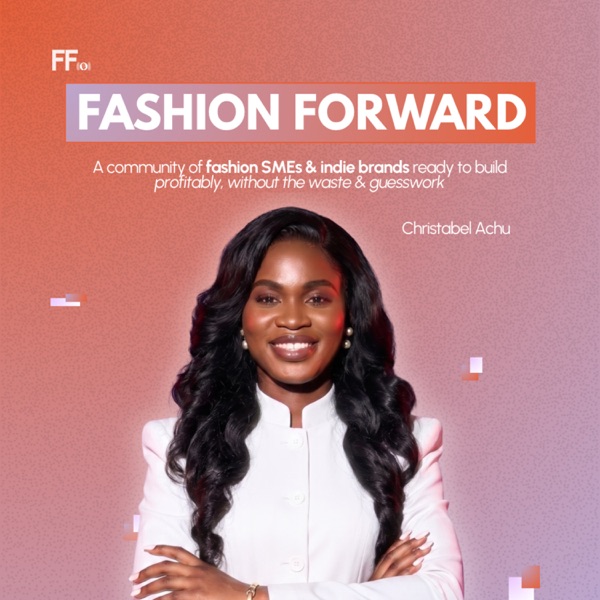
Fashion Forward
Podcast for fashion SMEs and indie designers tired of expensive trial and error. You'll learn how to streamline product development reducing costs, time and risks. Hosted by Christabel Achu, with real conversations on production, sourcing, cash flow and technology, plus founder stories and honest tool reviews.
🧰 Free Toolbox directory of tested tools, with discounts up to 30%: https://fashion-forward-2.kit.com/toolbox
🌐 Explore all our socials and join the newsletter: https://linktr.ee/fashionforward_podcast
- Episodes
- 21
- Releases
- Weekly
- Typical length
- 53 min
- On air since
- 2026
- Latest episode
- 1 week ago
Episodes
21 episodes, newest first
-
12 min
TOOLBOX_Is Genpire Worth It? Full AI Fashion Tech Pack Generator Review + 25% Off
Show notes
Genpire review: I tested this AI tech pack generator live on a real product, from design idea to factory ready handoff, so fashion brands know if it is worth the money.
Get 25% off Genpire with code FASHIONFORWARD → https://www.genpire.com/?b20fa026
Check out our FREE Toolbox Directory (every tool I have reviewed) → https://fashion-forward-2.kit.com/toolbox
Subscribe and Listen to Fashion Forward
➡ YouTube: @fashionforwardwithchristabelachu
➡ Spotify: https://open.spotify.com/show/43kGMty1KcB1XMjBzuMGw5?si=8dbb8411fcee4646
➡ Apple: https://podcasts.apple.com/us/podcast/fashion-forward/id1889557131
➡ Substack: https://fashionforwardwithchristabel.substack.com/?utm_campaign=profile_chips
Ways to Work with Me
Book a session with me → https://docs.google.com/document/d/1XTxfiByWcMofDvmNseENXXhuYh0xkcT5zsAeHR8DCRg/edit?usp=sharing
Fashion tech founder? Apply to get reviewed and featured on Toolbox → https://docs.google.com/document/d/13-RvWMdSBLUszFCaPzLOEt0RNEa6N-6VEcAmMwnh-DA/edit?usp=sharing
Connect with me!
Instagram → https://www.instagram.com/christabelachu/
LinkedIn → https://www.linkedin.com/in/christabel-achu-106481269/
Newsletter and all links → https://linktr.ee/fashionforward_podcast
QUESTION: What is the most frustrating part of getting your product from idea to factory right now? Tell me in the comments.
Disclaimer: I tested Genpire myself and Genpire had no say in my verdict. Some links in this description are partner links, which means I may earn a commission if you sign up, at no extra cost to you.
Timestamps:
(0:00) The real problem every fashion brand knows
(1:19) Get 25% off Genpire with code FASHIONFORWARD
(1:50) What Toolbox is, and why you can trust it
(2:35) Genpire's promise: idea to manufacturing in one place
(3:20) 5 things to look for in any AI fashion tool
(5:00) Exploring the template library
(6:00) Design flexibility and the component tool
(7:00) Multi-view generation and revision history
(7:40) Specs stage: color matching and technical sketches
(8:20) The full handoff document and sampling process
(9:00) What I'd watch out for (full breakdown in the video)
(9:45) Pricing: subscriptions vs. non-expiring credits
(10:30) What else is in the Toolbox directory
(11:00) Why I built Toolbox
(12:00) How to get the full review and your discount
About this episode:
Welcome to Toolbox, the Fashion Forward series where I test fashion tech tools live before recommending them to fashion SMEs and indie brands. In this episode I walk through Genpire, an AI tech pack generator and fashion product development platform, from sign up to a 26 page production tech pack. You will see the template library, material library, try-on models, Brand DNA, mood boards, the Studio for marketing visuals, connectors, manufacturing quotes, points of measure and pricing. I share what works, where AI still needs a human check and who this tool suits. If you are searching for tech pack software, AI fashion design tools or a way to cut down on sampling rounds, this review is for you.
Disclaimer: Some links in this description are partner links. If you sign up through them I may earn a commission or the founders may offer you a discount, at no extra cost to you. I only feature tools I have tested myself and any commission has no influence on my verdict. Pricing, features and discounts can change, so check the tool's website for current details.
-
1 hr 7 min
ROUNDTABLE SERIES_Sustainability Without a Mindset Shift Is Still Overproduction
Show notes
We've heard from manufacturers, technologists and sustainability experts. This is another episode of the Industry Roundtable, Fashion Forward's series where host Christabel Achu sits down with the people actually building, sourcing, producing and shaping fashion, and this one opens a new chapter, the brand founders themselves.
Pamela James is the founder and Creative Director of Paloma St James, a modular luxury brand she calls evolving silhouettes, and the author of The Guide To Luxury Modular Fashion. She spent four years in pre-production perfecting a single product before selling a piece, builds her business in units instead of collections and gave Christabel an answer to this series' central question unlike anyone before her.
In this episode, Pamela makes the case that overconsumption is a soul issue, not a shopping habit, and that sustainability without a real shift in consumer mindset is still functionally overproduction. She breaks down why she believes technology, not designers, now drives most fashion demand, pointing to companies like Quince building products off search data rather than creative direction, why mass production is actually the newer, more unusual model in fashion history and why she thinks style itself, not another sustainability initiative, is the unfinished work still left to do.
If you're building a brand, thinking about what sustainable production actually looks like at a small scale or just tired of hearing this reduced to fabric choices, this conversation will change how you think about the whole picture.
(0:00) The Scale of Fashion Waste
(2:08) Understanding the Fashion Supply Chain
(2:24) The Power Struggle in Fashion: Brands vs. Consumers
(4:57) Sustainability: A Journey of Mindset and Soul
(7:37) Building a Brand: Quality Over Quantity
(10:14) Production Decisions: The Modular Approach
(12:52) Demand Dynamics: Who Drives Consumption?
(15:30) Technology's Role in Fashion: A Double-Edged Sword
(18:08) Connecting with Customers: Authentic Engagement
(20:41) The Impact of Overexposure: Building for Longevity
(23:16) AI and Technology: Tools for Creativity or Replacement?
(26:07) Sampling and Pre-Production: The Hidden Costs of Waste
(39:38) Navigating Pre-Production Challenges
(42:21) Defining Sustainability in Fashion
(44:42) Bridging Intent and Execution in Sustainability
(47:30) The Viability of On-Demand Production
(51:45) Understanding Overproduction in Fashion
(55:25) The Need for Collaboration in the Fashion Industry
(1:00:05) Changing Industry Habits for Better Practices
(1:01:40) Structural Changes Needed in Fashion EducationModular fashion, sustainable fashion, overproduction vs overconsumption, luxury sustainability, slow fashion, pre-order fashion, on demand production, fashion supply chain.
Get her book, The Guide To Luxury Modular Fashion: Create A Wardrobe Of Endless Outfits, here: https://www.amazon.com/dp/B0D9KQ7KQW?lv=shuf&language=es&channelId=500&plpRedirect=mhFallback
Read the full interactive conversation on Substack, and join the Fashion Forward community so you never miss an episode: https://fashion-forward-2.kit.com/6b7c095d8d
-
1 hr
FOUNDER'S CORNER_Her Grandmother Started With One Sewing Machine. Nina Zhang Started With 300 Manufacturers.
Show notes
Every brand is chasing AI and algorithms. Nina Zhang is building Kibra Active to chase something the industry has almost forgotten: real human connection.
Founders Corner is the series where real fashion and technology founders tell the unfiltered truth about building. No PR polish. No vanity metrics. Just the real story.
In Episode 08, I sit down with Nina Jiabao Zhang, founder and CEO of Kibra Active, a women's activewear brand that ships to North America, Asia, and the Middle East, built on the belief that the most powerful thing a brand can build is not a product. It is a connection between people.
Nina's grandmother started from a single sewing machine in China, divorced with four kids, and built her own fashion label from nothing. Nina herself visited over 300 manufacturers in three months before starting Kibra four years ago, after a thirteen-year-old girl in a Kenyan slum asked her: what is your life's hope? Today, on her 34th birthday, she sat down to tell the whole story.
This episode covers the supply chain knowledge that gives Kibra an edge most founders never develop, the driving lane analogy that changed how Nina thinks about focus, why she deliberately keeps AI to about ten percent of her process, how cash flow and operations really work for a self-funded activewear brand, and why a girl who washes her Kibra product every day became the clearest proof of what the brand stands for.
New Founders Corner episodes drop regularly. Follow Fashion Forward so you never miss one.
Read the full interview: https://mudeldigital.com/blog
JOIN THE COMMMUNITY:
https://fashion-forward-2.kit.com/6b7c095d8d
Get featured on Founders Corner: https://forms.gle/zxLf9c1JMAMzktKDA
Kibra Active: @kibraactive on Instagram
-
50 min
ROUNDTABLE SERIES_Overproduction and Overconsumption Run on Autopilot
Show notes
This is another episode of the Industry Roundtable, Fashion Forward's series where host Christabel Achu sits down with the people actually building, sourcing, producing and shaping fashion, to unpack the industry's biggest tensions from the inside out. We're deep in the sustainability expert chapter now, and this conversation takes the question somewhere different again.
Lou Stokes is the founder of The Sustainable Self™, a movement built on one conviction, lasting external change requires internal transformation first. With more than 18 years in fashion and over two decades as a yoga and meditation teacher, she works at the intersection of embodied leadership, conscious fashion and intentional living. She teaches sustainable fashion at MA level, delivers keynotes for purpose-led organisations and has collaborated with brands including Thrive Global, Volvo and VIA Outlets.
In this episode, Lou makes the case that overproduction and overconsumption are the same symptom showing up at two ends of one disconnected system, brands chasing growth numbers, consumers chasing a feeling, both running on autopilot. She breaks down why sustainability messaging built on guilt backfires into defensiveness rather than change, why the real shift happens in the pause before a purchase and not the shame after it, and what she'd actually change about how this industry holds itself accountable.
If you've ever felt lectured out of caring about sustainability, or you're building a brand trying to communicate it without alienating your customer, this conversation will change how you think about the whole approach.
(0:00) The Scale of Fashion Waste
(2:08) Understanding the Fashion Supply Chain
(2:24) Introduction to Waste in Fashion
(4:00) Understanding Overproduction and Overconsumption
(7:57) The Culture of Fast Fashion and Consumer Behavior
(11:39) The Power Dynamics Between Brands and Consumers
(14:58) The Sustainability Movement: Focus on Consumer Behavior
(20:57) Pre-Production Waste and Structural Issues in Fashion
(25:04) Fragmentation in the Fashion Supply Chain
(27:10) Addressing Fragmentation in Fashion
(28:27) The Need for Better Communication and Collaboration
(30:53) Accountability in the Fashion Supply Chain
(32:49) Regulations and Consumer Responsibility
(35:11) The Value of Clothing and Consumer Behavior
(36:56) On-Demand Production and Consumer Intentions
(40:35) Breaking the Consumption Cycle
(44:32) Rethinking Sustainability and Guilt
(49:01) The Role of All Actors in Waste ManagementSustainable fashion, conscious consumption, overproduction vs overconsumption, intentional living, slow fashion, sustainability communication, fashion regulation.
Read the full interactive conversation on Substack,
Read the full interactive conversation on Substack,
Join the Fashion Forward community so you never miss an episode
-
30 min
ROUNDTABLE SERIES_Blaming Consumers Alone Will Never Fix Fashion's Waste Problem
Show notes
This is another episode of the Industry Roundtable, Fashion Forward's series where host Christabel Achu sits down with the people actually building, sourcing, producing and shaping fashion, to unpack the industry's biggest tensions from the inside out. We've heard from manufacturers and technologists. This week opens a new chapter, the sustainability experts.
Nina Gbor is the founder of Eco Styles and the person who coined the term TRENDmill, the idea that our culture of excessive production and overconsumption stems from a take-make-waste system built to profit off people's insecurity. She was featured in season 3 of ABC TV's War on Waste, where she also worked as an impact consultant, and now runs a national petition calling on the Australian Federal Government to reform the country's fashion and textiles industry.
In this episode, Nina makes the case that overproduction and overconsumption are chicken and egg, not two separate problems, breaks down how planned obsolescence trains us to expect products to fail, explains why regulation keeps missing its target and pushes back hard on the idea that consumers alone are responsible for fixing an industry shaped by cost-of-living pressure and gamified shopping apps.
If you're building a brand, thinking about sustainability claims or just tired of hearing this problem blamed on one side of the equation, this conversation will shift how you see the whole picture.
(0:00) The Scale of Fashion Waste
(2:08) Understanding the Fashion Supply Chain
(2:24) Understanding Overproduction and Overconsumption
(8:37) The Disconnect Between Consumers and Clothing
(13:42) Who Holds the Power in Fashion?
(16:23) The Role of Regulations in Fashion Sustainability
(18:44) Global Approaches to Sustainable Fashion
(21:25) Cultural Shifts Towards Sustainable Consumption
(23:54) Critique of the Sustainability Movement
(26:20) Addressing Fragmentation in the Fashion IndustrySustainable fashion, circular economy, overproduction vs overconsumption, planned obsolescence, fast fashion regulation, fashion trend cycle, right to repair, underconsumption core, fashion policy.
Read the full interactive conversation on Substack,
Join the Fashion Forward community so you never miss an episode
-
41 min
ROUNDTABLE: "Overproduction Is What Makes Overconsumption Possible"
Show notes
We've heard from the manufacturers. Now it's the technologists' turn. This is Fashion Forward's Industry Roundtable, where host Christabel Achu sits down with the people actually building, sourcing, and shaping fashion, and asks them the questions everyone else is too polite to ask.
Malini Kannan is the Co-Founder and CEO of Nūl, an agentic AI platform helping fashion brands make better inventory decisions and reduce overproduction. She entered fashion through a climate-tech accelerator, spent months shadowing leaders across the value chain, and built a company around one belief, overproduction is solvable, because it's a business decision with real, achievable levers.
In this episode, we get into the real math behind fashion's waste problem, why a single cotton t-shirt carries six kilograms of embedded carbon, why the industry produces roughly 150 billion garments a year with 30% never sold, and why most brands have quietly resolved the tradeoff between cost and quantity by just defaulting to the cheapest, highest-MOQ option, without ever really deciding anything at all.
If you're building a fashion brand, building fashion tech, or trying to understand where AI actually helps versus where it's just noise, this conversation will change how you think about your next forecast.
(0:00) The Scale of Fashion Waste
(2:08) Understanding the Fashion Supply Chain
(2:24) Introduction and Context of Waste in Fashion
(6:40) The Role of Technology in Overproduction
(10:59) Disconnect Between Technology and Fashion Operations
(15:08) Data Challenges and AI in Fashion
(19:03) Addressing Overproduction and Supply Chain Solutions
(21:37) The Gap for SMEs and Indie Brands
(23:04) Navigating the Tech Landscape for SMEs
(25:26) Bridging the Communication Gap in Fashion
(27:59) The Need for Unified Data Platforms
(30:45) Agility and Digital-First Production Models
(34:17) The Role of Data in Demand Forecasting
(36:42) Cross-Collaboration in the Fashion Supply Chain
(39:15) The Reality of AI in Fashion Technology
(40:05) Understanding Overproduction vs. OverconsumptionFashion technology, agentic AI, overproduction vs overconsumption, demand forecasting, fashion supply chain, fashion data, MOQs explained, digital first production, fashion sustainability.
Read the full interactive conversation on Substack, and
Join the Fashion Forward communityso you never miss an episode
-
53 min
ROUNDTABLE: Technology Didn't Cause Fashion's Waste Problem. It Just Made It Faster.
Show notes
This is the Industry Roundtable, Fashion Forward's series where we sit down with the people actually building and producing fashion, to unpack the industry's biggest tensions from the inside out. We just spent three episodes inside the factory with manufacturers. This week, we step into a different room, the technologists building and teaching the tools meant to fix all of this.
Mikelle Drew-Pellum has spent over 28 years in fashion as a designer, CAD artist, and product manager, and now runs 383 Design Studio, where she teaches fashion creatives how to actually use technology to build their careers. She's been in the room for every wave of "this will finally fix it," Illustrator, 3D, now AI, and she wasn't about to let any of them off the hook in this conversation.
We get into why she calls technology "the gift and the curse," how the same tools that cut down wasteful sampling also power Shein and Temu's weekly drop cycles, why 90% of brands adopt AI tools without knowing what problem they're actually solving, and her theory that overproduction and overconsumption aren't two separate issues, they're one flywheel, and the industry still hasn't found the wrench to break it.
If you're a brand founder, a fashion tech founder, or anyone who's ever been skeptical of the next "revolutionary" tool, this one's for you.
(0:00) The Scale of Fashion Waste
(2:08) Understanding the Fashion Supply Chain
(2:24) The Waste Problem in Fashion
(3:59) Technology's Role in Overproduction
(9:28) Adoption of AI and Tech in Fashion
(16:19) The Importance of Data in Fashion
(24:25) Challenges for SMEs in Accessing Tech Solutions
(29:21) Democratizing Technology for Small Brands
(32:08) The Importance of PLM Systems for Small Businesses
(36:08) Bridging the Disconnect in the Supply Chain
(41:00) The Future of On-Demand Production
(46:36) AI and Demand Forecasting in Fashion
(52:35) Rethinking Overproduction and ConsumptionFashion technology, AI in fashion, overproduction vs overconsumption, fashion tech adoption, sampling waste, demand forecasting, fashion education, fashion SME technology.
Read the full interactive conversation on Substack and
Join the Fashion Forward community so you never miss an episode
-
40 min
ROUNDTABLE SERIES: If You Don't Make It, We Can't Overconsume It: A Technologist Picks a Side
Show notes
This is another episode of the Industry Roundtable, Fashion Forward's series unpacking fashion's biggest tensions with the people actually living them. We've heard two technologists give careful, nuanced answers to one question, overproduction or overconsumption. This week, someone finally just picked a side, and told us exactly why.
Dorelle McPherson is an AI Creative Technologist at Charles Komar & Sons, working at the intersection of AI and apparel product development, with nearly 30 years in patternmaking, technical design, and fit, and certifications across CLO3D, Browzwear, Style3D, and Optitex. She's spent decades on the exact floor where samples get made, remade, and quietly thrown away.
In this episode, Dorelle makes her case for overproduction as fashion's real driver of waste, if you don't make it, you can't buy it, walks us through the sampling waste most people never see, names replenishment culture as a quiet villain nobody talks about, and explains why manufacturers won't hand their trust to technology that hasn't earned it, because real people's livelihoods are riding on that production line.
If you're building a brand, sourcing production, or trying to understand why so much fashion tech quietly underdelivers once it hits the factory floor, this conversation will stick with you.
(0:00) The Scale of Fashion Waste
(2:08) Understanding the Fashion Supply Chain
(2:24) The Cost of Fashion Waste: Overproduction vs. Overconsumption
(6:54) Technology's Role in Fashion Operations
(11:45) Data Utilization in Fashion: The Key to Reducing Waste
(16:30) The Gap in Fashion Technology for SMEs
(21:23) Launching a Fashion Brand: Challenges and Solutions
(22:45) Fragmentation in the Fashion Supply Chain
(25:29) On-Demand Production: The Digital First Approach
(29:43) Collaboration Across the Supply Chain
(33:45) Consumer Collaboration in Reducing Waste
(36:22) The Role of Overproduction vs. OverconsumptionFashion technology, overproduction vs overconsumption, patternmaking, replenishment, MOQs explained, made to order fashion, fashion supply chain, AI fashion tools.
Read the full interactive conversation on Substack, and Join the Fashion Forward community so you never miss an episode
-
43 min
FOUNDER'S CORNER:Every Fashion Designer Hates Making Tech Packs. Kaylyn Smith Built the Tool That Changes That.
Show notes
Every fashion designer is switching between Illustrator and Excel. Kaylyn Smith built the plugin that ends that forever.
Founders Corner is the series where real fashion and technology founders tell the unfiltered truth about building. No PR polish. No vanity metrics. Just the real story.
In Episode 08, I sit down with Kaylyn Smith, founder of Tech Pack Wizard, a plugin for Adobe Illustrator that brings the entire tech pack process into one design file. Sketches, specs, graded measurements, callouts, bill of materials, all in one place. When a design changes, you update one sketch and every linked sketch updates automatically across the whole document.
Kaylyn built this from her own frustration as a freelance designer. She started with a 185-page wireframe, went through multiple development teams, got married, had a baby, and kept going anyway. Tech Pack Wizard is not AI. It is purposeful automation built by someone who knew the workflow inside out and refused to accept that the broken parts were just how it had to be.
In this episode Kaylyn talks about the 185-page wireframe that stunned her first developer, why she kept starting over after each development team did not work out, the emotional weight of building through major life changes, why fashion tech headlines miss the production side entirely, and how the plugin works step by step in a real tech pack workflow.
New Founders Corner episodes drop regularly. Follow Fashion Forward so you never miss one.
Read the full interview on the blog: https://mudeldigital.com/blog
Subscribe so you never miss a Founders Corner episode.GET FEATURED ON FOUNDERS CORNER: https://forms.gle/zxLf9c1JMAMzktKDACONNECT WITH KAYLYN AND TECH PACK WIZARD: Website: https://techpackwizard.com Instagram: @TechPackWizard TikTok: @TechPackWizard_plugin Email: kaylyn@techpackwizard.comCHAPTERS: (00:00) Intro: Why Tech Packs Need a Better Workflow (01:13) Meet Kaylyn Smith and Tech Pack Wizard (02:18) The Problem Tech Pack Wizard Solves (03:17) Who the Product Is For (04:55) What Makes It Different from Other Tools (07:35) Kaylyn's Background and How the Idea Started (08:46) Why She Believed She Could Build It (10:34) The Early Build Process and First Mistakes (12:31) Choosing the Right Development Team (13:20) Learning to Manage a Project and Follow Up (14:45) Why She Kept Going (16:09) The Fashion Tech Assumption Tech Pack Wizard Challenges (18:45) The Biggest Challenge as a Founder (21:42) Launch Progress and What's Next (23:41) Testing, Resistance, and User Reactions (26:52) Why the Industry Needs to Be More Open to Tech (29:57) How Tech Pack Wizard Works in a Real Use Case (35:13) How Kaylyn Knows the Product Is Working (35:47) Where Tech Pack Wizard Is Going Next (37:53) Advice for Other Fashion Tech Founders (39:31) Final Clarification: It's Not AI (41:14) Closing Thoughts on Building Tools That Fit the Workflow (41:44) Where to Find Tech Pack Wizard
-
49 min
ROUNDTABLE_Everyone's Debating Overproduction vs Overconsumption. This Manufacturer Says We're Asking Wrong.
Show notes
This is Episode 2 of the Industry Roundtable, Fashion Forward's series where we sit down with the people actually building and producing fashion, to unpack the industry's biggest tensions from the inside out. Last week we heard from a manufacturer who's spent 35 years on factory floors across four continents. This week, we go to Surat, India, one of the largest textile hubs in the world.
Devansh Goswami is the Business Development Lead at Garmentlore, a family-owned manufacturing business he grew up around, literally on the factory floor watching his father run production. His take on fashion's waste problem surprised us, he says it's neither overproduction nor overconsumption, it's a coordination failure, and the real driver might be something nobody's really talking about, the credit system.
In this episode, we get into the real math behind MOQs (why a single dye batch already locks you into 600 garments before anything's even made), the sampling costs most brands never see, why 90% of new brands show up with a mood board instead of a real plan, and why manufacturers extending credit might be quietly fueling more waste than anyone wants to admit.
If you're building a brand, sourcing production for the first time, or building fashion tech meant to solve exactly these problems, this conversation will change how you think about your next order.
(0:00) The Scale of Fashion Waste
(2:08) Understanding the Fashion Supply Chain
(2:24) Understanding Fashion Waste: A Complex Issue
(6:05) The Role of Manufacturers in Overproduction
(6:05) Understanding Overproduction in Fashion
(10:35) The Challenges of Minimum Order Quantities (MOQs)
(15:29) Guesswork in Brand Development
(16:48) The Sampling Process and Its Impact
(22:21) Agile Production and Low MOQs
(27:02) The Shift Towards Agile Production
(31:54) Fragmentation in the Fashion Industry
(36:21) Collaboration Between Brands and Manufacturers
(40:29) Advice for Brand Founders
(43:56) Manufacturers: A Call for Change
(46:22) Reframing Overproduction and OverconsumptionFashion manufacturing, overproduction vs overconsumption, MOQs explained, fashion sampling process, fashion supply chain, agile production, fashion sourcing, sustainable manufacturing costs, fashion credit cycle.
Read the full interactive conversation on Substack
Join the Fashion Forward community so you never miss an episode: https://fashion-forward-2.kit.com/6b7c095d8d
-
54 min
ROUNDTABLE_Perceived Demand: Why This Manufacturer Says Overconsumption Is the Real Culprit
Show notes
Welcome to the Industry Roundtable, a new series from Fashion Forward where we go straight to the people building, sourcing, and producing fashion, and ask them the questions everyone else is too polite to ask. No panels, no PR answers, just honest conversations about what's actually happening inside this industry.
We're opening the series with manufacturers, because if anyone can tell you where fashion's waste problem really starts, it's the people standing at the exact point where a brand's idea either becomes a well-made product or becomes waste before it ever reaches a shelf.
First up, Rocio Evenett, co-founder and CEO of Sewing Incubator, and a soft goods engineer with over 35 years on factory floors across the US, Europe, Asia, and Latin America. She doesn't hold back. We talk about why "perceived demand" might be doing more damage than real demand ever could, why she ditched MOQs entirely and built her business around minimum order value instead, how a well-meaning California law meant to fight waste ends up punishing the wrong manufacturers, and why she believes fashion's real problem isn't a knowledge gap, it's a consequence gap.
If you're building a fashion brand, sourcing production for the first time, or just trying to understand what actually happens behind the scenes of the clothes you sell, this one's for you.
(0:00) The Scale of Fashion Waste
(2:09) Understanding the Fashion Supply Chain
(2:25) Introduction to Overconsumption and Waste
(4:38) The Role of Education in the Fashion Industry
(7:02) Manufacturers and Overproduction: A Complex Relationship
(9:12) The Impact of Legislation on Manufacturing Practices
(11:11) Consumer Expectations and the Evolution of Fashion
(13:21) Challenges in Low MOQ Production
(15:16) The Passion Entrepreneur vs. Market Research
(17:47) The Messy Product Development Cycle
(19:54) Understanding MOQs and Their Implications
(31:11) The Viability of Agile Production Models
(33:34) Identifying Waste in the Fashion Industry
(37:13) The Disconnect Between Manufacturers and Brands
(38:34) Consequences of Brand Actions
(41:17) Collaboration to Curb Overproduction
(44:52) Understanding the Business of Fashion
(47:26) The Importance of Value in Fashion ConsumptionFashion waste, overproduction vs overconsumption, MOQs explained, minimum order value, agile fashion production, sustainable fashion manufacturing, fashion supply chain, fashion tech packs, fashion industry regulation.
Read the full interactive conversation on Substack
Join the Fashion Forward community so you never miss an episode: https://fashion-forward-2.kit.com/6b7c095d8d
-
56 min
FOUNDER'S CORNER: The Fashion Industry Has Been Telling Curvy Women to Find a Tailor for Decades. Susan Valdez Said No
Show notes
The fashion industry made plus size bigger. It never made it curvier. Susan Valdez did.
Founders Corner is the series where real fashion and technology founders tell the unfiltered truth about building. No PR polish. No vanity metrics. Just the real story.
In Episode 08, I sit down with Susan Valdez, founder of Es-Hora, a brand built for curvy women who have spent their whole lives tailoring clothes to fix a fit problem that was never theirs.
Susan spent 22 years in the intimate apparel industry before launching Es-Hora in February 2026. She built a size chart unlike anything the fashion industry has produced, using letters for hip sizes just like a bra, from double AA to double H, covering naturally curvy to exaggeratedly curvy, from XXS to 5X, all in one brand. She stopped women on the street with a tape measure to gather fit data. She lost money to a factory in Ohio and started over. She had a 2am breakthrough that led to two side zippers and changed the entire garment. And she went to the Dominican Republic for a pop-up where ten out of ten women she measured fell inside her size chart.
This episode covers the bra analogy that became the founding concept, why plus size was always just standard sizing made bigger, the sleepless nights and production setbacks that shaped the brand, and why bad fit is the real origin of fashion waste.
New Founders Corner episodes drop regularly. Follow Fashion Forward so you never miss one.
CHAPTERS: (02:37) Welcome to Founders Corner (03:36) Meet Susan and the Es-Hora Story (07:52) The Waist Gap Problem (12:05) From Concept to First Product (18:44) Building an Inclusive Size System (23:57) Customer Research and Founder Challenges (33:06) Production, Quality, and Fit (37:27) From Sketch to Finished Garment(40:25) Growth, Retail, and Global Reach (43:48) AI, Marketing, and Sustainability (48:29) Designing Products That Last (53:31) Advice for Aspiring Founders (54:23) Where to Find Es-HoraGET FEATURED ON FOUNDERS CORNER: https://forms.gle/zxLf9c1JMAMzktKDACONNECT WITH SUSAN AND ES-HORA: Website: https://shopeshora.com Instagram: @shopeshora TikTok: @shopeshora YouTube: Es-Hora LinkedIn: Susan ValdezCONNECT WITH FASHION FORWARD: Our platforms and socials: https://linktr.ee/fashionforward_podcastJoin the community: https://fashion-forward-2.kit.com/6b7c095d8d
-
53 min
FOUNDER'S CORNER: The Canva of Fashion Product Design Is Finally Here. Meet the Co-Founders of Fabra.
Show notes
3D product design has always required expensive software, a powerful laptop, and months of training. Luke Grana and Gloria Yu built Fabra to change all three.
Founder's Corner is the series where real fashion and technology founders tell the unfiltered truth about building. No PR polish. No vanity metrics. Just the real story.
In Episode 05, I sit down with Luke Grana and Gloria Yu, co-founders of Fabra, a web-based 3D product design tool for fashion SMEs, indie designers, and solo entrepreneurs. This is also the first time I have had two guests on Founders Corner at the same time, and they happen to be a couple building something remarkable together.
Luke built a direct-to-consumer basics brand in Hong Kong that reached twenty million dollars in revenue. Gloria studied at Parsons and had her own brand stocked at Net-a-Porter and Lane Crawford. Their third co-founder Nick helped build Canva. Together they are building what Canva did for graphic design, but for physical product design in fashion.
Fabra is now in version two. Design in the browser, no powerful laptop required, no technical training needed, and your tech pack generates automatically. In this episode they cover why the first version was really, really bad and what they learned, the six apps brands currently use to bring one product to life and how Fabra replaces them, why they have never once wanted to walk away, and why the future they are building towards is on-demand fashion production.
New Founders Corner episodes drop regularly.
Follow Fashion Forward so you never miss one.
Read the full interview on the blog: https://mudeldigital.com/blog CHAPTERS: (01:36) Introduction to Fabra and Its Founders (02:51) Understanding Fabra: A 3D Product Design Tool (04:34) Democratizing 3D Design for All (08:43) Target Audience and Problem Discovery (10:32) Founders' Background and Industry Insights (17:56) Early Days of Building Fabra (20:34) Navigating Pivots and Challenges (22:54) The Importance of Resilience in Entrepreneurship (25:21) Disrupting Assumptions in Fashion Tech (28:40) Understanding AI in Fashion Tech Packs (30:41) Challenges Faced by Founders (32:22) Building an Effective Team (35:37) Brand Adoption and Market Response (38:34) Navigating Technology Adoption in Fashion (41:09) How Fabra Works: A User Journey (43:46) Measuring Success and Customer Feedback (46:14) Future Vision for Fabra (47:42) Advice for Aspiring Fashion Tech FoundersGET FEATURED ON FOUNDERS CORNER: https://forms.gle/zxLf9c1JMAMzktKDACONNECT WITH LUKE, GLORIA, AND FABRA: Website: https://fabra.com LinkedIn (Luke): https://linkedin.com/in/lukegrana Instagram (Gloria): @gloriayu_CONNECT WITH FASHION FORWARD: Our platforms and socials: https://linktr.ee/fashionforward_podcast
Join our community:
-
1 hr 10 min
She Walked Away from a $43 Million Fashion Brand to Build Something the Industry Has Never Seen
Show notes
The fashion industry has been making patterns the same way since the 1800s. Yuliya Raquel built the AI that finally changes that.
Founders Corner is the series where real fashion and technology founders tell the unfiltered truth about building. No PR polish. No vanity metrics. Just the real story.
In Episode 04, I sit down with Yuliya Raquel, founder and CEO of PatternFast, and the brains behind Tailornova and BootstrapFashion. Yuliya is a four-time award-winning fashion designer, a trained pattern maker, and a three-time founder who spent over three decades inside the fashion industry before building the AI operating system for apparel product development.
PatternFast turns a sketch into a production-ready pattern in seconds, not weeks. Validated, balanced, notches matched, seam allowances added. And unlike most AI tools making noise in this space, it does not hallucinate. Its foundation is deterministic, built on over 100 billion validated patterns generated from real human feedback across 350,000 to nearly half a million users.
In this episode Yuliya covers why she walked away from a forty-three million dollar fashion brand to build technology, the seamstresses who burned down Singer's factory and what that tells us about AI resistance today, why most AI-generated patterns on the market have never actually been sewn, how PatternFast works from sketch to production in minutes, and her vision for a fully made-to-order fashion future.
New Founders Corner episodes drop regularly. Follow Fashion Forward so you never miss one.
CHAPTERS:(00:00) Introduction to Founders Corner and Its Mission(01:43) Spotlight on Yuliya Raquel and Tailor Nova(02:10) The Vision Behind PatternFast and AI in Fashion(02:37) Introduction to Yuliya and Her Journey(05:12) The Evolution of Fashion Technology(07:43) Embracing Technology in Fashion(10:31) AI and the Future of Pattern Making(13:12) The Human Element in AI(15:50) Challenges in Early Development(18:20) Building PatternFast: The Early Days(20:53) Learning from Failures(23:49) The Impact of AI on Fashion(26:11) Overcoming Doubts and Challenges(28:42) The Future of AI in Fashion Technology(34:38) Transforming Design Intent into Deterministic Algorithms(39:02) Challenges of Founding and Funding a Startup(42:47) Navigating the Fashion Industry's Resistance to AI(49:37) Breaking Down Silos in Fashion Technology Adoption(55:41) Real-World Applications of PatternFast Technology(01:07:46) Empowering Fashion SMEs with Technology(01:10:43) Connecting Indie Designers with ResourcesRead the full interview: https://mudeldigital.com/blog
Get early access before each episode: https://mailchi.mp/d93e764679f3/podcast-signup
Get featured on Founders Corner: https://forms.gle/zxLf9c1JMAMzktKDA
Connect with Yuliya: help@patternfast.com
PatternFast: https://patternfast.com
-
59 min
She Is 4'10". She Built a Fashion Brand for the 50% the Industry Ignored.
Show notes
Petite women spend hundreds of dollars a year fixing clothes that were never built for them. Alina Diaz is done letting the industry get away with it.
Founders Corner is the series where real fashion and technology founders tell the unfiltered truth about building. No PR polish. No vanity metrics. Just the real story.
In Episode 03, I sit down with Alina Diaz, founder of her namesake petite womenswear label. Alina is a 4'10" woman who spent 25 years in marketing and advertising building some of the most iconic consumer brands in the world, then turned that expertise on the one market the fashion industry has been ignoring in plain sight. Her brand is designed from scratch for women who are 5'4" and under. Not altered. Designed.
She calls the problem the petite tax: the hundreds of dollars petite women pay every year just to make clothes fit. In the US alone, petite women represent 50% of the market. The industry still calls this a niche. Fewer than 2% of runway models are petite. Alina is building the brand that should have existed decades ago.
In this episode we cover the petite tax and the design failure behind it, building a brand from scratch with no fashion school background, eight samples of one pant and why every fraction of an inch mattered, why she pulled back from AI after a single honest customer DM, and what height inclusivity really means for the fashion industry.
New Founders Corner episodes drop regularly. Follow Fashion Forward so you never miss one.
CHAPTERS:
(00:00) Introduction to Founders Corner
(01:32) Alina Diaz and the Petite Tax
(02:09) Introduction to Alina Diaz and Her Brand
(04:36) The Problem with Petite Fashion
(07:21) Alina's Background and Journey
(12:09) The Challenges of Building a Brand
(16:27) The Importance of Community and Feedback
(21:36) Vision for the Future of Petite Fashion
(31:36) Building a Community for Petite Women
(33:26) Embracing Technology in Fashion
(44:25) Sustainability in Fashion
(52:39) The Importance of Customer-Centric Design
CONNECT WITH ALINA
Instagram:@alinadiaz
Website:https://alinadiaz.com/
LinkedIn: https://www.linkedin.com/in/alinadiazm/
Read the full interview: https://mudeldigital.com/blog
Get early access before each episode: https://mailchi.mp/d93e764679f3/podcast-signup
Get featured on Founders Corner: https://forms.gle/zxLf9c1JMAMzktKDA
-
1 hr 8 min
How AI Can Really Reduce Waste in Fashion — With Sylwia Szymczyk & Barbara Maiocchi
Episode 4
Show notes
Fashion's waste crisis does not begin at the landfill. It begins the moment a collection is planned without adequate demand intelligence and developed through a process that was never designed to prevent waste in the first place.
In this episode of Fashion Forward, host Christabel Achu brings two guests together for the first time in the show's history — because solving fashion's waste problem requires fixing both ends of the product development chain simultaneously.
Sylwia Szymczyk, founder of fashionINSTA, built AI-powered pattern intelligence after 15 years working from factory floors to leading 3D innovation at major brands. Barbara Maiocchi, founder of LiveTrend, spent 25 years in fashion product development before building a real-time trend analytics platform that gives brands the demand intelligence they need to stop guessing and start building collections with less overstock.
Together they unpack where waste really starts, why the industry's supply chain cannot keep pace with how fast consumer demand now moves, how brands keep paying to develop technical work they already own, and what a genuinely low-waste, AI-powered product development workflow looks like in practice.
This episode builds on Episode 2 (overproduction and agile production with Vinchy Chan of Makea) and Episode 3 (agile production in practice). If you have not listened to those yet, they are worth going back to first.
REFERENCED IN THIS EPISODE:
Episode 2 — Overproduction with Vinchy Chan (Makea): https://youtu.be/lnstoGeVeX0
Episode 3 — Agile Production Deep Dive: https://youtu.be/ezROCG2mDBM
CONNECT WITH THE GUESTS:
Sylwia Szymczyk — fashionINSTA: https://fashioninsta.ai
Barbara Maiocchi — LiveTrend: https://livetrend.co
CONNECT WITH CHRISTABEL:
LinkedIn: linkedin.com/in/christabel-achu-106481269
Website: mudeldigital.com
Email: christabelachu@mudeldigital.comTIMESTAMPS:
(00:00) Introduction to AI in Fashion
(03:01) Identifying the Roots of Fashion Waste
(05:43) The Role of Consumer Behavior in Overproduction
(09:44) Understanding the Supply Chain Challenges
(12:37) Leveraging Technology for Better Production
(18:10) The Demand Gap: Matching Supply with Consumer Needs
(22:12) The Influence of Brands on Consumer Trends
(24:30) Navigating Traditional Forecasting Models
(27:34) Exploring Pre-Production Waste
(33:10) Understanding Overproduction in Fashion
(35:28) The Complexity of Fashion Operations
(37:32) The Mess of Pattern Reproduction
(42:21) Speed vs. Waste in Product Development
(44:58) Creating a Low-Waste Fashion Workflow
(52:45) On-Demand and Made-to-Order Systems
(58:59) Mindset Shifts in Fashion Industry
(01:03:01) The Importance of Strategic AI Adoption
(01:05:28) AI as Infrastructure, Not Replacement
-
1 hr 6 min
Founder's Corner: Shreya Bhan on taking down the fashion mafia
Show notes
Founders Corner is the series where real fashion and technology founders tell the unfiltered truth about building. No PR polish. No vanity metrics. Just the real story.
In Episode 02, I sit down with Shreya Bhan, founder of Brushcode, a personalized trend forecasting platform for fashion SMEs, individual designers, freelancers, and students.
Shreya spent 15 years in the fashion industry across accessories, apparel, and production, working in India and London. She also sold her art as NFTs, taught herself blockchain and AI, and then built an entire app from scratch with no coding background after firing her developer six months in.
Brushcode is her answer to the most gatekept tool in the fashion industry. Trend forecasting tools currently cost between $15,000 and $20,000 a year. That means 90% of the fashion industry has simply accepted that this data is not for them. Shreya has built something that gives SMEs the same access, personalized to their brand, at a price that actually makes sense.
This episode goes deep into the real mechanics of building a tech product from inside the fashion industry, the mindset battles, the fear of technology dressed up as arrogance, and what it means to truly democratize access to data in a notoriously closed industry.
New Founders Corner episodes drop regularly. Follow Fashion Forward so you never miss one.
CHAPTERS:
(00:00) Introduction
(01:38) Meet Shreya and Brushcode
(04:32) The Problem: Trend Forecasting Is Gatekept
(09:12) How Her Fashion Background Shaped What She Built
(13:40) The Early Days: Firing Her Developer and Building It Herself
(22:11) Resilience and Imposter Syndrome
(24:35) The Assumption Brushcode Is Disrupting
(28:07) The Hardest Challenge: Selling to a Resistant Industry
(35:43) If She Could Change One Thing About Fashion and Technology
(40:53) How Brushcode Actually Works, Step by Step
(48:07) How She Knows It Is Working
(52:52) The Vision for Brushcode in the Next Two to Three Years
(55:11) Advice for Fashion Tech Founders
(59:00) Final Thoughts
GET FEATURED ON FOUNDER'S CORNER:
https://forms.gle/zxLf9c1JMAMzktKDA
CONNECT WITH SHREYA AND BRUSHCODE:
Website and demo: https://www.brushcode.studio/
Instagram: https://www.instagram.com/brush_bound/
LinkedIn: https://www.linkedin.com/in/shreyabhan/
CONNECT WITH FASHION FORWARD:
Our platforms and Socials: linktr.ee/fashionforward_podcast
Subscribe to the mailing list for early access before each episode drops: https://mailchi.mp/d93e764679f3/podcast-signup
-
54 min
Founders Corner: Natasa Pitra-Grbic of Pitra the Label: On Building With Craft, Conviction & a Whole Lot of No's
Show notes
Founders Corner is the series where real fashion and technology founders tell the unfiltered truth about building. No PR polish. No vanity metrics. Just the real story.
In Episode 01, I sit down with Natasa Pitra-Grbic, founder of Pitra the Label, a craftsmanship-led women's wear brand built in Melbourne, Australia. Natasa spent 15 years moving through every corner of the fashion industry: retail, wholesale, design, and production. She also had her own brand, lost money to the wrong factory, nearly quit after her first child, and kept building anyway.
Today she is building clothing for women aged 35 to 60, the demographic the fashion industry has quietly stopped caring about. Her brand believes that every culture is connected through craftsmanship, and that the women who wear her clothes deserve to feel seen at every age.
This episode covers the honest truth about starting from nothing, building with purpose, using AI without losing your craft knowledge, and what a million no's actually teaches you.
If you are a fashion founder, a creative entrepreneur, or someone building something the industry says does not need to exist, this one is for you.
New Founders Corner episodes drop regularly. Follow Fashion Forward so you never miss one. If you're a founder with a real solution, apply to get featured. The only criteria is ZERO FLUFF
CHAPTERS:
(00:00) Introduction to Founders Corner
(01:42) The Story Behind Pitra the Label
(04:27) The Problem of Fast Fashion
(05:42) Identifying the Target Audience
(09:20) The Evolution of the Brand
(11:59) The Early Days of Building a Brand
(18:01) Overcoming Challenges in Fashion
(20:37) Challenging Industry Norms
(23:37) The Hardest Challenges as a Founder
(30:02) Lessons Learned and Future Directions
(35:00) Inspiration and Cultural Influence in Fashion
(37:28) Artisanal Production and Social Impact
(40:21) The Role of AI in Fashion Design
(45:03) Sustainability and Ethical Practices
(51:01) Perseverance in the Fashion IndustryGET FEATURED ON FOUNDER'S CORNER:
https://bit.ly/founders_corner
CONNECT WITH NATASA:
Pitra the Label on Instagram: https://www.instagram.com/pitrathelabel
Visit their website: http://www.natasapitra.com.au
CONNECT WITH FASHION FORWARD:
Our platforms and Socials: linktr.ee/fashionforward_podcast
Subscribe to the mailing list for early access before each episode drops: https://bit.ly/fashionforwardpodcast
-
39 min
Agile Fashion Production: How to Reduce Overproduction, Cut Costs & Build a Smarter Brand
Episode 3
Show notes
Overproduction is costing fashion brands more than they realise — and most of the waste is being planned in long before a garment ever reaches production.
In this solo episode, Fashion Technology Consultant and Mudel founder Christabel Achu breaks down why overproduction is a systems problem, not a demand problem — and what agile, small-batch production looks like as the real alternative.
You'll hear a recap of the key insights from Episode 2 with Vinchy Chan (Makea), a plain-English breakdown of agile production and what it means for your brand, the shift happening right now in Chinese manufacturing, and a full walkthrough of Makea — the platform making on-demand fashion production accessible for SMEs.
Plus an exclusive offer: use code CHRISTABEL for 2 months free on Makea's Growth Plan.
Links, resources and the Makea demo are all at here or find Christabel on LinkedIn.
Timestamps
(00:00) Introduction to Fashion Forward
(01:23) Recap of Episode Two: Overproduction in Fashion
(07:30) Understanding Agile Production
(11:34) Sustainability in Fashion Production
(13:00) Practical Implications of Agile Production
(16:49) The Role of Technology in Fashion Production
(20:33) Shifts in Chinese Manufacturing
(23:19) Why Makea?
(25:32) How Makea Works
(33:03) Special Offer using code "CHRISTABEL"
-
1 hr 29 min
Overproduction: Fashion's Dirty Secret — With Vinchy Chan, Co-Founder of Makea
Episode 2
Show notes
Overproduction is often called the fashion industry's dirty secret. But how bad is it really? And more importantly — where does it actually start, and what does it take to fix it at the root?
In this episode of Fashion Forward, host Christabel Achu — Fashion Technology Consultant and founder of Mudel — sits down with Vinchy Chan, co-founder of Makea, for a wide-ranging, deeply honest conversation about one of fashion's most persistent and costly problems.
Vinchy came into fashion as an outsider. A qualified accountant who launched her own made-to-order brand, experienced the broken system firsthand, and then built Makea — the first infrastructure platform for agile, on-demand small-batch fashion production — to fix it.
In this conversation, they break down why overproduction is a systems failure, not a demand failure. They explore the real reason factories set high MOQs, why demand forecasting alone can't solve the problem, and what the shift happening in Chinese manufacturing right now means for brands globally.
If you're a fashion founder, designer, product developer, or tech builder in the fashion space — this is one of the most practically useful conversations you'll hear this year.
Find Christabel at mudeldigital.com or on LinkedIn.Find Makea at https://www.makea.co/.
(00:00) Introduction to Fashion Forward and Guest Background
(08:12) The Journey to Founding Makea
(13:25) Understanding Overproduction in Fashion
(18:25) The Role of Demand and Planning in Overproduction
(23:22) Minimum Order Quantities and Their Impact
(28:43) Barriers to Entry in Fashion and Future Solutions
(34:35) Challenges in Fashion Production
(43:11) Tech as an Enabler in Production
(50:34) Agile Production and Low Volume Viability
(54:45) Enhancing Visibility in the Supply Chain
(01:00:14) Navigating the Shifts in Manufacturing Trends
(01:13:24) Regulatory Changes and Their Influence onProduction Models
(01:18:53) The Future of Fashion Supply Chains
Fashion & Beauty lists
More Fashion & Beauty shows picked out from the charts










More in Fashion & Beauty
Placed highest on Apple Podcasts' Fashion & Beauty chart right now