Podcast
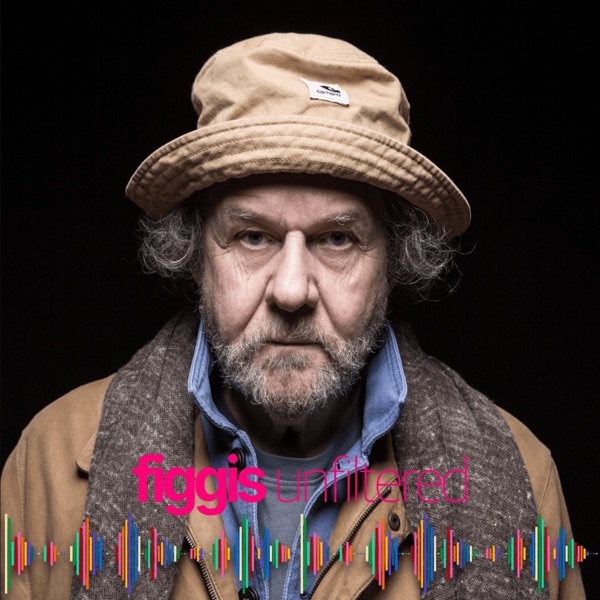
Figgis Unfiltered
Figgis Unfiltered — Season 2 coming at you with legendary film director Mike Figgis (Leaving Las Vegas, Internal Affairs, Timecode). Examining the human emotions, one at a time, Figgis turns the lens inward on the feelings that shape us: rage, desire, grief, joy, and love. One episode, one emotion, no filter.
Hosted on Acast. See https://acast.com/privacy for more information.
- Episodes
- 33
- Releases
- Weekly
- Typical length
- 37 min
- On air since
- 2022
- Latest episode
- 3 days ago
Episodes
33 episodes, newest first
-
26 min
Anxiety
Season 2, Episode 7
Show notes
Filmmaker Mike Figgis on anxiety: why it works like smoke, what a doctor taught him about music, and why connection is the real antidote. Figgis Unfiltered S2 E7.
Season 2 of Figgis Unfiltered examines the human emotions, one at a time. In Episode 7, director Mike Figgis (Leaving Las Vegas) turns to anxiety — the pernicious, hard-to-grasp feeling that comes with a daily loss of control over the world we live in. He explores how our money-driven, isolating culture feeds it, how he first met it in the Hollywood studio system, and what a doctor once told him about why being a musician was keeping him well.
He gets into anxiety as a storytelling tool — the Iago-like manipulation at the heart of Internal Affairs — why cinema catches the small voice of anxiety that theatre can’t, and what Marina Abramović taught him about shame and catharsis. Then he makes the case that the real antidote is connection: saying good morning to strangers, getting out of your flat, and the collective humanity that gets people through hard times. Plus your questions, on what anxiety cost him creatively and being a “fly on the wall” on a Coppola set.
⏱️ Chapters
00:00 Anxiety
00:09 What anxiety really is — a loss of control
00:55 The cycling thoughts you can’t switch off
01:46 The anxiety of a callous, money-driven culture
02:44 Why connection beats anxiety — and how money corrupts it
03:52 Hollywood, a ruptured disc & the doctor who said “you’re a musician”
05:27 Music, meditation and knowing everyone’s anxious
06:41 Why it’s OK to talk about your anxiety
07:12 Anxiety as a storytelling tool — Internal Affairs & Othello
09:12 The small voice of anxiety — why cinema catches it
11:03 Marina Abramović, shame and catharsis
12:08 Why anxiety climbs with status — and the bigger picture
13:02 Centering yourself — and learning to spot it
14:09 Is your anxiety based on reality? On children and the planet
15:37 Saying good morning — small acts against anxiety
17:34 The driving-a-car thought, and the case for collective humanity
20:51 Listener questions — Stasha (Toronto): what anxiety cost you
23:23 Anne (Toronto): being a “fly on the wall” on a Coppola set
28:30 Closing — go say hello to someone you don’t know
🎬 Mentioned in this episode
Films — Internal Affairs · Mr. Jones · and Mike’s own Leaving Las Vegas
People — Richard Gere · Andy Garcia · David Lynch · Francis Ford Coppola · Marlon Brando · Ingmar Bergman · artist Marina Abramović · writer Paul Auster · filmmaker Jonas Mekas
Ideas — Iago and Othello · music and meditation as antidotes to anxiety
🎙️ Got a question for Mike? Send it as a voice note on Instagram: https://instagram.com/figgisunfiltered
🔔 Subscribe and hit the bell for new Season 2 episodes across all podcast platforms and here on YouTube.
Follow: Instagram → https://instagram.com/figgisunfiltered
Note: this episode discusses anxiety and mental health.
Hosted on Acast. See https://acast.com/privacy for more information.
-
35 min
Fear
Season 2, Episode 6
Show notes
Filmmaker Mike Figgis on fear: from a violent childhood to the age of AI, why the media sells it, and how love and connection keep it at bay. Figgis Unfiltered S2 E6.
Season 2 of Figgis Unfiltered examines the human emotions, one at a time. In Episode 6, director Mike Figgis (Leaving Las Vegas) takes on fear — starting with a drunken speech to a room full of artists, a 9/11 theory that made him a pariah, and today’s dread of AI and drones. He traces fear through his own life: a colonial childhood among terrified adults in Kenya, the first real, physical fear of a violent Newcastle school, and why a great horror film can disturb us more than reality itself.
He gets into fear of dying, flying and failure, the choice he made after Leaving Las Vegas to chase fun over a safe studio career, and a quiet moment on the London Underground that captures everything. Then he takes your questions: on whether we get wiser with age, whether the media is weaponising fear, and whether “perfect love casts out fear” — closing on connection, and the courage it takes to ask for help.
⏱️ Chapters
00:00 A story to start — fear on stage
00:20 A drunken speech, and the fear of being judged
02:23 The 9/11 theory that made him a pariah
04:34 AI, drones and the fear of losing all control
05:53 Colonial Kenya, the Mau Mau and inherited fear
08:14 First real fear — a violent Newcastle school
10:02 Why horror films frighten him more than reality
11:12 The power of cinema to scare — The Spiral Staircase
12:36 What fear does to us, and how it shifts with age
14:17 Hollywood, with yourself at the centre of the universe
15:43 Fear of dying, flying & failure — the choice after Leaving Las Vegas
17:05 Choosing fun over the safe studio career
18:46 Courage, and the fear of being powerless
19:37 “Can I hold your hand” — a moment on the Tube
20:46 Listener questions — DPK (Toronto): do we get wiser with age?
26:02 James (Mississauga): is the media weaponising fear?
28:46 Don (Trenton): does perfect love cast out fear?
31:11 Closing — connection, and the courage to ask for help
🎬 Mentioned in this episode
Films — Repulsion (Polanski) · Twin Peaks: Fire Walk with Me (Lynch) · The Spiral Staircase · On the Waterfront · Timecode · Hotel · The Loss of Sexual Innocence · and Mike’s own Leaving Las Vegas
People — Roman Polanski · David Lynch · Elia Kazan (his autobiography “A Life”) · Francis Ford Coppola · historian A.J.P. Taylor
Idea — the line “perfect love casts out fear”
🎙️ Got a question for Mike? Send it as a voice note and it could feature in a future episode — DM us on Instagram: @figgisunfiltered
🔔 Subscribe and hit the bell for new Season 2 episodes across all podcast platforms and here on YouTube.
Follow: Instagram → https://instagram.com/figgisunfiltered
Note: this episode discusses fear, violence and mental health, including references to war.
#MikeFiggis #FiggisUnfiltered #Fear
Hosted on Acast. See https://acast.com/privacy for more information.
-
36 min
Sadness
Season 2, Episode 5
Show notes
Filmmaker Mike Figgis on sadness: why he thrives on it, how grief deepens with age, and what can make sadness beautiful. A candid episode on loss. Figgis Unfiltered S2 E5.
Season 2 of Figgis Unfiltered examines the human emotions, one at a time. In Episode 5, director Mike Figgis (Leaving Las Vegas) turns to sadness, grief and melancholy — the bedrock, he argues, that every moment of joy is measured against. He explores why grief deepens as we age, why we feel it in the heart, and how sad music and tragic drama, from the blues to Greek theatre to Tchaikovsky, work as a kind of catharsis and medicine.
He shares some of his most personal stories: a first heartbreak waiting up until 3am, a bad LSD trip at 18 that cost him a year, and — most movingly — the loss of his sister, and the moment in an airport that first broke his grief open. Then he takes your questions: on where joy has gone in modern film, how he channels sadness into work, and how you make sadness beautiful again after losing someone you love.
⏱️ Chapters
00:00 Sadness, grief & melancholy
00:21 “I thrive on sadness”
01:03 Why Leaving Las Vegas works through sadness
02:22 Measuring sadness — and “the loss of a loved one”
03:33 Why grief deepens as you age
04:45 Why we feel grief in the heart
05:33 The three stages of sadness
06:44 His first heartbreak — waiting until 3am
11:04 Drawn to sadness in books, film and music
12:20 The blues, the minor third & Tchaikovsky’s Pathétique
13:46 “Grief is so beautiful” — sad music as catharsis
15:37 Greek drama and the sharing of grief
16:30 Losing loved ones — and valuing friends more
18:12 A bad trip, a year of fear, and facing it down
21:43 Listener questions — Philip (Oklahoma City): where did joy go?
24:28 Krista (Edmonton): notebooks, routine & sleep
27:00 Lena (Texas): making sadness beautiful after loss
33:34 Paul Mazursky, regeneration & a word on the joy to come
🎬 Mentioned in this episode
Films — Leaving Las Vegas · Licorice Pizza
People — Nicolas Cage · Elisabeth Shue · Jack Nicholson · filmmaker Paul Mazursky
Music & ideas — Tchaikovsky’s Pathétique Symphony · the blues and the minor third · Greek tragedy · “The 36 Dramatic Situations” and its final one, the loss of a loved one · the funeral scene in Huckleberry Finn
🎙️ Got a question for Mike? Send it as a voice note and it could feature in a future episode — DM us on Instagram: @figgisunfiltered
🔔 Subscribe and hit the bell for new Season 2 episodes across all podcast platforms and here on YouTube.
Follow: Instagram → https://instagram.com/figgisunfiltered
Note: this episode includes candid discussion of grief, bereavement and drug use.
#MikeFiggis #FiggisUnfiltered #Sadness
Hosted on Acast. See https://acast.com/privacy for more information.
-
33 min
Desire
Season 2, Episode 4
Show notes
Filmmaker Mike Figgis on desire: the disruptive force behind every great story, why we’re drawn to the forbidden, and learning to enjoy it without acting on it. Figgis Unfiltered S2 E4.
Season 2 of Figgis Unfiltered examines the human emotions, one at a time. In Episode 4, director Mike Figgis (Leaving Las Vegas) takes on his favourite subject for drama — desire. Starting with Buñuel’s That Obscure Object of Desire, he argues that desire is fundamentally disruptive: the thing that arrives from left field and threatens all the stability we’ve built, from marriage to the modern dream of controlling even death. Drawing on the philosopher Georges Bataille, he explores why desire feeds on prohibition, why we’re pulled toward the forbidden, and how possession and destruction are never far apart.
He tells the story of casting Richard Gere in Internal Affairs — the complex Hollywood outsider nobody wanted — then takes your questions: on desire left deliberately unresolved, how to tell a desire that’s truly yours from one shaped by others, and how desire becomes the engine of great drama. He closes on how desire changes with age — not as something to act on, but as a creative wellspring that “happens between your two ears.”
⏱️ Chapters
00:00 Desire — Figgis’s favourite subject for drama
00:19 Buñuel’s That Obscure Object of Desire
01:13 Why desire is a disruptive force
01:55 Marriage, and the vow no one can really make
02:59 Bataille: desire needs a taboo to break
04:42 The fear of death and the urge to control everything
06:35 Internal Affairs — desire, power & Richard Gere
07:57 Casting Richard Gere, Hollywood’s outsider
10:37 Temptation, and the signal that someone’s “up for it”
12:19 The lure of the forbidden
14:09 Possession, and “if I can’t have it, no one can”
15:18 Listener questions — Dave (Toronto): desire left unresolved
19:56 Jada (Toronto): is a desire truly your own?
23:53 Eric (Seattle): desire as the engine of drama
26:17 Desire tempered by age — a creative wellspring
28:46 “You don’t have to act on it” — a final word
🎬 Mentioned in this episode
Films — That Obscure Object of Desire (Luis Buñuel) · Internal Affairs · Fatal Attraction · Looking for Mr. Goodbar · Days of Heaven · and Mike’s own Leaving Las Vegas
People — Richard Gere · Andy Garcia · Laurie Metcalf · writer Henry Bean · Georges Bataille · Jerry Bruckheimer
Book — Diary of a Mad Old Man by Jun’ichirō Tanizaki
📸 Daniel Raczynski
🎙️ Got a question for Mike? Send it as a voice note and it could feature in a future episode — DM us on Instagram: @figgisunfiltered
🔔 Subscribe and hit the bell for new Season 2 episodes across all podcast platforms and here on YouTube.
Follow: Instagram → https://instagram.com/figgisunfiltered
#MikeFiggis #FiggisUnfiltered #Desire
Hosted on Acast. See https://acast.com/privacy for more information.
-
40 min
Love
Season 2, Episode 3
Show notes
Filmmaker Mike Figgis on love: why it never quite works, what makes true love closer to friendship, and the films and songs that get it right. Figgis Unfiltered S2 E3.
Season 2 of Figgis Unfiltered examines the human emotions, one at a time. In Episode 3, director Mike Figgis (Leaving Las Vegas) takes on the most complex subject of all — love. He begins with the love songs of the American songbook and asks why love has all but vanished from modern music, then turns to Einstein and the philosopher Georges Bataille to ask why desire so often curdles into disappointment, and why the truest love might look more like deep friendship than romance.
Along the way: a year-long love affair sustained entirely through perfumed letters he couldn't actually read, why the suffering of love has always drawn him more than happy endings, the films that define love for him — from Elvira Madigan to Bonnie and Clyde — and what a single look on Billie Holiday's face reveals about the whole thing. Then he takes your questions: on inviting your exes to your wedding, whether love is worth the pain, and how love shifts across a lifelong marriage.
⏱️ Chapters
00:00 Love — the most complex subject of all
00:37 A roll-call of love songs — and what vanished from them
03:23 Einstein on marriage, desire and disappointment
04:20 Why his films are all about broken love
05:05 Georges Bataille: desire, and why marriage palls
07:51 "True love is deep friendship"
09:04 A fool for love — chasing the unattainable
09:51 The perfumed letters he couldn't read for a year
12:36 Why the suffering of love appeals to him
14:00 "I like you": how language fails love
14:47 Saying "I love you" — the point of no return
16:06 When a friendship turns into love
16:52 True love stories — Leaving Las Vegas & One Night Stand
17:36 Elvira Madigan — his favourite love film
20:04 Love as a clash of two forces
21:01 Listener questions — Nithya (Hong Kong): exes at your wedding?
25:28 Mark (Toronto): is love worth the pain?
31:11 Carol (Ottawa): love across a lifelong marriage
38:04 The most profound love on film — Billie Holiday & Lester Young
🎬 Mentioned in this episode
Films — Elvira Madigan · Bonnie and Clyde · My Girlfriend's Boyfriend (Éric Rohmer) · One Night Stand · and Mike's own Leaving Las Vegas
Thinkers — Albert Einstein · Georges Bataille (Story of the Eye) · Albert Camus · Michael Ondaatje
Music — the American love-song standards · Mozart's Piano Concerto No. 21 · Billie Holiday & Lester Young, "Fine and Mellow" (from the 1957 TV special The Sound of Jazz, on YouTube)
📸 Daniel Raczynski
🎙️ Got a question for Mike? Send it as a voice note on Instagram: https://instagram.com/figgisunfiltered
🔔 Subscribe and hit the bell for new Season 2 episodes across all podcast platforms and here on YouTube.
Follow: Instagram → https://instagram.com/figgisunfiltered
Hosted on Acast. See https://acast.com/privacy for more information.
-
31 min
Rage
Season 2, Episode 2
Show notes
Filmmaker Mike Figgis on rage: the violence that shaped him, the fury he learned to turn into film, and why anger still needs an outlet. Figgis Unfiltered S2 E2.
Season 2 of Figgis Unfiltered examines the human emotions, one at a time. In Episode 2, director Mike Figgis (Leaving Las Vegas) takes on anger and rage — beginning with a man who insists he isn't angry, then tracing where that belief cracks. From a childhood thrown from colonial East Africa into a violent Newcastle school, to the friend who taught him to stand his ground, to the "psychedelic rage" of an out-of-body fantasy in a Hollywood studio meeting, he examines how a lifetime of watching for danger became both a survival instinct and a filmmaker's eye.
He tells the story behind his near-fight with Ridley Scott in an edit suite — and how that exact moment became a scene in Leaving Las Vegas — then opens out into rage on screen (Taxi Driver, Network), the difference between anger and rage, and how punk turned fury into something a whole generation could use. Then he takes your questions: what he does with his own rage, when we shouldn't trust our instincts, and what Muhammad Ali might have made of the age of outrage.
⏱️ Chapters
00:00 "I don't think of myself as an angry man"
00:20 From colonial Africa to a brutal Newcastle school
02:53 Reg Easton, and learning to fight back
04:07 A radar for violence — "always watch the room"
04:52 Hollywood, and a fantasy of "psychedelic rage"
08:02 Ridley Scott, The Browning Version & a near-fight
12:09 Turning that rage into a scene in Leaving Las Vegas
13:56 Repressed rage on screen — Taxi Driver & Network
14:54 Rage vs anger — and "creative anger"
16:35 Bad rage vs productive rage — punk and "mad as hell"
18:02 A digression: Network and Faye Dunaway
20:31 Listener questions — Mark (Ontario): what do you do with rage?
24:24 Annie (Mumbai): when should we not trust our instincts?
26:37 Bob (London): Muhammad Ali, Trump & the age of outrage
29:43 "Bring on the rage" — a closing note
🎬 Mentioned in this episode
Films — Taxi Driver · Network · The Browning Version · Internal Affairs · Thelma & Louise · and Mike's own Leaving Las Vegas
People — Ridley Scott · Albert Finney · Anthony Hopkins · Julian Sands · Elisabeth Shue · Faye Dunaway · David Lynch · Muhammad Ali · the Coen brothers · Powell & Pressburger
Music — the rage of punk: the Sex Pistols and The Clash
📸 Daniel Raczynski
🎙️ Got a question for Mike? Send it as a voice note and it could feature in a future episode — DM us on Instagram: @figgisunfiltered
🔔 Subscribe and hit the bell for new Season 2 episodes across all podcast platforms and here on YouTube.
Follow: Instagram → https://instagram.com/figgisunfiltered
Note: this episode includes frank discussion of childhood violence and abuse.
#MikeFiggis #FiggisUnfiltered #Rage
Hosted on Acast. See https://acast.com/privacy for more information.
-
35 min
Happiness
Season 2, Episode 1
Show notes
Filmmaker Mike Figgis on happiness: why it's dangerous, the childhood moment that defined it, and why he distrusts happy endings. Figgis Unfiltered S2 E1.
Season 2 of Figgis Unfiltered examines the human emotions, one at a time. In Episode 1, director Mike Figgis (Leaving Las Vegas) begins with happiness — a kitchen table stripped at 3am, a boyhood night hearing Louis Armstrong's trumpet cut through the red velvet curtains of the Newcastle Odeon beside his father, and a lifetime spent watching people to understand what a genuine smile really is.
He explores why happiness can only be measured against sadness (by way of John Berger's Ways of Seeing), the actor's exercise that exposes sadness as our default setting, the "mask of happiness" he strips away when taking portraits, and the newspaper photograph of a rescued Australian family that moved him to tears. Then he answers your questions — on what gets him out of bed, the spirituality running through his films, why he casts actors who've stepped away from the mainstream (Kim Novak, Nastassja Kinski, Richard Gere), and whether Leaving Las Vegas could be made in 2026.
He closes with his own recommendations on happiness: two books, two live jazz recordings, and one perfect Hitchcock film.
⏱️ Chapters
00:00 Welcome to Season 2 — what happiness really is
01:14 A boy, his father & Louis Armstrong at the Odeon
04:04 Edinburgh: a failed comedian and his father's cough
05:18 Why happiness is dangerous — John Berger
06:13 "Show me happiness": the actor's exercise
07:33 Portraits and the mask of happiness
08:36 The Australian beach rescue that moved him
12:10 Listener questions — Clarissa (Toronto): what gets you out of bed?
14:16 Happiness is meant to be shared
17:14 A people-watcher's joy: stations & airports
19:06 Sasha (Ukraine): spirituality in his films
23:01 Doug (Boston): casting actors who stepped away
26:28 Jay (Amsterdam): could Leaving Las Vegas be made today?
29:22 Recommendations — books, live jazz & a Hitchcock film
33:22 Final thoughts: don't plan happiness
📚 Mentioned in this episode
Books — A Fan's Notes (Fred Exley) · Something Happened (Joseph Heller) · Ways of Seeing (John Berger) · Diary of a Mad Old Man (Tanizaki)
Music — Louis Armstrong's 1948 live all-star concert · Duke Ellington at Newport '56, "Diminuendo and Crescendo in Blue" (Paul Gonsalves)
Films — Notorious (Hitchcock) · Festen · and Mike's own Leaving Las Vegas
📸 Daniel Raczynski
🎙️ Got a question for Mike? Send it as a voice note and it could feature in a future episode — DM us on Instagram: @figgisunfiltered
🔔 Subscribe and hit the bell for new Season 2 episodes across all podcast platforms and here on YouTube.
Follow: Instagram → https://instagram.com/figgisunfiltered
#MikeFiggis #FiggisUnfiltered #Happiness
Hosted on Acast. See https://acast.com/privacy for more information.
-
1 hr 4 min
Writer Ian Buruma on life in Nazi Germany
Season 1, Episode 13
Show notes
In his new book, Stay Alive: Berlin, 1939-1945, Ian Buruma explores the complexities of survival and daily life under Nazi rule. He talks to Mike about the book, his longtime interest in China and Japan, and their shared experiences with a legendary Dutch avant-garde theatre.
Hosted on Acast. See https://acast.com/privacy for more information.
-
44 min
AI comes to Hollywood
Season 1, Episode 12
Show notes
Mike Figgis and Josh Karp talk about what AI means for the movie industry, and whether there’s a positive side to the disruption. They also talk about what to do when the artists you love have done harmful things. And Mike recounts his thoughts after a trip to Berlin for the 30th anniversary screening of Leaving Las Vegas.
Hosted on Acast. See https://acast.com/privacy for more information.
-
55 min
Oscar Nominations and More Unreliable Memories
Season 1, Episode 11
Show notes
Mike and Josh Karp discuss the Oscar nominations, a favourite that didn’t make the cut, and what Mike learned from attempting to get MEGADOC into the Academy screening rooms. Then, Mike shares more strange stories from Hollywood, his performance art roots, and being a concerned dad.
Hosted on Acast. See https://acast.com/privacy for more information.
-
39 min
Unreliable Memories: A Director's Notebook
Season 1, Episode 10
Show notes
Mike keeps a notebook filled with memories – those strange, touching, unsettling or funny moments that stick with you for one reason or another. Today, he opens up the notebook and shares some of his favourites, including a couple of near-death experiences, the time he bought a bootleg DVD of his own movie, and an extreme art performance that ended with the destruction of a Picasso.
Hosted on Acast. See https://acast.com/privacy for more information.
-
32 min
On Tarantino, Academy Award Nominations and What We’re Watching
Season 1, Episode 9
Show notes
Mike and Josh Karp dissect Quentin Tarantino’s brutal comments about Paul Dano, the bizarre process of getting an Academy Award nomination, and what they’ve been watching.
Hosted on Acast. See https://acast.com/privacy for more information.
-
57 min
Leaving Las Vegas, Part 3: The Bizarre Rituals of Fame and Money
Season 1, Episode 8
Show notes
After Leaving Las Vegas became a surprise hit, Mike was a hot name in Hollywood. He talks to writer Josh Karp about the bizarre ritual of the Oscars ceremony, his brief entry into the Hollywood club, and why he ultimately decided not to pursue big budget studio movies.
Hosted on Acast. See https://acast.com/privacy for more information.
-
55 min
Leaving Las Vegas part 2: Nick Cage, Sting, and filming in a city that doesn’t want you
Season 1, Episode 7
Show notes
More recollections of Leaving Las Vegas, this time focusing on the cast, the feel of the movie, and the three-week shoot. Mike talks to writer Josh Karp about what it was like working with Nicholas Cage, Elisabeth Shue and a dream list of actors in smaller parts, as well as battles to maintain the film’s iconic sound, and shooting a movie in a city that didn’t want them there.
Hosted on Acast. See https://acast.com/privacy for more information.
-
37 min
The “F#@k off" that led to Leaving Las Vegas
Season 1, Episode 6
Show notes
Mike talks about how bad experiences in the Hollywood studio system led to his decision to make Leaving Las Vegas. The film was made with a small budget and crew, from a book that he thought was unadaptable at first read.
He talks to writer Josh Karp about what drove him to independent cinema and how the classic movie came together.
Hosted on Acast. See https://acast.com/privacy for more information.
-
26 min
Walter Murch on the Art of Editing, part 2
Season 1, Episode 5
Show notes
Mike continues his conversation with legendary editor and sound designer Walter Murch. They talk about Murch’s sound work on THX 1138 and Apocalypse Now, surround sound, editing in a foreign language, and some of the early movies that shaped him.
Walter Murch’s new book is called Suddenly Something Clicked: The Languages of Film Editing and Sound Design.
Hosted on Acast. See https://acast.com/privacy for more information.
-
44 min
Walter Murch on the Art of Editing
Season 1, Episode 4
Show notes
Three-time Oscar winner Walter Murch (The Godfather Trilogy, Apocalypse Now, The English Patient) joins Mike Figgis to talk about a lifetime spent reinventing how films are cut, heard, and felt, from his early experiments in sound design to the insights behind his new book Suddenly Something Clicked.
Hosted on Acast. See https://acast.com/privacy for more information.
-
33 min
Megalopolis Diaries: Wrangling the Beast
Season 1, Episode 3
Show notes
In our third and final installment of Mike’s reflections from the set of Megalopolis, he talks to writer Josh Karp about what goes into editing a massive project like MEGADOC. He shares stories about how he learned to edit, his sometimes tense relationship with other editors on Hollywood projects, and insights on how the documentary industry has changed the craft.
Hosted on Acast. See https://acast.com/privacy for more information.
-
27 min
Megalopolis diaries: Aubrey Plaza, Adam Driver, and the Coppola Chaos
Season 1, Episode 2
Show notes
Mike dives deeper into life on the set of Francis Ford Coppola’s Megalopolis, this time turning his lens on the cast. From Coppola’s fiery love/hate dynamic with Shia LaBeouf, to unexpected moments of connection with Aubrey Plaza, to the quiet mystery of Adam Driver, Mike shares candid stories of how these larger-than-life personalities collide. Together, they reveal how Coppola’s unruly ensemble fuels the director’s anarchic vision.
Writer Josh Karp joins Mike him once again.
MEGADOC, the documentary about the making of Megalopolis, is in theatres.
Hosted on Acast. See https://acast.com/privacy for more information.
-
48 min
Megalopolis diaries: Coppola’s chaos
Season 1, Episode 1
Show notes
Francis Ford Coppola spent over $100 million of his own money to make Megalopolis, an epic film set in an alternate future with a cast full of stars. When the movie came out, it was met with polarizing reviews. Some saw a master experimenting with form, and others saw an incoherent film jam-packed with competing ideas and styles.
Mike was invited on set to make a documentary about the movie, and got extensive access to Coppola, the cast and the crew. He’s joined by writer Josh Karp to talk about watching Coppola make this passion project.
MEGADOC, the documentary about the making of Megalopolis, is in theatres September 19.
Hosted on Acast. See https://acast.com/privacy for more information.
Film History lists
More Film History shows picked out from the charts




More in Film History
Placed highest on Apple Podcasts' Film History chart right now