Podcast
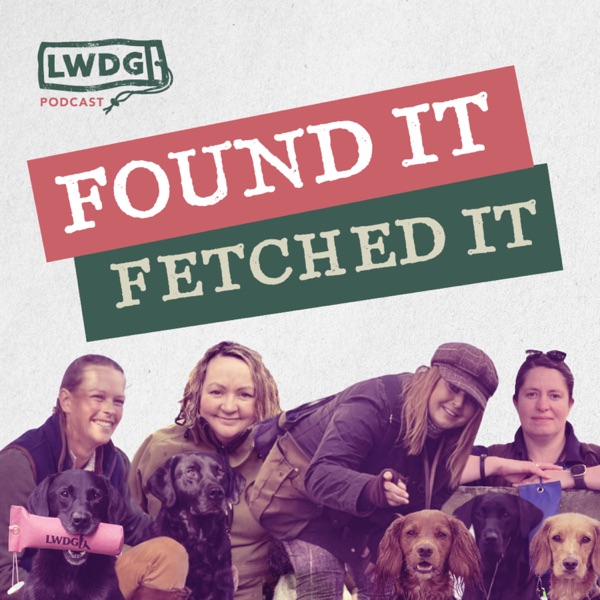
Found It, Fetched It - Gundog Training for Family Life
Every fortnight, the Ladies Working Dog Group sits down with gundog experts, guest trainers, behaviourists and fellow handlers to talk about life with a high-drive gundog or working breed — the wins, the stuck weeks, and the stuff nobody warns you about when you bring one home.
This isn't traditional gundog training, and it isn't generic pet advice. It's for women handling dogs bred to work, raising them as family pets, who want guidance that actually fits that reality.
Part of the Ladies Working Dog Group — training, community and support for women with working-breed dogs. More at thelwdg.com.
- Episodes
- 219
- Releases
- Every two weeks
- Typical length
- 25 min
- On air since
- 2020
- Latest episode
- 5 days ago
Episodes
219 episodes, newest first
-
25 min
219. Beating, Picking Up or Competition - Which Job Suits Your Retriever?
Show notes
If you have ever watched a trial-level training video and come away convinced your retriever is miles behind, this one is for you. Beating, picking up and competition all start with exactly the same foundations. Where they split is what surprised me. Abbie Reed has trained thousands of dogs through her work and twelve Labradors of her own, and she runs a picking up team alongside her competition dogs, so she lives all three jobs every season. She explains why her competition dogs never hear the words "find it", why her most anxious Lab became her best picking up dog, and why a dog that runs in on a shoot day can simply have a lead slipped on. We also get into whether a Labrador can hold their own in the beating line, the one trial skill every picking up dog should have, and why training to trial standard is a choice, not a requirement. Listen before your next session, because it might change what you are actually training for.
Thanks for being here.
If this episode gave you something, a laugh, a lightbulb, or just the feeling that someone gets it, that's exactly why we make it.
📚 Not sure where to start with your gundog training? Grab the LWDG Gundog Progress Gap Map. Work out where you exactly where you are and what to work on next, no more guessing needed.
-
23 min
218. Are You Boring Your Dog?
Show notes
Twenty tidy retrieves on the same patch of field, and on the twenty-first your dog picks the dummy up, gives it a shake and takes the scenic route home. Before you decide they've gone backwards, ask yourself a slightly uncomfortable question. Are you boring them? LWDG Group Expert Claire Denyer and LWDG Founder Jo Perrott get into the difference between reps that proof a behaviour and reps you keep doing because they feel safe. Claire shares how her older dog Rose started treating their big, varied training fields like a second back garden, and what happened when Rose worked somewhere new an hour down the road. You'll hear how to vary the reward for a stop whistle so your dog can't guess what's coming, how to stop a dog deciding three retrieves is their limit, and how to change things by ten or twenty percent without ripping up your routine. Claire trains gundogs and their handlers for a living and sees this pattern in her clients all the time. If training feels like Groundhog Day for either of you, listen before your next session.
Thanks for being here.
If this episode gave you something, a laugh, a lightbulb, or just the feeling that someone gets it, that's exactly why we make it.
📚 Not sure where to start with your gundog training? Grab the LWDG Gundog Progress Gap Map. Work out where you exactly where you are and what to work on next, no more guessing needed.
-
22 min
217. The Art of Doing Nothing
Show notes
Your dog is flat out at home for about ten minutes a day. The rest of the time they're on your heels, bringing you a toy or sighing at the back door, and the minute you take them somewhere new they behave like they've never left the house. LWDG Group Expert Claire Denyer and I get into the art of doing nothing, and why the dog who can switch off at home is the dog who switches on for you when the lead comes out. You'll hear why an obedience stay at the pub isn't the same as a settle, the mistake almost everyone makes the second their dog finally lies down, and the advice my uncle gave me that involved a park, a pack of sandwiches and no training at all. Claire lives with a house full of Labradors aged two to twelve, and every one of them settles every single day. If your dog treats every new place like the best day ever, start here.
Thanks for being here.
If this episode gave you something, a laugh, a lightbulb, or just the feeling that someone gets it, that's exactly why we make it.
📚 Not sure where to start with your gundog training? Grab the LWDG Gundog Progress Gap Map. Work out where you exactly where you are and what to work on next, no more guessing needed.
-
25 min
216. The Dog Training Problems You Can Ignore, and the Ones That Come Back to Bite You
Show notes
So there's a thing I see all the time with our members, (and if I'm honest, I do it myself) , which is you look at your dog and see the bit that's not quite working, and you just go and do training that is working instead. Foundation certificate, there's a wobble in something and the answer is "we'll go to novice anyway," and the wobble's still there; it never went anywhere, you just stopped looking at it.
This week I LWDG Group Expert Claire Denyer, and I pull that apart and work out where the line actually sits, because not everything you're avoiding matters, and some of it really, really does. Claire's got example after example: the boring stuff at home you let slide because it's "just the house," the fearful dog everyone wants to wrap in cotton wool when what they actually need is the opposite, and the bit about symptoms versus root causes properly stopped me in my tracks.
If you've been hoping a problem's going to sort itself out, don't skip this one.
Thanks for being here.
If this episode gave you something, a laugh, a lightbulb, or just the feeling that someone gets it, that's exactly why we make it.
📚 Not sure where to start with your gundog training? Grab the LWDG Gundog Progress Gap Map. Work out where you exactly where you are and what to work on next, no more guessing needed.
-
24 min
215. Hot Weather Dog Training: What to Do When It Is Too Hot to Walk
Show notes
Half past nine at night and it is still too warm to take them out. The ground is baked solid, the tarmac has been a hot plate all day, and every group you are in is telling you something different about water, about heat, and about whether you should be training at all right now. LWDG Group Expert Abi Reed has spent this whole summer working around exactly that, getting up at twenty five to five to beat the sun and moving everything else indoors. She walks through what heat is actually doing to your dogs, why the car is the part almost everybody forgets, what water really does and does not fix, and how much genuine training fits inside the one metre of space around you. If you have cancelled walks this summer and felt like a bad owner for it, this one will settle that. Hot weather does not mean no training. It means different training.
Thanks for being here.
If this episode gave you something, a laugh, a lightbulb, or just the feeling that someone gets it, that's exactly why we make it.
📚 Not sure where to start with your gundog training? Grab the LWDG Gundog Progress Gap Map. Work out where you exactly where you are and what to work on next, no more guessing needed.
-
21 min
214. How to Get Your Gundog Back on Track After a Summer That Stopped Everything
Show notes
Every plan you had for your dogs this summer is probably still sitting where you left it, underneath thirty degrees of heat nobody could train through. That is not a lost season. It is a pause, and LWDG Group Expert Claire Denyer has a lot to say about how you pick it back up. Stay for the heat conversation too, because if our summers keep doing this, getting our dogs ready for warm weather stops being optional. And Bark to School kicks off Sunday. Free, all of us, four days. Come and get your rhythm back.
KEY TAKEAWAYS
• Generic advice can only ever stay generic. The moment somebody watches you train, the answer gets specific and the stalemate breaks.
• A hot summer did not undo your training. It paused it, and pausing is not the same as going backwards.
• If our summers keep looking like this one, preparing our dogs for heat becomes part of training rather than a footnote to it.
• Small cohorts exist for a reason.RESOURCES MENTIONED
Family Dog Services six-month gundog training programme, details on the Family Dog Services website
Claire and John can be reached at claire@familydogservices.co.uk or john@familydogservices.co.uk
Bark to School, free registration at ladiesworkingdoggroup.com/bts
Field and Fireside, providing giveaway prizes during Bark to School
LINKS
LWDG Membership: https://ladiesworkingdoggroup.com/
Bark to School (free): https://ladiesworkingdoggroup.com/bts
Free content library: https://ladiesworkingdoggroup.com/free-content/
Thanks for being here.
If this episode gave you something, a laugh, a lightbulb, or just the feeling that someone gets it, that's exactly why we make it.
📚 Not sure where to start with your gundog training? Grab the LWDG Gundog Progress Gap Map. Work out where you exactly where you are and what to work on next, no more guessing needed.
-
47 min
213. Ticks, Lyme Disease & What Your Dog Needs You to Know
Show notes
This episode of Found It, Fetched It features pharmacist and Lyme Resource Centre trustee Arlene Braley and vet Ian Wright (chair of ESCCAP) discussing tick prevention and tick-borne disease risks for dogs and people. Arlene shares her son’s long, severe illness after an unrecognised tick-borne infection, motivating her Lyme charity work and emphasis on knowledge and early action. Ian explains UK tick species and life cycle; peak activity now spans much of the year; practical avoidance (staying on paths, protective clothing, repellents); pet prevention products suited to lifestyle; and the importance of post-walk tick checks. They outline correct tick removal with proper tools and avoiding stressing the tick. Arlene describes human Lyme signs (EM rash, summer flu-like illness, fatigue, headaches, migratory joint pain), the need to document rashes and history, relevant NICE/Royal College guidance, and that there is no prophylactic antibiotic after a bite; they also mention the Tick Surveillance Scheme and available resources and tick-removal tools.
00:00 Ticks Are Everyone’s Problem
01:07 Meet The Guests
04:02 Arlene’s Lyme Story
07:27 Tick Threats Beyond Lyme
09:22 Tick Life Cycle Explained
11:20 Avoiding Bites Outdoors
12:33 Pet Preventatives That Work
15:24 Tick Checks And Hotspots
17:41 Tick Season Is Longer Now
18:48 Safe Tick Removal Basics
20:59 Symptoms After A Missed Tick
23:10 Early Detection Matters
23:53 Chronic Lyme In Pets
25:17 Tick Prevention Planning
27:29 Humans And Tick Risk
28:54 Wait And Watch Signs
29:18 Rash And Early Symptoms
32:34 Disseminated Lyme Symptoms
34:20 Advocating With Your GP
38:02 Treatment Guidance Basics
39:44 Tools And Tick Removal
41:43 Surveillance And Outdoor Safety
44:43 Wrap Up And Resources
Link to ESCCAP : https://www.esccapuk.org.uk/page/Ticks/7/
Thanks for being here.
If this episode gave you something, a laugh, a lightbulb, or just the feeling that someone gets it, that's exactly why we make it.
📚 Not sure where to start with your gundog training? Grab the LWDG Gundog Progress Gap Map. Work out where you exactly where you are and what to work on next, no more guessing needed.
-
32 min
212. When Is Your Dog Ready for a Charity Working Test?
Show notes
Abbie Reed of Riverlily Working Dogs joins Jo to break down what a charity working test actually involves, from the admin behind the scenes to what your dog needs to be able to do on the day. They talk through the six tests you're likely to face, how judges assess you differently to an official working test, and why your own mindset does more heavy lifting than your training log.
In this episode:
• What separates a charity working test from an official Kennel Club test, and why unregistered and crossbreed dogs are welcome
• The basic skills your dog needs before you enter: steady to shot, steady to a thrown dummy, a clean retrieve, and a stop whistle
• A walkthrough of a typical test day, from signing in and the exercise area to being called forward by the judge
• The six common tests you might face, including the double mark, replacement blind, and the water splash
• Why eighty percent of how the day goes comes down to the handler's mindset, not the dog's ability
• How volunteering or helping at a test teaches you faster than training your own dog ever couldAbout Abbie Reed
Abbie Reed runs River Lily Working Dogs in Hertfordshire, where she's organised ten charity working tests over the last twelve years. She competes and picks up herself, and she's spent years watching handlers of every level walk into the test ring, which makes her the person to ask when you're wondering whether your dog is actually ready.
Key takeaways
• You don't need a perfect dog to enter a charity working test, you need a dog who's had the basics installed and will have a go.
• Judges at charity tests are more lenient than official ones, but they still expect a certain level of control before you toe the line.
• A zero doesn't mean failure, it means you've found exactly what to train next.
• Volunteering at a test teaches you faster than training alone ever will, because you get to watch dozens of dogs and handlers instead of just your own.Resources mentioned
Riverlily Working Dogs — Facebook (Friends of Riverlily Working Dogs, and Riverlily Working Dogs), Instagram, website currently being updated
Thanks for being here.
If this episode gave you something, a laugh, a lightbulb, or just the feeling that someone gets it, that's exactly why we make it.
📚 Not sure where to start with your gundog training? Grab the LWDG Gundog Progress Gap Map. Work out where you exactly where you are and what to work on next, no more guessing needed.
-
29 min
211. When Your Dog Is “Too Difficult” for Training
Show notes
Jo and Claire Denyer tackle one of the most common worries handlers carry quietly: the belief that a dog needs to behave better before it is ready to see a trainer. They cover why the opposite is true, what so-called difficult behaviour is often really communicating, and how the most challenging dogs frequently become the dogs of a lifetime.
In this episode
• Why your trainer needs to see your dog at his cheekiest, not his best behaved
• The warning moment most handlers miss in the seconds before their dog disappears after a scent
• Why difficult young dogs so often mature into the hardest working, most rewarding dogs
• How watching other dogs at group classes and charity tests fast tracks your own handling
• What displacement behaviours like scent marking and cushion humping actually mean
• Claire's recent case of a golden retriever whose recall problem was nothing like it lookedAbout Claire Denyer
Claire Denyer is an LWDG Group Expert and professional dog trainer who works with handlers and their dogs every week, from group classes and one-to-one sessions through to behaviour cases referred by local vets. She brings a rare mix of straight talking and genuine compassion, and her whole approach is built on helping the handler, not just the dog.
Thanks for being here.
If this episode gave you something, a laugh, a lightbulb, or just the feeling that someone gets it, that's exactly why we make it.
📚 Not sure where to start with your gundog training? Grab the LWDG Gundog Progress Gap Map. Work out where you exactly where you are and what to work on next, no more guessing needed.
-
42 min
210. Ten Years In: The Award, The Mud, and What We'd Tell Ourselves Now
Show notes
Ten years ago, the LWDG was bringing in about two hundred pounds a month and felt more like a nice idea than a business. This week marks ten years of the LWDG and ten years of Claire Denyer's Family Dog Services, so to celebrate, Claire turns the tables and interviews Jo in a business blind date. They talk about the exact moments it stopped feeling like a hobby (a national award for one of them, a very muddy fall on her bottom for the other), the bit of the job they still find hardest, how training has changed over a decade, and where they hope to be in another ten years. It's funny, it's honest, and it's the story behind the brand you've been part of.
Thanks for being here.
If this episode gave you something, a laugh, a lightbulb, or just the feeling that someone gets it, that's exactly why we make it.
📚 Not sure where to start with your gundog training? Grab the LWDG Gundog Progress Gap Map. Work out where you exactly where you are and what to work on next, no more guessing needed.
-
25 min
209. Why Your Recall Broke (And It Started in the Garden)
Show notes
You trained it and you were proud of it. Then one day, in front of people, your dog looked straight at you and carried on sniffing. Recall going wrong feels personal, like the dog is calling you a liar. In this conversation, LWDG Group Expert Claire Denyer explains why recall almost never breaks where you think it does. Claire walks through how to rebuild it from the ground up, why the cheese-word panic never works, and how to use a long line as a way to talk to your dog rather than a way to hold them. If your dog has been stuck on the lead because you no longer trust them, this is the episode that gets you both off it.
Thanks for being here.
If this episode gave you something, a laugh, a lightbulb, or just the feeling that someone gets it, that's exactly why we make it.
📚 Not sure where to start with your gundog training? Grab the LWDG Gundog Progress Gap Map. Work out where you exactly where you are and what to work on next, no more guessing needed.
-
25 min
208. What is Predation Substitution Training (And When It Actually Works)
Show notes
If you've ever thought that giving your dog a flirt pole or a tug toy would stop them chasing squirrels, this one's going to shift something. Predation substitution training sounds like the answer, give them an outlet for all that chase drive. But as Claire Deyer walks Jo through in this episode, it's not that simple. Here's what actually works, why outlets alone fail high-drive dogs, and when PST becomes part of a real strategy instead of a band-aid. Claire's spent a decade rehabilitating dogs that chase on command and won't stop, and what she's learned will reshape how you think about drive, boundaries, and what your dog actually needs from you.
In This Episode
• What predatory drive actually is and why it's normal (not a flaw) in working dogs
• Why chasing a toy will never replicate catching a real rabbit, the limitations of outlet training
• How dogs behave completely differently when you're not watching (and why this matters for prey drive issues)
• The skills you need alongside PST: reliable recall, stop whistle, steadiness, and self-control
• How gun dog training fits into predation substitution training
• Why diagnosing the root cause matters more than picking a training methodThanks for being here.
If this episode gave you something, a laugh, a lightbulb, or just the feeling that someone gets it, that's exactly why we make it.
📚 Not sure where to start with your gundog training? Grab the LWDG Gundog Progress Gap Map. Work out where you exactly where you are and what to work on next, no more guessing needed.
-
21 min
207. Fear Periods in Puppies and Adolescence
Show notes
Fear periods are a normal part of puppy and adolescent development, but most handlers go into them underprepared. They know the phrase but not the timing, the signs, or the right response. In this episode, Jo Perrott and LWDG Group Expert Claire Denyer break down both fear periods in practical terms: what they look like, when they happen, and how to work through them without making the dog's experience worse. Claire covers the difference between healthy exposure and flooding, the role of eustress in building resilience, and how the training a dog already has becomes an asset in the second fear period in a way it simply wasn't in the first.
In this episode
• Why fear periods happen and what makes them vary so much from dog to dog
• The first fear period: why it lands exactly when you bring your puppy home and what to do about it
• The difference between exposure and socialisation, and why pushing puppies into group play during a fear period creates problems rather than solving them
• The second fear period: when to expect it, why it blindsides confident dogs, and how hormonal shifts layer on top of it
• What "go back to basics" actually means in practice, not just as a phrase
• How to use eustress to build resilience without flooding your dogThanks for being here.
If this episode gave you something, a laugh, a lightbulb, or just the feeling that someone gets it, that's exactly why we make it.
📚 Not sure where to start with your gundog training? Grab the LWDG Gundog Progress Gap Map. Work out where you exactly where you are and what to work on next, no more guessing needed.
-
21 min
206. 10 Lessons From 10 Years of LWDG
Show notes
10 years. Thousands of conversations. One truth: you're not alone in all of this. Jo walks through the 10 lessons from a decade of watching what actually works with working dogs. Why your dog isn't difficult, just a gundog. Why more walks make them fitter, not calmer. Why consistency isn't about being strict. Why the dog you have right now is already the one you wanted. This episode is for anyone who's felt stuck, ashamed, or like they're the only one getting it wrong.
Thanks for being here.
If this episode gave you something, a laugh, a lightbulb, or just the feeling that someone gets it, that's exactly why we make it.
📚 Not sure where to start with your gundog training? Grab the LWDG Gundog Progress Gap Map. Work out where you exactly where you are and what to work on next, no more guessing needed.
-
38 min
205. Knowing Your Dogs Limits
Show notes
Knowing when to stop isn't giving up. It's one of the most important skills you can build as a handler, and this week Claire and I are getting into exactly that.
There's a real difference between pushing a dog and protecting a dog, and the line between them isn't always obvious. Claire talks about stretching a dog's ability, that productive discomfort where a dog is learning something new, might wobble a bit, might show a flash of an old behaviour you thought you'd cracked months ago. That's not regression. That's growth. It can look messy. It's supposed to.
But there's another side of that line, and that's where things go wrong.
What we cover in this episode
The difference between a stretched dog and an overwhelmed one and why the symptoms can look identical if you're not watching closely. The dog isn't being naughty. It's telling you something.
Physical fatigue vs. mental fatigue and why mental tiredness is the sneaky one. A physically tired dog slows down. A mentally tired dog starts chewing grass, showboating with the dummy, going off for a random sniff. It looks like misbehaviour. It's actually a dog running on empty upstairs.
The bored dog trap because if you never stretch your dog and just keep repeating the same comfortable routine, you'll get behaviours creeping back in too. A bored working dog will find its own entertainment. It won't be the entertainment you wanted.
External pressure and where it actually comes from the other handlers, the gamekeeper's nod, the dog two fields over who's been doing this since it was eight weeks old. Claire is straight-talking on this: comparison is not a training plan.
Why working dogs will push through pain to do the job and why that means we have to be the ones to make the call. If you're waiting for your spaniel to tap out, you'll be waiting a long time.
The warmup read Claire's practical tip for gauging your dog before you even start. Know what your dog looks like at their best, and you'll know when something's off.
Finishing on a high not just as a nice idea, but as a training habit. The challenge this week is to finish one session earlier than you think you need to. Just once. See what happens.
Claire also shares the story of Indy and Rose, two completely different dogs in terms of mental stamina, self-regulation, and what 'enough' looks like for each of them. There is no universal rulebook. There is only your dog, in front of you, today. And Claire is recording this just two and a half weeks post knee surgery. Still showing up, still delivering. She's very much one of us.
Your challenge this week
Finish one session earlier than you think you need to. Notice how your dog walks away from it. Notice how you walk away from it.
Every session, every stumble, every breakthrough, it all counts. Keep going. We see you.
Thanks for being here.
If this episode gave you something, a laugh, a lightbulb, or just the feeling that someone gets it, that's exactly why we make it.
📚 Not sure where to start with your gundog training? Grab the LWDG Gundog Progress Gap Map. Work out where you exactly where you are and what to work on next, no more guessing needed.
-
26 min
204. The Van, the GunDog, and All of Europe
Show notes
What if your dog didn’t have to stay home? What if the van, the open road, and your best mate could all go together — across the UK, across Europe, all the way to Croatia? This week I had the loveliest chat with Karen Shepherd, one of our brilliant Society members, who has been taking her Springer Spaniel McCoy all over Europe in her motor home. And I mean all over... Belgium, Croatia, Italy, Czech Republic, Hungary, Slovenia. The dog has a better travel record than most people I know. Now you might know that Ali the campervan and I are very much looking forward to taking Arthur on our own adventures — once we’ve accepted that he has grown to the size of a small Shetland pony. So this conversation was, frankly, research. And it did not disappoint.
In this episode we cover
• What campervan life with a gundog is really like — not the Instagram version, but the actual chaos and the joy of it. Why crate training was the single most important thing Karen did before their first trip.
• The honest truth about Brexit and what it means for anyone wanting to take their dog into Europe, including the animal health certificate versus getting a European pet passport — and why Karen got McCoy his passport in Bruges.
• The countries that are brilliant for dogs, the ones where you need a muzzle, and why Germany might just be the most dog-friendly place on earth.
• How to help your dog settle in a new environment every single night.
• What Karen wishes she’d known from the start. And the musical road in Hungary that is now firmly on my bucket list.The bit that stopped me in my tracks
Karen said something that I keep coming back to. She talked about how all the different environments, the new smells, the new places, the constant low-level stimulation of life on the road, it all adds up to a dog that retires happy. Not a dog that’s been physically hammered into the ground, but a dog whose brain has been properly used. A dog that has genuinely lived his day.Sound familiar? That’s the Two Minds truth right there, just lived out on a campsite in Croatia.
Useful links
Animal Health Certificate (AHC) — GOV.UK guide to getting an AHC — required every time you leave the UK for Europe. Valid for 10 days from issue. Up to five pets can travel on one certificate.
Taking your pet abroad (overview) — GOV.UK full pet travel guidance — the main hub for all UK pet travel rules, updated regularly.
European Pet Passport — EU pet passport explained (PetAbroad) — once your dog has one, you no longer need a new AHC each trip. Must be issued by a European vet. McCoy’s was issued in Bruges.
AHC explained in plain English — PassPets guide to Animal Health Certificates — a clear breakdown of the whole process, costs and what to prepare.
Channel Tunnel with your dog — Eurotunnel LeShuttle pet travel page — the easiest crossing option as you stay in your vehicle throughout. 35 minutes, Folkestone to Calais.
Tapeworm and country-specific rules — EU pet travel rules by country (Europa.eu) — muzzle laws, tapeworm requirements, and what differs country by country.
Finding dog-friendly campsites across Europe — ACSI Campsites Europe app — the app Karen and many of our members use. Filter by dog-friendly, motorhome pitches, facilities. Available on iOS and Android.
Karen’s top three things to have in place before your first trip
• A dog that travels well and is comfortable in a crate.
• A long line and a whistle — never leave home without them.
• Your paperwork sorted well in advance — the AHC requires a vet appointment, which means you need to know your travel dates ahead of time.If this has got you dreaming, good. That’s exactly what it’s supposed to do.
We’d love to hear where you’ve taken your dog, or where you’re planning to go. Drop us a comment, come and share it in the community, and if you’ve enjoyed this episode please do leave us a review — it genuinely helps more women find us. See you in two weeks.
Jo x
Thanks for being here.
If this episode gave you something, a laugh, a lightbulb, or just the feeling that someone gets it, that's exactly why we make it.
📚 Not sure where to start with your gundog training? Grab the LWDG Gundog Progress Gap Map. Work out where you exactly where you are and what to work on next, no more guessing needed.
-
31 min
203. The Walk You've Been Avoiding Is Actually Your Best Training Session
Show notes
Does your heart sink every time a bird flushes, a squirrel darts across the path, or a dog bolts past on the beach? You're not alone. And you're definitely not ruining your dog.
This week Joanne is joined by LWDG group expert Claire Denyer to tackle one of the biggest myths that keeps working dog owners stuck: that being around wildlife makes a high-drive dog harder to handle. It's actually the opposite.
What you'll hear in this episode:
• Why "my dog would be amazing, he chases everything" is the wrong way around and what gundog training really asks for
• How seagulls, swans, and deer can become your most powerful free training tool, even if you never go near a shoot
• Why avoiding difficult environments doesn't build confidence. It shrinks your dog's world and makes the problem worse
• The real reason high-drive dogs chase bikes, cars, and cats, and what to do about it
• Why a solid leave is the foundation of a dog you can take anywhere
• Claire's honest account of working through her own dog Genie's fear and reactivity, because even professional trainers have those walksIf you've been holding back from taking your dog somewhere because you don't trust what might happen, this episode will give you the framework to get back out there.
The one thing to take away: Country walks, bird flushes, unexpected wildlife moments are not training setbacks. They are real life opportunities to show your dog that excitement and partnership can exist at the same time.
Know someone who's convinced they're ruining their dog just by going on normal walks? Send them this one.
Thanks for being here.
If this episode gave you something, a laugh, a lightbulb, or just the feeling that someone gets it, that's exactly why we make it.
📚 Not sure where to start with your gundog training? Grab the LWDG Gundog Progress Gap Map. Work out where you exactly where you are and what to work on next, no more guessing needed.
-
39 min
202. When Ideology Gets in the Way of Training the Dog in Front of You
Show notes
Dog training advice is louder, more divided, and more confusing than ever.
In this episode of Found It, Fetched It, Jo and Claire tackle one of the biggest problems facing dog owners today, rigid training ideologies that stop people from seeing and supporting the dog in front of them. From “never say no” to “only train this way”, they explore how blanket rules and online dogma leave handlers overwhelmed, hesitant, and often stuck with behaviours that could be resolved far more simply.
Together they unpack:
• Why training isn’t one-size-fits-all
• How fear of “doing it wrong” is creating more stressed dogs and handlers
• The difference between guidance and ideology
• Why context, timing, and the individual dog always matter
• How boundaries, communication, and reward work together
• The real meaning behind training the dog in front of you
Through honest conversation, humour, and real-life examples, this episode is about helping you step away from training pressure and start making confident, balanced decisions for your own dog.
If you’ve ever felt stuck between conflicting advice, this one is for you.
By the end of this episode, listeners will understand:
• Training should always adapt to the individual dog and handler
• Labels and training camps often oversimplify complex behaviour
• Clear communication builds confidence in dogs
• Reward and interruption both have a place when used appropriately
• Dogs need guidance, not confusion or hesitation
• Progress often comes from understanding motivation, timing, and consistency
• Every dog’s journey will look different, and that’s normalThanks for being here.
If this episode gave you something, a laugh, a lightbulb, or just the feeling that someone gets it, that's exactly why we make it.
📚 Not sure where to start with your gundog training? Grab the LWDG Gundog Progress Gap Map. Work out where you exactly where you are and what to work on next, no more guessing needed.
-
13 min
201. What Changes When You Finally Speak Gundog - Supercar On A Shoestring Series
Show notes
If training feels hard work rather than teamwork, this episode is for you.
In this final live of the week, Joanne pulls together everything we’ve explored and explains what actually shifts when you stop guessing… and start understanding what your dog is telling you.
This isn’t about better commands.
It’s about better conversations.
In this episode, we explore:
• Why training feels exhausting when you don’t share the same “language”
• Living with a high-drive dog without understanding their operating system is like being abroad permanently — lots of effort, lots of frustration, and very little ease.
• Why most handlers over-talk, over-handle, and second-guess
• Not because they’re doing it wrong — but because they’re trying to communicate in human logic with a dog brain.
• The moment things start to feel calmer (without calming your dog)
• When you understand state, arousal, and readiness, your timing improves — and suddenly everything needs less effort.
• Why this isn’t about obedience — or being stricter
• It’s about relationship, rhythm, and responding rather than reacting. More like a dance than a drill.
• How the five topics from this week are actually one problem
• Being outpaced, doing more exercise, feeling like a passenger, trying to calm drive, and feeling misunderstood all come back to one missing system.The big takeaway:
When you finally “get” your dog’s dialect, the tension drops.
You stop guessing.
You stop battling.
And you start working with the dog in front of you.
That relief isn’t accidental — it’s teachable.
🎓 What’s next?
This episode leads directly into our free masterclass:
Holding a Supercar by a Shoestring
A live, supportive session on how to finally speak gundog — even if you never plan to see a shooting field.
You’ll learn how to:
• Slow things down mentally (for you)
• Read what your dog is actually telling you
• Respond with confidence instead of hesitation📅 Thursday 29th January
⏰ 7.30pm (UK)
Come live if you can — the energy and clarity are different when we do this together.
Thanks for being here.
If this episode gave you something, a laugh, a lightbulb, or just the feeling that someone gets it, that's exactly why we make it.
📚 Not sure where to start with your gundog training? Grab the LWDG Gundog Progress Gap Map. Work out where you exactly where you are and what to work on next, no more guessing needed.
-
13 min
200. Why Direction Comes Before Calm in High Drive Dogs - Supercar On A Shoestring Series
Show notes
Why Direction Comes Before Calm in High-Drive Dogs
In this Monday Morning Mindset episode, Jo explores a truth that changes everything for owners of high-drive dogs:
👉 Calm doesn’t come from slowing your dog down.
👉 Calm comes from direction, boundaries, and leadership.
If you’ve ever found yourself saying “I just need them to calm down” — this one’s for you.
What This Episode Covers
Why “waiting for calm” doesn’t work
Taking your foot off the accelerator without steering doesn’t stop the engine.
High-drive dogs don’t need us to step back — they need us to step in.
The difference between a gap and a void
A gap is a moment where the dog waits, steady and available.
A void is when the handler checks out — and the dog fills the space by self-appointing.
Suppression vs regulation
A quiet dog isn’t always a calm dog.
Suppression looks still, but it’s pressure waiting to explode.
True calm is regulation:
• movement with purpose
• stopping when asked
• thinking even when excited
Why boundaries create calm (not conflict)
Boundaries aren’t punishment.
They’re information.
They answer the dog’s constant question: “What do you want me to do next?”
Calm is not the destination — it’s the journey
Calm is what happens when a dog understands:
• what matters
• when to act
• when to stand down
The handler’s role under pressure
Dogs can’t regulate if we’re also overwhelmed.
You don’t need to be another beach ball under water.
You need to be the anchor.
Because calm travels down the lead.
Key Takeaway
High-drive dogs don’t need less of you.
They need orientation, direction, and follow-through — especially when things feel intense.
When the handler is steady, the dog can be too.
Mentioned in This Episode
• The Calm Dog Blueprint (free resource)
• Why “settle” matters just as much as “sit”
• Live masterclass: Holding a Supercar by a Shoestring
Thanks for being here.
If this episode gave you something, a laugh, a lightbulb, or just the feeling that someone gets it, that's exactly why we make it.
📚 Not sure where to start with your gundog training? Grab the LWDG Gundog Progress Gap Map. Work out where you exactly where you are and what to work on next, no more guessing needed.
On these lists
Found It, Fetched It - Gundog Training for Family Life is one of the shows picked out on each of these







More in How To
Placed highest on Apple Podcasts' How To chart right now