Podcast
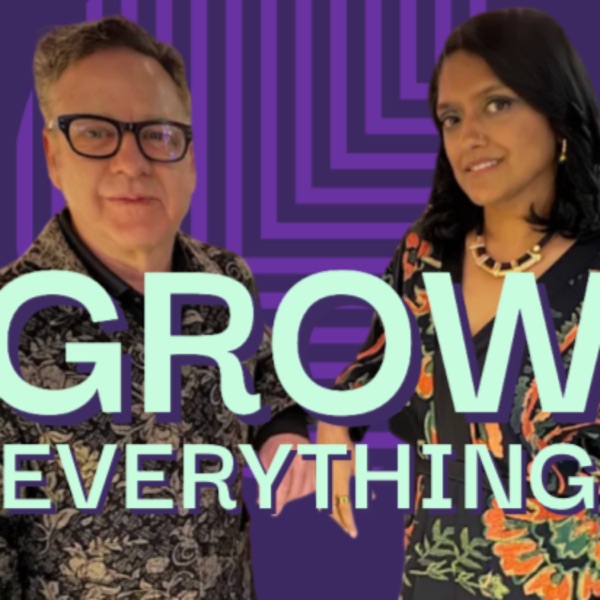
Grow Everything Biotech Podcast
Grow Everything explores the world of biology as technology. Hosts Erum Khan and Karl Schmieder interview leaders and influencers biologizing industries with tools like synthetic biology, precision fermentation, bioprospecting, and more. These companies make biomaterials from waste, cosmetics that restore healthy hair and skin, and delicious cultivated foods in a bioreactor and so much more. Join us as we discuss the latest and greatest across biotech, engineered biology, entrepreneurship, and culture and how this transition is solving healthcare and climate change challenges.
- Episodes
- 207
- Releases
- Weekly
- Typical length
- 56 min
- On air since
- 2022
- Latest episode
- 4 days ago
Episodes
207 episodes, newest first
-
53 min
205. The Sweet Taste of Negative Waste: Max Kufner Ferments Carbon Waste at Again
Show notes
What does it take to turn industrial carbon dioxide into useful chemicals at a price the market will accept? On Grow Everything, Karl Schmieder and Erum Azeez Khan speak with Max Kufner, cofounder and CEO of Again, about using gas fermentation to make acetate and other products from industrial emissions. Max explains why feedstock economics and locating production close to customers matter, what the acquisition of Genomatica brings to Again, and why real production data is essential for predicting whether a bioprocess can work at industrial scale. He also shares how customer demand, licensing, project finance, and partnerships can help move biotechnology from the lab into the real world. Before the interview, the hosts explore an AI assisted biomanufacturing class and the latest discussion around deextinction.
Grow Everything brings the bioeconomy to life. Hosts Karl Schmieder and Erum Azeez Khan share stories and speak with the leaders and innovators using biology to change the world. Biology is the world’s oldest technology, and it can be engineered. So, what are we growing?
Learn more at www.messaginglab.com/groweverything
Chapters:
• (00:00:00) - Biology, public engagement, and biomanufacturing education
• (00:05:00) - AI agents and cell free protein experiments
• (00:10:00) - Deextinction, the moa, and biotechnology
• (00:15:00) - Max Kufner on turning carbon dioxide into chemicals
• (00:20:00) - From venture capital to building Again
• (00:26:00) - Industrial bioreactors and manufacturing at the source
• (00:32:00) - Financing biotechnology scale with customer partnerships
• (00:38:00) - Building biomanufacturing facilities in the US and Europe
• (00:44:00) - Climate tech quick fire: engineers, finance, and teamwork
• (00:50:00) - Founder takeaways: customer demand and cost parityLinks and Resources:
• Again Bio.
• Max Kufner LinkedIn
• Startup, Again: Turning CO₂ Emissions into Carbon-negative Chemicals
• Again acquires Geno to combine AI-driven discovery with industrial biomanufacturing
• Colossal, who de-extincted the dire wolf, now hatches chicks from artificial egg to help de-extinct moa
• 113. Microbe Mission Possible: Noah Helman Discusses iMicrobes' Quest to Turn Waste into Wealth
• 170. There's a Bug for That: Sophia Xu on CarbonBridge's Notebook Bioreactors
• 102. Waste into WOW! Cemvita's Moji Karimi on Turning Carbon Problems into Golden Opportunities
• Grow everything LinkedInTopics Covered:
biomanufacturing, AI x bio, climate tech, green chemicals, sustainable manufacturing, industrial biotechnology, biotech scale-up, deep tech financing, carbon-negative products, alternative chemicals
Have a question or comment? Message us here:
Text or Call (804) 505-5553
Instagram / Twitter / LinkedIn / Youtube / Grow Everything
Music by: Nihilore
Production by: Amplafy Media
-
1 hr 14 min
204. Moore's Law Than Meets the Eye: Michael Wright's Blueprint at Biomimetics International
Show notes
Michael Wright, founder of Biomimetics International, joins Grow Everything to explain how learning from nature can reshape the way we design products, build businesses, and scale emerging industries. Drawing on decades in semiconductors and high technology, he describes biomimetics as learning from nature’s tested systems, from burr inspired Velcro to shark skin that reduces drag, while emphasizing that copying a biological function is not enough if a product cannot return safely to the biosphere. He introduces the Biosverse, nature’s third number, and generational cost of ownership as ways to account for environmental liabilities that traditional business models may overlook. The conversation explores how digital and biological systems converge, why biotech can learn from semiconductor standards and roadmaps, how AI might benefit from a more nurturing and accountable design approach, and why leaders should ask, “Do you know what you do does?” Michael’s vision is a mindset shift that brings nature into the design process before we build, then measures whether innovations can serve communities and remain compatible with the living world.
Grow Everything brings the bioeconomy to life. Hosts Karl Schmieder and Erum Azeez Khan share stories and speak with the leaders and innovators using biology to change the world. Biology is the world’s oldest technology, and it can be engineered. So, what are we growing?
Learn more at www.messaginglab.com/groweverything
Chapters:
• (00:00:00) Grow Everything opening and biotech headlines, from fall foliage to food systems for Mars
• (00:07:00) FDA inspections, peptide manufacturing, and the importance of knowing where products come from
• (00:14:00) Michael Wright’s semiconductor career and the path to biomimetics
• (00:21:00) How digital and biological systems converge, from precision agriculture to digital water
• (00:28:00) The Biosverse, biosphere compatibility, and nature’s third number
• (00:35:00) Generational impact, executive decisions, and long term costs
• (00:42:00) What biotech can learn from semiconductor roadmaps, standards, and shared infrastructure
• (00:49:00) AI as a mom, biological sensing, and symbiotic decision making
• (00:56:00) Michael’s dream project: a mindset shift toward looking at nature first
• (01:03:00) Quick fire questions, the episode debrief, and designing data centers with nature in mindEpisode Links:
• Biomimetics International
• Michael Wright
• The Exponential Era by David Espindola and Michael Wright
• NASA Mars to Table Challenge
• Fall foliage tracker in NY
• Black mold, bugs found at Chinese plants making GLP-1 compounding agents
• Cemvita and Roebling Partner to Accelerate Industrial BioSolutions From Discovery to Deployment
• 199. Space, the Final Fermenter: Mario Maggio Brews Biology in Orbit with Ambrosia Space
• 156. When Matter Makes Decisions: Michael Levin on the Intelligence of Form
• 133. Funding, Frameworks & Frenemies: Dr. Angela Belcher of NSCEB Gets Real on the $15B Biotech Boost Plan
• 71. Squid Pro Quo: Tandem Repeat's Melik Demirel Reinvents Clothing with Squitex• Grow everything LinkedIn
Topics Covered:
biomimetics, bio-inspired design, biosphere compatibility, generational cost of ownership, nature-inspired materials, biomimicry in engineering, sustainable data centers, AI and biomimicry, biomimetics industry standards, circular materials
Have a question or comment? Message us here:
Text or Call (804) 505-5553
Instagram / Twitter / LinkedIn / Youtube / Grow Everything
Music by: Nihilore
Production by: Amplafy Media
-
49 min
203. The Valley of Do: Karl & Erum Orchestrate Bio-Ecosystems at Bioinnovations Conference
Show notes
At Bio Innovations in Omaha and an adjacent investor gathering in Houston, Grow Everything hosts Karl Schmieder and Erum Azeez Khan unpack the shift reshaping the bioeconomy: scientific discovery is becoming faster and less expensive, while deployment, scale up, and durable partnerships have become the real competitive advantage. They share conversations from the conference floor on the missing middle between bench science and commercial production, the Midwest’s feedstock and infrastructure advantage, the need for early technoeconomic discipline, and how corporates can give innovators clearer demand and specification targets. From pilot facilities and downstream processing to waste to value opportunities and resilient domestic supply chains, this recap maps the practical work required to turn biological innovation into products that matter.
Grow Everything brings the bioeconomy to life. Hosts Karl Schmieder and Erum Azeez Khan share stories and speak with the leaders and innovators using biology to change the world. Biology is the world’s oldest technology, and it can be engineered. So, what are we growing?
Learn more at www.messaginglab.com/groweverything
Chapters:
• (00:00:00) Halloween, food dyes, and a motel room microbiology discovery
• (00:05:29) The fire microbe and the promise of extremophiles for manufacturing
• (00:07:46) AI agents, scientific discovery, and physical laboratories
• (00:14:43) Bio Innovations recap: Omaha infrastructure meets Houston capital
• (00:18:00) Discovery is cheaper, but deployment is the whole game
• (00:22:24) The missing middle: pilots, ecosystems, and the valley of do
• (00:26:45) Business models, corporate demand clarity, and consumer framing
• (00:34:40) Scale up lessons: feasibility, downstream processing, and tech transfer
• (00:42:28) Waste to value, bioeconomic resilience, and what comes nextLinks and Resources:
• Steve Bray - TritenIAG
• Phillip Crawford -Roebling
• Mike Glasspool - Merrick
• Kyle Pomraning - Pacific Northwest National Lab
• Gatorade recall across 37 states in the U.S.
• Scientist discovered two new species of bacteria from a motel room they converted into a lab
• Incendiamoeba cascadensis. This 'fire amoeba' pushes the limit of what's possible for complex life
• Claude discovers a novel enzyme system with CRISPR-like repeats
• C5R Built a Research Lab Run by AI in 12 Weeks.
• 164. From Plasmids to Pallets: How Erin Marasco Scales Biology at Cargill
• 165. Biology Behind the Brands: Inside P&G’s Two-Century Story
• 166. The Great Reformulation: Joshua Lachter Rethinks How We Make Everything at Scale
• 102. Waste into WOW! Cemvita's Moji Karimi on Turning Carbon Problems into Golden OpportunitiesTopics Covered:
autonomous labs, laboratory robotics, AI in biotechnology, synthetic biology, bioengineering, biological automation, data as a service, biotech infrastructure, cell engineering, programmable biology
Have a question or comment? Message us here:
Text or Call (804) 505-5553
Instagram / Twitter / LinkedIn / Youtube / Grow Everything
Music by: Nihilore
Production by: Amplafy Media
-
54 min
202. Setting Sail for Biotech Scale: Jenny Rooke Steers Innovators at Genoa Venture
Show notes
Genoa Ventures founder and managing director Jenny Rooke joins Karl Schmieder and Erum Azeez to explore bioconvergence, the expanding frontier where biology meets AI, automation, materials science, and real world business building. Drawing on her journey from physics and genetics to venture capital, Jenny explains why durable bio based companies must pair novel science with clear customer demand, disciplined scale up, and a path to meaningful commercial value. The conversation examines lessons from early synthetic biology, the realities of biomanufacturing at scale, next generation clinical assessment tools, and why founders working between traditional tech and biotech categories need investors who understand both.
Grow Everything brings the bioeconomy to life. Hosts Karl Schmieder and Erum Azeez Khan share stories and speak with the leaders and innovators using biology to change the world. Biology is the world’s oldest technology, and it can be engineered. So, what are we growing?
Learn more at www.messaginglab.com/groweverything
Chapters:
• (00:00:00) Climate Week, bioliteracy, and biology as a climate solution
• (00:03:00) America’s Living Library Act and the case for sampling public lands
• (00:07:00) State microbes, public engagement, and the future of bioliteracy
• (00:10:00) Erum’s biomanufacturing course and designing food safe colors
• (00:15:00) Introducing Jenny Rooke and Genoa Ventures
• (00:17:00) From physics and genetics to investing in science based companies
• (00:20:00) The Genoa sail: founder autonomy, trust, and avoiding fatal mistakes
• (00:22:00) What defines a bioconvergence company
• (00:24:00) Why biotechnology needs a broader frame than pharma
• (00:26:00) Lessons from synthetic biology’s first wave and the impact of AI
• (00:28:00) Matching company timelines to biology, markets, and venture returns
• (00:29:00) The future of clinical assessment tools and actionable health data
• (00:32:00) Diagnostics, consumer data, and the difference between insight and infotainment
• (00:34:00) Why bio based businesses can offer investors a different risk profile
• (00:37:00) Why industrial biotechnology companies fail and what scale up requires
• (00:40:00) Biomanufacturing, commercial readiness, and Genoa’s newest investment
• (00:42:00) What Genoa is watching across tools, biology, and manufacturing
• (00:45:00) Jenny’s four word credo and the founder mindset
• (00:48:00) Closing reflections on bioconvergence and building the bioeconomyLinks and Resources:
• Genoa Ventures
• Jenny Rooke LinkedIn
• Genoa Ventures LinkedIn
• JPM 2026: Genoa Ventures’ Jenny Rooke on Next-Gen Clinical Assessment Tools
• Graveyard report - First Bite Ventures
• 3 States Have Official State Microbes
• National Security Commission of Emerging BiotechTopics Covered:
bioconvergence, deep tech venture capital, synthetic biology investing, biomanufacturing, life science tools, clinical diagnostics, industrial biotech, bioeconomy
Have a question or comment? Message us here:
Text or Call (804) 505-5553
Instagram / Twitter / LinkedIn / Youtube / Grow Everything
Music by: Nihilore
Production by: Amplafy Media
-
50 min
201. Out of Cell Experience: Michael Heltzen Drives Pure Chemistry at eXoZymes
Show notes
Michael Heltzen, CEO of Exozymes, joins Grow Everything to explain how cell free biomanufacturing is opening new possibilities for natural products, nutraceuticals, and medicines. Michael shares why engineered enzymes can make high purity molecules without relying on living cells, how Exozymes moved its NCT program from discovery toward commercial manufacturing in less than two years, and why its capital light partnership model is central to scaling impact. The conversation also explores AI guided enzyme design, digital twins for manufacturing, rare cannabinoids, downstream processing, and the disciplined focus required to turn a broad biotechnology platform into real products.
Grow Everything brings the bioeconomy to life. Hosts Karl Schmieder and Erum Azeez Khan share stories and speak with the leaders and innovators using biology to change the world. Biology is the world’s oldest technology, and it can be engineered. So, what are we growing?
Learn more at www.messaginglab.com/groweverything
Chapters:
• (00:00:00) Michael Heltzen and the Exozymes mission
• (00:05:00) Why cell free manufacturing can unlock inaccessible natural products
• (00:10:00) Combining molecular biology, computation, and AI guided enzyme design
• (00:15:00) From laboratory platform to industrial scale production
• (00:20:00) Commercial partnerships and the NCT market opportunity
• (00:25:00) Rare cannabinoids and a new toolkit for medicinal chemistry
• (00:30:00) The capital light licensing model for biomanufacturing
• (00:35:00) Downstream processing, purity, and investor skepticism
• (00:40:00) The future of sustainable enzyme driven chemical manufacturing
• (00:45:00) Key takeaways on focus, partnerships, and platform innovationLinks and Resources:
• eXoZymes
• eXoZymes Awarded $2 Million NIH Grant to Advance Cannabinoid Analogs for Drug Discovery
• eXoZymes’ Cell-Free Biomanufacturing Platform Gets Positive Feedback from Cayman Chemical
• Michael Heltzen LinkedIn
• eXoZymes on LinkedIn
• 129. No Cells? No Problem! eXoZymes' Michael Heltzen on the Future of Microbe-Free Biotech
• 176. Dare to Commercialize: Damien Perriman’s eXoZymes Playbook
• 51. Cell-Free, Problem-Free: Enzyme Alchemy with Alex Rosay at Cascade Biocatalysts
• 85. Always Be Brewing: Continuous Fermentation with Cauldron's Michele StansfieldTopics Covered:
cell-free biomanufacturing, enzyme engineering, exozymes, biosynthesis, cannabinoids, NCT (N-trans-caffeoyltyramine), synthetic biology, AI-driven enzyme design, scalable bioproduction, sustainable chemicals
Have a question or comment? Message us here:
Text or Call (804) 505-5553
Instagram / Twitter / LinkedIn / Youtube / Grow Everything
Music by: Nihilore
Production by: Amplafy Media
-
1 hr 29 min
200. That's One Cell of a Machine: Jason Kelly of Gingko Automates Labs to Accelerate Discovery
Show notes
For the 200th episode of Grow Everything, Karl Schmieder and Erum Azeez Khan talk with Jason Kelly, co-founder and CEO of Ginkgo Bioworks and former chair of the US National Security Commission on Emerging Biotechnology, about why biology is still so hard to engineer. Jason explains why a cell is the only coded substrate we have besides a computer, why the real bottleneck is tooling rather than ideas, and why Ginkgo moved from royalty based research partnerships to selling robotic hardware and lab data as a service. Using a subway, car and Waymo analogy, he separates automation from autonomy and makes the case for replacing the manual lab bench, which eats roughly 97 percent of research spending while running 40 hours out of 168. He walks through Ginkgo's Boston system of 105 robots running 24/7, new autonomous labs for MIT, Caltech, Northwestern and the University of Maryland, and the OpenAI project where GPT-5 ran 30,000 experiments a week and beat state of the art in cell free protein synthesis by 40 percent. He also lays out the policy stakes as drug discovery shifts to China, and why the day biology becomes predictably easier to engineer, biotech gets bigger than tech.
Grow Everything brings the bioeconomy to life. Hosts Karl Schmieder and Erum Azeez Khan share stories and speak with the leaders and innovators using biology to change the world. Biology is the world’s oldest technology, and it can be engineered. So, what are we growing?
Learn more at www.messaginglab.com/groweverything
Chapters:
• (00:00:00) A cell is a machine that can do a million other things
• (00:07:00) AI data centers, contamination, and the waste to value opportunity
• (00:14:00) Biosecurity, guardrails, and who is accountable for AI in biology
• (00:21:00) Ginkgo's mission: programming a computer you did not design
• (00:28:00) Why Ginkgo reset its business model from royalties to tools and data
• (00:34:00) Subway, car, Waymo: what an autonomous lab actually means
• (00:41:00) Inside Nebula: 105 robots, 24/7 lab work, and autonomous labs for MIT and Caltech
• (00:47:00) The end of experimental scarcity and what scientists do next
• (00:54:00) Offshoring biotech to China and the policy fix Jason wants
• (01:01:00) Simulating cells, Moore's law for biology, and the markets beyond pharmaLinks and Resources:
• Gingko Bioworks
• Gingko Bioworks - Automation product
• Jason Kelly linkedin
• Ginkgo Bioworks Joins ARPA-H GIVE Program to Build Autonomous Manufacturing System for Individualized RNA Medicines
• National Security Commission on Emerging Biotech
• Singapore is building supercomputer that runs on human brain cells
• Water in Wyoming data center contaminated with cupriavidus gilardii
• 112. The Baked-In Future of Science: Nick Edwards on Potato AI’s Quest to Become Your AI Scientist
• 5. Dreaming in Biology: Tales from the Ginkgo Bioworks Studio
• 50. The Dye-Hard Innovator: Natsai Chieza Designs Change for the Fashion Industry and the WorldTopics Covered:
autonomous labs, laboratory robotics, AI in biotechnology, synthetic biology, bioengineering, biological automation, data as a service, biotech infrastructure, cell engineering, programmable biology
Have a question or comment? Message us here:
Text or Call (804) 505-5553
Instagram / Twitter / LinkedIn / Youtube / Grow Everything
Music by: Nihilore
Production by: Amplafy Media
-
49 min
199. Space, the Final Fermenter: Mario Maggio Brews Biology in Orbit with Ambrosia Space
Show notes
Biology may be the most important technology we take off planet, and Mario Maggio is building the hardware to prove it. The founder and CEO of Ambrosia Space joins Erum Azeez Khan and Karl Schmieder to explain why space bioprocessing has been stuck at 10 to 20 milliliters while bench scientists on Earth work at 250 milliliters and beyond, and what changes when a two and a half liter fed batch bioreactor with pH, dissolved oxygen, and total cell density sensors finally flies. Mario traces his path from aerospace propulsion and the Nova C lunar lander at Intuitive Machines to life support systems at Paragon and Axiom Space, and the realization that biology is the best CO2 scrubber, oxygen source, and chemical factory available for long duration missions where petroleum, farms, and easy resupply do not exist. The conversation digs into the engineering reality of fluids and gas in microgravity, why glass and ceramics never fly, the stainless steel and aluminum builds that replace them, the intentional and unintentional bacteria that come with building a bioreactor from scratch, and the NASA TechLeap winning CellSep continuous flow centrifuge that carries cells and secreted products into downstream processing without gravity. Mario also lays out the near term commercial case, from protein crystallization and monoclonal antibodies that behave differently in orbit to biofuels, vitamin production, medicines, and the big silver tanks that will feed astronauts because there will be no farms or cattle. He offers a candid read on artificial gravity gradients, why the Moon matters for building large vehicles in space, and why the same hardware that grows yeast for beer on Mars becomes the root of better biomanufacturing on Earth. Erum and Karl open with field notes from Bio Innovations North America in Omaha, including Midwest feedstock advantage, consortia momentum, the 30 percent of cost hiding in downstream processing, and why Smucker and Mars are actively scouting biotech innovators.
Grow Everything brings the bioeconomy to life. Hosts Karl Schmieder and Erum Azeez Khan share stories and speak with the leaders and innovators using biology to change the world. Biology is the world’s oldest technology, and it can be engineered. So, what are we growing?
Learn more at www.messaginglab.com/groweverything
Chapters:
• (00:00:00) Why Biology Is the Best Commercial Case for Space
• (00:04:52) Bio Innovations North America and the Midwest Bioeconomy
• (00:07:21) Why Smucker and Mars Are Scouting Biotech Innovators
• (00:11:42) Inside Ambrosia Space: Bioreactors Built for Orbit
• (00:15:24) Scaling Past 150 Milliliters: Space Biology's Volume Problem
• (00:18:12) Stainless Steel, Leaks, and Why Glass Never Flies
• (00:21:36) NASA TechLeap and the CellSep Continuous Flow Centrifuge
• (00:26:08) Protein Crystals and Monoclonal Antibodies Made in Microgravity
• (00:31:22) Artificial Gravity, Lunar Bases, and Closing the Loop on Life Support
• (00:36:12) Quick Fire: Space Food Reality, HAL, and Biologics in OrbitLinks and Resources:
• Mario Maggio
• Ambrosia Space LinkedIn
• Ambrosia Space
• 111. Space Genes and Subway Scenes: Chris Mason on Planning Life’s Next Big Leap
• 93. Houston, We Have a Protocol: NASA's Kate Rubins on Biotech in Space
• 187. One Small Step for a Microbe: Lynn Rothschild’s Leap from Astrobiology to Bioengineering at NASA
• 185. Brick Happens: Chris Maurer of Redhouse Studio Redesigns Remote Living for Earth and Mars
• 152. Crystals in the Cosmos: Varda Rewrites Drug Formulation in Microgravity
• Grow Everything LinkedInTopics Covered:
space biomanufacturing, Ambrosia Space, orbital bioreactors, microgravity biotechnology
Have a question or comment? Message us here:
Text or Call (804) 505-5553
Instagram / Twitter / LinkedIn / Youtube / Grow Everything
Music by: Nihilore
Production by: Amplafy Media
-
1 hr 3 min
198. A Grain of Truth: Chef Pierre Thiam Scaled Fonio Without Losing Its Roots
Show notes
Chef and entrepreneur Pierre Thiam joins Grow Everything to explain how fonio, a resilient ancient grain from West Africa, can become a platform for biodiversity, regenerative agriculture, food security, and farmer prosperity. Pierre traces his journey from studying physics and chemistry to discovering the kitchen as a larger system connecting culture, health, ecology, and economics. He shares why fonio is nutritionally dense, gluten free, drought resistant, fast cooking, and versatile, as well as how Yolélé is building aggregation centers and modern processing infrastructure while keeping cultivation knowledge and ownership with smallholder farming communities. The conversation explores how biotechnology can complement biodiversity, why flavor must lead climate friendly food adoption, how underutilized crops can create clean label ingredients and new commercial markets, and why food can serve as a powerful tool for diplomacy and cultural understanding. For founders, scientists, investors, and builders in the bioeconomy, Pierre offers a human centered model of innovation that begins with nature, respects generational knowledge, and uses technology to unlock solutions that have been in front of us all along.
Grow Everything brings the bioeconomy to life. Hosts Karl Schmieder and Erum Azeez Khan share stories and speak with the leaders and innovators using biology to change the world. Biology is the world’s oldest technology, and it can be engineered. So, what are we growing?
Learn more at www.messaginglab.com/groweverything
Chapters:
• (00:00:00) Why flavor must lead sustainable food adoption
• (00:07:00) Artificial intelligence for science and protein design
• (00:14:00) Pierre Thiam connects cooking, chemistry, culture, and diplomacy
• (00:21:00) What fonio tastes like and why chefs love its versatility
• (00:28:00) Scaling fonio through farmer centered supply chains and global markets
• (00:35:00) Human centered design for West African farming communities
• (00:42:00) Delicious first: the strategy behind climate friendly food adoption
• (00:49:00) Biodiversity, forgotten crops, and the future of food security
• (00:56:00) How biotechnology and local knowledge can work together
• (01:02:00) Building healthier diets and stronger farming communitiesLinks and Resources:
• Chef Pierre Thiam
• Teranga - Senegalese Restaurant
• Yolélé Foods
• The Fonio Cookbook
• Chief Pierre Thiam Instagram
• 197. What’s in Your Cart? A Grocery Store Walkthrough of Next-Gen Food Innovation
• 196. Beyond the Red Tape: Greg Jaffe on Policy as an Accelerator for Bio-Innovation
• New Evidence points to ‘Ghost DNA’
• Claude opens 10,000 free seats to scientists
• David Kong's class - How To Grow Almost Anything
• BioInnovations Events - For 25% off use code: Grow Everything
• Grow Everything LinkedInTopics Covered:
Fonio, West African cuisine, sustainable food systems, regenerative agriculture, food biodiversity, underutilized crops, food diplomacy, Bambara groundnuts, climate-resilient crops, Yolélé
Have a question or comment? Message us here:
Text or Call (804) 505-5553
Instagram / Twitter / LinkedIn / Youtube / Grow Everything
Music by: Nihilore
Production by: Amplafy Media
-
16 min
197. What’s in Your Cart? A Grocery Store Walkthrough of Next-Gen Food Innovation
Show notes
Food technology is moving from farms and petrochemicals into bioreactors, fungi, engineered crops, and circular feedstocks. In this Grow Everything highlights episode, Erum Azeez and Karl Schmieder visit six stops across the grocery store to explore sweet proteins from Oobli, fermentation derived colorants from MycoFutures and Chromologics, the antioxidant rich purple tomato from Norfolk Healthy Produce, fungi based proteins from The Better Meat Co. and MyForest Foods, sargassum derived ingredients from Origin by Ocean, and the hard commercial work of getting emerging products onto retail shelves. For founders, scientists, investors, and builders across synthetic biology and sustainable materials, the central lesson is clear: fermentation is manufacturing, environmental problems can become valuable feedstocks, and biology wins when performance, taste, branding, and price are better for the customer.
Grow Everything brings the bioeconomy to life. Hosts Karl Schmieder and Erum Azeez Khan share stories and speak with the leaders and innovators using biology to change the world. Biology is the world’s oldest technology, and it can be engineered. So, what are we growing?
Learn more at www.messaginglab.com/groweverything
Chapters:
• (00:00:00) Food technology innovations hidden across the grocery store
• (00:01:57) Why fermentation should be understood as manufacturing
• (00:03:02) Oobli sweet proteins replace sugar with tiny amounts of protein
• (00:04:35) Fermentation creates powerful natural colors for food brands
• (00:06:20) The purple tomato brings biotechnology into the produce aisle
• (00:08:11) The Better Meat Co. grows nutrient rich mycoprotein in bioreactors
• (00:09:54) MyForest Foods turns oyster mushroom mycelium into bacon
• (00:11:15) Origin by Ocean transforms invasive sargassum into useful ingredients
• (00:12:34) Startup CPG explains what gets emerging brands onto shelves
• (00:13:50) Why biology must compete on taste, price, branding, and performanceLinks and Resources:
• 22. Sweet Dreams Are Made of Proteins: Oobli's Ali Wing
• 180. Fungi in Full Color: Ricky Cassini Reimagines Dye at Michroma
• 181. Can Hue Believe It? Gerit Tolborg’s Quest for Pure Color at Chromologics
• 33. Purple Reign, A Purple Tomato with a Genetic Twist, Nathan Pumplin of Norfolk Healthy Produce
• 157. (Thanksgiving Replay) Meat the Future: How Paul Shapiro is Brewing Superfoods at Better Meat Co.
• 126. Sizzling Success: Eben Bayer of MyForest Foods on Scaling Mycelium Magic
• 175. Seaweed Is the New Oil: Mari Granström Builds Origin by Ocean
• 167. From Scrappy to Scalable: Daniel Scharff Grows Startup CPG
• BioInnovations Events - For 25% off use code: Grow Everything
• Grow Everything LinkedInTopics Covered:
Food technology is moving from farms and petrochemicals into bioreactors, fungi, engineered crops, and circular feedstocks. In this Grow Everything highlights episode
Have a question or comment? Message us here:
Text or Call (804) 505-5553
Instagram / Twitter / LinkedIn / Youtube / Grow Everything
Music by: Nihilore
Production by: Amplafy Media
-
56 min
196. Beyond the Red Tape: Greg Jaffe on Policy as an Accelerator for Bio-Innovation
Show notes
Biotech is moving fast, but regulation, public trust, and infrastructure still shape how quickly new ideas reach the market. In this episode of Grow Everything, Greg Jaffe joins Karl Schmieder to explore the regulatory future of the bioeconomy, drawing on Greg’s experience in environmental law, consumer advocacy, and as the USDA’s chief regulatory officer. They discuss why founders need to think about regulatory strategy early, how production methods, product claims, and intended use can dramatically change the path through agencies like USDA, EPA, and FDA, and why clear oversight can help build the trust emerging technologies need to scale. Greg and Karl also examine the regional nature of biomanufacturing, the importance of rural infrastructure and local partnerships, and why the future of the bioeconomy will require coordinated policy, stronger market demand, international access, and regulatory pathways that support innovation while protecting public confidence.
Grow Everything brings the bioeconomy to life. Hosts Karl Schmieder and Erum Azeez Khan share stories and speak with the leaders and innovators using biology to change the world. Biology is the world’s oldest technology, and it can be engineered. So, what are we growing?
Learn more at www.messaginglab.com/groweverything
Chapters:
• (00:00:00) Intro: Moderna cancer vaccine news, Sargassum in Miami, and K18’s viral hairball activation
• (00:13:00) Greg Jaffe’s path from environmental law to biotech policy
• (00:16:30) Why the coordinated framework for biotechnology still matters
• (00:20:00) What biotech startups need to understand about USDA, EPA, and FDA
• (00:25:15) How claims, intent, and language can change a regulatory pathway
• (00:28:15) Why public trust is essential for biomanufactured food and biotech products
• (00:31:30) How biotech regulation differs in the United States, Africa, and Southeast Asia
• (00:35:20) Why biomass and biomanufacturing are inherently local
• (00:38:00) Which bio based sectors may be ready to scale first
• (00:42:20) The role federal policy can play in making bio based products the defaultLinks and Resources:
• Greg Jaffe
• Jaffe Policy Consulting LLC
• U.S. Department of Agriculture
• BioPreferred Program - USDA
• What is it like to be a cucumber? - Mike Levin
• The Merck/Moderna cancer vaccine: How does it work and what are potential barriers to wide use?
• Miami faces worsening seaweed problem as piles of algae wash up on beaches
• SPOTTED K18 Hair: a giant hairball rolling across NYC
• BioInnovations Events - For 25% off use code: Grow Everything
• Grow Everything LinkedInTopics Covered:
USDA regulation, FDA food regulation, GRAS process, cultivated meat regulation, precision fermentation, food safety policy, bioeconomy policy, agricultural biotechnology, ultra-processed foods
Have a question or comment? Message us here:
Text or Call (804) 505-5553
Instagram / Twitter / LinkedIn / Youtube / Grow Everything
Music by: Nihilore
Production by: Amplafy Media
-
1 hr 11 min
195. Because You’re Worth Biology: Olivier Rolland Talks Biotech at L’Oréal
Show notes
Industrial biotechnology has enormous potential to create resilient supply chains, high performance ingredients, and a more sustainable bioeconomy, but good science alone is not enough. In this episode of Grow Everything, Karl and Erum speak with Olivier Rolland about the economic and industrial realities of scaling biology. Drawing on his experience across Michelin, TotalEnergies, Toulouse White Biotechnology, and L’Oréal, Olivier explains why biotech ventures must align sustainability, performance, cost, and customer expectations from the beginning. The conversation explores how techno economic analysis, early process constraints, industrial partnerships, standardization, and supportive policy can reduce risk and move promising molecules from the laboratory into commercial production. Olivier also discusses the biomanufacturing investment gap in Europe, the importance of resilient value chains, the limits of direct fossil replacements, and the opportunity to develop new molecules that deliver the same or better functions by design.
Grow Everything brings the bioeconomy to life. Hosts Karl Schmieder and Erum Azeez Khan share stories and speak with the leaders and innovators using biology to change the world. Biology is the world’s oldest technology, and it can be engineered. So, what are we growing?
Learn more at www.messaginglab.com/groweverything
Chapters:
• (00:00:00): Music festivals, Mike Levin, and consciousness at every scale
• (00:07:00): Biotech news, Houston biomanufacturing, and the Michelin Guide analogy
• (00:14:00): Genome astrology, ingredient transparency, and food regulation
• (00:21:00): Olivier Rolland on L’Oréal, Scope 3 emissions, water, and resilient supply chains
• (00:28:00): Finding the sweet spot between performance, economics, and sustainability
• (00:35:00): Techno economic analysis, retrofit constraints, and industrial partnerships
• (00:42:00): Europe’s scale up funding gap and the emerging EU biotech framework
• (00:49:00): Coalitions, fragmented value chains, and practical commercialization
• (00:56:00): What sustainable aviation fuel teaches beauty about market pull
• (01:03:00): Isofunctional molecules, biotech myths, duckweed, and rapid scale upLinks and Resources:
• L'Oreal
• Advanced Biotech for Sustainability
• Ep. 156. When Matter Makes Decisions: Michael Levin on the Intelligence of Form
• "What's it like to be a Cucumber" New York Magazine article about Mike Levin
• BMS picks Texas for new $2.3B manufacturing campus
• Bio-AI is All Atlases and Nowhere to Go by Jake Wintermute and American Wetware
• BioInnovations Events - For 25% off use code: Grow Everything
• Grow Everything LinkedInTopics Covered:
biomanufacturing, industrial biotechnology, sustainable materials, green chemistry, biotechnology commercialization, scope 3 emissions, defossilization, sustainable beauty, bio-based ingredients, bioeconomy
Have a question or comment? Message us here:
Text or Call (804) 505-5553
Instagram / Twitter / LinkedIn / Youtube / Grow Everything
Music by: Nihilore
Production by: Amplafy Media
-
1 hr 13 min
194. Beauty Is in the AI of the Beholder: Debut’s Joshua Britton Turns Claims into Molecules
Show notes
Joshua Britton, founder and CEO of Debut, joins Erum Azeez Khan and Karl Schmieder to explain why the future of molecular creation belongs to AI and biotechnology. Joshua shares how watching biologists create complex natural molecules in days inspired his shift from traditional chemistry and shaped Debut’s vertically integrated model for discovering, manufacturing, formulating, and commercializing high performance beauty ingredients. The conversation explores why technical breakthroughs alone do not build durable biotech businesses, how consumer demand and measurable performance should guide discovery, and why formulation, supply chains, scientific communication, and brand education are essential to commercialization. Joshua also describes how Debut uses computational models to screen vast chemical spaces, validates promising candidates in the lab, balances fast internal innovation with longer corporate partnerships, and prepares brands for regulatory changes affecting familiar cosmetic ingredients. For founders, scientists, investors, and operators building the bioeconomy, this episode offers a practical playbook for turning biological innovation into products consumers understand, trust, and choose.
Grow Everything brings the bioeconomy to life. Hosts Karl Schmieder and Erum Azeez Khan share stories and speak with the leaders and innovators using biology to change the world. Biology is the world’s oldest technology, and it can be engineered. So, what are we growing?
Learn more at www.messaginglab.com/groweverything
Chapters:
• (00:00:00) Biology, beauty, and the battle between performance and chemistry
• (00:07:00) Bio dyes, consumer perception, and why color changes experience
• (00:14:00) Joshua Britton’s path from organic chemistry to biotechnology
• (00:21:00) Why Debut chose vertical integration and consumer led discovery
• (00:28:00) Formulation failures that reshaped Debut’s commercial strategy
• (00:35:00) Balancing startup speed with global beauty partnerships
• (00:42:00) Regulatory pressure and the opportunity for new biological ingredients
• (00:49:00) Scientific communication, clinical proof, and brand adoption
• (00:56:00) What it takes to move biotechnology into the mass market
• (01:02:00) Key lessons on performance, AI, communication, and commercializationLinks and Resources:
• Debut Biotech
• Dye vs No Dye Doritos Cheetos Taste Test on Youtube
• Dye vs No Dye Doritos Cheetos Taste Test on LinkedIn
• New imaginary color, "Olo"
• BioInnovations Events - For 25% off use code: Grow Everything
• Grow Everything LinkedInTopics Covered:
biotech beauty, synthetic biology beauty, AI ingredient discovery, biomanufacturing, vertically integrated biotech, beauty innovation, skincare ingredients, cosmetic formulation, consumer biotech, premium skincare
Have a question or comment? Message us here:
Text or Call (804) 505-5553
Instagram / Twitter / LinkedIn / Youtube / Grow Everything
Music by: Nihilore
Production by: Amplafy Media
-
54 min
193. The Full Color Spectrum: Nick Milne Ferments One Pathway for Every Color at Octarine Bio
Show notes
Nick Milne, founder of Octarine Bio, joins Grow Everything to unpack how biology can reshape the future of color. In this episode, Nick explains why synthetic dyes have dominated textiles for more than a century, why sustainability alone is not enough to drive adoption, and how Octarine is building bio based pigments that can compete on performance, price, and scale. The conversation explores the environmental and human health problems tied to petrochemical dyes, especially azo dyes used in polyester, while showing how precision fermentation can create high strength pigments that work as drop in replacements for existing dye house workflows. Nick also shares how Octarine thinks about scale up, regulatory pressure in Europe, investor expectations, product development, and the practical realities of bringing biotech products into old and highly cost sensitive industries.
Grow Everything brings the bioeconomy to life. Hosts Karl Schmieder and Erum Azeez Khan share stories and speak with the leaders and innovators using biology to change the world. Biology is the world’s oldest technology, and it can be engineered. So, what are we growing?
Learn more at www.messaginglab.com/groweverything
Chapters:
• (00:00:00) Nick previews Octarine’s high strength pigment platform
• (00:00:23) Karl and Erum open with science policy, AI, biosecurity, and discovery in nature
• (00:12:18) Introducing Nick Milne and Octarine Bio’s mission to rewrite color with biology
• (00:14:03) Why biology can outperform chemistry in rare but powerful commercial use cases
• (00:16:21) The slow shift from petrochemical dyes to bio based alternatives in textiles
• (00:18:31) What Pure Palette looks like as a drop in replacement for synthetic dyes
• (00:20:13) Octarine’s color pipeline, from purple and black to green, blue, red, and yellow
• (00:21:39) How stronger pigments create a path toward price parity for textile customers
• (00:28:13) Why European regulation may accelerate sustainable color adoption
• (00:31:15) Scale up, consistency, azo dyes, and lessons for biotech foundersLinks and Resources:
• Octarine Bio
• Octarine Bio - PurePalette
• Nick Milne LinkedIn
• Octarine Bio secures €5M to scale bio-based pigments
• Ginkgo Bioworks and Octarine Bio Partnership Achieves Initial Success in Advancing Sustainable Dye Production
• Science, A New Golden Age
• Kristin Ellis’ Substack commentary on Science, A New Golden Age
• Neuromancer Apple TV trailer
• A new species of Colobus monkey from the Lomami National Park, Democratic Republic of Congo
• BioInnovations Events - For 25% off use code: Grow Everything
• Grow Everything LinkedInTopics Covered:
Octarine Bio, bio-based pigments, synthetic dye replacement, sustainable textile dyes, fermentation-derived colors, metabolic engineering, azo dye alternatives, textile color sustainability, precision fermentation pigments, sustainable fashion materials
Have a question or comment? Message us here:
Text or Call (804) 505-5553
Instagram / Twitter / LinkedIn / Youtube / Grow Everything
Music by: Nihilore
Production by: Amplafy Media
-
1 hr 1 min
192. Reading Between the Dyes: Roya Aghighi Unlocks Biological Pigments at Lite-1
Show notes
Have you ever wondered why the color in your clothes can be so harmful to the environment? In this episode of the Grow Everything Podcast, Karl and Erum continue their BioDye series with Roya Aghighi, founder of Lite-1. Roya grew up in her mother’s fashion studio and later worked in the industry testing new materials, but she decided to leave after seeing the pollution caused by traditional dyeing methods. She explains how Lite-1 uses engineered microbes to produce colorful pigments through fermentation, beginning with black, one of the most difficult and damaging colors to make sustainably. Roya also discusses why natural variation in biology can be useful rather than a problem, and why the biggest challenge facing biological dyes may be getting brands and investors to share the risks of developing them. She predicts that color could eventually become an important tool for tracking a garment throughout its life. Before the interview, Karl and Erum also discuss radiation-loving microbes, cuts to pathogen testing, and organisms designed with the help of computers.
Grow Everything brings the bioeconomy to life. Hosts Karl Schmieder and Erum Azeez Khan share stories and speak with the leaders and innovators using biology to change the world. Biology is the world’s oldest technology, and it can be engineered. So, what are we growing?
Learn more at www.messaginglab.com/groweverything
Chapters:
• (00:00:00) Biology as a technology and why textile dye is so harmful
• (00:05:00) Microbe expeditions, Bikini Atoll, and a Cyclospora outbreak
• (00:10:30) Cuts to pathogen monitoring and organisms designed with computers
• (00:16:40) Meet Roya Aghighi, from growing up in a fashion studio to founding a biotech company
• (00:22:45) How Lite-1 uses fermentation to create a more sustainable black dye
• (00:28:30) Why biological variation can be useful information
• (00:34:30) Focusing on performance, testing, and regeneration instead of sustainability alone
• (00:40:30) The challenges of cost, scale, and shared risk in the biological dye market
• (00:47:00) Product standards, traceability, and the next premium opportunity in fashion
• (00:52:00) Quick-fire questions and final thoughts from the hostsLinks and Resources:
• Lite-1 Bio
• Roya Aghighi
• 177. Dye Another Day (REPLAY): The New Way to Color Textiles with Colorifix's Orr Yarkoni
• 178. Pretty in Pigments: Jesse Adler Colors the Future with Pitri
• 180. Fungi in Full Color: Ricky Cassini Reimagines Dye at Michroma
• 181. Can Hue Believe It? Gerit Tolborg’s Quest for Pure Color at Chromologics
• The Next 500 years - Chris Mason
• BioAstra
• Grow Everything LinkedIn
• BioInnovations Events - For 25% off use code: Grow EverythingTopics Covered:
biological dyes, microbial color production, sustainable black dye, textile dye pollution, fermentation-based colorants, bio-based textile dyes, regenerative fashion, traceable garment dyes, synthetic dye alternatives, Lite-1 Bio
Have a question or comment? Message us here:
Text or Call (804) 505-5553
Instagram / Twitter / LinkedIn / Youtube / Grow Everything
Music by: Nihilore
Production by: Amplafy Media
-
1 hr 7 min
191. Beyond the Lab Bench: Karl & Erum on Human Connections as the Ultimate Biotech Moat
Show notes
With Episode 200 coming up, Karl and Erum switch roles and interview each other the way they usually interview their guests. Karl shares why he decided not to become a doctor, how interviewing bands in college taught him to connect with anyone, and what he learned about storytelling during a decade in public relations before starting Messaging Lab. Erum talks about her unexpected path from studying forensic chemistry and working in pharmaceutical labs to executive coaching, joining a startup accelerator on a ship traveling around the world, and working in energy policy from the Navajo Nation to Brussels. They also discuss what waiting tables taught them about sales and humility, why early-stage startups should sometimes stay quiet until they have real traction, and why strong relationships are something AI cannot replace. Along the way, they revisit favorite moments from past guests, including Vishaal Bhuyan, Casey Lardner, Glennis Mehra, Linnea Fletcher, Elizabeth Hénaff, Phil Morle, Michael Specter, and Sabriya Stukes. Their conversation is a reminder that there is no single path into the bioeconomy.
Grow Everything brings the bioeconomy to life. Hosts Karl Schmieder and Erum Azeez Khan share stories and speak with the leaders and innovators using biology to change the world. Biology is the world’s oldest technology, and it can be engineered. So, what are we growing?
Learn more at www.messaginglab.com/groweverything
Chapters:
• (00:00:00) Karl and Erum interview each other ahead of Episode 200
• (00:06:45) Erum’s experience building a startup at sea with the Unreasonable Institute
• (00:13:30) Genspace’s Break Into Biotech program and lessons from college
• (00:19:58) Leaving the pharmaceutical lab for positive psychology and executive coaching
• (00:26:40) What working in restaurants teaches about sales, empathy, and humility
• (00:33:20) How energy and water policy work with the Navajo Nation shaped Erum’s perspective
• (00:40:02) Why staying quiet can be better than making a big launch announcement for an early-stage biotech company
• (00:46:31) Michael Specter discusses mistrust in science and the need for greater biology education
• (00:53:15) Career changes, layoffs, and staying adaptable in the age of AI
• (00:59:58) Advice for their younger selves and quick-fire questionsLinks and Resources:
• 45. Insuring Your Lunch: Aanika’s Vishaal Bhuyan Cracks the Microbial Code of Food Security
• 139. Cultivating a Culture of Cultures? Genspace's Casey Lardner on Community Biotech
• 30. Breaking into Biotech: Linnea Fletcher's Inclusive Education and Workforce Upskilling at InnovATEBIO
• 117. From Lab Coats to CEO Notes: BioLabs' Glennis Mehra on Biotech Business in NYC
• 104. Unseen Worlds: Exploring Environmental Microbiomes and Their Secrets of Human and Climate Impact with Dr. Elizabeth Henaff
• 149. Beyond Capital: Phil Morle of Main Sequence Ventures on Collaboration as the New Competitive Edge
• 44. Spec-Tacular Science: A Chat with Michael Specter on Denying Denialism
• 39. From Microbe to Unicorn: IndieBio's Sabriya Stukes on the Journey of Biotech Startups
• AI Value Pyramid
• Grow Everything LinkedIn
• BioInnovations Events - For 25% off use code: Grow EverythingTopics Covered:
community biotech, biotech storytelling, biotech founders, biotech communications, life lessons in biotech, biotech careers, science entrepreneurship, biotech media, biotech community building, biotech journey
Have a question or comment? Message us here:
Text or Call (804) 505-5553
Instagram / Twitter / LinkedIn / Youtube / Grow Everything
Music by: Nihilore
Production by: Amplafy Media
-
1 hr 1 min
190. Pour Some Sugar on Yeast: Lisa Roessler Scales Biology at Amyris
Show notes
Lisa Ressler has spent more than 35 years working in science-based businesses, including DuPont and Evonik, and now serves as Chief Commercial Officer at Amyris. In this conversation, she joins Karl and Erum to discuss where Amyris stands today, what the company learned from Chapter 11, and why returning its focus to B2B science was the right move. Lisa explains the company’s 1.5 million-liter fermentation facility in Barra Bonita, Brazil, its partnership with Wacker to develop bio-based personal care ingredients, and the simple framework she uses to decide which markets are worth pursuing. She also shares what it takes for a bio-based ingredient to move beyond higher “green” pricing and reach large-scale commercial use, making the case that strong performance is ultimately what convinces customers.
Grow Everything brings the bioeconomy to life. Hosts Karl Schmieder and Erum Azeez Khan share stories and interview the leaders and influencers changing the world by growing everything. Biology is the oldest technology. And it can be engineered. What are we growing?
Learn more at www.messaginglab.com/groweverything
Chapters:
• (00:00:00) - Introduction and catching up after the Fourth of July
• (00:05:00) - Soil health, regenerative agriculture, and current biotech trends
• (00:10:00) - Biomanufacturing in China and the global race for scale and speed
• (00:15:00) - Meet Lisa Ressler, Chief Commercial Officer at Amyris
• (00:19:00) - What Amyris produces and how it works with partners across the supply chain
• (00:24:00) - Amyris’s return to B2B and what enterprise customers want after Chapter 11
• (00:31:00) - How Amyris and Wacker collaborate from research through development
• (00:37:00) - Proprietary molecules and how Amyris chooses which markets to pursue
• (00:41:00) - Exploring Amyris’s molecule portfolio, from squalane to vaccines
• (00:48:00) - The future of precision fermentation and quick-fire questionsLinks and Resources:
• Amyris
• Lisa Roessler
• Amyris' sustainable squalene
• Amyris, Inc. Launches New Production Line at Brazil Precision Fermentation Plant
• WACKER and biomanufacturing pioneer Amyris join forces in the personal-care sector
• 179. D.C. Climate Week LIVE: The Road to Remake Everything
• 183. The American Biotech Blueprint: Senator Todd Young on Biodiversity as National Security
• 73. At the Bleeding Edge: Cresilon's Joe Landolina on Rapid Wound Care
• 141. Gut Check! Viome’s Momo & Guru Decode Your Inner Microbiome
• 158. Mycelium On, Sound Off: How GOB's Lauryn Menard Makes Biomaterials Feel Like Culture
• SilvaBio and Foray Bioscience Announce Acceleration to Restore the American Chestnut
• Common Ground - agriculture documentary
• Siphonophore - longest animal
• BioInnovations Events - For 25% off use code: Grow EverythingTopics Covered:
precision fermentation, Amyris, squalane, sustainable beauty ingredients, bio-based chemistry, PFAS alternatives, industrial biotechnology, synthetic biology, vaccine adjuvant squalene, green chemistry
Have a question or comment? Message us here:
Text or Call (804) 505-5553
Instagram / Twitter / LinkedIn / Youtube / Grow Everything
Music by: Nihilore
Production by: Amplafy Media
-
49 min
189. Infinite Threads: Recycling Athleisure Waste with Samsara’s Vanessa Vongsouthi
Show notes
Vanessa Vongsouthi, Research Founder and Head of Bioengineering at Samsara Eco, joins host Erum on the Grow Everything Podcast to discuss how engineered enzymes and AI are making it possible to recycle textiles and plastics repeatedly. Vanessa explains how Samsara uses AI-assisted protein design and ancestral sequence reconstruction to create enzymes that break down complex polymers, including Nylon 6,6, into their original chemical building blocks. Those materials can then be returned to existing supply chains and used to create virgin-equivalent products that are indistinguishable from materials made from petrochemicals. She also shares the story behind the world’s first enzymatically recycled Nylon 6,6 jacket, created in partnership with Lululemon, and explores how Samsara Eco was built through Main Sequence Ventures’ orchestration model alongside partners such as Woolworths and the Australian National University. The conversation also looks at what a future built around distributed, local recycling infrastructure could mean for designers, manufacturers, consumers, and the global circular economy.
Grow Everything brings the bioeconomy to life. Hosts Karl Schmieder and Erum Azeez Khan share stories and interview the leaders and innovators changing the world through biology. Biology is the world’s oldest technology, and it can be engineered. So, what are we growing?
Learn more at www.messaginglab.com/groweverything
Chapters:
• (00:00:00) - Intro: Heat waves, climate impacts, and the bioeconomy
• (00:03:00) - Would Big Tech buy a pharmaceutical company?
• (00:08:00) - Brewed human collagen: Gelatech x Hugel partnership
• (00:10:00) - France bans fast fashion: Shein, Temu, and the Atacama Desert
• (00:13:00) - Introducing Vanessa Vongsouthi of Samsara Eco
• (00:17:00) - Biology as future industrial infrastructure
• (00:22:00) - Programming enzymes with AI and ancestral sequence reconstruction
• (00:29:00) - The Lululemon jacket: proof that enzymatic recycling scales
• (00:35:00) - Distributed recycling and a circular material economy
• (00:42:00) - Post-interview debrief and key takeawaysLinks and Resources:
• Forbes - Vanessa Vongsouthi
• Samsara Eco
• Samsara Eco - LinkedIn
• How Samsara Eco made a jacket with Lululemon from enzymatically recycled polyester
• lululemon and Samsara Eco Announce 10-Year Plan to Advance Recycled Material Portfolio
• The world has an anchovy problem
• AI Age Anthropic launches AI drug discovery program, joining tech giants in betting on healthcare
• FDA to fast-track food as medicine
• Jellatech Partners with South Korea’s Hugel to Bring Cell-Cultured Human Collagen to Market
• French parliament passes fast fashion bill targeting Shein and Temu
• 149. Beyond Capital: Phil Morle of Main Sequence Ventures on Collaboration as the New Competitive Edge
• 45. Insuring Your Lunch: Aanika’s Vishaal Bhuyan Cracks the Microbial Code of Food Security
• 122. Ecohacking the Planet: Daniel Goodwin of Homeworld Collective Brews Up Planetary-Scale Solutions
• 175. Seaweed Is the New Oil: Mari Granström Builds Origin by Ocean
• Grow Everything LinkedIn
• BioInnovations Events - For 25% off use code: Grow EverythingTopics Covered:
enzymatic recycling, nylon 66 recycling, textile waste, circular economy, bioengineering, protein engineering, infinite recycling, sustainable fashion, Lululemon recycled jacket, plastic recycling technology
Have a question or comment? Message us here:
Text or Call (804) 505-5553
Instagram / Twitter / LinkedIn / Youtube / Grow Everything
Music by: Nihilore
Production by: Amplafy Media
-
1 hr 12 min
188. Which Came First: Chicken, Egg, or Medicine? Neion Bio Turns Evolution into a Precision Factory
Show notes
What happens when an evolutionary biologist and an aerospace engineer both arrive at the same conclusion — that the future of drug manufacturing isn't steel, it's biology? In this episode, Karl Schmieder and Erum Azeez Khan sit down with Sam Levin (Co-Founder & CTO) and Dimi Kellari (Co-Founder & CEO) of Neion Bio to unpack one of the most counterintuitive ideas in modern biomanufacturing: producing therapeutic medicines inside genetically engineered chicken eggs. Rather than optimizing the same mammalian cell culture systems that have defined biopharma for 50 years, Neion Bio's Raptor platform replaces complex steel bioreactor infrastructure with a self-replicating, two-input biological system — chicken feed and water in, life-saving medicines out. The conversation covers their stealth-to-commercial journey, a multi-product monoclonal antibody partnership announced alongside $11M in seed funding, the scalability and supply chain resilience advantages of egg-based manufacturing, how they navigate FDA regulation with a living bioreactor, and their North Star: dropping end-to-end production costs of monoclonal antibodies below $10 per gram — an order of magnitude that could fundamentally reshape who has access to biologics and where they're made.
Grow Everything brings the bioeconomy to life. Hosts Karl Schmieder and Erum Azeez Khan share stories and interview the leaders and influencers changing the world by growing everything. Biology is the oldest technology. And it can be engineered. What are we growing?
Learn more at www.messaginglab.com/groweverything
Chapters:
• (00:00:00) - Intro & 4th of July: America's 250th anniversary celebrations
• (00:03:00) - America's Living Library Act & NDAA biotech provisions
• (00:06:00) - Midjourney's ultrasonic body scanner & patient data ownership
• (00:10:00) - NVIDIA's AI co-scientist, the AI value pyramid & AbbVie's $11B Apogee acquisition
• (00:20:00) - Introducing Sam Levin & Dimi Kellari of Neion Bio
• (00:26:00) - Neion Bio's Raptor platform: making medicines inside chicken eggs
• (00:33:00) - Scalability, onshoring & true supply chain resilience
• (00:39:00) - Downstream purification: cracking eggs vs. CHO cell lysate
• (00:47:00) - FDA pathways & batch-to-batch consistency in a living bioreactor
• (00:50:00) - Drug supply chain fragility & national health security
• (00:56:00) - $10/gram North Star: end-to-end cost breakdown
• (01:00:00) - Quickfire Q&A: engineering challenges, union demands & investor misconceptions
• (01:04:00) - Outro: calls to action & what's next for Neion BioLinks and Resources:
• Neion Bio
• Contact to partner with Neion Bio
• Chicken Eggs Become Biorectors
• Neion Bio Raises Oversubscribed $23 Million Series A to Advance Biologics Manufacturing Platform and Expand Pipeline
• 183. The American Biotech Blueprint: Senator Todd Young on Biodiversity as National Security
• 186. N.Y. Tech Week Live Demo: Engineering the Future of Manufacturing with Roebling's Brentan Alexander
• 170. There's a Bug for That: Sophia Xu on CarbonBridge's Notebook Bioreactors
• 176. Dare to Commercialize: Damien Perriman’s eXoZymes Playbook
• NVIDIA announces BioNeMo
• A.I. Value Pyramid - Murat Aktihanoglu
• AbbVie to acquire Apogee for $11B
• Grow everything LinkedIn
• BioInnovations Events - For 25% off use code: Grow EverythingTopics Covered:
chickens, eggs, biomanufacturing, therapeutic medicines, CHO cells, monoclonal antibodies, supply chain, biosimilars, Raptor, national health security
Have a question or comment? Message us here:
Text or Call (804) 505-5553
Instagram / Twitter / LinkedIn / Youtube / Grow Everything
Music by: Nihilore
Production by: Amplafy Media
-
1 hr 20 min
187. One Small Step for a Microbe: Lynn Rothschild’s Leap from Astrobiology to Bioengineering at NASA
Show notes
What does it actually take to keep humans alive on Mars? Not the SpaceX version — the biology version. Dr. Lynn Rothschild, research scientist at NASA Ames and adjunct professor at Brown and Stanford, has spent decades at the intersection of astrobiology and synthetic biology, and her answer is both elegant and radical: life itself is the technology. On this episode, Karl and Erum sit down with one of the scientists who helped build NASA's synthetic biology program to talk about on-demand drug manufacturing in space, growing habitats out of fungal mycelium, engineering bacteria to pull specific metals from e-waste, and the audacious "Hell Cell" project that aims to stack every survival superpower nature has ever evolved into a single organism. If you've ever wondered what it looks like when evolutionary biology meets aerospace engineering meets materials science — with a healthy dose of iGEM undergrads and Tetris metaphors — this one's for you.
Grow Everything brings the bioeconomy to life. Hosts Karl Schmieder and Erum Azeez Khan share stories and interview the leaders and influencers changing the world by growing everything. Biology is the oldest technology. And it can be engineered. What are we growing?
Learn more at www.messaginglab.com/groweverything
Chapters:
• (00:00:00) - NYC energy, the Knicks parade, and when does biotech get its ticker tape?
• (00:04:00) - Peptides: biohacking goes mainstream, and why the back alley of your gym is not a pharmacy
• (00:10:00) - Bemotrizinol: the first new active sunscreen ingredient cleared in the US in over 20 years
• (00:14:30) - Listener shoutouts and a night with sci-fi legend Kim Stanley Robinson at Pioneer Works
• (00:22:30) - SpaceX goes public at a $2.5 trillion valuation — what the space economy actually means
• (00:26:00) - Why biology — not steel or solar — is the only real answer to the upmass problem
• (00:35:00) - Lynn's origin story: from studying extremophiles to being told to engineer them for NASA
• (00:42:00) - The astro pharmacy: programming bacteria to brew medicine on demand during a six-month Mars transit
• (00:51:00) - The Hell Cell, AI in the lab, and Lynn's Tetris approach to building multi-disciplinary teams
• (01:04:00) - Gravity, radiation, the 2030s Mars timeline, and what from Lynn's lab shows up in your house firstLinks and Resources:
• Lynn Rothschild
• NASA interview with Lynn Rothschild
• Nature's Hardware Store - Lynn on Building the Future with Biology
• The Peptide Gold Rush
• Bemotrizinol - new FDA approved sunscreen ingredient
• 185. Brick Happens: Chris Maurer of Redhouse Studio Redesigns Remote Living for Earth and Mars
• 93. Houston, We Have a Protocol: NASA's Kate Rubins on Biotech in Space
• 116. Cell Yeah for Space!: Pioneer Labs' Erika DeBenedictis on Engineering Life for Mars
• 156. When Matter Makes Decisions: Michael Levin on the Intelligence of Form
• 111. Space Genes and Subway Scenes: Chris Mason on Planning Life’s Next Big Leap
• BioInnovations Events - For 25% off use code: Grow EverythingTopics Covered:
Synthetic biology in space, astrobiology, space biomanufacturing, Mars missions, biomining, on-demand pharmaceuticals, extremophiles, mycelium architecture, space sustainability, lunar infrastructure
Have a question or comment? Message us here:
Text or Call (804) 505-5553
Instagram / Twitter / LinkedIn / Youtube / Grow Everything
Music by: Nihilore
Production by: Amplafy Media
-
40 min
186. N.Y. Tech Week Live Demo: Engineering the Future of Manufacturing with Roebling's Brentan Alexander
Show notes
Recorded live at New York Tech Week, Karl and Erum sit down with Brenton Alexander (CTO at Roebling) to unpack one of the biggest bottlenecks in scaling “biology as technology”: figuring out what it really takes to design and finance physical infrastructure. Brenton walks through how Roebling uses AI alongside deterministic engineering models (physics/thermodynamics) to accelerate early facility design, generate capex/opex estimates with uncertainty ranges (not false precision), and help teams run scenarios fast—so founders, investors, and operators can make better go/no-go decisions earlier, reduce wasteful iteration across siloed teams, and focus human expertise where it matters most.
Grow Everything brings the bioeconomy to life. Hosts Karl Schmieder and Erum Azeez Khan share stories and interview the leaders and influencers changing the world by growing everything. Biology is the oldest technology. And it can be engineered. What are we growing?
Learn more at www.messaginglab.com/groweverything
Chapters:
• (00:00:00) Welcome to Grow Everything Live at NY Tech Week
• (00:02:10) The “infrastructure gap”: why feasibility work is slow and expensive
• (00:03:05) What Roebling does: accelerating the path from R&D to final investment decision
• (00:05:05) Live demo setup: building a yeast-based fermentation facility for a red bio-dye
• (00:07:15) What the platform decides (and why inputs matter): equipment, DSP, and cost drivers
• (00:10:00) “Why not just use Claude?” Deterministic models + AI tooling for defensible results
• (00:14:30) Handling uncertainty: ranges, distributions, and Monte Carlo-style scenario runs
• (00:18:40) What changes for engineers/consultants: shifting effort from manual work to judgment
• (00:23:10) Reading the outputs: capex/opex, IRR, and the “tornado chart” of uncertainty drivers
• (00:28:10) Audience Q&A: logistics/customer delivery, AI’s impact on costs, review fatigue, and assumptions
• (00:29:30) Long-term direction: more fidelity, narrower bounds, EPC-ready handoff
• (00:30:05) Audience Q&A begins
• (00:30:30) Q1: logistics + customer delivery costs (not just “at the gate”)
• (00:32:55) Q2: how AI changes operating cost assumptions over time
• (00:34:15) Q3: review fatigue—how to structure checks and triage what matters
• (00:36:10) Q4: what did the model assume for “colorant”? (and why specificity matters)
• (00:38:15) Wrap-up + thank-yousLinks and Resources:
• Roebling
• Roebling Early Access Program
• Brentan Alexandar
• Edward Shenderovich
• 65. Scaling Cells, Dreaming Big: The Biomanufacturing Cloud with Synonym’s Edward Shenderovich
• 166. The Great Reformulation: Joshua Lachter Rethinks How We Make Everything at Scale
• 172. Generating Needles in Haystacks: Elise de Reus Designs Proteins with Cradle
• BioInnovations Events - For 25% off use code: Grow EverythingTopics Covered:
Roebling, bioprocess modeling, techno-economic analysis, fermentation economics, food dyes, bio-based ingredients, process engineering, AI for biomanufacturing, scale-up planning, regulatory considerations, industrial engineering AI.
Have a question or comment? Message us here:
Text or Call (804) 505-5553
Instagram / Twitter / LinkedIn / Youtube / Grow Everything
Music by: Nihilore
Production by: Amplafy Media
On these lists
Grow Everything Biotech Podcast is one of the shows picked out on this list


More in Life Sciences
Placed highest on Apple Podcasts' Life Sciences chart right now