Podcast
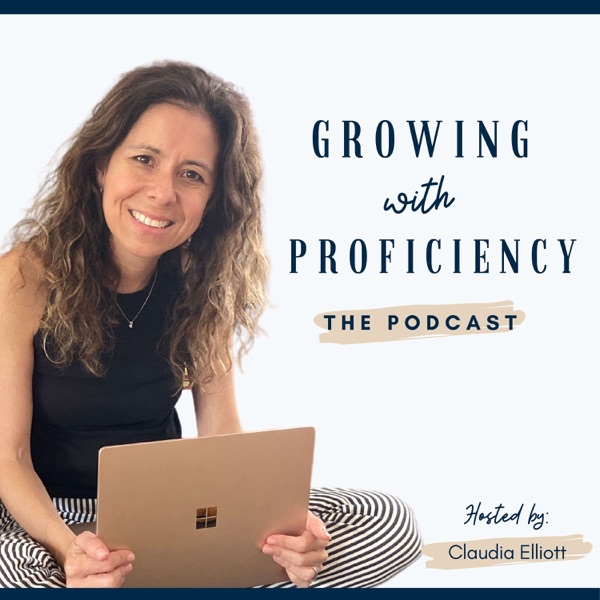
Growing With Proficiency The Podcast
Welcome to Growing With Proficiency: The Podcast! Are you a World Language teacher who is looking for ideas, strategies, activities, and inspiration to create a World Language class where you and your students enjoy using the language to learn about the world and each other? Do you want to transform your class into an acquisition-driven instruction space where you intentionally provide a ton of comprehensible input?
If you are, you're in the right place.
Let's start this journey together. Head over to IG, and send me a DM @claudiamelliott to let me know what topics you would like me to cover in an upcoming episode.Join my free Facebook community, Growing With C. Also, check out my blog to start discovering some of these ideas and strategies at growingwithproficiency.com
- Episodes
- 247
- Releases
- Weekly
- Typical length
- 45 min
- On air since
- 2022
- Latest episode
- 2 days ago
Episodes
247 episodes, newest first
-
42 min
Episodio 214: Cómo facilitar la adquisición del español sin agotarte: 3 decisiones que todo profe debe tomar
Show notes
¿Trabajas muchísimo y aún así terminas el día sintiendo que no hiciste lo suficiente? No estás sola. Y no, la solución no es trabajar más.
En la conferencia de Florida, Soraya, una profe de la Academia, me dijo: «Tienes que hacer un podcast que se titule: ¡Ay, Dios mío! ¿Cómo lo hago todo?». Me reí… pero aquí está. 😂
La respuesta honesta: yo no lo hago todo. Lo que sí hago es decidir qué hago. En este episodio te comparto las tres decisiones que me ayudan a facilitar la adquisición del español sin agotarme:
• Tener claridad pedagógica: qué necesitan de verdad mis estudiantes para adquirir el idioma
• Usar rutinas que hagan el trabajo por mí
• Aprender a decir que no (o «todavía no»)También te cuento dos actividades de baja preparación que me salvaron la vida esta semana: la pregunta del día dibujada con un dictado de cierto o falso, y una lectura con datos falsos seguida de un Kahoot más lento. Al final te dejo cuatro preguntas para encontrar tus propias prioridades.
🎁 Rutina gratis de la pregunta del día: growingwithproficiency.com/rutina
💛 Academia de Profes de Español: la semana de Cyber Monday tendremos una oportunidad muy especial. Apúntate a la lista de espera: growingwithproficiency.com/academy
🎧 Mencionados en este episodio:
• Episodio 88 con el Dr. Bill VanPatten:https://growingwithproficiencythepodcast.buzzsprout.com/2051875/episodes/14909613
• Episodio 135 con el Dr. Bill VanPatten:https://growingwithproficiencythepodcast.buzzsprout.com/2051875/episodes/16611301
• Episodio 196 con el Dr. Bill VanPatten:https://growingwithproficiencythepodcast.buzzsprout.com/2051875/episodes/19419893
• Discusiones silenciosas (Chelsea Lawrence):https://growingwithproficiency.com/silent-discussions-a-simple-strategy-to-boost-interpersonal-communication-in-your-language-classes/
• Episodio 148, cómo evitar el agotamiento docente:https://growingwithproficiencythepodcast.buzzsprout.com/2051875/episodes/17164501Si este episodio te ayuda, suscríbete, deja una calificación y compártelo con una profe amiga.
Ciao, ciao. ¡Nos vemos!
Profe de español,
Grab this free resource and bring into your classroom 5 fascinating and comprehensible leyendas Latinoamericanas.
Go to https://growingwithproficiency.com/leyendasto grab your free copy.
-
36 min
Episode 213: Get Students Answering with Tasking, Not Asking
Show notes
Do the same three students answer every PQA question while the rest of the class stares at the clock? You’re not alone, and it doesn’t mean your students don’t care.
In this episode, I share the shift that changed my PQAs (personalized questions and answers): task, don’t ask. I learned this idea from Sally Barnes, and it’s all about total participation. When we only ask, we hear from the students who are ready. When we give everyone a task, every student has a way into the conversation.
You’ll learn five low-prep strategies you can use tomorrow, in any world language and at any level:
• Write, Walk & Respond
• Draw, Dictate & Predict
• Write, Swap & Discover
• Find Your Match
• Predict, Ask & VerifyI also share real examples from my Spanish 1 and Spanish 3 classes, how I scaffold answers so every student can participate, and why the real goal is for students to listen to each other.
🎁 Free question-of-the-day guide and template: growingwithproficiency.com/rutina
📖 Read the blog post with all five strategies
🎧 Mentioned in this episode:
• 7 Steps to a Language-Rich, Interactive Classroom with Sally Barnes:https://growingwithproficiency.com/7-steps-to-a-language-rich-interactive-world-language-classroom-with-sally-barnes/
• Promoting Participation with Justin Slocum Bailey:https://growingwithproficiency.com/getting-the-stakes-right-student-participation/If this episode helps you, please subscribe, leave a rating, and share it with a teacher friend.
Ciao, ciao. ¡Nos vemos!
Profe de español,
Grab this free resource and bring into your classroom 5 fascinating and comprehensible leyendas Latinoamericanas.
Go to https://growingwithproficiency.com/leyendasto grab your free copy.
-
45 min
Episode 212: How to Get Novice Learners Reading (Starting Tomorrow) with Adam Giedd
Show notes
You know one of my obsessions is reading. But how do you get students reading when they barely have any language yet? And what if you don’t have the books, the time, or the budget?
In this episode, Adam Giedd joins me to share how he got novice learners reading. Adam is a former Spanish teacher who now writes short readers for novice learners. He once taught 920 students in five schools, 30 minutes a week, with nothing on the walls, and he still got them reading. He came to the Spanish Teacher Academy to share these ideas, and the session was so good we had to bring it to the podcast.
In this episode:
• Why we need to write for our struggling readers, not our strongest ones
• Why Adam focuses only on verbs when he co-creates a text with his class
• Adam’s shortcut for teachers who don’t have time to learn Write and Discuss: backward plan from a short book
• How to start silent sustained reading tomorrow with $0
• Why short, easy books help students trust you as a reader
• Book Bingo: Adam’s simple way to get students reading the same book five timesPick one idea, try it this week, and tell me how it goes.
Links:
Confident Pigeon (Adam’s reading platform):https://www.confidentpigeon.com/
Episode 84, The Power of Reading with Dr. Stephen Krashen
Join the Spanish Teacher Academy:https://growingwithproficiency.com/academy
Profe de español,
Grab this free resource and bring into your classroom 5 fascinating and comprehensible leyendas Latinoamericanas.
Go to https://growingwithproficiency.com/leyendasto grab your free copy.
-
41 min
Episode 211: Proficiency Through Play: 4 Low-Prep Games for Language Class with AnneMarie Chase and Andrea Caulfield
Show notes
I LOVE games. But if I'm going to give 15 or 20 precious minutes of class time to a game, I want language happening. A lot of it.
In this episode, AnneMarie Chase and Andrea Caulfield, authors of Proficiency Through Play, join me to talk about how we can play AND keep supporting language acquisition. Because fun and rigor are not opposites. And they didn't introduce themselves. They made me play a game instead! 😂
In this episode:
• This, That, Both, or Neither, the guessing game AnneMarie used to introduce herself and Andrea
• Google Detective (5 minutes), shared by Andrea
• Art Memory (15–20 minutes), shared by AnneMarie
• Sentence Stealer Rock Paper Scissors (15–20 minutes), shared by Andrea
• Details, Details, Details (30–35 minutes), shared by AnneMarie
• Why we should never let students know who is winning too early
• How to narrate the game itself so students get even more input
• What to do when a game goes off the rails (because it will!)Pick one game, try it this week, and tell me which one your students loved.
🎲 Get Proficiency Through Play:https://teachersdiscovery.com/products/proficiency-through-play 📖 Read the blog post
📱 Connect with AnneMarie: https://senorachase.com/📱 Connect with Andrea: https://www.linkedin.com/in/andrea-caulfield-577196b3/?isSelfProfile=false
🎧 More low-prep games:https://growingwithproficiency.com/4-easy-end-of-year-games-to-boost-joy-and-comprehension/ 🏫 Join the Spanish Teacher Academy:https://growingwithproficiency.com/academy
Profe de español,
Grab this free resource and bring into your classroom 5 fascinating and comprehensible leyendas Latinoamericanas.
Go to https://growingwithproficiency.com/leyendasto grab your free copy.
-
48 min
Episodio 210: Cómo enseñar a estudiantes hablantes de herencia: un libro gratis y estrategias con la Dra. Nancy Domínguez-Fret
Show notes
¿Tienes estudiantes de herencia en tu clase y sientes que necesitas algo diferente, pero no sabes exactamente qué?
En este episodio en español converso con la Dra. Nancy Domínguez-Fret, hija de inmigrantes mexicanos, hablante de herencia, exmaestra de high school y directora del programa de formación docente en Northern Illinois University. Nancy nos cuenta cómo nació Voces que cruzan fronteras: nuestra comunidad y la identidad multilingüe, un libro de texto completamente gratis que creó con la Dra. Megan Marshall para clases de español para hablantes de herencia.
En este episodio hablamos de:
• Qué hace diferente una clase de herencia: por qué se parece más a una clase de Spanish Language Arts que a una clase de español como segunda lengua.
• Cómo dejar atrás la perspectiva de déficit: empezar por lo que nuestros estudiantes ya traen al salón.
• Diseño inverso en cada unidad: preguntas esenciales, proyecto final desde el principio e input que sirve de modelo.
• La gramática al final, y a propósito: cómo descubrir si tus estudiantes realmente necesitan una estructura antes de enseñarla.
• Cómo llevar el español fuera del salón: entrevistas a la familia, debates sobre el Spanglish y conexiones con la comunidad.
• Ideas para Español 1, 2 y 3: cómo usar este recurso cuando no tienes una clase de herencia, pero sí estudiantes de herencia.Y lo más importante: cómo ayudar a nuestros estudiantes a sentir orgullo por su lengua, sus raíces y su comunidad.
Recursos mencionados:
• Voces que cruzan fronteras, Volumen I y II: https://spanishdeherencia.com/
• Blog del episodioEpisodios relacionados:
• Episodio 206: Lo que las familias nos enseñan sobre cómo apoyar a estudiantes de herencia, con la Dra. Bertha Delgadillo
• Episodios 79y 81: Cómo apoyar la competencia escrita de los estudiantes de herencia, con la Dra. Alberta GattiMás enlaces:
• Growing With Proficiency: The Spanish Teacher Academy:http://growingwithproficiency.com/academy
• Museo de la Herencia Hispana
• Comunidad gratis en Facebook, Growing With CI:https://www.facebook.com/groups/growingwithci
• Claudia en Instagram:https://www.instagram.com/claudiamelliott/Profe de español, descarga gratis 5 leyendas latinoamericanas fascinantes y comprensibles para tu clase:https://growingwithproficiency.com/leyendas
Profe de español,
Grab this free resource and bring into your classroom 5 fascinating and comprehensible leyendas Latinoamericanas.
Go to https://growingwithproficiency.com/leyendasto grab your free copy.
-
44 min
Episode 209: How to Teach Reading and Writing Skills in the World Language Classroom: A Conversation with Dr. Lara Bryfonski
Show notes
We all want our students to acquire the language. We also want them to read it and, eventually, write it. But are we teaching them how to become readers and writers in the target language?
That’s what I discuss with Dr. Lara Bryfonski in this episode. Lara is a professor at Georgetown University and coauthor of The Art and Science of Language Teaching. Together, we explore why developing literacy and acquiring a language are different processes—and how we can support both in our classrooms.
In this episode, we talk about:
• Why we cannot always assume that students’ reading and writing skills in their first language will transfer automatically to the language we teach.
• How to find out what support students need when they read.
• What to do before, during, and after reading to help students make sense of a text.
• How to show students what they can do when they reach a word or paragraph they don’t understand.
• Why writing needs time for brainstorming, drafting, feedback, and revision.
• How to teach useful peer feedback, even when you have a large class.One thing surprised me during our conversation: I was already using some of these strategies. Understanding how they help students develop literacy skills made me want to name and model them more intentionally.
If you’ve ever finished reading with your class, looked at the comprehension questions, and wondered, How do I actually help my students become better readers?—grab your cafecito ☕️ and join us. This conversation gave me tools I can use in my next lesson.
MORE FROM GROWING WITH PROFICIENCY
• Follow me on Instagram: @claudiamelliott
• Read the Blog
• Growing With Proficiency on Teachers Pay Teachers
• Join the waitlist for Growing With Proficiency: The Spanish Teacher AcademySUBSCRIBE & REVIEW
Subscribe to Growing With Proficiency — The Podcast so you don’t miss our next conversation. If this episode helps you, please leave a review on Apple Podcasts. It helps more world language teachers find the show. 🎙️
Gracias for listening. ❤️
Profe de español,
Bring five fascinating, comprehensible Latin American legends into your classroom for free. Grab your copy athttps://growingwithproficiency.com/leyendas.
Profe de español,
Grab this free resource and bring into your classroom 5 fascinating and comprehensible leyendas Latinoamericanas.
Go to https://growingwithproficiency.com/leyendasto grab your free copy.
-
31 min
Episode 208: When a Student Says “I Hate This Class”: A Framework for Responding Without Reacting
Show notes
A student threw her backpack on the floor and said loudly, “I hate this class. I hate everything about this class.” More than once.
Everything inside of me wanted to react. I wanted to defend myself, my class, and all the work I put into creating a space where students feel successful.
But I didn’t.
In this episode, I’m taking you inside what happened next, the framework that helped me respond without escalating the situation, and the private conversation that followed. We’ll talk about what we can do when a student’s frustration becomes disruptive: regulate ourselves first, have the conversation privately, set the boundary, give students better options for communicating what they feel, and then release.
But this experience also revealed a blind spot I didn’t expect.
I care deeply about my students feeling connected, confident, and successful in my classroom. But somewhere along the way, I had started watching this student a little too closely—hoping she would smile, laugh, participate differently, and eventually love the class.
And that made me ask myself a much harder question:
Do our students need to enjoy our class in order to belong in it?
This episode is about classroom management, yes. But it’s also about us—our triggers, our expectations, and what difficult moments with students can teach us about ourselves when we’re willing to look.
Grab your cafecito ☕️, your mate, or just take me with you on your drive to school. This is a conversation I think we need to have.
MORE FROM GROWING WITH PROFICIENCY
• Follow me on Instagram: @claudiamelliott
• Blog
• Growing With Proficiency on Teachers Pay Teachers
• Join the waitlist for Growing With Proficiency: The Spanish Teacher AcademySUBSCRIBE & REVIEW
If this episode resonated with you, subscribe to Growing With Proficiency — The Podcast and leave a review on Apple Podcasts. Your support helps more world language teachers find the podcast and join these conversations. 🎙️
Gracias for listening. ❤️
Profe de español,
Grab this free resource and bring into your classroom 5 fascinating and comprehensible leyendas Latinoamericanas.
Go to https://growingwithproficiency.com/leyendasto grab your free copy.
-
47 min
Episode 207: Write & Discuss: A Powerful, Low-Prep Strategy for World Language Classes
Show notes
What if one strategy could give your students more comprehensible input, more repetition, more writing, AND more opportunities to think and contribute?
In this episode, we're talking about teacher-led collaborative writing, also known as Write & Discuss, shared writing, or joint construction. It's one of those strategies that can do a LOT without requiring a lot of prep.
I break down how I use it before, during, and after writing—and some small changes I'm making this year that are making it even more effective.
A few takeaways:
• Why Write & Discuss is especially powerful with large and mixed-level classes
• How a quick brain dump or retrieval activity BEFORE writing can prepare students to contribute
• When to co-create freely and when to choose one intentional language move
• How to use proficiency targets to decide what to model
• How tasking instead of asking can keep more students actively involved
• What to do AFTER you create the text, including choral reading, comprehension activities, and retrieval writing
• How to use a disappearing text variation with less experienced learnersYou don't need to do all of these things every time. Choose what your students need, make the strategy work for your classroom, and keep coming back to the language.
Resources & Episodes Mentioned:
• Episode 204with Ben Fisher-Rodriguez — We talk about Write & Discuss with a specific focus on using pop-up grammar during the process.
• Mike Peto — The educator I originally learned Write & Discuss from.
• Blog
• Growing With Proficiency on Teachers Pay Teachers
• Join the waitlist for Growing With Proficiency: The Spanish Teacher AcademyProfe de español,
Grab this free resource and bring into your classroom 5 fascinating and comprehensible leyendas Latinoamericanas.
Go to https://growingwithproficiency.com/leyendasto grab your free copy.
-
1 hr
Episodio 206: De la investigación al aula: lo que las familias nos enseñan sobre cómo apoyar a estudiantes de herencia
Show notes
Una conversación con la Dra. Bertha Delgadillo
En este episodio en español, converso con mi amiga, la Dra. Bertha Delgadillo, sobre su investigación doctoral, en la que entrevistó a familias de estudiantes hisanohablantes para conocer sus experiencias, expectativas y relación con la escuela y la clase de español.
Sus respuestas revelan oportunidades importantes para nosotros como profes: conocer mejor la experiencia lingüística de cada estudiante, escuchar lo que quiere lograr con su español, reconocer el trabajo que las familias ya hacen para preservar el idioma y la cultura, e invitarlas a participar activamente en nuestras clases.
También hablamos sobre la vergüenza que algunos jóvenes sienten alrededor de su español, el peligro de asumir su nivel por su apellido o por lo que hablan en casa y la importancia de crear espacios donde puedan sentirse orgullosos de ser de aquí y de allá.
Principales aprendizajes de este episodio
• Por qué no todos los estudiantes de herencia tienen las mismas experiencias, necesidades ni metas.
• Qué preguntas podemos hacer para conocer su verdadera relación con el español.
• Cómo ofrecerles oportunidades de crecimiento sin darles simplemente más trabajo.
• Lo que las familias pueden enseñarnos sobre el idioma, la cultura y la identidad de sus hijos.
• Cómo invitar a las familias a compartir sus historias, tradiciones y conocimientos en nuestras clases.
• Por qué un estudiante no necesita demostrar un nivel específico de español para que su identidad sea reconocida y valorada.
• Cómo conectar el idioma con el servicio comunitario para que los estudiantes puedan participar, contribuir y experimentar un verdadero sentido de pertenencia.Esta conversación lleva la investigación de Bertha directamente al aula y nos ofrece acciones posibles, incluso cuando enseñamos clases grandes y con diferentes niveles.
No necesitas tener todas las respuestas ni crear un programa completamente nuevo. A veces, el primer paso es simplemente hacer mejores preguntas, escuchar con intención y abrir una puerta que antes no habíamos considerado.
Recursos:
Growing With Proficiency on Teachers Pay Teachers
Join the waitlist for Growing With Proficiency: The Spanish Teacher Academy
Profe de español,
Grab this free resource and bring into your classroom 5 fascinating and comprehensible leyendas Latinoamericanas.
Go to https://growingwithproficiency.com/leyendasto grab your free copy.
-
49 min
Episode 205: New AP Spanish Language Exam Changes: What to Keep, Add, and Drop with Bethanie Carlson Drew
Show notes
The AP Spanish Language and Culture exam is changing—and if you teach AP, you may feel like you need to change everything in your course too.
But take a breath. You do not have to start from zero.
In this episode, I’m joined by my friend and incredible educator Bethanie Carlson Drew, who is beginning her 33rd year in the classroom. Bethanie helps us look at the new AP Spanish Language exam format with clarity and intention.
As Bethanie reminds us, approximately 80% of what we already do in a strong AP language class has not changed. Students still need to develop language proficiency, cultural competence, and the confidence to communicate.
Instead of rebuilding her entire course, Bethanie is asking three questions:
What should I keep? What should I increase? And what can I finally drop?
✨ In this episode, we discuss:
• How Bethanie uses 60–90-second mini-presentations to gradually prepare students for the new three-minute Project Presentation
• Why students need explicit support to ask follow-up questions—not only answer them
• How one image and only three words on a slide help students develop real presentational skills
• Why Bethanie is keeping reading, music, and culturally rich input at the center of her course
• Simple ways to increase oral sharing without adding more long, formal presentations
• How to explore products, practices, and perspectives throughout the year by asking, “Why is this important?”
• Why culture cannot be reduced to one isolated unit
• How Bethanie is simplifying the AP project materials into a manageable student notebook
• What she is dropping now that the simulated conversation and stand-alone cultural comparison are no longer part of the exam
• Why the beginning of the year should focus on classroom culture, confidence, and connection—not panicEven if you do not teach AP Spanish, this conversation is full of practical ideas for any language classroom. It is a powerful reminder that the activity is not the purpose—the activity serves the purpose.
📚 Resources Mentioned
👉 Read the complete blog post and show notes here.
👉Explore Bethanie’s blog, Aventuras Nuevas.
👉Review the AP Spanish Language and Culture Course and Exam Description.
📲 Connect with Claudia
Follow me on Instagram:@claudiamelliott
Learn more about Growing With Proficiency: The Spanish Teacher Academy:https://growingwithproficiency.com/academy
Listen, take a breath, and remember: you do not need to throw away everything that already works.
Keep what supports acquisition. Increase meaningful communication. Drop what no longer serves your students.
Profe de español,
Grab this free resource and bring into your classroom 5 fascinating and comprehensible leyendas Latinoamericanas.
Go to https://growingwithproficiency.com/leyendasto grab your free copy.
-
49 min
Episode 204: Choral Translation and Pop-Up Grammar Without Losing Communication with Ben Fisher-Rodriguez
Show notes
What if one simple routine could help students see, understand, and feel more confident with the language they have already experienced?
In this episode, I sit down with Ben Fisher-Rodriguez to explore how Write and Discuss, choral translation, and pop-up grammar can help students make sense of the language they are hearing and reading while keeping meaningful communication at the center.
Ben walks us through the process step by step: beginning with a highly comprehensible or co-created text, translating it together as a class, briefly highlighting one grammatical feature, and then returning to meaningful communication.
We also discuss how choral translation can serve as a quick formative assessment, how to plan pop-up grammar when you have a grammar-heavy curriculum, and why noticing a structure does not guarantee immediate language acquisition.
This episode offers practical classroom strategies for world language teachers who want to address grammar while keeping communication, comprehension, and proficiency at the center.
✨ Takeaways
• Why students need to understand the meaning of a text before focusing on grammatical form
• How to create a highly comprehensible, personalized text through Write and Discuss
• A step-by-step process for introducing choral translation
• How choral translation can reveal gaps in comprehension and serve as a formative assessment
• How to plan brief, student-friendly pop-up grammar without turning it into a full grammar lesson
• Why noticing grammar may support students, but does not guarantee immediate acquisition or accurate production
• Ideas for returning to meaningful target-language communication after the grammar “pop”📚 Resources Mentioned
• Choral Translation and Pop-Up Grammar: Discovering How Form Contributes to Meaning by Ben Fisher-Rodriguez
Read Ben’s original article
• Mr. Fisher Says
Explore Ben’s website
• SLAyyy: Second Language Acquisition for Everyone with Ben Fisher-Rodriguez and Bill Langley-Bostick
Listen on Apple Podcasts
• The Perfect Low-Prep Activity for Any Day in Our World Language Classes with Ben Fisher-Rodriguez
Listen and read more
• How to Build a Sustainable Language Class with Routines
Read the related blog postListen to the full episode and share it with a world language teacher who is trying to balance a grammar-focused curriculum with a more communicative, proficiency-driven classroom.
And if you need more support, check this out:
• Blog
• Growing With Proficiency on Teachers Pay Teachers
• Join the waitlist for Growing With Proficiency: The Spanish Teacher AcademyProfe de español,
Grab this free resource and bring into your classroom 5 fascinating and comprehensible leyendas Latinoamericanas.
Go to https://growingwithproficiency.com/leyendasto grab your free copy.
-
50 min
Episode 203: How to Keep Students Engaged With Stories: Confidence, Curiosity, and Comprehension With Eric Richards
Show notes
Have you ever started a story with your students and felt like everything was going beautifully until you noticed the glazed expressions, delayed responses, and side conversations beginning?
It is easy to assume the story is boring or that students simply do not care. But a drop in engagement does not necessarily mean the story failed.
In this episode, I sit down with world language educator, author, and presenter Eric Richards to explore how we can use stories and reading to support language acquisition while keeping students engaged.
Eric shares how he builds engagement through two essential elements: confidence and curiosity. We also discuss how to make stories more comprehensible, recognize when students’ attention is beginning to fade, and respond with quick resets instead of falling into what I call the judgment trap.
This conversation is filled with practical, low-prep strategies you can use with any story, reading, proficiency level, or curriculum.
✨ Takeaways
• Why comprehension itself can make a story compelling for beginning learners.
• How confidence and curiosity help students continue listening and reading.
• Simple ways to add movement, drawing, personalization, and interaction.
• What to do when you notice student engagement beginning to drop.
• How to check comprehension without turning every reading into a test.
• Why the response students give should match the purpose of the activity.📚 Resources and Links
• Read the complete blog post and find all the resources
• Visit Eric Richards’ website and blog
• Explore Eric’s professional development and classroom resources
• Jim Trelease’s Read-Aloud Handbook, Eighth Edition
• Join the waitlist for Growing With Proficiency: The Spanish Teacher Academy
• Follow Claudia on Instagram: @claudiamelliott🎧 Listen now and discover how stories can become a vehicle for language acquisition, connection, curiosity, and cultural competence—poco a poco.
Profe de español,
Grab this free resource and bring into your classroom 5 fascinating and comprehensible leyendas Latinoamericanas.
Go to https://growingwithproficiency.com/leyendasto grab your free copy.
-
48 min
Episode 202: Classroom Management Through a Nervous System Lens with Hélène Colinet
Show notes
What if challenging student behavior is not always simply a discipline problem—but sometimes a sign of overwhelm, anxiety, or disconnection?
In Episode 202 of Growing With Proficiency: The Podcast, I’m joined by French teacher and teacher educator Hélène Colinet to explore classroom management through the lens of nervous system regulation.
This conversation is not about excusing behavior or removing boundaries. Instead, Hélène invites us to pause before assigning motives, consider what a behavior may be communicating, and respond in ways that protect both the student’s dignity and the learning environment.
We discuss practical ways to create the conditions students need to engage and acquire language—including connection, comprehensible input, predictable routines, movement, and teacher self-regulation.
Key Takeaways
• Observe behavior before assigning a motive.
• Safety and clear boundaries can coexist.
• Slow down and check for comprehension.
• Use predictable routines to reduce uncertainty.
• Include both brain breaks and body breaks.
• Address difficult behavior calmly and privately.
• Notice and support your own regulation.
• Remember that our state can influence the class.Resources Mentioned
• Read the companion blog post
• Learn more from Hélène Colinet
• Follow Hélène on Instagram
• Creating a Powerful First Day of Language Class
• Save Time and Reduce Stress With Classroom Routines
• The Science Behind the Power of Storytelling
• Brain Breaks, Map Talk, and Storytelling
• Growing With Proficiency: The Spanish Teacher AcademyIf this episode gives you a different way to think about classroom behavior, share it with a teacher who may need it. Then come find me on Instagram at @claudiamelliott and tell me: What is one small practice that helps you feel more regulated during the school day?
Profe de español,
Grab this free resource and bring into your classroom 5 fascinating and comprehensible leyendas Latinoamericanas.
Go to https://growingwithproficiency.com/leyendasto grab your free copy.
-
51 min
Episodio 201: 4 ideas fundamentales para el regreso al aula con actividades prácticas
Show notes
El regreso al aula viene acompañado de muchas ideas, actividades guardadas, screenshots, recursos y recomendaciones. Pero tener más actividades no siempre significa sentirnos más preparados.
En este episodio de Growing With Proficiency: The Podcast en español, comparto cuatro ideas fundamentales inspiradas en las sesiones de nuestra Conferencia de Verano dentro de Growing With Proficiency: The Spanish Teacher Academy.
Más que darte una lista de actividades, quiero ayudarte a pensar en el propósito detrás de ellas para que puedas comenzar el año con mayor claridad, crear una cultura de respeto y diseñar experiencias en las que más estudiantes puedan comprender, participar y comunicarse.
Hablamos de cómo establecer expectativas claras y consistentes, cómo explicarles a nuestros estudiantes el proceso de adquisición de una lengua, cómo estructurar actividades para aumentar la participación y cómo seleccionar contenido que promueva comunicación y competencia cultural.
En este episodio aprenderás:
• Cómo definir tus expectativas no negociables antes del regreso al aula.
• Por qué la claridad y la consistencia son esenciales para el manejo de clase.
• Cómo explicarles a tus estudiantes el propósito de las actividades.
• Por qué la participación necesita ser diseñada y modelada.
• Cómo usar pausas activas, teatro interpretativo y señales de respuesta total.
• Cómo integrar productos, prácticas y perspectivas desde los niveles novatos.
• Cómo elegir actividades que puedas mantener durante todo el año.También comparto ideas de las sesiones de Meredith White, Justin Slocum Bailey, Valentina Correa, Sally Barnes, Diego Ojeda y la Dra. Bertha Delgadillo.
Porque no necesitamos regresar al aula tratando de hacerlo todo.
Necesitamos regresar con claridad sobre qué hacemos, por qué lo hacemos y cómo cada actividad apoya el aprendizaje de nuestros estudiantes.
Recursos mencionados:
• Growing With Proficiency: The Spanish Teacher Academy
Recursos para el regreso al aula en mi tienda de Teachers Pay Teachers que está en oferta el 4 y 5 de agosto:
• Calendar Talk
• Estudiante Estrella
• Panorama Cultural Volumen 1
• Panorama Cultural Volúmen 2
• Recursos para explicar adquisición, competencia y evaluaciónEpisodios relacionados sobre el primer día y las primeras semanas de clase:
🎧 Episodio 42, episodio 43 y episodio 45 de Growing With Proficiency The Podcast
Sígueme en Instagram: @claudiamelliott
Visita: http://growingwithproficiency.com
Profe de español,
Grab this free resource and bring into your classroom 5 fascinating and comprehensible leyendas Latinoamericanas.
Go to https://growingwithproficiency.com/leyendasto grab your free copy.
-
50 min
Episode 200: Back to School—How to Get Students Participating Without Raising the Pressure with Justin Slocum Bailey
Show notes
We all want students to participate. We want them to raise their hands, share their ideas, react, ask questions, and bring that energy that makes a classroom feel alive.
But what happens when they don’t?
It is easy to assume that the activity is not working, that students are not motivated, or even that we are doing something wrong.
In this special 200th episode of Growing With Proficiency: The Podcast, I sit down with Justin Slocum Bailey to explore another possibility:
Maybe the activity is not the problem. Maybe we need to get the stakes right.
As you prepare to go back to school, this conversation will help you think more intentionally about the questions you ask, the topics you choose, and the different ways students can participate without feeling pressured or put on the spot.
Justin shares how we can create participation that feels meaningful enough to be worth the effort—but safe enough for students to take the risk.
✨ Takeaways
• What it means when the stakes for participation are too high or too low
• Why an activity may fall flat even when it is a great activity
• How information gaps and opinion questions can make communication more meaningful
• Why some personal questions may feel too risky for students
• How to create distance from sensitive topics without removing authentic communication
• Simple ways students can participate without immediately speaking in front of the class
• Why grading every interaction may increase pressure instead of participation
• Why curiosity is more helpful than blaming the activity, the student, or yourselfThis episode is an invitation to pause before searching for another activity and ask:
Are the stakes too high, too low, or just right for my students?
📌 Resources + Links Mentioned in This Episode
Learn more from Justin at Indwelling Language:
http://indwellinglanguage.com/Find more about Voces Digital here
Follow me on Instagram:
@claudiamelliottExplore ready-to-use back-to-school resources for Spanish teachers in my store:
Growing With Proficiency on Teachers Pay TeachersLearn more about Growing With Proficiency: The Spanish Teacher Academy:
growingwithproficiency.com/academyProfe de español,
Grab this free resource and bring into your classroom 5 fascinating and comprehensible leyendas Latinoamericanas.
Go to https://growingwithproficiency.com/leyendasto grab your free copy.
-
41 min
Episode 199: How to Plan the First Week of World Language Class Without Feeling Overwhelmed
Show notes
Planning the first week of school can feel overwhelming—especially when you have a phone full of saved ideas, conference notes, activities, and resources you want to try. But a successful first week is not about doing everything. It is about choosing what will help you build the classroom you want to sustain all year.
In This Episode, you will learn:
• Why more activities do not always create a better first week
• How to connect your first-week plans to your long-term classroom goals
• Why activities should serve a purpose—not the other way around
• How to begin routines at a pace you can sustain
• Why I do not introduce Calendar Talk, sustained reading, and every classroom routine immediately
• Simple ways to connect, provide input, reset, and reflect during the first week
• How to create early success for both you and your studentsResources Mentioned
Learn more about Growing With Proficiency: The Spanish Teacher Academy:
https://growingwithproficiency.com/academyThe Academy is open through July 21 at 11:55 PM ET.
Join us for the Academy Summer Conference on July 24 and 25, plus ongoing professional development, planning support, classroom resources, and the Creciendo curriculum.
Questions about the Academy?
Email support@growingwithproficiency.comFollow me on Instagram:
https://www.instagram.com/claudiamelliott/Profe de español,
Grab this free resource and bring into your classroom 5 fascinating and comprehensible leyendas Latinoamericanas.
Go to https://growingwithproficiency.com/leyendasto grab your free copy.
-
43 min
Episode 198. How to Build a Sustainable Language Class with Routines That Support Language Acquisition
Show notes
What if the reason your class feels hard to sustain is not because your activities are wrong, but because they are standing alone?
In this episode of Growing With Proficiency The Podcast, I’m talking about routines that support language acquisition—not classroom procedures like entering the room or turning in papers, but pedagogical routines that create the spaces our students need again and again.
We’ll look at how routines can help us provide more comprehensible input, build connection, support communication, create moments for reset and regulation, and give students time to consolidate and reflect.
Because a sustainable world language class is not built on one perfect activity. It is built on intentional routines that help us use the language in ways that are comprehensible, communicative, and connected.
In this episode, you’ll learn:
• Why one great activity is not the same as a sustainable class
• What pedagogical routines are and how they support language acquisition
• How to create repeated spaces for comprehensible input, connection, communication, reset, and reflection
• Why routines need both consistency and flexibility
• How activities like free reading, Calendar Talk, Question of the Day, Star Student Interview, brain breaks, Write and Discuss, free writes, and exit tickets can become part of a sustainable classroom rhythm
• How to start mapping your own weekly routine system without adding more overwhelmResources Mentioned
• Free workshop for Spanish teachers: How to Create a Sustainable Spanish Class That Is Comprehensible, Communicative, and Connected
Register here: growingwithproficiency.com/tallergratuito
• Join the waitlist for Growing With Proficiency: The Spanish Teacher Academy
http://growingwithproficiency.com/academy
• Cuéntamepodcast by Marta Ruiz Yedinak
• MoteChrome Extension for recording quick listening activities
• Episode with Dr. Bill VanPatten on the two-myths about language acquisition
• Episode with Chelsea Lawrence about Silent Discussion
• Blog post by John Cowart about using data with free writesProfe de español,
Grab this free resource and bring into your classroom 5 fascinating and comprehensible leyendas Latinoamericanas.
Go to https://growingwithproficiency.com/leyendasto grab your free copy.
-
1 hr 17 min
Episode 197: Cómo Empezar el Año Escolar con una Clase de Español Más Sostenible
Show notes
En este episodio en español de Growing With Proficiency, converso con tres profes de nuestra comunidad de Growing With Proficiency: The Spanish Teacher Academy: Ángela Johnson, Mariem Silva y Audrey Ramírez. Aunque enseñan en contextos muy diferentes, las tres comparten cómo han transformado sus clases al entender mejor la adquisición de la lengua y al crear clases más comprensibles, comunicativas, culturales y sostenibles.
Hablamos de cómo empezar el año escolar con más intención: creando comunidad, confianza y conexión; usando rutinas que sostienen la clase; siendo flexibles con los grupos que tenemos; y usando contenido culturalmente relevante como el centro de la comunicación.
✨ Takeaways
• Crear comunidad desde el principio cambia la energía de la clase.
• La flexibilidad nos ayuda a responder a los estudiantes reales que tenemos.
• Entender la adquisición nos libera de sentir que tenemos que cubrir toda la gramática.
• La cultura puede ser el centro de la comunicación, no un extra.
• Las rutinas bajan la carga mental y sostienen la clase durante el año.📚 Recursos
• Taller gratuito en vivo: http://www.growingwithproficiency.com/tallergratuito
• Lista de espera de la Academia: http://www.growingwithproficiency.com/academy
• Instagram: @claudiamelliottProfe de español,
Grab this free resource and bring into your classroom 5 fascinating and comprehensible leyendas Latinoamericanas.
Go to https://growingwithproficiency.com/leyendasto grab your free copy.
-
1 hr 7 min
Episode 196: Two Myths About Second Language Acquisition with Dr. Bill VanPatten
Show notes
What if some of the most common beliefs about language teaching are actually getting in the way of acquisition?
In this special episode of Growing With Proficiency, I sit down with Dr. Bill VanPatten for a powerful conversation originally livestreamed in the IFLT Facebook group as part of CI Reboot.
Dr. VanPatten helps us unpack two foundational myths about second language acquisition: the idea that learners internalize grammar rules and patterns, and the idea that children and adults acquire language in completely different ways.
We also talk about what this means for world language teachers who are trying to teach with comprehensible input, communication, and proficiency in mind while still navigating textbooks, pacing guides, standards, and assessments.
In this episode, you’ll hear about:
✨ Why learners do not acquire language by memorizing grammar rules
✨ Dr. VanPatten’s “linguistic acorn” metaphor
✨ Why acquisition takes time, input, and interaction
✨ What teachers can do when they are required to follow a traditional curriculum
✨ How to think about assessment when students acquire language at different rates
✨ Why teachers need to understand acquisition in order to advocate for their programs
Whether you are new to comprehensible input or have been teaching with an acquisition-driven approach for years, this episode will give you clarity, encouragement, and language to keep moving toward a more communicative classroom.
So grab your cafecito and join us for this important conversation about second language acquisition, comprehensible input, grammar, communication, and the myths that may still be shaping our classrooms.
🎧 Press play and let’s grow together.
Resources
📌 Dr. Bill VanPatten’s books on Amazon:
While We’re on the Topic
The Nature of Language
Language Acquisition in a Nutshell
Cuentos cortos📌 Download the free Teacher Guide:
https://growingwithproficiency.com/teacherguide📌 Join the waitlist for Growing With Proficiency: The Spanish Teacher Academy:
https://growingwithproficiency.com/academy📌 Follow Claudia on Instagram @claudiamelliott
📌 Growing With CI FB Community
📌Blog
Profe de español,
Grab this free resource and bring into your classroom 5 fascinating and comprehensible leyendas Latinoamericanas.
Go to https://growingwithproficiency.com/leyendasto grab your free copy.
-
48 min
Episode 195: 4 Lessons I Learned When My Students Couldn't Communicate in Spanish
Show notes
Have you ever looked at your students and wondered:
"Why aren't they communicating in the language?"
In this special episode of Growing With Proficiency, the tables are turned as my friend and fellow educator, Bethanie Carlson Drew, steps in as host and interviews me about my journey from lawyer to language teacher, the challenges that transformed my classroom, and the lessons I've learned along the way.
Together, we explore what happened when I realized that despite teaching vocabulary, grammar, and textbook lessons, my students still weren't communicating in Spanish the way I hoped they would.
That realization led me down a path of professional growth, curiosity, and discovery that completely changed how I think about language teaching, comprehensible input, and second language acquisition.
In this episode, you'll hear about:
✨ The powerful teaching advice my mother gave me that still shapes my classroom today
✨ Why following the textbook wasn't producing the communication outcomes I wanted
✨ The moment I discovered second language acquisition research and how it transformed my practice
✨ How comprehensible input and meaningful communication support language acquisition
✨ Why asking one personal question every day can strengthen relationships and increase student engagement
✨ The importance of professional learning and finding a community that supports your growth
✨ Three practical ways to begin creating a more communicative and comprehension-based language classroom
Whether you're new to proficiency-based teaching or you've been teaching world languages for years, this conversation will encourage you to reflect on your practice, embrace growth, and focus on what truly helps students acquire language.
If you've ever felt frustrated that your students know about the language but struggle to use it, this episode is for you.
So grab your cafecito and join us for an honest conversation about language acquisition, communicative language teaching, comprehensible input, professional growth, and the courage to change.
🎧 Press play and let's grow together.
Resources
📌 Student reflection survey.
📌 Download the free Teacher Guide:
https://growingwithproficiency.com/teacherguide📌 Join the waitlist for Growing With Proficiency: The Spanish Teacher Academy:
https://growingwithproficiency.com/academy📌 Follow Claudia on Instagram @claudiamelliott
📌 Growing With CI FB Community
📌Blog
Profe de español,
Grab this free resource and bring into your classroom 5 fascinating and comprehensible leyendas Latinoamericanas.
Go to https://growingwithproficiency.com/leyendasto grab your free copy.
On these lists
Growing With Proficiency The Podcast is one of the shows picked out on this list



More in Language Learning
Placed highest on Apple Podcasts' Language Learning chart right now