Podcast
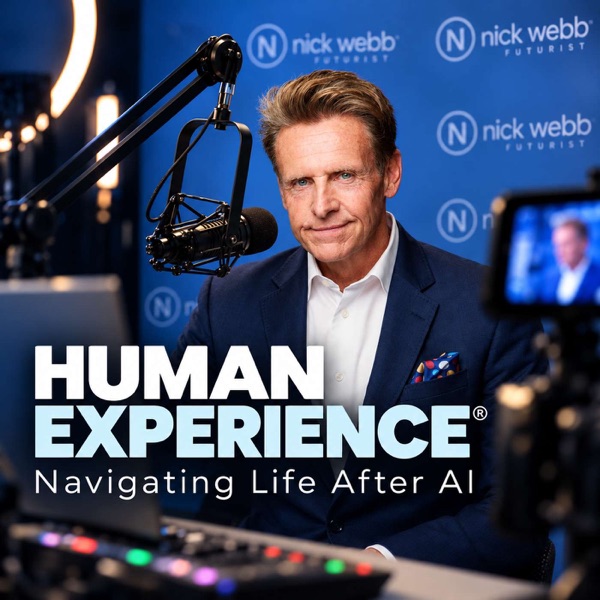
Human Experience® Navigating Life After AI
Artificial intelligence is transforming business at an extraordinary pace. But the greatest threat to your organization may not be AI itself. It may be how you choose to use it.
Too many organizations are giving machines human work while asking humans to perform work that machines could do better. This fundamental leadership mistake threatens innovation, growth, employee engagement, and the human relationships that drive enterprise success.
Welcome to Human Experience®, Navigating Life After AI.
Each week, world renowned innovation thought leader and bestselling author Nicholas Webb delivers 15 to 20 minutes of powerful, actionable insights for CEOs, executives, leaders, and entrepreneurs navigating rapid and chaotic change.
Discover how to harness emerging technologies, build humanistic cultures, accelerate revenue growth, improve customer and employee satisfaction, and create innovation pipelines that outinvent your competition.
The future belongs to leaders who understand how to get the best from both humans and machines.
Don't get disrupted by AI. Use it to power your next wave of enterprise growth.
- Management chart
- #33
- Episodes
- 51
- Releases
- Weekly
- Typical length
- 19 min
- On air since
- 2023
- Latest episode
- 5 days ago
Episodes
51 episodes, newest first
-
12 min
Don't Kill Your Organization With The Wrong AI Strategy
Show notes
Boardrooms everywhere are announcing their AI governance frameworks. They draft policies, form committees and publish usage rules. Then many leaders walk away believing they now have an AI strategy.
They don't. What they have is a fence.
Governance matters. But organizations that mistake governance for strategy are building guardrails before deciding where the road goes. Every executive, leader and board member should accept and act on four things before building out a governance structure.
1. Governance Is a Framework, Not a Strategy
AI governance is the framework that makes certain artificial intelligence is used in a productive, ethical and compliant way. That work is essential, but it is not a strategy.
Governance belongs inside your overarching AI innovation strategy, not on top of it. When governance comes first, it quietly becomes the strategy, and the organization's whole posture toward AI defaults to control. Strategy sets the direction. Governance protects the journey.
2. AI Is Not a Strategy Either
The best organizations understand that AI is not a strategy in and of itself. It is an innovation medium.
AI is one of many technologies and processes you can use to deliver far better returns on enterprise strategy. We use AI to invent with. It is not a destination. So the question is never “What is our AI strategy?” The real question is “How will we use AI, and every other tool we have, to win on the strategy we already have?”
3. Play to Win, Not to Avoid Losing
Most organizations fear AI, and many don't fully understand it. So they do what frightened organizations always do: they build fences instead of launchpads.
That is a big mistake. AI is the best thing that could happen to your organization. Use its power to invent better human experiences, systems, tools and processes that drive better returns on strategy. Containment is not a competitive advantage. Your competitors are not winning by caging AI. They are winning by putting it to work.
4. Demote AI to Tool Status. Never Promote It to Human Status.
This is the most important point, and it's the one most organizations get wrong.
The biggest mistake in so-called governance structures is giving the machine human work and giving the human machine work. Organizations automate empathy, judgment and relationships, and they leave their people buried in repetitive tasks a machine should own.
Start by choosing who does the work, and make that decision human centric. Machines do machine work. Humans do human work. AI is an innovation medium and a tool, so treat it like one.
The Recommendation: Build a Formal AI Innovation Strategy
Build a formal AI innovation strategy before you build governance. It must meet three requirements:
• It must be owned by whoever owns strategic results, not IT alone and not compliance alone.
• It must be built by a team that represents every department across the enterprise.
• It must give customers and other experiential stakeholders a voice.
Somebody also has to own it. You can hire a Chief AI Innovation Officer, or you can bring in a fractional Chief Innovation Officer. At LeaderLogic, we fill that fractional role for organizations that need senior innovation leadership without adding another executive to the payroll. Either way, somebody needs to own this.
The Bottom Line
Organizations that skip these steps will be disrupted by competitors who use AI to create exceptional enterprise and customer value while they stay focused on AI containment.
Govern AI, absolutely. But first decide what you are building with it. Fences keep things in, and launchpads send things forward.
#FutureTrends #FuturistSpeaker #HealthcareFuture #LeadershipSuccess #2024Success #Strategy2024 #NickWebb #NicolasWebb #InnovationInsights #BusinessStrategy #LucidLeadership #LeadershipTips #FutureofEverything #EnterpriseHappiness #MarketInsights #PersonalImpact #LeadershipJourney #Happiness #MissionDriven #SelfEvolution #DigitalDetox #Leadership #Strategy #FutureTrends #Podcast #TheFutureOfEverything #chaotic change
-
17 min
The 5 Ways Your Competitor Will Destroy Your Business with AI
Show notes
Your biggest AI threat isn't artificial intelligence. It's the competitor who figures out how to use it better than you.
While many organizations are chasing shiny AI tools and disconnected pilot projects, smart competitors are building an entirely new competitive advantage.
Here are five ways they could leave you behind.
1. THEY WILL BUILD A REAL AI STRATEGY.
Instead of chasing the latest AI gimmick, they will surgically connect artificial intelligence to their enterprise strategy. AI will become obedient to business goals, driving revenue growth, operational excellence, customer satisfaction, and employee happiness.
2. THEY WILL REDEFINE WHO OWNS THE WORK.
Robots will do robotic work. Humans will do human work. They will systematically identify what should be automated and what requires human judgment, creativity, empathy, and connection. This is where the real competitive advantage begins.
3. THEY WILL 10X THEIR MARKET IMPACT.
Through advanced business intelligence, marketing automation, and next-generation digital strategies, they will identify opportunities faster, reach your customers first, and deliver compelling value propositions at unprecedented speed and scale.
4. THEY WILL WIN THE HUMAN EXPERIENCE ECONOMY.
They will move beyond outdated customer experience models and embrace Human Experience Innovation®. Rather than automating away human relationships, they will use AI to strengthen them. By building a culture of happiness that serves both employees and customers, they will become the organization of choice for both.
5. THEY WILL REINVENT INNOVATION ITSELF.
From opportunity discovery and product ideation to accelerated development and powerful commercialization, they will use AI to dramatically compress innovation cycles, reduce risk, and bring better solutions to market faster than you can respond.
Here's the bottom line.
The greatest competitive advantage of AI isn't automation. It's the ability to build an organization that is faster, smarter, more innovative, and more human.
Your competitors are not just using AI to improve their businesses.
They're using it to build a better business than yours.
And that's a very different kind of threat.
#ArtificialIntelligence #AIStrategy #HumanExperienceInnovation #InnovationLeadership #FutureOfBusiness
#FutureTrends #FuturistSpeaker #HealthcareFuture #LeadershipSuccess #2024Success #Strategy2024 #NickWebb #NicolasWebb #InnovationInsights #BusinessStrategy #LucidLeadership #LeadershipTips #FutureofEverything #EnterpriseHappiness #MarketInsights #PersonalImpact #LeadershipJourney #Happiness #MissionDriven #SelfEvolution #DigitalDetox #Leadership #Strategy #FutureTrends #Podcast #TheFutureOfEverything #chaotic change
-
11 min
What executives and leaders really need to know about AI
Show notes
What Every Executive and Leader Really Needs to Know About AI
Human Experience® | Life After AI
Most organizations are getting artificial intelligence wrong. They're rushing to adopt powerful new technologies while building dysfunctional governance strategies that fail to address the most important question: How do we leverage the power of AI without compromising the human experience?
In this powerful episode, world-renowned innovation strategist and bestselling author Nicholas J. Webb explores why the future of AI leadership isn't just about technology. It's about building the right organizational infrastructure, governance, and human-centric strategies. If there was ever a time to get the foundational architecture right around an emerging technology, that time is now.
The most successful organizations will embrace Human Experience Innovation® as a core strategy, thoughtfully determining what work belongs to machines and what work belongs to humans. From that foundation, they will design intelligent, human-first organizations that leverage automation while elevating the uniquely human capabilities of creativity, empathy, connection, and innovation.
Discover why future readiness requires more than an AI strategy. It requires a fundamentally new approach to leadership, organizational design, and the relationship between humans and intelligent machines.
#FutureTrends #FuturistSpeaker #HealthcareFuture #LeadershipSuccess #2024Success #Strategy2024 #NickWebb #NicolasWebb #InnovationInsights #BusinessStrategy #LucidLeadership #LeadershipTips #FutureofEverything #EnterpriseHappiness #MarketInsights #PersonalImpact #LeadershipJourney #Happiness #MissionDriven #SelfEvolution #DigitalDetox #Leadership #Strategy #FutureTrends #Podcast #TheFutureOfEverything #chaotic change
-
10 min
AI gone wild!
Show notes
AI Gone Wild and What to Do About It
Most organizations begin their AI journey with the wrong question:
What can AI do to make us more money and save us more money?
That sounds logical. It is also where many bad AI decisions begin.
When cost reduction and revenue extraction become the starting point, organizations often automate the wrong things, remove valuable human interaction, frustrate customers, alienate employees, and create technology that technically works but produces a worse experience.
Successful innovators start somewhere else.
They ask:
How can we use AI to create a better human experience while also improving the economics of the enterprise?
The best organizations are building formal Human Experience Innovation® strategies that establish a human first standard for every AI decision.
That means evaluating AI not only by efficiency, productivity, and financial return, but also by its impact on customers, employees, trust, accessibility, relevance, and the overall experience.
This creates something most AI initiatives desperately need: governance.
It provides guardrails that protect customers and employees while helping organizations identify where AI should automate, where it should augment people, and where human interaction should remain human.
The irony is that a human first AI strategy is not anti technology.
It is one of the best ways to achieve a significantly stronger return on AI investment.
The future will not belong to the organizations that deploy the most AI.
It will belong to the organizations that deploy AI in the smartest, most human centered way.
#ArtificialIntelligence #AI #AIStrategy #AIInnovation #GenerativeAI #AgenticAI #HumanCenteredAI #HumanExperience #InnovationStrategy #DigitalTransformation #FutureOfWork #AILeadership #AIGovernance #CustomerExperience #EmployeeExperience #NicholasWebb #AISpeaker #NicholasWebbAI #AIKeynoteSpeaker
#FutureTrends #FuturistSpeaker #HealthcareFuture #LeadershipSuccess #2024Success #Strategy2024 #NickWebb #NicolasWebb #InnovationInsights #BusinessStrategy #LucidLeadership #LeadershipTips #FutureofEverything #EnterpriseHappiness #MarketInsights #PersonalImpact #LeadershipJourney #Happiness #MissionDriven #SelfEvolution #DigitalDetox #Leadership #Strategy #FutureTrends #Podcast #TheFutureOfEverything #chaotic change
-
14 min
The Science of Association Revenue Growth
Show notes
The Science of Association Revenue Growth
Everyone is talking about non dues revenue growth.
They talk about new revenue centers, sponsorship models, education products, certifications, events, and services members will pay for.
The problem is that this is often exactly the wrong place to start.
Revenue growth is a derivative of economic value and experiential value.
If an association wants sustainable and predictable revenue growth, it first has to understand how to create significantly more value for members across the entire membership journey.
And many of the old methods are no longer enough.
Traditional member insight approaches are increasingly outdated. Incremental innovation is too slow. Thought leadership is being challenged by artificial intelligence. Professional networks and micro networks are increasingly owned by platforms like LinkedIn. And the traditional association event is too often viewed by members as a cost center rather than a high value opportunity.
That does not mean associations are becoming irrelevant.
Quite the opposite.
I have worked with associations for nearly 30 years, and I continue to believe they can be some of the most important and valuable organizations in any industry.
But we need to take another look at how revenue growth is actually created.
The opportunity is to build better member insights, create higher levels of economic value, dramatically improve the membership experience, develop more relevant innovation pipelines, and design products, services, events, and communities around what members truly value today.
When you get the value right, the revenue opportunities become much easier to see.
That is what I explore in this podcast: The Science of Association Revenue Growth, including several methods that are producing real traction.
#Associations #AssociationExecutives #AssociationLeadership #RevenueGrowth #NonDuesRevenue #MembershipExperience #MemberEngagement #AssociationInnovation #HumanExperience #MemberExperience #AssociationStrategy #AssociationGrowth #FutureOfAssociations #ASAE26 #ASAE
#FutureTrends #FuturistSpeaker #HealthcareFuture #LeadershipSuccess #2024Success #Strategy2024 #NickWebb #NicolasWebb #InnovationInsights #BusinessStrategy #LucidLeadership #LeadershipTips #FutureofEverything #EnterpriseHappiness #MarketInsights #PersonalImpact #LeadershipJourney #Happiness #MissionDriven #SelfEvolution #DigitalDetox #Leadership #Strategy #FutureTrends #Podcast #TheFutureOfEverything #chaotic change
-
9 min
The DNA of a real innovation keynote speaker
Show notes
Listen to my latest podcast, The Innovation Keynote Speaker, because the speaking industry has a credibility problem and your audience already knows it.
Over the last 24 months the market has been flooded with people who read a few articles about innovation and then declared themselves experts. They are cheap. They are available. They will also cost you the room.
Here is the DNA of a real innovation keynote speaker.
They are an actual inventor. Researchers and former Googlers talk about innovation. Your audience wants someone who has done it. Real world pedigree is the only credential that earns respect from a stage.
They are a multiple number one bestselling author. That matters because the innovation community has already reviewed, challenged, and validated their thinking long before you ever sign a contract.
They can name dozens, ideally hundreds, of big brand clients who are glad they hired them. References are not a formality here. They are the entire story.
They are a performer. A great keynote is built like a great movie, with an opening act, a main act, and a closing act. High energy entertainment on the outside. Novel, actionable insight on the inside.
Book for those four and your audience leaves changed. Book on price and you will hear about it for the next year.
What is the best keynote you have ever seen, and what made it work?
#InnovationKeynoteSpeaker #TopInnovationSpeaker #HealthcareInnovationSpeaker #BestInnovationKeynoteSpeaker #InnovationSpeaker #KeynoteSpeaker #nicholaswebb #nicholaswebbinnovationkeynotespeaker
#FutureTrends #FuturistSpeaker #HealthcareFuture #LeadershipSuccess #2024Success #Strategy2024 #NickWebb #NicolasWebb #InnovationInsights #BusinessStrategy #LucidLeadership #LeadershipTips #FutureofEverything #EnterpriseHappiness #MarketInsights #PersonalImpact #LeadershipJourney #Happiness #MissionDriven #SelfEvolution #DigitalDetox #Leadership #Strategy #FutureTrends #Podcast #TheFutureOfEverything #chaotic change
-
14 min
How AI Will Destroy Your Business
Show notes
Listen to my latest podcast, How AI Will Destroy Your Business, because AI is not what destroys your business. Your adoption strategy does.
I have watched organizations spend millions on technology that worked exactly as promised and still managed to make their employees miserable and their customers feel like account numbers. The system was fine. The experience collapsed.
Here is what the best organizations in the world do differently.
They decide what work belongs to the robot and what work belongs to the human, and they make that call from a human first perspective instead of a cost first one.
They build a formal human experience innovation strategy, HXI, that governs how technology gets selected, adopted, and deployed.
They run that governance through a formal Human Experience Advisory Council rather than leaving it to whoever happened to buy the software.
They build human first protections so artificial intelligence never dehumanizes an employee or a customer.
Miss those four and AI will not disrupt you. It will quietly hollow you out while your dashboard insists everything is fine.
Which one is your organization missing right now?
#AIKeynoteSpeaker #FutureOfWorkSpeaker #AIStrategy #HumanExperience #DigitalTransformationSpeaker #AIAdoption
#FutureTrends #FuturistSpeaker #HealthcareFuture #LeadershipSuccess #2024Success #Strategy2024 #NickWebb #NicolasWebb #InnovationInsights #BusinessStrategy #LucidLeadership #LeadershipTips #FutureofEverything #EnterpriseHappiness #MarketInsights #PersonalImpact #LeadershipJourney #Happiness #MissionDriven #SelfEvolution #DigitalDetox #Leadership #Strategy #FutureTrends #Podcast #TheFutureOfEverything #chaotic change
-
19 min
How AI Will Kill Your Business
Show notes
Over the last decade, many organizations have unknowingly drifted into robotic, transactional behavior. Efficiency became the goal, automation became the method, and somewhere along the way, the humanity of business was lost.
The irony is that in the age of artificial intelligence, transactional behavior will no longer be a competitive advantage. It will be a death sentence.
AI is built for transactions. It can answer questions faster than a human. It can route inquiries, generate content, and even make sales. If your business feels robotic, your customers and employees will wonder why they need you at all. The robot will replace the robot.
But there is good news.
Humans still do something AI cannot. They create connection. They inspire trust. They deliver care, empathy, and the kind of value that makes someone want to come back again and again. The future belongs to organizations that lean into their humanity, not away from it.
Employees want purpose, growth, and to be heard. Customers want to feel known, respected, and valued. When we ignore those truths in favor of scale and speed, we lose the very thing that sets us apart.
As AI accelerates, your job is not to compete with it. Your job is to make sure your organization never forgets that it is powered by people.
This is the age of the Human Experience Economy. The companies that will thrive are the ones who deliver meaningful experiences for both customers and employees.
To survive, businesses must:
• Replace robotic processes with authentic human interactions
• Use AI to support, not replace, human connection
• Design experiences that inspire loyalty, retention, and advocacy
• Create a culture that values both people and progress
• Build insight-driven strategies that elevate the customer and employee journey
• Prioritize leadership, service, and innovation that put people firstThe best organizations are not just efficient. They are human. They are alive. And that’s what makes them impossible to replace.
#CustomerExperience #HumanExperience #EmployeeExperience #LearningAndDevelopment #Innovation #NicholasWebb #LearnLogic #LXP #FutureOfWork #LeadershipDevelopment #CustomerServiceTraining #AIandHumanity #PeoplePoweredBusiness
#FutureTrends #FuturistSpeaker #HealthcareFuture #LeadershipSuccess #2024Success #Strategy2024 #NickWebb #NicolasWebb #InnovationInsights #BusinessStrategy #LucidLeadership #LeadershipTips #FutureofEverything #EnterpriseHappiness #MarketInsights #PersonalImpact #LeadershipJourney #Happiness #MissionDriven #SelfEvolution #DigitalDetox #Leadership #Strategy #FutureTrends #Podcast #TheFutureOfEverything #chaotic change
-
16 min
Is Corporate Training a Joke?
Show notes
Is Corporate Training a Joke?
It’s a fair question. In fact, it might be the most important question leaders need to ask right now. For all the time, money, and energy being poured into corporate training programs, we should be seeing measurable gains in workforce performance, engagement, and strategic outcomes. But we’re not. Not even close.
Study after study confirms what most leaders already know but hesitate to say out loud. According to Harvard Business Review, 75 percent of managers are dissatisfied with their company’s learning and development efforts. Research from McKinsey shows that only 25 percent of employees believe training has significantly improved their performance. Even worse, less than 15 percent of training participants actually apply what they learn on the job.
Why? Because most training programs are designed for the convenience of the provider, not the needs of the learner. The rise of asynchronous online courses promised scalability and efficiency but delivered little more than high dropout rates and low knowledge retention. Clicking through slides or watching prerecorded videos in isolation is not learning. It’s checking a box. And companies are spending billions on it.
What’s missing is strategy. What’s missing is alignment. What’s missing is relevance. Most training today isn’t even connected to a clear business outcome. It’s based on legacy content, outdated templates, and generic modules that have nothing to do with the actual challenges teams are facing.
But the most important failure of corporate training is this, it treats learning as a broadcast, not a conversation. Training should not be about pushing information out. It should be about drawing ideas in. The best training is human-centered, collaborative, creative, and deeply tied to innovation. It should energize people, not bore them. It should build capability that leads to real performance, not vague compliance.
Takeaways
Align training with real business outcomes Focus training efforts on a specific and measurable strategic priority rather than generic content. Precision matters.
Start with a “Maturity Assessment” Evaluate both your current training content and your organization's cultural readiness to adopt and implement meaningful learning.
Avoid robotic, irrelevant content DONT rely on AI generated or legacy training that lacks context, emotional engagement, and strategic value.
Prioritize humanity in the age of automation as machines become more integrated into the workplace, training must elevate human potential through collaborative, creative experiences. Realize the incredible limitations of online and asynchronous learning.
Reimagine training as innovation stop thinking of training as a broadcast. The future of workforce development is rooted in human-centered innovation, not just instruction.
At LearnLogic, we take a completely different approach. We believe training should be strategically customized, outcome-focused, and deeply engaging. Yes, this takes more work and more thought. But in a time of rapid and chaotic change, when every dollar needs to produce a return, doing it right is not optional. It’s essential.
Podcast link
Visit http://www.mylearnlogic.com to learn how we’re reinventing training for a new world of work.
#workforcedevelopment #corporatetraining #leadershiptraining #customerexperiencetraining #salestraining #patientexperiencetraining #employeetraining #learninganddevelopment #employeeupskilling #learningthatworks #thenewworkforce #trainingstrategy #customtraining #trainingROI #L&D
#FutureTrends #FuturistSpeaker #HealthcareFuture #LeadershipSuccess #2024Success #Strategy2024 #NickWebb #NicolasWebb #InnovationInsights #BusinessStrategy #LucidLeadership #LeadershipTips #FutureofEverything #EnterpriseHappiness #MarketInsights #PersonalImpact #LeadershipJourney #Happiness #MissionDriven #SelfEvolution #DigitalDetox #Leadership #Strategy #FutureTrends #Podcast #TheFutureOfEverything #chaotic change
-
15 min
Innovation is Fake! How to Make Innovation Real
Show notes
Innovation is Fake
How to Make Innovation RealLet’s be honest. Most innovation programs are performative. They’re filled with buzzwords, flashy workshops, and well-intentioned slide decks—but very little substance. Innovation has become more of a marketing slogan than a meaningful enterprise function. And in a time of rapid, chaotic change, that’s a dangerous illusion.
In my latest article and podcast, I explore how to make innovation real. It starts at the top. Without sponsorship from the board and CEO, innovation will always be underfunded, culturally unsupported, and ultimately doomed to fail. True innovation is not a departmental hobby—it’s an enterprise mandate.
And it needs a target. Vague aspirations like “let’s be more innovative” won’t move the needle. Innovation must have a clear goal and measurable outcomes. Whether you're addressing inefficiencies, unlocking growth, or improving customer experience, the effort should be laser-focused and ROI-driven from day one.
The best organizations engage problem-facing, opportunity-facing, and waste-facing stakeholders in the process. They use collaborative platforms like enterprise social networks, enhanced with game mechanics and social engagement tools, to surface ideas and foster real-time collaboration. This isn’t about sticky notes on whiteboards—it’s about structured, high-impact co-creation.
Innovation also requires a philosophical shift. If you're not expecting a significant return on your investment, you're not doing it right. Whether you're building an internal center for innovation or outsourcing to a fractional Chief Innovation Officer like myself, the goal should be clear: significant, measurable impact.
To keep innovation efforts on track, build a visual dashboard that helps your team monitor progress, spot deviations, and stay aligned. And don’t treat innovation like a seasonal campaign. It’s a long-term commitment that requires consistent internal communication and branding to keep the energy alive.
Done right, innovation can generate millions in new revenue, operational savings, and competitive advantage. The organizations that treat it seriously aren’t just reacting to change—they're shaping the future. They’re controlling costs, unlocking new markets, and embracing emerging technologies like AI and robotic process automation.
Innovation is not the shiny object. It’s the engine of sustainable success.
#Innovation #EnterpriseInnovation #InnovationConsulting #Strategy #Leadership #FutureOfWork #ChangeManagement #AI #EmergingTechnologies #BusinessGrowth #InnovationStrategy #InnovationLeadership #DigitalTransformation #ROI #Collaboration #ChiefInnovationOfficer #FractionalExecutive #GameMechanics #CorporateInnovation #OrganizationalExcellence
#FutureTrends #FuturistSpeaker #HealthcareFuture #LeadershipSuccess #2024Success #Strategy2024 #NickWebb #NicolasWebb #InnovationInsights #BusinessStrategy #LucidLeadership #LeadershipTips #FutureofEverything #EnterpriseHappiness #MarketInsights #PersonalImpact #LeadershipJourney #Happiness #MissionDriven #SelfEvolution #DigitalDetox #Leadership #Strategy #FutureTrends #Podcast #TheFutureOfEverything #chaotic change
-
15 min
Lessons in Learning
Show notes
The Workforce Development Mandate for 2026 and Beyond
We are entering a time of extraordinary change, and most organizations are quickly realizing that their legacy training strategies can no longer keep pace. The future of workforce development is not optional. It is a strategic requirement.
Customer expectations are evolving rapidly. Emerging technologies like AI and automation are reshaping how we work. And the new workforce, led by Millennials and Gen Z, is demanding training experiences that are personalized, relevant, and designed to create real value.
Traditional, broadcast-style training models are increasingly ineffective. To truly succeed in this environment, organizations must adopt a formal workforce development strategy built on meaningful insights and measurable outcomes. Relying on outdated surveys or generic market data is no longer enough.
This is the moment to rethink how we build, support, and grow high-performing teams.
That’s why we’re excited to announce that LearnLogic will officially launch a new suite of solutions on July 7. These programs are designed to help organizations not only adapt to change but thrive through it, with strategies that drive results in 2026 and beyond.
Learn more at http://www.mylearnlogic.com
#LearningAndDevelopment #WorkforceDevelopment #EmployeeTraining #LeadershipDevelopment #CorporateTraining #CustomerExperienceTraining #InnovationTraining #EmployeeDevelopment #OrganizationalGrowth #FutureOfWork #WorkforceStrategy #Upskilling #LearnLogic #TrainingThatWorks
#FutureTrends #FuturistSpeaker #HealthcareFuture #LeadershipSuccess #2024Success #Strategy2024 #NickWebb #NicolasWebb #InnovationInsights #BusinessStrategy #LucidLeadership #LeadershipTips #FutureofEverything #EnterpriseHappiness #MarketInsights #PersonalImpact #LeadershipJourney #Happiness #MissionDriven #SelfEvolution #DigitalDetox #Leadership #Strategy #FutureTrends #Podcast #TheFutureOfEverything #chaotic change
-
16 min
Customer Experience Is No Longer a Department—It’s an Innovation Strategy
Show notes
Customer Experience Is No Longer a Department—It’s an Innovation Strategy
The best organizations in the world are redefining customer experience. They no longer see it as a service touchpoint—they understand it as a core innovation activity.
To truly move the needle, CX requires deeper insights, smarter strategies, and most importantly, better training. But here’s the truth: you can’t build a culture of happy customers without first building a culture of happy employees.
That’s where Human Experience Innovation comes in. Leading organizations are using this approach to fuel hyper-growth while also attracting, retaining, and inspiring the mission-critical talent needed to deliver world-class experiences.
Customer experience doesn’t live in a department—it lives in your culture.
Check out today’s episode of the podcast to learn more.
#CustomerExperience #Innovation #HumanExperienceInnovation #Leadership #EmployeeExperience #CXStrategy #WorkforceDevelopment #OrganizationalGrowth #FutureOfWork
#FutureTrends #FuturistSpeaker #HealthcareFuture #LeadershipSuccess #2024Success #Strategy2024 #NickWebb #NicolasWebb #InnovationInsights #BusinessStrategy #LucidLeadership #LeadershipTips #FutureofEverything #EnterpriseHappiness #MarketInsights #PersonalImpact #LeadershipJourney #Happiness #MissionDriven #SelfEvolution #DigitalDetox #Leadership #Strategy #FutureTrends #Podcast #TheFutureOfEverything #chaotic change
-
22 min
Where do Big Ideas Come From
Show notes
Unlocking the Innovation Triangle: Where Big Ideas Are Born
In this exciting episode of Innovation Superstar InfoCast, world-renowned innovation expert and best-selling author Nicholas Webb takes a deep dive into the Innovation Triangle—a powerful framework that drives groundbreaking ideas and successful innovation.
Nicholas reveals how the intersection of insights, invention, and impact forms the foundation of true innovation. By understanding this dynamic relationship, organizations and individuals can unlock their potential to create game-changing products, services, and business models.
But where do these transformative ideas come from? In this episode, Nicholas shares the top 10 sources of big ideas—from emerging technologies and customer insights to industry disruptions and cross-disciplinary thinking. These insights aren’t just theory; they’re based on decades of experience working with some of the world’s leading organizations to turn ideas into market successes.
Whether you’re an entrepreneur, executive, or innovation enthusiast, this episode will give you practical strategies to find and develop the next big thing. Tune in and discover how to harness the power of the Innovation Triangle and tap into the most valuable sources of breakthrough ideas.
#FutureTrends #FuturistSpeaker #HealthcareFuture #LeadershipSuccess #2024Success #Strategy2024 #NickWebb #NicolasWebb #InnovationInsights #BusinessStrategy #LucidLeadership #LeadershipTips #FutureofEverything #EnterpriseHappiness #MarketInsights #PersonalImpact #LeadershipJourney #Happiness #MissionDriven #SelfEvolution #DigitalDetox #Leadership #Strategy #FutureTrends #Podcast #TheFutureOfEverything #chaotic change
-
21 min
About my upcoming book The Big Idea
Show notes
The Big Idea InfoCast Introduction
In this introduction, I will give you insights as to how to turn your idea into a fortune while avoiding the common mistakes. This program includes:
How to Turn Your Innovation into Wealth and Impact
• My Journey in Innovation
• From sixth-grade science projects to medical devices, consumer products, and global consulting
• What I learned from over 40 patents and decades of innovation experience
• How this journey led me to helping inventors, startups, and major corporations commercialize ideas• Why the Innovation Journey is One of the Most Beautiful Experiences in Life
• The joy of creating something new
• Seeing an idea become a real product
• The personal and financial rewards of successful innovation• Why Innovation is Also One of the Hardest and Riskiest Journeys
• The reality of failure rates
• The unexpected challenges that inventors face
• Why persistence is key• How a Formula and Process Can Increase Your Chances of Success
• Why structured innovation strategies work better than trial-and-error
• How to reduce financial risk while increasing market success
• The step-by-step framework I’ll provide in this book and podcast• Innovation is for Everyone—Not Just Visionaries Like Elon Musk or Steve Jobs
• Everyday people have created some of the most impactful inventions
• The misconception that only tech billionaires can innovate
• Why anyone can bring a great idea to market with the right tools and mindset• Why the Journey Takes Longer Than You Expect
• The myth of overnight success
• The real timeline for product development and commercialization
• Why patience and perseverance matter more than luck• How to Lean Into Challenges and Make Them Work for You
• The reality of failure, setbacks, and rejection
• How the best innovators turn obstacles into opportunities
• Why resilience is the secret ingredient of successful inventors• Market Readiness is Just as Important as the Idea Itself
• Why having a great invention isn’t enough
• How to validate market demand before investing too much
• The importance of customer feedback, positioning, and marketing• How to Use AI, Business Intelligence, and Predictive Models for Innovation Success
• The role of AI in refining product ideas and market strategy
• How top companies use business intelligence tools to predict trends
• Why using anticipatory models can make your innovation bulletproof• Final Thoughts – Why This Journey is Worth It
• The financial and personal rewards of innovation
• How this journey can transform your life
• Why now is the best time to start your innovation journey#FutureTrends #FuturistSpeaker #HealthcareFuture #LeadershipSuccess #2024Success #Strategy2024 #NickWebb #NicolasWebb #InnovationInsights #BusinessStrategy #LucidLeadership #LeadershipTips #FutureofEverything #EnterpriseHappiness #MarketInsights #PersonalImpact #LeadershipJourney #Happiness #MissionDriven #SelfEvolution #DigitalDetox #Leadership #Strategy #FutureTrends #Podcast #TheFutureOfEverything #chaotic change
-
21 min
Introducing my upcoming book The BIG Idea
Show notes
Your Big Idea Deserves Big Success.
Every great invention starts with an idea—but only a select few turn that idea into profit and lasting impact. The journey from concept to commercialization is filled with pitfalls, risks, and costly mistakes that can leave even the most promising innovations stuck in limbo.
In The Big Idea: How to Turn Your Invention into Profit and Impact, world-renowned innovation expert Nicholas Webb provides a step-by-step roadmap to help inventors, entrepreneurs, and technology leaders successfully monetize their ideas. With decades of experience advising top global brands and startups, Webb shares proven strategies, real-world case studies, and insider secrets to help you navigate market validation, funding, intellectual property, product development, and commercialization—without wasting time or money.
Whether you’re an inventor with a new product idea, an entrepreneur looking to launch a business, or even an executive managing innovation this book is for you. The Big Idea will equip you with the knowledge, tools, and strategies to turn your big idea into a profitable, scalable success.
Don’t just invent—innovate, commercialize, and thrive.
Book Description
The Ultimate Playbook for Turning Ideas into Profitable Innovations
Every year, millions of great ideas never make it past the drawing board. The path from invention to market success is filled with obstacles—but it doesn’t have to be.
In The Big Idea: How to Turn Your Invention into Profit and Impact, Nicholas Webb, one of the world’s top innovation strategists and best-selling authors, reveals a proven framework for transforming your product, technology, or service idea into a thriving business.
This book provides a step-by-step guide to help you:
• Validate your idea and ensure it has market potential before investing time and money
• Protect your intellectual property while avoiding common legal and patent mistakes
• Develop a scalable business model that attracts funding and customers
• Navigate product design, prototyping, and manufacturing without costly errors
• Create a winning go-to-market strategy to launch successfully and grow sustainably
Packed with real-world insights, case studies, and practical tools, The Big Idea helps inventors and entrepreneurs reduce risk, maximize profitability, and turn big ideas into successful, revenue-generating products.
#FutureTrends #FuturistSpeaker #HealthcareFuture #LeadershipSuccess #2024Success #Strategy2024 #NickWebb #NicolasWebb #InnovationInsights #BusinessStrategy #LucidLeadership #LeadershipTips #FutureofEverything #EnterpriseHappiness #MarketInsights #PersonalImpact #LeadershipJourney #Happiness #MissionDriven #SelfEvolution #DigitalDetox #Leadership #Strategy #FutureTrends #Podcast #TheFutureOfEverything #chaotic change
-
19 min
Boldness is your secret for success in 2025
Show notes
The Anatomy of Boldness
We are often encouraged to be bold, as great things come from boldness. The challenge, however, is that boldness requires the right philosophies and life-support systems to truly transform into bountiful opportunities. In my own life as a technologist and inventor with over 40 U.S. patents, I have institutionalized these principles to develop breakthrough technologies. Risking millions of dollars of my own money—money that was earmarked to support my family and put my kids through school—truly requires boldness. Yet, I attribute all the incredible experiences and opportunities I’ve encountered in my life to understanding the anatomy of boldness and applying it every day.
That said, boldness is not without its risks. In the short term, boldness can lead to failure. However, when applied consistently throughout an individual’s life, it yields two transformative benefits. First, it enables you to master a career of unimaginable success by doing the things others won’t dare attempt. Second, and perhaps more importantly, boldness accelerates your journey through life with extraordinary experiences that ultimately shape your self-evolution. In other words, boldness doesn’t just improve your career—it makes you better, too. With this in mind, I’ve developed a humble framework for understanding boldness, based on my own experiences and those of the leaders I advise through my work.
The Throughput of Boldness
Belief
Boldness always begins with belief—a genuine belief in yourself and your ability to prevail. At its core, we humans naturally recoil from pain and lean toward pleasure. To benefit from boldness, you must believe that good things will come from it, and that the outcomes of your bold moves will not be catastrophic.
Bravery
No one is brave without belief. You wouldn’t confront a schoolyard bully unless you believed the confrontation would ultimately lead to a positive outcome. Bravery is informed by belief; without belief, there is no bravery.
Bold
Boldness is the active force of bravery—the execution of courage that drives results. Bravery cannot exist without belief, and boldness cannot exist without bravery. Simply proclaiming yourself bold doesn’t work. You must understand the throughput and benefits of boldness to channel it effectively.
Breakthroughs
In my experience, boldness consistently leads to breakthroughs. For example, 30 years ago, I was writing books that, frankly, were mediocre. But by embracing the boldness to try new approaches, I was able to re-architect how I structured my books. Now, I am a five-time number-one bestselling author. Remember, if you believe in yourself, you will have the bravery to act boldly and enjoy the breakthroughs that follow.
Bounty
If you sustain your belief, cultivate bravery, and act boldly, you will inevitably enjoy a bounty of rewards. This might include innovating solutions in your field, becoming indispensable through your commitment to self-development, or achieving personal milestones that once seemed out of reach. In my case, by institutionalizing boldness, I’ve reaped the rewards of being a bestselling author, successful inventor, an award-winning documentary filmmaker, and one of the top keynote speakers on innovation and healthcare in the world. My family has traveled the globe with me on this journey, and I am humbled by the fact that someone like me—just an average person—was able to achieve unprecedented success simply by choosing to be bold.
The message is simple yet profound
In writing my most recent book chaotic change one thing I know for sure is that things are changing very quickly. That means the world is going to reward, innovators and wrist. Takers that take advantage of these changes. Be
#FutureTrends #FuturistSpeaker #HealthcareFuture #LeadershipSuccess #2024Success #Strategy2024 #NickWebb #NicolasWebb #InnovationInsights #BusinessStrategy #LucidLeadership #LeadershipTips #FutureofEverything #EnterpriseHappiness #MarketInsights #PersonalImpact #LeadershipJourney #Happiness #MissionDriven #SelfEvolution #DigitalDetox #Leadership #Strategy #FutureTrends #Podcast #TheFutureOfEverything #chaotic change
-
21 min
Tips for 2025
Show notes
The Future of the Medical Device Industry: Key Trends Shaping Tomorrow
The medical device industry is undergoing unprecedented transformation, driven by technological advancements, shifting consumer expectations, and rapid innovation. In this article, we explore the six critical trends shaping the future of the medical device industry, as discussed in our latest podcast episode.
1. The Impact of Hyper-Consumerism
The rise of hyper-consumerism is fundamentally altering the landscape of healthcare and the medical device industry. Patients today demand more accessible, convenient, and personalized care solutions, and this shift is being driven by several key factors:
• Decentralization of Care: Healthcare is moving beyond traditional hospital settings to home-based and ambulatory care environments. This transition is creating opportunities for innovative medical devices that prioritize portability and ease of use.
• Ambulatory Care Growth: The focus on ambulatory care services, such as outpatient surgeries and treatments, is reshaping the industry. Devices designed for these settings must be compact, efficient, and user-friendly.
• Wearable Technologies: Wearables are empowering patients by providing real-time health insights, enabling proactive management of chronic conditions. From fitness trackers to advanced medical-grade monitors, wearable devices are bridging the gap between consumer electronics and healthcare.This trend underscores the importance of designing devices that meet the needs of a consumer-driven market, where functionality, affordability, and safety are paramount.
2. Artificial Intelligence: The Catalyst for Innovation
Artificial Intelligence (AI) is revolutionizing every aspect of the medical device industry, enhancing decision-making and operational efficiency. It’s not just about automating processes—it’s about creating smarter systems that augment human intelligence and foster collaboration.
• Human Intelligence + AI: AI enhances the ability of healthcare professionals and researchers by analyzing vast datasets to uncover insights that were previously inaccessible. This is particularly valuable in diagnostics, predictive analytics, and personalized medicine.
• Collaborative Intelligence: Teams that integrate human expertise with AI capabilities are achieving remarkable outcomes. For example, AI-driven algorithms can analyze patient data in real-time, assisting clinicians in making faster and more accurate decisions.
• Emerging Applications: From adaptive diagnostic tools to AI-enabled surgical robots, these advancements are setting new standards in patient care and operational excellence.AI’s potential to drive innovation, reduce costs, and improve patient outcomes makes it a cornerstone of the future medical device ecosystem.
3. Reducing Costs Through Robotic Process Automation
Cost control remains a critical challenge for medical device manufacturers, and robotic process automation (RPA) offers a powerful solution. By automating repetitive tasks, RPA enables organizations to streamline operations, reduce errors, and optimize resource allocation.
• Operational Efficiency: Tasks such as quality control, regulatory compliance, and inventory management can be automated to improve accuracy and efficiency.
• Cost Savings: By minimizing manual intervention, RPA can significantly reduce labor costs, allowing companies to invest in high-value areas like research and development.
• Improved Compliance: Automation ensures consistency and precision in adhering to strict regulatory requirements, reducing the risk of costly errors.RPA is more than a tool for efficiency—it’s a strategic asset that enables organizations to remain competitive in a cost-sensitive market.
4. Reimag
#FutureTrends #FuturistSpeaker #HealthcareFuture #LeadershipSuccess #2024Success #Strategy2024 #NickWebb #NicolasWebb #InnovationInsights #BusinessStrategy #LucidLeadership #LeadershipTips #FutureofEverything #EnterpriseHappiness #MarketInsights #PersonalImpact #LeadershipJourney #Happiness #MissionDriven #SelfEvolution #DigitalDetox #Leadership #Strategy #FutureTrends #Podcast #TheFutureOfEverything #chaotic change
-
36 min
Disruption Expo Overview
Show notes
The healthcare, medical devices, pharma, and life science industries are on the brink of unprecedented transformation. As we step into a future characterized by rapid technological advancements, the question is no longer if disruption will occur but how we will adapt, thrive, and leverage this disruption to drive exceptional outcomes. That's exactly what I'll be addressing at the upcoming Disruption Expo, where we'll dive into actionable insights that will redefine how we innovate in the ever-evolving world of healthcare.
The Future of Healthcare Innovation: A Collaborative Approach
In my presentation at the Disruption Expo, I’ll be exploring how collaborative innovation will revolutionize healthcare's future and our ability to impact it. The days of siloed thinking are over; true innovation now demands collaboration with cutting-edge technologies, disruptive processes, and forward-thinking strategies. Together, we will uncover how artificial intelligence (AI), robotic process automation (RPA), and the connection of all things (IoT) will serve as pivotal players in driving growth, efficiency, and better outcomes for providers, staff, and most importantly, patients.
The Role of Collaborative Innovation in Driving Unpredictable Growth
The concept of "collaborative innovation" isn't just a buzzword; it’s the foundation upon which future-ready enterprises are built. By integrating AI, RPA, and IoT into healthcare strategies, organizations can achieve unpredictable growth while simultaneously enhancing the human experience for all stakeholders involved. Here’s a glimpse of what I'll cover:
• Artificial Intelligence & Healthcare: Discover how AI is not just a tool but a partner in innovation. I’ll share insights into how AI-driven analytics and decision-making are accelerating the pace of discovery, development, and delivery of healthcare solutions, providing a more personalized approach to patient care.
• Robotic Process Automation (RPA): We’ll delve into how RPA can streamline operational processes, reduce administrative burdens, and free up valuable time for healthcare professionals to focus on what matters most – delivering exceptional care.
• The Connection of All Things (IoT): The Internet of Things has the potential to revolutionize the patient experience by creating interconnected systems that provide real-time data, predictive insights, and improved efficiency. We’ll explore how integrating IoT can lead to more effective treatments and a better understanding of patient needs.Building Strategies for Future-Ready Enterprises
My presentation will also touch on how the integration of these technologies is reshaping healthcare's landscape. The key lies in developing strategies that embrace the chaos of change while driving sustainable and impactful growth. I’ll discuss:
• Creating a Culture of Innovation: How organizations can foster an environment that encourages creativity, experimentation, and collaboration across all levels.
• Leveraging Data & Insights: Understanding how data can be harnessed to drive decision-making, predict trends, and ultimately improve patient outcomes.
• Embracing Change & Unpredictability: The importance of staying agile, adaptable, and open to new possibilities in a constantly shifting landscape.Insights from 'Chaotic Change': Building a Future-Ready Enterprise
My insights for this presentation stem from my bestselling book, Chaotic Change, where I spent two years traveling the world, engaging with some of the most influential leaders within superstar organizations. I had the privilege of learning firsthand how they are building future-ready enterprises that not only adapt to change but actively shape it. These conversations revealed a common thread: the most successful organizations are&
#FutureTrends #FuturistSpeaker #HealthcareFuture #LeadershipSuccess #2024Success #Strategy2024 #NickWebb #NicolasWebb #InnovationInsights #BusinessStrategy #LucidLeadership #LeadershipTips #FutureofEverything #EnterpriseHappiness #MarketInsights #PersonalImpact #LeadershipJourney #Happiness #MissionDriven #SelfEvolution #DigitalDetox #Leadership #Strategy #FutureTrends #Podcast #TheFutureOfEverything #chaotic change
-
44 min
Human Experience Innovation Masterclass
Show notes
The Critical Role of Human Experience Innovation in the New Experience Economy
In today's rapidly evolving marketplace, traditional methods of driving enterprise growth and maintaining competitiveness are no longer sufficient. As we enter the Experience Economy, where the value of human experience takes center stage, organizations must adopt a new approach—one that places Human Experience Innovation at the heart of their strategy. This isn't just a trend; it's a fundamental shift in how businesses must operate to stay relevant and thrive.
Human Experience Innovation is about reimagining and redesigning every touchpoint within the human experience ecosystem. This ecosystem includes employees, customers, partners, connectors, innovators, and the broader physical and industry communities that interact with your organization. Each participant plays a critical role in shaping and enhancing the overall experience, and the organizations that recognize and leverage this interconnectedness will be the ones that lead in the new economy.
The Power of Employees in the Experience Economy
Employees are the backbone of any organization, and their experience directly impacts customer satisfaction and overall business performance. According to a study by Deloitte, companies that focus on creating a strong employee experience see a 2.5 times greater revenue growth and 4.5 times higher profit margins than their peers . By fostering an environment where employees feel valued, engaged, and empowered, organizations can drive innovation from within and create a ripple effect that enhances the customer experience.
Customers as Co-Creators of Value
In the Experience Economy, customers are no longer passive recipients of products and services. They are active participants and co-creators of value. Companies that excel in Human Experience Innovation understand the importance of engaging customers in meaningful ways, whether through personalized experiences, interactive platforms, or community-building initiatives. A report by PwC reveals that 73% of consumers say a good experience is key in influencing their brand loyalties, and 65% of U.S. consumers find a positive experience with a brand to be more influential than great advertising .
Partners and Connectors: Expanding the Experience Ecosystem
Partnerships and strategic alliances are crucial in extending the reach and impact of Human Experience Innovation. By collaborating with partners who share a commitment to enhancing human experiences, organizations can tap into new ideas, technologies, and markets. Connectors—those who bring people, ideas, and resources together—are also vital in fostering innovation and ensuring that experiences are cohesive across all touchpoints.
Innovators: The Catalysts of Change
Innovators within the organization—whether they are in leadership roles or on the front lines—are the catalysts who drive Human Experience Innovation. These individuals challenge the status quo, introduce new perspectives, and push the boundaries of what's possible. Organizations that nurture a culture of innovation see greater resilience and adaptability, positioning them to thrive in an ever-changing landscape.
The Impact of Physical and Industry Communities
The physical and industry communities in which an organization operates are also integral to the Human Experience ecosystem. These communities provide the context within which experiences are delivered and received. Companies that invest in building strong relationships with their communities—through social responsibility initiatives, local partnerships, and industry engagement—enhance their reputation and create a positive feedback loop that benefits all participants in the ecosystem.
Why Human Experience Innovation Is Non-Negotiable
In the Experience Economy, where the quality of human experience is the ultimate d
#FutureTrends #FuturistSpeaker #HealthcareFuture #LeadershipSuccess #2024Success #Strategy2024 #NickWebb #NicolasWebb #InnovationInsights #BusinessStrategy #LucidLeadership #LeadershipTips #FutureofEverything #EnterpriseHappiness #MarketInsights #PersonalImpact #LeadershipJourney #Happiness #MissionDriven #SelfEvolution #DigitalDetox #Leadership #Strategy #FutureTrends #Podcast #TheFutureOfEverything #chaotic change
-
23 min
Avoiding the Four Failure Zones in Medical Product Development
Show notes
As someone who has launched hundreds of medical devices to the market, I have certainly had more than my fair share of belly flops. In fact, some of these product failures cost me personally millions of dollars, and those are the kinds of lessons that leave a big impact. The impact was so significant, in fact, that I became obsessed with the forensics of what causes product failure. It turns out there are four failure zones that we need to be very careful about when developing our products if we want to create technologies that delight our customers and ultimately scale, grow, and deliver enterprise profit. Now, without further ado, here are my four failure zones to pay very close attention to:
The Innovation Failure Zone
I have been awarded over 40 U.S. patents for technologies that I have created, and unfortunately, it took me a long time to understand the innovation failure zone. This zone is the moment we come up with an idea for a new product. The problem with this moment of innovation is that it originates from us, and therefore we move forward with the innovation with tremendous bias. It is said that love is the most irrational human emotion, and for most innovators, we love our ideas. We’re excited to launch them to market, and that’s where the trouble begins. Even when we seek out advice about our ideas, we typically seek confirmatory advice from spouses, friends, and colleagues. It’s incredible that we look to this body of analysis when none of these confirmatory insights deliver additional value.
How to Avoid the Innovation Failure Zone
Fall out of love with your idea and approach it with tremendous cynicism and skepticism. Successful inventors create lots of products, but they also kill the development of products early on to provide the emotional, time, and financial bandwidth necessary to move on to the next idea.
The Insight Failure Zone
For decades, product developers have limited their insights to voice-of-the-customer methods and feedback from a close circle of individuals who share the same frame of reference. Simply put, the success of innovation lies in the accuracy of the insights.
How to Avoid the Insight Failure Zone
Go far beyond traditional methods of technology assessment, including staged methods, FFE (Front-End Engineering), and VOC (Voice of Customer). These approaches are simply not enough and are generally risk-centric.
The Design Failure Zone
Some studies suggest that less than 2% of issued U.S. patents ever reach successful commercialization. One of the major reasons why most products fail is that the product is launched into the marketplace before it’s finished. Your product needs to have 10X the value of your competition in terms of real customer value. Take your time, finish the design, and whatever you do, don’t launch your product to market until you have installed every drop of value you possibly can.
How to Avoid the Design Failure Zone
Develop design team architecture that is far more expansive in terms of frames of reference and skill sets. Today, the best design teams include AI developers, UX designers, and a wide range of new participants, including artists and architects. The bottom line is that you need more diversity of thinking to have better innovations. Also, don’t become complacent. Be open to new, great ideas.
The Commercialization Failure Zone
I can’t tell you how many failed product developers I have interviewed in researching my multiple books on innovation who told me that their product was so good “it would sell itself.” If you were to give me the choice between a mediocre product with great marketing and commercialization effort or a great product with mediocre marketing and commercialization effort, I would take the marketing and commercialization effort over the great product all day long. As an inventor, it actually hurts me to say
#FutureTrends #FuturistSpeaker #HealthcareFuture #LeadershipSuccess #2024Success #Strategy2024 #NickWebb #NicolasWebb #InnovationInsights #BusinessStrategy #LucidLeadership #LeadershipTips #FutureofEverything #EnterpriseHappiness #MarketInsights #PersonalImpact #LeadershipJourney #Happiness #MissionDriven #SelfEvolution #DigitalDetox #Leadership #Strategy #FutureTrends #Podcast #TheFutureOfEverything #chaotic change
On these lists
Human Experience® Navigating Life After AI is one of the shows picked out on this list


More in Management
Placed highest on Apple Podcasts' Management chart right now