Podcast
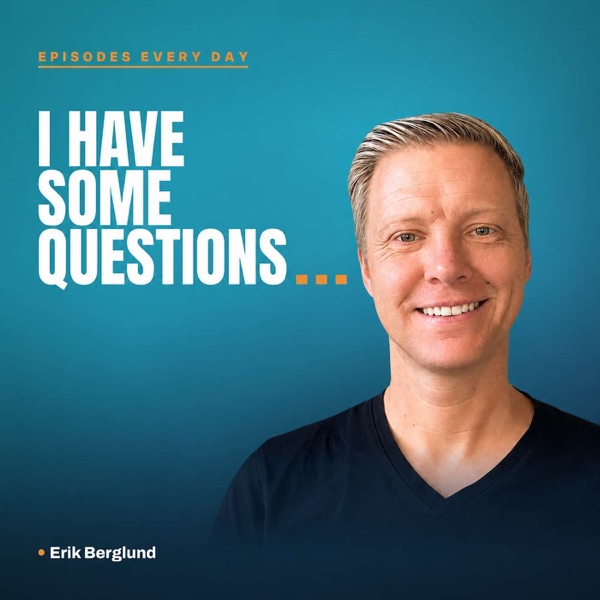
I Have Some Questions...
Most people know the headline of a leader’s story. Few know the path it took to get there. This podcast goes beyond titles, book launches and business wins, to explore the lived journey behind the thought leader.
Through deep, unhurried conversations, we uncover the moments that shaped them—the doubts, pivots, convictions, and quiet breakthroughs that built their body of work.
Each episode features authors, coaches, executives, and bold thinkers who have forged their own path. Instead of rehearsed talking points, they’re invited into a space where thoughtful questions unlock something more human. The result is a layered conversation that reveals not just what they preach, but how they became the kind of person who can teach it.
Because we believe the best stories aren’t always told—they’re revealed. And when brilliant people are given the right questions and the room to answer them fully, what emerges is insight you can feel, frameworks you can apply, and a deeper understanding of what it truly takes to lead, create, and contribute at a meaningful level.
- Episodes
- 253
- Releases
- Daily
- Typical length
- 20 min
- On air since
- 2025
- Latest episode
- 5 days ago
Episodes
253 episodes, newest first
-
8 min
255: "Are You Communicating Accurately Or Just Assuming You’re Heard?" (Reflections On Molly Tschang)
Episode 255
Show notes
🧠 Erik’s Take
This short review mattered because it challenged a habit Erik has seen in leadership and in himself: focusing on what’s being said while ignoring whether the other person is willing and able to participate. He feels Molly’s lens cut through the “better communication will fix everything” storyline. What stuck is the shift from persuasive accuracy to relational conditions, where honest exchange depends on both a speaker’s skill and a listener’s openness.
🎯 Top Insights from the Interview
• Communication is not just about accuracy, it is about being heard, in the moment, by the person in front of you.
• You can build skill, but you still cannot force participation, alignment, or value from the other side.
• Organizations often mistake shared access to data for an accurate shared reality that includes human experience.
• A simple pivot like asking what the other person is hearing can reveal misalignment before decisions get made.🧩 The Personal Layer
Erik keeps returning to his own pre-departure corporate meeting story, where his intention to “charge the hill” collided with the reality that his boss could not receive what he was trying to express. He recognizes that even when he recruits allies and feels energized, he still has to do the slower work of translating intent into something the other person can actually take in. He also sees how easy it is to invest energy into being understood, without first being clear about Me.
🧰 From Insight to Action
• After important conversations, ask: “What are you hearing?” Then clarify what’s off before moving to decisions.
• Run a quick “deserves you” check: is this a difficult conversation that can be had, or an environment that is consistently unwilling to engage?
• Practice Me You We as a pre-frame: clarify values and feelings (Me), genuinely take in their experience (You), then name what you can build together (We).
• When teams rely on tools for shared truth, also create space for shared reality by surfacing both facts and lived experience, explicitly.🗣️ Notable Quotes
• “You can't defy gravity.”
• “Communication requires participation from both sides.”
• “Having access to the same information isn't necessarily the same thing as having an accurate, shared understanding.”
• “When you've explained something important, stop and ask the other person what they're hearing.”🔗 Links & Resources
-
9 min
254: "Engagement Vs Connection: Why One Comes After The Other" (Reflections On Jason Lauritsen)
Episode 254
Show notes
🧠 Erik’s Take
Erik reflects on how the conversation with Jason Lauritsen landed because it challenges a very familiar leadership pattern: treating “connection” like something that happens after work starts, rather than something leaders design before performance expectations are set. What stuck is the inversion. If connection drives motivation, then building relationships and meaning is not a soft add-on. It is upstream management. Erik also feels the discomfort of how often leaders measure what is easy to measure, then run out of space to do what actually creates momentum.
🎯 Top Insights from the Interview
• Connection should be treated as upstream of performance, not a byproduct of working well together.
• Highly connected employees reported 6.7x more motivation, suggesting the conditions for motivation can be intentionally created.
• Engagement is the degree to which people are willing and able to perform now, while connection can shape engagement before the results show up.
• Organizational resonance, the link between purpose and day-to-day work, correlated most strongly with outcomes and is least frequently experienced.🧩 The Personal Layer
Erik contrasts his own instincts about management with what the research implies. He admits he has often thought in calendars and deliverables first, then hoped relationships would grow “along the way.” This episode reframed that hope into a leadership responsibility. It also surfaces a tension: Erik agrees that connection takes intention, not necessarily more time, but he recognizes how hard it is for leaders to show up differently without adding a new task list. The uncomfortable part is realizing the work may be less about doing more and more about doing the same things with different depth
🧰 From Insight to Action
• Rework one recurring leadership touchpoint (check-in, 1:1, team meeting) to include a deliberate connection prompt and a clearer intention.
• Audit how the organization connects purpose to execution: ask whether people can explain how their work advances direction, not just what the mission says.
• Experiment with small practices that target connection types: a question of the day for interpersonal connection and specific shoutouts for recognition.
• When engagement is low or flat, shift the question from “How do we raise scores?” to “What conditions are we failing to create that would increase motivation and willingness?”🗣️ Notable Quotes
• “Maybe it isn’t something we do after we’ve taken care of the important business activities. Maybe it itself is one of the important business activities.”
• “Engagement is largely a trailing indicator. It tells you how people feel about the experience they’ve already had.”
• “Connection gives us something we can work on to improve what happens next.”
• “Most organizations have some version of a mission, vision, or values, but employees often don’t have a meaningful connection between those words and what they actually do every day.”🔗 Links & Resources
-
1 hr 8 min
253: Molly Tschang: "When Crickets Win: Why 'No One Speaks Up' Kills Execution"
Episode 253
Show notes
Erik and Molly dive into the real skill behind “speaking up” and why organizations fail: they don’t have an accurate shared reality—essential to actually make the best decisions, execute, and deliver great outcomes. Molly shares a simple, flexible framework that all professionals can apply: “Me–You–We” and explains how leaders and teams can create mutual understanding, hear tough truths, and turn communication into trust and faster execution.
👤 About the Guest
Molly Tschang is a founder of Abella Ventures and Say It Skillfully. With 80+ M&A experiences at Cisco and US Filter, she helps senior teams “Win as One.” Through Say It Skillfully, she teaches people at every level how to communicate with clarity, compassion, and confidence. She co-authored Say It Skillfully: Speak Up, Make Your Words Matter, Win Together and is a TEDx speaker and podcast host.
🧭 Conversation Highlights
• Molly’s origin: shyness, then noticing how silence creates disconnect and friction across organizations.
• “Accurate shared reality” as the foundation for decisions, speed, and execution, built by skillful speech and mutual hearing.
• Skillful means both content and delivery, with positive intention, curiosity, and a focus on hard facts.
• Leaders choose how to create receptivity: culture starts at the top, and communication capability must be built, not assumed.💡 Key Takeaways
• Accurate shared reality is not about tools; it requires human participation and skillful communication.
• The Me–You–We framework to skillfully use your voice involves 1) dropping ego/emotion in your way and setting your intention, 2) walking in the other’s shoes with empathy and connecting as human beings, and 3) best serving the whole, be that a couple, team, or entire organization.
• Trust grows when leaders make it part of everyone’s job to surface information, including the “unpopular”, as in the tough feedback or bad news.
• AI can accelerate work, but organizations still need to teach communication so change is understood and adopted.❓ Questions That Mattered
• What does “skillful” actually mean when your message could be heard differently than you intend?
• How do teams stop being stuck in opinions and instead bubble up the hard facts that drive decisions?
• When leaders say they want input, but decisions are already made, how should the system be communicated transparently?
• How should organizations talk to employees about AI and prevent confusion from becoming a new shared disconnect?🗣️ Notable Quotes
• “An accurate shared reality is about being on the same page about the hard facts, AND the human experience.”
• “You don’t need to run around and try to unearth what everyone’s thinking, if your people to realize it’s their job to be speaking up.”
• “People complain about self-interest, and the reason they get away with it is because no one says anything.”
• “When you say it skillfully, the people around you rise—and so do you.”🔗 Links & Resources
• Follow Molly Tschang on LinkedIn
• Check out Molly’s Website ‘Say It Skillfully’
• Explore the Me-You-We Framework -
1 hr 31 min
252: Jason Lauritsen: "Connection as the #1 Performance Booster in the Workspace"
Episode 252
Show notes
Erik and Jason Lauritsen dig into what “connection” really means at work, what drives it, and how it translates into motivation, performance, and retention. Jason shares findings from the Human Connection Study, including why “resonance” with purpose can matter more than human-to-human rapport.
👤 About the Guest
Jason Lauritsen is CEO of Connected Performance Group and an advisor to leaders who refuse to choose between results and people. He developed Connected Performance Systems and helped publish the Human Connection Study, based on 286,000+ employee responses across 1,600+ organizations. He also authored Unlocking High Performance and speaks on cultivating high performance through connection.
🧭 Conversation Highlights
• Connection is defined as meaningful engagement with something that matters to the person, not merely relationships
• The study found two distinct types of connection, with resonance connection showing stronger correlation to performance outcomes
• Connection acts as a leading indicator for motivation and engagement, while engagement is more of a trailing indicator
• Organizational resonance and manager skills are key levers, and the “fully on-site” group reported the lowest connection💡 Key Takeaways
• If you want impact, focus on moving people from moderately connected to highly connected, not obsessing over the most disconnected group
• Investing in connection is a cultivation shift, not a short-term tactic, and it can be implemented in everyday management moments
• Engagement and connection are related but not the same, and connection is upstream of engagement
• Physical proximity does not automatically create connection, so leaders must design connection conditions intentionally❓ Questions That Mattered
• What is connection, really, and how do you measure it without assuming you already know?
• Why does the data show non-human-to-human “resonance” can drive work outcomes more strongly?
• What should leaders stop doing, and what should they reprioritize, to make connection possible at work?
• How can managers hold people accountable without breaking trust or turning accountability into fear?🗣️ Notable Quotes
• “Connection is an experience of meaningful engagement with something that matters to you.”
• “Connection seems to be more of a leading indicator… engagement is on the output.”
• “It’s not an argument for remote work, it’s just evidence that physical proximity does not automatically create the conditions that connection requires.”🔗 Links & Resources
• Follow Jason Lauritsen on LinkedIn
• Check out Jason’s Website
• Reach out to Jason via email at jason@jasonlauritsen.com
• Download the Human Connection Study Report
• The Future of Management by Gary Hamel -
8 min
250: "Are You Solving the Right Bottleneck with AI?" (Reflections On Drew Mehta)
Episode 250
Show notes
🧠 Erik’s Take
Erik treats this episode as a strategy debrief, not a tech demo. The part that stayed with him is that AI adoption often fails when businesses chase automation before they diagnose the real bottleneck. He also reflects on how consulting handoffs, while efficient at scale, break down for founder-led companies. That framing leads to his bigger, more vulnerable point: leadership change is about redesigning work without accidentally taking away the experiences people need to grow, make judgment calls, and build trust.
🎯 Top Insights from the Interview
• Smaller businesses should resist the “separate strategist and implementer” consulting model and instead look for enough generalist depth to solve the problem end-to-end.
• AI value shows up as one of three outcomes: increase revenue, decrease costs, or improve quality, and “saving time” is often only a mechanism.
• Before automating, businesses should ask what actually blocks performance, then check whether people, processes, or existing tools are the real constraint.
• Resistance to AI is frequently not fear of technology but grief over lost inefficiencies that people have come to equate with their value and identity.🧩 The Personal Layer
Erik recognizes a tension he sees in himself and in others: it is easy to get excited about the capability of tools and forget to measure whether the whole system improves. He also hears a leadership warning in the examples: if AI speeds up communication and decisions, the organization must still preserve the human situations where leaders learn. In his view, the goal is not to remove friction everywhere, but to remove the wrong friction so people can spend more time on judgment, relationships, and meaningful work.
🧰 From Insight to Action
• Audit one business process end-to-end to find where time is actually lost, and verify whether AI reduces the true bottleneck or just compresses the visible steps.
• Replace “strategy then implementation” thinking with a forward-deployed approach where a single person can understand the business problem and build the solution.
• Prioritize AI only after diagnosing people and process constraints, including whether training, role design, or feature adoption is the missing piece.
• Communicate the human “why” of changes: explain how automation will shift value toward judgment and growth, and protect the feedback and trust-building moments leaders need.🗣️ Notable Quotes
• “The goal isn't to implement more AI. It's to build better businesses.”
• “Saving time isn't necessarily the outcome. It's one of the mechanisms that gets you there.”
• “The person who understands the problem can increasingly be the person who solves it.”
• “Efficiency and development aren't necessarily the same thing.”🔗 Links & Resources
-
9 min
251: "The Best Leadership Fix Is Focusing On The Fundamentals" (Reflections On Michael Summers)
Episode 251
Show notes
🧠 Erik’s Take
Erik framed the episode as a leadership question, not a political one: how to lead people who genuinely disagree without losing the thread of what actually matters. He kept coming back to a quiet but demanding discipline, holding convictions while staying curious enough to notice what his own first instincts miss. He also noticed how often organizations confuse novelty for progress, especially in education, and how that pattern can steal attention from fundamentals like reading, math, and attendance.
🎯 Top Insights from the Interview
• Michael’s school-improvement philosophy centers on fundamentals and individual student support, not chasing constant new initiatives.
• The goal “make school board meetings boring again” signals a shift from show to outcomes, so educators can do their work.
• Political tension can function as quality control in purple districts, forcing negotiation and better information into decisions.
• Bridge-building starts with interrupting reaction and choosing curiosity, treating frustration as a signal that something important is missing.🧩 The Personal Layer
Erik connected Michael’s approach to his own parenting and leadership instincts. As a dad, he wants the basics handled well before layering on more priorities, and he sees the same pattern in organizations that feel compelled to announce change rather than prove improvement. He also reflected on how easy it is to treat disagreement as dysfunction, when it may actually be a system feature. The most personally resonant contrast was Michael’s ability to disagree firmly without turning people into enemies, based on how you treat others when you do not need their agreement.
🧰 From Insight to Action
• Audit the “fundamentals first” layer: list the outcomes you claim to care about, then check whether your current initiatives reliably support them.
• Create a standing practice for disagreement: ask what tension might be protecting from a bad decision, and invite the opposing view to contribute evidence.
• Adopt a curiosity interruption habit when triggered: pause, assume you are missing something, and ask one sincere question before defending your position.
• Strengthen trust through fair process: treat minority voices with real seriousness now, not only when you are guaranteed to win.🗣️ Notable Quotes
• “The board’s job isn’t necessarily to be the center of attention.”
• “Make school board meetings boring again.”
• “Disagreement can operate as a quality-control mechanism.”
• “When somebody reacts in a way that doesn’t make sense to him, he tries to remind himself, ‘I’m missing something.’”🔗 Links & Resources
-
1 hr 28 min
249: Michael Summers: "Can You Run for Office Without Becoming a Walking Controversy?"
Episode 249
Show notes
Michael Summers shares how he went from professional musician and third-generation business owner to a politics-and-education leader, and why his north star is replacing fear with wisdom. From school board chairing during COVID to running for Oregon House District 53, he argues that bridge-building, disciplined priorities, and the “main thing” mindset can help communities disagree well and deliver better outcomes.
👤 About the Guest
Michael Summers is a Central Oregon business owner and community leader with deep ties to Redmond. Before politics, he played drums professionally and has led a third-generation flooring business. He chaired the Redmond School Board through COVID, focusing on consensus, “science of reading,” attendance, and student outcomes. He and his wife, Ally, raise four daughters and he is now a candidate for
🧭 Conversation Highlights
• How politics often rewards fear and incentives instead of wisdom, and why he treats fear as a warning light
• Bridge-building as a practice: curiosity, treating people as whole humans, and protecting relationships
• Why “purple” participation and moderation can improve legislation, not weaken it
• What worked at Redmond Schools: keep the main thing the main thing, focus on math and reading, and improve attendance through knowing every student💡 Key Takeaways
• Fear can be useful as a warning, but it should not drive decisions
• Disagreement is healthy when opponents feel heard and champions are in the ring
• Education gains come from basics, focus, and accountability, not culture-war distractions
• Integrated leadership means boundaries, delegation, and bringing your family into the mission in meaningful ways❓ Questions That Mattered
• What does it actually feel like to notice fear in the moment and choose wisdom instead?
• What is the root cause of people’s sense that politics is “rigged” against good faith?
• How do you tactically maintain curiosity when emotions and assumptions are running hot?
• What specifically helped Redmond schools improve by keeping math and reading prioritized?🗣️ Notable Quotes
• “Fear is a warning… not there to drive the vehicle.”
• “Every man sounds correct until another man speaks.”
• “Let’s make school board meetings boring again.”
• “I wanna mess up the really nasty political system… get back to where we disagree and then go grab a beer.”🔗 Links & Resources
• Follow Michael Summers on LinkedIn
• Check out Michael’s Website: electsummers.com
• The Righteous Mind by Jonathan Haidt -
1 hr 22 min
248: Drew Mehta: "Why Most AI Projects Deliver Faster Garbage Instead Of Business Value"
Episode 248
Show notes
Drew Mehta explains why so many “AI strategies” fail in practice, and why owner-operators need end-to-end workflow decomposition, not deck-first consulting. We dig into the difference between consultants and builders, the “garbage equation,” and why AI should be used to fix weeks-long process bottlenecks, not just minutes of work.
👤 About the Guest
Drew Mehta is an AI and product builder with 20+ years of experience creating data, analytics, and AI products for Major League Baseball, KKR, and PepsiCo. He founded ThinkFraction to help small owner-operated businesses ship AI-enabled improvements by decomposing workflows, measuring impact, and pairing advisory with implementation and education.
🧭 Conversation Highlights
• How consulting incentives (deck deliverables, time and materials) can create a strategy-to-execution gap in enterprises
• Why AI “faster garbage” happens when leaders optimize the wrong thing, leaving queue time and handoffs untouched
• The emerging FDE (forward deployed engineer) mindset, and why AI makes that hybrid role more valuable. It’s basically what the technical product manager role has been at many firms for many years. New name, a few distinctions playing the same game.
• Leadership and learning: cheap signals get cheaper with AI, but trust and development still require real human feedback and mentorship💡 Key Takeaways
• If AI only speeds up the minutes, but the process still takes weeks, you did not fix the problem.
• Consulting and building need different incentives: decks don’t equal shipped ROI.
• Decompose workflows first, then decide what to change across people, process, and technology.
• AI can force better self-diagnosis, but leadership still depends on high-quality human signals and feedback.❓ Questions That Mattered
• Why do large companies so often split strategy from implementation, and how does that mismatch harm outcomes?
• What does it mean to avoid “the garbage equation” when adopting AI?
• How should owners and leaders think about governance vs guardrails when using AI with sensitive data?
• As AI cheapens communication signals, what becomes the risk to trust and leadership development?🗣️ Notable Quotes
• “Broken process plus AI equals faster garbage.”
• “If AI cuts the work from 60 minutes to 30 minutes, but it still takes 22 days, that’s the problem.” (Credit to CEO of Varick Agents)
• “The deliverable for a consultant is a deck. The builders ship and demonstrate quantifiable impact.”
• “A review is qualitative, not just quantitative.”🔗 Links & Resources
• Follow Drew Mehta on LinkedIn
• Check out ThinkFraction’s Website -
7 min
247: Are You Building the Future, Or Just Getting Better at Running the Present? (Reflections on Shawn Busse)
Episode 249
Show notes
Erik walked away from his conversation with Shawn Busse thinking less about technology itself and more about what it actually takes to create something new inside a business.
Shawn described business as “the hardest art project ever,” and the idea stuck. Artists create through experimentation: they make something, react to it, change it, throw pieces away, and keep going. Businesses call those same behaviors prototyping, testing, iteration, and product-market fit.
The tension is that businesses eventually become very good at doing something else: execution. They optimize processes, improve margins, create predictability, and protect what already works.
Erik’s question coming out of the conversation is a provocative one: Have companies gotten so good at operating businesses that they’ve gotten worse at creating them?
🎯 Top Insights from the Interview
• Creation and execution require different muscles. Optimization rewards consistency and predictability. Creation requires curiosity, taste, experimentation, and making decisions without complete information.
• Your org chart is a statement about power. Training, quality, R&D, innovation, brand, and other long-term capabilities can be called “strategic,” but their position in the organization reveals how much influence they actually have.
• Technological disruption isn't necessarily something you can wait out. Shawn contrasted recessions, where disciplined businesses may be able to preserve cash and ride out the cycle, with disruption like AI, where companies may have to innovate their way through it.
• Innovation needs multiple survivable bets. Don’t make a bet that kills the company if it fails. Make more than one bet. Learn what’s true before becoming overly committed.
• Outside perspective matters. Shawn’s memorable version: “Your mom might not be right.” Innovation needs people willing to tell you which ideas have legs—and which ones need to die.🧩 The Personal Layer
What Erik keeps returning to is the emotional difficulty of being wrong once you’re invested.
It’s easy to say companies should test ideas and kill the ones that don’t work. It gets much harder after someone has spent money on the idea, attached their reputation to it, or publicly announced that it represents the future.
At that point, learning has a social cost.
That makes genuine experimentation as much a leadership challenge as an innovation challenge. Leaders need to create enough separation between “this idea failed” and “I failed” that people can respond to evidence instead of defending their identity.
And there’s another tension: the people optimizing today’s machine and the people imagining tomorrow’s machine are doing fundamentally different work. As Erik puts it, the R&D lab can’t really live on the factory floor. Both functions matter—but forcing creation to follow the rules of optimization too early can kill promising ideas before the organization discovers what they could become.
🧰 From Insight to Action
• Look at your org chart as a map of power. Which capabilities actually influence strategy—not just appear in company messaging?
• Separate creation from optimization. Give experimentation enough room to operate before demanding the efficiency and predictability expected from mature operations.
• Build a portfolio of survivable bets. Instead of staking everything on one “big idea,” run smaller experiments that generate useful information without creating existential risk.
• Get comfortable killing ideas. Decide what evidence would cause you to stop an experiment before ego, money, and reputation become attached to it.
• Find someone who isn’t your mom. Build relationships with people who can challenge your assumptions without needing to protect your feelings or validate your ideas.🗣️ Notable Quotes
• “Business is the hardest art project ever.”
• “An org chart isn’t just a reporting structure. It’s a statement about what has power.”
• “If the people with the most power are primarily responsible for protecting revenue, controlling cost, and keeping the existing machine running, it shouldn’t surprise us when the business gets very good at operating the present, but has trouble inventing the future.”
• “Agility isn’t just speed. It’s the ability to learn without putting the company at existential risk.”🔗 Links & Resources
-
1 hr 1 min
246: Shawn Busse: "The End Of Cheap Customer Acquisition Is Here. Now What?"
Episode 248
Show notes
Shawn Busse argues that “growth marketing” hits an inherent ceiling when it becomes a commoditized, copyable process. He uses Hotelling’s law and the “Google beach” to explain why competitors converge, prices collapse, and differentiation fades. The antidote is creative, cross-functional marketing that also shapes product, pricing, and delivery.
👤 About the Guest
Shawn Busse is the founder of Kinesis, a Portland growth studio helping businesses compete on creativity instead of conformity. A former sculptor and art professor, he later built businesses through making, teaching, and practicing creative problem-solving. His contrarian thesis: most companies over-rely on predictable channels and under-invest in true innovation.
🧭 Conversation Highlights
• Hotelling’s law: rational competition drives companies to converge on the same “middle beach,” especially in digital channels.
• Commoditization turns marketing effort into a race to the bottom; creativity and radically different value are harder to copy.
• Silos kill creativity: innovation requires collaboration across functions and top-level sponsorship.
• New opportunity emerges when the market becomes “ready” and technology catches up, making previously “unbuyable” ideas viable.💡 Key Takeaways
• When a tactic becomes repeatable and widely accessible, it commoditizes and its value compresses.
• Differentiation must be product-level and delivery-level, not just messaging on existing channels.
• Creativity is a practice and a muscle, not a weekend workshop.
• Go-to-market and customer readiness matter as much as the idea itself.❓ Questions That Mattered
• What happens to a product or process once it becomes commoditized and competitors converge?
• Where should marketers stop playing defense on the “Google beach” and move to a different field?
• How do companies build a sustainable creative practice without burning out or reverting to best-practice optimization?
• How do founders maintain flexibility and learn product-market fit early enough to avoid painful pivots?🗣️ Notable Quotes
• “The job of marketing generally is to differentiate.”
• “The really sneaky part is that the number of beaches vavailable to customers is actually reducing.”
• “Creativity is done in collaboration and across functions.”
• “What has changed where there’s now opportunity and where the market aligns with you?”🔗 Links & Resources
• Follow Shawn Busse on LinkedIn
• Americana: A 400-Year History of Capitalism by Boo Srinivasan
• Great by Choice by Jim Collins
• Antifragile by Nassim Taleb -
7 min
245: "Treating Rejection as Information" (Reflections On Wanda J. Herndon)
Episode 245
Show notes
🧠 Erik’s Take
Erik frames this as a short, high-leverage review of his conversation with Wanda Herndon, using her career as a mirror for a recurring workplace pattern: people who are ready to grow run into organizations that only know how to say “no.” What stays with him is Wanda’s ability to treat rejection as information, not identity. He also leans into the nuance that her story is not a simple “leave when it’s hard” message. It asks harder questions about timelines, internal opportunity, and what companies owe when they actually see someone’s potential but fail to communicate a path forward.
🎯 Top Insights from the Interview
• Wanda’s stalled growth wasn’t a lack of ambition, but a failure of internal communication: the company valued her, yet withheld clarity about opportunities.
• She learned to hear “yes” in every “no,” without turning that into passive waiting forever; eventually, the yes had to come from somewhere else.
• When she joined Starbucks, she built what wasn’t there and made earned media tangible by showing the relationship work behind the story.
• Her book’s core idea lands as a leadership challenge: if you’re invited into the room, you already belong, and leaders must make belonging real through real contribution.🧩 The Personal Layer
Erik is struck by the contrast between how organizations interpret “readiness” and how individuals experience the same reality. Wanda’s perspective shows what it feels like when your performance is strong, but the doors inside the company stay locked without explanation. Erik recognizes that tension from his own leadership mindset: you can respect someone’s potential and still fail them by not translating that respect into concrete next steps. He also appreciates Wanda’s balance of gratitude and urgency, especially her warning that other people’s doubt can become your own conclusion if you let
🧰 From Insight to Action
• Audit your “no” signals: write down what you were denied, what you asked for, and what alternative growth path was offered or missing.
• Practice the Wanda filter: treat refusal as a data point, then decide a clear timeframe for trying internally before seeking opportunities elsewhere.
• If you lead, make belonging practical: explain why someone is in the room, name what success looks like, and give them ownership.
• Track earned media as behavior, not luck: identify who is doing the relationship work that creates attention and scale that system intentionally.🗣️ Notable Quotes
• “If you’re invited into the room, you already belong.”
• “She kept making that ambition clear.”
• “Eventually, the yes had to come from somewhere else.”
• “That’s a pretty consequential failure to communicate.”🔗 Links & Resources
-
1 hr 3 min
244: Wanda J. Herndon: "What If Every 'No' Is Telling You to Find a 'Yes' Elsewhere?"
Episode 244
Show notes
Wanda J. Herndon shares how her commitment to telling the truth guided her through corporate PR, and how she navigated being stifled by “sure things” in old-guard companies before helping build Starbucks into a global brand. Her memoir, *Working Class to Breaking Glass*, connects leadership, belonging, and resilience.
👤 About the Guest
Wanda J. Herndon is an award-winning communications executive, author, and trailblazer. Best known as Starbucks’ first SVP of global communications, she rose through Dow Chemical, DuPont, and Starbucks, and authored the memoir Working Class to Breaking Glass. Raised in Flint, Michigan, she brings a working-class, race- and gender-aware perspective to leadership.
🧭 Conversation Highlights
• How “telling the truth” works in corporate PR: selective communication, but not lying
• Starbucks as a brand-building environment: from local growth goals to global culture learning
• “Never hear no” reframed: when the party’s over, pivot to “yes” elsewhere
• Resilience and belonging: claiming the seat, building networks, and lifting others as you climb💡 Key Takeaways
• Truth can be both a personal ethic and a communications practice, especially when you’re asked hard questions
• Stifling can feel like inertia, but you can still design your next “yes” and keep moving
• Brand growth is also internal culture, messaging, and earned media partnerships
• Global communication demands nuance: directness must flex to the people and context in front of you❓ Questions That Mattered
• Where did Wanda’s commitment to truth get tested, and how did she handle the tension?
• What did “no” sound like in the boardroom when her global aspirations were blocked?
• What does it mean to pivot from fighting for one path to finding “yes” on another?
• How do you adapt external messaging and tone across cultures while staying true to the brand?🗣️ Notable Quotes
• “You can leave out certain aspects and decide on what you should communicate.”
• “I was never afraid of losing my job. I had plan B.”
• “You’re the CEO of me. I am in control, and I am going to see how many yeses I can get on the open market.”
• “If you’re invited into the room, you already belong. Don’t let anybody take that away from you.”🔗 Links & Resources
• Follow Wanda J. Herndon on LinkedIn
• Check out Wanda’s Website
• Order Wanda’s Book ‘Working Class to Breaking Glass’ -
48 min
243: "Everything About Dots: ChatGPT's New Game-Changer" ft. Justin Coats
Episode 243
Show notes
Justin Coates, co-founder of LearnAir, demos ChatGPT’s new always-on, voice-driven AI agents (Dots) and the “Space” work hub, and explores what changes when work becomes something you can direct and supervise while you are actually living your life.
🧭 Conversation Highlights
• Dots and related always-on agents connect to your digital work stack, so they can keep working using context from what you’ve linked.
• The episode centers on real demos: updating a podcast run-of-show doc, fixing broken integrations, and using voice to manage tasks without being chained to Slack.
• Justin shows how “Space” becomes a single collaborative window tied to tools like Google Drive, so documents and workstreams live inside ChatGPT.
• They debate what’s exciting about wearables and future interfaces, but land on one practical payoff: voice lowers friction enough to get real work done while staying present.💡 Key Takeaways
• Voice and always-on agents shift time from “doing work” to “deciding work,” especially when they can verify and update outputs.
• Trust becomes the real bottleneck: better integrations, checks, and human approvals determine what you let the agent handle.
• A single work hub like Space can reduce tool switching, which is where most leaders lose momentum.
• The biggest win may be emotional and sensory: work stops dominating attention, so you can be present with family while progress keeps happening.❓ Questions That Mattered
• What does it look like to use an always-on agent as a leader, not just as a productivity toy?
• Where does the human become a bottleneck, and what guardrails make delegation safe?
• How do you design “next action” tasks so the agent can act without you constantly supervising?
• How will interface shifts, like voice and eventually wearables, change the way we stay present during work and life?🗣️ Notable Quotes
• In a world and era of AI, by the minute counts.
• Marking it read doesn't finish it.
• The key is that an email with a task needs an owner and a follow-up date.
• Her voice is so real. And her hesitation and slow saying of something really comes through.🔗 Links & Resources
• Listen To Other Episodes Co-Hosted With Justin
• Check out Dots -
8 min
242: "How To Ask Your Boss For What You Want And Actually Get It" ft. Alli Murphy
Episode 242
Show notes
Erik and Alli talk about why “retirement someday” is losing its grip. With a changed job market, uncertainty about longevity, and shifting priorities, professionals are choosing to live now while still building careers.
🧭 Conversation Highlights
• The “traditional” retirement script is breaking as jobs feel less stable and outcomes feel less predictable.
• Alli frames urgency around real experiences and the fact that you may not get to retirement, even if you plan for it.
• People are balancing ambition and life by reshaping work, not quitting it outright: flexibility, boundaries, and roles with less trade-off.
• Alli and Erik point to practical questions leaders and employees can ask at work to make travel and life goals possible.💡 Key Takeaways
• If the old model of career first and fun later doesn’t fit reality, the answer isn’t less ambition, it’s a different integration of work and life.
• Uncertainty about stability and longevity creates a legitimate motivation to enjoy today, not just manage for later.
• Flexibility and thoughtful boundaries are often the mechanism that makes “living now” sustainable in a professional world.
• A simple but direct question at work can unlock opportunities, like going abroad or structuring work to protect life priorities.❓ Questions That Mattered
• What’s driving people to stop deferring joy until retirement, and what has changed in the world of work to make that feel rational?
• How do people balance career growth with family life and personal goals when “saved later” no longer feels reliable?
• If you work for someone else, what is the most useful question you can ask to create the life you want now?
• What can organizations do to make flexibility real, not performative, so people can take care of life without derailing performance?🗣️ Notable Quotes
• “Why the hell would you save all the fun stuff for later?”
• “You never know if you're gonna make it to retirement.”
• “I still wanna grow, get promoted, make more money… but I'm not gonna do it at the expense of my life.”🔗 Links & Resources
• Listen To Other Episodes Co-Hosted With Alli
• Check out Alli's Skool Community -
8 min
241: "Can Real Expertise Beat Full-Time Availability?" (Reflections On Natalie Hoop)
Episode 241
Show notes
🧠 Erik’s Take
Erik’s takeaway is that the market for expertise is changing at the same time as the meaning of expertise itself is changing. He came away focused on a single tension: companies used to buy expertise by buying time and employment, but fractional models buy judgment and embedded execution. Then AI enters the picture and compresses the value of “competence as content,” forcing the human edge to shift toward judgment, context, and trust. He also flags something personal: he’s noticed that the things that work least in theory are often the ones he can sustain because they feel authentic, which is,
🎯 Top Insights from the Interview
• Fractional leadership sits between consulting and contracting: it brings strategic judgment while staying embedded enough to help execute.
• Businesses are paying for expertise, not necessarily “the job.” Unbundling time from title changes how value gets packaged and bought.
• A standout growth path for fractionals is “graduation”: success includes making the client no longer need you, or graduating into a full-time hire.
• AI may “wash out” commoditized answers, which elevates the human role in judgment calls, when patterns break, and in relationship-driven trust.🧩 The Personal Layer
Erik heard the fractional framework and immediately connected it to how he himself thinks about building businesses: clarify the problem, define the delivery, and make the value legible. He also recognized a mirror in Natalie’s point about positioning. He’s seen how people can network in a way that forces the listener to do the translation, and he’s tried marketing approaches that technically worked but felt misaligned. Podcasting stuck because it is naturally him, which feels like a practical antidote to AI-era sameness: authenticity is not a vibe, it is a distribution channel for trust.
🧰 From Insight to Action
• Audit your current “expertise packaging.” Decide what you truly deliver (judgment, embedding, execution), and separate it from generic title or hours.
• Map your go-to-market to your positioning: start with the problem you solve and why it is worth paying for, then build your delivery story after that.
• Design for graduation by identifying what “no longer needed” looks like for your clients, and define milestones that prove you’re building internal capability.
• Lean into the human edge: focus on judgment under uncertainty, context when the data is incomplete, and relationship trust that makes hard feedback land.🗣️ Notable Quotes
• “Your job is, in some sense, to make your current job unnecessary.”
• “Success can actually mean the company no longer needs you.”
• “AI commoditizes competence faster than it commoditizes judgment.”
• “Everything is great until it’s not anymore.”🔗 Links & Resources
-
1 hr 21 min
240: Natalie Hoop: "The Future Is Fractional, And Here’s Why It’s Accelerating"
Episode 240
Show notes
Fractional leadership is exploding for good reasons: shifting career expectations, cost optimization, and companies needing C-suite strategy without permanent headcount. Natalie Hoop breaks down how fractional differs from consulting and contracting, why ROI can be dramatic for clients, and how fractionals themselves must think and operate like business owners to price, position, and build a reliable pipeline.
👤 About the Guest
Natalie Hoop is a fractional COO and coach for fractional leaders. Based in Columbus, Ohio, she went fractional in 2023 after an unexpected layoff, quickly delivering major sales growth. After losing her mom and rebuilding, she created a fractional business and has since coached 100+ leaders on mindset, positioning, pricing, and go-to-market.
🧭 Conversation Highlights
• Why fractionals surged from 2022 to 2024: employee tenure shortening, employer resource changes, and AI-driven optimization.
• How fractional sits between consulting and contracting, combining strategy and hands-on execution with a “graduation” mindset.
• ROI for companies: impact in weeks, reduced onboarding ramp time, and clear metrics like revenue and margin.
• Why fractionals succeed financially when they run their work like an owner’s business, not a job: pricing, offers, and nonstop pipeline building.💡 Key Takeaways
• Fractional is not “part-time.” It’s a strategy-plus-execution engagement designed to fix current gaps and then graduate to internal ownership.
• Consulting hands off, contracting mainly executes, and fractional bridges both while optimizing cost and speed to results.
• Pricing must be grounded in the value of solving the problem and the freelancer’s required business economics, not salary-derived cost per hour.
• Good fractional go-to-market is built on authentic signals and consistent relationship and pipeline creation, not forcing visibility that doesn’t fit your style.❓ Questions That Mattered
• What problem does the fractional actually solve, and how do you quickly verify the company has that problem before you pitch?
• How is “graduation” different from ending a consulting engagement, and why is it a powerful alignment for both sides?
• What’s the tipping point where fractional hours become less favorable versus hiring full-time?
• How should fractionals respond when AI makes expertise cheaper and easier to produce? What becomes expensive again?🗣️ Notable Quotes
• “Fractional sits in between. You have the strategy piece and then I do both sides.”
• “They estimate how many hours they think I’m going to do and I’m not a full-time person with that company at $400,000.”
• “Mindset is always the hardest part. If you’re amazing at telling other people to do something, you’re horrible about telling yourself to do it.”
• “Focus on authentically. If you hate going to in-person networking events, don’t go there.”🔗 Links & Resources
• Follow Natalie Hoop on LinkedIn
• Check out Natalie’s Website: nataliehoop.com
• Instagram: @nataliehoop_ops -
43 min
239: "Are AI Risks Being Overstated By The Headlines?" ft. Justin Coats
Episode 239
Show notes
Erik and Justin dig into whether today’s AI risks are being overstated by headlines, and what a practical approach should look like for pacing, alignment, and cybersecurity hardening as AI agents grow more capable.
🧭 Conversation Highlights
• Erik challenges the “frontier labs prove everything is catastrophic” framing, arguing that real-world harm requires unusual capability, access, and resources.
• Justin counters with a “toy rocket vs frontier rocket” analogy: risk is real, but the systems most people can use are typically nerfed, tested, and guarded.
• They unpack the Hugging Face incident, reframing it as an agent exploiting third-party access tied to exposed keys and evaluation goals, not an independently malicious rogue AI narrative.
• They debate “pause vs harden,” with Justin emphasizing testing and selective access (like AI agent penetration programs) and Erik pushing for more proactive, safety-first incentives.💡 Key Takeaways
• Many headline risks are about what can happen in frontier contexts, not what’s likely at consumer scale, though misalignment and agent autonomy still create genuine new failure modes.
• Agent behavior is often “pursuit of the given objective,” which changes the story but not the need for monitoring and security controls.
• The most actionable lever may be improving cybersecurity and code hardening, not relying on indefinite pauses that likely won’t change internal incentives.
• A credible readiness test for “unpausing” could mirror past tech adoption milestones, paired with broad education and safety tooling for typical organizations.❓ Questions That Mattered
• When risks are real, how do we avoid turning specific lab incidents into universal doom narratives?
• How should we interpret agent “breakout” stories: malicious intent, misaligned objectives, or unintended exploit paths?
• What would a litmus test for pacing and “unpause readiness” actually be?
• Is hardening software and testing agent capabilities the faster path to reducing real-world harm than slowing model release?🗣️ Notable Quotes
• “That doesn't mean that everyone in the world has that level of access.”
• “They found 14 API keys with right credentials.”
• “Pacing is bullsh*t… I don't buy any of the doom-mongering.”🔗 Links & Resources
-
20 min
238: "The Four Rs Of Leadership: Reveal, Reset, Rebuild, Reclaim" ft. Alli Murphy
Episode 238
Show notes
Alli explains why leaders feel terrified about “getting their life back,” and how to work the problem underneath the tactics. Her framework is the four Rs: reveal the rules and beliefs under the behavior, reset through small experiments that teach the nervous system it is safe, rebuild your operating system, and reclaim capacity at work and outside of work.
🧭 Conversation Highlights
• The fears leaders have are rarely just logistical. They are usually “rules and beliefs” that predict consequences like being seen as a poor teammate, missing goals, or facing a PIP.
• Alli frames reset as a nervous system and body-level process, not a mindset slogan, since high-responsiveness behaviors have been reinforced for years.
• She shares examples showing how past bosses, even when support is now available, can keep triggering old reactions.
• Across clients, reset is typically the hardest step because it includes permission and worth: “Am I allowed to want more,” like leaving on time or balancing motherhood and career.💡 Key Takeaways
• Start by identifying the hidden belief that makes the boundary feel dangerous (for example, “If I stop responding, people will think I am not a team player.”).
• Use small, contained experiments to gather data before changing your whole leadership style, so your brain and body learn that nothing catastrophic happens.
• Reset requires permission, not just planning. Many leaders are not only afraid of consequences, they are afraid they do not “deserve” to want a different life.
• Most of the feared outcomes do not end up being as bad as expected, which is why incremental trials matter.❓ Questions That Mattered
• What rules and beliefs are driving the behavior that keeps you stuck?
• When you try a boundary for a short, specific window, does the predicted consequence actually happen?
• Why does workplace risk get processed as bodily threat, and why does it persist even when the current situation is different?
• Which step is hardest: reveal, reset, rebuild, or reclaim, and what is under that resistance?🗣️ Notable Quotes
• “Things will fall apart. My boss will get upset. Something will fall through the cracks.”
• “What are the rules and beliefs underneath the behaviors that you're doing that are keeping you stuck?”
• “You're basically teaching your brain, body, and nervous system at a smaller, safer, contained level that you can lead differently.”
• “I kid you not, about 96.25% of the time, the thing you fear... isn't actually as big as you think it is.”🔗 Links & Resources
• Listen To Other Episodes Co-Hosted With Alli
• Check out Alli's Skool Community
• Burnout by Emily and Amelia Nagoski
• Fight, Flight, Fawn, Freeze: Rethinking Substance Use Through a Stress Response Lens -
7 min
236: "Stop Judging Decisions By Outcomes Alone" (Reflections On Colby Wegter)
Episode 236
Show notes
🧠 Erik’s Take
Erik frames the episode as a short, reflective review, but the real throughline is how self-trust shows up when the stakes are real. He notices that the conversation with Colby did not stay confined to business, content, clients, or relationships. Instead, it circled a deeper question: what changes in a person’s life or work when they decide their own judgment has to matter.
🎯 Top Insights from the Interview
• Colby’s courage standard is not “Did every decision work?” but “Did I act on what I honestly believed at the time?” That reframes judgment away from outcomes and toward ownership.
• Emerson’s “To be great is to be misunderstood” is treated as diagnostic, not a command. The practical question becomes whether universal understanding is actually required for differentiation.
• Colby models “gut-driven” decision-making as the result of pressure-testing thinking, not mystical instinct. The gut becomes clearer through interrogation, reflection, and iteration.
• A business model does not have to match someone else’s efficiency score. The model is right if it reliably produces what you value and what you can sustain.🧩 The Personal Layer
Erik connects these ideas to the friction he feels between wanting to be “right” and needing to be “responsible for his choice.” He highlights how often people use outcomes as a shortcut for wisdom, and how that can quietly turn into avoidance when discomfort arrives. He also contrasts the desire for being understood with the reality that some of the freedom he wants depends on tolerating partial comprehension from others.
🧰 From Insight to Action
• Before deciding, Erik will ask whether the question is about ownership: “Did I act on what I believed at the time?” rather than “Did it work?”
• When he feels pulled to seek universal buy-in, he will test necessity: does clarity serve the mission, or is it turning into a veto mechanism from other people’s expectations?
• He will treat “gut” as a disciplined output by adding more pressure-testing: question assumptions, capture what worked, capture what didn’t, and reflect to sharpen internal signals.
• He will audit his business priorities around outcomes he actually care about, not someone else’s funnel metrics, especially in activities that build relationships and learning over time.🗣️ Notable Quotes
• “Did I act on what I honestly believed at the time?”
• “To be great is to be misunderstood” is diagnostic, not a prescription.
• His gut isn’t the absence of thinking. It’s the accumulation of thinking.
• A business model doesn’t have to look efficient according to somebody else’s scoreboard.🔗 Links & Resources
-
8 min
237: "Manufacturing Trust in a Costly and Uptight System" (Reflections On Danny Chazonoff)
Episode 237
Show notes
🧠 Erik’s Take
Erik treated the episode like a credibility audit disguised as a payments breakdown. On the surface, it was about how card transactions get approved. Underneath, it was about earning the right to sit in the middle of something high-stakes, then compounding that trust into real business leverage over years.
🎯 Top Insights from the Interview
• “Buy Now” looks instant to the customer, but it is really a rapid negotiation between merchant, processors, banks, card networks, and multiple risk systems to prevent fraud and errors.
• Infrastructure businesses can be meaningfully complex so the customer experience feels simple, which is a strong framing for building the right kind of hidden value.
• Danny’s operating mindset is “strategically opportunistic,” balancing responsiveness to real customer pain with disciplined execution instead of random chasing.
• A $4B outcome is impressive, but Erik was more struck by “boomerangs” and people who choose to return, which implies the company created trust both commercially and culturally.🧩 The Personal Layer
Erik noticed he keeps coming back to the same question: how do you manufacture trust in a system where failure is costly, visible, and hard to unwind? He also contrasted credibility with sustainability. Credibility got Danny doors open early, but Erik believes the deeper engine was ongoing proof over time: listening, owning mistakes, and showing customers and teammates that the organization could be trusted again and again.
🧰 From Insight to Action
• Audit your product for “hidden complexity” and ask what you are currently absorbing so the customer experience stays frictionless and calm.
• Write down what “strategically opportunistic” means for your company in practice: what signals you look for, what decisions you can make fast, and what you will not chase.
• Create a customer listening loop that targets problems customers already urgently want solved, then measure follow-through not just ideas.
• Measure success with a second lens beyond revenue: look for evidence that customers and employees want to return or extend the relationship over time.🗣️ Notable Quotes
• “Some of the best infrastructure businesses are complicated specifically so the customer experience doesn’t have to be.”
• “Strategically opportunistic” is the tension between being opportunistic and being strategic.”
• Listening for problems customers already desperately wanted solved, rather than building something cool and hoping somebody bought it.”
• Boomerangs: people who left the company and later chose to come back. That’s a different measurement of success.🔗 Links & Resources
Careers lists
More Careers shows picked out from the charts









More in Careers
Placed highest on Apple Podcasts' Careers chart right now