Podcast
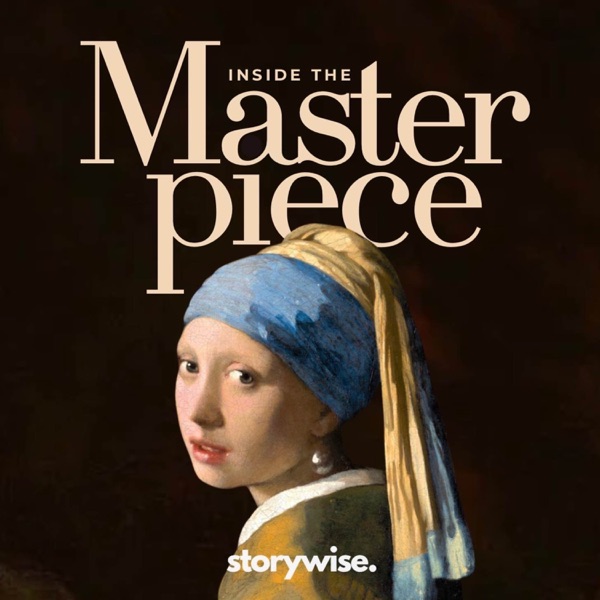
Inside the Masterpiece
Inside the Masterpiece. Everything you've always wanted to know about the world’s greatest artists, their iconic artworks, their history, and their meaning—brought to life in vivid detail. Each episode takes you on a journey to meet an artist and explore one of their masterpieces: how it was created, the idea behind it, and why it still matters today. All with compelling storytelling, backed by meticulous research.
Contact & Support:
If you enjoy the podcast, please consider leaving a review, subscribe and share an episode with a fellow art lover. We truly appreciate it. For questions, feedback, or episode requests, you can reach us at: podcasts@storywise.studio. This podcast is researched, written, and produced by the art-loving team at Storywise Studios. AI tools are used during production for voice enhancement.
Hosted on Acast. See https://acast.com/privacy for more information.
- Visual Arts chart
- #4
- Episodes
- 38
- Releases
- Weekly
- Typical length
- 14 min
- On air since
- 2026
- Latest episode
- 21 hours ago
Episodes
38 episodes, newest first
-
30 min
Roy Lichtenstein – Drowning Girl: The Art of Making the Everyday Impossible to Ignore
Season 1, Episode 38
Show notes
Roy Lichtenstein forced the art world to ask what art is.
The narration for this episode was produced using artificial intelligence. This podcast is researched, written, and produced by the art-loving team at Storywise Studios.
New Jersey, summer of 1961: a boy points to a Mickey Mouse comic and bets that his father can't paint as well as that—and the father, a painter still waiting for his breakthrough, takes the bet. A look behind this work reveals how a weeping woman from a romance comic became one of Pop Art's most famous paintings, why the press asked whether Lichtenstein was the worst artist in America—and why the man who drew the original never became famous.
Additional Resources
The painting at the museum: Museum of Modern Art – Drowning Girl
The painting and its source: Wikipedia – Drowning Girl
The artist: Wikipedia – Roy Lichtenstein
The painted printing dots: Wikipedia – Ben-Day Dots
The second comic-book painting in the 1963 exhibition: Tate – Whaam!
The comic-book artist who drew the original: Wikipedia – Tony Abruzzo
The exhibition in New York (October 11, 2026 – May 10, 2027): Whitney Museum of American Art – Roy Lichtenstein: Like New
Contact & Support:
If you enjoy the podcast, please consider leaving a review, subscribe and share an episode with a fellow art lover. We truly appreciate it. For questions, feedback, or episode requests, you can reach us at: podcasts@storywise.studio.
• Business: podcasts@storywise.studio
Hosted on Acast. See https://acast.com/privacy for more information.
-
29 min
Wassily Kandinsky – Yellow-Red-Blue: When Color Strikes a Chord in the Soul
Season 1, Episode 37
Show notes
An icon of abstract art—where color, freed from any subject, sets the soul vibrating.
The narration for this episode was produced using artificial intelligence. This podcast is researched, written, and produced by the art-loving team at Storywise Studios.
Weimar, spring 1925: The Bauhaus is celebrating its own demise, the students are raffling off their teachers—and in these very weeks, one of those teachers is painting a picture in which colors and shapes themselves are the subject. A look behind this painting reveals why a haystack and a Wagner opera turned a young legal scholar from Moscow into a painter, how Kandinsky came to call the soul a piano, and why we owe the survival of his work to two women.
Additional Resources
The painting at the museum: Centre Pompidou – Yellow-Red-Blue
The artist: Wikipedia – Wassily Kandinsky
The book discussed in this episode, in full: Project Gutenberg – Concerning the Spiritual in Art
The artists' group: Wikipedia – Der Blaue Reiter
The rider on the cover of the almanac: LACMA – Woodcut for the Almanac "The Blue Rider"
His widow who kept his work together: Wikipedia – Nina Kandinsky
The exhibition in Rome (September 15, 2026 – February 14, 2027): Centre Pompidou – Kandinsky at the Palazzo Bonaparte
Contact & Support:
If you enjoy the podcast, please consider leaving a review, subscribe and share an episode with a fellow art lover. We truly appreciate it. For questions, feedback, or episode requests, you can reach us at: podcasts@storywise.studio.
• Business: podcasts@storywise.studio
Hosted on Acast. See https://acast.com/privacy for more information.
-
22 min
Jan van Eyck – The Arnolfini Portrait: A Groundbreaking Composition and an Unsolved Mystery
Season 1, Episode 36
Show notes
A room painted so perfectly it seems real—and a mystery that six centuries have not solved.
The narration for this episode was produced using artificial intelligence. This podcast is researched, written, and produced by the art-loving team at Storywise Studios.
Even after nearly six centuries, Jan van Eyck's Arnolfini Portrait defies any single interpretation. In this episode, we examine the fine details of this masterful composition and weigh the competing art-historical readings—from a solemn marriage vow to a tragic memorial for the dead. Beyond the hidden symbols in the room, we trace the painting's eventful journey from the Burgundian court by way of the Spanish royal palace to the National Gallery in London. There, the work is now at the center of an extraordinary reunion that opens up an entirely new view of van Eyck's groundbreaking portraiture.
Additional Resources
• The work in high resolution: Google Arts & Culture – The Arnolfini Portrait
• Wikipedia entry on the artist: Jan van Eyck
• Wikipedia entry on the masterpiece: The Arnolfini Portrait
• The portrait from the Gemäldegalerie Berlin: Jan van Eyck – Portrait of a Man in a Red Chaperon
• The original at the museum: The National Gallery, London – The Arnolfini Portrait
Contact & Support:
If you enjoy the podcast, please consider leaving a review, subscribe and share an episode with a fellow art lover. We truly appreciate it. For questions, feedback, or episode requests, you can reach us at: podcasts@storywise.studio.
• Business: podcasts@storywise.studio
Hosted on Acast. See https://acast.com/privacy for more information.
-
23 min
Georgia O'Keeffe – Black Iris: Breaking Free from the Gaze of Others
Season 1, Episode 35
Show notes
One painted flower, a century of other people's readings—and an artist who simply wanted us to look.
The narration for this episode was produced using artificial intelligence. This podcast is researched, written, and produced by the art-loving team at Storywise Studios.
It is one of the most famous paintings of modern art—and at the same time one of the most persistent misunderstandings in art history. When Georgia O'Keeffe brought her "Black Iris" to the canvas in 1926, the New York art world eagerly seized on the blossom's supposedly erotic anatomy. But behind the soft gradients of color, a quiet, radical struggle for freedom was actually raging. In this episode, we go straight into the conflict of a painter who refused to be pressed into the mold of "women's art." From the shadowed canyons of the New York skyscrapers to the stark, unforgiving expanse of New Mexico: discover how O'Keeffe rescued her aesthetic from the grip of the male gaze—and why the greatest challenge this masterpiece poses is simply to look at it without preconceptions.
Additional Resources
• The work in high resolution: Black Iris on Wikipedia
• The original at the museum: The Metropolitan Museum of Art – Black Iris
• More about the artist: Georgia O'Keeffe on Wikipedia
• The museum in Santa Fe: The Georgia O'Keeffe Museum
• The record-setting painting: Crystal Bridges Museum of American Art – Jimson Weed/White Flower No. 1 (1932)
Contact & Support:
If you enjoy the podcast, please consider leaving a review, subscribe and share an episode with a fellow art lover. We truly appreciate it. For questions, feedback, or episode requests, you can reach us at: podcasts@storywise.studio.
• Business: podcasts@storywise.studio
Hosted on Acast. See https://acast.com/privacy for more information.
-
20 min
Gustave Courbet – The Desperate Man: How the Silent Scream of His Youth Became His Harshest Reality
Season 1, Episode 34
Show notes
At 25, Courbet painted despair as a role—30 years later, it became his reality.
The narration for this episode was produced using artificial intelligence. This podcast is researched, written, and produced by the art-loving team at Storywise Studios.
In Geneva in the fall of 1877, a small painting is on view under a single word: "Despair." It shows the face of a young man, eyes wide open, hands in his hair—painted thirty years earlier by a beginner, submitted by a gravely ill exile. In this episode, we look behind the work to discover how Gustave Courbet painted himself in a panic at twenty-five, why a toppled monument drove him into exile, and how this face now travels the world as a meme.
Additional Resources
• The original at the museum: The Desperate Man at the Musée d'Orsay
• Go deeper: The Desperate Man (Le Désespéré) on Wikipedia
• More about the artist: Gustave Courbet on Wikipedia
• The painting that made him famous: A Burial at Ornans on Wikipedia
Contact & Support:
If you enjoy the podcast, please consider leaving a review, subscribe and share an episode with a fellow art lover. We truly appreciate it. For questions, feedback, or episode requests, you can reach us at: podcasts@storywise.studio.
• Business: podcasts@storywise.studio
Hosted on Acast. See https://acast.com/privacy for more information.
-
17 min
Correggio – Jupiter and Io: Where Light and Shadow Become a Caress
Season 1, Episode 33
Show notes
Correggio showed the world of painting that even the invisible could be made visible.
The narration for this episode was produced using artificial intelligence. This podcast is researched, written, and produced by the art-loving team at Storywise Studios.
In Vienna hangs a narrow painting in which a cloud embraces a woman—and anyone who looks closely will make out a face in the gray. In this episode, we look behind the work to discover how Correggio, around 1530, solved a problem hardly any painter dared to take on, why a pious prince cut its companion painting to pieces, and why Dresden is now devoting the first major exhibition outside Italy to this nearly forgotten master.
Additional Resources
• The work in high resolution: Jupiter and Io at the Kunsthistorisches Museum Vienna
• Dive deeper: Jupiter and Io on Wikipedia
• More about the artist: Antonio da Correggio on Wikipedia
The three companion paintings in the series:
Kunsthistorisches Museum Vienna – Ganymede Abducted by the Eagle (Wikipedia)
Galleria Borghese, Rome – Danaë
Gemäldegalerie Berlin – Leda and the Swan
Contact & Support:
If you enjoy the podcast, please consider leaving a review, subscribe and share an episode with a fellow art lover. We truly appreciate it. For questions, feedback, or episode requests, you can reach us at: podcasts@storywise.studio.
• Business: podcasts@storywise.studio
Hosted on Acast. See https://acast.com/privacy for more information.
-
18 min
Helen Frankenthaler – Mountains and Sea: The Courage to Let Color Flow
Season 1, Episode 32
Show notes
How one glowing canvas, born from the courage to let color flow, launched an art movement.
The narration for this episode was produced using artificial intelligence. This podcast is researched, written, and produced by the art-loving team at Storywise Studios.
On an October afternoon in 1952, a young painter in Manhattan unrolls a huge canvas onto the floor—and pours thinned paint over it instead of brushing it on. In this episode, we look behind the work to discover how this experiment became Mountains and Sea, why two painters from Washington, D.C., recognized their own future in front of the painting, and why the woman who set an entire art movement in motion had to watch as the men became famous first.
Additional Resources
• The work in high resolution: Mountains and Sea at the Helen Frankenthaler Foundation
• More about the artwork: Mountains and Sea on Wikipedia
• More about the artist: Helen Frankenthaler on Wikipedia
• The 2026 retrospective: Helen Frankenthaler at the Kunstmuseum Basel
Contact & Support:
If you enjoy the podcast, please consider leaving a review, subscribe and share an episode with a fellow art lover. We truly appreciate it. For questions, feedback, or episode requests, you can reach us at: podcasts@storywise.studio.
• Business: podcasts@storywise.studio
Hosted on Acast. See https://acast.com/privacy for more information.
-
12 min
Edward Hopper – Nighthawks: A Glow in the Silence of the Sleepless City
Season 1, Episode 31
Show notes
An icon of modern art — a luminous night scene where big-city loneliness becomes strangely beautiful.
The narration for this episode was produced using artificial intelligence. This podcast is researched, written, and produced by the art-loving team at Storywise Studios.
On a sharp-angled corner in Greenwich Village, a harsh, almost clinical light cuts through the darkness. It pours from the plate-glass windows of a diner, revealing a scene that has fascinated and unsettled viewers for decades: four people trapped in an aquarium of glass and light — physically close, yet emotionally out of reach. Behind the apparent stillness of Nighthawks lies a meticulously constructed stage on which Edward Hopper preserved the mood of an entire era. Today the painting hangs in the Art Institute of Chicago.
In this episode, we decode the mysterious geometry of one of the most iconic masterpieces of modern art. We follow Hopper into his studio, where he and his wife Jo staged every detail like a film director — from the cigar ad above the window to the pale shimmer of the fluorescent lights, still a novelty at the time. We find out how the nervous silence of the first weeks of the war in 1942 turned into a universal language of melancholy, and why this diner, which never existed quite like this, is regarded today as the "film noir" of art history. It's a journey to a place that could be anywhere and nowhere — one that still reminds us that in the silence of the sleepless city we are never entirely alone, as long as a light is burning somewhere.
Additional Resources
• The work in high resolution: Nighthawks on Google Arts & Culture
• Go deeper: Nighthawks on Wikipedia
• More about the artist: Edward Hopper on Wikipedia
• The original at the museum: The official Art Institute of Chicago page
Contact & Support:
If you enjoy the podcast, please consider leaving a review, subscribe and share an episode with a fellow art lover. We truly appreciate it. For questions, feedback, or episode requests, you can reach us at: podcasts@storywise.studio.
• Business: podcasts@storywise.studio
Hosted on Acast. See https://acast.com/privacy for more information.
-
16 min
Hieronymus Bosch – The Garden of Earthly Delights: A Theater of Temptation and the End of Innocence
Season 1, Episode 30
Show notes
The story of a visionary triptych — from paradise to musical hell, where pleasure meets punishment.
The narration for this episode was produced using artificial intelligence. This podcast is researched, written, and produced by the art-loving team at Storywise Studios.
It is one of the most fascinating and most detailed works ever created: a massive altarpiece where naked people bite into giant strawberries, birds tower over humans, and musical instruments become tools of torture. Hieronymus Bosch's The Garden of Earthly Delights has held viewers spellbound for centuries — today it hangs in the Museo del Prado in Madrid.
In this episode, we open the wings of this immense altarpiece. We debunk the myth of Bosch the mad heretic and meet a respected painter firmly rooted in the faith of his era. We travel from the deceptive idyll of the Garden of Eden through the intoxicating "garden of delights" and down into a cold, dark hell. You'll learn what the mysterious "Tree Man" is all about, why an owl in Paradise is a bad sign — and how this painting traveled from the private rooms of one of Europe's most devout kings to become an inspiration for the Surrealists.
Additional Resources
• Interactive tour in stunning resolution: Jheronimus Bosch – The Garden of Earthly Delights
• The work in detail, with zoom: The official Museo del Prado page
• Go deeper: The Garden of Earthly Delights on Wikipedia
• More about the artist: Hieronymus Bosch on Wikipedia
Contact & Support:
If you enjoy the podcast, please consider leaving a review, subscribe and share an episode with a fellow art lover. We truly appreciate it. For questions, feedback, or episode requests, you can reach us at: podcasts@storywise.studio.
• Business: podcasts@storywise.studio
Hosted on Acast. See https://acast.com/privacy for more information.
-
13 min
In Memoriam: Yayoi Kusama – Pumpkin: The Yellow Heart in the Sea of Infinity (re-release)
Season 1, Episode 29
Show notes
In memory of the visionary Yayoi Kusama, we’re re-releasing our episode celebrating the iconic artist’s extraordinary life and legacy.
The narration for this episode was produced using artificial intelligence. This podcast is researched, written, and produced by the art-loving team at Storywise Studios.
On the Japanese art island of Naoshima, Yayoi Kusama’s Pumpkin sits at the edge of the sea—bright yellow, covered in black polka dots, and strangely at home against the open water. But behind this playful icon is a story with real stakes. For Kusama, the pumpkin was never just a motif or a decoration. It became a spiritual lifeline: a familiar presence from her childhood that helped her survive overwhelming hallucinations—and translate personal terror into a visual language the world could recognize.
In this episode, we step into Kusama’s universe and trace how repetition became rescue. We follow her from the strict expectations of prewar Japan to the cutthroat New York art scene of the 1960s, where she fought to be seen—and helped define a new kind of contemporary art. Along the way, we explore her idea of “self-obliteration”: the urge to dissolve the boundaries of the individual self into an infinite field of dots. More than ninety years old and still working daily, Kusama continues to cover the world in patterns that ask a simple, unsettling question: where do we end—and where does the infinite begin?
Additional Resources
• View the Masterpiece: High-Resolution Image of “Pumpkin” at Gotanji Pier
• Deepen Your Knowledge: Wikipedia Entry on Yayoi Kusama
• Official Website: The Yayoi Kusama Museum in Tokyo
Contact & Support:
If you enjoy the podcast, please consider leaving a review, subscribe and share an episode with a fellow art lover. We truly appreciate it. For questions, feedback, or episode requests, you can reach us at: podcasts@storywise.studio.
• Business: podcasts@storywise.studio
Hosted on Acast. See https://acast.com/privacy for more information.
-
12 min
Special: Rembrandt – Vision of Zacharias in the Temple: A New Rembrandt After 400 Years
Season 1, Episode 28
Show notes
Nearly four hundred years after it was painted, a new Rembrandt comes to light.
The narration for this episode was produced using artificial intelligence. This podcast is researched, written, and produced by the art-loving team at Storywise Studios.
It is an art-historical sensation that has stunned the experts: in this rediscovered early Rembrandt, biblical drama and a masterly orchestration of light fuse into one striking whole. Vision of Zacharias in the Temple carries us into the sacred stillness of a mysterious sanctuary, where a divine miracle suspends the laws of the everyday. Against the vast backdrop of the temple, the high priest stands shaken to his core as light breaks through the darkness — proclaiming a message that, once again, enriches the life’s work of an exceptional artist for all of us.
In this episode, we dive deep into the workshop of the young Rembrandt to tell the story of this spectacular find. We reveal how cutting-edge science — and the analysis of centuries-old oak panels — pulled a misjudged painting out of the shadow of a false attribution and back into the spotlight. You’ll learn why ritual golden bells and tiny pentimenti provided the decisive evidence — and how the work has now taken its rightful place beside The Night Watch in the Rijksmuseum.
Additional Resources
• The painting in high resolution: Discover Vision of Zacharias in the Temple on Wikipedia
• The Rijksmuseum’s press release: More background and photos of the work
Contact & Support:
If you enjoy the podcast, please consider leaving a review, subscribe and share an episode with a fellow art lover. We truly appreciate it. For questions, feedback, or episode requests, you can reach us at: podcasts@storywise.studio.
• Business: podcasts@storywise.studio
Hosted on Acast. See https://acast.com/privacy for more information.
-
22 min
Berthe Morisot – The Cradle: The Heart of Impressionism Behind the Veil
Season 1, Episode 27
Show notes
The only woman among the Impressionists — and the sister she painted into art history.
The narration for this episode was produced using artificial intelligence. This podcast is researched, written, and produced by the art-loving team at Storywise Studios.
Paris, 1874: In the studio of the photographer Nadar, an exhibition opens that will shake the art world to its foundations. Among the works of Monet, Degas, and Renoir hangs a small, quiet painting of a woman watching over a cradle. It is the work of Berthe Morisot, the only woman among the Impressionists. But behind the delicate rendering of muslin and lace lies a wistful family story: the model is Morisot’s sister Edma — once a promising painter herself, who had to give up her career when she married. In this episode, we explore how Morisot turned what looks like a cozy domestic scene into a stage for modern psychological depth.
We dive into an era when women were barred from the art academy — and when even a great painter could be recorded as having “no profession” on her death certificate. Berthe Morisot turned the restrictions of her class into an artistic superpower: while her male colleagues painted train stations and cafés, she dissected the world of interiors. We take a close look at the mother’s ambiguous gesture at the cradle — a hand on the veil that also draws a boundary: a glimpse into a private world that will never fully belong to us as viewers. And we unpack why Morisot’s name vanished from art history for almost a century — and why she’s now celebrated as one of the most radical voices of her time.
Additional Resources:
Google Arts & Culture: High-resolution view of The Cradle (Le Berceau)
Wikipedia: More on the artist Berthe Morisot
Musée d’Orsay: Background on the masterpiece
Contact & Support:
If you enjoy the podcast, please consider leaving a review, subscribe and share an episode with a fellow art lover. We truly appreciate it. For questions, feedback, or episode requests, you can reach us at: podcasts@storywise.studio.
• Business: podcasts@storywise.studio
Hosted on Acast. See https://acast.com/privacy for more information.
-
14 min
Ernst Ludwig Kirchner – Potsdamer Platz: A Fever Dream on the Edge of Modernity
Season 1, Episode 26
Show notes
A feverish dance on the precipice of war: Unraveling Ernst Ludwig Kirchner’s haunting portrait of pre-war Berlin.
The narration for this episode was produced using artificial intelligence. This podcast is researched, written, and produced by the art-loving team at Storywise Studios.
In Ernst Ludwig Kirchner’s major Expressionist work Potsdamer Platz, Berlin’s vibrant nightlife merges with the mounting tension of a fading era. Set against the backdrop of a restless metropolis, the painting captures a society in transformation, where sharp lines and tilting perspectives reflect the fracturing of the old world order. In this episode of 10 Minutes of Knowledge: Art, we step into the Berlin of 1914 to uncover the story behind this influential canvas. How did two real-life sisters become the striking figures dominating the scene? What role does the widow’s veil play in turning the painting into a stark reflection on war? And how did the work survive Nazi defamation as "Degenerate Art" to endure for future generations?
Additional Resources:
The Artwork in Detail: “Potsdamer Platz” in High Resolution
Wikipedia Entry on the Artist: Ernst Ludwig Kirchner – Biography & Work
Current Research: Kirchner Museum Davos – Archives and Exhibitions
Contact & Support:
If you enjoy the podcast, please consider leaving a review, subscribe and share an episode with a fellow art lover. We truly appreciate it. For questions, feedback, or episode requests, you can reach us at: podcasts@storywise.studio.
• Business: podcasts@storywise.studio
Hosted on Acast. See https://acast.com/privacy for more information.
-
16 min
Banksy – Girl with Balloon (Love Is in the Bin): Universal Hope and the Unmasking of a Phantom
Season 1, Episode 25
Show notes
One quiet message of resilience, millions of eyes, and the ultimate clash between street culture and high society.
The narration for this episode was produced using artificial intelligence. This podcast is researched, written, and produced by the art-loving team at Storywise Studios.
A simple stencil appears overnight on a London wall: a young girl reaching toward a heart-shaped balloon as it drifts into the breeze. Is she losing hope, or releasing it into the world? Long before high-society collectors took notice, an anonymous artist was playing a dangerous game of cat-and-mouse in the shadow-drenched alleyways of nineties Bristol. In this episode of Inside the Masterpiece, we pull back the layers of Banksy’s most famous image—exploring the power of quiet resistance, the allure of absolute anonymity, and a breathtaking twist that sent shockwaves through the entire art world.
Additional Resources
Wikipedia: Background on the Shredded Artwork Love Is in the Bin
Wikipedia: Girl with Balloon—History and Variations
Banksy’s Video: How the Hidden Shredder Was Built (YouTube)
Sotheby’s Official Website: Photos and the Story Behind Love Is in the Bin
Reuters Investigation: The Trail of Evidence Leading to Robin Gunningham (March 2026)
Contact & Support:
If you enjoy the podcast, please consider leaving a review, subscribe and share an episode with a fellow art lover. We truly appreciate it. For questions, feedback, or episode requests, you can reach us at: podcasts@storywise.studio.
• Business: podcasts@storywise.studio
Hosted on Acast. See https://acast.com/privacy for more information.
-
11 min
Louise Bourgeois – Maman: The Threads of Memory and the Architecture of the Soul
Season 1, Episode 24
Show notes
Towering thirty feet above the pavement outside the world’s greatest museums, a colossal bronze spider casts a shadow that provokes a strange mix of quiet dread and unexpected comfort. But why would one of the twentieth century’s most fearless artists construct such a fearsome creature? In this episode of Inside the Masterpiece, we pull back the curtain on Louise Bourgeois’s complex past—unraveling dark childhood secrets, lingering family wounds, and the hidden emotional truth woven into every thread of her work. Step beneath the shadow of Maman and discover why this modern icon is far from what it seems.
Additional Resources
The Masterpiece in Detail: Wikipedia Entry – Maman (Sculpture)
Explore the Artist’s Life: Wikipedia Entry – Louise Bourgeois: Biography, Career, and Legacy
The Official Legacy & Archive: The Easton Foundation – Explore Louise Bourgeois’s Home, Studio, and Personal Papers
Inside the Architectural Microcosms: Haus der Kunst – Structures of Existence: The Cells Official Exhibition Archive
Contact & Support:
If you enjoy the podcast, please consider leaving a review, subscribe and share an episode with a fellow art lover. We truly appreciate it. For questions, feedback, or episode requests, you can reach us at: podcasts@storywise.studio. This podcast is researched, written, and produced by the art-loving team at Storywise Studios. AI tools are used during post-production for voice enhancement and stabilization.
• Business: podcasts@storywise.studio
Hosted on Acast. See https://acast.com/privacy for more information.
-
9 min
Favorite Episode: Claude Monet – Water Lilies: The Infinite Play of Light
Season 1, Episode 23
Show notes
We’re taking a short summer break. This week, we’re bringing back our most popular episode of 2026 so far.
We’ll be back with a new episode next week, on July 28!
Imagine a room with no corners, where the walls dissolve into an endless expanse of water, sky, and lilies. In the heart of Paris, at the Musée de l’Orangerie, lies the final, radical vision of Claude Monet. This episode explores the transformation of a sleepy village in Normandy into the cradle of modern abstraction. We follow Monet to Giverny, where he didn't just paint nature—he built it, diverting rivers and staging his gardens like a living palette. But as his fame grew, his world began to blur. Diagnosed with cataracts, the master of light faced his greatest tragedy: losing the very sight that defined him. Yet, through the haze of failing vision and a world reshaped by war, he created his "monument to peace." These massive, horizonless canvases paved the way for future legends like Mark Rothko, proving that the Water Lilies were never just about a pond; they were about the passage of time itself. Discover how one man’s struggle with darkness gave birth to infinite light.
Additional Resources
• The Water Lilies Panorama in Paris: Musée de l’Orangerie – Official Website
• Monet’s Garden Today: Fondation Claude Monet in Giverny
• Experience the Water Lilies Digitally: Virtual Tour of the House and Gardens
• Deepen Your Knowledge: Wikipedia Entry on the Water Lilies Series
Contact & Support:
If you enjoy the podcast, please consider leaving a review, subscribe and share an episode with a fellow art lover. We truly appreciate it. For questions, feedback, or episode requests, you can reach us at: podcasts@storywise.studio. This podcast is researched, written, and produced by the art-loving team at Storywise Studios. AI tools are used during post-production for voice enhancement and stabilization.
• Business: podcasts@storywise.studio
Hosted on Acast. See https://acast.com/privacy for more information.
-
16 min
Constantin Brancusi – Bird in Space: Radical Reduction and the Ascent of Pure Form
Season 1, Episode 22
Show notes
In October 1926, a highly polished bronze sculpture sparks a major scandal in New York Harbor. Because sculptor Constantin Brancusi's work bears no resemblance to any real-world object, US customs officials refuse to classify it as duty-free art, declaring it a kitchen utensil instead. What begins as a bureaucratic absurdity escalates into the most spectacular legal battle in art history: Brancusi v. United States.
This episode takes you on the fascinating journey of a man who liberated sculpture from its duty to imitate nature. Discover how Brancusi, through radical reduction, materialized the pure energy of an upward ascent—and why this historic tariff dispute still raises the fundamental question to this day: What actually qualifies as art, and who gets to decide?
Additional Resources
About the artist: Wikipedia – Constantin Brâncuși
About the artwork: Wikipedia – Bird in Space
The exhibition in Berlin: Staatliche Museen zu Berlin – Neue Nationalgalerie: Constantin Brancusi
The auction record: Christie’s New York
Contact & Support:
If you enjoy the podcast, please consider leaving a review, subscribe and share an episode with a fellow art lover. We truly appreciate it. For questions, feedback, or episode requests, you can reach us at: podcasts@storywise.studio. This podcast is researched, written, and produced by the art-loving team at Storywise Studios. AI tools are used during post-production for voice enhancement and stabilization.
• Business: podcasts@storywise.studio
Hosted on Acast. See https://acast.com/privacy for more information.
-
11 min
Caspar David Friedrich – Wanderer above the Sea of Fog: A Summit Between Heaven and Soul
Season 1, Episode 21
Show notes
A lone figure stands high above a sea of fog, looking out into a world that seems both beautiful and unknowable. Caspar David Friedrich’s Wanderer above the Sea of Fog has become one of the defining images of Romanticism—but behind its quiet surface lies a world of politics, philosophy, longing, and spiritual uncertainty. In this episode of Inside the Masterpiece, we step into Friedrich’s vision of nature, solitude, and the sublime to discover why this mysterious figure still speaks so powerfully to us today.
Additional Resources:
• See the original in Hamburg: Hamburger Kunsthalle –Wanderer Above the Sea of Fogby Caspar David Friedrich
• Explore the painting in high resolution: Wikimedia Commons –Wanderer above the Sea of Fog
• Learn more about the painting: Wikipedia –Wanderer above the Sea of Fog
• Learn more about the artist: Wikipedia – Caspar David Friedrich
Contact & Support:
If you enjoy the podcast, please consider leaving a review, subscribe and share an episode with a fellow art lover. We truly appreciate it. For questions, feedback, or episode requests, you can reach us at: podcasts@storywise.studio. This podcast is researched, written, and produced by the art-loving team at Storywise Studios. AI tools are used during post-production for voice enhancement and stabilization.
• Business: podcasts@storywise.studio
Hosted on Acast. See https://acast.com/privacy for more information.
-
11 min
Tracey Emin – My Bed: An Unvarnished Window into the Vulnerable Soul
Season 1, Episode 20
Show notes
It stands as one of the most radical acts of self-portraiture in contemporary art: an installation where lived misery and artistic vision fuse into an unyielding whole. My Bed forces us into a topography of despair, a space where the traditional order of the museum environment ceases to exist. Resting upon a yellowed mattress, surrounded by the physical debris of a four-day depressive breakdown, the artist exposes her deepest vulnerabilities with a raw conviction that altered the very nature of the self-portrait forever.
In this episode of "Inside the Masterpiece," we journey deep into the late nineteen-nineties London art scene to uncover the story of Tracey Emin and her monumental legacy. We reveal how a young woman from Margate weaponized her own life as raw material to shake the foundations of a heavily male-dominated establishment, why critics initially mocked her work as mere "filth," and how she ultimately rose to become a defining figure of the British avant-garde. Discover why this unmade bed was far more than a calculated provocation, and how it paved the way for the radical, unfiltered openness of our modern digital age.
Additional Resources
High-Resolution Photos & Details: Tate Gallery – Tracey Emin: My Bed Official Collection Entry
Explore the Artist's Life: Wikipedia – Tracey Emin: Biography and Career
The Masterpiece in Detail: Wikipedia – My Bed (Installation)
The Current Exhibition: Tate Modern – Tracey Emin: A Second Life (2026)
Contact & Support:
If you enjoy the podcast, please consider leaving a review, subscribe and share an episode with a fellow art lover. We truly appreciate it. For questions, feedback, or episode requests, you can reach us at: podcasts@storywise.studio. This podcast is researched, written, and produced by the art-loving team at Storywise Studios. AI tools are used during post-production for voice enhancement and stabilization.
• Business: podcasts@storywise.studio
Hosted on Acast. See https://acast.com/privacy for more information.
-
10 min
Katsushika Hokusai – The Great Wave off Kanagawa: Between the Fury of the Waves and the Silence of the Mountain
Season 1, Episode 19
Show notes
A towering wall of water, churning foam shaped like tiny claws, and a sacred, unshakeable mountain resting quietly in the distance. Katsushika Hokusai’s The Great Wave is arguably the most iconic image in global art history—yet beneath its fierce, brilliant blue surface lies a deep sea of secrets. In this episode, we plunge beneath the crest of this timeless masterpiece. We uncover the mystery of a priceless color smuggled into a fiercely isolated empire, explore the frantic world of historical transport boats, and meet the eccentric master who didn't even think his art mattered until he turned seventy. Discover how a woodblock print that originally cost no more than a simple bowl of noodles triggered a global cultural shockwave that reshaped Western art forever.
Additional Resources
Explore in High Resolution: Examine the Details of The Great Wave
Virtual Exhibitions & Insights: Google Arts & Culture – Immerse Yourself in the World of Hokusai
The Artist's Life and Legacy: Wikipedia Entry – Katsushika Hokusai
The Iconic Print Series: Wikipedia Entry – Thirty-Six Views of Mount Fuji
Contact & Support:
If you enjoy the podcast, please consider leaving a review, subscribe and share an episode with a fellow art lover. We truly appreciate it. For questions, feedback, or episode requests, you can reach us at: podcasts@storywise.studio. This podcast is researched, written, and produced by the art-loving team at Storywise Studios. AI tools are used during post-production for voice enhancement and stabilization.
• Business: podcasts@storywise.studio
Hosted on Acast. See https://acast.com/privacy for more information.
On these lists
Inside the Masterpiece is one of the shows picked out on this list



More in Visual Arts
Placed highest on Apple Podcasts' Visual Arts chart right now