Podcast
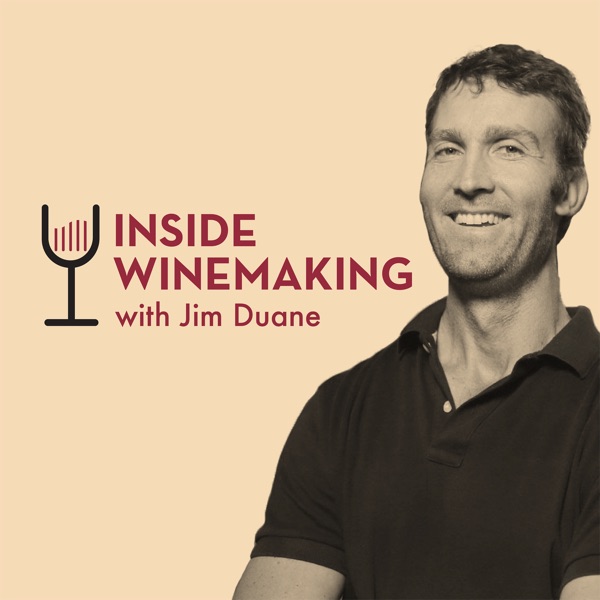
Inside Winemaking - the art and science of growing grapes and crafting wine
Welcome to Inside Winemaking, your go-to resource for all things winemaking, designed for those already immersed in the wine industry and anyone with a passion for the art and science of crafting the perfect bottle.
Inside Winemaking was created to provide direct access to the people in charge of creating world-class wines and for listeners looking for a non-traditional, informative, and entertaining take on winemaking.
Our mission is to be a comprehensive resource hub for winemaking, providing valuable content to enthusiasts and industry professionals alike. Your host Jim Duane (Napa Valley winemaker) interviews some of the top winemakers in California and beyond.
Each episode features a winemaker, grape-grower, or technical wine pro and dives deep into their background and expertise. Wine newbies and expert enophiles will be entertained by winemaking stories and learn more about growing grapes and making wine.
Join us on Inside Winemaking as we uncork the secrets of winemaking, share valuable insights, and create a vibrant community of wine enthusiasts and industry professionals. Subscribe now and elevate your winemaking journey!
- Food chart
- #76
- Episodes
- 229
- Releases
- Every two weeks
- Typical length
- 1 hr
- On air since
- 2014
- Latest episode
- 1 week ago
Episodes
229 episodes, newest first
-
1 hr 2 min
Fermentation Step by Step
Episode 224
Show notes
Fermentation step by step
In this solo episode, Jim Duane walks through recent harvest and fermentation decisions for the 2026 Chardonnay, Merlot, and Cabernet Sauvignon at Seavey Vineyard. He explains whole-cluster pressing and press cuts for Chardonnay, why he allows some early juice oxidation, and how he handles settling, nutrients, and barrel fermentation. For Merlot, he covers fruit processing, a cold soak, tartaric acid adjustment, native fermentation, nutrient timing, pump-overs, and malolactic bacteria.
Jim also discusses how vineyard conditions and juice chemistry shape his choices, including high potassium and pH, the misleading early titratable-acidity readings in red grapes, and why Brix alone cannot confirm that a wine is dry. He shares his nutrient-dosing approach and his plans for extended Cabernet maceration, tasting daily and keeping free-run and press wine separate.
This episode is brought to you by the Sentia Wine Analyzer from Scott Laboratories. Sentia is a handheld analyzer that gives you rapid, in-house measurements of five key analytes: Free SO₂, acetic acid, malic acid, glucose, and fructose. There's no extensive training, calibration is automatic, reagents are minimal, and tests cost just $2 to $6 each. It's built to fill the gaps between your existing QC checkpoints, whether you're tracking VA trends, checking free SO₂ in barrels during topping, or confirming the end of alcoholic or malolactic fermentation.
Sentia isn't meant to replace reference methods or outside labs. It makes routine analysis more accessible and affordable, especially for smaller wineries or those far from a testing lab. Learn more at https://scottlab.com/sentia-wine-analysis. Inside Winemaking listeners get 10% off a new Sentia analyzer with code SENTIA10 through their Scott Laboratories account. Offer for a limited time, limit one per customer.
Check out the Fundamentals of Winemaking Made Easy video course
-
55 min
Ry Richards - Chappellet Winery
Episode 222
Show notes
In this episode, I talk with Ry Richards, winemaker at Chappellet on Pritchard Hill, about his circuitous path from selling wine in high school to learning enology on the job and growing into his current leadership role. Ry describes Chappellet's long‑tenured, family‑driven culture, their production team structure, and the importance of process, communication, and harvest "flow state" in managing complex vintages. We dig into recent and challenging Napa vintages (2011, 2013, 2021, 2023, 2025), shatter and low yields in 2026, and how drought, heat, and smoke have reshaped decision‑making. Ry also details Chappellet's estate and sourced vineyards on the Vaca range, their work with Chenin Blanc, Chardonnay, Viognier, and Bordeaux reds, and why Chenin and site‑specific hillside Cabernet remain central to their identity. Along the way we cover yeast strategy, bottling realities, replanting and trellis choices on steep slopes, the unique trademarked status of Pritchard Hill, and why, despite market headwinds, he stays optimistic and rooted in the idea that wine and visiting Chappellet should fundamentally be about joy.
Resources from this Episode
•
This podcast is sponsored by Wine Compliance Alliance.
Are you concerned about your winery's reporting? Do you worry that it's not being done correctly, or being vulnerable to a TTB audit? Help is here!
The Winery Compliance Training Academy has custom-designed courses created by industry experts with deep backgrounds working at wineries managing production compliance! Our course, The TTB reports all US Wineries are required to file is designed to walk you through the 3 reports all US wineries are required to submit to the TTB. This course is a fit for all winery staff who are responsible for filing reports or label approvals to the TTB.
Check out the Fundamentals of Winemaking Made Easy video course
-
1 hr 1 min
Jillian Johnson DeLeon - Laffort
Episode 222
Show notes
Jillian Johnson DeLeon - Laffort
In this episode, Jim sits down with Jillian Johnson DeLeon of Laffort to dig into the practical mechanics of yeast nutrition, starting with the difference between organic (amino-acid based) and inorganic (DAP) nitrogen sources. They walk through how to calculate the Nitrogren needs for a successfule fermentation across a two-addition strategy, timing the first dose within 24 hours of pitch (or at first signs of cap formation for native ferments) to support the yeast's growth phase, and the second closer to mid-fermentation to carry them through to dryness without triggering Hydrogen sulfide production. The conversation covers dosing heuristics like the one-third organic to two-thirds DAP ratio for that second addition, how nitrogen demand varies by yeast strain and biomass production, fermentation temperature's effect on ester versus thiol expression, the risks of both under- and over-dosing nutrients, and the case for early co-inoculation with malolactic bacteria to avoid stuck ferments and reduce spoilage risk. Jillian also shares her own field-tested Brix-to-potential-alcohol conversion figures and closes with an overview of Laffort's broader product lines, from oak alternatives to vineyard applications.
Resources from this Episode
•
This podcast is sponsored by InnoVint.
Wineries of all sizes rely on InnoVint's winery operating system to optimize vineyard tracking, manage wine production processes, automate compliance reporting, track costs seamlessly, and make data-driven decisions.
The best part? The software is intuitive, easy to use, and mobile and offline friendly! And with the highest-rated customer service in the industry, you're guaranteed to have a smooth transition, even right before harvest.
Learn more: http://innovint.us/
Get a demo: http://innovint.us/request-a-demo/
Join our free winemaking community: innovint.us/join-the-punchdown/
Check out the Fundamentals of Winemaking Made Easy video course
-
1 hr 10 min
221: JJ Naab - L'Amitié Wines
Episode 221
Show notes
In this episode I talk with John "JJ" Julius Naab, assistant winemaker at Matthiasson Wines and founder of Lamitié Wines, about his unconventional path from Chicago brokerage and endurance sports into the wine world. JJ traces his move from finance to Santa Barbara hospitality and DTC sales at Brewer-Clifton and the moment he realized he wanted to make his own wine. We dig into his decision to complete the UC Davis Winemaking Certificate, how that "inch deep, mile wide" technical foundation pairs with on-the-job experience, and what he really learned during his first harvest at Kosta Browne in the middle of COVID and wildfire smoke.
We then dive into JJ's Chardonnay-focused Lamitié project: why he chose to be known for one thing, his focus on low alcohol, high-acid chemistry, and what he looks for in vineyards like Charles Heintz (clone 4, cool sites, marine influence). JJ explains his press strategy ("the juice isn't always worth the squeeze"), fermenting Chardonnay in puncheons on full solids, running relatively warm ferments, and then moving the wine to stainless for a second year to tighten texture and enhance reduction in his efforts towards a Burgundy-inspired style that still reflects California fruit.
Resources from this Episode
•
•
This podcast is sponsored by Wine Compliance Alliance.
Are you concerned about your winery's reporting? Do you worry that it's not being done correctly, or being vulnerable to a TTB audit? Help is here!
The Winery Compliance Training Academy has custom-designed courses created by industry experts with deep backgrounds working at wineries managing production compliance! Our course, The TTB reports all US Wineries are required to file is designed to walk you through the 3 reports all US wineries are required to submit to the TTB. This course is a fit for all winery staff who are responsible for filing reports or label approvals to the TTB.
Check out the Fundamentals of Winemaking Made Easy video course
-
51 min
220: Jen Williams - Arrow and Branch
Episode 220
Show notes
Jennifer Williams joins Jim to talk about her work as a contract winemaker, leading Arrow & Branch and co-owning Zeitgeist Cellars with her husband, Mark Porembsky. They dig into the design and philosophy of the new Arrow & Branch custom crush facility in Oak Knoll—its flexible tank mix, "white glove" service model, and how it's built to handle challenging vintages and a range of client brands. Jennifer explains the stylistic goals and vineyard sourcing for Zeitgeist, including heritage whites like Chenin Blanc and Trousseau Gris, and a Cabernet Franc program that uses barrel fermentation and moderate maceration to shape tannins. Along the way they get into pick-date decisions and herbaceous character in Cabernet Franc, managing slow malolactic fermentations, the realities of custom crush pricing and client expectations, and how small Napa brands are navigating a tougher wine market through relationships, thoughtful growth, and authentic visitor experiences.
Resources from this Episode
•
•
This podcast is sponsored by InnoVint.
Wineries of all sizes rely on InnoVint's winery operating system to optimize vineyard tracking, manage wine production processes, automate compliance reporting, track costs seamlessly, and make data-driven decisions.
The best part? The software is intuitive, easy to use, and mobile and offline friendly! And with the highest-rated customer service in the industry, you're guaranteed to have a smooth transition, even right before harvest.
Learn more: http://innovint.us/
Get a demo: http://innovint.us/request-a-demo/
Join our free winemaking community: innovint.us/join-the-punchdown/
Check out the Fundamentals of Winemaking Made Easy video course
-
57 min
Elias Fernandez - Shafer Vineyards
Episode 217
Show notes
This episode features a conversation with Elias Fernandez, longtime winemaker at Shafer Vineyards in Napa Valley. Fernandez, who was raised by migrant farm workers in the Napa Valley, traces his path from studying enology at UC Davis to joining Shafer in 1984, where he became winemaker in 1994. He discusses the winery's evolution under John and Doug Shafer, its shift toward estate-only vineyards with additions like Wildfoote and Altimeter, and the current portfolio, including Hillside Select, TD-9, the One Point Five, and the Wine Spectator–acclaimed Relentless Syrah. The conversation also covers his hands-on approach to extended maceration, his early and enthusiastic adoption of non-Saccharomyces yeasts and crossflow filtration, and his use of AI-based tools like Tule for vineyard water management. Fernandez closes by reflecting on mentoring his son, now assistant winemaker at Shafer, and on the importance of introducing younger generations to wine.
Resources from this Episode
•
-
45 min
The Barrel Management Episode
Episode 218
Show notes
In this solo episode of Inside Winemaking, Jim tackles one of the questions he gets most often: how to manage empty barrels. Working through the full lifecycle of a barrel, Jim covers receiving and inspecting new barrels on arrival, keeping them hydrated before harvest (his go-to: shrink-wrap them tight and lock the moisture in), and recovering barrels that have dried out. He walks through swelling and leak-testing before filling, the realities of finding and repairing leaks with spiles, and smart practices for stacking, filling, and leaving proper ullage for young wines still off-gassing CO2.
From there, Jim gets into cleaning and sanitizing — why an immediate rinse matters, where he lands on tartrates, and his candid take on the trade-offs between burning sulfur, SO2 gas, ozone, and steam. He closes with short-, medium-, and long-term storage strategies, how often to recharge sulfur based on cellar conditions, and how to tell when a barrel is truly done. Practical, opinionated, and grounded in real cellar experience, this episode is a field guide for anyone trying to keep their empty barrels healthy between fills.
This podcast is sponsored by InnoVint.
Wineries of all sizes rely on InnoVint's winery operating system to optimize vineyard tracking, manage wine production processes, automate compliance reporting, track costs seamlessly, and make data-driven decisions.
The best part? The software is intuitive, easy to use, and mobile and offline friendly! And with the highest-rated customer service in the industry, you're guaranteed to have a smooth transition, even right before harvest.
Learn more: http://innovint.us/
Get a demo: http://innovint.us/request-a-demo/
Join our free winemaking community: innovint.us/join-the-punchdown/
-
1 hr 7 min
Alison Rodriguez - Silverado Vineyards
Episode 217
Show notes
Recorded high above the valley floor in Silverado's Stags Leap estate, this episode with winemaker Alison Rodriguez dives into both Napa viticulture and her global winemaking journey. Alison unpacks the 2025 growing season—early bud break, late rains, and the shadow of El Niño—while describing the constant tension between picking early for safety and waiting for full ripeness in a fire-prone era. She explains what it means to farm 325 acres of 100% estate vineyards, how early-season decisions set up harvest success, and how she manages tannin and extraction in small-berry hillside Cabernets, including the tradeoffs of pressing sweet to keep structure in balance.
Alison also shares how a Baton Rouge upbringing and a career in wine sales led her to **Geisenheim** in Germany, European cellar work, and ultimately Napa. She explains the German technique of *Maischestandzeit* for aromatic whites, her evolving approach to Sauvignon Blanc at Silverado (skin contact, neutral barrel ferment, and textural focus), and how she thinks about acid, phenolics, and oak as part of a single matrix. The conversation ranges across Silverado's portfolio—from estate Cabernet blending **Stags Leap and Coombsville**, to Merlot, Cabernet Franc, Malbec, Petit Verdot, Kerner, and old-vine Chardonnay—before closing on the smells of her Louisiana childhood, Napa's collaborative winemaking culture, and why she's still betting on Riesling's long-overdue comeback.
Resources from this Episode
•
This podcast is sponsored by InnoVint.
Wineries of all sizes rely on InnoVint's winery operating system to optimize vineyard tracking, manage wine production processes, automate compliance reporting, track costs seamlessly, and make data-driven decisions.
The best part? The software is intuitive, easy to use, and mobile and offline friendly! And with the highest-rated customer service in the industry, you're guaranteed to have a smooth transition, even right before harvest.
Learn more: http://innovint.us/
Get a demo: http://innovint.us/request-a-demo/
Join our free winemaking community: innovint.us/join-the-punchdown/
Check out the Fundamentals of Winemaking Made Easy video course
-
1 hr 4 min
216: Meredith Sarboraria - Livermore Valley and Valle de Guadalupe
Episode 216
Show notes
This episode features Livermore Valley winemaker and consultant Meredith Sarboraria for a wide-ranging conversation recorded on location in the heart of the appellation. A proud self-described "Livermoron," Meredith traces her path from tasting room work in the late 1990s to earning her Viticulture and Enology degree at Las Positas College and building her consulting business, Barrel Down Wine Services. Along the way, she paints a vivid portrait of Livermore's wine country — from the outsized influence of Wente and Measure D on land preservation, to the region's sandy loam soils, marine-influenced climate, and its newly adopted signature varietals: Cabernet Franc and Sauvignon Blanc. She also shares candid insights into the valley's growing community of female winemakers and the collective they've built to support one another.
The conversation then shifts to winemaking craft, with Meredith diving deep on the challenges of working with high-acid Barbera, her philosophy of balance over manipulation, techniques for punch-downs in macro bins and T-bins, and the smart use of enzymes during fermentation. Jim and Meredith also preview an upcoming Inside Winemaking group trip to Valle de Guadalupe, Baja California — Mexico's oldest New World wine region — where Meredith has traveled three times and serves as the group's guide. She covers everything from crossing the border by shuttle to the region's savory, marine-influenced wines, its world-class restaurants, and the exciting mix of traditional and modern winemaking happening in the valley. The episode closes with Meredith sharing the childhood smells of Livermore that still bring her home.
Resources from this Episode
•
•
Inside Winemaking's Feb 2027 Trip to Valle de Guadalupe
This podcast is sponsored by InnoVint.
Wineries of all sizes rely on InnoVint's winery operating system to optimize vineyard tracking, manage wine production processes, automate compliance reporting, track costs seamlessly, and make data-driven decisions.
The best part? The software is intuitive, easy to use, and mobile and offline friendly! And with the highest-rated customer service in the industry, you're guaranteed to have a smooth transition, even right before harvest.
Learn more: http://innovint.us/
Get a demo: http://innovint.us/request-a-demo/
Join our free winemaking community: innovint.us/join-the-punchdown/
-
1 hr
Elizabeth Vianna - Chimney Rock Winery
Episode 215
Show notes
In this episode Jim Duane sits down with Elizabeth Vianna to explore her unconventional path from pre-med student to one of Napa Valley's most respected Cabernet Sauvignon producers. Elizabeth shares how a late discovery of wine in New York City led her to University of California, Davis, and ultimately to a long-term career rooted in estate winemaking in the Stags Leap District. The conversation dives into the evolution of Chimney Rock's vineyard and winemaking philosophy, including its commitment to 100% estate fruit, the use of exclusively free-run wine, and the influence of site diversity on wine style.
The episode also goes deep on practical winemaking decisions, from extended maceration strategies and tannin management to sulfur timing, racking protocols, and blending philosophy. Elizabeth discusses her increasing focus on regenerative farming, vine health, and long-term sustainability in the face of climate change, as well as her approach to working with alternative white varieties like Sauvignon Gris and Fiano. Along the way, she reflects on mentorship, leadership, and the importance of helping the next generation of winemakers develop their own instincts—making this episode both technically insightful and personally grounded.
-
57 min
214: Patrick Riggs - Jack Neal & Son Vineyard Managment
Episode 214
Show notes
In this episode, viticulturist Patrick Riggs dives deep into the realities of organic farming in Napa Valley. We unpack what it takes to convert vineyards from conventional to organic, from soil testing and rethinking fertilizer programs to choosing equipment for under‑vine weed control and managing more volatile, season‑driven budgets. Patrick explains how tools and machinery for cultivation have evolved, how he approaches weed control without herbicides, and why organic systems demand a more diagnostic, problem‑solving mindset.
Patrick also details integrated strategies for managing vine mealybug organically—combining year‑round mating disruption, biological controls like parasitic wasps and mealybug destroyers, and very selective use of organic sprays. From there, we explore floor management, soil moisture dynamics, and irrigation strategy in drought years: when to irrigate, how to prioritize limited water, why shaded interior leaves can be "water hogs," and how canopy design and trellis choices are shifting to protect fruit in a hotter, drier future. We close with newer tools like Surround (kaolin clay), spore trapping for mildew risk, updated organic nematode approaches, and even a duck‑powered experiment to clean a reservoir overrun with Azolla.
-
1 hr 13 min
James Molesworth - Wine Spectator
Episode 213
Show notes
This Jim sits down with James Molesworth, Senior Editor for The Wine Spectator, to trace James's unconventional path into wine—from a Francophile, academic household in Queens to blind-tasting Burgundy in a tiny West Village cellar, and eventually orchestrating tastings and writing for one of the most influential wine publications in the world. James reflects on formative mentors, the discipline and humility required to learn both tasting and journalism at a professional level, and how his anthropology background shaped his "observe and report" style of wine writing. He also unpacks Wine Spectator's mission to educate and entertain, the magazine's role in the global wine ecosystem, and how landmark moments like the post‑9/11 New York Wine Experience revealed the deep, relationship-driven core of the wine community.
The conversation then widens to a rich exploration of regional evolution and the future of fine wine, focusing especially on Bordeaux and Napa Valley. James explains how Bordeaux's garagiste era parallels Napa's cult Cabernet phase, how shifts in farming (organic, biodynamic, agroforestry, soil health, old vines) are reshaping ripeness, structure, and balance, and why Cabernet Franc is becoming more important on both the right bank and in Napa. He talks candidly about climate pressures, changing consumer behavior, and why he remains bullish on Napa's future—as long as the valley stays rooted in agriculture, terroir, and authentic hospitality. Along the way, James shares insider perspectives on how Wine Spectator chooses which wines to review, the power of storytelling versus scores, and his "bookshelf" model for building regional expertise.213
-
1 hr 6 min
Matteo Abreu - David Abreu Vineyard Management
Episode 212
Show notes
In this episode of Inside Winemaking, Jim Duane sits down with Matteo Abreu, fifth-generation Napa Valley farmer and part of the Abreu vineyard management family, to explore what it means to grow and farm at the highest level in one of the world's most demanding wine regions. Matteo shares his path into the family business, the realities of multi-generational vineyard management, and how Abreu approaches vineyard site selection, soil preparation, drainage, and long-term vineyard design. The conversation highlights the importance of matching the right varieties to the right sites, with a particular focus on Cabernet Sauvignon and Cabernet Franc, and how disciplined vineyard preparation sets the foundation for premium wine quality.
The discussion also dives into modern challenges and hands-on solutions in Napa Valley viticulture, including heat management strategies such as shade cloth, pre-irrigation cooling, and selective use of misting, along with crop load management and canopy decisions for Cabernet Franc. Matteo also shares insights into Abreu's small-lot winemaking philosophy, co-fermentation practices, and the limits of automation in both vineyard and winery operations. Beyond grapes, listeners will hear about Abreu's olive oil production, olive fruit fly management, and commercial blueberry farming, offering a broader look at how diversified, detail-driven farming supports both wine quality and long-term sustainability.
-
1 hr 11 min
Heat and Cold Stabilization of wines with Leigh Meyering from MyEnologisteat and Cold Stabilization of wines with Leigh Meyering from MyEnologist
Episode 211
Show notes
In this episode of Inside Winemaking, Jim Duane speaks with Leigh Meyering of MyEnologist about the practical and analytical aspects of heat and cold stability in wine. The discussion focuses on how and why protein haze and tartrate instability occur, with an emphasis on white and rosé wines. Leigh explains the principles behind heat stability testing, protein denaturation, and the use of bentonite to prevent haze, as well as how stability concerns differ between red wines and lighter-colored styles. The conversation also addresses the sensory and chemical impacts of stabilization decisions, including common concerns around stripping, mouthfeel, and visual clarity in finished wines.
The episode then moves into cold stability, detailing the Davis conductivity, DIT, and ISTC 50 tests and how to choose the appropriate method based on a winery's stabilization strategy. Leigh outlines the roles of traditional chilling and seeding, carboxymethyl cellulose (CMC), and mannoproteins, including their limitations and compatibility with protein stability. Throughout the discussion, Jim and Leigh emphasize correct sampling strategy, filtration level selection, and timing of tests to ensure results accurately represent the wine that will be bottled. Practical lab workflows, sample volume requirements, and real-world bottling considerations are covered to help winemakers reduce risk and avoid post-bottling stability issues.
Leigh previously appeared on Inside Winemaking in May 2019 to discuss the founding and early development of her wine lab, MyEnologist, including its analytical services and role in supporting winemakers. This episode builds on that earlier conversation by applying lab-based analysis directly to cellar decision-making, with a focused, technical look at stability testing and intervention strategies used in modern winemaking.
-
1 hr 11 min
Tommaso Martignon - Seve Consulting
Episode 210
Show notes
This episode features Tommaso, a vineyard consultant whose career spans from Venice and Montalcino to Burgundy, Bordeaux, and other renowned wine regions. Tommaso discusses his background in viticulture, the technical aspects of working in different European vineyards, and how he manages various grape varieties and regional challenges. The conversation highlights real-world issues such as vineyard management, adapting to climate change, and the critical decisions involved in harvest timing and vine care.
A significant part of the discussion focuses on the curretage technique, a method for removing diseased wood from vines using specialized tools. Tommaso explains the origins of this approach, how it is applied in European vineyards, and its role in combating trunk diseases. The episode also covers Tommaso's work as a viticultural consultant specializing team training for vineyard surgery, adapting vineyard design to environmental pressures, and practical steps for maintaining vine health. This episode is well-suited for listeners interested in the technical and operational side of vineyard management.
-
54 min
Andrea Card - Francis Ford Coppola Winery
Episode 209
Show notes
In this episode, Andrea shares her unique journey to becoming the Director of Winemaking at Francis Ford Coppola Winery. Starting her career without the initial intention of entering winemaking, she found her path through roles in the laboratory, cellar, and bottling lines, developing a passion for the hands-on aspects of the craft. Andrea highlights the value of practical experience, local education, and her commitment to continual learning, which eventually led her to oversee the winemaking team at FFC. She discusses adapting to changes like the acquisition by Delicato Family Wines, her focus on mentorship and team guidance, and her philosophy of keeping winemaking rooted in the region's character.
The conversation covers the structure and innovation at FFC, including their iconic wine programs, creative approaches to blending, and the development of new products such as low-alcohol, low-calorie wines. Andrea explains the logistics of vineyard sourcing across California, their strategies for maintaining quality and consistency, and the balance between digital tools and traditional whiteboards in managing production. She also offers insights into industry trends, the winery's club and visitor experience, and her role representing the brand through travel and events, always aiming to empower her team and stay connected to the evolving world of wine
Resources from this Episode
This podcast is sponsored by InnoVint.
Wineries of all sizes rely on InnoVint's winery operating system to optimize vineyard tracking, manage wine production processes, automate compliance reporting, track costs seamlessly, and make data-driven decisions.
The best part? The software is intuitive, easy to use, and mobile and offline friendly! And with the highest-rated customer service in the industry, you're guaranteed to have a smooth transition, even right before harvest.
Learn more: http://innovint.us/
Get a demo: http://innovint.us/request-a-demo/
Join our free winemaking community: innovint.us/join-the-punchdown/
Check out the Fundamentals of Winemaking Made Easy video course
-
1 hr
Jason Moulton - Whitehall Lane Winery
Episode 208
Show notes
This episode features an in-depth discussion about winemaking at Whitehall as the team nears the end of the 2025 harvest season. The episode begins with insights into the progression of the harvest, focusing on the completion of most varietals and the ongoing work with late-harvest selections like Semillon.
Our conversation runs the gamut of technical issues such as stabulation of Sauvignon blanc juice, cellar techniques to avert the need for fining and filtration, and Whitehall's trials with Pierce's Disease resistant clones from UCDavis.
Resources from this Episode
This episode is sponsored by Harvest Pillar concrete trellis posts. Want to know why more growers are going for concrete? It's because Harvest Pillar is the last trellis post you'll ever need.
Check out the Fundamentals of Winemaking Made Easy video course
-
58 min
207: Benjamin Leachman - Walsh Vineyards Management and Vidi Vitis
Episode 207
Show notes
Ben is a seasoned viticulturist and winemaker currently serving as the Director of Viticulture and Winemaker at Large at Walsh Vineyards Management, overseeing approximately 1,000 acres in Napa and Sonoma. His journey in the wine industry began in 2004 after graduating with a biochemistry degree, starting at RH Phillips and later working with Jim at Seavey Vineyard.
At Walsh Vineyards Management, Ben works with a team of 125 full-time employees and up to 400 seasonal workers, focusing on client relations, vineyard management, development. Alongside his professional role, he has created his own wine brand, Vidi Vitis, which started in 2015 with a unique opportunity to salvage a ton of Stags Leap District Cabernet. His winemaking philosophy emphasizes quality fruit, experimentation, and a passion for exploring different grape varieties.
Resources from this Episode
Vidi Vitis / Forgotton Union Wines
This podcast is sponsored by InnoVint.
Wineries of all sizes rely on InnoVint's winery operating system to optimize vineyard tracking, manage wine production processes, automate compliance reporting, track costs seamlessly, and make data-driven decisions.
The best part? The software is intuitive, easy to use, and mobile and offline friendly! And with the highest-rated customer service in the industry, you're guaranteed to have a smooth transition, even right before harvest.
Learn more: http://innovint.us/
Get a demo: http://innovint.us/request-a-demo/
Join our free winemaking community: innovint.us/join-the-punchdown/
Check out the Fundamentals of Winemaking Made Easy video course
-
1 hr 4 min
206: Esther Mobley - San Francisco Chronicle
Show notes
Join me as I sit down with Esther Mobley, Senior Wine Critic for the San Francisco Chronicle. Esther shares her fascinating journey from an English major to a wine journalist, starting with a harvest internship in Napa Valley and subsequently working in Mendoza, Argentina. Her career path led her through Wine Enthusiast and Wine Spectator before landing at the Chronicle in 2015, where she has since become a prominent voice in wine journalism.
Throughout our conversation, Esther discusses her approach to wine writing, emphasizing her role as a reporter who explores wine through broader lenses of society, climate change, immigration, and culture. She explains that her job goes beyond traditional wine criticism, focusing instead on telling compelling stories about the wine industry in California. The episode offers listeners an insider's view of wine journalism, tracing her professional evolution and her unique perspective on covering the dynamic world of wine.
Resources from this Episode
•
•
Drinking with Esther Newsletter
•
"The original 'cult' wine: How I discovered California's strangest vineyard" Published 2018
This episode is sponsored by Harvest Pillar concrete trellis posts. Want to know why more growers are going for concrete? It's because Harvest Pillar is the last trellis post you'll ever need.
Check out the Fundamentals of Winemaking Made Easy video course
-
1 hr 11 min
205: Rich DeScenzo - ETS Labs
Episode 205
Show notes
Rich DeScenzo, the Microbiology Group Leader at ETS Labs, came on this episode to discuss the science of wine microbiology and its impact on winemaking. We talked about the roles of yeast and bacteria, such as Brettanomyces, in wine quality and stability. The episode explores the evolution of microbial testing, highlighting advanced techniques like Scorpion PCR technology, which enhances microbial risk assessment and wine quality control.
Rich shares insights on managing microbial risks, barrel sanitation, and the challenges of controlling Brettanomyces. The episode also touches on groundbreaking research in grapevine virus detection, emphasizing the importance of understanding microbial populations and wine chemistry for winemakers.
Winemaking Class Offers and Show Notes for all episodes at https://www.insidewinemaking.com/
Resources from this Episode
Winemaking Class Offers and Show Notes for all episodes at https://www.insidewinemaking.com/
ETS Labs https://www.etslabs.com/
This episode is sponsored by Innovint.
Wineries of all sizes rely on InnoVint's winery operating system to optimize vineyard tracking, manage wine production processes, automate compliance reporting, track costs seamlessly, and make data-driven decisions.
The best part? The software is intuitive, easy to use, and mobile and offline-friendly! And with the highest-rated customer service in the industry, you're guaranteed to have a smooth transition, even right before harvest.
• Learn more: https://www.innovint.us/
• Get a demo of the product: https://www.innovint.us/request-a-demo/
• Join our free winemaking community, The Punchdown: https://www.innovint.us/join-the-punchdown/Follow and Review:
We'd love for you to follow us if you haven't yet. Click that purple '+' in the top right corner of your Apple Podcasts app. We'd love it even more if you could drop a review or 5-star rating over on Apple Podcasts. Simply select "Ratings and Reviews" and "Write a Review" then a quick line with your favorite part of the episode. It only takes a second and it helps spread the word about the podcast.
Episode Credits
If you like this podcast and are thinking of creating your own, consider talking to my producer, Emerald City Productions. They helped me grow and produce the podcast you are listening to right now. Find out more at https://emeraldcitypro.com/. Let them know we sent you.
On these lists
Inside Winemaking - the art and science of growing grapes and crafting wine is one of the shows picked out on this list
More in Food
Placed highest on Apple Podcasts' Food chart right now