Podcast
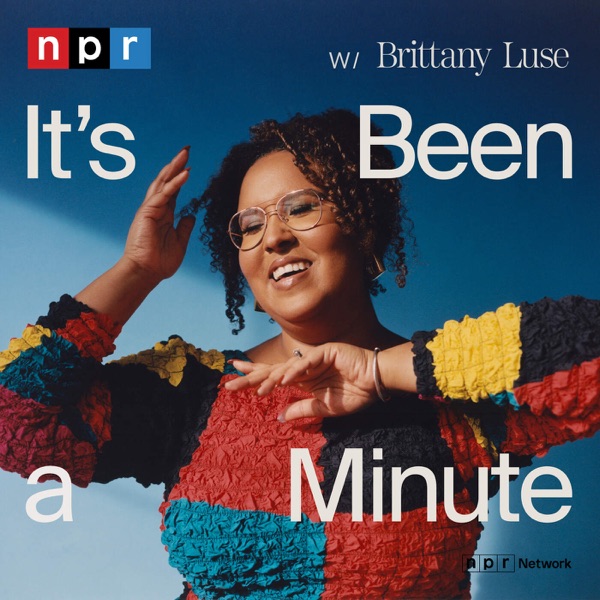
It's Been a Minute
Want in on a secret? Your likes and dislikes didn't develop by accident. There are subtle and not-so-subtle forces around you, shaping what you think, how you act, and even who you think you are. Brittany Luse is here to break the spell and help you feel wiser in a society that makes things blurry.
THE BEST POP CULTURE PODCAST AWARD WINNER AT THE 2025 SIGNAL AWARDS
It’s Been A Minute with Brittany Luse is the best podcast for understanding what’s going on in culture right now, and helps you consume it smarter. From how politics influences pop culture to how identity influences tech or health, Brittany makes the picture clearer for you every Monday, Wednesday, and Friday.It’s Been A Minute reaches millions of people every week. Join the community and conversation today.
Support public media by joining NPR+ at http://plus.npr.org/. You’ll get perks for over 25 NPR podcasts, including sponsor-free listening for It's Been A Minute.
- Society & Culture chart
- #129
- Episodes
- 1,128
- Releases
- Daily
- Typical length
- 28 min
- On air since
- 2017
- Latest episode
- 21 hours ago
Episodes
1,128 episodes, newest first
-
29 min
How Denée Benton conquered Hollywood, TV, and Broadway
Show notes
Denée Benton is having a very good year.
She’s currently starring in season four of the hit television show ‘The Gilded Age’ while starring in the production of ‘School Girls; Or, The African Mean Girls Play.’ But success has been a long time coming. Since her Broadway debut in 2016, Denee has been working in television, theater and movies, often simultaneously, for a decade. She joins host Brittany Luse in a discussion about how a Broadway performance can feel like a physical workout, what’s in store for her Gilded Age character Peggy, and her most “sacred” project to date.
Support public media with NPR+ and enjoy perks for over 25 podcasts like this one. This show’s perks include sponsor-free listening. Learn more at http://plus.npr.org/.
See https://pcm.adswizz.com for information about our collection and use of personal data for sponsorship and to manage your podcast sponsorship preferences.
-
36 min
Does a high IQ make you smart?
Show notes
Why IQ still matters to people - even if it's biased.
President Trump and Silicon Valley tech bros are obsessed with IQ, but the history of intelligence testing is full of bunk race science and eugenics. With the rise of AI's "super intelligence," should we still be ranking human intelligence at all? In this crossover episode with our friends at Code Switch, we explore who gets labeled as smart with Quinn Slobodian, author of Hayek’s Bastards: Race, Gold, IQ, and the Capitalism of the Far Right and Angela Saini, author of Superior: The Return of Race Science.
(00:00) Why Trump and Silicon Valley are obsessed with IQ
(03:27) The tech right's IQ fetishism
(06:30) How 'The Bell Curve' justified inequality
(09:05) IQ's political consequences
(15:28) The BITCH test and valuing diverse intelligences
(22:23) The myth of biological race
(26:13) Does nurture matter more than nature for intelligence?
(32:27) Rejecting IQ hierarchiesFor more episodes about the politics of intelligence, check out:
The price you pay for being smart
Books vs. Brain Rot: why it's so hard to read
You might be suffering from AI brain frySupport public media with NPR+ and enjoy perks for over 25 podcasts like this one. This show’s perks include sponsor-free listening. Learn more at http://plus.npr.org/.
See https://pcm.adswizz.com for information about our collection and use of personal data for sponsorship and to manage your podcast sponsorship preferences.
-
27 min
Why is divorce financially harder on women?
Show notes
Divorce can be liberating. And expensive.
When author and science journalist Melinda Wenner Moyer separated from her ex-husband, her social media feed was inundated with posts about the freedom of divorce. But while divorce can be empowering… Melinda felt like that narrative overlooked a pretty significant part of the process: the financial burden.
And she’s not alone. After detailing her experience on her Substack, Now What, it caught the attention of editors at New York Magazine. Apparently their divorced friends were also having a hard time financially and they wanted someone to look into it. Melinda’s reporting was published in The Cut, titled: The Strong, Empowered, Secretly Broke Divorcee.
Melinda joins the show to walk Brittany through how financially punishing divorce can be for women and why we should all be a bit more critical of the laws that intend to treat all parties fairly when we still live in a deeply unequal society.
Support public media with NPR+ and enjoy perks for over 25 podcasts like this one. This show’s perks include sponsor-free listening. Learn more at http://plus.npr.org/.
See https://pcm.adswizz.com for information about our collection and use of personal data for sponsorship and to manage your podcast sponsorship preferences.
-
22 min
Bringing a chatbot to the polls
Show notes
How do you decide who to vote for?
Some people are turning to AI chatbots to craft bespoke voter guides, while others are leaning on the wisdom of their favorite Instagram or TikTok influencers to guide them to the polls. But what are the pitfalls of each of these approaches, and what does our reliance on them say about what we need to feel informed? To find out, Brittany is joined by Maham Javaid, NPR politics reporter, and Dr. Martin Riedl, assistant professor of journalism and media at the University of Tennessee, Knoxville.
Are you looking for more conversations on politics and culture? Check these out:
The DSA vs. establishment Democrats
How often do you think about the American Empire?Support public media with NPR+ and enjoy perks for over 25 podcasts like this one. This show’s perks include sponsor-free listening. Learn more at http://plus.npr.org/.
See https://pcm.adswizz.com for information about our collection and use of personal data for sponsorship and to manage your podcast sponsorship preferences.
-
43 min
Our money dysmorphia is real
Show notes
Are we in an economic crisis?
It’s a question that prompted Pulitzer Prize-winning data journalist and illustrator Mona Chalabi to pitch her first book, Ten Lives: How What We Have Shapes Who We Are.
It chronicles the economic lives of Americans -- from the mega wealthy to those living paycheck-to-paycheck -- over a six year period. She even digs into her own financial life. From the economic highs of inheritances and professional success to the lows of divorces and lawsuits, Mona chats with Brittany about how economic insecurity affects us all.
Support public media with NPR+ and enjoy perks for over 25 podcasts like this one. This show’s perks include sponsor-free listening. Learn more at http://plus.npr.org/.
See https://pcm.adswizz.com for information about our collection and use of personal data for sponsorship and to manage your podcast sponsorship preferences.
-
18 min
There's nothing scarier than private equity in food
Show notes
Does private equity turn restaurants into zombified husks of their former selves?
From the Crumbl and Insomnia cookie empires, to some of our country's most enduring chains like Dunkin and Panera, private equity is getting its hands in a lot of food chains. And some consumers are actively avoiding places that are private equity backed – expecting high prices, low quality, and an unsettling sameness to the food. But what's behind all the private equity money in these food chains? And what makes the hate of it so personal?
To get into it, Brittany is joined by Alaina Demopoulos, daily features writer at the Guardian, and Courtney E. Smith, founder and owner of the independent food and culture site Ravenous.
For more episodes about food culture, check out:
Bacteria is taking over the food pyramid
Is the internet choosing your food?
It's healthy to eat your feelings. Here's why.Support public media with NPR+ and enjoy perks for over 25 podcasts like this one. This show’s perks include sponsor-free listening. Learn more at http://plus.npr.org/.
See https://pcm.adswizz.com for information about our collection and use of personal data for sponsorship and to manage your podcast sponsorship preferences.
-
20 min
How will Gen Z independents shape the midterms?
Show notes
Has Gen Z changed how we think about independents?
It's no secret that Americans are politically divided, as faith in political parties erodes. In the past, so-called "independent" voters were likely shifting between Democrats and Republicans. But now, especially Gen-Z, are pushing in new directions, far from the center. In this episode, we explore how "independent" became a rallying cry for change on the left and the right.
Support public media with NPR+ and enjoy perks for over 25 podcasts like this one. This show’s perks include sponsor-free listening. Learn more at http://plus.npr.org/.
See https://pcm.adswizz.com for information about our collection and use of personal data for sponsorship and to manage your podcast sponsorship preferences.
-
18 min
A chatbot a day keeps the doctor away
Show notes
Who do you trust to help you make decisions about your sexual health?
In the absence of widespread public health campaigns and high-profile narratives in TV and film about HIV prevention, Gen Z is turning to their chatbots of choice to help them make decisions regarding their sexual health. While some call it innovative, is there something that gets missed when the hard conversations about safety and pleasure become a digital feedback loop? Brittany is joined by Jerrell K.L. Hardnett, Associate Director of Education and Advocacy at GLAAD, and Dr. Samantha Hill, Associate Professor of Pediatrics at Emory University to find out.
Want more episodes on AI's influence on culture?
You might be suffering from AI brain fry
Support public media with NPR+ and enjoy perks for over 25 podcasts like this one. This show’s perks include sponsor-free listening. Learn more at http://plus.npr.org/.
See https://pcm.adswizz.com for information about our collection and use of personal data for sponsorship and to manage your podcast sponsorship preferences.
-
33 min
How artists conquer Tiny Desk
Show notes
What makes a great Tiny Desk concert?
For NPR’s Tiny Desk Creative Director Bobby Carter, success means making space for an artist's creativity within the show’s strict technical parameters -- no speakers, no in-ear monitors, no amplification. It’s a tough space to master, but after 14 years of producing shows, Bobby Carter knows what works. He loves when artists adapt to the space and “you get these little moments where you get a piece of their personality.” This week Brittany chats with him about his favorite shows, his dream guests, and the future of Tiny Desk.
Support public media with NPR+ and enjoy perks for over 25 podcasts like this one. This show’s perks include sponsor-free listening. Learn more at http://plus.npr.org/.
See https://pcm.adswizz.com for information about our collection and use of personal data for sponsorship and to manage your podcast sponsorship preferences.
-
34 min
The sport of online harassment
Show notes
Non-consensually posted intimate images can devastate women – and beget male bonding.
The burner accounts on X loosely grouped into the “burnerverse” started by bonding over college sports – but soon took a darker turn when some of them began trying to make salacious rumors or non-consensual intimate images of young women and their names go viral. Ej Dickson investigated the burnerverse for Wired, profiling one of these women who were doxxed – and found links between these burner accounts and college fraternities. But what makes misogyny such a potent tool for men’s bonding? And with laws against non-consensually distributed intimate images in all 50 states – how is it still happening at scale?
To talk more about the culture that supports this kind of harassment and the structures that keep it in place, Brittany is joined by Ej Dickson, senior culture writer at wired, and Dr. Mary Anne Franks, professor at the George Washington University Law School and president of the Cyber Civil Rights Initiative.
Support public media with NPR+ and enjoy perks for over 25 podcasts like this one. This show’s perks include sponsor-free listening. Learn more at http://plus.npr.org/.
See https://pcm.adswizz.com for information about our collection and use of personal data for sponsorship and to manage your podcast sponsorship preferences.
-
28 min
Who gets to keep the lights on?
Show notes
As our climate crisis continues to unfold, who gets to keep the lights on?
On August 11th, a derecho hit northwest Indiana, and the predominantly Black city of Gary was left without power for 14 days… which makes it one of the longest power outages in modern US history, according to Electric Choice.
As more and more reports of outages and struggling infrastructure come out of these seasonal storms, it made Brittany wonder: How does where we live - or even certain attitudes about where we live - affect the quality of service we get?
To answer that question, Jenae Barnes, health and environment reporter, and Shalanda Baker, Professor of Environment and Sustainability; Vice Provost for Sustainability and Climate Action at the University of Michigan join the show. Jenae and Shalanda walk Brittany through how our aging power grid - coupled with climate change, the strain of new technologies, and a lack of investment - exposes the systemic shortcomings that very well might leave all of us in the dark.
NIPSCO’s full message to their customers here.
Support public media with NPR+ and enjoy perks for over 25 podcasts like this one. This show’s perks include sponsor-free listening. Learn more at http://plus.npr.org/.
See https://pcm.adswizz.com for information about our collection and use of personal data for sponsorship and to manage your podcast sponsorship preferences.
-
28 min
The high flying girls who desegregated America
Show notes
She's America's sweetheart, but she just might be America's superhero as well.
The American cheerleader has become one of the nation's most cemented symbols of femininity, girlhood, and youthful power. But how does paying attention to the real life experiences of cheerleaders tell a different story about America's history of education, race, and gender? Brittany is joined by Dr. Natalie G. Adams, editor of The Cheer Reader, and contributor Dr. Amira Rose Davis to find out.
Interested in more conversations on sports and gender? Check out these episodes:
Would you let your kids play football?
The strange politics of PilatesSupport public media with NPR+ and enjoy perks for over 25 podcasts like this one. This show’s perks include sponsor-free listening. Learn more at http://plus.npr.org/.
See https://pcm.adswizz.com for information about our collection and use of personal data for sponsorship and to manage your podcast sponsorship preferences.
-
40 min
Nowadays, celebrity is a state of mind
Show notes
We’re in an era where everyone can be a celebrity. And that’s okay!
For the past ten years, Bobby Finger and Lindsey Weber, hosts of the podcast Who? Weekly, have dissected the celebrity landscape. From the declining power of A-List celebrities to the rising power of influencers, the duo have investigated how fame and power have shifted over the last decade. They’ve asked the question: ‘Who gets to be famous?’ And discovered, ‘ well, nowadays, anyone.’ I Want to Be Famous: When Everybody and Nobody Is a Celebrity is their new book where they explore what they've learned about the ephemeral nature of fame, celebrity, and our collective obsession with reality television.
Support public media with NPR+ and enjoy perks for over 25 podcasts like this one. This show’s perks include sponsor-free listening. Learn more at http://plus.npr.org/.
See https://pcm.adswizz.com for information about our collection and use of personal data for sponsorship and to manage your podcast sponsorship preferences.
-
26 min
The proposal to know less about America
Show notes
Census data about race can be incredibly important – but we might lose it.
The Trump administration has proposed to stop asking people in the U.S. about their race and ethnicity in the upcoming 2030 census. But what's the point of getting rid of these questions? And what makes the narratives around our nation's demographics so fraught?
To get into it, Brittany is joined by Russell Contreras, senior race and justice reporter at Axios, and Hansi Lo Wang, a correspondent at NPR who covers voting rights and the census.
For more episodes about policy and culture, check out:
Bacteria is taking over the food pyramid
Is your city shaped by yuppie taste?
Don't get got by big MILK(00:00) Understanding the Trump administration's census proposal
(02:58) Will the government stop collecting data on race?
(05:34) What we use race data for
(10:04) The proposal to stop counting some non-citizens in the census
(14:42) How shifting categories might change census data
(20:52) Who's afraid of America's changing demographics?Support public media with NPR+ and enjoy perks for over 25 podcasts like this one. This show’s perks include sponsor-free listening. Learn more at http://plus.npr.org/.
See https://pcm.adswizz.com for information about our collection and use of personal data for sponsorship and to manage your podcast sponsorship preferences.
-
27 min
The Palestinians telling their own stories
Show notes
Palestinians are challenging the narrative one story at a time.
Editor-in-Chief of The Key, Sara Yasin, wants us to rethink what she calls ‘it’s complicated' journalism. As more young people are exposed to the destruction in Gaza -- outside of traditional media outlets -- Sara wanted to provide a space where Palestinians can speak freely about what’s going on around them.
Enter: The Key, an online publication that focuses on “analysis, interviews, essays, reviews and reportage about Palestine.” Sara joins the show to get into The Key, what ‘fairness’ looks like for mainstream media in this moment, and how power informs framing.
Support public media with NPR+ and enjoy perks for over 25 podcasts like this one. This show’s perks include sponsor-free listening. Learn more at http://plus.npr.org/.
See https://pcm.adswizz.com for information about our collection and use of personal data for sponsorship and to manage your podcast sponsorship preferences.
-
26 min
The secret pain of your high school bully
Show notes
Some of life's hardest lessons are learned in high school.
In Jocelyn Bioh's Broadway play, School Girls; or, the African Mean Girls Play, the ladies of Aburi Girls' Boarding School live these hard lessons through their friendships, feuds, and the upcoming Miss Ghana 1986 beauty pageant. But what does a play about teenagers in the 80s have to tell us about gossip, girlhood, and how it feels to not be chosen for reasons out of your control? Brittany is joined by playwright Jocelyn Bioh and director Whitney White to find out.
Want more conversations on theater and culture? Check out these episodes:
'Cats: The Jellicle Ball' gets 10s across the board
Has Broadway lost its way?
Tony nominee Jocelyn Bioh puts braiders centerstage
Cole Escola literally changes history in 'Oh, Mary!'Support public media with NPR+ and enjoy perks for over 25 podcasts like this one. This show’s perks include sponsor-free listening. Learn more at http://plus.npr.org/.
See https://pcm.adswizz.com for information about our collection and use of personal data for sponsorship and to manage your podcast sponsorship preferences.
-
35 min
Is loving your mother worth the pain?
Show notes
Author Mary H.K. Choi is obsessed with her mom.
New York Times bestselling author, Mary H.K Choi, is known for her young adult novels Emergency Contact and Yolk. But her latest novel, Pool House, is for adults, and details the relationship between a Korean-American D-list actress in her 40s and her 20-year old daughter, who’s always lived in her mother’s shadow. Today’s chat is all about families – how they change, how they don’t, and why we keep on loving the ones who hurt us the most.
Support public media with NPR+ and enjoy perks for over 25 podcasts like this one. This show’s perks include sponsor-free listening. Learn more at http://plus.npr.org/.
See https://pcm.adswizz.com for information about our collection and use of personal data for sponsorship and to manage your podcast sponsorship preferences.
-
33 min
When did it become OK to blast TikToks in public?
Show notes
There are deep roots behind the latest entry into public noise.
It’s a now-common scenario: you’re using public transit, or waiting at the airport, or dining in a restaurant, when you hear the tinny music and computerized voice-overs of someone scrolling TikTok – no headphones. This aggravated All Things Considered producer and writer Manuela López Restrepo enough to look into it. And what she found was a rich history of how public noise works in our culture: who is allowed to make (or avoid it), who gets punished – and the companies that seem to get off scot-free.
Manuela shares her reporting with Brittany and they dive deep into the politics and policy of noise.
For more episodes about culture and civic life, check out:
Is your neighborhood riddled with dog poop?
The safety and power of knowing your neighbors
Is your city shaped by yuppie taste?Support public media with NPR+ and enjoy perks for over 25 podcasts like this one. This show’s perks include sponsor-free listening. Learn more at http://plus.npr.org/.
See https://pcm.adswizz.com for information about our collection and use of personal data for sponsorship and to manage your podcast sponsorship preferences.
-
26 min
So you wanna be a critic...
Show notes
Social media has made it easy for everyone to give their opinion...so why do people hate critics?
To answer that question Brittany is joined by Lovia Gyarkye, culture editor at Hammer and Hope, a magazine dedicated to Black culture and politics. Lovia’s spent the bulk of her career researching, reflecting, and writing about the films, artists, and celebrities we’ve come to love. And in that process, she’s found ways to embrace curiosity and skepticism, two essential parts of being a critic.
Today on the show, Lovia defines what being a critic means for her, the ‘thinking’ problem so many of us face, and the power of giving something your sustained attention.
Support public media with NPR+ and enjoy perks for over 25 podcasts like this one. This show’s perks include sponsor-free listening. Learn more at http://plus.npr.org/.
See https://pcm.adswizz.com for information about our collection and use of personal data for sponsorship and to manage your podcast sponsorship preferences.
-
27 min
Bacteria is taking over the food pyramid
Show notes
How do you know what's safe to eat?
You don't. And after a summer full of food recalls from lettuce to blueberries and even jalapeños, a regular trip to the grocery store can start to feel like a dangerous game. But how are the flaws in our food safety system creating issues beyond what we choose to grab in the produce aisle? To find out, Brittany is joined by Eric Schlosser, author of Fast Food Nation: The Dark Side of the All-American Meal.
Want more episodes on food, access, and power? Check these out:
The politics of hunger
Think the Medicaid cuts don't affect you? Think again.You can read Eric's piece, "Should We Be Afraid of Our Food?" in the Atlantic.
Support public media with NPR+ and enjoy perks for over 25 podcasts like this one. This show’s perks include sponsor-free listening. Learn more at http://plus.npr.org/.
See https://pcm.adswizz.com for information about our collection and use of personal data for sponsorship and to manage your podcast sponsorship preferences.
Spirituality lists
More Spirituality shows picked out from the charts

More in Spirituality
Placed highest on Apple Podcasts' Spirituality chart right now