Podcast
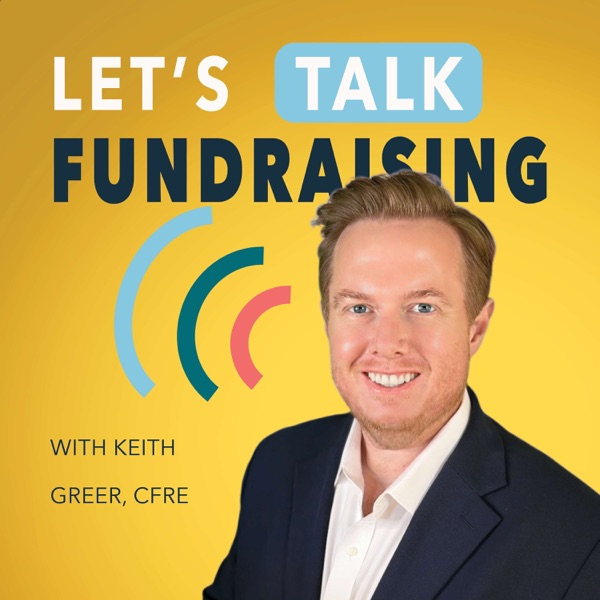
Let's Talk Fundraising
Welcome to "Let's Talk Fundraising" with Keith Greer, CFRE! This podcast is your go-to resource for mastering the essentials of fundraising while discovering how innovative tools and technology can supercharge your efforts. Whether you're a new fundraiser looking to level up your skills or a seasoned professional seeking timely reminders and fresh insights, each episode is packed with practical advice, creative ideas, and inspiring stories.
Join Keith as he explores the core principles that drive successful fundraising and uncovers the latest strategies to make your job easier, more enjoyable, and incredibly impactful. From relationship-building and storytelling to leveraging the newest tech, "Let's Talk Fundraising" is here to help you transform your approach and achieve remarkable results for your organization.
Subscribe now and be part of a community dedicated to elevating the art and science of fundraising. Together, we'll make a bigger impact, one episode at a time.
- On air since
- 2024
- Episodes
- 66
- Releases · typical length
- Weekly · 25 min
- Latest episode
- 1 day ago
Chart history since Oct 26
| Now | Chart | Peak | Since Oct 26 |
|---|---|---|---|
| Off | Non-Profit Last on it Nov 11 at #135 | #133 |
Episodes
66 episodes, newest first
-
25 min
The Transformative Impact of Gratitude (Encore)
Show notes
Fundraising can make even the most mission-driven people slip into tunnel vision, where metrics get louder than meaning and burnout starts to feel normal. I’ve been there, and this week a simple thing pulled me back: reading thank you letters from scholarship recipients before sending them to the donors who made those scholarships possible. The stories were powerful, personal, and full of purpose, and they reminded me that joy isn’t a luxury in nonprofit fundraising. It’s fuel.
We dig into gratitude in philanthropy as both a personal practice and a donor stewardship strategy. I break down how gratitude supports emotional well-being, reduces stress, and helps us rekindle passion when the work is heavy. Then we get practical about donor relations and donor retention: why a sincere thank you can deepen trust, turn supporters into partners, and inspire continued giving and referrals.
You’ll hear specific ways to make appreciation feel real instead of routine, including personalization, clear impact, storytelling from beneficiaries, fast timing, and creative options like video thank yous, social shout-outs, or a surprise phone call. We also talk about building a culture of gratitude on your team with quick meeting rituals, daily reminders, and celebrating both small and big wins, plus how to work around common barriers like time constraints and emotional exhaustion.
If you’re ready to feel more connected to your mission and get better results from your donor engagement, press play. Subscribe, share this with a fundraiser friend, and leave a review so more people can find the show.
💡 Want to take the next small step?
→ Free Download: 12 Fundraising Prompts You'll Actually Use
→ Course: The Fundraiser's AI Starter Suite
-
4 min
Stop Chasing Unresponsive Donors (Encore)
Show notes
If you have ever stared at your sent folder and wondered, “How many follow-ups is too many?”, you are not alone. We get real about a pattern most fundraisers fall into at some point: chasing donors who keep dodging us, going quiet, or treating every meeting like it is optional. It is exhausting, it drains your calendar, and it can quietly erode your confidence.
We start with a simple line that sparked the whole conversation: ignore the donors who ignore you. From there, we dig into why smart nonprofit professionals still pursue unresponsive prospects, whether it is the lure of capacity, pressure to hit fundraising metrics, or the fear of letting go. We also unpack the “dating” analogy that fits uncomfortably well in donor outreach, because when you lead with neediness, people feel it. When you lead with confidence in your mission, your programs, and your impact, the right supporters lean in.
You will walk away with five clear signs it is time to stop pursuing a donor: they will not schedule another meeting, they do not ask hard questions, they stay secretive, they do not return emails and calls after repeated attempts, and they simply are not happy to see you. Then we zoom out to a practical major gifts strategy anchored in a phrase from New Mexico gardeners: cultivate what grows. Put your time into relationships that respond, and you create better donor engagement, better donor stewardship, and stronger long-term fundraising results.
If this helped you rethink your prospect list, subscribe for more practical fundraising coaching, share the episode with a colleague, and leave a quick review so more nonprofit fundraisers can find the show.
💡 Want to take the next small step?
→ Free Download: 12 Fundraising Prompts You'll Actually Use
→ Course: The Fundraiser's AI Starter Suite
-
47 min
The Power of Authentic Leadership with Lasha Murray (Encore)
Show notes
Someone once told Laisha Murray to tone it down, change her hair, and “fit” the culture if she wanted a seat at the table. She tried it, and it worked on paper, but it cost her. Then one leader did something simple and rare: she gave Laisha permission to come back as herself. That moment opens a bigger conversation we all need right now about authentic leadership, belonging at work, and what “professionalism” should actually mean in a modern workplace.
We dig into the real challenges young professionals face in environments built for conformity, especially in companies that still cling to rigid dress codes, outdated expectations, and unspoken rules that punish difference. Laisha shares how leaders can encourage authenticity without losing standards by checking unconscious bias, asking better questions, and using a stop, start, and continue conversation to create clarity and trust. If you manage a team, mentor emerging leaders, or care about employee engagement and retention, this part gets practical fast.
Then Laisha walks us through her BANG Framework for intentional networking and leadership development: Belonging, Authentic work environment, Networking and relationships, and Growth. We talk networking fatigue, how to build genuine professional connections without performing, and why “people are the new currency” for career growth and organizational success. We also explore how to build community for Gen Z teams through emotional intelligence, recognition, and real empathy, not mushy buzzwords.
Want to experience coaching live? Laisha shares how to join her November webinars and get a chance at rapid-fire career coaching. Subscribe, share this with a leader who needs it, and leave a review with the biggest culture shift you want to see at work.
💡 Want to take the next small step?
→ Free Download: 12 Fundraising Prompts You'll Actually Use
→ Course: The Fundraiser's AI Starter Suite
-
12 min
Ditch Fear, Choose Joy (Encore)
Show notes
Fear can raise money fast, but it can also quietly poison the relationship you are trying to build. I’m Keith Greer, and I want to make a clear case for joy-based fundraising, not as a feel-good add-on, but as a practical, ethical strategy for better donor engagement and long-term donor retention.
I tell two hospice fundraising stories that changed how I think about nonprofit storytelling. First, you’ll meet Henry, a 102-year-old patient with a twinkle in his eye whose birthday story sparked waves of giving, along with handwritten notes that were funny, tender, and deeply human. Then we shift to Tate, the youngest hospice patient I’ve ever served, and a simple ice cream moment that shows how love and presence can carry more power than any crisis headline.
From there, I break down why joy works: it creates connection, invites people into belonging, and leaves donors grateful rather than drained. We also name the real costs of fear-based fundraising, including guilt, transactional giving, and donor burnout, and I leave you with a challenge to audit your messages for pressure versus invitation.
If you want fundraising that feels good to write, good to send, and good to receive, hit play. Subscribe, share this with a fellow fundraiser, and leave a review so more people can build generosity on joy.
💡 Want to take the next small step?
→ Free Download: 12 Fundraising Prompts You'll Actually Use
→ Course: The Fundraiser's AI Starter Suite
-
22 min
Your Development Office Should Lead the AI Policy Conversation
Show notes
Register for the AI Policy Development webinar.
AI is already inside your fundraising work, whether your organization has admitted it or not. You can see it in the draft that comes back a little too fast, a little too polished, and somehow less specific to the moment. And when donor communications start to feel like “everyone and no one,” the problem isn’t style. It’s trust.
We start with a scene from the HBO show Hacks where a tech investor tries to sell a comedian on using AI to generate punchlines. The counterargument lands hard: shortcuts can create something that looks like the outcome without being the work itself. From there, we bring that idea straight into nonprofit fundraising and ask the uncomfortable question: who should lead an AI policy and governance framework inside a trust-based organization?
We break down a real example of what happens when AI use collides with grief and institutional credibility, then zoom out to the quiet reality that most teams are already adopting AI tools ahead of any formal policy. We make the case that development leaders are the most qualified people to convene IT, legal, HR, and leadership not because we’re technical experts, but because we understand relationship dynamics, donor expectations, and what it costs when trust breaks. We also talk about why donor silence on AI isn’t reassurance, it’s assumed guardrails, and why that assumption raises the stakes for getting this right now.
If you want an AI policy that actually works, don’t settle for a template you can file. Build principles your team can explain, implement, and adapt as tools change. Subscribe, share this with a development leader, and leave a review so more fundraisers can step into the conversation.
💡 Want to take the next small step?
→ Free Download: 12 Fundraising Prompts You'll Actually Use
→ Course: The Fundraiser's AI Starter Suite
How To lists
More How To shows picked out from the charts