Podcast
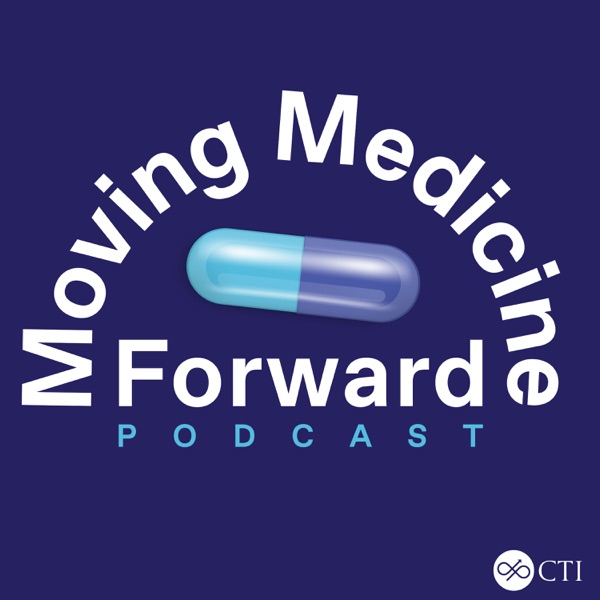
Moving Medicine Forward
CTI Clinical Trial and Consulting Services presents Moving Medicine Forward, a podcast centered on advancements in healthcare and elevating individual’s stories and expertise. CTI, a global Contract Research organization with associates in 60 countries, has contributed to 10,000+ projects, 200+ drug and device approvals, and 300+ pharmaceutical and emerging biotechnology partners. Our group of innovative thinkers work to change the lives of chronically and critically ill patients.
- Episodes
- 80
- Releases
- Weekly
- Typical length
- 22 min
- On air since
- 2024
- Latest episode
- 5 days ago
Episodes
80 episodes, newest first
-
16 min
More Than Kidney Function: Designing Research for the Whole Patient
Season 1, Episode 79
Show notes
Kidney disease is more than numbers on a chart. It can reshape a patient’s independence, family life, work, and future. In this episode, Dr. Ammar Tabikh, Senior Medical Director at CTI, draws on his experience in nephrology, transplantation, and clinical development to explore what it means to keep the whole patient at the center of kidney research. From more targeted treatments and thoughtful trial design to balancing scientific progress with the realities of everyday life, he shares why advancing medicine starts with understanding the people it’s meant to serve.
00:40 – From nephrology and patient care to clinical development
02:02 – The realities of kidney disease and dialysis
04:40 – How kidney research and treatment are evolving
05:47 – Moving toward more targeted, personalized treatments
07:09 – Designing kidney trials that work in the real world
10:03 – Leadership, listening, and collaboration in clinical research
11:34 – Why researchers must look at the whole patient
14:05 – What’s next for kidney medicine
-
16 min
Freedom in Motion: How Chair Force 1 Supports Families Living with ALS
Season 1, Episode 78
Show notes
What if a wheelchair-accessible van could give a family more than transportation? What if it could restore freedom, connection, and hope?
In this episode of Moving Medicine Forward, host Jeremy Schrand speaks with Tony Bunce of Chair Force 1 Foundation and renowned neurosurgeon Dr. John Tew about the challenges of living with ALS and the life-changing impact of accessible mobility. Together, they discuss how Chair Force 1 helps families stay connected to the moments that matter most while building a supportive community around those facing an ALS diagnosis.
0:44 - How Chair Force 1 started, grew from one van to a fleet serving dozens of families, and keeps vehicles circulating within the ALS community.
2:09 - Tony Bunce shares his father's ALS journey and how receiving a van inspired his involvement with the organization.
3:14 - Dr. John Tew's connection to Chair Force 1 and why community support is critical for patients and families.
5:56 - Understanding ALS, the progressive loss of mobility, and why accessible transportation can be life-changing.
7:26 - Why mobility means more than transportation. Freedom, hope, and staying connected to loved ones.
10:06 - The emotional impact of van deliveries and why recipients describe them as a "celebration of freedom."
11:21 - The role of volunteers, donors, and community partners in supporting families beyond transportation needs.
13:46 - Future goals for Chair Force 1, including expanding access and helping more families say "yes" to mobility.
15:23 - Closing thoughts on mobility, dignity, connection, and hope
-
22 min
Training Here, Staying Here: Building Northern Kentucky's Future Physician Workforce
Season 1, Episode 77
Show notes
What does it take to build a healthier future for Northern Kentucky?
On this episode of Moving Medicine Forward, we sit down with Dr. Holly Danneman, Associate Dean of the University of Kentucky College of Medicine Northern Kentucky Campus, to discuss how expanding medical education opportunities in the region can help address physician shortages, strengthen the local healthcare workforce, and improve access to care for the communities that need it most.
Dr. Danneman shares the vision behind the University of Kentucky's growing presence in Northern Kentucky, the importance of training future physicians close to home, and why investing in medical education today can have a lasting impact on patient care for generations to come.
00:00 Meet Dr. Holly Danneman
01:40 Commonwealth Center for Biomedical Excellence
04:15 Addressing physician shortages
05:25 Why physicians stay where they train
08:05 Building a local physician pipeline
09:20 CTI and the regional research ecosystem
12:10 Improving access to clinical research
13:25 Community partnerships and outreach
16:10 The power of collaboration
17:15 Future of healthcare in Northern Kentucky
19:05 Small feel, big opportunity
20:15 Closing thoughts and success stories
-
12 min
Connecting Data, Accelerating Decisions: Inside conneCTIva Lab Insights
Season 1, Episode 76
Show notes
As clinical trials become increasingly complex, sponsors and study teams need faster access to the data that drives critical decisions. In this episode of Moving Medicine Forward, host Jeremy Schrand sits down with Kimberly Uptgraft, Vice President of Global Laboratory Services, and Rob Schumacher, Senior Director of Clinical Data Systems & Data Management at CTI, to discuss conneCTIva Lab Insights, CTI's technology platform designed to bring laboratory data, study information, analytics, and operational visibility into a single centralized experience. Together, they explore how real-time access to critical information helps streamline trial operations, reduce administrative burden, accelerate decision-making, and ultimately help get new therapies to patients faster.
00:00 – Introduction to conneCTIva Lab Insights and the need for faster access to clinical trial data.
1:24 – The inspiration behind the platform and the challenge of working across multiple systems.
2:57 – How real-time, self-service access replaces manual reports and email requests.
4:04 – The vision behind conneCTIva and CTI's connected technology roadmap.
5:05 – Key features including lab results, study documents, reporting, and analytics.
5:29 – Turning data into insights that help sponsors and study teams make faster, more informed decisions.
6:24 – Streamlining operations through centralized access to critical study information.
8:26 – Future enhancements including greater visibility, analytics, and faster issue resolution.
9:41 – How faster access to the right information can help accelerate clinical trials and ultimately get treatments to patients sooner.
10:37 – Closing thoughts on creating a more connected, efficient clinical research experience.
-
18 min
The Future is Cellular: Optieum Bio’s Next-Generation Approach to Glioblastoma
Season 1, Episode 75
Show notes
Glioblastoma remains one of the most aggressive and difficult-to-treat forms of brain cancer, with recurrence posing a significant challenge for patients and researchers alike. In this episode of Moving Medicine Forward, Jeremy Schrand sits down with Moya Daniels, Vice President, Head of Regulatory and QA at Optieum Biotechnologies, to discuss the company's novel CAR-T cell therapy program, OPTF01, and its potential to transform treatment for recurrent glioblastoma.
Moya shares insights into the science behind targeting both tumor cells and the tumor microenvironment, the evolving landscape of cell and gene therapy, and how global collaboration is helping accelerate innovation for patients with serious diseases.
1:30 | Introducing Optieum and the science behind OPTF01
2:20 | The unmet need in glioblastoma and the challenge of recurrence
4:45 | How OPF-001 differs from other treatment approaches
6:00 | Japan's role in advancing cell and gene therapy innovation
7:20 | Global regulatory strategy and the future of regenerative medicine
8:30 | Lessons from the Asia-Pacific biotech landscape
10:30 | The importance of collaboration in early clinical development
13:00 | What successful biotech-CRO partnerships look like
16:00 | Upcoming milestones for Optieum and the future of CAR-T therapies
17:15 | Expanding cell therapy beyond oncology into broader disease areas
-
18 min
One Mission, Many Journeys: Celebrating 27 Years of CTI
Episode 74
Show notes
As CTI celebrates 27 years of moving medicine forward, Hadley Decker, Senior Director, Global Training and Development, and Natiq Fazlani, Research Associate, share their unique career journeys at CTI. Through the lens of two employees at very different stages of their careers, they discuss professional growth, the value of curiosity, and the culture that continues to shape CTI's mission of advancing clinical research and improving patients' lives.
For more on the Research Associate Program listen to this previous episode or click here
1:13 Hadley Decker shares her 25-year CTI journey, from clinical research associate to senior director of global training and development, and how each role shaped her career.
2:04 Hadley reflects on what drew her to CTI, including the opportunity to work on meaningful research and contribute to studies that advance patient care.
4:43 Natiq Fazlani discusses joining CTI and how the company's culture and people made it an appealing place to start his career.
6:26 Hadley explains how taking on new roles and learning through complex studies accelerated her professional growth.
7:22 Natiq shares how embracing new opportunities and staying curious helped him build knowledge and confidence early in his CTI career.
8:40 The group discusses how working with colleagues around the world broadens perspectives and strengthens collaboration across CTI.
10:17 Hadley reflects on CTI's growth over 27 years and explains why the company's commitment to patients remains unchanged.
11:15 Natiq describes how CTI's culture shows up in daily interactions through collaboration, support, and shared goals.
12:08 Hadley highlights studies that led to approved therapies and shares why those experiences reinforced the impact of clinical research.
14:28 Hadley discusses the qualities she sees in newer employees that give her confidence in CTI's future.
14:40 Natiq shares what excites him most about his future at CTI, including the support and encouragement he has received since joining the company.
15:11 Both guests offer advice for employees starting at CTI, emphasizing curiosity, initiative, and understanding the purpose behind the work they do.
-
34 min
More Time, More Options, More Hope: The Alzheimer's Association's Roadmap for Early Screening
Season 1, Episode 73
Show notes
Alzheimer's disease affects millions of individuals and families, yet many people remain unaware of the critical role early detection can play in improving outcomes. In this episode, host Jeremy Schrand is joined by Andrew Pytlik and Patti Hahn of the Alzheimer's Association to discuss the growing importance of cognitive screening, advances in diagnostic testing, and the steps individuals can take today to support long-term brain health. Together, they explore the realities facing patients, caregivers, and healthcare providers, while sharing why earlier recognition, stronger community support, and continued research are creating new hope for the future of Alzheimer's care.
1:00 | Meet the Alzheimer's Association and its mission to support patients, families, and research.
3:56 | Why Alzheimer's often develops years before symptoms appear and why early detection matters.
6:47 | Brain health habits that may help reduce risk, including sleep, exercise, and lifestyle choices.
8:42 | Common misconceptions about Alzheimer's and warning signs that go beyond memory loss.
11:27 | New advances in screening, blood-based biomarker testing, and earlier diagnosis.
14:59 | The impact of Alzheimer's on caregivers, families, and the workplace.
17:51 | Inside the Walk to End Alzheimer's and how community engagement accelerates research and support.
23:11 | Volunteer, advocacy, and fundraising opportunities that help advance the mission year-round.
27:01 | How employer partnerships, including CTI Cares, can strengthen awareness and community impact.
29:13 | Looking ahead: the future of Alzheimer's screening, treatment, and hope for patients and families.
-
23 min
Funding the Future: Closing Critical Gaps in Childhood Cancer Research
Season 1, Episode 72
Show notes
Childhood cancer research faces unique challenges, from limited funding opportunities to fewer treatment options compared to adult cancers. In this episode of Moving Medicine Forward, host Jeremy Schrand is joined by Jill Brink, Executive Director of CancerFree KIDS, Dr. Meisam Nami of Cincinnati Children's, and Dr. Ezgi Elmas of CARTx Therapeutics to discuss how early-stage funding is helping researchers pursue bold ideas that could transform pediatric cancer care. Together, they explore the critical role nonprofit organizations play in advancing innovation, the promise of next-generation cell therapies, and how collaboration across research, healthcare, and industry is helping bring new treatment options closer to the children and families who need them most.
00:00 | Introduction to CancerFree KIDS and pediatric cancer research
01:37 | Why childhood cancer research needs bold, early-stage funding
04:01 | Bridging the gap between scientific discovery and patient care
06:18 | How nonprofit funding helped launch a breakthrough cell therapy innovation
07:06 | Understanding gene-edited and off-the-shelf cancer therapies
10:28 | Closing critical gaps in pediatric cancer research and treatment development
14:54 | The power of collaboration across nonprofits, healthcare, and biotech
18:29 | What gives researchers hope for the future of pediatric cancer care
-
23 min
MMF Rewind | Building Better Clinical Trials: Study Start-Up, Patients, and Global Data
Episode 71
Show notes
This week, we're revisiting a previous conversation with Megan Kamm, Senior Vice President of Client Delivery, and Josh Schroeder, Vice President of Site & Field Operations, to discuss how strong planning, site partnerships, and cross-functional collaboration drive successful trial execution. From feasibility and study startup to patient-centered decision-making, biometrics strategy, and global expansion, they share insights into the operational challenges—and opportunities—behind bringing innovative therapies to patients faster.
01:18 Megan Kamm and Josh Schroeder discuss how their expanded leadership roles have created new opportunities to collaborate across functions and support trial delivery.
03:12 The conversation explores the early decisions that shape trial success, from feasibility planning to selecting the right sites and regions.
04:22 Megan explains how site engagement and thoughtful study design help reduce burden and support successful trial execution.
05:28 Josh and Megan share how project teams, CRAs, and other functions work together to keep studies running smoothly.
06:15 The discussion highlights common challenges during study startup and how proactive planning can reduce delays and enrollment risks.
10:23 Josh and Megan provide examples of how strong collaboration helped accelerate enrollment and deliver data more efficiently.
12:32 Megan discusses how biometrics teams contribute from protocol development through data analysis, helping guide study strategy.
13:32 Josh explains how endpoint priorities and statistical planning influence monitoring strategies throughout a trial.
14:43 The conversation turns to leadership, focusing on training, alignment, and consistent decision-making across global teams.
16:02 Megan and Josh reflect on what sets CTI apart, highlighting a culture centered on patients and collaboration.
18:26 The discussion looks at the future of clinical research, including advances in technology, AI, and trial operations.
20:32 Josh shares insights into CTI’s growth in China and the operational considerations that come with expanding into the region.
-
34 min
Stronger Together: Families, Researchers, and CancerFree KIDS
Season 1, Episode 70
Show notes
Childhood cancer research advances through the combined efforts of families, researchers, advocates, and donors. In this episode, Matt Robinson of CancerFree KIDS and Dr. Lindy Miles of Cincinnati Children's discuss how early-stage research funding, clinical trials, and community support help bring new treatments to children with cancer. Matt shares his family's experience navigating leukemia treatment, while Dr. Miles offers insight into the scientific process behind developing the next generation of therapies.
00:37 Meet Matt Robinson and Dr. Lindy Miles
01:18 A family's childhood cancer journey and "ringing the bell"
03:04 Why Dr. Miles chose pediatric leukemia research
06:02 How CancerFree KIDS supports families and funds research
07:42 The importance of early-stage research funding
10:26 Connecting families, researchers, donors, and advocates
14:36 Understanding clinical trials and research opportunities
18:40 The challenges of pediatric cancer as a rare disease
20:11 Why cancer research takes time and collaboration
26:24 Ways to support childhood cancer research
28:43 The CancerFree KIDS 100 Mile Challenge
32:50 Final thoughts and call to action -
17 min
New Path, Same Purpose: Dedicated to Advancing Transplant Research
Season 1, Episode 69
Show notes
After nearly 40 years caring for transplant patients and more than 25 years in clinical research, Dr. Helio Tedesco has made a unique transition from investigator to CRO medical leader. In this episode of Moving Medicine Forward, Dr. Tedesco reflects on the evolution of transplantation medicine, the challenges patients face before and after transplant, and why clinical research remains essential to improving long-term outcomes. He also shares how his experience conducting more than 25,000 transplants now helps shape more practical, patient centered clinical trials at CTI.
01:17 From Investigator to CTI
03:33 The Evolution of Transplant Medicine
05:20 Challenges Facing Transplant Patients
07:53 A Lifelong Commitment to Research
10:07 Designing Better Clinical Trials
12:58 25,000+ Transplants Later
14:13 What's Next for Transplantation? -
23 min
Chill, Not Kill: How Quell Therapeutics is Reimagining Cell Therapy
Season 1, Episode 68
Show notes
In this episode of Moving Medicine Forward, Jeremy Schrand is joined by Luke Devey, Chief Medical Officer at Quell Therapeutics, and Savannah Doliboa, Chief Commercial Officer at CTI, to discuss how engineered regulatory T cell therapies are being developed to “chill, not kill” the immune system. The conversation explores Quell Therapeutics’ approach to Treg cell therapy, the complexity of launching advanced cell therapy trials across Europe, and how strong collaboration helped accelerate study startup for patients with serious autoimmune diseases.
00:00 Introduction to Quell Therapeutics and its "Chill, Not Kill" approach to engineered Treg cell therapies
01:13 What engineered regulatory T cells are and how they differ from traditional CAR-T therapies
02:31 Launching a first-in-human basket trial in rheumatoid arthritis and systemic sclerosis with CTI
03:05 Why Quell selected the UK, Germany, and Spain for study startup and site activation
05:27 Finding the right CRO partner: Why Quell chose CTI Clinical Trial and Consulting Services
07:21 Navigating regulatory pathways, site readiness, and operational complexity in advanced cell therapy trials
10:47 The strategy behind accelerating study startup and overcoming traditional delays
12:05 Achieving first-patient-ready status in 113 days, cutting benchmark timelines by 48%
13:57 The patient impact: addressing significant unmet needs in rheumatoid arthritis and systemic sclerosis
17:00 Key lessons from the trial and building a culture focused on collaboration, innovation, and patient outcomes
20:58 What's next for Quell Therapeutics and the future of engineered Treg cell therapies
-
21 min
Beyond the Fine Print: How Legal Affairs Enables Clinical Research
Season 1, Episode 67
Show notes
Ian Hennessey, Vice President & General Counsel at CTI, joins Moving Medicine Forward to discuss the critical role legal affairs plays in advancing global clinical research. From navigating complex regulations and supporting trial operations to evaluating emerging technologies like AI, Ian shares how legal teams help organizations innovate responsibly while protecting patients and empowering scientific progress
00:00 | Career Journey From healthcare law to clinical research.
02:41 | Leadership & Mentorship Building teams through trust, support, and shared problem-solving.
04:11 | Global Research Challenges Navigating regulations across countries while advancing clinical trials.
05:38 | Legal Affairs at CTI How legal operations, contracting, and compliance support research success.
07:31 | Enabling Innovation Balancing business goals, risk, and compliance with a solutions-first mindset.
08:50 | Adapting to Change Managing evolving regulations, technology, and industry expectations.
12:23 | AI and Clinical Research Exploring the opportunities and risks of emerging technologies.
15:41 | Looking Ahead Why the future of clinical research remains so promising.
17:31 | Career Advice Guidance for professionals considering a career in life sciences legal affairs.
-
17 min
Inside Pharmacovigilance: Detecting Risks, Protecting Patients
Season 1, Episode 66
Show notes
What happens behind the scenes to ensure new therapies are safe for patients? In this episode of Moving Medicine Forward, we are joined by John Kane, Vice President of Pharmacovigilance and Safety Services at CTI, to explore the critical role of drug safety throughout the clinical development process. John shares how safety teams collect and evaluate adverse event data, navigate complex global regulations, and help protect patients from clinical trials through post-market surveillance. He also discusses the growing impact of AI in pharmacovigilance, the continued growth of North Carolina's Research Triangle, and the rewarding career opportunities available in clinical research.
01:13 – Finding a Career in Clinical Research John shares how he transitioned from nursing into the clinical research industry.
02:14 – CTI's Growth in Raleigh Why North Carolina's Research Triangle continues to attract biotech companies and research talent.
04:55 – Understanding Pharmacovigilance What pharmacovigilance is and how safety teams collect, evaluate, and report adverse events throughout a drug's lifecycle.
07:33 – Protecting Patients Through Drug Development How CTI safety teams monitor risks, identify safety signals, and communicate important findings to regulators and investigators.
09:55 – Navigating Global Regulations The growing complexity of global safety reporting requirements and regulatory compliance.
11:51 – The Role of AI in Drug Safety How AI may improve data processing, signal detection, and scientific literature review.
13:53 – A COVID-19 Success Story John reflects on supporting a large COVID-19 trial and managing high volumes of safety data.
14:38 – Collaboration at CTI Why teamwork and collaboration are key to successful clinical trials and patient impact.
15:32 – Advice for Future Research Professionals Career opportunities in clinical research and how CTI helps new professionals enter the field.
-
23 min
Building Better Clinical Trials: Study Start-Up, Patients, and Global Data
Season 1, Episode 65
Show notes
What does it take to set a complex global clinical trial up for success? In this episode of Moving Medicine Forward, we are joined by Megan Kamm, Senior Vice President of Client Delivery, and Josh Schroeder, Vice President of Site & Field Operations, to discuss how strong planning, site partnerships, and cross-functional collaboration drive successful trial execution. From feasibility and study startup to patient centered decision-making, biometrics strategy, and global expansion, they share insights into the operational challenge —and opportunities—behind bringing innovative therapies to patients faster.
01:22 Megan Kamm and Josh Schroeder discuss their expanded leadership roles and growing collaboration across teams.
03:44 Why feasibility, country strategy, and study startup are critical to trial success.
05:07 The importance of site partnerships, patient experience, and reducing operational burden.
06:16 How project managers, CRAs, data managers, and site teams work together to execute complex trials.
07:01 Common startup challenges and strategies for keeping studies on track.
08:13 Managing patient-centered logistics in rare disease and cell & gene therapy programs.
11:15 Real-world examples of strong coordination improving enrollment and accelerating timelines.
13:19 The growing role of biometrics, statistics, and risk-based monitoring in study execution.
15:15 Scaling global teams through consistent training, leadership alignment, and operational excellence.
16:48 What differentiates CTI: collaboration, service, and a deep commitment to patients.
18:59 Looking ahead: AI, technology, startup optimization, and continued global growth.
21:05 Opportunities and challenges of expanding operations in China and the APAC region.
-
13 min
From Australia to China: CTI's APAC Growth Journey
Season 1, Episode 63
Show notes
Asia Pacific has become one of the fastest-growing regions in clinical research, offering sponsors new opportunities to advance clinical development in an increasingly complex global environment.
In this episode, Pavels Anetko, Director of Clinical Operations and Clinical Project Management at CTI, shares insights from across the region, including Australia's strengths in early phase studies and CTI's recent expansion into China and Japan.
01:24 Pavels’ background, career journey, and leadership role overseeing CTI's project management teams across Asia Pacific.
02:13 Why APAC is one of the fastest-growing regions for clinical development and the increasing influence of China.
02:41 CTI's growth strategy in Australia and the region's advantages for early-phase research, including the CTN regulatory pathway and R&D tax incentives.
04:06 The rise of healthy volunteer and Phase I studies in Australia.
04:27 Building CTI's presence in China and Japan and navigating more complex regulatory environments.
05:05 Staying aligned with regional regulatory requirements while maintaining global clinical trial standards.
05:40 How CTI helps sponsors select the right countries, sites, and patient populations across APAC.
06:20 Why local infrastructure, language expertise, and in-country teams are critical to trial success.
07:09 Challenges sponsors face when entering new APAC markets and how local support reduces risk.
07:36 The strategic value of including Japan and China in global studies, including access to patients and regulatory considerations.
08:58 How APAC can accelerate development timelines and strengthen regulatory submissions.
09:38 Key operational considerations for global studies, including logistics, specimen handling, and country-specific requirements.
10:08 Emerging opportunities across APAC, including growth in Southeast Asia and expanding clinical research markets.
10:54 Pavels shares career highlights, including gene therapy studies in Australia and supporting COVID-19 vaccine trials in Singapore.
12:44 Closing thoughts on the future of APAC and its growing influence on global clinical development.
-
39 min
ALK Positive: How Patients are Driving Research
Season 1, Episode 63
Show notes
Summer Farmen and Jeff Sturm share their personal cancer journeys and the mission behind ALK Positive, CTI’s Q3 Charity of the Quarter.
ALK Positive is a patient-driven organization dedicated to improving outcomes for individuals living with ALK-positive cancer.
Together, they discuss how they became advocates within a global patient community, the importance of genetic testing and second opinions, and the role of research initiatives and clinical trials in advancing treatment options and improving patient outcomes.
00:00 Introduction to ALK Positive and today's guests, Summer Farmen and Jeff Sturm.
01:14 Summer and Jeff share their personal cancer journeys and what led them to become advocates within the ALK Positive community.
02:33 The mission of ALK Positive: connecting patients, funding research, and ensuring no one faces the diagnosis alone.
03:49 Why second opinions matter and how specialized expertise can significantly impact treatment decisions.
06:19 Research initiatives supported by ALK Positive, including clinical trials, grants, and collaborations focused on new treatment approaches.
10:46 Challenging the perception of ALK-positive cancer as a “rare” disease and advocating for greater representation in research and clinical trials.
13:22 How targeted therapies have transformed outcomes and extended survival for many ALK-positive patients.
15:47 The realities of survivorship: managing side effects, quality of life, and the role of palliative care.
17:27 The importance of genetic testing, monitoring disease progression, and making informed treatment decisions.
21:15 Clinical trial participation: common barriers, improving access, and helping patients connect with opportunities.
26:16 Building community through support groups, education programs, Healing Arts initiatives, and patient connections.
28:46 Addressing the emotional and mental health challenges that often accompany a cancer diagnosis.
32:50 Looking ahead: emerging therapies, vaccine research, precision medicine, and the future of ALK-positive cancer treatment.
36:51 Resources available through ALK Positive and how patients and caregivers can get involved.
37:54 Closing thoughts on advocacy, community, and the patient voices helping shape the future of cancer research.
-
26 min
MMF Rewind | CTI's Next Chapter: A Conversation with Jon Koch and Brian Lawrence
Season 1, Episode 62
Show notes
This week, we're revisiting a previous conversation with Jon Koch, CEO, and Brian Lawrence, CFO and President, as they share their perspective on what’s next for CTI as the organization enters a new phase of growth. They reflect on CTI’s legacy of partnership and execution while outlining how they plan to expand its impact across complex clinical trials.
From scaling capabilities and investing in talent to strengthening operational discipline and embracing data-driven decision-making, Jon and Brian offer an inside look at how leadership alignment is shaping strategy. They also explore the evolving demands of the clinical research industry, from the need for predictability and site support to the practical application of technology and AI.
At its core, this conversation is about balancing growth with purpose: delivering for sponsors, strengthening teams, and ultimately improving outcomes for patients.
00:36 CTI Rewind: Revisiting CTI's leadership transition and future vision
00:58 Expanding CTI's reach in complex and advanced therapy trials
02:23 Disciplined growth strategy and sustainable global expansion
04:38 CTI's legacy of care, credibility, and partnership
06:14 Driving performance through metrics and accountability
09:03 Leadership alignment and partnership in action
12:13 Talent development, infrastructure, and AI enablement
14:14 Positioning CTI for continued growth in complex trials
17:12 Key industry trends: predictability, sites, and technology
20:40 Sustaining culture and employee experience
22:08 Long-term vision: scale, impact, and global presence
25:15 Closing takeaways: quality, people, and execution -
15 min
Small Wins, Big Impact: Lessons from Pediatric Oncology
Season 1, Episode 61
Show notes
What does it take to design clinical trials that truly put patients first—especially when those patients are children?
In this episode of Moving Medicine Forward, Dr. Radhika Peddinti, Medical Director at CTI, discusses her journey from pediatric hematology/oncology at the bedside to shaping clinical research at a global scale.
Drawing on more than two decades of experience caring for children and their families, Dr. Pennant shares how those deeply human moments continue to influence how she approaches trial design today. From the emotional realities of pediatric oncology to the promise of gene therapies and targeted treatments, this conversation highlights the balance between scientific rigor and compassion—and why both are essential to advancing medicine.
Together, they discuss how clinical trials can be designed to reflect real patient lives, the evolving landscape of rare disease research, and the leadership perspective required to make decisions that impact patients far beyond the clinic.
If you're interested in the future of pediatric research, patient centered innovation, and what it truly means to move medicine forward, this episode is for you.
00:37 Meet Dr. Peddinti | Background in pediatric hematology/oncology and transition to CTI.
01:17 Finding Her Path | From training in India to a career shaped by patient and family experiences.
03:37 From Bedside to Research | Shifting focus to impact patients at a broader scale.
04:00 The Reality of Pediatric Oncology | Challenges, resilience, and redefining normal for children and families.
05:39 Expanding Impact Through Trials | Sickle cell research and the move into clinical development.
07:33 Designing with Patients in Mind | Bringing real-life patient needs into clinical trial design.
08:58 Balancing Science & Compassion | Why rigor and humanity are both critical to successful trials.
09:30 Leadership Lessons | Showing up with honesty, empathy, and adaptability.
10:47 The Future of Medicine | Breakthroughs in targeted therapies, gene therapy, and cure-focused research.
13:15 Advice for Clinicians | You don’t need to check every box—your experience matters.
-
12 min
Biorepositories in Action: Protecting the Integrity of Every Sample
Season 1, Episode 60
Show notes
In this episode, we’re joined by Rafael Miñana Prieto, Senior Manager of Operations for Laboratory Services at CTI, who oversees global biorepository operations across the U.S. and Europe. He walks through the full specimen lifecycle—from kit design and sample collection to storage, retrieval, and delivery—and explains why biological specimens are the foundation of clinical research.
Rafael shares how consistent, end-to-end management, global standardization, and integrated laboratory services help protect data integrity, reduce risk, and improve outcomes across trials. He also highlights how small upstream decisions can impact downstream results, along with the operational challenges and evolving trends shaping modern biorepository services.
01:26 Rafael’s role and the end-to-end specimen lifecycle
02:15 Why sample integrity underpins clinical evidence and patient impact
03:26 Lifecycle complexity and global logistics challenges
04:16 Standardization, monitoring, and risk reduction strategies
05:32 Coordinating retrieval and global shipment
06:31 Upstream decisions (kit design, instructions) shaping outcomes
07:23 Integrated lab services and reduced fragmentation
07:59 Scaling challenges and pre-analytical gaps
09:24 Key trends: complexity, globalization, and data-driven operations
10:07 CAP accreditation and delivering consistent global standards
Life Sciences lists
More Life Sciences shows picked out from the charts










More in Life Sciences
Placed highest on Apple Podcasts' Life Sciences chart right now