Podcast
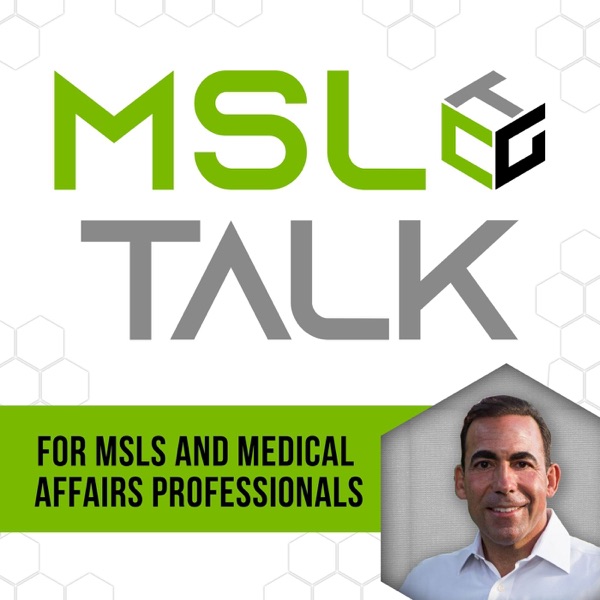
MSL Talk
MSL Talk, hosted by Tom Caravela, MSL Recruiter and Founder of The Carolan Group, offers insights for Medical Science Liaisons, aspiring MSLs, and Medical Affairs leaders.
- Careers chart
- #135
- Episodes
- 319
- Releases
- Weekly
- Typical length
- 28 min
- On air since
- 2020
- Latest episode
- 15 hours ago
Episodes
319 episodes, newest first
-
35 min
Hidden Secret to Career Happiness and Longevity
Episode 321
Show notes
What turns an industry contact into a long-term ally? In this episode, Tom Caravela and Ed Doherty look beyond transactional networking to the genuine friendships that can shape a career in medical affairs. They discuss treating vendors, recruiters, and peers as partners, following up consistently, reconnecting after long gaps, and listening more than talking. Ed also shares how thoughtful introductions, market knowledge, and honest guidance help people avoid landmines and become trusted problem solvers.
(0:00) Introduction: The Secret to Career Happiness and Longevity
(0:56) Building Long-Term Relationships and Career Allies
(3:50) Why Staying Connected Creates Career Opportunities
(8:09) Building Strong Relationships With Vendors
(12:32) Becoming a Mentor, Connector, and Career Ally
(15:24) Setting Others Up for Success Through Networking
(20:16) Making the Most of Medical Affairs Conferences
(23:19) Becoming a Go-To Resource in Medical Affairs
(27:29) Why Social Connections Make Your Career More Enjoyable
(31:52) Building Your Network for Long-Term Career Success -
23 min
How to AI-Proof Your Career: The 4 Pillars of Career Success
Episode 320
Show notes
Becoming undeniable is Tom Caravela’s answer to building career security in the age of AI. He breaks down four pillars you can control: skills, experience, relationships, and brand. Tom explains how continuous learning closes capability gaps, targeted projects turn experience into proof for your next role, and meaningful relationships create more value than collecting connections. He also explores how value-based content can make your expertise visible and strengthen your professional reputation.
(0:00) Introduction: How to AI-Proof Your Career
(1:15) Become Undeniable in the Age of AI
(2:30) Pillar #1: Build Your Skills
(4:00) How 20 Hours of YouTube Can Build AI Skills
(6:00) Identify Your Skill Gaps and Keep Learning
(7:30) Pillar #2: Build Relevant Experience
(9:00) How to Prepare for Your Next Career Move
(10:30) Use Job Descriptions to Identify Skills You Need
(12:00) Volunteer for Projects to Gain Experience
(13:15) Pillar #3: Build Your Professional Network
(15:00) Build Meaningful Relationships, Not Just Connections
(16:30) Pillar #4: Build Your Professional Brand
(18:00) How Tom Built His Brand Through Podcasting
(19:30) Value-Based Content vs. Vanity Metrics on LinkedIn
(21:30) How to Start Building Your Personal Brand
(23:30) Get Out of Your Comfort Zone and Share Your Expertise
(25:00) The Four Pillars of Career Success: Final Takeaways
(26:00) How to Become Indispensable in Your Career
(27:00) Closing Remarks -
38 min
How Medical Affairs Influences Decisions that Matter
Episode 319
Show notes
What happens after an MSL submits an insight? In this episode, Tom Caravela and Cameron Tew examine how field observations create value only when organizations decide what to do next. They discuss shared definitions, decision intelligence, and why 75% of KPIs examined focused on execution and tactics, compared with 5% on impact. Cameron also explains how curiosity, active listening, judgment, and asking why and how help exceptional MSLs uncover signals that can change thinking and practice.
(0:00) Introduction: Cameron Tew & Best Practices LLC
(1:35) How Medical Affairs Turns Insights Into Action
(3:30) What Happens After an MSL Submits an Insight?
(5:45) Why Some Field Insights Get Lost
(7:35) Field Observations vs. True Insights
(10:15) Why Medical Affairs Needs a Shared Definition of Insights
(12:00) Measuring Impact vs. MSL Activity
(14:45) The Future of Medical Affairs: Decision Intelligence
(17:15) What Makes an Exceptional MSL?
(19:30) The Power of Asking “Why” and Active Listening
(23:00) How Medical Affairs Leaders Can Improve Insight Sharing
(25:15) Why Human Judgment Matters More Than AI Alone
(27:45) What Decisions Should Medical Affairs Influence?
(30:00) Connecting Medical Affairs Strategy to Patient Outcomes
(33:00) Final Thoughts: Turning Insights Into Better Decisions
(34:00) Closing Remarks -
19 min
Stop Being Your Own Worst Enemy
Episode 318
Show notes
In this episode, Tom Caravela discusses common mindset traps that can hold Medical Science Liaisons and aspiring MSLs back. He covers how to move past worst-case thinking, overanalysis, concern about others’ opinions, and comparison with peers. Tom also addresses better ways to manage time and attention, why waiting for the perfect moment can be limiting, and how overdoing it in job searches and interviews can create unnecessary pressure.
(0:00) Episode introduction and inspiration for the topic
(0:42) Sponsor: Momentum Events
(2:52) Replacing fear with intention and avoiding worst-case scenario thinking
(4:26) Overcoming overthinking and analysis paralysis
(5:41) Letting go of worrying about others’ opinions
(7:20) The dangers of comparison and social media influence
(9:07) Managing distractions and setting healthy limits
(10:58) Taking action instead of waiting for the perfect moment
(12:15) Avoiding overdoing it in job searches and interviews
(13:11) Salary negotiation pitfalls and best practices
(14:54) Effective follow-up and seeing things from the other person’s perspective -
23 min
What Medical Affairs Conferences Should You Go To?
Episode 317
Show notes
In this episode, Tom Caravela explores the decision-making process for attending conferences, crucial for Medical Science Liaisons and Medical Affairs professionals. He discusses the importance of networking and exposure, evaluating conference content, speakers, and the overall value. Tom provides insights into considering conference costs and funding options, and selecting events that align with one's role in medical affairs. The episode reviews major conferences like MAPS, DIA, and the MSL Society, as well as AI-focused events and Fierce Pharma Week. Smaller regional and specialty events are also highlighted. The episode concludes with a recap of recommended conferences and tips for effective networking and follow-up.
(0:00) Introduction, episode inspiration, and AI Action Conference promo
(1:26) Deciding factors for attending conferences
(2:04) Importance of networking and gaining exposure at conferences
(4:11) Evaluating conference content, speakers, and value
(5:51) Considering conference costs and funding options
(8:28) Matching conferences to your role in medical affairs
(9:33) Overview and highlights of MAPS annual conference
(11:48) Comparing MAPS and DIA conferences
(13:01) MSL Society conference for MSLs and aspiring MSLs
(13:26) AI in medical affairs conferences by Momentum Events
(14:48) Overview of Fierce Pharma Week
(16:36) Other smaller regional and specialty events
(18:04) Recap of recommended conferences and proactive planning
(21:25) Tips for networking, follow-up, and closing remarks -
31 min
The Secret to MSL Success: What Top Performers Do When No One Is Watching
Episode 316
Show notes
In this episode, Tom Caravela and Angela Valadez explore the habits that set top-performing Medical Science Liaisons (MSLs) apart. They discuss the balance between discipline and perfectionism, emphasizing self-discipline in MSL roles. The conversation highlights effective habits during challenging times and whether discipline can be cultivated. They examine leaders' roles in promoting discipline, knowing when to slow down, and creating accountability without sacrificing autonomy. The episode also covers time blocking for scientific learning, meeting preparation, and the importance of follow-through, concluding with the benefits of organization and preparation.
(0:00) Introduction and Angela Valadez's background
(1:47) Sponsor: Momentum Events
(2:28) Key habits of top-performing MSLs
(6:17) Discipline vs. perfectionism/rigidity
(10:05) Importance of self-discipline in MSL roles
(13:11) Effective habits and routines of top-performing MSLs
(17:08) Maintaining standards during difficult stretches
(19:18) Can discipline be developed?
(21:36) Role of leaders in fostering discipline
(24:26) When MSLs should slow down deliberately
(25:59) Creating accountability without losing autonomy
(27:03) Time blocking for scientific learning
(28:12) Preparation for KOL and internal meetings
(28:48) Importance of follow-through
(29:28) Benefits of being organized and well-prepared
(30:27) Closing remarks and gratitude -
25 min
7 Hidden Secrets of Successful People
Episode 315
Show notes
In this episode, Tom Caravela delves into the Seven Hidden Secrets of Successful Leaders, offering practical guidance for Medical Science Liaisons and Medical Affairs professionals. He begins by exploring the importance of knowing one's core values and aligning them with decision-making. The discussion covers the significance of having a clear vision and goals, cultivating a positive mindset, and effectively prioritizing time. Tom emphasizes the need for taking confident action, managing adversity with resilience, and building habits through consistency. The episode concludes with a recap of these secrets, encouraging listeners to apply these strategies in their professional lives and share their experiences.
(0:00) Episode Introduction and Fierce Pharma Week Overview
(1:52) Introduction to the Seven Hidden Secrets of Successful Leaders
(2:36) Secret #1: Knowing Your Core Values
(5:57) Aligning Core Values with Decisions
(7:50) Secret #2: Having Vision and Goals
(10:17) Secret #3: Thought Life and Positive Thinking
(13:06) Secret #4: Prioritizing Time Effectively
(15:17) Secret #5: Taking Action with Confidence
(17:58) Secret #6: Handling Adversity
(20:08) Secret #7: Habits and Consistency
(23:09) Recap of the Seven Hidden Secrets
(24:42) Encouragement to Implement the Secrets and Share Feedback
(24:56) Closing Remarks and Appreciation for Listeners -
31 min
REVISED Checklist for MSL Interview Presentation
Episode 314
Show notes
In this episode, Tom Caravela provides valuable insights into mastering presentations for Medical Science Liaisons (MSLs). He outlines 10 key points essential for successful presentations, starting with the importance of adhering to instructions and selecting the right topic. The episode delves into leveraging AI tools, optimizing slide content, and managing presentation timing. Tom discusses the significance of technology and staging, as well as evaluation criteria for content delivery. He emphasizes the importance of practice, handling Q&A sessions, and maintaining confidence under pressure. The episode concludes with strategies for engaging presentations, highlighting the role of feedback, and expressing gratitude to listeners.
(0:00) Introduction, new tips, and episode purpose
(0:45) Sponsor: Fierce Pharma Week
(2:43) Overview of 10 key points for MSL presentations
(3:00) Importance of following instructions
(5:17) Choosing the right topic for your presentation
(8:26) Using AI tools for your presentation
(10:17) Less is more: Advice on slides and timing
(11:59) Technology and staging for your presentation
(14:08) Evaluation criteria: What you present and how you present it
(16:30) Importance of practicing your presentation
(19:02) Nailing the Q&A portion of your interview
(21:54) Managing nerves and staying confident
(23:14) Common reasons why people fail their presentations
(27:59) Strategies for engaging and energetic presentations
(29:17) Summary of key presentation elements
(29:45) Importance of confidence and feedback
(30:08) Encouragement and appreciation for listeners -
27 min
The Overloaded MSL: Why The Role Is Busier Than EVER
Episode 313
Show notes
In this episode, Tom Caravela and Kirsten Gostomski discuss the evolving challenges and future of the Medical Science Liaison (MSL) role. They explore the increased workload and the shift from qualitative to quantitative metrics, along with the implications of the "super reps" concept. The conversation examines how company size affects MSL responsibilities and the challenges of accessing Key Opinion Leaders (KOLs). They explore the role of AI in reducing administrative burdens and offer strategies for organization and prioritization. Balancing professional duties with parenthood is also addressed. The episode concludes with predictions for the future of the MSL role, advice for overwhelmed MSLs, and tips on setting boundaries.
(0:00) Introduction and Kirsten Gostomski's background
(1:32) Sponsor: Fierce Pharma Week
(2:45) Increased workload for MSLs and evolving role challenges
(4:51) Shift from qualitative to quantitative MSL metrics
(7:49) "Super reps" concept and implications for MSLs
(9:39) Future of MSL roles and overlap with commercial roles
(12:03) Company size impact on MSL workload and responsibilities
(13:24) KOL access challenges and strategic planning
(15:10) Role of AI in reducing MSL administrative burdens
(16:43) Organization and prioritization strategies for MSLs
(18:25) Balancing MSL work with parenthood
(21:14) Predictions for the future of the MSL role
(23:20) Advice for overwhelmed MSLs and maintaining performance
(25:38) Final advice, setting boundaries, and closing remarks -
25 min
THIS Is Why You Didn't Get The Job
Episode 312
Show notes
In this episode, Tom Caravela offers essential recruiter insights for interview success, emphasizing the importance of preparation and authenticity. He addresses common pitfalls such as candidate lateness and the impact of over-rehearsed answers, advocating for engaging, natural conversation. The role of AI in interviews and the importance of strong presentation skills are examined. Tom underscores the necessity of thorough research on the company and compound, understanding salary expectations, and maintaining professionalism. He also highlights the significance of good judgment, sending thank you notes, and showing genuine interest. The episode concludes with advice on practicing, personalizing answers, and staying authentic.
(0:00) Introduction, episode overview, and event announcement
(1:27) Reasons for discussing interview failures
(1:48) Example of candidate being late & importance of punctuality
(4:17) Being natural vs. overly rehearsed in interviews
(5:49) Risks and pitfalls of over-reliance on AI in interview prep
(10:39) Importance of researching the company and its compounds
(13:16) Real-life examples of interview failures
(17:45) Discussing compensation expectations and professionalism
(18:50) Importance of thank you notes and showing genuine interest
(21:32) Summary and final thoughts on interview preparation -
38 min
The Relationship Marathon: Only 1% Build Relationships That Last
Episode 311
Show notes
In this episode, Tom Caravela, Bernadett Mamone, and Vince Florio explore the metaphor of marathon running to delve into the art of relationship building for Medical Science Liaisons (MSLs). They discuss the importance of consistency and follow-up, differentiating networking from genuine relationship building. The conversation highlights trust and credibility as outcomes of persistent efforts and uses cross-training as a metaphor for developing multifaceted relationships. They address the concept of relationship equity and the mindset shift toward long-term trust, linking these efforts to enhancing patient quality of life. The episode wraps up with strategies for maintaining relationships and final advice for MSLs.
(0:00) Episode and guest introductions, marathon metaphor for MSLs, disclaimers
(2:53) Sponsor: Fierce Pharma Week
(4:14) Explanation of "The Relationship Marathon" episode title
(5:08) Consistency and follow-up in relationship building
(6:09) Networking vs. relationship building
(9:27) Building trust and credibility through consistency
(12:20) Cross-training as a metaphor for multifaceted relationship building
(14:46) Relationship equity and making consistent deposits
(17:43) Shifting mindset toward long-term trust
(21:48) Linking relationship building to patient quality of life
(22:54) Becoming a connector through passion and authenticity
(25:22) Embracing discomfort in relationship building
(29:09) Value of shared experiences and collaboration
(33:16) Strategies for maintaining relationships over time
(36:07) Final advice for MSLs and professionals
(37:32) Appreciation and closing remarks -
20 min
Is The MSL Role A Dead End Job?
Episode 310
Show notes
In this episode, Tom Caravela explores the perception of the Medical Science Liaison (MSL) role as a potential dead-end job. He discusses various career progression options and the career ladder within Medical Affairs, providing key questions to consider during interviews about advancement. The episode highlights the expanding field of medical affairs and the new opportunities it presents. Tom examines factors influencing career transitions, leadership roles, and growth prospects for MSLs. He also touches on transitioning to vendor-side roles within the pharmaceutical industry, encouraging listeners to consider future career possibilities.
(0:00) Episode introduction and discussion on whether the MSL role is a dead end job
(1:54) Career progression options for MSLs
(3:07) Understanding the career ladder in Medical Affairs
(5:25) Key questions to ask about career advancement during interviews
(6:08) Expansion of field medical affairs and new opportunities
(9:18) Factors influencing MSL career transitions
(11:04) Leadership opportunities and career growth in the MSL profession
(15:12) Transitioning to vendor-side roles in the pharmaceutical industry
(17:47) Encouragement to explore future career possibilities -
40 min
The Executive Operating System: Becoming the Highest Version of Yourself
Episode 309
Show notes
In this episode, Tom Caravela welcomes Donnie Gupton as they delve into the origins of the MSL Talk Podcast and Donnie's professional journey. They discuss the Executive Operating System and explore how high performers can overcome comfort zones by shifting from a scarcity to an abundance mindset. The conversation highlights the crucial role of confidence, self-awareness, and mindset in career growth. Techniques for changing negative inner dialogue are shared, alongside insights on integrating Joe Dispenza's teachings into daily routines. They emphasize intentionality, mindfulness, and visualization, and discuss the importance of adapting habits to different life stages. The episode concludes with book recommendations and ways to connect with Donnie.
(0:00) Introduction of Donnie Gupton and Origin of MSL Talk Podcast
(2:23) Donnie Gupton's Background
(2:57) Explanation of the Executive Operating System
(5:04) High Performers, Identity, and Overcoming Comfort Zones
(11:01) Importance of Mindset in Career Growth
(12:57) Shifting from Scarcity to Abundance Mindset
(16:12) Role of Confidence in High Performance
(19:48) Importance of Self Awareness in Career Success
(23:33) Techniques for Changing Negative Inner Dialogue
(29:15) Integrating Joe Dispenza's Teachings into Daily Routines
(31:10) Importance of Intentionality and Self-Awareness
(32:22) Practicing Mindfulness and Visualization Techniques
(35:28) Developing a Personalized Morning Routine
(37:51) Adapting Habits to Different Life Seasons
(38:07) Recommended Books and Resources for Mindset Development
(39:11) Donnie Gupton's Book and Contact Information
(40:05) Closing Remarks and Audience Engagement -
26 min
12 Habits of Highly Likable People
Episode 308
Show notes
Tom Caravela discusses the critical role of building strong relationships in the Medical Science Liaison (MSL) field, inspired by a quote from Maya Angelou. He outlines twelve essential habits that can enhance likability and consistency, ranging from giving full attention and mastering the art of the pause to remembering small details and using people's names. Tom emphasizes the importance of being comfortable with silence, offering genuine compliments, and matching others' energy. He also discusses the value of validating others, disagreeing without defensiveness, and maintaining curiosity. The episode concludes with a challenge to apply these habits for career success and reflections on their impact.
(0:00) Introduction, personal news, and importance of building strong relationships
(1:05) Consistency and developing likability through habits
(2:27) Maya Angelou's quote and its relevance
(3:07) Habit 1: Giving full attention
(4:43) Habit 2: The art of the pause
(5:11) Habit 3: Asking follow-up questions
(6:57) Habit 4: Remembering small details
(9:13) Habit 5: Using people's names
(10:53) Habit 6: Being comfortable with silence
(13:17) Habit 7: Giving genuine compliments
(14:56) Habit 8: Matching other people's energy
(16:19) Habit 9: Validating others first
(17:45) Habit 10: Disagreeing without creating defensiveness
(18:46) Habit 11: Being curious
(20:01) Habit 12: Being happy for others
(22:33) Application of habits to career success
(24:04) Final thoughts, challenge, and appreciation -
28 min
Has the MSL Role Become Obsolete?
Episode 307
Show notes
In this episode, Carolyn Reever joins the discussion about the evolving landscape of the Medical Science Liaison (MSL) role. They examine whether the MSL role is becoming obsolete amid changes in the pharmaceutical and biotech sectors. The dialogue addresses the impact of AI on the role, including how AI tools are transforming productivity and what key skills future MSLs will require. They stress the importance of keeping up with technological advancements and forecast the future demand for MSLs. Carolyn shares her predictions for the MSL role over the next decade, concluding with final thoughts and reflections.
(0:00) Introduction of guest and episode overview
(0:55) Guest background: Carolyn Reever in medical affairs
(2:07) Is the MSL role obsolete?
(5:16) Evolution of the pharmaceutical and biotech industry
(9:48) Impact of AI on the MSL role
(12:35) AI tools and productivity changes
(15:25) Key skills for future MSLs
(19:12) Keeping pace with technology
(22:42) Future demand for MSLs
(25:20) Prediction for the MSL role in ten years
(27:13) Final thoughts and closing remarks -
29 min
Career Longevity in Medical Affairs: How to Stay Relevant for 20+ Years
Episode 306
Show notes
In this episode, Tom Caravela is joined by Stacey Curtiss as they discuss her journey into medical affairs and share key insights from her early years as a Medical Science Liaison (MSL). They explore career progression and leadership roles, highlighting major shifts in the industry and the importance of staying relevant. Stacey emphasizes the need to be comfortable in uncomfortable situations and the role of relationship building in career growth. The conversation includes advice for MSLs aspiring to leadership positions and reflections on overcoming fear to seize opportunities. The episode concludes with career advice for her younger self, closing remarks, and congratulations on Stacey's career achievements.
(0:00) Introduction and Stacey Curtiss' background
(1:06) Breaking into medical affairs and early lessons as an MSL
(6:02) Volunteering and gaining insights for career growth
(8:14) Career progression to VP Medical Affairs
(11:24) Leadership: The role of a leader as a filter
(13:18) Major shifts in medical affairs over the past 20 years
(16:11) Staying relevant in a changing industry
(18:38) Importance of habits, routines, and hobbies
(20:53) Embracing discomfort for career growth
(22:36) The value of relationships in career development
(25:27) Advice for aspiring MSL leaders
(27:37) Advice to younger self: taking risks and overcoming self-doubt
(28:50) Closing remarks and gratitude -
29 min
The Proactive MSL: A Skill That Defines Top Performers
Episode 305
Show notes
In this episode, Tom Caravela and Laura Mease explore the concept of proactive versus reactive Medical Science Liaisons (MSLs). They discuss the characteristics of proactive MSLs and the importance of building trust and overcoming a reactive mindset. The conversation includes early proactive approaches, growth mindset strategies, and a real-world example of proactive MSL success. They examine the risks of being reactive, emphasize the importance of pre-call planning, and highlight the need for anticipating healthcare provider needs. The episode also covers building internal partnerships, strategic use of insights, and habits of proactive MSLs, concluding with advice for reactive MSLs.
(0:00) Introduction, podcast collaboration, and Laura Mease’s background
(1:56) Listener shoutouts
(2:26) What is a proactive MSL?
(3:13) Proactive vs. reactive MSLs
(4:36) Building trust and overcoming a reactive mindset
(7:57) Early proactive approaches and growth mindset
(10:42) Real-world example of proactive MSL success
(12:56) Risks and consequences of being reactive
(15:59) Pre-call planning and anticipating HCP needs
(18:39) Building internal cross-functional partnerships
(20:51) Time, effort, and strategic use of insights
(24:49) Habits of proactive MSLs
(26:51) Advice and final words for reactive MSLs
(28:48) Closing remarks -
47 min
Interview Blunders And Fails That Cost You The Job
Episode 304
Show notes
In this episode, Tom Caravela and Deanna Tucker delve into crucial job interview strategies and common pitfalls. They emphasize the significance of thorough research and preparation, and discuss avoiding first impression errors. The conversation includes practical advice for digital interviews and how to effectively answer the "Tell me about yourself" question. They explore the importance of enthusiasm, the impact of negative remarks, and how to balance confidence with arrogance. Nonverbal cues and dressing appropriately for casual settings are also covered. The episode concludes with guidance for those who've made mistakes and offers final encouragement and advice for job seekers.
(0:00) Introduction, Deanna Tucker’s background, and episode topic
(3:13) Common interview mistakes
(5:32) Importance of research and preparation
(8:02) First impression blunders
(10:07) Digital interview tips
(14:21) Importance of enthusiasm and energy
(20:56) How to answer "Tell me about yourself"
(27:15) Tips for answering "Tell me about yourself"
(29:08) The impact of negative comments in interviews
(30:50) Balancing confidence and arrogance
(33:48) Importance of nonverbal cues
(39:09) How to dress for interviews in casual environments
(43:12) Advice for candidates who have made interview mistakes
(45:44) Final advice and encouragement for job seekers
(46:22) Conclusion and appreciation -
41 min
Interactive Treatment Algorithms: The Future is HERE
Episode 303
Show notes
In this episode, Tom Caravela talks with Dr. Simon Chowdhury, a GU oncology expert, about the evolving cancer treatment landscape and challenges in keeping up with new data. They discuss differences between community and academic practices, limitations of traditional information sources, and the delay in clinical application of new data. Dr. Chowdhury shares a personal story about his mother's care and discusses managing the influx of oncology data. They explore designing an ideal physician learning experience, the role of user experience in medical platforms, and how Open Medicine is transforming physician learning and patient care. Opportunities for MSLs and pharma collaborations are also covered.
This episode is sponsored by Open Medicine. Open Medicine is where leading doctors post Living Algorithms to share their knowledge. Instead of static diagrams in PDFs, Living Algorithms are mobile-first, interactive, and updated in real time as new clinical evidence emerges. Check it out at myopenmedicine.com
(0:00) Introduction and guest background
(1:23) Sponsor: Open Medicine
(2:10) Dr. Chowdhury’s expertise in GU oncology
(2:59) Evolution of cancer treatment and community vs. academic practice
(5:29) How leading physicians stay updated with new data
(8:56) Traditional information sources and their limitations
(13:02) Lag between data release and clinical application
(16:03) Personal story: Dr. Chowdhury’s mother’s care
(21:21) Managing the volume of new oncology data
(22:22) Simplifying information for younger generations
(22:54) Designing an ideal physician learning experience
(24:10) Importance of user experience in medical platforms
(25:48) Introduction to living algorithms and benefits
(28:58) How Open Medicine transforms physician learning
(33:09) Impact of Open Medicine on patient care
(35:33) Opportunities for MSLs and medical affairs with Open Medicine
(37:56) Collaborating with pharma for impactful data
(38:17) Invitation to visit myopenmedicine.com for more information -
25 min
The 1 Habit That Changed Kobe Bryant's Life
Episode 302
Show notes
In this episode, Tom Caravela extends Mother's Day wishes and draws inspiration from Kobe Bryant to introduce free thinking. He explores meditation, quiet time, and managing distractions, emphasizing imagination, planning, and emotional processing. Tom discusses handling criticisms, recurring thoughts, and preparing for future events. He offers approaches to meditation, exercise, and integrating gratitude while avoiding negativity. Tips for starting quiet time and breathing exercises are shared. Tom underscores the importance of consistency, self-listening, and achieving breakthroughs for intentional living, concluding with reflections on finding peace.
(0:00) Introduction, Mother's Day wishes, and inspiration from Kobe Bryant
(0:54) The concept and benefits of free thinking
(1:46) Overcoming intimidation about meditation
(2:55) Personal benefits and impact of quiet time
(3:52) Managing overstimulation and distractions
(5:05) Imagination, planning, and emotional processing
(8:14) Addressing criticisms and recognizing recurring thoughts
(10:15) Anticipating and preparing for future events
(11:23) Approaches to quiet time, meditation, and exercise
(14:26) Integrating gratitude and avoiding negative thinking
(18:39) Getting started with quiet time and breathing exercises
(20:38) Consistency, self-listening, and achieving breakthroughs
(23:06) Finding peace, intentional living, and closing remarks
Careers lists
More Careers shows picked out from the charts










More in Careers
Placed highest on Apple Podcasts' Careers chart right now