Podcast
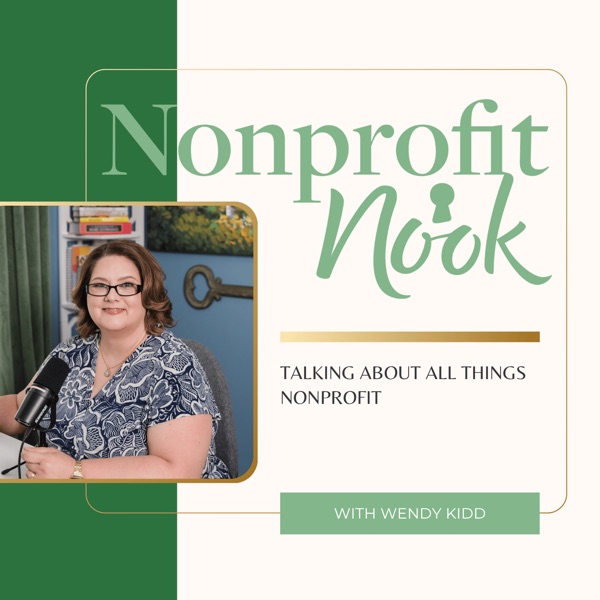
Nonprofit Nook
Welcome to The Nonprofit Nook — the podcast for nonprofit leaders, board members, staff, and community champions who want to strengthen their organizations and make a bigger impact... without burning out in the process.
I’m Wendy Kidd—business owner for over 20 years and nonprofit leader for just as long. I created this show because I know how overwhelming it can be to lead a nonprofit. Most of us didn’t get into this work thinking we’d be running a business—we just wanted to help people. But the truth is, running a nonprofit *is* running a business, and I’m here to help make that part easier.
Each week on The Nonprofit Nook, you’ll get real talk and real tools.
We’ll dive into the nuts and bolts of nonprofit management—strategic planning, budgeting, board engagement, donor communication, volunteer recruitment, and more. No fluff—just practical advice and conversations that help you work smarter and lead with confidence.
You’ll also hear:
- Stories from inspiring North Texas nonprofits and the local heroes behind them
- Tips from experts on marketing, digital tools, DEI, nonprofit culture, and sustainable leadership
- Real conversations about burnout, boundaries, time management, and self-care—because leadership shouldn’t feel lonely
Whether you're leading a nonprofit, supporting one, or just passionate about the mission, The Nonprofit Nook will give you the tools, encouragement, and inspiration you need to thrive.
Subscribe on your favorite podcast platform, leave a review to support the show, and follow us on social media @thenonprofitnook for more nonprofit insights, stories, and resources.
Let’s make nonprofit life a little easier—and a lot more impactful.
- Episodes
- 54
- Releases
- Weekly
- Typical length
- 35 min
- On air since
- 2025
- Latest episode
- 18 hours ago
Episodes
54 episodes, newest first
-
42 min
Get the Work Out of Your Inbox with Lisa Marshall
Episode 56
Show notes
What if every email, link, idea, and sticky note competing for your attention had one place to land, and you could sort all of it in a few minutes a day?
Lisa Marshall knows what it feels like when work comes at you from everywhere. She was the second employee at an education nonprofit and spent more than 15 years there, wearing just about every hat except bookkeeping. No matter which role she held, one thing stayed the same: it was really hard to get things done.
When her organization brought in a work management system, Lisa noticed how hard it was for her team to actually work inside it. So she set herself a challenge. Could she work in one tool for six hours without switching browser tabs?
What she built became the FLOW method: Funnel, Label, Optimize, and Work. It starts with a humble feature most platforms bury, email to create item, so emails, podcast notes, links, PDFs, and even photos of postcards all land on one "inflow" board. From there, a simple labeling system and Lisa's "work in 4D" take on the Eisenhower matrix turn a pile into a plan. In her course she sorts more than 50 new items in under five minutes, and now that she's taught Claude her rules, it takes about 45 seconds.
Today Lisa is the founder and principal of Good Work Consulting, where she helps purpose-driven professionals get to the strategic part of their to-do list. She turned her system into Work Management Makeover, an on-demand course of bite-sized videos you can finish in less time than a long lunch.
In this episode of Nonprofit Nook, Lisa joins Wendy, who took the course and hasn't stopped talking about it, to walk through how the system works, where AI fits in, and how to pick a platform without burning through a two-week free trial.
This conversation is about more than software. It's about protecting the focus nonprofit leaders need for the work that moves the mission forward, and building one place that holds all of it, from programs and projects to household to-dos and caregiving, so nothing important depends on your memory.
If you lead, volunteer with, support, or dream of starting a nonprofit, this conversation is a reminder that a little structure goes a long way: one place for your work to land, and a few minutes each day to sort it.
In This Episode
You'll hear Wendy and Lisa talk about:
• How Lisa went from wearing every hat at a growing nonprofit to building a system that kept her in one tool all day
• Why she thinks in terms of work management instead of project management
• How the email to create item feature and your phone's share button turn everything into one funnel
• What each step of FLOW looks like, from funneling to labeling to adding dates
• How "work in 4D" helps you decide whether to do, decide, defer, or delegate a task, and when to just delete it
• How Lisa uses Claude in Chrome to sort her board in about 45 seconds, and why AI works better inside a shared work management platform
• Where to start if you don't have time for a course, and how to make the most of a free trial
• The nonprofit pricing Lisa recommends checking, including Monday.com's nonprofit programResources + Links
Connect with Lisa Marshall and Good Work Consulting
Website
LinkedIn
https://www.linkedin.com/in/lisarmarshall/
Work Management Makeover (use code NOOK for $100 off)
https://workmanagementmakeover.com
Nonprofit Power Up (free masterclass)
https://www.nonprofitpowerup.com
Join the Boss Table
A monthly four-hour Boss Day to work on your organization instead of in it, Wendy as your fractional strategic partner, and a table of nonprofit and business leaders learning from each other. Founding members pay $125 a month until the first 25 seats fill.
https://www.bosslevelengaged.com/bosstable
Connect with Wendy + Nonprofit Nook
Nonprofit Nook
Upcoming Nonprofit Nook Events
https://www.nonprofitnook.com/events
Wendy Kidd on LinkedIn
https://www.linkedin.com/in/wendykidd/
More from Boss Level Engaged
Boss Level Engaged
https://www.bosslevelengaged.com/
Boss Table
https://www.bosslevelengaged.com/bosstable
Mentioned in this episode:
-
33 min
Has Your Nonprofit Drifted? with Sharmon Lebby
Episode 55
Show notes
How does a nonprofit end up doing work nobody remembers signing up for?
Sharmon Lebby is the Founder and CEO of Blessed Designs Consulting, where she helps nonprofits and purpose-driven organizations build strong, sustainable foundations. She's back on Nonprofit Nook after her first episode, Is Your Nonprofit Ready for More Money?, to pick up a conversation she and Wendy started off the record: mission drift.
Sharmon says drift rarely starts with a big decision. It starts with a small one. A grant that's close enough. An enthusiastic volunteer, or a brand-new executive director with big ideas and no one asking questions. One program leads to another, and the rest of the board goes quiet. The clearest warning sign is when people can no longer explain what your organization does.
She's lived it herself. Sharmon shares the project she championed because it sounded exciting and close enough to the mission. A couple of years later, the funding dried up, the community drifted away, and she had to eat some humble pie. Wendy and Sharmon also talk about why so many development directors leave, often within about 18 months, and how much of that traces back to a mission nobody can describe.
In this episode of Nonprofit Nook, Sharmon joins Wendy to share how to tell whether a funded program is still worth keeping. She explains why your community should be the first conversation when you decide what stays and what goes. She also lays out the difference between mission drift, mission evolution, and mission agility.
Then they get into communication, the piece that makes or breaks a reset. When the board decides in a meeting and a mass email goes out the next morning, people get left behind. Get your house in order first: talk with your board, then your staff, then your volunteers, and only then go public. Plan to say it more than once.
Underneath the warning signs and assessments, this conversation is really about honesty. It takes courage to admit your organization has wandered, especially when you were the one who said yes. Sharmon's answer is transparency with your board, your team, and the people you serve.
If you lead, volunteer with, support, or dream of starting a nonprofit, this conversation is a reminder that the people closest to your work will tell you when you've drifted, if you ask them.
In This Episode
You'll hear Wendy and Sharmon talk about:
• How mission drift starts with one reasonable decision, and why it's so often tied to funding
• The red flag Sharmon sees most often: no one can explain what your organization does
• How an enthusiastic volunteer, board member, or new ED can pull an organization off course when everyone else goes quiet
• What mission drift has to do with development directors leaving after about 18 months
• What to do with a program that's already funded but no longer fits
• Why your community comes first, and how to assess programs against your mission, vision, and values
• The difference between mission drift, mission evolution, and mission agility
• How to communicate a change from the inside out (board, staff, volunteers, then the public), and why one email won't cut itResources + Links
Connect with Blessed Designs Consulting
Sharmon Lebby on LinkedIn
https://www.linkedin.com/in/sharmon-lebby/
Instagram
https://www.instagram.com/blesseddesignsco/
Website
Purpose Drift Diagnostic and free resources
https://blesseddesignsco.com/friends
Join the Boss Table
Four hours of protected work time every month, a community of business and nonprofit leaders, and Wendy as your strategic partner. The first 25 members get the founding rate of $125/month.
https://www.bosslevelengaged.com/bosstable
Connect with Wendy + Nonprofit Nook
Nonprofit Nook
Upcoming Nonprofit Nook Events
https://www.nonprofitnook.com/events
Wendy Kidd on LinkedIn
https://www.linkedin.com/in/wendykidd/
More from Boss Level Engaged
Boss Level Engaged
https://www.bosslevelengaged.com/
Boss Table
https://www.bosslevelengaged.com/bosstable
Mentioned in this episode:
-
32 min
What a Board That Has Your Back Looks Like with Allison Wyatt
Episode 54
Show notes
How can an executive director tell whether her board is actually supporting her, or just showing up for meetings?
Allison Wyatt is the Founder and CEO of Edgility Talent Partners, a human capital consulting firm that works with nonprofits across the country on compensation design, performance management, career pathways, and succession planning. She has sat on boards, advised boards, and coached the executive directors who report to them, so she has seen the relationship from every seat at the table.
When the executive director and the board are working well together, Allison says you can hear it. Talk to each of them separately and you hear the same vision and the same priorities. Communication runs all month, not just in the formal report at the board meeting. And there's trust in both directions: the leader knows the board has her back, and the board has confidence in the leader. When any one of those is missing, things break down fast.
From there, the conversation gets practical. Allison lays out the minimum committee structure a small nonprofit with a volunteer board should have, and why committees double as your board's succession pipeline. Volunteers who serve on a committee get to try before they buy, and you get to see who follows through before you offer anyone a seat. Wendy adds the one she sees go wrong most often: asking the fundraising committee to also plan the events.
In this episode of Nonprofit Nook, Allison joins Wendy to share how to build your own personal resource board when leading feels lonely, how to raise the "I need more support" conversation with your board without it sounding like a complaint, and the one question every board should be asking its executive director at review time.
Then Allison names the topic she sees go the worst when it goes badly: succession. The only thing you can predict with absolute certainty is that someday your leader will leave. The only question is whether you'll be ready. If the answer is three to four years, your succession plan has to start now.
Underneath the committee charts and review questions, this conversation is really about relationships. If there's a reason you'd be afraid to have an honest conversation with your board, that reason is worth looking at, because if communication isn't happening about this, it probably isn't happening about other things either.
If you lead, volunteer with, support, or dream of starting a nonprofit, this conversation is a reminder that a strong board isn't something that happens to you. It's something you and your board build together, on purpose.
In This Episode
You'll hear Wendy and Allison talk about:
• The three things that are always present when an executive director and board are working well together, and the first signs when they're not
• How to tell an engaged board from one that's just checking the boxes
• The minimum committee structure that makes a difference for a small nonprofit with a volunteer board
• Why committees are your board's best succession pipeline, and a way to try before you buy
• Why the fundraising committee shouldn't also be the event planning committee
• What a personal resource board is, who belongs on it, and how to keep growing as a leader with no budget and no time
• How to ask your board for more support without it sounding like a complaint, and the one question that belongs in every ED's performance review
• Why the question isn't if your leader will leave, but when, and what that means for your succession plan todayResources + Links
Connect with Edgility Talent Partners
Allison Wyatt on LinkedIn
https://www.linkedin.com/in/allisonwyatt/
Edgility Talent Partners on LinkedIn
https://www.linkedin.com/company/edgility-talent-partners/
Instagram
https://www.instagram.com/edgilitytalent
Website and free resources
https://www.edgilitytalent.com/
Building Your Personal Board
https://www.edgilitytalent.com/building-your-personal-board
Free e-book: High Performance, Shared Purpose
https://www.edgilitytalent.com/a-guide-to-creating-a-high-performance-workplace-culture
Join the Boss Table
Four hours of protected work time every month, a community of business and nonprofit leaders, and Wendy as your strategic partner. The first 25 members get the founding rate of $125/month.
https://www.bosslevelengaged.com/bosstable
Connect with Wendy + Nonprofit Nook
Nonprofit Nook
Upcoming Nonprofit Nook Events
https://www.nonprofitnook.com/events
Wendy Kidd on LinkedIn
https://www.linkedin.com/in/wendykidd/
More from Boss Level Engaged
Boss Level Engaged
https://www.bosslevelengaged.com/
Boss Table
https://www.bosslevelengaged.com/bosstable
Mentioned in this episode:
-
26 min
Less Heroics, More Flywheel with Suzanne Smith
Episode 53
Show notes
What happens to your nonprofit when you take a week off? If your phone never stops buzzing, Suzanne Smith would say your organization is trying to tell you something.
Suzanne is the founder and CEO of Social Impact Architects, and she has spent more than 30 years in the nonprofit sector as a founder, an executive, and a strategist. She knows burnout from the inside. When she led the Childhood Obesity Movement for the American Heart Association, she remembers being exhausted, and she remembers the exhaustion in her team's eyes even more clearly.
That experience shaped how she sees burnout today. Burnout is a leadership and systems issue as much as a personal one. The leader sets the temperature for the whole organization, and the research backs her up: people burn out less when they feel like they're part of a team.
After 15 years working in nonprofits, Suzanne earned her MBA at Duke and spent the next 15 years translating proven business frameworks into tools that fit how nonprofits actually work. One of those is Jim Collins' flywheel effect from Good to Great. Her team spent the better part of five years researching it in the nonprofit world, and the result is her new book, The Nonprofit Flywheel, written as a playbook you can pick up, use, and share with your team. The digital edition is free.
In this episode of Nonprofit Nook, Suzanne joins Wendy to walk through the six drivers of the nonprofit flywheel: impact (the steak), brand (the sizzle), revenue, operations, and the culture and governance that sit at the center. She also shares the three signs she looks for when an organization is fragile, and why heroics is not a business model.
Then she gets practical. For leaders of small nonprofits who carry most of the work themselves, she explains where to start, how a strategic plan helps you decide where to spend your time, and what to do differently on Monday morning.
Underneath it all, this is a conversation about building an organization that keeps moving when one person steps away, including you.
If you lead, volunteer with, support, or dream of starting a nonprofit, this conversation is a reminder that strong organizations run on clear roles, shared direction, and steady momentum. Less heroics, more flywheel.
In This Episode
You'll hear Wendy and Suzanne talk about:
• What leading the Childhood Obesity Movement for the American Heart Association taught Suzanne about burnout
• Why burnout is a leadership and systems issue, and why people who feel part of a team burn out less
• The three signs of a fragile nonprofit: a CEO who can't take a vacation, a rubber-stamp board, and high turnover
• What the flywheel effect is and how Suzanne adapted Jim Collins' framework for nonprofits
• How impact, brand, revenue, operations, culture, and governance feed each other
• Why operations may be the most underrepresented driver, and why the people behind the scenes are the unsung heroes
• Where to start when you're carrying most of the work yourself, including two quick wins and a few long-term goals
• What to do differently on Monday morning so your team stops running on heroicsResources + Links
Connect with Suzanne Smith
Connect with Suzanne on LinkedIn, Instagram, Social Impact Architects and https://meetsuzanne.com/.
• Social TrendSpotter: Suzanne's weekly newsletter on the future of the social sector.
• The Nonprofit Flywheel: A Playbook for Sustainable Growth, Smarter Strategy, and Lasting Impact launched October 1, 2026, with a free digital edition, companion tools and resources, and print editions on Amazon.Connect with Wendy + Nonprofit Nook
Nonprofit Nook
Upcoming Nonprofit Nook Events
https://www.nonprofitnook.com/events
Wendy Kidd on LinkedIn
https://www.linkedin.com/in/wendykidd/
More from Boss Level Engaged
Boss Level Engaged
https://www.bosslevelengaged.com/
Boss Table
-
33 min
Collaboration Is the New Currency with Bradley Harris
Episode 52
Show notes
What if the answer to a tight budget isn't another ask, but a better partner?
Bradley Harris has spent more than 13 years working across nonprofit leadership, government, economic development, and corporate philanthropy. He's the founder of Bradley Harris Strategic Advisory, president of the West Virginia School of Osteopathic Medicine Foundation, and a board member who somehow always ends up on the development committee. He's also sat on the other side of the table, running a multimillion-dollar philanthropic budget for a major water utility for five and a half years.
From where he sits, the math has changed. Families are paying more at the gas pump and giving less to their local nonprofits, and grant funding is pulling back. His answer: collaboration is the new currency. When two organizations are chasing the same outcomes with separate programs, separate staff time, and separate email lists, partnering lets everybody do a little so nobody has to do a lot. And it shouldn't matter who gets the credit.
Bradley also shares the advice from his years in political consulting that stuck with him most: if you want advice, ask for money. If you want money, ask for advice. People invest in what they've helped shape, and he's watched it happen more times than you'd think.
In this episode of Nonprofit Nook, Bradley joins Wendy to talk about how to figure out who belongs at the table, why relationship mapping beats a cold ask, and what a real corporate partnership looks like beyond a logo on a banner. He shares how his utility funded bottle filling stations at the YMCA, why every one of his subcontractors stepped up when he asked them to support the United Way, and why the most common reason people give for not donating is that no one ever asked.
Underneath all of it, this is a conversation about relationships: listening to what funders actually care about, staying curious when their priorities shift, and taking care of donors long before you need something from them.
If you lead, volunteer with, support, or dream of starting a nonprofit, this conversation is a reminder that you don't have to reach your biggest goals alone, and that right now, while 2027 budgets are being set, is a good time to start the conversation.
In This Episode
You'll hear Wendy and Bradley talk about:
• Why collaboration has become the new currency, and how sharing staff, social channels, and email lists with a partner stretches every dollar
• Why "if you want money, ask for advice" works, and how it changes donor conversations
• How to decide who actually needs to be at the table for a big goal
• What relationship mapping looks like, and why board members should make introductions instead of asks
• How funder priorities shift with new leadership, and why no renewal is guaranteed
• What a branded corporate partnership looks like beyond a logo, including in-kind help from vendors and subcontractors
• Why the fourth quarter is the time to reach out, since most 2027 budgets are being set now
• Why funders should say no kindly instead of ghostingResources + Links
Connect with Bradley Harris Strategic Advisory
Website
Bradley Harris on LinkedIn
https://www.linkedin.com/in/bradley-harris-a4649360
Instagram
https://www.instagram.com/thebradleyharris
Connect with Wendy + Nonprofit Nook
Nonprofit Nook
Upcoming Nonprofit Nook Events
https://www.nonprofitnook.com/events
Wendy Kidd on LinkedIn
https://www.linkedin.com/in/wendykidd/
More from Boss Level Engaged
Boss Level Engaged
https://www.bosslevelengaged.com/
Boss Table
https://www.bosslevelengaged.com/bosstable
Mentioned in this episode:
-
32 min
A Place of Hope: Children's Advocacy Center with Kara Shrum
Episode 51
Show notes
What would it mean for a child to tell the hardest story of their life just once, and then be surrounded by people working together to help them heal?
That's the work happening every day at Children's Advocacy Center of Collin County. Kara Shrum is the Senior Donor Relations Manager there, and she's spent most of the last decade connecting donors, corporate partners, and volunteers to a mission she describes simply: safety, healing, and justice for children and families affected by abuse and neglect.
The Center traces back to the 1980s, when a district attorney in Alabama realized children were being asked to retell their abuse to police, then to caseworkers, then to therapists, over and over again. The Junior League of Plano brought that idea to Collin County, and in 1992 the Center opened with a staff of three and the capacity to serve about 10 percent of the children who needed it.
Today, law enforcement, Child Protective Services, forensic interviewers, family advocates, and therapists all work under one roof. More than 200 professionals make it possible, including 66 on the Center's own staff, across two campuses in Plano and McKinney. A child tells their story once, in a single forensic interview conducted without a single leading question, and that interview becomes the foundation for everything that follows.
And the need keeps growing. Last year the Center served more than 4,600 children and family members, a 3 percent increase over the year before, with a 6 percent increase in services. Every one of those services, including therapy and counseling for life, is free to the families who need it.
In this episode of Nonprofit Nook, Kara joins Wendy to share how the Center's model works, why its leaders built the McKinney campus before Collin County's growth caught up with them, and the many ways the community can help kids and families heal.
Underneath the numbers, this is a conversation about hope. Kara is honest about how dark this work can be, and just as clear that abuse doesn't get the final word when a community shows up for kids.
If you lead, volunteer with, support, or dream of starting a nonprofit, this conversation is a reminder that the right structure, the right partners, and the right people can change the entire direction of a life.
In This Episode
You'll hear Wendy and Kara talk about:
• How the Children's Advocacy Center model lets a child tell their story once instead of over and over
• What happens from the moment a child walks in, from the activity center to the forensic interview to the teddy bear room
• Why family advocacy and free, lifelong therapy matter as much as the interview itself
• How a Junior League initiative grew from three staff members into two campuses serving more than 4,600 people a year
• Why the Center's leadership planned for Collin County's growth a decade ahead
• What Kara loves about development work and the "puzzle pieces" of connecting the right people and resources
• Practical ways to help, from volunteering and in-kind drives to the Holiday Shop, the Rainbow Room, and adopting a family
• Why every adult in Texas is a mandated reporter, and why prevention starts with difficult conversationsResources + Links
Connect with Children's Advocacy Center of Collin County
Website
https://www.caccollincounty.org
34th Annual Teddy Bear Ride (October 25, 2026)
https://www.caccollincounty.org/tbr/
Upcoming Events and Ways to Give
https://www.caccollincounty.org/events/
Facebook
https://www.facebook.com/childrensadvocacycenter
Instagram
https://www.instagram.com/caccollincounty/
LinkedIn
https://www.linkedin.com/company/children's-advocacy-center-of-collin-county/
Back to School Fair
https://www.caccollincounty.org/backtoschoolfair/
Kara Shrum on LinkedIn
https://www.linkedin.com/in/kfshrum
Connect with Wendy + Nonprofit Nook
Nonprofit Nook
Upcoming Nonprofit Nook Events
https://www.nonprofitnook.com/events
Wendy Kidd on LinkedIn
https://www.linkedin.com/in/wendykidd/
More from Boss Level Engaged
Boss Level Engaged
https://www.bosslevelengaged.com/
Boss Table
https://www.bosslevelengaged.com/bosstable
Mentioned in this episode:
Boss Table Community
The Boss Table is a community for small business owners and nonprofit leaders who want practical support, honest conversation, accountability, and a place that helps you make progress in your work. Come with your questions. Bring the thing you've been putting off. Celebrate the win you can't wait to tell someone about. There's a seat at the table for you.
-
27 min
Is Your Nonprofit Ready for More Money? with Sharmon Lebby
Episode 50
Show notes
What happens when the big check finally arrives and your organization isn't ready to hold it?
Sharmon Lebby has seen it up close. She's the Founder and CEO of Blessed Designs Consulting, a nonprofit strategist with more than 20 years of experience, and she's currently serving as an interim executive director while running her own business. Ask her why more money doesn't automatically make an organization healthier and her answer is direct: most often, everything just sort of falls apart.
Sharmon is also a former neuroscience research associate, so she thinks a lot about how our brains work. She points to research showing that when we want to make something better, our instinct is to add. More money means more people served, more programs, more of everything. We pile it on without asking whether the foundation we built can carry the weight.
Money is a tool, and a tool only helps when you know what you're going to do with it. A hammer is great for hanging a picture. Use it for everything and you'll end up tearing down some walls.
In this episode of Nonprofit Nook, Sharmon joins Wendy to share the signs that an organization is growing faster than its infrastructure can support. Everything depends on one or two people. Nobody can take a week of vacation without things slipping. The team is already worn out. There's no reliable way to track what's coming in and going out. Larger funding also brings more compliance, and the IRS and your state will want more from you.
They also talk about what ready looks like. Your processes are written down, including how you do things and why you make the decisions you make. Your board can talk about the organization with confidence and clarity. Everybody is rowing in the same direction. And you could leave on vacation tomorrow and come back to an organization that's still going strong.
From there the conversation turns to governance. Wendy and Sharmon dig into why the strategic plan should drive the fundraising, what happens when the person or donor who brings in the money starts steering the mission, and why saying no to funding is sometimes the right call. Sharmon also has a lot of empathy for development directors, who by one estimate she heard last an average of 18 months, often because they're asked to raise money nobody has explained to them.
Beyond the checklists, this is a conversation about moving out of a scarcity mindset. It's hard to hear "money is just a tool" when you're trying to survive. Sharmon's encouragement is to build slow and build solid, and to start with whatever made you cringe a little while you were listening.
If you lead, volunteer with, support, or dream of starting a nonprofit, this conversation is a reminder that the work you put into your foundation is what lets the next dollar do its job.
In This Episode
You'll hear Wendy and Sharmon talk about:
Resources + Links
Connect with Sharmon Lebby + Blessed Designs Consulting
Websitehttps://blesseddesignsco.com
Nonprofit Launch Academyhttps://blesseddesignsco.com/nonprofitlaunchacademy
Free resources from Sharmonhttps://blesseddesignsco.com/friends
Instagramhttps://www.instagram.com/blesseddesignsco/
Sharmon Lebby on LinkedInhttps://www.linkedin.com/in/sharmon-lebby/
Register for Your Financials Tell a Story, September 24A Nonprofit Nook workshop on how reporting your financials tells your nonprofit's story.https://www.eventbrite.com/e/your-financials-tell-a-story-tickets-1998973064246?aff=oddtdtcreator
Connect with Wendy + Nonprofit Nook
Nonprofit Nookhttps://nonprofitnook.com
Upcoming Nonprofit Nook Eventshttps://www.nonprofitnook.com/events
Wendy Kidd on LinkedInhttps://www.linkedin.com/in/wendykidd/
More from Boss Level Engaged
Boss Level Engagedhttps://www.bosslevelengaged.com/
Boss Tablehttps://www.bosslevelengaged.com/bosstable
Mentioned in this episode:
Boss Table Community
The Boss Table is a community for small business owners and nonprofit leaders who want practical support, honest conversation, accountability, and a place that helps you make progress in your work. Come with your questions. Bring the thing you've been putting off. Celebrate the win you can't wait to tell someone about. There's a seat at the table for you.
-
48 min
When the Shelter Is Full: Spotlight on Families to Freedom
Episode 49
Show notes
What happens when a victim of abuse finally makes the call, gets accepted into a shelter, and then can't get there?
Sarah Nejdl asked herself that question in 2014. She was working a corporate job in technology and currency trading, scrolling social media one night, when she landed on a national survey showing that more than 14,000 victims were turned away from emergency shelters on a single day because the shelters were full. In Texas alone, that number was more than 1,000 unmet requests in one day.
Sarah is not a survivor herself. She's a Texan, a pilot, and, in her words, a Virgo who doesn't respond well to "you can't." So when an FAA examiner told her she couldn't fly victims to safety unless it was on behalf of a nonprofit, she walked outside, called a friend who is now her board chair, and started one. She took a layoff package, spent six months telling anyone who would listen about the gap she'd found, and opened services in October 2015, during Domestic Violence Awareness Month, on purpose.
Families to Freedom does one specific thing that nobody else in Texas was doing: it gives victims of domestic abuse, family violence, sexual assault, stalking, and trafficking a free, confidential ride to safety. Sometimes that's across town to a shelter. Sometimes it's a five-day drive to a sister's house on the other side of the country. About half of the adults they transport have children with them, and they transport pets too, because leaving a pet behind is a real barrier to leaving at all.
In this episode of Nonprofit Nook, Sarah and Eric join Wendy to share how the organization works, who it serves, and how a volunteer model built on "choose your own adventure" road trips keeps drivers coming back. Eric, known around North Texas as the Connector, found Families to Freedom through his own family's wake-up call and now spends his days building the partnerships and volunteer base the mission runs on.
The two of them are also clear about measurement. Families to Freedom publishes its metrics on its website in real time: how many people were transported, how many children, how many pets, and exactly what was spent on bus tickets, flights, fuel cards, and hotels. And Eric points to one number that matters most: the Texas Council on Family Violence publishes an annual report of Texans killed by intimate partners, and none of Families to Freedom's clients have ever been on that list.
Beyond the logistics, this is a conversation about paying attention to the problem in front of you instead of looking away, about founders who build with their eventual successor in mind, and about what it means to treat a scared kid in the back seat like this is just a normal ride.
If you lead, volunteer with, support, or dream of starting a nonprofit, this conversation is a reminder that the most valuable thing you can build is the one nobody else is building.
In This Episode
You'll hear Wendy, Sarah, and Eric talk about:
Resources + Links
Connect with Families to Freedom
Websitehttps://www.familiestofreedom.org
Hotline: 833-903-SAFE (7233)
Volunteerhttps://www.familiestofreedom.org/volunteer.php
Donatehttps://www.familiestofreedom.org/donate.php
Facebookhttps://www.facebook.com/FamiliestoFreedom
Instagramhttps://www.instagram.com/familiestofreedom/
LinkedInhttps://www.linkedin.com/company/families-to-freedom
Sarah Nejdl on LinkedInhttps://www.linkedin.com/in/sarahnejdl/
Give on North Texas Giving Day, September 17https://www.northtexasgivingday.org/organization/familiestofreedom
Register for Your Financials Tell a Story, September 24A Nonprofit Nook workshop on how reporting your financials tells your nonprofit's story.https://www.eventbrite.com/e/your-financials-tell-a-story-tickets-1998973064246?aff=oddtdtcreator
Connect with Wendy + Nonprofit Nook
Nonprofit Nookhttps://nonprofitnook.com
Upcoming Nonprofit Nook Eventshttps://www.nonprofitnook.com/events
Wendy Kidd on LinkedInhttps://www.linkedin.com/in/wendykidd/
More from Boss Level Engaged
Boss Level Engagedhttps://www.bosslevelengaged.com/
Boss Tablehttps://www.bosslevelengaged.com/bosstable
Mentioned in this episode:
Boss Table Community
The Boss Table is a community for small business owners and nonprofit leaders who want practical support, honest conversation, accountability, and a place that helps you make progress in your work. Come with your questions. Bring the thing you've been putting off. Celebrate the win you can't wait to tell someone about. There's a seat at the table for you.
-
32 min
More Than a Meal: Serving with Dignity at Community Garden Kitchen
Episode 48
Show notes
What happens when a conversation among friends uncovers a need in your community that’s far bigger than anyone realized?
For Angela Poen, Chair of Community Garden Kitchen, that moment came in 2014. Angela and a group of friends were talking about hunger when they learned just how many children and families in Collin County were experiencing food insecurity. They also discovered a gap: while food pantries were doing important work, there were people who couldn’t access them during operating hours or didn’t have a place to store and prepare food.
Their response was ambitious: build a place where anyone who needs a meal can sit down and enjoy one with dignity — no questions asked.
In this episode of The Nonprofit Nook, Angela joins Wendy to share how that idea became Community Garden Kitchen, a nonprofit that describes itself not as a soup kitchen, but as a free meal restaurant.
Angela takes us behind the scenes of the organization’s journey — from securing land and raising the money for a permanent building to navigating the pandemic before they could even open their doors. When Community Garden Kitchen finally opened in 2022, they did so debt-free.
Today, the organization has served approximately 160,000 meals through its dining room and sack lunch program, supported by an incredible volunteer community of roughly 180 volunteers each week.
But the heart of this conversation goes beyond the number of meals served. Angela and Wendy talk about what it means to build dignity into the way you serve, why volunteers are essential to Community Garden Kitchen’s model, and how nonprofits can stay focused on the people behind the numbers.
If you lead, volunteer with, support, or dream of starting a nonprofit, this conversation is a beautiful reminder that sometimes meaningful change starts when a few people recognize a need and decide, We can do something about this.
In This Episode
You’ll hear Wendy and Angela talk about:
• How Angela and her friends first discovered the extent of food insecurity in their own community
• The important difference between hunger and food insecurity
• Why traditional food resources don’t always work for people experiencing housing or financial instability
• How Community Garden Kitchen went from an idea in 2014 to opening its doors in 2022
• Why the organization intentionally created a restaurant-style experience centered on dignity
• How Community Garden Kitchen opened its new building debt-free
• The role hundreds of volunteers play in making the organization’s work possible
• What other nonprofit leaders can learn from Community Garden Kitchen’s persistence, community support, and service-first approachResources + Links
Connect with Community Garden Kitchen
LinkedIn:
https://www.linkedin.com/company/community-garden-kitchen/?viewAsMember=true
Instagram:
https://www.instagram.com/COMMUNITY_GARDEN_KITCHEN/
Facebook:
https://www.facebook.com/communitygardenkitchenofcollincounty/
Volunteer with Community Garden Kitchen:
https://bit.ly/CGKVolunteerApp
Register for Your Financials Tell a Story — September 24
Join Wendy and Melanie for Your Financials Tell a Story, where they’ll continue the conversation around understanding and using your nonprofit’s financials.
Register here:
https://www.eventbrite.com/e/your-financials-tell-a-story-tickets-1998973064246?aff=oddtdtcreator
Connect with Wendy + The Nonprofit Nook
The Nonprofit Nook:
Upcoming Nonprofit Nook Events:
https://www.nonprofitnook.com/events
Wendy Kidd on LinkedIn:
https://www.linkedin.com/in/wendykidd/
More from Boss Level Engaged
Boss Level Engaged:
https://www.bosslevelengaged.com/
Boss Table:
https://www.bosslevelengaged.com/bosstable
Mentioned in this episode:
Boss Table Community
The Boss Table is a community for small business owners and nonprofit leaders who want practical support, honest conversation, accountability, and a place that helps you make progress in your work. Come with your questions. Bring the thing you've been putting off. Celebrate the win you can't wait to tell someone about. There's a seat at the table for you.
-
43 min
How Nonprofits Can Use AI Without Losing the Human Touch with Rachael Leventhal Garnett of EAAS AI
Episode 47
Show notes
AI can save your nonprofit time—but where do you start without sacrificing the human relationships at the heart of your mission?
In this episode of The Nonprofit Nook, Wendy Kidd sits down with Rachael Leventhal Garnett of EAAS AI to make AI feel practical, approachable, and useful for nonprofit leaders.
They unpack the difference between AI and automation, how to identify repetitive tasks worth streamlining, and why your organization needs clear AI guardrails—even if you haven't officially adopted AI yet.
You'll also hear why Rachael believes the best AI strategy starts with people, not technology, and how keeping a human in the loop can help your organization use AI responsibly while creating more capacity for mission-driven work.
In this episode, you'll learn:
• The difference between AI and automation
• How to spot repetitive workflows that could be automated
• Why AI should support your people rather than replace them
• What AI governance means and why your nonprofit needs guardrails
• How "shadow AI" can create risks for your organization
• Why human review is still essential when using AI
• How to start small instead of trying to transform everything at onceRESOURCES + LINKS
Connect with Wendy + The Nonprofit Nook
The Nonprofit Nook:
Upcoming Nonprofit Nook Events:
https://www.nonprofitnook.com/events
Wendy Kidd on LinkedIn:
https://www.linkedin.com/in/wendykidd/
Connect with Rachael + EAAS AI
Rachael Leventhal Garnett on LinkedIn:
https://www.linkedin.com/in/rachael-garnett-eaas/
EAAS AI on LinkedIn:
https://www.linkedin.com/company/eaas-ai/?viewAsMember=true
AI Policy Resource:
https://lp.eaaservice.com/ai-policy
More from Boss Level Engaged
Boss Level Engaged:
https://www.bosslevelengaged.com/
Boss Table:
https://www.bosslevelengaged.com/bosstable
Mentioned in This Episode
McKinsey Health Institute:
https://www.mckinsey.com/mhi/overview
Mentioned in this episode:
Boss Table Community
The Boss Table is a community for small business owners and nonprofit leaders who want practical support, honest conversation, accountability, and a place that helps you make progress in your work. Come with your questions. Bring the thing you've been putting off. Celebrate the win you can't wait to tell someone about. There's a seat at the table for you.
-
30 min
Is Your Nonprofit Financially Sustainable? The Numbers You Can’t Ignore with Melanie Kirton
Episode 46
Show notes
Is your nonprofit truly financially sustainable—or does everything just look okay because there’s still money in the bank?
For a lot of nonprofit leaders and board members, financial reports can feel confusing, overwhelming, or like something to quickly review before moving on to the “real” work. But your financials are actually telling you a story about the health of your organization—and learning how to read that story can help you make better decisions before problems become crises.
In this episode of The Nonprofit Nook, Wendy sits down with Melanie Kirton, founder of Financial Affairs, an accounting firm dedicated exclusively to nonprofits. Melanie helps mission-driven leaders move beyond basic bookkeeping and use their financial information to make strategic decisions with greater clarity and confidence.
Wendy and Melanie dig into what nonprofit leaders and boards should actually be looking for in their numbers, including the true cost of running programs, whether your revenue is diversified enough, how much cash you should have in reserve, and the warning signs that your organization may be heading toward financial trouble.
They also talk about an important reality: a program can be deeply connected to your history without necessarily being the best use of your resources today. Understanding what each program truly costs—and the impact it creates—can help your organization make thoughtful decisions about where to invest its time, people, and money.
If you’ve ever sat in a board meeting while everyone glossed over the financial reports, wondered whether your nonprofit has enough money in reserve, or worried that your organization is too dependent on one funding source, this conversation is for you.
In this episode, you’ll learn:
• Why strong financial reporting matters for both nonprofit leaders and boards
• What your board should actually be paying attention to in financial reports
• How to calculate and evaluate the true cost of your programs
• Why revenue diversification is critical to long-term sustainability
• The risks of relying too heavily on one grant, funder, donor, or revenue source
• How to think about cash reserves and what’s appropriate for your organization
• Financial red flags—including recurring deficits—that leaders shouldn’t ignore
• Why your budget, strategic plan, and financial reporting should work together
• How better financial understanding can lead to better mission-driven decisionsRESOURCES + LINKS
Register for Your Financials Tell a Story — September 24
Join Wendy and Melanie for Your Financials Tell a Story, where they’ll continue the conversation around understanding and using your nonprofit’s financials.
https://www.eventbrite.com/e/your-financials-tell-a-story-tickets-1998973064246?aff=oddtdtcreator
Connect with Melanie + Financial Affairs
Financial Affairs: https://www.thefinancialaffairs.com/
Financial Affairs on LinkedIn: https://www.linkedin.com/company/the-financial-affairs-us/?viewAsMember=true
Connect with Wendy + The Nonprofit Nook
The Nonprofit Nook: https://nonprofitnook.com/
Upcoming Nonprofit Nook Events: https://www.nonprofitnook.com/events
Wendy Kidd on LinkedIn: https://www.linkedin.com/in/wendykidd/
More from Boss Level Engaged
Boss Level Engaged: https://www.bosslevelengaged.com/
Boss Table: https://www.bosslevelengaged.com/bosstable
Mentioned in this episode:
Boss Table Community
The Boss Table is a community for small business owners and nonprofit leaders who want practical support, honest conversation, accountability, and a place that helps you make progress in your work. Come with your questions. Bring the thing you've been putting off. Celebrate the win you can't wait to tell someone about. There's a seat at the table for you.
-
32 min
More Than a Food Pantry: Serving McKinney with Dignity with Melody Krill
Episode 45
Show notes
What does it look like when a food pantry becomes more than a place to pick up groceries—and instead becomes a place where people feel seen, supported, and treated with dignity?
In this Community Spotlight episode of Nonprofit Nook, Wendy sits down with Melody Krill, Executive Director of the Community Food Pantry of McKinney, to talk about the growing reality of food insecurity in North Texas and the incredible work happening right here in the McKinney community.
The Community Food Pantry of McKinney has been serving its neighbors for decades, but the need has grown dramatically. Melody shares how the pantry has grown from serving around 100 individuals a day when she started in 2024 to more than 600 a day, including more than 10,000 individuals in a month.
But this isn't your traditional food pantry. As a choice pantry, the organization gives neighbors a grocery-store-style experience where they can use a shopping cart, walk the aisles, and choose the food their families actually need. Through food rescue partnerships with local grocery stores, the pantry is also helping reduce food waste while getting fresh food into the hands of families who need it.
Melody also shares the deeply personal path that brought her to this work. After she and her husband both experienced job loss, Melody found herself needing assistance for her own family. That experience changed the way she thought about food insecurity—and about the importance of helping people without sacrificing their dignity.
Wendy and Melody also dig into what it really takes to keep a rapidly growing nonprofit running: volunteers, community partnerships, grant funding, unrestricted donations, leadership, collaboration, and a willingness to keep finding creative ways to meet the need.
This conversation is an important reminder that food insecurity doesn't always look the way we imagine it does. Sometimes it's a working family trying to make the numbers add up. Sometimes it's a single mom facing a crisis. Sometimes it's someone choosing between groceries, rent, and an electric bill.
And sometimes, a little help at exactly the right moment can make an enormous difference.
In This Episode
• How the Community Food Pantry of McKinney serves local families through a choice-pantry model
• Why dignity is such an important part of addressing food insecurity
• The dramatic increase in the number of neighbors needing assistance
• Melody's personal experience with food insecurity and how it shaped her leadership
• How food rescue partnerships help the pantry provide fresh food while reducing waste
• Why volunteers, donors, grants, and community partnerships are essential to keeping the pantry operating
• How local businesses and community members can get involved and support the pantryResources & Links
Community Food Pantry of McKinney
• Website: https://www.mckinneyfoodpantry.org/
• Instagram: https://www.instagram.com/mckinneyfoodpantry307/
• Facebook: https://www.facebook.com/McKinneyPantry
• Melody Krill on LinkedIn: https://www.linkedin.com/in/melody-krill-336a5b89/Gather on the Square
• Learn More / Purchase: https://www.gatheronthesquare.com/offers/DzbQy6HG/checkout
Connect with Wendy Kidd
• Nonprofit Nook: https://nonprofitnook.com
• Boss Level Engaged: https://www.bosslevelengaged.com/
• Wendy Kidd on LinkedIn: https://www.linkedin.com/in/wendykidd/Mentioned in this episode:
Boss Table Community
The Boss Table is a community for small business owners and nonprofit leaders who want practical support, honest conversation, accountability, and a place that helps you make progress in your work. Come with your questions. Bring the thing you've been putting off. Celebrate the win you can't wait to tell someone about. There's a seat at the table for you.
-
45 min
Stop Treating Social Media Like a Bulletin Board with Sheena Kalso
Episode 44
Show notes
If social media feels like one more thing on your never-ending nonprofit to-do list, this episode is for you.
I’m joined by Sheena Kalso, founder of Behind Your Scenes, a social media and video skills education company that helps established professionals show up on Instagram the way they already show up in real life. And Sheena understands the struggle firsthand: even while working as a social media manager for other people, she once went an entire year without posting on her own Instagram.
So if you’ve ever thought, I’m just not good at social media, you are definitely not alone.
Sheena breaks down how nonprofit leaders can stop overcomplicating content and start using social media for what it’s really good at: building human connection.
We talk about what to do when you hate being on camera, including Sheena’s surprisingly simple advice to start with B-roll. Instead of jumping straight into talking-head videos, film yourself doing the work you’re already doing—typing at your desk, preparing for an event, working with your team, or simply going about your day. You can pair that footage with a strong text hook that teaches your audience something or grabs their attention.
We also get into one of the biggest mistakes nonprofits make on social media: treating their feeds like bulletin boards filled with event announcements, donation requests, and organizational updates.
Sheena encourages nonprofits to put people back into their content. Show the humans behind your mission—from your executive director to your intern—and let your audience get to know your organization's “cast of characters.” As Sheena explains, people want to know who is behind the work they’re supporting.
And then we get into one of my favorite parts of the conversation: Instagram Stories and DMs.
Instead of seeing Instagram solely as a place to broadcast your message, Sheena suggests thinking of it like a networking room. Stories can help you stay top-of-mind with people you’ve recently met, while genuine DMs can turn online connections into real relationships. The key? Stop pitching and start acting like a human.
We also talk about why nonprofit leaders shouldn’t completely hand their voice over to someone else—or an AI-generated version of themselves. Your team can absolutely support your content, but the people who care about your organization want to hear from the real humans behind it.
Most importantly, Sheena reminds us that you don't need to become amazing at video overnight. Being visible is a skill you build through practice. Start small, post the imperfect thing, and keep going.
Because when it comes to social media, done really can be better than perfect.
In this episode, we talk about:
• How to start creating video when you hate being on camera
• Why simple B-roll can become great nonprofit content
• How to create stronger hooks that stop the scroll
• Why nonprofits need to show more human faces in their feeds
• How to build a “cast of characters” from your staff
• Why Instagram Stories are an underrated networking tool
• How to use DMs to build genuine relationships instead of pitching
• Why nonprofit leaders shouldn't completely outsource their voice
• The problem with AI-generated people and overly manufactured content
• How to stop assuming your everyday nonprofit work is “too boring” to share
• Why consistency and practice matter more than perfectionRESOURCES
Connect with Wendy + Nonprofit Nook
Nonprofit Nook:
Boss Level Engaged:
https://www.bosslevelengaged.com/
Connect with Wendy Kidd on LinkedIn:
https://www.linkedin.com/in/wendykidd/
Connect with Sheena + Behind Your Scenes
LinkedIn:
https://www.linkedin.com/in/behindyourscenes/
Instagram:
https://www.instagram.com/behindyourscenes.co
Facebook:
https://www.facebook.com/sheenakalsocreates
First Impressions Audit:
https://behindyourscenes.hbportal.co/public/bysaudit
Join the Reely Fun Club:
https://behindyourscenes.thrivecart.com/reely-fun-club/
Talking Head Interview Questions:
https://behindyourscenes.myflodesk.com/interviewquestions
Free Nonprofit Nook Resource from Sheena:
https://behindyourscenes.myflodesk.com/nookfreebie
Instagram Accounts Sheena Recommends for Inspiration
Milwaukee Public Library:
https://www.instagram.com/milwaukeepubliclibrary/
Trevor Crump:
https://www.instagram.com/thetrevorcrump
Mentioned in this episode:
Boss Table Community
The Boss Table is a community for small business owners and nonprofit leaders who want practical support, honest conversation, accountability, and a place that helps you make progress in your work. Come with your questions. Bring the thing you've been putting off. Celebrate the win you can't wait to tell someone about. There's a seat at the table for you.
-
54 min
From One Chapter to 400: Luke Mickelson on Scaling a Mission
Episode 43
Show notes
From One Chapter to 400: Luke Mickelson on Scaling a Mission
How do you grow a nonprofit from one local project into an international movement without losing the heart behind the mission?
In this episode of The Nonprofit Nook, Wendy Kidd welcomes back Luke Mickelson, founder of Sleep in Heavenly Peace (SHP), to pull back the curtain on what it really takes to scale a nonprofit.
What started as one person building beds for children who didn't have one has grown into more than 400 chapters across 47 states and four countries, serving hundreds of thousands of children. But rapid growth brings new challenges—leadership, culture, delegation, and protecting your mission.
Luke shares the behind-the-scenes story of SHP's explosive growth, including the unexpected national attention that changed everything, the difficult leadership decisions that came with expansion, and why every growing nonprofit must guard its mission above all else.
Whether you're leading a small nonprofit that's ready to grow or you're managing multiple locations already, this conversation is packed with practical wisdom for building an organization that scales without sacrificing its heart.
In this episode, you'll learn:
• How Sleep in Heavenly Peace grew from one chapter to more than 400
• The story behind Mike Rowe's Returning the Favor and how national exposure changed everything
• Why growth requires letting go of control—and how to do it well
• The biggest leadership challenges that come with scaling a nonprofit
• How to protect your organization's culture while expanding
• The importance of keeping your mission crystal clear for every volunteer and leader
• Why "humans helping humans" remains the foundation of SHP's success
• Practical leadership lessons for founders experiencing rapid growth
• How to avoid mission drift as your nonprofit growsMemorable Quote
"The first and foremost, most important thing when you grow is making sure everybody knows one thing that's crystal clear: What is our mission? We will not add to it or take away from it."
Resources
Connect with Luke Mickelson
• LinkedIn: https://www.linkedin.com/in/shpluke/
• Instagram: https://www.instagram.com/lukemickelson/
• Facebook: https://www.facebook.com/SHPLuke
• Founder's Syndrome Survival Course: https://lukemickelson.com/fss-course
• Sleep in Heavenly Peace: https://shpbeds.org/Connect with Wendy Kidd
• Nonprofit Nook: https://nonprofitnook.com/
• Boss Level Engaged: https://www.bosslevelengaged.com/
• Wendy Kidd on LinkedIn: https://www.linkedin.com/in/wendykidd/If you enjoyed this episode...
If this conversation encouraged you, be sure to subscribe to The Nonprofit Nook, leave a review, and share this episode with another nonprofit leader who's working to grow their mission without losing what makes it special.
Mentioned in this episode:
Boss Table Community
The Boss Table is a community for small business owners and nonprofit leaders who want practical support, honest conversation, accountability, and a place that helps you make progress in your work. Come with your questions. Bring the thing you've been putting off. Celebrate the win you can't wait to tell someone about. There's a seat at the table for you.
-
34 min
Why We Tell People: "Don't Start a Nonprofit" with Anh Nguyen
Episode 42
Show notes
In this episode of The Nonprofit Nook, Wendy sits down with nonprofit leader and marketing strategist Anh Nguyen to unpack the advice that always gets people's attention: "Don't start another nonprofit."
Before you assume they're against new nonprofits, hear them out. Wendy and Anh explore why passion alone isn't enough to build a sustainable organization, why a 501(c)(3) is a tax designation—not a business model—and how aspiring founders can make a greater impact by doing their homework before filing paperwork.
Together, they discuss common misconceptions about nonprofit startups, the growing challenge of nonprofit saturation, the importance of market research, and why collaboration with existing organizations may create more impact than launching something new. If you've ever dreamed of starting a nonprofit—or know someone who has—this conversation offers the practical questions every founder should ask before taking the leap.
In this episode, you'll learn:
• Why Anh always says, "Don't start another nonprofit."
• The biggest myths about launching a nonprofit.
• How to determine whether your idea truly fills a gap.
• Why nonprofits should be run like businesses.
• When collaboration creates more impact than competition.
• The questions every founder should answer before applying for 501(c)(3) status.This episode is a must-listen for anyone considering starting a nonprofit and wanting to build an organization that is both impactful and sustainable.
Resources
Anh’s LinkedIn - https://linkedin.com/in/AnhTNguyen170
Wendy’s LinkedIn - https://www.linkedin.com/in/wendykidd/
Amplified Marketing - https://www.instagram.com/amplifiedmktgtx/
Boss Level Engaged Services: https://www.bosslevelengaged.com/
Podcast Home: https://thenonprofitnook.com/
The NonProfit Nook on YouTube https://www.youtube.com/@BossLevelEngaged
Perplexity.ai - https://perplexity.ai
Families to Freedom - https://www.familystofreedom.org
Chapters
00:00 Introduction and episode overview
07:10 Guest introduction: Anh Nguyen and her background
08:43 Why Wendy and Anh discuss the realities of nonprofits
09:23 Common misconceptions about starting a nonprofit
12:20 The importance of market research and collaboration
13:46 Understanding nonprofit saturation and competition
16:14 The necessity of a solid business plan and legal setup
21:58 The role of ego and collaboration in nonprofits
24:37 When is the right time to start a nonprofit?
33:03 Key question: What is the goal of your nonprofit?
35:07 Final thoughts and encouragement for prospective founders
keywords
nonprofit, starting a nonprofit, nonprofit tips, nonprofit collaboration, nonprofit planning, nonprofit saturation, nonprofit board, fiscal sponsorship, nonprofit impact
Mentioned in this episode:
Boss Table Community
The Boss Table is a community for small business owners and nonprofit leaders who want practical support, honest conversation, accountability, and a place that helps you make progress in your work. Come with your questions. Bring the thing you've been putting off. Celebrate the win you can't wait to tell someone about. There's a seat at the table for you.
-
38 min
Unlocking Corporate Support: Strategies for Nonprofits with E Jeff Serrano
Episode 41
Show notes
Summary
In this conversation, Wendy Kidd and E. Jeff Serrano discusses the nuances of corporate engagement for nonprofits, emphasizing the importance of building meaningful partnerships rather than merely seeking donations. He shares insights on how nonprofits can prepare for corporate partnerships, leverage in-kind contributions, and maintain long-term relationships with corporate sponsors. Jeff also highlights the evolving landscape of corporate philanthropy and offers actionable steps for nonprofits to strengthen their corporate engagement efforts. Throughout the discussion, he stresses the significance of communication, patience, and understanding the corporate giving process.
Takeaways
Engagement is more than just fundraising; it's about building partnerships.
Nonprofits should have a designated person for corporate outreach.
In-kind contributions can be as valuable as cash donations.
Maintaining communication with corporate partners is crucial.
Nonprofits need to understand the corporate giving cycle.
Research potential corporate partners to align missions.
Patience is key in corporate fundraising efforts.
Feedback from corporate partners can improve nonprofit strategies.
Nonprofits should be specific about their needs when approaching corporations.
Building trust with corporate partners takes time and effort.
Resources
Connect with Jeff on LinkedIn: https://www.linkedin.com/in/ejeffserrano360corporateengagement/
https://360corporateengagement.com/
Boss Level Engaged: https://www.bosslevelengaged.com/
Podcast Home: https://thenonprofitnook.com/
The NonProfit Nook on YouTube https://www.youtube.com/@BossLevelEngaged
Chapters
00:00 Navigating Technical Glitches and Podcasting Challenges
03:00 The Importance of Corporate Engagement
06:03 Building Meaningful Partnerships with Corporations
08:49 Key Elements for Nonprofits Before Approaching Corporations
11:59 Leveraging In-Kind Contributions
14:59 Maintaining Long-Term Corporate Relationships
17:59 Understanding Trends in Corporate Philanthropy
21:02 Actionable Steps for Strengthening Corporate Engagement
23:54 Starting Corporate Partnerships from Scratch
27:03 The Joy of Fundraising and Corporate Engagement Consulting
30:10 360 Degree Corporate Engagement Consulting Overview
33:04 Final Thoughts and Key Takeaways
Mentioned in this episode:
Boss Table Community
The Boss Table is a community for small business owners and nonprofit leaders who want practical support, honest conversation, accountability, and a place that helps you make progress in your work. Come with your questions. Bring the thing you've been putting off. Celebrate the win you can't wait to tell someone about. There's a seat at the table for you.
-
37 min
REPLAY: Money Matters: Harnessing Bank Relationships for Nonprofit Success with Andrew Lee
Episode 40
Show notes
In this episode of The NonProfit Nook, host Wendy Kidd is joined by Andrew Lee from First United Bank to discuss the importance of cultivating strong relationships between nonprofits and their banks. With nearly 18 years of banking experience, Andrew highlights key benefits and strategies for nonprofits, emphasizing the importance of open communication and understanding the organization's needs. He also shares practical advice on financial management, internal controls, and common mistakes to avoid. This episode provides valuable insights for nonprofit leaders seeking to strengthen their financial foundation.
Links:
Andrew’s LinkedIn: https://www.linkedin.com/in/andrew-l-b360892b
https://www.bosslevelengaged.com/services-for-nonprofits-nonprofitnook
https://www.youtube.com/@BossLevelEngaged
00:00 Introduction to Open Communication in Nonprofits
00:21 Welcome to The NonProfit Nook
01:05 Introducing Andrew Lee from First United Bank
01:50 Building Relationships with Your Banker
03:54 Benefits of Having a Go-To Banker
06:09 Common Mistakes Nonprofits Make
13:34 The Importance of Internal Controls
18:24 Key Moments to Consult Your Banker
18:54 The Role of Community Banks
20:13 Identifying Green Flags in Banks
21:38 Purpose in a Pocket: First United's Community Commitment
23:04 The Importance of Nonprofit-Banker Relationships
29:04 Supporting Small Nonprofits
30:32 Final Thoughts and Encouragement
32:31 Conclusion and Contact Information
Mentioned in this episode:
Boss Table Community
The Boss Table is a community for small business owners and nonprofit leaders who want practical support, honest conversation, accountability, and a place that helps you make progress in your work. Come with your questions. Bring the thing you've been putting off. Celebrate the win you can't wait to tell someone about. There's a seat at the table for you.
-
41 min
Perception Matters: Insights with Kendria Taylor
Episode 39
Show notes
In this episode of The NonProfit Nook, host Wendy Kidd welcomes back Kendria Taylor, a learning and development expert with over 20 years of experience. Kendria shares her insights on the importance of perception for nonprofit leaders, particularly focusing on the perceptions of Executive Directors by the public, board members, and staff. The discussion covers strategies for aligning personal behavior with organizational mission, improving communication, and developing empathy. Kendria also offers practical advice for Executive Directors and boards facing conflicts, emphasizing the need for honest self-assessment and structured communication. Listeners are encouraged to consider how they are perceived and to address any issues with a proactive and empathetic approach. Wendy also notes that the podcast will take a brief hiatus over the holidays, returning on January 6th.
https://www.instagram.com/thekendriataylor/
https://www.instagram.com/tg8solutionsinsight/
https://www.bosslevelengaged.com/services-for-nonprofits-nonprofitnook
https://www.youtube.com/@BossLevelEngaged
00:00 Introduction to the Rumor Mill
00:30 Welcome to The NonProfit Nook
01:18 Meet Kendria Taylor: Learning and Development Powerhouse
02:23 Discussing Feedback and Generational Workforce
03:38 Diving into Perception in Nonprofits
08:54 Empathy and Leadership in Nonprofits
12:19 Balancing Frontline and Office Work
15:29 Effective Board Management
19:11 Addressing Perception Issues
20:14 Naming and Taming Emotions
21:16 Empathy in the Workplace
22:23 Addressing Board and ED Conflicts
25:21 Communication and Generational Differences
27:51 Assessing Board Impact and Engagement
30:11 Perception and Public Image
35:05 Final Thoughts and Listener Engagement
35:36 Holiday Announcement and Sign-Off
Mentioned in this episode:
Boss Table Community
The Boss Table is a community for small business owners and nonprofit leaders who want practical support, honest conversation, accountability, and a place that helps you make progress in your work. Come with your questions. Bring the thing you've been putting off. Celebrate the win you can't wait to tell someone about. There's a seat at the table for you.
-
35 min
Decoding Nonprofit Finances: Hiring a Bookkeeper, Collaborating and Key Metrics with Kelsey Gleason
Episode 38
Show notes
Navigating Bookkeeping for Nonprofits: Tips, Tools, and Best Practices
In this episode of The NonProfit Nook, host Wendy Kidd is joined by Kelsey Gleason, co-owner of Educated Bookkeeping, to explore the distinct challenges and strategies of bookkeeping for nonprofits versus for-profit businesses. They discuss the importance of understanding financial reports, customizing chart of accounts, and the significance of training and quality control for volunteer bookkeepers. They also cover practical tips on selecting a professional bookkeeper, using QuickBooks features like classes and projects, and highlight a crucial financial metric every nonprofit board should monitor. The episode aims to provide real tools and strategies to help nonprofit leaders and boards manage their finances more effectively.
Links:
https://www.educatedbookkeeping.com/
https://www.instagram.com/educatedbookkeeping/
https://www.bosslevelengaged.com/services-for-nonprofits-nonprofitnook
https://www.youtube.com/@BossLevelEngaged
https://www.instagram.com/thenonprofitnook/
00:00 Introduction to Nonprofit Bookkeeping
01:28 Meet Kelsey Gleason: From Teacher to Bookkeeper
02:05 Challenges of Nonprofit Bookkeeping
05:03 Advice for Small Nonprofits Without a Bookkeeper
05:49 Training and Software Recommendations
10:27 Hiring a Professional Bookkeeper
18:59 Understanding Financial Reports
22:08 QuickBooks Tips and Tricks
26:33 Final Thoughts and Key Takeaways
30:37 Conclusion and Farewell
Mentioned in this episode:
Boss Table Community
The Boss Table is a community for small business owners and nonprofit leaders who want practical support, honest conversation, accountability, and a place that helps you make progress in your work. Come with your questions. Bring the thing you've been putting off. Celebrate the win you can't wait to tell someone about. There's a seat at the table for you.
-
41 min
REPLAY: Creating a Feedback-Friendly Environment: Tools for Team Success and Retention
Episode 37
Show notes
In this episode of 'The NonProfit Nook,' host Wendy Kidd and guest Kendria Taylor, a learning and development expert, delve into the importance of creating a culture of feedback within nonprofit organizations. They discuss the definition and the significance of providing various types of feedback: reinforcing, redirecting, impact, and reflective. Kendria shares practical models such as the 'GOOD' model for effective feedback and provides strategies for personalizing feedback based on communication styles. The episode emphasizes that consistent, thoughtful feedback can build trust, enhance morale, and boost organizational performance. Kendria also offers listeners free tools to improve their feedback approaches, making this episode an invaluable resource for nonprofit leaders aiming to strengthen their teams and retain top talent.
Links:
https://www.instagram.com/thekendriataylor/
https://www.instagram.com/tg8solutionsinsight/
https://www.bosslevelengaged.com/services-for-nonprofits-nonprofitnook
https://www.youtube.com/@BossLevelEngaged
00:00 Introduction to Active Listening
00:23 Welcome to The NonProfit Nook
01:09 Meet Kendria Taylor
02:45 The Importance of Feedback
09:21 Types of Feedback
13:40 Developing Your Team with Feedback
19:14 The Importance of Ongoing Feedback
19:49 Creating a Culture of Feedback
20:25 Introducing the Good Model
21:54 Breaking Down the Good Model
24:21 Giving Feedback to Leaders
27:34 Understanding Communication Styles
30:31 Reflective and Empathetic Listening
33:16 Free Resources and Conclusion
Mentioned in this episode:
Boss Table Community
The Boss Table is a community for small business owners and nonprofit leaders who want practical support, honest conversation, accountability, and a place that helps you make progress in your work. Come with your questions. Bring the thing you've been putting off. Celebrate the win you can't wait to tell someone about. There's a seat at the table for you.
Non-Profit lists
More Non-Profit shows picked out from the charts






More in Non-Profit
Placed highest on Apple Podcasts' Non-Profit chart right now