Podcast
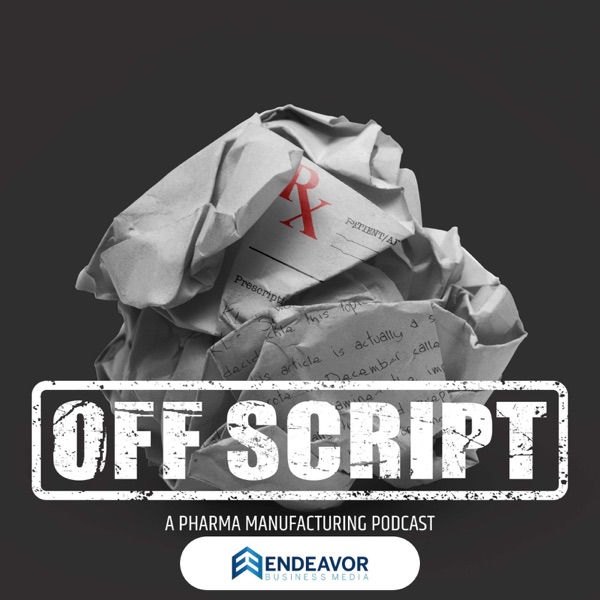
Off Script: A Pharma Manufacturing Podcast
The Off Script podcast offers in-depth interviews and discussions with industry experts about hot-button topics in pharma, and goes behind the scenes of Pharma Manufacturing’s print and online coverage, which follows the industry’s biggest issues surrounding scale-up, technology innovations, regulations and more!
- Episodes
- 150
- Releases
- Weekly
- Typical length
- 24 min
- On air since
- 2020
- Latest episode
- 20 hours ago
Episodes
150 episodes, newest first
-
16 min
Adapting Drug Development in a Tighter Funding Environment
Episode 151
Show notes
Tighter funding conditions are putting greater pressure on emerging biotech to reach key development milestones quickly while managing limited budgets. That environment is also changing what sponsors expect from their manufacturing partners, driving demand for development models that emphasize speed, predictability, and cost certainty.
In this episode of Off Script, we spoke with Sanjay Konagurthu, PhD, senior director of science and innovation, Pharma Services, at Thermo Fisher Scientific, about how today's funding landscape is influencing manufacturing and development strategies. The conversation explored why emerging biotechs may benefit from fixed-scope development programs, how parallel development activities can shorten timelines without compromising quality, and how CDMOs are adapting their offerings to help sponsors move programs forward more efficiently.
-
30 min
How Manufacturers Manage Pipelines in an Uncertain Market
Episode 150
Show notes
Despite ongoing geopolitical and regulatory pressures, life sciences manufacturers continue to invest in their product pipelines while also being more deliberate about long-term portfolio decisions. As interest in peptides, ADCs, and cell and gene therapies continues, manufacturers are weighing the complexity and costs of developing these medicines against the need to scale production and improve patient access. Decisions about outsourcing and building in-house capabilities are also shaping investment strategies.
This episode of Off Script closes out our series exploring findings from CRB’s Horizons: Life Sciences 2026 report, focusing on the section addressing pipeline expansion in a pressure-tested market. We spoke with Mark Hsu and Maddie Kelly, process engineers at CRB and co-authors of the section, to discuss what's driving investment in emerging modalities, the challenges of scaling complex therapies and making them more affordable, and how manufacturers are weighing CDMO partnerships against developing their own capabilities.
-
25 min
Solutions Spotlight: Applying Flow Chemistry to Complex Pharmaceutical Manufacturing
Episode 149
Show notes
Pharmaceutical manufacturers working with hazardous and difficult-to-control chemical reactions face challenges in managing process safety, heat transfer, and reaction conditions. Flow chemistry offers an alternative to traditional batch processing in applications where improved mixing, temperature control, and smaller quantities of hazardous materials in the reactor can help reduce operational risks and improve process performance.
In this episode of Off Script, sponsored by Valsynthese, we spoke with Luca Allievi, PhD, R&D Chemist and Project Manager at Valsynthese, about the role of flow chemistry in complex pharmaceutical manufacturing. The conversation explores how flow reactors work, where continuous processing offers advantages over batch production, and how the technology is being applied to azide chemistry, gas-liquid reactions, and highly reactive reagents. Allievi also discusses the practical challenges of implementing flow chemistry and why the future of process development will depend on selecting the right technology for each reaction.
-
20 min
The Changing Economics of Pharma Manufacturing
Episode 148
Show notes
Increased regulatory scrutiny, onshoring efforts, and supply chain vulnerabilities are reshaping how life sciences manufacturers are making investment decisions across the industry. Pharma manufacturers are weighing facility locations, workforce availability, and manufacturing costs while looking for ways to strengthen supply chain resilience and improve operational efficiency.
In this episode of Off Script, the third in our series exploring CRB’s Horizons: Life Sciences 2026 report, we spoke with Christa Myers, senior fellow of aseptic and sterile products at CRB and a co-author of the report. The conversation explored how manufacturers are evaluating established and emerging biopharma hubs, developing workforces to support advanced manufacturing technologies, and addressing supply chain risks. Myers also discussed how company size impacts decisions on investment and modernization, and the growing significance of process intensification to help manufacturers improve efficiency while keeping costs under control.
-
30 min
Can Pharma Manufacturers Realize AI's Potential?
Episode 147
Show notes
Life sciences manufacturers are cautiously optimistic about the potential for emerging technologies like AI, robotics and automation to improve manufacturing operations. While many manufacturers anticipate that these technologies will drive greater operational efficiencies and lower the cost of goods, concerns still remain about affordability, integration into regulated manufacturing environments — particularly for AI — and what these technologies mean for the future of the workforce.
This episode of Off Script continues our series exploring findings from CRB'sHorizons: Life Sciences 2026 report. We spoke with Niranjan Kulkarni, PhD, senior director of consulting services, and Matt Edwards, director of digital innovation, who co-authored a section of the report that explores the role of technology and people in life sciences manufacturing. The conversation explored why some manufacturers are expecting emerging technologies to increase costs, the challenges of implementing AI in regulated manufacturing, and how manufacturers can prepare their workforces for responsible AI adoption while maintaining human oversight.
-
36 min
How Life Sciences Manufacturers are Scaling Smarter
Episode 146
Show notes
Life science manufacturers are investing in expanded production capacity while rethinking facility design and technology strategies to improve efficiency, manage costs, and prepare for the future. Balancing upfront investments with long-term operating costs, while navigating the opportunities of automation, single-use technologies and AI, is becoming an increasingly important part of manufacturing decisions.
In this episode of Off Script, we spoke with Peter Walters, fellow of advanced therapies at CRB and a co-author of the company's Horizons: Life Sciences 2026 report, about some key findings from the report. The conversation explored how manufacturers are weighing technology investments against potential cost savings and designing facilities for greater flexibility and efficiency. Walters also discussed how manufacturing strategies may differ across modalities, where AI could have the greatest impact, and why phased implementation, human oversight and careful planning remain important as companies adopt new technologies.
-
33 min
Connecting Digital Technologies Across Biomanufacturing
Episode 145
Show notes
As biopharmaceutical manufacturers work to accelerate facility timelines while managing complex production environments, greater integration between automation, manufacturing systems and other digital technologies is becoming essential. Moving to more connected manufacturing is also driving companies to rethink how different capabilities are brought together, including a growing focus on integrating project delivery, automation, IT and manufacturing operations.
This episode of Off Script explores that push toward greater integration via biomanufacturing consultancy firm Project Farma’s recent acquisition of SimoTech, a company specializing in manufacturing automation and GMP IT services for the life sciences industry. We spoke with Rich Tree, president of Project Farma, and Pat Desmond, CEO of SimoTech, about what the deal says about the industry’s broader move toward digital integration. They also more broadly discussed barriers to digital transformation, the role of standardization in accelerating projects and supporting flexible manufacturing, and how manufacturers can better connect technology investments with broader manufacturing strategies.
-
27 min
Are Biomanufacturers Ready for AI?
Episode 144
Show notes
While artificial intelligence is expected to transform biopharmaceutical manufacturing, many manufacturers still face challenges in adopting these technologies at scale. Fragmented data, disconnected manufacturing systems and differences in how information is shared across organizations are creating barriers to AI adoption, raising questions about what manufacturers need to prioritize before investing in more advanced tools.
In this episode of Off Script, we spoke with Justin Byers, founder and CEO of Axio BioPharma, about some of the findings from the company's report, AI in Biomanufacturing: The 2026–2029 Outlook. The conversation explored the gap between AI ambitions and the reality of manufacturing facilities, the importance of building a strong data foundation, and how digital twins could support more advanced biomanufacturing processes. Byers also discussed the challenges of sharing manufacturing data across industry partners, the evolving regulatory expectations around AI in GMP environments, and how AI and digital technologies could reshape biologics manufacturing in the coming years.
-
39 min
Adapting Biologics Manufacturing to a More Complex Market
Episode 143
Show notes
The pipeline of biologic products entering the market is becoming increasingly complex, and biomanufacturers are incorporating newer technologies and manufacturing strategies into their processes to meet unique production needs. CDMOs, for example, are developing advanced platforms to improve their adaptability and flexibility as the biologics market continues to grow and evolve.
In this episode of Off Script, we spoke with Randal Bass, executive vice president of process design and innovation for Just-Evotec Biologics, a Seattle-based CDMO specializing in the development and manufacturing of biologic products. The conversation explored the challenges of meeting the demands of an expanding but increasingly fragmented biologics market, how single-use and continuous technologies are influencing the industry, and how integrated development strategies can help reduce scale-up risk. Bass also discussed the growing role of AI and machine learning in process development and what could drive broader adoption of advanced biomanufacturing technologies.
-
23 min
What Will It Take to Reshore Generic Drug Manufacturing?
Episode 142
Show notes
The Trump administration’s plan to impose 100% tariffs on imported generic drugs by August 2028 is spurring conversations about whether manufacturers can realistically reshore production before that deadline. But bringing production back to the U.S. will require more than tariffs alone, as manufacturers consider challenges around cost, capacity, workforce and infrastructure.
In this episode of Off Script, we spoke with Tom Strohl, president of Oliver Wight Americas, about the critical factors manufacturers need to consider to make pharmaceutical reshoring a reality. Strohl discussed the importance of considering the total landed cost of domestic versus overseas production, the capacity and workforce challenges associated with large-scale reshoring, and why moving API production back to the U.S. could prove even more difficult than finished-dose manufacturing. We also discussed if manufacturers have enough time to prepare for the 2028 tariff cliff, how manufacturers can balance cost with the long-term benefits of a more resilient domestic supply chain, and how AI and robotics could support a new generation of domestic manufacturing.
-
29 min
How AI-Based Bioreactors Can Improve Enzyme Production
Episode 141
Show notes
Researchers have developed a new sensor-enabled bioreactor that uses machine learning technology for improved enzyme production. This advanced technology—created by researchers at Iowa State University and Novonesis, with funding by BioMADE—pairs continuous monitoring with AI-guided control to give manufacturers a faster, more precise way to manage enzyme production.
In this episode of Off Script, we connected with Mike Hess, senior regional technology manager at Novonesis, and David Nathan, program director at BioMADE, to discuss the development of the new bioreactor and how real-time monitoring and AI-based control help manufacturers automate previously manual processes, improve batch consistency, and ultimately accelerate the path to market. The conversation also explored how the project led to the development of low-cost bioreactors that researchers are now working to turn into hands-on bioprocessing educational kits for students.
-
24 min
Blow-Fill-Seal and the Future of Sterile Ophthalmic Manufacturing
Episode 140
Show notes
Sterile ophthalmic manufacturing is facing growing demand as more preservative-free therapies move through development, while manufacturers also contend with increasingly stringent expectations around contamination control, inspection, and quality. Blow-fill-seal (BFS) technology offers a closed, highly automated approach that can reduce contamination risks while producing billions of unit doses at scale.
In this episode of Off Script, we spoke with Jody Chastain, CEO of The Ritedose Corporation, about the role of BFS in the future of sterile ophthalmic manufacturing. Chastain discussed how automation is improving manufacturing speed and container integrity, why packaging decisions are increasingly being made earlier in development, and how manufacturers are adapting to evolving FDA expectations and Annex 1 principles. He also explored manufacturing redundancy, AI-enabled quality operations, automated inspection, and the future of BFS technology.
-
30 min
Can Radiopharma Manufacturing Keep Pace with Demand?
Episode 139
Show notes
Radiopharmaceuticals are a rapidly growing area of oncology, fueled by advances in targeted therapies and expanding product pipelines. But bringing these therapies from development to commercialization presents unique manufacturing challenges, from isotope supply and specialized GMP facilities to the “just-in-time” distribution models required by the short half-lives of these radioactive medicines.
In this episode of Off Script, we spoke with Thijs Spoor, CEO of Perspective Therapeutics, about the current state of radiopharmaceutical manufacturing and what the industry needs to support the next phase of growth. Spoor discussed why manufacturing capacity has become one of the industry's biggest bottlenecks, how companies are approaching facility expansion and supply chain resilience, and why distributed manufacturing networks are integral. He also touched on workforce challenges, evolving regulatory expectations, and continued investment that is supporting the industry's growth.
-
25 min
AI’s Impact on Quality Management in Pharma Manufacturing
Episode 138
Show notes
The demands on pharmaceutical manufacturing quality teams are growing as they manage larger volumes of data driven by increasingly complex therapies and evolving regulatory expectations. In response, artificial intelligence is emerging as a powerful tool to help quality professionals synthesize information more efficiently, improve consistency across investigations, and support more informed decision-making.
In this episode of Off Script, we spoke with Charlie Lickfold, Chief Technology Officer at Catalent, about how the company is deploying AI to modernize pharmaceutical quality management. Lickfold explains why advanced modalities like cell and gene therapies are driving demand for AI-enabled quality systems, how Catalent’s new QAI platform is assisting in quality management, and why human oversight remains essential in regulated quality operations. He also discusses evolving regulatory expectations, AI governance, and organizational strategies that can support successful enterprise AI deployment.
-
34 min
Single-Use Technologies and the Future of Flexible Biomanufacturing
Episode 137
Show notes
Single-use technologies have reshaped biopharma manufacturing facility design, capacity strategy, and flexibility over the past decade. The industry has expanded with a growing range of targeted therapies and emerging modalities, which has led to manufacturers adopting single-use systems to meet demand. The shift has enabled more flexible facilities, faster product changeovers, and manufacturing strategies better suited to scaling next-generation biologics.
In this episode of Off Script, we spoke with Charlie Heise, associate director of Bioprocess Strategy and Development at Fujifilm Biotechnologies, about how single-use technologies have transformed facility design over the past decade and where things are headed. Heise discusses the industry's shift from process-specific plants to flexible manufacturing platforms, the growing role of single-use systems in continuous manufacturing and process intensification, and why standardization and digital integration are essential. He also explores how hybrid manufacturing models, regional production, and evolving therapeutic modalities will shape the next generation of biopharma manufacturing.
-
17 min
Solutions Spotlight: Rethinking Filtration as a System-Level Design Decision
Episode 136
Show notes
Biopharmaceutical manufacturing processes are becoming more complex, prompting manufacturers to evaluate filtration based on its impact across the entire process rather than as a standalone unit operation. Filtration decisions can influence everything from system footprint and flow performance to integration complexity, product recovery, and overall operational efficiency. Growing emphasis on sustainability and yield is also leading manufacturers to examine hidden inefficiencies.
In this episode of Off Script, sponsored by Saint-Gobain Critical Process Solutions, we spoke with Hannah Hertrick, market development manager of Filtration Products at Saint-Gobain, about how filtration is evolving into a system-level optimization opportunity. The conversation explores why filtration decisions increasingly extend beyond membrane performance, how filter design and connectivity can simplify system integration, and why manufacturers are taking a more holistic approach to improving process efficiency. Hertrick also discusses the challenge of holdup volume in high-value biologics, the impact of hidden product losses on yield and cost of goods, and the overall importance of reducing system complexity and improving product recovery.
-
20 min
How Genomic Language Models Could Accelerate Biomanufacturing
Episode 135
Show notes
A unique team of specialists in data generation and artificial intelligence are co-developing an AI genomic model capable of predicting genomic edits that improve commercial-scale protein production. This collaboration between Triplebar and UC Berkeley—with funding from the U.S. Department of Defense and the National Science Foundation through a BioMADE grant—aims to accelerate strain optimization for more resilient, cost-effective protein manufacturing across therapeutic and industrial applications.
In this episode of Off Script, we spoke with Shawn Manchester, CEO of Triplebar, about how the company's ultra-high-throughput microfluidics platform is being paired with UC Berkeley's genomic language model to transform strain engineering. Manchester discussed the motivation behind the collaboration, explained how this genomic language model differs from traditional AI approaches, and explored how they could improve protein expression, shorten development timelines, and reduce manufacturing costs. He also shared his vision for how AI-driven strain optimization could help enable the next generation of protein therapeutics and other biomanufactured products.
-
24 min
The FDA's PreCheck Program and the Future of Cell Therapy Manufacturing
Episode 134
Show notes
The FDA recently announced the participants in its PreCheck pilot program, an initiative designed to encourage earlier collaboration between regulators and companies developing new domestic pharmaceutical manufacturing facilities. By shifting facility readiness discussions earlier in the development process, the program aims to improve regulatory predictability, reduce manufacturing risk, and accelerate commercial launches, an approach that could be particularly valuable for advanced manufacturing technologies and complex therapeutic modalities like cell therapy.
In this episode of Off Script, we spoke with Fabian Gerlinghaus, co-founder and CEO of Cellares, about the company's selection as one of seven participants in the inaugural PreCheck cohort and what the program could mean for both Cellares and the future of cell therapy manufacturing. The conversation explores how earlier regulatory engagement will help de-risk commercial launches, why automation is changing the scalability of autologous cell therapies, and how standardized manufacturing platforms may enable faster global tech transfer. Gerlinghaus also discusses Cellares' strategy for building a global network of automated manufacturing facilities, the company's recent fundraising efforts to support its expansion, and the milestones—including a planned IPO—that will shape its next phase of growth.
-
19 min
Solutions Spotlight: Improving Sustainability Through Smarter Steam System Monitoring
Episode 133
Show notes
As pharmaceutical manufacturers work to reduce energy consumption and meet sustainability targets, attention is expanding beyond core production processes to the utility systems that support manufacturing. Steam systems, which play a critical role in sterilization, heating, and HVAC operations, can account for a significant share of a facility's energy consumption. Yet things like manual inspection practices and undetected steam trap failures often leave manufacturers with unnecessary energy losses, higher emissions, and increased operating costs.
In this episode of Off Script, sponsored by Emerson, we spoke with Tom Belling, global director of Life Sciences at Emerson, about the growing role utilities play in pharmaceutical sustainability strategies, and the significance of steam systems within that. The conversation explores why steam systems have become an important opportunity for improving operational efficiency and how continuous monitoring technologies are helping manufacturers identify failures earlier without disrupting operations. Belling also discusses how wireless sensing, acoustic monitoring, and data-driven maintenance can improve reliability, support sustainability, and reduce maintenance costs while protecting product quality.
-
19 min
How the Framework of Modern Pharma Manufacturing Is Being Rebuilt: Part Two
Episode 132
Show notes
The advancement of pharmaceutical manufacturing depends heavily on the research taking place in areas such as continuous manufacturing, automation, machine learning, and AI. The maturation of these technologies will foster improved process optimization, accelerate the development of medicines, and make manufacturing more efficient and reliable.
This is the second part of our conversation with Thomas Roper, PhD, co-director of pharmaceutical engineering at Virginia Commonwealth University’s Center for Pharmaceutical Engineering and Sciences and graduate program director for chemical and life science engineering. Roper discusses how graduate students in his research group have helped advance technologies ranging from computational fluid dynamics and process analytical technology to machine learning applications for process optimization. He also shares why he views AI as a powerful tool, not a replacement for people, and how it’s preparing the next generation of scientists and engineers.
On these lists
Off Script: A Pharma Manufacturing Podcast is one of the shows picked out on this list


More in Business News
Placed highest on Apple Podcasts' Business News chart right now