Podcast
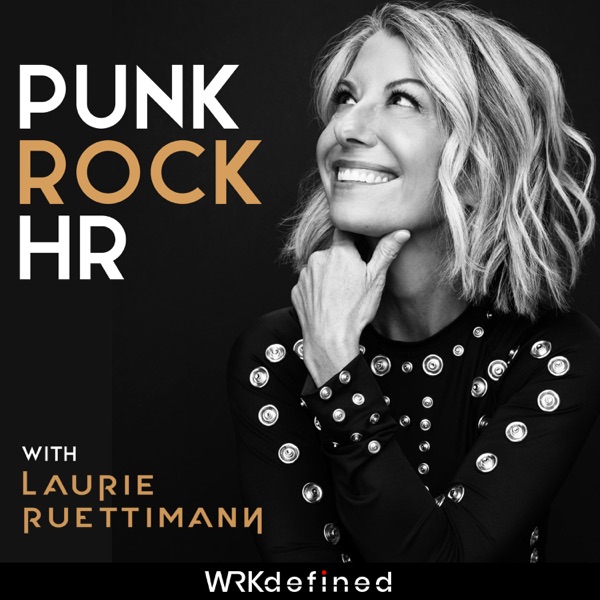
Punk Rock HR
Welcome to the Punk Rock HR Podcast, hosted by the influential and unconventional Laurie Ruettimann. This podcast breaks away from the traditional constraints of the HR world to bring you candid and compelling conversations with some of the most disruptive and innovative minds in the business. Each episode, Laurie dives deep into critical topics surrounding the real world of work, exploring the modern workplace's nuances, and challenging the status quo of HR.
Guests range from renowned thought leaders, authors, and entrepreneurs to HR professionals and individuals who have reshaped the way we approach work and organizational culture. Punk Rock HR is not your usual HR talk. It’s a blend of insight, wit, and irreverence, aiming to bring a fresh, unfiltered perspective to the challenges and opportunities facing today’s workforce.
Whether you’re an HR professional looking to revamp your approach, a leader trying to understand the people side of the business better, or just someone interested in the dynamics of the modern workplace, this podcast is your ticket to engaging discussions and actionable insights. Expect energizing conversations, guests with big ideas, and a punk rock twist, with episodes released every Monday.
Follow the Punk Rock HR Podcast to keep your finger on the pulse of work, leadership, and human resources. Your journey towards a more progressive and enlightened workspace starts here!
- Episodes
- 339
- Releases
- Every two weeks
- Typical length
- 36 min
- On air since
- 2018
- Latest episode
- 1 day ago
Episodes
339 episodes, newest first
-
42 min
316: Be Sports Minded About AI with Dr. Dafna Aaronson
Show notes
Dr. Dafna Aaronson says coaches and general managers are already mini data scientists, and AI can give them a gut check before they make the call. At work, Laurie has seen it used as a rip and replace for human judgment instead.
In this episode of Punk Rock HR, Laurie Ruettimann sits down with Dafna, who pairs a PhD in AI and machine learning with a master’s in sports psychology. They get into how AI handles performance versus potential, and why the first question for any organization is whether it wants AI at all. Laurie also tests the sports analogy against her Chicago Bears and a Lou Holtz video from early in her HR career.
Topics covered:
•
How AI handles performance differently from potential
•
Using AI to narrow a pool of 1,200 athletes
•
Why coaches and GMs work like mini data scientists
•
What builds trust in an AI tool
•
Asking whether your organization can absorb AI
•
Where sports and business overlap, and where they don’t
Visit Dafna Aaronson’s website:http://dafna-aaronson.com/Connect with Dafna Aaronson on LinkedIn:https://www.linkedin.com/in/dafna-aaronson/
•
00:00 - Intro
•
02:41 - Two stories about AI at work
•
03:21 - Performance vs. potential
•
04:43 - How AI helps scout talent
•
09:26 - Trusting AI tools
•
12:44 - The HR tech industrial complex
•
16:02 - AI and the Bears’ third-string quarterback
•
18:01 - Coaches as mini data scientists
•
19:35 - Rushing to adopt new HR tech
•
20:58 - Deciding whether you want AI
•
23:22 - Where sports and business overlap
•
28:24 - Lou Holtz and the limits of sports metaphors
•
31:39 - Letting AI advise instead of decide
•
34:41 - AI and company self-actualization
-
34 min
315: Reference Checking with James Lord
Show notes
James Lord says a background check tells you whether someone has been convicted of a crime, but a reference tells you about their character. He has spent nearly 20 years in HR tech, and the last decade of it focused on references. In 2025 he joined Refapp, a Swedish platform bringing structured, evidence-based reference checks to North America.
Plenty of companies skip references or treat them like a box to tick. James says that’s a risk, especially when you’re hiring for roles that come with trust and access. With AI-polished resumes and teams that are only in the office part of the week, he argues that a real reference is how you learn how someone behaves when you aren’t watching.
If you’ve ever skipped references to close a req faster, or called a candidate’s friend and learned nothing, this conversation is for you.
In this episode, you’ll hear:
•
How reference checking differs from background checking, and why people mix them up
•
Why letting candidates pick any reference they want gets you nothing useful
•
The 180% ROI James calculates for structured reference checks
•
How to get references from people whose companies forbid giving them
•
Why interviews miss counterproductive work behaviors like bullying
•
How one reference turned into a brand-new candidate
•
Why James’s upcoming DisruptHR talk is called “The Reference Check Is a Lie”
Start your extended free trial of Refapp: https://www.refapp.com/hey-laurie-friend
• 00:00 - Intro
• 02:33 - References vs. background checks
• 03:53 - Taking the subjectivity out of references
• 06:38 - The ROI of checking references
• 08:40 - How Refapp works inside the ATS
• 09:54 - Who writes the reference questions
• 11:46 - Keeping reference answers confidential
• 13:09 - Getting around no-reference company policies
• 15:50 - The risks of skipping reference checks
• 19:01 - Making the need-to-have case
• 21:04 - Winning over reference check skeptics
• 22:19 - How Refapp differs from competitors
• 24:29 - Marathons and life outside work
• 26:33 - James’s upcoming DisruptHR talk -
35 min
314: Job Searching with Stefanie Fackrell
Show notes
Stefanie Fackrell was laid off in 2023 and decided to bet on herself. The next two years tested that bet hard. Her brother, who was also her best friend, was killed by a drunk driver in 2024, and a year later she was diagnosed with breast cancer. She kept building her business through all of it, and she kept showing up online to help people find work.
She's now head of talent for two venture-backed startups through her firm, dysruptiveHR, and she isn't sugarcoating the market. Many white-collar tech jobs aren't coming back, and most of the job search advice flooding your feed is wrong.
If you've been laid off or think you might be next, this conversation is for you.
In this episode, you'll hear:
• Why two hours a day on job boards beats eight
• Using AI to tighten your resume, not write it
• Five solid resumes vs. a custom one for every job
• What actually gets people hired at the startups she recruits for
• The thank-you note myth
• Why your ego shouldn't keep you from a bridge jobChapters:
• 00:00 - The jobs that aren't coming back
• 01:58 - Who Stefanie is and why she gives job search advice
• 04:32 - Grief, cancer, and posting the personal on LinkedIn
• 08:04 - The job market in 2026
• 09:36 - Why two hours on job boards is enough
• 12:22 - AI, resumes, and the customization trap
• 15:34 - What actually gets people hired
• 18:09 - Bad advice: follow-up emails and thank-you notes
• 22:05 - The case for a bridge job
• 29:36 - Laurie's three takeaways -
1 hr 8 min
313: You're Not Broken. The System Is.
Show notes
Laurie sat down with Meg Bear and Amy Wilson on their podcast, the Meg & Amy Show, and the conversation was good enough that she wanted to share it with Punk Rock HR listeners too.
They talk about financial freedom and what it actually buys you, and why Laurie thinks AI is taking the blame for problems that are really about childcare, housing, and a missing safety net.
If you want Laurie's honest take on work, money, and what's really breaking people right now, this is the conversation.
In this episode, you'll hear:
•
Why most career advice is projection, and what people actually need instead
•
How Laurie came to realize how much control she actually had over her own life and career
•
Why financial freedom changes how you can show up at work
•
Laurie's case for why childcare and housing, not AI, are the real source of workplace anxiety
•
Laurie's answer to a listener dilemma about accepting a lesser role vs. pushing for severance
•
An honest moment where Laurie asks herself whether the work has been worth it
-
43 min
312: Blowing Up the HR Playbook with Lisa Sterling
Show notes
Lisa Sterling said "absolutely not" when she was first asked to take a Chief People Officer role. Not because she didn't care about people, but because everything she believed about organizational performance was at odds with what HR was supposed to be. She took the job anyway, with one instruction: get rid of all of it and build what you actually believe in.
She's now CPO at Perceptyx, and that's still her operating mode. The engagement score obsession, the job architectures, the performance reviews that produce ratings instead of growth. She's not interested in any of it, and she's building something to replace all of it.
If you work in HR and you've ever felt like the function is measuring the wrong things and asking you to own outcomes you don't actually control, this conversation is for you.
In this episode, you'll hear:
•
Lisa’s argument that HR doesn't actually control engagement, and why the score is the wrong KPI
•
The capability operating system she's building to replace job descriptions and performance ratings
•
How Perceptyx is moving from data collection to actual behavior change
•
Why she tells her own team to leave HR if they want to grow
•
How she ended up running global customer success on top of the people function
•
The difference between a CHRO and a CPO, and why she doesn't call herself the former
•
Her imposter syndrome moment (and epiphany) at the New York Stock Exchange
-
37 min
311: The Business Case for Caring with David Barrett
Show notes
Most companies have no idea how their employee experience actually compares to their competitors. Not because the data doesn't exist. Because nobody's looked at it.
David Barrett, founder and CEO of Welliba, built a platform that does exactly that, using publicly available information to measure workforce sentiment across hundreds of thousands of organizations.
The companies that treat their people well are outperforming the ones that don't. That's the short version. The longer version is more interesting, and a little harder to sit with.
If you work in HR and you've ever been asked to justify a people investment with hard numbers, this conversation is the one you've been waiting for.
In this episode, you'll hear:
•
What six years of S&P 500 data shows about employee experience and business performance
•
Why the strongest predictor of high performance isn't technology, pay, or flexibility
•
What companies that are profitable but burning people out actually look like in the data
•
Why most pandemic-era people investments never got properly validated
•
Why the manager and coworker relationship still outpredicts perks and programs
•
What Unhappy Performers are, and why the term might be more optimistic than it sounds
-
30 min
310: Fixing a Broken Benefits System with Rae Shanahan
Show notes
Twenty-six years in benefits gives you a particular kind of clarity. Rae Shanahan knows what the industry got right, and she's direct about what it got wrong. Now Chief Strategy Officer at Businessolver, she comes to this conversation with research and the research tells a story most HR teams aren't ready to hear.
The system was built for employees with time, financial stability, and enough clarity to search, compare, and choose. Most people don't have all three.
If you work in HR and you've ever wondered why better benefits technology hasn't fixed the problem, this conversation is for you.
In this episode, you'll hear:
•
Why personalization in benefits is reactive by design
•
What anticipatory benefits looks like in practice
•
Why financial fragility keeps showing up as an enrollment problem
•
How AI can help without replacing human judgment
•
What the benefits professional of 2035 (yes, that’s right) actually needs to know
-
35 min
309: Closing the AI Confidence Gap with Gemma Versace
Show notes
The CEO is pumped. The engineers are burnt out. And HR is the last to know.
Gemma Versace is Chief Client Officer at X-Team, and her company's research on AI talent strategy should be required reading for every HR leader. The confidence gap between executives and the people actually doing the work is wide, and the organizations that ignore it are losing their best people.
If you work in HR and you've ever felt like AI strategy happens around you instead of with you, this conversation is for you.
In this episode, you'll hear:
•
The gap between executive confidence and practitioner reality on AI talent
•
What that disconnect looks like inside a real organization
•
Why HR reports the lowest AI confidence of any function
•
Why job description clarity predicts AI maturity more than budget
•
The difference between naming governance as a problem and fixing it
•
Why most organizations can't prove AI ROI to finance
•
Why long-term embedded partners outperform short-term contractors
-
48 min
308: Leading Into the Unknown with Tameka Vasquez
Show notes
Tameka Vasquez grew up in tech, where moving fast and breaking things was gospel. Then she started working with leaders outside that world and realized the gospel didn't travel. Most leaders, she found, are only equipped for change they've already seen. Everything else gets met with fear.
That's the gap she has spent her career trying to close. Not by predicting the future, but by changing how leaders relate to it. Her framework, SHIFT™, treats the future as a verb. Something you do, not somewhere you arrive. The goal isn't certainty. The goal is building enough capacity to lead when nothing is certain.
If you're tired of the inevitability narrative, the one that says the future is already decided and your job is just to comply, this conversation is for you.
In this episode, you'll hear:
•
How growing up in tech shaped Tameka's assumptions about change, and what working in slower-moving industries taught her about how rare those assumptions are
•
The story of her Guyanese heritage and why multigenerational survival in precarious conditions is the personal foundation underneath all of her professional work
•
Why she no longer tries to clear a credentials bar that keeps moving, and what she says instead when someone asks what qualifies her
•
A full walkthrough of the SHIFT™ framework and why she calls it a practice rather than a program
•
The false binary between being first and getting left behind, and why the whole spectrum in between is where most real strategy lives
•
Her argument that discomfort with inevitability is a more honest starting point than certainty, and why she works with that discomfort rather than around it
•
Why outsourcing critical thinking to institutions and thought leaders is cultural laziness, and what leaders actually need to do instead
-
43 min
307: The Engineer Who Won't Use AI with Andrew Norcross
Show notes
Andrew Norcross built NASA's website. He built the New York Times' website. He's been engineering the infrastructure of the internet for 20 years. Now he's building fences and painting houses in Florida, because AI ate his job and he refuses to be complicit in what replaced it.
This is an episode about what happens when someone with real skill, real principles, and zero interest in using AI suddenly has no market for the thing they're best at. Norcross didn't rage-quit. He just stopped pretending the emperor has clothes. He watched an industry swap craftsmen for pattern-recognition machines, compared it directly to the 2008 subprime collapse, and walked away to do work with his hands until the inevitable correction comes.
If you've ever wondered what integrity costs in a labor market that no longer rewards it, this conversation is for you.
In this episode, you'll hear:
•
How Norcross built the architecture for NASA.gov, the New York Times, GitHub, and Disney, and why that work has disappeared
•
His direct experience with bad AI-generated code
•
Why the AI investment bubble looks a lot like subprime mortgage lending, and why the math doesn't math
•
His reminder that AI is not intelligent, it's a pattern-recognition machine, and why the word choice matters
•
Why no machine will ever account for the chaos and unpredictability of human behavior
•
His pivot to referral-only handyman work
•
A frank conversation about college vs. trades
•
Why he gave up on long-term career planning entirely
•
Why going to sleep sore from physical labor feels better than putting money in the wrong pockets
-
46 min
306: Living Better to Lead Better with Scott Eblin
Show notes
Most leadership advice skips the body entirely. Scott Eblin doesn't. The executive coach and author of Overworked and Overwhelmed has spent 25 years helping C-suite leaders perform better, and his starting point isn't strategy. It's neurobiology.
The reason so many leaders feel reactive, depleted, and like they have no agency isn't a character flaw. It's physiology. When you're running on chronic fight or flight, your frontal lobe (the part responsible for values, discernment, and intentional response) is competing with your amygdala. And the amygdala usually wins.
If you manage people, work with people who manage people, or you're the person in the C-suite wondering why everything feels like a threat, this conversation is for you.
In this episode, you'll hear:
•
Why self-management comes before everything else in leadership
•
What chronic fight or flight actually does to your decision-making
•
How the parasympathetic nervous system works and how rhythmic movement activates it
•
The Life GPS framework Scott and his wife built in the 90s
•
Why knowing your 100% optimal makes a 25% day easier to navigate
•
What Scott's MS diagnosis in 2009 taught him about temporary states
•
The dance floor vs. the balcony concept, and why leaders need both
•
Martin Seligman's disputation technique for breaking a pessimistic thought loop
-
35 min
305: Global VA Agency for Stigmatized Industries with Amari Leigh
Show notes
Amari Leigh didn't plan any of this. She volunteered at sex worker charities and women's health organizations, sent her CV to every reproductive justice charity she could find, and stumbled into freelance virtual assistant (VA) work. Now she runs a global agency that's worked with over 100 businesses across 17 countries, all of them sex-positive and queer-affirming.
Sex positivity is rooted in consent, body autonomy, and non-judgment. Amari makes the case that a more sex positive, queer-positive world could genuinely save lives and make us all more productive and humane in the process.
If you've ever built a business around your values, wondered whether to stick it out with difficult people or just walk away, or wanted to hear someone talk plainly about censorship, shadow banning, and what it actually costs to work in stigmatized industries, this one's for you.
In this episode, you'll hear:
•
How Amari accidentally launched a VA agency while emailing every sex positive and queer-affirming charity she could find
•
What running a sex positive, queer-affirming business actually looks like across 17 countries and 19 U.S. states
•
How censorship and shadow banning target sexual health and reproductive justice content while harassment gets a pass
•
Why your social media following is not an asset, and what is
•
Her honest answer on whether she'd try to educate a bigoted coworker (spoiler: absolutely not)
•
Why a sex positive, queer-positive world would reduce unintended pregnancies, maternal deaths, and pressure on the foster care system
-
30 min
304: Joyful Workplaces with Yolanda Fraction
Show notes
Yolanda Fraction, organizational development consultant, doctoral student in IO psychology, and author of Joyful Workplaces, joins Punk Rock HR to make the case that joy at work is a strategy, not a perk. And for the leaders who bristle at the word "joy," she has a reframe: call it effectiveness. The outcome is the same either way.
Bad bosses. Turnover. Absenteeism. Mental health days taken just to survive the workload. Yolanda argues these are not culture problems. They are performance problems. And they are solvable, often for free.
If you lead people, support leaders in HR, or want to build workplaces that actually work, this conversation is for you.
In this episode, you'll hear:
•
Why joy is the outcome of a high-performing organization, not a mood
•
What the opposite of joy actually looks like on a balance sheet
•
How Yolanda builds joyful workplaces without a budget
•
Why toxic managers are a performance problem, not just a culture problem
•
What self-determination theory has to do with performance reviews
•
Why an 82-slide deck won't change executive behavior, and what Yolanda does instead
•
Why Yolanda asks leaders to imagine their 7-year-old self watching them make a difficult call.
-
31 min
303: Healthy to 100 with Ken Stern
Show notes
What actually helps people live longer, healthier lives? According to longevity expert Ken Stern, it’s not just diet, exercise, or the latest health trend. The biggest factor might surprise you: Your relationships.
Ken Stern, author of Healthy to 100, joins Punk Rock HR to talk about what the longest-lived countries in the world are doing differently. Drawing from research and reporting in Japan, Singapore, Italy, Spain, and South Korea, Ken explains how social connection, community design, and policy shape how long (and how well) we live.
In this episode, you’ll hear:
•
Why loneliness is a serious health risk, comparable to smoking
•
What the world’s longest-lived countries do differently than the United States
•
How social connection impacts longevity more than diet or exercise
•
Why the traditional life stages of school, work, and retirement were invented — and can be reinvented
•
What Japan’s older workforce reveals about purpose and longevity
•
How housing policy and urban design influence healthy aging
•
Why the future of work will require rethinking retirement
•
How communities and public policy shape how long we live
-
32 min
302: Becoming Trustworthy: Race and Solidarity at Work with Karen Fleshman
Show notes
Karen Fleshman joins Punk Rock HR to talk about race, power, and the uncomfortable yet necessary work white women must do to build trust across differences. As the founder of the Interracial Sisterhood Coalition, Karen works with white women who are past the beginner stage of anti-racism and ready to examine how conditioning, proximity to power, and workplace dynamics reinforce racial hierarchy.
This conversation moves beyond theory. It explores accountability, institutional protection, intergenerational trauma, and what it actually takes to build solidarity in today’s workplace.
In this episode, you’ll hear:
•
Why Karen shifted from preparing young people of color for corporate America to preparing workplaces for them
•
What the “messy middle” of anti-racism work looks like
•
How white women’s proximity to power shapes HR and leadership roles
•
The tension between protecting institutions and protecting people
•
Why Karen prefers solidarity over performative allyship
•
How intergenerational trauma influences workplace behavior
•
What it takes to build trust across racial differences
-
36 min
301: The Manager Method with Ashley Herd
Show notes
Ashley Herd, founder and CEO of Manager Method and co-host of HR Besties, joins Punk Rock HR to talk about what it actually takes to lead people well. A lawyer turned HR executive, Ashley shares how mentorship, recognition, and practical judgment shape better managers — and why “common sense” leadership isn’t common at all.
If you manage people, support managers in HR, or sit in the C-suite and want employees to function like humans instead of headcount, this conversation is for you.
In this episode, you’ll hear:
•
Why mentors can sit anywhere on the org chart — including below you
•
The hidden human cost of how and when we terminate employees
•
Why recognition isn’t “fluffy” — it’s fuel
•
How Ashley’s Pause–Consider–Act framework changes everyday decisions
•
What HR Besties gets right about nuance in the profession
•
Why managers must stop thinking about people as spreadsheets
-
30 min
300: The Reality of Work Tech in 2026 with Mary Ellen Slayter and Steve Smith
Show notes
Mary Ellen Slayter and Steve Smith of Rep Cap join Punk Rock HR to talk about the state of the job market, the reality behind AI hype, and what’s actually changing in work tech and HR tech. Drawing on decades as journalists turned operators, they break down why this moment feels uniquely disorienting and where real opportunity still exists.
From capital shifts and consolidation to brand, people investment, and human connection, Mary Ellen and Steve share what’s breaking, what’s quietly working, and why 2026 may mark a turning point for companies willing to think long term.
In this episode, you’ll hear:
• Why today’s job market feels brutal despite strong labor numbers
• How AI hype differs from real innovation in work tech
• Why VC-era assumptions are gone and what replaces them
• Where private equity, consolidation, and M&A are reshaping the market
• Why brand and long-term value matter more than short-term performance
• Where optimism still exists for work, people, and leadership in 2026 -
41 min
299: The Human Cost of AI in HR with Scott Stratten
Show notes
Scott Stratten, speaker and author joins Punk Rock HR to talk about the hype, fear, and noise around AI in HR. Instead of focusing on tools, he asks why they exist in the first place and what they mean for the future of work. From AI bots in interviews to the risk of HR jobs disappearing in the next 24 months, Scott brings the truth. He calls for the act of slowing down, asking better questions, and remembering that HR’s role is to defend humanity at work.
In this episode, you’ll hear:
•
Why interviews with AI bots are dehumanizing for candidates
•
The biggest red flags HR should watch for with AI adoption
•
How “efficiency” is often a cover for economic cruelty
•
Why HR jobs may vanish in 24–36 months without reinvention
•
What a pre-mortem can teach us about slowing down AI adoption
•
How referrals and relationships still drive most hiring
•
Why universal basic income is entering the conversation
•
The true value of HR: advocacy and human connection
-
28 min
298: Navigating AI and Global Work with Laura Maffucci
Show notes
Laura Maffucci, Head of HR at G-P, joins Punk Rock HR to explore how AI and global employment solutions are reshaping the HR landscape. From “agentic AI” and compliance challenges to the human side of leadership, Laura shares what HR leaders need to know about embracing AI responsibly while unlocking global talent with Employer of Record services.
In this episode, you’ll hear:
•
What an Employer of Record (EOR) is and why it matters in today’s global labor market
•
The difference between generic AI and “agentic AI” built for safe, HR-specific use
•
Why HR jobs aren’t going away, but the work is changing
•
How leaders can create safe AI adoption practices at work
•
Real HR use cases for AI, from summarizing investigations to tracking compliance changes
•
The risks of over-relying on AI and why human judgment remains essential
•
Why global talent strategy is becoming a must-have for companies
-
56 min
297: Supporting Caregivers at Work with Blair Whitman
Show notes
Blair Whitman, VP of Client Success at Homethrive, joins Punk Rock HR to talk about the stigma around caregiving, why it’s a workforce issue, and how companies can move beyond performative support. From personal caregiving stories to the ROI of real benefits, Blair shares how employers can create cultures that support both productivity and compassion.
In this episode, you’ll hear:
•
Why many people don’t identify as caregivers and why it matters
•
How caregiving impacts careers, especially for women
•
What managers can do to support employees under strain
•
The difference between EAPs and deeper caregiving support
•
How caregiving benefits deliver real ROI for companies
•
Why including men in the caregiving conversation is essential
•
The unexpected joy and beauty that come with caregiving
On these lists
Punk Rock HR is one of the shows picked out on each of these





More in Careers
Placed highest on Apple Podcasts' Careers chart right now