Podcast
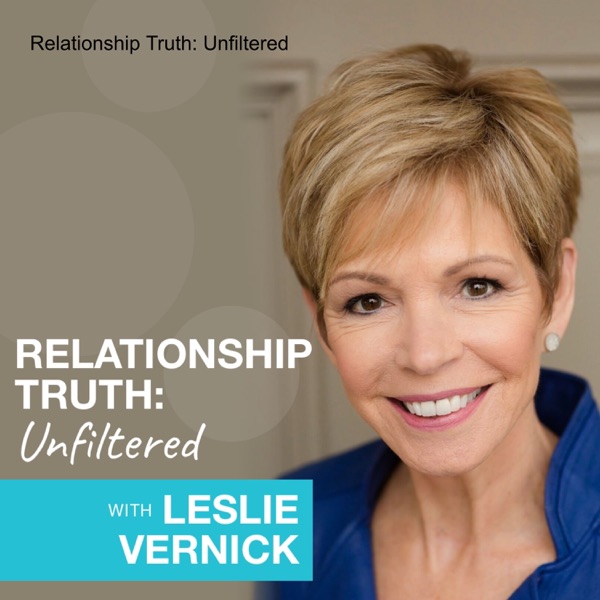
Relationship Truth: Unfiltered
Relationship Truth: Unfiltered is a place for people of faith to find real answers when it comes to destructive relationships.
Leslie Vernick is the author of seven books, including the best-selling, ”The Emotionally Destructive Marriage.” She has dedicated her life to cutting through the religious confusion and teaching women to grow in their relationships: with God, with themselves, and with others.
- Relationships chart
- #59
- Episodes
- 190
- Releases
- Every two weeks
- Typical length
- 40 min
- On air since
- 2022
- Latest episode
- 1 day ago
Episodes
190 episodes, newest first
-
29 min
Taking Back Your Story: The Real Path to Wholeness After Emotional Abuse
Episode 130
Show notes
Taking Back Your Story: The Real Path to Wholeness After Emotional Abuse
What if the thing keeping you from healing is not your abuser's refusal to change — but your belief that their apology is the price of admission to your own wholeness?
In this deeply personal and powerful episode, Leslie pulls back the curtain on her own story of childhood emotional abuse and shares, with rare vulnerability, what the healing journey truly requires — not someday, not after the apology comes, but right now, exactly where you are. You will walk away with a clear-eyed understanding of the two most common detours that keep women stuck, three concrete steps to begin your own healing work, and the faith-rooted conviction that your story is not over and the ending still belongs to you.
Key Takeaways
Emotional Abuse Is Real, It Leaves Real Damage, and the Church Needs to Say So
Emotional abuse does not require a raised fist to leave lasting wounds. Proverbs says reckless words pierce like a sword — and Leslie reminds us that is not metaphor, it is diagnosis. If you have been told you are too sensitive, that you just need to forgive and move on, or that what happened to you was not that bad, this episode speaks directly into that invalidation. What happened to you was real, it was sin, and you deserve to heal from it fully.
The Two Detours That Will Keep You Stuck
The first detour is spending your energy trying to fix or change your abuser. You cannot do someone else's healing work, and most of the time they are not even willing to admit the work exists. The second — and perhaps more quietly devastating — detour is waiting for an apology before you allow yourself to move forward. Leslie shares from her own experience of sending a vulnerable letter to her mother and receiving only more wounds in return. The question she had to sit with — and the question she now places in your hands — is this: do you need, with a capital N, the person who hurt you to repent before you are allowed to heal? When she finally answered no, something inside shifted. That shift is available to you too.
Taking Responsibility for Your Healing Is Not the Same as Taking Blame
This is perhaps the most important distinction in the entire episode, and Leslie returns to it more than once because it is so frequently misunderstood. You are never responsible for what was done to you. The person who abused you is one hundred percent responsible for their choices. But now, as an adult, you are one hundred percent responsible for what you do with what happened to you. Accepting that responsibility is not blame — it is stewardship. Proverbs 4:23 commands you to guard your heart above all else. That is your assignment, and no one else can do it for you. Owning your healing gives you back your agency and your power to decide how your story ends.
Three Places to Put Your Energy Right Now
Leslie outlines three concrete starting points for the healing journey. First, re-educate yourself — especially spiritually. If the Bible was used as a weapon in your home to enforce control, you may be carrying a distorted picture of what God actually says about submission, forgiveness, boundaries, and your own worth. Find out for yourself. Second, identify your own work to do, not your abuser's — what do you need to grieve, what lies do you need to release, what patterns are no longer serving the person God designed you to be? Third, expose and actively let go of the lies. Notice when you say I can't and ask yourself: who told me that? Try shifting I can't to I can try, or even I won't — and notice how that one word change hands your agency back to you.
Healing Is a Process, Not a Destination — And You Do Not Have to Walk It Alone
Wholeness does not mean you never feel pain again or never get triggered. It means you now know what to do when those things happen. It means you can speak in your own voice, hold your own values, and care for yourself without requiring someone else's permission or validation. Leslie also makes clear that this journey was not designed to be walked in isolation. You were wounded in relationship, and you heal in relationship — with God, with safe and wise community, and when needed, with a good trauma therapist or coach. Getting professional help for emotional wounds is not weakness. It is the same wisdom that sends you to a doctor when your body is not healing on its own.
Personal Invitation
If today's episode stirred something in you — if you recognized yourself in one of those detours, or if you are exhausted from focusing on everyone else and have not yet turned that care toward yourself — I want to offer you a place to begin. The Quickstart guide at the link below is a gentle, practical first step to help you get oriented on your healing journey. You do not have to have everything figured out. You just have to take one honest step forward. https://leslievernick.com/guide
Friend, your story is not over. The people who hurt you do not get to write your ending. Joseph did not stay in the pit. Esther did not stay a captive. And you do not have to stay defined by the story that was handed to you. God sees what happened. He grieves it with you. And He is not asking you to minimize it or pretend it was smaller than it was. He is inviting you to heal — step by step, in faith, with real people around you and His truth anchoring you. Start where you are. Tell the truth. Do your work. The ending of your story still belongs to you and to God, and it can be something beautiful.
-
52 min
What Your Church Never Told You About Divorce — A Family Law Attorney Sets the Record Straight
Episode 129
Show notes
Have you ever wondered whether staying in your marriage is what God truly requires of you — or whether that belief is actually a lie keeping you trapped?
In this powerful episode, Leslie sits down with Charlene Quint, family law attorney, domestic abuse survivor, TEDx speaker, and founder of Abuse Care. Charlene brings a rare combination of courtroom experience, personal healing, and deep biblical grounding to one of the most urgent conversations women in destructive relationships need to hear. You will walk away with practical tools for leaving safely, a clearer understanding of what Scripture actually says about divorce, and the courage-building truth that God goes with his daughters into their promised land.
Key Takeaways
You Are Not Naive — These Men Are Skilled Actors
Charlene opens with her own story: a CFO who did not see the signs during the love-bombing phase, who was coerced into signing a 28-page prenuptial agreement the day before her wedding, and who eventually left with nothing but a change of clothes in the trunk of her car. Her story is a profound reminder that education, intelligence, and faith do not protect a woman from a calculated abuser. The shame of asking "how did I miss this?" is one of the first lies that must be named and released.
Naming It Correctly Changes Everything
Just as a doctor who misdiagnoses bronchitis when the patient has lung cancer will prescribe medicine that cannot heal, a counselor or pastor who frames abuse as normal marital conflict will offer tools that cannot help. Charlene and Leslie make clear that naming a behavior as gaslighting, coercive control, or abuse is not an act of bitterness — it is an act of clarity that finally gives a woman permission to seek the right remedy. Traditional marriage counseling applied to an abusive relationship is, as Charlene puts it, like taking aspirin and expecting it to cure cancer.
What the Bible Actually Says About Divorce
One of the most important sections of this conversation walks through Deuteronomy, Malachi, and Matthew with careful, honest biblical scholarship. The long-repeated phrase "God hates divorce" is a mistranslation of Malachi 2, where God was actually condemning men who sent wives away without a certificate of divorce — abandoning women with no legal protection and no ability to remarry. Moses granted the certificate of divorce as a protection for women in a patriarchal culture. Jesus upheld that provision. God's heart, throughout all of Scripture, is consistently with the oppressed and against those who use power to violate others.
What Abusers Will Do During the Divorce — Without Exception
Charlene is direct: there is a predictable playbook, and every woman deserves to know it before she is blindsided. He will play the victim. He will pursue parental alienation and social alienation. He will lie about finances. He will drag out litigation. He will volunteer visibly at church to build his reputation. Practical wisdom here includes gathering financial records before leaving, getting an order of protection if applicable, making divorce documents extremely specific about dates and terms, and — critically — keeping a poker face about what matters most to you. The moment he knows what you love, he will use it as leverage.
Healing Begins with Truth and Safe Community
Charlene calls it the three Rs: Recognize the lies you have believed, Remove them, and Replace them with God's truth. Lies like "no one else will love me" or "if I just pray harder he will change" are the internal chains that keep women in destructive relationships long after the external danger is recognized. Surrounding yourself with safe, informed people — and not walking this road alone — is not optional. It is the path. And for church leaders who want to help, Charlene offers her BEARS framework: Believe her, Educate yourself, hold Abusers Accountable, Refer her to professionals, and Support her practically with housing, finances, court accompaniment, and presence.
Personal Invitation
If something in this episode stirred something in you — if you are beginning to wonder whether what you are living is truly normal, or if you have known for a long time and simply did not know your next step — you do not have to figure this out alone. Leslie has put together a free Quickstart guide to help you begin moving toward clarity, safety, and healing.
https://leslievernick.com/guide
You can also find Charlene Quint's workbook, Overcoming the Narcissist, Sociopath, Psychopath and Other Domestic Abusers, on Amazon. It is designed for support groups, Bible studies, and individual healing, and her 25-week faith-based support group through Abuse Care begins each spring. Visit abusecare.org to learn more.
God's blessings follow his daughters. That is not a slogan — it is a pattern Charlene has watched play out in the lives of hundreds of women who left with nothing and found, on the other side, jobs they never imagined, love they had given up hoping for, and a testimony that could only have been written by a faithful God.
The path out may feel like the wilderness. It may have giants in it. But the same God who equipped the Israelites to leave Egypt and gave Moses the strength to lead them will go with you. You are not alone. Change is possible. And the promised land he has for you is real.
Do it scared if you have to — but do it.
-
43 min
My Silence Was My Sin: How Legalism Kept Me Loyal to an Abusive Marriage for 36 Years with Jennifer Brantley
Episode 128
Show notes
Show Notes
Have you ever wondered whether your faith was actually keeping you trapped in something God never intended for you? For Jennifer Brantley, that question took 36 years and a shattering moment of clarity to finally answer.
In this powerful episode, Leslie sits down with Jennifer — a speaker, author, and board-certified biblical counselor — who spent more than three decades in a marriage she never recognized as abusive, largely because legalistic theology had convinced her that silence was faithfulness and suffering was obedience. Together, Leslie and Jennifer unpack how distorted church teaching, spiritual manipulation, and deeply ingrained beliefs about submission kept Jennifer loyal, silent, and stuck — and how God's persistent grace, honest counseling, and the courage to get curious finally led her into genuine freedom. If you have ever been told that your pain does not count because there are no visible bruises, or that a good Christian woman simply tries harder and prays more, this episode is for you.
Key Takeaways
Legalism Can Make Abuse Invisible
Jennifer spent 36 years in a destructive marriage without naming it as abuse — not because the signs were not there, but because every church message she received redirected the problem back to her. She was told she was not submissive enough, not prayerful enough, not attending the right women's conference. When she finally completed a diagnostic questionnaire from Leslie's book and scored 35 out of a possible range that flagged serious destruction at even a score of five, the word "abusive" became undeniable. The painful truth is that when theology is used to silence a woman rather than protect her, it becomes a weapon — and recognizing that distinction is often the first step toward freedom.
Allowing Someone to Sin Against You Is Not Godly Submission
One of the most transformative moments in Jennifer's journey came when her counselor said something that stopped her cold: if you are not setting any boundaries and allowing your husband to face no consequences, you are allowing him to sin against you and against God. That reframe — from helpless victim to someone who actually held a measure of agency — changed everything for Jennifer. She had believed that enduring mistreatment was faithfulness. She began to understand that voluntarily removing herself from the path of ongoing harm was an act of stewardship, not rebellion. As Leslie reminds us, there is suffering you cannot control, and then there is suffering you are choosing not to resist. God does not ask us to be complicit in our own destruction.
Knowing Who You Are in Christ Is the Foundation of Every Boundary
When Jennifer began to face pushback — being called a liberal feminist, watching friends disappear, losing the approval of her pastor and church community — the one anchor that held her was a simple handout she had long given to other women: a list of who you are in Christ, drawn straight from Scripture. She started reading it for herself. Understanding that she was the apple of God's eye, fearfully and wonderfully made, pursued by a Shepherd who left the 99 to find her — that knowledge slowly became more authoritative than anyone else's opinion of her choices. Leslie echoes this with a stunning quote she recently encountered in her own study: "Help me to believe the truth about myself, Lord, no matter how beautiful it is." When you let another person determine your worth, you are standing on quicksand. Your identity in Christ is the only ground solid enough to build a new life on.
Curiosity Is What Moves You From Certainty Into Freedom
Jennifer's awakening did not come from a dramatic confrontation — it came from getting curious. She started attending a Bible study outside her church. She began reading Scripture in fresh translations and looking at the original Greek and Hebrew. She started asking questions that her church had always treated as dangerous. Leslie names this beautifully: the church Jennifer was in was built on certainty — a closed system that punished questions. But curiosity is how we grow, how we learn, and how the Word of God comes alive. If you have been told for years that you already know everything you need to know, and that asking questions means you are weak in faith, this episode is a gentle invitation to start asking anyway.
Freedom Is Bigger Than You Think It Is
Jennifer describes the other side of her journey not just as relief, but as expansion. She compares the women she counsels to acorns that were designed to become oak trees — crammed into tiny pots and criticized for failing to look like tulips. For years, Jennifer did religion. She attended every service, taught Sunday school, led women's groups — and stayed small, silent, and shrinking. Freedom, she has discovered, is not simply the absence of an abusive spouse. It is the space to finally become the person God designed her to be: a speaker, a counselor, a truth-teller who helps other women find their way out. Jennifer's closing words carry the weight of hard-won wisdom: "My silence was my sin." And walking away from that silence — even when it cost her friendships, her church, and nearly everything familiar — was the most faithful thing she ever did.
Personal Invitation
If Jennifer's story stirred something in you — if some part of you is quietly wondering whether what you are living is really what God intends for your life — you do not have to figure out your next step alone. Leslie has created a free resource designed to help you get clear on where you are and what is actually possible for you. It is called the Quickstart Guide, and it is a gentle, honest starting point for women who are ready to stop surviving and begin moving toward the life God has for them. You can access it right here: https://leslievernick.com/guidehttps://leslievernick.com/guideYou deserve support that tells you the truth in love — and this is a place to begin.
Closing Encouragement
God is not honored by your silence, your suffering, or your self-erasure. He is not asking you to shrink yourself into nothing so that someone else can feel comfortable. He pursued you before you were born, knowing everything you would face, and He has never stopped running toward you. Jennifer walked through 36 years of confusion, shame, and spiritual bondage — and she came out the other side not broken, but free and unbound. If she can find her way to that freedom, so can you. You are not alone in this. The God who knit you together in your mother's womb sees every tear, every sleepless night, and every prayer you have prayed that felt like it went unanswered. He is working. Keep going. The oak tree you were made to be is still in there — and with God's grace and a little more courage, she is ready to grow.
-
34 min
You Don't Have to Heal Alone: Why Community Is Essential in a Destructive Relationship
Episode 127
Show notes
You Don't Have to Heal Alone: Why Community Is Essential in a Destructive Relationship
Have you ever sat in a church pew, heard a message about forgiveness or submission, and walked away feeling more trapped than before — wondering if something was deeply wrong with you for still feeling unsafe? You are not alone, and this episode is for you.
Leslie sits down with Kelly Yazzie, our community manager in Conquer, for a raw and deeply honest conversation about why belonging to a safe, faith-based community is not a luxury for women in destructive relationships — it is a lifeline. Together they explore the scriptures that have been misused to keep women silent and stuck, how to hold onto a good God when the system fails you, and why real transformation only happens when information is met with courageous, supported practice. If you have been burned by community before, if you are questioning God's goodness in the middle of an unjust situation, or if you are simply exhausted from trying to figure this out alone, this conversation will meet you exactly where you are.
Key Takeaways
Misapplied Scripture Has Kept Too Many Women Stuck — and That Is Not God's Heart
Verses about forgiveness, mercy, and love covering sin have been pulled out of context in ways that pressure women to protect their abusive husbands from consequences and silence their own experience. Kelly unpacks Ephesians 5:11 — "Take no part in the worthless deeds of evil and darkness; instead, expose them" — alongside Matthew 3:8 and Proverbs 28 to show that God does not call us to prop up unrepentant sin. Untangling forgiveness from reconciliation, and learning to watch for fruit of genuine repentance rather than words alone, is one of the most liberating shifts a woman in a destructive relationship can make. As Kelly states plainly: an apology without change is only manipulation.
You Are the Steward of You — And That Is Not Selfishness, It Is Faithfulness
One of the most important truths in this episode is that no pastor, elder, counselor, or husband holds authority over your own welfare. Drawing from the sobering story in First Kings 13 — where a man of God is sidetracked by the counsel of another who claimed to speak for God — Kelly and Leslie remind women that others do not live in your home, and they do not live with the results of their counsel. You are the expert of your own situation. Learning to hear God's voice directly, trusting your God-given intuition, and reclaiming ownership of your own life is not rebellion; it is spiritual maturity and faithfulness to the person God created you to be.
When God Doesn't Fix It: Separating the Facts from the Story
When a protection order is denied despite evidence of abuse, when a custody battle is lost by a mother who did everything right, the anguish is real — and so is the temptation to write a story about what that means about God. Leslie and Kelly walk through the critical practice of distinguishing the facts of a situation from the story we tell ourselves about why it happened. Asking "why did God do this?" often leads us into the same trap as Job's friends — assigning blame and shame where neither belongs. The more life-giving question is: what do I need from this? Where can I grow? How is God meeting me here? God is light; there is no darkness in Him at all, even when circumstances are painfully dark.
Community Is Where Transformation Actually Happens
Information alone — no matter how biblical, how wise, or how perfectly taught — does not produce transformation. It is the practice, the support, the application inside a safe relational space that changes a woman from the inside out. Kelly describes how women in Conquer learn to use their voice, try new boundaries, share their failures without shame, celebrate their wins without apology, and eventually turn around to support someone just a few steps behind them. Relational trauma is healed in relationship, and a community where your humanity is held with both truth and grace is not a nice addition to healing — it is central to it.
You Are Not Too Broken, Too Much, or Too Late
For the woman who has been burned by a Christian community before — excluded, silenced, or judged — Kelly offers a direct and tender word: your voice is powerful, your boundaries are courageous, and your healing is worth fighting for. You are not simply a helpmate or a role to fill. You are, as Kelly grounds it in Scripture, an ezer kenegdo — a warrior partner made in the image of God. The Conquer community exists to be the kind of space where that truth becomes lived experience, not just information on a page.
If today's conversation stirred something in you — a longing to be truly known, a hunger for a community that holds both biblical truth and your real, hard story with equal care — we want to invite you into exactly that. Conquer is a Christ-centered membership community designed for women just like you: women who love God and are done trying to navigate destructive relationships alone. Inside, you will find a rich library of biblical, trauma-informed teaching, trained mentors who have walked this road themselves, and a community of women who genuinely get it.
Join us at: https://leslievernick.com/membership
Doors open twice a year, and you can join monthly to try it out. Come and see what is possible when information meets community and real transformation begins.
Closing Encouragement
Friend, if you have made it to the end of this episode, something in you is still reaching toward healing — and that matters. The road out of a destructive relationship, through grief, through spiritual confusion, through a broken system that does not always get it right, is one that no woman should have to walk alone. God has not looked away from your situation. Isaiah 59 promises He rises when justice is denied. He comes as both avenger and redeemer. And in the meantime, He has placed women around you — women who have been in the rubble and who know that beauty can grow there.
You are deeply loved. You are fully known. And the next step forward, however small it feels, is worth taking. We are here to walk it with you.
-
55 min
Not Aware Enough or Doesn't Care Enough? Dr. George Simon on Character Disturbance and What You Can Control
Episode 126
Show notes
Not Aware Enough or Doesn't Care Enough? Dr. George Simon on Character Disturbance and What You Can Control
Have you ever walked away from a conversation with your husband feeling like you are the one who is losing your mind — even though you know something is deeply wrong? That disorientation is not a personal failing. According to today's guest, it is often the most reliable signal that something far more serious than a communication problem or personality clash is at work.
In this powerful conversation, Leslie sits down with Dr. George Simon — internationally recognized authority on manipulation and character disturbance, and the man whose groundbreaking work first gave the world a name for gaslighting — to bring you the clarity so many women have been searching for. You will walk away understanding why character matters more than diagnosis, why confusion is a warning sign rather than a flaw, and what it actually looks like to love yourself and others well when you are living with someone whose character is deeply misaligned with love.
Key Takeaways
Character Disturbance Is Not the Same as a Mental Health Diagnosis — and the Difference Changes Everything
A person dealing with a genuine mental health condition, such as bipolar disorder, will typically respond to consequences with remorse, seek accountability, and cooperate with help. A character-disturbed person, by contrast, does not want to change — they like how they operate. Dr. Simon explains that the tactics most therapists and pastors were trained to use were designed for a completely different kind of struggle, and applying them to character disturbance is not only ineffective but can cause real harm. Understanding this distinction frees you from the exhausting and impossible task of trying to fix what only the other person has the power and responsibility to address.
Confusion in the Relationship Is a Warning Sign, Not Your Weakness
Dr. Simon introduced the concept now widely known as gaslighting long before it entered everyday language, and he explains here exactly how it works on the mind. When a manipulative person acts with apparent conviction — minimizing what they have done, blaming you for provoking it, and reframing reality with intensity and certainty — they create genuine doubt in someone who is already unsure of their own worth. The key insight is this: you are not confused because something is wrong with you. You are confused because a skilled manipulator is working very hard to make you feel that way. Judging behavior on its own merits, independent of any excuse offered, is the first and most grounding step toward reclaiming your clarity.
They See — But in Their Hearts, They Still Disagree
One of the most liberating truths in this entire conversation is Dr. Simon's clear-eyed statement: it is not that character-disturbed people do not see what they are doing. They see it. The problem is not awareness — it is that they do not yet care enough to change. You cannot think your way, plead your way, or love your way into producing that change in another person. Real change, if it comes at all, happens in the present moment through consistent, concrete behavior — not apologies, not tears, and not promises. Leslie reflects on how this understanding protects women from being misled by performances of remorse that have no roots in genuine character transformation.
Loving Yourself Is Not Selfishness — It Is the Starting Point of All Real Love
Both Leslie and Dr. Simon return to this truth throughout the conversation: you cannot love another person well if you do not first know your own worth and act to protect it. Dr. Simon connects this directly to the command of Jesus — love as I have loved you — and challenges the misreading of Christian submission that leaves women spiritually equipped to endure harm but not to refuse it. Enabling someone else's destructive behavior is not love; it is fear dressed in the language of faithfulness. Withdrawing from demeaning treatment, setting a firm limit on what you will participate in, and stewarding your own dignity are not uncharitable acts. They are the foundation of any love that is rooted in truth rather than self-erasure.
The Church Has Work to Do — and So Do You
Dr. Simon and Leslie speak honestly about why churches have been so slow to recognize and respond well to character disturbance and abuse. An over-emphasis on preserving the institution of marriage, patriarchal structures that diminish the voice and agency of women, and a focus on correct theology over Christlike character have all contributed to environments where harm goes unaddressed and victims are pressured to stay silent. The answer, as Dr. Simon puts it plainly, is more Jesus — not more rules, not more labels, but a serious and sustained attention to the character and manner of the One we say we follow. For the woman listening, this is both an invitation and a permission: the God who washed dirty feet and welcomed women into his circle of students sees you, and he does not ask you to disappear into someone else's dysfunction.
Personal Invitation
If this conversation is stirring something in you — if you are trying to discern whether what you are seeing in your husband is real change or a familiar pattern you have been through before — Leslie wants to meet you where you are. She is hosting a free workshop designed specifically for Christian women in difficult marriages called Is He Changing or Just Pretending? In this powerful time of teaching, community, and honest question-and-answer, you will learn how to distinguish genuine transformation from empty promises, and you will hear what God actually has to say about your choices and your worth. You do not have to keep sorting through this alone.
Save your spot here: https://leslievernick.com/masterclass
Closing Encouragement
If you have spent years feeling confused, dismissed, or quietly ashamed of what is happening behind closed doors, please hear this: your confusion was never evidence of weakness. It was evidence that something was genuinely wrong. God has not called you to disappear. He has called you to be loved, to love well, and to walk in the dignity he placed in you before you ever entered this relationship. The path forward may be hard, but you do not walk it alone. With the right understanding, the right support, and the God who sees every hidden thing, clarity is possible — and so is a life that is safe, whole, and free.
Resources
Please share more about the resources or programs you will be sharing about during the episode.:
My books In Sheep's Clothing, Character Disturbance, How Did We End Up Here?, and especially, Essentials for the Journey, The Judas Syndrome.
Find George:
https://www.drgeorgesimon.com/
www.youtube.com/@georgeksimonBooks:
In Sheep's Clothing
Character Disturbance
How Did We End Up Here?
Essentials for the Journey
The Judas Syndrome. -
43 min
Why Rejection Hits So Hard and How to Stop Letting It Define You with Ginger Stache
Episode 125
Show notes
Why Rejection Hits So Hard and How to Stop Letting It Define You
Have you ever been blindsided by a betrayal so complete that it did not just shatter your marriage — it shattered the story you believed about yourself? One moment you thought you knew who you were, who he was, and who God was to you. And then the truth came out, and suddenly nothing felt certain anymore.
In this episode, Leslie sits down with Emmy Award-winning television producer, author, and Chief Creative Officer of Joyce Meyer Ministries, Ginger Stache, co-author of the new book Healing the Wounds of Rejection. Ginger shares with remarkable honesty how the discovery of her husband's long-hidden pornography addiction brought her to her knees — not only in her marriage, but in her identity and her faith. Together, Leslie and Ginger unpack the specific lies rejection plants in a woman's heart, why feeling the pain of rejection is not weakness but proof you were made for love, and how God meets women in the darkness with healing they never saw coming.
Key Takeaways
Rejection Attacks Your Identity, Not Just Your Relationship
When Ginger discovered her husband's pornography addiction, she was not only stunned by the betrayal — she was stunned by how quickly it rewrote her story about herself. The questions came fast: What did I do wrong? Why am I not enough? Am I even lovable? Leslie points out that this is exactly what rejection does in a destructive relationship — it does not stay in the marriage, it moves into the marrow of who you believe you are. The critical first step is recognizing that what he chose is not a verdict on your worth. It is not a statement about you.
The Lies Rejection Tells Are Predictable — and They Can Be Named and Refused
Ginger identifies the most common lies rejection whispers: I will never be accepted. There is something fundamentally wrong with me. I cannot become who God made me to be because I am too broken. The key distinction she draws is between being rejected — which happens to every human being, including Jesus himself — and living rejected, which means allowing those lies to become part of your identity. Naming the lie is the first act of resistance. Replacing it with the truth of God's word is how the healing begins, one lie at a time.
Feeling the Pain of Rejection Is Not Weakness — It Is What It Means to Be Human
One of the most powerful moments in this conversation is Ginger's confession that she was ashamed of how hard rejection knocked her down — because she thought her faith made her stronger than that. Research confirms that the brain processes social rejection through the same pain pathways as a broken bone. God created you for love and connection, which means the ache of rejection is not a character flaw. It is the cost of being someone who loves. Leslie adds her own story of unexpectedly sobbing in a parking lot after being turned away at a pickleball court — and recognizing it as an old childhood wound asking to be seen and healed. Self-compassion, not self-criticism, is what opens the door.
The Story of Leah Tells Us What Healing Actually Looks Like
Ginger and Leslie turn to the story of Leah in Genesis 29 as one of the most honest and hope-filled pictures of what it looks like to move from rejection to rest. Married to a man who openly preferred her sister, Leah spent years trying to earn love through her children. But by her fourth son, something shifted. She stopped saying, Surely he will love me now, and said instead, This time I will praise the Lord. Healing did not look like Jacob finally choosing her. It looked like Leah choosing God as her source — finding that his love was not conditional on what her husband did or did not give her. That same shift is available to you.
You Have a Choice — and Reclaiming It Is Where Healing Starts
One of the most empowering threads running through this conversation is the call to reclaim your ability to choose in the middle of circumstances you did not choose. You did not choose his addiction. You did not choose his betrayal. But you can choose whether to believe the lie or the truth. You can choose faith over feelings that feel more real right now. You can choose to risk loving again because, as Ginger says, not loving anyone is a far worse fate than being hurt while loving. Leslie draws on the story of Joseph — thrown into slavery and into prison by rejection at every turn — as a biblical witness to the truth that rejection does not have to define you. The path forward begins with that one small, courageous choice.
Personal Invitation
If this conversation is stirring something deep in you — if you recognize the lies Ginger described, if you have been carrying the weight of rejection in your body, your identity, and your faith for longer than you want to admit — you do not have to keep doing this alone. Leslie's Walking in Core Strength community is a group coaching experience designed to help you stay rooted in truth, respond with wisdom and compassion, and stop losing yourself to patterns that are costing you everything. This is your invitation to take a step toward the woman God made you to be.
https://leslievernick.com/strong
Closing Encouragement
You were created by a God who does not reject. He pursues. He sees. He binds up wounds. And on the days when rejection has knocked you so far down that you can barely whisper the words — God, do you even love me? — he is already answering. You never have to beg for my love. It is always here for you.
Whatever has been done to you, whatever lies have taken root, whatever chapter of your story feels irredeemable right now — God is not finished. He is working layer by layer, step by step, in ways you cannot yet see. And one day, you will look back and know that he had his hand on you the entire time. You are not alone. You are not unloved. And rejection does not get the last word. God does.
-
30 min
Addicted to Hopium: How Trauma Bonds Keep You Waiting for Change That Isn't Coming
Episode 124
Show notes
Have you ever caught yourself thinking, "Maybe this time he really means it" — and then hated yourself for thinking it again? You are not weak. You are not foolish. You are caught in something far more powerful than willpower alone.
In this deeply honest and compassionate episode, Leslie Vernick names two forces that work together to keep women stuck in destructive relationships: Hopium — the counterfeit hope dressed in spiritual language — and the trauma bond that keeps feeding it. You will walk away understanding what is actually happening in your mind, your body, and your faith, and you will leave with a clear framework, real questions to ask yourself, and the courage to trade a false hope for a genuine one.
Key Takeaways
Hopium Is Not Biblical Hope.
Hopium sounds like faith. It uses words like trust, submission, forgiveness, and patience — but it places all the weight of your husband's choices onto your faith. True biblical hope, the kind found in Psalm 33, is rooted in God's character alone, not in a husband's potential or his latest promise. Leslie draws a clear and important line: God can change a heart, but God never forces a heart to change. Confusing those two things will crush you. Biblical hope gives you the courage to face reality; Hopium asks you to deny it.
Trauma Bonds Are Real, and They Are Not Your Fault
A trauma bond is a specific kind of toxic attachment created by three conditions working together: an imbalance of power, intermittent reinforcement (the cycle of warmth and cruelty that hijacks your nervous system), and coercive control, which in Christian settings often includes the weaponizing of Scripture. Leslie explains that trauma bonds are frequently mislabeled as godly virtues — long-suffering, loyalty, unconditional love — which is precisely what makes them so hard to name and so hard to leave. Even the Israelites, after escaping slavery, idealized Egypt and wanted to go back. That is not weakness; that is a predictable, understandable response to long-term trauma.
Hopium and Trauma Bonds Feed Each Other
These are not two separate problems. The trauma bond creates the neurological and emotional pull toward him regardless of what he does; Hopium gives that pull a spiritual costume. Instead of "I cannot stop wanting him even though he hurts me," it becomes "I believe God will restore this marriage." Instead of "my nervous system is hijacked," it becomes "I just need more faith." Leslie uses the disciples on the road to Emmaus as a powerful anchor: the hope they expected died, but Jesus was still walking right beside them. Your marriage may not become what you prayed for, and that grief is real — but God has not abandoned you. He offers his presence, his truth, and a different kind of hope than the one you expected.
How to Tell Whether Change Is Real
Leslie answers six listener questions with remarkable clarity, including the one so many women are afraid to ask: how do I know if his change is genuine? She introduces the framework of old history versus new history — what patterns defined the past, and what consistent new patterns are you seeing now, not just during the honeymoon phase and not just when he fears consequences? Genuine change looks like humility without minimizing, ownership without blaming, patience with your healing, and changed behavior that persists even when no one is watching. Using the language of change without the fruit of change is not change — it is manipulation.
The HOPE Framework: A Practical Path Forward
Leslie closes with a simple, memorable framework to help you take your next step.
Honesty: what is actually true right now, what is the real pattern, what is the real impact on you and your children?
Ownership: what is his work to do, and what is yours, and what have you been carrying that does not belong to you?
Protection: what needs protecting right now: your body, your mind, your children, your finances, your faith?
Empowered next step: what is one wise decision you can make today, whether he changes or not? You do not need his transformation to begin your own.Personal Invitation
If this episode stirred something in you — if you have been trying harder and praying harder and still feeling crazy, powerless, or trapped — I want you to know there is a next step waiting for you. I am hosting a free webinar called the Four Lies that Make Christian Women Feel Crazy and Powerless in Their Destructive Relationships. We are going to unpack exactly why these beliefs sound so biblical, how they are shaping the way you respond, and what Scripture actually offers instead. This is for the woman who loves God and loves her marriage but is starting to wonder if something has gone deeply wrong. Come and find out what is really true.
Register here: https://leslievernick.com/lies
Closing Encouragement
Wherever you are today — still in the relationship, newly separated, grieving a marriage you never wanted to lose — God sees you. He sees what you have tried. He sees what it has cost you. He sees every time you forgave, waited, hoped, and tried again. He is not asking you to live in denial. He is not asking you to endure destruction and call it faithfulness.
Hopium waits for him to change so that you can finally live. Biblical hope helps you live faithfully and wisely whether he changes or not. A trauma bond whispers that you cannot survive without him. The truth is you were made to survive, to heal, and to flourish in the freedom God intended for you from the beginning.
That freedom begins with honesty. It grows with wisdom. And it is sustained by a God who is still walking right beside you — even on the road to Emmaus, even when the hope you once carried is gone. You are not alone, and you are not without genuine hope. Take one step this week, and trust that He will meet you there.
-
31 min
From Crazy-Making to Clarity: One Woman's Journey Out of a Destructive Marriage
Episode 123
Show notes
From Crazy-Making to Clarity: One Woman's Journey Out of a Destructive Marriage
What do you do when you cry out to God at two in the morning — not because you are praying, but because you are too afraid to go to sleep?
That is exactly where Shelley found herself: a musician, a mother, a woman of deep faith living in Australia with a vision impairment, and a marriage that had quietly unraveled into something dangerous and demeaning. In this episode, Leslie sits down with Shelley to hear the story she could not tell for years — the moment she finally named what was happening, the community that reminded her she was not crazy, and the God who showed up in the most practical and tender ways imaginable. If you have been told to pray harder, submit more, and trust that God will fix it, this conversation will meet you exactly where you are and point you toward something better.
Key Takeaways
The Moment You Realize It Is Not Just a Hard Marriage
For Shelley, the turning point came wrapped in a birthday gift — a beautiful purple shirt with a Proverbs 31 verse on it. When she asked her husband why he chose it, he told her he thought she needed a reminder to be kind to their children. That single moment cracked open years of confusion. Looking back, she recognized a pattern: extravagant public gifts followed by being called high maintenance, and birthdays that ended in tears. If you have been dismissing a pattern as immaturity or spiritual immaturity, Shelley's story gently invites you to look more honestly at what the pattern actually reveals.
You Cannot Conquer Your Marriage Until You Conquer Your Own Blind Spots
One of the most courageous and unexpected things Shelley shared was her discovery inside the Conquer community of the drama triangle — and her own role in it. She had been rescuing, managing, and attempting to control her husband's behavior as a way of managing her own fear. As she put it, she realized she was in Conquer not to conquer her marriage, but to conquer her own pride, blind spots, and reactions. This is the kind of honest, growth-oriented work that goes beyond surviving — it is the work of becoming. As Leslie reminds us, being a true victim does not mean we have no work of our own to do. Healing work and growth work are both necessary.
You Are Not Crazy — You Need Community That Understands
Shelley described the relief of finding a group of women walking a similar path not simply as encouragement but as sanity. Talking to a therapist every two weeks was not enough. She needed women who were wrestling the same questions with God, some two steps ahead of her and some two steps behind. The isolation of a destructive marriage — especially inside a church community that offers only submission and prayer — can make a woman doubt her own perception of reality. Being seen and heard by women who understand is not a luxury. It is part of the path back to clarity.
God Provides Through People — Even When the Church Has Failed You
Shelley's exit from her marriage was not clean or simple. She faced a three-year property battle, children who chose to stay with their father, emergency housing challenges, and a previous church that told her to submit. And yet, God placed person after person in her path — a domestic violence support worker's wife, a church that paid her rent, a rental manager who went out of her way, a prayer meeting friend who became her disability support worker and sat with her through her final court appearance. Shelley's story is a living reminder that God's provision rarely looks the way we expect, and it almost always arrives through the hands and feet of ordinary people.
Your Life Has a Purpose Beyond the Role You Were Robbed Of
Shelley is now pursuing her long-deferred dream of recording her original songs — music born from the middle of the painful years, written to reach other women still caught in the confusion. Her reflection is worth sitting with: she had been waiting all these years for someone else to make room in their calendar for her dreams. She has decided to stop waiting. If you have spent years making yourself smaller to keep the peace, Shelley's invitation to you is a generous and courageous one — there is only one you, and no one can represent Jesus to this world the way that you can. You deserve to reach your full potential.
Personal Invitation
If Shelley's story stirred something in you — if you recognized yourself in the confusion, the isolation, the spiritual wrestling — you do not have to keep navigating this alone. We've created a resource designed specifically for women in your situation. Get the Quickstart Guide: https://leslievernick.com/guide
You are not crazy, and you are not alone. What you are living through is real, and naming it is not betrayal — it is the beginning of truth. Shelley walked out of years of confusion, spiritual manipulation, and isolation into a life of peace, purpose, and genuine relationship with her children and her God. That same God is not finished with your story either. He meets us in our limits with unexpected strength. He hears the prayers we pray at two in the morning, the ones where we are not even sure we have permission to ask. He answered Shelley's. He will answer yours. Take the next right step, and trust that He will meet you there.
-
44 min
How to thrive as the default parent: When you're doing it all in a neurodiverse family - with Stephanie Holmes
Episode 122
Show notes
How to Thrive as the Default Parent
When you're doing it all in a neurodiverse family
with Stephanie HolmesWhat do you do when you are the only one who sees what your child needs, the only one managing the appointments, the IEPs, the protocols, the meltdowns, the mental load — and the other parent is sitting right there in the same house?
If that question landed somewhere deep in your chest, this episode was made for you. Leslie sits down with Dr. Stephanie Holmes, a certified autism specialist, trained therapist for neurodiverse couples, and founder of Autism Spectrum Resources — a woman who has also lived this road personally as both a wife and a mother. Together they pull back the curtain on what it really costs a woman to carry the full weight of parenting a neurodiverse child alongside a disengaged or neurodiverse spouse, what it takes to finally speak up, and how you can protect your own mental, emotional, and spiritual health even when you cannot change your husband or your circumstances. You will walk away from this conversation feeling seen, equipped with practical perspective shifts, and reminded that your faithfulness to your children matters more than you can imagine.
Key Takeaways
The Mental and Emotional Cost of Being the Default Parent Is Real — and It Is Not Weakness
Stephanie describes nearly reaching a complete breakdown after years of functioning as the sole executive for her entire household — managing three neurodiverse family members, running a counseling practice, and absorbing every logistical, emotional, and spiritual demand without asking for help. The toll showed up as migraines, exhaustion, depression, and a crisis of faith. If you have been white-knuckling it through your days and wondering why you are falling apart when you look like you are holding it together, this is not a character flaw. It is the predictable result of one person carrying what two people were designed to share.
Lies Dressed as Biblical Mandates Can Keep You Trapped and Suffering Longer Than Necessary
Stephanie carried a painful burden for years because a pastor told her in premarital counseling that if she chose to work outside the home, she could never ask her husband to carry any of the domestic load. She signed onto that belief at nineteen, never anticipating children, neurodiversity, or the reality of what their life would actually require. Leslie names this pattern directly — cultural ideas packaged as spiritual law that keep good women silent, overloaded, and ashamed to ask for what they need. Naming the lie is the first step toward freedom.
Making the Mental Load Visible Can Open a Door That Silence Never Could
The turning point in Stephanie's marriage came not from an argument or an ultimatum, but from a simple, concrete act: she wrote every task down and laid both lists on the table. For her husband, seeing the imbalance visually was the thing that finally made it real. If your husband has not responded to your exhaustion or your words, it does not automatically mean he is cruel — it may mean he genuinely cannot perceive what he has never been shown. This does not excuse a lack of action, but it does suggest that a different kind of communication may open a different kind of conversation.
You Cannot Control the External, But You Can Steward What Is Internal
Leslie offers one of the most grounding frameworks in the episode: when we are overwhelmed by everything we cannot control — our husband's choices, what happens on his parenting time, whether the school cooperates — we tend to redouble our efforts to control the external, which only deepens our distress. The real work, the work that actually moves the needle, happens inside. Choosing to build community, finding your support people, deciding who you want to be in the middle of this hard season — these are the things within your reach. As Stephanie says, she eventually made a decision: I am going to survive this and I am going to thrive despite this.
You Do Not Have to Earn Permission to Get Help, Go to Church, or Take Your Kids on Vacation
One of the most practically liberating moments in this conversation is when Stephanie realizes that her husband's unwillingness to participate does not mean she and her children cannot participate in life. He had never told her she could not take the girls on vacation — she had simply assumed that a good Christian wife would not go without him. When she stopped waiting for his yes and started making choices for her children's good, things began to shift. If your husband is not leading, someone still has to keep the plane in the air. Choosing to do that is not a failure of submission — it is a faithful act of stewardship.
Personal Invitation
If this conversation stirred something in you — if you recognized yourself in the exhaustion, the false beliefs, the longing for someone to finally name what you have been living — we want you to know there is a place to go deeper. My Moving Beyond People Pleasing course was built for women who have spent years putting everyone else's needs, comfort, and approval ahead of their own, and who are ready to learn how to show up differently. It is grounded in Scripture, filled with practical tools, and designed for women who are serious about becoming the truest, most grounded version of who God created them to be.
You can learn more and get started here: https://leslievernick.com/mbpp
Closing Encouragement
You are not failing. You are carrying something extraordinarily heavy, and you have been carrying it largely alone. But you were not meant to do this without God, without community, and without a honest look at what is truly yours to hold and what is not.
Stephanie prayed it beautifully in this episode — God is Emmanuel, which means He is with us. He is with you in the IEP meeting, in the exhausted silence after the kids are in bed, in the anger you have been afraid to admit, and in the small faithful steps you take every single day. James 1:5 promises that if you ask for wisdom, He will give it generously. He is not withholding from you. He is walking with you, one step at a time, lighting just enough of the path ahead to keep moving forward.
You are not alone. And change — in you, through you, and around you — is possible.
-
53 min
The Dignity Line: How to Recognize When Your Relationship Has Crossed It With Dawn Madsen
Episode 121
Show notes
The Dignity Line
How to Recognize When Your Relationship Has Crossed It
with Dawn Madsen
Show NotesHave you ever found yourself unable to explain to a counselor, a friend, or even yourself exactly why your relationship feels so wrong — only to be met with "every marriage has problems" or "have you tried harder to communicate"? You are not alone, and you are not imagining it.
In this powerful conversation, Leslie sits down with Dawn Madsen — known to over a million women each month as The Minimal Mom — who spent years inside a relationship she could feel but could not fully name, until she developed a tool called the Dignity Line. Together, Leslie and Dawn walk through what it looks like when a relationship crosses from difficult into destructive, why even the most capable and faith-filled women stay far longer than they ever expected, and how rebuilding something as simple as your physical space can become the first thread in reclaiming your confidence, your voice, and your sense of self.
Key Takeaways
What the Dignity Line Is — and Why It Changes Everything
Dawn describes the Dignity Line as a clear threshold that separates normal relational breakdowns — where both partners can own their part, repair the rupture, and move forward — from patterns of treatment that communicate "your needs are negotiable and your pain is not my responsibility." Above the line, disagreements happen but do not involve name-calling, gaslighting, blame-shifting, or chronic entitlement. Below the line, those patterns repeat without genuine accountability or change. What makes this tool so meaningful for women in destructive relationships is that it moves the conversation away from diagnosis or labels entirely. You do not need to prove he is a narcissist. You simply need to look honestly at how you are being treated and whether your dignity is consistently honored or consistently dismissed.
Why You Stayed — and Why That Is Not a Failure
One of the most compassionate and clarifying moments in this conversation is when Dawn and Leslie name together why leaving takes so long — and why that timeline deserves understanding rather than shame. When a relationship is not always bad, the good seasons create genuine confusion. The highs feel like proof that the real person is still in there, and that if you can just be the right kind of wife, you can call that person forward. What Leslie adds is equally important: those good seasons are often a strategy, not a transformation. The love-bombing, the apologies, the warmth — these can function to keep you cooperative, not because real change has taken root. Tracking patterns over time, as Dawn recommends, is not being unforgiving. It is being honest.
Why Traditional Tools Like Boundaries and Marriage Counseling Often Fail Here
Dawn shares a story that will resonate deeply — setting a boundary, feeling proud of herself for finally doing it, and then finding herself comforting him on the way to the hardware store twenty minutes later. Her point is not that boundaries are useless; it is that boundaries only function as intended when both partners are operating above the dignity line. In a destructive dynamic, a boundary is often met with punishment, victim-posturing, or a quiet escalation that gets taken out on the children. This is not a failure of your boundary-setting. It is data. As Leslie reminds listeners: when you try something new and it gets worse rather than better, that is not evidence you did it wrong. It is evidence about the relationship — and evidence you can use.
Rebuilding Confidence in Practical, Everyday Ways
Dawn brings a gift to this conversation that is entirely her own: the insight that simplifying and decluttering your physical environment is one of the most accessible ways to begin reclaiming your inner world. When you have been gaslit for years, your confidence in your own judgment erodes. But you can begin rebuilding it in small, low-stakes decisions — keep this, donate that, this vase brings me no joy and I do not have to justify that to anyone. Each small decision is a practice in trusting yourself. Each moment you choose to live with someone's disappointment over the clutter you removed is a rehearsal for the much harder moments ahead. Your outer world and your inner world are in conversation with each other, and bringing one into order can quietly, faithfully begin to restore the other.
The Role of Faith, Forgiveness, and Enabling
Leslie gently names something many Christian women have never heard said plainly in a church context: the virtues of long-suffering, forgiveness, and turning the other cheek can be weaponized against you — and can, if left unexamined, become a means of enabling ongoing harm to yourself and your children. As Leslie points out, even Jesus did not change Judas. He invited him, he saw him clearly, and he let him go. Praying faithfully for a spouse who refuses to change is not a failure of your faith. God does not override the will of a person who has decided not to change. What you can control is whether you keep absorbing the cost of that choice — and whether your children grow up believing that this is simply what love looks like.
If you are resonating with what Dawn and Leslie discussed today — if you have been quietly living below your own dignity line and you are ready to stop seeking everyone else's approval long enough to hear your own voice again — we want to walk with you in that.
The Moving Beyond People Pleasing course is a six-week coaching experience designed to help you build a steadier, stronger sense of who you are in Christ — so that the next decision you face, you face it from a grounded place rather than a depleted one. You will receive focused teaching, practical tools, and live coaching support, with flexibility built in for your schedule.
https://leslievernick.com/mbpp
Find more about the Dignity Line and The Minimal Mom here:
Dignity Line Resources: https://www.theminimalmom.com/the-line
The Minimal Mom on YouTube: https://www.youtube.com/@TheMinimalMomClosing Encouragement
If you have spent years trying to find the right words to explain what is happening inside your home and inside your heart, and you have mostly been met with silence, skepticism, or the quiet suggestion that you simply need to try harder — hear this today: there is a name for what you have been living. There is a line, and it has been crossed. That is not you being unforgiving or selfish or giving up. That is you finally seeing clearly.
You are not too far gone to rebuild. Your confidence is not gone — it is waiting to be reclaimed, one small decision at a time. God has not abandoned you in this confusion. He is the one who opens eyes in his timing, who walks with women through the wilderness, and who has a long and faithful history of bringing his daughters through to the other side. You do not have to have it all figured out today. You only have to take one next step — and you do not have to take it alone.
-
26 min
Tired of Being Dismissed? How to Stop Over-Functioning and Start Protecting Your Heart
Episode 120
Show notes
Tired of Being Dismissed? How to Stop Over-Functioning and Start Protecting Your Heart
Have you ever found yourself explaining your needs — again — to someone who just doesn't seem to care? Or quietly wondering, *Is something wrong with me for wanting to be seen?* If that question has lived in your chest for too long, this episode is for you.
In this warm, honest conversation, Leslie Vernick coaches Diana and Leanne sit down to tackle three of the most common — and most painful — questions they hear from women every day: Does lacking boundaries make me codependent? What's a healthy response when my needs are dismissed over and over? And where is the line between being responsible and over-functioning? You'll walk away with real clarity, practical language to use in hard moments, and the faith-rooted reminder that God never intended for you to erase yourself to keep the peace.
---
Key Takeaways
A Lack of Boundaries Is Often About Survival — Not a Character Flaw
Codependency isn't a label to shame yourself with — it's often a survival strategy that developed when you learned that love meant silence, sacrifice, and self-forgetting. As Coach Diana reminds us, many women were simply never taught that they were allowed to have needs. Mark 12:31 calls us to love others as we love ourselves — and that verse quietly assumes there is a self worth caring for. Boundaries aren't the opposite of love; they're how you love wisely without disappearing.
You Don't Have to Beg for What Love Gives Freely
When your needs are dismissed again and again, your body begins to believe a lie — that you don't matter. Coach Leanne shares honestly that chronic dismissal wears down the soul and scrambles the mind. The healthy response isn't to fight harder for recognition; it's to notice the pattern, name what's happening, and then limit your vulnerability with people who have shown they won't honor it. Psalm 34 reminds us that God is close to the brokenhearted — and you always have an audience with Him, even when others keep turning away.
Speak Up — Then Let It Be on Them
Coaches Diana and Leanne offer a powerful, practical framework: state your need clearly and honestly, make a note in your journal that you've said it, and then stop repeating yourself. You are not responsible for making someone understand what they are choosing not to hear. A simple, grounded statement — "I won't continue this conversation without mutual respect in the room" — is not drama. It is dignity. And once you've named it, the next step belongs to them.
The Difference Between Helping and Rescuing
Over-functioning crosses a line the moment you start doing for someone else what they are fully capable of doing for themselves — and it costs you something precious. As Coach Leanne puts it: *help empowers, rescuing enables.* If exhaustion, resentment, and fear have become your constant companions, that is your signal. Jesus is the Savior. You were never meant to fill that role — and sometimes stepping back is the most loving and courageous thing you can do, both for yourself and for the person you care about.
You Get to Steward This One Precious Life
One of the most beautiful threads woven through this entire conversation is this: you get to have a self. God doesn't ask you to be erased — He invites you to be grounded. Knowing who you are, what you value, and what you are and aren't responsible for is not selfishness. It is faithful stewardship of the life He gave you. When the fog of over-functioning and people-pleasing lifts, you make room to hear His voice again.
---
Personal Invitation
Friend, if self-doubt, perfectionism, comparison, or people-pleasing have been quietly running your life — this is your moment to take one brave step forward.
I want to personally invite you to join us for Moving Beyond Insecurity Coaching Week — five days of practical teaching, live coaching, and biblical encouragement designed to help you stop living from insecurity and start walking with clarity, courage, and confidence in Christ. And it's only $17.
You don't have to keep shrinking back. Come take that one brave step with us:
https://leslievernick.com/insecurity
---
You are not too much. You are not asking for too much. And you are not alone in this.
God sees the quiet ache of being overlooked. He is close to the brokenhearted, and He is not asking you to disappear — He is inviting you to show up, rooted in who He says you are, with your voice intact and your dignity restored. Change is possible. Healing is possible. And with His guidance and a little courage, so is the life where your needs are not just tolerated — but honored.
We are so glad you're here.
-
38 min
When Conflict Feels Unsafe: How to Stay Open-Hearted Without Abandoning Yourself
Episode 119
Show notes
When Conflict Feels Unsafe: How to Stay Open-Hearted Without Abandoning Yourself
Have you ever known the “right” way to communicate, but in the heat of conflict, those tools seem to disappear? In this episode of Relationship Truth: Unfiltered, Leslie sits down with psychologist, speaker, and author Dr. Kelly Flanagan to talk about what really happens inside of us when we get triggered—and how one small, sacred moment of choice can shift us from reactivity toward connection.
Together, Leslie and Kelly explore why communication often breaks down within us before it breaks down between us, how to recognize when our hearts are closing, and why open-heartedness never means becoming a doormat. This conversation is especially meaningful for women navigating destructive, painful, or confusing relationships who want to grow in wisdom, courage, and Christlike strength without abandoning themselves.
Key Takeaways
• Communication Breaks Down Inside Us First
Dr. Flanagan explains that many people already have communication skills, but when they feel threatened, hurt, or misunderstood, they “close the toolbox” right when they need it most. The real work is not just learning better words—it is learning to notice what is happening inside our bodies, hearts, and nervous systems when we become triggered.
That moment of awareness creates a pause. And in that pause, we begin to recover our God-given agency to choose a different response.
• You Can Notice When Your Heart Starts to Close
Kelly describes a triggered moment as a process: the nervous system activates, the heart begins to shift into protection mode, and then we make a quick, often unconscious choice about whether to close down or stay open.
Leslie connects this with the biblical wisdom of Proverbs: “Above all else, guard your heart.” Guarding your heart does not mean hardening it. It means learning when to pause, when to regulate, and when to make wise choices about what you allow in and what you release.
• Open-Heartedness Does Not Mean Weak Boundaries
One of the most powerful parts of this conversation is the distinction between an open heart and a lack of boundaries. Dr. Flanagan reminds listeners that the condition of your heart is an inner posture, while boundaries are outer actions.
An open heart does not make your boundaries weaker—it makes them wiser. For women in destructive or emotionally unsafe relationships, this is crucial. Christlike love does not require self-abandonment, enabling, or pretending harm is not happening.
• Calm Yourself Before You Try to Connect
Conflict escalates when we try to calm ourselves by controlling someone else’s behavior. Kelly uses the illustration of a furnace: when the “control board” inside us is malfunctioning, we often try to change the weather outside instead of tending to what is happening inside.
Before we can connect well, we must first regulate. That may mean taking a break, breathing, praying, going to another room, or simply saying, “I’m triggered right now, and I need a little time before I can respond well.”
• Your Growth Is Never Wasted
Leslie and Kelly offer hope for the woman who has tried everything to get her husband to communicate better, become safer, or look at himself honestly. While you cannot control another person’s choices, you can still do your own work.
Even if the relationship does not heal the way you hoped, God does not waste your growth. As you become more whole, wise, and grounded, you are better equipped to make faithful, courageous decisions about what comes next.
Dr. Kelly Flanagan is offering listeners a free video tutorial that walks through the nine-step process from his book, The Road Less Triggered, helping you begin moving from reactivity toward connection.
To receive the resource, email: drkellybonus@gmail.com
You will also be temporarily subscribed to his online community, The Less Triggered Tribe, with the option to unsubscribe at any time.
Friend, being triggered does not mean you are failing. It means something inside of you is asking for care, attention, and wisdom.
You do not have to stay stuck in reactivity, fear, silence, or blame. With God’s help, you can learn to pause, regulate, speak truth, set wise boundaries, and grow into a more whole version of yourself. You are not alone, and even in painful relationships, your healing and growth still matter.
-
29 min
Parenting with Someone Who Is Emotionally or Spiritually Unsafe
Episode 118
Show notes
Parenting with Someone Who Is Emotionally or Spiritually Unsafe
How do you parent well when the other parent is manipulative, emotionally unsafe, spiritually abusive, addictive, or simply unwilling to grow? It’s one of the most painful and exhausting realities many women face after separation, divorce, or even within a difficult marriage.
In this powerful conversation, Leslie is joined by Michael and Kristin Cary of Living Truth Together to talk honestly about why “friendly co-parenting” is not always realistic—or safe—when the other parent continues destructive patterns. Together, they offer practical boundaries, faith-rooted wisdom, and compassionate guidance for moms who want to protect their children without badmouthing the other parent or getting pulled into more chaos.
Key Takeaways
• Friendly Co-Parenting Isn’t Always Possible—or Safe
Many women are told that if they communicate clearly, stay kind, and “do their part,” co-parenting will become peaceful. But when someone was unsafe in the marriage, separation or divorce doesn’t magically make them safe, reasonable, or cooperative.
Michael reminds us that issues like sex, money, parenting, addiction, manipulation, and emotional abuse don’t disappear just because a couple is no longer together. In many cases, trying to co-parent closely with an unsafe person only creates more opportunities for harm.
• Boundaries Protect Your Soul and Reduce Unnecessary Conflict
Kristin shares from her own experience of parenting with a toxic ex-spouse and explains how she learned to put strong boundaries around communication. That meant not answering phone calls, avoiding one-on-one texting when possible, using another person in written communication, meeting in public places, and limiting conversations to only what was necessary.
These boundaries are not punishment. They are protection. As Leslie points out, when someone has repeatedly shown that engaging with them only brings arrows and harm, wisdom means accepting reality and choosing a safer way forward.
• Loving Yourself Is Not Unchristian
Many women feel an over-spiritualized obligation to keep sacrificing themselves—to answer every question, calm every outburst, defend every accusation, or rescue the unsafe person from his own consequences. But Jesus told us to love our neighbor as we love ourselves.
Kristin names a powerful truth: you have agency now. You have authority over your time, energy, body, and emotional well-being. Sacrifice is beautiful when it leads to life and love, but it is not godly wisdom to continually sacrifice yourself to someone who uses your availability to harm you.
• You Can’t Fully Protect Your Children, But You Can Equip Them
One of the hardest truths for any mother is realizing she cannot completely shield her children from the other parent’s toxicity. Kristin shares the deep surrender of recognizing that God loves her son even more than she does—and that while she can make wise choices, she cannot control everything he experiences.
That doesn’t mean doing nothing. It means helping your children recognize what is healthy and unhealthy, teaching them that they have choices, listening without using their pain as a weapon, and helping them build their own safety and discernment over time.
• Don’t Put Your Children in the Middle
When the other parent blames, lies, or spiritually shames you in front of the children, it can be tempting to defend yourself by telling the whole story. But children should not have to carry adult burdens.
Kristin offers a wise, age-appropriate response: “Adult problems are really complex, and sometimes adults hurt each other in ways children shouldn’t have to understand. This is not your fault. It is not your responsibility to fix it. I love you.” Leslie adds that if something untrue is said, you can calmly say, “That’s not true. Dad is hurt and angry, and he’s saying some things that aren’t true,” without attacking his character.
• You Still Need Support, Rest, and Joy
Parenting is hard. Parenting in a destructive or broken relationship is even harder. Kristin encourages women to get support, remove nonessentials where possible, and intentionally seek moments of real joy—not numbing or avoiding, but small places of delight and refuge with God.
Michael reminds us that self-care does not always require large blocks of time. Sometimes it looks like five minutes in the sunshine, a cup of coffee in prayer, a worship song, or a quiet breath before the next hard thing.
Personal Invitation
If this episode stirred something in you and you’re wondering, “Where do I even begin?” we want to help you take a clear next step.
Download Leslie’s Quickstart Guide to begin gaining clarity, courage, and practical direction for your situation. You don’t have to figure everything out at once. Start with one wise step.
Download the Quickstart Guide here:
https://leslievernick.com/guideFriend, your situation may feel impossible, especially when the other parent refuses to change, take responsibility, or become safe. But even if he never changes, you can.
You can become the grounded, steady, emotionally healthy anchor your children need. You can stop dancing the old destructive dance. You can seek support, walk in truth, and learn to protect your heart without hardening it.
You are not alone. God sees you, He loves your children, and He will give you wisdom for the next right step. Keep walking in truth—one step at a time.
-
49 min
Finding Life, Hope, and Healing After Divorce with Jessica Kastner
Episode 117
Show notes
Finding Life, Hope, and Healing After Divorce with Jessica Kastner
Have you ever wondered if your story is over because your marriage ended? Divorce can feel like a death—of dreams, identity, family, and future. But in this tender and hope-filled conversation, Leslie sits down with author and speaker Jessica Kastner to talk honestly about divorce, grief, shame, healing, and the beautiful truth that God is still writing your story.
Jessica shares vulnerably from her own journey through divorce, including the pain of rejection, the temptation to rush into another relationship, and the slow, sacred work of learning that God alone is enough. Together, Leslie and Jessica offer compassion, clarity, and biblical hope for women who feel broken, disqualified, or afraid that life will never feel whole again.
Key Takeaways Divorce Is Not Your Identity
Jessica reminds women that divorce may be part of your story, but it is not who you are. Your worth is not determined by whether someone chose you, stayed with you, or left you. God created you with purpose, dignity, and calling—and divorce does not cancel that.
Grieving Is Necessary Before Rebuilding
Too often, women try to numb the pain of divorce through dating, busyness, or distraction. Jessica honestly shares how rushing into relationships after her first divorce kept her from grieving and healing. Her encouragement is clear: give yourself time, sit with God in the pain, and allow Him to become your refuge.
You Don’t Need a Man to Be Whole
Leslie and Jessica talk about the difference between wanting companionship and needing a relationship in order to be okay. When another person becomes necessary for your worth, security, or identity, they take a place only God can fill. Healing helps you come into any future relationship as a whole adult—not someone looking to be completed.
Co-Parenting Requires Grace, Boundaries, and Maturity
Divorce creates painful complications, especially when children are involved. Jessica encourages women to focus on the children’s well-being rather than getting caught in power struggles with an ex-spouse. Leslie adds the importance of keeping your side of the street clean through wise boundaries, limited contact when needed, and calm, clear communication.
Your Story Is Not Over
Whether you remarry someday or remain single, your life still matters. Leslie and Jessica challenge the lie that your “best years” are behind you. With God, you can continue to grow, heal, serve, and become a stronger, wiser, more grounded version of yourself.
Personal Invitation
Feeling overwhelmed and unsure where to start? Get the Quickstart Guide and take your next step toward clarity, courage, and healing.
Download the Quickstart Guide here: https://leslievernick.com/guide
Friend, divorce may feel like the end of everything familiar, but it is not the end of you. God is not surprised by your pain, your questions, or your future. He is near to the brokenhearted, faithful in the wilderness, and able to bring beauty from ashes.
You are not disqualified. You are not forgotten. And with God’s help, you can grieve, heal, grow, and step into the next chapter of your life with courage and hope.
-
26 min
When Faith Has Been Used to Keep You Stuck Kelly’s Story of Abuse, Awakening, and Courage
Episode 116
Show notes
Have you ever wondered whether what you’re living through is really abuse—or if maybe you’ve just been told for so long to “pray harder,” “submit more,” and “be a better wife” that you no longer trust your own reality? In this deeply honest episode, Leslie sits down with Kelly Yazzie, Leslie Vernick & Company’s community manager, to talk about her painful journey through sexual abuse, spiritual manipulation, coercive control, and the long road to clarity and healing.
Kelly shares how years of harmful teaching, church responses, and confusion around what God really asks of women kept her trapped in a destructive marriage. But she also offers hope. Through Scripture, truth, support, and courage, Kelly began to reclaim her voice, rebuild her faith, and discover that God does not ask us to suffer our best for someone else’s worst.
Key Takeaways
Abuse can begin early and still be hard to name
Kelly shares that the abuse in her marriage began on her honeymoon, yet it took her years to fully recognize it for what it was. When harmful behavior is wrapped in spiritual language or normalized by church culture, women often question themselves instead of naming the truth.Bad theology can keep women bonded to harm
One of the most heartbreaking parts of Kelly’s story is how often she sought help, only to be sent back into danger. This episode shines a light on how distorted teachings about submission, forgiveness, and suffering can be used to pressure women to endure abuse rather than wisely confront it.Biblical submission is not silence, coercion, or one-sided obedience
Kelly unpacks how studying Scripture with fresh eyes changed everything for her. She came to see that biblical submission is mutual and rooted in reverence for Christ, not in domination, fear, or forced compliance.Healing begins when confusion starts to lift
After discovering her husband’s adultery, Kelly began questioning everything she had been taught. Through Scripture, Leslie’s book The Emotionally Destructive Marriage, and the support of safe women, the fog began to clear and she could finally see the manipulation and control for what it was.You are the one who must choose before God
One of the most powerful moments in this episode is Kelly’s reminder that she was the one who had to make the decision about her future. Even when spiritual leaders pressured her toward a certain outcome, she learned that a godly woman must discern, with God’s help, what is true, wise, and necessary for her own safety and stewardship.A Personal Invitation
If Kelly’s story stirred something in you and you’re realizing you need clarity, support, and a safer next step, the Quick Start Guide is a wonderful place to begin. It’s designed to help you better understand what’s happening in your relationship, ground yourself in truth, and take wise, practical steps forward.
Get the Quick Start Guide here: https://leslievernick.com/guide
Friend, if you have been living under the weight of fear, confusion, or spiritual pressure, please hear this: God sees you. He is not asking you to deny reality in order to be faithful. He is a God of truth, love, wisdom, and light.
There is hope for healing. There is freedom on the other side of confusion. And with God’s help, you can reclaim your voice, renew your faith, and take your next step in courage.
-
44 min
Boundaries, Overfunctioning, and Finding Your Voice in Difficult Relationships
Episode 115
Show notes
Boundaries, Overfunctioning, and Finding Your Voice in Difficult Relationships
Have you ever tried to set a boundary… only to feel shut down, ignored, or even guilted into backing down?
In this honest and practical episode, Leslie is joined by trusted coach Diana Bala to walk through real-life questions women face every day—how to hold boundaries when someone is angry, how to navigate emotionally draining family dynamics, and how to stop overfunctioning in relationships. Together, they offer compassionate wisdom, biblical truth, and actionable steps to help you move from confusion and exhaustion to clarity and courage.
Key Takeaways
1. Boundaries Are About Your Actions—Not Controlling Theirs
One of the biggest misunderstandings about boundaries is thinking they’re about stopping someone else’s behavior. They’re not. Boundaries are about what you will do when someone behaves in a way that feels unsafe or unhealthy.
Instead of saying, “You can’t yell at me,” a healthier boundary is: “I’m not willing to stay in this conversation when you’re yelling.” This shift empowers you to take responsibility for your own well-being.2. Staying Grounded When Emotions Escalate
When someone raises their voice or pressures you, your body naturally reacts. You may feel anxious, frozen, or overwhelmed—and that’s normal.
Learning to regulate yourself in those moments—through grounding, breathing, and staying focused on your boundary—helps you avoid getting pulled into circular arguments. You don’t have to respond to every accusation; you can calmly repeat your boundary and disengage.3. Small Boundaries Still Count (And Build Courage)
If strong, direct boundaries feel unsafe or overwhelming, start small. Even saying, “I can’t talk right now,” or taking a break can be a powerful first step.
These small shifts begin to change the dynamic. They also give you valuable information about how safe the relationship truly is—and whether additional support or a safety plan may be needed.4. You Are Not Responsible for Other People’s Reactions
This is one of the hardest truths to accept: people may feel disappointed, angry, or upset when you set a boundary—and that doesn’t mean you’ve done something wrong.
Just as Jesus didn’t say “yes” to everyone, you are allowed to honor your limits. You can be kind and empathetic toward someone’s feelings without taking responsibility for managing them.5. Overfunctioning Keeps Others From Growing
Overfunctioning often comes from a good heart—but it can lead to exhaustion, resentment, and imbalance. It may even prevent others from stepping into their own responsibilities.
Ask yourself: What am I getting out of this? and Is this actually helping—or enabling?
Letting go of overfunctioning means setting internal boundaries first—deciding what you will and won’t carry—and then consistently following through, even when it feels uncomfortable.If you’re in a relationship that feels confusing, draining, or even destructive, you don’t have to figure this out alone.
The CONQUER Membership is a safe, faith-based space designed specifically for Christian women who want clarity, healing, and practical support. Inside, you’ll find biblical teaching, live coaching, and a community of women walking a similar path.
👉 Learn more here: https://leslievernick.com/membership
Friend, learning to set boundaries isn’t about becoming harsh or unkind—it’s about becoming whole.
God cares deeply about your dignity, your safety, and your well-being. As you begin to take even small steps toward honoring yourself, you are also stepping closer to the life of peace and freedom He desires for you.
You are not alone in this journey. With courage, practice, and God’s guidance, change is possible.
-
47 min
Healing After Betrayal – Moving from Broken to Brave with Tammy Gustafson
Episode 114
Show notes
Healing After Betrayal – Moving from Broken to Brave with Tammy Gustafson
Have you ever done everything you were told a “good Christian wife” should do—pray harder, forgive quickly, submit more—only to find yourself deeply betrayed and wondering where God is in the middle of it all?
In this powerful conversation, Leslie sits down with counselor, speaker, and author Tammy Gustafson to talk honestly about betrayal trauma and the unique struggles Christian women face when their marriages are shattered by infidelity or sexual betrayal. Together, they unpack the spiritual confusion, misplaced responsibility, and emotional pain many women carry—and offer a path toward courageous, honest healing.
If you’ve ever felt trapped between your faith and your pain, this episode will help you find clarity, permission, and hope for moving from broken to brave.
Key Takeaways
When Faith Messages Keep Women Stuck
Many Christian women struggle to heal after betrayal because of harmful messages they’ve internalized—messages about submission, silence, and being responsible for their husband’s behavior. These teachings can make women feel small, guilty, or spiritually obligated to ignore their own pain. True healing requires untangling these distortions and rediscovering the heart of God, who sees and cares about the pain of betrayal.
Anger Is Not the Enemy—It’s Part of Healing
Anger is a normal and healthy response to betrayal. In fact, it’s often the energy that empowers women to set boundaries, find their voice, and begin healing. Tammy explains the difference between healthy anger, which helps us process grief, and rage, which harms. Suppressing anger often keeps women stuck, while honestly expressing it can move healing forward.
Why His Healing Can’t Be Your Job
After betrayal, many women instinctively focus on their husband’s shame, regret, or recovery. But this often stops the healing process. Tammy explains that true restoration begins when each person stays in their own “shoes”—the betrayer doing the hard work of repentance and change, and the betrayed partner focusing on her own healing. When that balance is restored, real transformation becomes possible.
Forgiveness Has a Process—And It Can’t Be Forced
Many Christian women are pressured to forgive quickly, but premature forgiveness can actually shut down the healing process. Forgiveness doesn’t mean the betrayal was okay, and it doesn’t guarantee reconciliation. Instead, forgiveness usually comes after truth-telling, grieving, and processing anger. When women allow healing to unfold in the right order, forgiveness becomes freeing rather than forced.
Brave Healing Requires Strength and Self-Honor
Moving from broken to brave means stepping into your God-given worth and refusing to minimize the harm done to you. It means honoring your grief, setting boundaries, and recognizing that you deserve safety, honesty, and respect. Though this path may feel unfamiliar—or even selfish—it is often the courageous step toward real healing and freedom.
If this conversation resonates with you, you’re not alone—and you don’t have to navigate these questions by yourself.
If you’re wondering whether what you’re experiencing is actually abuse—even if there’s no physical violence—I invite you to join my upcoming workshop:
Conquer Workshop: If He Doesn’t Hit Me, Is It Still Abuse? God Cares.
Register here:https://leslievernick.com/masterclassThis workshop will help you understand what healthy and unhealthy relationship dynamics really look like—and what God says about your safety, dignity, and well-being.
Tammy is also offering a powerful resource for women navigating betrayal recovery:
To access the freebie, click here:https://betrayalhealing.thrivecart.com/webinar-series-her-work/?coupon=LVFREE26
Her training will help you understand what helps—and what hurts—the healing process after betrayal.
Friend, if you are walking through the devastation of betrayal right now, please hear this: your pain matters, and God sees it.
Healing may take time. It may require courage you didn’t know you had. But you are not alone, and this painful chapter does not have to define the rest of your story.
With God’s help, wisdom, and the right support, it is possible to move from brokenness to strength—from confusion to clarity—and from despair to hope.
And I’m cheering you on every step of the way.
-
35 min
Finding Hope in the Deepest Pain
Episode 113
Show notes
Finding Hope in the Deepest Pain
What happens when the unthinkable becomes your reality—and yet you still choose faith?
In today’s deeply moving episode, Leslie sits down with Hope Hooton, a courageous mother, advocate, and follower of Jesus whose life changed forever in May 2024 when her two children, Alec and Lydia, were tragically killed during court-ordered visitation with their father. In the midst of unspeakable grief, Hope has chosen to trust God and use her voice to protect other children.
Through her testimony, advocacy, and new memoir releasing today, Hope reminds us that even in devastating loss, God’s presence can still be found—and that purpose can rise from the deepest pain.
Key Takeaways
Recognizing the Red Flags of Abuse
Looking back, Hope can now clearly see the warning signs in her marriage—manipulation, gaslighting, emotional control, financial abuse, and power struggles. Abuse rarely starts dramatically; it often unfolds subtly over time. Naming these patterns is the first step toward protecting yourself and your children.When Systems Fail to Protect Children
Despite documented domestic violence and severe mental illness, the court granted Hope’s husband unsupervised visitation with their young children. This devastating decision highlights a heartbreaking reality many mothers face: the family court system often prioritizes parental rights over child safety.Faith That Holds in the Darkest Night
After losing her children, Hope’s life as she knew it disappeared overnight. Yet in her grief, she clung tightly to God’s presence—spending time in prayer, journaling, and meditating on Scripture. Proverbs 3:5–6 became her lifeline: “Trust in the Lord with all your heart and lean not on your own understanding.”Turning Tragedy Into Purpose
Hope refused to allow her children’s story to end in silence. Through her social media platform Hope In The Pain, she shares encouragement, faith, and the reality of walking through grief with God. She also hosts the Voices Against Filicide Podcast, raising awareness about domestic violence, the abuse cycle, and cases of child homicide across the country.Honoring Alec and Lydia Through Advocacy
Hope is now working with Arizona lawmakers to create stronger protections for children in custody cases. Her advocacy is helping bring critical attention to how family courts handle domestic violence and mental illness when making custody decisions.Resources Mentioned
Hope’s New Memoir is Available TODAY (March 9):
There's Still Hope: A Journey of Adversity, Tragedy, and Unbreakable Faithhttps://www.amazon.com/dp/1969338903
Arizona Legislation Honoring Alec & Lydia
Arizona legislation HB2995 has already passed the Arizona House of Representatives and is now moving forward to the Arizona Senate. This bill, referred to as The Alec and Lydia Act, aims to strengthen protections for children in family court cases by ensuring judges receive training in domestic violence, coercive control, trauma response, and mental illness when making custody decisions.Please join us in praying that this legislation passes the Arizona Senate, helping protect vulnerable children and families across the state.
Hope’s Podcast:
Voices Against FilicideFollow Hope on Social Media:
Hope In The Pain (Instagram, Facebook, TikTok, YouTube)Hope’s Links and Advocacy Resources:
https://linktr.ee/hopeinthepainPersonal Invitation
If today’s conversation resonated with you—if you’ve ever wondered whether your relationship is simply difficult, deeply disappointing, or actually destructive—clarity is the first step toward wisdom and safety.
Leslie has created a free resource to help you understand what you’re dealing with and what healthy next steps might look like.
Download the Relationship Quick Start Guide here:
https://leslievernick.com/guideThis guide will help you discern the difference between difficult, disappointing, and destructive relationships, and begin moving forward with truth, courage, and biblical wisdom.
Hope’s story is a reminder that even when life breaks our hearts in unimaginable ways, God has not abandoned us.
Pain may be part of our story, but it is never the end of it.
If you are walking through grief, fear, or confusion today, remember this: God sees you, He is near to the brokenhearted, and with His help you can take the next step forward.
There is still hope.
-
32 min
Who Has God Called You to Be? Rediscovering Your Identity Beyond Your Role
Episode 112
Show notes
Have you ever looked in the mirror and quietly wondered, “Who am I really?”
Not what you do. Not the roles you play. Not what others expect of you. But who you truly are.
In this deeply honest and hope-filled conversation, I’m joined again by our team coach, Susan King, as we explore what Scripture says about your identity—not just your duties. Together, we unpack how Christian women—especially those in destructive or emotionally unhealthy marriages—lose their sense of self and how to begin reclaiming the woman God created you to be. If you’ve been pretending things are “fine” when they aren’t, this episode will gently guide you back to truth, clarity, and courage.
Key Takeaways 1. You Are Called to Be, Not Just to Do
So many women are taught their role—wife, mom, helper—but not their identity. Yet Scripture tells us something far deeper.
You are God’s handiwork (Ephesians 2:10). You are a chosen daughter, a royal priesthood, set apart and beloved. Before you accomplish anything, before you serve anyone, your identity is secure in Christ.
When we begin reading the Bible not as a rulebook but as a mirror—asking, “What does this say about who God is and who I am?”—everything changes.
2. If You’ve Been Pretending, It’s Time to Come Home to Yourself
One brave listener asked, “How do I find out who I am? I feel like I’ve been pretending most of my life.”
If that’s you, start here:
• What have you been pretending to be?
• What would change if you stopped pretending?
• What virtues reflect who you truly are?Your identity is not your temporary emotions. It’s not others’ opinions. It’s rooted in your God-given character and values.
Notice when you lose track of time because you’re fully alive. Notice what brings you joy. Notice what stirs your heart. These clues aren’t selfish—they’re sacred.
3. Why So Many Christian Women Lose Themselves
In destructive or controlling marriages, women often experience subtle erosion—constant undermining, gaslighting, or isolation. Over time, they internalize the belief that their thoughts, needs, and feelings don’t matter.
But even in “good” marriages, many women self-abandon. We’ve been taught that becoming “one” means losing ourselves. That loving means over-functioning. That serving means silencing our voice.
That is not biblical oneness. That is erasure.
Healthy oneness honors two whole people—each with a voice, a body, and a soul.
4. Caring for Yourself Is Stewardship, Not Selfishness
So many women struggle with shame when they begin asking, “What do I need?”
But Scripture never calls you to neglect yourself. Jesus modeled rest, solitude, nourishment, and boundaries.
Stewarding your one precious life is not self-absorption—it’s obedience. When your tank is empty, you cannot love wisely. Putting your oxygen mask on first isn’t selfish; it’s responsible.
Ask yourself:
• What brought me joy today?
• What drained me?
• What small change would help me show up as my best self?Small awareness leads to big transformation.
5. “He’s Fine”… But You’re Not
One of the most painful dynamics women describe is this:
“My husband acts like everything is fine. And I start doubting myself.”Here’s the truth:
Things may genuinely be fine for him.But that doesn’t mean they’re fine for you.
You are allowed to be a separate self with separate experiences. Instead of arguing about whether things are “really fine,” try saying:
“I understand that this feels okay to you. But it’s not okay for me. And that matters.”Healthy love cares when something isn’t fine for the other person.
If you’re realizing that you’ve lost sight of who you are…
If you’ve been stuck pretending…
If you feel erased in your own life…You don’t have to figure this out alone.
Join Walking in CORE Strength, our transformational program designed to help you rediscover your voice, rebuild your confidence, and grow strong from the inside out—emotionally, spiritually, and relationally.
Learn more and join here:
👉https://leslievernick.com/strongSweet friend, you are not just a role.
You are not invisible.
You are not too much—or not enough.You are God’s beloved daughter.
Even if you’ve been pretending for years, it is not too late to come home to yourself. With God’s help and a little courage, you can grow into the strong, dignified, wise woman He created you to be.
You are not alone.
And change is possible.Until next time, take gentle care of your heart.
-
54 min
When Faith Meets Reality: Accepting the Truth About an Abusive Marriage
Episode 111
Show notes
Have you ever thought you finally met the right one—only to discover, painfully, that everything he said was a lie?
In this powerful and deeply personal episode, Leslie Vernick sits down with media expert and speaker Beverly Hallberg to unpack her harrowing journey through a deceptive and destructive marriage. From whirlwind courtship to abuse behind closed doors, Beverly opens up about the spiritual confusion, grief, and courage it took to get free—and the God who never left her. This is an episode every woman navigating confusing relationship dynamics needs to hear.
Key Takeaways “He Wasn’t Who He Said He Was”: The Power of Deception
Beverly shares how her abuser cloaked himself in faith, family values, and kindness—appearing to be the ideal match. But soon after the wedding, the mask dropped. She explains how yellow flags were hidden in grief, charm, and shared spiritual language, making discernment incredibly difficult.
→ You’re not foolish if you didn’t see it. These relationships are built on intentional deceit.When Abuse is Emotional, Mental, and Spiritual
From subtle sabotage to explosive rage and spiritual manipulation, Beverly's marriage wasn’t just disappointing—it was destructive. She bravely recounts the patterns of control, harm, and gaslighting that unraveled her emotionally and physically.
→ Abuse is not just about bruises. It’s about patterns that diminish, devalue, and destroy.God Doesn’t Value Marriage Over Safety
Wrestling with Scripture and shame, Beverly found clarity in truth: God cares more about the people in the marriage than preserving the institution at all costs. Biblical wisdom and wise counsel helped her see that staying would harm not just her—but enable his sin.
→ God does not call you to stay in harm’s way to keep a vow someone else already broke.Healing Isn’t Linear—but It’s Real
Beverly shares her long road back to emotional and spiritual wholeness. From losing her in-laws to enduring an ectopic pregnancy alone, her healing came through community, Scripture, and reclaiming her voice.
→ You can heal. It takes time, safe people, and honesty—but freedom is possible.To the Woman Who Feels Stuck: You Are Not Alone
Speaking directly to women who may not have the resources or support Beverly did, she offers wisdom on safety planning, building a support system, and why even one safe parent can make all the difference for children.
→ The first step is to tell someone. God will meet you as you take that step.Personal Invitation
If Beverly’s story hit close to home, you might be wondering, How am I supposed to be OK, when he's not? That’s a critical question, and you don’t have to answer it alone. Leslie is offering a free, faith-based webinar designed to give you the clarity and confidence to take your next right step.
During this free training, we will cover:
• How to clearly define your problem, the other person’s problem (at least in your opinion), and the problem in your relationship.
• The difference between love that’s motivated by fear and love that’s motivated by freedom—and what it takes to make the switch.
• How to listen beneath the surface of nice words, flattery, and love bombing to discern what’s true so that you can make good choices going forward.
• How to build your own internal strength so that his weaknesses—or yours—don’t get the best of you.
• ...and much more.Reserve your spot now:https://leslievernick.com/problem
Beloved, God sees. He sees your tears, your confusion, your exhaustion—and He cares. You are not alone, and you are not beyond hope. No matter how deep the pain or how tangled the web, God is a God of truth, healing, and freedom. You don’t have to figure it all out today. Just take the next brave step.
You were made for more than survival. You were made to live in peace, truth, and safety.
Watch Mike Winger’s message on abuse and divorce:View Here
On these lists
Relationship Truth: Unfiltered is one of the shows picked out on this list

More in Christianity
Placed highest on Apple Podcasts' Christianity chart right now