Podcast
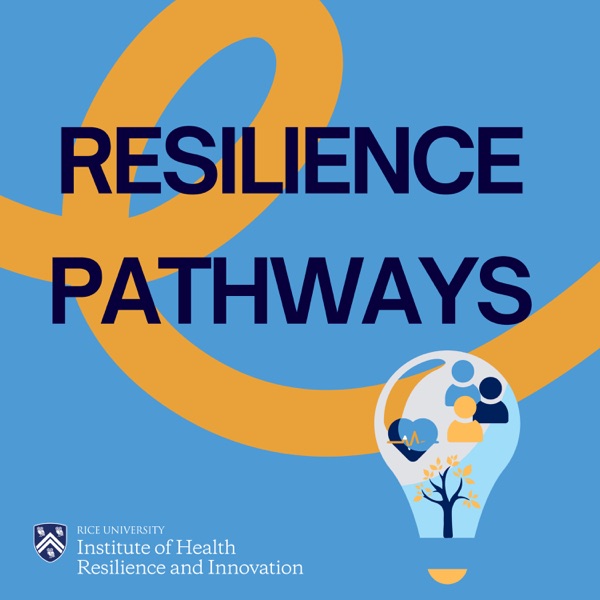
Resilience Pathways
This podcast brings together professors, healthcare professionals, and community voices to explore health resilience and innovation. Through meaningful conversations, it highlights actionable ways individuals and communities can drive positive change, improve well-being, and build a healthier future together.
- Episodes
- 4
- Releases
- Every few months
- Typical length
- 1 hr 21 min
- On air since
- 2026
- Latest episode
- 1 week ago
Episodes
4 episodes, newest first
-
1 hr 36 min
Aging in a Changing World: The Power of Lifelong Learning
Season 1, Episode 4
Show notes
What does it mean to keep learning, growing, and thriving throughout life? In this episode of Resilience Pathways, Dr. Chris Fagundes speaks with Dr. Margaret Beier, Professor and Chair of Rice University’s Department of Psychological Sciences, about how we learn new skills as we age, how experience shapes our abilities, and why lifelong learning matters in a changing world.
Drawing on her research in workplace learning and aging, Dr. Beier explores how older workers bring valuable knowledge and expertise to their jobs, why learning new technologies can be challenging, and how AI could reshape opportunities for adult learners. They also discuss age stereotypes, healthier work environments, and the transition into retirement, including the importance of maintaining social connections, purpose, and flexibility.
Whether you're navigating a career change, adapting to new technology, or thinking about what comes next, this conversation offers a fresh perspective on aging, resilience, and the value of staying curious throughout life.
-
1 hr 18 min
Healthy Aging Starts with the Brain
Show notes
What can a neuropsychological test reveal about your brain that an MRI or lab test can’t? Host, Dr. Chris Fagundes sits down with Dr. Samantha Henry, a clinical neuropsychologist and Assistant Professor of Neurology at Baylor College of Medicine, to uncover the science behind cognitive health, aging, and resilience.
-
59 min
Mastering Emotion Regulation: Insights from Dr. Bryan Denny
Season 1, Episode 2
Show notes
In a world filled with stressors, it's more important than ever to understand how to effectively regulate our emotions.
In this conversation, Dr. Chris Fagundes is joined by Dr. Bryan T. Denny, who shares his insights on emotion regulation, the science behind it, and practical strategies we can all incorporate into our daily lives. Together, they discuss the biological underpinnings of emotion regulation, different strategies for managing emotions, and how these techniques can be taught and applied in various contexts. Finally, Dr. Denny touches on the role of neurosciences in understanding emotion regulation and the potential for future research and interventions.
Follow us on all socials:
https://linktr.ee/ricehealthresilience
Learn more about this episode's speakers:
Dr. Bryan T. Denny - https://profiles.rice.edu/faculty/bryan-denny
Dr. Christopher P. Fagundes -https://profiles.rice.edu/faculty/christopher-p-fagundes
-
1 hr 25 min
The Hidden Costs of Consciousness: Black Identity, Environment, and Health
Season 1, Episode 1
Show notes
What if health isn’t shaped most by biology or behavior, but by the conditions we live in every day?
In this conversation, Dr. Chris Fagundes and Dr. Tony N. Brown unpack how social determinants of health, like racism, policy, and social structure, shape identity, stress, and long-term health. Rather than focusing on individuals, they look upstream at the systems that make health costly for some and accessible for others. Together, they explore why identity itself isn’t harmful, but living in unequal environments can be, and what it would take to build a society where people are supported for who they are.
Follow us on all socials:
https://linktr.ee/ricehealthresilience
Dr. Tony N. Brown - https://profiles.rice.edu/faculty/tony-n-brown
Dr. Christopher Fagundes -https://profiles.rice.edu/faculty/christopher-p-fagundes
Social Sciences lists
More Social Sciences shows picked out from the charts










More in Social Sciences
Placed highest on Apple Podcasts' Social Sciences chart right now