Podcast
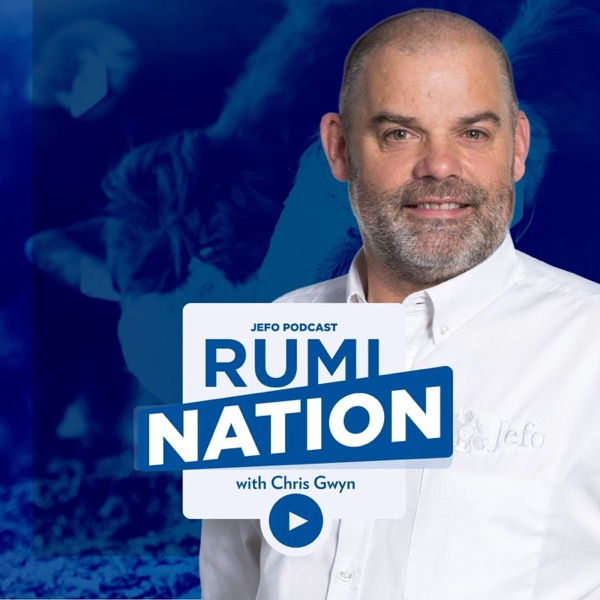
RumiNation
RumiNation is a series of conversations with key influencers in the North American dairy and cattle industries. The discussions focus on topics such as animal welfare, management, profitability, productivity, longevity, and sustainability.
- On air since
- 2020
- Episodes
- 82
- Releases · typical length
- Monthly · 24 min
- Latest episode
- 2 weeks ago
Chart history since Oct 26
| Now | Chart | Peak | Since Oct 26 |
|---|---|---|---|
| Off | Life Sciences Last on it Nov 14 at #184 | #184 |
Episodes
82 episodes, newest first
-
24 min
Rethinking Fat Nutrition Through Individual Fatty Acids
Season 7, Episode 9
Show notes
Timestamps & Summary
Chris Gwyn (01:38)
From your research and your knowledge, what's the most important update that you feel should be evaluated and fed into how we evaluate and feed supplemental fat in lactating dairy diets?
Dr. Adam Lock
I think that the simplest way I look at this, and I hope we've moved the needle to some extent, is where people over the last 20 years have gone from just thinking about crude protein to talking about amino acids. We've helped move the conversation from just fat or ether extract or just fat supplement to talking about individual fatty acids or combinations of fatty acids. […]I think in terms of supplemental fat, the first 2 questions I'd tell any nutritionist or producer that's been offered a new fat supplement to buy […] are, one: “What's the total fatty acid content in it?” And two: “What's the fatty acid profile of it?” […]
Chris Gwyn (04:38)
I know you've done extensive work in the oilseeds area; maybe a quick update on that and what you found.Dr. Adam Lock
We've done a number of studies since then. We've looked at re-examining cottonseed, whole cottonseed. And high oleic soybeans. On the cottonseed side, we've done a series of studies now. We kind of reevaluated whole cottonseed in sort of more typical high-producing cows. We did a dose-response study there and would be very comfortable going up 8-12% in the diet. With whole cottonseed. […]Chris Gwyn (08:36)
What kind of recommendations would you make today with a nutritionist about fat feeding versus one fat for all? How would you divide that up in a different herd?Dr. Adam Lock
I think there are a lot of opportunities there. Some of it is going to be herd-specific based on the size of the herd, their grouping strategies, or their potential for grouping strategies. In my opinion right now, in terms of supplemental fats going into the diet, anywhere from 0,75% to maybe 1.5%, 2% in the diet, I would be focusing my discussions and thoughts around palmitic and oleic acid. […]Chris Gwyn (14:33)
What kind of recommendations would you be making to nutritionists there, or even things to look forward to or watch out for?Dr. Adam Lock
That is becoming something that's raising my interest more and more now. […]
Where I think about the amino acids, […] when you think about what the mammary gland needs to make, make milk components, fat and protein, it's not just the substrates. She needs to have the enzymes and the cell systems in there to allow her to do that. So, if you think about getting more palmitic and fatty acids in there as the inputs on a factory line, maybe the amino acids here are helping improve the efficiency of the factory or helping you put more lines on in the factory. That's kind of how I sort of think about that. […]Chris Gwyn (19:49)
What should we be looking for for the next 5 years? It's going beyond a couple of amino acids; it's also looking more at that precision feeding. These fresh cows need something different. On some farms that may be a challenge to do, but it's becoming perhaps increasingly important, wouldn't you say, to make the extra effort to do something different in that period of lactation?Dr. Adam Lock
I think that first few weeks of lactation really set the trajectory on how far we can get to meeting that cow's genetic potential. That's not to dismiss the rest of the lactation. […]With some of our palmitoleic work, we've now shown that you get a production benefit in that fresh period. When you then put them on a high-cow diet, but continue with, say, a palmitoleic acid supplement, we get added benefits again than if we just stopped it in that fresh period. So, they're all critical points there. But, you know, I think a take-home here is it's not just substrate supply; it's supporting the capacity of that mammary gland as well.
Chris Gwyn (21:23)
Are there other take-homes that you would like the listening audience to reflect on and implement on their farms?Dr. Adam Lock
I think from a very practical standpoint, remember those 2 questions you ask anyone that's coming to sell you the next fat supplement. […] -
22 min
How Nutrition and Management Make for Stronger Cattle Immunity
Season 7, Episode 8
Show notes
Timestamps & Summary
Chris Gwyn (01:23)
Could you share with the listening audience the journey that has taken you to be researching immunity and the respiratory infections in ruminants?
Dr. Jodi McGill
I actually started out my training on the human side. I was trained in mouse and human medical immunology for my PhD and my master's degree at the University of Iowa. […]
[It] led me to a postdoc at the National Animal Disease Center, which is where I started to study bovine respiratory disease. And I really found that much more impactful because you can study the disease in the animal, and you can really see the impact in that species. […]Chris Gwyn (03:05)
When you say innate immune system specifically, what are you describing?
Dr. Jodi McGill
So the immune system is kind of two arms. It is the way we teach it. […]
A lot of times with the vaccine, we're targeting the adaptive immune system. So that's really specific and has memory. So, once you've gotten your vaccine, you're protected for a really long time. When we talk about that, we're talking about the adaptive part of the immune system. […]Whereas the innate immune system is nonspecific and kind of broadly reactive. It's kind of the first line of defense, and it responds in a way that says, “I care that it's a virus, but I don't necessarily care if it's BRSV or parainfluenza” […]
It's also much quicker to respond. […]
Chris Gwyn (06:17)
You've authored, and of course co-authored, many studies focused on nutritional approaches that impact innate immunity […]How are these nutritional approaches linked to that immune readiness?
Dr. Jodi McGill
I think that whole idea of being ready is important because you're not playing catch-up, right? I think as soon as that calf is kind of under the weather is when we're starting to play catch-up. And a lot of the strategies that I've spent my career studying are all about getting that calf in a much better position when he hits the feedlot […]Chris Gwyn (12:20)
What are some of the things that the audience can be thinking of doing this season to help minimize some of those challenges it’s likely going to see?Dr. Jodi McGill
Having your calf the right nutrition, the right treatments ahead of time. Management is always, I think, your best tool against BRD. […]I think, overall, a lot of our challenges with BRD, we create, a lot of times. Vaccines are still probably our best tool. […]
Chris Gwyn (14:20)
What are some of those key things that people need to be thinking about honing in on their operations to ensure that those calves coming in are immune ready?Dr. Jodi McGill
I think for, for geneticists, we're at a really cool period where we're starting to understand more and more about the genetics of it. Of BRD and kind of looking at resistance to BRD. And so we have some tests that are starting to become available, and you can start to begin to select for that. […]Chris Gwyn (16:30)
What are the 3 key messages that you'd want to leave the audience thinking about?Dr. Jodi McGill
I mean, prevention is better than curing, right? […]Management choices, I think, make a huge difference in prevention of BRD. It's really a management disease. And we have tools, but first, think about your weaning practices, think about your transportation practices, all of those things. […]
The native immune system is probably the best part of the immune system because without it, the adaptive immune system would be nothing. […]
-
22 min
Practical Research for Better Dairy Performance
Season 7, Episode 7
Show notes
Timestamps & Summary
Chris Gwyn (02:22)
So [Sarah], let's start with looking at the information that you presented on B vitamin supplementation in dairy calves. In the study, you presented data on the post-weaning period. My question for you is: why focus on that time?Sarah Dean
We focused on this time because the post-weaning period is one of the most stressful phases of a calf's life. The calf is experiencing nutritional changes, social regrouping, and environmental stressors all at once. […]Chris Gwyn (03:18)
Perhaps you could share with us how that study was built and the results from that.Sarah Dean
This trial was conducted on a commercial dairy farm in Hungary, and we enrolled 166 female dairy calves, and we alternated consecutive age groups between control and treatment.So this allowed the trial to be a side-by-side study. And calves were enrolled at around 87 days of age, which was about 10 days after they were weaned. […]
And then the calves were followed until 180 days of age. […]
Chris Gwyn (04:45)
Perhaps then you could share some of the key findings in the study.Sarah Dean
The results were very encouraging, as the calves that received the protected B vitamins gained about 5% more per day than the control calves. And importantly, we observed this advantage consistently across every batch of calves in the study.Chris Gwyn (06:06)
On the research that was done and presented, what does this mean from a producer perspective?Sarah Dean
I think every gram of growth matters when developing replacement heifers. And better growth after weaning is going to support that producer's breeding targets, reduce variability among heifers, and contribute to a more productive future herd. […]Chris Gwyn (07:00)
Dr. Esselstyn, let's talk about the transition cow study. Why examine B vitamins and choline before calving in that typical transition period? What's the importance of that? And why do we invest time in looking at that?Dr. Victoria Asselstine
We know that the transition period is one of the most metabolically demanding stages that dairy cows have. They undergo numerous physiological, metabolic, and immune challenges during those time periods. So, it's important that we're providing them with the right nutrients that kind of feed into the pathways that they need to support all of those different things. […]Chris Gwyn (07:59)
How was the study conducted? What was the design? What does it look like?Dr. Victoria Asselstine
This was a study done by our colleagues in Mexico. This was also a commercial study, and this specific one was kind of a year-over-year comparison that we had. […]There were about 400 cows that calved during that time that were included in the study. And then in the treatment period, so when the JEFO Protected B vitamins and choline were supplied, around 330 cows received that in 2024. […]
Chris Gwyn (09:46)
Tell us more about what you saw. What were the production responses?Dr. Victoria Asselstine
Thankfully, we had daily milk yields in this trial, but just based on the enormity of the data that we had to look at, we looked at average milk for 30, 60, and 90 days, comparing those. And we observed that there was a significant improvement in milk production. 3.2 kilograms on average from the 30 to 90 days in milk.Chris Gwyn (10:25)
And from the health side?Dr. Victoria Asselstine
On the health side, we also had great improvements, and we had numerically lower cases of retained placenta and metritis. So, some key metabolic issues that we see. And there were also significantly lower cows culled in that 10 days in milk and also 30 days in milk. […]Chris Gwyn (12:21)
With that in mind, there's probably some practical takeaways for the listening audience, whether veterinarians, nutritionists, producers.Dr. Victoria Asselstine
Probably the biggest takeaway is if you're strategic in your prepartum nutrition, you can really set your herd up. You can help the cows enter their lactation in a stronger metabolic position to kind of support all those metabolic things that I mentioned earlier. And then in this study specifically, we saw that improved milk yield as well as early lactation losses. And this is really supporting those key metabolic pathways before calving even begins.Chris Gwyn (13:03)
So speaking of metabolic pathways, we're going to switch gears a little bit and focus on the 3rd poster that was presented. And in this case, it was on methionine. […]Tell us a bit more about why methionine as a nutrient is so important in dairy diets.
Dr. Victoria Asselstine (13:34)
The reason that we always want to consider supplementing methionine is because we know that it's often the first limiting amino acid in dairy cow rations. […]Chris Gwyn (14:04)
This study compared two rumen-protected methionine products; maybe you could share with the audience a bit more about the study design.Dr. Victoria Asselstine
This was a study that was completed actually in Brazil. We had a very good range of studies this year. The first one Sarah shared was from Hungary. We had Mexico, now Brazil, making sure we're able to kind of showcase all of our colleagues’ excellent work. But this study was a back-to-back design. So, what that meant was one month they received a commercial competitor's product, and then the next month they received our JEFO Protected Methionine. The only thing that was different between those two periods was the protected methionine source. […]Chris Gwyn (15:33)
So what did you find in the study?Dr. Victoria Asselstine
The cows that actually received that JEFO protected methionine produced over 2 kilograms more milk per day. We also saw they had significant improvements in their milk components, both fat and protein, and this translated to a significant improvement in energy-corrected milk of 2.84 kilograms per day. And as I said, the only thing that changed was the methionine supplementation. So those were quite significant results that we achieved from this study.Chris Gwyn (18:21)
As we begin to wrap up today, Sarah, as you look at these 3 projects together, what does that tell us about the dairy nutrition industry today, or dairy nutrition today and cows' needs?Sarah Dean
I think these three studies really reinforce the importance of precision nutrition across the entire life cycle of the animal. […]Together, these three posters and these three trials highlight how nutritional interventions can support performance when animals are facing critical physiological demands, and we're supporting those demands.
-
27 min
Why Mitochondria Matter in the Modern Dairy Cow
Season 7, Episode 6
Show notes
Timestamps & Summary
Chris Gwyn (01:54)
Can you share with the audience a bit of the evolutionary biology of the mitochondrion, how this is crucial for today's dairy cow, and why this is such an interest to you?Dr. Nial O'Boyle
I share your fascination with it. So, on the evolutionary side, the main theory is [that] ancient cells like archaea and a type of bacteria fused together, and the bacteria was the mitochondrion, or the pre-runner for the mitochondrion, and they became what we now know as the eukaryotic cell, so the cells that we're made up of. And that gave complex life the ability to happen. So that mitochondrion, like the bacterial cell, they can produce energy through electric potential through the membranes. But once that was brought into a cell, what you were able to do is start to do more complex work. You can produce more proteins because the energy was at the site of action. So, cells could get more complex, organisms could get more complex, and the argument is we wouldn't be here if that kind of merger hadn't happened. […]The reason why I got interested from a dairy cow point of view is that I was fortunate enough to do a master's at Michigan State with the late Professor Lorraine Sordillo. Learned a lot from her, great scientist, um, and was just really interested. She inspired me on, on that connection between immunology nutrition, fat mobilization, and just that whole immunological question. […]
To me, that became the epicenter of this connection between nutrition and immunology. Metabolism is the conversion of food into chemical energy by the body to do work. And I don't think there's anything that comes close to the dairy cow as far as being a metabolic athlete. […]
Chris Gwyn (08:02)
Can you summarize for your audience what you've learned about management, nutrition of the transition cow that maybe relates to this improved or ability to improve mitochondrial function?Dr. Nial O'Boyle
One thing I've learned with people like Professor Lance Baumgard and others that have brought up this conversation that calcium ketosis, et cetera, and what is correlation, and what's causation. And the more I drilled into the mitochondria, I would agree, but maybe approaching it from a different angle in that they're all related. Like, you need calcium for mitochondrial function, and you need mitochondrial function for calcium regulation. So that's related. […]Chris Gwyn (10:16)
Do we think about managing cows to improve mitochondrial efficiency or function?Dr. Nial O'Boyle
I don't think currently we do, but the more I've learned about it, the more I think we should. […]Chris Gwyn (19:55)
Are we wrong to say it's the 50-kilo cow that's this crazy metabolic athlete, or are cows at lower production levels going through some of the same metabolic challenges?Dr. Nial O'Boyle
I think the genetic machinery is there for most of these modern cows to be very high producing. It's just all these things that add up to maybe they're not expressing their genetic potential through the environmental and management sides. […]Chris Gwyn (24:08)
Give us a message from your work that you've done, your experience related to the topic you'd love producers, nutritionists, veterinarians to remember about feeding these transition cows with the concept of thinking about what the mitochondria is doing?Dr. Nial O'Boyle
I suppose one would be reiterating that supplying fuel isn't necessarily supplying fuel for metabolism. You need different profiles, as we talked about fatty acids, different cofactors, whether it's B vitamins or other nutrients, to make sure that fuel is metabolized and used efficiently. -
36 min
The Evolving Role of the Modern Dairy Nutrition Consultant
Season 7, Episode 5
Show notes
Timestamps & Summary
Chris Gwyn (02:00)
What drew you into dairy consulting, and how has that role evolved over the years as both the industry and your customers have changed?
Jodi Erickson
Back in the early 2000s, when I was hitting the job market, nutrition wasn't a career that I was seeking out, but there was an opportunity to work with an established team, an established feed supplier, and I was qualified for the job. It was shortly after that that I discovered my true passion for this career. […]
Over the last 15 to 20 years, my day-to-day role has had to adapt and evolve right along with the industry. I guess the first thing that comes to mind is the precision that we can do things now and the data that we have access to. […]Chris Gwyn (07:26)
What does a day look like and what does a week look like in Jodi Erickson's dairy consulting business?Jodi Erickson
My team is a team of 4 nutritionists. So, we do pretty much work independently. We do overlap on farms, just depending on size and location to a degree. But I'm generally covering dairy farms in east-central Wisconsin into central Minnesota. Generally, I am on farms every day of the week, some fairly closer to home to allow for a little bit more office time. But then obviously there are some very long, high-mileage days that happen as well. […]But my routine farm visits, they're still based around finding what the obstacle is on the farm. Whether that's just visually identifying we're going to have a feed change, how are we going to blend, how are we going to transition this? This is something that we do 4 to 5 times a year on every farm, but it still seems like we need to revisit the procedure every time so it gets done correctly. […]
Chris Gwyn (12:12)
You have a family, you have farm work, you have your dairy consulting. How do you balance all that? What's your key to success in that area?Jodi Erickson
The key to success there might just be failure. I can reflect on my earlier years with my children, during the hard stages of life when they're not sleeping through the night. So, all that whole dynamic, and I did lose accounts. It was a hard time in my career. And I think, in hindsight, those are probably the accounts that you weren't going to have long-standing relationships with anyway. Generally, something that I see on farms more and more is women stepping up into leadership roles. And these women have all lived through that as well. And it's just becoming, I think, more accepted. […]But it's still a challenge, I guess. And you know, just communication. Again, it goes back to communicating with my customers. They're aware of what my life looks like, and they're respectful of me and my time. And those are the people that I want to align with.
Chris Gwyn (14:51)
If you reflect back on your 20 years of dairy consulting experience, how do you see that the role has changed over that time?Jodi Erickson
What's really neat about the market that I'm in is we still have really quite a few dairy farms that are under 100 cows. We still have a lot of tie stall farms, a lot of upright feed units, silos, harvesters, etc. But really, our larger farms are expanding, and they are expanding rapidly. So, it's really neat. What used to be having 3, 4, or 5 large 500-cow freestyle farms was a pretty significant milestone when I was young in my nutrition work. And now, that's kind of the norm. I'm on more of the freestyle herds than the tie stall herds. And a lot of these farms, they grew within. So, the owners and the management are making these developments and management changes, really right along with myself. […]
Chris Gwyn (20:04)
I'd love if you could share an example of a small management change that you introduced to a client or a client introduced to you that really unlocked real key benefits later on or at that moment.Jodi Erickson
Probably the first thing that comes to mind when you say a small management change, it's still really focusing on some of the basics in nutrition work. And you see people maybe with the Penn State Shaker Boxes but really focusing on proper feed moisture and length. There have been several occasions where we have just focused on if we're going to be feeding straw or hay to some pre-fresh or post-fresh animals, whether that's driving off of an energy issue or a potassium issue. If cows are sorting at the bunk, they're not eating the diet that we think they are. And there have been a multitude of times that we have really focused on mixer maintenance, whether that's keeping knives sharp or throwing the pitch of regrinding a lot of this straw. Maybe that involves getting a Haybuster. […]Chris Gwyn (32:27)
If you could leave some advice to a dairy producer working with their dairy consultant, say maybe 3 recommendations on how they could get the most value out of that working relationship with their dairy consultant, what would that be?Jodi Erickson
I would think the first thing, honestly, is “be prepared.” […]Another thing is to always keep in the back of your mind that when things are going wrong, it's very easy to blame a person, whether it's a nutritionist or a feeder on a farm. But at the end of the day, we are all on the same team. We're all fighting to win. […]
I would really say those are probably my two big sound pieces of advice. Have a lot of trust but also utilize everyone's time. Be prepared.
Life Sciences lists
More Life Sciences shows picked out from the charts