Podcast
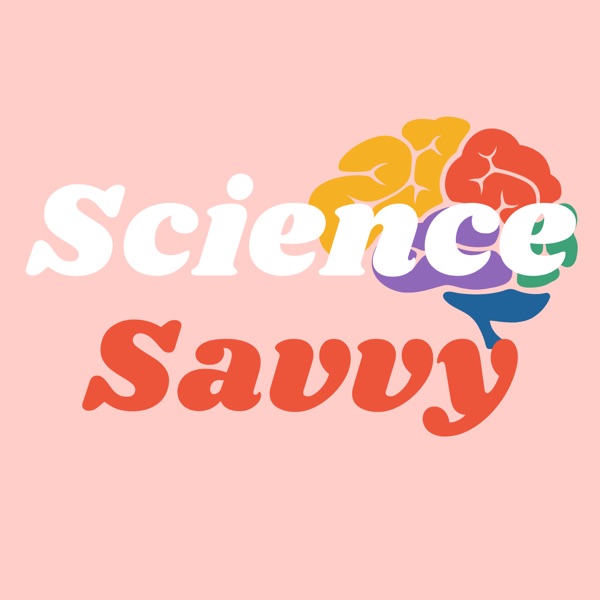
Science Savvy
Science Savvy is a science and health podcast hosted by Carmen Fairley, drawing on a background in Pharmacology and Biomedical Engineering to explore the science behind everyday life.
Each episode turns complex research into clear, engaging stories, covering the human body, the brain, medicine, sleep, memory, pain, and scientific discovery.
Topics include women's health and hormones (PMS vs PMDD), the neuroscience of pain and how painkillers work, the science of sleep and dreams, near-death experiences and what happens when we die, and the biology of attraction, with expert interviews featuring doctors, researchers, and health founders.
Science Savvy is educational only and does not provide medical advice. Please speak with a qualified healthcare professional for personal medical questions.
Follow now and never miss an episode.
- Episodes
- 30
- Releases
- Monthly
- Typical length
- 35 min
- On air since
- 2024
- Latest episode
- 2 months ago
Episodes
30 episodes, newest first
-
38 min
Why We Have a "Type": The Biology Behind Attraction
Episode 38
Show notes
Why are we attracted to certain people but not others? In this episode we explore what science reveals about romantic and sexual preferences, focusing on how the brain's reward system, hormones, and evolutionary pressures shape attraction. We discuss dopamine and oxytocin's roles, hormonal influences across the menstrual cycle, immune-genetic cues, and how personal experiences and cultural context create individual "types."
The episode also highlights limitations in current research, especially the lack of diverse and LGBTQ+ focused studies, and explains that attraction results from the interplay of brain activity, hormones acting like volume controls, evolutionary signals, and learned personal associations.
References / further reading:
• Gonzalo R. Quintana, Conall E. Mac Cionnaith, J. Pfaus (2022). Behavioral, Neural, and Molecular Mechanisms of Conditioned Mate Preference: The Role of Opioids and First Experiences of Sexual Reward. International Journal of Molecular Sciences
• D. Scheele, Andrea Wille, K. Kendrick, B. Stoffel‐Wagner, B. Becker, and 3 more (2013). Oxytocin enhances brain reward system responses in men viewing the face of their female partner. Proceedings of the National Academy of Sciences of the United States of America
• Helen E. Fisher, A. Aron, L. Brown (2005). Romantic love: An fMRI study of a neural mechanism for mate choice. The Journal of comparative neurology
• Ernest Edmonds (2011). Transactions. Irish Journal of Medical Science (1922-1925)
• Heather A. Rupp, T. James, E. Ketterson, D. Sengelaub, E. Janssen, and 1 more (2009). Neural Activation in Women in Response to Masculinized Male Faces: Mediation by Hormones and Psychosexual Factors. Evolution and human behavior
• Kelly A. Gildersleeve, M. Haselton, Melissa R. Fales (2014). Do women's mate preferences change across the ovulatory cycle? A meta-analytic review. Psychological bulletin
• Amanda C. Hahn, D. Perrett (2014). Neural and behavioral responses to attractiveness in adult and infant faces. Neuroscience and Biobehavioral Reviews
• C. Wedekind, T. Seebeck, F. Bettens, Alexander J. Paepke (1995). MHC-dependent mate preferences in humans. Proceedings of the Royal Society of London. Series B: Biological Sciences
• B. Jones, C. Fincher, Lisa L. M. Welling, A. Little, D. Feinberg, and 3 more (2013). Salivary cortisol and pathogen disgust predict men's preferences for feminine shape cues in women's faces. Biological Psychology
• L. DeBruine, Amanda C. Hahn, B. Jones (2018). Does the interaction between partnership status and average progesterone level predict women’s preferences for facial masculinity?. bioRxiv -
39 min
What Happens After? The Science of Dying
Episode 37
Show notes
In this episode, we explore the science of dying. We examine what happens in the brain after cardiac arrest, why consciousness usually fades within seconds, and the remarkable discoveries of brief bursts of brain activity after your heart has stopped.
We also dive into the mystery of near-death experiences. Why do some survivors describe tunnels of light, out-of-body experiences, or profound feelings of peace? Could these experiences be explained? Or are there still unanswered questions about consciousness itself?
Beyond the brain, we follow the body's final biological journey i.e., how different organs shut down, what dying typically feels like, etc.
If you've ever wondered what science can actually tell us about our final moments, this episode is for you.
Bibliography / References:
Beaussant, Y., et al. (2024). Near-death experiences after cardiac arrest: A scoping review. Resuscitation. https://pubmed.ncbi.nlm.nih.gov/38806961/
Borjigin, J., Lee, U., Liu, T., et al. (2013). Surge of neurophysiological coherence and connectivity in the dying brain. Proceedings of the National Academy of Sciences, 110(35), 14432–14437. https://pubmed.ncbi.nlm.nih.gov/23940340/
Borjigin, J., et al. (2023). Surge of neurophysiological coupling and connectivity of gamma oscillations in the dying human brain. Proceedings of the National Academy of Sciences. https://pubmed.ncbi.nlm.nih.gov/37126719/
Chawla, L. S., et al. (2021). Electrocerebral signature of cardiac death. Journal of Palliative Medicine. https://pubmed.ncbi.nlm.nih.gov/34184175/
Dhamoon, M. S., et al. (2006). Mechanisms of brain injury after global cerebral ischemia. Neurologic Clinics, 24(1), 1–21. https://pubmed.ncbi.nlm.nih.gov/16443127/
Drennan, I. R., et al. (2021). European Resuscitation Council and European Society of Intensive Care Medicine guidelines 2021: Post-resuscitation care. Resuscitation, 161, 220–269. https://pubmed.ncbi.nlm.nih.gov/33765189/
Greyson, B. (2003). Incidence and correlates of near-death experiences in a cardiac care unit. General Hospital Psychiatry, 25(4), 269–276. https://pubmed.ncbi.nlm.nih.gov/12850659/
Greyson, B., Kelly, E. W., & Kelly, E. F. (2025). A neuroscientific model of near-death experiences. Annals of the New York Academy of Sciences. https://pubmed.ncbi.nlm.nih.gov/40159547/
Jansen, K. L. R. (2006). Does the arousal system contribute to near-death experience? Medical Hypotheses, 66(5), 1003–1009. https://pubmed.ncbi.nlm.nih.gov/16606911/
Martial, C., et al. (2019). Neurochemical models of near-death experiences: A large-scale study based on the semantic similarity of written reports. Consciousness and Cognition, 69, 52–69. https://pubmed.ncbi.nlm.nih.gov/30711788/
Martial, C., et al. (2019). Neurochemical models of near-death experiences: A large-scale study based on the semantic similarity of written reports. ResearchGate version. https://www.researchgate.net/publication/330778804_Neurochemical_models_of_near-death_experiences_A_large-scale_study_based_on_the_semantic_similarity_of_written_reports
Mobbs, D., & Watt, C. (2011). There is nothing paranormal about near-death experiences: How neuroscience can explain seeing bright lights, meeting the dead, or being convinced you are one of them. Trends in Cognitive Sciences. (Related review.) https://pubmed.ncbi.nlm.nih.gov/22371425/
Nolan, J. P., et al. (2021). European Resuscitation Council and European Society of Intensive Care Medicine guidelines 2021: Post-resuscitation care. Resuscitation, 161, 220–269. https://pubmed.ncbi.nlm.nih.gov/33765189/
Parnia, S., et al. (2001). Near-death experience in survivors of cardiac arrest: A prospective study in the Netherlands. The Lancet, 358(9298), 2039–2045. https://pubmed.ncbi.nlm.nih.gov/11755611/
Parnia, S., et al. (2014). AWARE—AWAreness during REsuscitation: A prospective study. Resuscitation, 85(12), 1799–1805. https://pubmed.ncbi.nlm.nih.gov/25301715/
Parnia, S., et al. (2023). AWAreness during REsuscitation II: A multi-center study of consciousness and awareness during cardiopulmonary resuscitation. Resuscitation. https://pubmed.ncbi.nlm.nih.gov/37423492/
Savio, L. E. B., et al. (2021). Brain injury after cardiac arrest: Pathophysiology, treatment, and prognosis. Intensive Care Medicine. https://pubmed.ncbi.nlm.nih.gov/34705079/
Sessler, D. I., et al. (2017). Electroencephalographic recordings during withdrawal of life-sustaining therapy until 30 hours after death. Anesthesiology, 127(4), 713–724. https://pubmed.ncbi.nlm.nih.gov/28231862/
Timmermann, C., et al. (2018). DMT models the near-death experience. Frontiers in Psychology, 9, 1424. https://pubmed.ncbi.nlm.nih.gov/30174629/
van Lommel, P., et al. (2001). Near-death experience in survivors of cardiac arrest: A prospective study in the Netherlands. The Lancet, 358(9298), 2039–2045. https://pubmed.ncbi.nlm.nih.gov/11755611/
Vrselja, Z., et al. (2018). Terminal spreading depolarizations causing electrocortical silencing prior to clinical brain death. Brain, 142(5), 1313–1329. https://pubmed.ncbi.nlm.nih.gov/30544340/
Woerner, A. C., et al. (2016). Time to loss of brain function and activity during circulatory arrest. Critical Care Medicine, 44(12), e1119–e1128. https://pubmed.ncbi.nlm.nih.gov/27288615/
Woitzik, J., et al. (2018). Terminal spreading depolarization and electrical silence in death of human cerebral cortex. Annals of Neurology, 83(2), 295–310. https://pubmed.ncbi.nlm.nih.gov/29331091/
Yuryev, M., et al. (2016). The continuum of spreading depolarizations in acute cortical lesion development. Journal of Cerebral Blood Flow & Metabolism. https://pubmed.ncbi.nlm.nih.gov/27328690/
Zylicz, Z., et al. (2019). Biosynthesis and extracellular concentrations of N,N-dimethyltryptamine (DMT) in mammalian brain. Scientific Reports. https://pubmed.ncbi.nlm.nih.gov/31249368/
Barker, S. A. (2018). N,N-dimethyltryptamine and the pineal gland: Separating fact from myth. Journal of Psychopharmacology. https://pubmed.ncbi.nlm.nih.gov/29095071/
Barker, S. A., McIlhenny, E. H., & Strassman, R. (2012). A critical review of reports of endogenous psychedelic N,N-dimethyltryptamine in humans: 1955–2010. Drug Testing and Analysis, 4(7–8), 617–635. https://pubmed.ncbi.nlm.nih.gov/22371425/
-
48 min
Why Do I Feel So Different Before My Period? Part 2 of PMS vs PMDD
Episode 35
Show notes
In this episode (Part 2 of PMDD vs PMS), I interview Liv Nono, co-founder of Velora Salud, about her PMDD diagnosis journey. She tell us all she has learned so far, from tracking her cyclical symptoms to the challenges of getting proper care early. Of course, we discuss the science behind PMDD, so you can understand exactly what differentiates it from PMS.
We cover treatment options, including pharmacological and non-pharmacological options like the Nettle headband, therapy, and lifestyle changes.
To learn more about Velora's mission to build Spanish-language support and peer communities, go to velorasalud.com
To access Liv's blog: PMDD, Grief, and the Brain: A Nettle™ User’s Story | Samphire Neuroscience
References available upon request.
-
38 min
Why Do I Feel So Different Before My Period? Part 1 of PMS vs PMDD
Episode 34
Show notes
Why do some women feel bloated, emotional, or irritable before their period, while others feel like they become a completely different person? In this episode of Science Savvy Podcast, Professor Rossella Nappi (gynecologist, endocrinologist, and sexologist) breaks down the crucial difference between premenstrual syndrome (PMS) and premenstrual dysphoric disorder (PMDD), and why PMDD is far more than “just bad PMS.” Together, we explore what is really happening in the brain and body, from altered sensitivity to normal hormonal changes to the roles of serotonin, GABA, stress, trauma, and even the gut-brain axis.
Professor Nappi also explains how PMDD is diagnosed, why symptom tracking is important for those seeking help from a physician, as well as the treatments that can actually help (from natural lifestyle changes to hormonal contraception and intermittent use of antidepressants). Most importantly, this episode is a reminder that severe premenstrual symptoms are real, treatable, and never something women should have to just “put up with.”
This episode is for educational purposes only and is not a substitute for medical advice. If you experience severe mood symptoms, thoughts of self-harm, or symptoms that interfere with daily life, please speak with a qualified healthcare professional or seek urgent support.
As this was an interview, we do not have a "formal" bibliography. However, a list of references is available upon request (just leave a comment)!
-
1 hr
Party Smart: Understanding Health and Decision-Making in Social Settings
Episode 33
Show notes
In this episode of Science Savvy, I speak with Pablo Otero, who holds a PhD from Imperial College London, about how certain substances can affect the body in social settings.
We discuss how mixing substances can increase the chance of unwanted effects, how the body responds under different conditions, and why avoiding recreational substance use is the lowest-risk choice.
This episode is for educational purposes only. It does not encourage recreational substance use or provide medical advice.
Reading list: Available on request.
-
28 min
When Your Brain Turns Down the Pain: Pain and the brain part 3
Episode 29
Show notes
This episode explores how pain is shaped by the brain, body signals, context, expectations, and emotions.
We look at why stress can sometimes reduce pain, why mood can change how pain feels, and how approaches such as movement, relaxation, education, and social connection can help people understand pain better.
This episode is educational only and does not provide medical advice.
Reading list: Available on request.
-
35 min
I need RELIEF!!! Pain and the brain part 2
Episode 28
Show notes
Part two of the Science Savvy pain series explains how common pain medicines work and why pain relief can vary from person to person.
The episode covers medicines such as ibuprofen, paracetamol, local anaesthetics, and other prescription treatments, while also exploring how expectations, support, and non-medicine approaches can shape the pain experience.
This episode is educational only and does not provide medical advice.
Reading list: Available on request.
-
22 min
It HURTS! Pain and the Brain part 1
Episode 27
Show notes
Pain is strange: we feel it in the body, but the brain plays a central role in creating the experience.
In part one of this series, we explore how pain signals travel, why reflexes can happen before conscious awareness, why chronic pain can persist, and why two people with similar injuries may feel pain differently.
This episode is educational only and does not provide medical advice.
Reading list: Available on request.
-
26 min
Siestas & Sleepless Nights: The Science of Sleep - Part 2
Episode 26
Show notes
This episode explores sleep patterns, naps, circadian rhythms, and how daytime habits can affect nighttime rest.
We also cover how sleep needs can vary across life stages, the possible effects of too little or too much sleep, and practical habits that may help improve sleep quality.
This episode is educational only and does not provide medical advice.
Reading list: Available on request.
-
31 min
Sleeping Tight and Why It Matters: The Science of Sleep - Part 1
Episode 25
Show notes
This episode explores why sleep matters for body repair, immune function, brain maintenance, and long-term health.
We also look at dreams, why we may dream, and how sleep differs across animals.
This episode is educational only and does not provide medical advice.
Reading list: Available on request.
-
36 min
Exploring Psychedelic Science
Episode 24
Show notes
In this episode, I explore the research history and neuroscience of psychedelic compounds, including how they interact with brain receptors and why they are being studied in controlled clinical settings.
The episode discusses current research, study limitations, practical challenges, and why these compounds should only be used within approved clinical or research environments.
This episode is educational only and does not encourage use outside approved settings.
Reading list: Available on request.
-
28 min
You will Never Forget this Episode: Science of Memory
Episode 23
Show notes
In this episode of Science Savvy, I explore how memory works and why it matters for learning, decision-making, and daily life.
The episode covers how memories are formed, stored, and retrieved, which brain regions are involved, and practical ways to improve recall.
Reading list: Available on request.
-
41 min
CRIS Cancer: Funding Tomorrow’s Cancer Research
Episode 22
Show notes
In this episode of Science Savvy, I speak with Elena Muyo, Scientific Projects & Partnerships Lead at CRIS Cancer UK, about how research funding can help advance new cancer treatments.
We discuss how projects are selected, why early research matters, and how scientific discovery can create new options for patients over time.
Reading list: Available on request.
-
30 min
Genetics of Schizophrenia with Aitana Padilla
Episode 21
Show notes
In this episode, I speak with Aitana Padilla about genetics, the brain, and schizophrenia research.
We explore how DNA can influence biological pathways, how researchers study complex conditions, and why genetics is only one part of a much bigger scientific picture.
Reading list: Available on request.
-
36 min
Built to Be Mid: The Evolutionary Problem With Happiness
Episode 20
Show notes
In this episode of Science Savvy, I explore the science of happiness: what it is, why it exists, and how the brain helps create feelings of joy, satisfaction, and connection.
Drawing on my background in pharmacology and biomedical engineering, I look beyond the simple idea that happiness is “just dopamine” and unpack the wider biology behind positive emotions. This episode explores reward pathways, gratitude, social connection, meditation, brain waves, and why humans are not built to feel happy all the time.
From everyday habits to long-term wellbeing, this episode offers a clear and engaging look at what research can teach us about feeling good, staying grounded, and understanding our emotional lives a little better.
Science Savvy helps make science feel clear, useful, and relevant to everyday life.
-
38 min
Boss?! How our brains make (and break) trust with Dr. D'Amico
Episode 19
Show notes
In this episode, I am joined by Dr. Katharine D'Amico, a behavioral neuroscientist and President of the The Swala Institute for Applied Neuroscience for professional communication. We explore how your brain rapidly forms perceptions, builds (or breaks) trust, and makes high-stakes decisions.
My name is Carmen, I am the host of Science Savvy. I have a background in pharmacology and biomedical engineering. Science Savvy podcast is all about breaking down the extraordinary science behind everyday life.
In this episode, Dr. D'Amico shares her insights from mentoring over 900 startups and researching how trust and emotion shape behavior in professional environments. This episode covers why first impressions are sticky, how oxytocin builds trust and lowers stress, what role emotions really play in strategic decisions, and how to rewire your habits to make better choices. Whether you're curious about brain chemistry, leadership, mental health, or simply how to make smarter decisions, this episode offers clear and engaging insights grounded in real research.
Also, the cover at the beginning of the episode is from my band! Comment if you recognise it ;)
Further reading and references available upon request
-
35 min
Building Minds: How Architecture Shapes Our Lives and Well-Being
Episode 14
Show notes
Welcome to the Architecture and the Brain episode, part of Science Savvy with Carmen. In this episode, I explore how the built environment influences the way we think, feel, and connect with others. With my background in pharmacology and biomedical engineering, I break down the science behind sensory perception and neuroarchitecture, and unpack how it shows up in your daily life.
This episode covers the psychology of shared spaces, the impact of natural light and materials on mood and cognition, and why we’re hardwired to respond to beauty. I’m joined by Antonio, a talented architect, as we explore how thoughtful design can support mental health, foster community, and reflect evolving cultural values. Whether you’re passionate about urban planning, curious about how light and scent influence your brain, or just want to create a more inspiring space, this episode offers clear and engaging insights grounded in real research.
Science Savvy helps you understand the systems shaping your thoughts, health, and behavior. If you're ready to explore your body and brain with a little more clarity, you're in the right place.
Further reading and references available upon request
-
43 min
PCOS: The Reality Show Where No Egg Wins with Dr. Faris
Episode 18
Show notes
In this episode of Science Savvy, I explore the science behind Polycystic Ovary Syndrome, often shortened to PCOS. Drawing on my background in pharmacology and biomedical engineering, I break down how hormones, metabolism, insulin, and lifestyle factors can interact in this complex condition.
I’m joined by Dr. Basma Faris, a board-certified OB/GYN and certified culinary medicine specialist, to discuss why PCOS is about much more than ovarian cysts. We explore how insulin resistance can contribute to hormone changes, how sleep, nutrition, and stress can affect symptoms, and why clear, evidence-based information matters when navigating health advice online.
Whether you have experience with PCOS or are simply curious about how hormones and metabolism connect, this episode offers a clear, thoughtful look at the science behind the condition.
Science Savvy helps make science feel clear, useful, and relevant to everyday life.
-
27 min
Food for Thought: How What You Eat Shapes Your Mind, Body, and Relationships
Episode 13
Show notes
In this episode of Science Savvy, I explore the fascinating science behind how food interacts with the brain and body. Drawing on my background in pharmacology and biomedical engineering, I break down how taste, smell, texture, nutrients, and the gut-brain connection can influence how we think, feel, and experience everyday life.
Joined by Pablo and Alicia, a food-loving couple, we discuss why food can feel rewarding, how it links to memory and mood, and why eating is often tied to comfort, connection, and shared experiences. From omega-3s and brain function to the science of cravings and the role of the gut, this episode turns complex research into clear, relatable insights.
Whether you are curious about nutrition, brain science, or simply why food plays such a big role in how we feel, this episode offers an engaging look at the science behind what we eat.
Science Savvy helps make science feel clear, useful, and relevant to everyday life.
-
42 min
Mind over Migraine: Former MP Dehenna Davison on Battling the Invisible Pain
Episode 16
Show notes
Welcome to the Migraine episode, part of Science Savvy with Carmen. In this episode, I explore the science, stigma, and impact of migraine through the lens of lived experience and neuroscience. With my background in pharmacology and biomedical engineering, I break down the biology behind migraine and unpack how it shows up in your daily life.
This episode features a conversation with Dehenna Davison, former Member of Parliament for Bishop Auckland, who made headlines when she stepped down from her dream job due to chronic migraine. Dehenna shares her journey from suffering in silence to securing the first UK parliamentary debate on migraine since the 1960s. As someone who also lives with migraine, this episode is personal and deeply meaningful. Whether you experience migraine yourself or care about someone who does, this conversation offers scientific insights and emotional validation in equal measure.
Science Savvy helps you understand the systems shaping your thoughts, health, and behavior. If you're ready to explore your body and brain with a little more clarity, you're in the right place.
Further reading and references:
Goadsby, P. J., Holland, P. R., Martins-Oliveira, M., Hoffmann, J., Schankin, C., & Akerman, S. (2017). Pathophysiology of migraine: A disorder of sensory processing. Physiological Reviews, 97(2), 553–622. https://doi.org/10.1152/physrev.00034.2015
Burstein, R., Noseda, R., & Borsook, D. (2015). Migraine: Multiple processes, complex pathophysiology. The Journal of Neuroscience, 35(17), 6619–6629. https://doi.org/10.1523/JNEUROSCI.0373-15.2015
Charles, A. (2018). The pathophysiology of migraine: Implications for clinical management. The Lancet Neurology, 17(2), 174–182. https://doi.org/10.1016/S1474-4422(17)30435-0
World Health Organization. (2022). Headache disorders: Key facts. Retrieved from https://www.who.int/news-room/fact-sheets/detail/headache-disorders
Steiner, T. J., Stovner, L. J., Jensen, R., Uluduz, D., & Katsarava, Z. (2020). Migraine remains second among the world's causes of disability, and first among young women: Findings from GBD2019. The Journal of Headache and Pain, 21(1), 137. https://doi.org/10.1186/s10194-020-01208-0
Buse, D. C., Manack, A. N., Fanning, K. M., Serrano, D., Reed, M. L., & Lipton, R. B. (2012). Chronic migraine prevalence, disability, and sociodemographic factors: Results from the American Migraine Prevalence and Prevention Study. Headache, 52(10), 1456–1470. https://doi.org/10.1111/j.1526-4610.2012.02223.x
Lipton, R. B., Bigal, M. E., Diamond, M., Freitag, F., Reed, M. L., & Stewart, W. F. (2007). Migraine prevalence, disease burden, and the need for preventive therapy. Neurology, 68(5), 343–349. https://doi.org/10.1212/01.wnl.0000252808.97649.21
Prince, P. B., Rapoport, A. M., Sheftell, F. D., Tepper, S. J., & Bigal, M. E. (2004). The effect of weather on headache. Headache, 44(6), 596–602. https://doi.org/10.1111/j.1526-4610.2004.446011.x
Finocchi, C., & Sivori, G. (2012). Food as trigger and aggravating factor of migraine. Neurological Sciences, 33(S1), 77–80. https://doi.org/10.1007/s10072-012-1046-5
Diener, H. C., Holle, D., Solbach, K., & Gaul, C. (2021). Medication-overuse headache: Risk factors, pathophysiology, and management. Nature Reviews Neurology, 17(2), 112–124. https://doi.org/10.1038/s41582-020-00428-0
Dodick, D. W. (2018). A phase-by-phase review of migraine pathophysiology. Headache, 58(S1), 4–16. https://doi.org/10.1111/head.13300
Silberstein, S. D., Holland, S., Freitag, F., Dodick, D. W., Argoff, C., & Ashman, E. (2012). Evidence-based guideline update: Pharmacologic treatment for episodic migraine prevention in adults. Neurology, 78(17), 1337–1345. https://doi.org/10.1212/WNL.0b013e3182535d0c
Tepper, S. J., & Ashina, M. (2019). CGRP and migraine: The emerging role of CGRP inhibitors. Headache, 59(3), 394–406. https://doi.org/10.1111/head.13456
Russo, A. F. (2015). Calcitonin gene-related peptide (CGRP): A new target for migraine. Annual Review of Pharmacology and Toxicology, 55, 533–552. https://doi.org/10.1146/annurev-pharmtox-010814-124701
Lipton, R. B., Munjal, S., Alam, A., Buse, D. C., Fanning, K. M., Reed, M. L., & Schwedt, T. J. (2022). The impact of migraine on workplace productivity and the role of novel treatments. Headache, 62(3), 334–345. https://doi.org/10.1111/head.14286
Life Sciences lists
More Life Sciences shows picked out from the charts








More in Life Sciences
Placed highest on Apple Podcasts' Life Sciences chart right now