Podcast
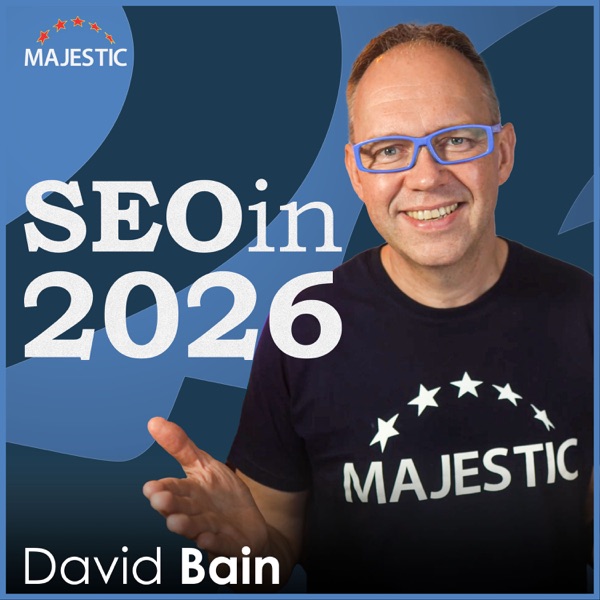
SEO in 2026
SEO is continuing to change at an alarming pace. And yet, in some sense, the principles of good SEO remain the same.
Hello, and welcome to SEO in 2026 – a significant repository of current thinking from many of the world’s leading SEOs.
We're pleased to be able to welcome you to the fifth book and fifth series in this podcast, now well and truly an annual tradition, brought to you by Majestic.
“How people search has seen a bigger shift in the last 12 months than the last 12 years, and this makes SEOin2026 a must-read for anyone working in the industry. Majestic has brought together 117 of the SEO industry's brightest minds to share their insights into what matters, and what doesn't, to continue to drive growth with organic search during a period of massive uncertainty, and the book should be seen as a valuable reference point to keep your strategy on the right track.”
JAMES BROCKBANK
Managing Director and Founder, Digitaloft
“I highly recommend that every SEO professional set aside a couple of days for SEOin2026. You'll thank me for helping you plan your year effectively. I'm extremely grateful to have the opportunity to work alongside some of the world's leading SEO champions.”
NITIN MANCHANDA
Founder & Chief SEO Consultant, Botpresso
“This collection of wisdom from many of the best minds in SEO today is a great line in the sand of where we as an industry are, what problems we face, and how we tackle them. Anyone in SEO or marketing should be dipping into this on a regular basis.”
SIMON COX
Technical SEO Consultant, Cox and Co. Creative
“This series continues to be the industry’s leading source of the most timely advice a marketer could ever want. The most forward-thinking SEO experts in the world come together once a year to create this invaluable collection of new knowledge that should never be passed up on!”
PAM AUNGST CRONIN
President and Founder, Pam Ann Marketing and Stealth Search and Analytics
“2025 has been a sprint for the SEO industry, with AI reshaping how we understand visibility, relevance, and authority. SEOin2026 is not just another trends book; it’s a roadmap for what’s actually coming. I loved being part of it and seeing how experts around the world approach the same challenges from different angles.”
RAMONA JOITA
SEO Consultant and Founder
“David is good at drawing out the substance of a conversation. He will explore the topic and challenge assumptions, steer the conversation into an unexpected direction, and build on your ideas – making you think a bit deeper and sharper. Our recent conversation flew by as always, and as always – I’ve come out energised about the topic with more to think about.”
SUKHJINDER SINGH
Freelance SEO Consultant
- Episodes
- 501
- Releases
- Weekly
- Typical length
- 16 min
- On air since
- 2023
- Latest episode
- 6 days ago
Episodes
501 episodes, newest first
-
16 min
You need to educate your B2B SEO clients - with Matt Kohli
Season 2026, Episode 613
Show notes
Matt Kohli shares that traditional B2B clients are years behind through no fault of their own, and if you don't actively educate them, they end up making renewal and budget decisions without any real ability to judge the value you're delivering. Talking points include: The Environment Gap, Not an Intelligence Gap: Why traditional B2B sectors like manufacturing, engineering, and construction lag behind in search maturity due to relationship-driven business models rather than a lack of capability. The Danger of Outdated Expectations: How legacy views on SEO from traditional marketing specialists lead to misaligned budgets, and why the few competitors who take search seriously capture disproportionate market share. Baking Education Into the Delivery: Why proactive client education must be integrated into agency workflows to ensure stakeholders can accurately evaluate the long-term value of organic growth. Centralizing Transparency with Custom Tooling: How internal hubs like Fortitude HQ—unifying first-party performance data, transparent task tracking, and streamlined ticketing—eliminate the traditional "black box" of SEO reporting. Proactive Contextual Briefings: The power of delivering regular, bite-sized updates explaining what is changing in search and sector dynamics, translating macro-algorithmic shifts into actionable commercial meaning for clients. The Onboarding and Pitch Advantage: How embedding a dedicated search landscape session directly into client onboarding or initial sales pitches aligns expectations from day one and builds long-term trust.
-
16 min
Build stronger brand–category co-occurrence and contextual signals - Maryanna Franco
Season 2026, Episode 612
Show notes
Maryanna Franco shares that citation visibility is very 2025. In 2026 SEO can only move the needle by building stronger brand–category co-occurrence and contextual signals, because being part of AI's bibliography doesn't mean being part of its shortlist. Discussion points include: The Citation Fallacy: Why being cited in an AI response's bibliography is entirely different from being recommended, and how a high volume of citations can create a dangerously misleading illusion of true brand visibility. Co-Occurrence vs. Topical Authority: How establishing strong brand–category co-occurrence connects your entity directly to the exact commercial category you want to dominate, moving far beyond generic topical authority. The Content Volume Trap: Why publishing thousands of pages demonstrating expertise no longer guarantees a spot on AI's shortlist when a buyer asks for recommendations in your category. The Power of External Validation: The crucial role of third-party mentions in forging unbreakable category associations when your brand, expertise, and category consistently appear together across the wider web. Mastering Query Fan-Out: How AI search behavior deconstructs user intent into a wide web of sub-queries, requiring your brand to maintain contextual relevance across the entire conceptual tree rather than just optimizing for a single head term. Redefining Performance Metrics: Why modern SEO measurement must sharply distinguish between being referenced as a background source, being passively mentioned, and actually securing a spot among recommended market leaders.
-
16 min
Never treat localization as the last step - Kseniya Dvarakouskaya
Season 2026, Episode 611
Show notes
Kseniya Dvarakouskaya says that the biggest mistake in international SEO in 2026 is treating localization as the last step — real ranking growth in new markets starts with local keyword research from scratch, not translating what already works in English. Talking points include: Why translation is not localization when it comes to SEO — and where teams lose ranking potential - What local keyword research actually looks like (native speakers, local SERPs, market-specific search intent) - Cultural differences in search behavior — examples from Japanese, Korean, German, Spanish markets - Common mistakes: word-for-word translation of English keywords, ignoring local competitors, mixing Simplified and Traditional Chinese, using LATAM Spanish for Spain - Real case: what changes when the localization team is involved from day one vs at the end of the launch - How localization teams and SEO teams should collaborate in practice
-
20 min
Misinformation isn't just an SEO problem — it's a user safety problem - Sean Barber
Season 2026, Episode 610
Show notes
In YMYL spaces like health, misinformation isn't just an SEO problem — it's a user safety problem. Macmillan Cancer Support shares how they proactively fight misinformation while staying visible in an AI-driven, zero-click search world. Talking points include: - Why is misinformation especially dangerous in YMYL sectors like health? - How does Macmillan approach content strategy proactively rather than reactively? - Which E-E-A-T signals matter most for building trust at scale? - How do you issue corrections without undermining user confidence? - How do you stay visible in AI-summarised, zero-click results? - What tools help you catch misinformation trends early? Read the full transcript of Sean's interview at https://majestic.com/seo-in-2026/additional-insights/sean-barber
-
17 min
Sitemaps are often treated as an afterthought - Carlos Manuel Sánchez Donate
Season 2026, Episode 609
Show notes
Carlos Manuel Sánchez Donate shares that sitemaps are often treated as an afterthought, but they're a direct line of communication with both search engines and LLMs about what matters on your site. Splitting and customizing them by content type can unlock better crawl visibility and sharper Search Console auditing. Talking points: - Why do you think sitemaps are so underrated in SEO today? - How exactly do sitemaps help LLMs understand a site better than llms.txt? - What's your process for splitting content into separate sitemaps? - Any real example where sitemap segmentation improved indexing or visibility? - How do segmented sitemaps make Search Console auditing easier? - What's a common sitemap mistake you see sites making? Read the full transcript of Carlos's interview at https://majestic.com/seo-in-2026/additional-insights/carlos-sanchez-donate
-
16 min
Forget keywords. AEO is about going deep - Jenna Hannon
Season 2026, Episode 608
Show notes
Jenna Hannon suggests that you forget keywords. AEO is about going deep: build public documentation on your site that answers every specific question a prospect might ask at each stage of the buying journey. Key talking points: What sort of public documentation are you referring to? How do you know the specific questions that your prospects might ask? How do you prioritise the questions to answer? How do you know the volume and type of content required to answer a question? How do you know how the questions map to the different stages of the buyer journey? How do you go about mapping the answers? Read the full transcript of Jenna's interview at https://majestic.com/seo-in-2026/additional-insights/jenna-hannon Watch the original SEOin2026 series: https://www.youtube.com/playlist?list=PLOr75FiG9ta37FH130S-qu3H9N0h7Ly0I Watch more SEOin2026: Additional Insights: https://www.youtube.com/playlist?list=PLOr75FiG9ta3j5bYmsVBggEsBxwhGSX41
-
17 min
Build a translation layer beneath your site - Juliette van Rooyen
Season 2026, Episode 607
Show notes
Juliette van Rooyen shares that we need to make sure categories and labels are clearly understood by AI & Search engines by adding a machine-readable layer that maps them to the entities and taxonomies the web already knows & trusts.
Talking points include:
What is a translation layer beneath your site?
Why is it important to make sure your categories and labels are clearly understood by AI & Search engines?
What does a "translation layer" mean, in practical terms?
Why is this "translation layer" important enough to spend resources on?
What data sources should you be mapping to?
Does this apply just to eCommerce websites?
-
20 min
SEO Gets the Click. Trust Gets the Conversion - Irwin Hau
Season 2026, Episode 606
Show notes
Irwin Hau shares that SEO gets the click, but trust gets the conversion.
Talking points include:
What do you mean by trust gets the conversion?
Why do most websites fail despite strong SEO?
What do you mean by the psychology behind trust and user behavior?
How is AI changing search but not human decision-making?
What are the subtle credibility mistakes hurting conversions?
What are some small website changes that can dramatically improve results?
-
17 min
Going back to roots analysis thanks to consent-free analytics tools - Jean-Marc Courtiade
Season 2026, Episode 605
Show notes
Jean-Marc Courtiade talks about the importance of going back to roots analysis thanks to consent-free analytics tools.
Talking points include:
What is a consent-free analytics tool?
When is consent required?
What data can we obtain on a consent-free basis?
What countries is this relevant to? How do you blend all the data together to produce a complete picture?
Is there still a place for asking for consent for certain data or is it not worth it?
-
15 min
Make sure that content quality is high across every page on your website - Astley Cervania
Season 2026, Episode 604
Show notes
Astley Cervania talks about the importance of making sure that content quality is high across every page on your website. Talking points include:
- The importance of maintaining your website and not just always prioritizing building out new content - Search engines don't evaluate pages in isolation
– algorithm updates expose quality inconsistencies across your entire domain, so strong blog content alone won't compensate for neglected landing pages or thin programmatic content elsewhere on the site
- Every page needs to earn its place, meaning addressing real search intent, writing that resonates, having a genuine POV, and a clear connection to a business outcome (e.g., user signups)
- The practical takeaway: before focusing on building out lots of new content, look at what you already have. Prune what adds no value, revamp what's gone stale, and make sure every page on your site would pass your own quality bar.
-
18 min
Focus Beyond the Website: Shifting from Google Clicks to Multi-Platform Discovery - Sara Warneryd
Season 2026, Episode 603
Show notes
Sara Warneryd shares the importance of shifting from Google clicks to multi-platform discovery. Talking points include:
*Understanding Search as Discovery: Why user journeys are shifting from a single Google search to multi-platform exploration, and what this means for your brand.
* Creating content for the platforms, not the click: How to format your knowledge so it delivers full value directly on Reddit, TikTok, or YouTube, keeping users engaged where they are.
* Mapping High-Impact Sources: How to identify and prioritize the influential channels where your audience actually seeks advice
-
15 min
Don't forget: You're a marketer first and an SEO second - with Daisy Shevlin
Season 2026, Episode 602
Show notes
Daisy Shevlin shares that you're a marketer first and an SEO second. Talking points include: What does being a marketer first really mean? Some SEOs' downfall is when it comes to relating how the work we do generates money for the business How do we do this? - AI search requires a more holistic approach to making your brand visible than ever before What does this holistic approach look like? How do we measure success? - You need to partner with stakeholders both within and outside the marketing organisation to be successful What partnerships are key and why?
-
16 min
Why are journalist request platforms so important for SEO? With Brett Farmiloe
Season 2026, Episode 601
Show notes
Brett Farmiloe discusses why journalist request platforms are so important for SEO with David Bain. Talking points include: What is Help a Reporter Out? You’re founder of Featured.com - what does that offer? How do these platforms actually work? Who uses them? What can you actually gain from using these platforms? What are some Best practices for cold pitching podcasts and journalists? How do you measure success? What are some bad or ineffective practices?
-
16 min
Stop trying to reverse-engineer what AI wants in 2026 - with Claudia Constantin
Season 2026, Episode 600
Show notes
Stop trying to reverse-engineer what AI wants in 2026, just interrogate the model on the exact sources it relied on after it answers, and it'll tell you precisely what to fix to get cited. That's what Claudia shares in this episode. Talking points include: - AI visibility is business-specific. - AEO is an extension of SEO, not a replacement. - After the AI answers a real customer-style question, interrogate it - AI is capable but still runs on data it has to interpret, sifting mountains of it. - The content bar didn't rise, it split. - Interrogation turns AI visibility from guesswork into evidence.
-
18 min
The most effective SEO strategy is to create truly unique, non-replicable content - Joey Randazzo
Season 2026, Episode 599
Show notes
In 2026, the most effective SEO strategy is to create truly unique, non-replicable content, which means avoiding the use of AI to mass-produce generic pages at scale. What do you think?
Discussion points include:
Why is mass-producing content a fragile strategy?
How do you differentiate content?
What are examples of types of content that nobody else can produce?
How do you know if your target audience is likely to want to know about your personal perspective?
What are the downsides of this strategy?
Where should AI be used?
-
18 min
Why are businesses not doing a good job of leveraging leads from organic? With Jason Kramer
Season 2026, Episode 598
Show notes
Jason Kramer shares why businesses not doing a good job of leveraging leads from organic - and what to do about it. Talking points include: Why are businesses not doing a good job of leveraging leads from organic? How does a business better identify leads from organic? How can businesses do a better job of utilising these leads? How can SEOs work better with other marketing team members to better utilise these leads? What systems and software should be used? How should this better affect and improve organic search strategy?
-
18 min
Create useful tools to convert more of your existing traffic - with Will Rice
Season 2026, Episode 597
Show notes
Will Rice discusses the importance of creating useful tools to convert more of your existing traffic. Talking points include: How to understand what is going to get your traffic to convert more. How do you know what traffic is likely to convert? How do you put a financial value on traffic from different sources? How to rapidly build tools to provide genuine value to your customers. Which tools are best? Why is this better than other forms of traffic? What else to do with the data you get from the tools you build?
-
18 min
Stop obsessing over AI – with Taylor Kurtz
Season 2026, Episode 596
Show notes
Taylor Kurtz provides our final SEOin2026 tip, advising that we stop obsessing over AI and instead, focus on high quality content.
Taylor says: “Do not obsess about AI. Don't obsess about it.”
Why shouldn't you obsess about it?
“I'm sure a lot of people have helpful suggestions about it, but frankly, it's all so new that it’s on a trial basis. Anyone saying that they know what to do for this environment, it's not true. They think they know what to do, but nobody knows for sure. It's all based on: What am I doing that's working? What are my peers doing that's working? How do we navigate this?
Google has not provided any guidance – and even if they did, who really cares? As we saw with organic search, even if they did provide specific guidelines, those aren’t always true. My issue is more the fact that people feel so concerned about it. For instance, I have so many clients asking, ‘How am I doing on ChatGPT?’, but a study came out yesterday showing that referral traffic from ChatGPT from July 21st through yesterday (August 26th) was down 52%.
AI is not going anywhere, and we're very much going to have to adapt to it, but I do not think search will change very much. We're going to have to adapt to utilising it as a new technology, similar to how we had to adapt to voice searches using Siri and things like that.
One thing that really does bother me is seeing so many people online talking about GEO, or Generative Engine Optimization. To me, that does not exist. If you want to really get down to the bare bones of it, the crawlers – whether they're crawling the robots.txt file or the newer llms.txt file – are still crawling your source code. The source of information is the same.
I'm constantly hearing that GEO is the new thing because the landscape has totally changed with AI search. Typically, the people who say that then go on to present obvious and foundational tactics that have always applied to SEO. For example, ‘We should use schema.’
One thing we've been really focussing on with our clients is making sure that the authors have authoritative bio pages that show their credentials and show who they are. Are the articles fact-checked? However, that all pertains to EEAT (Experience, Expertise, Authority, and Trust), which has been an acronym in SEO for going on a decade.
-
16 min
Don't neglect traditional SEO just yet - with Stefan Lozo
Season 2026, Episode 595
Show notes
Stefan Lozo shares the importance of not neglecting traditional SEO int eh age of AI. Talking points include: What activities would you describe as traditional SEO? How should an SEO define their services in 2026? How should this be communicated with clients? What happens if clients push back and are looking for other services or ways of doing things? How do you set realistic expectations for clients? Is it a good idea to do white label SEO for other agencies? How do you see the traditional agency SEO offering continuing to evolve?
-
15 min
Escape the backlog – with Michael MacMillan
Season 2026, Episode 594
Show notes
Michael MacMillan shares our penultimate piece of advice by encouraging you to ensure that all the good SEO that you already intend to do, is being done.
Michael says: “While AI is flooding the web with content, it’s also assisting teams to create huge strategies and big plans. However, we're still not seeing them getting executed.”
What does execution actually mean, and why is it not happening?
“Imagine that you’ve gone through and done an SEO audit; you've explored all the opportunities, you've gone through the competitor set, and you've gone through what you have for existing content and how you're performing.
Then, you get this beautiful list of what you should do to get things done – much like going to the physio, where you get a list of the exercises you should do when you're not at the physio. In the meantime, between visits, the work's not getting done.
There's definitely a place for using AI. It's great at analysing data. It's great for giving a first draft of a piece of content. We're leveraging it to get content briefs put together and get a first draft of content. However, a lot of the time, we're seeing things getting shelved.
Priorities start getting pulled. It's sometimes the fact that there is a whole lot that needs to get done. A lot of marketing teams are dealing with having fewer people to execute with, and they're having to rely on other sources to get things done.”
How To lists
More How To shows picked out from the charts









More in How To
Placed highest on Apple Podcasts' How To chart right now