Podcast
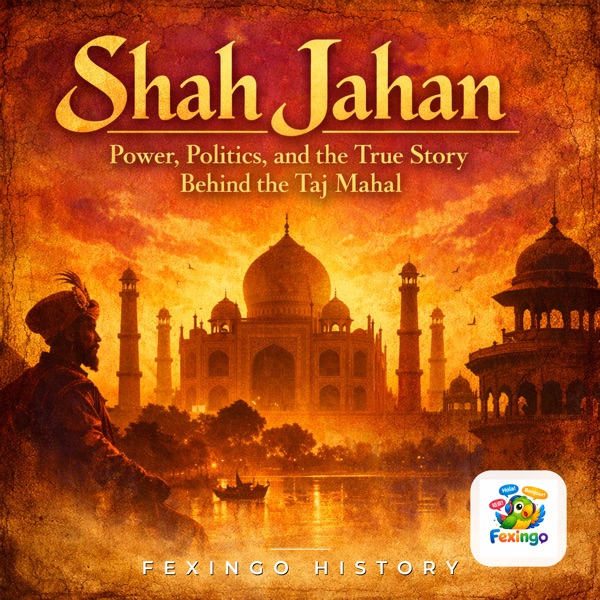
Shah Jahan: Power, Politics, and the True Story Behind the Taj Mahal — Fexingo History
The Taj Mahal is the world's most famous monument to love, but behind its marble perfection lies a far darker story of ambition, betrayal, and absolute power. This show excavates the life of Shah Jahan, the fifth Mughal emperor who ruled from 1628 to 1658, and the brutal politics that built—and nearly destroyed—the Mughal Empire. Join hosts Lucas and Luna as they trace Shah Jahan's rise from a rebellious prince to the architect of the Peacock Throne, his military campaigns against the Deccan sultanates and the Portuguese at Hooghly, and his obsession with architecture that produced the Taj Mahal, the Red Fort of Delhi, and the Jama Masjid. But the spotlight also falls on the succession war that tore his family apart: the tragic story of his eldest son Dara Shikoh, the orthodox Aurangzeb's rebellion, and Shah Jahan's final years as a prisoner in Agra Fort, staring at his dead wife's mausoleum. Along the way, we explore the Mughal economy of precious stones, the role of Persian culture and Sufi mysticism at court, the engineering marvels of Mughal garden-tombs, and the legends of Mumtaz Mahal's true influence. This is not a sanitized tour of a wonder—it is a raw, human history of power, grief, and the price of immortality.
#ShahJahan #MughalEmpire #TajMahal #MumtazMahal #Aurangzeb #DaraShikoh #AgraFort #RedFort #PeacockThrone #DeccanSultanates #Sufism #PersianCulture #SeventeenthCentury #IndiaHistory #WorldHistory #FexingoHistory #History #Podcast
Keep every episode free: https://buymeacoffee.com/fexingo
- Episodes
- 281
- Releases
- Daily
- Typical length
- 10 min
- On air since
- 2026
- Latest episode
- 14 hours ago
Episodes
281 episodes, newest first
-
11 min
Shah Jahan's Architectural Legacy Beyond the Taj
Season 6, Episode 281
Show notes
While the Taj Mahal dominates our imagination of Shah Jahan’s reign, his architectural footprint extended far beyond a single mausoleum. This episode explores the Imperial Bureau of Construction and how Ustad Ahmad Lahori and his team engineered a visual language for imperial power across the Mughal Empire. We look at the Mehtab Bagh, or Moonlight Garden, situated directly across the Yamuna River from the Taj, which served as both a recreational space and a strategic framing device for the main monument. We also examine the Red Forts in Delhi and Agra, where the Diwan-i-Khas and the Musamman Burj became stages for political theater. By analyzing the Char Bagh garden layout and the integration of Pietra Dura stonework into these larger complexes, we see how Shah Jahan used urban planning and hydraulic engineering to assert divine right. From the intricate jali screens that filtered light and privacy in the Zenana quarters to the grand audience halls, this conversation reveals how architecture was not just decoration but a primary tool of statecraft during the height of Mughal influence.
#MughalArchitecture #ShahJahan #TajMahalHistory #UstadAhmadLahori #MehtabBagh #ImperialBureauOfConstruction #CharBagh #PietraDura #RedFortDelhi #AgraFort #MusammanBurj #DiwanIKhas #YamunaRiver #MughalEmpire #IndianHistory #WorldHeritage #IslamicArt #History
-
10 min
Shah Jahan's Final Years: The Agra Fort Prison and the Letters to Mumtaz
Season 6, Episode 280
Show notes
For years, Shah Jahan has been defined by his monuments, his wars, and his ruthless succession struggle. But what happened to the man once called Padshah after he was locked away in the Agra Fort? This episode explores the final seven years of his life, not as a tragic footnote, but as a period of intense personal reflection and artistic endurance. We trace the daily reality of his confinement, focusing on the letters he wrote to his deceased wife, Mumtaz Mahal, and how those words may have influenced the very last structure he commissioned: the Musamman Burj. We also examine the role of his daughter Jahanara Begum, who navigated the treacherous politics between her imprisoned father and his victorious son Aurangzeb. Through the lens of court chroniclers like Abdul Hamid Lahori and François Bernier, we piece together a portrait of a ruler stripped of power yet retaining his dignity, finding solace in poetry, architecture, and the memory of the woman he loved.
#ShahJahan #MughalEmpire #TajMahal #AgraFort #JahanaraBegum #Aurangzeb #MumtazMahal #MusammanBurj #Padshahnama #FrançoisBernier #AbdulHamidLahori #MughalHistory #IndianArchitecture #PrisonDiaries #17thCenturyIndia #ImperialCourt #FexingoHistory #WorldHistory #History
-
9 min
Shah Jahan's Architectural Revolution and Mughal Modernism
Season 6, Episode 279
Show notes
In this episode of the Fexingo History podcast, we explore how Shah Jahan transformed the Mughal Empire into a global powerhouse of art and engineering. We move beyond the romanticized story of the Taj Mahal to examine the Imperial Bureau of Construction and its chief architect, Ustad Ahmad Lahori. Together with Lucas and Luna, we analyze the technical innovations behind Pietra Dura inlay work and the Char Bagh garden design that defined an era. We also discuss the political symbolism embedded in structures like the Diwan-i-Khas and the Red Fort, revealing how architecture served as both propaganda and practical administration. Through primary sources like the Padshahnama and accounts from travelers such as François Bernier, we uncover the rigorous standards of the Zabt revenue system that funded these monumental projects. This is not just a history of stone and marble, but a deep dive into the bureaucracy, labor, and aesthetic philosophy that made Mughal modernism possible.
#MughalEmpire #ShahJahan #TajMahal #UstadAhmadLahori #ImperialBureauOfConstruction #PietraDura #CharBagh #Padshahnama #AbdulHamidLahori #FrançoisBernier #AgraFort #Diwan-i-Khas #RedFortDelhi #MughalArchitecture #IndianHistory #WorldHistory #FexingoHistory #HistoryPodcast
-
11 min
Shah Jahan's Prison Years and the Letters to Mumtaz
Season 6, Episode 278
Show notes
After Aurangzeb imprisoned his father in the Agra Fort, Shah Jahan spent his final eight years in confinement, stripped of power but retaining his title. This episode explores the intimate correspondence between the captive emperor and his daughter Jahanara Begum, who served as his primary link to the outside world. We examine the surviving letters that reveal a man grappling with loss, regret, and the passage of time, rather than just plotting revenge. The narrative focuses on the human cost of Mughal succession wars, looking at how Shah Jahan’s artistic legacy was preserved through these private writings and his continued patronage of architecture from behind bars. We also discuss the role of court physician Muhammad Sayid and the medical care provided to the aging monarch, offering a poignant look at the end of an era defined by marble and memory.
#ShahJahan #MughalEmpire #AgraFort #JahanaraBegum #MumtazMahal #MughalHistory #IndianHistory #Aurangzeb #DaraShikoh #HistoricalLetters #TajMahal #MughalArchitecture #ImperialPrisoners #SufiPoetry #PersianLiterature #FexingoHistory #HistoryPodcast #WorldHistory #17thCentury
-
8 min
Shah Jahan's Architect: Ustad Ahmad Lahori and the Taj Mahal
Season 6, Episode 277
Show notes
We often attribute the Taj Mahal’s creation solely to Emperor Shah Jahan’s grief, but the monument stands because of the meticulous engineering of its chief architect, Ustad Ahmad Lahori. In this episode, we peel back the layers of Mughal construction to reveal how a Persian-trained master combined Islamic geometry with Hindu craftsmanship to create a masterpiece. We explore the role of the Imperial Bureau of Construction, the sourcing of materials from across Asia, and the political pressure that turned a mausoleum into an empire-defining symbol. You will hear about the specific labor forces, the financial costs recorded in the Padshahnama, and the architectural innovations that allowed for such height without collapse. This is not just a love story; it is a case study in imperial logistics, artistic collaboration, and the sheer weight of state power directed toward beauty.
#TajMahal #UstadAhmadLahori #MughalArchitecture #ShahJahan #AgraFort #PietraDura #CharBagh #Padshahnama #AbdulHamidLahori #ImperialBureau #RedSandstone #WhiteMarble #MughalEmpire #17thCenturyIndia #ArchitecturalHistory #MehtabBagh #YamunaRiver #History #FexingoHistory
-
8 min
Shah Jahan's Lost Wife: Arjumand Banu and the Woman Behind the Marble
Season 6, Episode 276
Show notes
While history remembers Shah Jahan for the Taj Mahal, it often forgets the woman who inspired it. This episode shifts focus from the Emperor’s wars and architectural triumphs to the life of Mumtaz Mahal, born Arjumand Banu Begum. We trace her journey from a young princess in Persia to the trusted confidante of one of India’s most powerful rulers. Through the accounts of court chroniclers like Abdul Hamid Lahori and the personal letters of the imperial zenana, we uncover how she managed state affairs during Shah Jahan’s military campaigns. Luna and Lucas explore the political weight of her position as Padshah Begum, examining how her death in 1631 triggered not just grief, but a profound shift in Mughal court dynamics. Discover the real story of a woman whose influence extended far beyond the marble tomb built in her memory.
#MumtazMahal #ArjumandBanuBegum #TajMahalHistory #MughalEmpire #ShahJahan #PadshahBegum #ZenanaPolitics #Aurangabad #Burhanpur #AbdulHamidLahori #FrançoisBernier #MughalCourtLife #IndianHistory #WorldHistory #FemaleLeadership #PersianPrincess #MughalArchitecture #History
-
10 min
Shah Jahan's Lost Daughter: Jahanara Begum
Season 6, Episode 275
Show notes
While the Taj Mahal defines Shah Jahan’s legacy, his most powerful ally was his daughter, Jahanara Begum. This episode explores her unique position as Padshah Begum during the brutal war of succession against her brother Aurangzeb. We examine how she managed the imperial zenana, mediated between rivals, and wielded spiritual authority through Sufism. After Shah Jahan’s imprisonment, it was Jahanara who ensured his final years were dignified rather than destitute. Discover the political machinery behind the Mughal harem and the woman who held the empire together when the men were tearing it apart.
#JahanaraBegum #PadshahBegum #MughalEmpire #Aurangzeb #DaraShikoh #ShahJahan #MumtazMahal #Zenana #Qizilbash #Sufi #AgraFort #DeccanWars #Samugarh #Mir Jumla #RajaJaiSingh #PeacockThrone #PietraDura #History #FexingoHistory
-
12 min
Shah Jahan's Mughal Spies and the Secret Police
Season 6, Episode 274
Show notes
While popular history remembers Shah Jahan for the Taj Mahal and the Peacock Throne, his reign was equally defined by a sophisticated, ruthless intelligence apparatus. This episode explores the Barids, the royal spies who reported directly to the emperor, bypassing the bureaucracy to ensure no corner of the empire escaped his notice. We examine how these agents monitored everything from local tax collectors to distant princes, creating an atmosphere where loyalty was verified through constant surveillance. The conversation also delves into the Waqia-navis, the chroniclers who filtered news for the court, and the psychological impact this 'shadow war' had on the nobility. By analyzing accounts from François Bernier and Abdul Hamid Lahori, we reconstruct the daily reality of living under a ruler who trusted his eyes and ears more than his ministers. This is not just about espionage; it is about the architecture of power in the seventeenth-century Mughal state.
#MughalEmpire #ShahJahan #Barids #Waqia-navis #MughalHistory #AgraFort #FrançoisBernier #AbdulHamidLahori #MughalEspionage #Padshahnama #Mansabdars #Qizilbash #Diwan-i-Khas #MughalIntelligence #17thCenturyIndia #DaraShikoh #Aurangzeb #FexingoHistory #History
-
7 min
Shah Jahan's Lost Treasury: The Peacock Throne
Season 6, Episode 273
Show notes
In this episode, we uncover the staggering history of the Peacock Throne, Shah Jahan’s masterpiece of gold and jewels. We trace its creation under Ustad Ahmad Lahori and its placement in the Diwan-i-Khas, exploring how it became a symbol of Mughal absolute power. After Shah Jahan’s fall from grace, the throne was stripped by Nader Shah during the 1739 invasion of Delhi, scattering legendary gems like the Koh-i-Noor across empires. We also examine the political machinations behind its dismantling and the tragic fate of the Mughal treasury, revealing how one object’s loss signaled the end of an era.
#PeacockThrone #ShahJahan #NaderShah #KohiNoor #MughalEmpire #DelhiHistory #IndianJewelry #AgraFort #DiwanIKhas #UstadAhmadLahori #JeanBaptisteTavernier #PersianGold #MughalArt #1739Invasion #SafavidDynasty #GemstoneHistory #FexingoHistory #History
-
9 min
Shah Jahan's Architectural Revolution and the Birth of Mughal Modernism
Season 6, Episode 272
Show notes
We move past the romance of the Taj Mahal to examine the radical engineering and economic shifts that defined Shah Jahan’s reign. Lucas and Luna explore how the Emperor transformed Agra into a laboratory of modernity, introducing the 'Purani Qila' (Old Fort) and new urban planning techniques that prioritized hygiene and flow over medieval fortification. We look at the role of Ustad Ahmad Lahori not just as a designer, but as a manager of a massive industrial workforce, and how the introduction of Chinese porcelain and Italian marble influenced Mughal aesthetics. The episode also touches on the controversial Zabt tax reforms that funded these projects and the social cost borne by the ryots in the Doab region. This is a deep dive into the machinery of empire, revealing how architectural grandeur was built on complex logistical networks and political maneuvering.
#ShahJahan #MughalArchitecture #TajMahal #AgraFort #UstadAhmadLahori #PietraDura #CharBagh #ZabtTax #MughalEmpire #IndianHistory #WorldHistory #FexingoHistory #HistoryPodcast #ArchitecturalHistory #MughalArt #AgraIndia #PeacockThrone #MughalEconomy
-
12 min
Shah Jahan's Lost Heirs: The Tragedy of Prince Dara Shikoh
Season 6, Episode 271
Show notes
While the Taj Mahal defines Shah Jahan’s reign, his personal tragedy lay in the succession crisis that followed. This episode explores the relationship between the emperor and his eldest son, Dara Shikoh, a prince who sought to bridge Islamic and Hindu traditions through translation and dialogue. We examine how Dara’s intellectual openness clashed with the rigid orthodoxy favored by his brother Aurangzeb, leading to a brutal war for the throne. From the Battle of Samugarh to the public execution of Dara in Delhi, we uncover the political maneuvering, religious tensions, and familial betrayals that reshaped the Mughal Empire. Listen to understand how one man’s vision of pluralism was crushed by another’s ambition, leaving a legacy of loss that haunted Shah Jahan until his final days behind the walls of Agra Fort.
#DaraShikoh #Aurangzeb #MughalEmpire #Samugarh #SuccessionCrisis #ShahJahan #IndianHistory #ReligiousPluralism #Upanishads #Sirr-i-Akbar #AgraFort #Padshahnama #FrançoisBernier #Qizilbash #RajputAlliance #Zoroastrian #SufiTradition #History #FexingoHistory
-
10 min
Shah Jahan's Court Musicians and the Politics of Sound
Season 6, Episode 270
Show notes
While history remembers Shah Jahan for stone and steel, the imperial court was equally defined by sound. In this episode, we explore the world of Mughal musicians, focusing on Ustad Mansur Khan and the legendary Baiju Bawra. We examine how music served as a political tool, with the Diwan-i-Aam hosting daily performances to project imperial grandeur. Lucas and Luna discuss the tension between the official court composers and the independent folk traditions that captivated the emperor. We look at specific ragas, the role of the Hakim-i-Khas in medical and artistic patronage, and how the Zenana maintained its own distinct musical heritage separate from the public male sphere. This is the story of how melody shaped power in the seventeenth century.
#MughalEmpire #ShahJahan #TajMahal #UstadMansurKhan #BaijuBawra #Ragas #Qawwali #Khyal #Padshahnama #AbdulHamidLahori #FrançoisBernier #Diwan-i-Aam #Zenana #Hakim-i-Khas #Unani #AgraFort #JahanaraBegum #History
-
8 min
Shah Jahan's Shadow: The Diwan-i-Khas Secrets
Season 6, Episode 269
Show notes
While the Taj Mahal captures our imagination, Shah Jahan’s most powerful tool was arguably hidden within the walls of the Agra Fort. In this episode, we explore the Diwan-i-Khas, or Hall of Private Audiences, and the political theater that unfolded there. We look at how Shah Jahan used architecture as a diplomatic weapon, particularly through the famous marble screen known as the Jali. We also uncover the tense relationship between the Emperor and his Mughal nobles, specifically focusing on the role of the Barids, or secret police spies, who monitored loyalty in an empire where succession wars were brutal. Through the lens of François Bernier’s observations and the Padshahnama records, we see how Shah Jahan balanced his artistic legacy with the ruthless pragmatism required to hold the Deccan campaigns together. This is not just about stone and mortar, but about the invisible networks of power that kept the Mughal throne secure until the final days.
#ShahJahan #MughalEmpire #Diwan-i-Khas #AgraFort #JaliScreen #FrançoisBernier #Padshahnama #Barids #MughalSpies #DaraShikoh #Aurangzeb #DeccanCampaigns #MughalArchitecture #IndianHistory #WorldHistory #FexingoHistory #HistoryPodcast #SecretPolice #MarbleArt
-
9 min
Shah Jahan's Spies: The Secret Police of the Mughal Empire
Season 6, Episode 268
Show notes
Beyond the marble domes and the Peacock Throne, Shah Jahan maintained a vast network of intelligence known as the Barids. In this episode, we explore how the Mughal emperor used his secret police to monitor nobles, manage succession, and keep his empire stable during a time of intense internal rivalry. We examine the role of Waqia-navis, the court news-writers who doubled as spies, and how information flowed through the Agra Fort. The conversation looks at specific incidents where intelligence gathering shaped political outcomes, including the surveillance of Prince Dara Shikoh and the suppression of dissent. We also discuss the tension between transparency and secrecy in the Mughal court, using primary sources like the Padshahnama and accounts from contemporary observers like François Bernier. This is not just about espionage; it is about the mechanics of power in one of history's most sophisticated empires.
#MughalEmpire #ShahJahan #SecretPolice #Barids #Waqianavis #AgraFort #DaraShikoh #Aurangzeb #Padshahnama #FrancoisBernier #AbdulHamidLahori #Mansabdars #Qizilbash #ImperialIntelligence #MughalHistory #IndianHistory #WorldHistory #HistoryPodcast #FexingoHistory
-
9 min
Shah Jahan's Court Physicians and the Politics of Medicine
Season 6, Episode 267
Show notes
While history remembers Shah Jahan for his architectural masterpieces and military campaigns, his court was equally defined by the high-stakes world of imperial medicine. This episode explores the role of the Hakim-i-Khas, or Royal Physician, a position that wielded immense political power within the Mughal hierarchy. We examine how medical knowledge served as a tool of diplomacy and control, particularly through the empire’s interactions with European powers like the Portuguese and the Dutch East India Company. The narrative focuses on key figures such as Muhammad Sayid, who navigated the delicate balance between healing the emperor and surviving court intrigue. By looking at the exchange of medicinal recipes, the importation of rare herbs from the Deccan, and the use of Unani medicine to treat everything from gout to grief, we uncover how the body of the Padshah became a site of both scientific inquiry and political maneuvering. Listeners will discover how the court jester Akhiyan once used humor to bypass strict medical protocols, and how the Zenana, or women’s quarters, maintained its own sophisticated network of healers independent of the Diwan-i-Aam. This story moves beyond the marble of the Taj Mahal to reveal the flesh-and-blood realities of maintaining an empire where health was synonymous with divine favor and state stability.
#MughalEmpire #ShahJahan #Hakim-i-Khas #UnaniMedicine #MuhammadSayid #AgraFort #Zenana #Diwan-i-Aam #Padshahnama #Akhiyan #PortugueseIndia #DeccanCampaigns #ImperialPhysician #MughalCourt #HistoryPodcast #FexingoHistory #IndianHistory #MedicalHistory
-
9 min
Shah Jahan's Silk Road: Trade, Spies, and the Deccan War
Season 6, Episode 266
Show notes
We explore how Shah Jahan’s relentless expansion into the Deccan shattered the Mughal treasury and forced a radical shift in imperial policy. While previous episodes covered the architecture of the Taj Mahal and the brutality of the war of succession, this episode focuses on the economic engine that fueled it. We examine the role of the Barids, the secret intelligence network that monitored regional trade routes, and how the capture of Golconda’s diamond mines temporarily saved the empire from bankruptcy. Lucas and Luna discuss the intricate web of merchants, spies, and military commanders like Mir Jumla who navigated the complex politics of Bijapur and Ahmadnagar. The conversation delves into the Zabt revenue system, the burden on the Ryot cultivators, and how the flow of Persian silk and Indian cotton became weapons of statecraft. You will hear about the strategic importance of the Yamuna river for transport, the diplomatic maneuvers with the Portuguese at Hooghly, and the ultimate financial ruin that left Shah Jahan imprisoned in the Agra Fort. This is the story of an empire that conquered land but lost its wealth, told through the eyes of those who kept the ledgers and the secrets.
#ShahJahan #MughalEmpire #DeccanCampaigns #MirJumla #Golconda #Bijapur #Aurangzeb #DaraShikoh #PeacockThrone #KohiNoor #TajMahal #AgraFort #Barids #ZabtSystem #RyotWari #MughalHistory #IndianHistory #WorldHistory #FexingoHistory #History
-
10 min
Shah Jahan's Last Stand: The Battle of Samugarh
Season 6, Episode 265
Show notes
In 1658, the Mughal Empire stood on a knife's edge. After Shah Jahan fell ill, his four sons launched a brutal war for succession that reshaped Indian history. While we have explored the architectural costs and political intrigues of this era, today we focus on the decisive military clash at Samugarh. This battle pitted the eldest son Dara Shikoh against his younger brother Aurangzeb, whose tactical brilliance and ruthless ambition would secure the throne. We examine the troop movements near Agra, the role of key generals like Raja Jai Singh, and why Dara’s intellectual openness became his fatal weakness in the face of Aurangzeb’s calculated aggression. Join us as we trace the smoke and dust of one of the most consequential battles in South Asian history.
#Samugarh #DaraShikoh #Aurangzeb #MughalEmpire #BattleOfSamugarh #ShahJahan #MughalSuccession #RajaJaiSingh #MirJumla #AgraFort #17thCenturyIndia #MughalHistory #IndianMilitaryHistory #SufiIslam #SunniOrthodoxy #Padshahnama #FrançoisBernier #FexingoHistory #HistoryPodcast
-
10 min
Shah Jahan's Last Stand: The Battle of Samugarh
Season 6, Episode 264
Show notes
While earlier episodes explored the financial ruin and architectural legacy of Shah Jahan, this episode shifts focus to the violent climax of his dynasty’s internal fracture: the Battle of Samugarh in June 1658. We trace the final days of the Mughal War of Succession, moving beyond the political maneuvering of Aurangzeb and Dara Shikoh to examine the military realities on the ground. Lucas and Luna discuss the tactical errors made by Prince Dara, the disciplined loyalty of Shah Jahan’s veteran commanders like Raja Jai Singh, and the chaotic skirmishes that decided the fate of the empire. You will hear about the specific deployment of matchlock men, the role of the Qizilbash cavalry, and how a single miscommunication near the Yamuna river led to the collapse of the imperial army. This is not just a story of brothers fighting for a throne, but a case study in how an aging emperor’s hesitation allowed a younger, more ruthless heir to seize power through sheer military momentum.
#MughalEmpire #BattleOfSamugarh #DaraShikoh #Aurangzeb #ShahJahan #RajaJaiSingh #Mir Jumla #AgraFort #MughalHistory #IndianHistory #17thCentury #WarOfSuccession #Qizilbash #Mansabdari #YamunaRiver #FexingoHistory #HistoryPodcast #WorldHistory
-
10 min
Shah Jahan's Mughal Spies and the Secret Police
Season 6, Episode 263
Show notes
In this episode of Fexingo History, we peel back the layers of Mughal imperial control by examining the intricate network of intelligence that kept Shah Jahan’s empire stable. While previous episodes explored his architecture and wars, we focus on the Barids and Waqia-navis—the spies and chroniclers who fed information directly to the throne. We discuss how François Bernier witnessed this surveillance state during the war of succession, and how figures like Abu'l-Hasan Asaf Khan navigated the dangers of court politics through careful reporting. This deep dive into the Mughal secret police reveals how information was weaponized to maintain order in the Diwan-i-Khas and across the vast Deccan territories.
#MughalEmpire #ShahJahan #Barids #Waqia-navis #MughalSpies #AbuHasanAsafKhan #FrançoisBernier #AgraFort #Diwan-i-Khas #Qizilbash #Mansabdars #SurveillanceHistory #IndianHistory #MughalBureaucracy #ImperialControl #DeccanCampaigns #Padshahnama #FexingoHistory
-
10 min
Shah Jahan's Lost Heir: The Tragedy of Prince Dara Shikoh
Season 6, Episode 262
Show notes
While the Taj Mahal dominates the historical imagination, the true drama of Shah Jahan’s reign played out in the shadowed corridors of the Agra Fort and the intellectual salons of his eldest son, Dara Shikoh. This episode moves beyond the romance of Mumtaz Mahal to explore the fierce political and theological rivalry between Dara and his younger brother Aurangzeb. We examine Dara’s ambitious project to translate the Upanishads into Persian as Sirr-i-Akbar, an act that threatened orthodox clerics and alienated his father. Through the eyes of chroniclers like Abdul Hamid Lahori and eyewitnesses like François Bernier, we reconstruct the paranoid atmosphere of the 1657 succession crisis, where medical rumors sparked a war of swords. Luna and Lucas discuss how Dara’s humanist vision clashed with Aurangzeb’s rigid orthodoxy, leading to the execution of the prince and the imprisonment of the emperor. This is not just a story of betrayal, but of a lost bridge between Hindu and Muslim thought that was burned by imperial ambition.
#DaraShikoh #Aurangzeb #MughalEmpire #ShahJahan #TajMahalHistory #Upanishads #SirriAkbar #AgraFort #Samugarh #MumtazMahal #Padshahnama #AbdulHamidLahori #FrancoisBernier #MughalSuccession #HinduMuslimRelations #IndianHistory #PersianLiterature #FexingoHistory #History
On these lists
Shah Jahan: Power, Politics, and the True Story Behind the Taj Mahal — Fexingo History is one of the shows picked out on each of these






More in History
Placed highest on Apple Podcasts' History chart right now