Podcast
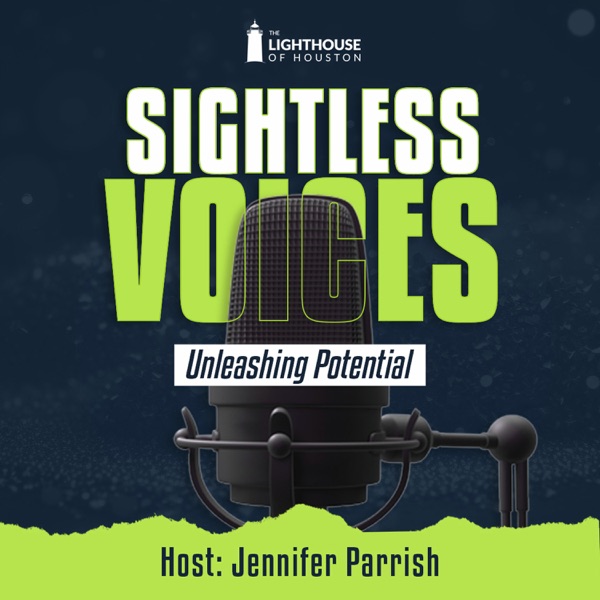
Sightless Voices: Unleashing Potential
What can blind and low vision individuals achieve when given the right support and resources?
Jennifer Parrish hosts Sightless Voices: Unleashing Potential, a podcast sharing real stories and adventures from the blind and low vision community. The Lighthouse of Houston provides this support, offering job training, assistive technology, and mobility training. The podcast aims to show that blindness does not define one's potential, highlighting the vibrant lives and successes of its members.
Learn more at https://houstonlighthouse.org.
- Episodes
- 52
- Releases
- Every two weeks
- Typical length
- 28 min
- On air since
- 2024
- Latest episode
- 20 hours ago
Episodes
52 episodes, newest first
-
28 min
From Vision Loss to Global Leadership
Episode 51
Show notes
Jennifer welcomes Moaz Khan, president of Vision Without Barriers, to discuss vision loss, education, resilience, and global accessibility. From Pakistan to Texas, Moaz shares how his family’s persistence and his lived experience inspired a nonprofit advancing independence through technology, training, and opportunity.
Subscribe to Sightless Voices: Unleashing Potential on Apple Podcasts, Spotify, iHeart, or wherever you get your podcasts!
Support the Lighthouse of Houston (https://houstonlighthouse.org/)
Key Takeaways
1. Moaz grew up in Pakistan with limited vision and later received a diagnosis of retinitis pigmentosa after his family moved to the United States.
2. His parents encouraged independence early, never limiting his participation in school, sports, travel, or everyday life despite uncertainty around his vision.
3. Moaz faced discrimination and low expectations in school, but pursued degrees from UT Austin and Texas State University, plus an executive certificate from Harvard.
4. Vision Without Barriers grew from Moaz’s family experience and focuses on helping blind people gain independence through assistive technology, white canes, training, education, and local support.
5. Moaz encourages people facing uncertainty to keep moving, embrace discomfort, build a team of allies, advocate persistently, and believe in their own potential.
See https://omnystudio.com/listener for privacy information.
-
23 min
From RP to Beep Baseball: Finding a New Way Forward
Episode 50
Show notes
Fernando Escobar shares how retinitis pigmentosa changed his life, work, and independence. With training, community, and beep baseball, he found renewed confidence, practical skills, and a place to belong at The Lighthouse of Houston.
Subscribe to Sightless Voices: Unleashing Potential on Apple Podcasts, Spotify, iHeart, or wherever you get your podcasts!
Support the Lighthouse of Houston (https://houstonlighthouse.org/)
Key Takeaways
1. Fernando’s retinitis pigmentosa first affected his night vision before progressing to daytime vision challenges and light sensitivity. Learning to accept the condition took time, but he now focuses on preparation, gratitude, and positive support.
2. Vision loss changed Fernando’s work responsibilities at a car wash, where he had once served as a crew leader. His employer made safety accommodations that allowed him to remain employed part time.
3. The Lighthouse introduced Fernando to mobility training, white-cane travel, accessible computer skills, and a wider community of blind and low-vision people. He says the experience helped him feel less alone and more confident.
4. Beep baseball gave Fernando a path back to sports after he believed vision loss had ended that part of his life. Through the Bayou City Heat, he found motivation, physical activity, teamwork, and new friendships.
5. Fernando encourages people experiencing vision loss to seek the right training, accessibility tools, and community. He reminds listeners that they are not alone and that a meaningful future is still possible.
See https://omnystudio.com/listener for privacy information.
-
26 min
Celebrating Two Years of Sightless Voices: Unleashing Potential
Episode 49
Show notes
Jennifer and Lighthouse of Houston President Jenna Dhayer celebrate two years of Sightless Voices: Unleashing Potential. They reflect on the podcast’s global reach, the power of lived experience, growing services, accessible play, youth creativity, inclusive internships, and the community that makes this work possible.
Subscribe to Sightless Voices: Unleashing Potential on Apple Podcasts, Spotify, iHeart, or wherever you get your podcasts!
Support the Lighthouse of Houston (https://houstonlighthouse.org/)
Key Takeaways
1. Sightless Voices marks its second anniversary with a five-star Apple Podcasts rating and listeners across countries including the Philippines and Sweden.
2. Jenna credits the podcast’s impact to honest, vulnerable stories that help listeners see the full humanity, resilience, and capabilities of blind and low-vision people.
3. The Lighthouse of Houston saw substantial growth in the past year, including nearly a 25 percent increase in people accessing comprehensive health services, low-vision care, programs, and events.
4. The Lighthouse is developing an inclusive, accessible playground expected in 2027, designed with sound, high color contrast, enclosed areas, and features that support families affected by vision loss.
5. New initiatives like BVI Fest, a youth podcast camp, and expanded internships, create more opportunities for blind and low-vision people to explore sports, build confidence, gain work experience, and unleash their potential.
See https://omnystudio.com/listener for privacy information.
-
29 min
Parenting, Purpose, and Resilience After Vision Loss
Episode 48
Show notes
Rakisha Henry shares how sudden vision loss reshaped her career, parenting, and identity. A former educator and mother, she discusses retinal-detachment surgery, rebuilding independence, navigating workplace discrimination, learning Braille, and finding renewed confidence through community and advocacy.
Subscribe to Sightless Voices: Unleashing Potential on Apple Podcasts, Spotify, iHeart, or wherever you get your podcasts!
Support the Lighthouse of Houston (https://houstonlighthouse.org/)
Key Takeaways
1. Rakisha lost vision in her left eye as a child and experienced a severe retinal detachment in her right eye at 31. Emergency surgeries restored limited, fluctuating vision, but she had to relearn how to navigate life, work, and parenting.
2. As a mother to a five-year-old at the time of her vision loss, Rakisha taught her daughter practical household skills while learning how to parent with changing vision. Her daughter, now 18, grew up understanding that blindness does not mean her mother cannot lead, support, or make things happen.
3. Rakisha continued working in special education after her vision loss and hoped to model possibility for students with disabilities. Later, changing staff attitudes and assumptions about blindness contributed to an increasingly difficult work environment and the loss of her job.
4. Through TWC and The Lighthouse, Rakisha accessed orientation and mobility training, assistive devices, magnification tools, an iPad, a laptop, and a growing blind-community network. These resources helped her rebuild confidence and plan for greater independence.
5. Rakisha hopes to return to work with children, become a business owner, and write children’s books in both print and Braille. Her message to others is simple: stay in it, keep moving, seek support, and do not accept “no” or “we can’t” as the final answer.
See https://omnystudio.com/listener for privacy information.
-
21 min
Young Voices, Big Potential: Inside The Lighthouse Podcast Camp
Episode 47
Show notes
Jennifer Parrish welcomes The Lighthouse Podcast Camp students for a lively conversation about blindness, creativity, friendship, self-expression, and big dreams. From tactile art and YouTube ambitions to fashion design and British accents, these young voices share what it means to explore their potential.
Subscribe to Sightless Voices: Unleashing Potential on Apple Podcasts, Spotify, iHeart, or wherever you get your podcasts!
Support the Lighthouse of Houston (https://houstonlighthouse.org/)
Key Takeaways
1. Podcast Camp gives blind and low-vision youth a space to explore storytelling, technology, confidence, and creative expression. The campers learn that their voices, ideas, and lived experiences belong in podcasts, videos, and other media.
2. The campers describe how connecting with other blind and low-vision young people reduces isolation and creates a sense of belonging. The Lighthouse offers activities, friendships, and a community where they can feel understood.
3. Several campers have creative ambitions, including becoming YouTubers, vloggers, fashion designers, and podcasters. Their interests range from high-end shoes and gala dresses to music, singing, accessibility, and digital content creation.
4. The episode celebrates young people taking ownership of their stories and future goals. Jennifer encourages them to keep using their voices, learning new skills, and believing in their potential.
Timestamped Overview
0:00 Podcast Camp students preview what excites them about podcasting, tactile creativity, friendship, and dreaming big.
1:00 Jennifer introduces a special Sightless Voices episode featuring students from The Lighthouse of Houston’s Podcast Camp.
2:05 Demaiya shares that she joined camp to learn how podcasts work and explore new ways of telling stories.
3:28 Demaiya explains that she lost her vision to a brain tumor at age six or seven and learned Braille afterward.
4:53 She describes her ideal podcast about blind and visually impaired people creating art through tactile materials and hands-on techniques.
5:38 Demaiya talks about making art with foam clay, pipe cleaners, beads, bracelets, and slime.
6:32 Jennifer and Demaiya discuss music, singing, and the Lighthouse Choir.
7:00 Demaiya shares that she enjoys the Lighthouse because of the activities and opportunities to meet new people.
8:05 Kendall joins the conversation and explains her interest in starting a YouTube channel or becoming a content creator.
9:00 Jennifer and Kendall discuss Texas School for the Blind, summer camp, friendships, Austin, and favorite foods.
11:10 Kendall shares that she was born blind and lives with multiple eye conditions, including microphthalmia and nystagmus.
14:00 Uvie talks about being born blind and explains his interest in learning podcasting and creating video podcasts.
15:05 Uvie brings his British accent to the conversation and imagines taking his future podcasting skills to the United Kingdom.
17:20 Michaela joins Jennifer to discuss vlogging, living with low vision, and creating content about high-end shoes.
19:00 Michaela shares that she was surprised to discover The Lighthouse has a professional studio for filming podcasts and video content.
20:30 She names Julie Andrews as her dream interview guest and shares her appreciation for The Sound of Music star’s humor.
21:45 Michaela says she loves The Lighthouse because it is built around blind people and offers an environment where she feels understood.
22:10 Michaela shares her dream of becoming a designer, with a focus on gala dresses, club dresses, wedding gowns, and eventually working in New York.
23:00 Jennifer closes by encouraging Podcast Camp students to use their voices, share their stories, and keep believing in their potential.
See https://omnystudio.com/listener for privacy information.
-
31 min
Love, Low Vision, and Learning Together at The Lighthouse
Episode 46
Show notes
Monica Sandoval and Raul Espinoza share how progressive vision loss, trust, music, and community have shaped their relationship. From the Lighthouse Choir to their Habitat home, they explore independence, accessibility, public assumptions, and the everyday lessons that help them grow together.
Subscribe to Sightless Voices: Unleashing Potential on Apple Podcasts, Spotify, iHeart, or wherever you get your podcasts!
Support the Lighthouse of Houston (https://houstonlighthouse.org/)
Key Takeaways
1. Monica’s vision has progressively declined since childhood, though her diagnosis remains unclear. Assistive tools—including ZoomText, VoiceOver, bump dots, and a cane—help her navigate daily life on her own terms.
2. Trust, open communication, and patience are the foundation of Monica and Raul’s relationship. Raul has learned when to offer help and when to recognize that Monica can handle things independently.
3. The Lighthouse Choir gave Monica a new family and helped Raul reconnect with music. Singing together at Astros games, Space Cowboys events, hospital concerts, and holiday performances has become an important part of their shared life.
4. Their Lighthouse community has supported them through friendships, recreation, and milestones such as becoming Habitat for Humanity homeowners. They have built a welcoming home where their friends and communities come together.
5. Raul’s experience with Monica has taught him that blindness and low vision exist on a spectrum. The couple encourages others to know their worth, communicate honestly, and find partners who complement their strengths.
Timestamped Overview
0:07 Jennifer introduces Monica Sandoval and Raul Espinoza, the podcast’s first couple, and previews a conversation about love, resilience, music, and community.
1:22 Monica shares that her vision has worsened over time and explains that doctors are still working to identify her exact condition.
2:38 Monica discusses the adaptive tools she uses at home, including bump dots, ZoomText, VoiceOver, and a CCTV.
3:20 She reflects on learning to use a cane, making blind friends, early experiences at The Lighthouse, and living with a separate seizure disorder.
5:20 Monica and Raul share how they met through mutual friends and Facebook, then gradually built their relationship over years of conversations and shared experiences.
7:01 The couple discusses the importance of trust, communication, patience, and recognizing each other’s strengths in a blind-sighted relationship.
8:43 Monica explains how joining the Lighthouse Choir in 2019 gave her a new family.
10:40 Raul shares how hearing the choir’s Christmas music helped him reconnect with singing, celebrate the holidays, and build new traditions with Monica.
12:18 They reflect on performing at Astros games, Space Cowboys events, and hospital concerts, describing the pride and joy of representing The Lighthouse through music.
14:36 Monica talks about Lighthouse classes, Singo Bingo, crawfish boils, and the sense of belonging she feels in the Lighthouse community.
16:45 Raul and Monica discuss worsening vision, grief, loss, and the ways they help each other keep moving forward.
18:42 The couple shares how they support one another in daily life, from reading instructions to assembling furniture and tackling home projects together.
20:17 Raul and Monica discuss public assumptions, people staring at Monica’s cane, and a difficult experience at a laundromat.
22:34 They describe the support of their friends and Lighthouse community, including becoming Habitat for Humanity homeowners and opening their home to others.
24:17 Monica explains how Raul has learned from her, while Raul says she has taught him to see the world from a different point of view.
25:05 Raul reflects on learning that vision loss is a spectrum, while Monica explains why familiarity with a space affects whether she needs her cane.
27:29 Raul shares a lesson from the film At First Sight: never move things in a blind or low-vision person’s environment without telling them.
29:13 Monica and Raul offer closing advice: be honest, communicate, know your worth, and find someone who complements your strengths.
See https://omnystudio.com/listener for privacy information.
-
29 min
Blinded by a Bullet, Fueled by Courage: Marie’s Journey
Episode 45
Show notes
After a drive-by shooting at 20 left her blind and unable to smell, Marie Palmer rebuilt her life through family support, audiobooks, Braille, tech training, and work at The Lighthouse of Houston, turning trauma into testimony and everyday independence.
Subscribe to Sightless Voices: Unleashing Potential on Apple Podcasts, Spotify, iHeart, or wherever you get your podcasts!
Support the Lighthouse of Houston (https://houstonlighthouse.org/)
Key Takeaways
1. Marie lost her sight and sense of smell after being shot in the head at age 20, waking from a coma into sudden blindness. Her family helped her avoid “woe is me” thinking and pushed her to keep doing chores and living fully.
2. Audiobooks, Braille, orientation and mobility, and computer training opened new doors, letting her keep reading and navigate with her cane. She embraces assistive tech like Envision glasses and a standalone reader to manage mail and daily tasks independently.
3. Work in Enterprise at The Lighthouse gives her financial independence, structure, and a “small family” she mothers at the job. She values earning her own paycheck instead of relying solely on government benefits.
4. Parenting while blind and unable to smell required creativity, but she raised two sons and would “take that bullet again” to have her younger son, now her best friend.
5. Marie tells newly blind people to move at their own pace, seek support, and refuse the “handicapped” label. She stresses that they are able-minded and empowered, and that places like The Lighthouse can provide training, counseling, and community.
Timestamped Overview
1:06 Jennifer introduces Marie’s story of survival, strength, and rebuilding after unimaginable change, highlighting her role at The Lighthouse of Houston and the trauma and resilience behind her steady presence.
2:39 Marie recounts the date of the shooting, the bullet’s path across her face, and being an innocent bystander, stressing that she will not let blindness define who she is.
3:27 She explains that losing vision did not take away her power and that, even without seeing her 21st birthday, she is still the same person she was before the attack.
3:58 Marie shares the last sighted moment—waving to friends in a parking lot—then waking from a coma, learning she is blind, and falling into depression as she fears never seeing her son grow up.
6:02 A lifelong reader, she discovers audiobooks in the hospital, turning them into a lifeline that lets her continue devouring books after she goes home.
6:32 Back home, her mother still demands chores, reminding her that broken eyes don’t stop working hands; Marie realizes how much this tough love fuels her strength.
7:19 She says her only choices were “fail or succeed,” and that failure was not an option—she simply had to learn to do things differently instead of living in “woe is me.”
7:50 Marie talks about her five‑year‑old son, the pain of not seeing his games, and how blindness closed her physical eyes but opened her spiritual ones, making her a “walking testimony.”
10:00 She praises The Lighthouse as a place to get cane training, assistive devices, and emotional support all under one roof, and Jennifer reflects on knowing her since the 90s.
11:21 Marie describes racing through Braille grades 1 and 2 in ten months, learning orientation and mobility, and later using Envision glasses and a standalone reader to read mail and books independently.
15:39 She shares how working in Enterprise gives her financial independence and a tight “family” at work, letting her earn her own paycheck instead of relying only on government benefits.
17:24 Marie talks about helping other blind and sighted people, answering uncomfortable questions, and urging newly blind folks to move at their own pace and seek counseling and training.
23:59 She reflects on life before blindness—plans to be a veterinarian, studying Spanish Braille—and how vision loss reshaped but didn’t erase her ability to learn and dream.
25:59 Marie tells stories of parenting while blind and unable to smell, raising two boys, and saying she would “take that bullet again” to have her younger son, now her best friend.
27:55 She explains learning to cook safely with a gas stove despite not seeing or smelling smoke, eventually preparing full Thanksgiving dinners and feeling deeply accomplished.
29:31 Marie closes with a message to others facing sudden vision loss: you are not handicapped, you are able‑bodied, able‑minded, and empowered—and so are you.
See https://omnystudio.com/listener for privacy information.
-
26 min
Raising Elio: Love, Loss, and a World Beyond Sight
Episode 44
Show notes
Jennifer welcomes author and advocate Cindy Larotta, whose son Elio was born without eyes due to a rare SOX2 gene deletion. Cindy shares her journey from shock and grief to advocacy, community building, inclusive parenting, and writing “Elio Ever After” to empower blind children and educate sighted families.
Subscribe to Sightless Voices: Unleashing Potential on Apple Podcasts, Spotify, iHeart, or wherever you get your podcasts!
Support the Lighthouse of Houston (https://houstonlighthouse.org/)
Key Takeaways
1. Cindy learned hours after birth that her son Elio had no eyes, triggering intense shock, guilt, and fear while doctors searched for answers and hospital staff questioned what had happened.
2. Discovering Elio’s SOX2 gene deletion and connecting with vision and mobility specialists helped Cindy move from daily grief toward acceptance, confidence, and informed parenting.
3. Cindy created the children’s book “Elio Ever After” as Elio’s bedtime story and as a tool to build confidence in blind kids while challenging harmful assumptions from sighted adults.
4. Community, especially through the Lighthouse of Houston and other blind families, gave Cindy practical strategies, emotional support, and inclusive events that help Elio feel valued and included.
5. After the death of Elio’s father, Cindy became even more committed to modeling mental health awareness, emotional openness, and the belief that anything is possible when parents reject limiting beliefs.
See https://omnystudio.com/listener for privacy information.
-
29 min
Brain Tumor, Blindness, and a New Calling
Episode 43
Show notes
Jennifer talks with therapist Andrea Escoto about losing vision from a brain tumor at 20, rebuilding independence through blindness training, and now counseling others at Family Houston. She shares the emotional realities of adult‑onset blindness, ableism, and how values and community support long‑term healing and growth.
Subscribe to Sightless Voices: Unleashing Potential on Apple Podcasts, Spotify, iHeart, or wherever you get your podcasts!
Support the Lighthouse of Houston (https://houstonlighthouse.org/)
Key Takeaways
1. Andrea lost her sight at 20 due to an astrocytoma brain tumor, enduring seven brain surgeries and a month‑long hospital stay that reshaped her life plans almost overnight.
2. Early months after vision loss brought isolation and depression until a blind family friend connected her with blindness rehabilitation and skills training at Chris Cole.
3. Learning cane travel, assistive technology, and daily living skills enabled Andrea to return to college as a first‑generation student and reclaim independence and direction.
4. As a clinician at Family Houston, Andrea blends therapy with practical supports, addressing depression, anxiety, adjustment, and trauma that often accompany blindness and ableism.
5. Andrea emphasizes grounding yourself in personal values, taking small first steps, and seeking culturally competent support as key to healing and building a meaningful blind life.
See https://omnystudio.com/listener for privacy information.
-
37 min
From Braille to Boardrooms: Building a Career While Blind
Episode 42
Show notes
Jennifer hosts Kathy Gallagher, a lifelong blind professional, guide dog user, and long‑time leader connected to National Industries for the Blind. Kathy shares losing her vision by age five, growing up fully included in school, discovering the freedom of guide dogs, breaking into her first job, and ultimately championing training and employment opportunities for blind professionals through NIB and beyond.
Subscribe to Sightless Voices: Unleashing Potential on Apple Podcasts, Spotify, iHeart, or wherever you get your podcasts!
Support the Lighthouse of Houston (https://houstonlighthouse.org/)
Key Takeaways
1. Kathy lost her sight completely by age five, started school as a blind child, and credits her parents and early Braille services with helping her grow up expecting to participate fully, not be sheltered.
2. Getting a guide dog after college transformed her mobility and confidence, making travel faster, more independent, and less about “the blind person with a cane” and more about simply being out walking with a dog.
3. Despite a master’s in counseling psychology, Kathy faced discrimination looking for her first job, which ultimately led her toward employment-focused work and a long relationship with National Industries for the Blind.
4. Her lived experience as a blind HR professional shapes how she hires and develops people, emphasizing potential, trainability, and the need for structured leadership programs that prepare blind employees for management.
5. She encourages blind jobseekers to be qualified, proactive, and persistent, to disclose blindness strategically, answer unasked questions about tools and transportation, and refuse to settle for staying home on disability benefits.
Timestamped Overview
02:00 Kathy’s Early Vision Loss and Family Support
04:00 Growing Up Blind in Public School and Learning Braille
07:00 Discovering Guide Dogs and Newfound Freedom
09:00 Blindness, Expectations, and Striving to Be “Better Than Good”
12:00 First Jobs, Discrimination, and Finding Employment-Focused Work
15:00 Transition into NIB and Why Employment Matters So Much
18:00 Tech, Training, and What Really Limits Blind Hiring
20:00 Practical Advice for Blind Jobseekers and Self-Advocacy
23:00 How NIB’s Mission and Programs Have Evolved
27:00 Inclusive Hiring, “Almost Equal” Candidates, and Giving Blind Talent a Shot
30:00 Expectations for the Next Generation and Owning Your Independence
33:00 Final Encouragement and Episode Wrap-UpSee https://omnystudio.com/listener for privacy information.
-
34 min
Blind Adventurer, Navy Veteran, Single Dad: Lonnie Bedwell Redefines What's Possible
Episode 41
Show notes
Jennifer sits down with blind adventurer, U.S. Navy veteran, and single father Lonnie Bedwell. He shares how a 1997 hunting accident instantly blinded him, how his three young daughters pulled him out of despair, and why he says he “lost eyesight and gained vision.” Lonnie unpacks his path from solo parenting and learning daily skills without formal rehab to becoming a National Geographic Adventurer of the Year through adaptive sports like snow skiing, mountaineering, and kayaking the Grand Canyon blind. Along the way, he reframes disability, breaks down how pride, fear, and pity hold us back, and offers a practical mindset for facing adversity and defining your own “Mount Everest” in life.
Follow Lonnie's adventures (https://lonniebedwell.com/)
Subscribe to Sightless Voices: Unleashing Potential on Apple Podcasts, Spotify, iHeart, or wherever you get your podcasts!
Support the Lighthouse of Houston (https://houstonlighthouse.org/)
Key Takeaways
1. A 1997 turkey hunting accident instantly blinded Lonnie and ended his military career, but a simple mowing moment with his youngest daughter helped him realize he was still “Daddy” and could rebuild his life.
2. As a totally blind single father, Lonnie chose to stay with his three daughters instead of going straight to rehab, teaching himself navigation, cooking, coaching, hunting, and even creative driving lessons in an old truck.
3. A later visit to a VA blind rehab center opened the door to adaptive sports, leading to snow skiing, mountaineering, and whitewater kayaking expeditions like blind descents of the Grand Canyon and global recognition from National Geographic.
4. Lonnie argues that everyone is “disabled” at something and urges people to focus on their unique gifts, ask for a hand up instead of a handout, and avoid the traps of foolish pride, fear, and pity.
5. Despite extreme adventures and polar expeditions, Lonnie says his greatest achievement is raising three daughters who openly say “I love you, Daddy,” and he wants them—and listeners—to define their own peak in life and look back without regret.
Timestamped Overview
00:00 Intro and Guest Welcome
02:00 Hunting Accident and Instant Blindness
04:00 Early Grief, Weight Loss, and Fears About Fatherhood
06:30 The Mowing Moment and “Lost Eyesight, Gained Vision”
11:00 Raising Three Daughters as a Blind Single Father
15:00 Discovering Rehab, Adaptive Sports, and Snow Skiing
18:00 Kayaking the Grand Canyon and Global Expeditions
21:00 Training, Peloton Workouts, and Managing Anxiety in Rapids
24:00 Redefining Disability and Focusing on Personal Gifts
27:00 Speaking to Veterans About Worth, Purpose, and New Normal
30:00 Foolish Pride, Fear, Pity, and Facing Adversity with CourageSee https://omnystudio.com/listener for privacy information.
-
17 min
Creative Energy: Navigating Life with Confidence Despite Vision Loss
Episode 40
Show notes
Jennifer Parrish hosts Detrick Jones, Lighthouse alum and Creative Energy founder. He shares his journey with Cone Rod Dystrophy, youth programs' impact, nonprofit arts mission, blind cooking tips, and tiny home plans for the blind community. https://ppl-ai-file-upload.s3.amazonaws.com/web/direct-files/attachments/8598465/367832cf-02a9-436a-a9a6-c62f629b99d6/Detrick-Jones-1.txt?AWSAccessKeyId=ASIA2F3EMEYEUDWVRIHE&Signature=fVljhoP0%2FliL5l7fjYj%2FqZRsf%2Bs%3D&x-amz-security-token=IQoJb3JpZ2luX2VjEPL%2F%2F%2F%2F%2F%2F%2F%2F%2F%2FwEaCXVzLWVhc3QtMSJIMEYCIQDzZStlgIebrMziosedVTF1QJlB9aC8MSR5523pifwwUwIhAOYYXos6bw3CyzUCkokOR0ZP5USr2bSyi47sYp2qTrzJKvwECLv%2F%2F%2F%2F%2F%2F%2F%2F%2F%2FwEQARoMNjk5NzUzMzA5NzA1IgyE2omFkSP8j7%2B%2BfI0q0ARsqG01zbLmKBJEJuXpakva%2FYNt3Z0met7XMaL91WITZYxQdI%2Fj8Y%2FcA%2Btszx4NDpSruSnVn3dm1Aum8lpP2oto%2FJ4dWDtMATzgx1gfUvD3tO7gPJUV4JSIHmMfxv8aQN7Q5ItXx1HWD1XkLp1%2Bk7vPesLtacVO3A3IGnarUsd2aJhVKQ6KDEHclDt%2BVTt6e5zPqmCMvEwIvZ%2FmYayUfeDuGQp3CdjH%2BSePFEpWWXeWGK3NiZD1%2FG3ElbLgQxddeL2xI65tR4hkWblmzFe%2F3ojpO1l3x119tQbqJUStnC8vHepUoztCtAEmx7u%2F40DZrjbDvV%2FkuZoPQ4C6aGHT6s%2F8RDVoB9%2FisVDXoYXzYQXzoMVEYkBdBwhEOE42%2BSp6kfkyRrrTuVMoTuFRYaT%2Fj%2Fufi0BMlCdndS3qmmxQHdoZp997g6dB0y%2FpU%2Bc4ZGMU88YGZmtgRkJ9xV09my1lB%2B%2Ffp4jjvDSJXYFZgDV97GvXZsvTfsb5TtgwbORXxvqgzE58lTm8DeZ0jSYpkZbx4G%2FsoaMVYBzIcvYPBYBgEKEnBTdr9urbYfDH%2FTzFoMFzxZQ60o6Fs5mCpz0BtLWfBovVkMTNBj2ofQPa1uFkOMIoBZyte%2BZlsmMqod1Ozp%2FXb96LP6j5mHa77%2F2qTPGcleG0BjfPoEWRngQiHXPJuHpGTxC9m%2F44NS1pEkGjIxoQCeXorAdzzHO0%2FxG6SOGk645tGsekjDHi5jVtzpLDYCSxavFeOBCxOrqwO6s%2BEjGN84SMwVreErMis07ea4wSIKOaMJuo888GOpcBMd4p8v9eiOSfOaeHjwSabvy4%2BxkCJjDLGTeXDkKquIf3oOGQad9lI14oA7Lds9bg11UPnR6SceSieI%2BLwDEKc4uKK8B4fNNOWfXqBNMnRUvuMio4f%2B8Pgm0RPAkKq9I3jqI%2BYfEPiqcHuXcn0tntN6lbxNR4AtScixnPBMytr%2B4In7c4SzHATj9KAMGlo%2ByFPrGhw%2FfzoA%3D%3D&Expires=1778178349
Subscribe to Sightless Voices: Unleashing Potential on Apple Podcasts, Spotify, iHeart, or wherever you get your podcasts!
Support the Lighthouse of Houston (https://houstonlighthouse.org/)
Key Takeaways
1. Detrick was born with Cone Rod Dystrophy, experiencing vision as a "dream world." Family support and tools like Braille and CCTV helped him thrive without feeling handicapped.https://ppl-ai-file-upload.s3.amazonaws.com/web/direct-files/attachments/8598465/367832cf-02a9-436a-a9a6-c62f629b99d6/Detrick-Jones-1.txt?AWSAccessKeyId=ASIA2F3EMEYEUDWVRIHE&Signature=fVljhoP0%2FliL5l7fjYj%2FqZRsf%2Bs%3D&x-amz-security-token=IQoJb3JpZ2luX2VjEPL%2F%2F%2F%2F%2F%2F%2F%2F%2F%2FwEaCXVzLWVhc3QtMSJIMEYCIQDzZStlgIebrMziosedVTF1QJlB9aC8MSR5523pifwwUwIhAOYYXos6bw3CyzUCkokOR0ZP5USr2bSyi47sYp2qTrzJKvwECLv%2F%2F%2F%2F%2F%2F%2F%2F%2F%2FwEQARoMNjk5NzUzMzA5NzA1IgyE2omFkSP8j7%2B%2BfI0q0ARsqG01zbLmKBJEJuXpakva%2FYNt3Z0met7XMaL91WITZYxQdI%2Fj8Y%2FcA%2Btszx4NDpSruSnVn3dm1Aum8lpP2oto%2FJ4dWDtMATzgx1gfUvD3tO7gPJUV4JSIHmMfxv8aQN7Q5ItXx1HWD1XkLp1%2Bk7vPesLtacVO3A3IGnarUsd2aJhVKQ6KDEHclDt%2BVTt6e5zPqmCMvEwIvZ%2FmYayUfeDuGQp3CdjH%2BSePFEpWWXeWGK3NiZD1%2FG3ElbLgQxddeL2xI65tR4hkWblmzFe%2F3ojpO1l3x119tQbqJUStnC8vHepUoztCtAEmx7u%2F40DZrjbDvV%2FkuZoPQ4C6aGHT6s%2F8RDVoB9%2FisVDXoYXzYQXzoMVEYkBdBwhEOE42%2BSp6kfkyRrrTuVMoTuFRYaT%2Fj%2Fufi0BMlCdndS3qmmxQHdoZp997g6dB0y%2FpU%2Bc4ZGMU88YGZmtgRkJ9xV09my1lB%2B%2Ffp4jjvDSJXYFZgDV97GvXZsvTfsb5TtgwbORXxvqgzE58lTm8DeZ0jSYpkZbx4G%2FsoaMVYBzIcvYPBYBgEKEnBTdr9urbYfDH%2FTzFoMFzxZQ60o6Fs5mCpz0BtLWfBovVkMTNBj2ofQPa1uFkOMIoBZyte%2BZlsmMqod1Ozp%2FXb96LP6j5mHa77%2F2qTPGcleG0BjfPoEWRngQiHXPJuHpGTxC9m%2F44NS1pEkGjIxoQCeXorAdzzHO0%2FxG6SOGk645tGsekjDHi5jVtzpLDYCSxavFeOBCxOrqwO6s%2BEjGN84SMwVreErMis07ea4wSIKOaMJuo888GOpcBMd4p8v9eiOSfOaeHjwSabvy4%2BxkCJjDLGTeXDkKquIf3oOGQad9lI14oA7Lds9bg11UPnR6SceSieI%2BLwDEKc4uKK8B4fNNOWfXqBNMnRUvuMio4f%2B8Pgm0RPAkKq9I3jqI%2BYfEPiqcHuXcn0tntN6lbxNR4AtScixnPBMytr%2B4In7c4SzHATj9KAMGlo%2ByFPrGhw%2FfzoA%3D%3D&Expires=1778178349
Timestamped Overview
00:00 Intro and Guest Welcome
02:00 Vision Loss Journey (Cone Rod Dystrophy)
04:00 Early School Years and Adaptive Tools
06:30 Lighthouse Youth Programs and Mentors
11:00 Creative Energy Nonprofit Mission
15:00 Cooking Blind and Life Skills
18:00 Tiny Homes for Blind Community
21:00 Passions: Writing and Motivation
24:00 Advice for Sighted People and Blind PeersSee https://omnystudio.com/listener for privacy information.
-
34 min
Seeing More Without Sight: Motherhood, Call Centers, and Courage with Ana Escobedo
Episode 39
Show notes
Jennifer Parrish sits down with Ana Escobedo to explore sudden blindness, motherhood, rehabilitation, and how Ana rebuilt confidence and career as lead of The Lighthouse of Houston’s University of Houston FixIt Call Center.
Subscribe to Sightless Voices: Unleashing Potential on Apple Podcasts, Spotify, iHeart, or wherever you get your podcasts!
Support the Lighthouse of Houston (https://houstonlighthouse.org/)
Key Takeaways
1. Sudden vision loss can trigger intense grief, anger, and isolation, yet acknowledging those emotions and eventually reaching out for support is a crucial first step toward rebuilding.
2. Everyday tasks such as cooking, showering, or using a faucet can feel overwhelming at first, but with adaptation, creativity, and sometimes help from family, they can become manageable again.
3. Connecting with blind and low vision peers through rehabilitation programs or organizations like The Lighthouse of Houston helps transform fear into possibility by demonstrating lived examples of independence and adventure.
4. Meaningful work, like Ana’s leadership in the FixIt Call Center, restores self-worth and proves that blind professionals can thrive in complex, high-responsibility roles that serve large institutions and communities.
5. For Ana, resilience means not giving up, putting in the work to learn new skills, embracing a whole new life after vision loss, and recognizing that she now “sees” more clearly through her other senses and relationships.
Timestamped Overview
00:00 Introduction to Ana, her pre-blindness career, and family life.
06:10 Early grief, isolation, and daily shock after sudden vision loss.
09:14 H1N1, hospitalization, and the blood clot that caused overnight blindness.
13:04 Rehab at Chris Cole and discovering peers, skills, and new possibilities.
16:22 “Blind spaghetti,” adapting parenting and home life in the kitchen.
21:56 Motherhood, grandparenting, and shared disability with her grandson.
24:50 First call center training at The Lighthouse and renewed confidence.
27:01 VA switchboard work and building mobility and independence.
28:36 Creating training and leading the U of H FixIt Call Center team.
34:01 Regained self-worth through employment and a message not to give up.See https://omnystudio.com/listener for privacy information.
-
32 min
More Than Vision: Guide Dogs, Veterans, and Community with Karen Petty
Episode 38
Show notes
Jennifer Parrish talks with volunteer and retired VA low vision director Karen Petty about childhood vision loss, guide dogs, serving veterans, and her ongoing work at The Lighthouse of Houston helping people see blindness as a beginning, not an ending.
Subscribe to Sightless Voices: Unleashing Potential on Apple Podcasts, Spotify, iHeart, or wherever you get your podcasts!
Support the Lighthouse of Houston (https://houstonlighthouse.org/)
Key Takeaways
1. Vision loss can bring “dark days,” but early connection to services, low vision evaluations, and rehabilitation programs provides both practical skills and emotional support for rebuilding life.
2. Guide dogs are powerful mobility partners, yet they require strong foundational cane and orientation skills, daily commitment, and an understanding that they are living teammates, not plug-and-play devices.
3. The VA’s blind rehabilitation system offers coordinated, lifelong support for veterans with functional vision loss, including low vision clinics, in-home training, and comprehensive rehab centers, even when vision loss is not legally blind or service-connected.
4. True adjustment often appears when people move from only receiving help to also giving back, whether through support groups, organizations like the Blinded Veterans Association, or volunteering in their local community.
5. Support groups and peer connections, like Karen’s group at The Lighthouse of Houston, create space to share honest fears, trade practical strategies for daily life, and discover that you are not alone in your experience.
Timestamped Overview
00:00 Introduction to Karen and her lifelong journey with vision loss.
01:13 Childhood blindness, family expectations, and education and work foundations.
06:11 Guide dog partnership, mobility, and public interactions.
12:40 Career at the VA and discovering blind rehabilitation work.
15:22 VA blind rehab services and lifelong veteran support.
18:18 Veterans’ “dark days,” adjustment, and giving back through BVA.
22:10 Volunteering at The Lighthouse and leading a support group.
24:30 Practical tips and humor around dining and social situations.
27:59 Why The Lighthouse and low vision services are a powerful starting point.
33:10 Final encouragement that life after vision loss is still good.See https://omnystudio.com/listener for privacy information.
-
24 min
Volunteer Leadership, Corporate Giving, and Fueling The Lighthouse Mission
Episode 37
Show notes
Board chair and leadership coach Kim Colburn explains how volunteerism, corporate engagement, and strategic giving expand the impact of The Lighthouse of Houston. He shares his personal journey into service, the psychology of helping, and why leaders must model community involvement. Kim outlines practical ways individuals and companies can combine time, talent, and financial support to strengthen nonprofits and create lasting opportunity for people who are blind or low vision.
Subscribe to Sightless Voices: Unleashing Potential on Apple Podcasts, Spotify, iHeart, or wherever you get your podcasts!
Key takeaways
1. A personal family loss sparked Kim’s commitment to community service and The Lighthouse relationship.
2. Volunteerism acts as a force multiplier that helps nonprofits implement programs beyond staff capacity.
3. Helping others reinforces joy, mental health, and a sense of purpose for volunteers and recipients.
4. Visible executive support, volunteer policies, and matching gifts deepen corporate impact.
5. Events such as sponsored camps and charity golf tournaments align business goals with meaningful giving.
6. Talking about the mission, inviting others to events, and simply showing up are powerful first steps.
Timestamped overview:
00:00 Kim’s role with The Lighthouse and his coaching firm.
01:30 How his father’s legacy of service inspired Kim’s search for community impact.
04:20 First volunteer experience as a sighted guide at a children’s camp and early Lighthouse involvement.
06:40 – Joining the board, leading mission and strategy work, and guiding the organization through Covid.
09:40 Why volunteer engagement is vital for serving a large blind and low vision population.
11:50 The psychology of helping and how giving supports happiness and mental health.
15:10 Leadership as influence, modeling service, and creating structured volunteer opportunities.
19:30 Examples of combining corporate giving and volunteering, including BP initiatives and Northwest Petroleum’s golf tournament.
23:25 Practical steps for individuals and companies to start supporting nonprofits like The Lighthouse.
26:00 Final reflections on kindness, fulfillment, and the life-changing power of giving back.
See https://omnystudio.com/listener for privacy information.
-
22 min
Empowering Health and Community at The Lighthouse of Houston
Episode 36
Show notes
Licensed Vocational Nurse Laura Scott shares how The Lighthouse of Houston’s Adult Day Program builds community, supports whole-person health, and creates meaningful daily routine for adults who are blind or low vision. She highlights her nursing approach, practical health monitoring, and how simple wins like stabilizing blood pressure transform quality of life. Laura also offers realistic health tips listeners can begin using today.
Subscribe to Sightless Voices: Unleashing Potential on Apple Podcasts, Spotify, iHeart, or wherever you get your podcasts!
Key takeaways
1. The adult day program offers routine, social connection, health monitoring, and engaging activities tailored to each participant.
2. Nursing support includes vitals, medication coordination, and communication with physicians to maintain stability and independence.
3. Participants access wider Lighthouse services, including technology training, mobility, support groups, and clinical care.
4. Small, realistic health goals and regular checkups support sustainable change for everyone.
5. Community, advocacy, and planning are central to safe, independent living with vision loss.
Timestamped overview
02:00 Laura’s nursing background, move from Canada, and first impressions of The Lighthouse mission.
05:00 Powerful early experiences, including a fire drill that revealed the community’s mutual support.
08:30 Adult day program structure, staffing, daily schedule, and core activities.
11:10 How the program improves quality of life, from health tracking to belonging and advocacy.
14:20 Practical health guidance on goals, nutrition, hydration, movement, and medical screening.
17:40 Adapting routines for blindness and low vision with technology and support systems.
20:15 Preventive care, mental health, and using Lighthouse resources to stay well.
22:10 Closing thoughts on empowerment, community, and living a healthy life with vision loss.
See https://omnystudio.com/listener for privacy information.
-
21 min
Lighthouse Lessons: Guiding Sighted Minds into the Unseen World
Episode 35
Show notes
Seeing isn’t required to build bridges.
Today's guest, Chelsea Nguyen, shares about Beyond Our Sight where blind and low vision hosts guide participants through team building exercises while sighted participants wear blindfolds. The process highlights communication, empathy, and partnership. Collaboration deepens as groups complete tasks with only touch, sound, and teamwork.
Learn more about Beyond Our Sight here.
Subscribe to Sightless Voices: Unleashing Potential on Apple Podcasts, Spotify, iHeart, or wherever you get your podcasts!
Key Takeaways
1. Beyond Our Sight uses immersive, blindfolded exercises facilitated by blind hosts to foster awareness and empathy among participants, helping reshape perspectives on inclusion and accessibility in various environments.
2. By temporarily removing sight through blindfolds, participants experience challenges similar to those faced by individuals who are blind or visually impaired, which naturally fosters empathy, improved communication, and a deeper understanding among teams.
3. The program has evolved from dark-room experiences to blindfolded activities in well-lit spaces, allowing more flexibility and accessibility. Hybrid and virtual options also make the program widely available, demonstrating adaptability in response to real-world challenges like COVID-19.
4. A core mission of Beyond Our Sight is to create meaningful employment opportunities for blind and low vision individuals—especially as hosts and presenters—underscoring the importance of empowerment and representation in the workplace.
5. The program has served major corporations, schools, and smaller organizations, with consistently positive feedback highlighting stronger team bonds, improved communication, and greater awareness of the value of diversity and inclusion.
Timestamped Overview
00:00 "Inclusive Insights with Chelsea Nguyen"
05:54 Blindfolded Team Building Experience
08:02 "Blindfold Empathy and Team Building"
12:15 Hybrid Activities with Blind Hosts
14:04 Group Activities with 30 Participants
16:53 "Spread the Word: Community Growth"
20:34 "Breaking Barriers Through Inclusion"
See https://omnystudio.com/listener for privacy information.
-
23 min
Inside National Industries for the Blind with CEO Soraya Correa
Episode 34
Show notes
Jennifer welcomes Soraya Correa, President and CEO of National Industries for the Blind, to explore meaningful employment for blind and low vision professionals. Correa explains NIB’s nationwide network, the AbilityOne program, policy priorities, and practical strategies that help employers build inclusive workplaces and advance careers beyond entry level roles.
Learn more about NIB here.
Subscribe to Sightless Voices: Unleashing Potential on Apple Podcasts, Spotify, iHeart, or wherever you get your podcasts!
Key Takeaways
1. Blind unemployment is roughly double that of people without disabilities, despite significant untapped talent and daily problem-solving skills.
2. NIB coordinates more than 100 nonprofits producing products like pens, textiles, and aircraft parts, plus services including cybersecurity, warehousing, and contract management.
3. The AbilityOne program uses federal procurement to drive jobs, with NIB supporting about 5,000 positions in a recent fiscal year, including many veterans.
4. Meaningful careers are defined by individual choice, from kitting and manufacturing to professional services and certified contract management roles.
5. Average accommodation costs are modest, around a few hundred dollars per employee, with accessible technology and training unlocking productivity.
Timestamped Overview
01:03 Introduction to Sightless Voices; Jennifer Parish presents guest Soraya Correa.
02:07 Correa’s 40-year federal career and path to NIB leadership.
10:46 NIB mission, network of nonprofits, and overview of products and services.
24:29 Job numbers, veteran employment, and local impact through agencies like Lighthouse of Houston.
36:13 Building inclusive workplaces, typical accommodation costs, technology, transportation, and NIB’s OnSite training.
See https://omnystudio.com/listener for privacy information.
-
31 min
Pageants, Pedals, and the Power of Poetry: One Advocate’s Renaissance
Episode 33
Show notes
Jennifer Parrish welcomes Marcela San Miguel back to the show. Marcela discusses her father's passing, leadership in the Foundation Fighting Blindness, and her pageant win. Tandem biking and duathlon participation mark another milestone. She emphasizes grief counseling, finding purpose, and community involvement. Marcela plans to focus her efforts for the coming year.
Subscribe to Sightless Voices: Unleashing Potential on Apple Podcasts, Spotify, iHeart, or wherever you get your podcasts!
Key Takeaways
1. Marcela San Miguel shares her journey through the significant loss of her father, acknowledging the emotional turmoil and growth that resulted. Processing grief, especially with the guidance of counseling, can become a catalyst for personal transformation and renewed purpose.
2. Experiencing personal challenges motivated Marcela San Miguel to take on leadership roles, such as becoming the president of the Houston chapter of Foundation Fighting Blindness. Turning adversity into activism not only honors loved ones but can also create widespread positive change in the community.
3. Through poetry and writing, Marcela San Miguel found a genuine way to process emotions and loss. Embracing creative outlets allows for authentic healing and the sharing of one’s truth, which can encourage others to find their own voices.
4. Participation in inclusive events like the Miss Heart of Texas pageant and athletic challenges highlighted the importance of visibility, representation, and empowerment for people with disabilities. Such platforms challenge stereotypes and demonstrate that beauty, strength, and achievement are accessible to all.
5. Both speakers underline the value of engaging with organizations like Lighthouse of Houston and supportive networks such as SheSpace. Community involvement not only offers practical resources and companionship, but also helps individuals find their passion, grow in confidence, and inspire others to participate and lead.
Timestamped Overview
00:00 "Podcast, Leadership, and Loss"
06:24 "Writing to Heal and Express"
08:40 "Loss, Grief, and Struggles"
11:23 "Empowering Beauty Beyond Pageants"
15:54 Tandem Biking and Duathlon Plans
19:07 "Endurance, Heat, and Motivation"
19:59 "Injury Impacted Duathlon Training"
23:23 "Advancing Research for Vision Cures"
27:23 "Supporting Through Engagement"
30:41 "Empowerment Through Sightless Voices"
See https://omnystudio.com/listener for privacy information.
-
29 min
Building Community and Confidence After Blindness
Episode 32
Show notes
Losing sight changes everything.
Shante Hines joins Jennifer Parrish to share her story of vision loss, medical complications, and adapting to new challenges. She discusses accessing resources at the Lighthouse of Houston, connecting with community groups, and finding support through music and group activities. Steps forward come through community, technology, and persistence.
Subscribe to Sightless Voices: Unleashing Potential on Apple Podcasts, Spotify, iHeart, or wherever you get your podcasts!
Key Takeaways
1. Shante Hines shares her personal story of vision loss, from the medical challenges and misdiagnosis to the emotional turmoil and eventual acceptance. The main message is that adjusting to vision loss is deeply personal, involving grief, adaptation, and self-compassion. There’s no single “right” way to process or accept such a drastic life transition.
2. Both Shante Hines and Jennifer Parrish highlight how finding community—whether through support groups, choir, or organizations—provides invaluable resources, empathy, and a sense of belonging. The key idea is that no one has to go through it alone; community involvement combats isolation and offers emotional and practical support.
3. Learning adaptive skills (like technology, mobility with a cane, or daily living practices) is essential for regaining independence after vision loss. Shante Hines’s story illustrates that confidence is rebuilt step-by-step, and it’s empowering to tackle new challenges, even if the learning curve is steep.
4. Engaging in meaningful, joyful activities—such as singing in the choir—cultivates mental health and instills a sense of purpose. Shante Hines encourages others to find what makes them happy, emphasizing that creativity and self-expression can be powerful healing tools along the journey.
5. Participating in advocacy groups and staying informed about resources (like the Lighthouse’s programs, therapy, and technology training) are critical for ongoing growth. The episode underscores that learning and advocating not just enhances one’s own life, but also strengthens the broader visually impaired community.
Timestamped Overview
See https://omnystudio.com/listener for privacy information.
Non-Profit lists
More Non-Profit shows picked out from the charts






More in Non-Profit
Placed highest on Apple Podcasts' Non-Profit chart right now