Podcast
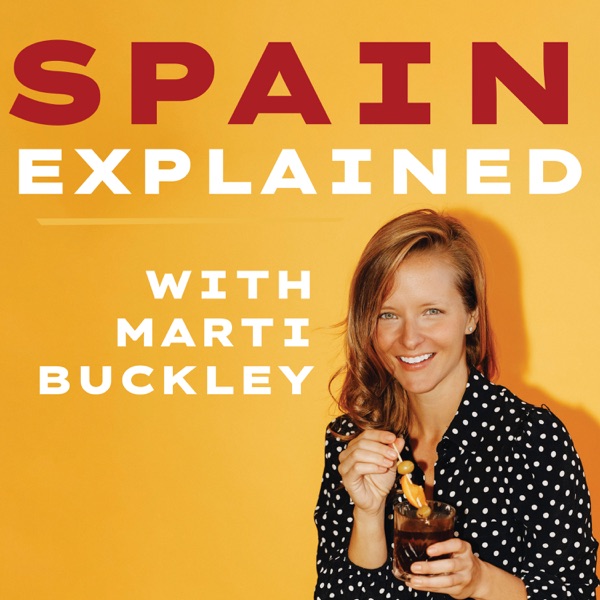
Spain Explained
Spain Explained is the podcast for people who want to understand Spanish culture, Spanish food, and Spanish traditions beyond the guidebook basics. Hosted by award-winning author and cook Marti Buckley, who's lived in Spain since 2010, this show unpacks the concepts, rituals, and quirks that make Spain… Spain.
Whether you're planning a trip to Spain, obsessed with Spanish cuisine, dreaming of moving there, or just curious why lunch can last four hours, this podcast translates the untranslatable. Each episode dives into one single part of Spanish life, from sobremesa to siesta, café con leche to jamón ibérico, and explains what it is and why it matters.
Marti is the author of cookbooks including The Book of Pintxos and Basque Country, writes for Condé Nast Traveler, The Telegraph, and Food & Wine,, and founded the International Society for the Preservation and Enjoyment of Vermouth. She's your insider guide to Spanish culture, Spanish daily life, and Spanish food traditions.
This podcast is about understanding why Spain works the way it does. Perfect for Spain lovers, travelers, expats, and anyone who's wondered why Spaniards eat dinner at 10pm.
New episodes weekly covering Spanish food culture, daily life in Spain, regional traditions, and the quirks of living in Spain.
- Places & Travel chart
- #139
- Episodes
- 42
- Releases
- Weekly
- Typical length
- 21 min
- On air since
- 2026
- Latest episode
- 13 hours ago
Episodes
42 episodes, newest first
-
19 min
What is Horchata? (EP 42)
Show notes
Horchata is one of Spain's most famous non-alcoholic drinks: a cold, milky beverage made from chufa, a small brown tuber that grows underground in the sandy huerta just north of Valencia. Every glass carrying the Chufa de Valencia seal comes from 339 hectares worked by 240 farmers.
In this episode, we go deep (as always), tracing the word back to a Latin barley drink and follows the chufa from spring planting through months of drying in the growers' storage rooms. You'll hear exactly how horchata is made in Alboraya, the town known as its cradle, with soaked tubers, very cold water and no cooking at all. What does it taste like? What do you eat with it? How do you know you're getting the real thing? All your answers, including what makes it different than its Mexican cousin, in this episode.
If you want more about Spain: ∙ Subscribe to Marti's Substack at https://substack.com/@martibuckley ∙ Follow her on Instagram @martibuckley ∙ Visit her blog at travelcookeat.com
-
21 min
What is Todos Los Santos? (EP 41)
Show notes
Every November 1, Spain marks Día de Todos los Santos, the All Saints' Day holiday when families fill the cemeteries to scrub their relatives' markers and leave chrysanthemums, and when pastry shop windows fill with little marzipan bones called huesos de santo. Marti Buckley explains where the feast came from and why November 1 and November 2 are two separate days but in Spain are folded into one. We'll talk (of course) what gets eaten: the huesos, the buñuelos de viento that are said to free a soul from purgatory, the panellets and roasted chestnuts of la Castanyada. And then we head north for the carved pumpkins of Galicia's Samaín and the Basque Gau Beltza, customs that nearly vanished before towns brought them back, plus a few other customs from the rest of Spain.
If you want more about Spain: ∙ Subscribe to Marti's Substack at https://substack.com/@martibuckley ∙ Follow her on Instagram @martibuckley ∙ Visit her blog at https://travelcookeat.com
-
34 min
What is Cava? (EP 40)
Show notes
Cava is Spain's sparkling wine and one of the great bargains in the wine world. It's made the same way as Champagne, with a second fermentation inside the bottle. It's also the most exported wine in Spain: 190 million bottles last year, to more than 130 countries. Marti Buckley explains how the bubbles get into the bottle, why the word cava (which means cellar) replaced the old name xampany, and how a wine invented in Sant Sadurní d'Anoia came to be made as far away as Extremadura. She walks through the three local grapes behind it (macabeo, xarel·lo and parellada), how to read the aging and sweetness on a label, and how cava compares to Champagne and Prosecco. Then the split: why Recaredo and Gramona left the Cava DO to form Corpinnat, why Juvé & Camps is following them, and why a single valley's wine can go by five different names. Plus Marti gets into her 24 hour trip to Alella and what to pour on Nochevieja.
If you want more about Spain: ∙ Subscribe to Marti's Substack at https://substack.com/@martibuckley ∙ Follow her on Instagram @martibuckley ∙ Visit her blog at travelcookeat.com
-
19 min
What is A Propina? (EP 39)
Show notes
La propina is the Spanish tip: a few voluntary coins left on a saucer, on top of a wage the waiter already earns by contract. Marti Buckley explains how much to leave at the bar and at a restaurant table, and why ten percent is the absolute ceiling. The word comes from a Greek toast meaning "I drink before you," and the first propina was the wine left in the cup. The history runs through Madrid in 1933, when waiters won the abolition of the tip, spent months handing coins back to customers, and then went on strike for a real salary. There's also the cash question, which directly affects HOW you should leave the tip: 97 percent of Spaniards usually tip in cash. The episode also goes into the current feeling around the tip: an August 2026 survey, 77 percent said they would eliminate the propina altogether.
If you want more about Spain: ∙ Subscribe to Marti's Substack at https://substack.com/@martibuckley ∙ Follow her on Instagram @martibuckley ∙ Visit her blog at https://travelcookeat.com
-
24 min
What is Valencia? (EP 38)
Show notes
Spain Explained continues its series on all of Spain's autonomous communities with the Comunitat Valenciana (Comunidad Valenciana in Spanish, the Valencian Community in English), the birthplace of paella and Spain's sunny citrus-filled paradise. And it's out just in time for October 9, the Día de la Comunitat Valenciana, and makes a good way to celebrate the day.
Marti Buckley starts with the map: three provinces stacked along 500 kilometers of Mediterranean coast. From there she explains region's history, the Valencian language and where it is spoken, the October 2024 flood, and what the rest of Spain pictures when it pictures Valencia. Then, of course, the food: the sanctioned ingredients of a paella valenciana, horchata with fartons, the mid-morning esmorzaret, and the marzipan Valencians give the people they love every October 9.
If you want more about Spain: ∙ Subscribe to Marti's Substack at https://substack.com/@martibuckley ∙ Follow her on Instagram @martibuckley ∙ Visit her blog at https://travelcookeat.com
-
30 min
What is a Pintxo? (EP 37)
Show notes
A pintxo is a small bite of food, two or three mouthfuls, eaten standing at a bar in the Basque Country with a drink in your hand and someone to talk to. It started a hundred years ago in San Sebastián as something to line the stomach between rounds of wine, a hard-boiled egg or an anchovy on a toothpick, and it grew into miniature haute cuisine, with its own competitions, its own culture and, since 2019, its own institute to defend it.
Marti Buckley, author of The Book of Pintxos, explains how a pintxo differs from a tapa, follows the story from the bulk wine shops of the 1920s to the chalkboard at La Cuchara de San Telmo in 1999 that turned the pintxo into a meal, talks about the different types of pintxos, walks through the etiquette on how to eat pintxos, and explains the entire, delicious tradition.
If you want more about Spain: ∙ Subscribe to Marti's Substack at https://substack.com/@martibuckley ∙ Follow her on Instagram @martibuckley ∙ Visit her blog at https://travelcookeat.com
-
18 min
What is Iberia? (EP 36)
Show notes
Iberia is everywhere in Spain: the airline, the ham, the lynx, the wolf, the peninsula itself. So what is it? Iberia is the piece of land in the far southwest of Europe that Spain sits on. Spain covers most of it, Portugal covers most of the rest, and Andorra, Gibraltar, and a sliver of France take up the remainder. Iberia has never been a country. It's a geographic name, and it's older than Spain, older than Portugal, and older than the Romans.
Greek sailors coined it around 2,600 years ago after a river they called the Iberus, which we know today as the Ebro. In this episode Marti Buckley explains where the name comes from, why the Romans replaced it with Hispania (the word that became España), who the original Iberians were, and why their language can be read aloud but still can't be translated. She also explains why Portugal is Iberian, why the ham and the lynx carry the name, and whether anyone in Spain thinks of themselves as Iberian.
If you want more about Spain: ∙ Subscribe to Marti's Substack at https://substack.com/@martibuckley ∙ Follow her on Instagram @martibuckley ∙ Visit her blog at https://travelcookeat.com
-
22 min
What is Bote? (EP 35)
Show notes
In certain parts of Spain, a group of friends settles up before the night starts. Everyone puts the same amount of cash into one pile, usually ten euros a head. One person holds it and pays at every bar. Eight people can move through six bars over an evening and never once discuss who owes what.
In the Basque Country, that pile is called the bote, and it runs on some very real rules. Marti Buckley explains where the word comes from. She covers how the system runs stop by stop, how not to be the person who wrecks it, what Bilbao does with the coins left at the bottom, which involves a slot in a wall in the Casco Viejo, and the version of bote you'll find in other parts of Spain, like Granada, Galicia, Pamplona and Madrid.
If you want more about Spain: ∙ Subscribe to Marti's Substack at https://substack.com/@martibuckley ∙ Follow her on Instagram @martibuckley ∙ Visit her blog at https://www.travelcookeat.com
-
23 min
What is Catalunya? (EP 34)
Show notes
Spain Explained is taking on all seventeen of Spain's regions, one episode at a time, starting with Catalunya, the region people hear about most and get explained the least. September 11 is the Diada, the national day of Catalunya, so this is the episode to celebrate it with. Everything you wanted to know about Catalunya (Cataluña in Spanish, Catalonia in English): the northeastern corner of Spain: four provinces, around eight million people, a territory a little bigger than Belgium, three official languages, and a fifth of the Spanish economy. Barcelona gets the attention, but only one Catalan in five lives there.
Marti Buckley lays out the map, explains why the national day commemorates a defeat in 1714, and runs the political calendar from the 1979 Statute to the May 2024 elections.. Then the languages, from Catalan's ten million speakers to the few thousand who speak Aranese in the Val d'Aran, the human towers of Valls, the log that children beat at Christmas, and the food: pa amb tomàquet, chicken with prawns, La Boquería, and the Reus vermouth powerhouse behind a Sunday ritual all of Spain now claims.
If you want more about Spain: ∙ Subscribe to Marti's Substack at https://substack.com/@martibuckley ∙ Follow her on Instagram @martibuckley ∙ Visit her blog at https://www.travelcookeat.com
-
18 min
What is Tertulia? (EP 33)
Show notes
A tertulia has no members, no minutes and no closing time, and historically it has been powerful enough to pressure kings to ratify constitutions. The word in its traditional, historical sense means a standing appointment to debate: the same people, at the same café table, at the same hour, on one shared subject, week after week for years. Marti Buckley explains where the term comes from, which runs back to a Roman-era theologian and a row of theater seats, and what separates a tertulia from the French salon and the Italian academy. She covers the Madrid cafés that incubated both the Second Republic and the Spanish avant-garde, the three poets who founded Versos con Faldas in 1951, and how tertulianos became the panelists who set the daily mood of Spanish public life.
If you want more about Spain: ∙ Subscribe to Marti's Substack at https://substack.com/@martibuckley ∙ Follow her on Instagram @martibuckley ∙ Visit her blog at http://travelcookeat.com
-
22 min
What is a Comunidad Autónoma? (EP 32)
Show notes
Spain's constitution, the one the country still runs on, never names a single one of its 17 comunidades autónomas. Not Cataluña, not Andalucía, none of them. These are basically Spain's equivalent of states, and when Spaniards voted on the text in December 1978, today's map did not exist yet. So where did they come from?
In this episode of Spain Explained, Marti Buckley dissects how a country that ran on 49/50 provinces for nearly a century and a half ended up with 17 regional governments that control hospitals, schools, language policy, and in three cases their own police forces. She covers the 1833 province grid the whole system was built from, the fast track that Cataluña, the Basque Country, and Galicia took because they had voted on self-government during the Second Republic, the Andalucían referendum that broke the two-tier model open, and the fiscal arrangement that lets the Basque Country and Navarra collect their own taxes and pay Madrid a negotiated sum. It is the foundation for a year of regional episodes to come.
If you want more about Spain: ∙ Subscribe to Marti's Substack at https://substack.com/@martibuckley ∙ Follow her on Instagram @martibuckley ∙ Visit her blog at https://www.travelcookeat.com
-
24 min
What is Rioja? (EP 31)
Show notes
Sell a bottle of Gran Reserva Rioja before its fifth birthday and the region will fine you. Rioja is a wine denomination in northern Spain, strung along the Ebro across some 65,000 hectares of La Rioja, Basque Álava and a corner of Navarra, overwhelmingly red, overwhelmingly Tempranillo, and built around a legal promise that somebody already did the aging for you. It became Spain's first Denominación de Origen in 1925.
In this episode, Marti Buckley explains how phylloxera in France sent Bordeaux merchants south in the 1860s carrying small barrels and long aging, why traditional Rioja tastes how it does, what crianza, reserva and gran reserva guarantee by law, and how a wave of growers pushing single-vineyard and village wines is rewriting a hundred-year-old system that has only ever measured time in oak.
If you want more about Spain: ∙ Subscribe to Marti's Substack at https://substack.com/@martibuckley ∙ Follow her on Instagram @martibuckley ∙ Visit her blog at https://www.travelcookeat.com
-
20 min
What is Ensaimada? (EP 30)
Show notes
Not every pastry has its own aviation policy. The ensaimada is a coiled Mallorcan spiral, its pork lard dough stretched nearly transparent, baked and buried under powdered sugar, and the Balearic government once calculated that around forty of them fly out on every plane bound for the mainland. The earliest written record sits in a Palma convent ledger from 1642, though both leading theories about who first coiled one point to bakers whose religion prohibited pork, a contradiction that runs through the expulsions and forced conversions of the 1490s. Marti Buckley traces that origin debate, explains the European protection now governing the name, names the three Palma bakeries worth the walk, weighs the filled-versus-plain argument, and lays out how a two-euro breakfast pastry forced Ryanair into a public retreat.
If you want more about Spain: ∙ Subscribe to Marti's Substack at https://substack.com/@martibuckley ∙ Follow her on Instagram @martibuckley ∙ Visit her blog at https://www.travelcookeat.com
-
21 min
What is Fútbol? (EP 29)
Show notes
Spain won the 2026 World Cup while conceding just one goal across the entire tournament, a first for any champion, with a squad that included (for the first time ever) zero Real Madrid players. So let's talk fútbol! Football. Soccer. In Spain, it's big. In this episode, Spain Explained talks about the machinery behind that win: the canteras, literally quarries, where clubs like Barcelona and Athletic train children from age seven, the web of more than 21,000 registered clubs and town-hall leagues that feeds them, and the fútbol sala courts credited with forging Spanish ball control.
Learn about the 100,000 dues-paying members that own Barcelona outright. Or why Athletic Club has fielded only Basque players for over a century without ever being relegated. And how a league with no playoff stays tense until the final matchday. Plus the rituals around the game: four daily print sports newspapers, radio marathons on air since 1954, and la quiniela at the tobacco shop.
If you want more about Spain: ∙ Subscribe to Marti's Substack at https://substack.com/@martibuckley ∙ Follow her on Instagram @martibuckley ∙ Visit her blog at https://www.travelcookeat.com
-
21 min
What is La Tomatina? (EP 28)
Show notes
On the last Wednesday of August, in a small town in Valencia, 20,000 people have a gigantic food fight of somewhere around 150 tonnes of overripe tomatoes. That is La Tomatina, held in Buñol near Valencia and certified by Guinness as the largest annual food fight in the world.
What the ...why do they do this? Listen to this episode to find out everything about this famous fiesta: the soaped pole with a whole ham at the top that comes first, the seven trucks filled with tomatoes, the rocket at eleven and the rocket at noon that stops everyone at once. Host Marti Buckley gets into where the tomatoes come from, how to participate, and where this fascinating Spanish tradition started (hint...it was a long time ago).
If you want more about Spain: ∙ Subscribe to Marti's Substack at https://substack.com/@martibuckley ∙ Follow her on Instagram @martibuckley ∙ Visit her blog at https://www.travelcookeat.com
-
25 min
What is Pulpo? (EP 27)
Show notes
The town most associated with octopus in all of Spain sits 90 kilometers from the nearest coastline, with no port and no boats, yet every August it serves around 33 tons of it in a single day. That inland paradox is the key to the whole story. In this episode, Marti Buckley traces how pulpo became the signature dish of Galicia, and why it happened inland instead of on the coast: through twelfth-century monks who collected octopus as tribute, dried stiff for the journey over the hills; through the pulpeiras of Arcos who turned boiling it into a prestige craft passed mother to daughter; and through the Leonese mule drivers who carried the olive oil and pimentón north. She sorts pulpo á feira from pulpo a la gallega, explains why most Spanish octopus now arrives through foreign ports, and lays out how champion pulpeiros cook it, from the freezer to the wooden plate.
If you want more about Spain: ∙ Subscribe to Marti's Substack at https://substack.com/@martibuckley ∙ Follow her on Instagram @martibuckley ∙ Visit her blog at travelcookeat.com
-
16 min
What is a Caña? (EP 26)
Show notes
Drinking beer is one of Spain's national pastimes. A caña, the smallish draft beer in Spain, is its protagonist…but beware of regional differences. In Madrid, a caña is 200 milliliters of draft beer. Order one in Bilbao and the glass holds nearly twice that. Same word, same tap, different drink. In this episode, Marti Buckley traces the caña from its name, borrowed from the metal pipe that carried pressurized beer up from nineteenth century bar cellars, to the two contradictory pouring styles that split Spanish bartenders into camps who each insist the other is wrong. Along the way: the job the foam is doing up there, the pre-pour water ritual, the Brussels lace test that proves a pour was done well, a regional dictionary that runs from zurito to cañón to the Madrid liter with a surprising name, and the numbers behind the glass, including the 31 céntimos every caña sends to the public coffers. Everything you need to know about the caña!
If you want more about Spain: ∙ Subscribe to Marti's Substack at https://substack.com/@martibuckley ∙ Follow her on Instagram @martibuckley ∙ Visit her blog at https://www.travelcookeat.com
-
24 min
What is Menú del Día? (EP 25)
Show notes
Four million people sit down across Spain every weekday for the menú del día. A fixed price, a first course, a second, bread, wine, dessert. The menú del día is such a Spanish institution, it feels like it must have always existed. In this episode, find the fascinating story of how it actually came out of a 1964 government decree written for foreign tourists, under a dictatorship trying to sell "Spain is different" to the rest of Europe. A rule built for visitors ended up shaping the daily lunch of Spanish workers instead. This episode traces that shift, what a menú costs today by region, and the quality pressures facing this beloved weekday meal now.
If you want more about Spain: ∙ Subscribe to Marti's Substack at https://substack.com/@martibuckley ∙ Follow her on Instagram @martibuckley ∙ Visit her blog at https://www.travelcookeat.com
-
26 min
What is an Asador? (EP 24)
Show notes
A restaurant in Segovia has spent nearly a century proving the tenderness of its roast suckling pig by carving it with the edge of a plate instead of a knife. That gesture made the dish famous, and it is just one piece of a much older story: the Spanish asador, the institution that turned roasting meat and fish over fire into one of the country's defining culinary traditions.
So what is an asador? What are the different types? Which ones are the best? This episode traces that history from the medieval migrations that built Castilla's roasting culture, through the Argentine influence behind Basque and Galician grilling, into the very different paths each region took with fire. It closes with the restaurants keeping the tradition alive today, from a 124-year-old asador still in operation to one of the most influential grill kitchens in the world.
If you want more Spain content: ∙ Subscribe to Marti's Substack at https://substack.com/@martibuckley ∙ Follow her on Instagram @martibuckley ∙ Visit her blog at https://www.travelcookeat.com
-
15 min
What is Vale? (EP 23)
Show notes
This episode is devoted to a single, four-letter word that you'll hear a LOT in Spain: vale. What does it mean, when is it used, and why is the answer … just about all the time for anything? This episode traces the full arc of vale, from its Latin roots meaning "be well," through its centuries as a formal Spanish farewell, and into its modern role as the Spanish equivalent of "okay."
Along the way: the mid-20th century shift in meaning, the furious linguist who called out its "coarsened, repetitive hammering," and the moment the Real Academia Española made the deliberate choice to formalize vale over the English import. Plus the geographic divide between Spain and Latin America, the mechanics of ¿vale?, ya vale, and the three-word phone goodbye that compresses an entire conversation into six syllables.
If you want more about Spain: Subscribe to the Substack at https://substack.com/@martibuckley Follow on Instagram at https://www.instagram.com/martibuckley Visit the blog at https://travelcookeat.com
On these lists
Spain Explained is one of the shows picked out on this list



More in Food
Placed highest on Apple Podcasts' Food chart right now