Podcast
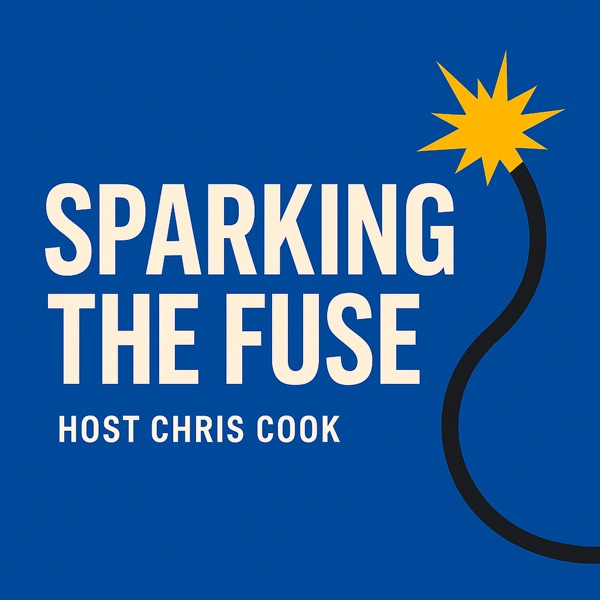
Sparking The Fuse
Real conversations with the leaders sparking growth in their businesses. Host Chris Cook explores the wins, failures, and breakthroughs that fuel progress. If you’re building, scaling, or leading—this podcast will light your next fuse.
- Episodes
- 27
- Releases
- Weekly
- Typical length
- 40 min
- On air since
- 2025
- Latest episode
- 5 days ago
Episodes
27 episodes, newest first
-
41 min
Tony Stemen: Moving Upward, Not Uphill
Show notes
Tony Stemen of Talent Growth Partners shares how to grow a people-first business with AI.
Learn how AI can free up time for relationships instead of replacing them.
Talent acquisition and leadership lessons from nearly 20 years in recruiting.
Chris Cook interviews Tony Stemen of Talent Growth Partners, who draws on nearly 20 years in talent acquisition to explain how the firm grew from executive recruiting into broader people consulting. They discuss using AI to create efficiencies while protecting human relationships, adapting hiring practices to candidates’ real needs, and what it takes to grow without losing a people-first culture.
Key Takeaways
- Use AI to free up time for relationships, not to automate human connection
- AI tools built on company data save recruiters two to five hours a week
- There is no such thing as a perfect candidate
- Separate non-negotiable skills from wish-list criteria
- Repeated vacancies can point to onboarding or development gaps
- Leaders must examine their own capabilities and be willing to evolve
Chapters
00:00 Meet Tony Stemen and Talent Growth Partners
01:25 From Christian education degree to recruiting
03:14 How resume mining sparked a talent-sourcing career
06:14 Turning sourcing expertise into a 15-person team
09:04 The founding team’s complementary strengths
11:08 Why the firm expanded beyond executive search
14:04 Helping clients address the real problem
16:01 AI efficiencies without automating human connection
18:16 The ambition to triple the business in five years
20:43 AI change and leadership humility as growth challenges
24:11 Protecting a people-first culture as the firm scales
26:39 Hiring for the whole person, not just the resume
29:19 Why there is no perfect candidate
32:30 Adaptability, critical thinking, and human connection
37:10 Why in-person connection still matters
40:26 Where to connect with Tony and Talent Growth Partners
Keywords: Tony Stemen, Talent Growth Partners, talent acquisition, executive recruiting, leadership development, people operations, AI in recruiting, business growth, human connection, hiring, Sparking the Fuse
🔗 Connect With Chris
LinkedIn: https://www.linkedin.com/in/scalewithchris/
Work With Five Fuse: https://www.fivefuse.com/
🔗 Connect With Today’s Guest
LinkedIn: https://www.linkedin.com/in/tonystemen/
Website: https://www.talentgrowthpartners.com/
🎧 Listen on Other Platforms
Spotify: https://open.spotify.com/show/5rgYjB8RxYKfgvOf1PrNFv?si=0dd85415f6174756
Apple Podcasts: https://podcasts.apple.com/us/podcast/sparking-the-fuse/id1857737431
📸 Socials
Five Fuse LinkedIn: https://www.linkedin.com/company/five-fuse/
-
37 min
Simon Zryd: The Exit-First Mindset That Changes How You Build a Business
Show notes
Simon Zryd, founder of Denver Business Coach, shows how to build a business you can actually sell.
Learn the growth plateaus, leadership skills, and enterprise value moves that prepare you for exit.
A practical conversation on scaling, strategic planning, and exit-first thinking for small business owners.
In this episode of Sparking the Fuse, Chris sits down with Simon Zryd, founder of Denver Business Coach. Simon shares his path from Switzerland to entrepreneurship and what he has learned about building a business that lasts. They cover the stages of growth, the capacity plateaus that stall owners, how to build a leadership team, and why enterprise value is the real measure of impact. Simon also explains how to adapt your business model for expansion and prepare for exit by building transferable assets.
Key Takeaways
- Start with the end in mind to build a saleable business
- Humble beginnings can lead to big growth with the right strategy
- Scaling requires developing leadership and management skills
- Strategic planning is often overlooked in small businesses
- Building a community within your advisory network enhances value
Chapters
00:00 Introduction to Simon Zryd and Denver Business Coach
01:56 Simon’s journey from Switzerland to entrepreneurship
04:02 Evolution of Denver Business Coach and its vision
06:01 Key lessons on growing a successful business
09:51 Common growth plateaus and how to overcome them
11:56 Building leadership teams for scale
16:04 Measuring impact through enterprise value
20:08 Growth journey of Denver Business Coach
24:02 Adapting business models for expansion
28:02 Preparing for exit and building transferable assets
31:47 Future plans and exciting opportunities
35:58 Advice for entrepreneurs and continuous learning
Keywords: business growth, entrepreneurship, business scaling, exit strategy, enterprise value, leadership, business coaching, strategic planning, business valuation, Simon Zryd, Denver Business Coach, Sparking the Fuse
🔗 Connect With Chris
LinkedIn: https://www.linkedin.com/in/scalewithchris/
Work With Five Fuse: https://www.fivefuse.com/
🔗 Connect With Today’s Guest
LinkedIn: https://www.linkedin.com/in/simonzryd/
Website: https://denverbusinesscoach.com/
🎧 Listen on Other Platforms
Spotify: https://open.spotify.com/show/5rgYjB8RxYKfgvOf1PrNFv?si=0dd85415f6174756
Apple Podcasts: https://podcasts.apple.com/us/podcast/sparking-the-fuse/id1857737431
📸 Socials
Five Fuse LinkedIn: https://www.linkedin.com/company/five-fuse/
-
43 min
Regan Bach: How Better Teams Turn Conflict Into High Performance
Show notes
Regan Bach went from whitewater kayaking to executive coaching. Here is how better teams turn conflict into high performance.
Learn why trust, healthy disagreement, and following your instincts define great leaders.
Hear Regan Bach of Better Faster Further on culture, coaching, and systemic change.
Regan Bach shares his path from whitewater kayaking to executive coaching and entrepreneurship. We talk about how athletic principles carry into corporate leadership, why trust and healthy conflict drive high-performing teams, and how repetition builds confidence in executive roles. Regan also covers systemic change, growing a coaching firm through reputation, and where Better Faster Further is headed.
Key Takeaways
- Trust your instincts as a leader and make decisions confidently
- Healthy conflict is essential for high-performing teams, so avoid toxic or passive conflict
- Repetition and experience build confidence in executive roles
- Effective coaching combines academic frameworks with real-world experience
- Organizations thrive when leaders create trust and accountability
Chapters
00:00 Introduction to Regan Bach and his background
01:05 From whitewater kayaking to executive coaching
02:20 Lessons learned from action sports and outdoor adventures
04:32 The role of coaching in developing raw talent
08:18 How coaching helps break patterns and improve performance
09:03 The founding of Better Faster Further
11:05 Systemic change and scaling organizations
14:06 Overcoming imposter syndrome in executive roles
16:09 The importance of experience and real-world learning
18:50 Growth through word of mouth and reputation
21:50 What makes organizations high performing
23:38 Healthy conflict and team dynamics
26:04 Leadership style and organizational culture
28:43 Adapting to different organizational stages
33:48 The science and art of organizational change
36:02 Mental models for understanding organizations
38:37 Future vision for Better Faster Further
41:49 Integrating wellness and performance in leadership
43:07 Advice for entrepreneurs and leaders
45:32 Connecting with Regan Bach and next steps
Keywords
leadership, high performance, executive coaching, organizational culture, conflict resolution, team trust, entrepreneurship, systemic change, coaching
🔗 Connect With Chris
LinkedIn: https://www.linkedin.com/in/scalewithchris/
Work With Five Fuse: https://www.fivefuse.com/
🔗 Connect With Today's Guest
LinkedIn: https://www.linkedin.com/in/reganbach
Website: https://betterfasterfurther.com/
🎧 Listen on Other Platforms
Spotify: https://open.spotify.com/show/5rgYjB8RxYKfgvOf1PrNFv?si=0dd85415f6174756
Apple Podcasts: https://podcasts.apple.com/us/podcast/sparking-the-fuse/id1857737431
📸 Socials
Five Fuse LinkedIn: https://www.linkedin.com/company/five-fuse/
-
38 min
Daniel Duty: Stop Treating Negotiation Like a Battle
Show notes
Daniel Duty, CEO of Conlego, shows why negotiation is problem-solving, not a battle.
Learn how motivations, interests, and expectations shape better business deals and partnerships.
Plus how Portager AI helps retailers organize and analyze vendor proposals.
EPISODE SUMMARY
Daniel Duty takes us from Capitol Hill to corporate law, then to building negotiation teams at General Mills and Target. Now, as CEO of Conlego, he helps businesses negotiate smarter. We talk about the Michael Jordan Wheaties deal, common misconceptions about negotiation, cultural differences in negotiating styles, and why long-term partnerships beat win-lose tactics. Daniel also introduces Portager, an AI platform that helps retailers organize and compare vendor proposals, and shares his vision for negotiation technology across the retail process.
KEY TAKEAWAYS
- Negotiation is more about problem-solving than battle
- Understanding motivations and interests leads to better deals
- Setting the right expectations shapes negotiation outcomes
- Deep industry experience combined with negotiation skills is unique
- Portager AI helps retailers organize and analyze proposals
CHAPTERS
00:00 Introduction and guest background
01:03 Transition from government to corporate law and negotiation
02:36 Michael Jordan Wheaties deal and negotiation insights
04:00 Building a negotiation team at General Mills and Target
05:20 Creating value through negotiation and partnership
06:55 Developing negotiation skills and mental models
10:57 Common misconceptions about negotiation
12:20 Problem-solving approach versus win-lose tactics
14:36 Cultural implications in negotiation styles
18:06 Growth and future opportunities for Conlego
26:15 Introduction to Portager AI platform
28:45 Using Portager for retail vendor negotiations
32:18 Expanding into new retail categories and brands
34:29 Future vision for Conlego and negotiation technology
36:26 Integrating negotiation tools across the retail process
38:36 Closing thoughts and next steps for listeners
KEYWORDS
negotiation, business deals, retail partnerships, negotiation strategies, Conlego, Portager, negotiation training, retail ecosystem, AI in negotiation
🔗 Connect With Chris
LinkedIn: https://www.linkedin.com/in/scalewithchris/
Work With Five Fuse: https://www.fivefuse.com/
🔗 Connect With Today's Guest
LinkedIn: https://www.linkedin.com/in/danielduty/
Website: https://conlego.com/
🎧 Listen on Other Platforms
Spotify: https://open.spotify.com/show/5rgYjB8RxYKfgvOf1PrNFv?si=0dd85415f6174756
Apple Podcasts: https://podcasts.apple.com/us/podcast/sparking-the-fuse/id1857737431
📸 Socials
Five Fuse LinkedIn: https://www.linkedin.com/company/five-fuse/
-
50 min
Kash Rocheleau: From Corporate CEO to Entrepreneur
Show notes
Kash Rocheleau left the corporate CEO seat to build something of her own — and learned that growth creates as many problems as it solves.
In this episode of Sparking the Fuse, Chris sits down with Kash Rocheleau, Owner of Outgrow Accounting & Finance.
They dig into networking, understanding your financials, and what a fractional CFO actually does for a small business.
EPISODE SUMMARY
Kash Rocheleau shares her journey from corporate CEO to entrepreneur, and what it took to build Outgrow Accounting & Finance from the ground up. She and Chris talk through why relationship-building drives business development, how financials tell a story that should shape your decisions, and how she thinks about managing internal growth challenges while balancing business and personal life. They also get into the evolving role of fractional CFOs and why small businesses should rethink financial leadership.
KEY TAKEAWAYS
- Relationship-building and networking are the foundation of sustainable business development
- Your financials tell a story — learning to read and communicate that story drives better decisions
- Growth creates internal challenges that need to be managed deliberately, not reactively
- A fractional CFO gives small businesses financial leadership without the full-time cost
- East Coast and West Coast business cultures differ in ways that shape how you build relationships
CHAPTERS
00:00 The Journey to Entrepreneurship
03:26 Building Outgrow: The Early Days
06:38 Networking and Relationship Building
11:18 Understanding Financials: The Language of Business
19:56 The Structure of Outgrow: Team and Clients
25:22 Cultural Differences: East Coast vs. West Coast
32:19 The Role of a Fractional CFO
35:09 Rethinking Financial Leadership for Small Businesses
38:13 Navigating Internal Growth Challenges
43:08 Balancing Business Growth and Personal Life
44:56 Vision for the Future of Outgrow
47:25 Connecting and Building Relationships in Business
KEYWORDS
entrepreneurship, finance, networking, growth strategies, fractional CFO, business development, leadership, small business, Outgrow Accounting
🔗 Connect With Chris
LinkedIn: https://www.linkedin.com/in/scalewithchris/
Work With Five Fuse: https://www.fivefuse.com/
🔗 Connect With Today's Guest
LinkedIn: https://www.linkedin.com/in/kash-rocheleau-a0678528/
Website: https://outgrowaccounting.com/
🎧 Listen on Other Platforms
Spotify: https://open.spotify.com/show/5rgYjB8RxYKfgvOf1PrNFv?si=0dd85415f6174756
Apple Podcasts: https://podcasts.apple.com/us/podcast/sparking-the-fuse/id1857737431
📸 Socials
Five Fuse LinkedIn: https://www.linkedin.com/company/five-fuse/
-
50 min
Dylan Hendrickson: Why Cash Flow, Not Profit, Is the Secret to Business Growth and Stability
Show notes
Dylan Hendrickson built Staxx into a 30-person, nearly $4M fractional CFO firm without ever becoming a CPA.
In this episode, he explains why most business owners are running their company off the wrong financial statement entirely.
From college football to private equity playbooks, this is how cash — not profit — becomes the real decision-making tool.
Dylan Hendrickson started his accounting business while playing college football and finishing his master's degree, eventually merging it with his business partner's firm to form Staxx. He shares why he still recommends an accounting degree, how Staxx's ideal client profile evolved, and why most business owners are confused about their finances because they're managing cash off a P&L instead of a 13-week cash flow forecast.
- Dylan built his accounting business while playing college football, doing one small thing daily to move it forward.
- Staxx formed when Dylan merged his solo practice with his business partner's firm after meeting at an industry event.
- Hiring ahead of need and stepping out of service delivery early made Staxx scalable, not founder-dependent.
- A P&L can't manage cash; a 13-week cash flow forecast can, and that's the real gap for most business owners.
- Staxx's ideal client typically does $1M-$30M in revenue, needing more than a bookkeeper but not yet an in-house team.
- A clear sign it's time for outside help: making decisions purely off the bank balance and gut feeling.
00:00 - Intro
00:37 - College football and building a business at once
03:14 - How Staxx came together
09:17 - Building for the long term over quick wins
11:24 - Why Dylan still recommends accounting
17:49 - What Staxx looks like today
20:43 - How the offer has evolved
22:28 - The ideal client profile
23:43 - CFO-ready vs. controller-ready
28:23 - Why cash flow forecasting beats the P&L
32:00 - In-house accountants vs. fractional CFOs
35:23 - How long engagements last
37:45 - The hardest part of scaling right now
43:22 - Messaging, pricing, and positioning
46:32 - Balancing marketing, sales, and ops
49:18 - Where to find Dylan and Staxx
fractional CFO, cash flow forecasting, Staxx, Dylan Hendrickson, small business CFO, cash flow vs profit, scaling a service business, financial advisory, business exit planning, entrepreneurship
🔗 Connect With Chris
LinkedIn: https://www.linkedin.com/in/scalewithchris/
Work With Five Fuse: https://www.fivefuse.com/
🔗 Connect With Today's Guest
LinkedIn: https://www.linkedin.com/in/dylan-hendrickson-113419153/
Website: https://www.startstaxx.pro/
🎧 Listen on Other Platforms
Spotify: https://open.spotify.com/show/5rgYjB8RxYKfgvOf1PrNFv?si=0dd85415f6174756
Apple Podcasts: https://podcasts.apple.com/us/podcast/sparking-the-fuse/id1857737431
📸 Socials
Five Fuse LinkedIn: https://www.linkedin.com/company/five-fuse/
-
28 min
Olivia Tillema: The Surprising Power of Systems Thinking in Small Business Growth
Show notes
Olivia Tillema helped automate a workflow that saved 91,000 hours in a single year.
From a remote support gig to rebuilding operations for Bungie, she now runs her own ops agency, t2i collective.
This episode breaks down the systems thinking that helps small businesses scale without burning out the team.
Olivia Tillema went from a remote support role to rebuilding operations inside Bungie, one of the gaming industry's biggest studios, before launching her own boutique agency, T2i Collective. In this episode, she shares her systems-based approach to operations, how tools like Asana can transform team workflows, and the surprising amount of time (and money) the right systems can save a growing business.
Key Takeaways:
- Systems thinking is crucial for operational success
- Automation can save thousands of hours annually
- Understanding team responsibilities improves project flow
Chapters:
00:00 From Layoff to Opportunity: Olivia's Journey
02:03 The Evolution of Remote Work and Operations
05:08 Navigating Career Transitions and Freelancing
08:15 Landing the Bungie Project: A Game Changer
11:14 Current State of T2I Collective: Growth and Challenges
14:01 Understanding Operations: The RACI Framework
17:18 Industry Insights: Communication and Workflow Improvements
23:14 Transforming Efficiency with Automation
24:38 Setting Growth Goals and Expanding Reach
26:26 Building Connections and Networking
27:27 Passion for Work and Personal Fulfillment
Keywords: operations, systems, Asana, remote work, startup growth, process improvement, freelancing, Bungie, video game industry, business scaling
🔗 Connect With Chris
LinkedIn: https://www.linkedin.com/in/scalewithchris/
Work With Five Fuse: https://www.fivefuse.com/
🔗 Connect With Today's Guest
LinkedIn: https://www.linkedin.com/in/olivia-tillema-329599138/
Website: https://t2icollective.com/
🎧 Listen on Other Platforms
Spotify: https://open.spotify.com/show/5rgYjB8RxYKfgvOf1PrNFv?si=0dd85415f6174756
Apple Podcasts: https://podcasts.apple.com/us/podcast/sparking-the-fuse/id1857737431
📸 Socials
Five Fuse LinkedIn: https://www.linkedin.com/company/five-fuse/
-
35 min
Stephanie Groschup: Navigating Wealth with Purpose and Values
Show notes
A two-decade wealth management veteran on why money is a tool, not a destination. Stephanie Groschup shares how aligning investments with values changes everything. Listening first, the great wealth transfer, and building a boutique firm that stays high-touch. Stephanie Groschup, Founder and President of ArchHaven & Co. Wealth Partners, joins Chris to talk about what it means to manage wealth with purpose. Drawing on a career that started in oil and gas and spanned major market events at Merrill Lynch, Stephanie unpacks why listening is the foundation of good advice, how client expectations have shifted, and what the $70-90 trillion great wealth transfer means for families and advisors. It's a conversation about values, legacy, and seeing money as a tool for the life you actually want to build. KEY TAKEAWAYS - Listening is foundational - not just to what clients say, but to what they don't say - Clients who align their investments with their values stay engaged and avoid rash decisions - The great wealth transfer (an estimated $70-90 trillion) will reshape families, markets, and how advisors work - Roughly 70% of wealth is lost by the second generation and 90% by the third, often because families never talk about money - Including the next generation early - in both financial and emotional conversations - protects a family's legacy - A boutique firm can't be everything to everybody; clarity comes from knowing exactly who you serve - Technology matters, but the human side of wealth is what most people are missing - Your happiness, worth, and value aren't defined by how many zeros are in the account CHAPTERS 00:04 - Meet Stephanie Groschup 00:30 - What people misunderstand about big firms 01:17 - Navigating 9/11, 2008, and market volatility 03:08 - From oil and gas to wealth management 04:03 - Becoming a founder 04:53 - How ArchHaven serves clients today 05:44 - Why listening comes first 09:13 - Why people hesitate to talk to an advisor 17:02 - Addressing the great wealth transfer 22:07 - Growing a boutique firm while staying high-touch 26:46 - Where the firm feels tension 33:01 - A practical first step toward clarity 34:00 - Where to connect with Stephanie KEYWORDS wealth management, financial advisor, great wealth transfer, values-based investing, legacy planning, estate planning, behavioral finance, boutique advisory firm, women in finance, retirement planning, Merrill Lynch, generational wealth 🔗 Connect With Chris LinkedIn: https://www.linkedin.com/in/scalewithchris/ Work With Five Fuse: https://www.fivefuse.com/ 🔗 Connect With Today's Guest LinkedIn: https://www.linkedin.com/in/stephanie-groschup/ Website: https://www.archhavenwealth.com/ 🎧 Listen on Other Platforms Spotify: https://open.spotify.com/show/5rgYjB8RxYKfgvOf1PrNFv?si=0dd85415f6174756 Apple Podcasts: https://podcasts.apple.com/us/podcast/sparking-the-fuse/id1857737431 📸 Socials Five Fuse LinkedIn: https://www.linkedin.com/company/five-fuse/
-
37 min
Saim Abbasi: Speed and Systemization for Business Success
Show notes
Saim Abbasi built multiple businesses before most people finish school.
His edge? Speed and systems — executed before doubt sets in.
Here's what that looks like in practice.
Saim Abbasi is the founder of SA Digital Media Group, a multi-venture digital media and incubation company. In this episode, he breaks down how he moved from university startups during COVID to acquiring and scaling businesses across industries — and what he learned about execution, systems, and the evolving role of generalists in an AI-driven world.
Key Takeaways:
- Speed to market is a competitive advantage — move ideas forward within 48 hours
- Build systems early so the business runs without you
- Make yourself unnecessary by day 90 — that's the goal
- Generalists have a growing edge in the AI era
- Exits and acquisitions are tools, not endpoints
- Identify bottlenecks in planning before they become bottlenecks in execution
00:00 Introduction to Saim Abbasi's Journey
00:40 Navigating University During COVID-19
04:07 From Ideation to Execution: Launching a Business
05:54 The Acquisition Experience
08:07 Building Multiple Ventures Simultaneously
09:46 Influences from Family and Early Lessons
13:24 Overview of SA Digital Media Group
17:07 The Intersection of Technology and Business
19:06 Ideal Clients and Mentorship
21:19 The Need for Generalists in Today's Market
27:12 Becoming Unnecessary: Systems Thinking in Business
30:56 Staying Focused Amidst Multiple Projects
34:08 Identifying Bottlenecks in Planning
36:13 Building Buffers for Success
36:56 Collaborative Opportunities and Networking
Keywords: Entrepreneurship, Speed to Market, Systems Building, AI, Generalists, Business Growth, Startup, Mergers, Marketing, Leadership
🔗 Connect With Chris
LinkedIn: https://www.linkedin.com/in/scalewithchris/
Work With Five Fuse: https://www.fivefuse.com/
🔗 Connect With Today's Guest
LinkedIn: https://www.linkedin.com/in/saimabbasi/
Website: https://www.samedia.io/
🎧 Listen on Other Platforms
Spotify: https://open.spotify.com/show/5rgYjB8RxYKfgvOf1PrNFv?si=0dd85415f6174756
Apple Podcasts: https://podcasts.apple.com/us/podcast/sparking-the-fuse/id1857737431
📸 Socials
Five Fuse LinkedIn: https://www.linkedin.com/company/five-fuse/
-
29 min
Brennan Decima: Helping Executives De-Risk Career Moves and Exit Smarter
Show notes
Most business owners wait too long to plan their exit — and it costs them.
Brennan Decima of Decima Wealth Consulting breaks down what smart retirement planning actually looks like.
If you're a business owner, this one's for you.
Brennan Decima built his practice around the clients most advisors underserve — business owners navigating the emotional and financial complexity of stepping away. In this episode, he and Chris dig into the blind spots that derail exit strategies, why identity and social connection matter as much as the numbers, and the behavioral mistakes investors make when markets get rough.
Key Takeaways:
- Business owner retirement involves more stakeholders and emotional weight than most planning accounts for
- The human side of financial planning gets sacrificed when firms chase efficiency
- Social connections are critical to mental health post-retirement
- Start planning your exit at least five years out
- Overconfidence leads investors to carry more risk than they need
- Separate your identity from your business before you exit — not after
Chapters:
00:00 Navigating Business Owner Retirement Planning
03:01 The Shift to Independent Wealth Management
05:51 Identifying Retirement Blind Spots
08:41 Planning for Business Exit Strategies
11:43 Investing Behavior and Risk Management
14:44 The Challenges of Building a Personal Brand
17:30 Growth Strategies for Financial Advisors
Keywords: retirement planning, business owners, wealth management, financial independence, exit strategies, investing behavior, risk management, personal branding, growth strategies, financial advice
🔗 Connect With Chris
LinkedIn: https://www.linkedin.com/in/scalewithchris/
Work With Five Fuse: https://www.fivefuse.com/
🔗 Connect With Today's Guest
LinkedIn: https://www.linkedin.com/in/brennan-decima/
Website: https://decimawealth.com/
🎧 Listen on Other Platforms
Spotify: https://open.spotify.com/show/5rgYjB8RxYKfgvOf1PrNFv?si=0dd85415f6174756
Apple Podcasts: https://podcasts.apple.com/us/podcast/sparking-the-fuse/id1857737431
📸 Socials
Five Fuse LinkedIn: https://www.linkedin.com/company/five-fuse/
-
56 min
Natalia Zacharin: Why Successful Entrepreneurs Are Constantly Watching the Horizon
Show notes
Natalia Zacharin built a $3.6M accounting firm starting from financial hardship and survival mode.
She breaks down the mindset shifts, hiring moves, and tech bets that got her there.
A real conversation about what it takes to grow a business through adversity.
EPISODE SUMMARY
Natalia Zacharin's story doesn't start with a clever idea or a lucky break. It starts with survival. In this episode, she walks Chris through how she built Zacharin Consulting into a $3.6M firm — the pivot she made during COVID, the hiring mistakes that taught her how to build a team, and the mindset work that kept her moving when everything around her was shifting. If you've ever felt like the next move is the one that matters most, this one will hit.
KEY TAKEAWAYS
- COVID wasn't a setback for Natalia — it was the moment she leaned in and built
- Hiring the right people is the biggest lever in scaling a service business
- Most owners have financial blind spots they don't see until it's too late
- Entrepreneurship isn't for everyone, and being honest about that is a strength
- Delegation is the bottleneck most owners refuse to admit they have
- The best operators are always watching the horizon
CHAPTERS
00:00 From Struggles to Success: Natalia's Journey
02:56 Navigating Challenges: The Impact of COVID-19
05:48 Building a Business: The Evolution of Services
08:56 Hiring the Right People: Lessons Learned
11:53 The Role of a Business Owner: Growth and Mindset
14:40 Financial Blind Spots: What Business Owners Miss
17:31 The Importance of Bookkeeping and CFO Services
20:36 The Reality of Entrepreneurship: Not for Everyone
38:12 Understanding Personal Strengths and Team Dynamics
42:05 The Power of Mindset and Personal Growth
42:57 The Importance of Diverse Perspectives in Learning
46:29 Navigating the Future of Business and Technology
50:24 Scaling Challenges and Delegation in Business
53:47 Advice for Overcoming Adversity and Embracing Change
KEYWORDS
entrepreneurship, business growth, accounting firm, fractional CFO, leadership, mindset, hiring, COVID-19 pivot, small business, bookkeeping, delegation, scaling
🔗 Connect With Chris
LinkedIn: https://www.linkedin.com/in/scalewithchris/
Work With Five Fuse: https://www.fivefuse.com/
🔗 Connect With Today's Guest
Natalia Zacharin — Founder & CEO, Zacharin Consulting
LinkedIn: https://www.linkedin.com/in/growyourbottomline/
Website: https://zacharinconsulting.com
🎧 Listen on Other Platforms
Spotify: https://open.spotify.com/show/5rgYjB8RxYKfgvOf1PrNFv?si=0dd85415f6174756
Apple Podcasts: https://podcasts.apple.com/us/podcast/sparking-the-fuse/id1857737431
📸 Socials
Five Fuse LinkedIn: https://www.linkedin.com/company/five-fuse/
-
46 min
Michelle Scribner: From Bookkeeping to Advisory Success
Show notes
From Bookkeeping to Advisory Success: How Michelle Scribner scaled Sum of All Numbers by leaning into technology, client fit, and a culture of continuous learning.
In this episode, Michelle shares the real story behind moving from traditional bookkeeping into strategic advisory — and what it takes to build a firm that actually helps business owners see their numbers clearly.
We dig into AI, hiring, scaling responsibly, and why knowing your unique value matters more than chasing every client.
📌 Episode Summary Michelle Scribner, CEO of Sum of All Numbers, sits down to talk through her journey from bookkeeper to strategic advisor. She breaks down how technology and AI are reshaping the work, why client fit matters more than growth for growth's sake, and how a strong team culture built on continuous learning has shaped the firm. Michelle also gets candid about the operational challenges of scaling, the resilience it takes to keep going, and what's next for Sum of All Numbers.
🎯 Key Takeaways
• Your numbers show you where you are — clarity in the books is the foundation for every real business decision
• Client fit beats client count — the wrong clients slow growth more than no clients at all
• A fractional CFO role is less about reporting and more about translating numbers into decisions
• AI and automation are changing bookkeeping fast, but the advisory layer is where the value lives
• Continuous learning has to be a core value, not a poster on the wall
• Scaling responsibly means knowing your bottlenecks before they break you
• Identify what makes your business truly unique — that's the thing worth doubling down on
• Resilience in entrepreneurship isn't a personality trait, it's a practice⏱️ Chapters 00:00 The Evolution of Sum of All Numbers 02:53 Understanding the Numbers: A Business Owner's Perspective 05:58 Client Fit vs. Growth: Finding the Right Balance 09:02 The Role of a Fractional CFO 11:54 Innovation and Continuous Improvement in Business 15:02 Navigating Operational Challenges and Scaling Responsibly 18:09 Resilience in Entrepreneurship: Lessons Learned 20:49 Current Growth Trajectory and Future Plans 37:07 Identifying Bottlenecks in Business Operations 41:38 Understanding Unique Value Propositions 46:06 Navigating Personal and Business Challenges
🔍 Keywords business growth, advisory services, bookkeeping, AI, entrepreneurship, client fit, scaling, financial clarity, team culture, innovation, fractional CFO, small business, automation
🔗 Connect With Chris LinkedIn: https://www.linkedin.com/in/scalewithchris/ Work With Five Fuse: https://www.fivefuse.com/
🔗 Connect With Today's Guest LinkedIn: https://www.linkedin.com/in/michellescribner Website: https://sumofallnumbers.com
🎧 Listen on Other Platforms Spotify: https://open.spotify.com/show/5rgYjB8RxYKfgvOf1PrNFv?si=0dd85415f6174756 Apple Podcasts: https://podcasts.apple.com/us/podcast/sparking-the-fuse/id1857737431
📸 Socials Five Fuse LinkedIn: https://www.linkedin.com/company/five-fuse/
-
46 min
Tim Danser: The Biggest Financial Mistakes Founders Make After Raising Capital
Show notes
Tim Danser, Founder & CEO of Finity, explains the biggest financial mistakes startups make after raising capital.
Learn how founders can manage runway, scale responsibly, and prepare for investor scrutiny.
A practical conversation on startup finance, fractional CFO strategy, and finance automation.Episode Summary
In this episode, Chris sits down with Tim Danser, Founder & CEO of Finity, to discuss the financial realities startups face after raising capital. Tim shares how founders can move from reactive financial management to investor-ready operations through better forecasting, financial planning, and scalable systems.
The conversation covers common post-fundraising mistakes, the importance of understanding runway, how venture capital impacts decision-making, and where finance automation is headed next. Tim also explains why founders often wait too long to seek financial guidance and how stronger financial systems create clarity during rapid growth.
Key Takeaways
• The biggest mistake founders make after raising capital is losing visibility into runway
• Founders need to monitor both downside risk and upside growth pressure
• Financial planning becomes more critical as investor expectations increase
• Automation will significantly change startup finance operations
• Strong financial systems improve fundraising readiness and decision-makingChapters
00:00 Introduction to Tim Dancer and Finity
05:51 The Unique Approach of Finity
07:50 Navigating Capital and Growth Challenges
11:05 Common Pitfalls After Raising Capital
13:33 Identifying Financial Signals for Growth
15:56 Managing Upside Growth
17:41 The Role of Financials in Business Management
19:36 Engagement Process with Finity
20:50 Long-term Engagements and Value
23:03 Finity's Growth and Demand Drivers
24:08 Timing for Engagement with Finity
25:51 Lead Generation and Client Acquisition
28:02 Navigating Private Equity and Venture Capital Dynamics
33:01 Financial Planning and Analysis in Startups
38:06 The Future of Finance Automation
42:57 Building a Tailored Financial Firm
43:37 Asking for Help: A Founder’s First StepKeywords
startup finance, fractional CFO, startup growth, venture capital, fundraising, FP&A, financial automation, cash runway, startup scaling
🔗 Connect With Chris
LinkedIn: https://www.linkedin.com/in/scalewithchris/
Work With Five Fuse: https://www.fivefuse.com/🔗 Connect With Today’s Guest
LinkedIn: https://www.linkedin.com/in/tim-william-danser-cfa-2405a318/
Website: https://finitynow.com/🎧 Listen on Other Platforms
Spotify: https://open.spotify.com/show/5rgYjB8RxYKfgvOf1PrNFv?si=0dd85415f6174756
Apple Podcasts: https://podcasts.apple.com/us/podcast/sparking-the-fuse/id1857737431📸 Socials
Five Fuse LinkedIn: https://www.linkedin.com/company/five-fuse/ -
43 min
Ria Richardson: Building a Lasting Reputation in a Fierce Industry
Show notes
Ria Richardson breaks down how to build a lasting reputation in a brutal sales environment.
Learn how AI is reshaping tech sales—and where it falls short.
A masterclass on reinvention, trust, and staying relevant when the market shifts.Episode Summary
Chris sits down with Ria Richardson of Etter+Ramli to unpack what it really takes to succeed in modern tech sales. From early career instincts to leadership across major tech firms, Ria shares how persistence and continuous reinvention separate top performers from the rest.
The conversation explores how AI is changing sales workflows, why over-reliance on automation creates risk, and where emotional intelligence becomes the real differentiator. Ria also explains how elite sellers build trust, navigate stakeholders, and position themselves as indispensable partners.
This episode is a direct look at how to operate at a high level in a volatile, competitive market.
Key Takeaways
• Reinvention is required to stay competitive in sales
• AI increases efficiency but cannot replace human judgment
• Reputation is built through consistency and trust
• Strong deals rely on understanding decision criteria and stakeholders
• High performers use structured systems and coaching
• Personal branding and niche expertise create long-term leverageChapters
00:00 - Introducing Ria Richardson
02:05 - Early career and entry into tech sales
04:04 - Defining moments and recognition
05:34 - Persistence through slow periods
08:01 - Reinvention in sales
09:49 - Reputation and perception
10:43 - Tech layoffs and market shifts
14:38 - AI and automation in sales
16:43 - Risks of over-automation
17:11 - Leveraging emotional intelligence
18:45 - Human vs AI in stakeholder management
20:31 - Building rapport and trust
26:56 - Growth and positioning strategies
28:59 - Client advocacy and system optimization
31:18 - Specialized consulting value
33:11 - Training high-performing teams
37:45 - Personal growth and balance
40:28 - Values and resilience
42:10 - How to connectKeywords: Ria Richardson, tech sales, AI in sales, emotional intelligence, B2B sales, sales strategy, MEDDIC, sales training, leadership, client relationships
🔗 Connect With Chris
LinkedIn: https://www.linkedin.com/in/scalewithchris/
Work With Five Fuse: https://www.fivefuse.com/🔗 Connect With Today’s Guest
LinkedIn: https://www.linkedin.com/in/ria-rodriguez-richardson/
Website: https://www.etterramli.com/🎧 Listen on Other Platforms
Spotify: https://open.spotify.com/show/5rgYjB8RxYKfgvOf1PrNFv?si=0dd85415f6174756
Apple Podcasts: https://podcasts.apple.com/us/podcast/sparking-the-fuse/id1857737431📸 Socials
Five Fuse LinkedIn: https://www.linkedin.com/company/five-fuse/ -
40 min
Ryan Chesterfield: Revolutionizing Warehouse Safety and Automation
Show notes
Warehouse automation is booming — but most systems still earn a C+.
Ryan Chesterfield, Founder of Auto-FC & Auto-FX, breaks down what companies get wrong about robotics, safety, and digital readiness.
If you're investing in automation, this conversation could save you years of frustration.In this episode, Chris Cook sits down with Ryan Chesterfield, Founder of Auto-FC & Auto-FX, to unpack the realities behind warehouse automation. While robotics and AI promise efficiency, many companies struggle to achieve expected outcomes. Ryan explains why setting realistic expectations, prioritizing safety, and building digital readiness are essential before deploying automation solutions.
They explore common misconceptions in the industry, the importance of customer-side expertise, and how data-driven decision making can dramatically improve results. The discussion also highlights the balance between technology and human operators, ensuring automation enhances operations without fully replacing the workforce.
Key Takeaways
• Improving outcomes of automated projects is crucial
• Setting realistic expectations is key to success
• Safety is a primary concern in warehouse operations
• Digital readiness is essential before implementing automation
• Customer-side expertise is often lacking
• Automation projects can take time to show measurable results
• The first automation project is usually the hardest
• Data drives informed operational decisions
• The automation market is expanding rapidly
• Understanding client needs determines successful implementationChapters
00:00 Introduction to Automation in Warehousing
02:53 Challenges in Implementing Automation
05:56 The Role of Safety in Warehouse Operations
08:49 Understanding Client Needs and Expectations
11:42 The Importance of Digital Readiness
14:38 Industry Trends and Misconceptions
17:44 The Impact of Expertise on Automation Projects
20:27 Navigating the Automation Landscape
23:26 Future of Automation and AI in Warehousing
26:07 Scaling Challenges for Automation Consulting
29:05 The Importance of Data in Decision Making
32:05 Building a Sustainable Business Model
34:48 Conclusion and Future OutlookKeywords
automation, warehousing, robotics, safety, logistics, digital readiness, industry trends, consulting, AI, machine learning🔗 Connect With Chris
LinkedIn: https://www.linkedin.com/in/scalewithchris/
Work With Five Fuse: https://www.fivefuse.com/🔗 Connect With Today’s Guest
LinkedIn: https://www.linkedin.com/in/ryan-chesterfield-8178431b/
Website: https://auto-fc.com/🎧 Listen on Other Platforms
Spotify: https://open.spotify.com/show/5rgYjB8RxYKfgvOf1PrNFv?si=0dd85415f6174756
Apple Podcasts: https://podcasts.apple.com/us/podcast/sparking-the-fuse/id1857737431📸 Socials
Five Fuse LinkedIn: https://www.linkedin.com/company/five-fuse/ -
41 min
Rachel Mawhirter: Navigating Accidental Entrepreneurship and Building a Marketing Empire
Show notes
What does it really take to grow from accidental entrepreneur to trusted marketing leader?
Rachel Mawhirter shares how strategy, client relationships, and adaptability drive long-term business growth.
A practical conversation on entrepreneurship, marketing strategy, and using AI to strengthen—not replace—great thinking.Episode Summary
In this episode of Sparking the Fuse, Chris Cook interviews Rachel Mawhirter, Founder and CEO of Marketing Maven Consulting. Rachel shares her unexpected journey into entrepreneurship, the early challenges she faced, and how she refined her approach to marketing by focusing on strategy and client outcomes. The conversation explores how businesses can better understand client needs, adapt to market shifts, and build systems that support sustainable growth. Rachel also discusses the evolving role of technology and AI in marketing, the importance of strong company culture, and how consistency and reputation shape long-term success. She also shares insights into her future goals as she continues refining financial strategies and expanding service offerings.Key Takeaways
• Rachel's journey into entrepreneurship was not a typical one
• Curiosity and a desire for change are key traits of successful entrepreneurs
• Financial management is a crucial challenge for many entrepreneurs
• Building effective systems is essential for business growth
• Understanding client needs is vital for successful marketing
• Strategy is often missing in many companies' marketing efforts
• AI can be a valuable tool for sparking creativity and ideas
• A strong company culture fosters shared ownership and accountability
• Building a reputation takes time and consistency
• Future goals include refining financial strategies and enhancing service offeringsChapters
00:00 The Journey to Entrepreneurship
02:54 Overcoming Early Challenges
05:59 Evolving Marketing Strategies
08:47 Understanding Client Needs
12:00 Navigating Market Shifts
15:09 The Importance of Strategy
17:52 Leveraging Technology and AI
21:00 Building a Strong Company Culture
23:53 Identifying Opportunities for Growth
26:52 Future Goals and AspirationsKeywords
entrepreneurship, marketing strategies, business growth, client relationships, AI in marketing, company culture, overcoming challenges, financial management, brand management, strategic planning🔗 Connect With Chris
LinkedIn: https://www.linkedin.com/in/scalewithchris/
Work With Five Fuse: https://www.fivefuse.com/🔗 Connect With Today’s Guest
LinkedIn: https://www.linkedin.com/in/hireamaven/
Website: https://www.marketingmavenconsulting.com/🎧 Listen on Other Platforms
Spotify: https://open.spotify.com/show/5rgYjB8RxYKfgvOf1PrNFv?si=0dd85415f6174756
Apple Podcasts: https://podcasts.apple.com/us/podcast/sparking-the-fuse/id1857737431📸 Socials
Five Fuse LinkedIn: https://www.linkedin.com/company/five-fuse/ -
44 min
Tony Tom: Transforming B2B Customer Support with AI
Show notes
Tony Tom, Co-founder & CEO of Orca AI, explains how AI is reshaping B2B customer support and product management.
A practical discussion on adapting to rapid technology change and making better product decisions.
If you operate in SaaS or B2B, this episode breaks down what AI actually changes inside organizations.Episode Summary
In this episode of Sparking the Fuse, Chris Cook sits down with Tony Tom, Co-founder and CEO of Orca AI, to discuss how AI is transforming B2B SaaS, product management, and customer support. Tony shares lessons from his startup journey, including the challenges of building marketplaces and leading teams through rapid technological change. The conversation explores how AI is influencing product prioritization, customer insights, and support experiences, while emphasizing the importance of building a culture of learning as organizations adapt. Tony also discusses the growing noise in marketing, the changing effectiveness of email, and how businesses can maintain strong customer relationships in an AI-driven environment.
Key Takeaways
• Tony Tom emphasizes the challenges of building marketplaces.
• AI is reshaping product management and customer insights.
• The importance of adapting to rapid technological changes.
• Customer support should focus on relationship building, not just problem-solving.
• AI can help product teams prioritize features more effectively.
• Email marketing is becoming less effective due to oversaturation.
• A culture of learning is essential for adapting to AI.
• Product management is a decision-making engine, not just task management.Chapters
00:00 The Journey of Tony Tom: From Startups to http://Orca.ai
02:49 Navigating the Marketplace Challenge
05:57 A Day in the Life of a CEO
08:51 The AI Divide in Product Management
12:06 Upskilling in the Age of AI
14:53 AI's Impact on Product Prioritization
20:53 The Accelerated Pace of Tech and AI
24:01 The Future of Industries in an AI World
25:51 AI Competition in Industries
27:31 The Noise of Marketing
29:48 The Future of Email Marketing
35:32 The AI Silver Bullet Myth
38:43 B2B Customer Support Evolution
43:32 Connecting with Tony TomKeywords
Tony Tom, Orca AI, B2B SaaS, product management, AI, customer support, SaaS strategy, startup leadership, technology trends, business strategy
🔗 Connect With Chris
LinkedIn: https://www.linkedin.com/in/scalewithchris/
Work With Five Fuse: https://www.fivefuse.com/🔗 Connect With Today’s Guest
LinkedIn: https://www.linkedin.com/in/tonytom/
Website: https://getorca.ai/🎧 Listen on Other Platforms
Spotify: https://open.spotify.com/show/5rgYjB8RxYKfgvOf1PrNFv?si=0dd85415f6174756
Apple Podcasts: https://podcasts.apple.com/us/podcast/sparking-the-fuse/id1857737431📸 Socials
Five Fuse LinkedIn: https://www.linkedin.com/company/five-fuse/ -
41 min
Cyrus Kazi: Bridging Tech and Social Impact
Show notes
How nonprofits can move beyond reporting and start measuring real impact.
Cyrus Kazi, CEO of Quantibly, explains how technology is reshaping social impact measurement.
A conversation on transparency, data, and building stronger nonprofit outcomes through partnerships.Episode Summary
In this episode of Sparking The Fuse, Chris Cook sits down with Cyrus Kazi, Founder and Operating Partner of Lexington Advisory and CEO of Quantibly, to discuss how nonprofits can better measure and communicate their impact. Cyrus shares how his experience in social impact led to building Quantibly, a platform focused on improving data transparency and outcome-based reporting.
The conversation covers the shift from compliance-driven reporting to strategic learning, the challenges nonprofits face when adopting technology, and why partnerships are essential to scaling meaningful impact. Cyrus also shares his vision for making impact data more accessible so organizations and funders can make better decisions.
Key Takeaways
• Cyrus Kazi has over 25 years of experience in social impact
• Quantibly emerged from research on nonprofit data challenges
• Impact measurement should focus on outcomes, not activities
• Transparency and accountability strengthen nonprofit sustainability
• Nonprofits are shifting toward strategic learning
• Partnerships are critical to expanding impactChapters
00:00 Introduction to Cyrus Kazi and Quantibly
02:02 The Genesis of Quantibly
04:53 Cyrus's Day-to-Day as CEO
06:58 Shifts in Nonprofit Technology and Impact Measurement
11:48 Transforming Impact Measurement
13:40 The Importance of Transparency in Nonprofits
18:42 The Changing Landscape of Philanthropy
19:35 Current Developments at Quantibly
23:37 Challenges and Friction in Adoption
28:34 Working with Organizations of All Sizes
30:33 Future Aspirations for Quantibly
35:47 Addressing Lexington's Challenges
37:56 The Impact Ecosystem
39:20 Connecting with Nonprofits
43:35 Innovative Approaches to Outreach
47:25 Strategic Partnerships for Growth
52:29 Lead Generation in the Nonprofit SectorKeywords: Cyrus Kazi, Quantibly, nonprofit technology, impact measurement, social impact, data transparency, nonprofit funding, impact reporting, partnerships
🔗 Connect With Chris
LinkedIn: https://www.linkedin.com/in/scalewithchris/
Work With Five Fuse: https://www.fivefuse.com/🔗 Connect With Today’s Guest
LinkedIn: https://www.linkedin.com/in/cyruskazi/
Website: https://lexingtonadvisory.com/
Website: https://quantibly.com/🎧 Listen on Other Platforms
Spotify: https://open.spotify.com/show/5rgYjB8RxYKfgvOf1PrNFv?si=0dd85415f6174756
Apple Podcasts: https://podcasts.apple.com/us/podcast/sparking-the-fuse/id1857737431📸 Socials
Five Fuse LinkedIn: https://www.linkedin.com/company/five-fuse/ -
32 min
Steve Feinberg: Navigating the Surplus Solar & Battery Market
Show notes
How surplus solar panels are solving supply chain delays and accelerating clean energy adoption.
Steve Feinberg of Blue Water Battery Logistics explains the hidden market behind solar repowering and recycling.
Learn how surplus solar and battery solutions reduce waste and keep projects moving.Episode Summary
Chris Cook interviews Steve Feinberg, President of Blue Water Battery Logistics, about the growing surplus solar and battery market. Steve explains how surplus panels come from canceled projects or overordering and how sourcing compatible equipment helps prevent costly project delays. He shares insights into rapid solar technology advancements and how reusing surplus equipment reduces environmental impact. The discussion also highlights Blue Water’s broader service offerings, the importance of trust-based client relationships, and real examples of problem-solving in a highly specialized clean energy niche.Key Takeaways
• Surplus solar panels arise from canceled projects or overordering
• Sourcing compatible panels requires extensive data and expertise
• Surplus equipment helps reduce supply chain delays and downtime
• Solar technology is advancing rapidly
• Reusing surplus panels reduces environmental impact
• Client relationships are built on trust and problem-solving
• Blue Water also provides batteries and inverter solutions
• The surplus market presents unique sales and sourcing challenges
• The company focuses on sustainable growthChapters
00:00 Introduction to Surplus Solar Panels
03:00 Sourcing and Compatibility Challenges
05:53 Impact of Surplus Equipment on Supply Chain
08:46 Technological Advancements in Solar Panels
11:55 Environmental Benefits of Surplus Panels
14:18 Repowering Strategies for Solar Farms
17:21 Blue Water's Broader Offerings
19:56 Client Success Stories and Problem Solving
22:59 Building Relationships and Networking
25:10 Honest Communication in Business
26:24 Growth Vision Question
27:14 Connecting with Blue Water Battery
29:18 Blue Water Battery Services
30:23 Sourcing and Sales Challenges
35:34 Pricing Models in the Battery Business
39:10 Repeat Business and Relationships
44:48 The Feel-Good Factor in BusinessKeywords
surplus solar panels, clean energy, recycling, solar technology, supply chain, renewable energy, solar farms, efficiencyConnection Section
🔗 Connect With Chris
LinkedIn: https://www.linkedin.com/in/scalewithchris/
Work With Five Fuse: https://www.fivefuse.com/🔗 Connect With Today’s Guest
LinkedIn: https://www.linkedin.com/in/steve-feinberg-9727581a/
Website: https://www.bluewaterbattery.com/🎧 Listen on Other Platforms
Spotify: https://open.spotify.com/show/5rgYjB8RxYKfgvOf1PrNFv?si=0dd85415f6174756
Apple Podcasts: https://podcasts.apple.com/us/podcast/sparking-the-fuse/id1857737431📸 Socials
Five Fuse LinkedIn: https://www.linkedin.com/company/five-fuse/ -
43 min
Mark Michael: From Startup Struggles to Digital Success
Show notes
Mark Michael, CEO and co-founder of DevHub, shares the real journey of entrepreneurship.
From early struggles to building a scalable digital platform, this episode focuses on execution.
A candid conversation on websites, leadership, and winning the franchise market.Episode Summary
Mark Michael, CEO and co-founder of DevHub, joins the show to share the real story behind building and evolving a digital business. He talks through the early confidence that pushed him into entrepreneurship, the pivots that shaped DevHub’s growth, and the leadership decisions required to scale through uncertainty. Mark explains why websites remain the foundation of digital presence, how quality content directly impacts revenue, and why data will play an even bigger role as AI reshapes search and discovery. The conversation also explores hiring, team dynamics, and DevHub’s focus on the franchise market.Key Takeaways
• Early confidence played a major role in Mark’s entrepreneurial path
• DevHub evolved through constant iteration and market-driven pivots
• Websites remain a core asset in digital strategy
• Quality content drives traffic, engagement, and revenue
• Leadership decisions compound over time
• Hiring the right people is essential for growth
• The pandemic forced rapid business model adaptation
• Website data will become more valuable as AI evolves
• Customer understanding is key to effective digital presence
• Mark views capitalism as a competitive team sportChapters
00:00 Introduction to Mark Michael and DevHub
01:03 Mark's Journey and the Evolution of DevHub
04:06 Challenges and Triumphs: The Early Years
07:46 Pivots and Innovations in Business Strategy
11:45 The Impact of the Pandemic on Business Models
15:37 Shifts in the Website Landscape
19:58 The Role of Content in AI and Search
22:22 Website Pages and Revenue Correlation
25:58 The Importance of Quality Content
29:26 Leadership Lessons and Team Dynamics
34:11 Hiring Strategies and Business Growth
40:49 Future Goals and Market FocusKeywords
DevHub, Mark Michael, entrepreneurship, business strategy, website innovation, leadership, digital presence, franchise market, AI integration🔗 Connect With Chris
LinkedIn: https://www.linkedin.com/in/scalewithchris/
Work With Five Fuse: https://www.fivefuse.com/🔗 Connect With Today’s Guest
LinkedIn: https://www.linkedin.com/in/markmichaelseattle/
Website: https://www.devhub.com/🎧 Listen on Other Platforms
Spotify: https://open.spotify.com/show/5rgYjB8RxYKfgvOf1PrNFv?si=0dd85415f6174756
Apple Podcasts: https://podcasts.apple.com/us/podcast/sparking-the-fuse/id1857737431📸 Socials
Five Fuse LinkedIn: https://www.linkedin.com/company/five-fuse/
Marketing lists
More Marketing shows picked out from the charts











More in Marketing
Placed highest on Apple Podcasts' Marketing chart right now