Podcast
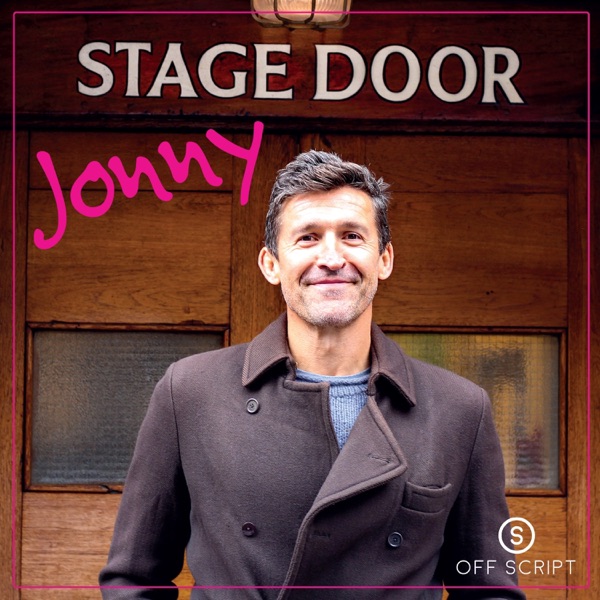
Stage Door Jonny
Hosted by actor Jonathan Cake, Stage Door Jonny is a podcast about theatre ... and life ... and life in the theatre. Jonathan has appeared in countless plays around the world - and made a fair few celebrated acquaintances along the way. So it is that he's assembled a formidable cast of actors, directors and writers to share their memories, reflections, discoveries, triumphs and disasters relating to this most alluring and mysterious and visceral of art forms. And because you'll be privy to conversations among great pals with a mutual passion, this is more akin to drinking at the Dress Circle Bar with some of the finest theatre artists of a generation than waiting for their autographs on a chilly rainswept backstreet in the depths of night.
Hosted on Acast. See https://acast.com/privacy for more information.
- Episodes
- 110
- Releases
- Twice a week
- Typical length
- 44 min
- On air since
- 2022
- Latest episode
- 6 days ago
Episodes
110 episodes, newest first
-
50 min
Christopher Abbott (Act II)
Season 7, Episode 3
Show notes
In part two of Jonny’s chat with Chris Abbott they discuss Arthur Miller and the edge of embarrassment, Chris’s thoughts on the extraordinary final scene of Salesman and how to do it afresh each night, just saying the first line and letting go and how to be generous onstage; having an action, grabbing Nathan Lane’s face onstage, a quick shift of recording location to Chris’s bedroom, the suggestion of violence Chris brings onstage, the life he brings off the text, responding to what the NYT theatre critic wrote in praise of his performance and whether we feel free onstage; what he needs from a director, freedom in a House of Blue Leaves with Ben Stiller and in John with Annie Baker and Sam Gold, what pisses him off about the theatre, knowing “how to backstage” and his longing for the experimental.
Hosted on Acast. See https://acast.com/privacy for more information.
-
46 min
Christopher Abbott (Act I)
Season 7, Episode 3
Show notes
This week's episode brings you one of America’s hottest young actors, bubbling under as a major star since Girls and now ready to pop, the man described onstage by Nathan Lane after the final performance of Death of a Salesman as “the best actor i’ve ever worked with onstage”. It's Christopher Abbott. He and Jonny discuss clearing up boxes and making a nest for the baby he was about to have with the great Aubrey Plaza; the German word that Chris has in common with the very first Willy Loman; his psychological setting that has to do with religious roots and losing them; Chris’s interest in phenomenology; his first performance as Hark (the Herald Angel), coming from a working class area in a big town, cinema as church, believing he had a knack from the beginning, how much we perform for the other actor or the audience and what Kenny Lonergan said about Jonny’s performance in Salesman; Chris’s retirements, self-confidence, his own father watching him play a tortured son and his hardscrabble beginnings in the business.
Hosted on Acast. See https://acast.com/privacy for more information.
-
29 min
Wallace Shawn (Act II)
Season 7, Episode 2
Show notes
In part two of Jonny’s chat with the legendary Wallace Shawn, they discuss Wally’s awareness of the audience when he’s acting, writing his first play at 10 (about Socrates and his own death), the puppet shows he kept writing until his early 20’s, the pure ecstasy of his early experiences of Eugene O’Neil and knowing Long Day’s Journey had something to say about the secrets in his own family, the part he still hopes to one day play and the influence of O’Neill on Moth Days; moving from puppet shows in people’s living rooms to doing his scabrous anti-capitalist monologue The Fever in other people’s living rooms; and trying to make theatre that is “one tiny influence on people” whilst knowing theatre has its work cut out to influence anyone.
Hosted on Acast. See https://acast.com/privacy for more information.
-
45 min
Wallace Shawn (Act I)
Season 7, Episode 2
Show notes
This week Jonny’s guest is one of the radical icons of American theatre: writer, essayist and actor Wallace Shawn. Surely one of the most vocally and visually recognisable actors in the world after a screen career ranging from Vizzini in The Princess Bride to Rex the Dinosaur in Toy Story to Dr Sturgis in Young Sheldon, to My Dinner With Andre as himself, Wally has been at the forefront of some of the most boundary-pushing and innovative theatre work of the last forty years. The conversation ranges from the “sexually perverse” show that began his theatregoing career (Peter Pan) to his latest onstage outing understudying a female part in his most recent play, What We Did Before Our Moth Days; the profound experience of a Christmas pageant; the influence of England and English theatre artists on his life and career; the startling controversy of his first London play (it was raided by the Vice Squad and questions were asked in Parliament); his father, legendary New Yorker editor William Shawn’s, resistance to obscenities, the runaway hit that he was deprived of by the British government; voyeurism in the theatre; Andre Gregory, Grotowski and not acting onstage- and who cries the tears: actor or character?
Hosted on Acast. See https://acast.com/privacy for more information.
-
52 min
Joe Mantello (Act II)
Season 7, Episode 1
Show notes
Part two of Jonny’s chat with actor/director Joe Mantello starts with a discussion of the response to their production of Death of a Salesman, the staging details that bothered some people, the director as dad, the award that was Joe’s professional pinnacle (and the closest he’s come to feeling like a parent), wrangling problem child like Glenda Jackson, his praising policy and how it’s changed over the course of his career, the early success that led to a reckoning with himself , how the production of a Balm in Gilead broke him open artistically, the pure experience of acting in Angels in America, the thrill of a bare stage, collaboration with Sondheim, his virtuosity with new plays and his relative lack of classics, his debt to Terence McNally, missing shows when you’re a little sad and the joys of his bonus round.
Hosted on Acast. See https://acast.com/privacy for more information.
-
39 min
Joe Mantello (Act I)
Season 7, Episode 1
Show notes
Welcome back-or welcome to- a new season of SDJ. And who tastier to kick it off than the doyen of American theatre directors and Tony-nominated actor, Joe Mantello. Joe has won the Tony for best director three times, his latest coming shortly after this chat with Jonny, for directing Death of a Salesman starring Nathan Lane and Laurie Metcalf (and Jonny Cake). Jonny had a front row seat as Joe shaped Salesman into a show that won more Tonys than any revival of the play in its storied 77 year history. Joe is the great American director of new writing (Blackbird, Vagina Monologues, The Humans, Take Me Out, Love! Valor! Compassion!) as well as the cultural behemoth that is Wicked. Joe talks about his dislike of unnecessary noise, the silence during Salesman, the concept of “sonder”, what makes Laurie Metcalf special, details of his staging that made Salesman into the tragedy of whole family, the best-lit strand of snot on Broadway, Joe’s ventriloquist doll, the secret conversation at the back of the stage in Mame and its influence on his artistic taste, his devotion to artistic restraint, shame and the influence of Miss Windsor, sex and a shift in consciousness, who’s his primary watcher and what he doesn’t need people to see after watching one of his shows.
Hosted on Acast. See https://acast.com/privacy for more information.
-
32 min
Lesley Manville (Act II)
Season 6, Episode 7
Show notes
In the second half of Jonny’s chat with Lesley Manville, Jonny recalls seeing her onstage for the first time in The Cherry Orchard with Judi Dench, what she learned from Judi, the story about working with her that she won’t repeat (but you should hear it, so here it is), why some great performers need to be on the verge of laughter, Tony Sher flashing in Tamburlaine the Great, her 13 projects with Mike Leigh, the man who influenced Lesley’s stage work maybe more than any other, playing a hamster at the Royal Court for a 10 year old, the pressure on young actors now, telling Caryl Churchill how she could improve Serious Money, breaking down the method behind Max Stafford-Clark’s rehearsal process, her response to men who take up too much space in the rehearsal room, where her confidence comes from and the magic- and pitfalls- of last shows.
Hosted on Acast. See https://acast.com/privacy for more information.
-
28 min
Lesley Manville (Act I)
Episode 7
Show notes
This weeks guest is a gem: Oscar nominee and two time Olivier-award winner, the magnificent Lesley Manville. In her plushly upholstered dressing room at Studio 54, Lesley and Jonny discuss him hunting her like a fox, her upcoming appearance in Marianne Eliott’s Les Liasons Dangereuses, how theatre is a time machine, ending her triumphant run as Jocasta opposite Mark Strong in Robert Icke’s Oedipus on Broadway, her fabled 15 minute monologue, getting ill and wondering whether her lifelong feeling that she didn’t take her characters home with her was really true, wondering if great actors must be private people, Sam Mendes‘s advice about lying and it’s relationship to acting and the all-conquering past that Jonny and Lesley have in common.
Hosted on Acast. See https://acast.com/privacy for more information.
-
45 min
Tom Morris (No Interval)
Season 6, Episode 6
Show notes
(CONTAINS VERY STRONG LANGUAGE) In the this week’s episode Jonny talks to celebrated theatrical disruptor Tom Morris. They talk about Tom’s most embarrassing moment in the theatre (it’s very embarrassing). His artistic directorship of Battersea Arts Centre and putting on shows without a script; how his work in alternative theatre was incorporated by Nick Hytner at the National; making Jerry Springer: The Opera; making Hytner experience Gay Shame; the genesis of the theatrical mega-hit War Horse; the two types of directors according to Simmo (spoiler: its blockers and wankers); when the floor opens up in front of a director, the paranoia sin-bin and what to do about it; why a puppet and a mirror gave Tom two of his most thrilling experiences at the theatre; why uncertainty in the theatre can provoke the perfect audience state; the creativity of an audience, setting Romeo and Juliet in a care home; what nags at him about the shows he’s done and getting older and less prophetic.
Hosted on Acast. See https://acast.com/privacy for more information.
-
50 min
Sir Greg Doran (Act II)
Season 6, Episode 5
Show notes
In the second act of their chat, Sir Greg Doran remembers some of his late husband and leading man, Anthony Sher’s most unforgettable moments; Greg’s theory of “crossroads” and examples of how to meet them; Shakespeare’s radical extremity; Greg’s theory of what plunged the Bard into his late great tragedies; why Ian Mckellen defaces bibles; the comfort to be found after bereavement in Shakespeare’s brutality; the death of Tom Stoppard and Greg’s memories of him- and Tony Sher’s Yahrzeit candle.
Hosted on Acast. See https://acast.com/privacy for more information.
-
57 min
Sir Greg Doran (Act I)
Season 6, Episode 5
Show notes
Jonny’s guest for his 100th episode is class on a stick. Sir Gregory Doran is the former artistic director of the Royal Shakespeare Company, for 35 years and with the late Sir Anthony Sher one half of one of the most celebrated power couples in British theatre (and possibly the first pair of married Knights). In this episode Jonny and Greg reminisce about meeting on Derek Walcott’s Odyssey, Greg’s padded bra and a portrayal of Lady Anne that silenced his bullies, memories of Tony Sher’s groundbreaking Richard 3rd, being taught a painful lesson by his future husband (that Tony had learned by being kicked up the arse by Jonathan Pryce), how Flaubert helped Greg become a director, killing the laughs at a matinee by announcing the Nobel Prize winner, how new shoes crashed Titus Andronicus’s jeep, throwing crockery at his leading man, Tony Sher’s occasional torment, writing about death as though it were Tony’s next great role and how they are still collaborators after death (on a new book), as they were in life.
Hosted on Acast. See https://acast.com/privacy for more information.
-
31 min
Elliot Levey (Act II)
Episode 4
Show notes
In the second half of Jonny’s chat with Elliot Levey, Elliot makes the case for why good actors submit; how directors reveal themselves through notes and acting that isn’t “mirror-kissing”; the moment Elliot regretted in the theatre and the horrible play that prompted him to nearly leave it mid performance via a fire exit; spending a decade at the National Theatre, how plays stay fresh and why Saturday night shows often smell of farts; what pisses him off about the theatre, the joy of Simon Russell Beale in a tiny part, the many delights of Polonius and a sudden Proustian recall of Jonny at the very beginning of his career.
Hosted on Acast. See https://acast.com/privacy for more information.
-
44 min
Elliot Levey (Act I) - Featuring Guest Stars Rachael Stirling & John Lithgow
Season 6, Episode 4
Show notes
Jonny’s guest is the two time Olivier award winner and Loveliest Man in British Equity, Elliot Levey. In his dressing room at the Harold Pinter theatre before his award-winning performance in Mark Rosenblatt’s Giant, Jonny and Elliot begin by lifting the lid on podcasting’s dirty secret and Elliot’s generous superfan. They break down Giant, a play about Roald Dahl’s antisemitism at the time of the real-world horror of the war in Gaza, how Elliot’s view of the play and his character shifts with each days headlines and the catharsis of drama in a moral maze; there’s a delightfully unexpected visit from Rachel Stirling, a memory of working with her mother, Dame Dianna Rigg, and the delivery of a bottle of in-character rosé; Elliot’s memory of being in a play that addressed the aftermath of horror on the night of terrorist attacks on London, why theatre isn’t binary, in praise of being boring, an equally delightful visit from John Lithgow (and an insight into how Jonny seduces future guests) and Elliot’s theory that all supremely talented people are also supremely nice.
Hosted on Acast. See https://acast.com/privacy for more information.
-
58 min
Mark Strong (Act II)
Season 6, Episode 3
Show notes
In the second half of Jonny’s chat with Mark Strong, his guest describes feeling hated during Ivo van Hove’s A View From the Bridge; the strong conviction he had about the playing of Eddie Carbone; becoming a movie actor (not star), what he learnt from the camera and taking it back to the stage; working with Ivo before he became the global theatrical influencer he is now, his mischief,and how he fought the great director over what turned out to be strokes of genius; his sheer terror before he started performing View and the joy of conquering fear; creating “the right to be looked at”; building a character through the body; what he needs from a director and what he doesn’t; his “rant” about the business; two aging actors talk about innovations in sound; his worries about Macbeth and Jonny’s theory of the murderous king’s intrinsic sweetness; what pisses him off about the theatre and what he still wants from it.
Hosted on Acast. See https://acast.com/privacy for more information.
-
50 min
Mark Strong (Act I)
Season 6, Episode 3
Show notes
Jonny is joined this week by the actor who is the current toast of Broadway for his portrayal of Oedipus in Robert Icke’s updating of the great tragedy, Mark Strong. They start off by talking about Simon Russell Beale, original inspiration for SDJ and the way talent is sometimes undecodable. Being told what Mark’s “thing” was at drama school, the attraction of charm, his very unusual origin story, the importance of Steven Berkoff and fronting a punk band in making him a performer; the difference between being an artist and an artisan, working with the late Helen McCrory and Ian McKellen, a debate about Al Pacino- and uncontrollable crying as Oedipus.
Hosted on Acast. See https://acast.com/privacy for more information.
-
39 min
Paule Constable (Act II)
Season 6, Episode 2
Show notes
In a second half lightly underscored by the Wagner seeping in from Glyndebourne’s Parsifal, Jonny hears how the doyenne of modern lighting designers spent her formative years in the creative ferment of Theatre de Complicité, the tough love from another designer that propelled her, what makes an experience on a show great for her, the two types of directors, splitting up with Katie Mitchell, what makes light walk into a room, the change in the aesthetic she championed in the modern theatre, why she’s retiring, her relationship with fear, bothering Nathan Lane, missing her kid’s birthdays, why she’s never wanted to be a cinematographer, the fundamental change in the culture and what she wants for young artists today.
Hosted on Acast. See https://acast.com/privacy for more information.
-
40 min
Paule Constable (Act I)
Season 6, Episode 2
Show notes
Stage Door Jonny gets well classy this week, with a double episode recorded in the gilded environs of Glyndebourne. One of the greatest influences in the modern theatre on how we see and experience a world onstage, Paule Constable is the nonpareil of modern lighting designers. The most nominated artist in Olivier Award history (17 nominations, 6 wins, 2 Tony awards) Paule has defined a visual aesthetic in modern theatre. War Horse, Curious Incident, Wolf Hall, His Dark Materials, the 25th anniversary production of Les Mis, Paule has her fingerprints all over modern theatre. But she’s retiring! Jonny goes in search of why. They talk rock’n’roll lighting, running over the South Downs to work, learning to look, torturing a performer with light, what happens sometimes when you put light to music, the loneliness of the long-distance lighting designer, how to make an actor glow and the spirit of her fighter pilot father that made her bold enough to pull off the audacious lie that started her career.
Hosted on Acast. See https://acast.com/privacy for more information.
-
43 min
Ewan McGregor (Act II)
Season 6, Episode 1
Show notes
The second half of Jonny’s conversation with Ewan McGregor kicks off with reminiscences of Oscar Isaac’s covid-era Oedipus. What Ewan needs from a director like Michael Grandage and their most recent partnership, Lila Raicek’s My Master Builder; scenes with Kate Fleetwood that felt like dancing and giggling together in the wings afterwards; Ewan’s battle with fear, drying onstage and being willed on by supernumeraries; drying in the middle of a song in Guys and Dolls; seeking the utopia of relaxation; being put in a chokehold on the set of Black Hawk Down and the insight it gave him into Iago; his admiration for Alan Cumming; what pisses him off about theatre and the tantalising plans he has to get back to it.
Hosted on Acast. See https://acast.com/privacy for more information.
-
42 min
Ewan McGregor (Act I)
Season 6, Episode 1
Show notes
Welcome back! A slightly lengthy hiatus comes to a close with this, the first episode of Jonny’s Festive Season. And what more festive guest to kick off with than Ewan McGregor? There’s a distinct frisson with the Stage Manager, the question of whether actors should just shut the fuck up, being frustrated by some theatre interviews,
Ewan’s three plays with Michael Grandage, learning his lines before rehearsals begin (and crying over Iago), how acting has changed for him over time, starting his career working backstage, sticking pornography in a senior actors folder, the huge influence of his uncle, Denis Lawson. How being beaten up in Glasgow gave him a key to unlock his acting, Little Malcolm and his Struggle Against the Eunuchs, naked and slipping (arse-first) towards an elderly matinee audience in Salisbury, his farting co-star and how he learned to steer an audience to make a play land.
Hosted on Acast. See https://acast.com/privacy for more information.
-
41 min
Denis O'Hare (Act II)
Season 5, Episode 4
Show notes
In the second half of Jonny’s chat with actor and writer Denis O’Hare, we hear the harrowing tale of a confrontation at a French airport, its relationship to his investigation of male violence in his play An Iliad, performing it for an audience of soldiers, not understanding what just happened after performing a show, how bad blocking once made him cry, why some plays can’t be left at the curtain call- and the experience of working on Sondheim’s last work.
Hosted on Acast. See https://acast.com/privacy for more information.
After Shows lists
More After Shows shows picked out from the charts


More in After Shows
Placed highest on Apple Podcasts' After Shows chart right now