Podcast
Sustainable in the Suburbs | Reduce Waste, Sustainable Habits & Intentional Living
Want to waste less, save money, and build a more sustainable home life?
Do you care about sustainable living but feel overwhelmed by all the advice, products, pressure, and endless lists of things you are supposed to change?
If that sounds like you, you’re in the right place. Sustainable in the Suburbs helps you reduce waste, build sustainable habits, and make intentional living feel more doable at home — in a way that works for real people, real families, real budgets, real routines, and real homes.
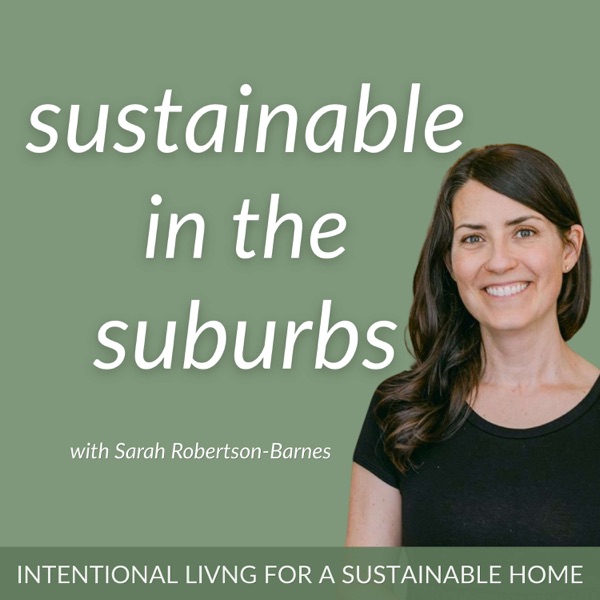
Hosted by Sarah Robertson-Barnes — sustainability educator, writer, speaker, former high school science teacher, suburban mum, and founder of Sustainable in the Suburbs — the show offers practical, non-judgmental guidance to help you waste less, spend more intentionally, buy less, use what you already have, and make thoughtful changes at home. Sarah’s background in science education and technical writing helps her make complex sustainability topics clear, approachable, and useful in everyday life.
Because sustainable living is not just about eco-friendly products or making every possible swap. It is about creating a home life that is better for the planet while also working for your budget, energy, family, routines, and capacity.
On the podcast, you’ll hear practical conversations and ideas about:
Low waste living and reducing waste at home
Sustainable habits that fit real life
Reducing food waste and building low-waste kitchen routines
Buying less, using what you have, and reducing overconsumption
Sustainable parenting and sustainable living with kids
Composting, decluttering, plastic-free living, and eco-frugal living
Making holidays and celebrations less wasteful
Bringing more slow living and intentional living into everyday life
Building a more sustainable home life without adding more pressure
Choose an episode and hit play. Follow or subscribe for practical ideas to help make sustainable living feel more doable at home.
Next steps:
Free Household Waste Audit Workbook
A Beginner’s Guide to a Sustainable Kitchen
Read the Sustainable in the Suburbs blog
Join the Sustainable in the Suburbs newsletter
Start where you are, use what you have, and live a little greener — one small shift at a time!
- Episodes
- 62
- Releases
- Every two weeks
- Typical length
- 38 min
- On air since
- 2025
- Latest episode
- 1 week ago
Episodes
62 episodes, newest first
-
22 min
61: Zero Waste Menstrual Care — Finding What Works for You
Episode 61
Show notes
Curious about zero waste menstrual care, but overwhelmed by the options? Between menstrual cups, discs, reusable pads, period underwear, and conflicting information about materials and safety, figuring out where to start can feel like a project of its own.
After ten years of using a menstrual cup—and recently trying period underwear for an unpredictable perimenopausal cycle—I’m sharing firsthand experience with comfort, fit, and getting comfortable with reusable period products.
From the waste and recurring costs of disposables to PFAS concerns and product testing, there is plenty to consider beyond absorbency. Access matters, too—upfront costs, clean water, laundry, and privacy all affect which options are practical.
Explore ways to reduce waste through period care that fits your body, budget, and routines, with room for both reusable and disposable products. A practical place to start with low waste living, one period product at a time.
Next episode, I’ll be joined by Cherie Hoeger, co-founder and CEO of Saalt, for a closer look at reusable period care.
Takeaways
• What makes menstrual cups and discs different
• Why fit matters when choosing a cup
• Getting comfortable with reusable pads
• How period underwear can fit seamlessly into your monthly routine
• PFAS concerns and questions to ask about product testing
• Disposable options with made eco-friendly materials
• How affordability and access shape period care choices
• Organizations working to address period povertyOne Small Shift
Choose one part of managing your period that you’d like to make easier—overnight protection, spotting, comfort, recurring purchases, or waste—and explore one option that could help.
Some links below are affiliate links. If you purchase through them, I may earn a commission at no extra cost to you.
Related Blog Posts
Related Episodes
47: Eco-Friendly Bathroom Swaps to Reduce Waste and Save MoneyResources
SHOP: All my period care picks!
Put A Cup In It: Menstrual Cup Quiz
Moon Time Connections — Canada
Research and Further Reading
David Suzuki Foundation: Eco-friendly menstrual products
Women and Gender Equality Canada: Period costs and access
Women and Gender Equality Canada: Menstrual equity and the 2023 survey
UNEP: Menstrual products and their alternatives—life cycle assessment review
US EPA: Understanding PFAS and health risks
2025 research: PFAS in reusable period products
Connect With Me
Sustainable in the Suburbs is mixed and edited by Cardinal Studio
If you enjoyed this episode, I’d love it if you followed the show, shared it with a friend, or left a rating and review. Every little bit helps more people find Sustainable in the Suburbs — and live a little greener.
-
59 min
60: Rethinking Sustainable Living — Care Work, Community, and Interdependence with Laura Danger
Episode 60
Show notes
So much of sustainable living is still presented to us as an individual project — something we are supposed to manage inside our own homes through how we shop, how much we throw away, and all the habits we build around those choices.
But what if sustainability is actually asking something bigger?
In this conversation, I’m joined by Laura Danger, author of No More Mediocre: A Call to Reimagine Our Relationships and Demand More, to talk about what changes when we start thinking about sustainability through the lens of care, community, and interdependence.
We begin with something seemingly simple: hand-me-downs. But circulating clothes, toys, bikes, and other resources requires labour, connection, and a willingness to participate in the life of a community. From there, we talk about why care work remains so deeply gendered and undervalued, and how those same patterns show up in environmental work and the systems behind what we buy, use, and throw away.
We also get into hyper-individualism, consumption, and the idea of weaponized incompetence on a cultural scale — what happens when we are taught not to know or care where things come from, where they go when we are finished with them, or who absorbs the costs along the way.
And we talk about what it means to build something different: sharing resources, participating in mutual aid, showing up for neighbours, and recognizing that interdependence is not a failure of independence. It is how healthy communities work.
If low waste living was your own doorway into questioning consumption, or if you’re trying to build a more intentional life that is less isolated and more connected to the people around you, this conversation asks a bigger question: what are we actually trying to sustain?
Takeaways
• Why circulating hand-me-downs is radical care work
• The connection between gendered labour and sustainable living
• Why care work is essential infrastructure in our homes and communities
• How hyper-individualism keeps us isolated and overburdened
• What cultural “weaponized incompetence” can look like in sustainability
• Why understanding systemic problems does not mean our individual choices stop mattering
• Reciprocity, mutual aid, and the difference between community and transaction
• Why sharing resources can strengthen both social connection and community resilience
• Why sustainable communities cannot be built through individual self-sufficiency alone
• What it means to be a villager, rather than simply wishing for a villageOne Small Shift
This week, choose one small way to participate more actively in the community around you. That could mean joining or using your local Buy Nothing group, passing something along instead of throwing it away, checking in on a neighbour, sharing food or another resource, or simply noticing where you have the capacity to make someone else’s day a little easier.
Connect With Laura
No More Mediocre: A Call to Reimagine Our Relationships and Demand More (book)
Time to Lean (podcast)
Related Blog Posts
Climate Venn Diagram: A Simple Framework for Climate Action
How to Organize a Clothing Swap
10 Tips for Going Zero Waste with Kids
Related Podcast Episodes
Ep. 7: Rethinking Zero Waste and Building Community Care with April Dickinson
Ep. 11: Money, Enoughness, and Community Care with Women’s Personal Finance
Ep. 32: Overstimulation, Overconsumption, and the Pressure to Do More with Gillian Gabryluk
Ep. 36: How to Host a Clothing Swap — Sharing Clothes & Building Community
Ep. 42: Overwhelmed by Climate Change? The Climate Venn Diagram Can Help
Ep. 58: How to Quit Amazon, Buy Less & Break the Cycle of Overconsumption
Connect With Me
Sustainable in the Suburbs is mixed and edited by Cardinal Studio
If you enjoyed this episode, I’d love it if you followed the show, shared it with a friend, or left a rating and review. Every little bit helps more people find Sustainable in the Suburbs — and live a little greener.
-
1 hr 3 min
59: Intentional Living, Yoga, and Enoughness with Aarti Inamdar
Episode 59
Show notes
What if intentional living really begins with examining what we already have, what we consume, and how we relate to the world around us?
This episode is a different lens on many of the questions at the heart of sustainability: Why do we always want more? How do we know when we have enough? And what might change if we slowed down long enough to ask ourselves why?
This week, I’m joined by my yoga teacher, Aarti Inamdar, for a conversation about the connections between yoga and sustainable living. Aarti is a student and teacher of classical hatha yoga who has spent nearly 20 years studying and sharing these traditions.
We talk about yoga far beyond the physical practice, and what yogic teachings can offer us in a culture that is constantly encouraging us to want more, buy more, and do more. Aarti introduces the principles of ahimsa (non-harm), pratyahara (sensory withdrawal), and aparigraha (non-possessiveness), and we explore how they connect to overconsumption, enoughness, and the pull so many of us feel toward a slower, simpler way of living.
We also talk about connection to nature — and what changes when we stop thinking of nature as somewhere we go and begin recognizing ourselves as part of it. From the food we eat to the birds in our own backyards, this conversation explores what it might look like to pay closer attention to our relationships with the living world and to question some of the habits of modern life that keep us disconnected from it.
Takeaways
• How yoga extends far beyond the postures on your mat
• What ahimsa, pratyahara, and aparigraha can teach us about sustainable habits and consumption
• Why seeking fulfilment through more stuff can keep us wanting more
• How enoughness connects to intentional living and a less consumption-driven life
• Why slowing down can help us notice our existing connection to nature
• What traditional ways of preparing, sharing, and eating food can teach us about waste and consumption
• How questioning what we actually need can help us step outside the constant push toward moreOne Small Shift
Notice where you feel connected — to yourself, another living being, or the natural world around you. Maybe that means taking your coffee outside and listening to the birds, paying closer attention to the food you're eating, or simply noticing the other living beings you share your neighbourhood with.
Connect With Aarti
Related Blog Posts
A Simple Framework for Climate Action
25 Ways to Live a More Sustainable Lifestyle
Related Podcast Episodes
Ep. 5: How to Navigate Climate Emotions and Build Community Around You
Ep. 7: Rethinking Zero Waste and Building Community Care
Ep. 11: Money, Enoughness, and Community Care
Ep. 32: Overstimulation, Overconsumption, and the Pressure to Do More
Ep. 42: Overwhelmed by Climate Change? Start Here
Connect With Me
Sustainable in the Suburbs is mixed and edited by Cardinal Studio
If you enjoyed this episode, I’d love it if you followed the show, shared it with a friend, or left a rating and review. Every little bit helps more people find Sustainable in the Suburbs — and live a little greener.
-
20 min
58: How to Quit Amazon, Buy Less, and Break the Cycle of Overconsumption
Episode 58
Show notes
Overconsumption is built into the way we shop and Amazon makes buying more, faster, almost frictionless.
This episode of Sustainable in the Suburbs originally aired in August 2025, but I wanted to bring it back now because the conversation feels even more relevant today.
I’m talking about how to quit Amazon (or at least drastically reduce your reliance on it) in a way that’s actually doable.
We look at the real cost of convenience, from plastic waste and overconsumption to the pressure Amazon’s business model puts on local and independent businesses. I also share how my family has mostly moved away from Amazon, what we do instead, and the few situations where we still use it.
We also talk about the power of boycott. One person choosing to spend differently might feel insignificant, but collectively, where we spend our money matters. Choosing to buy less, shop locally, support independent businesses, buy secondhand, borrow, or simply wait before purchasing are all ways to push back on a system designed to keep us consuming.
This isn’t about pretending everyone can completely avoid Amazon. It’s about finding the places where you do have some wiggle room and building sustainable habits that feel realistic for your life.
Because intentional living doesn’t have to mean overhauling everything overnight. Sometimes it starts with pausing before you click “buy.”
Takeaways
• How Amazon’s business model encourages overconsumption and makes convenience hard to resist.
• Quitting Amazon is about spending in ways that better reflect your values and support your community.
• The environmental cost of convenience, including packaging, plastic waste, and unnecessary purchases.
• Why boycotts and collective consumer choices can have real power.
• Practical ways to buy less without making your life harder.
• How shopping local, choosing independent retailers, buying secondhand, borrowing, and using what you already have can reduce your reliance on Amazon.
• The three mindset shifts that helped my family: Pause, Buy Local, and Shop Secondhand.
• Why even reducing how often you order can be a meaningful step toward more intentional living.One Small Shift
Try a “pause rule” for online shopping. Choose one day each week — or even each month — to place online orders, and let everything sit in your cart until then.
You may be surprised by how many things you no longer want or need by the time ordering day rolls around.
Resources
• Buy Less, Buy Better: My Favourite Canadian Brands
• Facebook Marketplace
• Buy Nothing Project
• Poshmark (invite code SUSTAINABLESRB)
• DePop
• ThreadUp
• Kijiji
• http://lend-it.caRelated Episodes
Ep. 11: Money, Enoughness, and Community Care with Women’s Personal Finance
Ep. 32: Overstimulation, Overconsumption, and the Pressure to Do More
Ep. 37: Sustainable Decluttering — Why Letting Go Isn’t Neutral
Connect With Me
Sustainable in the Suburbs is mixed and edited by Cardinal Studio
If you enjoyed this episode, I’d love it if you followed the show, shared it with a friend, or left a rating and review. Every little bit helps more people find Sustainable in the Suburbs — and live a little greener.
-
41 min
57: Connecting With Nature — Everyday Ecosystem Restoration with Tim Christophersen
Episode 57
Show notes
Connecting with nature starts with understanding that we aren’t separate from the natural world — we are part of it.
This week, I’m joined by Tim Christophersen, author of Generation Restoration and a leading global voice on ecosystem restoration, to talk about ecological literacy, our relationship with nature, and what it means to restore that relationship in our everyday lives.
We talk about what it actually means to be ecologically literate — knowing where our food and water come from, understanding the role nature plays in our communities, recognizing the species we share those spaces with, and beginning to see ourselves as part of those systems rather than separate from them.
We also look at what this means closer to home, including the potential of suburban yards and neighbourhoods, nature as infrastructure, community restoration, regenerative agriculture, and how ordinary people can participate in restoring the ecosystems around them.
And while the challenges facing the natural world are enormous, this is ultimately a hopeful conversation about agency, reciprocity, and why rebuilding our relationship with nature can change the way we approach sustainable living.
Takeaways
• What ecological literacy means and why we need to relearn it
• How the language we use can unconsciously reflect how we see nature
• What reciprocity can look like in our relationship with the natural world
• Why trees, wetlands, soil and other ecosystems are essential infrastructure
• How connecting with nature can begin right outside your own front door
• The role suburban yards, native plants and citizen science can play in ecosystem restoration
• Why community action and local policy matter
• Our shared belief that there is still so much reason to hopeOne Small Shift
Get curious about one part of the natural world you encounter every day. Ecological literacy grows through curiosity and observation — and simply paying closer attention can begin to change our relationship with the living world around us.
Connect with Tim
LinkedInWebsiteGeneration Restoration: How to Fix Our Relationship Crisis with Mother Nature
Related Blog Posts
Safe Nesting Materials for Birds
A Simple Framework for Climate Action
10 Sustainable Living Mistakes to Avoid
Related Episodes
Ep. 20: Wildlife Conservation, Birding, and Finding Hope in Nature
Ep. 51: Can You Be Sustainable in the Suburbs?
Ep. 54: Litter Prevention and Community Action with Keep America Beautiful
Connect With Me
Sustainable in the Suburbs is mixed and edited by Cardinal Studio
If you enjoyed this episode, I’d love it if you followed the show, shared it with a friend, or left a rating and review. Every little bit helps more people find Sustainable in the Suburbs — and live a little greener.
-
55 min
56: Food Preservation for Beginners — How to Save Money on Groceries with Kris Bordessa
Episode 56
Show notes
If you want to reduce food waste, save money on groceries, and learn about easy and practical food preservation, this conversation with Kris Bordessa is a great place to start.
In this episode, I’m joined by Kris Bordessa, author of Attainable Sustainable and Attainable Sustainable Pantry, to talk about ‘old-fashioned’ kitchen skills that are still incredibly useful in modern life. We talk about using what you already have before heading back to the grocery store, stocking a more useful pantry, preserving seasonal abundance, and why safe canning matters.
Kris also shares why these skills are not just for homesteaders or preppers. They are practical tools that can help ordinary households stretch food budgets, reduce waste, and feel more capable when life gets unpredictable.
This conversation is about building a more sustainable kitchen in a way that feels realistic, not overwhelming. You do not need to preserve everything, make every pantry staple from scratch, or completely change the way you cook. But learning a few simple sustainable habits in the kitchen can make low waste living feel more doable.
Takeaways
• Starting with what you already have in your fridge, freezer, and pantry can help you reduce food waste, save money on groceries, and avoid unnecessary grocery runs.
• A more useful pantry does not have to be complicated. Staples like beans, grains, broth, potatoes, onions, garlic, and oil can make flexible cooking easier.
• Food preservation can start small. Freezing, quick pickling, dehydrating herbs, making herb salts, and preserving in salt or oil are all practical ways to use seasonal abundance.
• Safe canning matters. Water bath canning and pressure canning are used for different foods, and trusted, tested recipes are important.
• You do not need to make everything from scratch. Some things, like salad dressing, may be worth making at home, while others, like tomato paste, may not be worth the time.
• Preparedness does not have to mean fear-based prepping. A stocked pantry and the skills to use it can help ordinary households feel more capable when routines, budgets, or supply chains are disrupted.
• Self-reliance does not mean doing everything alone. Sharing food, recipes, tools, and skills is part of building more resilient communities.One Small Shift
Before your next grocery shop, start with what you already have.
Take a few minutes to look through your fridge, freezer, and pantry, and choose one or two things that need to be used before you bring more food into the house. Maybe it’s leftover rice, soft fruit, wilting vegetables, or something you bought with good intentions and then forgot about.
If you want a little more guidance, my Simple Kitchen Audit is a good place to start. It’s a 10-page workbook that walks you through what’s working in your kitchen, where food and packaging waste are creeping in, and what small changes could help your kitchen feel more organized, lower-waste, and easier to use.
Connect With Kris
Attainable Sustainable: The Lost Art of Self-Reliant Living (book)
Attainable Sustainable Pantry: A Back-to-Basics Guide to Stocking Your Kitchen (book)
Related Blog Posts
A Beginner’s Guide to a Sustainable Kitchen
How to Use Beeswax Wraps (Plastic Free Food Storage)
Plastic Free Pantry — How to Refill in Your Own Containers
Creating a Sustainable Kitchen: 11 Ways to Reuse Food Scraps
Related Podcast Episodes
Ep. 13: Plastic Free Food Storage with Hive to Home
Ep. 38: Things I Don’t Buy Anymore
Ep. 45: How to Spend Less on Groceries by Reducing Food Waste
Connect With Me
Sustainable in the Suburbs is mixed and edited by Cardinal Studio
If you enjoyed this episode, I’d love it if you followed the show, shared it with a friend, or left a rating and review. Every little bit helps more people find Sustainable in the Suburbs — and live a little greener.
-
24 min
55: Use What You Have — A Simple Way to Reduce Waste
Episode 55
Show notes
Sustainable living is increasingly being marketed as something we need to shop for. We are constantly being shown greener products, better materials, and more sustainable versions of things we already own—but for most of us, the best place to start is by using what is already in our homes more fully.
In this episode, I’m talking about why waste begins long before something reaches the landfill and why using what we already own is one of the most practical sustainable habits we can build.
Takeaways
• Eco-friendly products now seem to follow the same trend cycles as everything else.
• Waste also includes when we buy more than we can realistically use, maintain, store, or even remember we own.
• Once something is in our home, much of its environmental impact has already happened. The next question is how much value and use we can get from it.
• It is okay for useful things to look repaired, scratched, mismatched, or even a little ugly.
• Shopping your own house first can help you find the exact item you need, a workable substitute, something that can be repaired, or something you have simply forgotten about.
• Using what you have does not mean never buying anything. It gives you better information so you can shop more slowly and deliberately when you genuinely need something.
• Creating use-first areas, keeping a pause list, repairing things quickly, borrowing rarely used items, and using the good stuff now are all practical ways to reduce waste.
• Low waste living becomes easier when the things we already own are visible, accessible, cared for, and actually used.One Small Shift
Take stock of what is under your bathroom sink.Pull everything out and see what is already open, what needs to be used up, and what you have duplicates of. Then choose one product to finish before you replace it or try something new.
Related Podcast Episodes
Ep. 12: How to Quit Using Amazon (And Why You Should)
Ep. 23: Borrow Before You Buy — Sharing, Renting, and the Circular Economy
Ep. 47: Sustainable Bathroom Swaps That Save Money and Reduce Waste
Connect With Me
Sustainable in the Suburbs is mixed and edited by Cardinal Studio
If you enjoyed this episode, I’d love it if you followed the show, shared it with a friend, or left a rating and review. Every little bit helps more people find Sustainable in the Suburbs — and live a little greener.
-
38 min
54: Litter Prevention and Community Action — What the 2026 National Litter Study Reveals with Keep America Beautiful
Episode 54
Show notes
Litter is one of the most visible forms of waste in our communities. It shows up along roads, in parks, on trails, near schools, and in the places we move through every day. But it is also a clue — about our habits, our infrastructure, our systems, and how we care for where we live.
In this episode, I’m joined by Jenny Lawson, President and CEO of Keep America Beautiful, for a conversation about the 2026 National Litter Study, what it reveals about litter in communities across the United States, and why litter prevention is about more than picking up garbage.
We talk about why litter matters, how social norms and infrastructure shape behaviour, what has changed since 2020, and how individuals, businesses, local governments, and community organizations all have a role to play in creating cleaner, healthier public spaces.
If you’ve ever felt overwhelmed by big environmental problems, this conversation is a reminder that you can take action in a very practical place: your own neighbourhood.
Takeaways
• Litter is connected to community care, shared responsibility, and how people feel about the places where they live.
• The 2026 National Litter Study shows real progress, while also making clear that there is still work ahead.
• Infrastructure, access, education, enforcement, and local programs all shape litter prevention.
• Social norms play an important role in how people care for shared spaces.
• Businesses, producers, local governments, and communities all have a role to play in litter prevention.
• Community cleanups are a great starting point for broader environmental action.One Small Shift
Choose one shared space you pass through regularly and notice it differently.
Look at what kind of litter shows up, whether there are bins nearby, and whether the space feels cared for. Then choose to help reduce waste by picking up few pieces of litter and look for the nearest bin.
Connect With Keep America Beautiful
Related Podcast Episodes
Ep. 18 - Community Communities Through Green Spaces
Ep. 42 - Overwhelmed by Climate Change? Start Here
Ep. 51 - Sustainable Living in the Suburbs
Related Blog Posts
50 Ways to Be More Sustainable
How to Start Living More Sustainability
How to Do a Trash Audit (With Kids!)
Connect With Me
Sustainable in the Suburbs is mixed and edited by Cardinal Studio
If you enjoyed this episode, I’d love it if you followed the show, shared it with a friend, or left a rating and review. Every little bit helps more people find Sustainable in the Suburbs — and live a little greener.
-
22 min
53: What to Do With the Plastic You Already Have — Practical Ways To Go (Almost) Plastic-Free At Home
Episode 53
Show notes
If you are trying to reduce plastic waste at home, you might be wondering what to do with the plastic you already have. The answer is not to throw it all away and buy a new set of eco-friendly swaps. It is to use what you have, rethink the plastic that moves through your home, and start noticing where single-use plastic shows up in your daily routines.
In this episode of Sustainable in the Suburbs, Sarah talks about reducing single-use plastic in real life: using the containers, bags, bins, and Tupperware you already own; choosing reusables that actually fit your habits; giving so-called disposable plastic one more job before it hits the garbage; and using your voice to ask for better systems.
Plastic itself is not the whole problem. Waste is the problem. Disposability is the problem. And this episode is a practical reset for anyone who wants to reduce plastic waste, keep materials in circulation, and make small shifts that actually fit real life.
Takeaways
• Plastic itself is not the problem. Single-use plastic is often the problem.
• Reducing plastic waste does not mean throwing away every plastic thing in your house. Use what you already have until it is no longer usable.
• A reusable product only works if you actually use it. Choose reusable products that fit your real habits, not the ones that look the most sustainable online.
• Individual habits matter, but they are not the whole story. Ask businesses why plastic packaging is there in the first place, and use your voice as well as your wallet.
• Systems are made of people, and people can be influenced.One Small Shift
Before you throw away a piece of plastic, ask whether it can do one more job. It’s only single-use if you use it once!
Resources
31 Easy Swaps to Reduce Plastic Waste
10 Zero Waste Kitchen Swaps That Save You Money
Plastic-Free Pantry: How to Refill in Your Own Containers
How to Pack a Zero Waste School Lunch
Related Episodes
Episode 8: 5 Easy Plastic-Free Kitchen Swaps
Episode 47: Eco-Friendly Bathroom Swaps
Connect With Me
Sustainable in the Suburbs is mixed and edited by Cardinal Studio
If you enjoyed this episode, I’d love it if you followed the show, shared it with a friend, or left a rating and review. Every little bit helps more people find Sustainable in the Suburbs — and live a little greener.
-
48 min
52: Building a Sustainable Kitchen — What Actually Matters with Naomi Hansen
Episode 52
Show notes
Climate action begins at the kitchen table — and a more sustainable kitchen starts with knowing where to focus.
In this episode of Sustainable in the Suburbs, Sarah talks with Naomi Hansen, author of Building a Sustainable Kitchen: A Practical Guide to Prioritizing the Planet from the Heart of Your Home, about what actually matters when it comes to food, waste, and climate action at home.
Together, they explore why the kitchen is such a powerful place to begin, how food waste connects to bigger climate solutions, and why the most sustainable choice is not always the one that looks the most sustainable from the outside.
Takeaways
• Why the kitchen is a meaningful place to start with climate action
• How food waste connects to sustainability and climate impact
• Why some popular sustainable swaps only scratch the surface
• How to think about trade-offs, like packaging versus wasted food
• Why individual action still matters, especially when it spreads through families, friends, and communitiesConnect with Naomi
Building a Sustainable Kitchen (book)
Resources
Drawdown:The Most Comprehensive Plan Ever Proposed to Reverse Global Warming - Paul Hawken (book)
How to Prevent Food Waste With Kids (blog post)
11 Ways to Reuse Food Scraps (blog post)
10 Zero Waste Kitchen Swaps That Save You Money (blog post)
Related Episodes
Ep. 4 - How to Conduct a Household Waste Audit
Ep. 45 - How to Spend Less on Groceries by Reducing Food Waste
Connect With Me
Sustainable in the Suburbs is mixed and edited by Cardinal Studio
If you enjoyed this episode, I’d love it if you followed the show, shared it with a friend, or left a rating and review. Every little bit helps more people find Sustainable in the Suburbs — and live a little greener.
-
28 min
51: Can You Be Sustainable in the Suburbs?
Episode 51
Show notes
Can you be sustainable in the suburbs? Well, yes and no.
Suburban life can make sustainable living complicated — especially when communities are built around cars, convenience, private space, and consumption. But the suburbs are also where so many of us live, raise families, volunteer, vote, garden, organize, and build community.
So what does climate action actually look like here?
This episode looks at sustainable living in the suburbs beyond eco swaps and bigger purchases, and asks what becomes possible when we start thinking about our neighbourhoods, local politics, shared resources, and community resilience.
Takeaways
• Why suburban sustainability is complicated, but very doable
• How car dependency shapes the landscape and our daily choices
• Why the suburbs should not be written off in climate conversations
• How sustainable living goes beyond buying greener products
• Why free, inexpensive, and investment-level actions all matter
• How community resilience and local politics shape what comes nextOne Small Shift
Choose one free action that connects your household to your community.
Sustainability is something we practise, share, and build where we live — and sometimes that starts with one small step outside our own front door.
Related Episodes
Ep. 7 - Rethinking Zero Waste and Building Community Care
Ep. 12 - How to Quit Using Amazon (and Why You Should)
Ep. 24: 5 Sustainable Living Mistakes to Avoid (and What to Do Instead)
Ep. 36: How to Host a Clothing Swap
Ep. 42: Overwhelmed by Climate Change? Start Here.
Ep. 45: How To Spend Less on Groceries by Reducing Food Waste
Blog Posts
50 Ways to Be More Sustainable
How to Drive Less in the Suburbs
How to Start Living Sustainably
Connect With Me
Sustainable in the Suburbs is mixed and edited by Cardinal Studio
If you enjoyed this episode, I’d love it if you followed the show, shared it with a friend, or left a rating and review. Every little bit helps more people find Sustainable in the Suburbs — and live a little greener.
-
50 min
50: Practical(ly) Zero Waste with Elsbeth Callaghan
Episode 50
Show notes
Back in 2020, I was a guest on the now inactive podcast Practical(ly) Zero Waste, hosted by Elsbeth Callaghan. At the time, my kids were little, the zero waste movement online was deep in its “trash jar” era, and many of us were trying to figure out what sustainable living looked like outside of perfectly curated Instagram squares.
Six years later, a lot has changed.
Kids are older, life looks different, and both of us have let go of a lot of the pressure and aesthetics that surrounded zero waste in those early online days. But underneath all of that, the values are still very much the same.
In this full-circle conversation for Episode 50 of Sustainable in the Suburbs, Elsbeth and I talk about what sustainable living looks like now: parenting teenagers and young kids, balancing low waste goals with real life, navigating burnout and social media, building community, and why consistency matters a whole lot more than perfection.
We also talk about what we’ve kept, what we’ve let go of, and how many of the “small shifts” we started years ago have quietly become lifelong habits.
Takeaways
• Why sustainable living looks very different after years of actually living it
• The shift from perfection and aesthetics toward values and consistency
• Raising eco-conscious kids through everyday habits rather than pressure
• How composting, secondhand shopping, and reusables became family routines
• The connection between sustainability, community, and raising responsible citizens
• Why slowing down is often the most sustainable choice
• How “eco-frugal” living can save money while reducing waste
• Navigating low waste living with celiac disease and accessibility needsOne Small Shift
You can always start again.
Even if you’ve fallen out of old habits, even if life looks completely different now, small intentional changes still matter. Start with one thing that feels manageable and build from there.
Resources
PZW - Ep. 69: Raising Eco Kids
Related Episodes
4: How to Conduct a Household Waste Audit
11: Money, Enoughness, and Community Care with Women’s Personal Finance
12: How to Quit Using Amazon (and Why You Should)
Connect With Me
Sustainable in the Suburbs is mixed and edited by Cardinal Studio
If you enjoyed this episode, I’d love it if you followed the show, shared it with a friend, or left a rating and review. Every little bit helps more people find Sustainable in the Suburbs — and live a little greener.
-
24 min
49: Less Stuff, Less Stress — Sustainable Living with Kids (In Real Life)
Episode 49
Show notes
In this episode, I’m talking about what sustainable living with kids actually looks like in real life. Not the Instagram version — the real version. The conversations, the habits, the overwhelm, the convenience culture, and the small shifts that slowly become part of how your family moves through the world.
Takeaways
• Kids learn consumption habits by watching us
• Sustainable living with kids is about buying less, not buying “eco” products
• Convenience culture is deeply connected to overwhelm and mental load
• Small habits shape how kids think about waste, spending, and consumption
• Involving kids in the “why” helps sustainability become a mindset
• Sustainability conversations naturally deepen as kids grow
• It’s never too late to start having these conversations as a familyOne Small Shift
Have a family conversation about consumption, waste, or sustainability this week. Ask your kids what they notice, what they care about, and what ideas they have. You might be surprised by the answers.Resources
10 Tips for Going Zero With Kids
How to Do a Trash Audit With Kids
How to Prevent Food Waste With Kids
How to Pack a Zero Waste School Lunch
Related Episodes
Ep. 16: Sustainable Living with Kids — Save Money and Reduce Waste with Jessica Nakamura
Ep. 17: How to Raise Eco-Friendly Kids with Talayna Zacharias
Ep. 22: From Refills to Resilience — Simple, Real-Life Sustainable Living with Julie Darrell
Ep. 32: Overstimulation, Overconsumption, and the Pressure to Do More with Gillian Gabryluk
Ep. 40 – How to Host a Zero Waste Birthday Party for Kids
Ep. 46: How to Talk to Kids About Climate Change with Brittany Jefferson
Connect With Me
Sustainable in the Suburbs is mixed and edited by Cardinal Studio
If you enjoyed this episode, I’d love it if you followed the show, shared it with a friend, or left a rating and review. Every little bit helps more people find Sustainable in the Suburbs — and live a little greener.
-
1 hr
48: Overwhelmed by Sustainable Living Advice? Start Here (with Alexa Pavan)
Episode 48
Show notes
Sustainability advice is everywhere — and even when you care, even when you’re trying to pay attention, it can be hard to know what actually matters.
In this episode, I’m joined by Alexa Pavan of Go Green With Alexa, a climate communicator and copywriter who’s focused on making sustainability more understandable, more approachable, and a lot more connected to real life.
We talk about what it looks like to move through all of that information — how to figure out what’s credible, what’s actually helpful, and how to take those bigger ideas and bring them into your day-to-day life.
From composting and food waste to media literacy and community action, this conversation is about finding your footing in a space that can feel overwhelming and remembering that sustainability doesn’t have to be complicated to matter.
Takeaways
• Sustainability advice can feel overwhelming — slowing down and checking sources helps you build confidence in what you’re seeing and sharing.
• Food waste is one of the most impactful places to start, both environmentally and financially.
• Composting is a powerful way to reduce waste, especially when it’s supported at a larger, community level.
• Sustainable living looks different in every household — it needs to fit your life to stick.
• Small, everyday choices can extend beyond the home and shape communities and local systems.
• Civic engagement is part of building greener communities.
• Creativity and problem-solving are part of sustainable living.One Small Shift
Start paying attention to what’s around you. Get curious about the life cycle of an object near you. Building awareness is the first step toward making more intentional choices.
Connect With Alexa
Resources
Household Waste Audit Workbook (free resource)
How to Prevent Food Waste With Kids (blog post)
11 Ways to Reuse Food Scraps (blog post)
Related Episodes
24: 5 Sustainable Living Mistakes to Avoid (and What to Do Instead)
45: Food Waste Is Costing You — How to Spend Less on Groceries with Chelsey Schmuland
46: How to Understand Climate Change (and Talk About It With Your Kids) with Brittany Jefferson
Connect With Me
Sustainable in the Suburbs is mixed and edited by Cardinal Studio
If you enjoyed this episode, I’d love it if you followed the show, shared it with a friend, or left a rating and review. Every little bit helps more people find Sustainable in the Suburbs — and live a little greener.
-
24 min
47: Eco-Friendly Bathroom Swaps That Save You Money and Reduce Waste
Episode 47
Show notes
Bathroom swaps are one of the most common entry points into sustainable living — but they can also be one of the most overwhelming.
There are so many products, so many recommendations, and so much pressure to replace everything all at once.
In this episode of Sustainable in the Suburbs, I’m talking about what it actually looks like to approach sustainable bathroom swaps in a way that’s doable, practical, and budget-friendly. The focus is on using what you already have, reducing repeat purchases, and making changes that actually stick in real life.
We dig into how much waste is coming from the bathroom, why so many of these items are designed to be used and replaced quickly, and how shifting your approach can naturally reduce both waste and spending over time.
I also walk through what has (and hasn’t) worked in my own routine — from bar soap and toothpaste to deodorant and other everyday products — and why simplifying your routine can often be more impactful than swapping everything out.
Takeaways
• Why the bathroom is a major source of household waste
• Start with what you already have instead of buying new “eco swaps”
• Which sustainable bathroom swaps tend to work in real life (and which don’t always)
• Simplify your routine instead of adding more products
• How small, consistent changes can reduce waste without overhauling everythingOne Small Shift
Take an inventory of what you already have in your bathroom and focus on finishing those products first. From there, you can make more intentional choices about what you actually want to replace (and what you don’t).
Resources
Eco-Friendly Bathroom Swaps (blog post)
Related Episodes
4: How to Do a Household Waste Audit
8: 5 Easy Plastic-Free Kitchen Swaps for Sustainable Living
9: Skincare, Sustainability, and Self-Care with Rebecca Ogilvie
10: How to Refill in Your Own Containers for a Plastic-Free Pantry
22: From Refills to Resilience — Simple, Real-Life Sustainable Living with Julie Darrell
38: Things I Don’t Buy Anymore — Eco-Frugal Shifts That Reduce Waste and Save Money
Connect With Me
Sustainable in the Suburbs is mixed and edited by Cardinal Studio
If you enjoyed this episode, I’d love it if you followed the show, shared it with a friend, or left a rating and review. Every little bit helps more people find Sustainable in the Suburbs — and live a little greener.
-
1 hr 4 min
46: How to Understand Climate Change (and Talk About It With Your Kids) with Brittany Jefferson
Episode 46
Show notes
We spend a lot of time talking about climate change — but not nearly enough time understanding it.
Most of us were never really taught how to understand it, especially in a way that connects it to history, systems, power, and the everyday decisions we’re making.
This week, I’m joined by Brittany Jefferson, an educator and founder of EJ EDU, to talk about climate literacy — what it means, why it matters, and how it shapes the way we think about everything from education to environmental justice.
We talk about why climate can’t just live in science class, what’s missing from how it’s typically taught, and how understanding the bigger picture can change the way we approach sustainability.
We also bring this into everyday life — from raising kids and navigating climate anxiety to having conversations at home and taking local climate action.
Takeaways
• What climate literacy actually means
• Why social studies, history, and systems thinking are essential to understanding climate change
• Environmental justice and who is most affected by the systems we live in
• The role of education as a climate solution
• How kids are already engaging with climate — from curiosity to overwhelm
• Ways to approach climate conversations at home in age-appropriate, grounded ways
• Navigating the tension between individual action and systemic changeOne Small Shift
Download the Climate Venn Diagram. It’s a simple but powerful way to figure out where your skills, your interests, and the needs of the world overlap — and where you can focus your time and energy.
Connect with Brittany
InstagramPatreonTeachers Pay TeachersResources
All We Can Save – Dr. Ayana Elizabeth Johnson (book)
What If We Get It Right? – Dr. Ayana Elizabeth Johnson (book)
How to Talk to Your Kids About Climate Change - Harriet Shugarman (book)
Earth Matters (educational game)Related Episodes
Ep. 5: How to Navigate Climate Emotions with Jen KnochEp. 7: Rethinking Zero Waste with April Dickinson
Ep. 42: Overwhelmed by Climate Change? The Climate Venn Diagram Can Help
Connect With Me
Sustainable in the Suburbs is mixed and edited by Cardinal Studio
If you enjoyed this episode, I’d love it if you followed the show, shared it with a friend, or left a rating and review. Every little bit helps more people find Sustainable in the Suburbs — and live a little greener.
-
1 hr 8 min
45: Food Waste Is Costing You — How to Spend Less on Groceries with Chelsey Schmuland
Episode 45
Show notes
You’re not just wasting food — you’re throwing money in the trash.
This week I’m joined by returning guest Chelsey Schmuland, and we’re digging into one of the most overlooked ways to save money on groceries: reducing food waste.
Chelsey is the maker behind Hive to Home, where she creates handmade beeswax wraps as a reusable alternative to plastic food storage. She’s also a grocery budgeting queen and food rescue enthusiast.
We talk about how much food we’re actually wasting (and what that costs), how food rescue apps can dramatically transform your grocery budget, and why proper storage makes a bigger difference than you might think.
If you’re trying to spend less, waste less, and make your kitchen work better for you — this episode is packed with strategies you can start using right away.
Takeaways
• Food waste is one of the fastest ways to lose money on groceries — often without realizing it
• Food rescue is a practical way to cut your grocery bill
• Proper storage — especially breathable storage — helps food last longer
• Beeswax wraps are a reusable, plastic-free way to keep food fresh
• Planning for leftovers and using scraps can stretch your groceries budget
• Strategies on how to (re)use and store almost everything
• Composting helps close the loop — but keeping food in use is the goalOne Small Shift
Before you shop this week, check the reduced section or a food rescue app first — and build one meal around what you find.
Connect with Chelsey
Resources
A Beginner’s Guide to a Sustainable Kitchen (use code PODCAST20)
How to Prevent Food Waste with Kids
How to Use Beeswax Wraps (and Keep Food Fresh Without Plastic)
Flashfood (use code is SUST7K8EA for $5 off)
Connect With Me
Sustainable in the Suburbs is mixed and edited by Cardinal Studio
If you enjoyed this episode, I’d love it if you followed the show, shared it with a friend, or left a rating and review. Every little bit helps more people find Sustainable in the Suburbs — and live a little greener.
-
27 min
44: How to Start Birding in Your Backyard (and Help Birds During Nesting Season)
Episode 44
Show notes
Spring is when the birds get loud again. You hear them before you see them — in the morning, in the trees, and in the background of your day.
If you’ve ever thought about getting into birding, this is a really natural place to start — right outside your door.
In this episode, we’re talking about how to start birding in your own backyard, how to identify common birds by sight and sound, what’s happening during nesting season, and how to support birds in ways that genuinely help.
There’s a lot of advice out there this time of year — and not all of it is as helpful as it sounds. So we’ll also walk through what to avoid, common bird hazards in suburban spaces, and simple ways to support backyard biodiversity and habitat.
Takeaways
• How to start birding right in your own backyard
• Why birdsong supports mental well-being
• How to identify birds by sight and sound (using Merlin Bird ID)
• What citizen science is — and how to take part
• A look inside Project NestWatch and nesting season
• How to join the Great Backyard Bird Count
• Why common nesting materials (like yarn and dryer lint) can harm birds
• What birds actually need: habitat, not materials
• Common bird hazards (windows, cats, habitat loss)
• Simple ways to support backyard biodiversityOne Small Shift
Leave your earphones at home for one walk this week and just listen. Learn to identify one bird by sound and tell me who it is!Resources:
Safe Nesting Materials for Birds (blog post)
Merlin Bird IDBirds Canada - Project NestWatch
Related Episodes:
Ep. 18: Connecting Communities Through Green Spaces with Carolyn Scotchmer
Ep. 20: Wildlife Conservation, Birding, and Finding Hope in Nature with Matt Howard
Ep. 25: Redefining Sustainable Living — From Zero Waste to Real-World Resilience
Connect With Me
Sustainable in the Suburbs is mixed and edited by Cardinal Studio
If you enjoyed this episode, I’d love it if you followed the show, shared it with a friend, or left a rating and review. Every little bit helps more people find Sustainable in the Suburbs — and live a little greener.
-
47 min
43: Making Sustainable Living Accessible in the Suburbs with Laura Newton of Kind Matter
Episode 43
Show notes
What does sustainable living actually look like in the suburbs — in places designed around cars, convenience, and big box shopping?
Laura Newton is the founder of The Kind Matter Company, a Canadian eco-boutique and refill store focused on low waste living, eco friendly products, and non-toxic household essentials. What began as a personal search for safer products after her daughter developed severe allergies has grown into a retail business built around making sustainable living more accessible for everyday families.
Kind Matter now has multiple locations across Ontario, including a flagship store in Mississauga’s Heartland Town Centre — a typical suburban shopping plaza where refillable products, Canadian brands, and plastic-free options sit alongside everyday errands.
This conversation explores how refill stores and low waste shopping fit into suburban life, what customers are actually looking for, and how eco friendly products become part of real, everyday routines — without requiring a complete lifestyle overhaul.
Takeaways
• Why accessibility is one of the biggest barriers to sustainable living and low waste living
• What customers are most curious — and hesitant — about when they first encounter refill stores and refill systems
• Why cleaning products are often the gateway into refilling and eco friendly home swaps
• How placing refill shops inside suburban shopping plazas changes everyday shopping habits
• The role Canadian and women-owned brands play in Kind Matter’s product curation
• The importance of community-focused sustainability and local shopping in suburban areasConnect With Laura
Products Mentioned
Notice Hair Co. (see in store)
Routine Cream (see in store)
Connect With Me
Sustainable in the Suburbs is mixed and edited by Cardinal Studio
If you enjoyed this episode, I’d love it if you followed the show, shared it with a friend, or left a rating and review. Every little bit helps more people find Sustainable in the Suburbs — and live a little greener.
-
22 min
42: Overwhelmed by Climate Change? Start Here
Episode 42
Show notes
This episode originally aired in the very first month of Sustainable in the Suburbs. I’m revisiting it now because this idea remains one of the clearest ways to find your place in climate action — and sometimes returning to the foundation is exactly what helps us feel re-energized.
Climate change feels HUGE — and it is. The problem is urgent and complex. And when you start looking for solutions, it can seem like there’s an endless list of things you should be doing. All of them are important, and that can feel completely overwhelming.
But meaningful climate action doesn’t happen because one person does everything. It happens when many people each find their place — in their homes, their neighbourhoods, and their communities.
In this episode, I’m sharing a simple framework I often come back to refocus my efforts: the Climate Action Venn Diagram from Dr. Ayana Elizabeth Johnson. We’ll talk about how your skills, your joys, and the needs of the world can come together to help you find your own personal starting point — one that feels meaningful, realistic, and sustainable for the long haul.
Takeaways
• The Climate Venn Diagram helps identify a meaningful starting point for climate action by looking at what brings you joy, what you’re good at, and what the world needs.
• Sustainable living isn’t about doing everything — it’s about doing something that feels right for you.
• Joy is a powerful motivator in climate work and there are countless ways to contribute your skills.
• Climate action often happens at the community level — through local advocacy, shared resources, and collective resilience.
• Building habits that feel good and fit your life helps make climate action sustainable for the long term.One Small Shift
Download a copy of Dr. Ayana Elizabeth Johnson’s Climate Venn Diagram worksheet, grab a pencil, and just see what comes up. You might be surprised by how much clarity this one little exercise can bring.
Resources
How to Start Living Sustainably: A Simple Framework for Climate Action
How to Find Joy in Climate Action (TED Talk)
What If We Get It Right? (website)
All We Can Save - Ayana Elizabeth Johnson & Katharine K. Wilkinson (book)
What If We Get It Right - Dr. Ayana Elizabeth Johnson (book)
Related Epiosdes
Connect With Me
Sustainable in the Suburbs is mixed and edited by Cardinal Studio
If you enjoyed this episode, I’d love it if you followed the show, shared it with a friend, or left a rating and review. Every little bit helps more people find Sustainable in the Suburbs — and live a little greener.
Home & Garden lists
More Home & Garden shows picked out from the charts










More in Home & Garden
Placed highest on Apple Podcasts' Home & Garden chart right now